
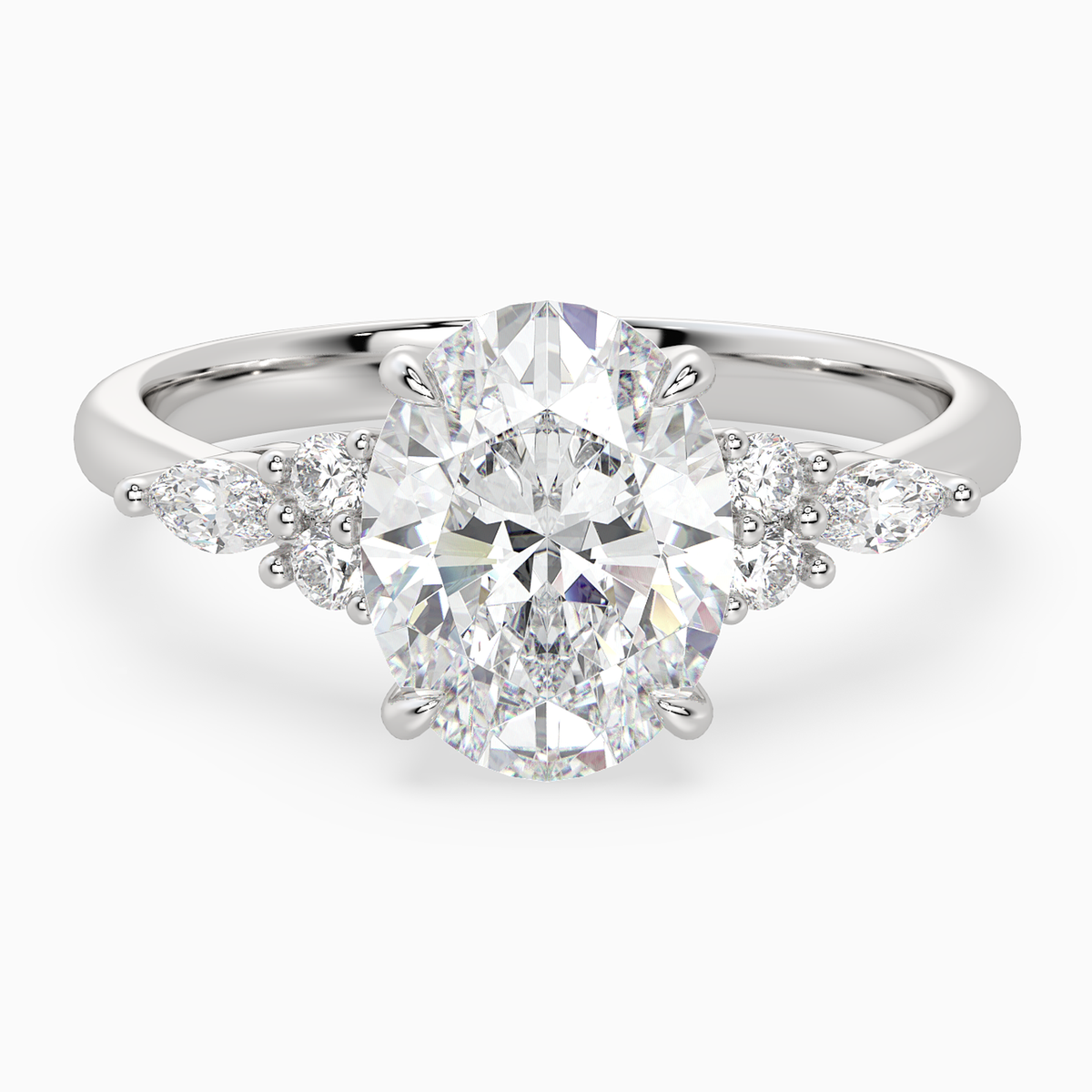


Wedding Band Guide
How to Choose Wedding Bands: Metals, Styles, Fit and Meaning

A wedding band is the ring you will likely wear more often than any other piece of jewelry. It should feel comfortable, pair well with your engagement ring, suit your lifestyle, and still look intentional years from now.
This guide explains how to choose wedding bands by metal, width, profile, diamond setting, budget, and stack design. It is written for shoppers who want a ring that feels personal without becoming impractical for daily wear.
The Short Answer
The best wedding band is the one that fits your hand, works with your engagement ring, and matches the way you actually live. Start with metal and comfort, then decide whether you want a plain band, diamond band, eternity band, contour band, or a coordinated pair of complementary bands.
- Choose the metal first: yellow gold, white gold, rose gold, platinum, or a mixed-metal direction.
- Check the fit against your engagement ring before choosing a straight, curved, or contour band.
- Pick a width and profile you can wear every day.
- Decide how much diamond detail you want: none, subtle accents, half eternity, full eternity, pave, channel, or shared prong.
- Plan the pair as coordinated, not necessarily identical.
What Is a Wedding Band?
A wedding band, also called a wedding ring, is traditionally exchanged during the wedding ceremony. Unlike an engagement ring, which often centers on a proposal and a larger center stone, a wedding band represents the daily commitment after the vows.
Wedding bands can be simple metal rings, diamond bands, eternity bands, curved bands, textured bands, or custom designs. Some people wear a wedding band alone. Others stack it with an engagement ring and anniversary bands. There is no single correct format; the important part is that the band works with your hand, your ring, and your routine.
Wedding Band vs Engagement Ring
The engagement ring usually comes first and often features a center diamond or gemstone. The wedding band is exchanged at the ceremony and is designed for daily wear. Because the two rings are commonly worn together, the wedding band should be chosen with the engagement ring in mind.
| Question | Engagement Ring | Wedding Band |
|---|---|---|
| When is it given? | Usually at the proposal. | Usually during the wedding ceremony. |
| Main design focus | A center stone, setting style, and overall ring architecture. | Comfort, durability, stack fit, metal color, and daily-wear design. |
| How it is worn | Often stacked above the wedding band after the ceremony. | Often worn closest to the hand, alone or under the engagement ring. |
| What to check | Center stone shape, setting height, prong position, and band width. | Flush fit, comfort profile, diamond setting security, and metal compatibility. |
Start With Lifestyle, Not Just Style
A wedding band lives on the hand. That means your work, hobbies, daily gestures, and maintenance tolerance all matter. A delicate full eternity band may be beautiful, but a simple comfort-fit gold band may be better for someone who wants minimal maintenance. A channel-set diamond band may suit an active wearer better than a high shared-prong band because the stones sit more protected.
Ask three practical questions before choosing a style:
- Will I wear this band every day, or only when I am not wearing my engagement ring?
- Do I want sparkle from lab-grown diamonds, or do I prefer a clean metal band?
- Does my engagement ring need a straight band, spacer band, curved band, or custom contour band?
Choose the Wedding Band Metal
Metal affects color, weight, durability, maintenance, and price. For most fine wedding bands, the main choices are gold and platinum.
14K Gold
14K gold is a practical daily-wear choice because it balances precious metal content with strength. It is available in yellow, white, and rose gold, and it is especially useful for bands with texture, pave, or other fine details that need structure.
18K Gold
18K gold has a higher gold content and a richer tone in yellow gold. It can feel more luxurious, but it is typically softer than 14K gold. It may be the right choice for someone who prioritizes purity and color saturation over maximum daily-wear toughness.
White Gold
White gold gives a bright, cool look that coordinates well with colorless lab-grown diamonds and white-metal engagement rings. Many white gold pieces are finished with rhodium plating, so long-term maintenance should be part of the decision.
Rose Gold
Rose gold adds warmth and can make a bridal stack feel more personal. It pairs especially well with soft skin undertones and mixed-metal stacks, but the exact color can vary by alloy.
Platinum
Platinum is naturally white, dense, and highly durable. It usually costs more than gold, but it can be a strong choice for shoppers who want a substantial feel and a white metal that does not rely on rhodium plating.
Burvonti Fit Note
If your engagement ring is part of the decision, start by checking the setting profile before choosing the band. A low-set center stone, halo, basket, or elongated diamond may require a curved or contour band to sit close. A higher setting often works with a straight band.
Explore engagement ring settingsCompare Wedding Band Styles
Style is more than appearance. It changes how the ring feels, how much maintenance it needs, how it stacks, and how much it costs.

| Wedding Band Style | What It Looks Like | Best For | What to Watch |
|---|---|---|---|
| Classic metal band | A plain gold or platinum band with a polished, satin, matte, flat, dome, or comfort-fit profile. | Daily wear, low maintenance, minimal style, and maximum versatility. | Width and profile matter. A thin band feels different from a broad flat band. |
| Diamond band | A band with lab-grown diamonds set across part of the ring. | Adding sparkle while keeping the ring easier to resize than many full eternity designs. | Check stone setting security and how the diamonds align with the engagement ring. |
| Pave band | Small diamonds set closely together for a continuous shimmer. | Brilliance, delicate texture, and a more jewelry-forward bridal stack. | Pave can need more cleaning and occasional inspection than a plain band. |
| Channel-set band | Diamonds held between two metal walls. | Active wearers who want diamonds with more protected edges. | The look is usually cleaner and less airy than shared-prong or pave styles. |
| Eternity band | Diamonds continue around the full circumference of the ring. | Maximum sparkle and a balanced view from every angle. | Full eternity bands can be difficult or impossible to resize. |
| Curved or contour band | A band shaped to follow the engagement ring's center setting. | Low-set engagement rings, halos, elongated stones, or rings that do not allow a straight band to sit flush. | It may be less versatile if worn alone because the curve is designed for a specific ring. |
| Textured band | Brushed, hammered, knife-edge, milgrain, engraved, or patterned metal. | Personal style, modern minimalism, or a complementary partner band. | Some textures soften over time with wear and polishing. |
How to Choose a Band That Fits Your Engagement Ring
The most common mistake is choosing a beautiful wedding band without checking how it sits next to the engagement ring. A small gap can look intentional, but an awkward collision between stones, prongs, or metal can make the stack uncomfortable and harder to wear. Continue with How to Match a Wedding Band to Your Engagement Ring for pairing details, then compare the roles of each ring in Engagement Ring vs. Wedding Band.
Flush Fit
A flush fit means the wedding band sits directly against the engagement ring with little or no gap. This works best when the engagement ring has a high enough setting or a shape that leaves room for a straight band.
Contour Fit
A contour band curves around the engagement ring. It can be ideal for halos, low baskets, three-stone rings, elongated shapes, or designs where a straight band would hit the center setting.
Intentional Gap
Some stacks look strongest with a small, deliberate gap. This can make the set feel architectural and modern. If you choose this direction, make the gap look designed rather than accidental.
Spacer Band
A slim spacer band can protect more delicate diamond bands from rubbing against a large engagement ring setting. It can also create a cleaner visual rhythm in a multi-ring stack.
Choose Width, Profile and Comfort
Wedding band width changes the whole feel of the ring. A 1.5mm to 2mm band feels delicate and stackable. A 2.5mm to 4mm band often feels more substantial. Wider bands can look clean and modern, but they may feel tighter because they cover more of the finger.
The profile matters too. A comfort-fit band has a slightly rounded interior and may feel easier for everyday wear. A flat band can feel modern and architectural. A dome band looks classic and soft. A knife-edge band adds structure and shadow.
Should Couples Choose Matching Wedding Bands?
Matching bands can be meaningful, but they are not required. Many modern couples choose complementary bands instead. The rings may share one design language, such as metal color, finish, engraving, or width, while still respecting each person's hand, taste, and daily routine.

For example, one partner may choose a polished yellow gold comfort-fit band while the other chooses a yellow gold diamond band. Another couple may both choose white metal, but one ring is matte and wider while the other is slim and pavé. The connection is visible, but each ring still feels personal.
How to Budget for Wedding Bands
Wedding band pricing depends on metal, width, diamond coverage, stone quality, setting complexity, and custom work. A plain gold band is usually less expensive than a diamond eternity band. Platinum usually costs more than gold because it is dense and uses more metal by weight.
Build the budget around both rings, not just one. If one partner wants a diamond band and the other wants a plain band, the pair can still feel balanced. What matters is intentional coordination, not identical price.
When Should You Buy Wedding Bands?
Start shopping several months before the wedding date. This gives you time for sizing, production, engraving, design adjustments, and any custom contour work. If your engagement ring has an unusual shape or low-set center stone, allow extra time to test the fit.
Personalization: Engraving, Hidden Details and Custom Fit
Personalization can be subtle. An engraving, a hidden birthstone, a custom contour, a special finish, or a band width chosen around the engagement ring can make the piece feel more considered without making it loud.
For Burvonti, the strongest personalization is not just decoration. It is the precision of building a ring around the selected stone, setting, hand, and stack. The result should feel chosen with intention rather than pulled from a generic case.
Choose the Band Around the Ring You Will Actually Wear
A wedding band should support the engagement ring, suit the hand, and feel natural in daily life. If you are still choosing the engagement ring, start there first so the band can be planned with the setting profile in mind.
Explore lab-grown diamond engagement ringsFrequently Asked Questions
How do I choose the right wedding band?
Start with lifestyle, metal, comfort, and engagement ring fit. Then choose a style such as a plain band, diamond band, eternity band, contour band, or textured band. The right wedding band should be comfortable enough for daily wear and visually intentional with the engagement ring.
Should my wedding band match my engagement ring?
It does not have to match exactly, but it should coordinate. Matching metal creates a classic look, while mixed metals can feel modern and personal. The most important factors are fit, durability, and whether the two rings look intentional together.
What is the most durable wedding band style?
A plain metal band is usually the lowest-maintenance option. Channel-set diamond bands can also be practical because the stones are more protected than in some exposed settings. Full eternity and delicate pavé styles may need more careful wear and inspection.
Can I wear a wedding band without an engagement ring?
Yes. Many people wear only a wedding band because they prefer a minimal look, work with their hands, or want one ring for everyday use. In that case, width, profile, finish, and comfort become especially important.
What is the difference between a half eternity and full eternity band?
A half eternity band has diamonds across part of the ring, usually the visible top half. A full eternity band has diamonds around the entire ring. Full eternity bands create sparkle from every angle, but they are typically harder to resize.
Do both partners need the same wedding band?
No. Many couples choose complementary bands instead of identical ones. Shared metal color, finish, engraving, or design rhythm can create unity while allowing each person to choose the width, profile, and details that suit them.