
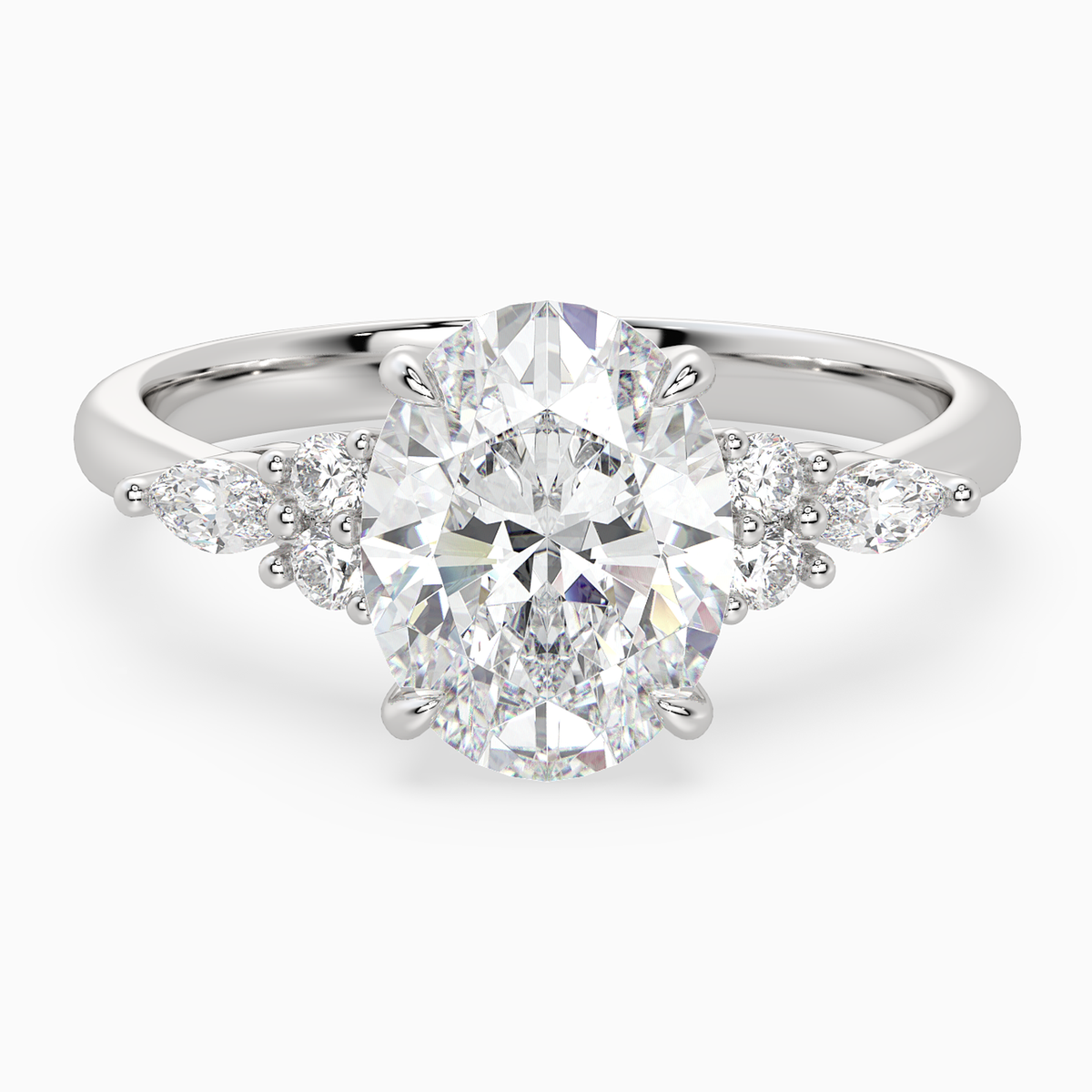


Lab Grown Diamond Stud Earrings in 14K White Gold
A quiet frame keeps close-scale choices clear. 14K white gold unites shape, setting edge, post, and backing with restrained continuity.


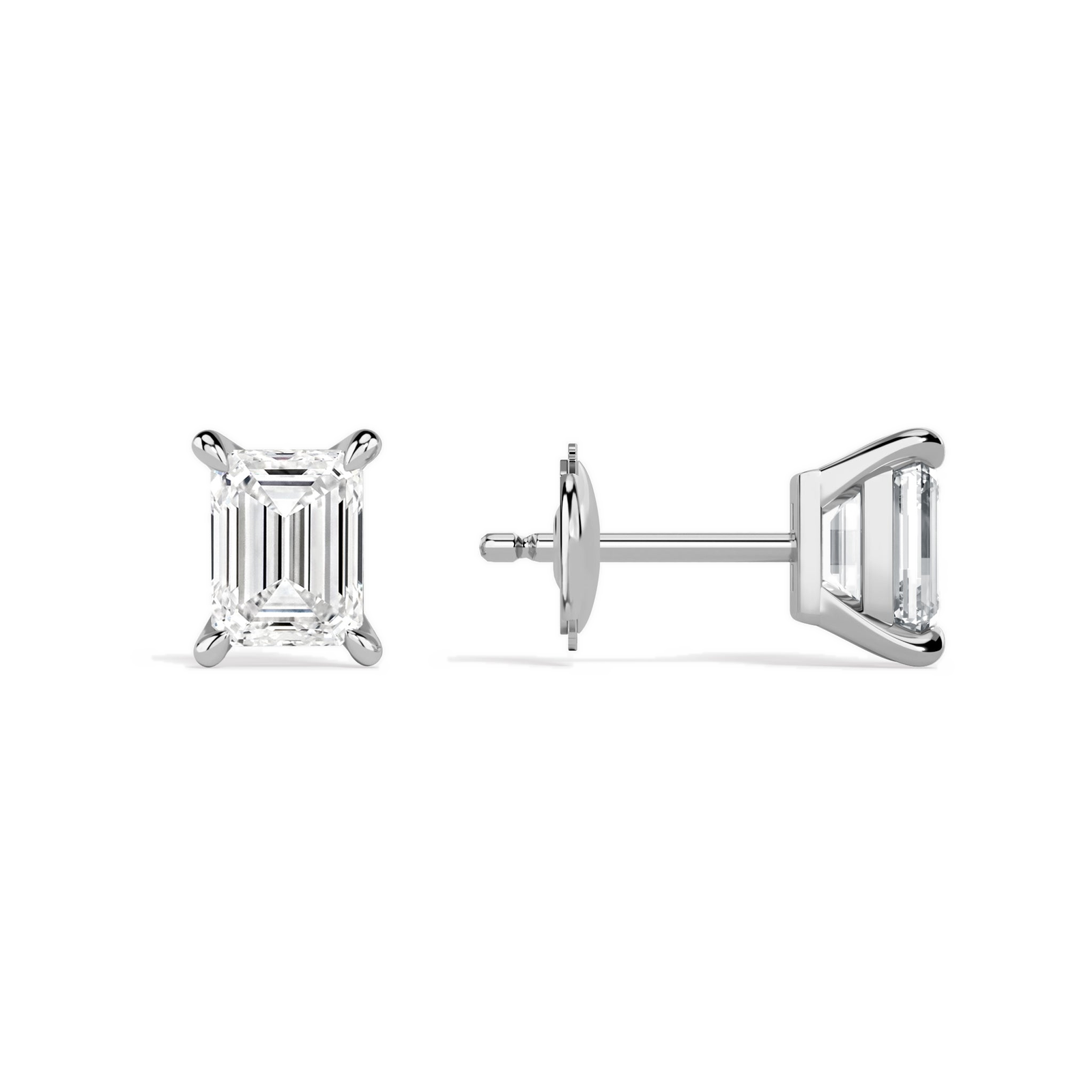


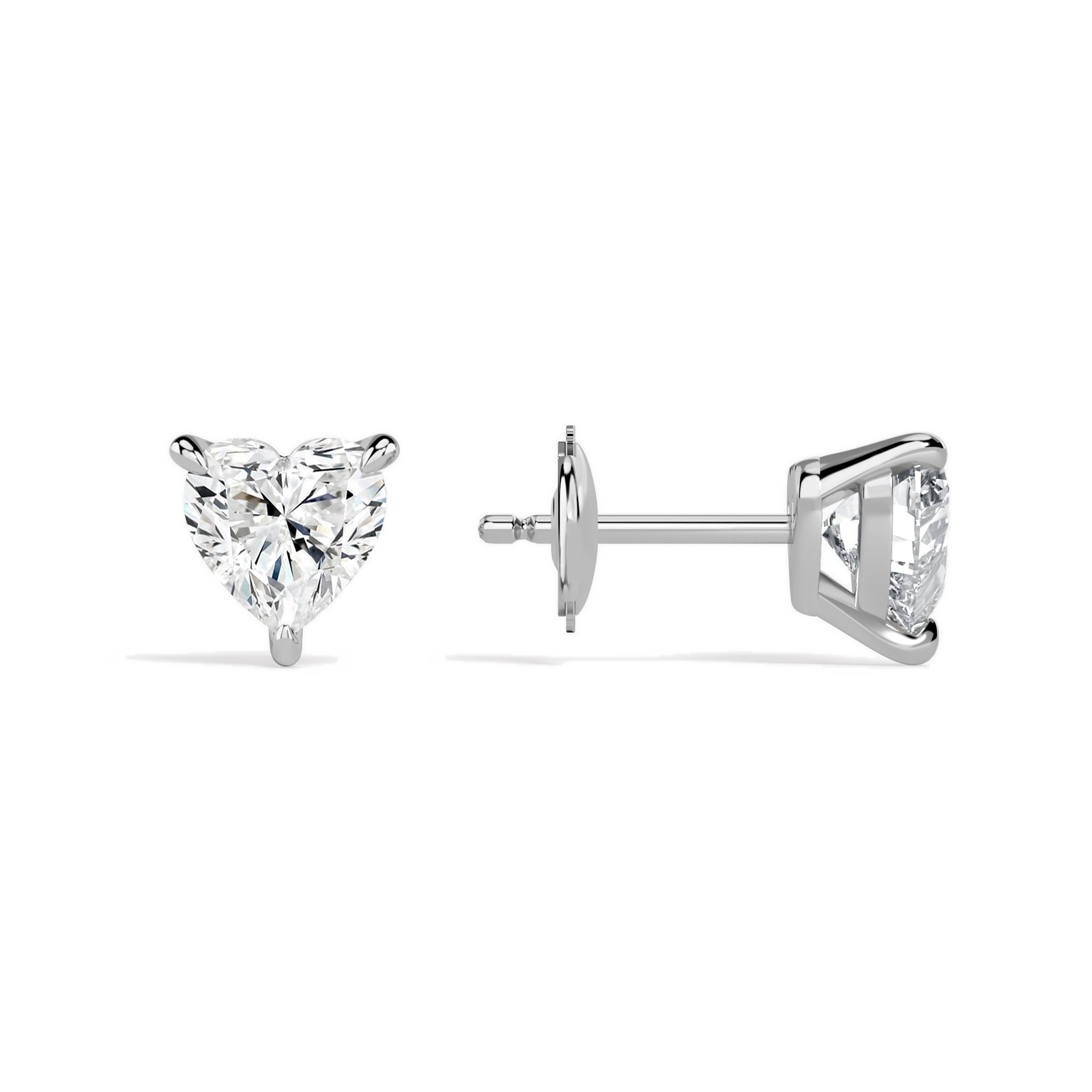


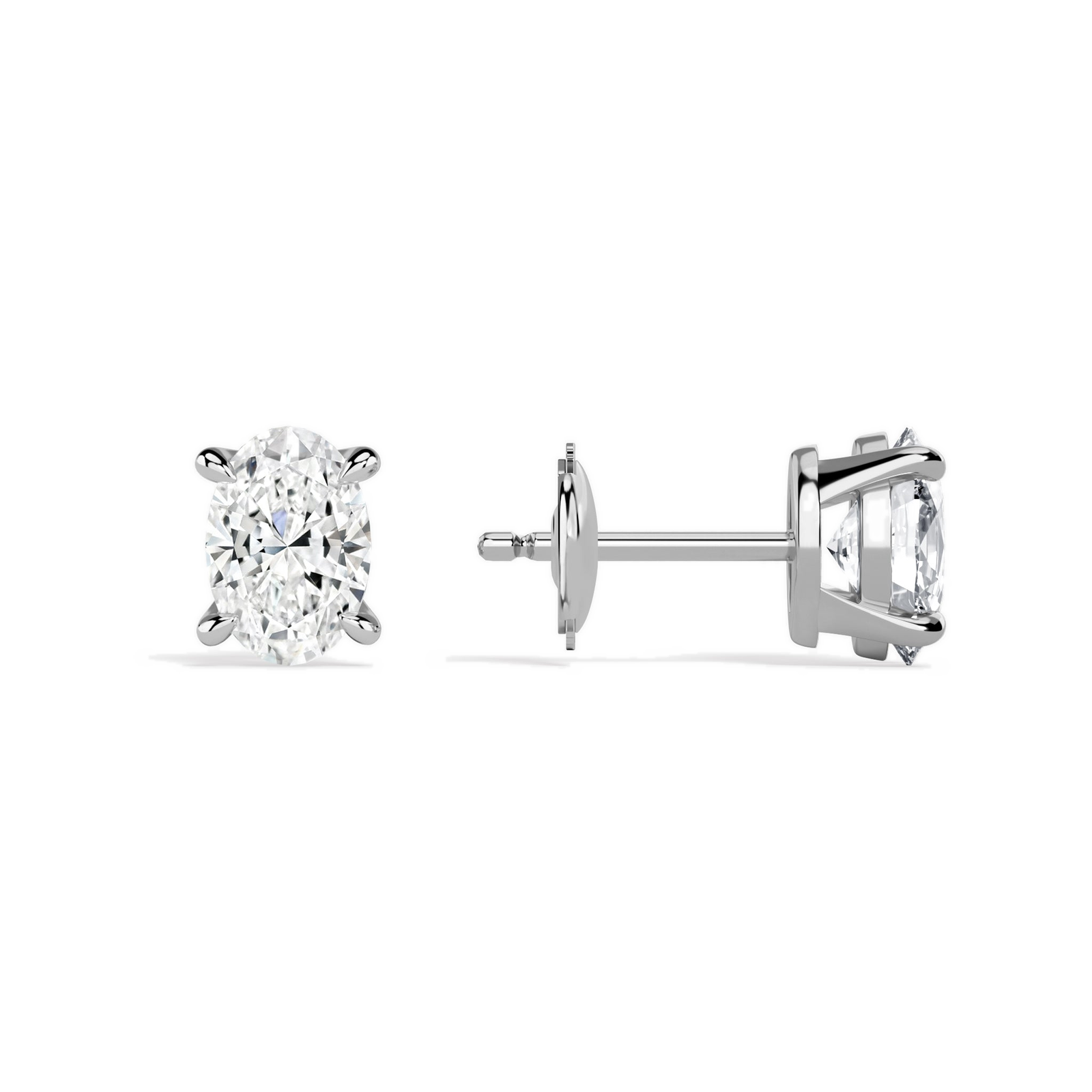


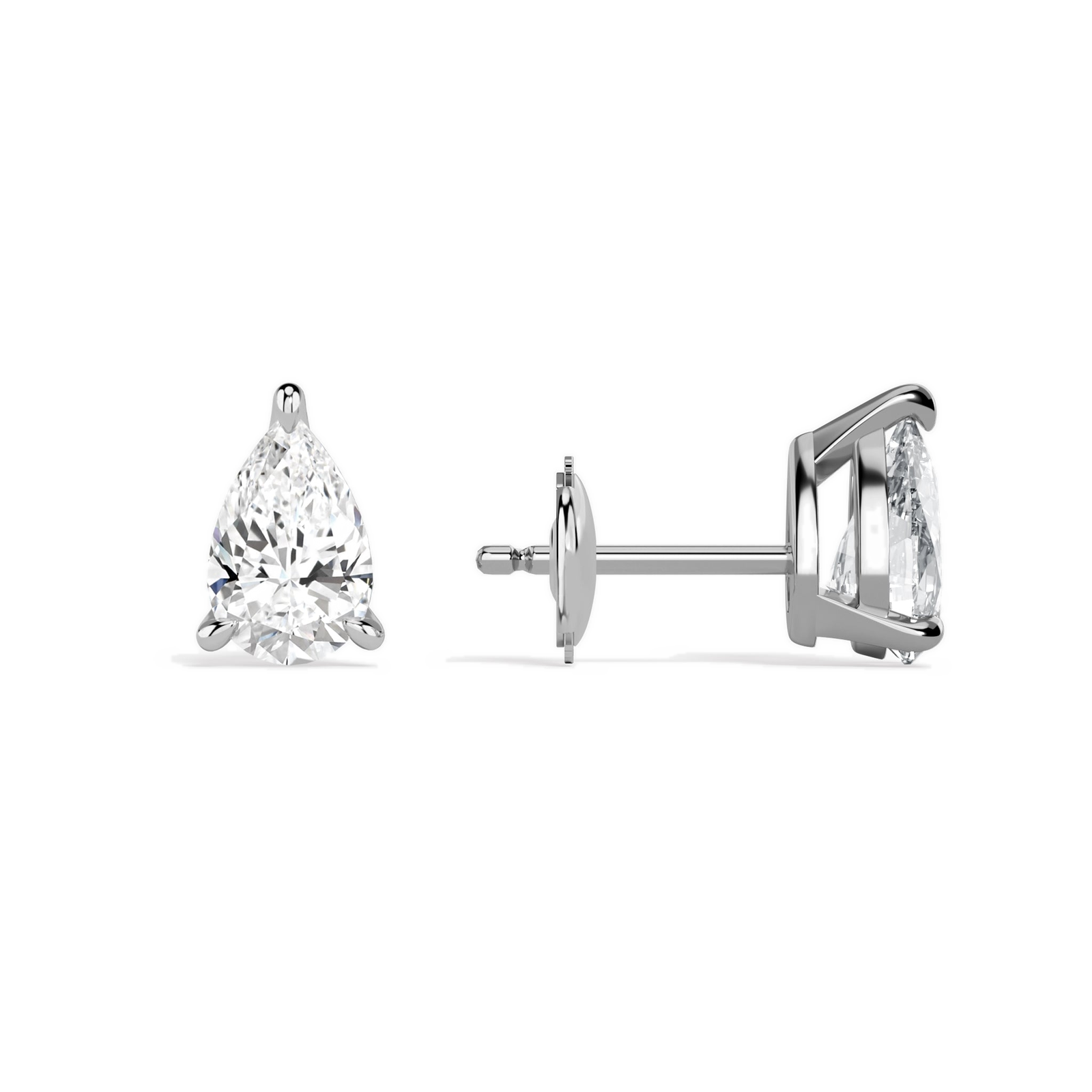


14K White Gold Stud Earrings: Quiet Structure beside the Ear
A white-toned framework can keep attention on outline and setting structure without removing metal from view. Across 32 products, prong solitaire, continuous bezel, and halo boundaries each occupy ten shapes; a cluster climber and graduated three-stone drop-stud widen the current taxonomy. This page owns their shared close-to-lobe logic, not the detailed setting intent owned by each child Collection.
Read Shape, Boundary, and Pair Together
Ten outlines respond differently to prongs, bezels, and halos. Compare face-up length and width, corners, points, orientation, profile, and complete pair calibration rather than carat alone. White Gold may create tonal continuity in some views, but no finish guarantees invisibility or brilliance. Exact alloy, rhodium status, maintenance, and sensitivity must be confirmed on the selected product.
Treat the Back as Part of the Design
All current descriptions list secure lock backs and double-notched posts. Correct engagement, post and backing condition, lobe anatomy, piercing angle, setting depth, and scale determine how a stud sits. The mechanism name cannot promise loss prevention, upright alignment, or comfort for every wearer. Multiple piercings also require projection and backing clearance, not only visual spacing from the front.
Keep Documentation Exact
Pair-level Center Stone Total Carat Weight differs from Total Carat Weight on multi-stone designs, and neither defines the weight of each diamond without documentation. Burvonti uses responsibly sourced lab-grown diamonds and supports independent grading or certification within the supplied scope. Custom possibilities may refine shape, setting edge, profile, post, or back when feasible.
A calibrated pair is assessed as two related objects, not assumed identical from a shared carat label. Outline, dimensions, orientation, apparent color, setting and mechanism all contribute. Good, Better and Best wording should be read only through the quality definition attached to the selected design and cannot extend the scope of a grading report.
A close-set stud may anchor a multiple-piercing composition, but the setting path still matters: prong for a more open outline, bezel for a continuous edge, and halo for a wider diamond field. Check front spacing and rear clearance together. Clean gently, store separately, avoid unverified cleaning methods, and inspect the entire pair when closure feel or orientation changes.
Selection can begin with the boundary you want to see, then move through shape, total setting dimensions and profile. Product photography helps compare structure but cannot establish exact color, scale or fit on a specific ear. Where custom review is feasible, preserve the chosen setting logic and confirm whether changes to shape, post or back alter dimensions, documentation or delivery scope.
Frequently Asked Questions
What structures appear?
Ten each of prong, bezel and halo, plus one climber and one graduated drop-stud.
Which shapes are included?
Ten shapes from Round and Oval to Asscher, Heart and Marquise.
Does White Gold disappear around diamonds?
No; spacing, finish, profile, light and photography affect visibility.
Which setting is best?
None universally; choose the boundary, profile and maintenance relationship preferred.
What makes a bezel distinct?
A continuous metal perimeter around the center.
What makes a halo distinct?
A secondary field of smaller diamonds around a principal center.
Why disclose the climber?
It redirects the composition along the lobe rather than holding one center in place.
Why disclose the drop-stud?
It adds a short graduated drop within current Stud taxonomy.
Does the same CTW look the same?
No; dimensions, depth, shape and setting change face-up scale.
Does one report cover both centers?
Only if its stated scope says so.
What backs are used?
Secure lock backs with double-notched posts are listed on all 32 current products.
Are lock backs loss-proof?
No; engagement, condition, fit and inspection matter.
Will every stud sit upright?
No; anatomy, piercing angle, profile, scale and backing affect position.
Can these suit multiple piercings?
Yes when front spacing and rear clearance are both checked.
Is every 14K White Gold finish identical?
No. Confirm alloy, finish and any rhodium wording on the selected product.
Can White Gold cause sensitivity?
Sensitivity depends on complete alloy, finish and wearer.
What custom and care review matters?
Review shape, boundary, profile, post and back; clean gently and inspect mechanisms.