
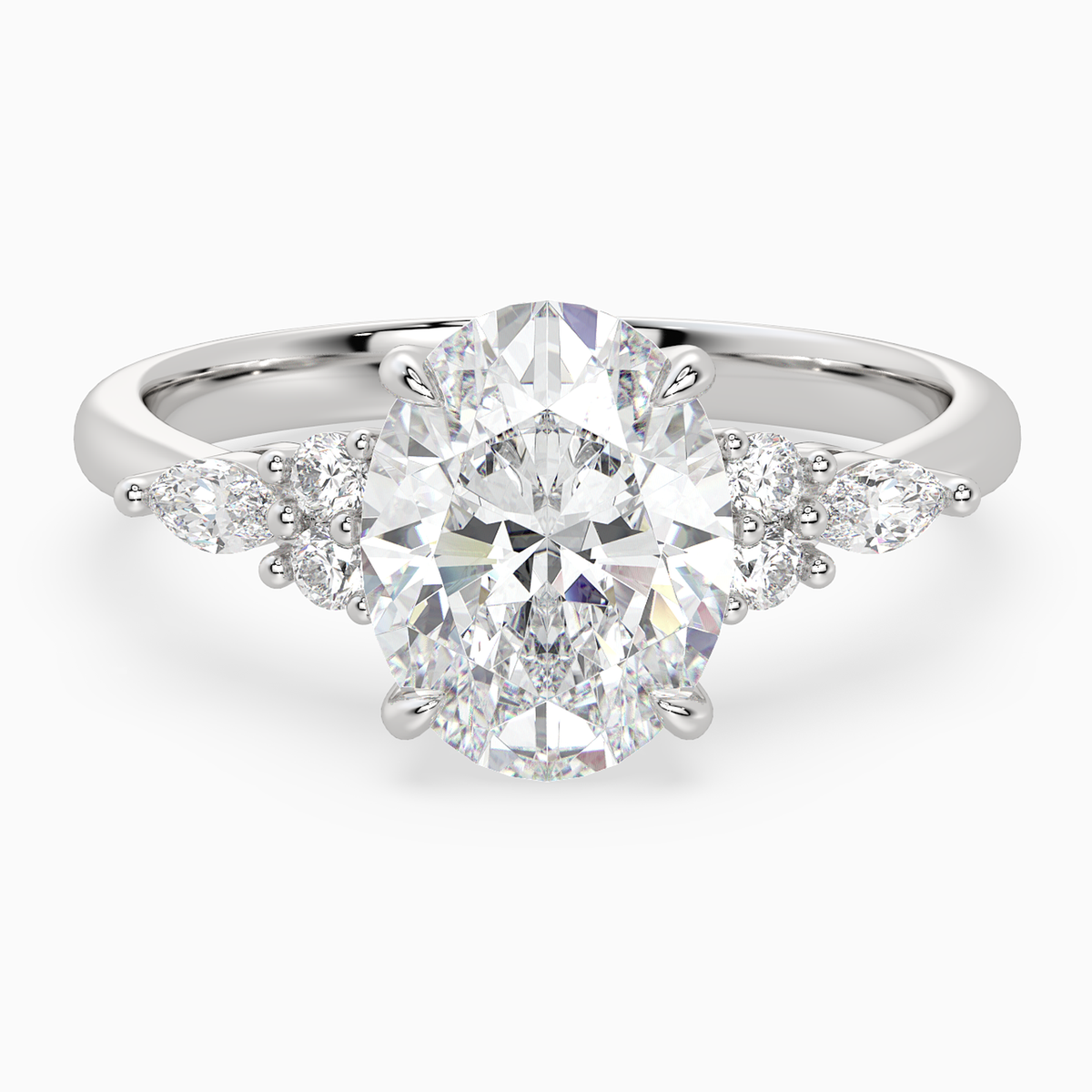


Lab Grown Diamond Stud Earrings in 14K Rose Gold
Close to the ear, warmth becomes part of the outline. 14K rose gold carries prong, bezel, halo, and clustered studs with measured blush.


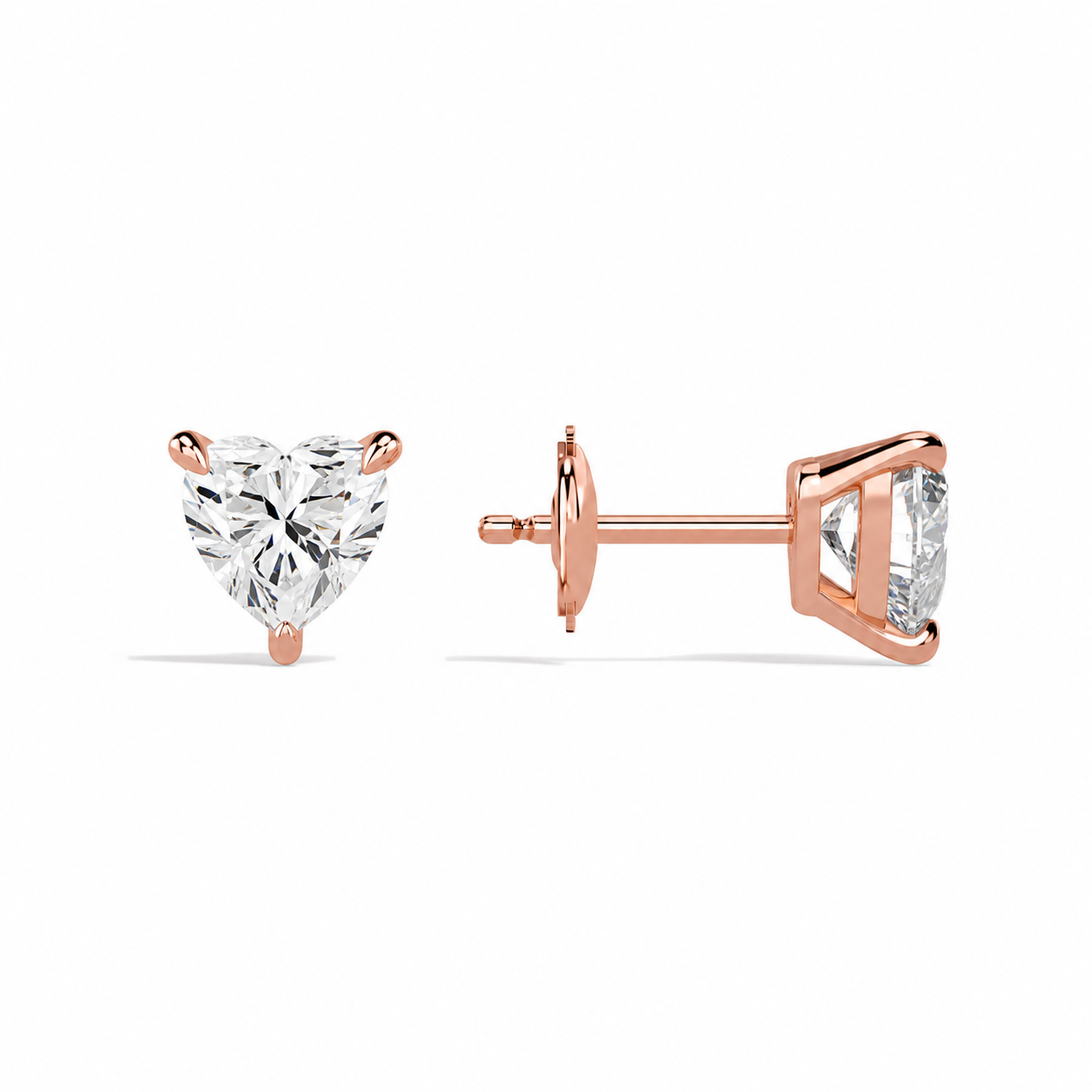


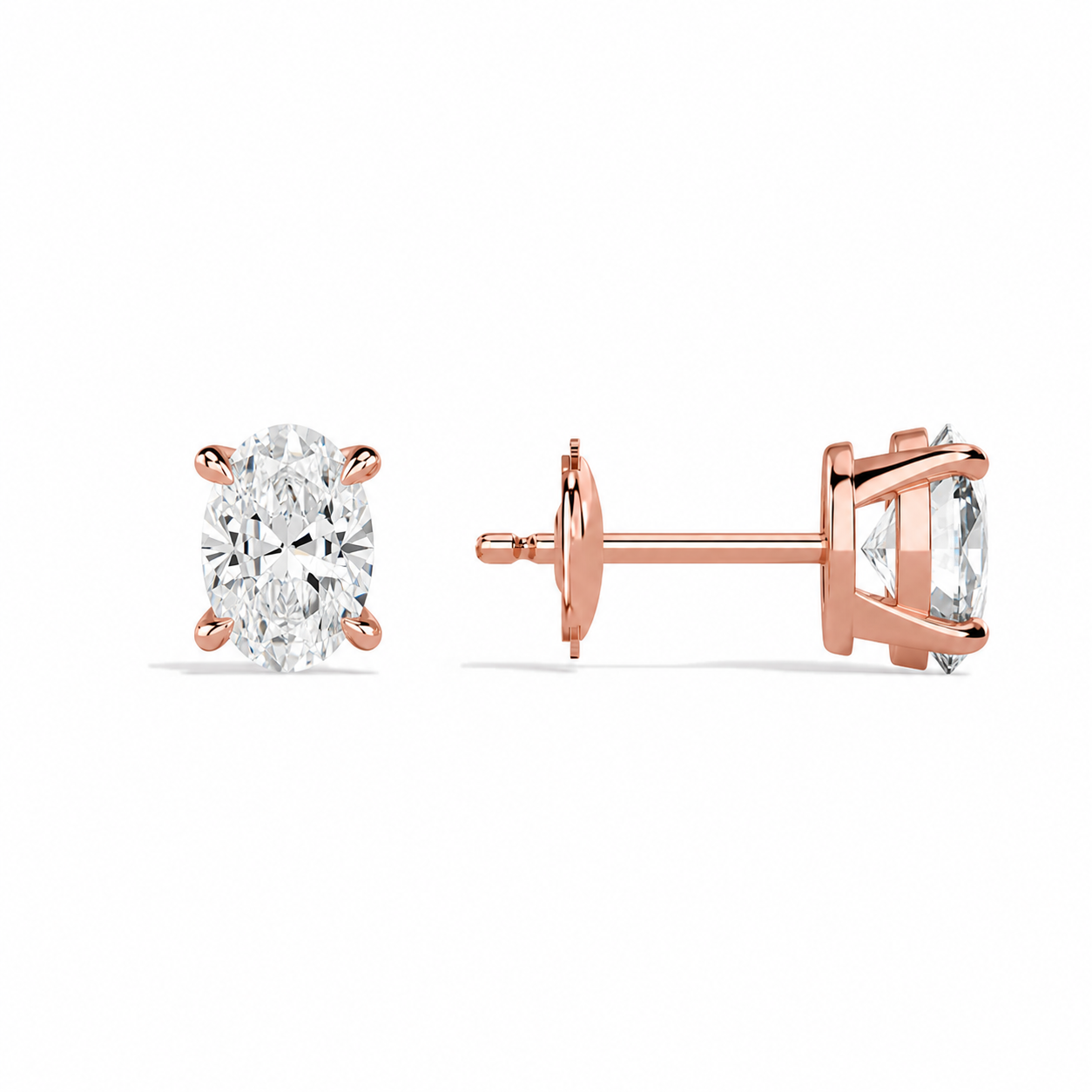


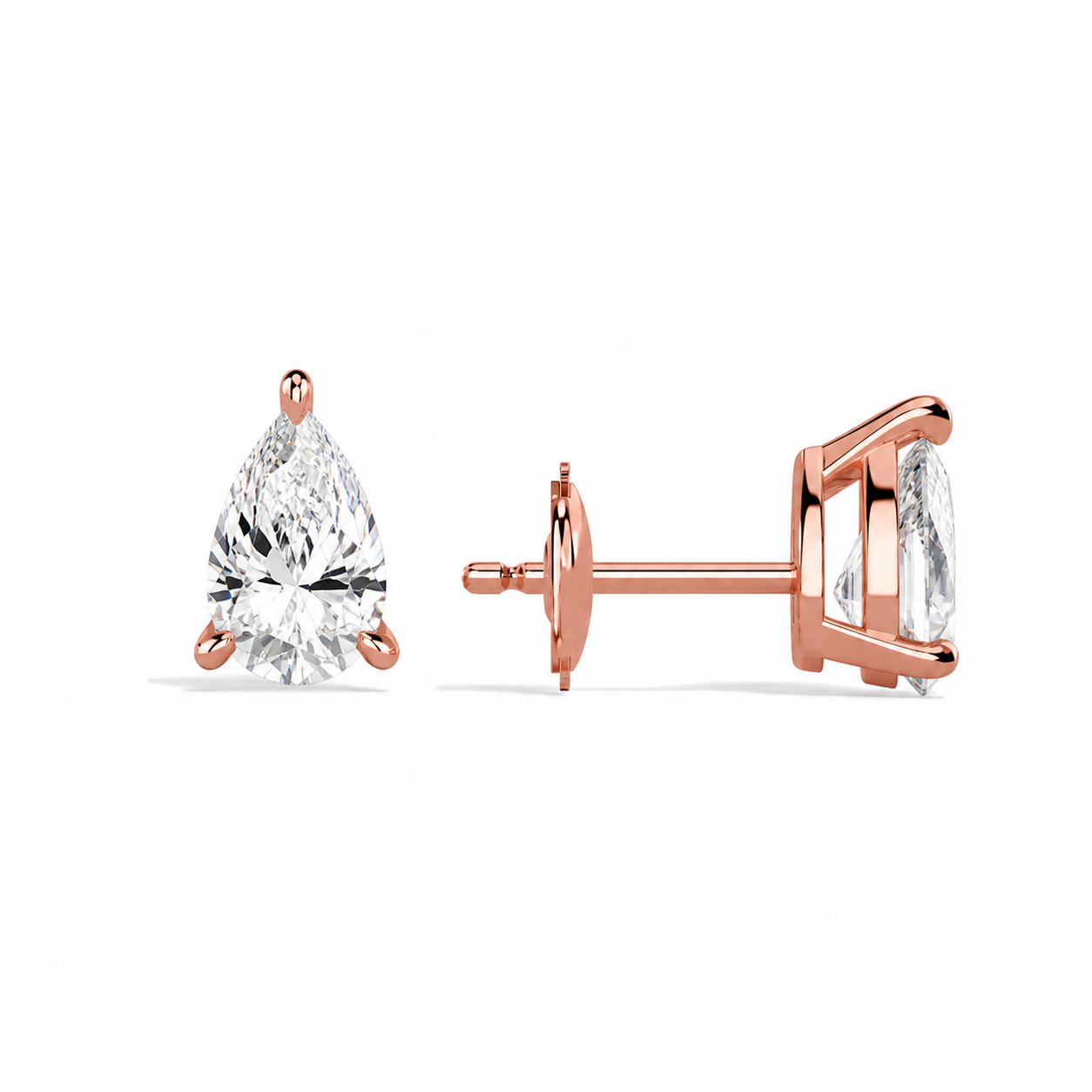


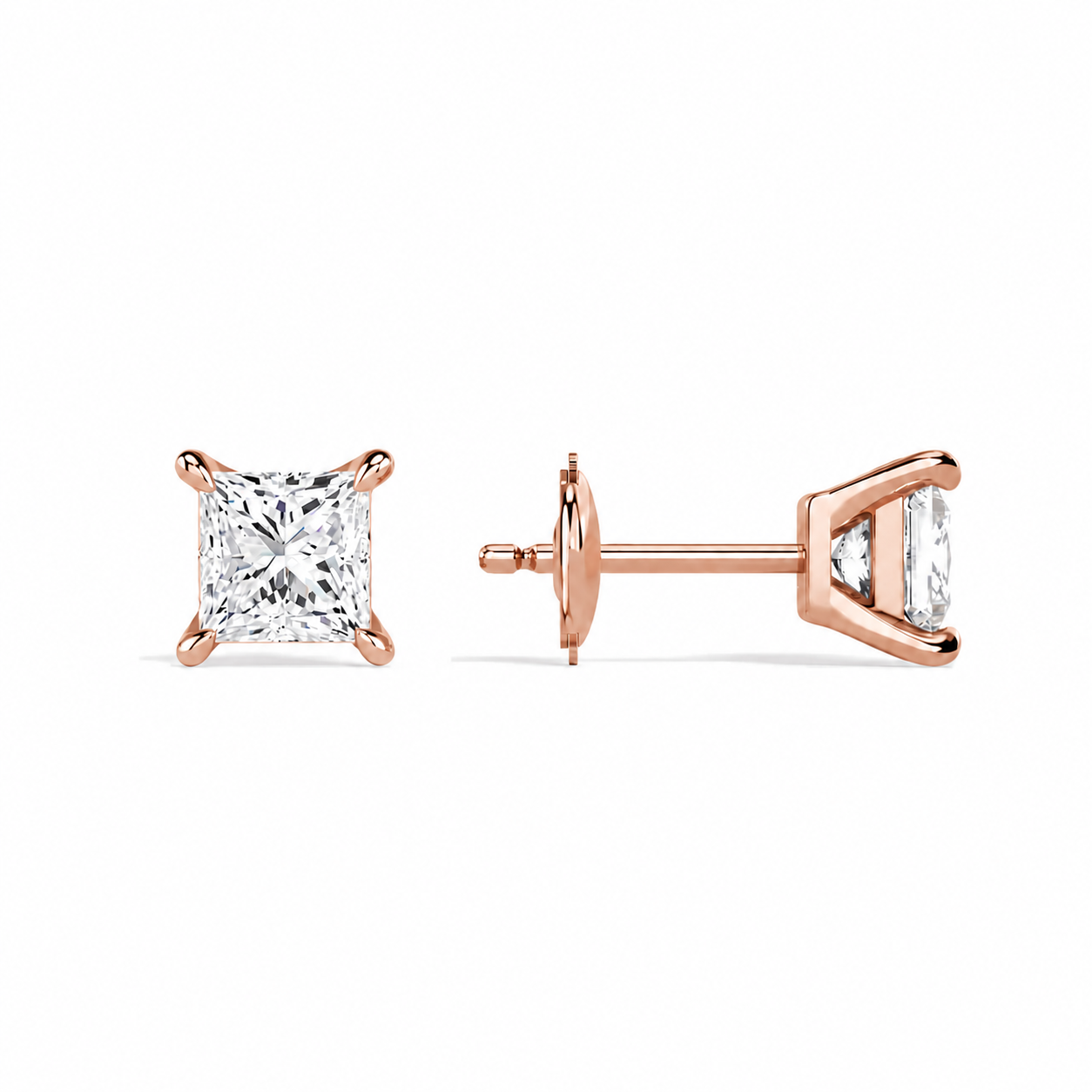


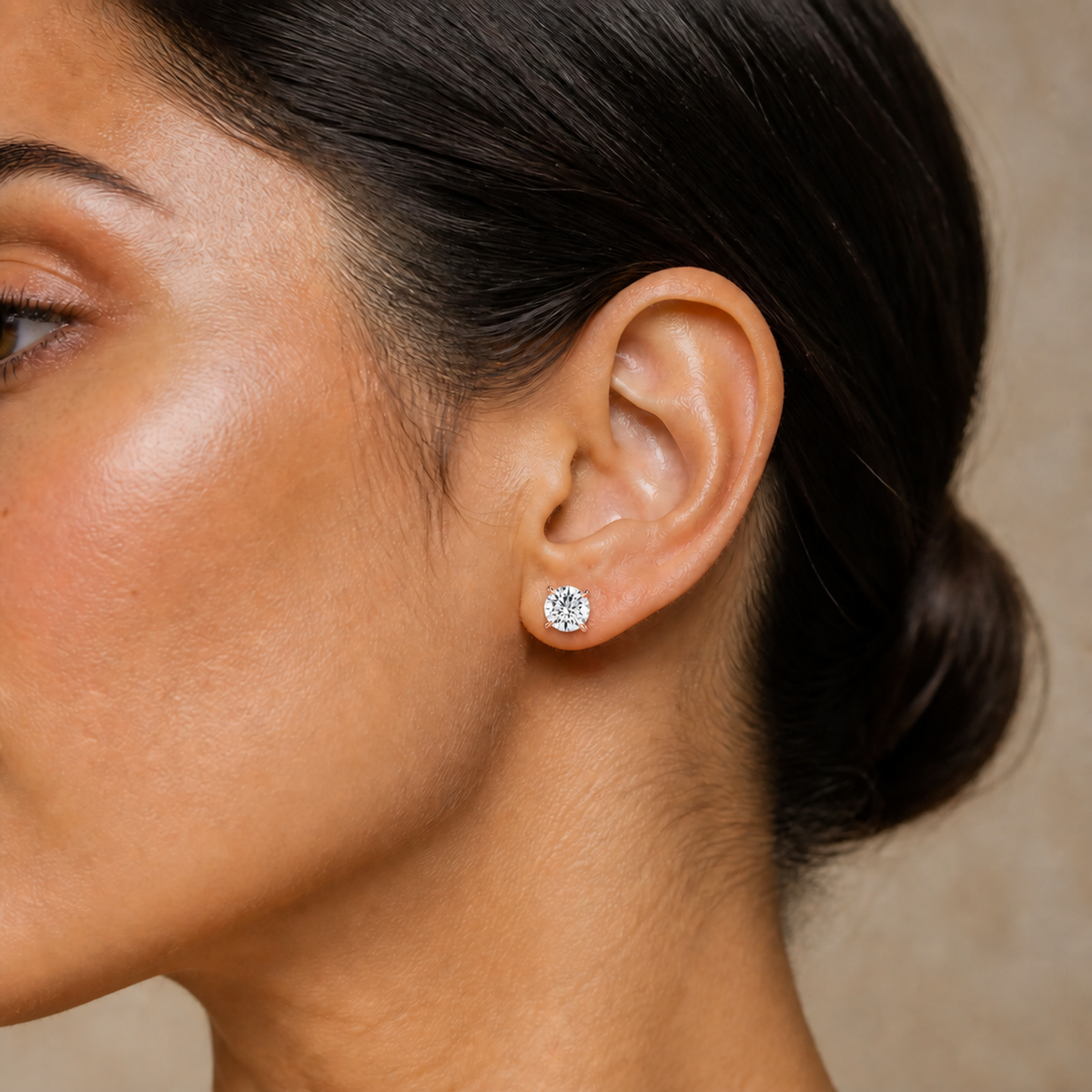
14K Rose Gold Stud Earrings: Warmth at Close Scale
A stud places diamond, metal, post, backing, and ear in one close composition. In 14K Rose Gold, the setting boundary can register as a fine blush rather than a distant accent. Ten prong solitaires leave selected edges open, ten bezels redraw the outline continuously, and ten halos extend it with smaller diamonds. One cluster climber and one graduated three-stone drop-stud are disclosed taxonomy exceptions.
Compare Outline before Carat Alone
Round, Oval, Cushion, Pear, Princess, Emerald, Marquise, Asscher, Radiant, and Heart are represented across the three main families. Shape, depth, face-up dimensions, prong placement, bezel width, and halo scale affect visible size. Center Stone Total Carat Weight and Total Carat Weight must be read for the complete pair or multi-stone design; neither should be reassigned without product documentation.
Let Post and Back Complete the Architecture
All 32 current descriptions identify secure lock backs and double-notched posts. Those terms describe the present mechanism, not permanent retention or universal comfort. Lobe thickness, piercing angle, post length, backing engagement, profile, full setting scale, hair, clothing, and condition influence placement. A coherent pair is judged through outline, orientation, color relationship, setting, and how each earring meets the ear.
Keep Blush Personal, not Prescriptive
A 14K alloy contains approximately 58.3% gold; complete alloy, finish, dimensions, exposed metal, light, photography, and skin context influence observed rose tone. Burvonti uses responsibly sourced lab-grown diamonds and supports document-scoped independent grading or certification. Custom possibilities may refine shape, scale, boundary, post, or backing when feasible.
In a multiple-piercing composition, Rose Gold can repeat as a fine line or contrast with another metal. Compare front spacing together with projection and rear clearance; a balanced photograph cannot guarantee contact-free wear on every ear. The climber asks for directional room, while the graduated drop-stud needs space for its short suspended line.
Pair calibration concerns the complete relationship between the two earrings: outline, orientation, apparent color, dimensions, setting and mechanism. Good, Better and Best designations describe Burvonti's stated quality framework only where assigned; they do not replace the specific report or product record. Clean gently, store separately, and inspect every setting and closure point when movement changes.
Choose scale from the complete product record, not from one front-view image. Center measurements, total setting width, profile, post length and backing dimensions answer different fit questions. A smaller open-prong outline and a broader halo may carry similar carat language while creating very different relationships to the lobe. Custom review should preserve those distinctions rather than treating metal change as the only variable.
Frequently Asked Questions
What structures are included?
Ten prong solitaires, ten bezels, ten halos, one cluster climber, and one graduated three-stone drop-stud.
Which shapes are represented?
Round, Oval, Cushion, Pear, Princess, Emerald, Marquise, Asscher, Radiant, and Heart.
How does Rose Gold affect a stud?
It adds a visible blush boundary around the close-set composition.
How do prong, bezel, and halo differ?
Prongs create selected contact points, a bezel forms a continuous edge, and a halo adds a secondary diamond field.
Is the climber a conventional one-center stud?
No. It extends along the lobe and is a disclosed taxonomy exception.
Is the three-stone design a normal stud?
It introduces a short graduated drop while remaining in current Stud membership.
Does carat equal face-up size?
No. Dimensions, depth, shape, setting and accent distribution matter.
What does Center Stone CTW mean?
The combined principal-center label across the pair, not each center.
What does TCW mean on multi-stone forms?
It combines the diamonds within the stated product scope.
Are both centers independently graded?
Confirm the supplied documents; Collection membership alone cannot establish coverage.
What backs are listed?
All 32 descriptions identify secure lock backs and double-notched posts.
Do lock backs prevent loss?
No universal guarantee applies; engagement, condition, fit and inspection matter.
Will studs sit upright on every ear?
No. Profile, post, backing, anatomy and piercing angle affect position.
Can studs work in multiple piercings?
Yes when width, projection, post/back clearance and neighboring pieces are checked.
How much gold is in 14K Rose Gold?
Approximately 58.3%, with remaining alloy and finish shaping final characteristics.
Can Rose Gold cause sensitivity?
Sensitivity depends on complete alloy and wearer.
What custom and care review applies?
Feasible review may cover shape, setting, metal, post or backing; clean gently and inspect all settings and closures.