
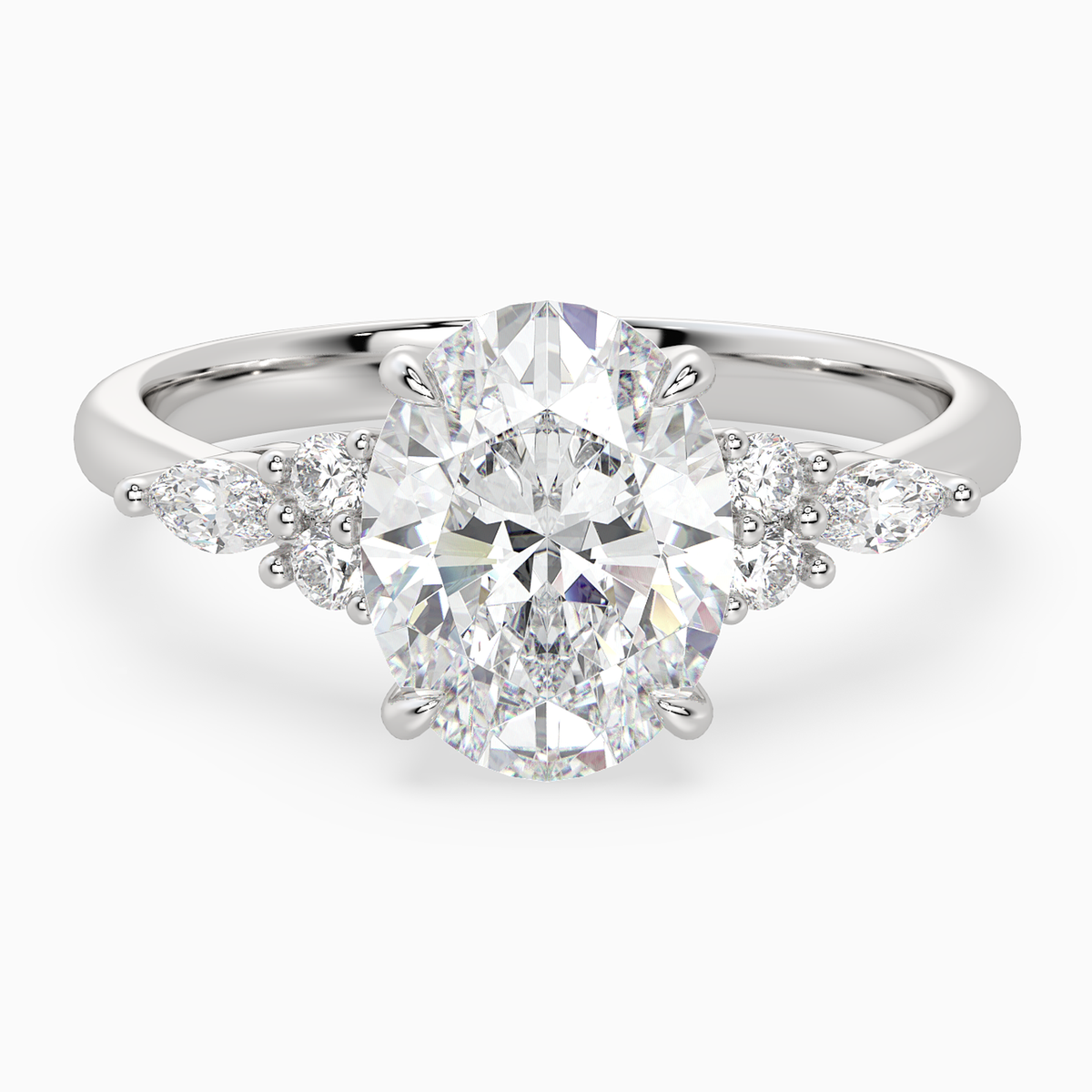


Lab Grown Diamond Necklaces in Platinum
Natural white tone meets considered weight. Platinum gives center, chain, clasp, and movement a balanced material presence at the neckline.


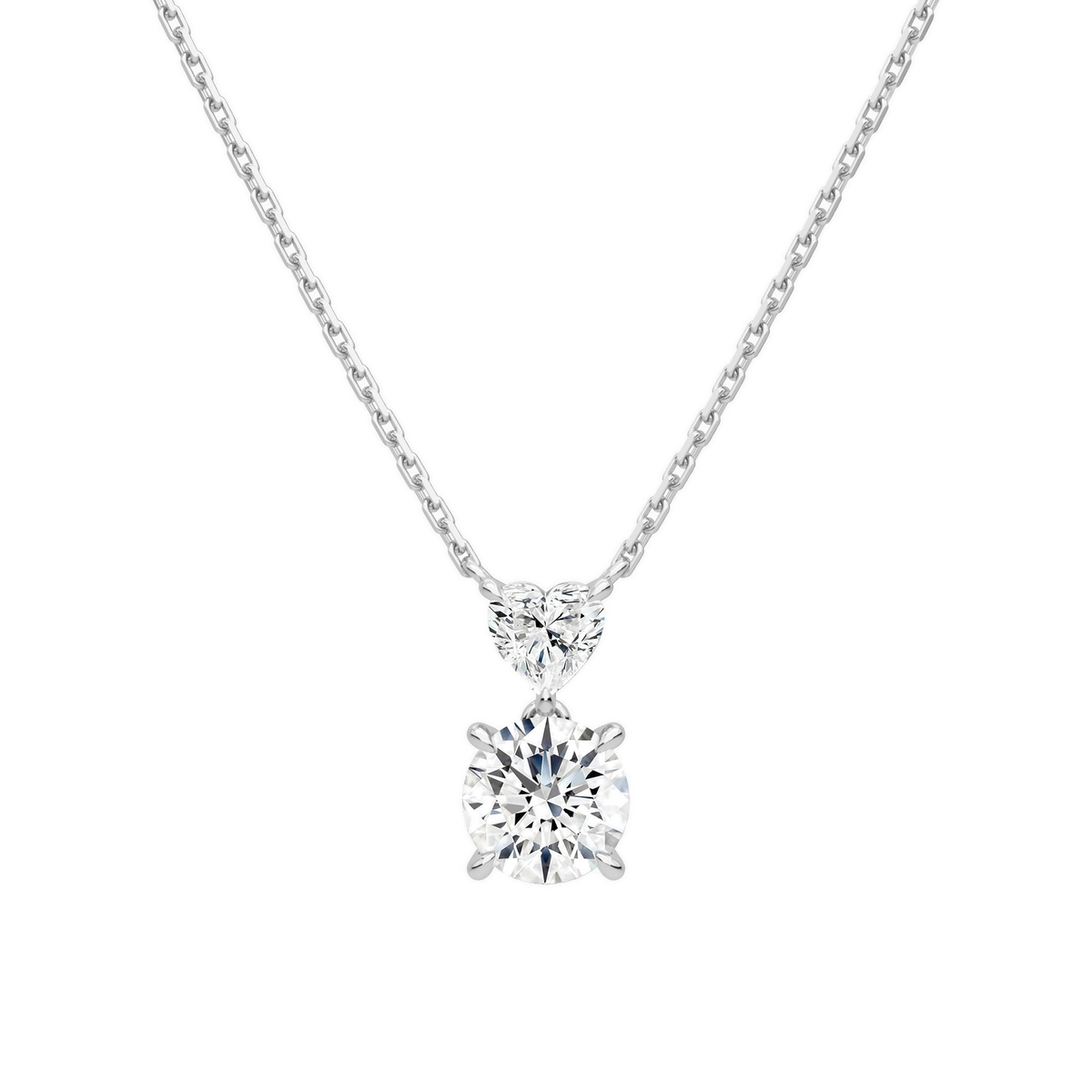
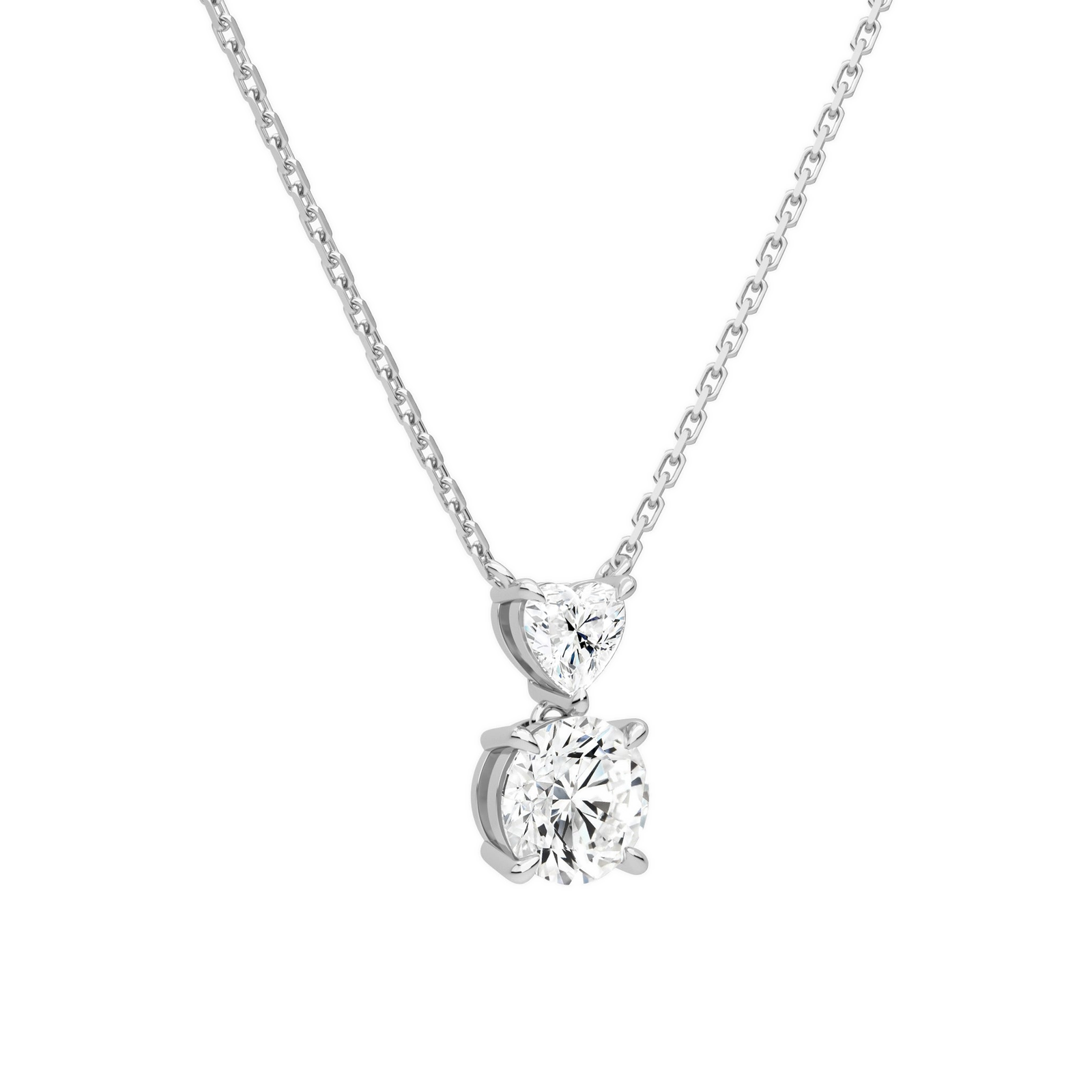
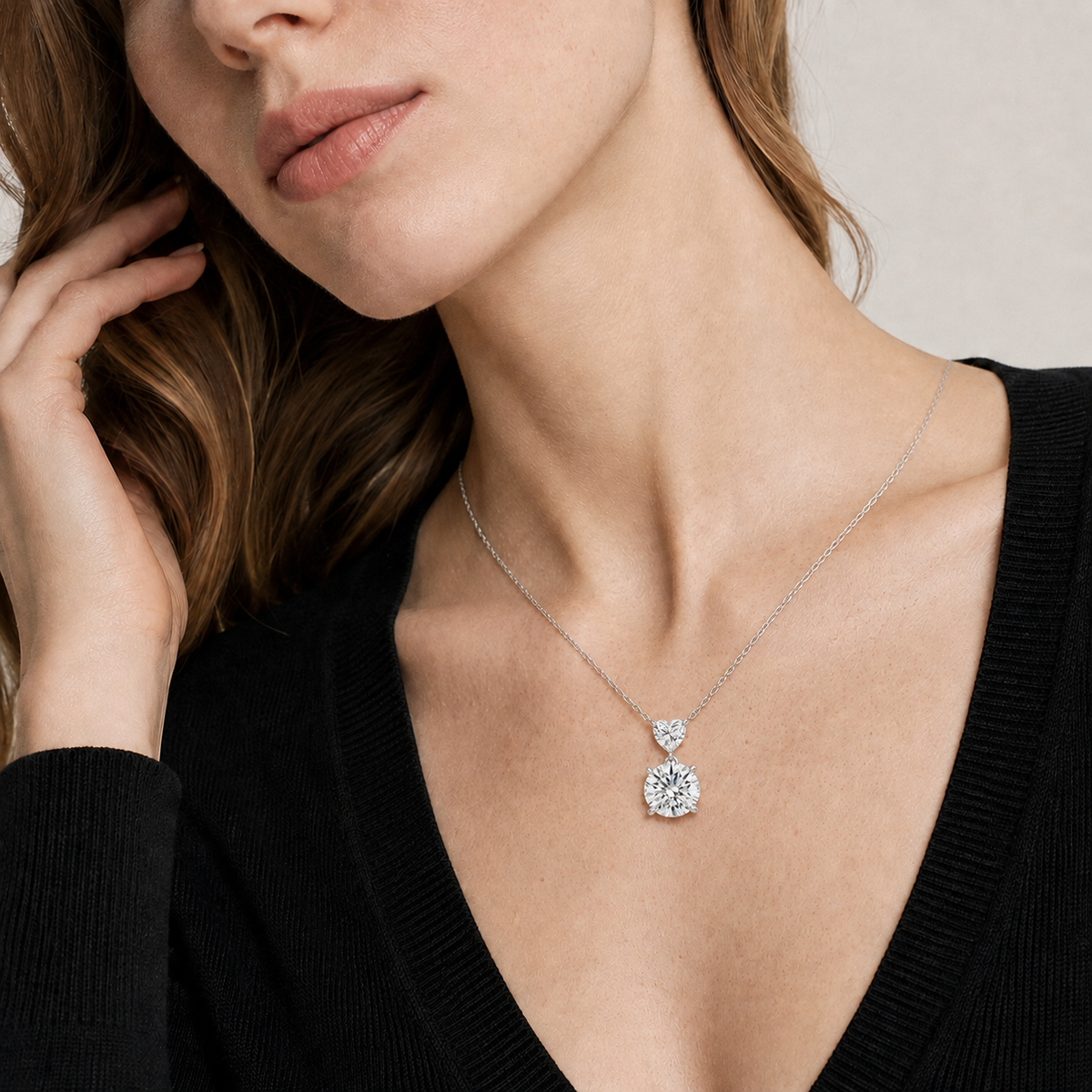
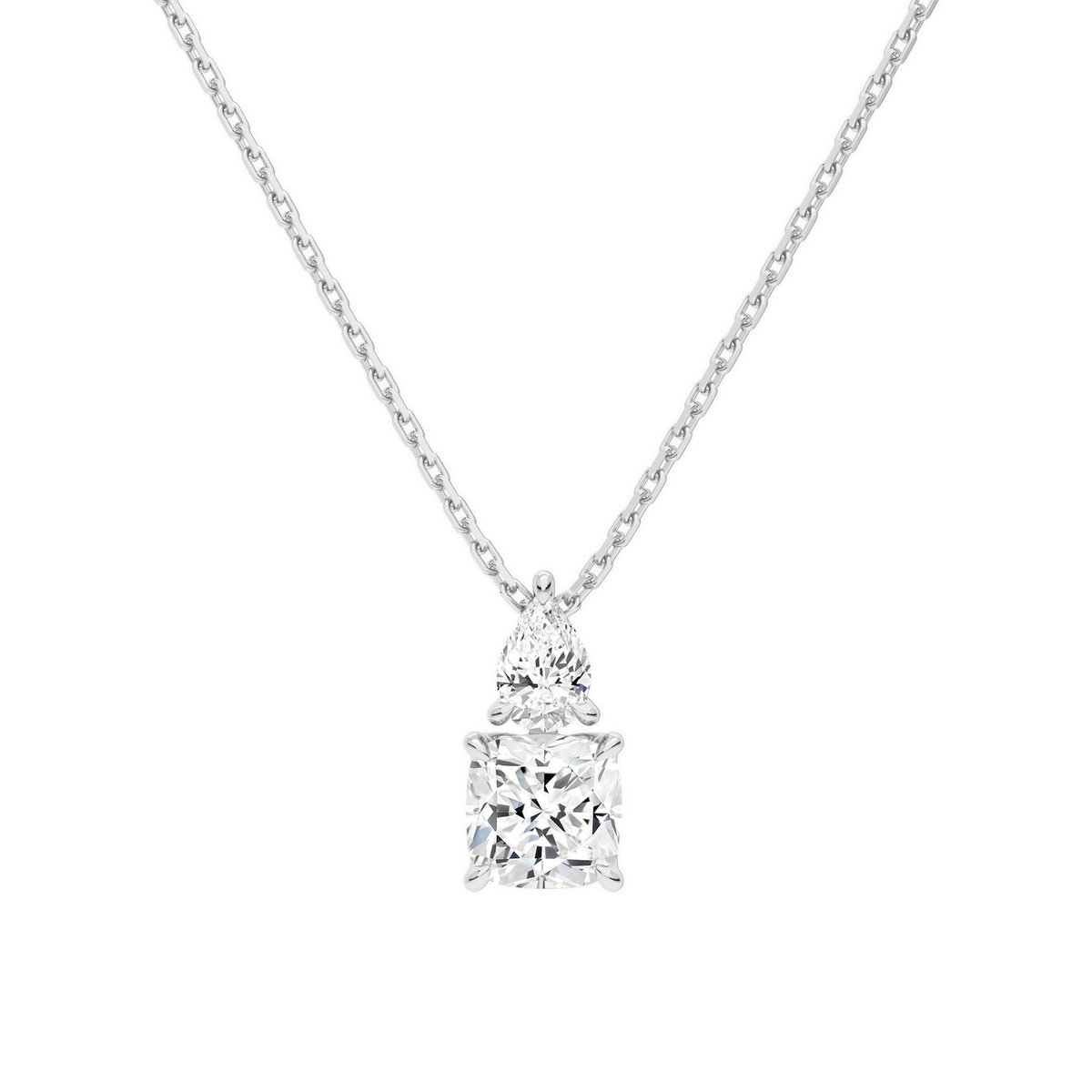
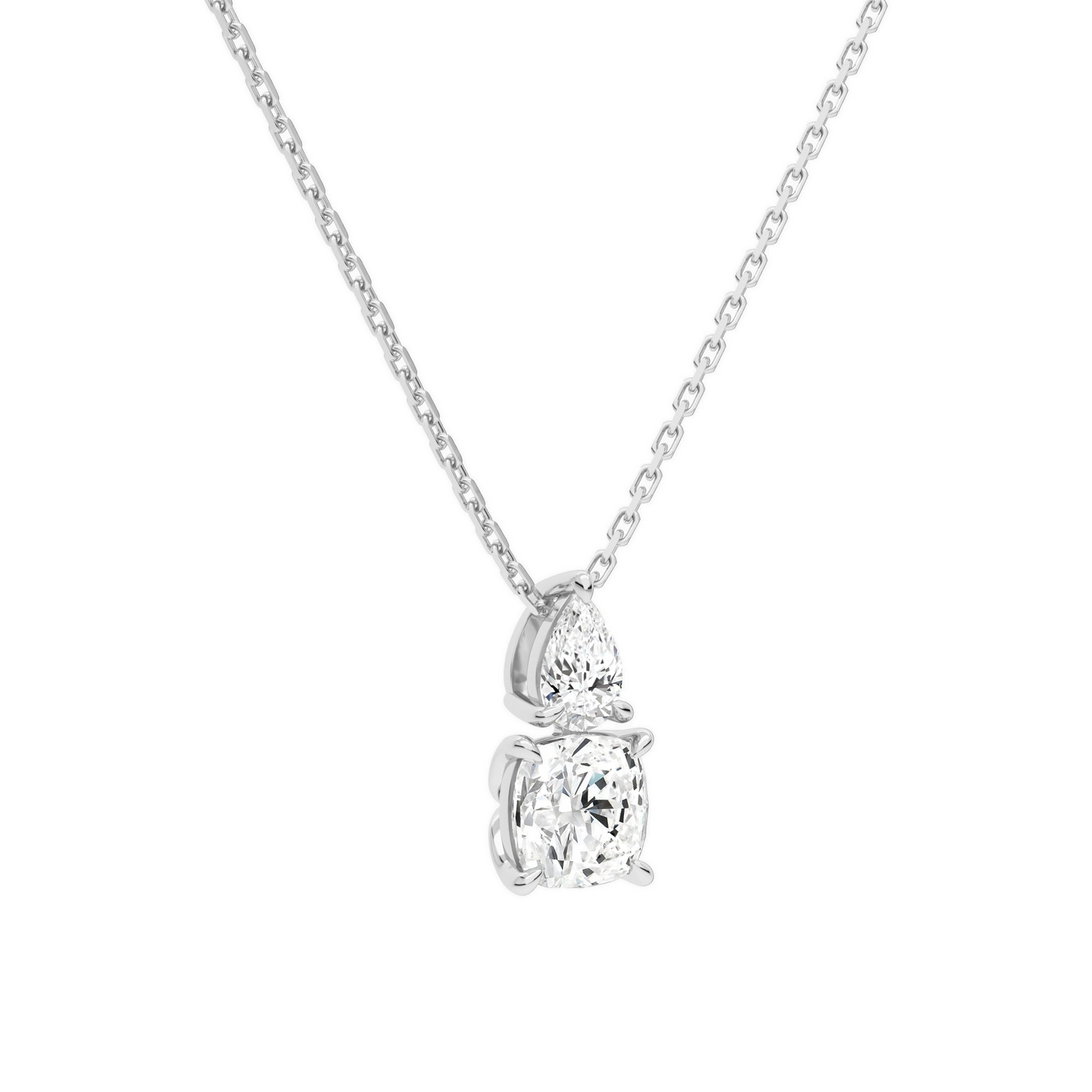
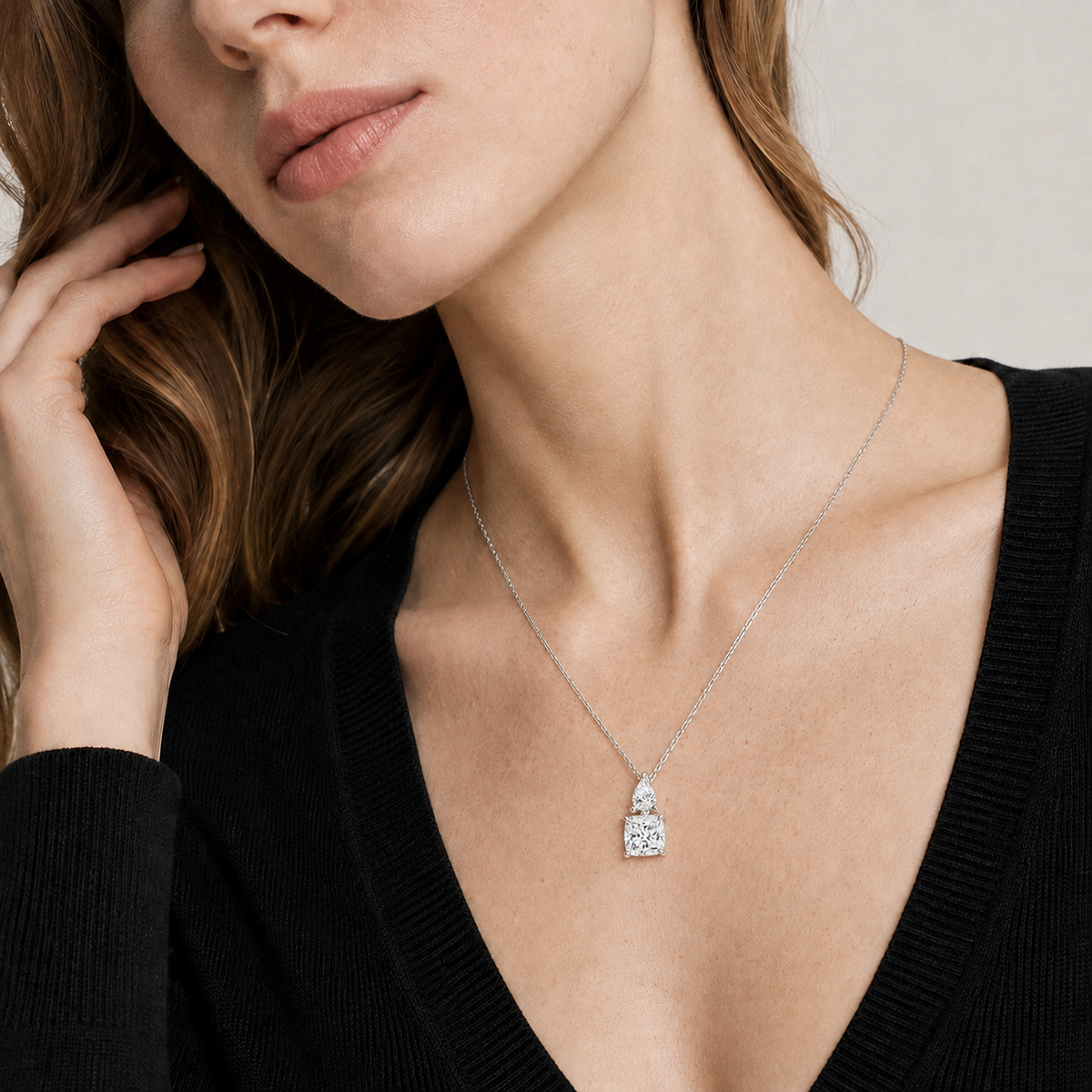
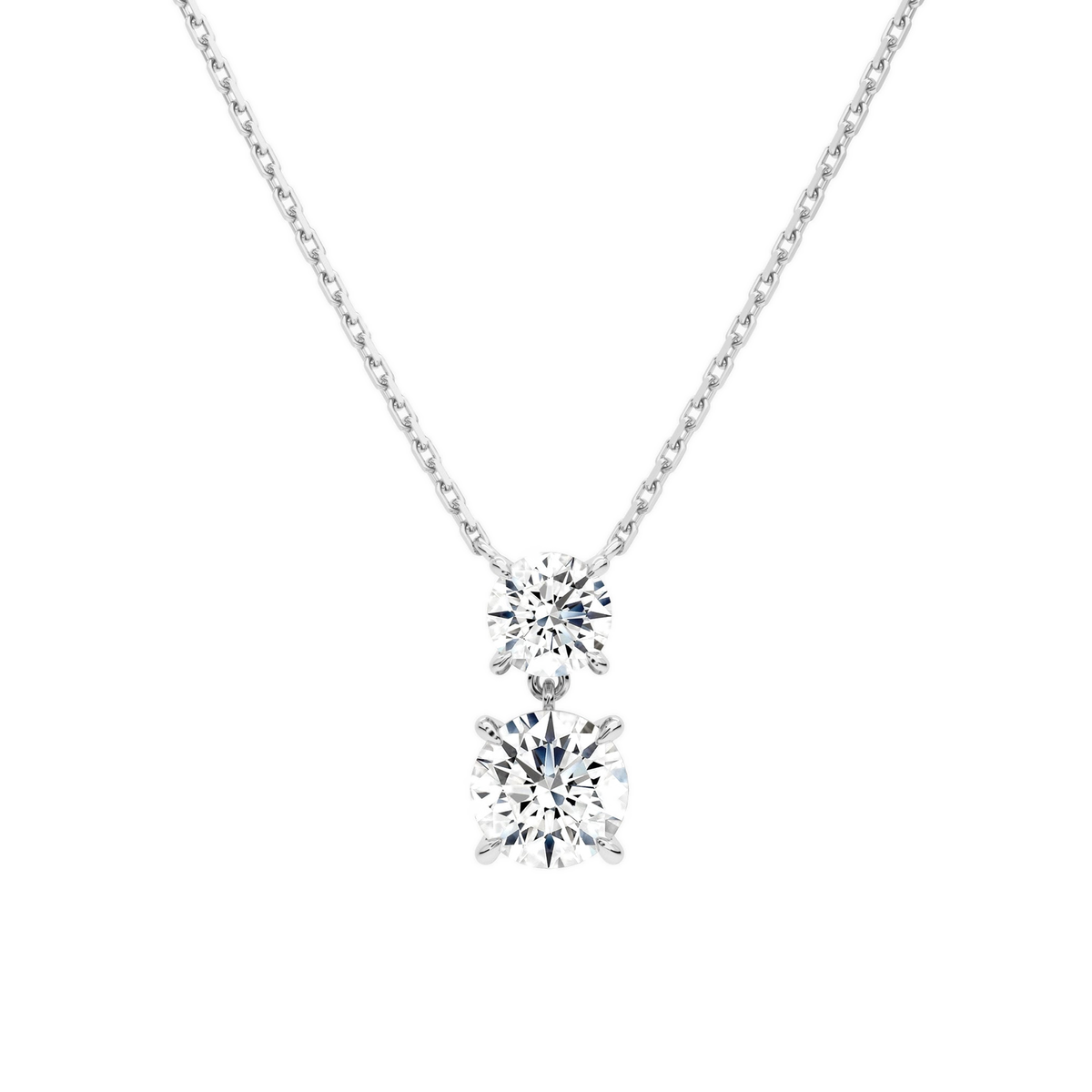
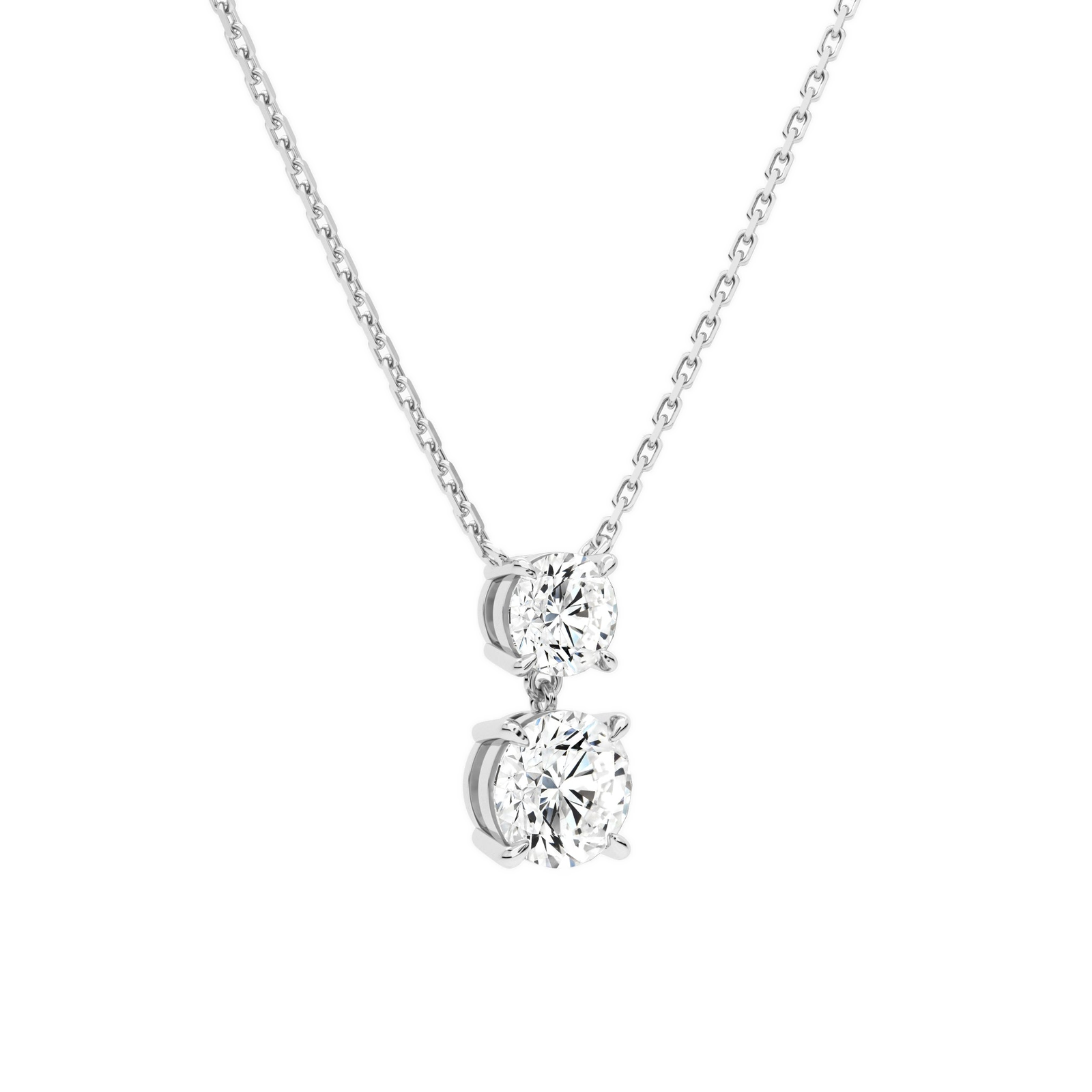
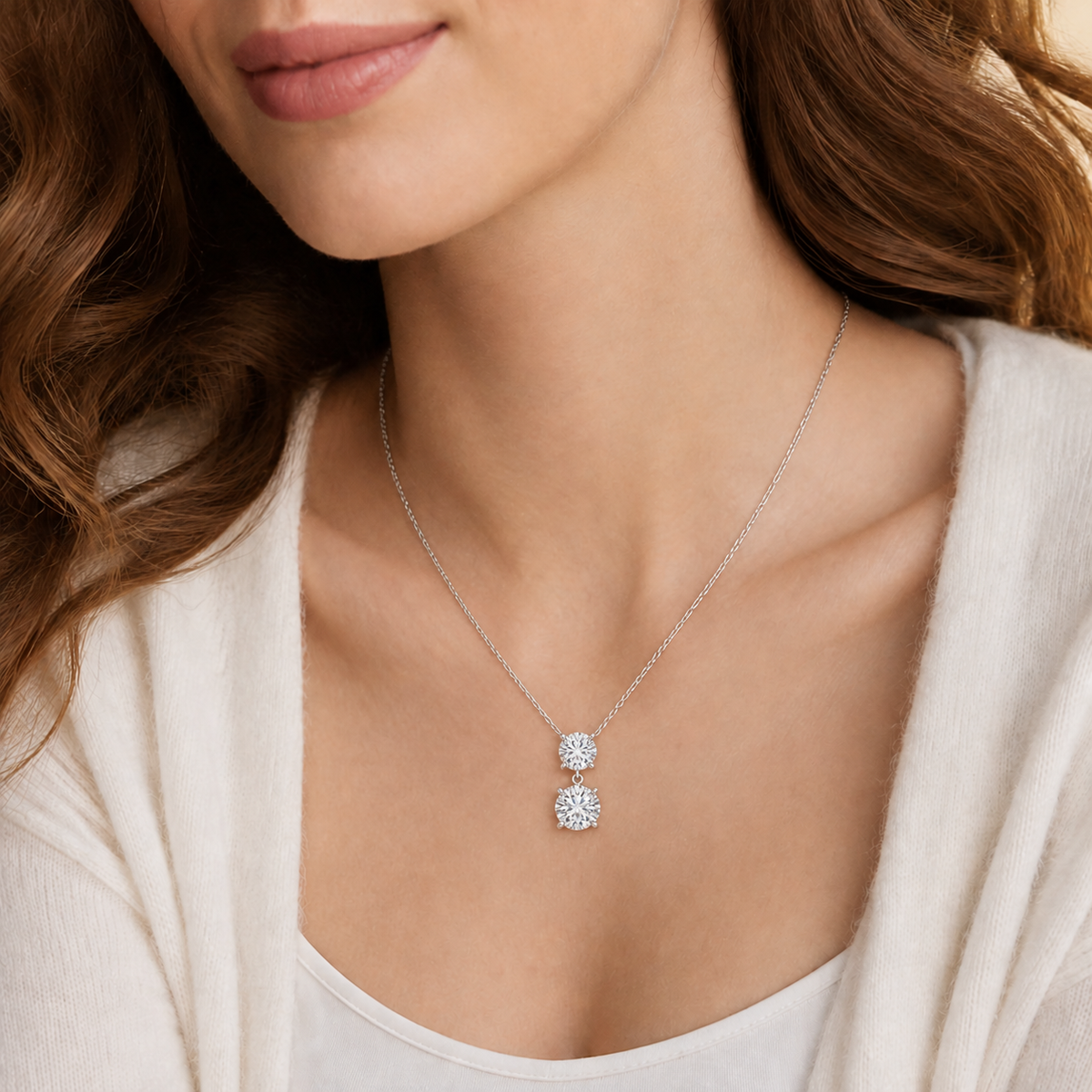
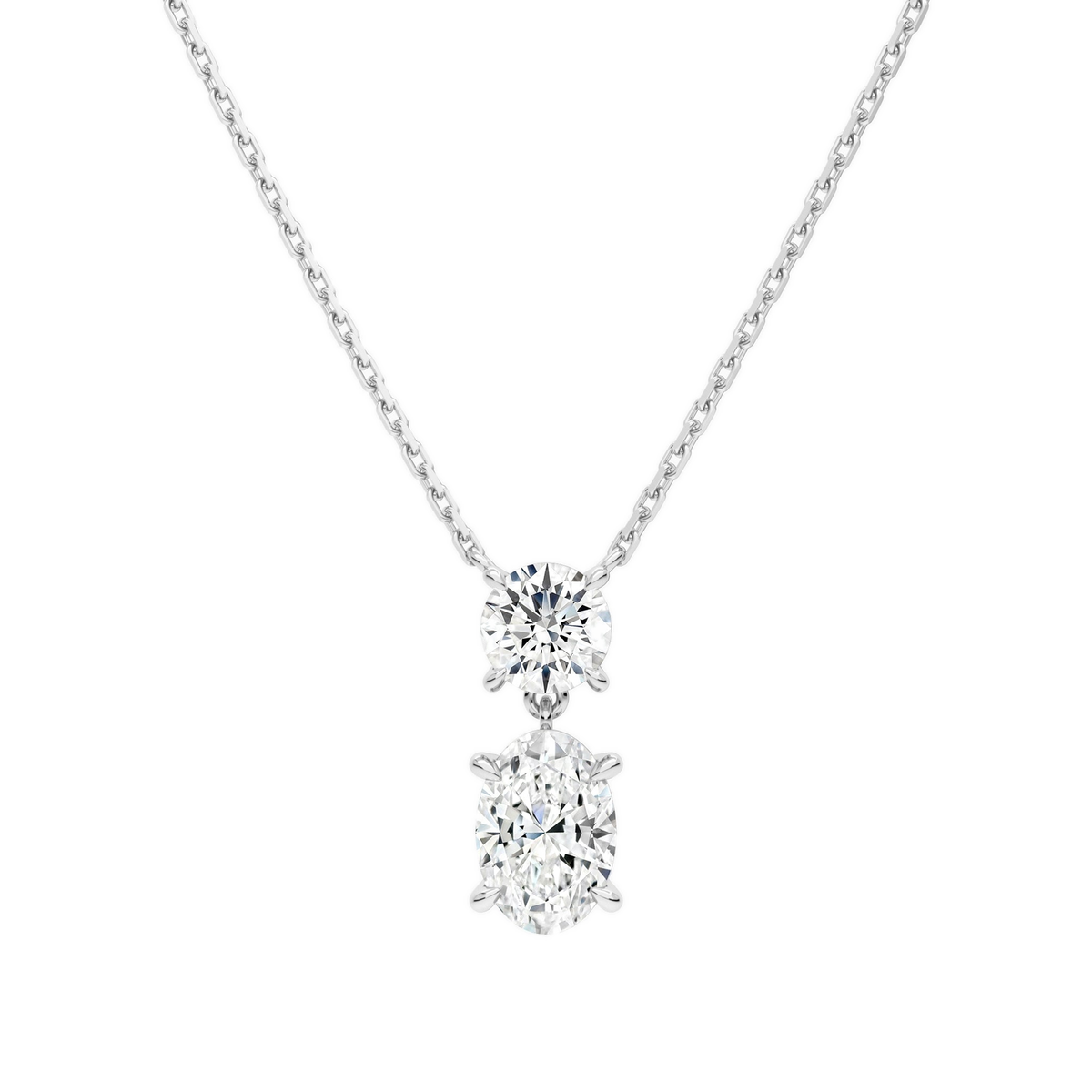
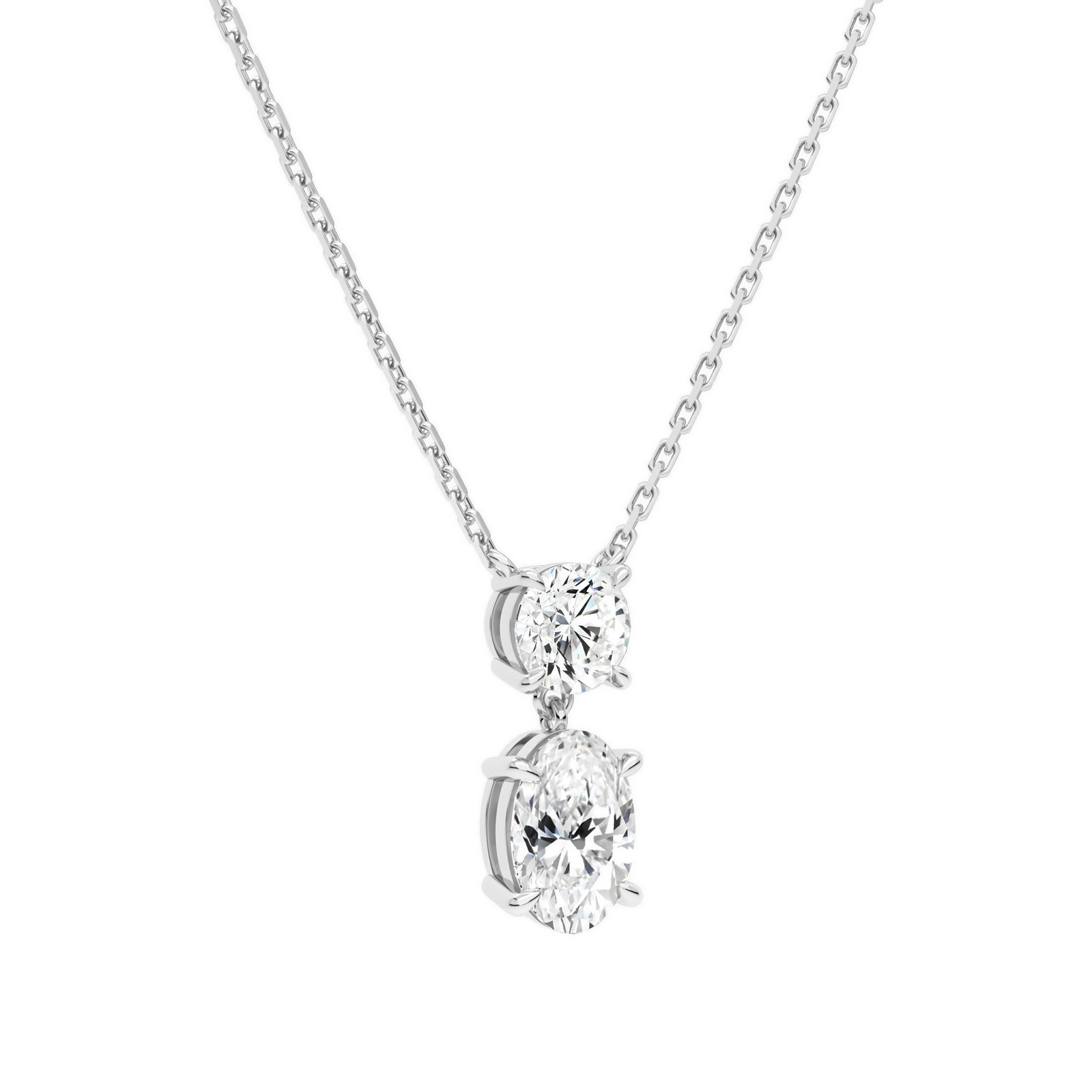
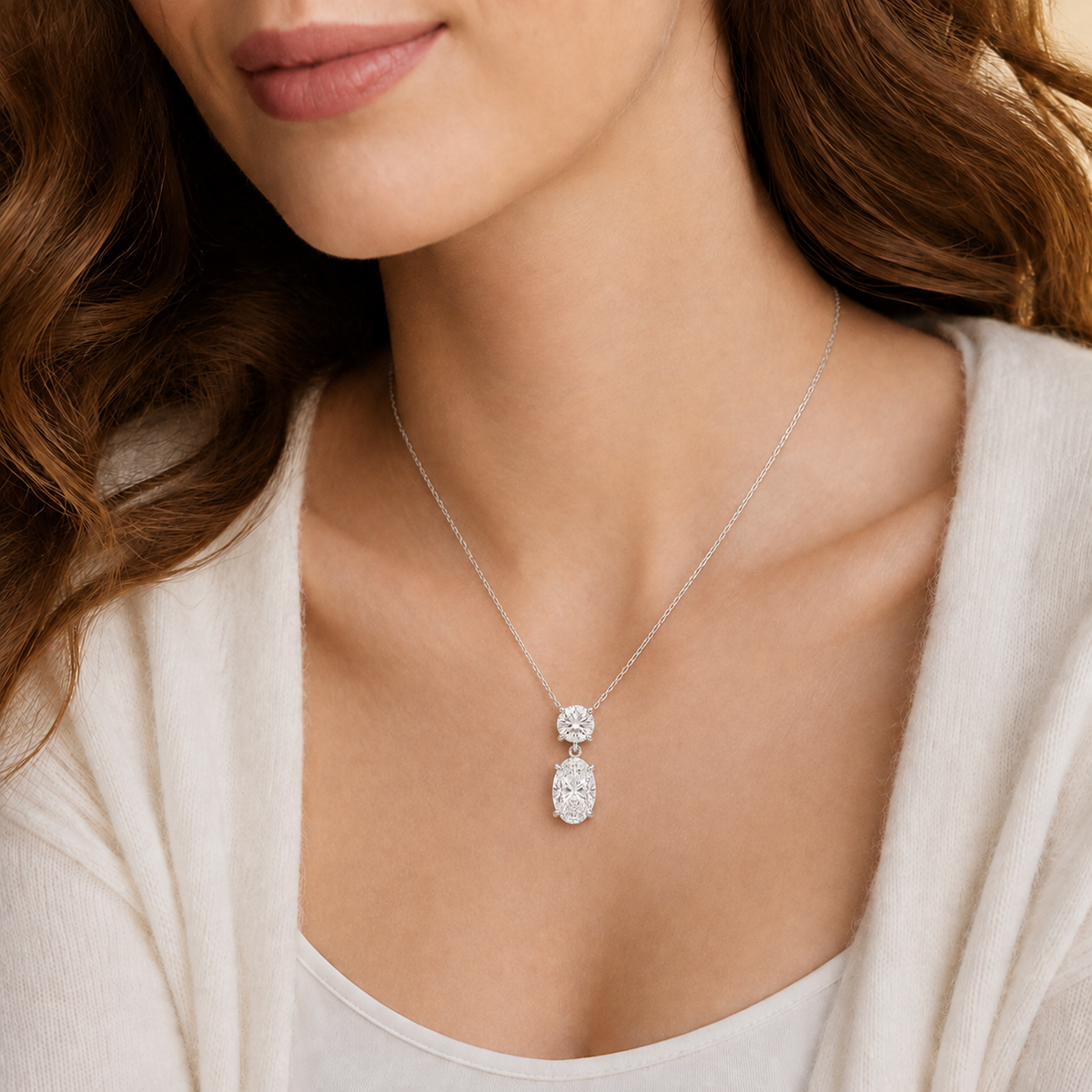
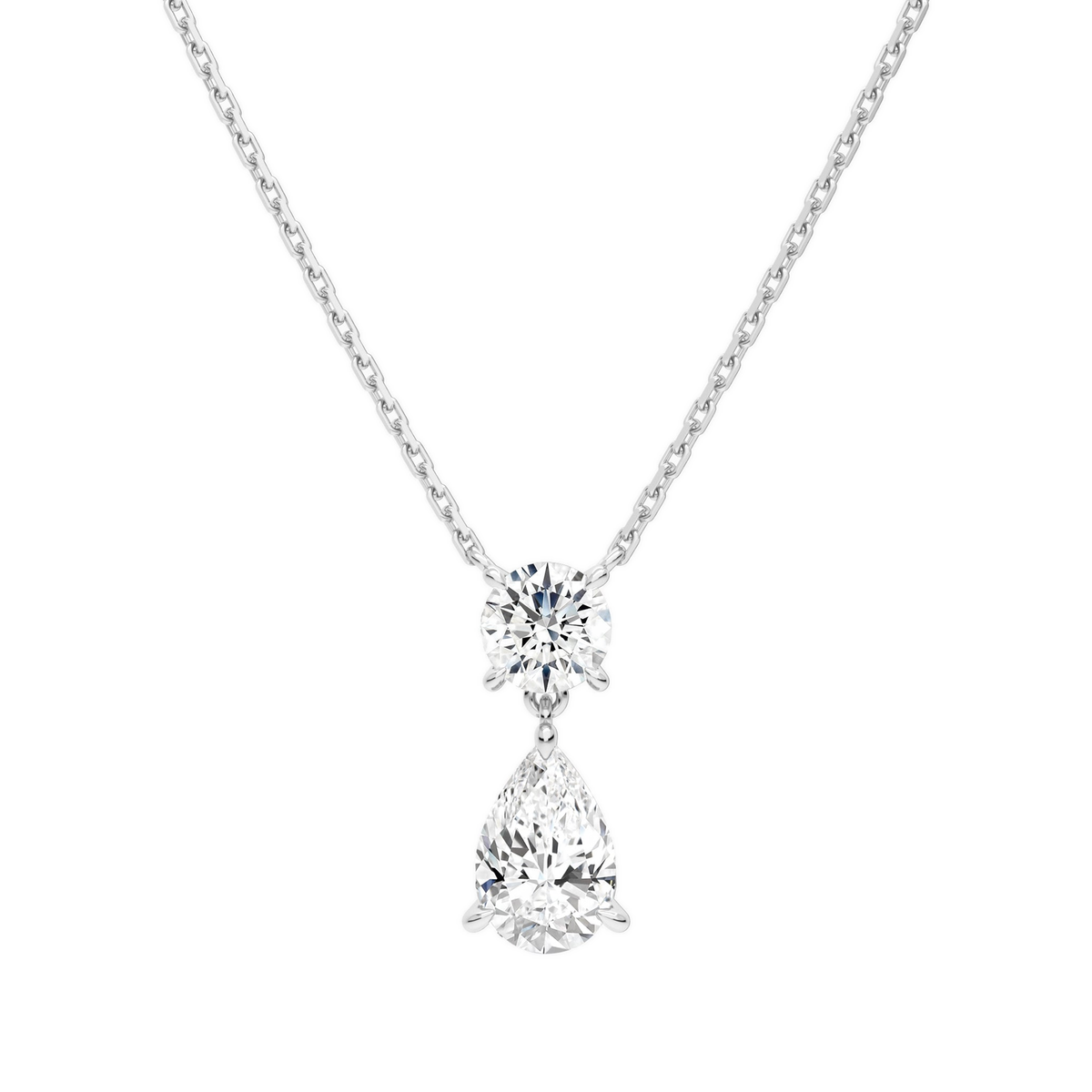
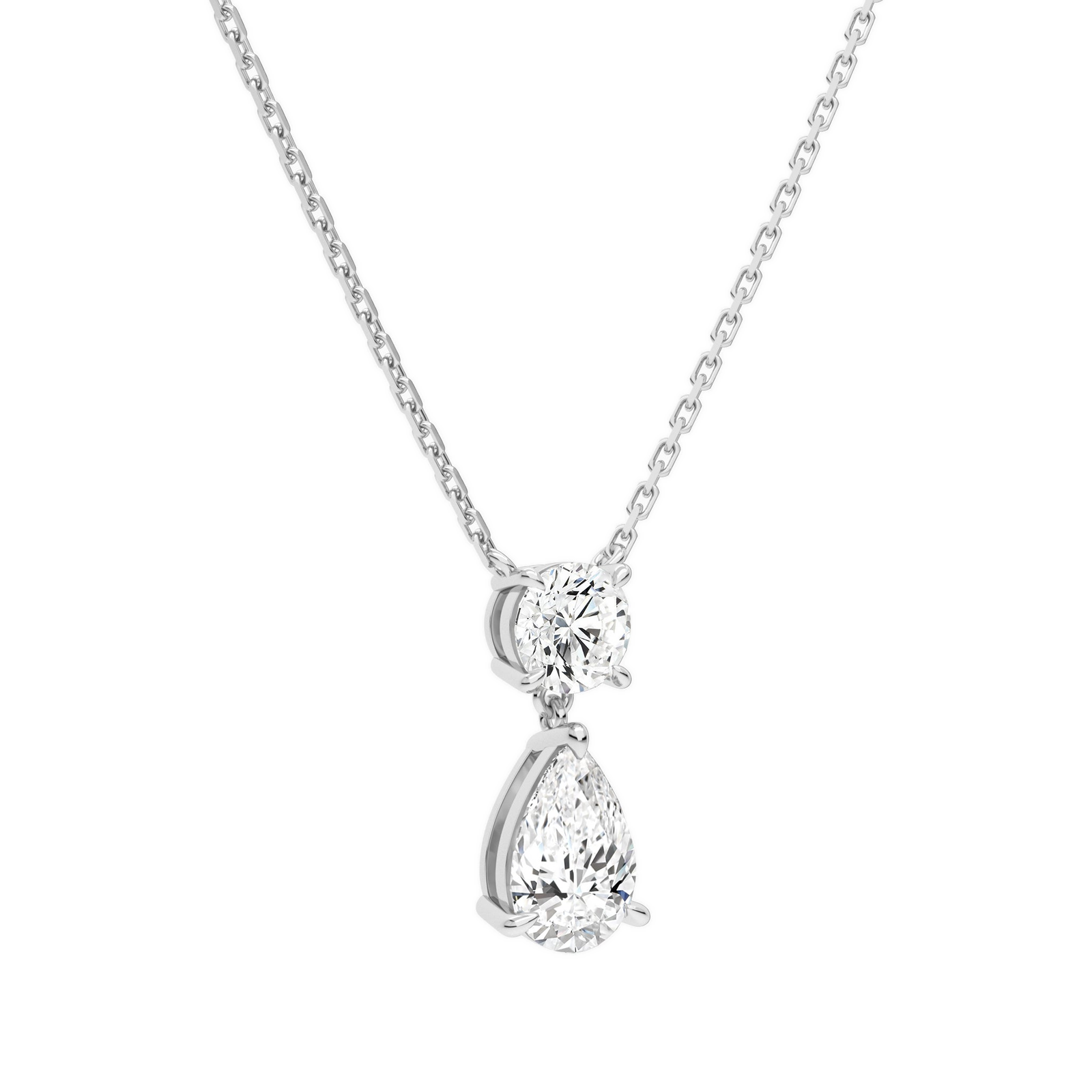
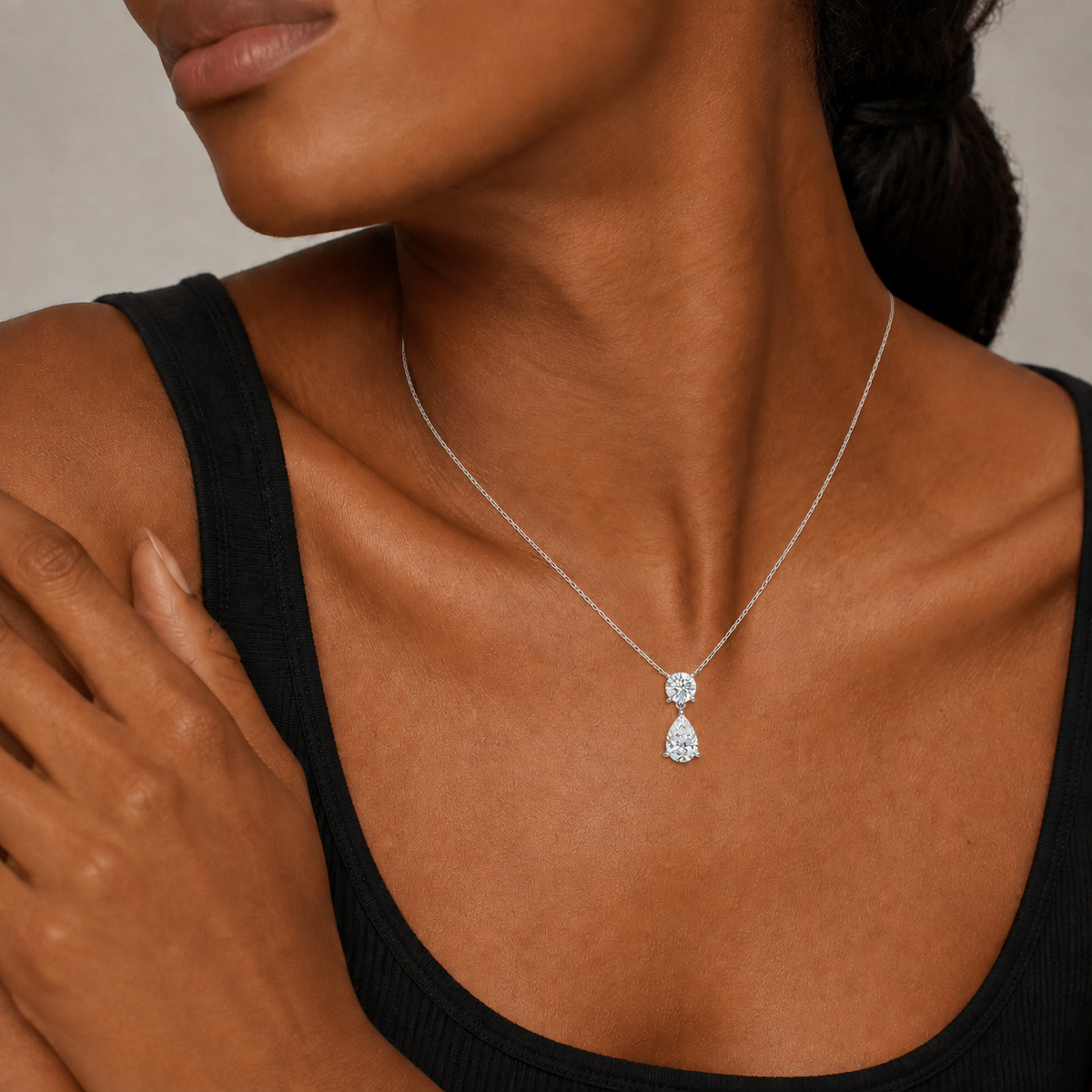

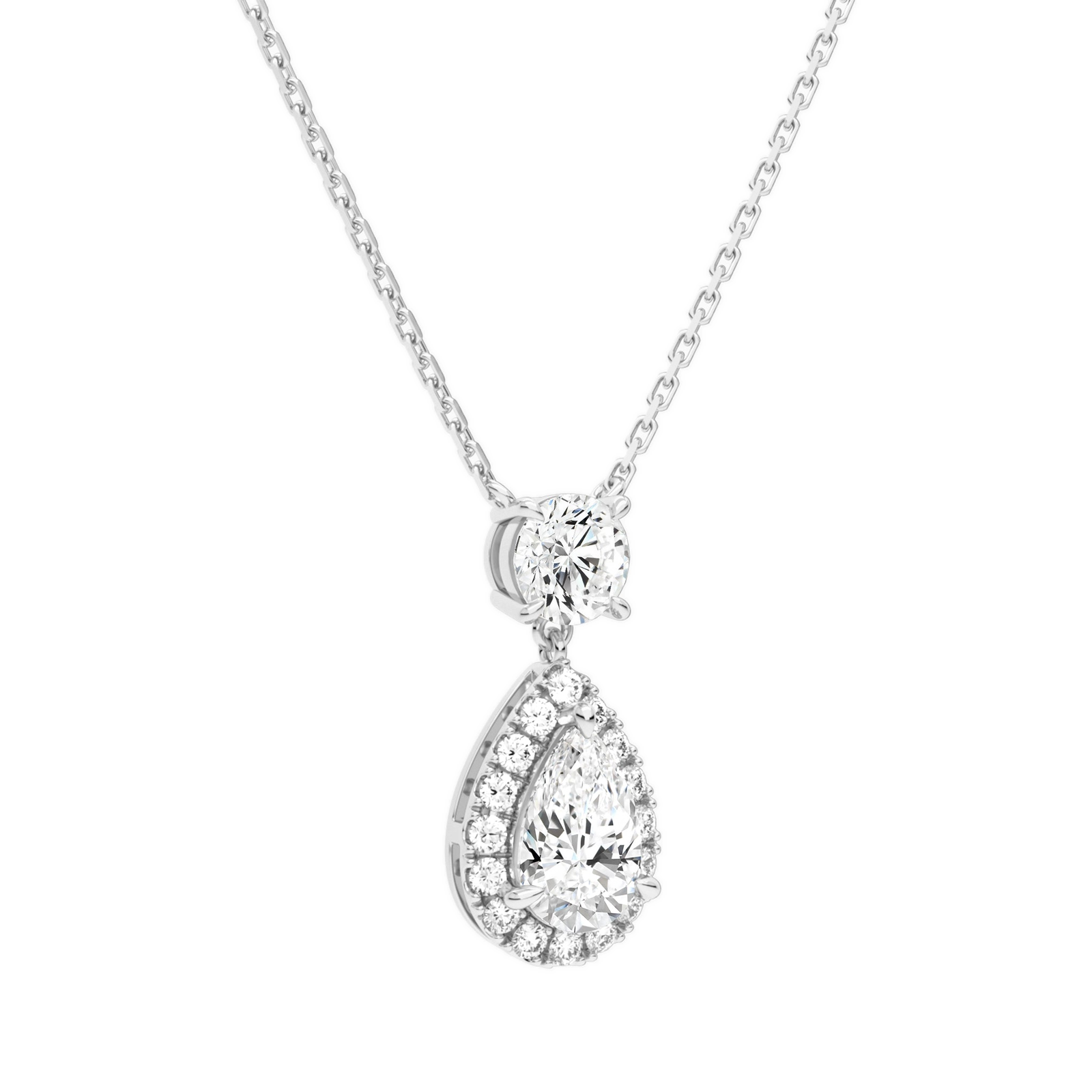
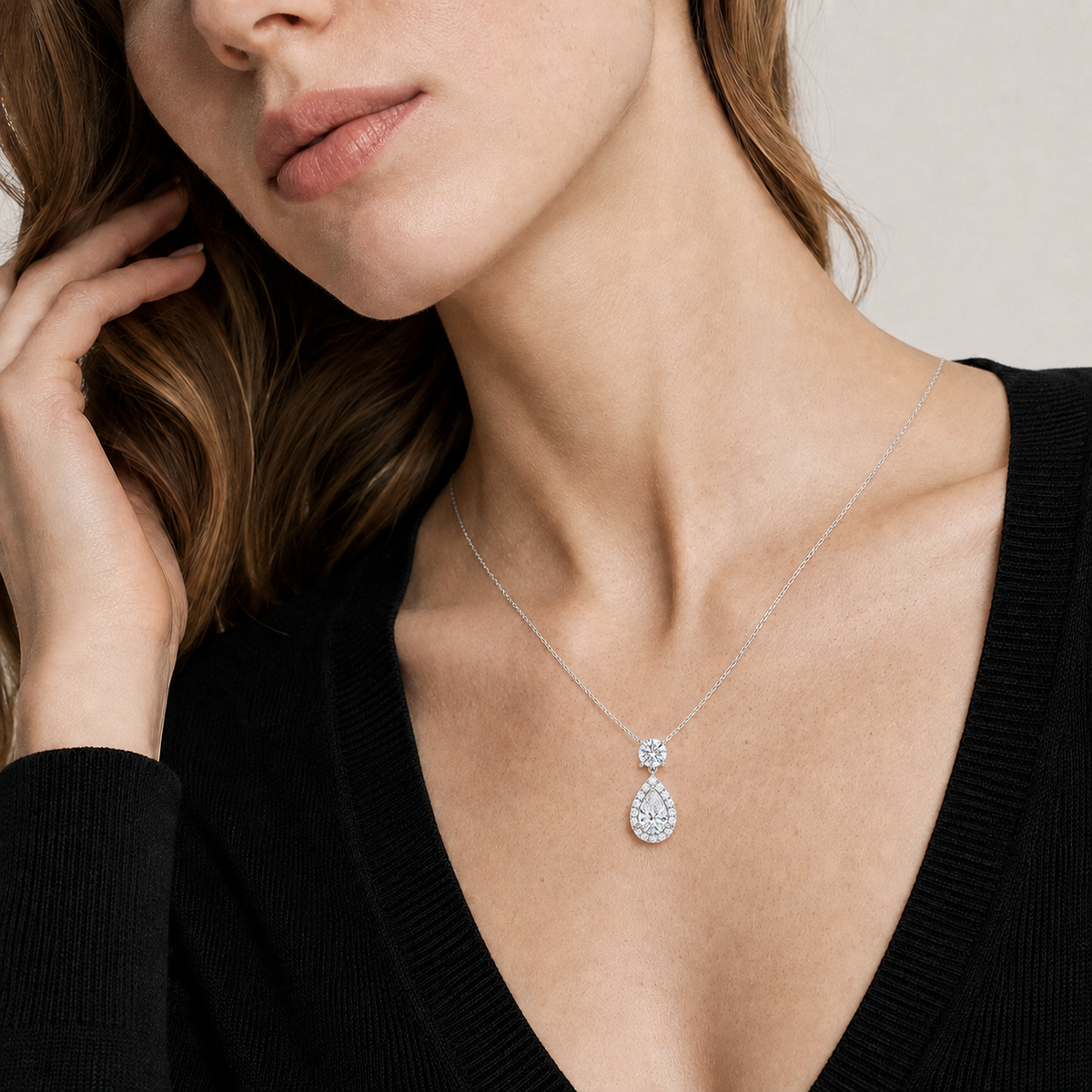
Platinum Lab-Grown Diamond Necklaces: Natural White Tone and Body-Scale Balance
Platinum brings natural white tone and material density to a necklace's complete path. Weight may be concentrated around a center, distributed through a bar or cross, carried by the chain, and resolved at the clasp. How those parts balance at the neckline matters more than density considered in isolation.
Burvonti's current 126-design collection spans solitaire, bezel, halo, accented-bail, twist, cross, Toi et Moi, duo-drop, cluster, charm, open-circle, link, tassel, and curved-bar compositions. One hundred eighteen correspond to Pendant designs; eight broaden the field through distributed light.
Fineness, Density, and an Evolving Surface
Jewelry Platinum is commonly alloyed rather than absolutely pure; exact fineness and hallmark must be confirmed for the selected product. Platinum is denser than common gold alloys, but total necklace weight also depends on metal volume, chain, setting, and motif construction.
Its surface changes with wear and may develop patina. That is not a guarantee of indestructibility or a universal preference. Finish, contact, environment, movement, care, and service shape the result. No surface should be described as permanently unchanged.
Distribute Weight through the Composition
A single center concentrates material and diamond weight near one point. A halo or cross broadens the field; a bar or link spreads it horizontally; a tassel or duo drop extends it vertically. Platinum density can influence drape and movement, but heavier does not automatically mean more secure or better balanced.
The collection includes 44 Solitaire-labelled, 20 Bezel, 34 Halo, 18 Cross, five Toi et Moi, and six Duo Drop designs across ten diamond shapes. Platinum cannot improve brilliance, change dimensions, or guarantee a fixed orientation.
Chain, Attachment, and Clasp Carry the Load
All 126 current descriptions identify adjustable 16–18-inch length, a 0.95 mm chain, and lobster clasp. These are current evidence requiring future readback. Exact product weight is not available as a Collection-wide fact, and placement varies by anatomy and construction.
Review how the focal form connects to the chain and whether it slides, articulates, rotates, or is held at two points. Platinum does not guarantee a pendant will face forward, a clasp will prevent loss, or layered chains will remain separated. Geometry, condition, use, and maintenance matter.
Measure Diamonds and Metal Separately
Centerstone and Total Carat Weight describe diamond scope, not total necklace weight. A halo, cross, paired form, or tassel may distribute carat across several stones. Compare individual dimensions, total motif size, setting coverage, chain width, and spacing.
When layering, consider cumulative material weight, vertical intervals, movement, and contact between pieces. A natural white field can unify the composition, but matching material does not guarantee comfort, clearance, or reduced tangling.
Material Presence with Human Calibration
Burvonti pairs responsibly sourced lab-grown diamonds with necklace structures considered at body scale. Independently graded or certified principal diamonds should be understood according to document scope; one report does not automatically cover accents, chain, clasp, or finished piece.
Custom possibilities may refine shape, scale, setting, motif, attachment, chain, length, clasp, or metal where feasible. Store Platinum necklaces without sharp bends or abrasive diamond contact, and inspect changed links, settings, or clasp. Material presence should remain balanced, never merely heavy.
Frequently Asked Questions
How is this page different from the main Necklace Collection?
It focuses on Platinum's natural white tone, density, patina, weight distribution, and full construction. The parent owns broad necklace education.
Are Platinum necklaces made from pure Platinum?
Jewelry Platinum is commonly alloyed. Confirm the selected product's exact fineness and hallmark.
Is Platinum naturally white?
Yes, though alloy, finish, lighting, photography, and surface wear influence the visible result.
Is a Platinum necklace heavier than a gold necklace?
Platinum is denser than common gold alloys, but total weight also depends on metal volume, chain, setting, and motif.
Which necklace structures appear in Platinum?
The 126 designs include solitaire, bezel, halo, cross, accented-bail, twist, Toi et Moi, duo-drop, bars, links, tassel, charm, cluster, and open-circle forms.
How is this Collection broader than Pendants?
Eight current designs distribute light through wider or linear forms beyond the 118 normalized pendant counterparts.
Does it currently include tennis necklaces?
No tennis necklace appears in the current public product set.
Does Platinum make diamonds more brilliant?
No. It changes the material context, not facet relationships, dimensions, or grading facts.
What do Centerstone and Total Carat Weight describe?
They may refer to one principal stone or several diamonds combined. Neither describes total Platinum weight.
What length is currently listed?
Current public descriptions identify adjustable 16–18-inch length; actual placement depends on wearer and construction.
What chain and clasp are currently represented?
The current assortment lists a 0.95 mm chain and lobster clasp across all 126 products; confirm the selected piece.
Does Platinum guarantee pendant security or orientation?
No. Attachment, chain path, geometry, workmanship, condition, movement, impact, and care all matter.
Does Platinum scratch or develop patina?
Its surface changes with wear and may develop patina. Finish, environment, contact, use, and care affect the result.
Is Platinum automatically hypoallergenic?
No universal outcome should be promised without confirming the complete alloy and wearer-specific concern.
Can Platinum necklaces be layered without tangling?
No. Length, drape, weight distribution, attachment, movement, clothing, and contact determine the relationship.
Can Burvonti personalize a Platinum necklace?
Custom possibilities may include shape, scale, setting, motif, attachment, chain, length, clasp, or metal, subject to feasibility.