


Lab Grown Diamond Earrings in 18K Yellow Gold
Light meets a fuller gold presence. 18K yellow gold connects close-set forms, curved hoops, and moving drops with measured warmth.


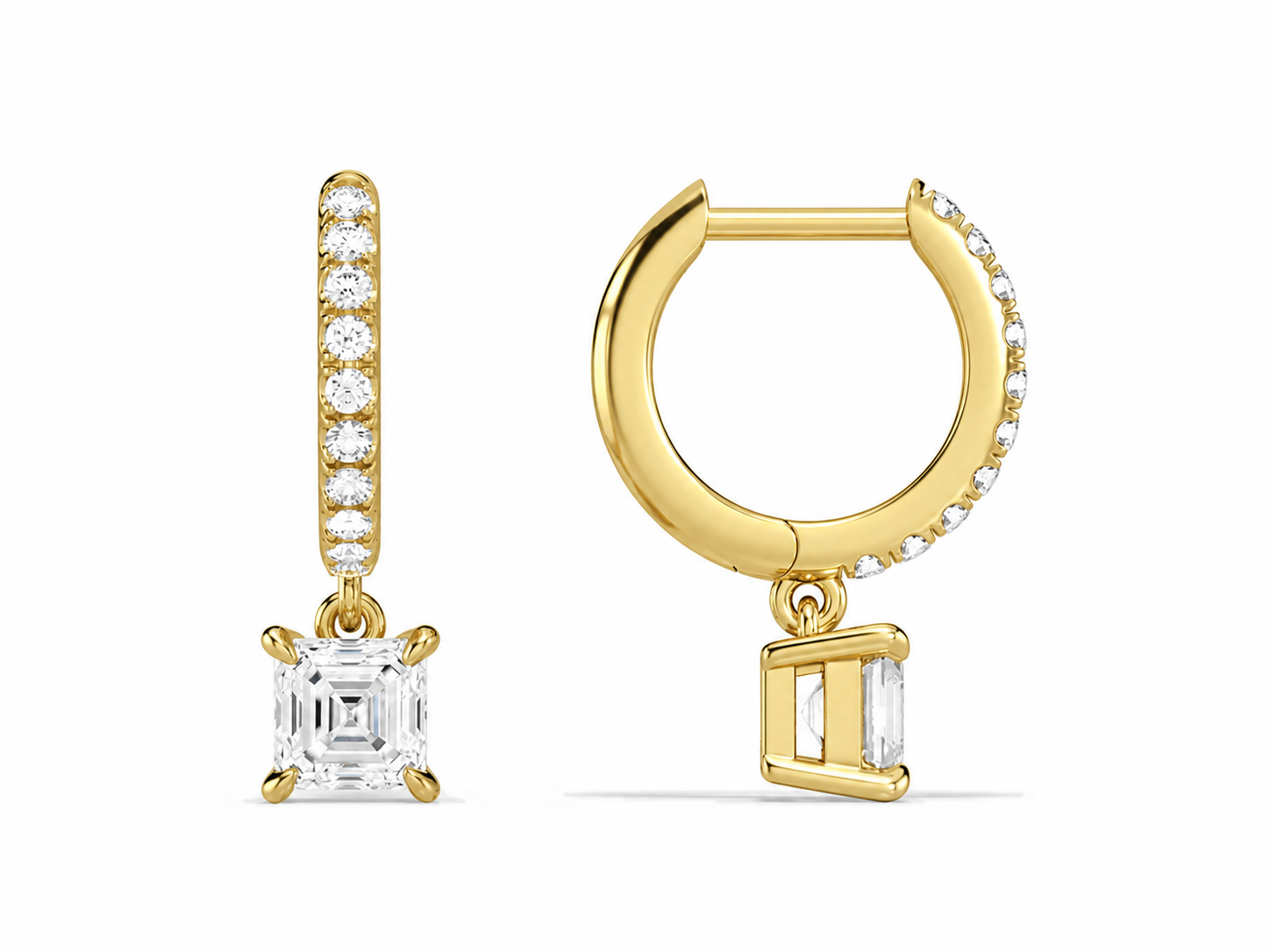


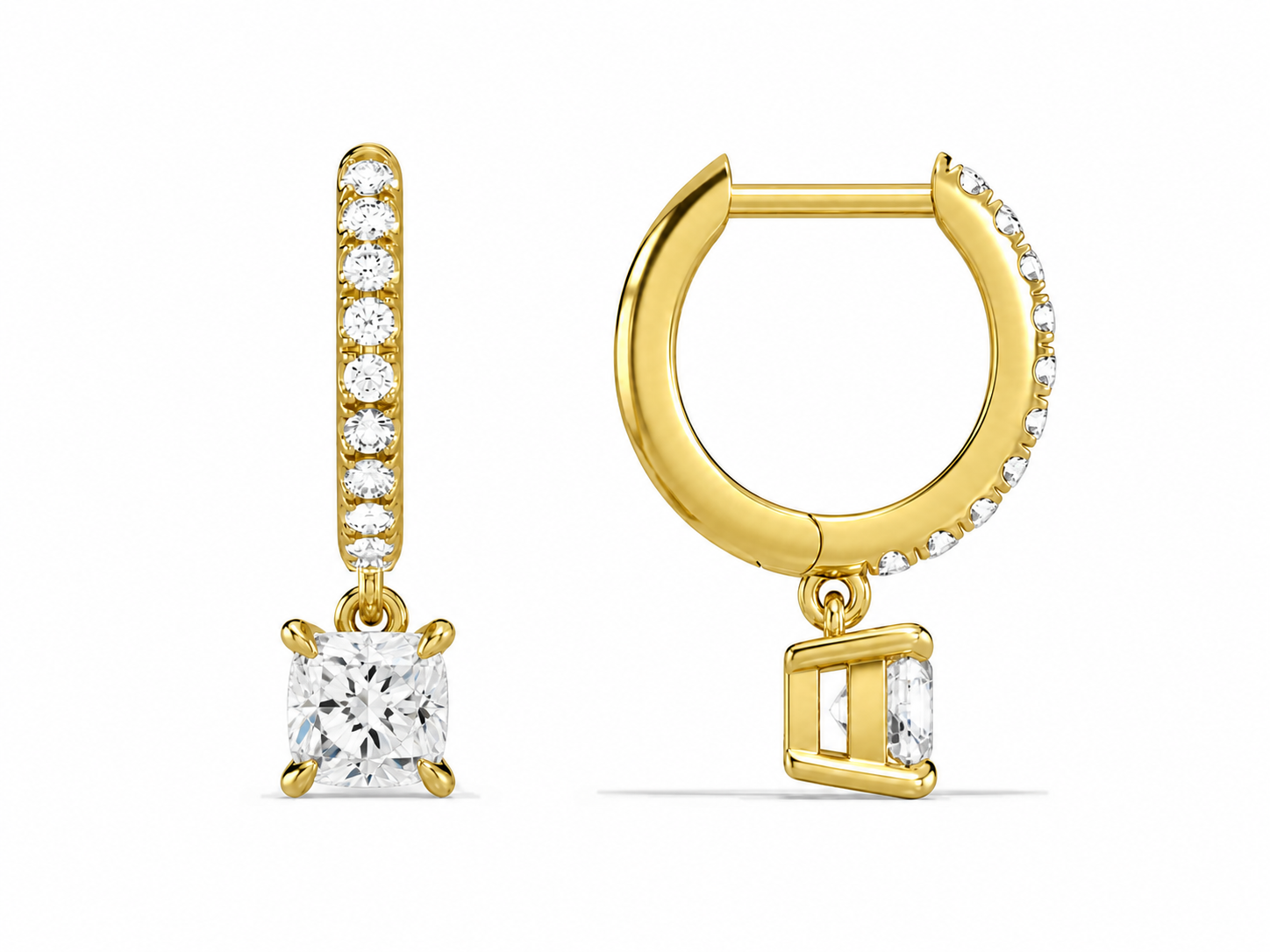


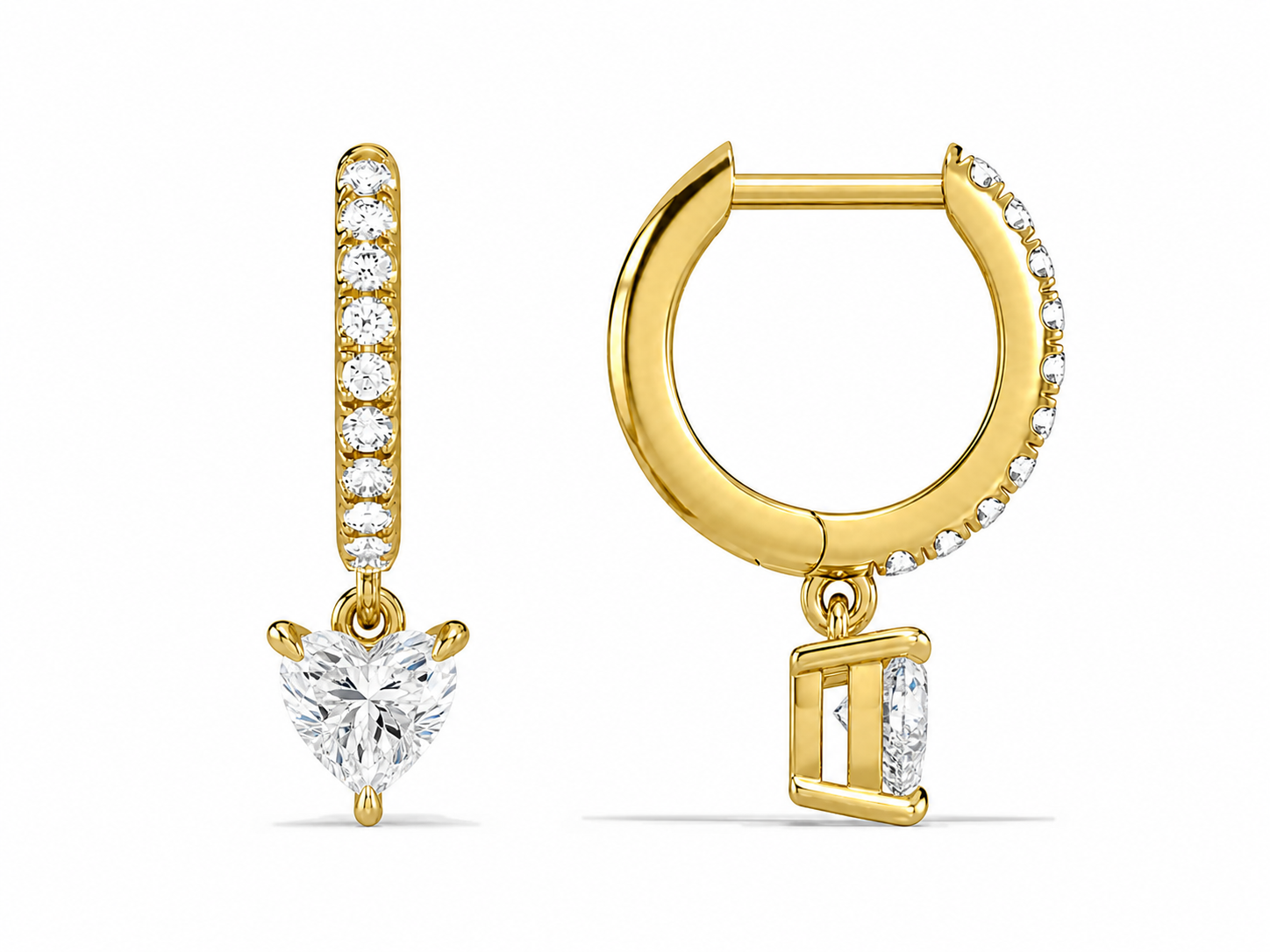


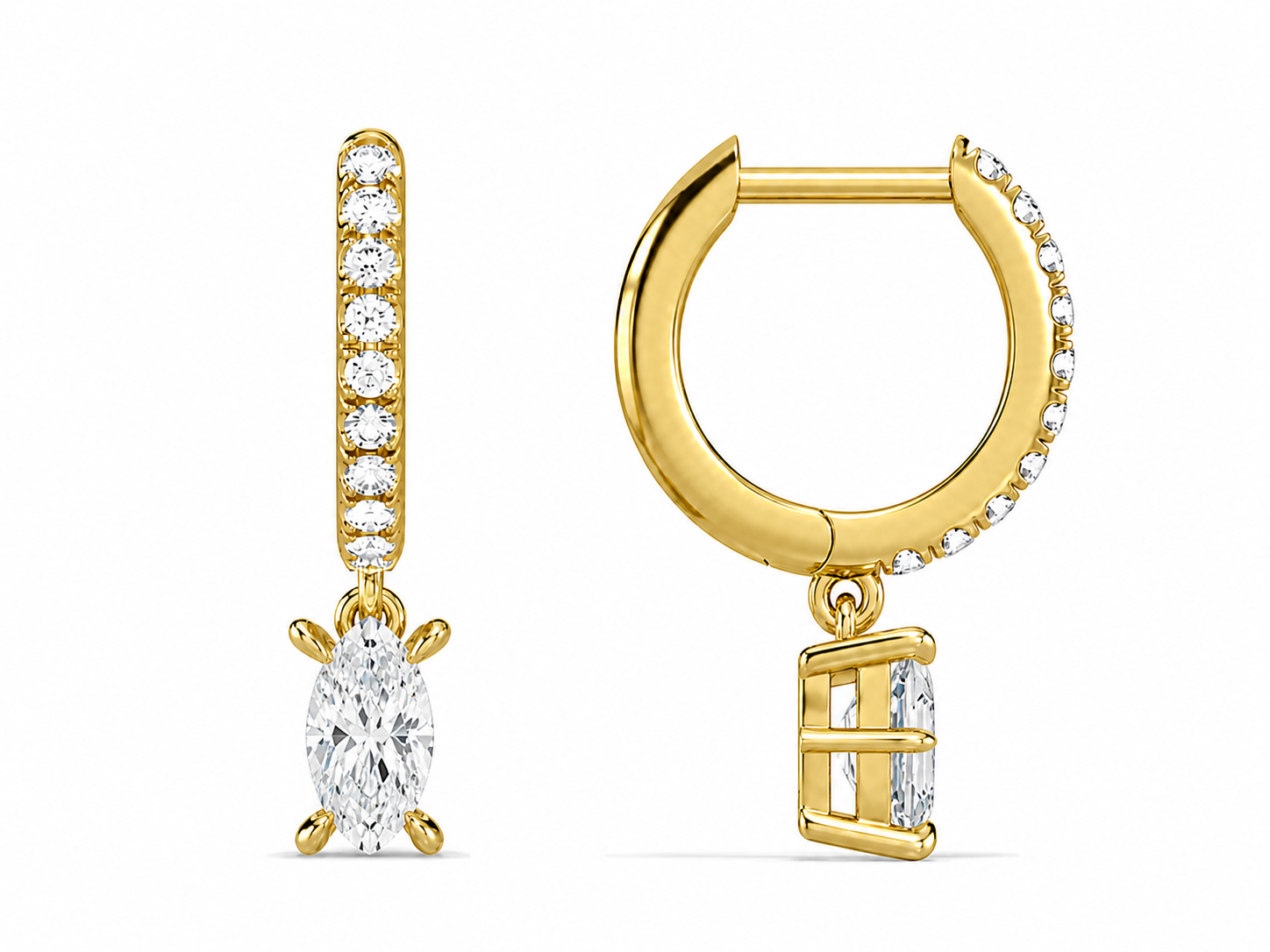


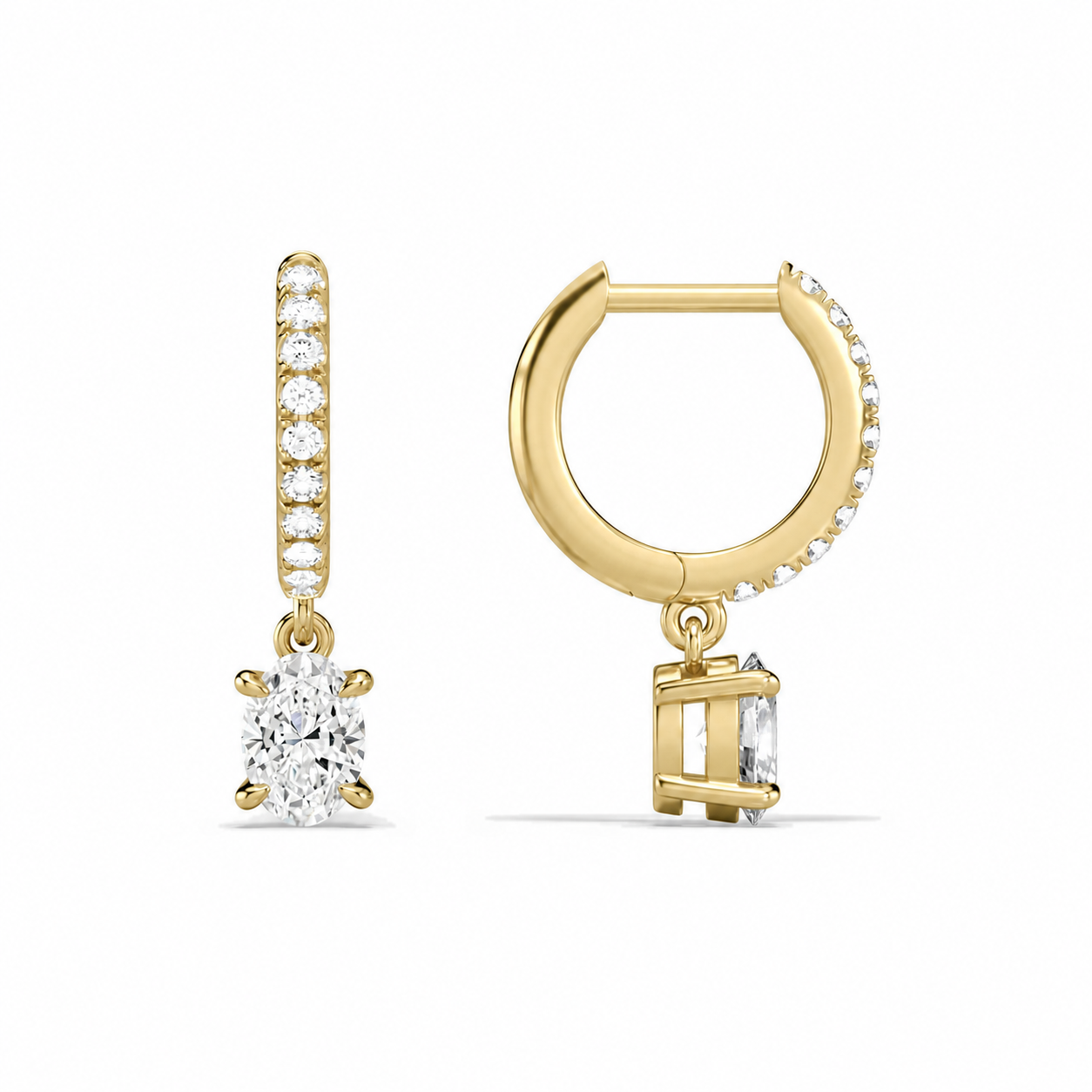


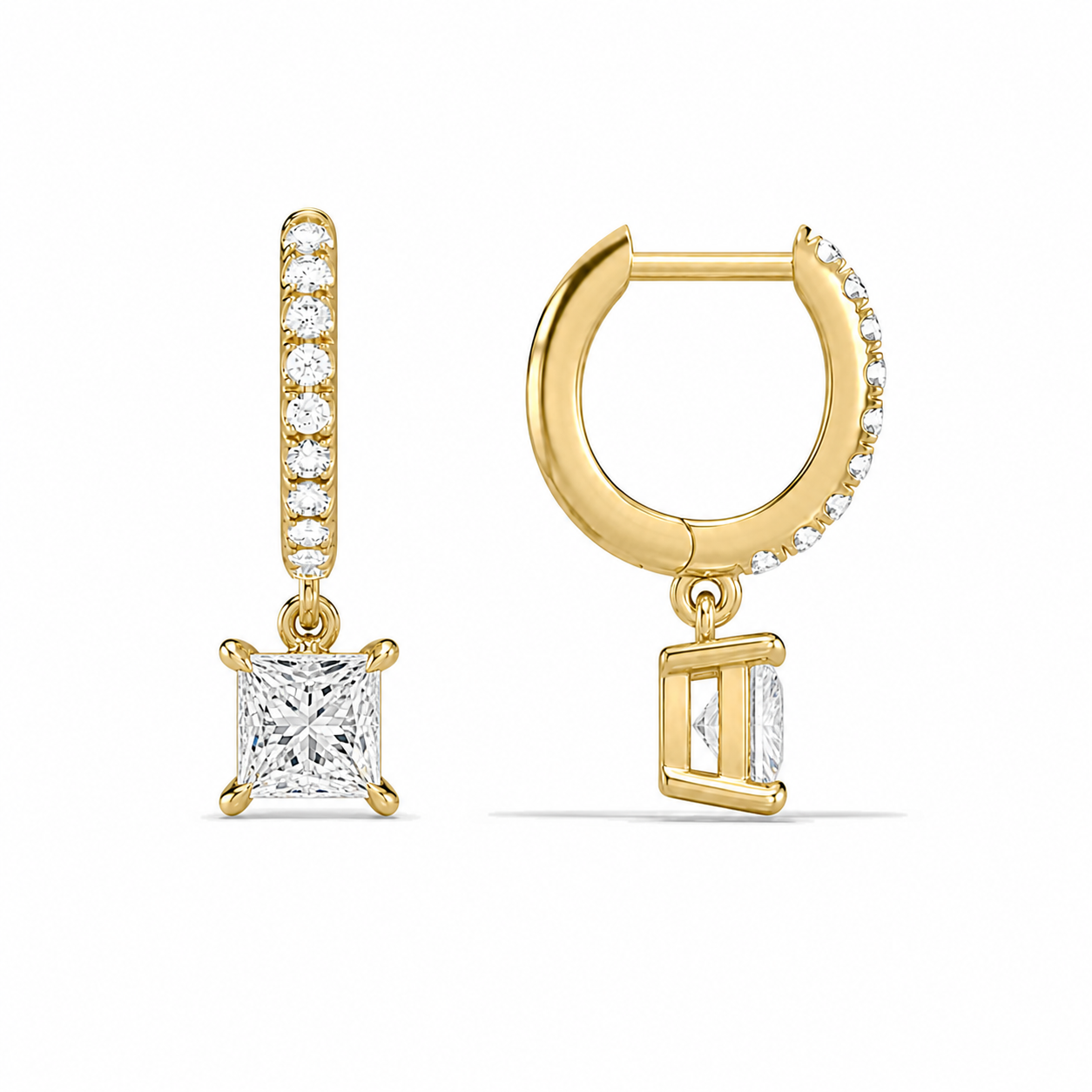


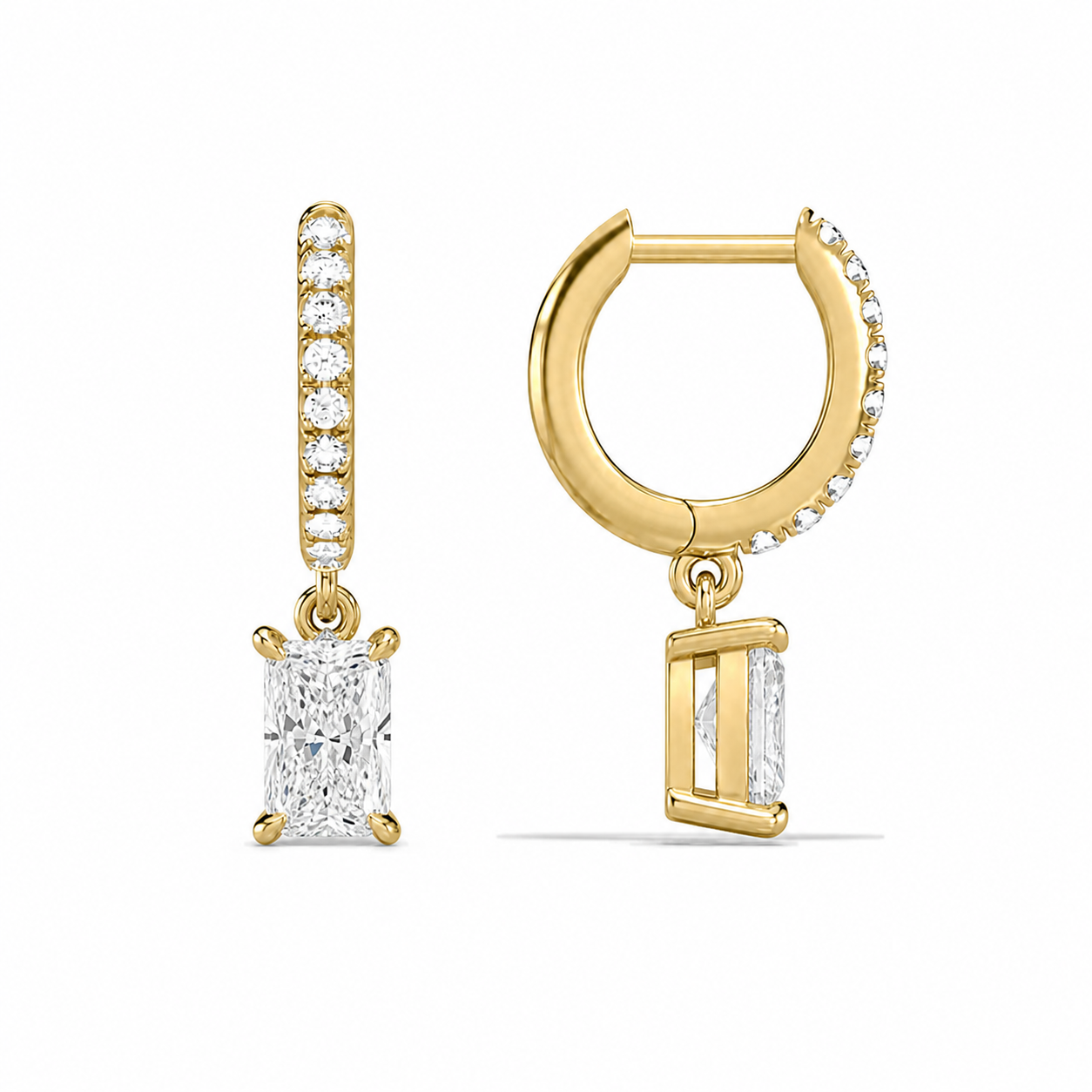


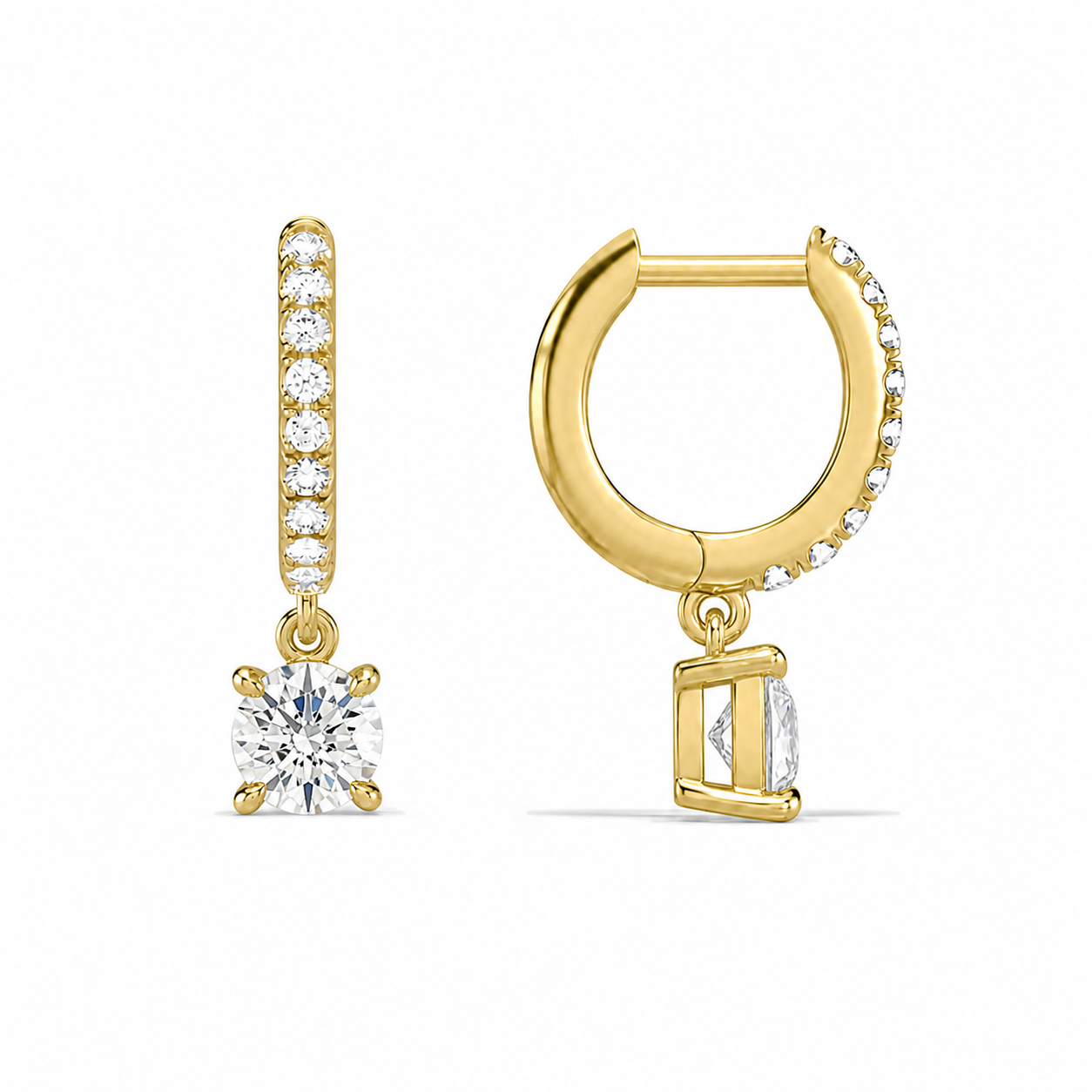


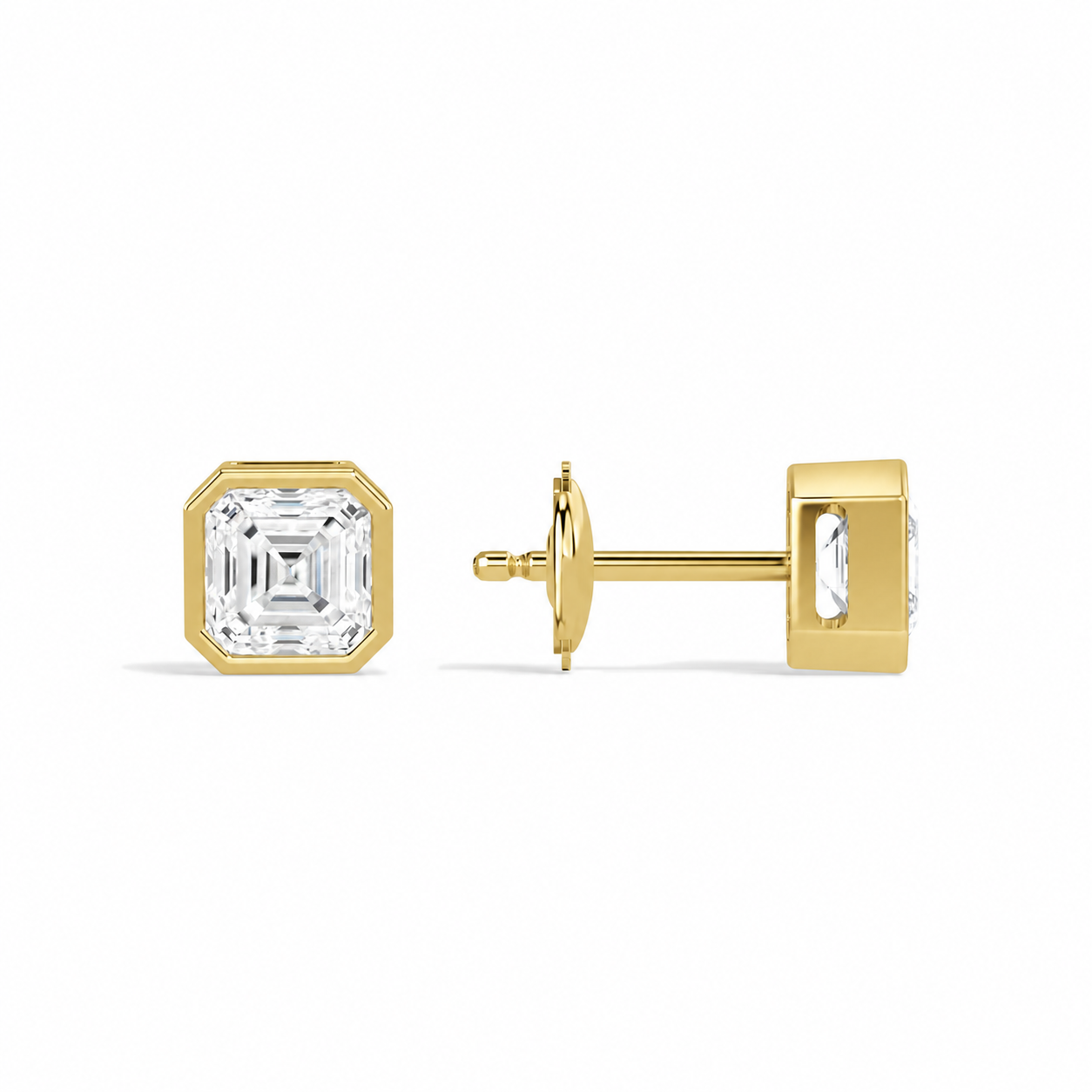


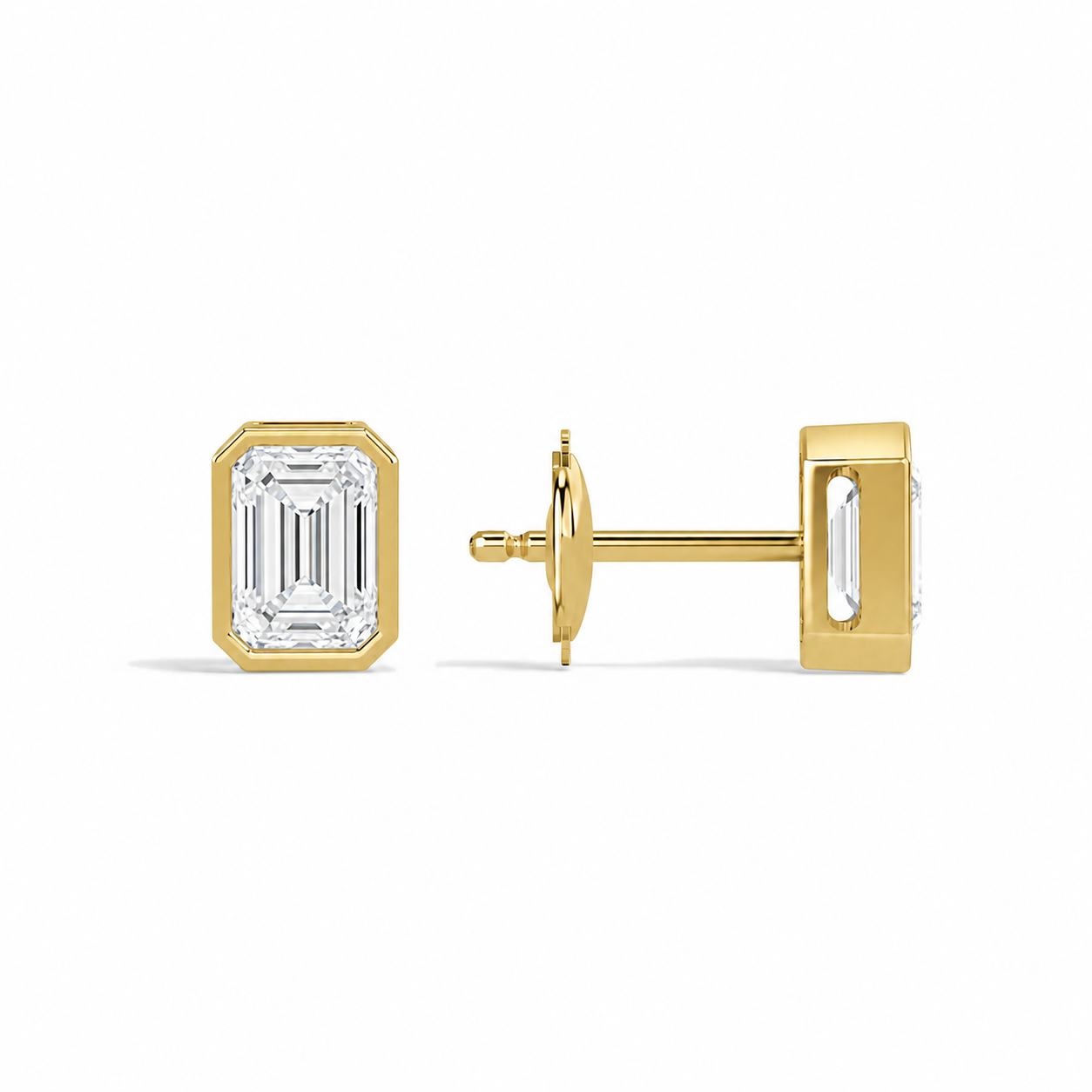


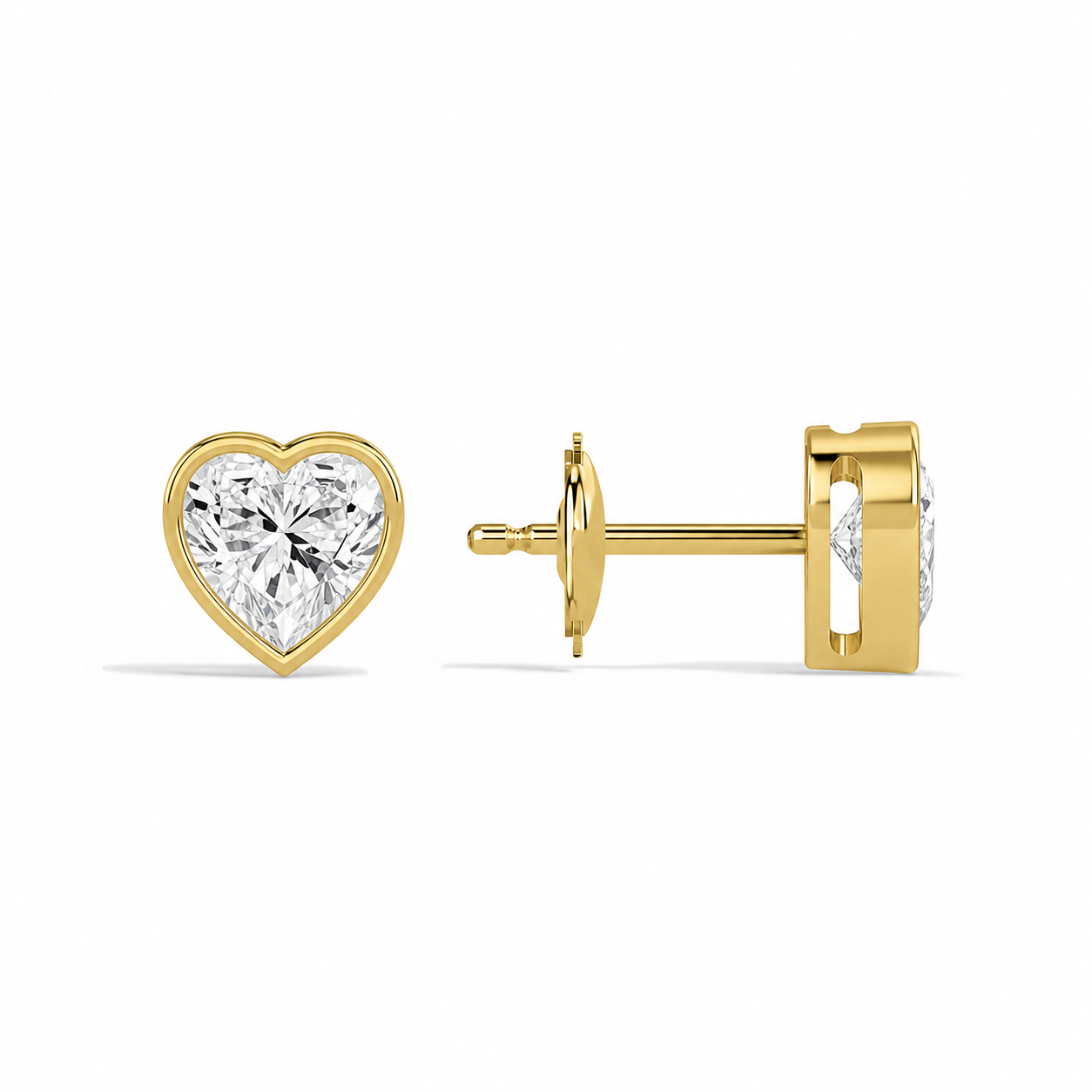


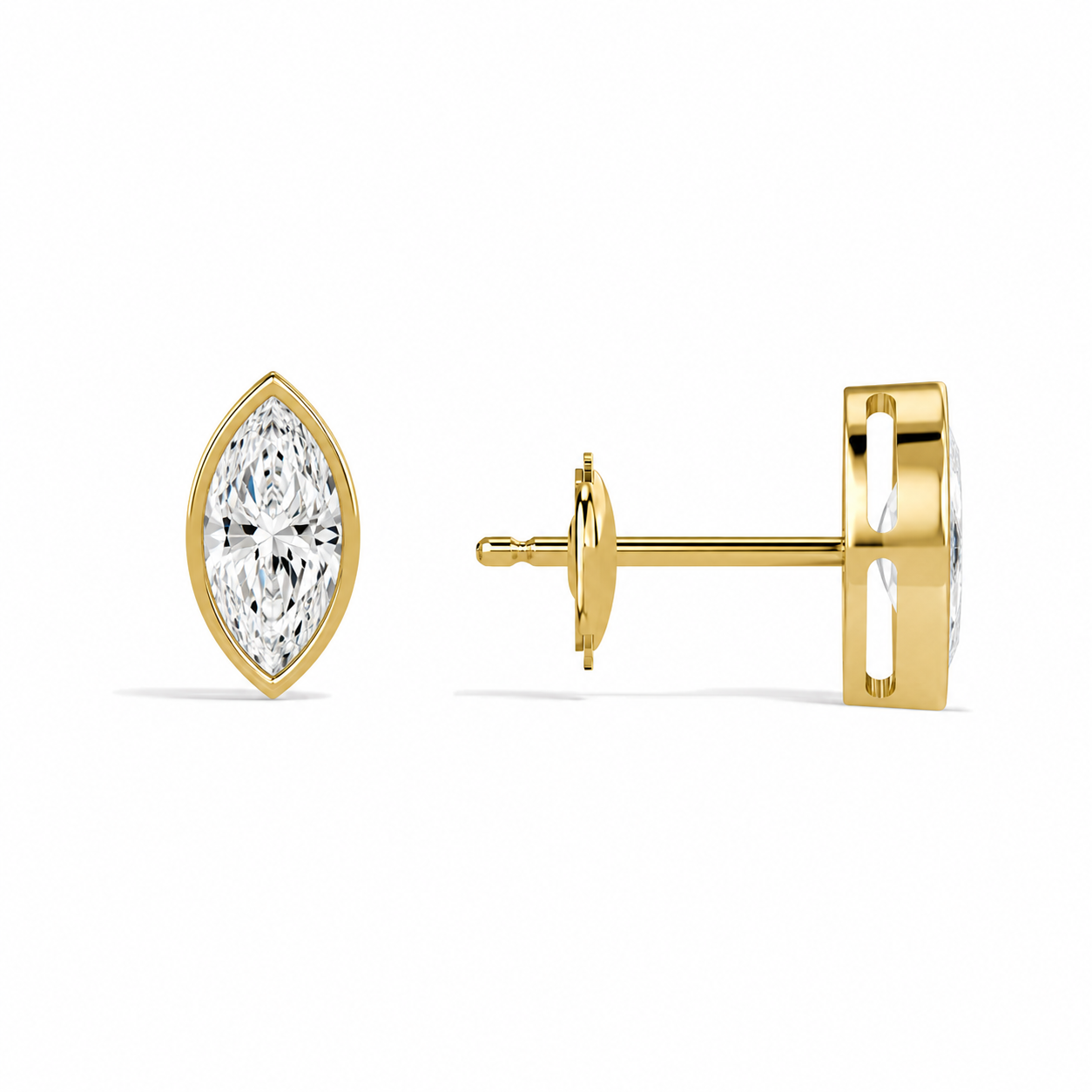


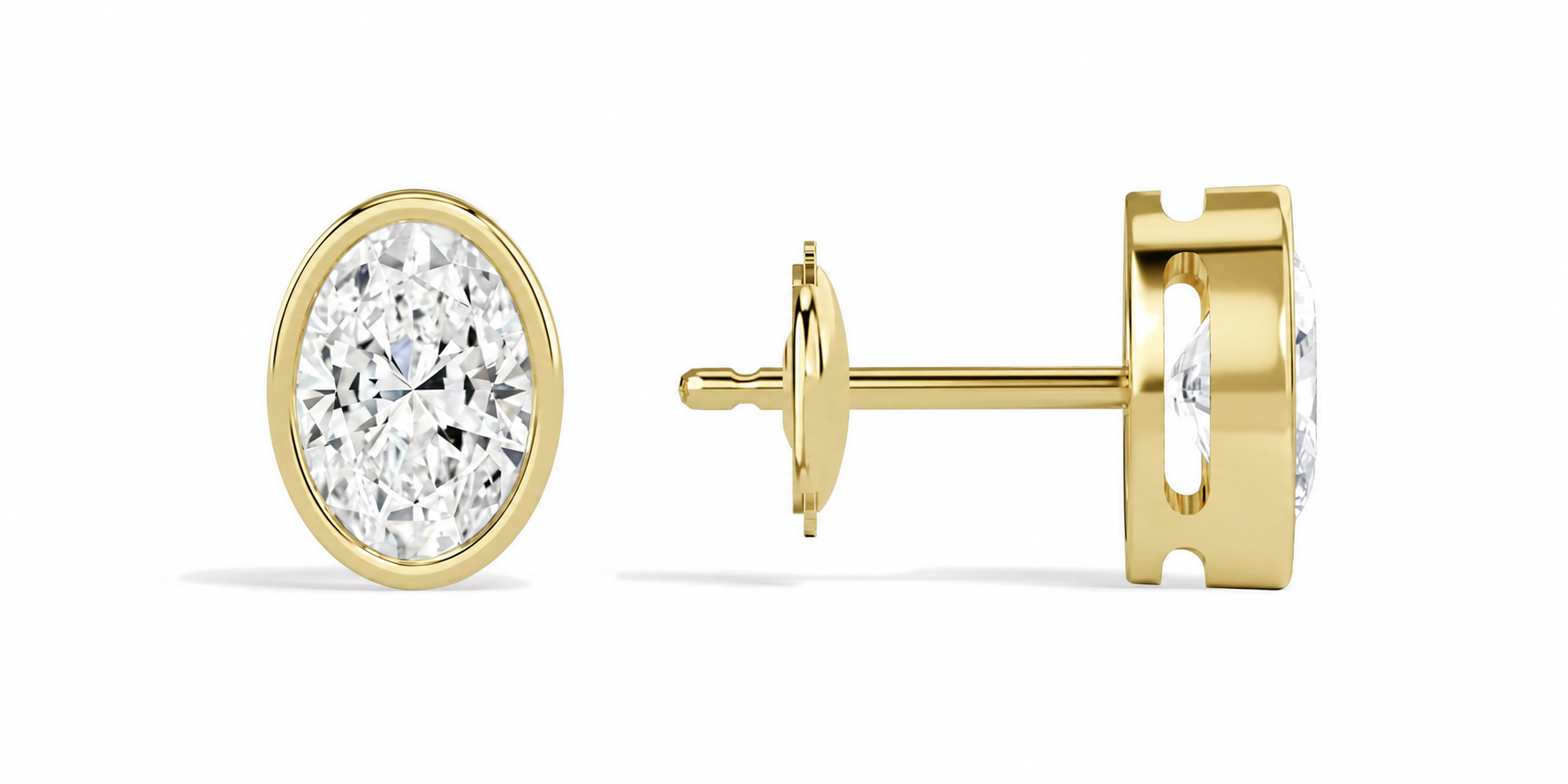


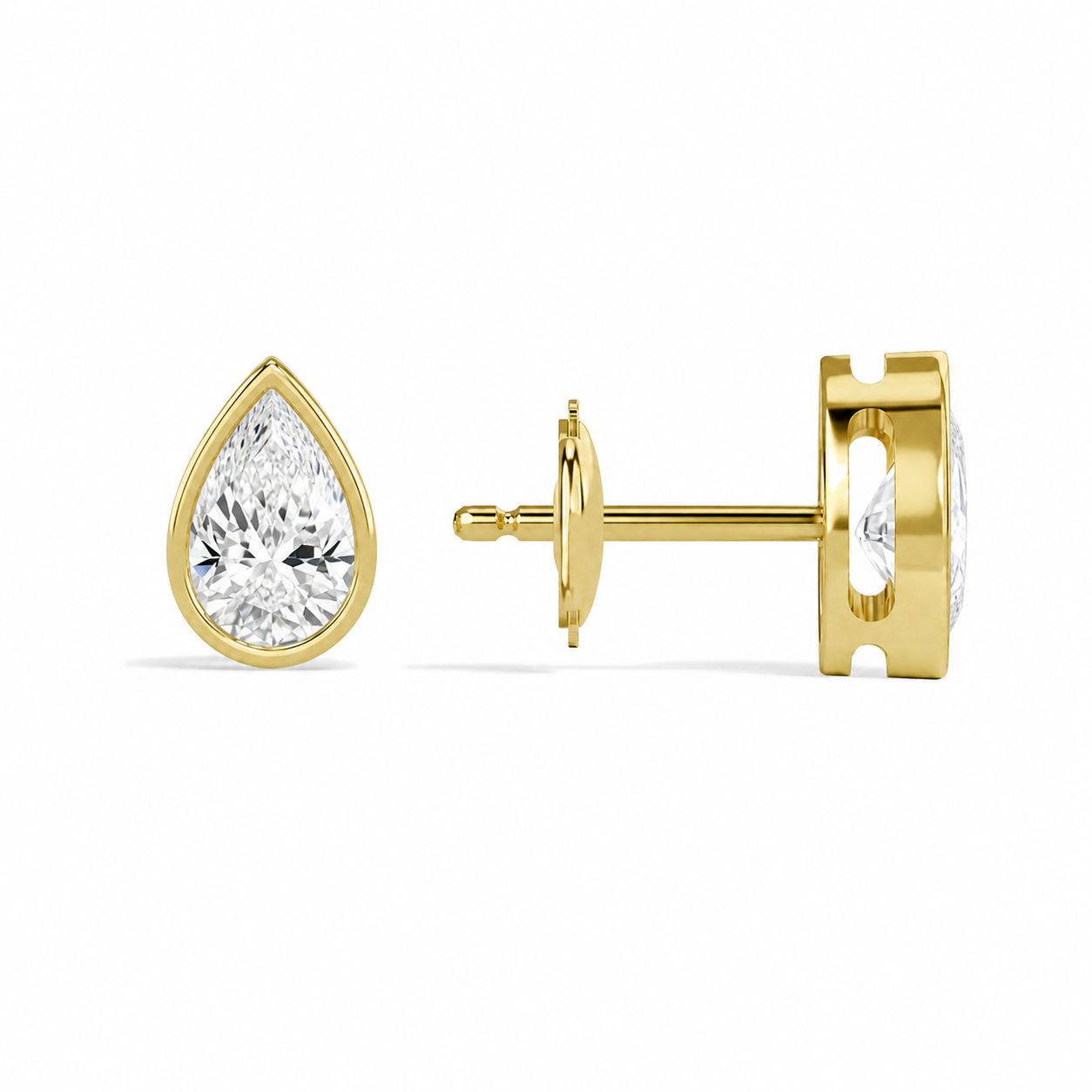


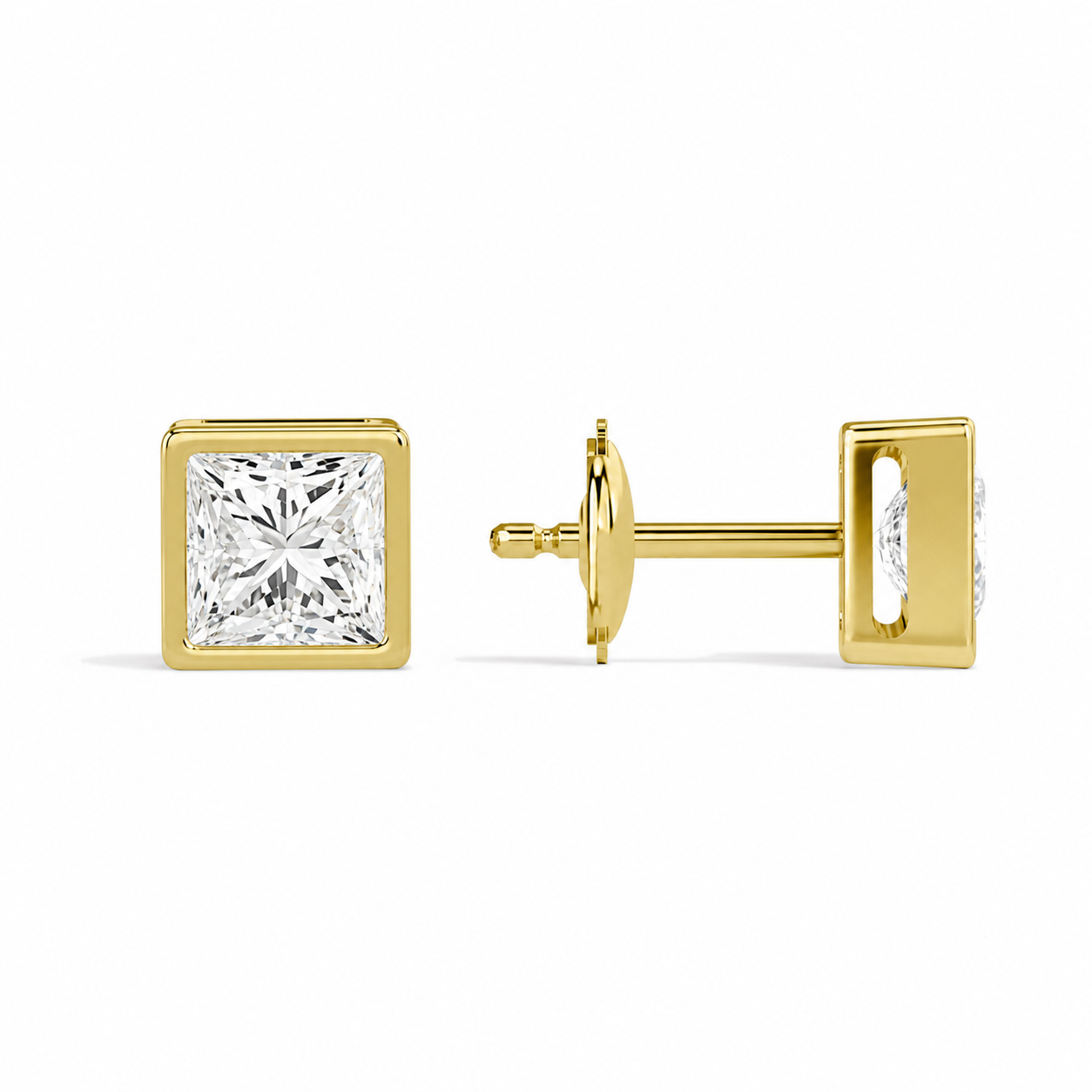


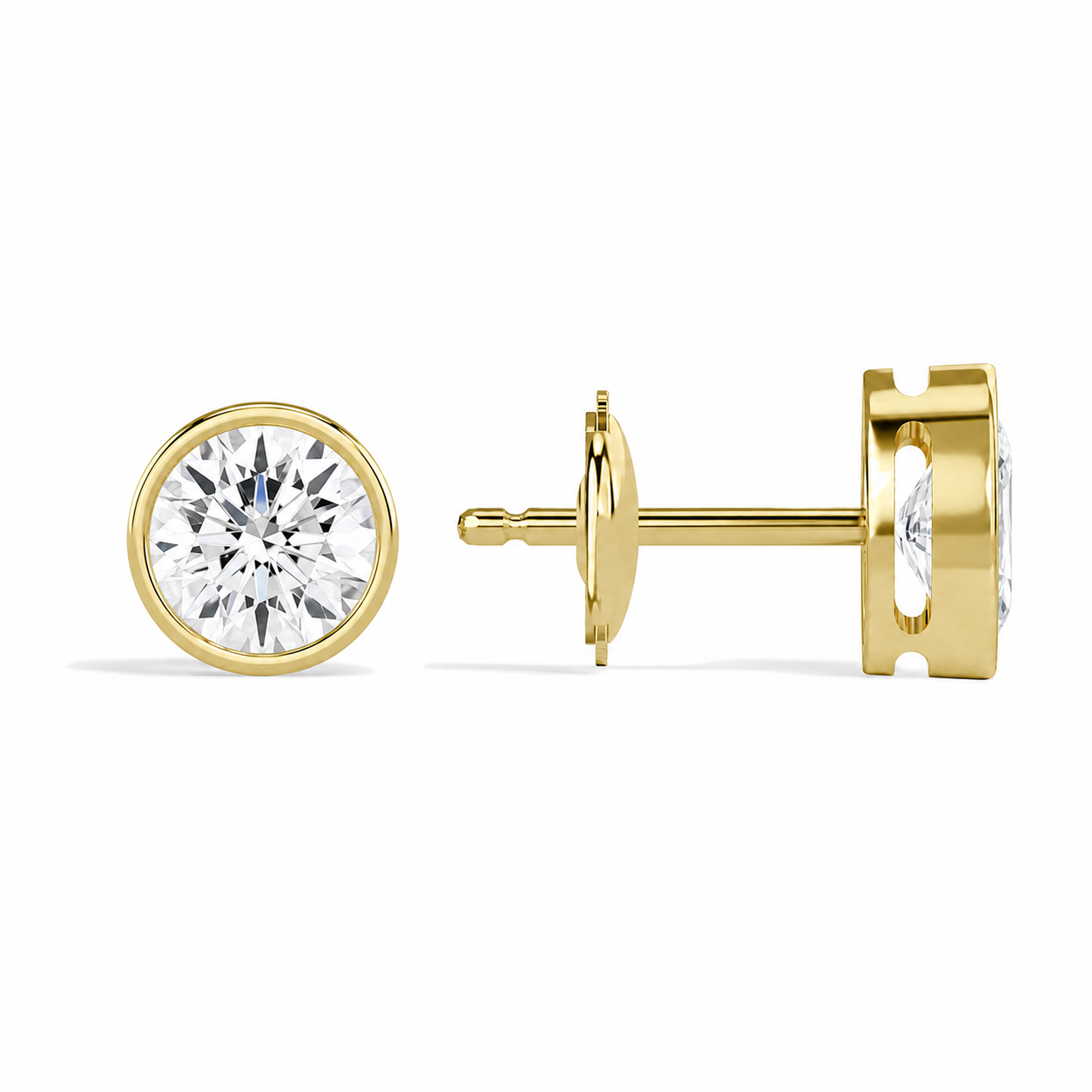


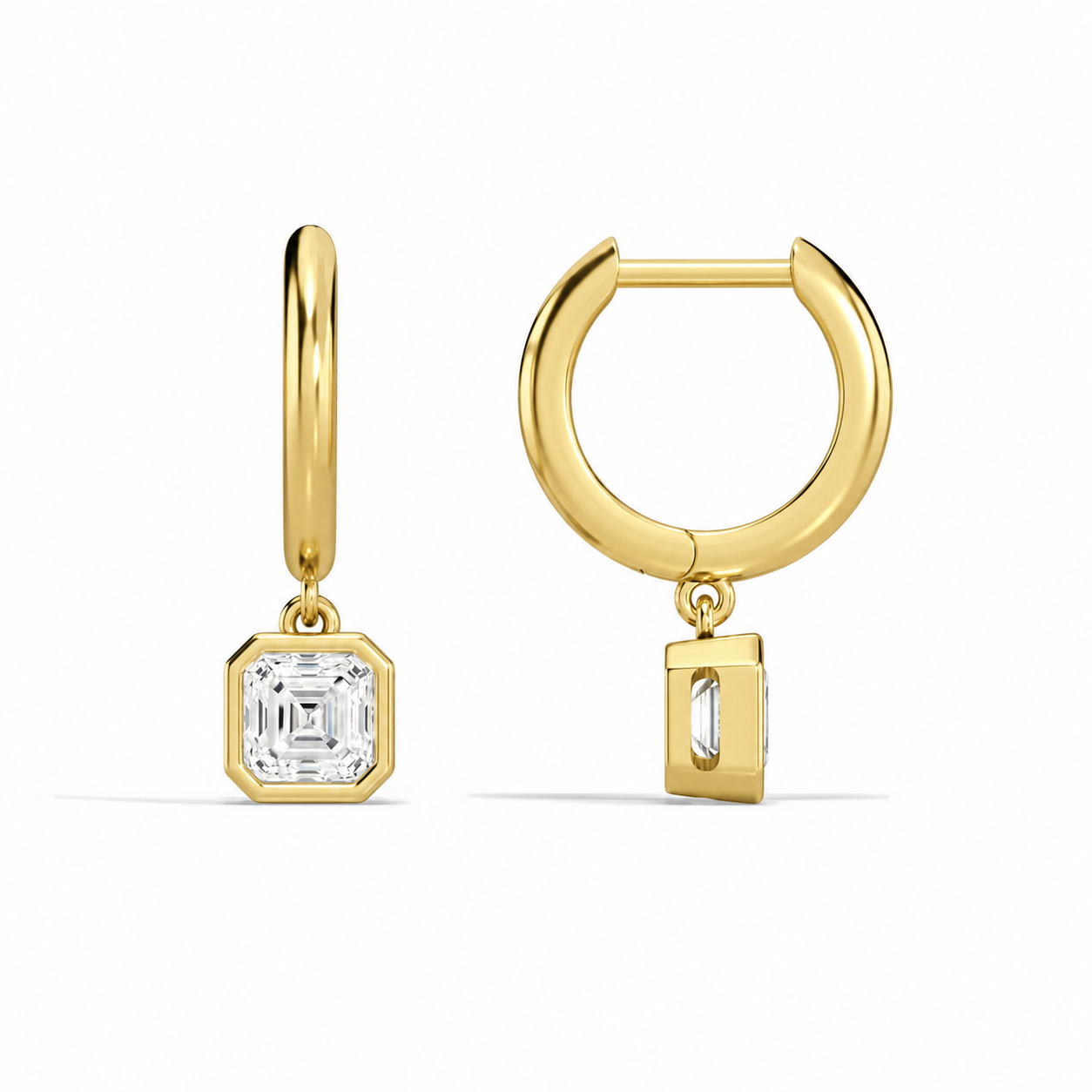


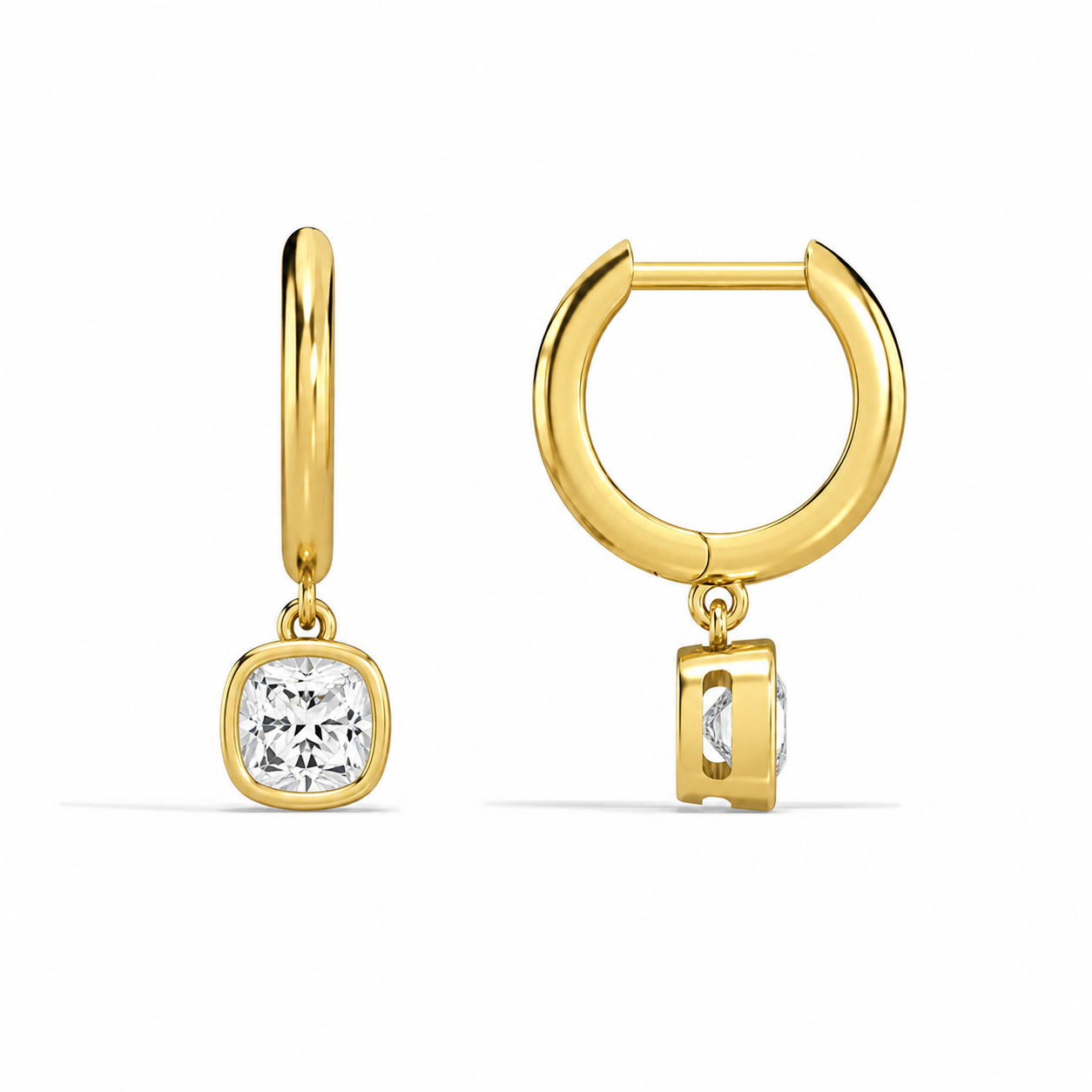


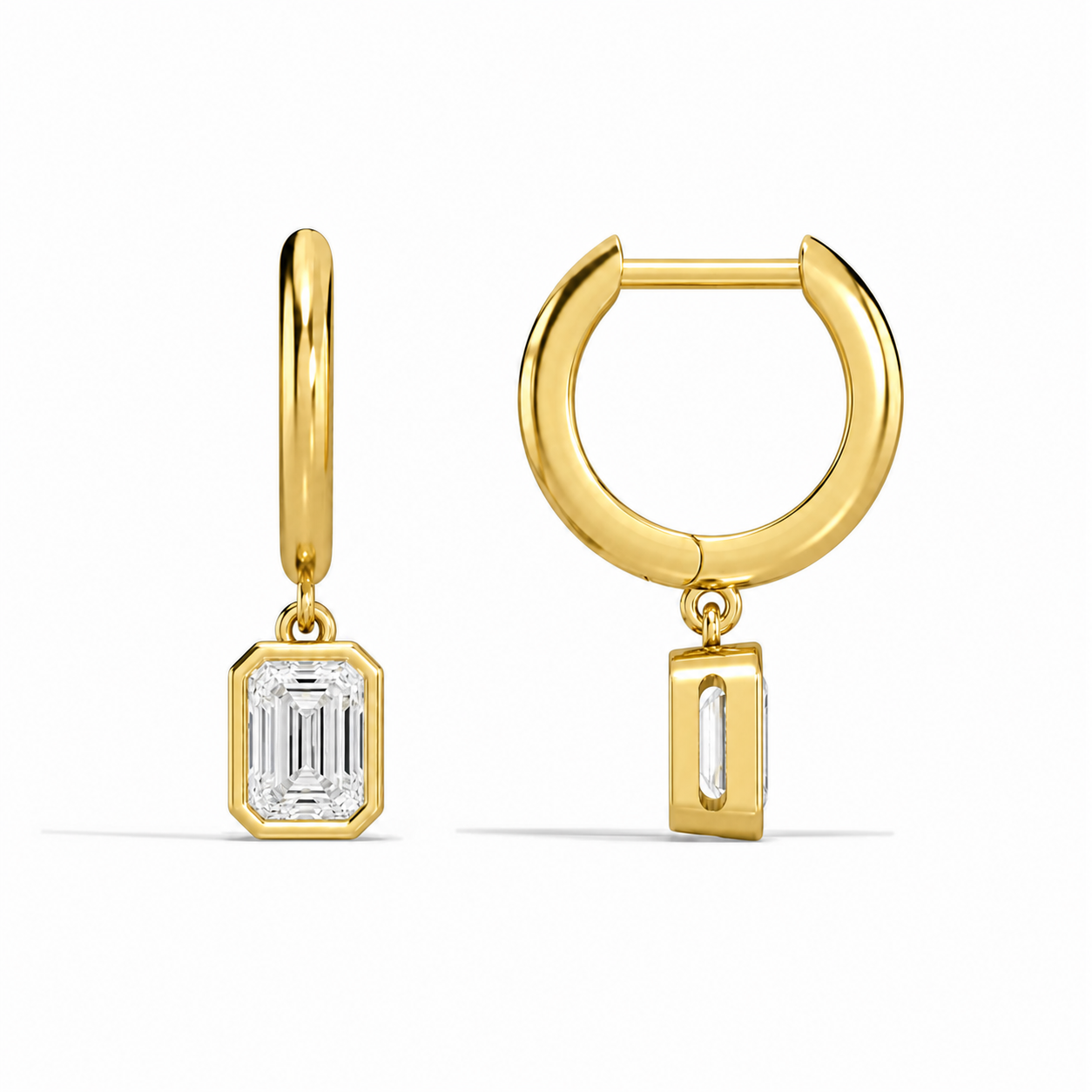


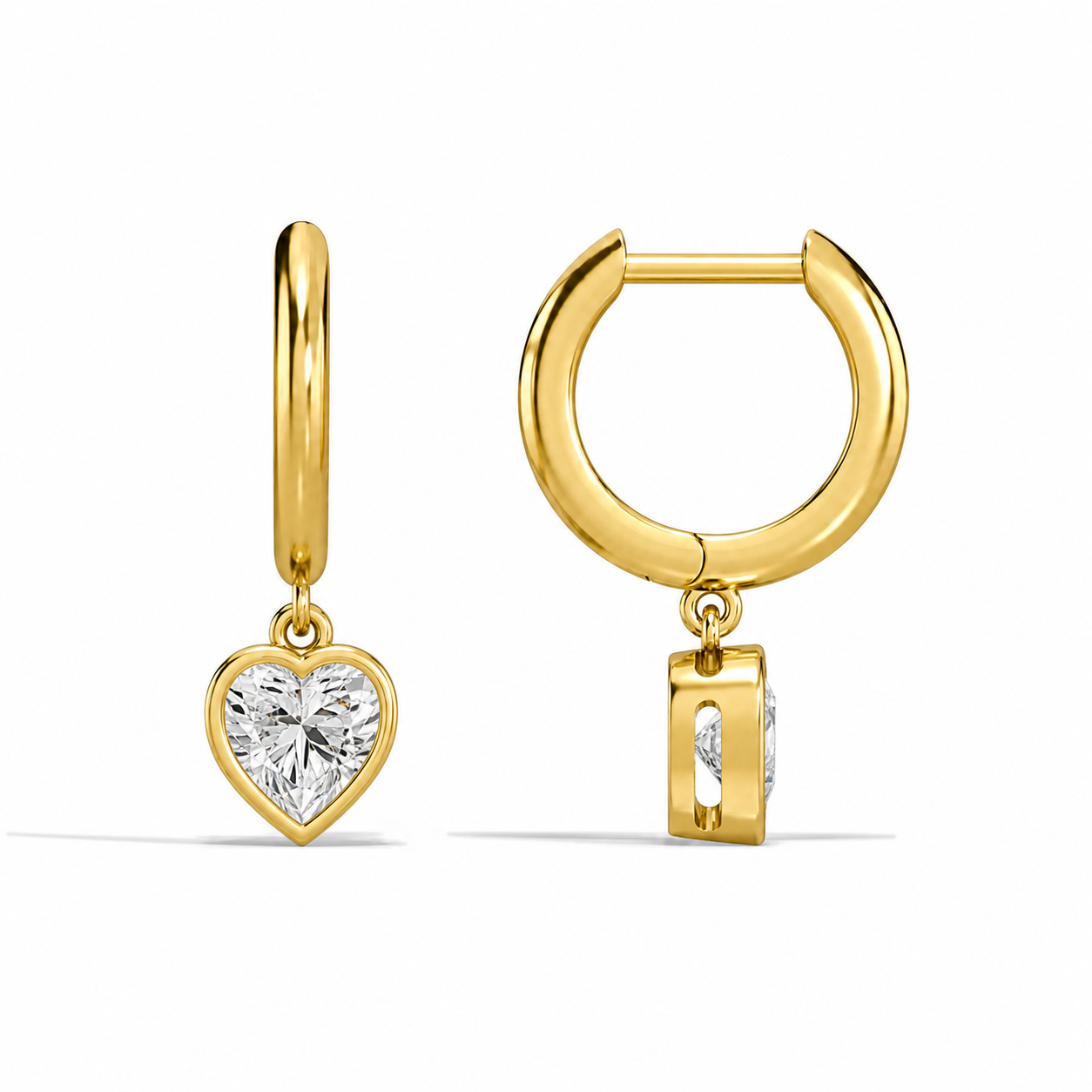

18K Yellow Gold Lab-Grown Diamond Earrings: A Fuller Material Rhythm at the Ear
An earring is experienced in intervals: diamond, metal, skin, negative space, then movement. 18K Yellow Gold makes the material intervals visible. A stud concentrates them near the lobe; a hoop carries them around a curve; a drop distributes them vertically through attachment points and suspended settings.
The current 87-design assortment includes 32 Stud-labelled, 53 Hoop-labelled, and 52 Drop-labelled products. Because many huggies also carry drops, these are overlapping structural lenses rather than separate inventories. The shared 18K field lets their differences in span, articulation, and projection remain clear.
Gold Content Is Only the Beginning
An 18K alloy contains 75% gold. Remaining alloying metals, finish, lighting, photography, and exposed surface influence the observed yellow tone and working behavior. Composition does not guarantee superior durability, comfort, sensitivity, permanence, or one maintenance routine.
The amount of metal matters. A fine prong leaves only small golden points; a bezel draws a complete boundary; a polished hoop creates a longer uninterrupted field. Compare metal exposure and setting architecture together instead of assuming that every 18K Yellow Gold earring carries equal visual warmth.
Use the Gold Field to Organize Light
The collection includes 67 prong-set and 20 bezel-set products, ten diamond shapes, and solitaire, halo, accented, cluster, luxe, and line structures. Gold can separate or connect those fields, but it cannot improve brilliance, change color or clarity grades, or alter diamond dimensions.
On the ear, a halo creates a wider light-and-gold frame; a bezel makes outline and material continuous; a diamond-set hoop turns repeated stones into rhythm. In a drop, visible links and gaps decide whether the composition feels fluid or segmented as it moves.
Follow the Material to the Fastening
Public product details identify 35 secure lock backs, 50 hinge openings with posts that snap closed, and two lever backs. A mechanism's name is not a guarantee of retention. It must be correctly engaged, kept in condition, and reviewed after impact or change.
The closure completes the material path from front to back. Stud backings meet the lobe; hinges resolve the hoop arc; lever backs establish a hanging relationship. Gold content alone does not determine comfort, balance, or suitability for every piercing and routine.
Scale the Complete Pair
Total carat weight commonly describes combined diamond weight across the pair and specified stones. It is not a measurement of metal or a guarantee of face-up coverage. Compare individual dimensions, setting edge, stone count, overall length, hoop diameter, and spacing.
For multiple piercings, a fuller yellow-gold presence can become the unifying field. Keep one clear focal piece, then adjust the scale and projection of neighboring forms. Check closure clearance and movement so the composition works physically as well as visually.
Warmth Carried through the Whole Construction
Burvonti pairs responsibly sourced lab-grown diamonds with earring structures calibrated at human scale. Independently graded or certified principal diamonds should be understood according to document scope; accents and paired groups may rely on product-level specifications.
Custom possibilities may refine shape, scale, setting, drop relationship, closure, or metal where feasible. Store articulated earrings without sharp bends, keep posts and backs separated from diamond surfaces, and inspect any changed hinge or setting. The gold should support a coherent path from close contact to movement.
Frequently Asked Questions
What does this page add beyond the parent Earring Collection?
It focuses on 18K Yellow Gold composition, visible metal intervals, surface, and movement; the parent owns broad earring-type education.
How much gold is in 18K Yellow Gold?
75% by mass. Other alloying metals influence the final shade and working behavior.
How does 18K Yellow Gold differ from 14K Yellow Gold?
18K contains 75% gold while 14K contains approximately 58.3%. Shade, hardness, weight, and care remain product-specific.
Are all 18K yellow gold earrings the same shade?
No. Alloy formula, finish, lighting, photography, and visible metal area affect appearance.
Which earring forms appear in the 87 designs?
Studs, huggies, hoops, drops, a climber, an inside-out hoop, a longer line drop, and a dangle are represented.
Why do some earrings belong to multiple style groups?
Their construction combines categories, such as a drop suspended from a huggie hoop.
How do prongs and bezels change the amount of visible gold?
Prongs create small points of metal; bezels form a continuous boundary around the diamond.
Does 18K Yellow Gold make diamonds sparkle more?
No. It changes the material field around diamonds, not their facet relationships or grading facts.
What does total carat weight include?
It commonly states combined diamond weight across the pair and the stones covered by that product specification.
Which closures appear in the collection?
Current details identify secure lock backs, hinge openings with snapping posts, and selected lever backs.
Does higher gold content guarantee closure security?
No. Geometry, workmanship, engagement, condition, impact, use, and maintenance affect retention.
Is 18K Yellow Gold suitable for sensitive ears?
No universal result should be promised. Confirm the complete alloy and wearer-specific concern.
Does 18K Yellow Gold require no maintenance?
No. Surface appearance and care depend on alloy, finish, environment, use, and construction.
Can 18K Yellow Gold earrings be combined across piercings?
Yes, when scale, spacing, projection, movement, and closure clearance work together.
Can Burvonti personalize 18K Yellow Gold earrings?
Custom possibilities may include shape, scale, setting, drop line, closure, or metal, subject to feasibility.