
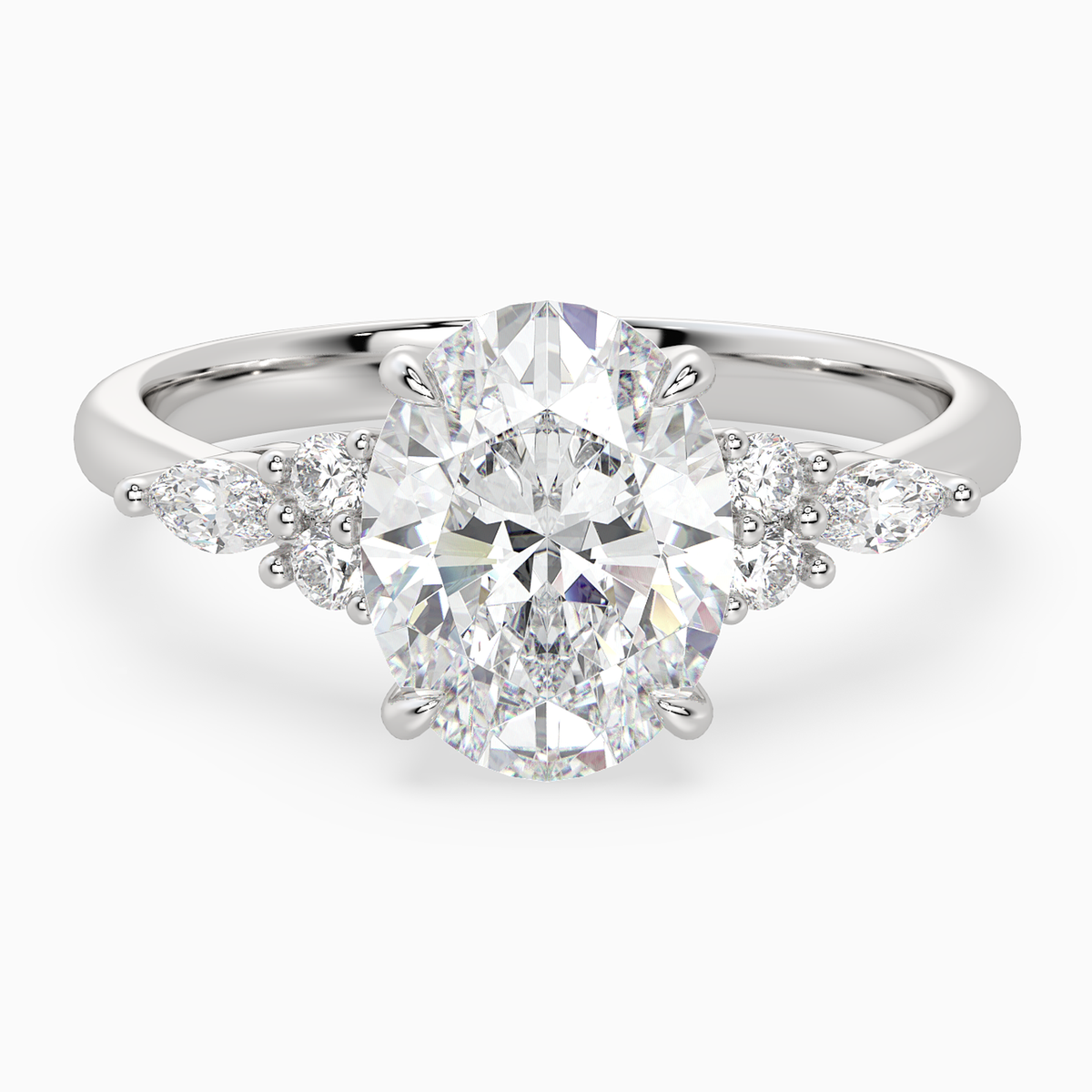


Lab Grown Diamond Drop Earrings in 18K White Gold
A quiet 75% gold line gives movement order. 18K white gold refines attachment, articulation, interval, and clear measured vertical rhythm.


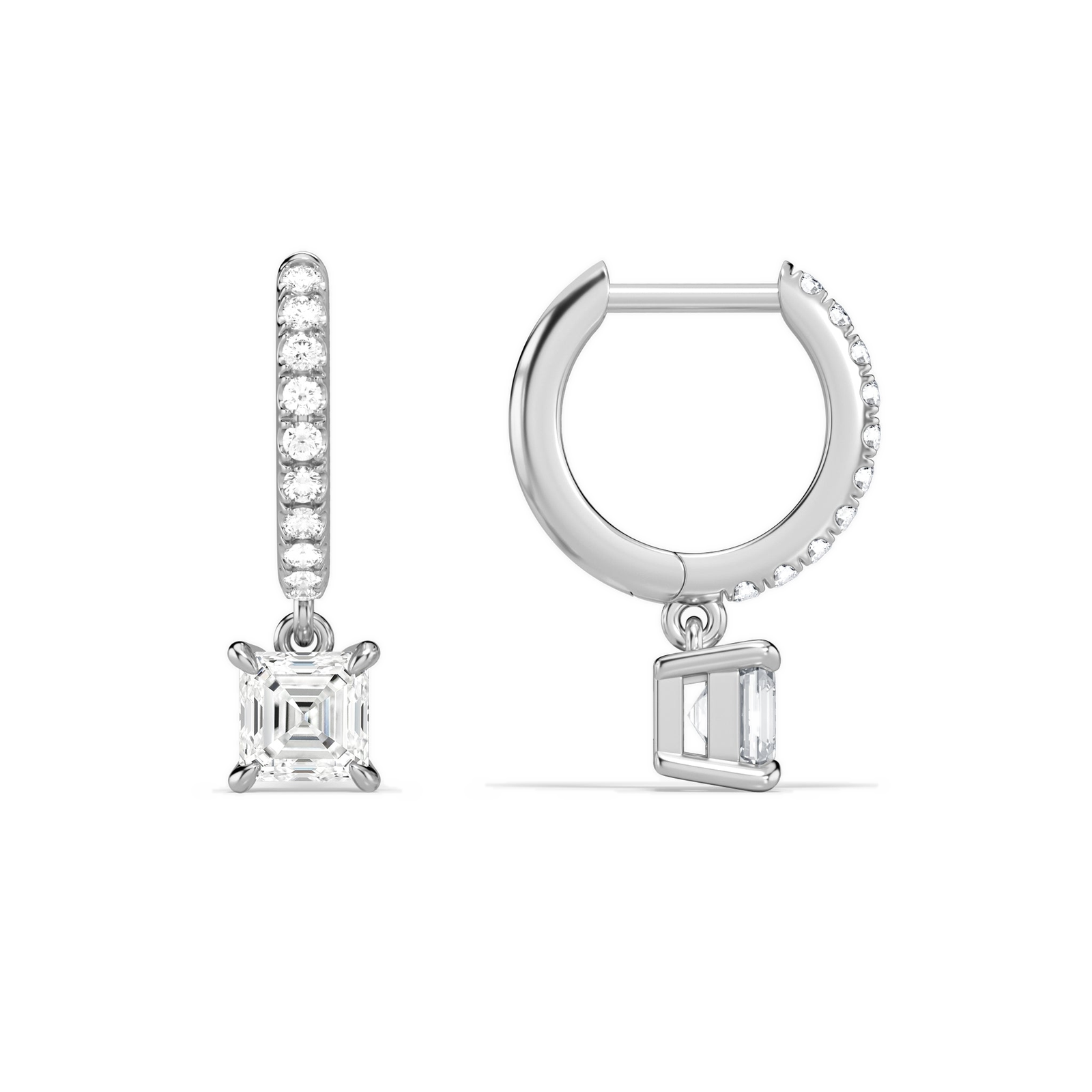


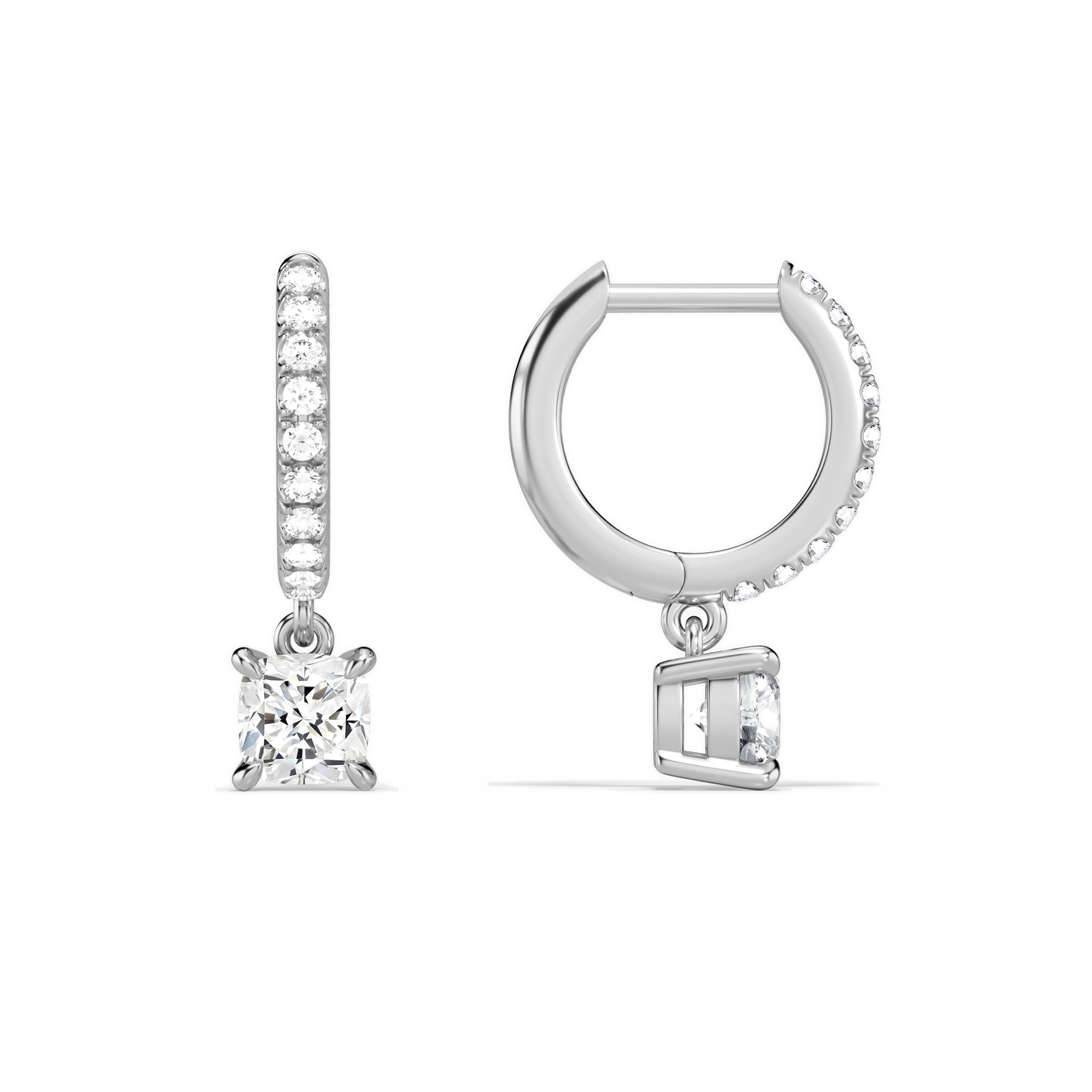


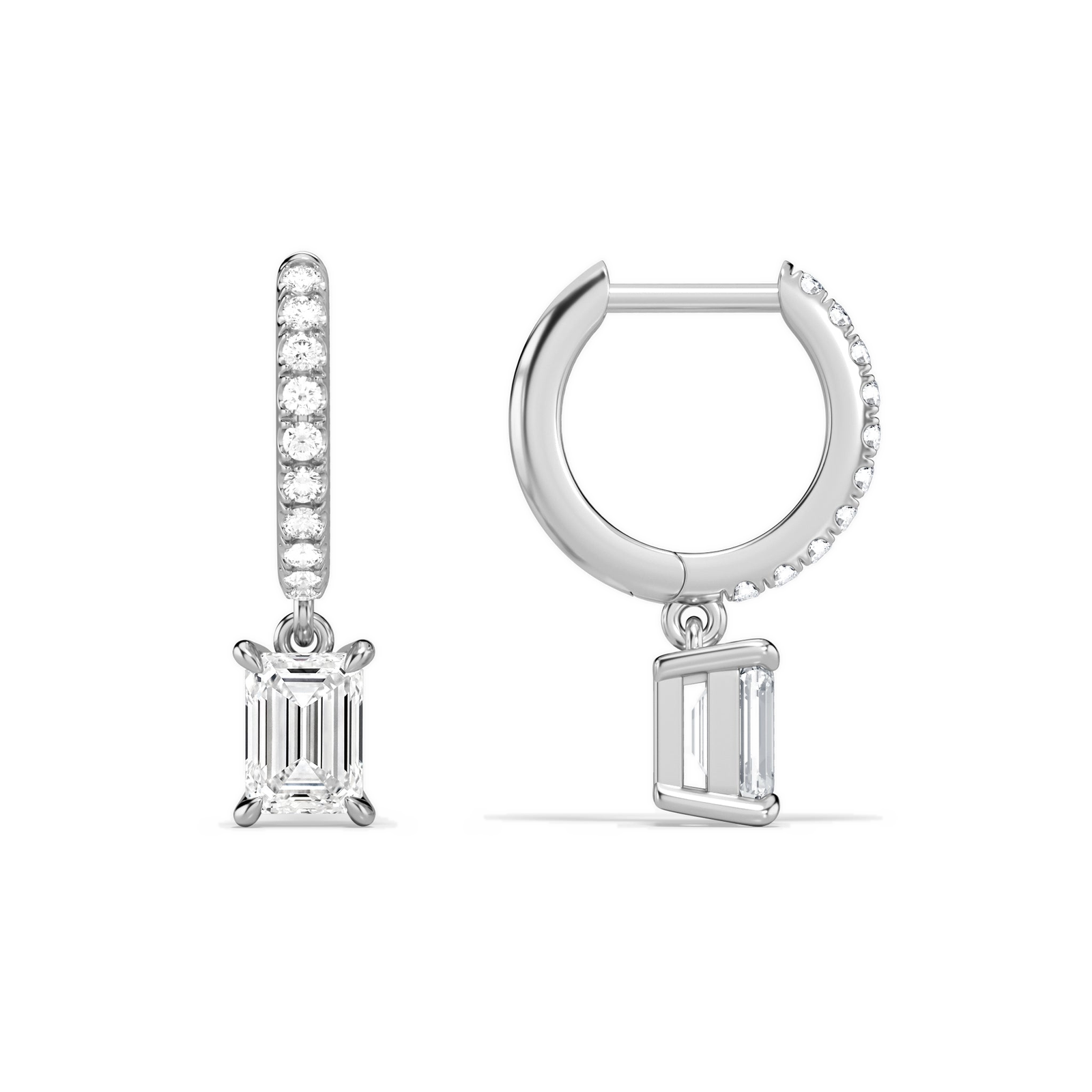


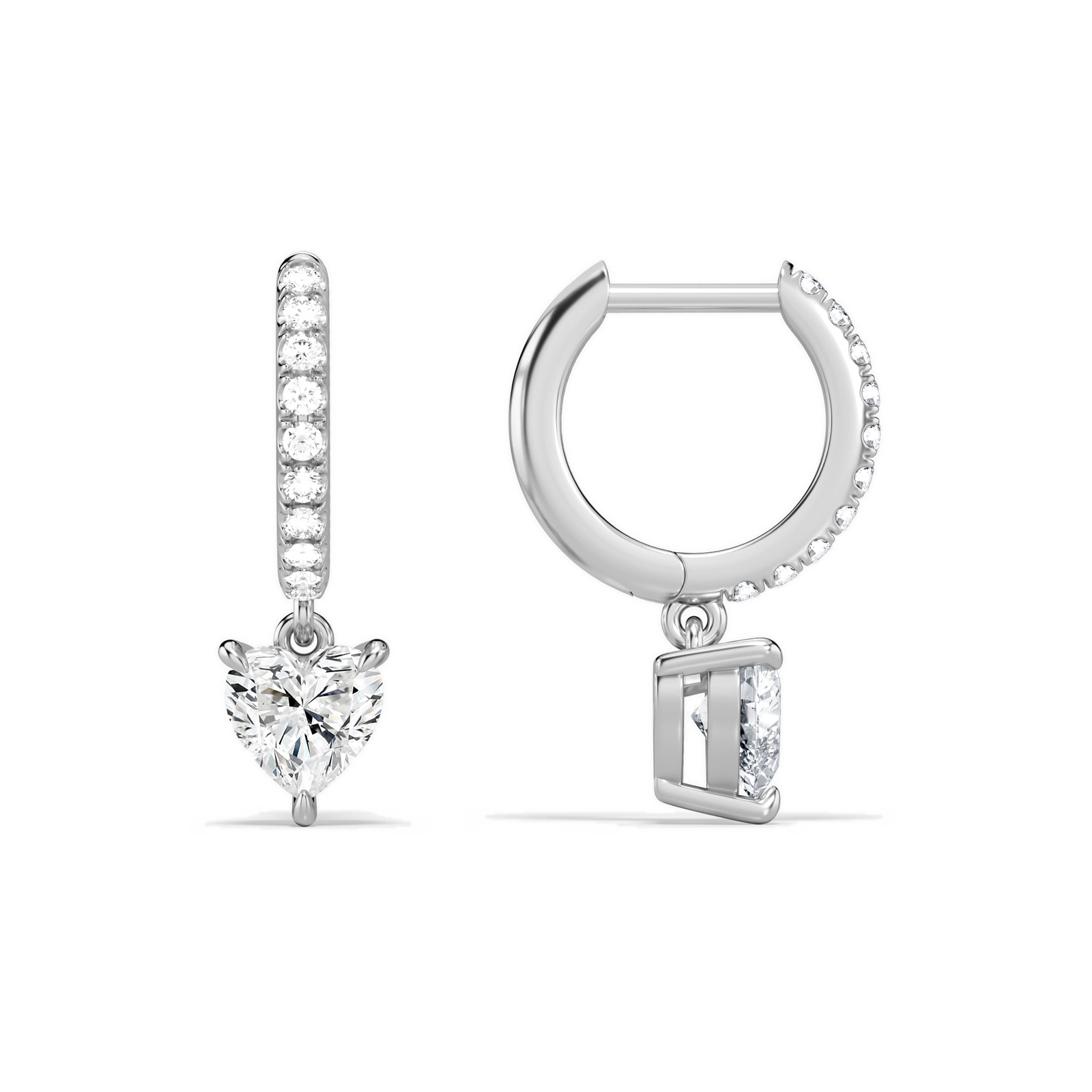


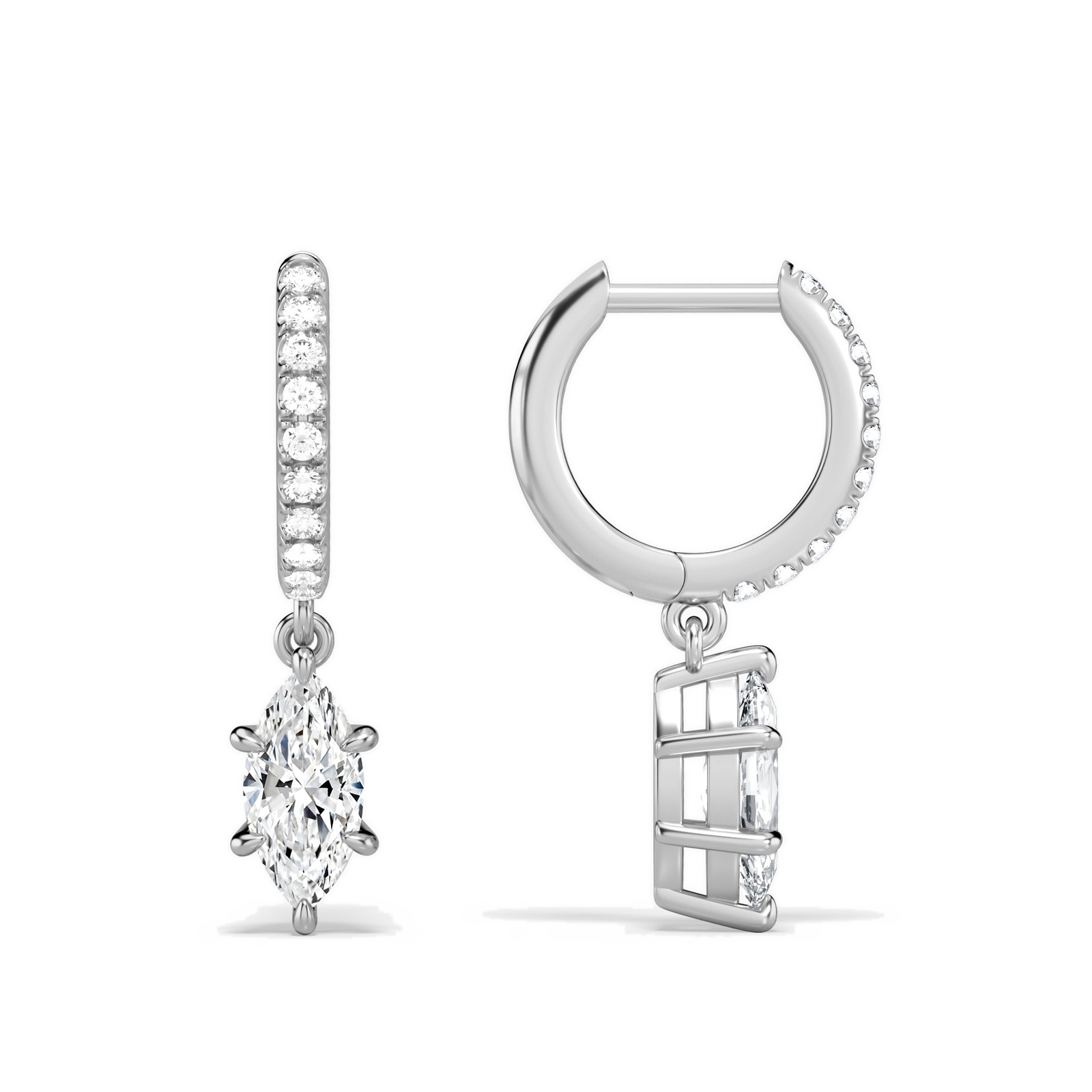




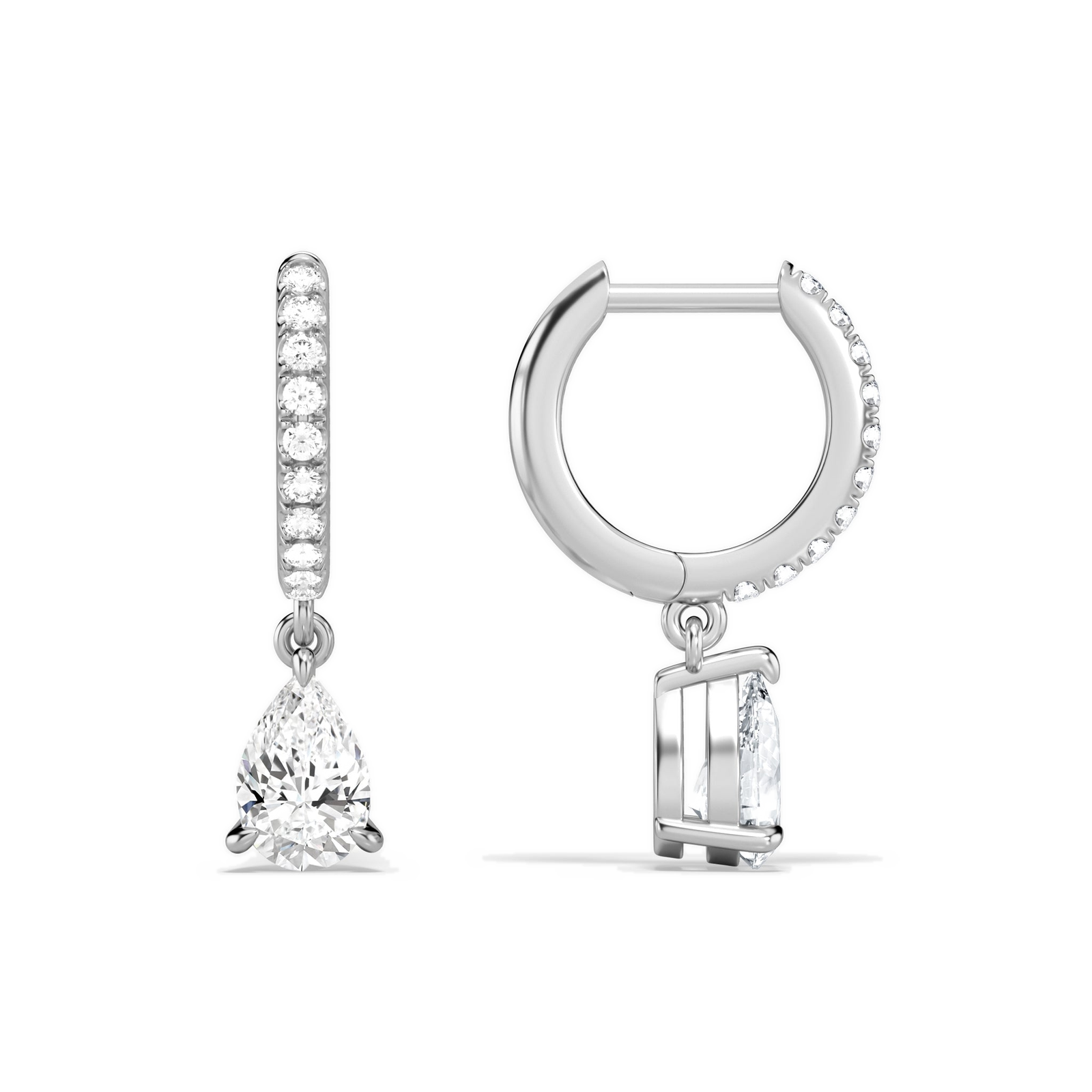


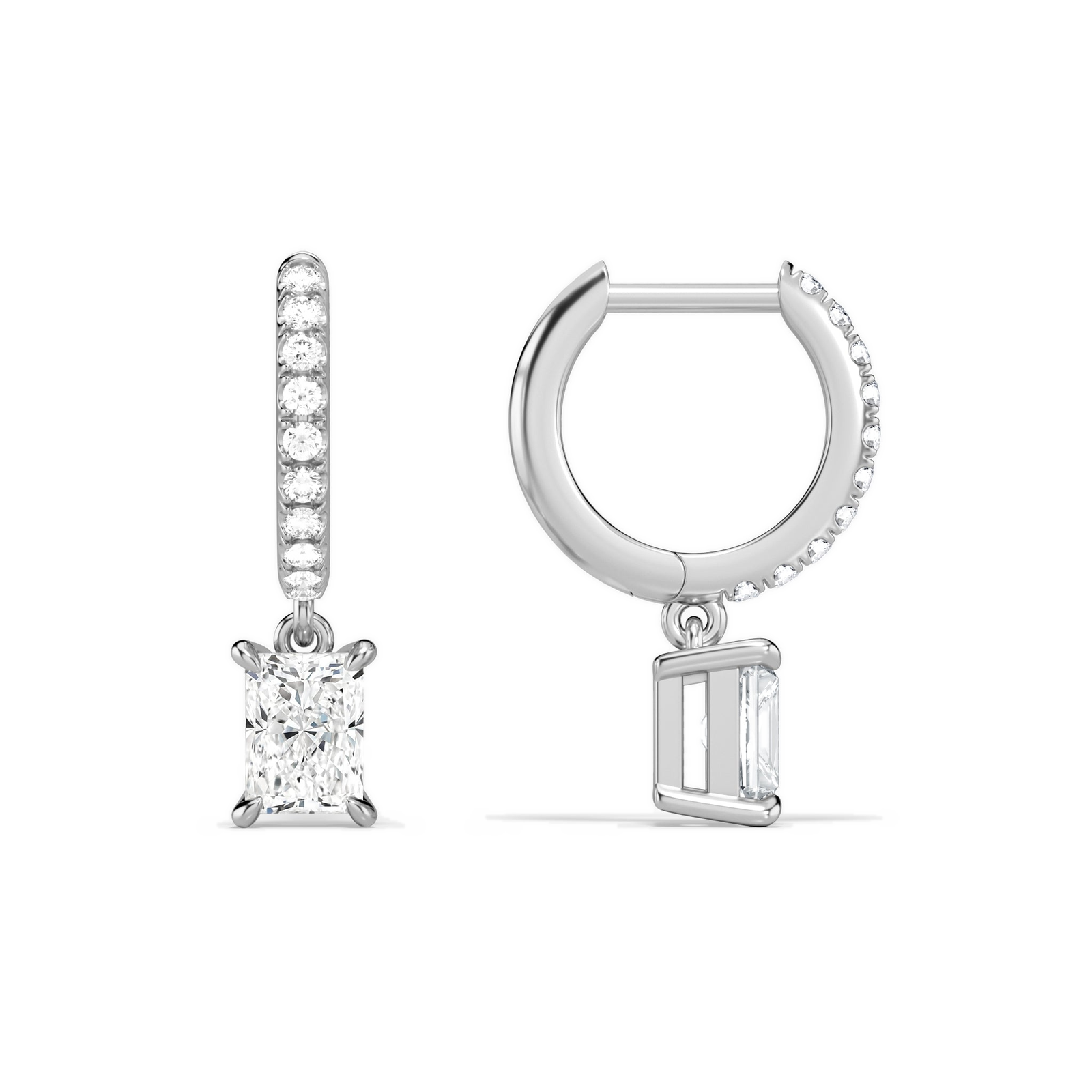


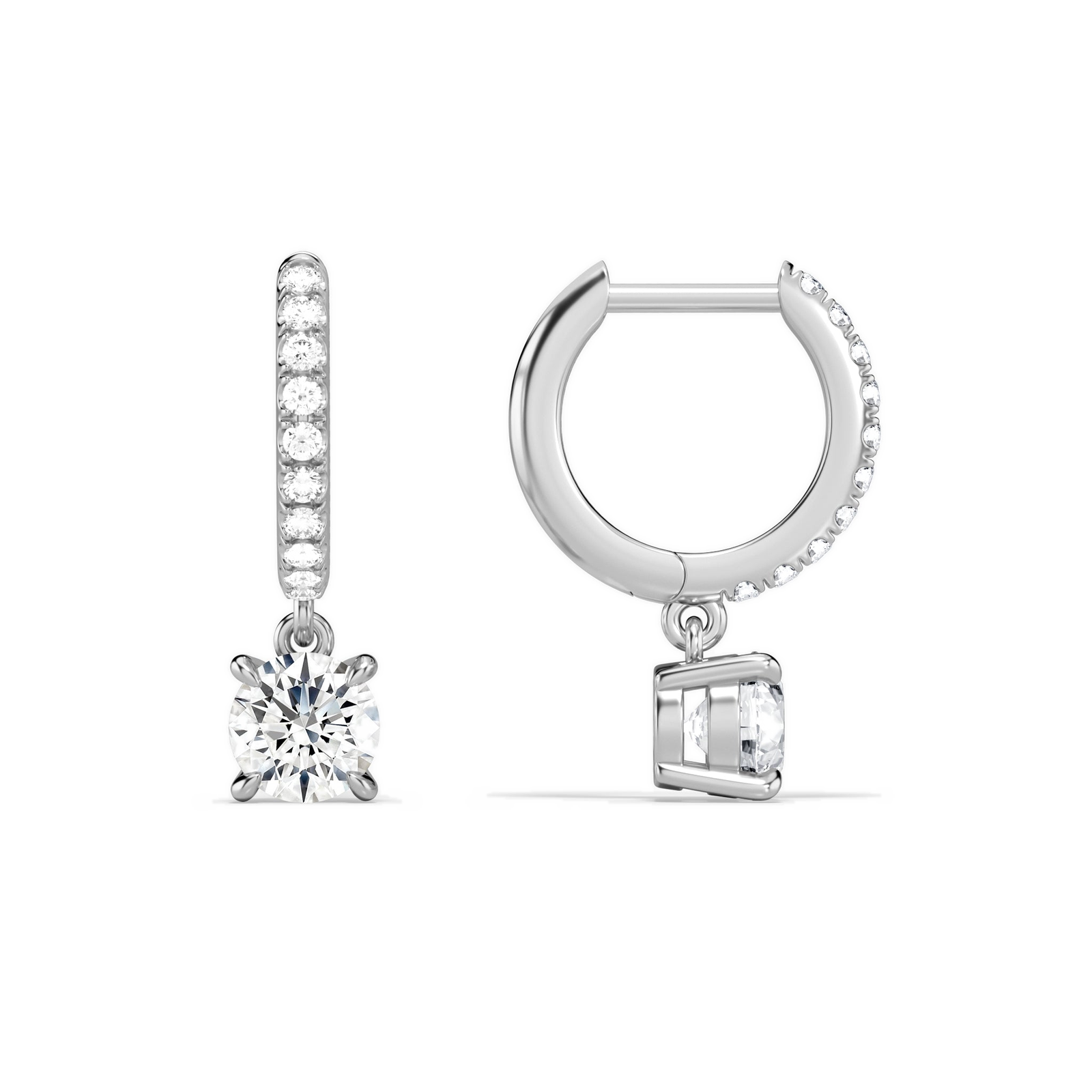


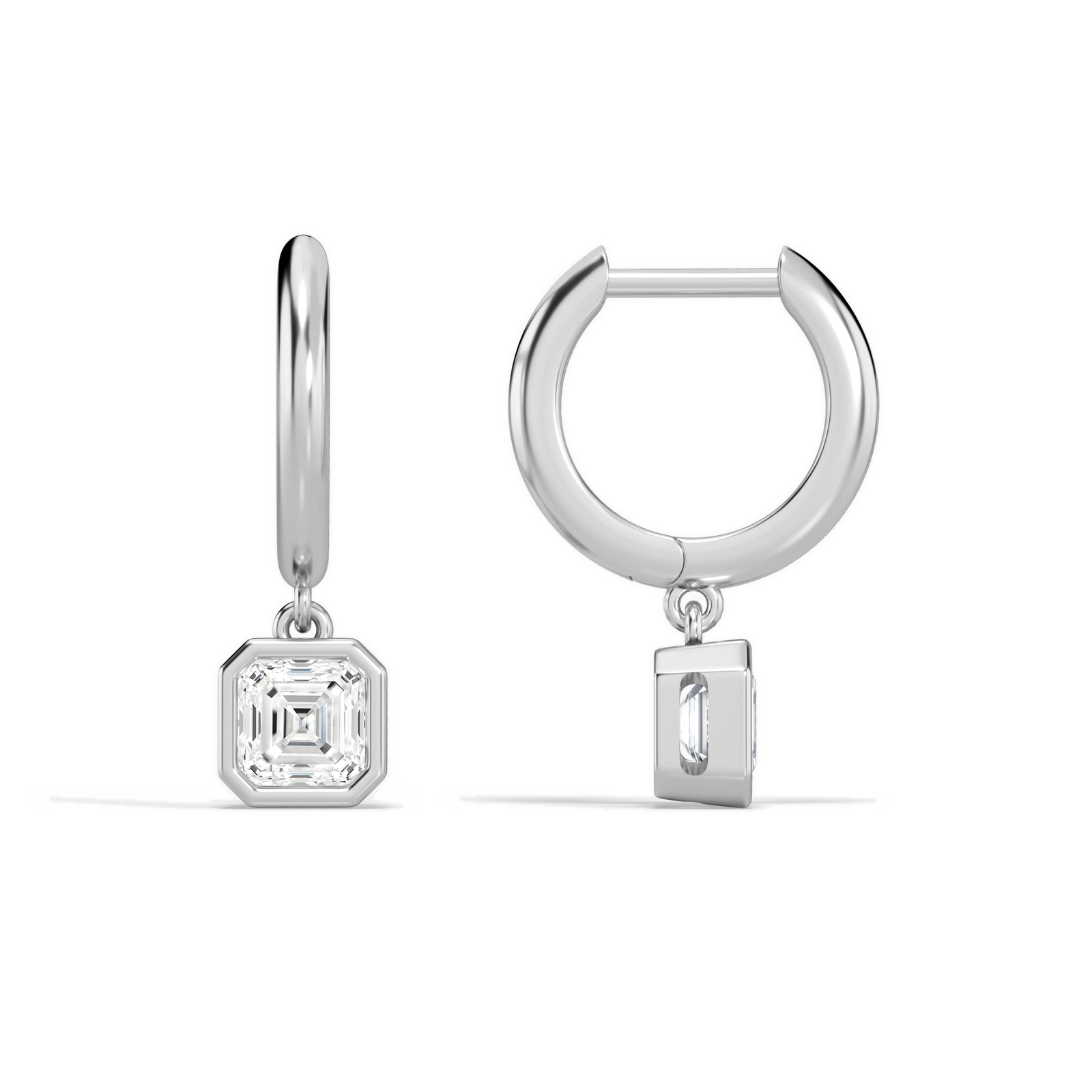


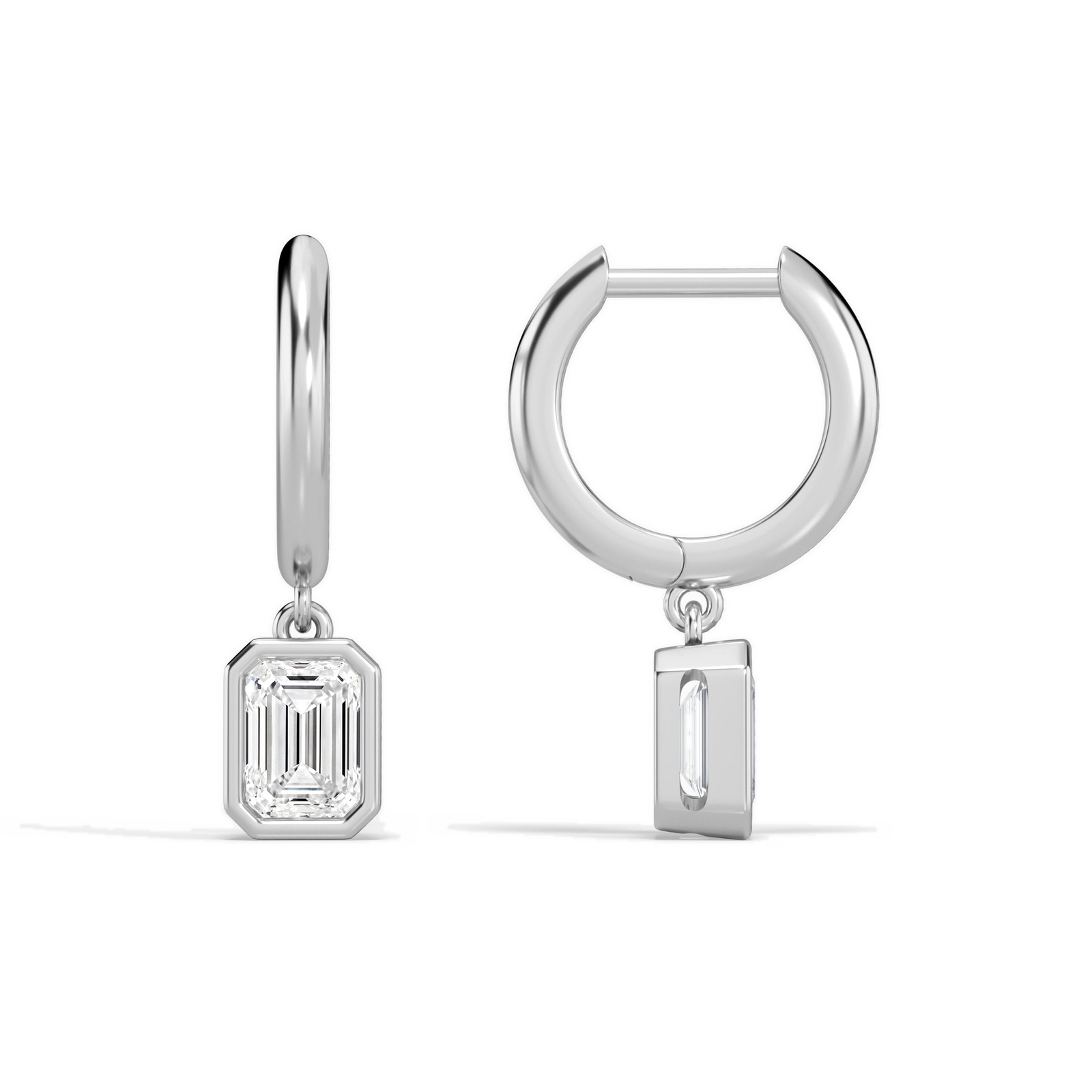


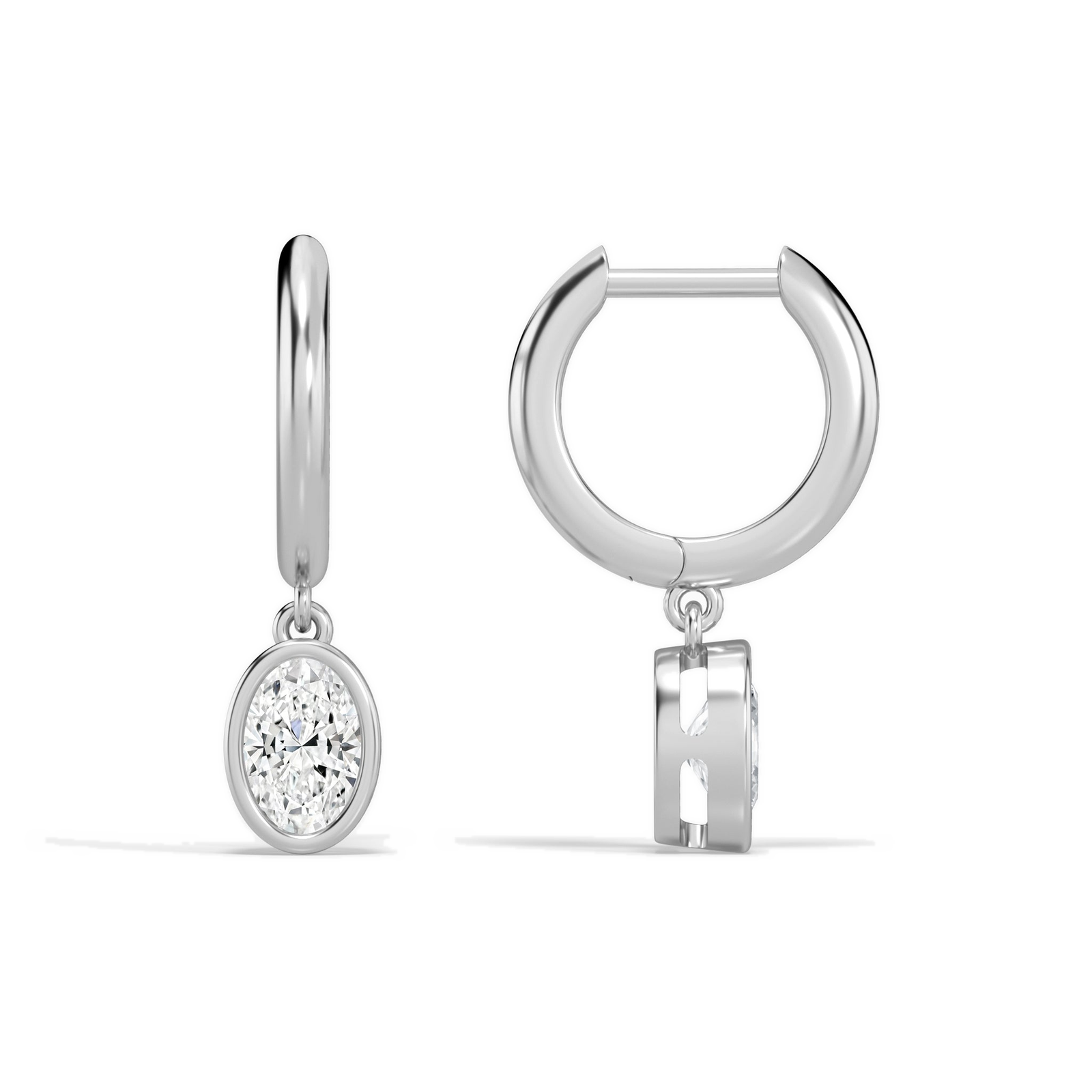


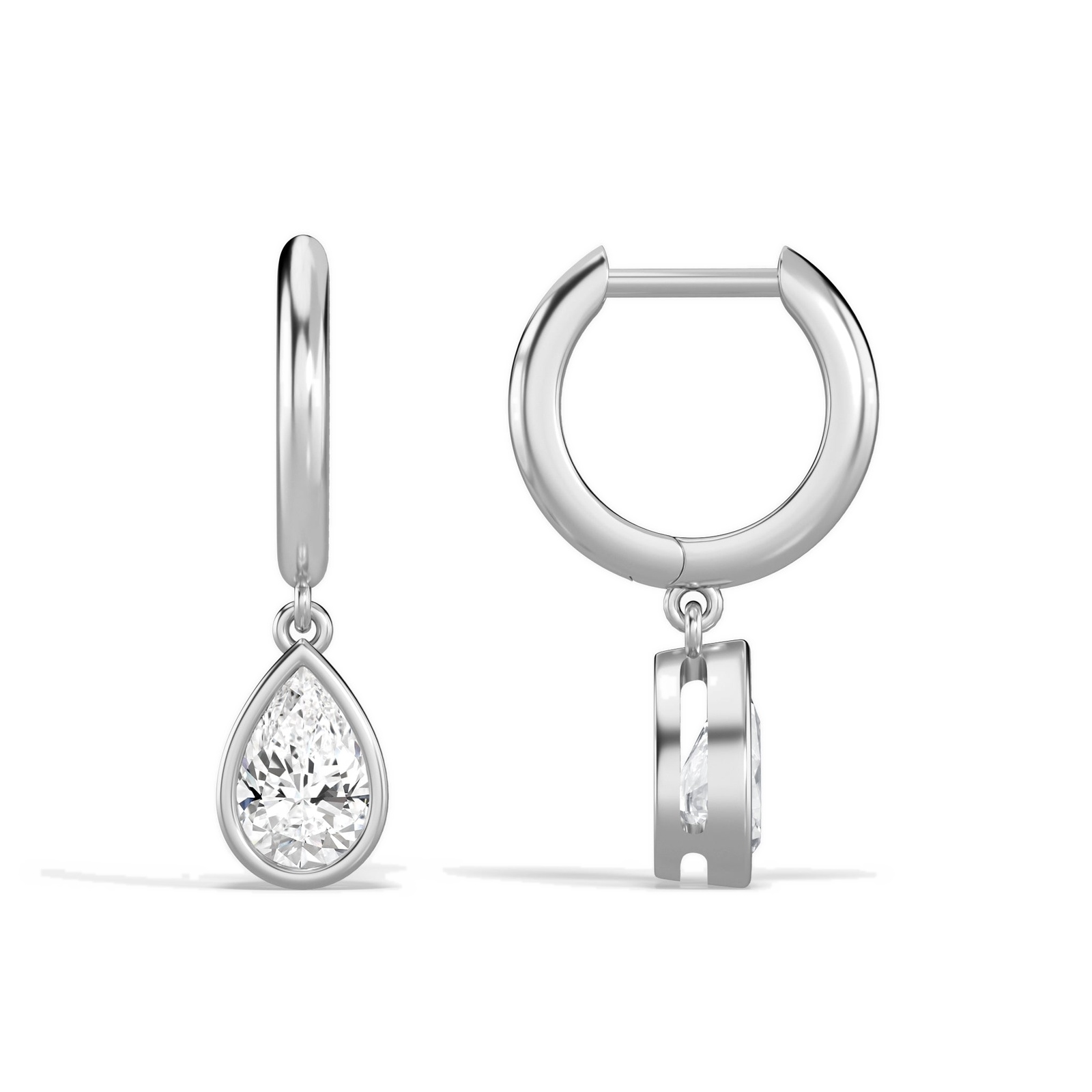


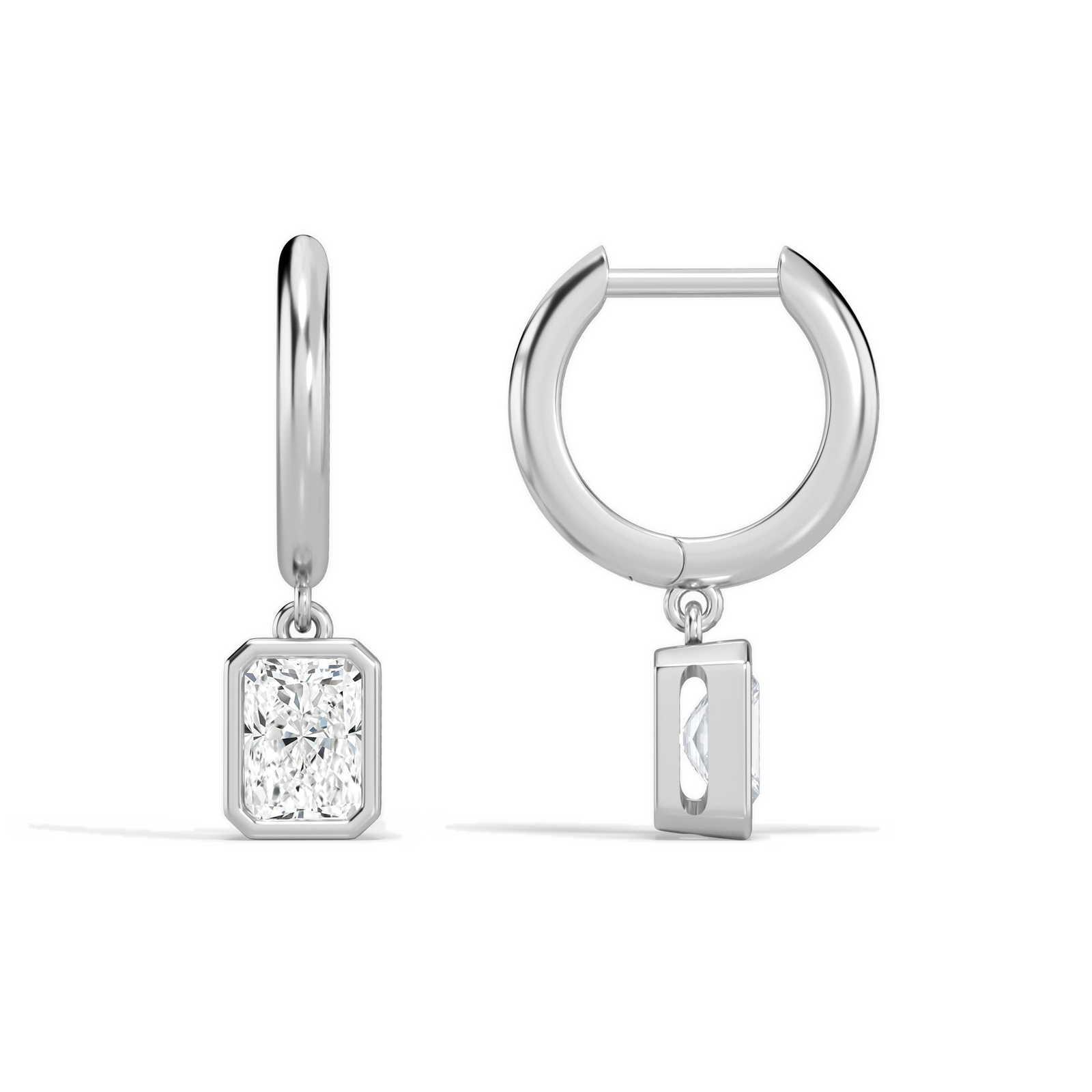

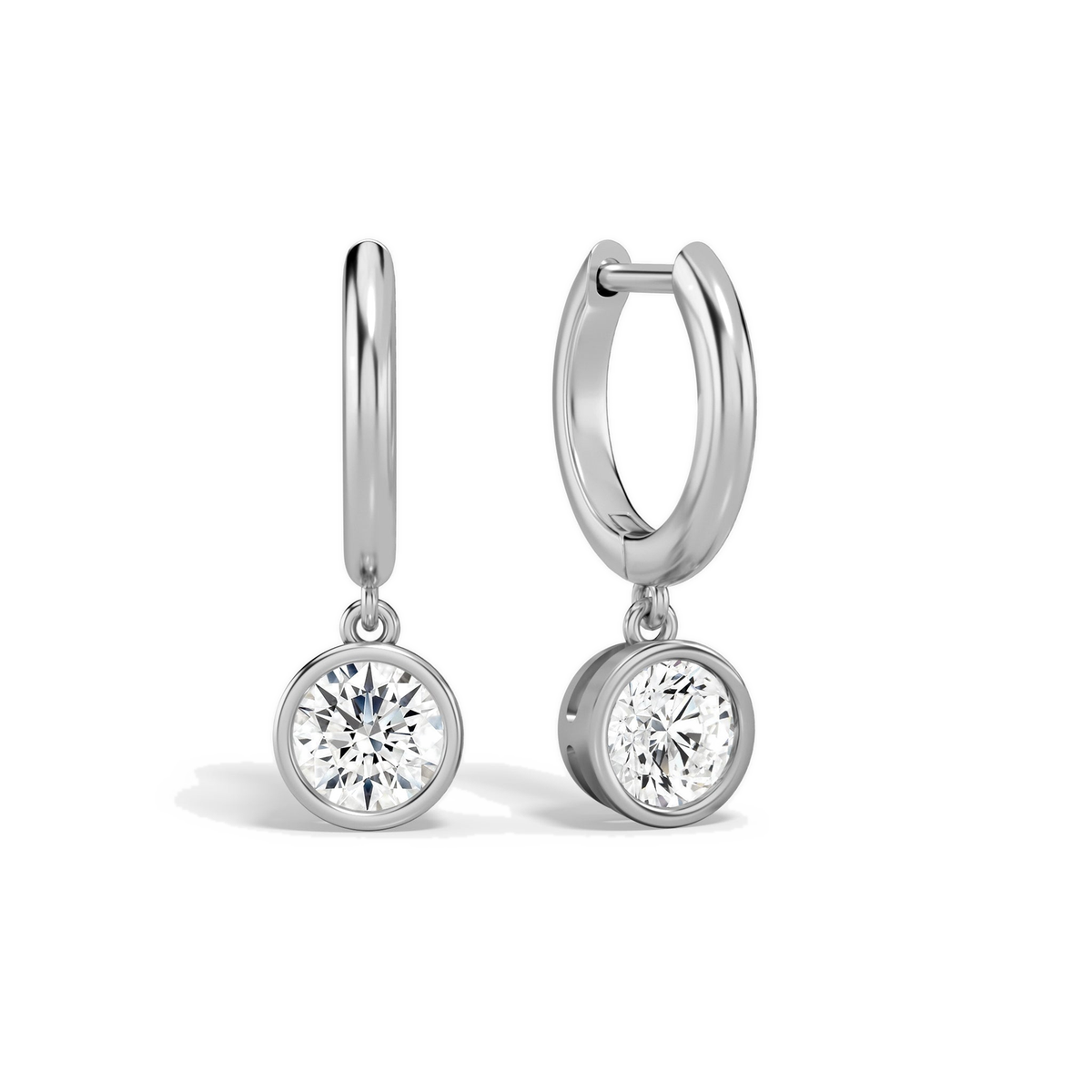




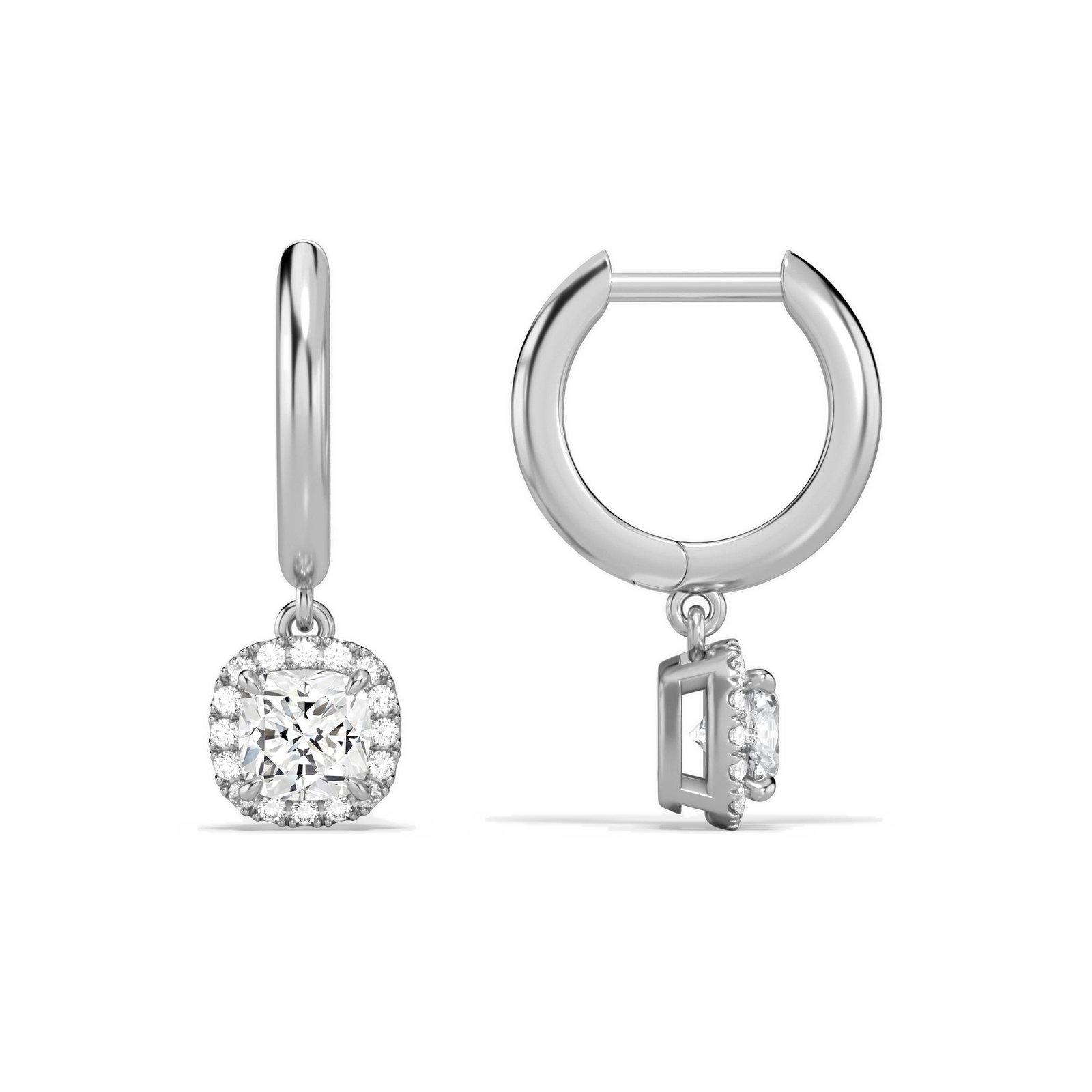

18K White Gold Drop Earrings: High-Karat Order through a Moving Line
An approximately 75% gold, white-toned structure can place attention on diamonds and movement while keeping every connection precise. Fifty drop-huggie hybrids carry Solitaire, Bezel, Halo, Accented or Luxe centers across ten shapes. Three additional products create graduated, cascading and tennis-style lines from stud attachments.
The shared material does not erase structural differences. A single suspended center concentrates motion at one joint; a cascade distributes it through several relationships; a longer line accumulates small intervals. High karat is a material context, not proof of one weight, hardness, comfort or movement result.
Confirm Finish before Reading Continuity
White Gold can make links and settings feel continuous with the diamond sequence, but metal remains visible in profile, at joints and around settings. Rhodium wording appears on forty of fifty-three current product descriptions. Confirm the selected pair rather than assigning one finish to the full Collection.
Shape and setting determine the end of the line. A bezel gives it a continuous edge; a halo broadens it; Solitaire keeps one center dominant; Accented and Luxe introduce diamond transitions. Compare full dimensions and distribution rather than using carat as a proxy for length or motion.
Let Drop and Hoop Answer Different Questions
The fifty hybrids belong to Hoop when arc, 12.50 mm diameter, hinge and closure lead. They belong here when suspension, interval and vertical rhythm lead. This deliberate overlap supports two shopping questions; it should not produce duplicate prose or a claim that either page has an exclusive assortment.
Hybrids list hinged one-notch posts that snap closed. Extended structures list Secure Lock Backs and Double Notched posts. No mechanism promises loss prevention or fixed orientation. Weight distribution, anatomy, piercing angle, hair and clothing influence placement and movement.
Calibrate the Whole Line
Center Stone CTW applies to principal hybrid centers; TCW follows the stated scope of multi-stone products. Documentation cannot be extended automatically to every accent or the finished pair. Compare carat with count, graduation, spacing, total length, setting profile and connection points.
Burvonti supports responsibly sourced lab-grown diamonds, scoped grading or certification and feasible custom review. Length, articulation, setting, finish or attachment may be considered. Store separately, clean gently through every joint and inspect if a link twists, a center shifts or closure engagement changes.
Frequently Asked Questions
What does 18K mean?
Approximately 75% gold, subject to applicable tolerances.
What products are included?
Fifty hybrids and three extended Drop structures.
Which hybrid families appear?
Solitaire, Bezel, Halo, Accented and Luxe.
Are all pieces rhodium plated?
No Collection-wide claim is supported; wording appears on forty of fifty-three products.
Does White Gold make links invisible?
No. Profile, finish, light and movement affect visibility.
Why is there Hoop overlap?
The huggie supplies Hoop architecture; the suspended line supplies Drop architecture.
Do longer lines move more?
Not necessarily; joint range and distribution matter.
Will they face forward?
No universal orientation applies.
Which closures are used?
Hinged snapping posts on hybrids; lock backs on the three extended structures.
What is the huggie diameter?
12.50 mm.
What is Center Stone CTW?
Combined principal-center weight across the pair within scope.
What is TCW?
The diamonds included in the stated multi-stone specification.
Are 18K drops always heavier?
Finished weight depends on complete construction.
Can White Gold cause sensitivity?
Sensitivity depends on alloy, finish and wearer.
Can they be worn in multiple piercings?
Yes when motion and rear clearance are checked.
How should joints be maintained?
Clean gently and inspect for abnormal twisting or closure changes.
Can finish and length change?
They may be reviewed when technically feasible and documented.