
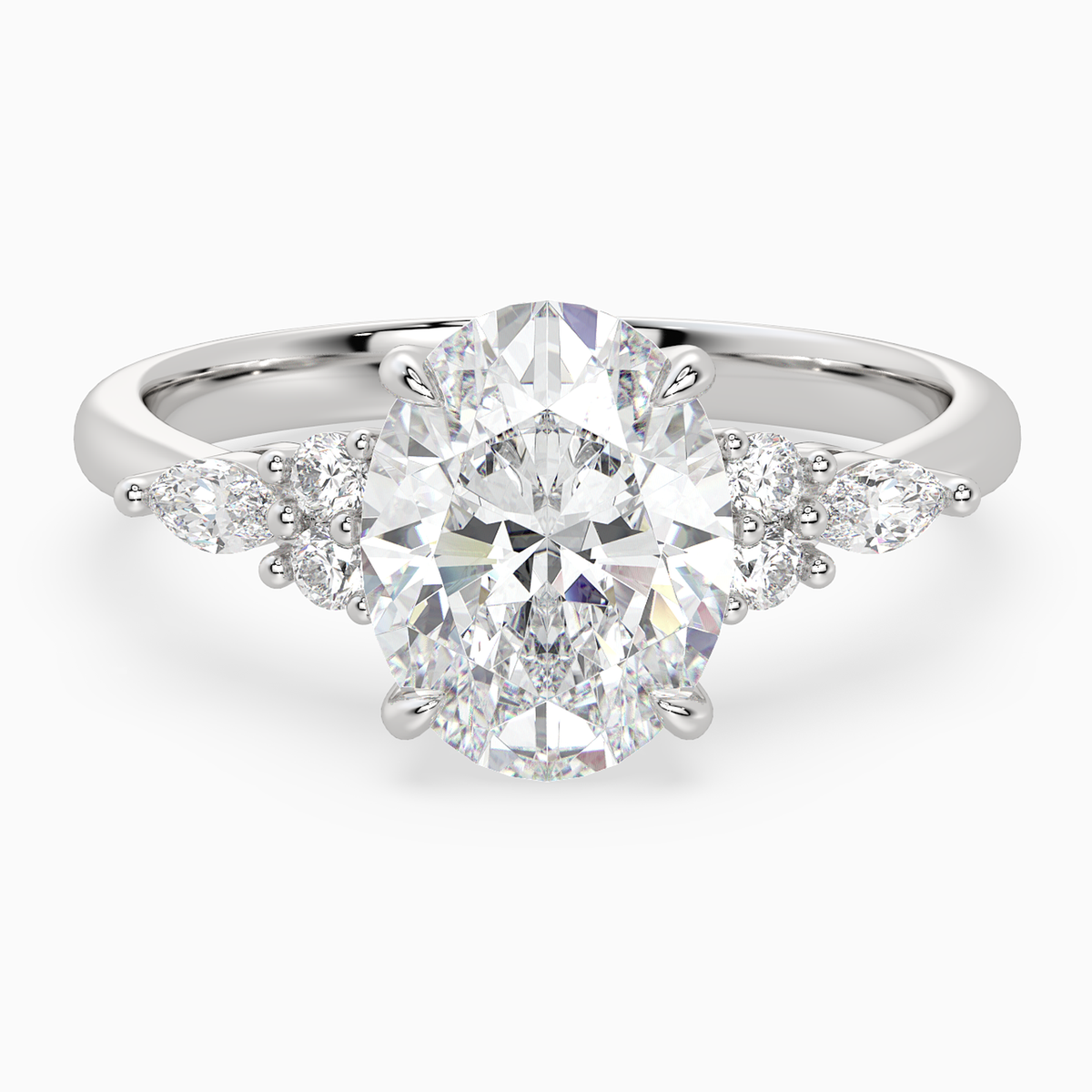


At the intersection of material science and architectural precision lies the lab-grown diamond. Cultivated within highly controlled environments, these stones share the exact chemical, physical, and optical blueprint of traditionally mined diamonds. Both exhibit the refractive fire and structural durability that define fine jewelry. The distinguishing variable is the environment of their genesis: lab-grown diamonds are synthesized above ground through sustainable, engineered processes rather than geological extraction. For individuals who appreciate clarity in both origin and aesthetic, these diamonds provide a deliberate alternative without compromising on performance.
The Structural Reality of Lab-Grown Diamonds
Lab-grown diamonds are authentic pure carbon crystals. The technology utilized essentially compresses the timeline of natural diamond formation, resulting in stones that exhibit identical atomic frameworks and light return.
Lab-Grown vs. Extracted Diamonds:
- Contextual Origin: The differentiation is purely environmental. While one is formed deep within the earth's mantle and the other in a state-of-the-art facility, their chemical composition and optical behavior are indistinguishable.
- Objective Evaluation: Both are strictly graded on the standard industry metrics: the 4Cs (cut, color, clarity, and carat weight).
- Diagnostic Verification: Even experienced gemologists require advanced spectroscopic equipment to identify their origin based on microscopic growth patterns.
Lab-Grown Diamonds vs. Simulants (Including Moissanite):
- Material Authenticity: Lab-grown diamonds are carbon. Simulants are fundamentally different materials engineered to mimic visual characteristics.
- The Moissanite Variable: Moissanite is constructed from silicon carbide (SiC). While it offers high durability, its fundamental makeup differs from a diamond.
- Optical Dynamics: Moissanite possesses a higher refractive index, creating a hyper-colorful, rainbow-like scintillation. In contrast, a lab-grown diamond delivers the precise, crisp white brilliance inherent only to pure carbon.
- Physical Hardness: Lab-grown diamonds maintain the maximum hardness rating of 10 on the Mohs scale, alongside the unique thermal conductivity of a diamond lattice.
Synthesis Mechanisms: HPHT and CVD
Transforming elemental carbon into a faceted gemstone requires exact environmental control. The industry relies on two primary synthesis methodologies, both blending scientific rigor with precision manufacturing.
High Pressure High Temperature (HPHT) This approach physically reconstructs the subterranean forces of natural diamond formation. A pure carbon seed is isolated within a containment chamber engineered to withstand pressures exceeding 7,000 atmospheres. When subjected to this extreme pressure alongside a strictly calibrated temperature gradient, the carbon dissolves and systematically precipitates around the seed crystal. Over a period of several days, this continuous molecular bonding yields a rough diamond structurally identical to a mined stone.
Chemical Vapor Deposition (CVD) CVD operates on atomic-level deposition rather than immense mechanical force. Within a heated vacuum chamber (maintained around 800°C), a diamond seed is exposed to a mixture of hydrogen and methane gases. These gases are energized into a plasma state, breaking their atomic bonds and allowing pure carbon atoms to isolate and adhere to the seed. Over a span of weeks, these atoms meticulously stack into a tetrahedral crystal lattice, producing a high-purity rough diamond ready for structural faceting.
Core Material Characteristics
The intrinsic value of a lab-grown diamond is anchored in five measurable physical properties:
- Elemental Purity: Every stone is composed entirely of carbon atoms arranged in a rigid, flawless lattice. This specific chemical makeup dictates all other physical behaviors of the stone.
- Absolute Durability: Registering the maximum 10 on the Mohs scale, lab-created stones represent the hardest naturally occurring material structure. This ensures facet edges remain sharp and the polish resists surface abrasion over decades of wear.
- Optical Performance: The signature visual impact of a diamond is dictated by its refractive index. Lab-grown diamonds handle light perfectly, generating bright white flashes (brilliance) and spectral color dispersion (fire).
- Standardized Certification: To maintain objective quality control, every lab-created diamond undergoes rigorous analysis by independent gemological laboratories, utilizing the universally recognized 4Cs framework.
- Structural Permanence: A pure carbon matrix is inherently stable. Lab-grown diamonds will never degrade, cloud, or alter their optical properties over time.
The Strategic Advantages of Laboratory Synthesis
Choosing a lab-grown diamond involves assessing variables beyond the stone itself, extending to supply chain logic and resource allocation.
Optimized Resource Management: The physical toll of traditional mining is substantial, often requiring the excavation of up to 250 tons of earth per carat. Laboratory cultivation operates on a vastly reduced footprint, utilizing minimal land and cutting water consumption by up to 85%, thereby preserving ecological baselines.
Supply Chain Transparency: The origin of a lab-created diamond is a known, traceable variable. This closed-loop provenance eliminates the ethical ambiguities associated with global mining operations.
Uncompromised Value: Laboratory synthesis strips away the inflated premiums associated with global extraction logistics and heavy infrastructure. By circumventing these structural overheads, lab-grown diamonds offer a strictly rational valuation based on material quality rather than geographical displacement. This paradigm allows for an uncompromising focus on the stone's physical metrics—maximizing carat weight and clarity within a masterfully curated architectural setting.
The Burvonti Standard
Lab-created diamonds align with a modern understanding of material design—one driven by clarity, engineering, and conscious manufacturing. Offering identical brilliance, fully traceable origins, and logical value, they are the deliberate choice for contemporary jewelry. Browse the curated collection of finished designs at Burvonti to examine how precision synthesis elevates structural aesthetics.
Lab Grown Diamond FAQs
What exactly is a lab-grown diamond?
It is a structurally authentic diamond cultivated in a technologically controlled environment. Because it shares the exact chemical and physical blueprint of an extracted diamond, it delivers identical optical performance while providing a more sustainable supply chain. At Burvonti, we curate stones that meet stringent quality standards.
What are the synthesis methods?
The two dominant technologies are High Pressure High Temperature (HPHT) and Chemical Vapor Deposition (CVD). HPHT uses immense mechanical force and heat to crystallize carbon, while CVD deposits carbon atoms onto a seed crystal within a plasma-filled vacuum. Both methods yield authentic rough diamonds.
Are they considered "real" diamonds?
Yes. The definition of a diamond is based on its crystalline carbon structure. Lab-grown diamonds possess this exact structure, rendering them both materially authentic and valuable. Every stone incorporated into Burvonti pieces is independently certified.
How do they compare to natural diamonds?
The primary divergence is the timeline and location of formation. Natural diamonds crystallize underground over millions of years under geological pressure. Lab-grown diamonds achieve the same structural result in a matter of weeks within highly calibrated facilities.
What determines their comparative valuation?
The valuation of an extracted diamond is heavily weighted by the capital-intensive infrastructure required for mining—heavy machinery, earth displacement, and opaque supply chains. Laboratory synthesis eliminates these logistical variables, resulting in a pricing structure that reflects the intrinsic material value and engineering precision, entirely devoid of the extraction premium.
Do they share the same physical strength?
Absolutely. Because the material is pure carbon, lab-grown diamonds max out the Mohs hardness scale at 10. They exhibit the exact same resistance to scratching as mined diamonds.
What is the 4C grading system?
The 4Cs constitute the objective framework for evaluating diamond quality:
- Cut: The architectural precision of the facets, which controls light return.
- Color: The measurement of tint within the stone (scaled from D, completely colorless, to Z).
- Clarity: The assessment of internal characteristics (inclusions) or surface variables (blemishes).
- Carat: The standardized measurement of the stone's physical mass (1 carat = 200 milligrams).
Is certification provided?
Yes. Lab-grown diamonds utilized by Burvonti are evaluated and certified by recognized authorities such as the GIA or IGI, ensuring objective verification of their cut, color, clarity, and carat weight.
Will they pass a diamond tester?
Yes. Standard diamond testing equipment measures thermal and electrical conductivity. Because lab-grown diamonds share these exact physical properties with mined diamonds, they register as authentic.
Are Burvonti lab-grown diamonds sustainably sourced?
Yes. Utilizing a vertically integrated approach, directly from our proprietary manufacturing facility, allows us to maintain strict oversight. Lab-grown diamonds inherently bypass the ecological disruption of mining, ensuring each stone aligns with responsible resource management.
How should I determine the right diamond shape?
Shape selection is a matter of personal aesthetic geometry and how the stone integrates with the setting's architecture. Standard profiles include round, princess, cushion, oval, and emerald. The optimal choice depends on the structural design of the intended finished piece.
What is the protocol for cleaning a diamond ring?
To maintain optimal light refraction, remove accumulated surface oils by soaking the piece in warm water mixed with a mild surfactant. Gently brush the stone with a soft-bristle tool to dislodge debris. Avoid harsh chemicals or abrasive materials that could compromise the polish of the metal setting.
Where can I acquire lab-grown diamonds?
Burvonti offers a highly curated collection of finished lab-grown diamond pieces directly through our online platform. Our process provides comprehensive technical specifications, detailed visual inspections, and secure acquisition protocols.

