


Engagement Ring Buying Guide
Engagement Ring Styles Guide: How to Choose the Right Ring for You

The right engagement ring style is not just the one that looks beautiful in a photo. It is the style that fits the diamond, the hand, the wearer's daily life, and the meaning behind the decision. A solitaire can feel clean and focused. A halo can add presence. A three-stone ring can create balance and symbolism. A bezel can feel modern, secure, and practical.
This engagement ring styles guide will help you compare the major design choices: diamond shape, setting style, metal color, lifestyle fit, and custom design. Use it as a decision framework, not a rulebook. The best ring is the one whose proportions and details feel intentional on the person who will wear it.
Engagement Ring Styles at a Glance
Most engagement ring styles are built from a few core decisions. The table below gives you a fast way to compare the most common options before you move into details.
| Style | Best For | What to Consider |
|---|---|---|
| Solitaire | Clean focus on the center diamond, minimal design, easy everyday wear. | The diamond quality and proportions carry the whole look, so cut and shape matter deeply. |
| Hidden halo | Subtle side detail, extra brilliance, a refined twist on a classic ring. | Most sparkle appears from the side, so it is ideal for buyers who want detail without a busy top view. |
| Halo | More face-up presence, extra sparkle, and a framed center stone. | The halo should support the center diamond rather than overpower it. |
| Three-stone | Symbolism, wider coverage, and a balanced hand presence. | Side-stone size and shape must be calibrated carefully so the ring does not feel crowded. |
| Bezel | Modern style, secure edge protection, and active daily wear. | A full bezel creates a stronger metal outline, so proportion and metal color become more visible. |
| Pavé | Fine sparkle along the band and a delicate jewelry feel. | Small stones add maintenance considerations, especially for heavy everyday wear. |

Choose the Diamond Shape First
Diamond shape creates the first visual language of the ring. The same setting can feel completely different with a round, oval, emerald, pear, or radiant diamond. Before you choose a setting, decide what shape feels right on the hand and fits the wearer's style.
Round
Round brilliant diamonds are balanced, familiar, and highly versatile. They work well in solitaire, halo, pavé, and three-stone designs. If you want a ring that feels classic without being complicated, round is a strong starting point.
Oval
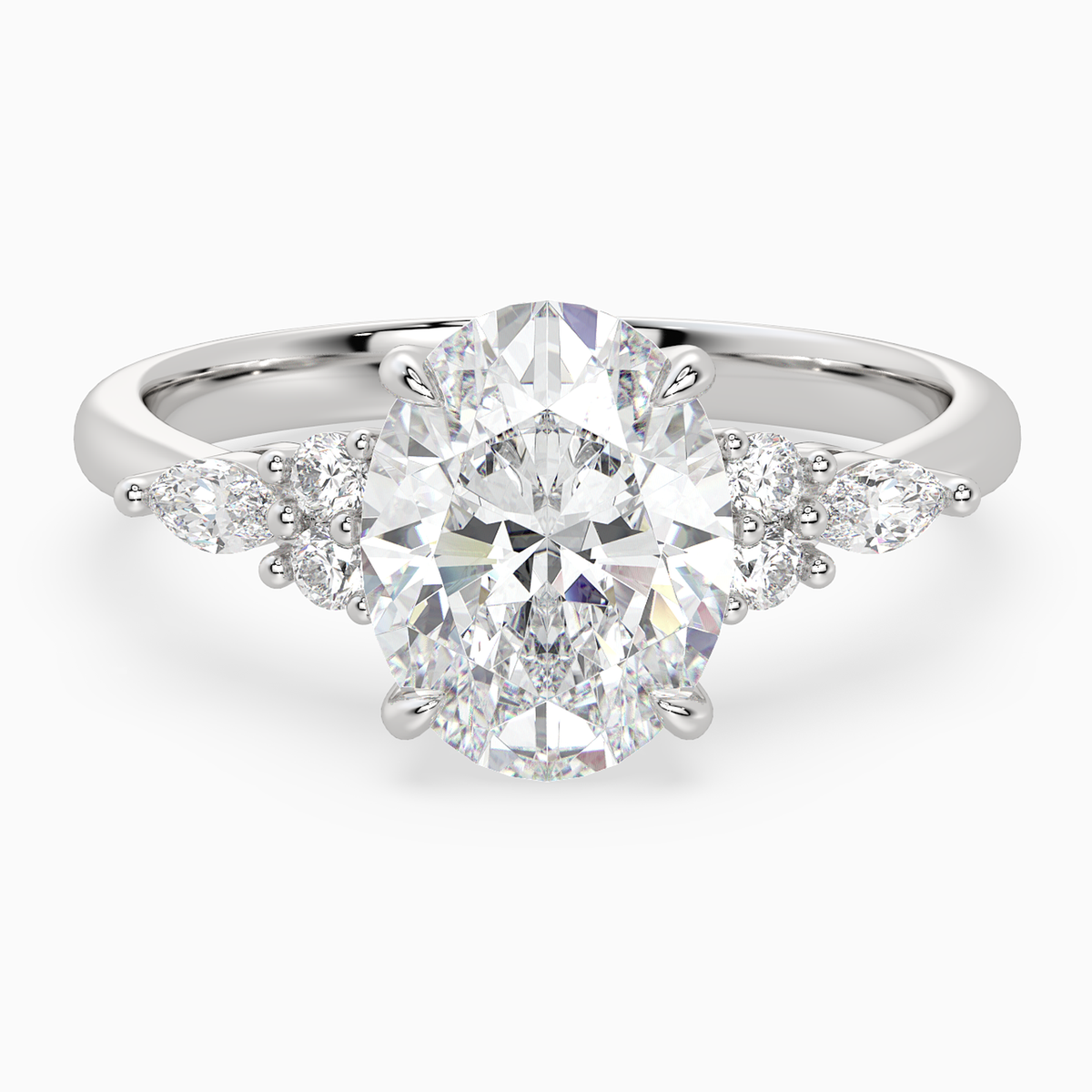
Oval diamonds create length and soft presence. They often look elegant on many hand shapes and can make a center stone feel visually generous. Ovals pair beautifully with solitaire, hidden halo, and three-stone settings.
Emerald and Radiant
Emerald cuts bring clean lines and architectural restraint. Radiant cuts offer a similar rectangular outline with more brilliant sparkle. Both shapes can look especially refined in solitaire, bezel, or three-stone styles.
Pear and Marquise
Pear and marquise shapes create strong direction and visual length. They can feel distinctive and expressive, but they need protective setting choices around their points. A thoughtful prong or bezel design matters here.
Cushion
Cushion diamonds sit between soft and structured. Square cushions feel balanced and romantic in a restrained way, while elongated cushions offer more finger-lengthening presence. They work well in solitaire, halo, and vintage-inspired settings.
Choose a Setting That Matches Daily Wear
A setting is more than decoration. It controls how high the diamond sits, how secure the stone feels, how much sparkle surrounds it, and how easily the ring fits into everyday life.
Low Profile
Good for active wearers and people who prefer a ring that feels close to the hand. It may need more planning if a straight wedding band is important.
Cathedral
Raises and supports the center stone with graceful shoulders. It can make a solitaire feel more architectural without adding many extra diamonds.
Bezel or Partial Bezel
Frames the diamond with metal and adds practical protection. It is useful for modern style and everyday durability.
Solitaire Engagement Rings
A solitaire engagement ring places the center diamond at the heart of the design. It is the clearest choice for buyers who want the diamond shape, cut, and proportions to speak first.
The simplicity of a solitaire is also its discipline. Because there are fewer decorative elements, the diamond and setting details become more important. Prong placement, band width, stone height, and metal color all shape the final impression.
Halo and Hidden Halo Engagement Rings
A halo surrounds the center diamond with smaller diamonds, creating more face-up sparkle and visual size. It can be useful if the wearer wants a more ornate look or a larger overall presence.
A hidden halo is more restrained. It adds sparkle beneath or around the side of the center stone without changing the top-view outline as dramatically. For many modern buyers, this is a strong middle ground: detailed, but not overly decorative.
Three-Stone Engagement Rings
Three-stone engagement rings place side stones beside the center diamond. The design can feel balanced, meaningful, and substantial on the hand. It is especially effective when the side stones are shaped to complement the center, not compete with it.
For a refined three-stone ring, watch the ratio. Large side stones create drama, while tapered or smaller side stones keep the focus on the center diamond. The best version depends on hand scale, diamond shape, and the wearer's taste.
Bezel Engagement Rings
A bezel setting wraps metal around the diamond's edge. It can make a ring feel modern, clean, and secure. It also gives the diamond a more graphic outline, which can be beautiful with round, oval, emerald, and pear shapes.
Because a bezel adds visible metal around the stone, proportion is key. A heavy bezel can feel bold; a fine bezel can feel precise and architectural. This is a style where small design choices change the whole personality of the ring.
Metal Color Changes the Style
Metal color can make the same ring feel warm, bright, vintage, modern, or minimal. White gold and platinum create a clean, cool frame around the diamond. Yellow gold adds warmth and contrast. Rose gold softens the look and can make pavé or vintage-inspired details feel more romantic.
If you are choosing for someone else, look at the jewelry they already wear. Their daily metal preference usually tells you more than a general rule about skin tone.
Classic, Modern, Vintage, or Custom?
Classic rings usually prioritize balance and longevity: solitaires, refined pavé, oval settings, round brilliants, and clean three-stone designs. Modern rings often use bezels, east-west settings, elongated shapes, sculptural bands, or sharper proportions. Vintage-inspired rings may include milgrain, detailed galleries, halos, or antique-influenced shapes.
Custom design makes sense when the wearer likes elements from more than one category. You may want the clarity of a solitaire, the side detail of a hidden halo, the security of a lower profile, and the warmth of yellow gold. A custom path lets those decisions be calibrated together.
For a two-stone option, continue with Toi et Moi Ring Guide.
Compare Styles With the Diamond in Mind
The strongest engagement ring style is the one that supports the diamond and suits the person wearing it. Compare shapes, settings, and lab-grown diamond options before narrowing your final design.
Explore engagement rings Compare lab-grown diamondsHow Lab-Grown Diamonds Change the Style Conversation
Lab-grown diamonds can give buyers more flexibility in the style decision. Because many shoppers can access a larger stone or different specifications within the same budget, the conversation can shift from simply "what can we afford?" to "what proportions and design choices feel right?"
That flexibility is especially useful for elongated shapes, three-stone designs, halo details, and custom settings. The goal is not to choose the largest diamond possible. The goal is to choose the diamond and setting combination that feels balanced, transparent, and intentional.

Burvonti's Custom Design View
A ring style should be built around the diamond, the setting, and the person who will wear it. Burvonti's approach favors transparent specifications, deliberate proportions, and a ring made after the diamond and setting are selected.
That means the final ring is not just a style category. It is a calibrated design decision.
Start a custom ring designA Practical Buying Checklist
- Choose the diamond shape: start with the outline that best fits the wearer's style and hand.
- Select the setting family: compare solitaire, hidden halo, halo, three-stone, bezel, and pavé.
- Set the profile: decide whether the ring should sit low, raised, cathedral-supported, or wedding-band friendly.
- Pick the metal color: match the wearer's existing jewelry and the mood of the design.
- Check daily wear: consider work, travel, gloves, maintenance, and comfort.
- Review the full composition: diamond, band width, setting height, side detail, and wedding band compatibility should work together.
Final Thoughts
Engagement ring style is personal, but it should not be random. The most successful rings usually come from a clear sequence: choose the diamond shape, choose the setting that supports it, choose the metal color, and then refine the proportions for the person who will wear it.
If you are early in the process, compare the major styles side by side. If you already have a strong preference, use that as your anchor. The right ring does not need to follow every trend. It needs to feel considered, wearable, and true to the commitment it represents.
For a related guide, continue with Engagement Ring Settings Guide: Find the Right Style for Your Diamond.
Frequently Asked Questions
What is the most popular engagement ring style?
Solitaire engagement rings remain one of the most popular styles because they are clean, versatile, and focused on the center diamond. Hidden halo, oval solitaire, and pavé styles are also common choices for modern buyers.
What engagement ring style is best for everyday wear?
A low-profile solitaire, bezel, partial bezel, or secure cathedral setting can be practical for everyday wear. The best choice depends on the wearer's routine, hand use, and comfort preferences.
Are halo engagement rings still in style?
Halo rings are still chosen by buyers who want extra sparkle and face-up presence. Hidden halos have become especially popular for shoppers who want detail without a more ornate top view.
What is the difference between a solitaire and a pavé engagement ring?
A solitaire focuses on one center diamond and usually has a plain band. A pavé ring adds small diamonds along the band for extra sparkle and a more detailed jewelry look.
Should I choose the diamond shape or setting first?
Choose the diamond shape first, then select a setting that supports the stone's outline, height, security, and style. The setting should make the diamond look intentional, not forced.
Is a custom engagement ring worth it?
A custom engagement ring can be worth it when you want specific proportions, a particular diamond shape, a lower profile, a mixed-style design, or a ring built around the selected stone rather than a stock setting.