


Engagement Ring Education
Engagement Ring Settings Guide: Find the Right Style for Your Diamond
The setting does more than hold the center stone. It shapes how the diamond looks, how high the ring sits, how protected the edges feel, and how naturally the ring fits into daily life.

Short Answer: What Is an Engagement Ring Setting?
An engagement ring setting is the metal design that secures and frames the center diamond or gemstone. In everyday shopping language, it can also describe the ring's overall style, such as solitaire, halo, three-stone, cathedral, bezel, pavé, or split shank.
The best setting depends on what you want most: maximum light return, a low-profile feel, extra visual size, stronger edge protection, vintage detail, or a clean custom design built around your chosen diamond.
How to Think About Settings Before You Compare Styles
Many shoppers use the word setting in three different ways. Separating those meanings makes the decision easier.
Stone Support
This is the way metal holds the diamond: prongs, bezel, tension, bar, channel, or pavé work. It affects security, visibility, and maintenance.
Ring Silhouette
This is the overall architecture: solitaire, cathedral, three-stone, split shank, trellis, or low-profile. It affects height, proportion, and side view.
Design Detail
This includes halo diamonds, side stones, milgrain, engraving, filigree, and band texture. It affects personality and visual presence.
Fast Chooser: Which Setting Fits Your Priorities?
- Most classic: choose a solitaire or simple prong setting.
- Most protected edge: choose a full bezel or partial bezel setting.
- Most visual spread: consider a halo, hidden halo, or three-stone design.
- Most airy side profile: look at cathedral, trellis, or open-gallery settings.
- Most low-key daily wear: compare low-profile bezels, basket settings, and smooth bands.
- Most detailed surface sparkle: consider pavé, channel-set accents, or side stones.
Main Engagement Ring Setting Types
Use the descriptions below as a shopping map, not a rulebook. A well-designed custom ring can combine several setting ideas in one piece. Use the Prong Settings Guide and Bezel Setting Guide to compare two foundational ways of securing the center stone.
Prong Settings
A prong setting uses small metal claws to hold the diamond in place. Four-prong settings feel open and modern, while six-prong settings add a more rounded outline and extra contact points. Prongs allow strong light access, so they are often chosen for brilliance and a classic engagement ring look.
The tradeoff is maintenance. Prongs should be checked over time because the tips do the hard work of keeping the stone secure.
Bezel Settings
A bezel setting surrounds the diamond with a continuous or partial rim of metal. It creates a clean edge, protects the stone's perimeter, and can feel more practical for hands-on daily routines.
A full bezel is the most protective. A partial bezel leaves more of the stone visible while still protecting key edges or ends.
Solitaire Settings
A solitaire setting places one center stone at the focus of the ring. It can be prong-set, bezel-set, cathedral-set, or built with a simple basket. The strength of a solitaire is restraint: the diamond, proportions, and setting precision become the design.
Cathedral Settings
A cathedral setting uses raised shoulders that slope upward from the band toward the center stone. This can create a graceful side profile and give the diamond more height and presence. It is a strong option for someone who likes architecture in the ring, but the height should be tested against comfort and snag risk.
Halo and Hidden Halo Settings
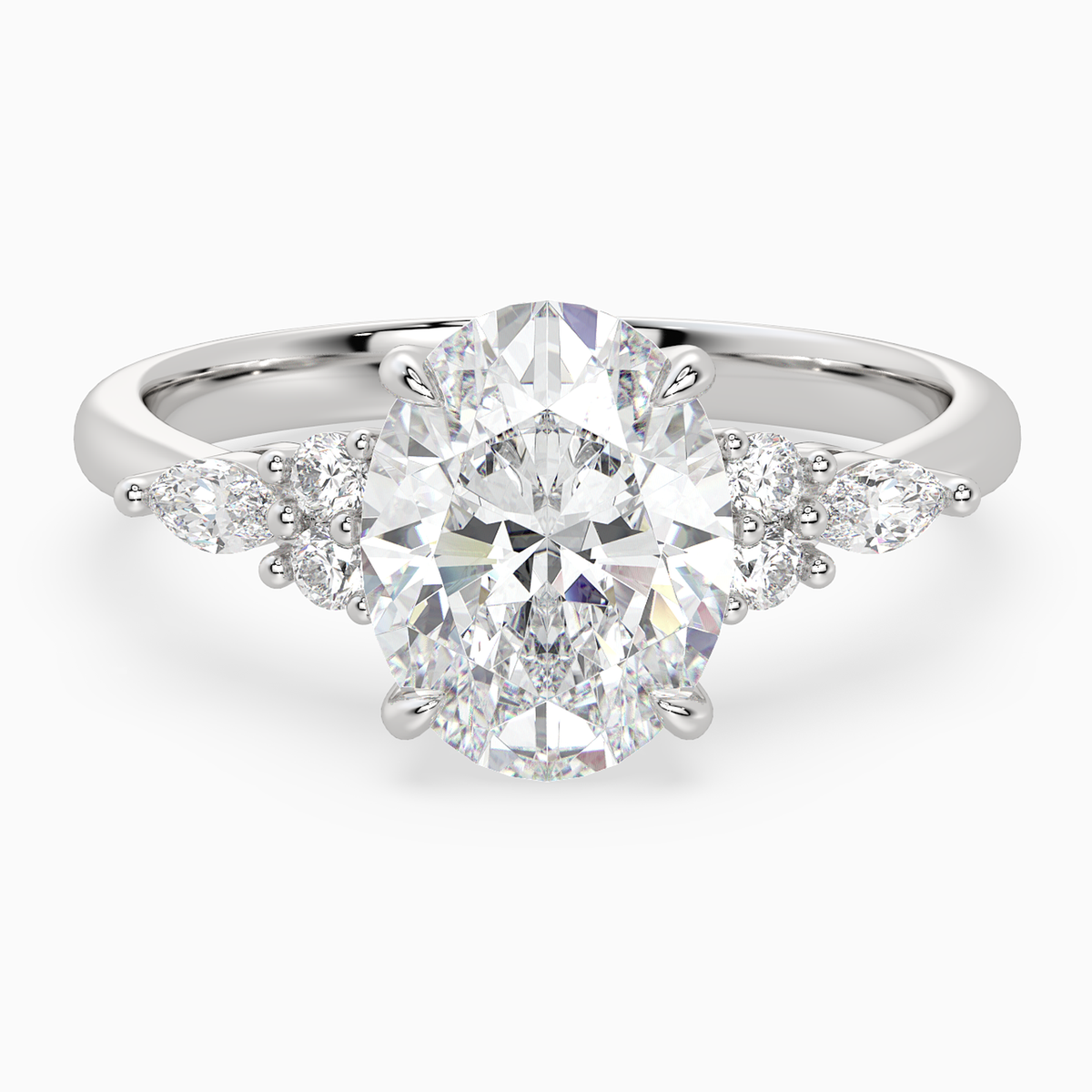
A halo setting surrounds the center stone with smaller diamonds, adding sparkle and making the center appear larger from the top view. A hidden halo places the accent diamonds beneath the top view, adding detail mostly visible from the side.
Halos are useful for visual impact, but they add small stones that may need more cleaning and occasional inspection.
Three-Stone and Side-Stone Settings
Three-stone rings and side-stone settings add diamonds beside the center stone. They can make the ring feel balanced, symbolic, and substantial without relying only on a larger center diamond. Proportion matters: the side stones should support the center, not compete with it.
Pavé, Channel, and Bar Settings
Pavé settings use tiny diamonds secured close together for surface sparkle. Channel settings place smaller stones between two metal walls, giving the band a smoother edge. Bar settings hold stones between slim metal bars for a more geometric look.
These details are especially relevant if you want sparkle on the band, but they should be chosen with cleaning, resizing, and long-term wear in mind.
For a closer look at pavé, continue with Pavé Ring Settings Explained.

Engagement Ring Settings Compared
| Setting Type | Best For | Look and Feel | Daily-Wear Consideration |
|---|---|---|---|
| Prong | Brilliance, classic style, visible diamond shape | Open, light, traditional to modern depending on prong shape | Needs periodic prong checks |
| Bezel | Edge protection, low-profile designs, clean modern lines | Smooth, architectural, secure | Can show slightly less stone edge than prongs |
| Solitaire | Minimalism, diamond-first design, long-term versatility | Clean and focused | Details depend on the head, basket, and height |
| Cathedral | Raised presence and elegant side architecture | Structured, graceful, more dimensional | Higher settings may catch more easily |
| Halo | Extra sparkle and larger top-view presence | Bright, detailed, romantic or modern depending on shape | Small stones need cleaning and inspection |
| Three-Stone | Balanced presence and added meaning | Substantial, symmetrical, expressive | Side-stone proportions should be carefully calibrated |
| Pavé or Channel | Band sparkle and added texture | Pavé is delicate and bright; channel is smoother and more contained | Can affect resizing, cleaning, and long-term maintenance |
Match the Setting to the Diamond Shape
The same setting can feel different depending on the diamond shape. Round diamonds are versatile and work with almost every setting. Oval, pear, and marquise diamonds often need careful end or tip protection. Emerald cuts usually benefit from settings that respect their clean geometry. Princess cuts and other square shapes need thoughtful corner support.
This is where custom design matters. A setting should be built around the chosen stone's dimensions, not treated as a generic mount that happens to fit.
Appearance, Comfort, and Security: The Real Buying Decision
A beautiful setting that feels inconvenient every day is not the right setting. Use these decision points before you finalize the ring.
Appearance
Do you want the diamond to look open and lifted, smooth and protected, or surrounded by added sparkle?
Comfort
Consider height, edge smoothness, band width, and whether the ring will sit flush with a future wedding band.
Security
Look at contact points, prong strength, bezel coverage, side-stone setting method, and how exposed the stone edges are.

When Custom Design Is Worth It
Custom design is most useful when the center diamond, lifestyle needs, and aesthetic direction all need to work together. It can help with unusual diamond dimensions, specific wedding-band fit goals, low-profile comfort, hidden halo placement, mixed setting details, or a cleaner version of a style you like but do not want to copy exactly.
For Burvonti, the ideal setting decision is intentional: chosen for the stone, calibrated for the wearer, and refined until the ring feels precise rather than overdesigned.
To continue from setting research to a tailored design path, explore custom engagement rings.
A Practical Way to Choose
- Choose the center diamond shape and size range first.
- Decide your top priority: brilliance, protection, low profile, or extra presence.
- Compare two or three setting families, not every style at once.
- Check side profile, wedding-band fit, and cleaning needs before approving the design.
- Use custom design when the setting needs to be calibrated around a specific stone or daily-wear requirement.
Choose the Setting Around the Diamond and the Life It Will Enter
Explore lab-grown diamond engagement rings, compare diamond options, or start a custom design conversation when you want the setting built around your priorities.
Frequently Asked Questions
What is the most popular engagement ring setting?
Solitaire and prong settings are among the most popular because they are classic, versatile, and place the center diamond at the focus of the ring.
Which engagement ring setting makes a diamond look bigger?
Halo settings, three-stone settings, and slim bands can increase visual presence. A well-proportioned setting can also make the center diamond look more balanced and prominent.
Which setting is best for everyday wear?
A low-profile bezel, smooth basket, or secure prong setting can work well for everyday wear. The best choice depends on your routine, stone shape, and comfort preferences.
Are prong settings secure?
Yes, prong settings can be secure when they are well made and inspected over time. Four-prong and six-prong designs both work; the right choice depends on the stone shape and desired look.
Is a bezel setting better than a prong setting?
A bezel is usually better for edge protection and smoothness. A prong setting is usually better for an open, light-facing look. Neither is universally better; they solve different problems.
Should I choose the diamond or the setting first?
It is usually best to choose the diamond shape and size range first, then refine the setting around that stone's proportions, vulnerability points, and desired profile.
A setting is the architecture of the ring. When it is chosen carefully, it does not just display the diamond; it makes the whole piece easier to wear, easier to understand, and more personal to the commitment it represents.