


Engagement Ring Buying Guide
Best Engagement Rings for Your Hand Shape: A Buying Guide

The best engagement ring for your hand shape is the one that balances proportion, comfort, and personal style. A long oval can visually lengthen shorter fingers. A round brilliant can feel balanced on many hands. An emerald cut can bring structure to longer fingers. A slightly wider band can look intentional on larger hands, while a slim band can keep the focus on the center stone for petite hands.
That does not mean your hand shape should control the entire decision. It should guide the design conversation. The ring still needs to match your lifestyle, preferred metal color, diamond shape, setting style, and budget. A ring that suits your hand should look natural when you wear it every day, not only beautiful in a close-up photo.
Start With Proportion, Not Rules
Most hand-shape advice is useful only when it is treated as a starting point. The goal is not to hide your hands or force a standard formula. The goal is to choose a ring that brings visual balance to the hand that will actually wear it.
Three details matter most:
- Finger length: Shorter fingers often benefit from shapes that draw the eye vertically, while longer fingers can carry broader or more geometric designs.
- Finger width: Slim fingers may look best with delicate bands and moderate center stones, while wider fingers can support more coverage, side stones, or a stronger setting profile.
- Hand scale: Petite hands can be overwhelmed by heavy bands. Larger hands may need more visual weight so the ring feels intentional rather than tiny. Use our diamond shape guide and 4Cs diamond guide for the broader decision framework.
Best Engagement Ring Styles by Hand Shape
Use this table as a practical first pass. If a style appears in more than one row, that is a good sign: strong design elements often work across several hand types when the proportions are adjusted.
| Hand or Finger Type | Most Flattering Ring Directions | What to Watch |
|---|---|---|
| Short fingers | Oval, pear, marquise, elongated cushion, or emerald-cut diamonds on a slim band. | Avoid very wide bands or low, bulky settings that visually shorten the finger. |
| Long fingers | Round, emerald, radiant, asscher, three-stone, split-shank, or wider bands. | Very tiny stones on ultra-thin bands can look under-scaled unless that minimal look is intentional. |
| Slim fingers | Round, oval, cushion, bezel, solitaire, or delicate pavé bands with balanced center-stone size. | Choose a secure fit. Top-heavy designs can rotate on slim fingers. |
| Wider fingers | Oval, elongated cushion, emerald, radiant, three-stone, halo, or slightly wider bands. | Extremely narrow bands can make the ring feel visually small. Consider coverage and balance. |
| Small hands | Petite solitaires, oval or round centers, low-profile settings, and refined pavé accents. | Oversized halos, thick shanks, or tall settings may overpower the hand. |
| Larger hands | Three-stone rings, elongated cuts, bold solitaires, cathedral settings, and medium bands. | A very delicate setting can disappear visually. Scale the design with intention. |

Choose the Diamond Shape First
The center stone creates the first visual impression. Even before the setting, diamond shape affects whether a ring looks lengthening, balanced, architectural, soft, or bold.
Oval Diamonds
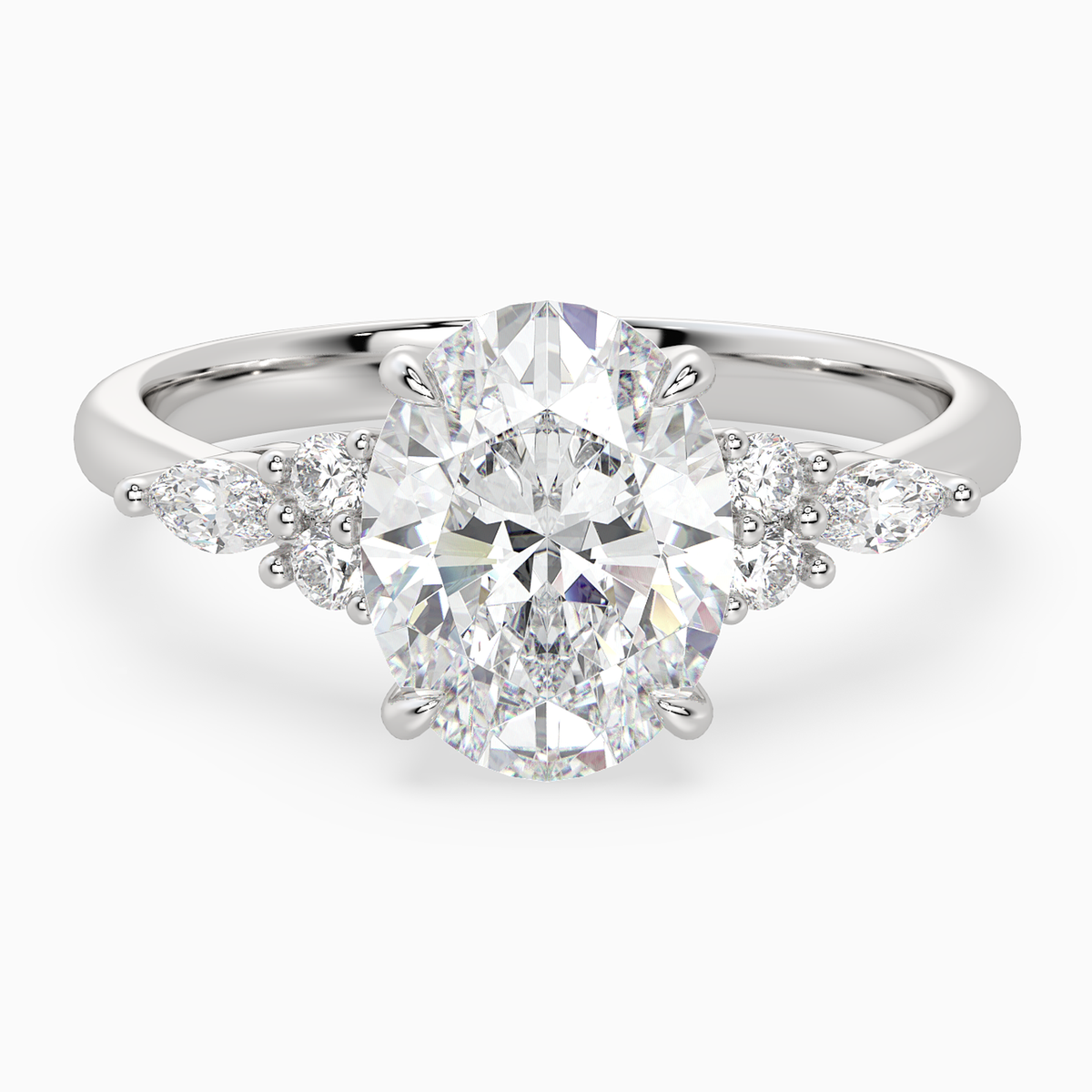
Oval engagement rings are one of the strongest choices for many hand shapes because they combine softness with length. The elongated outline can make shorter fingers look longer, while the rounded ends keep the look approachable. Oval diamonds also offer strong face-up presence, which can make the ring feel substantial without requiring an overly heavy setting.
Round Brilliant Diamonds
Round diamonds are classic because they are visually balanced. They work especially well for slim fingers, small hands, and shoppers who want maximum sparkle in a familiar silhouette. On wider hands, a round center can still work beautifully, but it may need a slightly larger carat weight, side stones, or a setting with more coverage.
Emerald and Radiant Cuts
Emerald and radiant diamonds bring clean lines and structure. Emerald cuts tend to look refined and architectural, especially on longer fingers or hands that can carry a more linear design. Radiant cuts offer a similar rectangular presence with more brilliance, making them useful for shoppers who want geometric shape without a quiet sparkle profile.
Pear and Marquise Diamonds
Pear and marquise diamonds are strong lengthening shapes. They can look graceful on shorter fingers and dramatic on longer ones. Orientation matters: a pear worn with the point facing the fingertip often creates a more vertical line. These shapes benefit from careful setting design because their points need protection.
Cushion Diamonds
Cushion cuts are a flexible middle ground. A square cushion feels soft and balanced, while an elongated cushion can create more length. If you like the warmth of a rounded shape but want more finger coverage than a round diamond, an elongated cushion can be a very wearable option.
Then Match the Setting to the Hand
The setting controls scale, height, security, and overall mood. Two people can choose the same diamond shape and end up with completely different rings because the setting changes how the stone sits on the hand.
Solitaire Settings
A solitaire is the cleanest way to let the diamond define the ring. It is especially effective when you want the hand to look uncluttered. For petite hands or shorter fingers, a slim solitaire can keep the design light. For larger hands, a solitaire can still feel substantial if the stone size, setting height, and band width are calibrated together.
Hidden Halo and Halo Settings
A hidden halo adds detail from the side without changing the top-view outline too much. It is a good option if you want extra brilliance but still prefer a refined silhouette. A traditional halo creates more face-up coverage, which can be useful on wider fingers or larger hands. The key is proportion: a halo should frame the center stone, not compete with it.
Three-Stone Settings
Three-stone rings add horizontal presence and symbolic weight. They can look beautiful on longer or wider fingers because the design has enough room to breathe. On smaller hands, choose tapered side stones or a restrained center-to-side-stone ratio so the ring does not feel crowded.
Bezel Settings
A bezel setting surrounds the stone with metal, creating a clean, secure outline. It is a strong choice for active lifestyles and for shoppers who prefer a modern profile. A full bezel can make a stone look slightly larger and more graphic, while a partial bezel can keep the design open and lighter.
Band Width Changes Everything
Band width is easy to underestimate. A thin band can make a center diamond look larger and keep the ring delicate. A medium band can make the ring feel grounded and durable. A wider band can add confidence and proportion, especially on larger hands or longer fingers.
For most shoppers, the sweet spot is not the thinnest possible band. Very thin bands can be elegant, but they are not always the best match for daily wear, long-term maintenance, or top-heavy settings. If the center diamond is elongated or larger, a slightly stronger band can help the whole ring feel balanced.
Think About Lifestyle Before You Choose Height
A ring that looks perfect in a photo can still be frustrating if it snags, spins, or feels too high for daily life. If the wearer works with their hands, wears gloves often, travels frequently, or prefers low-maintenance jewelry, setting profile should be part of the decision from the beginning.
Lower-profile settings, bezels, cathedral support, and thoughtful prong placement can all make a ring easier to live with. Taller settings can create a dramatic view of the diamond and may pair more easily with certain wedding bands, but they need to fit the wearer's routine.

When Custom Design Makes Sense
If you are between two styles, custom design can be the most practical path. Instead of choosing a ring from inventory and hoping the proportions work, the diamond, setting, band width, and profile can be considered together.
For Burvonti, that means a ring can be built around the selected diamond and the person who will wear it. The result is not only about a beautiful center stone. It is about a design decision that feels precise on the hand.
Start a custom ring designMetal Color Should Support the Design
Metal color changes the feeling of the ring against the skin and the way the diamond reads. Platinum and white gold create a clean, bright frame. Yellow gold adds warmth and contrast. Rose gold can soften the overall look, although it should be chosen because the wearer loves it, not because it is assumed to flatter everyone.
If you are buying for a partner, look at the jewelry they already wear. Their everyday metal choice is usually a stronger clue than a general rule about skin tone.
How to Choose If You Are Buying for Someone Else
If the ring is a surprise, you can still make a thoughtful choice without guessing every detail. Start with the wearer's existing jewelry: metal color, scale, whether they prefer simple or detailed pieces, and whether they wear jewelry every day. Then consider hand proportion in a broad way rather than trying to categorize it perfectly.
For a safer surprise ring, consider an oval solitaire, round solitaire, elongated cushion, or refined hidden halo in a metal color they already wear. These directions are flexible, easy to personalize, and less likely to feel overly stylized. If the wearer has a strong fashion point of view, a more distinctive emerald, marquise, three-stone, or bezel design may be the better expression.
Compare Ring Styles With Intention
The right engagement ring should suit the hand, the diamond, and the life it will be worn in. Explore engagement ring options, compare lab-grown diamonds, or begin a custom design conversation when you are ready to narrow the decision.
Explore engagement rings Compare lab-grown diamondsA Simple Decision Framework
- Pick the visual direction: lengthening, balanced, bold, delicate, architectural, or vintage-inspired.
- Choose the diamond shape: use hand proportion as a guide, then choose the shape the wearer genuinely likes.
- Set the scale: match carat size, band width, and setting presence to the hand.
- Check lifestyle fit: consider height, prong protection, durability, and comfort.
- Personalize last: add hidden halo, pavé, side stones, engraving, or custom details after the core proportions are right. Continue with Diamond Carat Size Guide for the next comparison.
Final Thoughts
Choosing the best engagement ring for your hand shape is not about following a narrow beauty rule. It is about proportion, presence, and intention. The most flattering ring is usually the one where the diamond shape, setting, band, and wearer all feel considered together.
If you are early in the process, start with oval, round, elongated cushion, pear, emerald, or radiant diamonds and compare them on the hand whenever possible. If you already know the wearer wants something specific, let that preference lead. A ring chosen with clarity will feel more personal than a ring chosen only because a guide said it should work. Explore engagement rings when you are ready to compare available designs.
Frequently Asked Questions
What engagement ring shape makes fingers look longer?
Oval, pear, marquise, emerald, and elongated cushion diamonds can make fingers look longer because their outlines draw the eye vertically. A slim or medium band can strengthen that lengthening effect.
What engagement ring looks best on short fingers?
Short fingers often look balanced with elongated diamond shapes such as oval, pear, marquise, or elongated cushion. Avoid very wide bands if your goal is to create a longer visual line.
Are round engagement rings good for every hand shape?
Round diamonds are one of the most versatile choices. They can work on many hand shapes, especially when the setting and band width are adjusted to match the wearer's hand scale.
What ring style is best for wider fingers?
Wider fingers can carry more presence, including oval, radiant, emerald, three-stone, halo, and medium-band designs. The goal is enough coverage without making the ring feel heavy.
Should I choose the diamond shape or the setting first?
Start with the diamond shape because it creates the main outline on the hand. Then choose a setting that supports the stone, fits the wearer's lifestyle, and gives the ring the right scale. Continue with Cushion Cut vs. Princess Cut for the next comparison.