


Wedding Bands
A wedding band gives commitment daily form. Explore profile, width, surface, diamond rhythm and how a ring stands alone or meets another.




Commitment, Resolved at Hand Scale
A wedding band carries public meaning, but it is experienced at the scale of one hand: its edge at the neighboring finger, its surface in changing light, its weight through ordinary movement, and the way it meets another ring—or stands complete without one. Commitment gives the band significance; profile, proportion, and fit give that significance a form that can be lived with.
Burvonti’s current public Wedding Band Collection contains 97 products. At normalized design level, it brings together all 69 designs from the broader Ring universe and all 28 designs from Men’s Rings. The range moves from 1.4 mm diamond-led, curved, open, and stacking forms to 8 mm flat, beveled, faceted, brushed, hammered, knurled, channel, comfort-fit, and diamond-accented bands. It is a commitment-led selection universe, not one gendered construction or one required pairing system.
Choose the Role Before the Match
A wedding band may sit beside an engagement ring, be worn alone, share visual language with a partner’s band, or deliberately remain distinct. None of these roles is secondary. Begin with how the wearer expects the ring to function, then judge profile, width, surface, diamond coverage, and metal within that context.
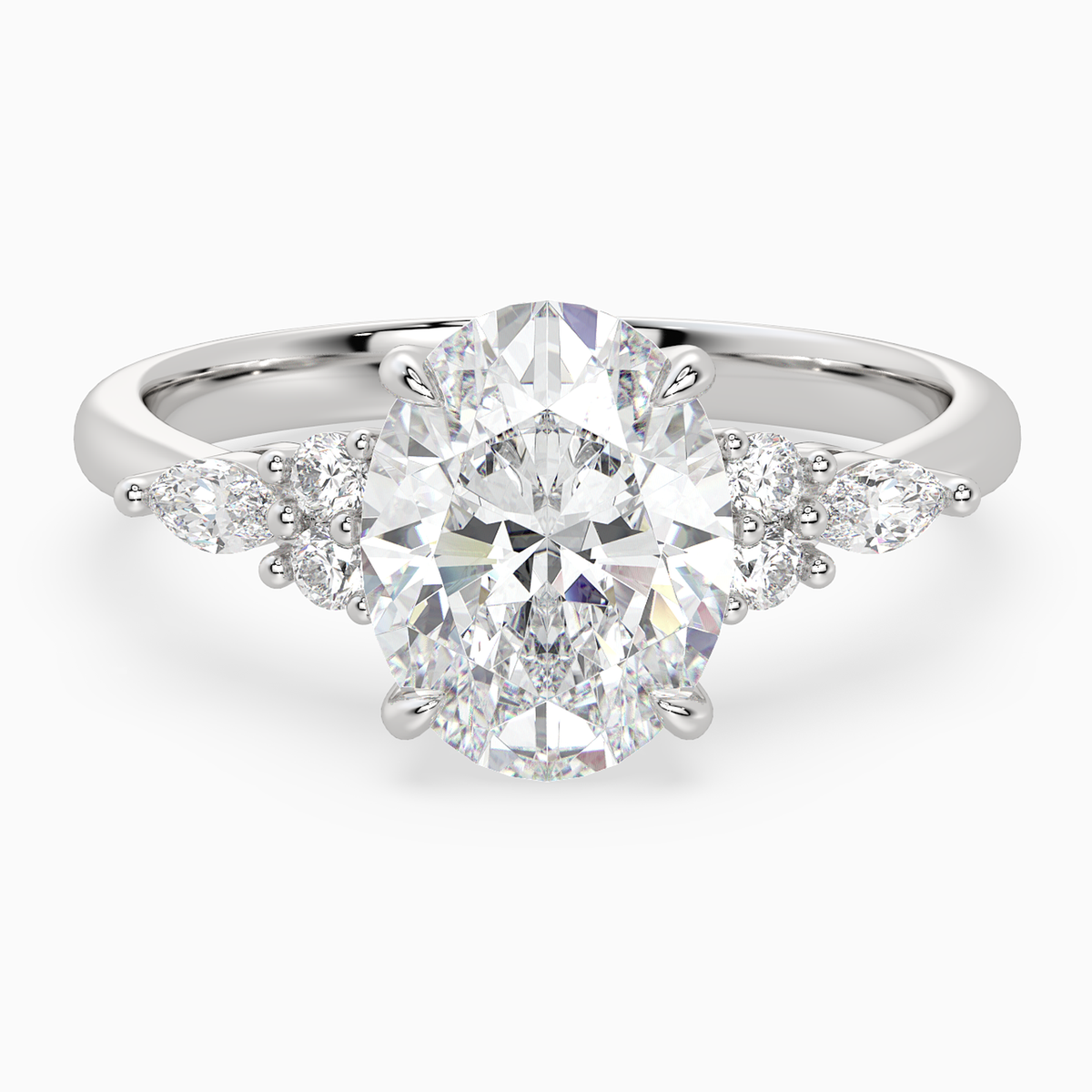
The engagement ring does not have to remain the visual center, and a wedding band does not have to disappear beside it. A restrained band can create a boundary; a diamond band can extend a rhythm; a wider or textured band can be the complete composition on another hand.
Profile Is the First Physical Language
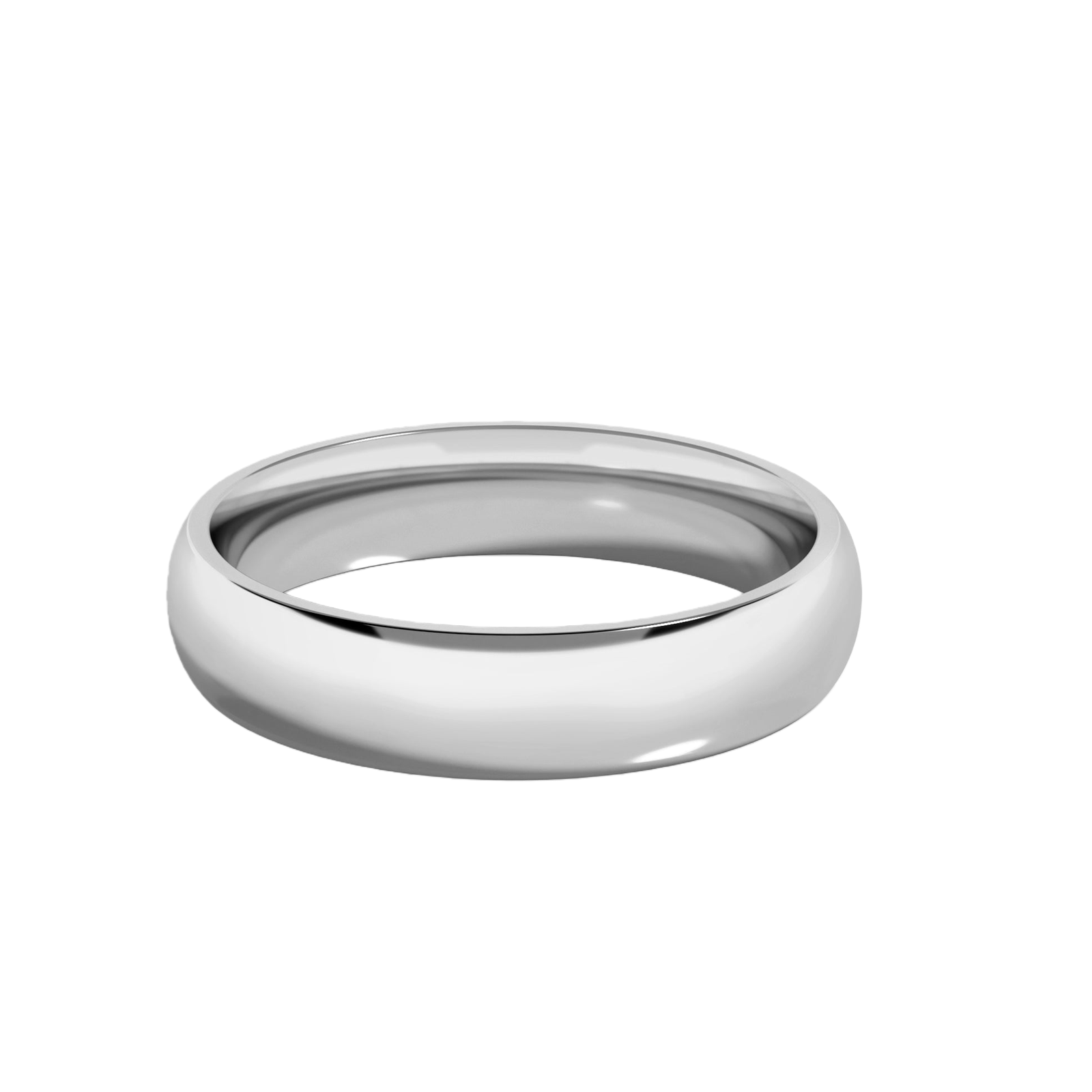
Domed, flat, beveled, knife-edge, concave, faceted, curved, and open profiles distribute light and contact differently. The visible face is only part of the decision. Edge shape, thickness, interior contour, setting projection, and transition around the circumference influence how the ring meets skin and neighboring jewelry.
A comfort-fit title indicates an intended interior profile, not a universal comfort result. Finger anatomy, width, thickness, size, surface, activity, temperature, and swelling still matter. Product-specific cross-sections should be confirmed rather than inferred from the Collection.
Width Sets Presence and Changes Fit
Current published average widths span 1.4 to 8.0 mm. A narrow band can preserve negative space beside an engagement ring or carry a precise diamond line. A wider band gives surface, edge, texture, and isolated diamonds more room to register. Neither scale belongs to one gender or hand size.
Wider bands may feel different from narrow bands at the same nominal size because more surface meets the finger, but no fixed size adjustment applies across all profiles and wearers. Try or measure the intended width and complete combination whenever possible.
Surface Makes Metal Legible
Polish reflects a continuous field of light. Brushed and matte treatments diffuse it. Hammered, knurled, ribbed, milgrain, faceted, and engraved details create smaller intervals and directional marks. Surface is not merely decoration; it determines how the ring changes as it moves and how ordinary wear becomes visible.
No finish is scratch-proof or maintenance-free. Texture can change, polish can mark, and edges can soften with use. Ask how the selected surface may be refreshed and whether refinishing could alter engraving, facets, diamonds, or original geometry.
Diamond Coverage Changes the Rhythm
The Collection includes single and three-stone accents, channel and bezel structures, partial and extended coverage, eternity-titled bands, curved diamond lines, and broader surface-led rings. Named shapes include Round, Princess, Baguette, Trapezoid, Emerald, Marquise, and Heart; twenty products do not name a shape in the same field.
Sixty-one products show TCW options from 1/9 to 3, while 36 show Default Title. Total weight does not describe count, individual size, circumference coverage, setting, or presence beside another ring. A plain or lightly accented band is not less meaningful than a continuous diamond line.
Pairing Is a Relationship, Not a Rule
When pairing with an engagement ring, compare setting height, basket, gallery, prongs, shank, contour, edge, width, and contact from the side as well as face-up. A straight band can leave intentional space; a curved or open band may create clearance; a close visual fit can still conceal pressure between settings.
Matching metal creates one kind of continuity, while contrast can keep both rings legible. Neither identical color nor a matching label guarantees equal alloy, finish, wear, or perfect alignment. No arrangement prevents all abrasion, rotation, pressure, or impact.
Two Partners Need Not Choose One Design
Partners may choose identical bands, repeat one element, or select entirely different forms. A shared metal, edge, finish, diamond detail, or private engraving can create a connection without requiring the rings to match visibly. The relationship belongs to the people, not to a retail category divided by gender.
Bands may be chosen together or separately. There is no required buyer, hand, finger, order, purchase date, or budget formula. Cultural tradition and personal practice can guide placement without becoming a universal rule.
Fit, Change, and Future Layers
Measure the intended finger and consider width, inner profile, knuckle, swelling, climate, activity, and any rings worn beside it. If future anniversary bands or other layers are likely, leave visual and physical room without assuming the stack must remain unchanged.
Resizing depends on metal, width, engraving, surface, eternity coverage, channels, open construction, symmetry, settings, and requested change. Some rings may be altered; others may require a different solution. No Collection-wide resizing promise applies.
Personalization, Documentation, and Care
Custom possibilities may refine width, profile, contour, finish, diamond arrangement, metal, engraving, or relationship to another ring when technically feasible. Confirm exact scope, production details, and alteration implications before treating an idea as available.
Burvonti uses responsibly sourced lab-grown diamonds and supports independent grading and certification where applicable. Confirm what selected documentation covers. Clean according to the full construction, inspect diamonds and contact points, and remove the band when an activity or chemical could place unnecessary stress on the ring.
Frequently Asked Questions
What is the difference between a wedding band and an engagement ring?
A wedding band is chosen in the context of marriage commitment; an engagement ring often centers the proposal and a principal diamond. Either may be worn alone or together.
How many Wedding Bands are currently included?
The public Collection contains 97 products, combining normalized counterparts for all 69 Ring designs and all 28 Men's Ring designs.
What wedding-band styles are currently represented?
Current forms include domed, flat, beveled, knife-edge, concave, faceted, curved, open, textured, channel, bezel, eternity, comfort-fit, and diamond-accented bands.
Does a wedding band need to pair with an engagement ring?
No. It can be selected for standalone wear, pairing, stacking, or another arrangement meaningful to the wearer.
How do I pair a wedding band with an engagement ring?
Compare setting height, basket, gallery, prongs, shank, contour, edge, width, metal, movement, and contact from multiple angles.
Do engagement and wedding rings need to sit flush?
No. A gap may be intentional. Assess appearance, movement, pressure, and contact rather than treating zero space as the only correct fit.
Which ring should be worn first?
There is no universal order. Tradition, culture, comfort, fit, symbolism, and the wearer’s preferred composition may guide placement.
Which hand or finger should hold a wedding band?
Practices vary. Choose according to culture, meaning, fit, activity, and personal preference rather than a universal rule.
Should partners' wedding bands match?
Only if desired. Rings may match, share one detail, or differ completely while carrying the same commitment.
Who should buy the wedding bands?
There is no required buyer. Partners may choose together, select for one another, or use another approach that suits them.
What widths are currently represented?
Published average widths span 1.4 to 8.0 mm. Width affects presence and fit but is not assigned by gender or hand size.
Does a wider band require a larger ring size?
It may feel tighter, but no fixed adjustment applies. Measure or try the intended width, profile, and complete combination.
What is a comfort-fit wedding band?
It generally describes a rounded interior profile. Comfort still depends on width, thickness, size, anatomy, activity, temperature, and swelling.
Which surfaces and finishes are represented?
Current titles include polished, brushed, hammered, knurled, ribbed, milgrain, faceted, engraved, beveled, and other surface-led forms.
Are wedding-band finishes scratch-proof?
No. Polish and texture can both change with wear, and refinishing feasibility depends on construction, diamonds, engraving, and geometry.
Which diamond shapes are currently represented?
Named details include Round, Princess, Baguette, Trapezoid, Emerald, Marquise, and Heart; twenty products do not name a shape in the same field.
What Total Carat Weights are represented?
Sixty-one products show options from 1/9 to 3 TCW; 36 show Default Title. Total alone does not describe coverage or presence.
Which metals are currently represented?
Current cards represent 14K White, Yellow, and Rose Gold. Exact alloy, finish, plating, sensitivity, maintenance, and alternatives remain product-specific.
Can a wedding band be engraved, customized, or resized?
Possibly after technical review. Width, profile, surface, coverage, settings, symmetry, metal, and requested changes affect feasibility.
How should a wedding band be cared for?
Clean according to its metal, surface and settings; inspect diamonds and contact points; and avoid unnecessary chemical or impact stress.