
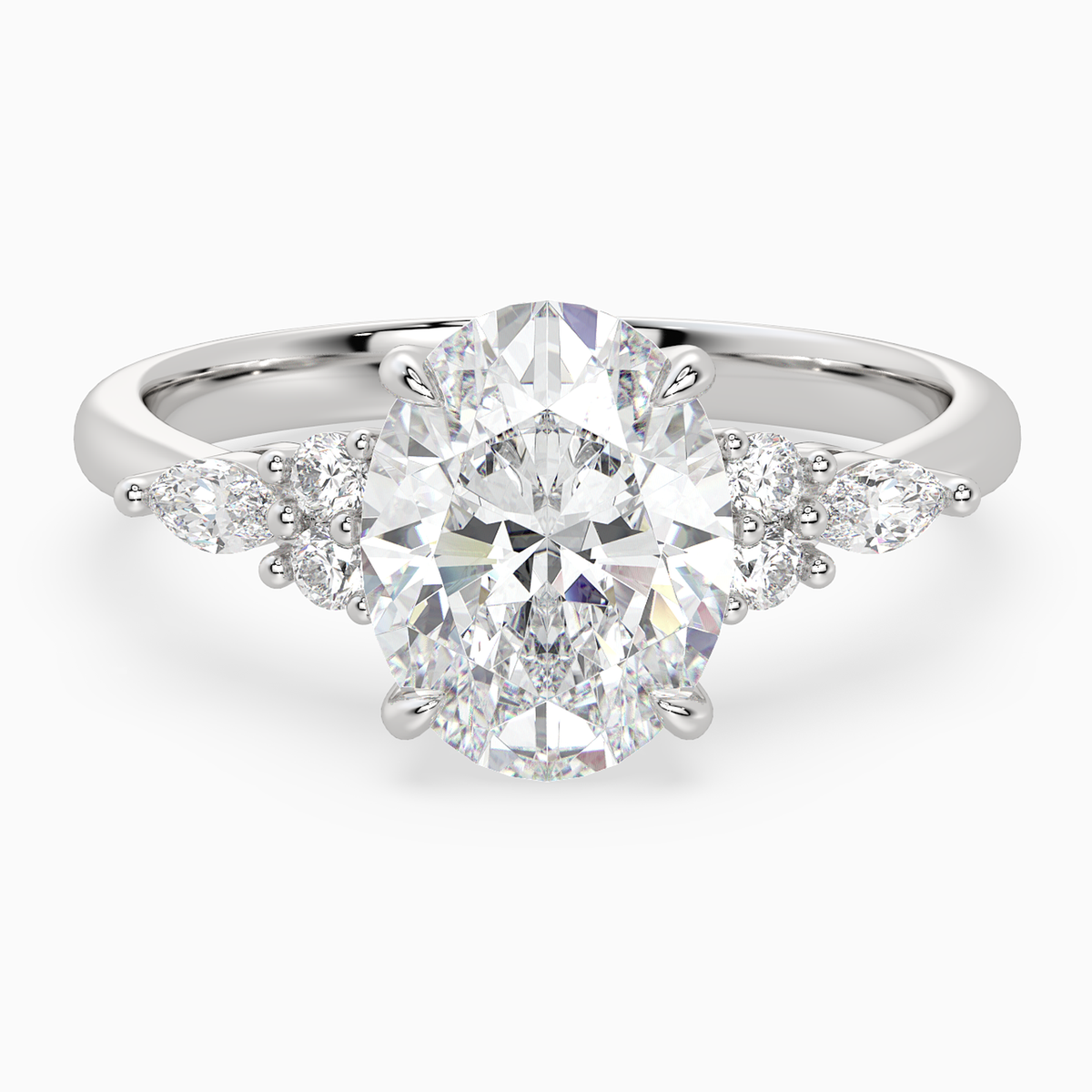


Wedding Bands in 18K Yellow Gold
A fuller yellow field gives commitment material presence. 18K gold carries curved, straight, textured, and diamond-led bands from 1.4–8 mm.


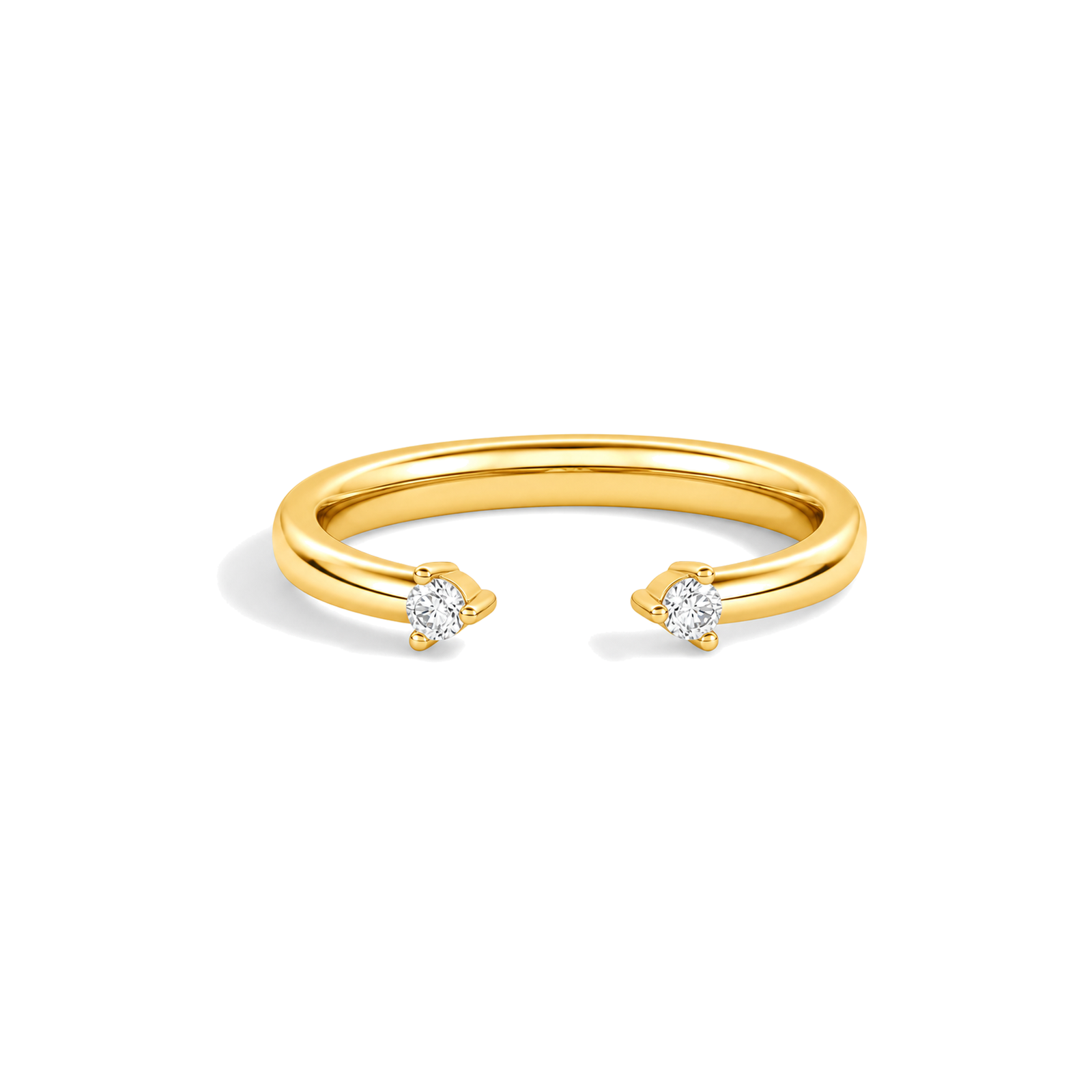
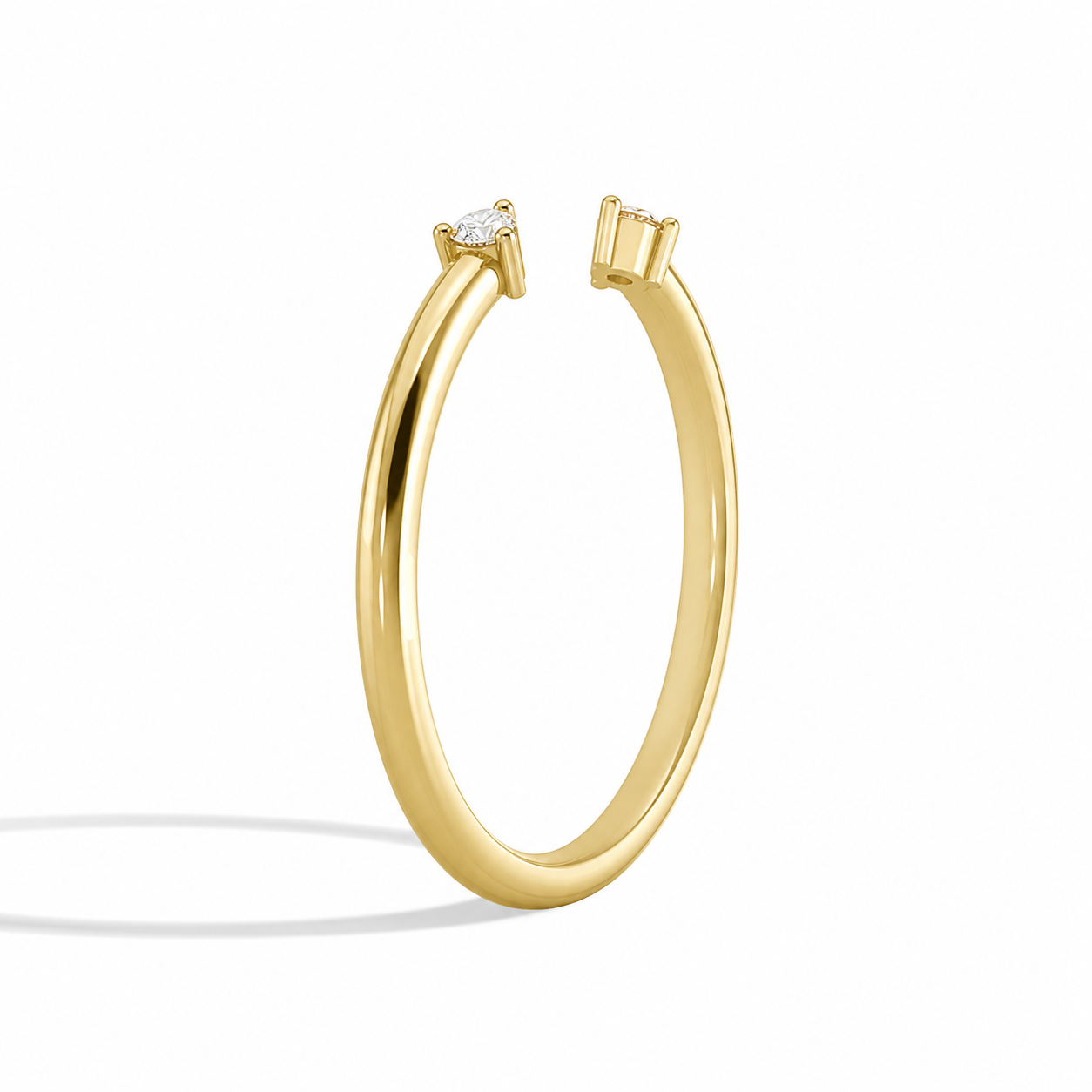

18K Yellow Gold Wedding Bands: Presence across the Complete Line
18K Yellow Gold gives the band a continuous material presence. That presence may be no more than a narrow edge around diamonds, or it may occupy a broad plane with little interruption. In either case, the wedding band can stand complete, meet an engagement ring or share one design cue with a partner.
The page contains ninety-seven normalized designs: sixty-nine from the same-metal Rings route and twenty-eight from Men's Rings. Their union is exact and disjoint. Commitment is the connective intent, not a prescribed silhouette, gender or rule of pairing.
Set the Band's Role before Resolving Detail
A standalone band can hold the full composition in its width, surface and diamond placement. A paired band must also negotiate another ring's setting height, basket, gallery, shoulder and edge. Future anniversary layers introduce further spacing. The role may change, so no arrangement needs to be treated as final.
Straight forms preserve a continuous line; curves redirect it; open forms leave an interval. Any may create harmony or contrast, but none proves a perfect nest. Look for pressure, rotation and contact as well as the face-up relationship.
Allow 1.4–8 mm to Change the Visual Register
At 1.4 mm, the band can read as a fine boundary or diamond trace. Toward 8 mm, metal area makes profile, edge and finish more legible. Thirty-five current width values sit between those limits, allowing gradual proportion changes rather than a simple narrow-versus-wide split.
A larger number does not establish thickness, comfort or size adjustment. Nor does it assign a band to one person. The twenty-eight 4–8 mm forms have a useful Men's Rings route, while this page retains their commitment and partner context alongside sixty-nine other designs.
Keep Warmth Separate from Technical Outcome
18K denotes 75% gold. The remaining alloy, construction and finish determine exact tone, mass and maintenance. Yellow color can create continuity with another yellow ring or articulate contrast beside white metal; it cannot guarantee identical wear between two pieces.
Current feeds distinguish sixty-one Total Carat Weight options, sixteen Carat Weight labels and twenty Title-only products. Examine stone count, setting and circumference on the selected band. Eternity titles, comfort-fit wording and custom possibilities all require precise confirmation rather than a universal promise.
Frequently Asked Questions
How many 18K yellow gold designs are included?
Ninety-seven current wedding-band designs.
What are the two normalized branches?
Sixty-nine Lab-Grown Diamond Rings forms and twenty-eight Men's Rings forms.
Can the band's role change over time?
Yes; it may move between standalone, paired and layered compositions.
What should be checked before pairing?
Setting height, basket, gallery, shoulder, edge, size, spacing and movement.
Does open mean gap-free around a setting?
No. Opening dimensions and the other ring's geometry must be compared.
Can a straight band leave intentional space?
Yes; a visible interval is not inherently a defect.
What is the width range?
Current published averages extend from 1.4 to 8 mm.
How many width values occur?
Thirty-five current labels, including precise decimal widths.
Does width dictate ring size?
No fixed adjustment applies across profiles, interiors and wearers.
What does 18K mean?
The alloy is seventy-five percent gold by fineness.
Is 18K automatically heavier than 14K?
Not for every ring; dimensions and construction also control finished mass.
Can mixed metals be paired?
Yes as a visual choice, with contact and maintenance reviewed specifically.
What diamond arrangements appear?
Accents, channels, bezels, partial lines and eternity-titled arrangements are represented.
Are all diamond weights TCW?
No. Sixteen products use the separate Carat Weight label.
Can every eternity band be resized?
No Collection-wide assumption is safe; coverage and construction matter.
Do partners need the same width?
No. One shared detail may connect otherwise different bands.
How should the band be cared for?
Follow selected surface and setting guidance and inspect after impact or changed condition.