
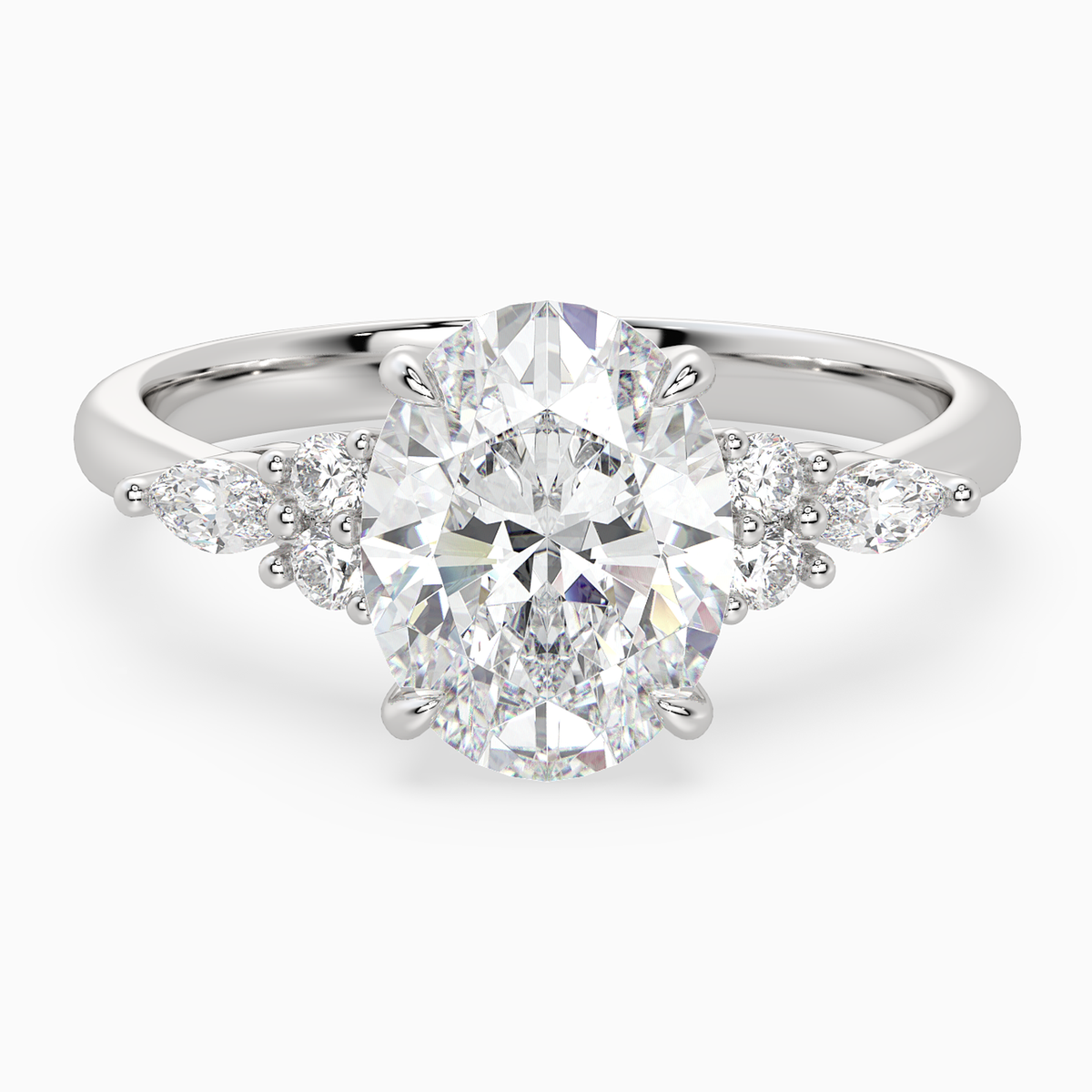


Men's Rings in 18K Yellow Gold
A fuller yellow field gives broad surfaces cadence. 18K gold carries bevels, facets, channels, and diamond intervals across 4–8 mm bands.


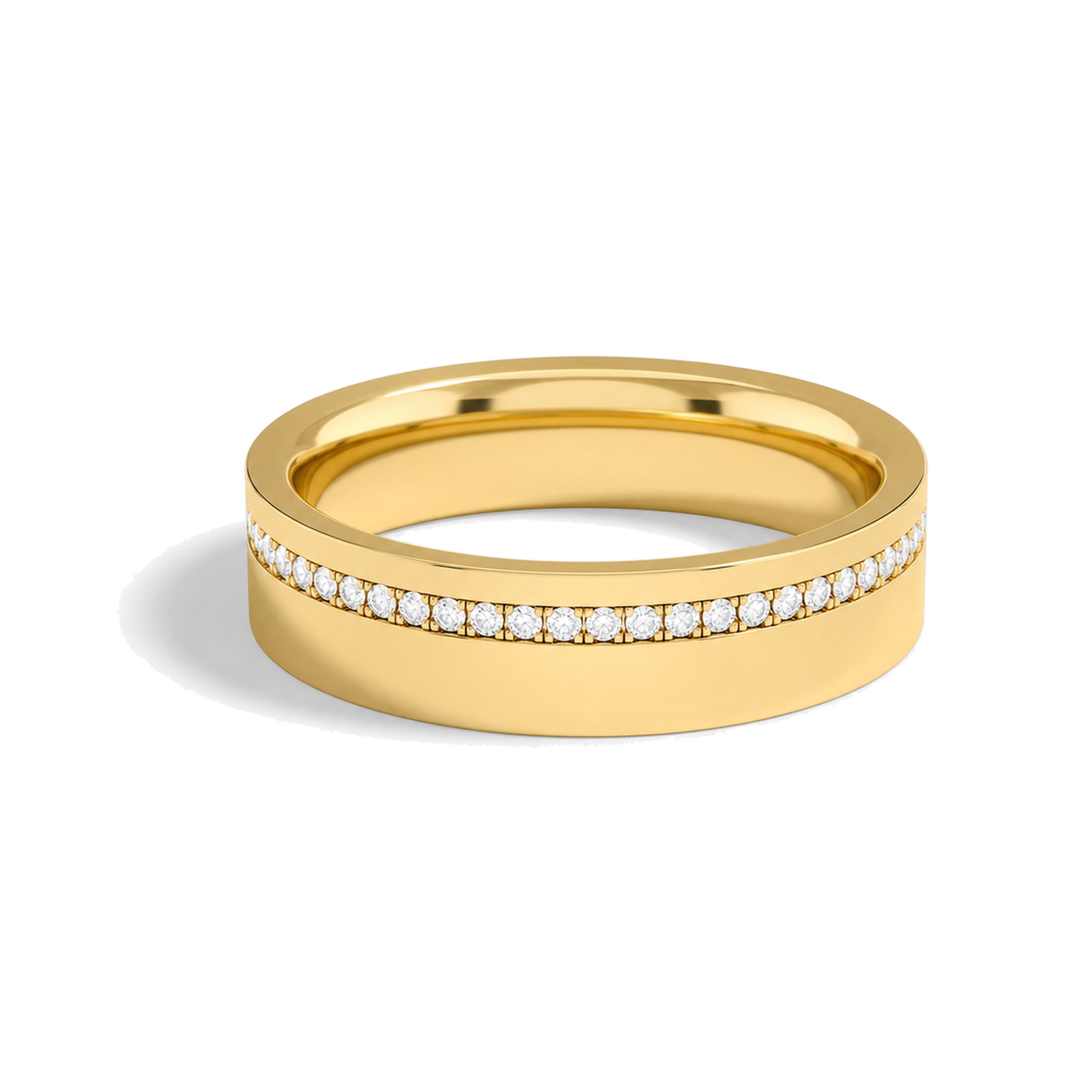
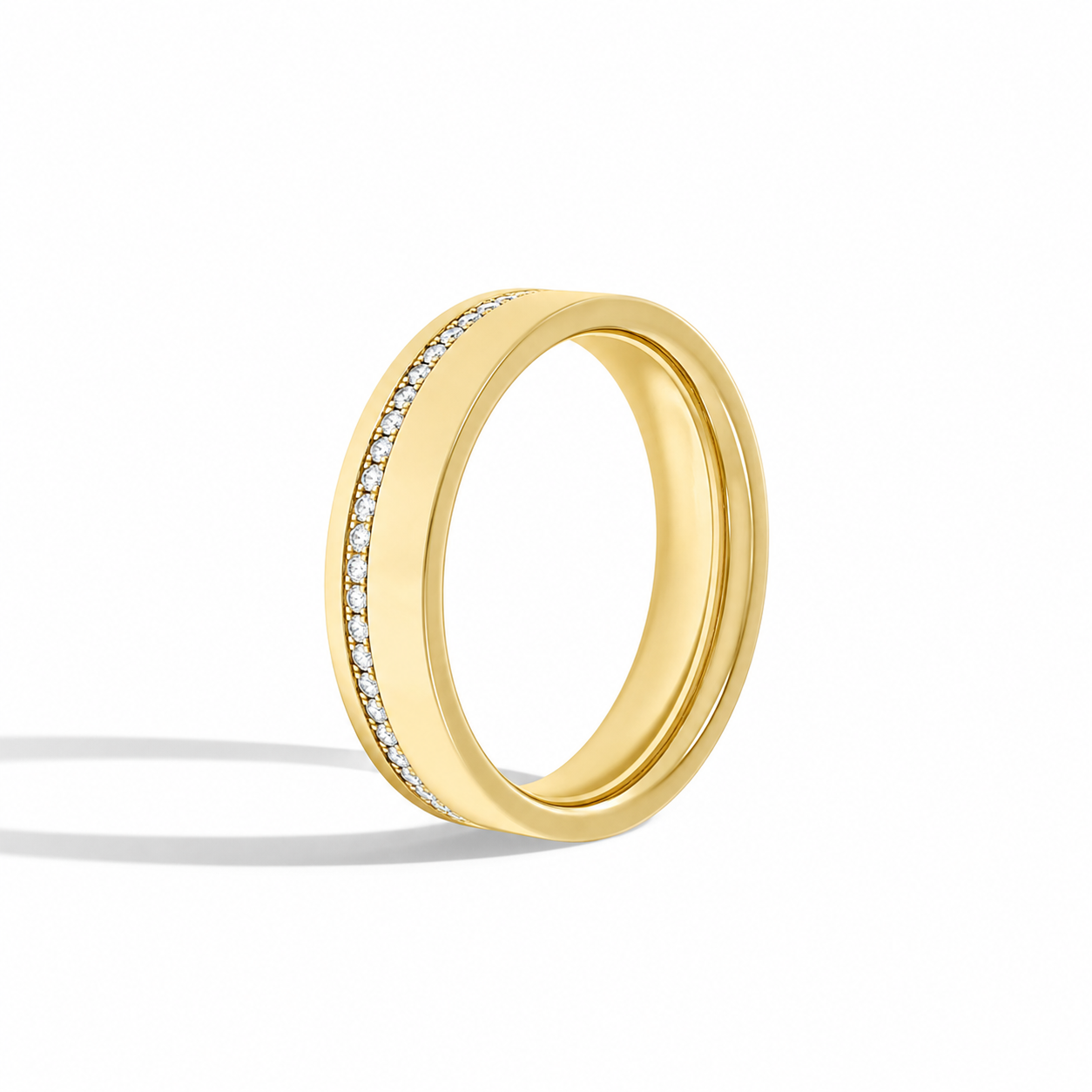

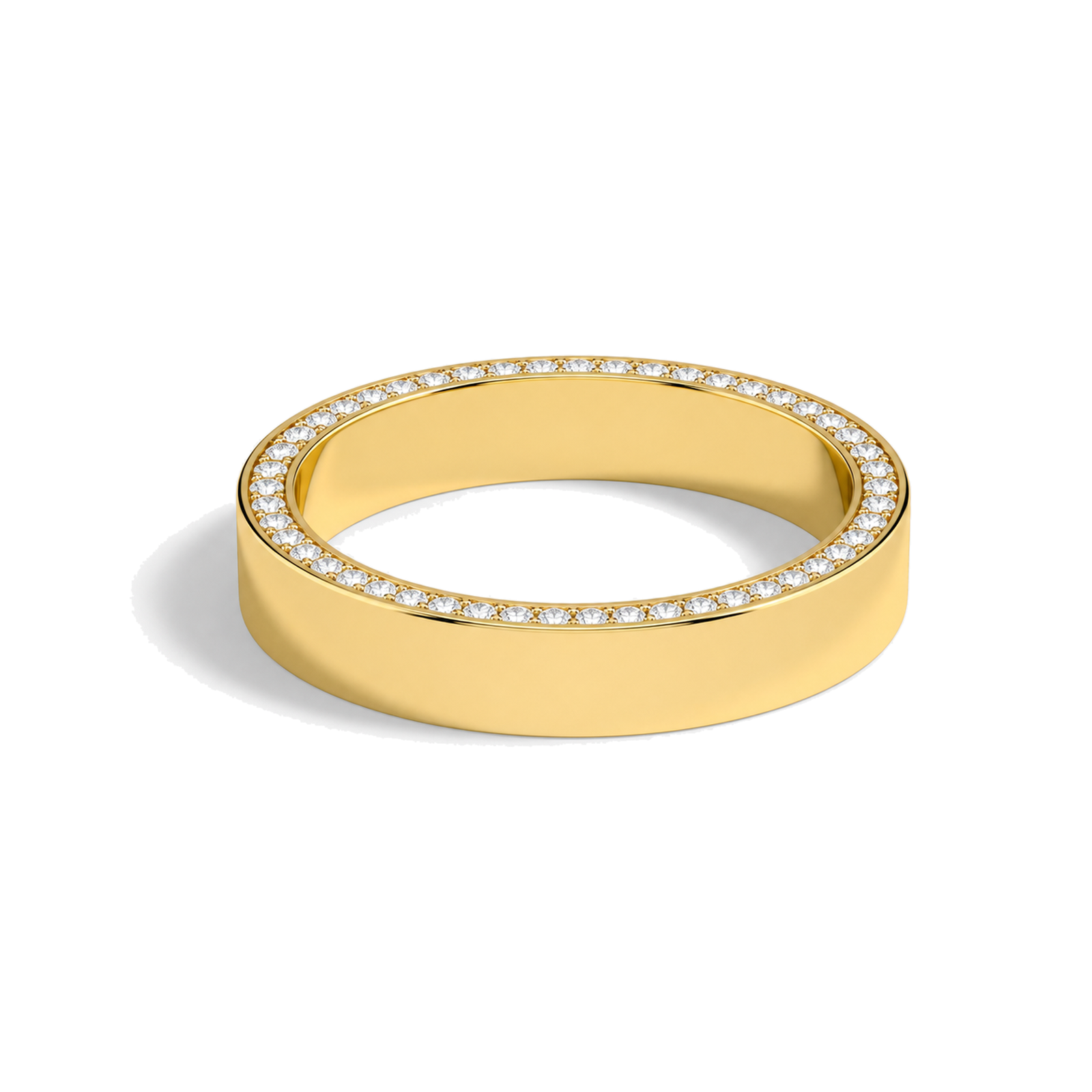
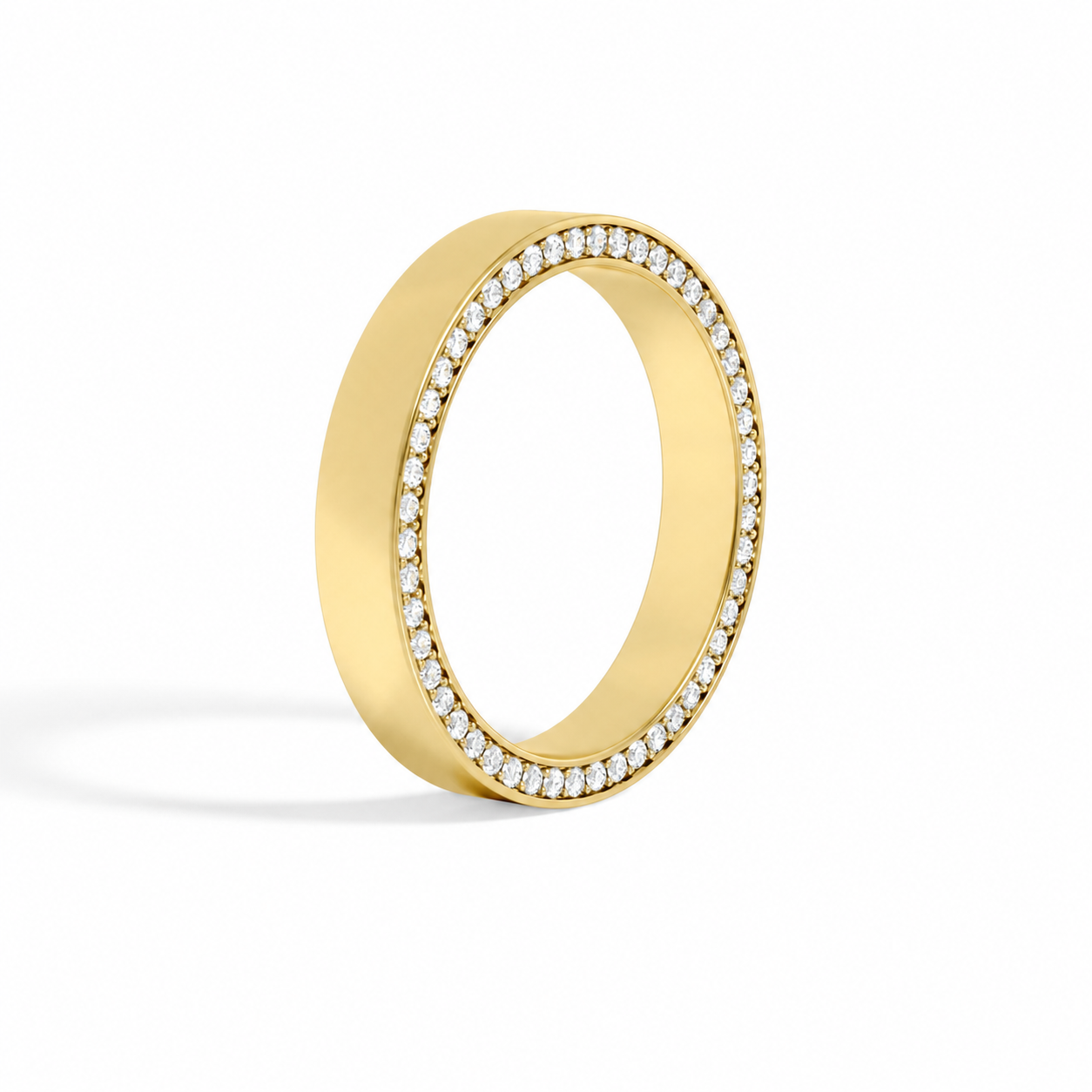

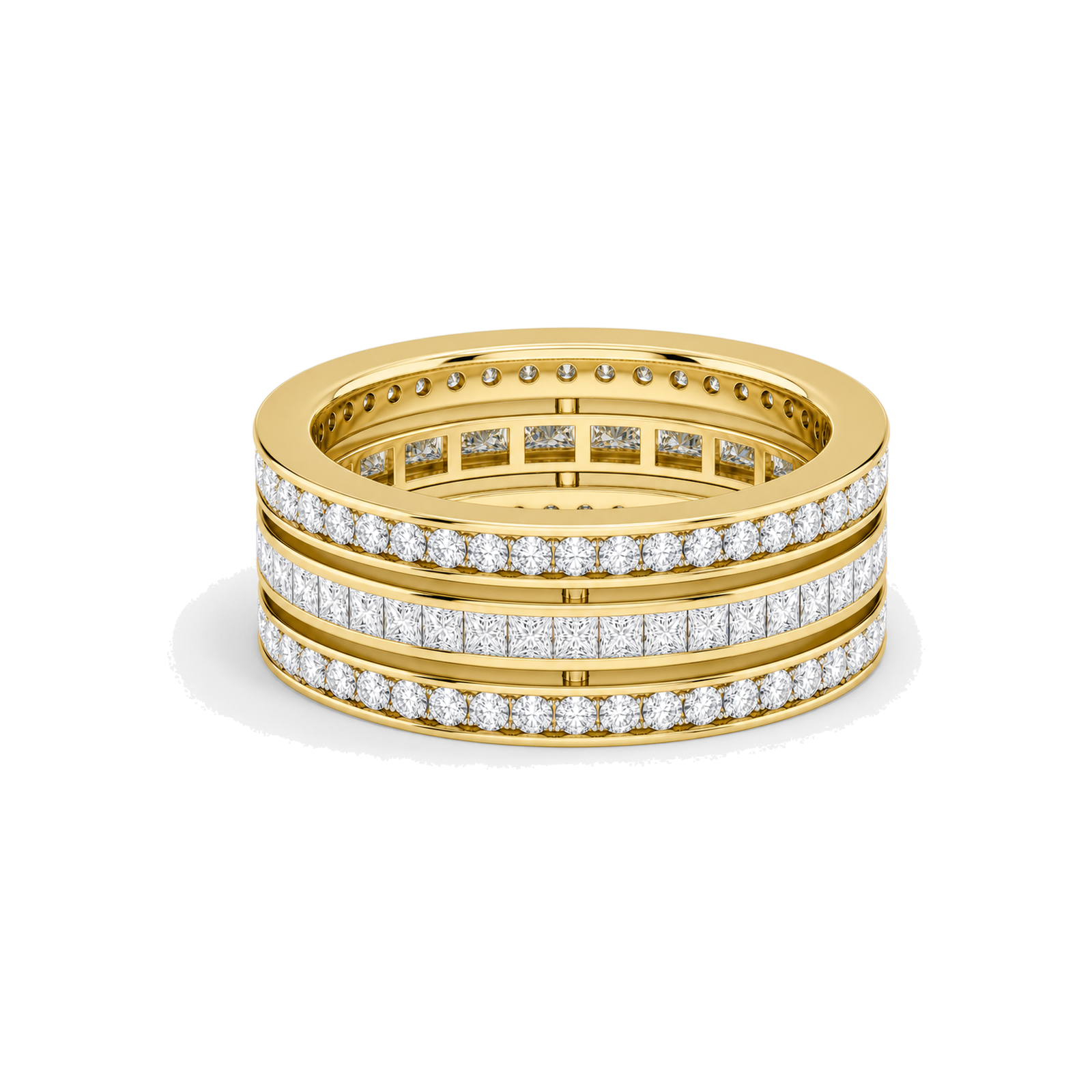
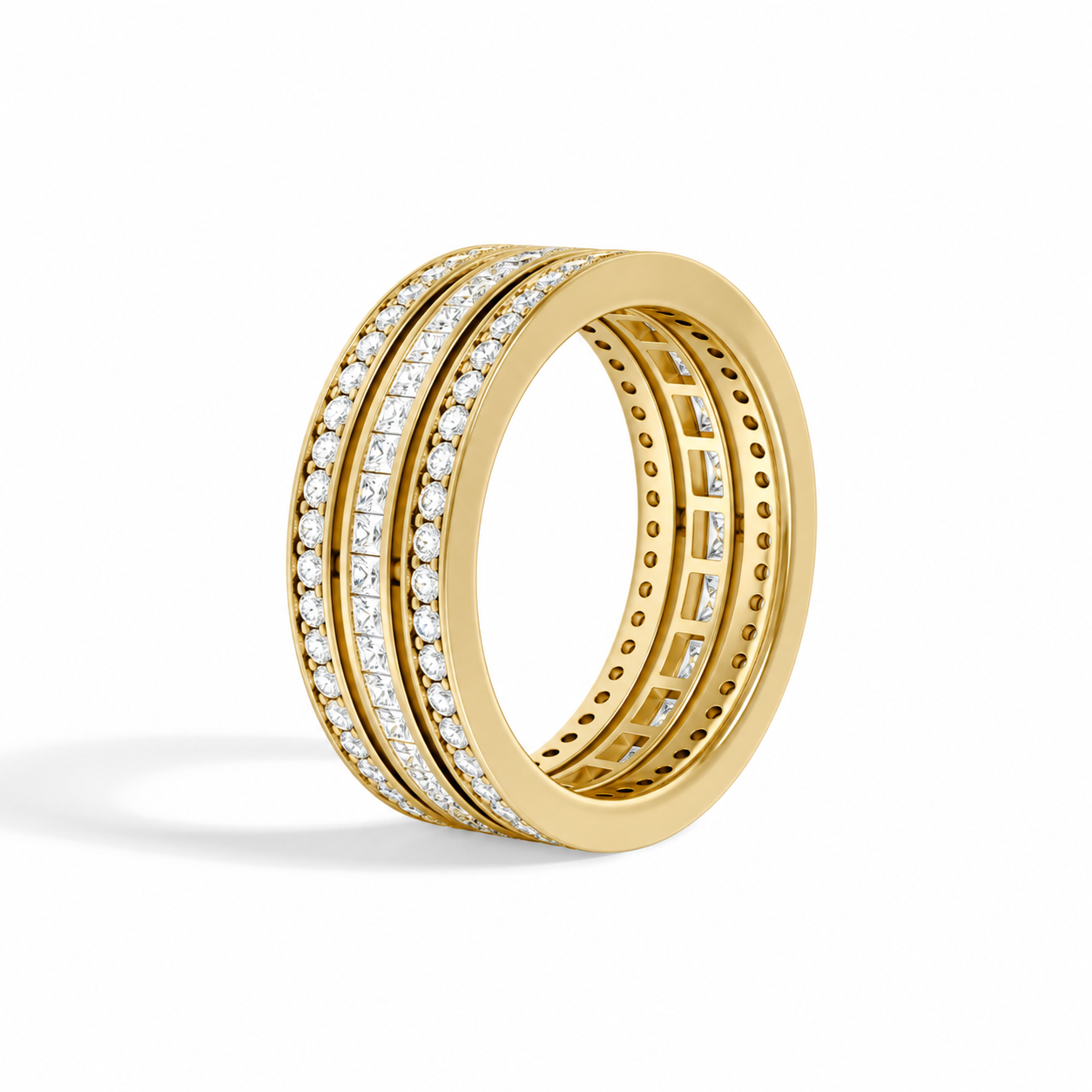

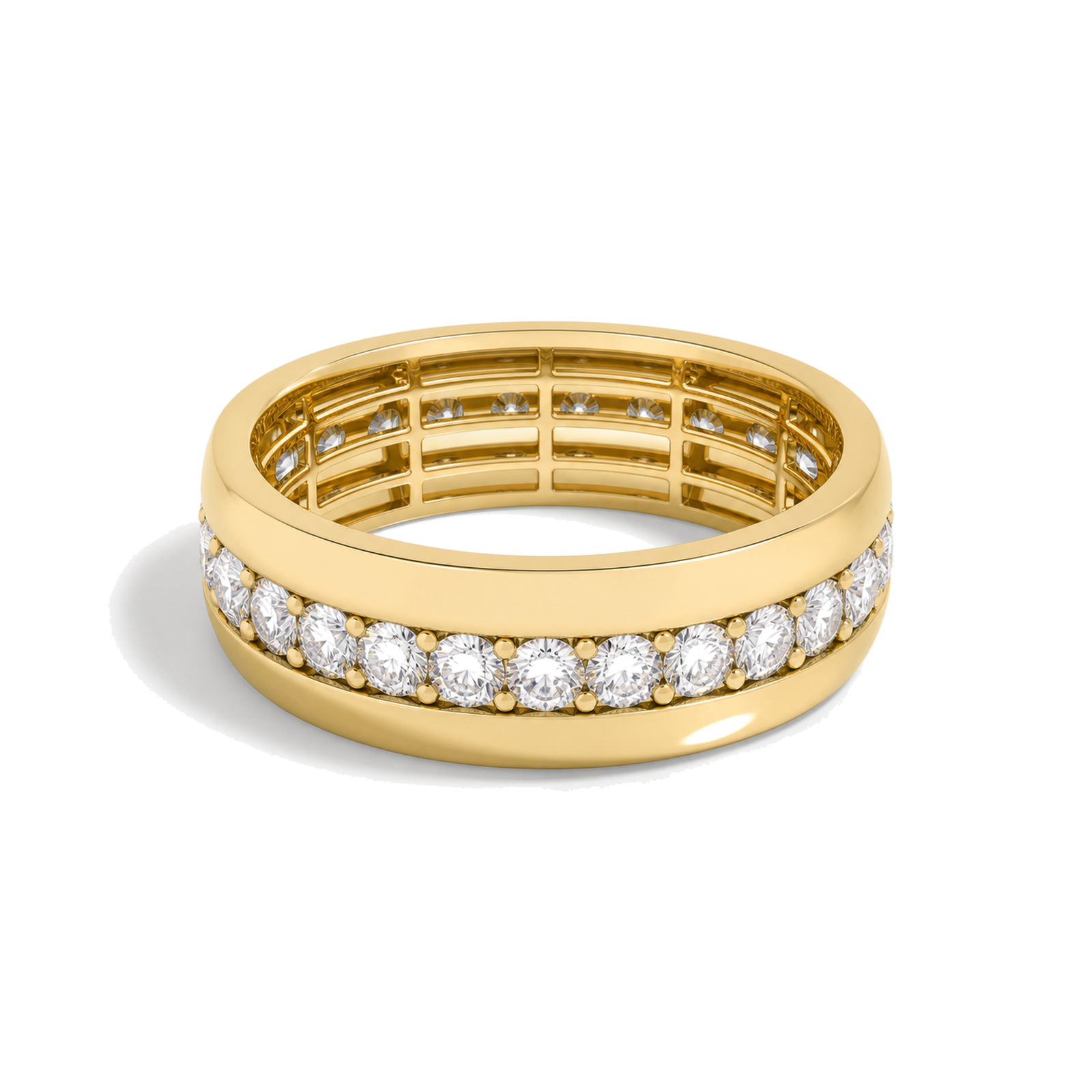
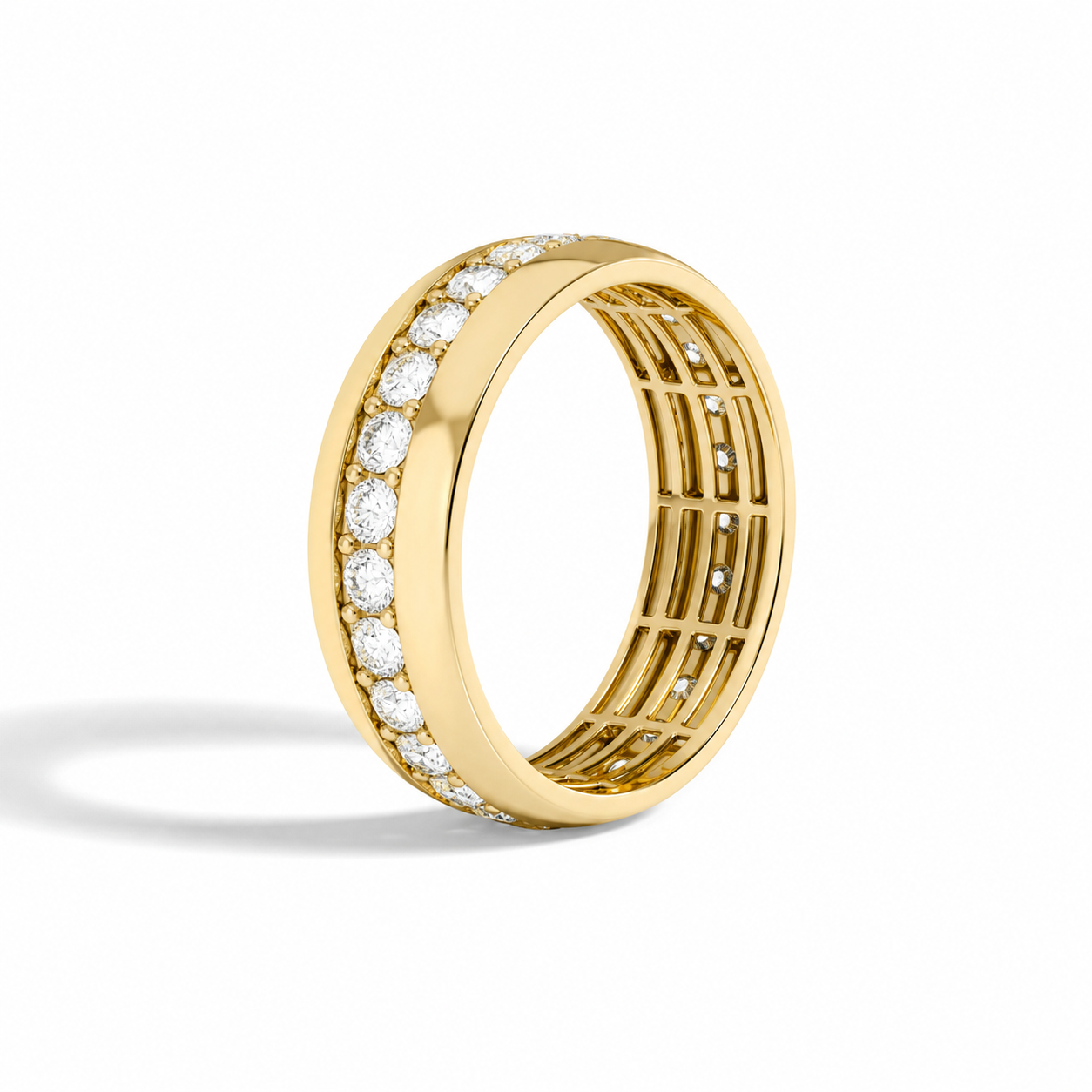

18K Yellow Gold Men's Rings: A Fuller Field for Edge and Texture
18K Yellow Gold can make the full breadth of a band part of the composition. Across twenty-eight current wedding-band forms, warm metal holds smooth planes, bevels, domes, hammered or knurled marks, channels and diamond interruptions without asking the metal to disappear.
All twenty-eight normalized designs are also present within the ninety-seven-design 18K Yellow Gold Wedding Bands page. This Men's page is a focused 4–8 mm proportion and surface path—not an exclusive assortment or gendered engineering category.
Map the Face before the Detail
The published width distribution spans eight measures, led by ten 4.5 mm designs. Width establishes available face-up area; outer depth, interior contour and setting height determine how that area becomes a three-dimensional ring.
A bevel frames the main plane, facets divide it, a dome rounds it and a flat edge holds a straighter boundary. Compare the complete cross-section at realistic scale rather than assuming that wider always means stronger or more expressive.
Surface Is a Pattern of Change
Polish, brushing, hammering and knurling register differently in a yellow field. Channels and pavé add deliberate diamond rhythm. Ordinary contact can mark any of these surfaces, and restoration may soften crisp edges or alter texture; no pattern is maintenance-free.
Sixteen products show a single Carat Weight value and twelve show Default Title. The evidence supports neither a shared configuration range nor a total-weight interpretation. Exact diamond count, shape, coverage and documentation remain product-level facts.
Fit and Material Need Exact Context
A comfort-fit title points to an interior intention, while actual sensation depends on size, width, thickness, anatomy and swelling. A wider band may feel different, but a universal size increase would be unsafe guidance.
An 18K alloy is approximately 75% gold. Finished weight, sensitivity and wear behavior still depend on full alloy and construction. Care for the surface and settings together; seek technical review before resizing, engraving, changing texture or modifying a diamond pattern.
Frequently Asked Questions
What is the current page scope?
Twenty-eight 18K yellow gold wedding-band forms in the Men's route.
Are these unique to Men's Rings?
No. All twenty-eight are normalized members of the ninety-seven-design Wedding Bands page.
How wide are current bands?
Published widths run from 4 to 8 mm.
What does width exclude?
It excludes thickness, interior radius and nominal ring size.
Is an 8 mm band more masculine?
No width carries a fixed gender meaning.
Which profiles can be compared?
Flat, dome, bevel, knife-edge, concave, faceted and octagonal forms.
Which surface treatments appear?
Brushed, hammered, knurled and other polished-field treatments.
Are yellow-gold textures scratch-proof?
No. Every finish can change through contact and wear.
How are diamonds distributed?
Through accents, channels, pavé and eternity-titled patterns.
What does a fixed Carat Weight value prove?
Only the published product label and value; exact scope needs confirmation.
Does Default Title mean no diamonds?
No. It is an option-feed state, not a material or stone conclusion.
Can eternity coverage be resized?
Only after exact coverage, symmetry and construction review.
Does comfort fit guarantee comfort?
No. Full geometry and wearer anatomy remain decisive.
Is there a standard wider-band size change?
No fixed adjustment applies.
How much gold is in 18K?
Approximately 75%.
Can the ring be engraved?
Possibly, depending on available surface, pattern and technical feasibility.
How should it be cared for?
Clean for the exact finish, protect texture and inspect diamond settings.