
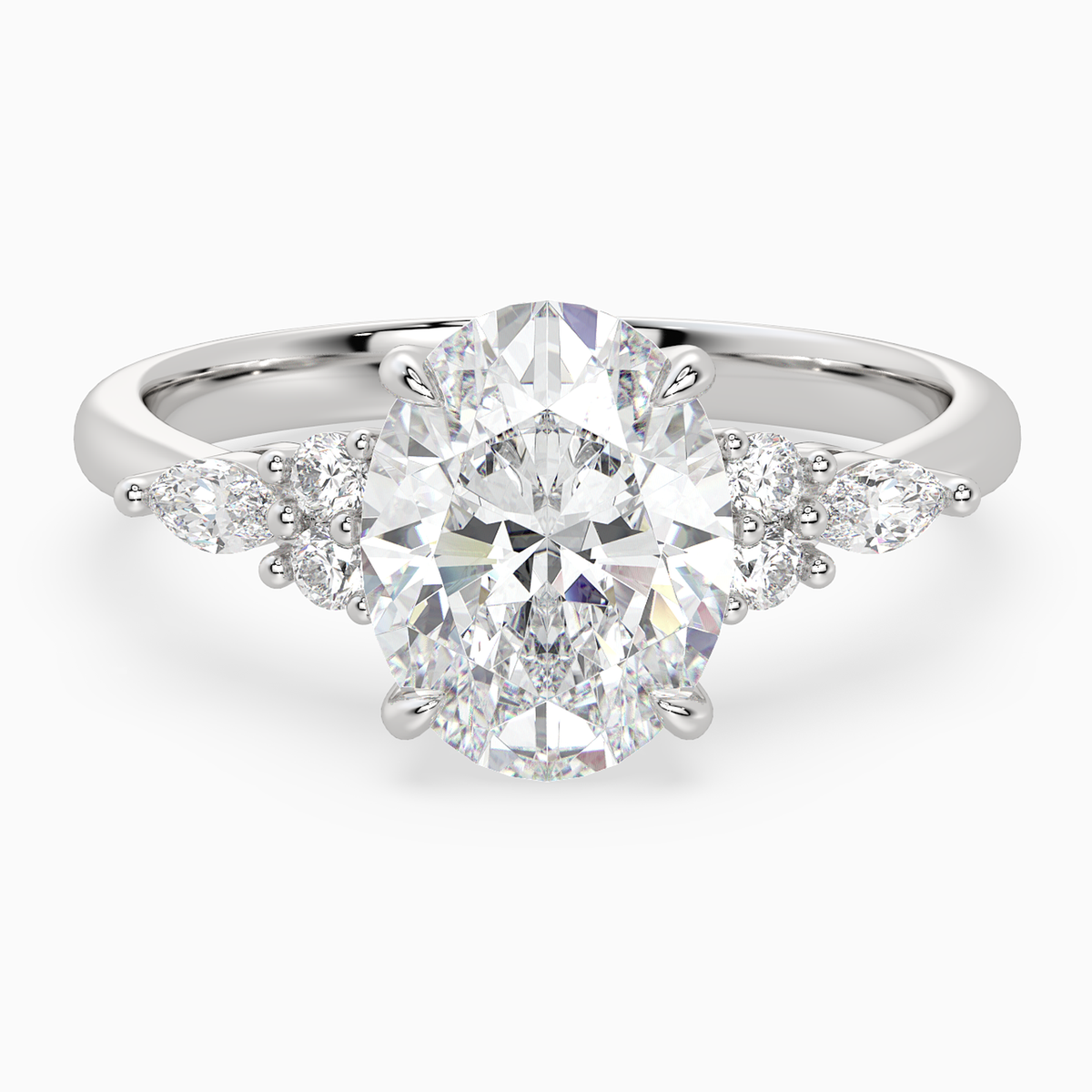


Men's Rings in 14K White Gold
A quiet white field lets profile lead. 14K white gold moves across 4–8 mm bands through flat planes, bevels, texture, and diamond tracks.


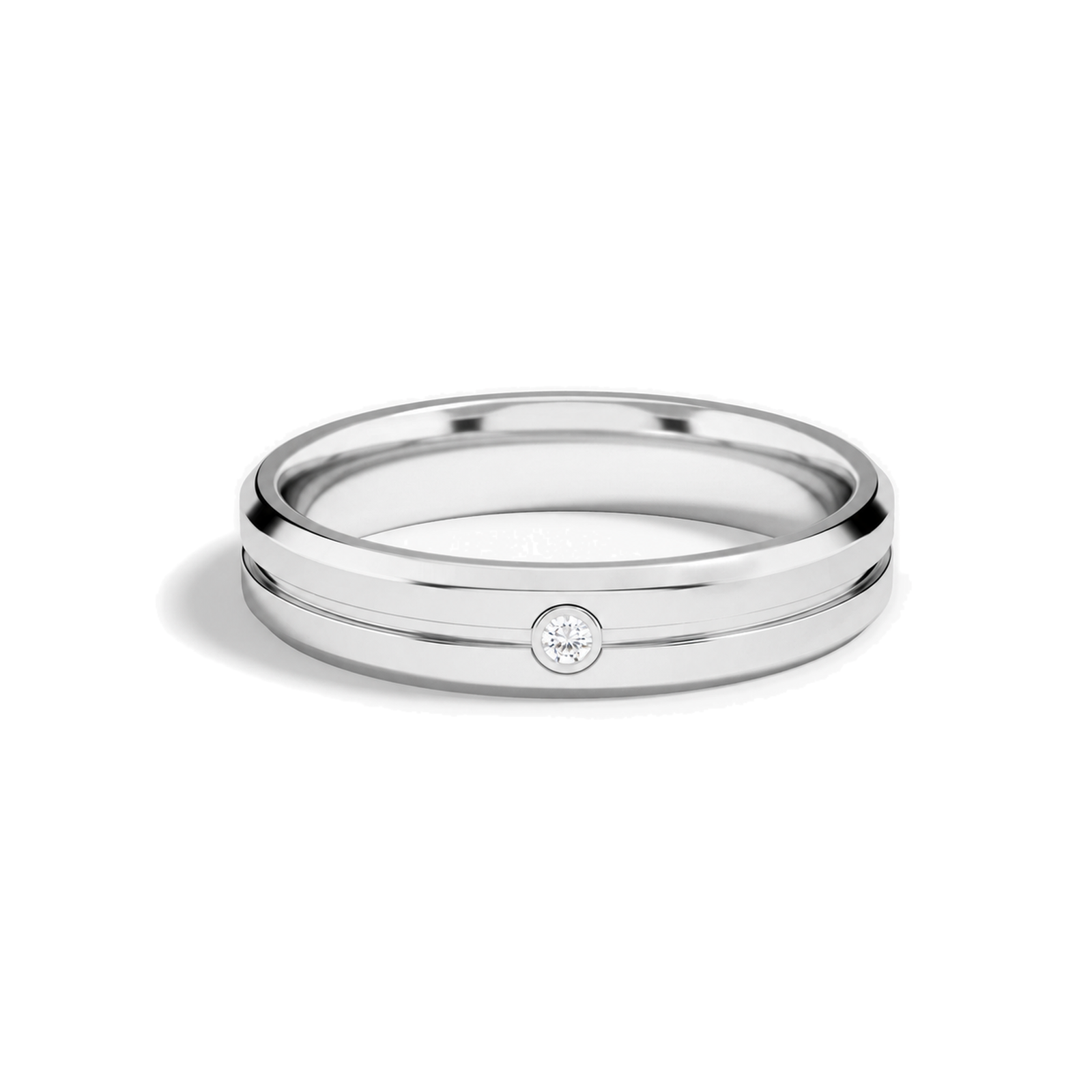


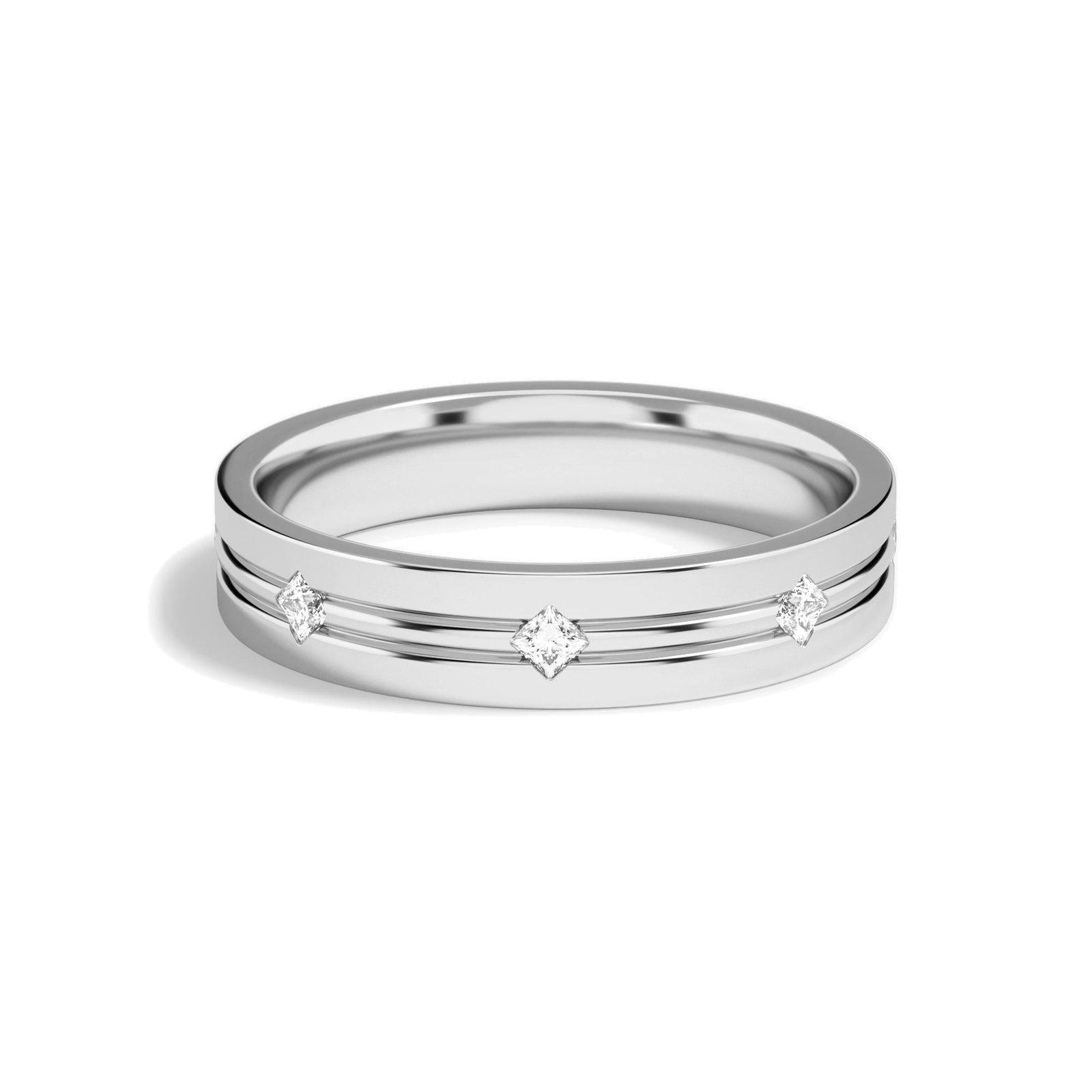


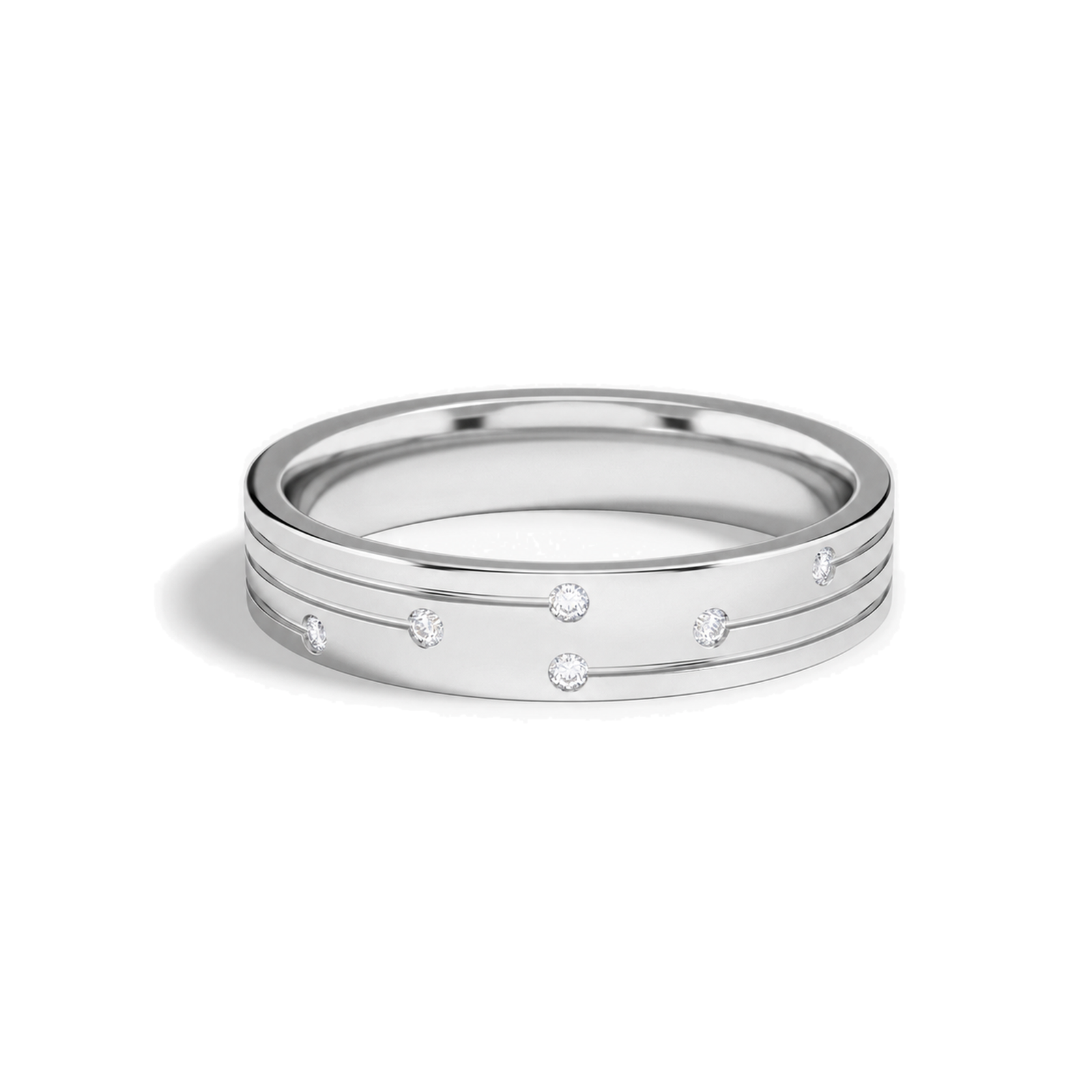
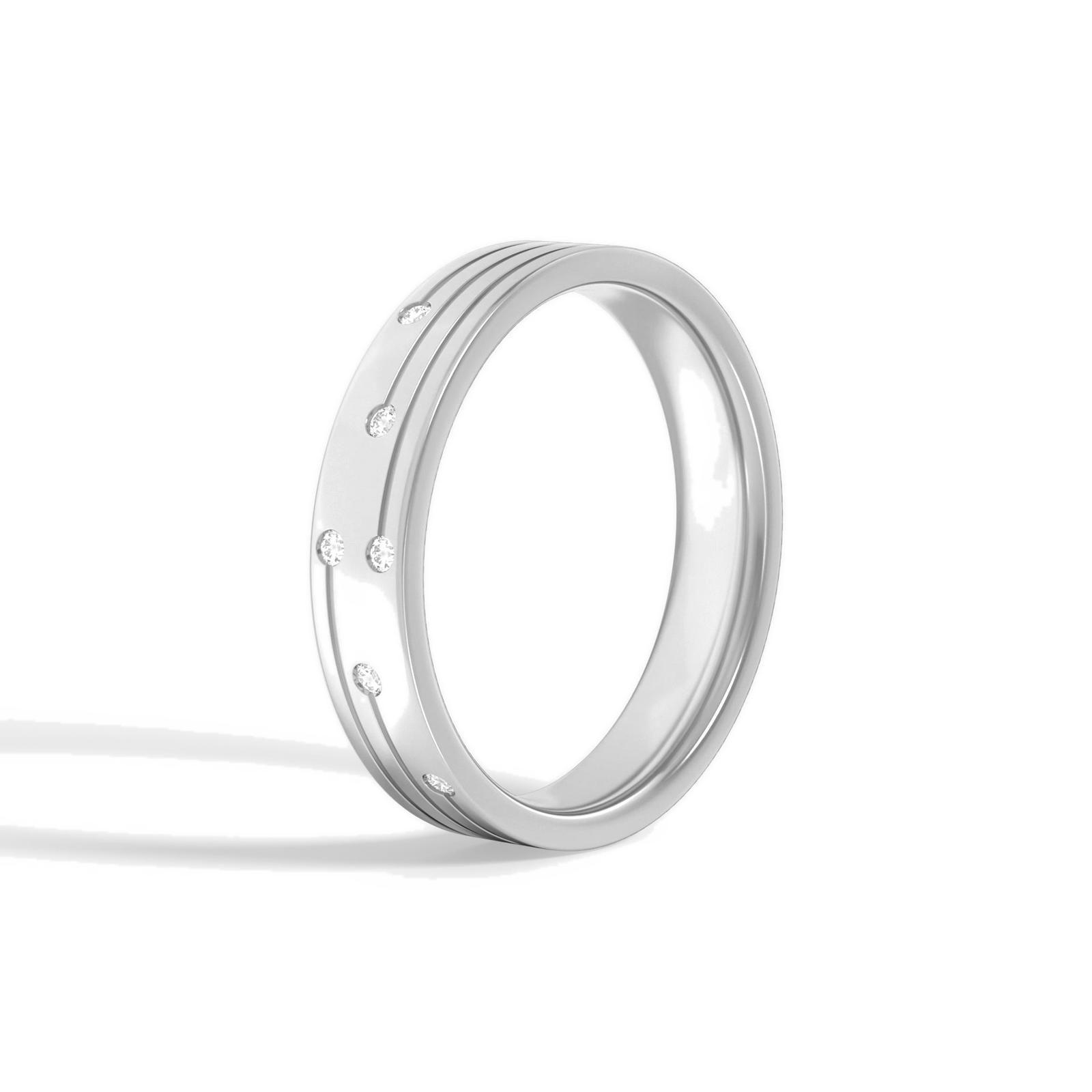


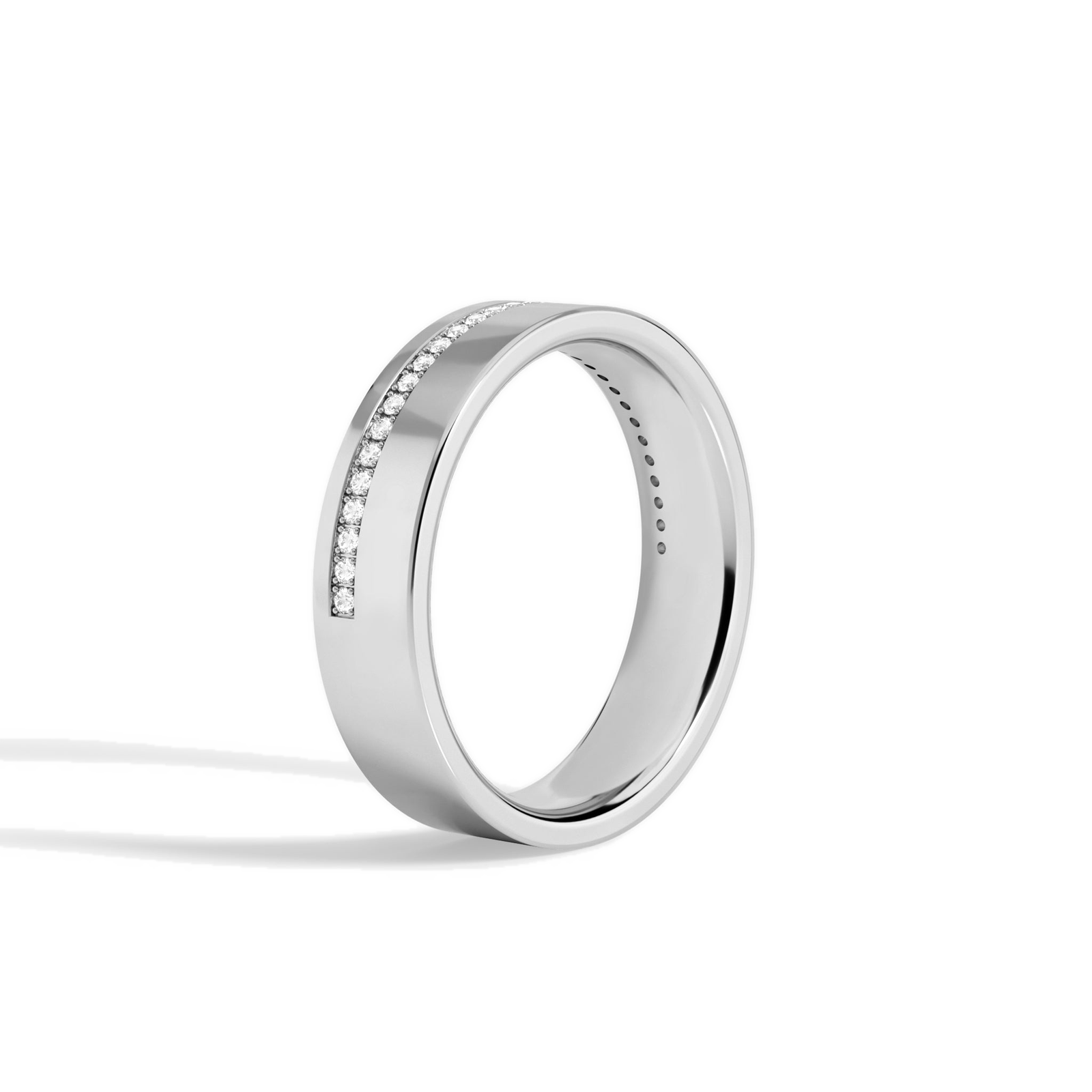

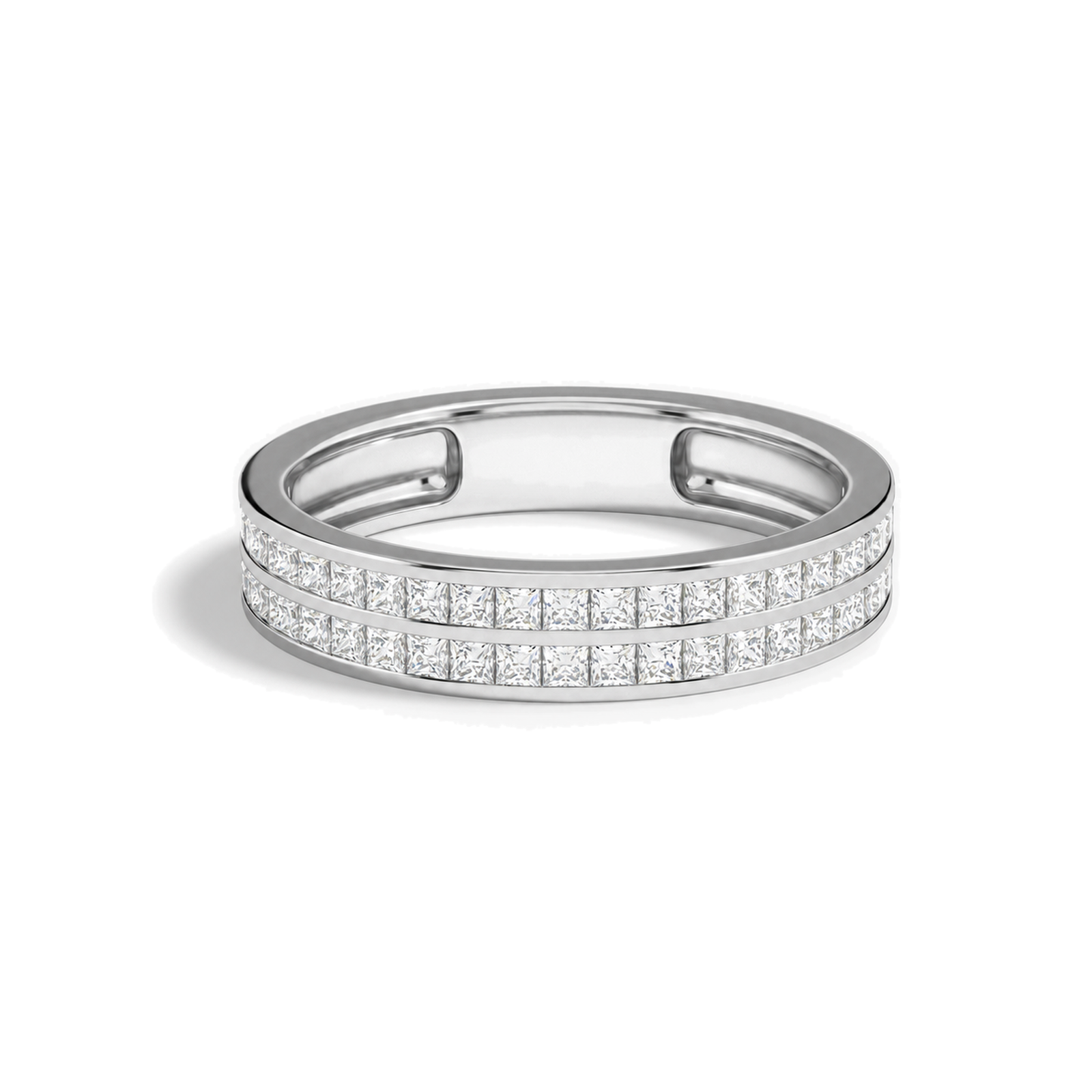


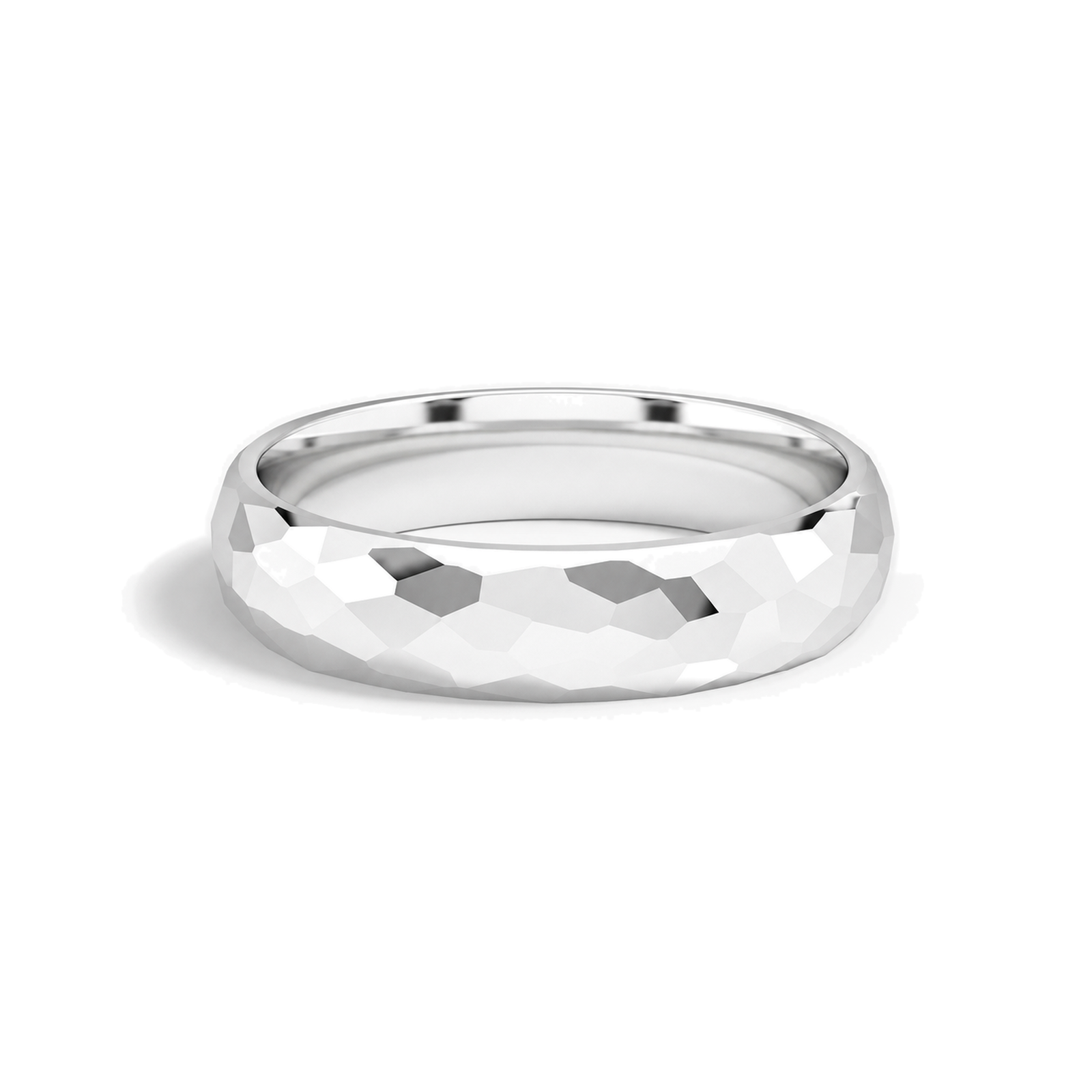




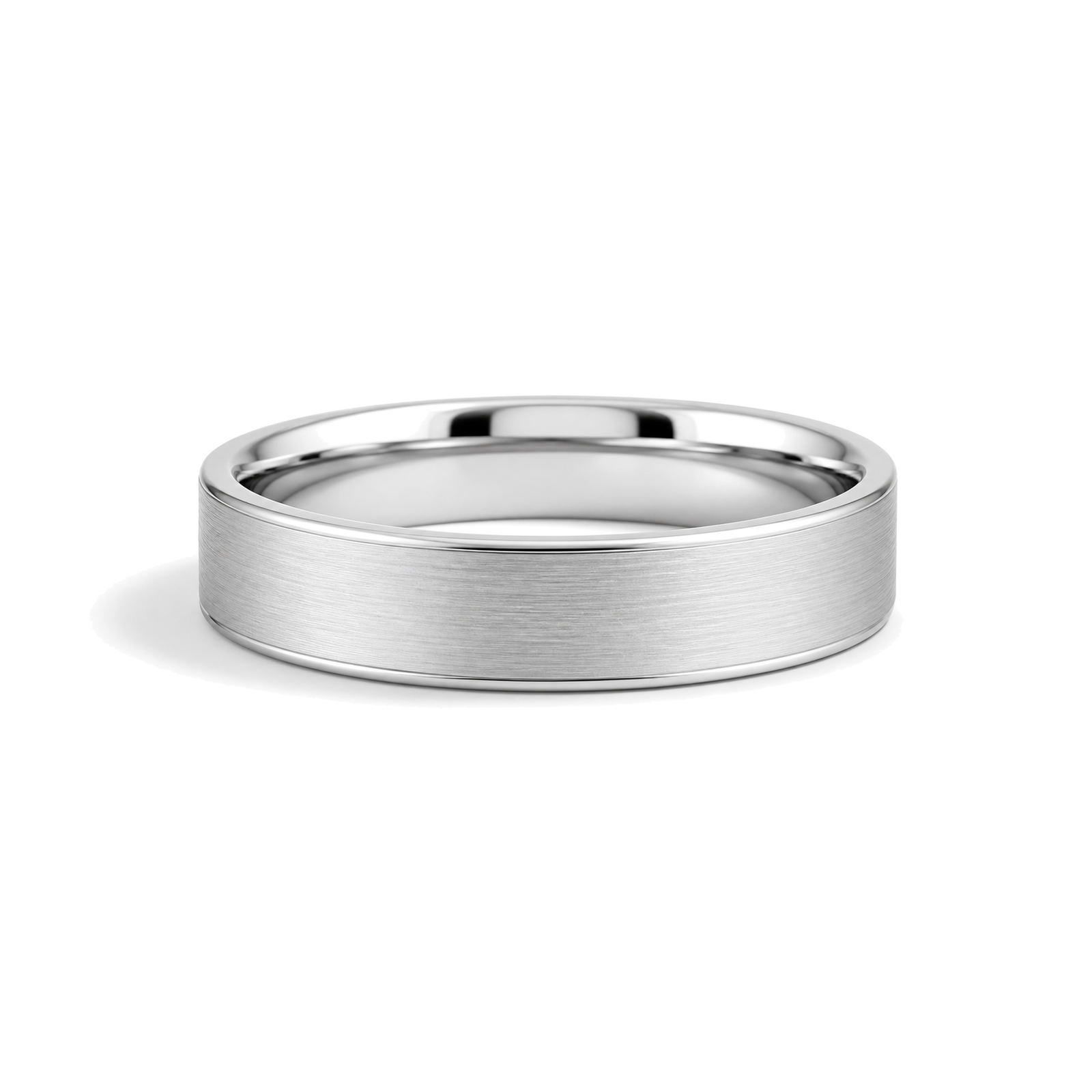
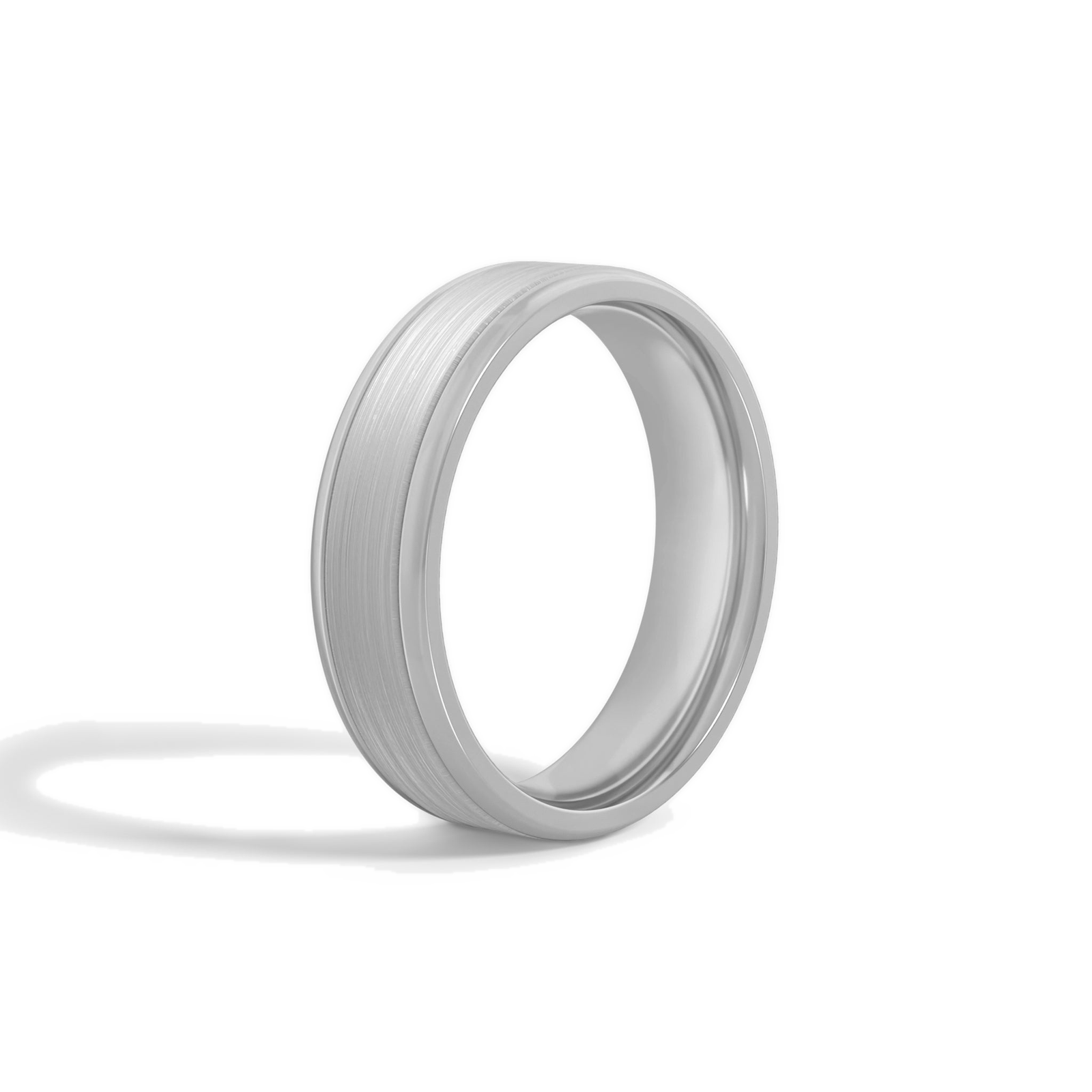

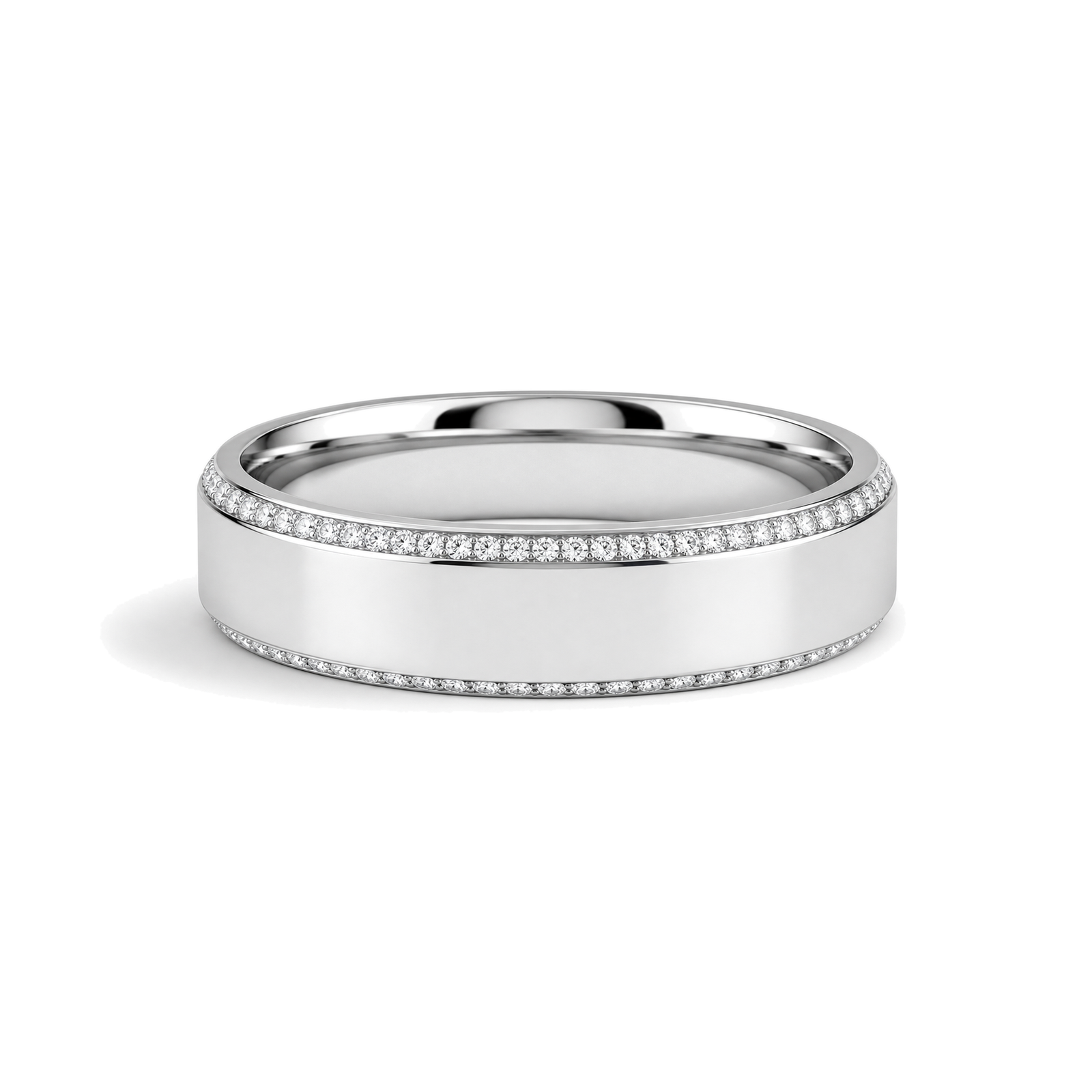


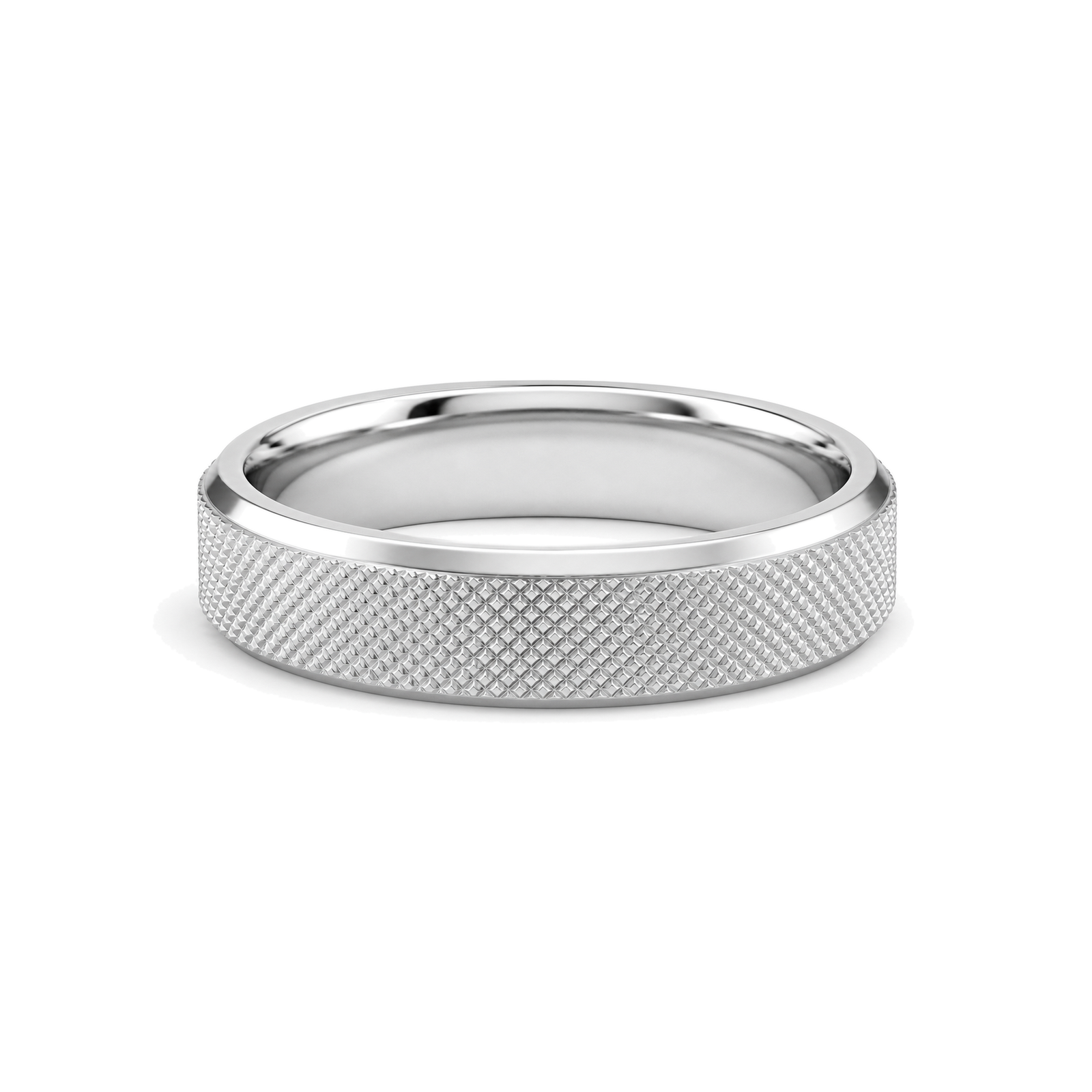
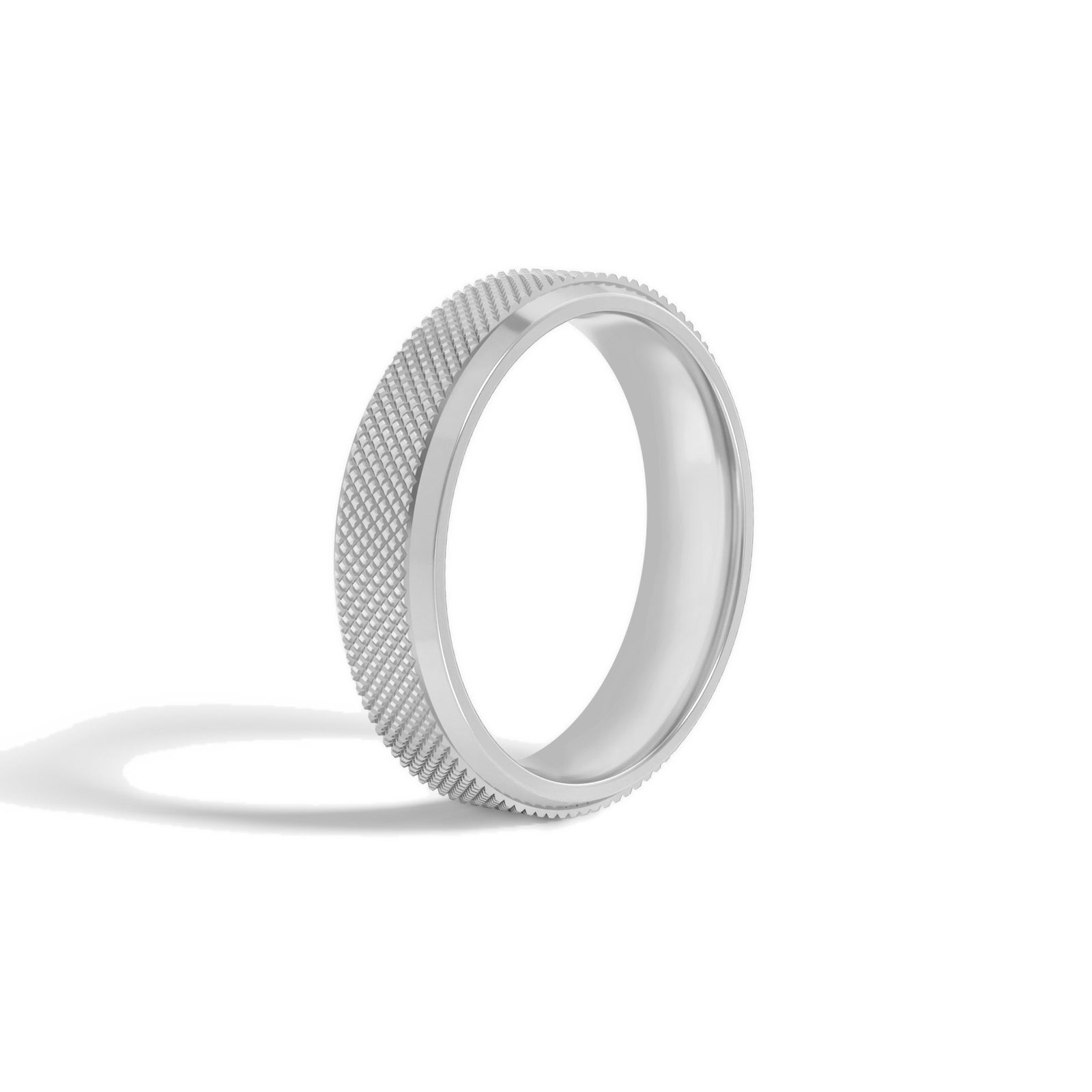

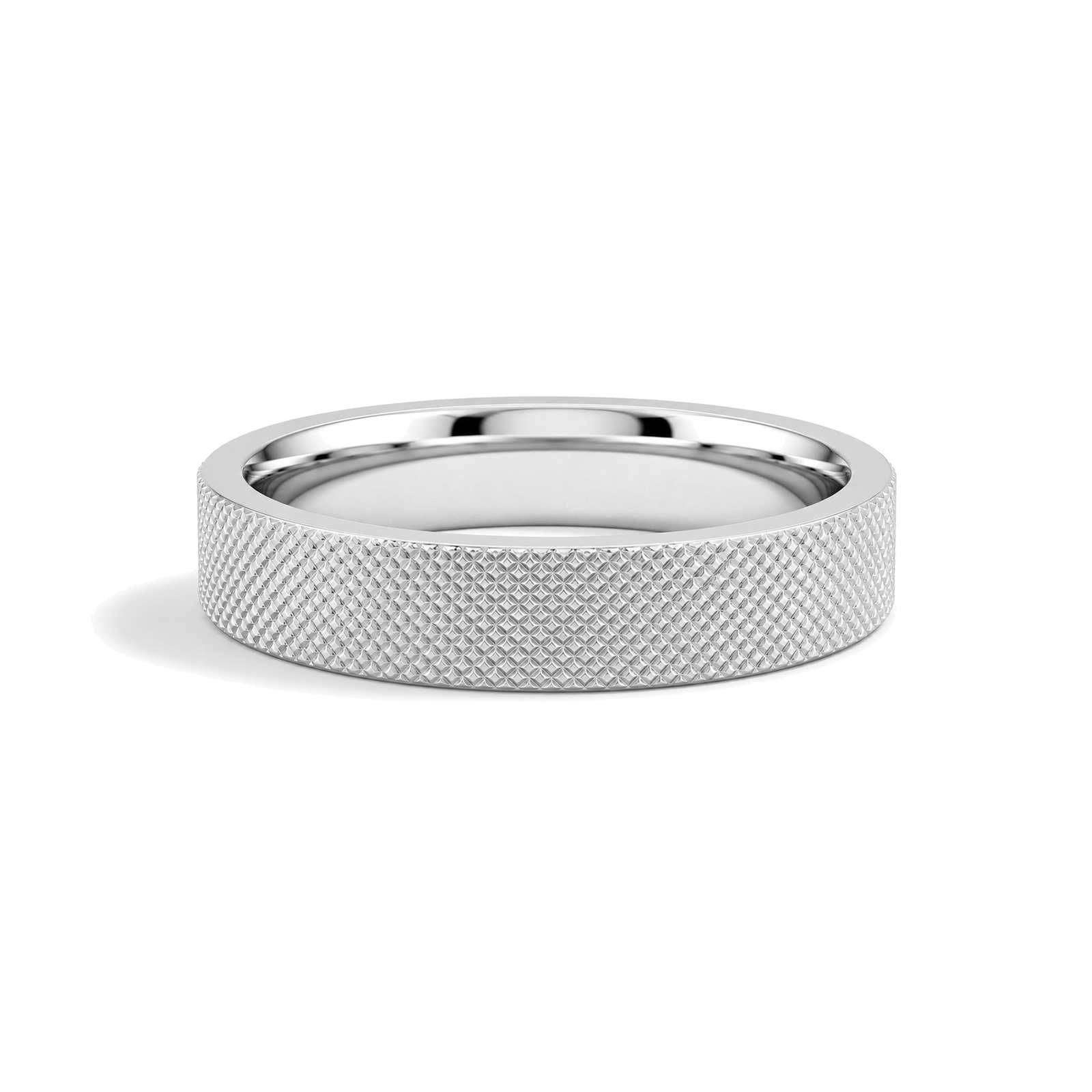


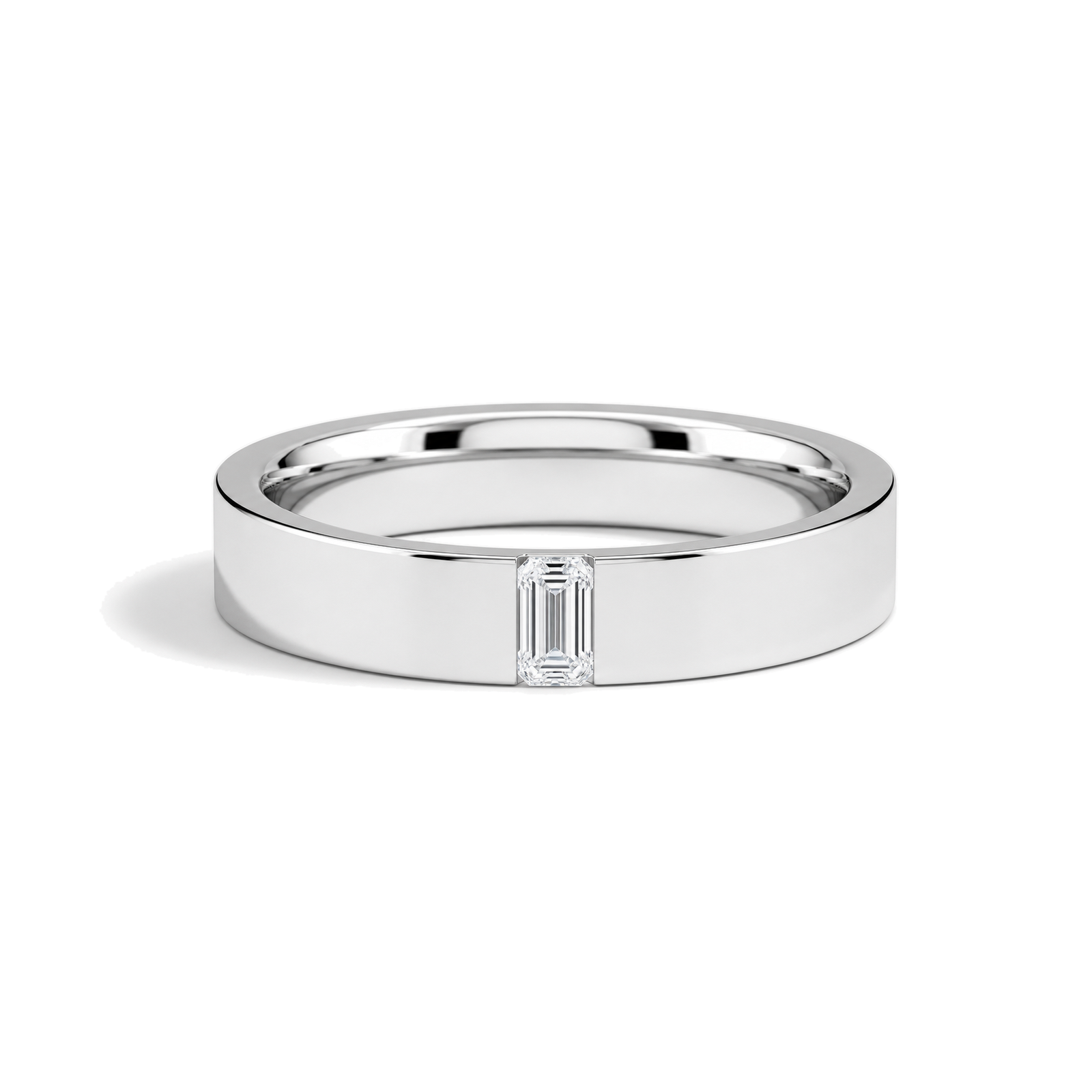


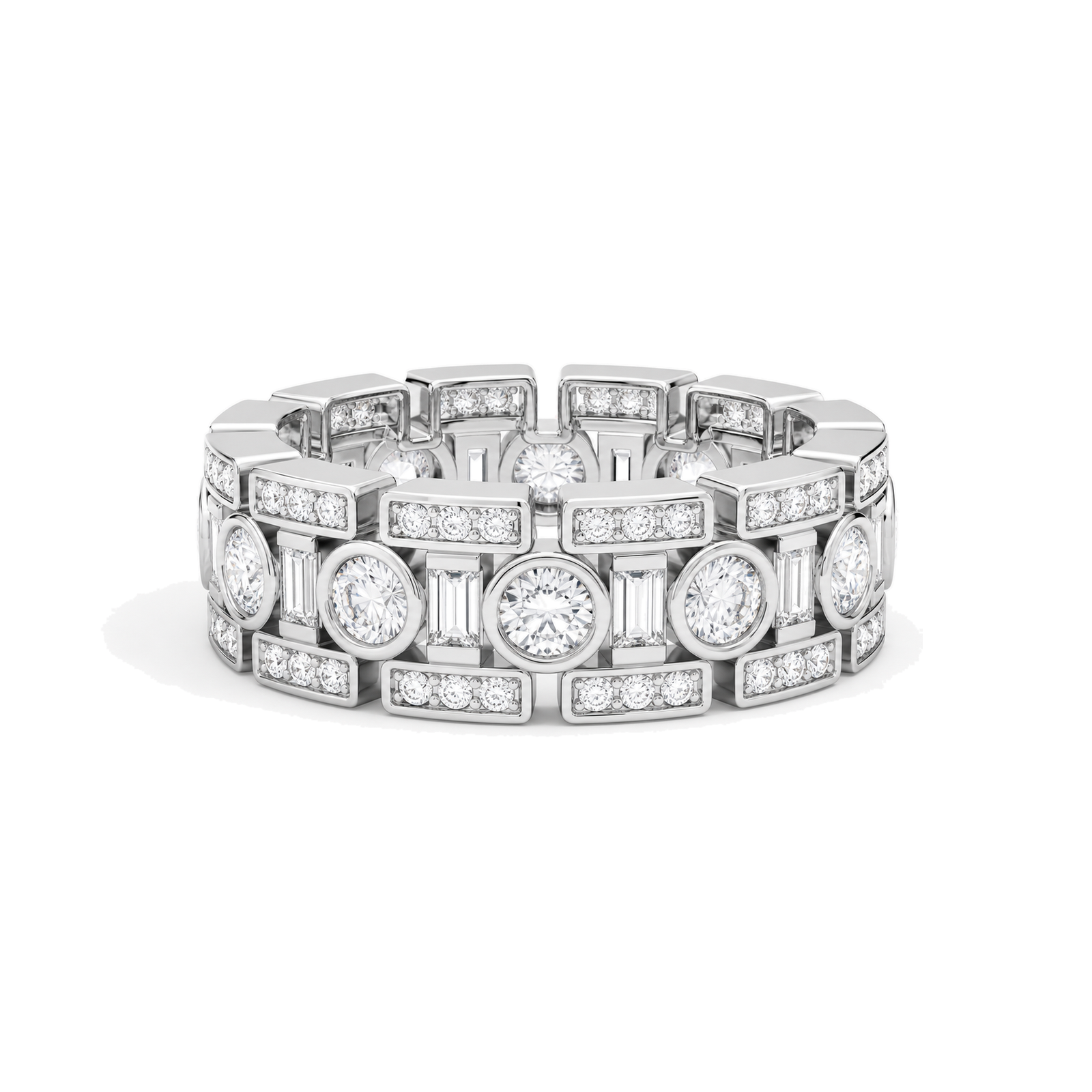


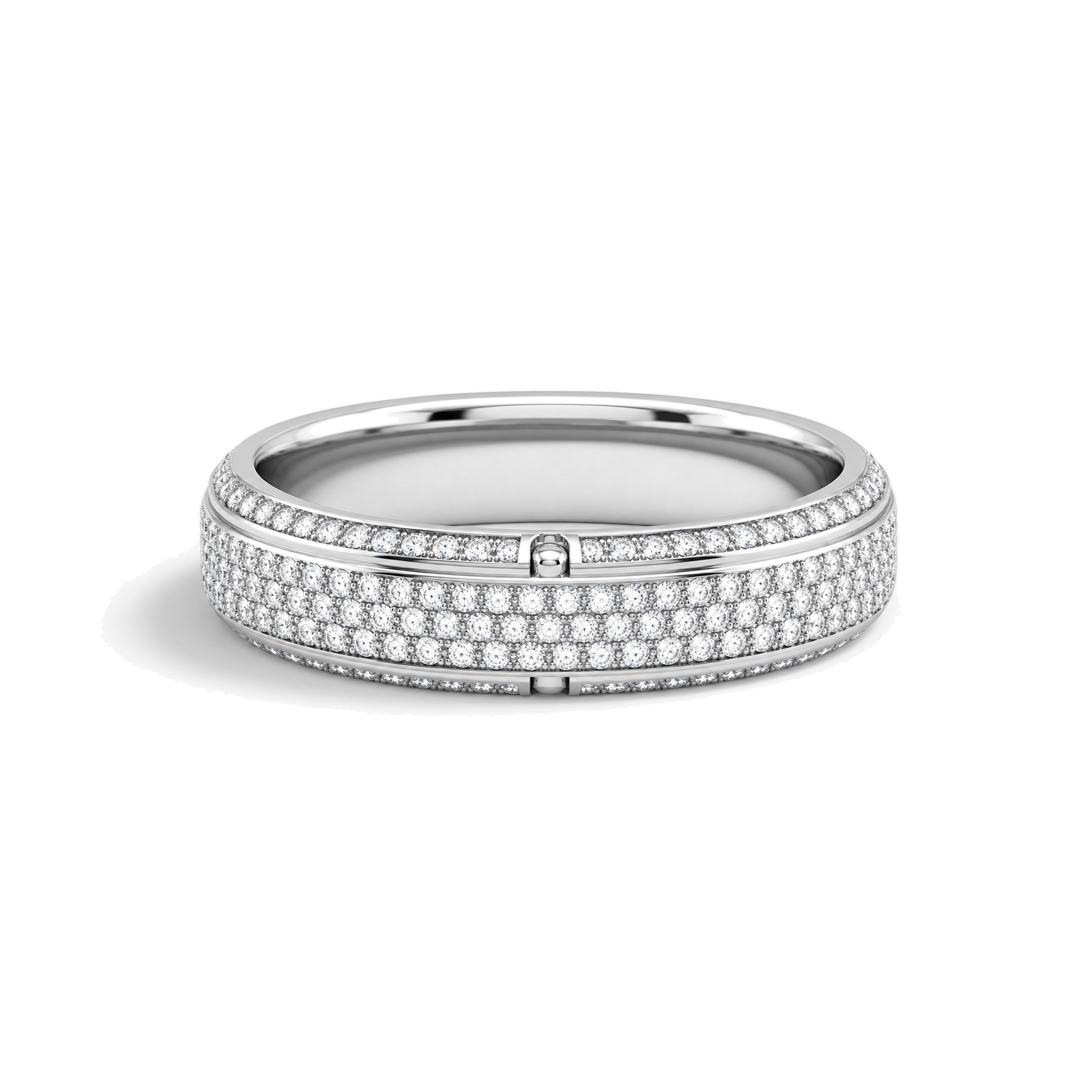
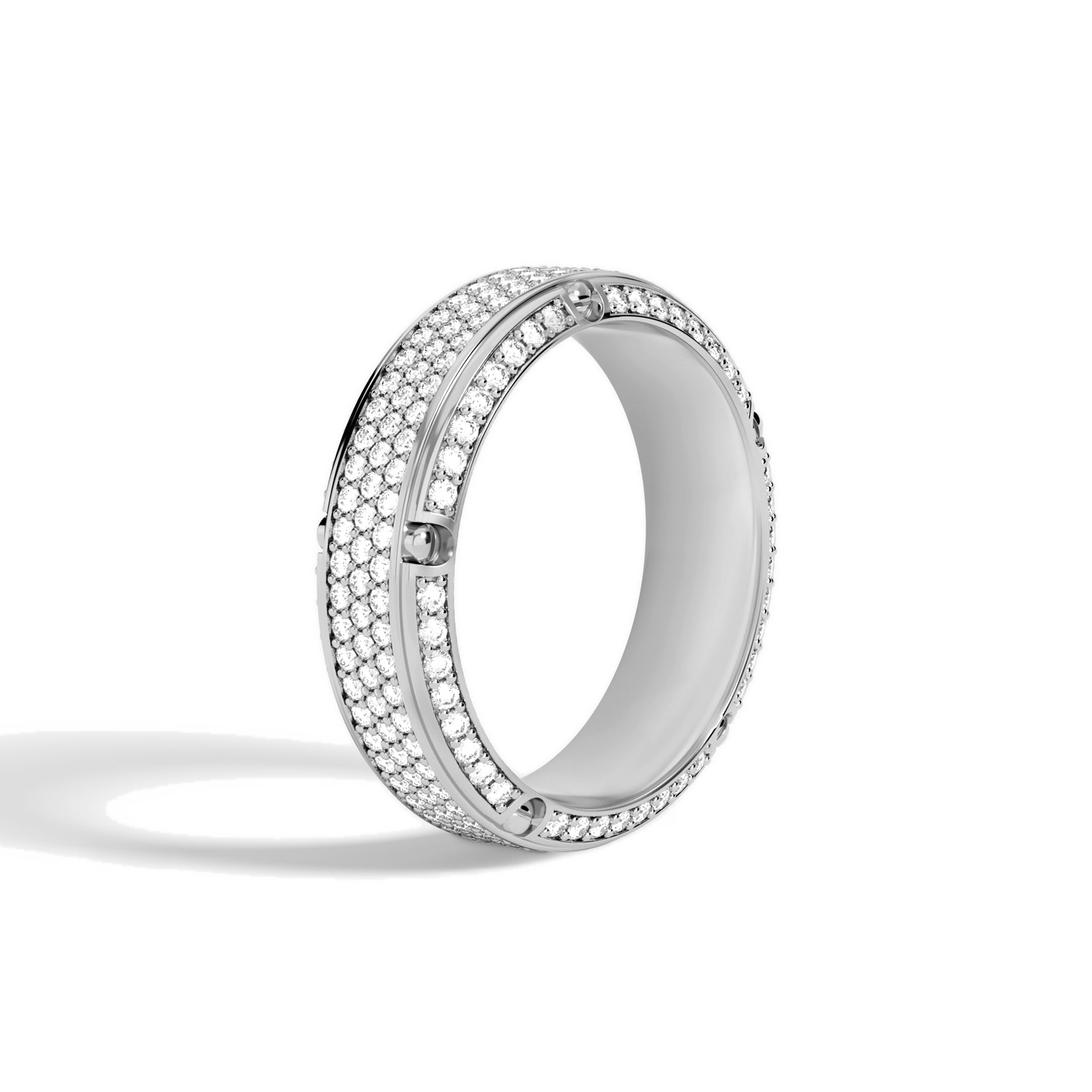

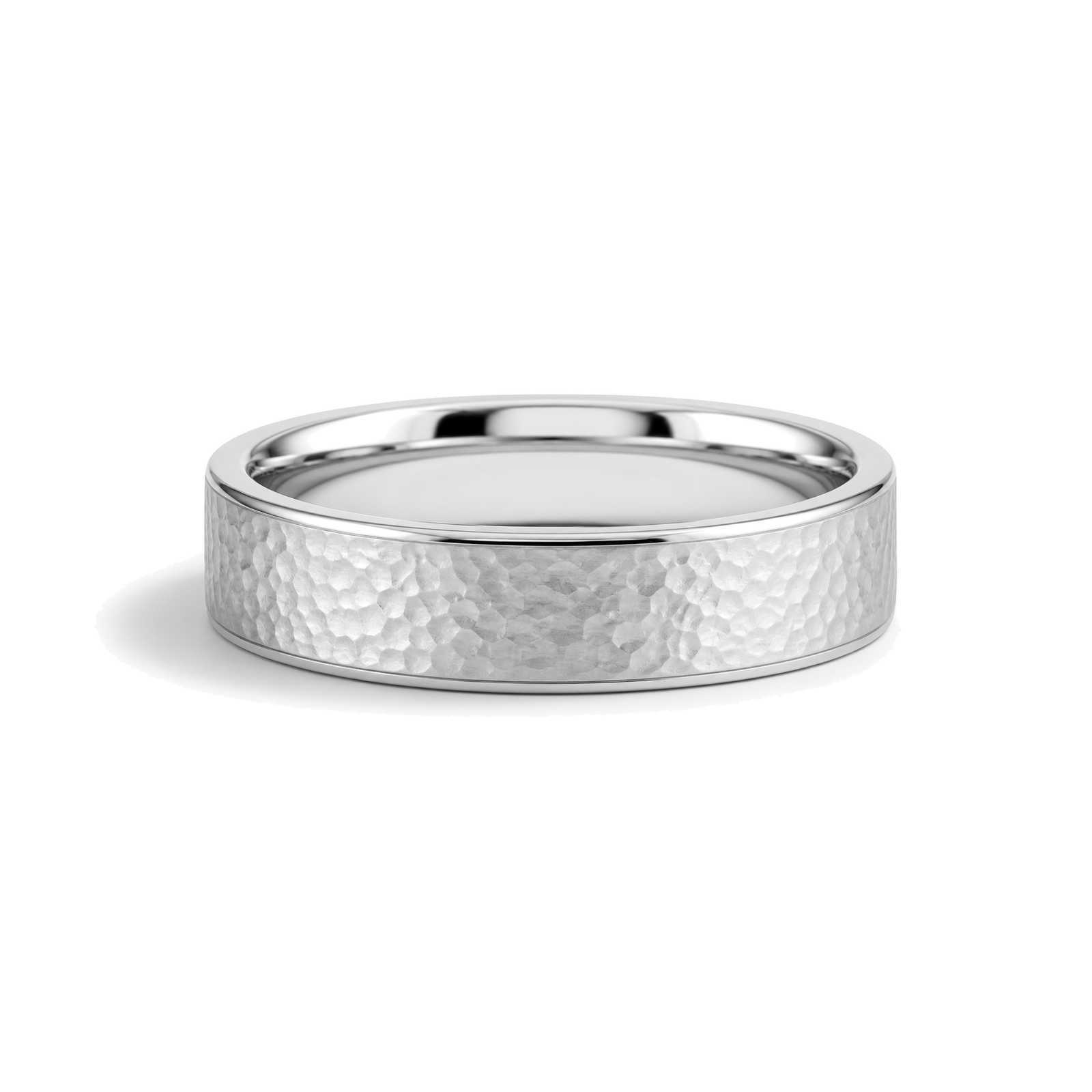
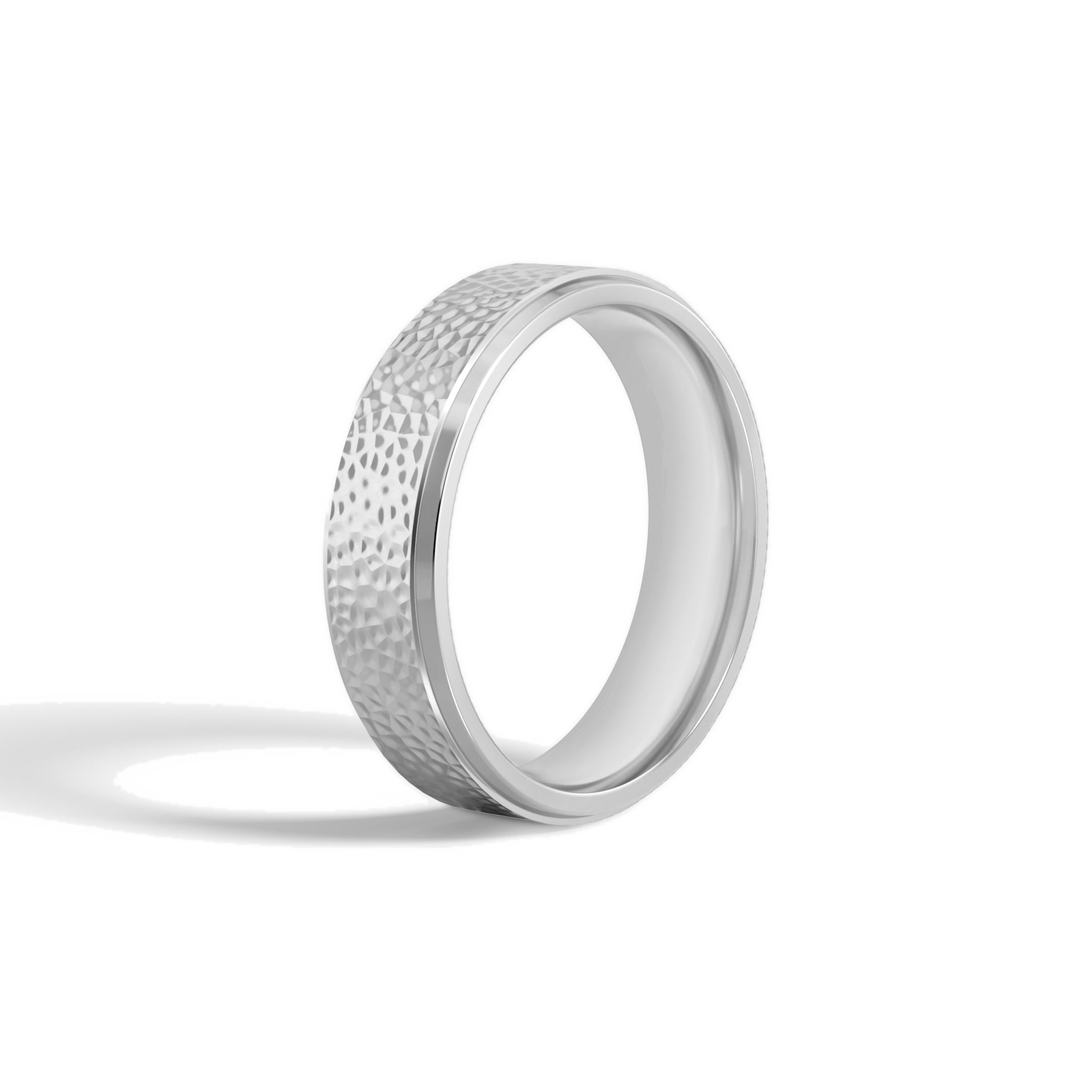

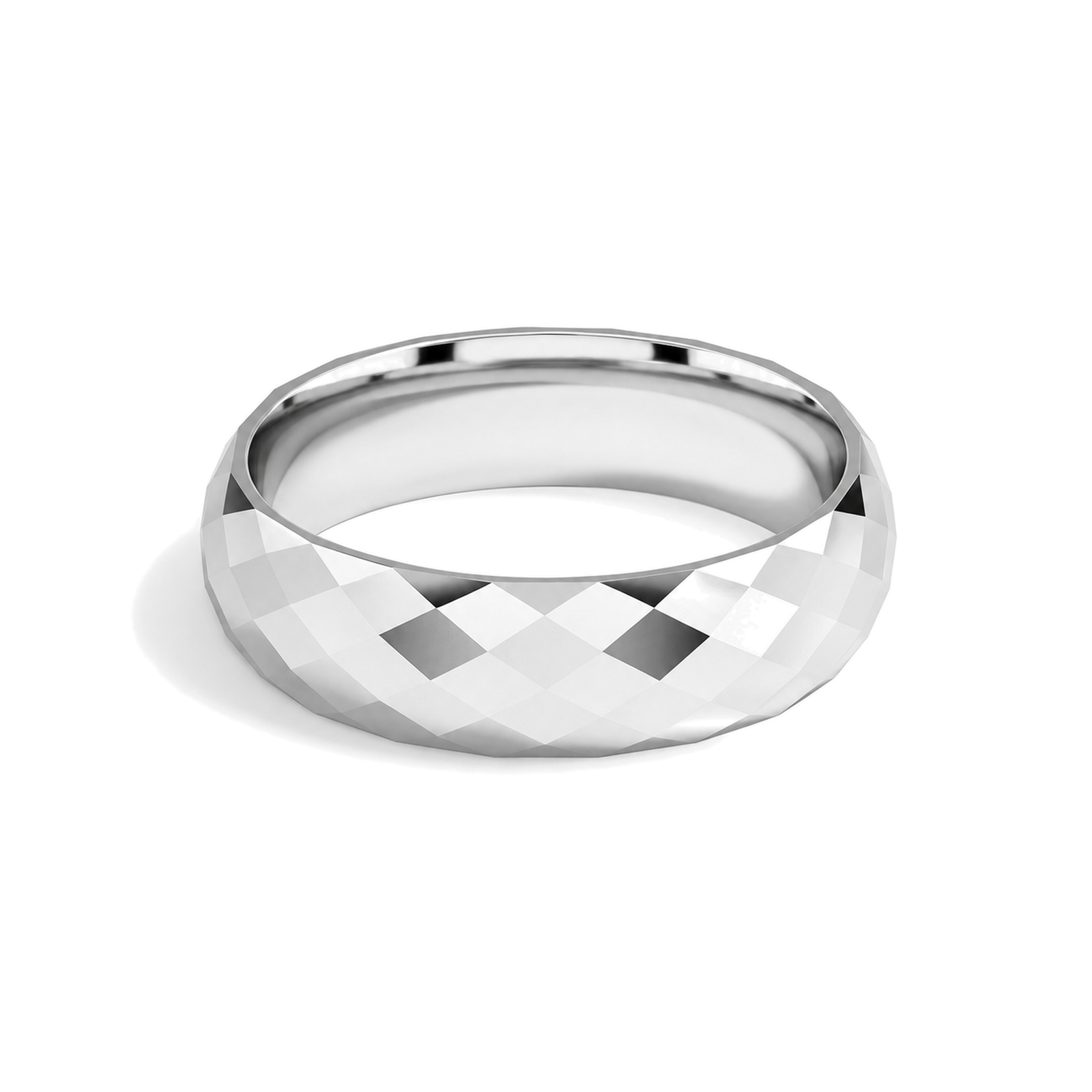
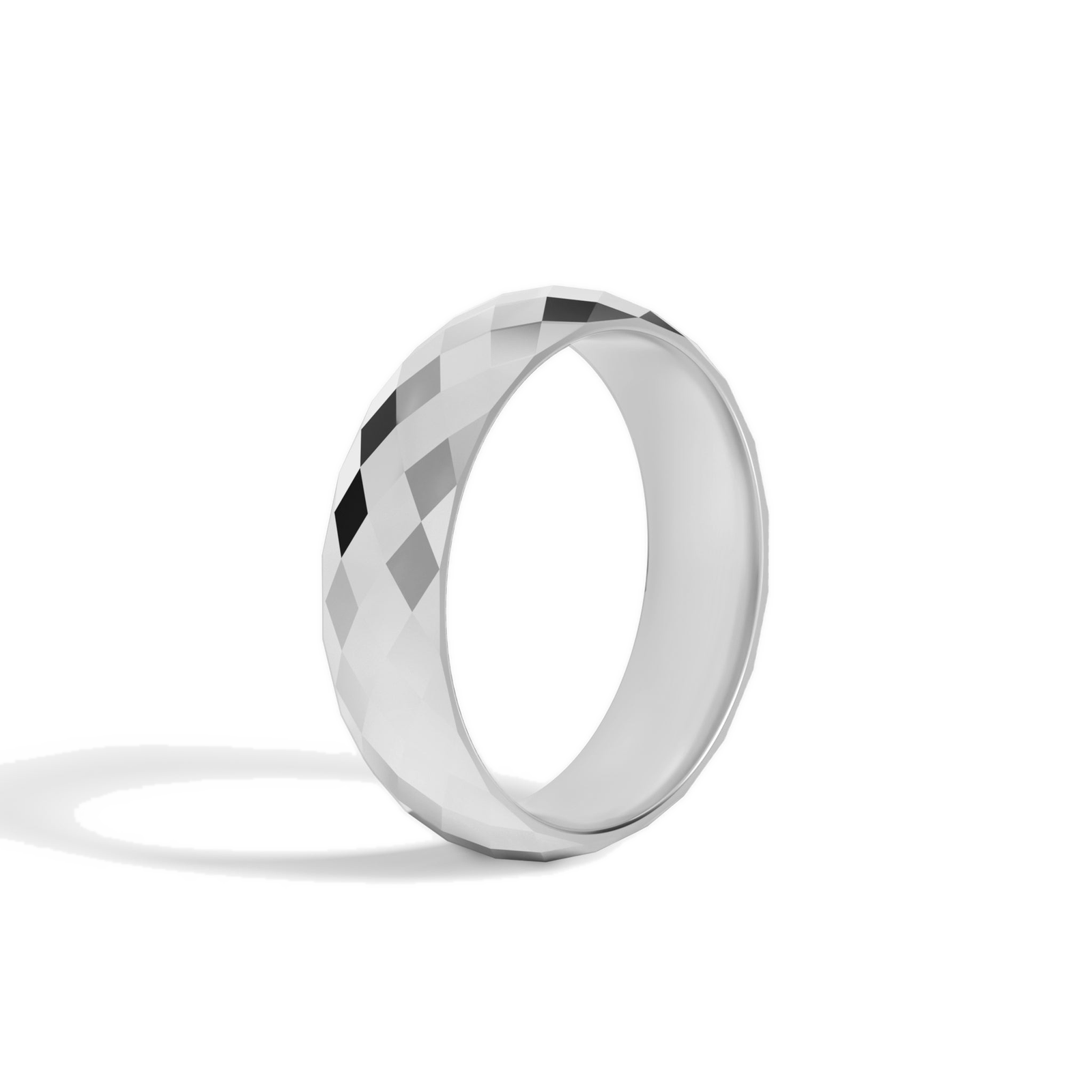
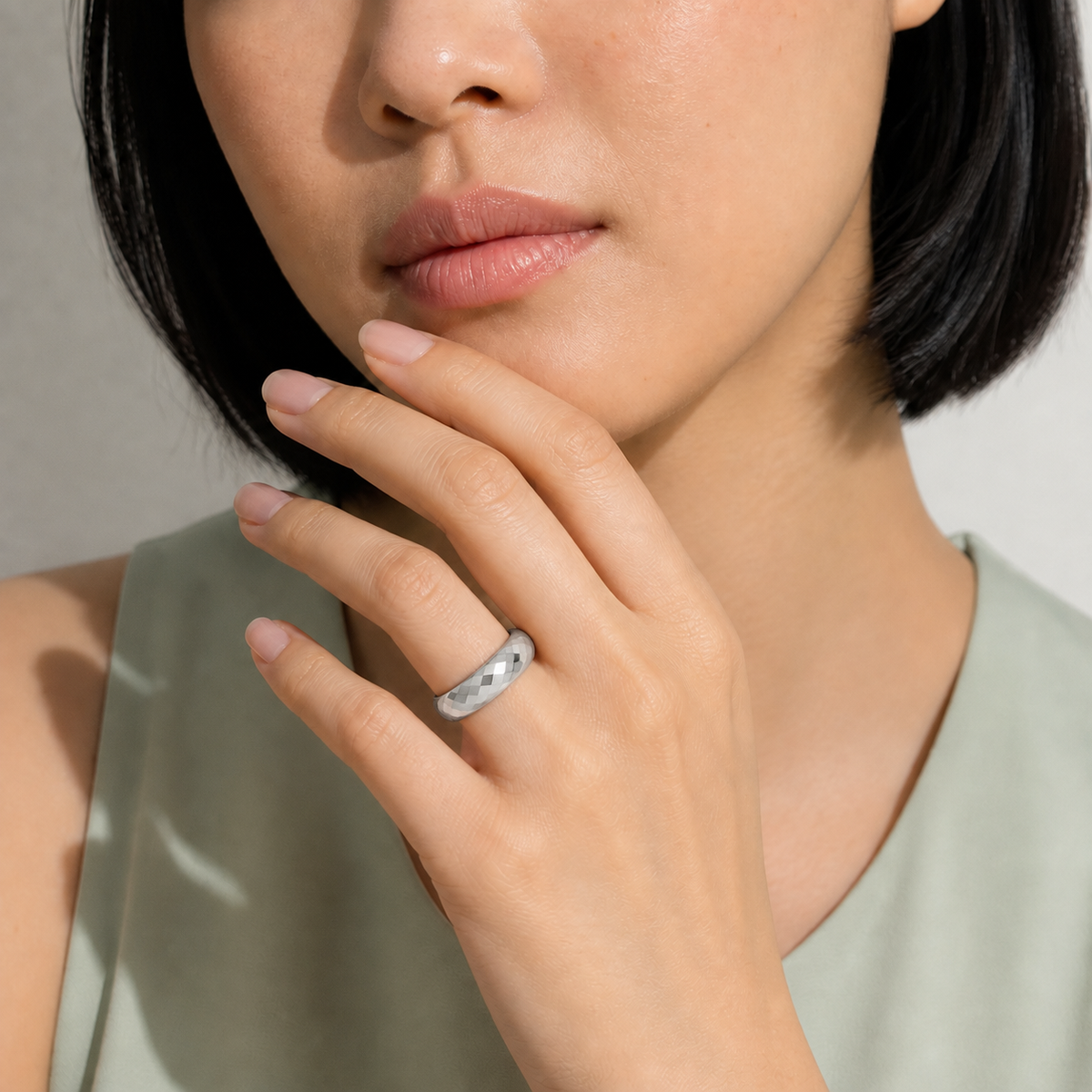
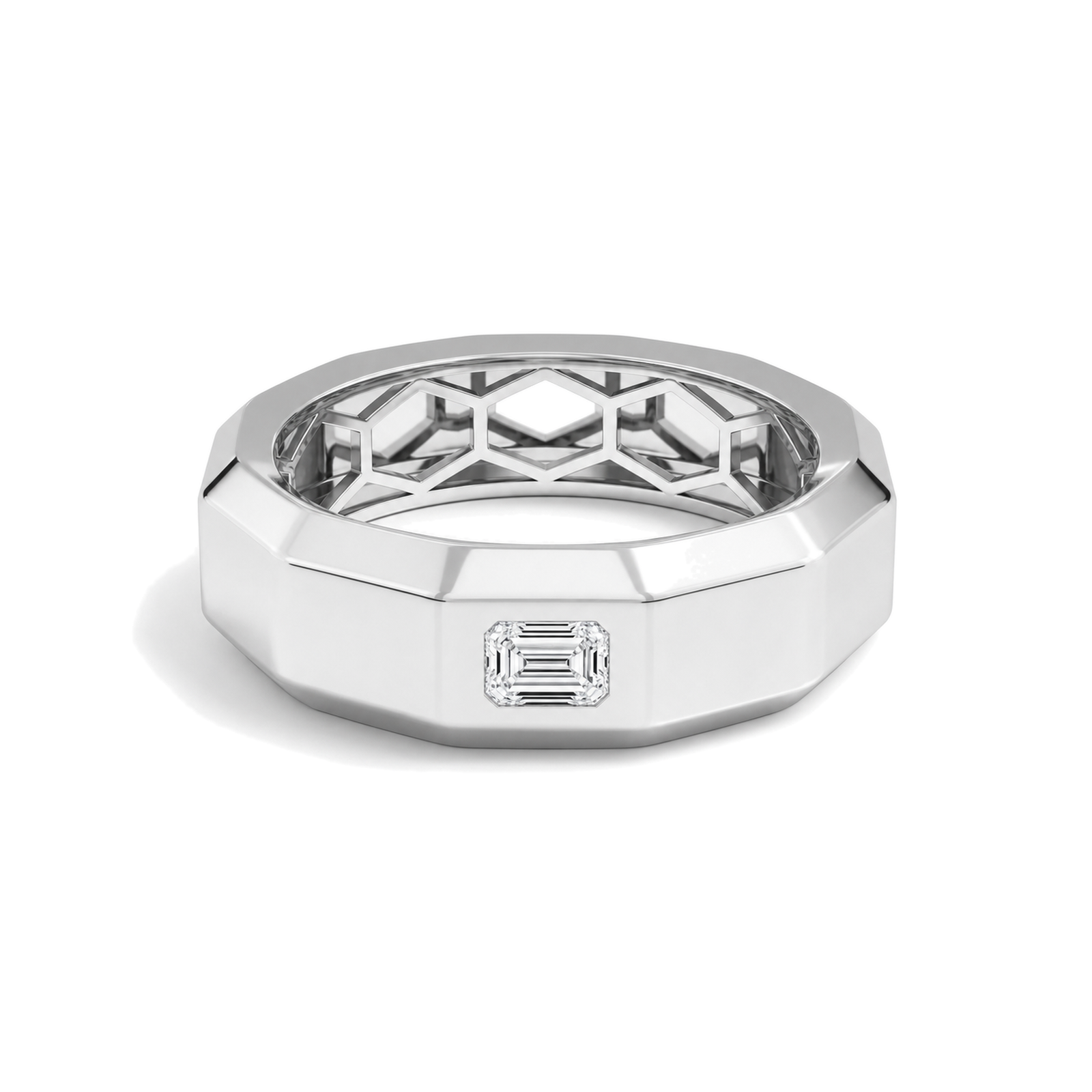
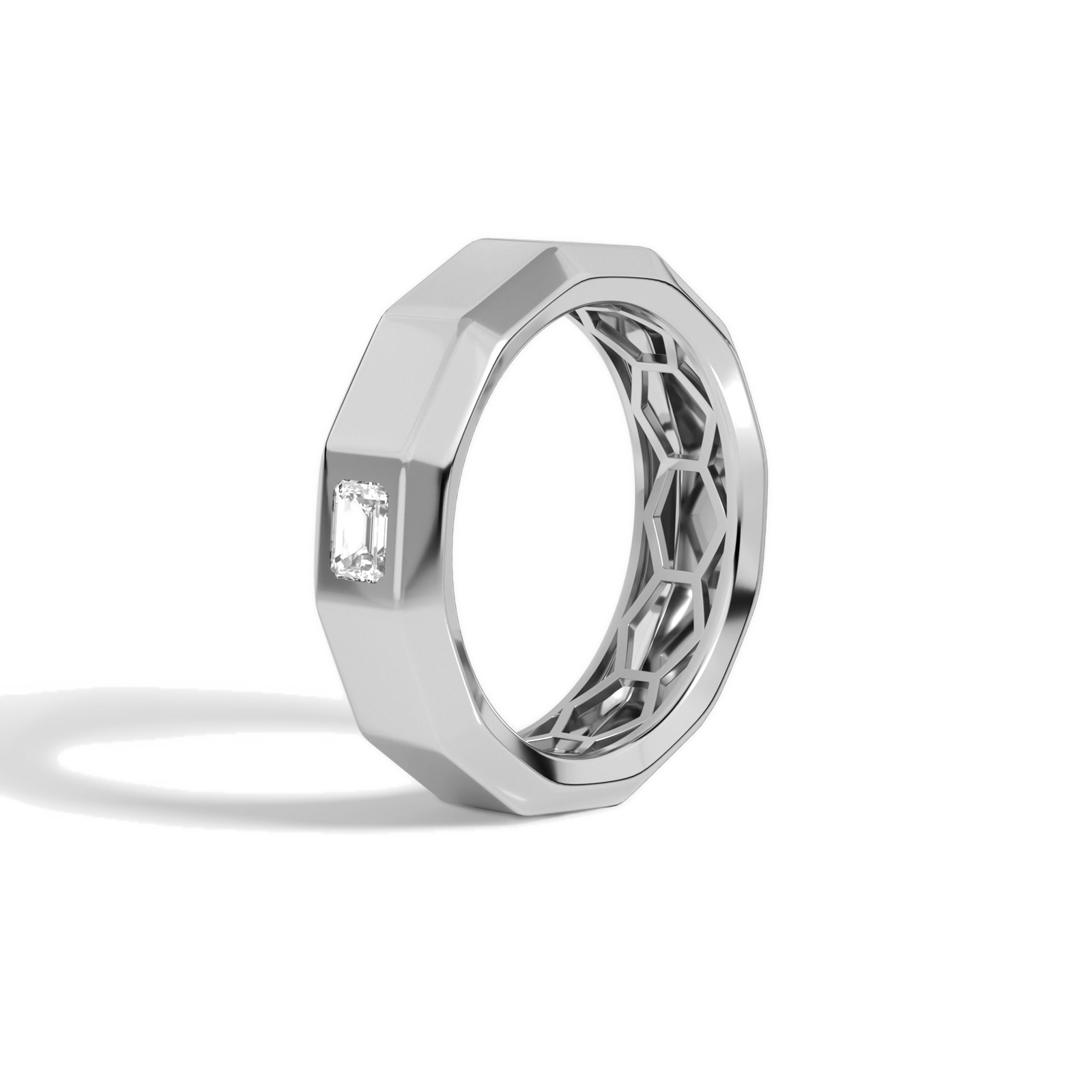
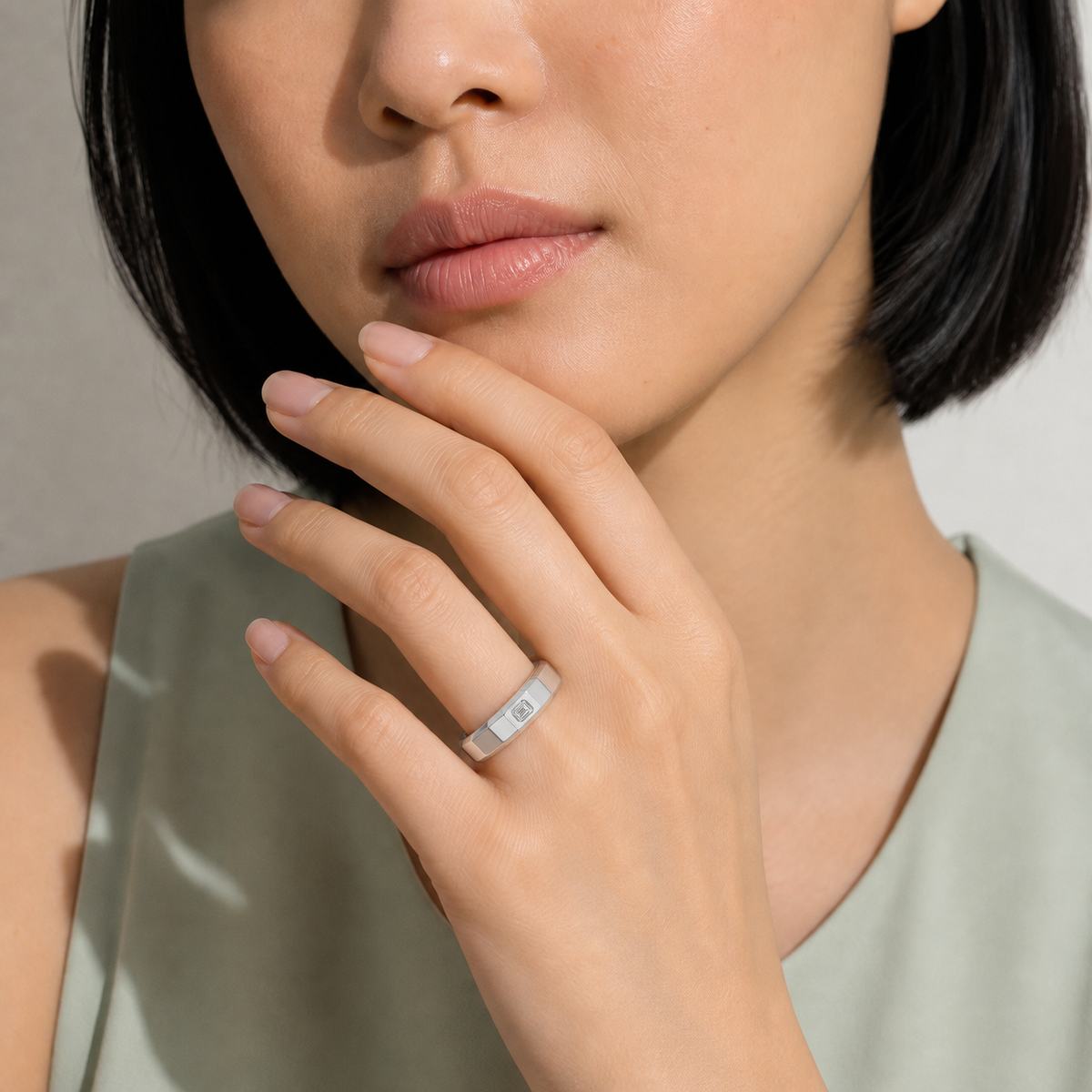
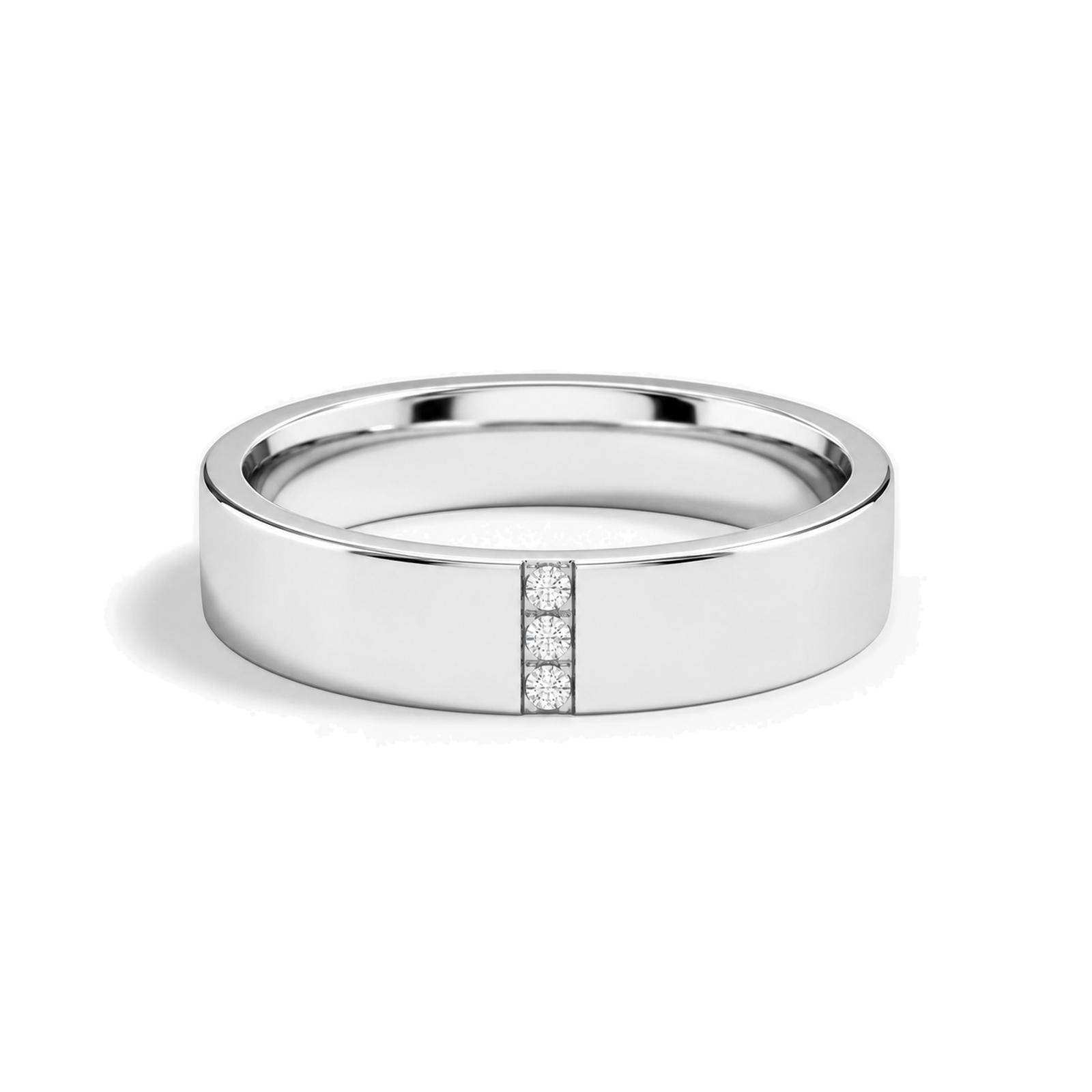
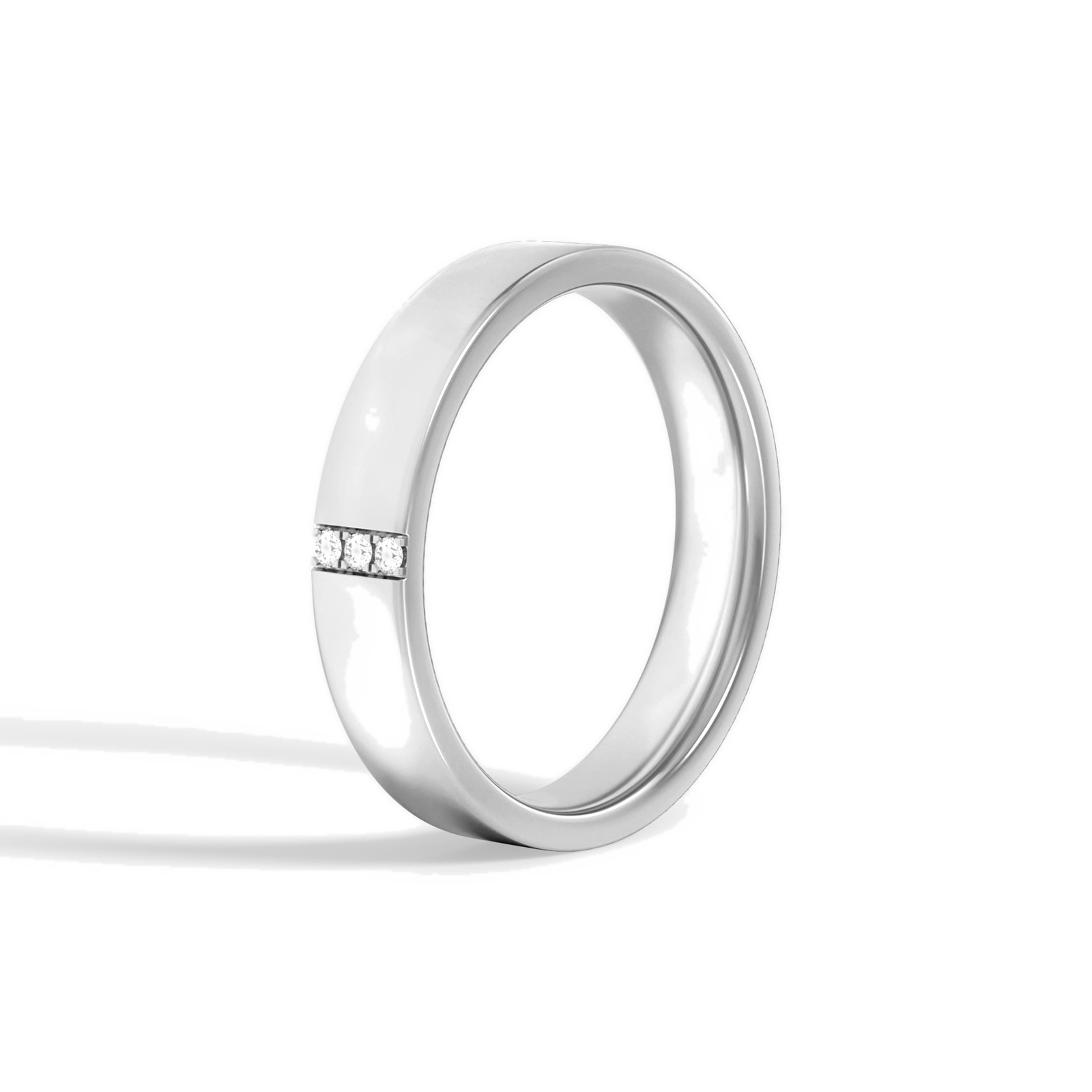

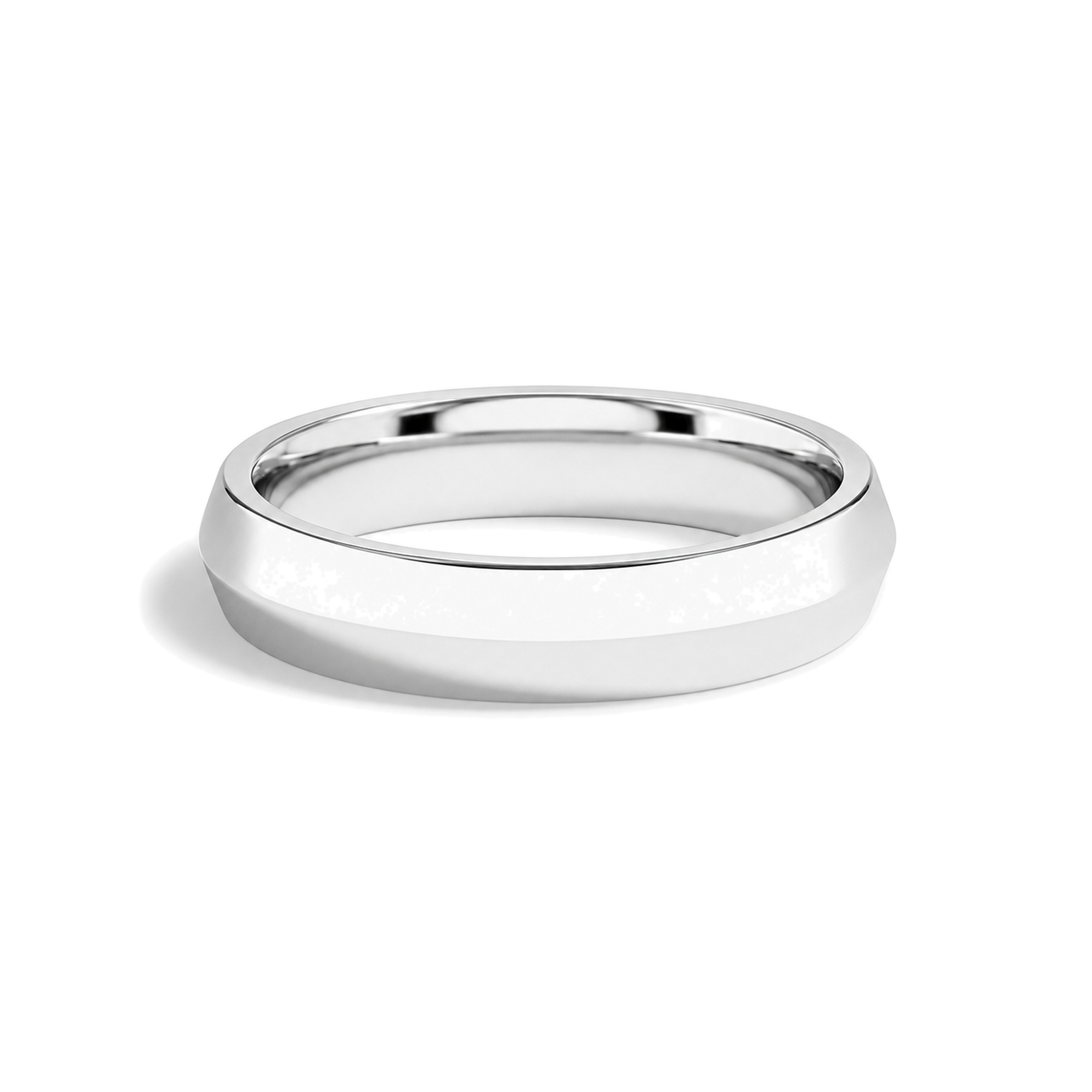


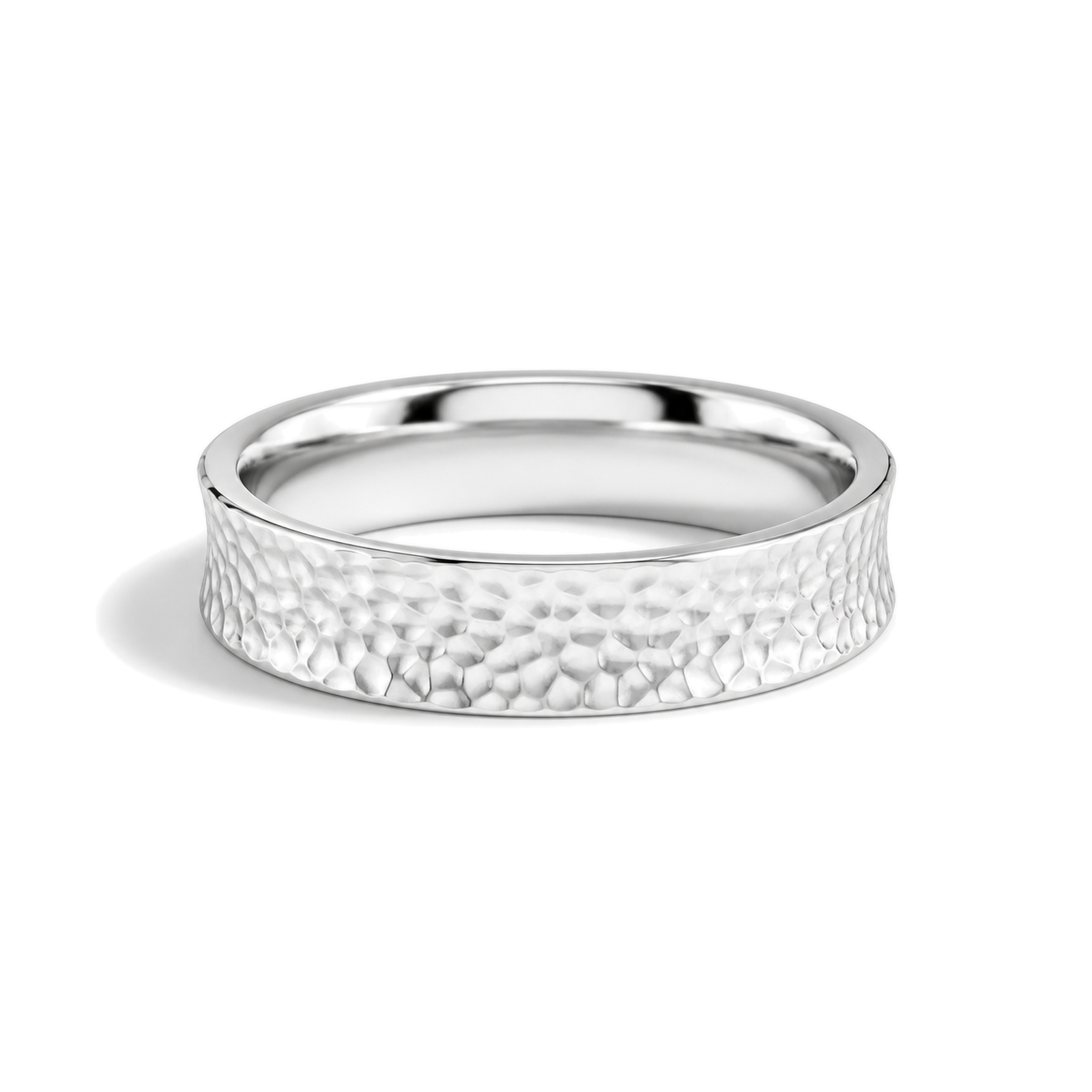
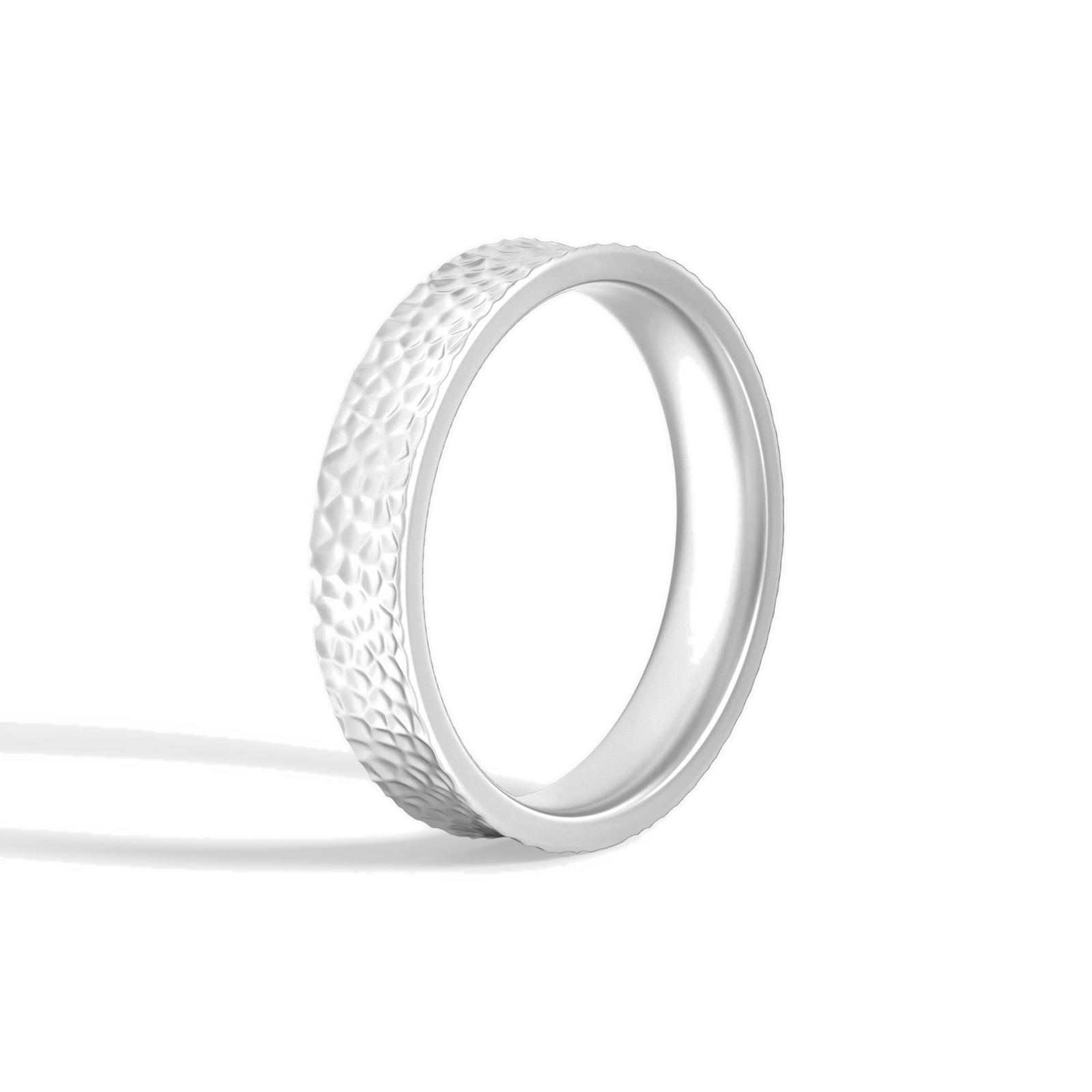

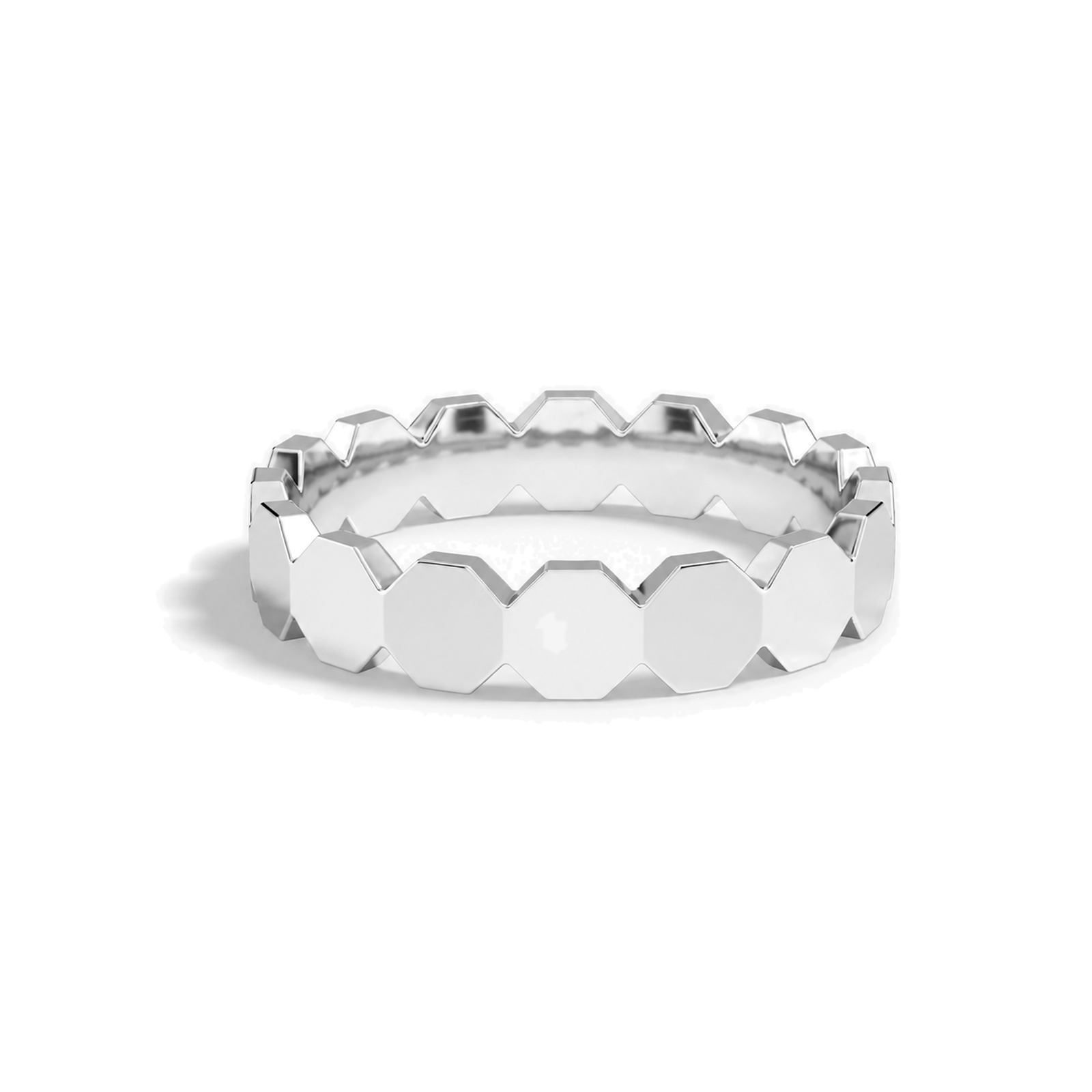
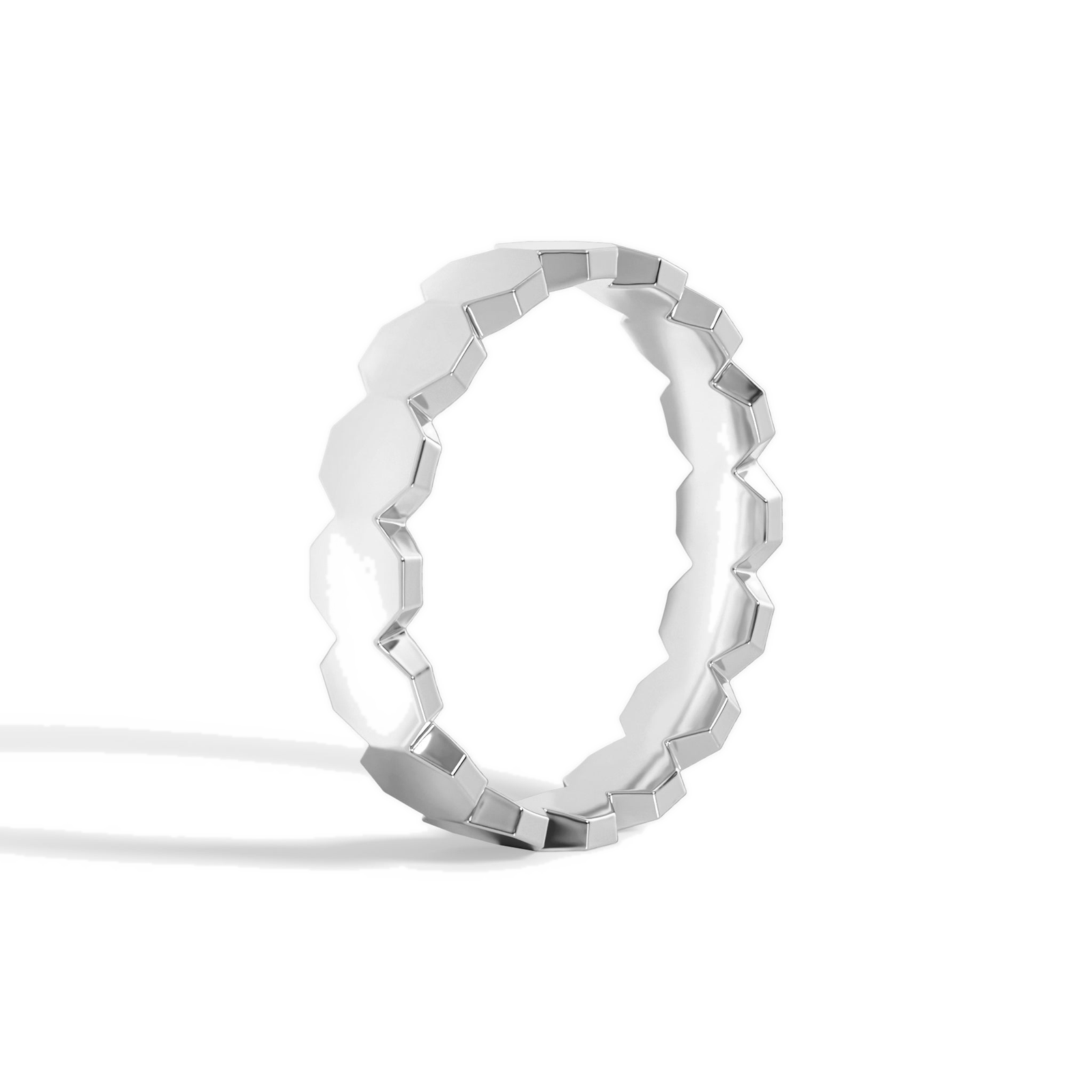

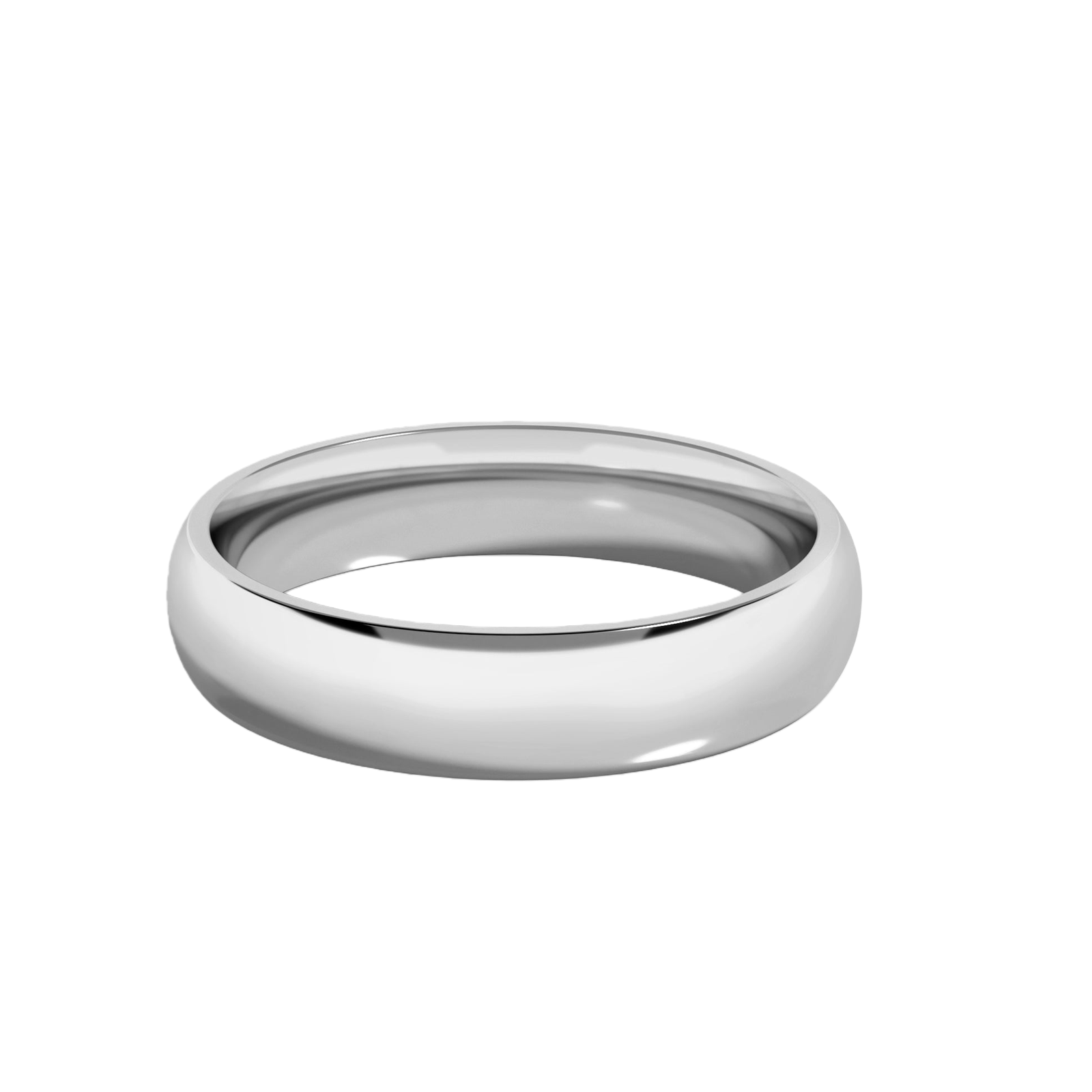


14K White Gold Men's Rings: Quiet Metal, Visible Profile
White Gold can reduce color contrast around diamonds, yet a wide band remains an architectural surface. Across these twenty-eight wedding-band forms, pale metal moves through flat faces, bevels, domes, facets, channels and textures. Men's is the route into the edit, not a rule about who should choose which geometry.
All twenty-eight normalized designs also appear within the ninety-seven-design 14K White Gold Wedding Bands universe. This child page therefore earns its place by concentrating on 4–8 mm scale, profile and surface—not by claiming exclusive products or a men's-only construction.
Separate Width, Depth, and Interior
The current distribution runs from 4 to 8 mm, with ten 4.5 mm designs and smaller groups at each other published width. Width describes the band across the finger. Thickness describes depth, while the interior contour determines how the ring meets skin; one number cannot answer all three questions.
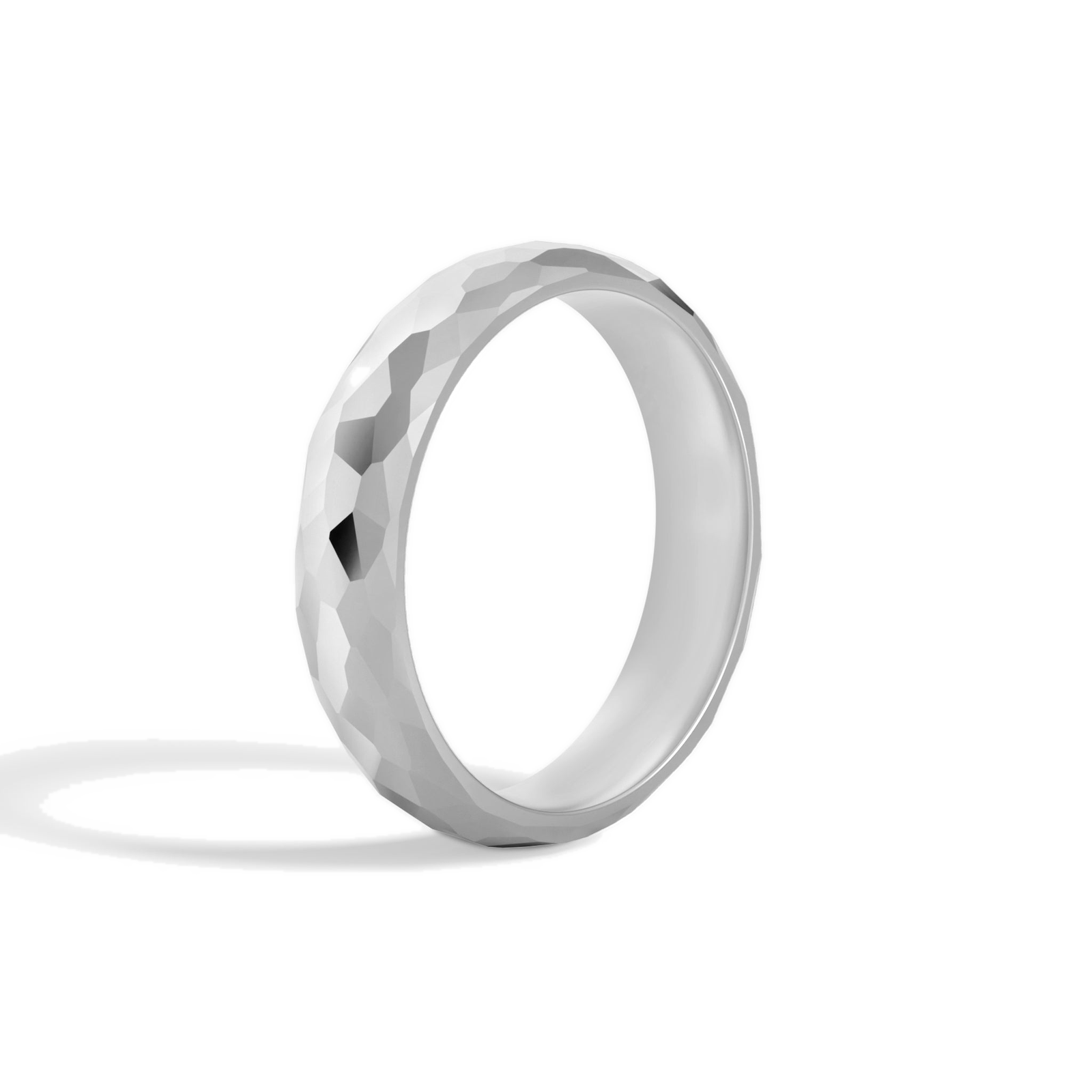
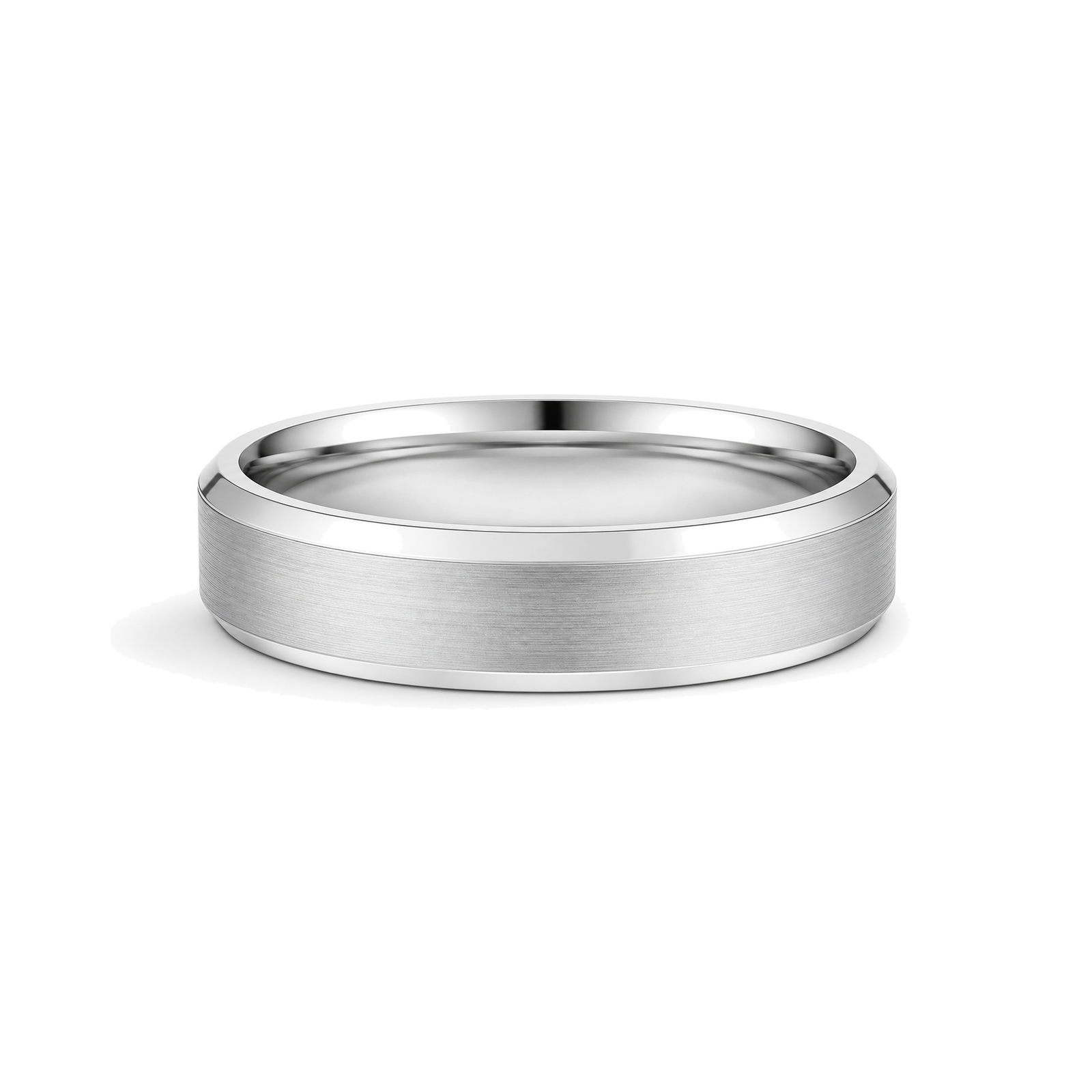
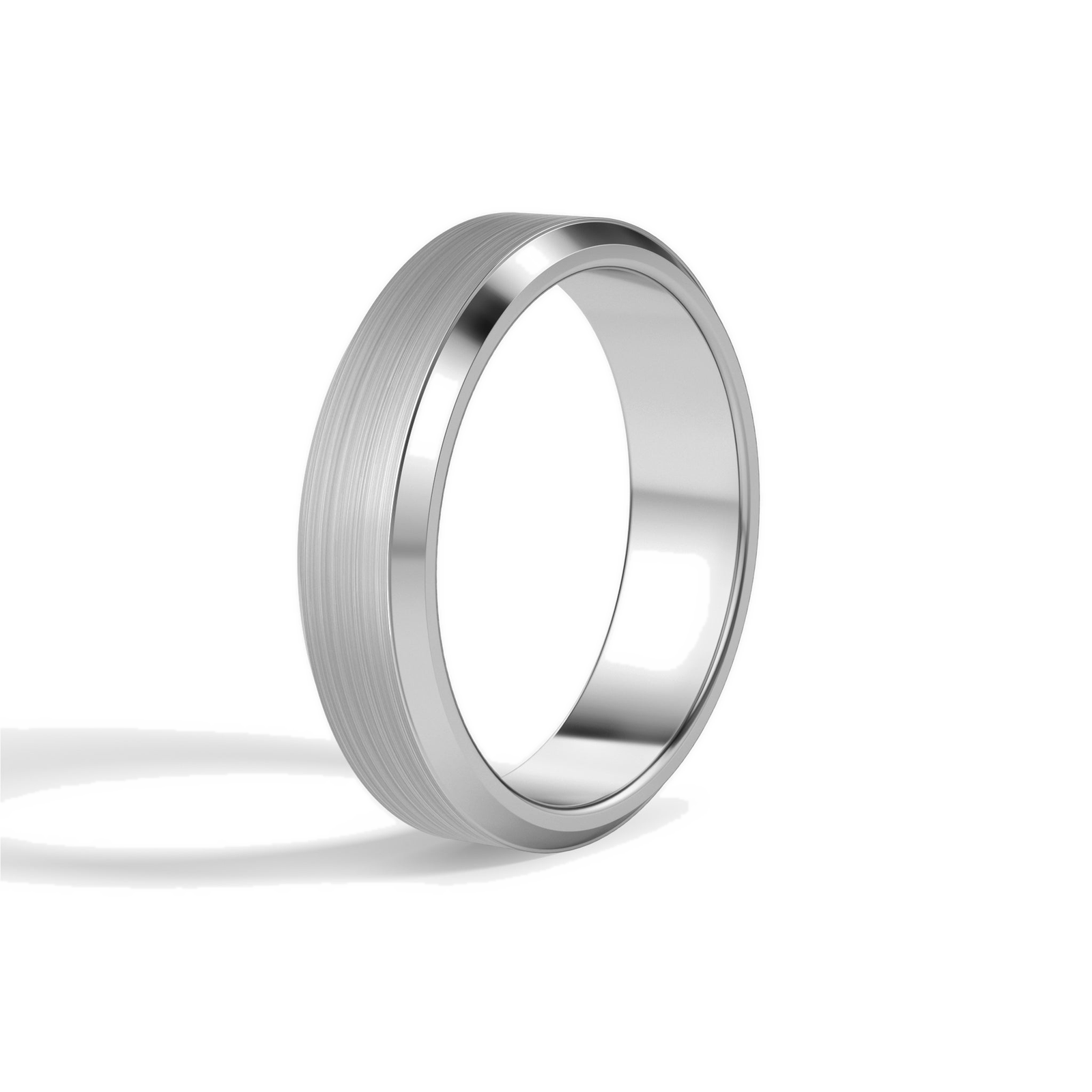
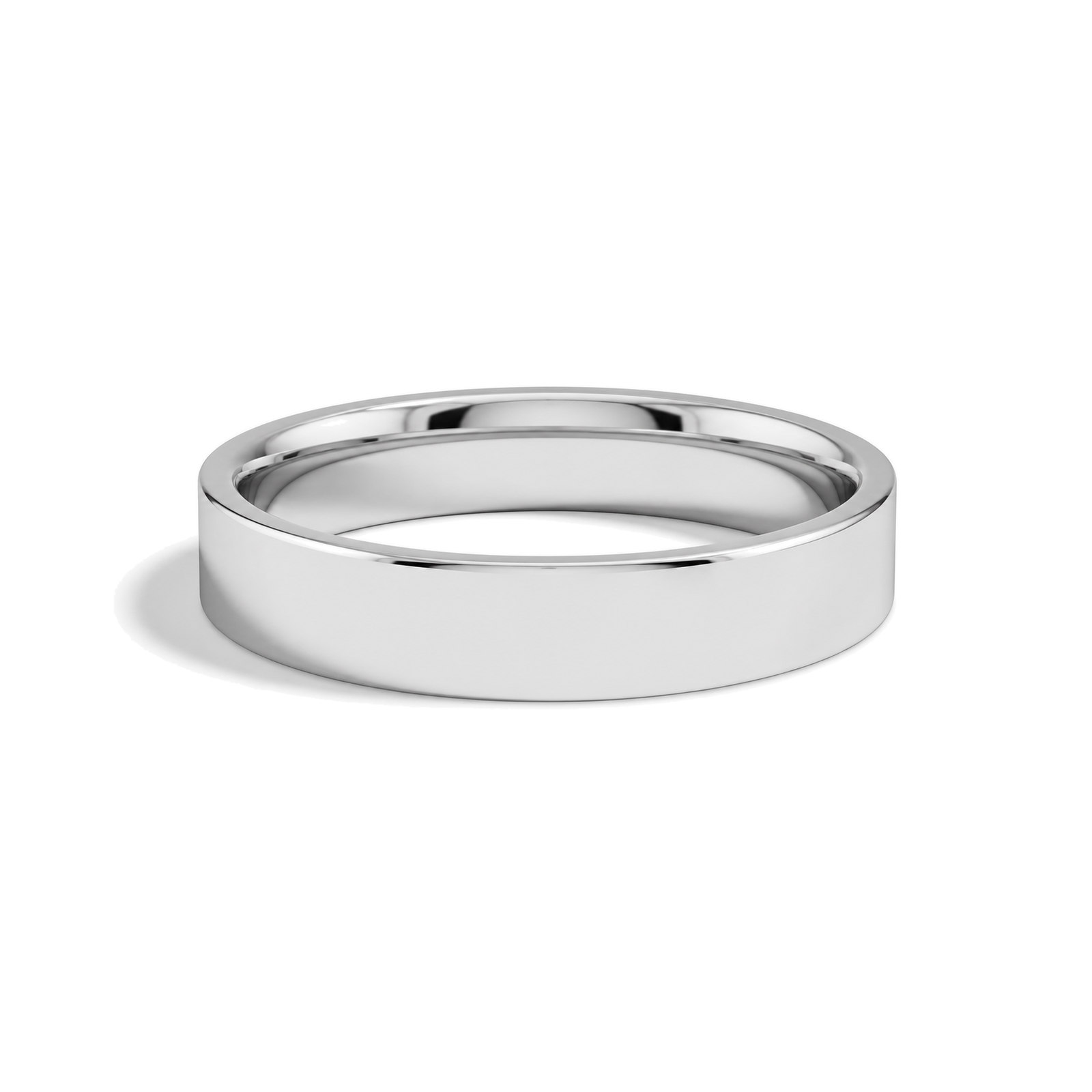
A pale field can make changes in plane more important than color. Compare whether the edge is abrupt, beveled or rounded, whether a texture is directional or irregular, and how the side view changes the face-up width.
Read Finish Evidence Product by Product
Fourteen of twenty-eight current descriptions mention rhodium and fourteen do not. That split cannot support a Collection-wide plating statement. Exact finish, future refinishing and sensitivity questions belong to the chosen product. No white surface is scratch-proof or guaranteed to keep one appearance.
Sixteen products expose a fixed Carat Weight value; twelve expose Default Title. This is not evidence of a shared selector, TCW definition or resizing rule. Channel, accent, pavé and eternity wording should likewise be checked against actual coverage and setting details.
Resolve Fit without a Shortcut
Comfort-fit language is an interior-profile clue, not a universal outcome. Try or measure the intended width when possible, consider knuckle passage and swelling, and avoid a fixed size adjustment based on width alone. Neighboring rings add further edge and contact questions.
14K Gold is approximately 58.3% gold. Complete alloy, finish, dimensions and construction determine material behavior and finished mass. Clean gently, preserve texture during maintenance, and request product-specific review for engraving, resizing, refinishing or other custom possibilities.
Frequently Asked Questions
How many designs are current?
Twenty-eight 14K white gold wedding-band forms.
Is this a separate product universe?
No. All twenty-eight are normalized members of the ninety-seven-design same-metal Wedding Bands page.
What is the width range?
Published widths extend from 4 through 8 mm.
How is width different from profile depth?
Width spans the finger; profile depth measures how far the band projects.
Should men choose wider bands?
No general rule applies; use complete proportions and wearer context.
What edges are represented?
Flat, beveled, domed, knife-edge, concave, faceted and octagonal language appears.
What textures are represented?
Current titles include brushed, hammered and knurled surfaces among other treatments.
Is every ring rhodium plated?
That cannot be claimed; fourteen descriptions mention rhodium and fourteen do not.
Is white gold maintenance-free?
No. Finish, texture, edges and settings can all change with contact and care.
Which diamond placements occur?
Single or grouped accents, channels, pavé and eternity-titled layouts are represented.
Does Carat Weight mean TCW?
No such equivalence is established by the current label.
Are all carat values selectable?
No shared configurable range is established; confirm the selected product.
What does comfort fit indicate?
An intended interior contour, not guaranteed comfort for every wearer.
Is there a fixed sizing adjustment for width?
No. Measure the intended width and profile rather than applying one formula.
What percentage of 14K is gold?
Approximately 58.3%.
Can texture be refinished?
Possibly, but restoration may alter edges, pattern or adjacent diamond work.
What care is appropriate?
Follow exact finish and setting guidance, dry carefully and inspect changed details.