
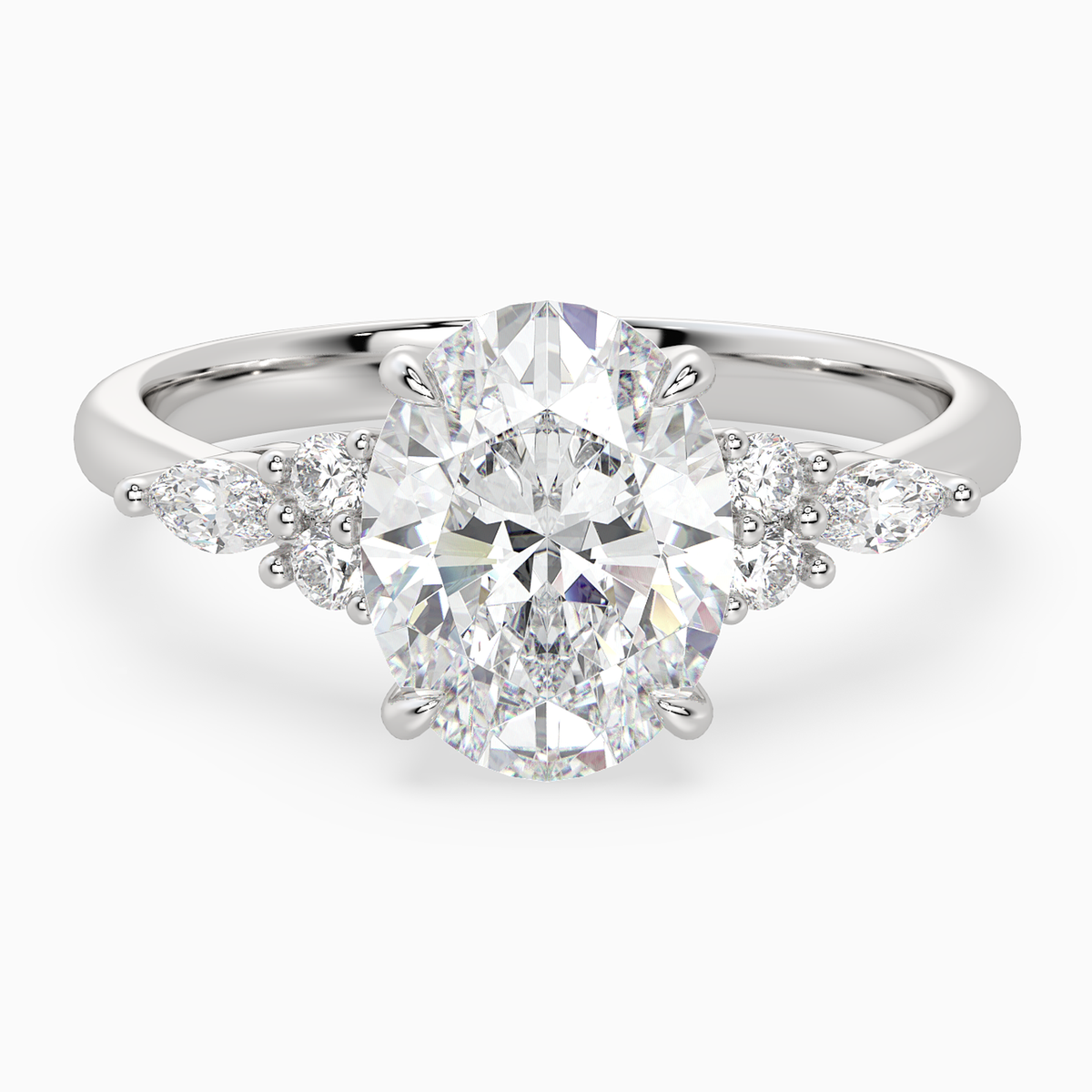


Lab Grown Diamond Stacking Rings in 14K Yellow Gold
Yellow gold turns separation into a line. Forty-five rings build hierarchy through contrast, contour, setting, width and measured contact.


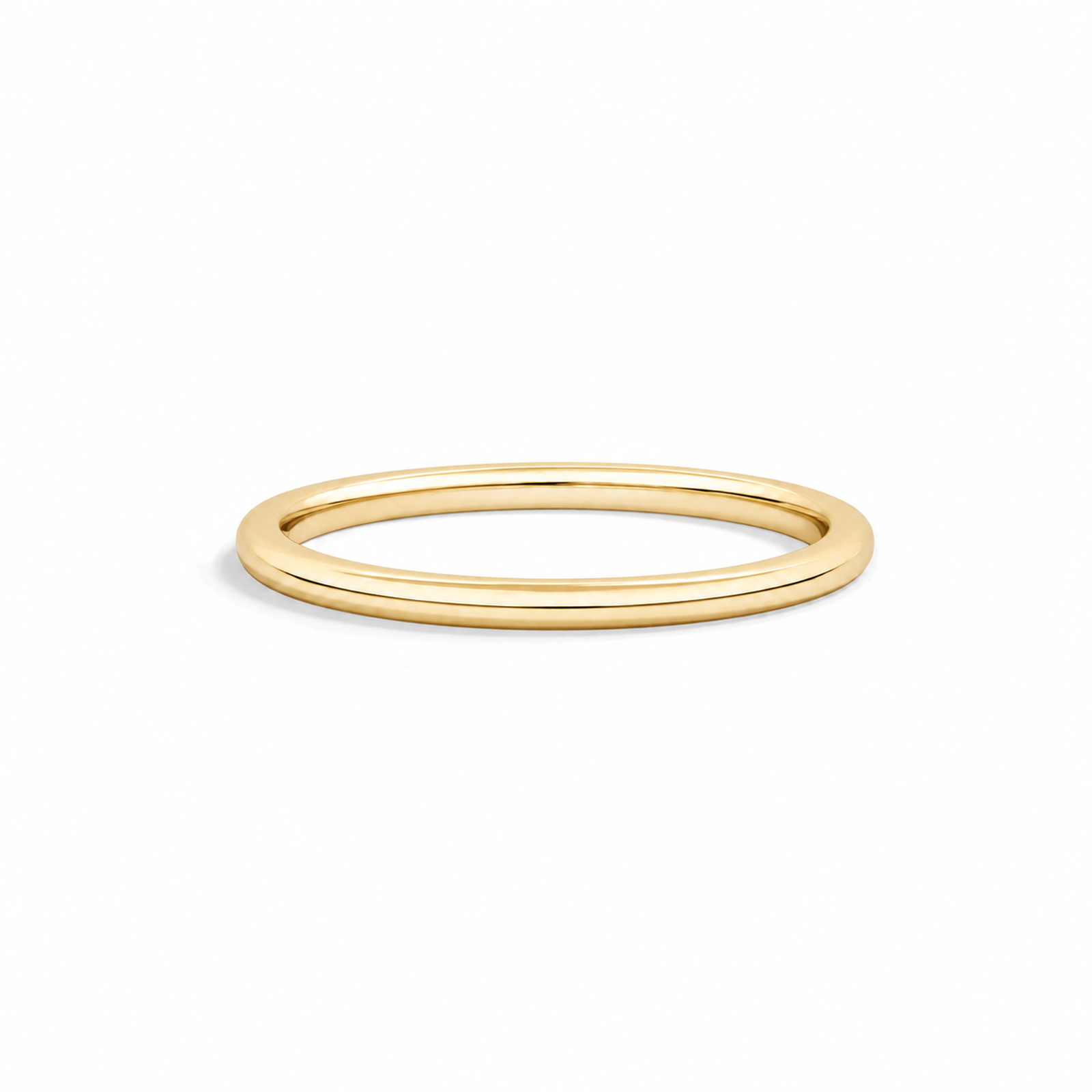
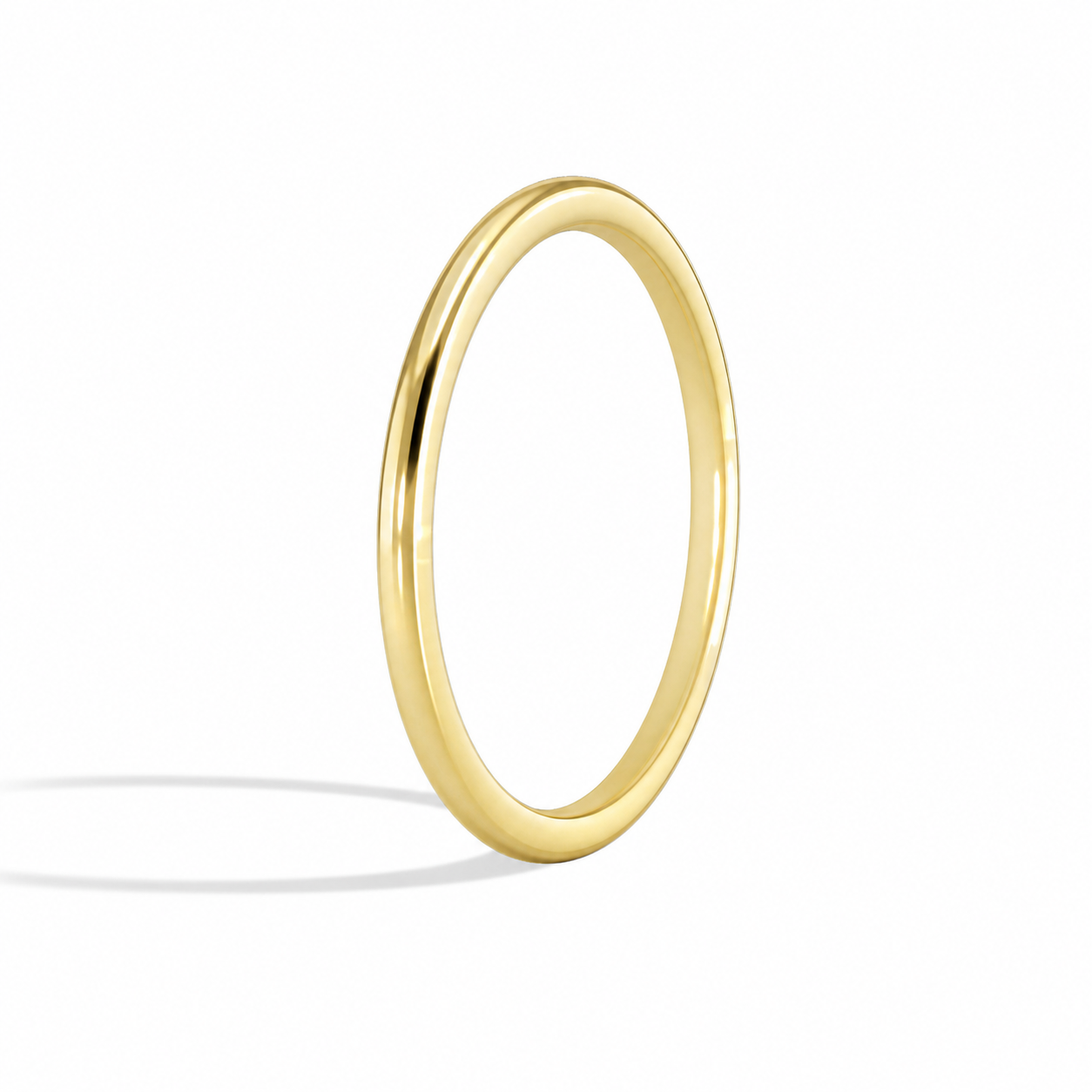

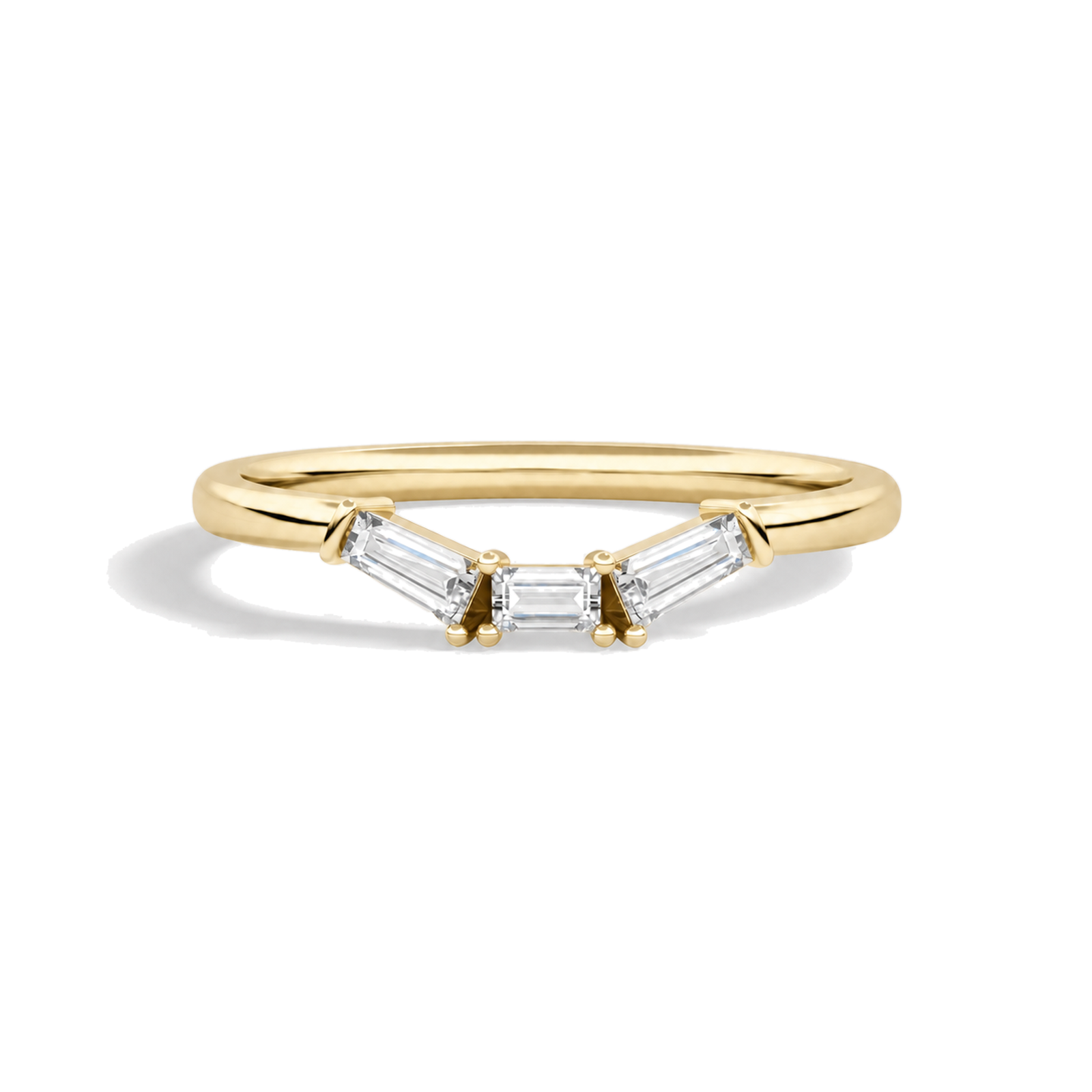


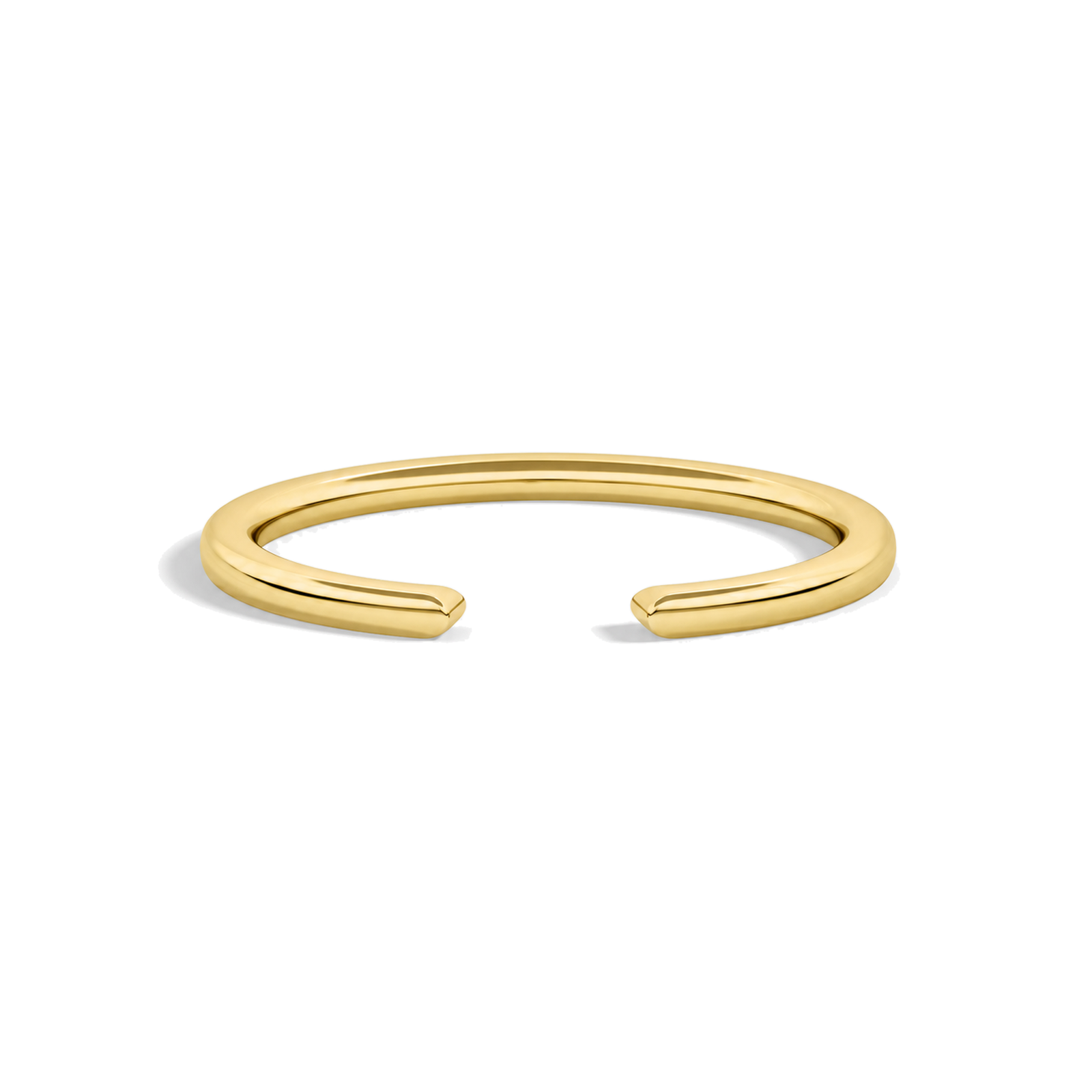


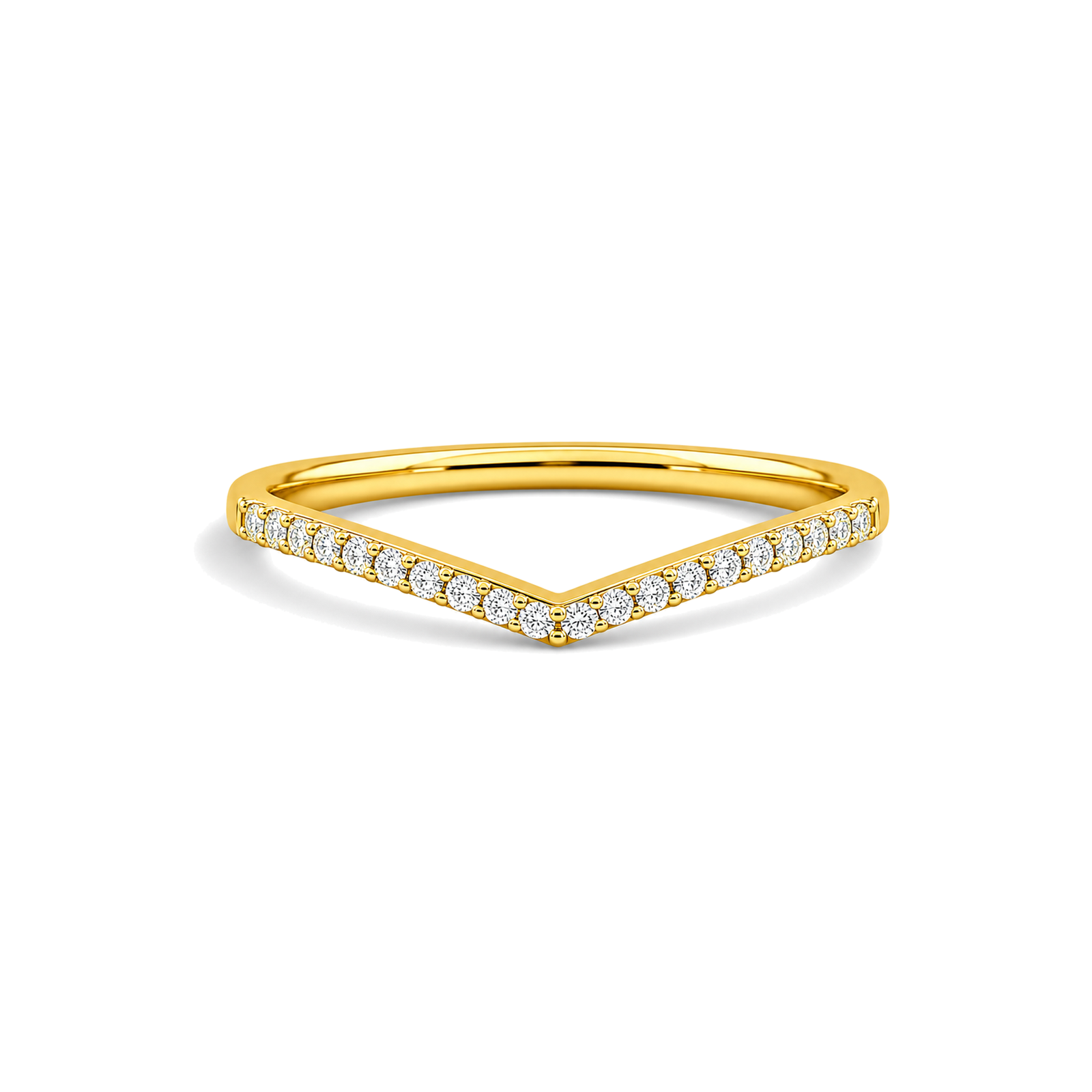
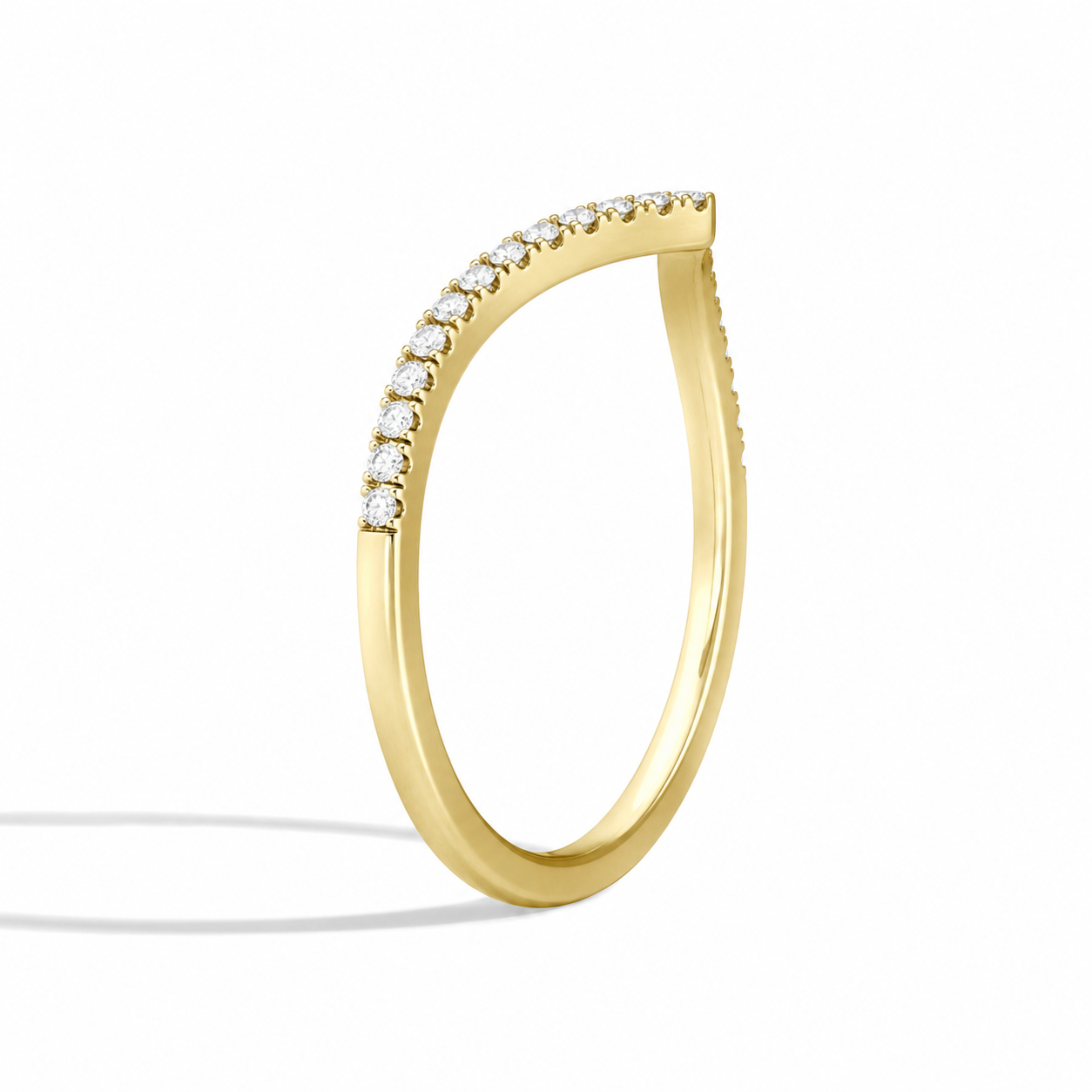

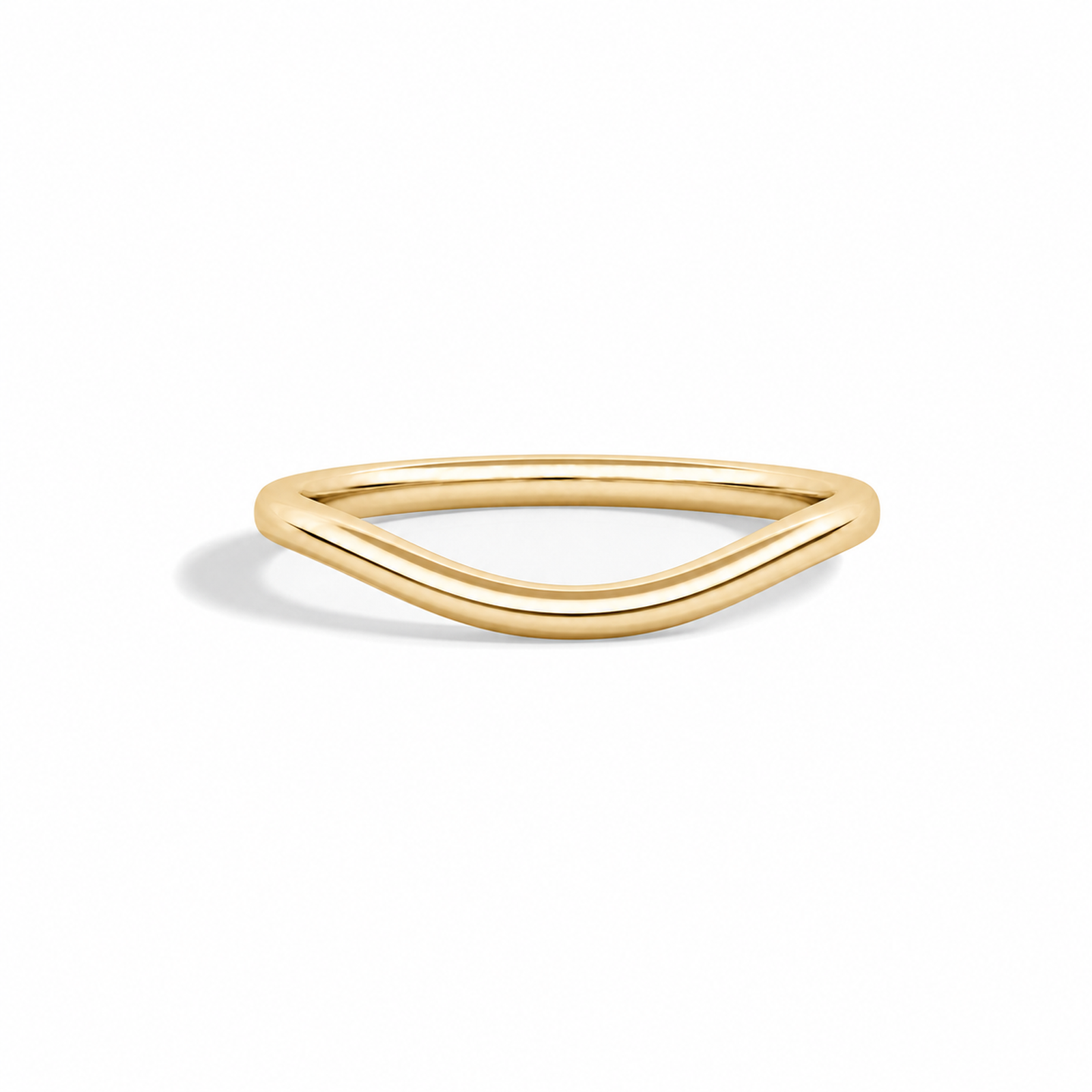
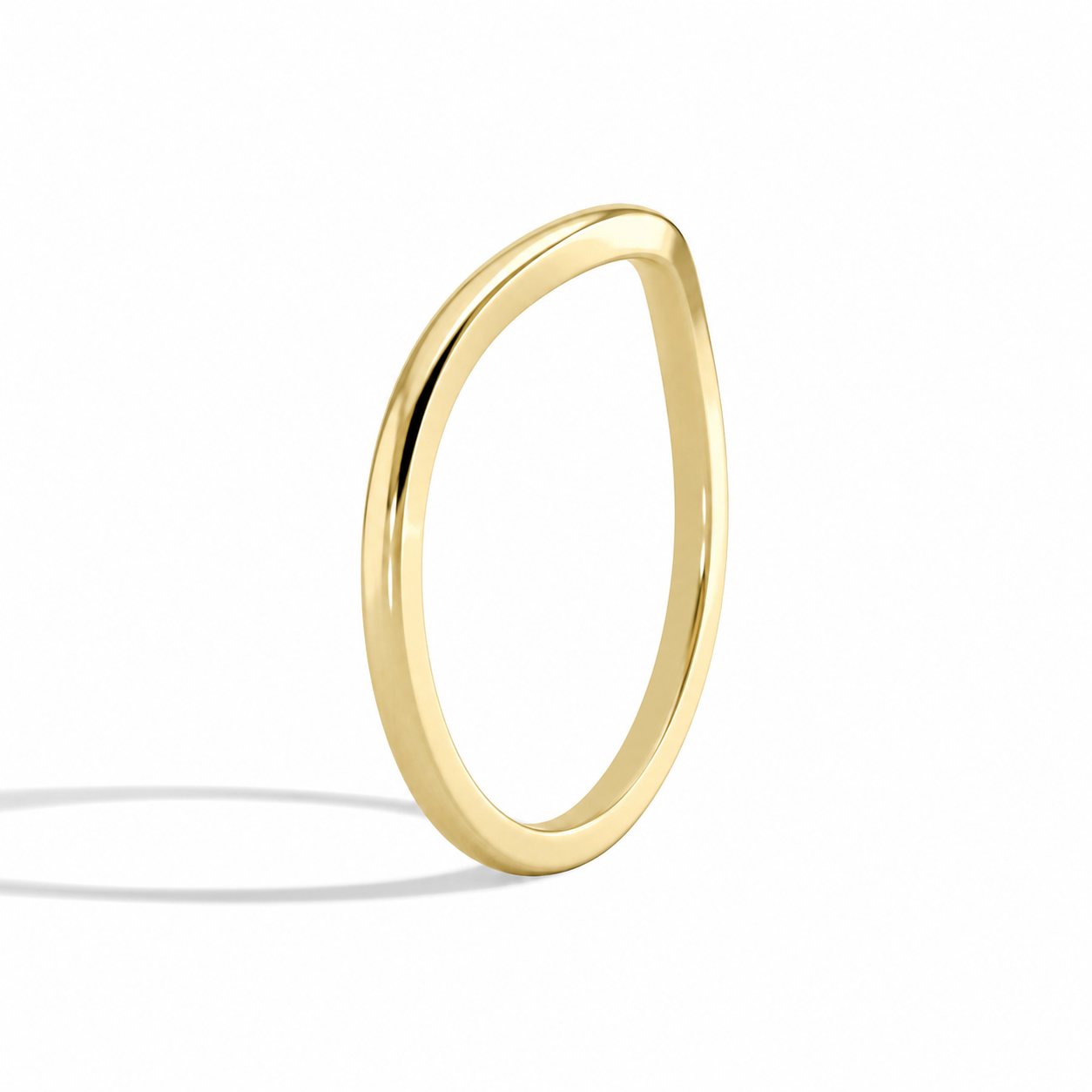

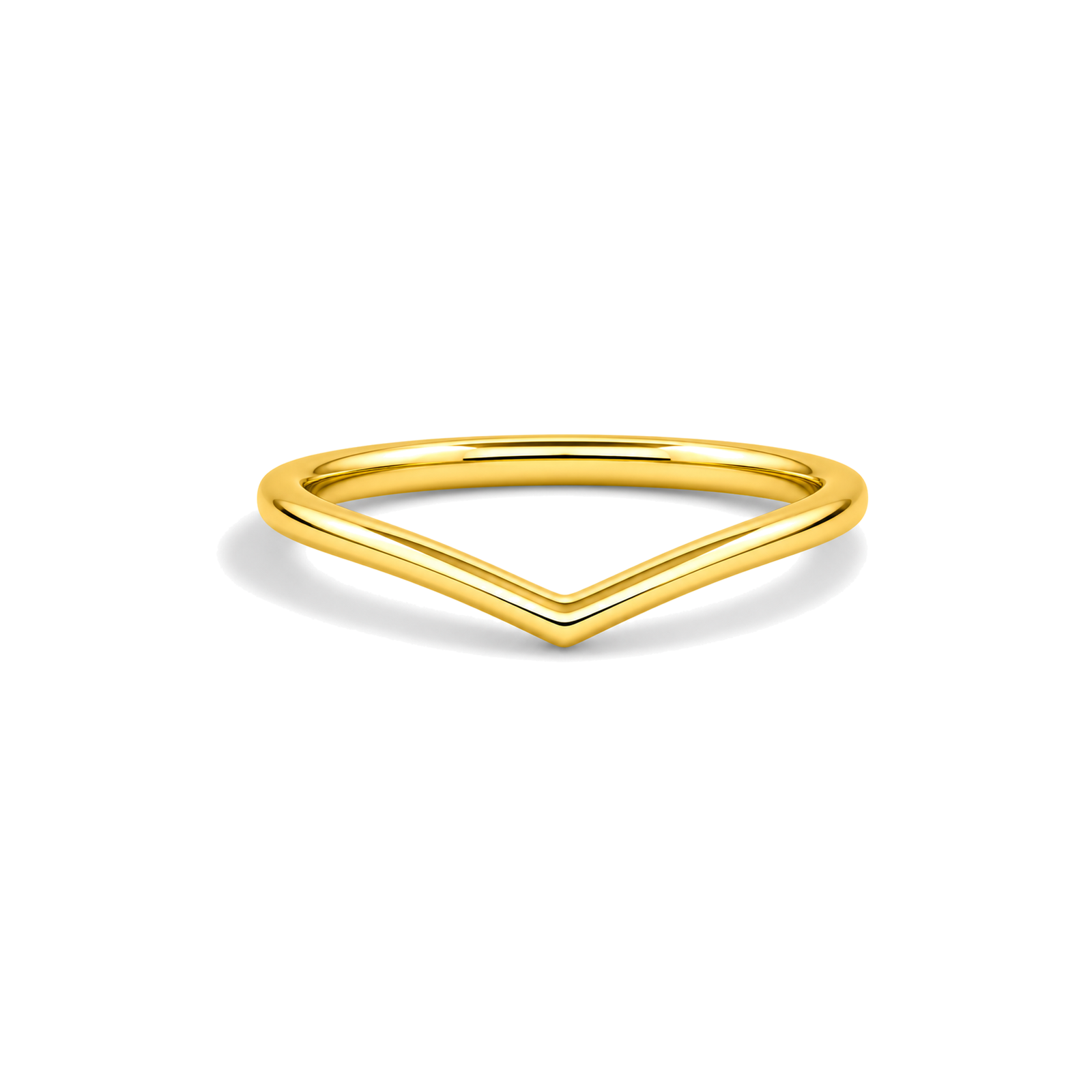


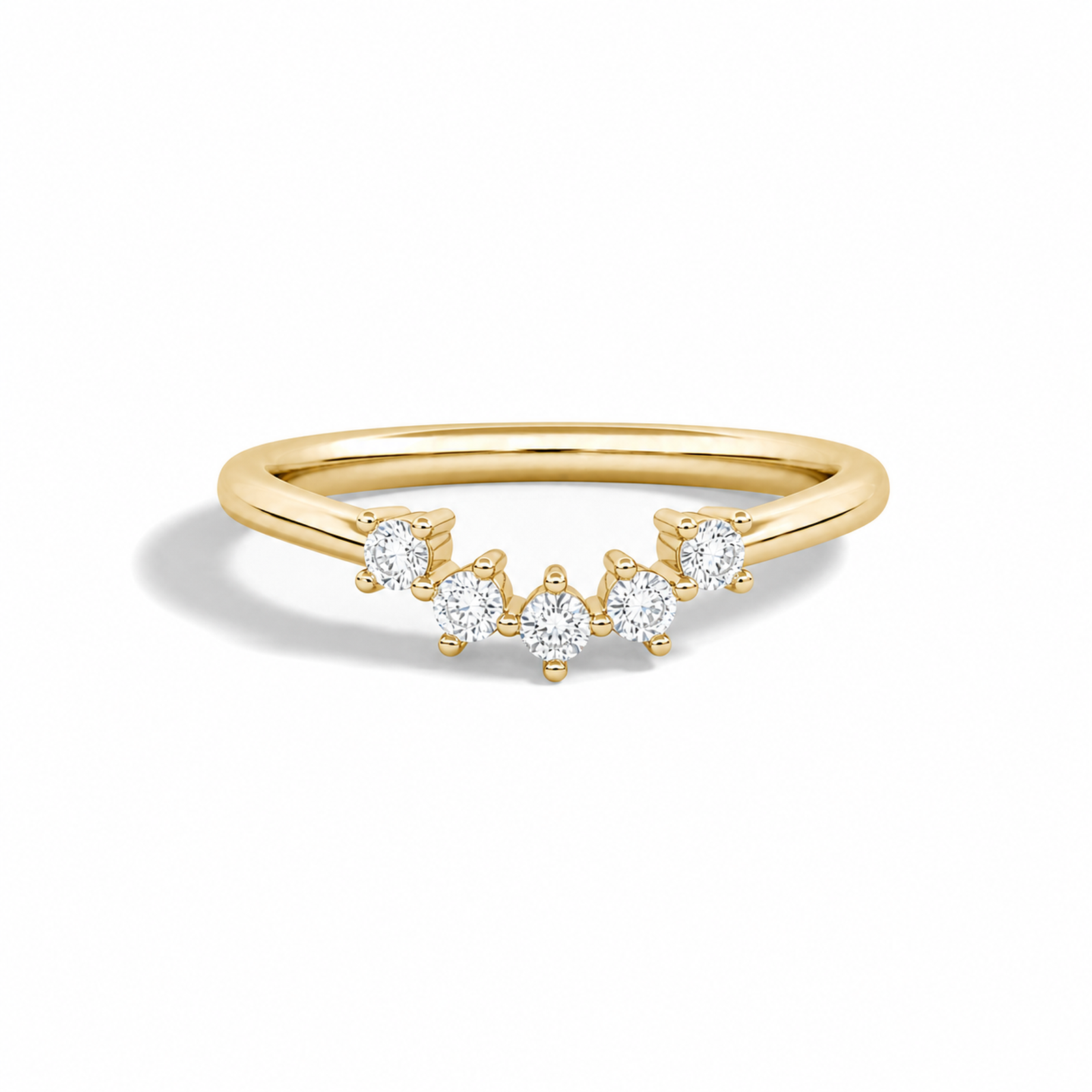


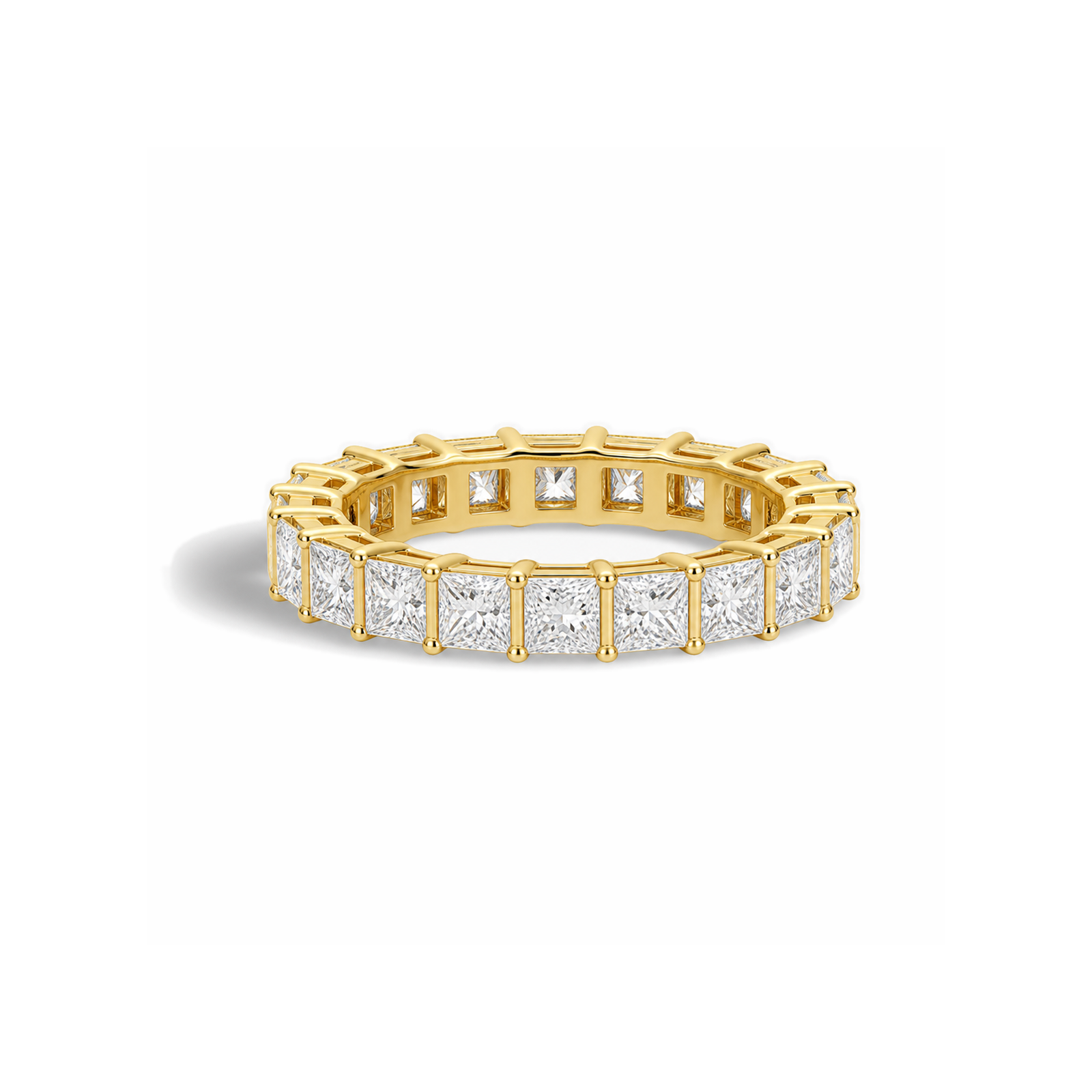


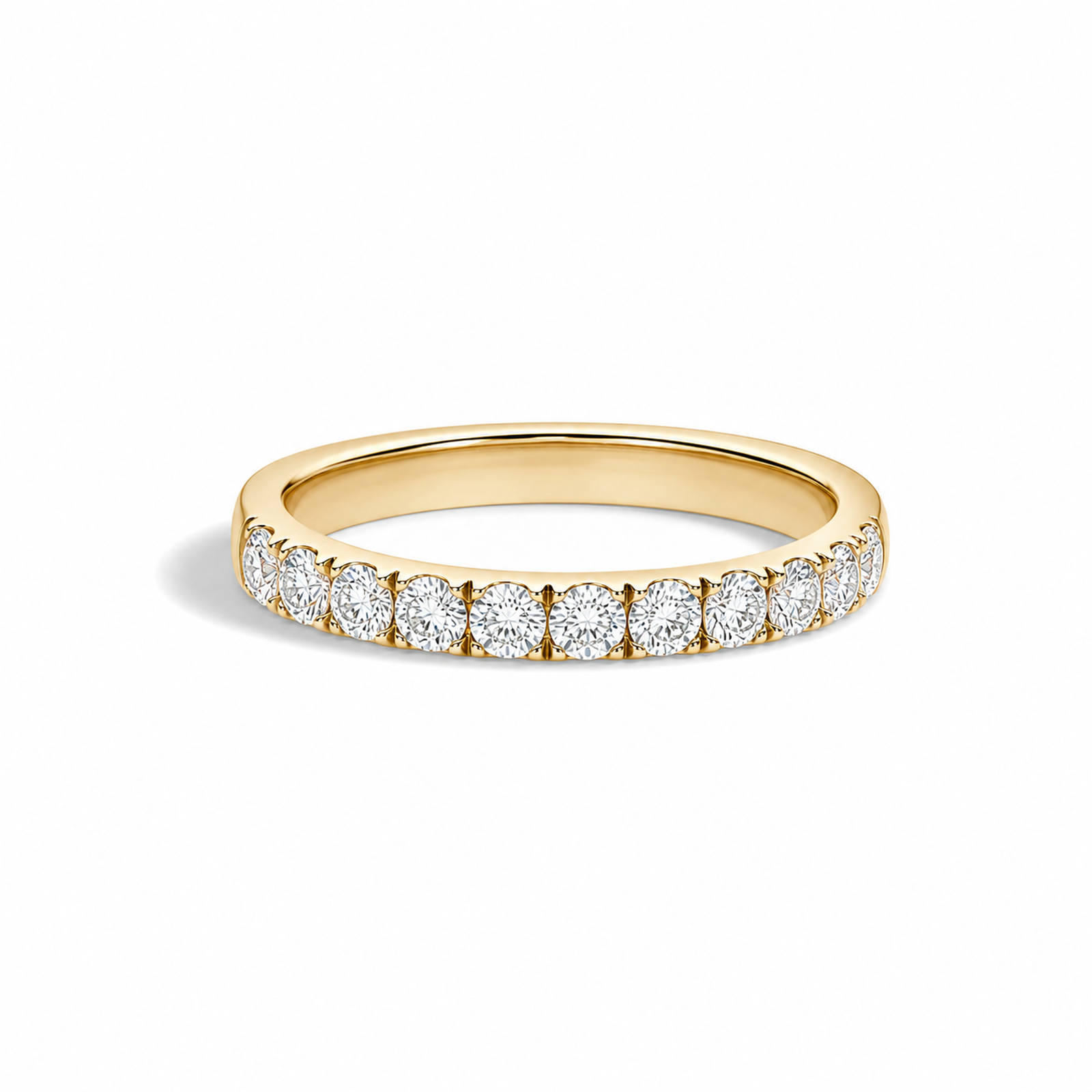
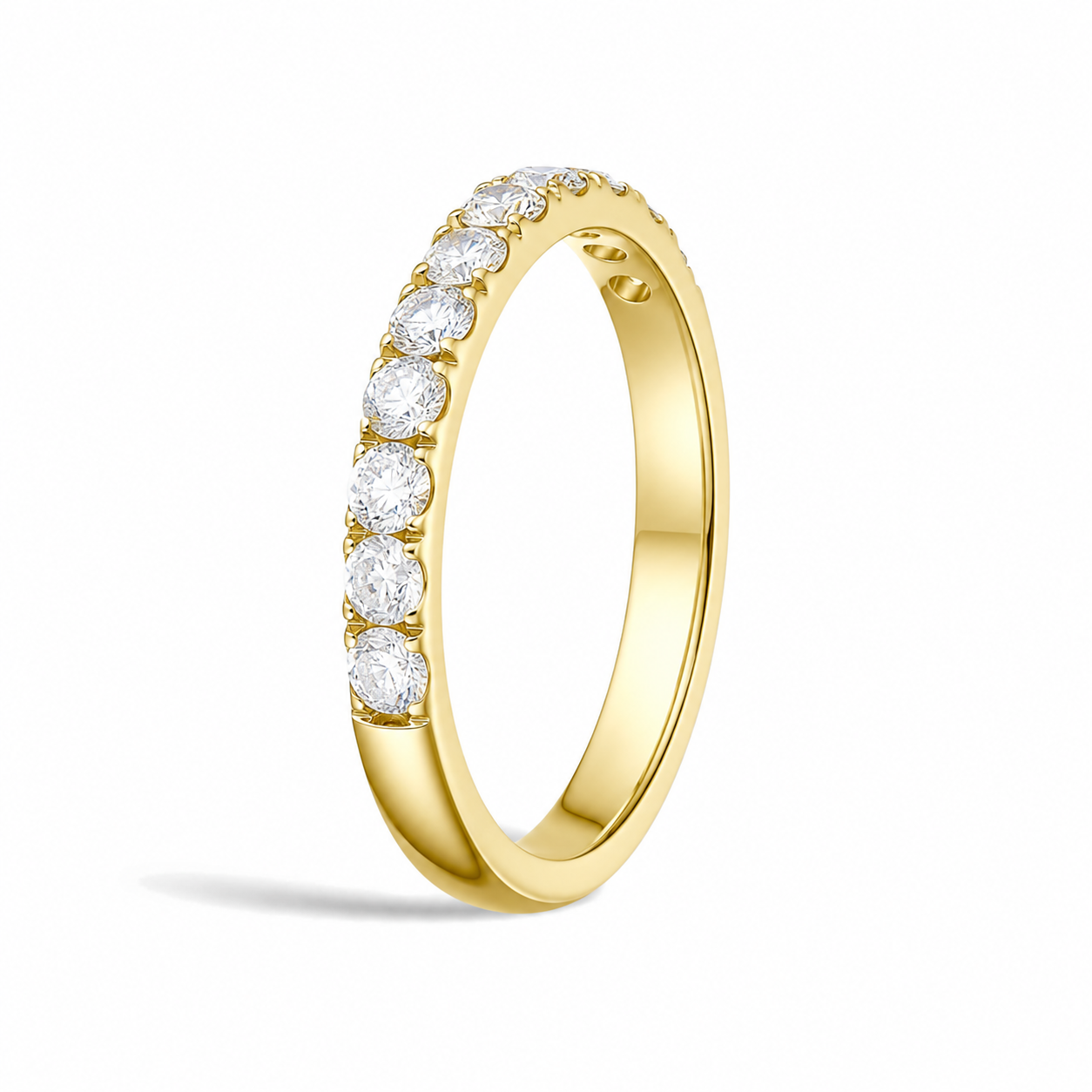

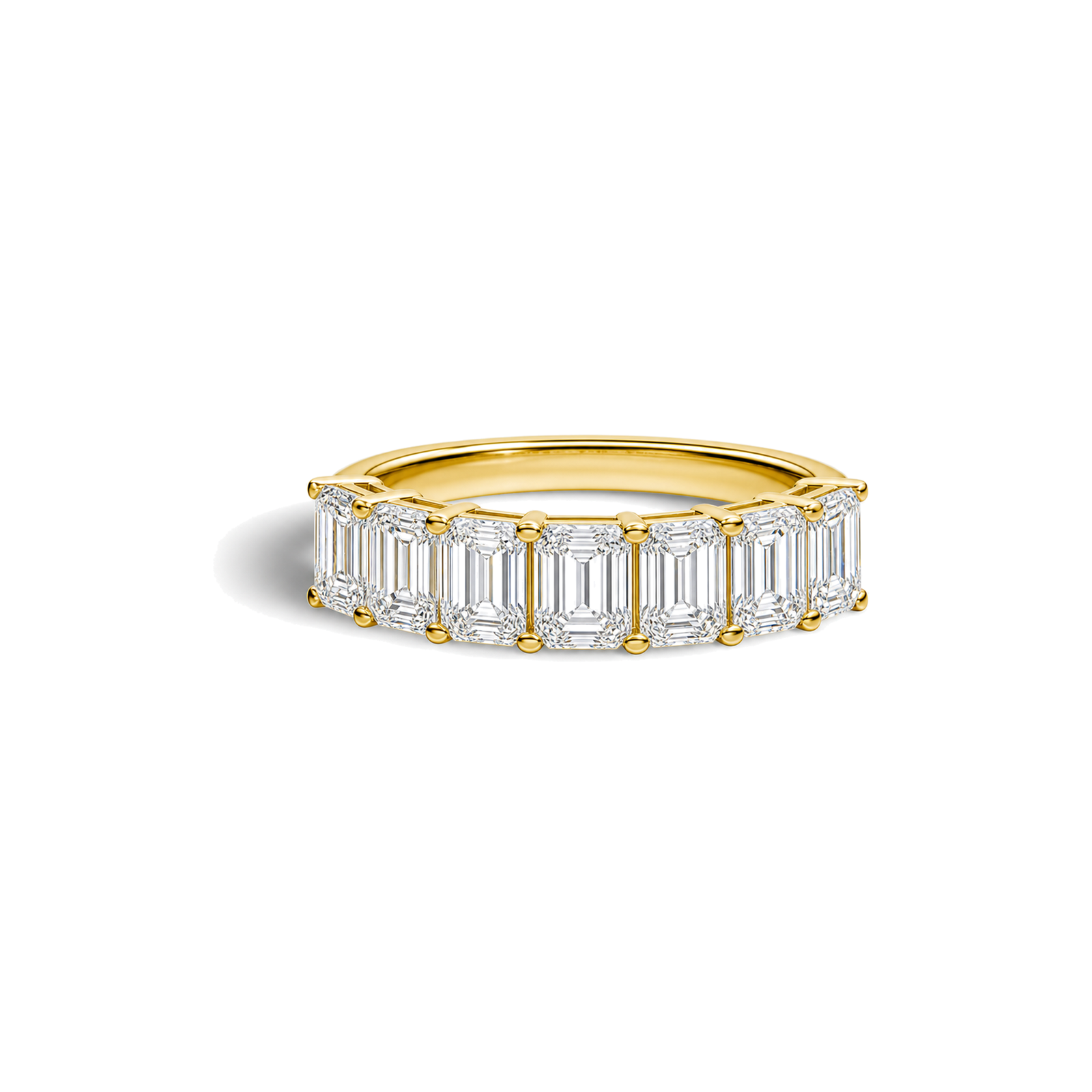
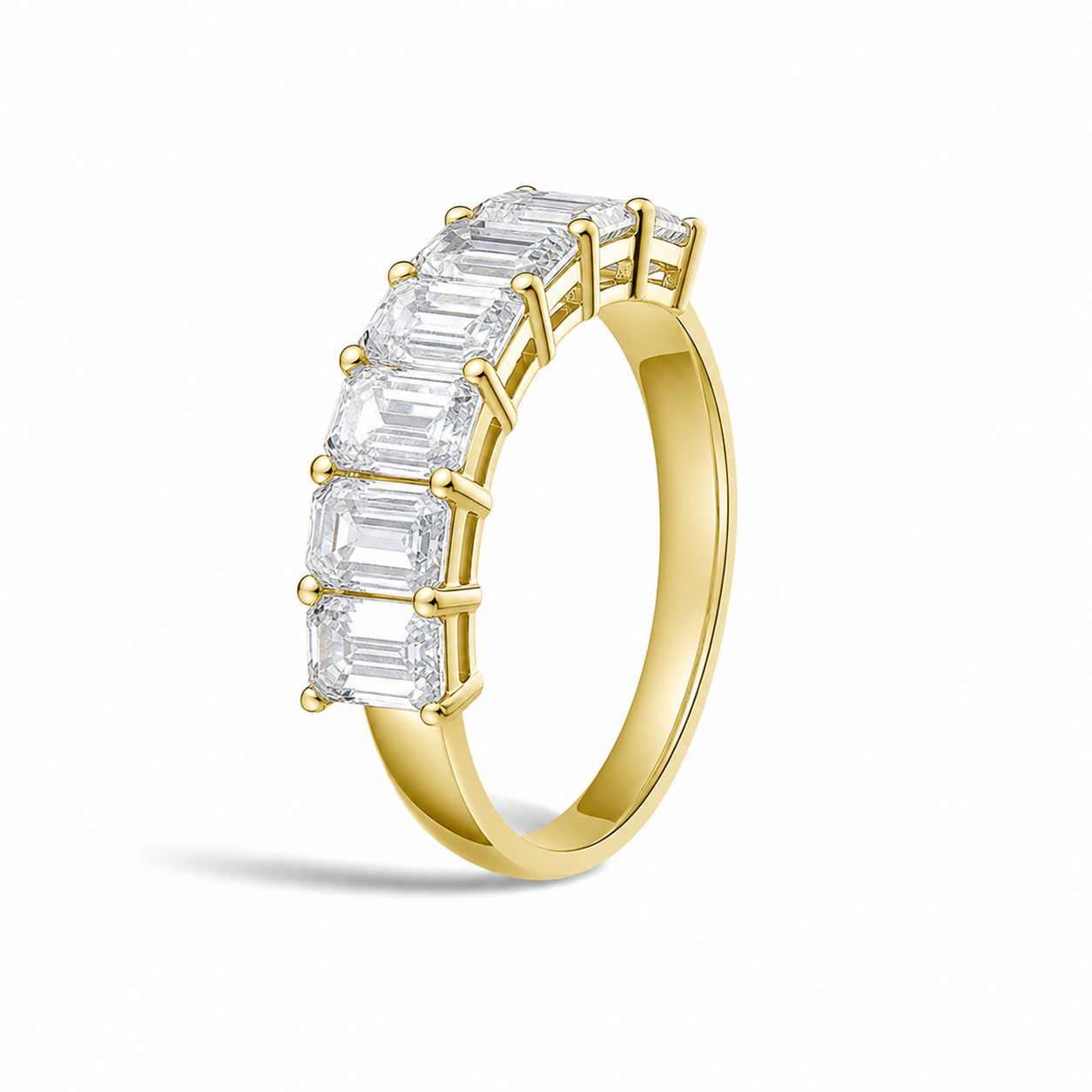

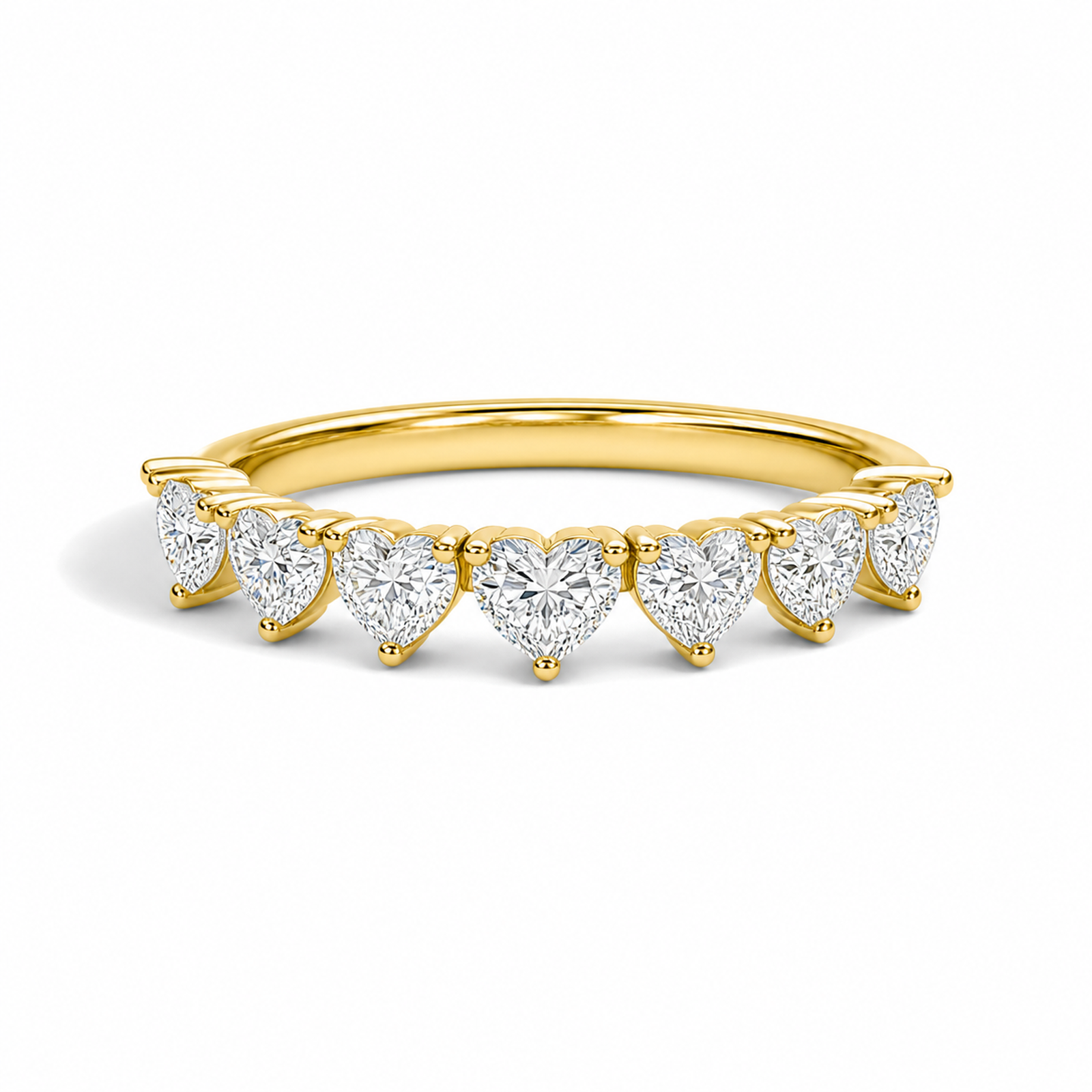
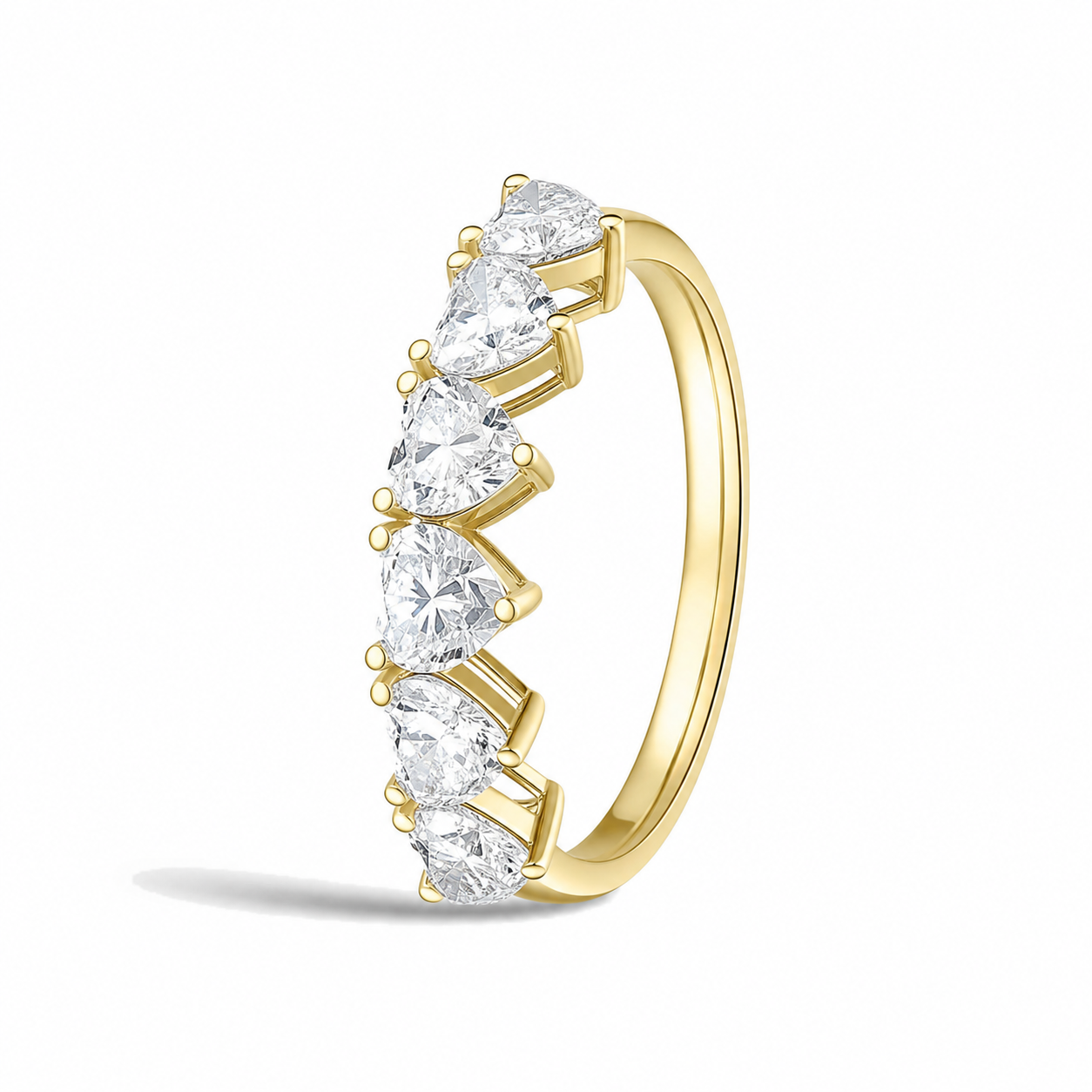

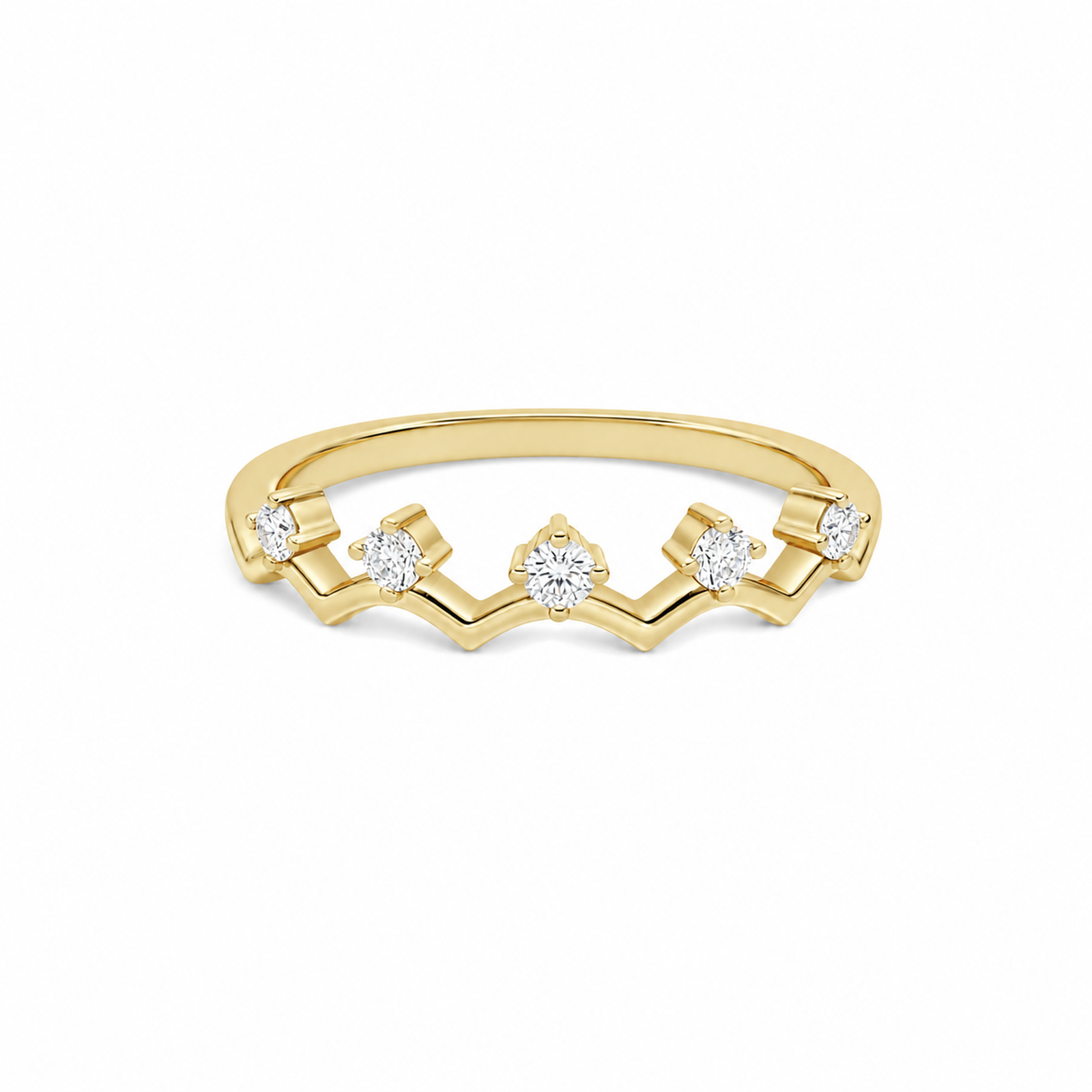
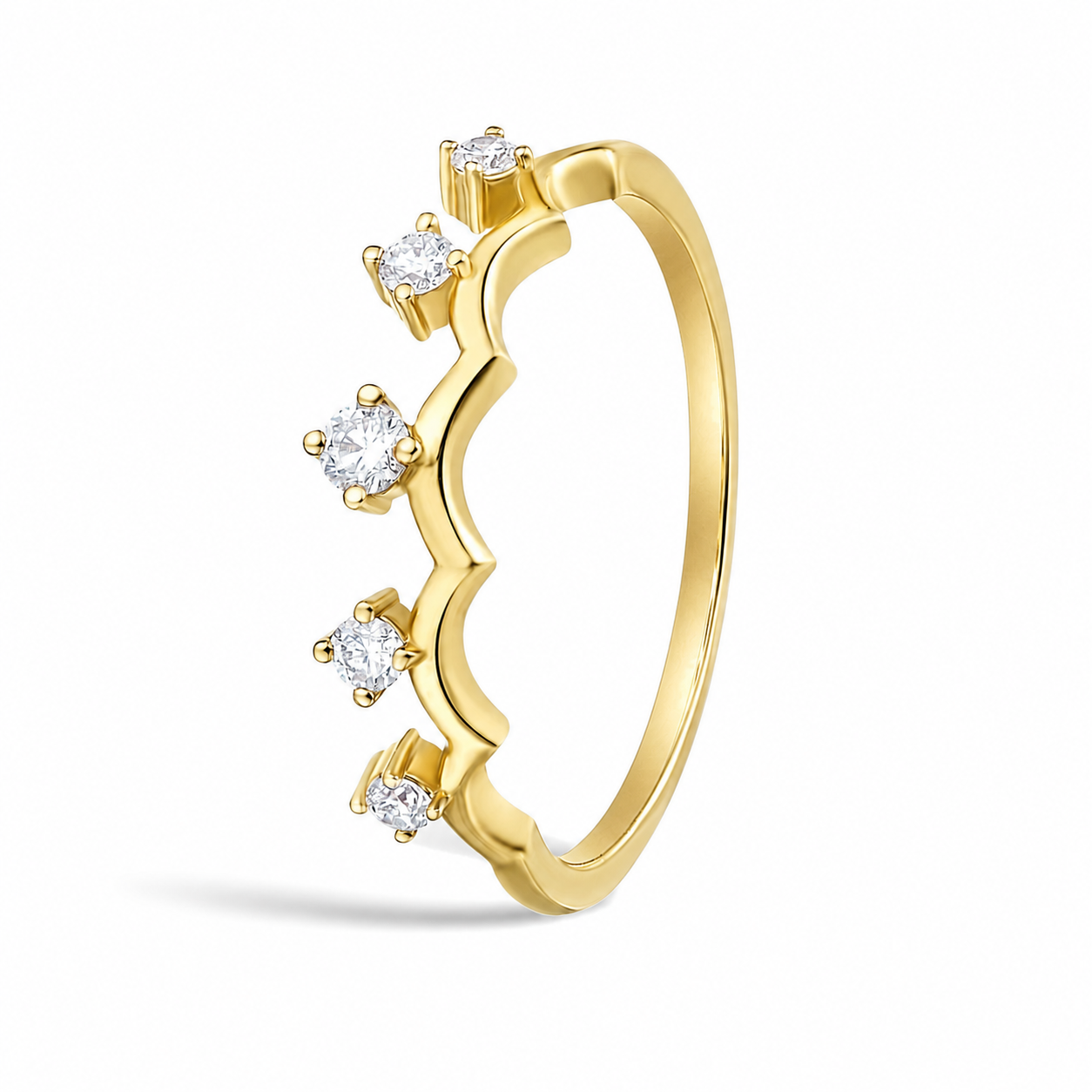

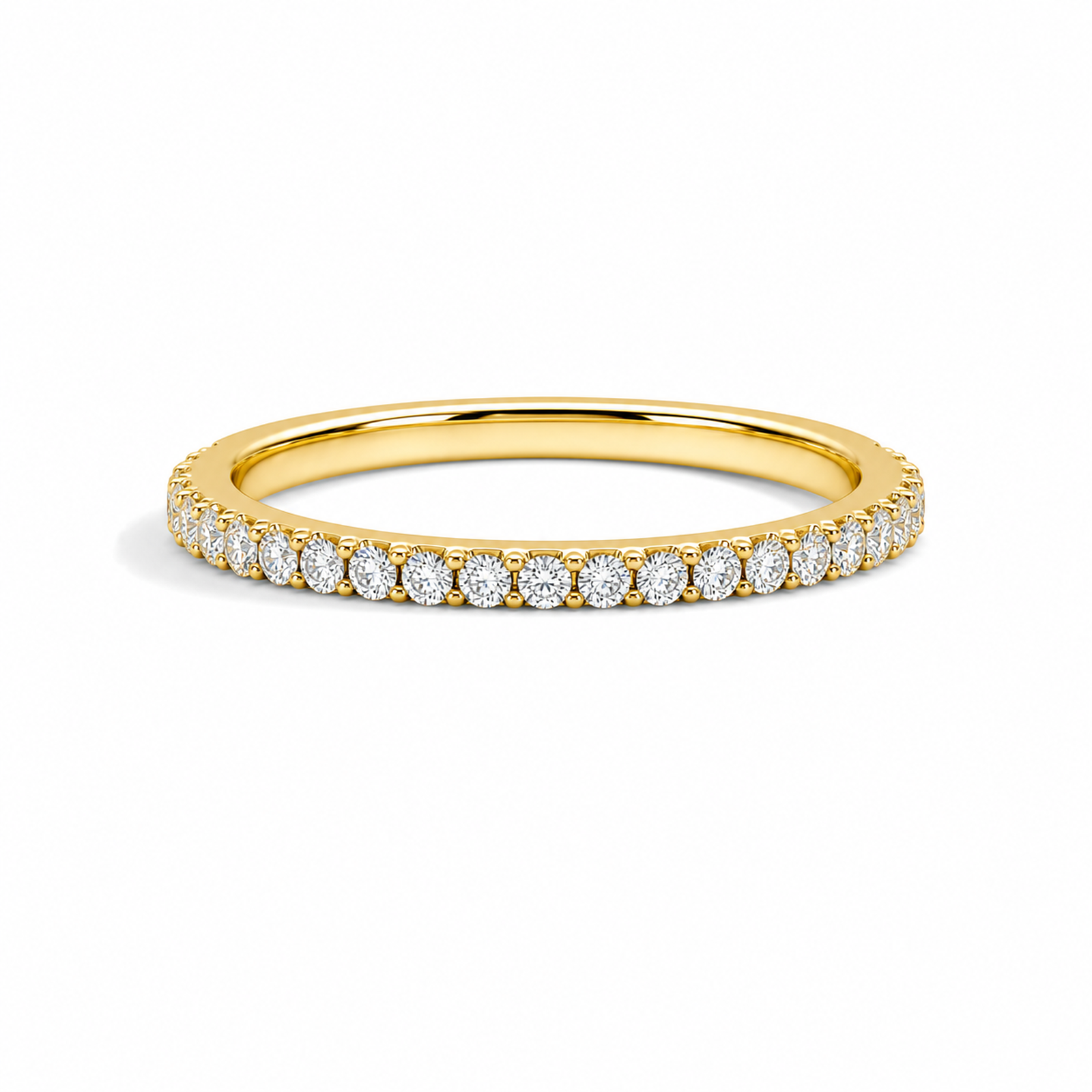


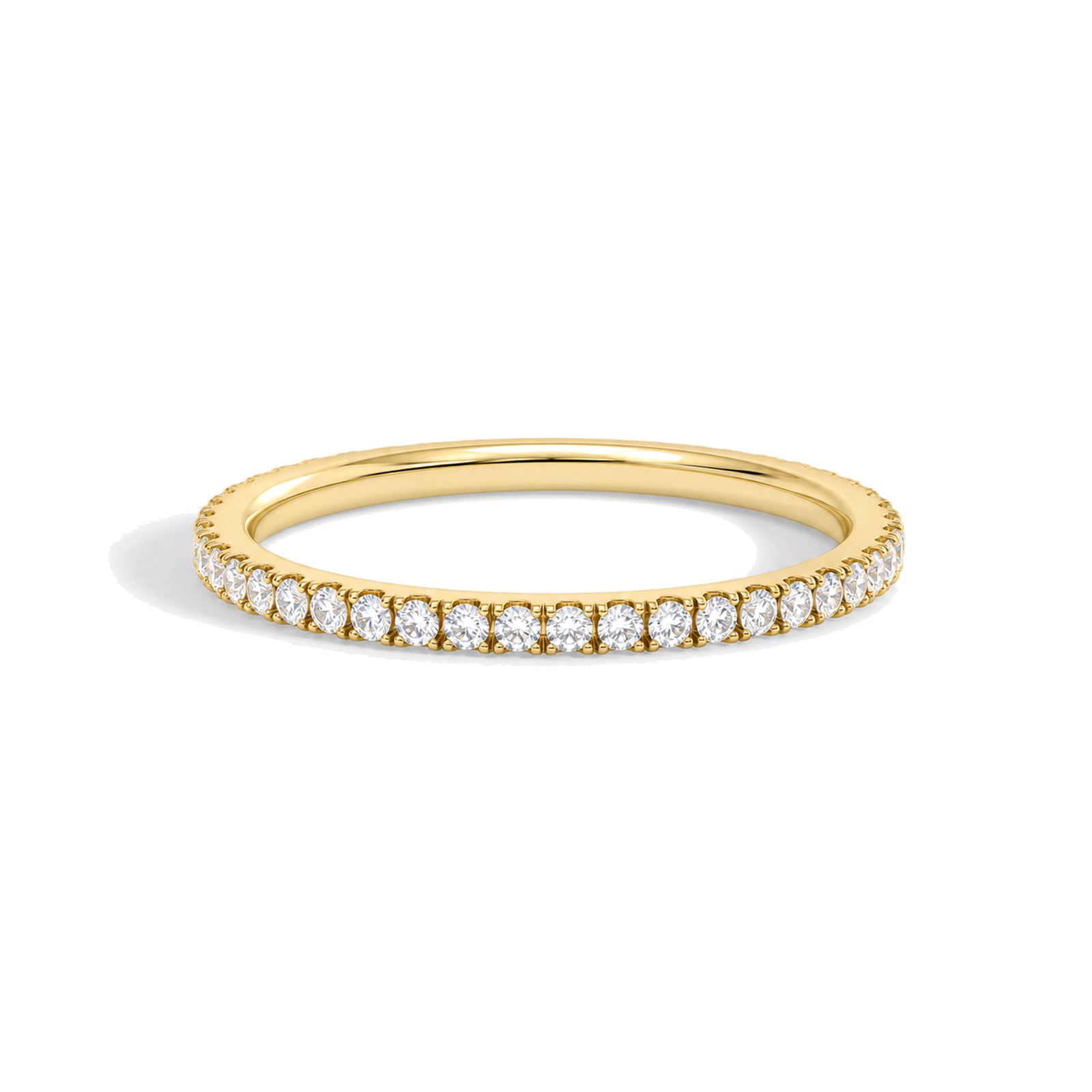
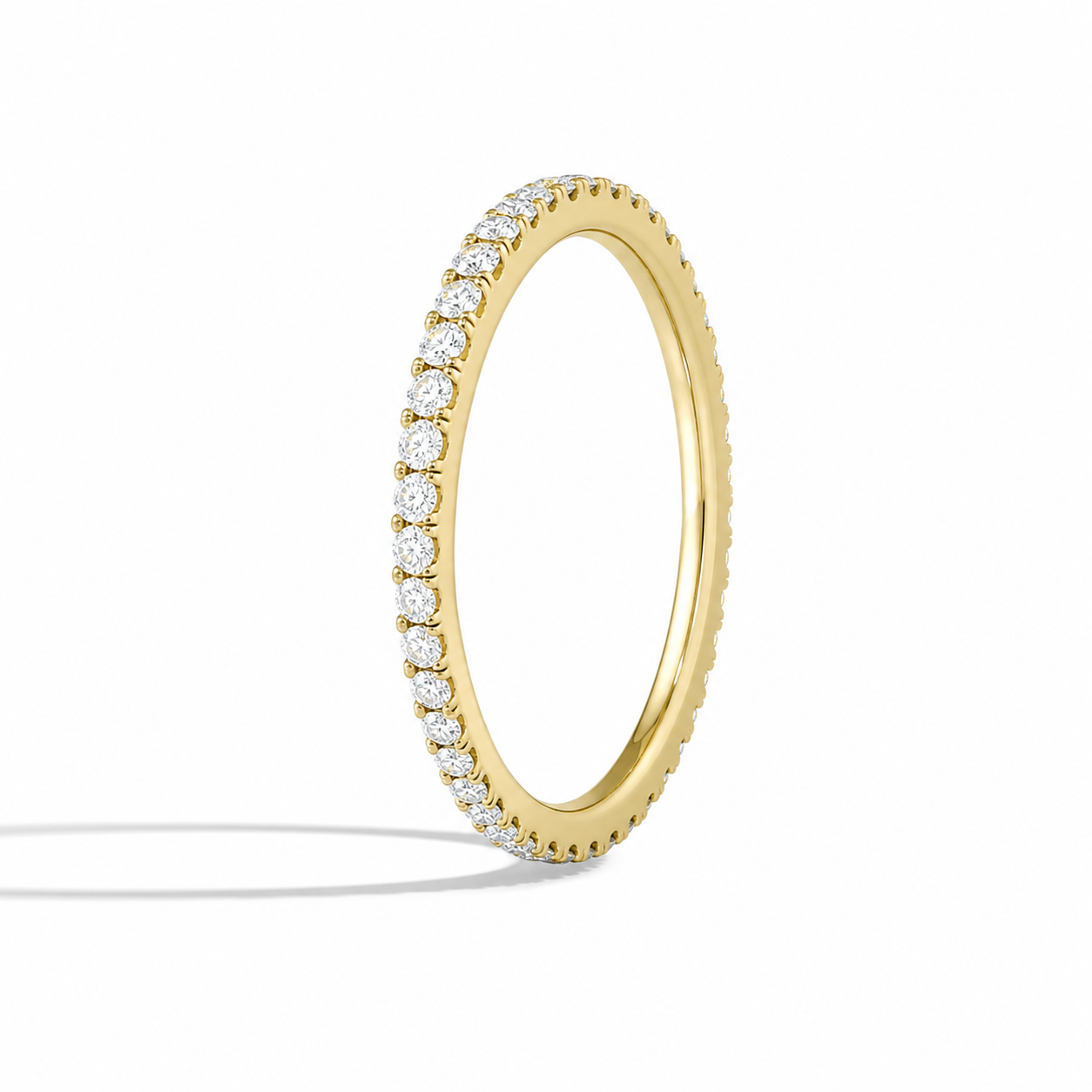

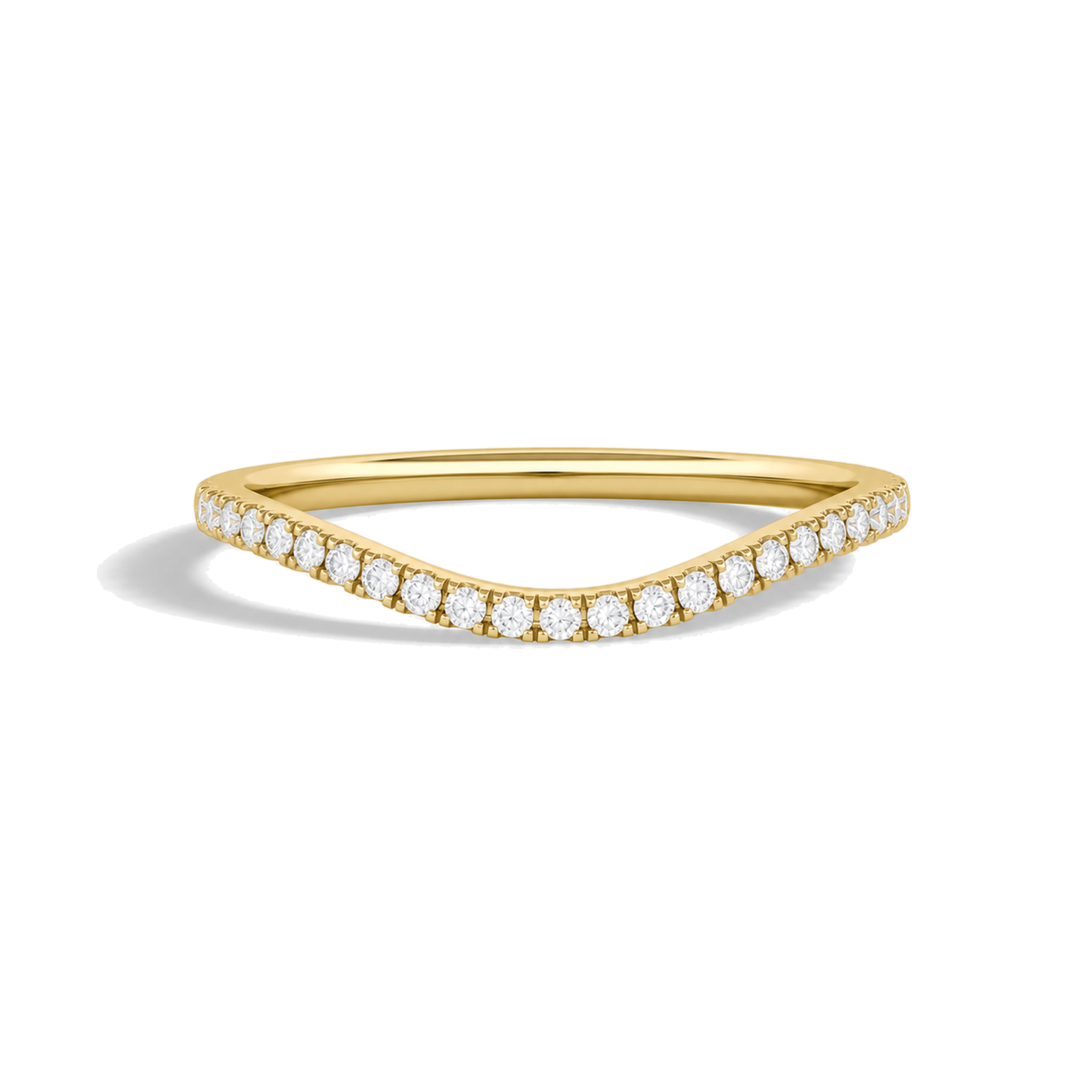


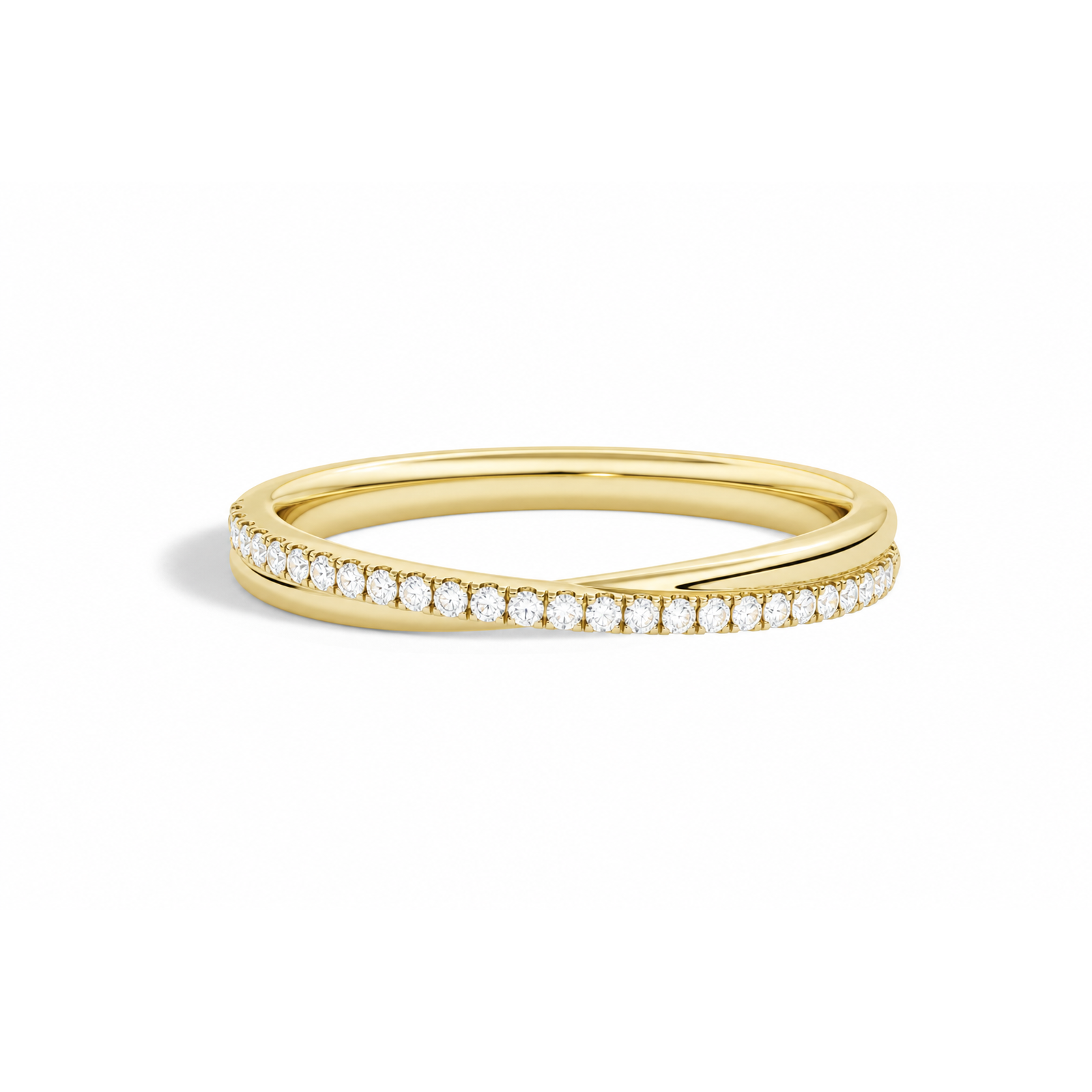
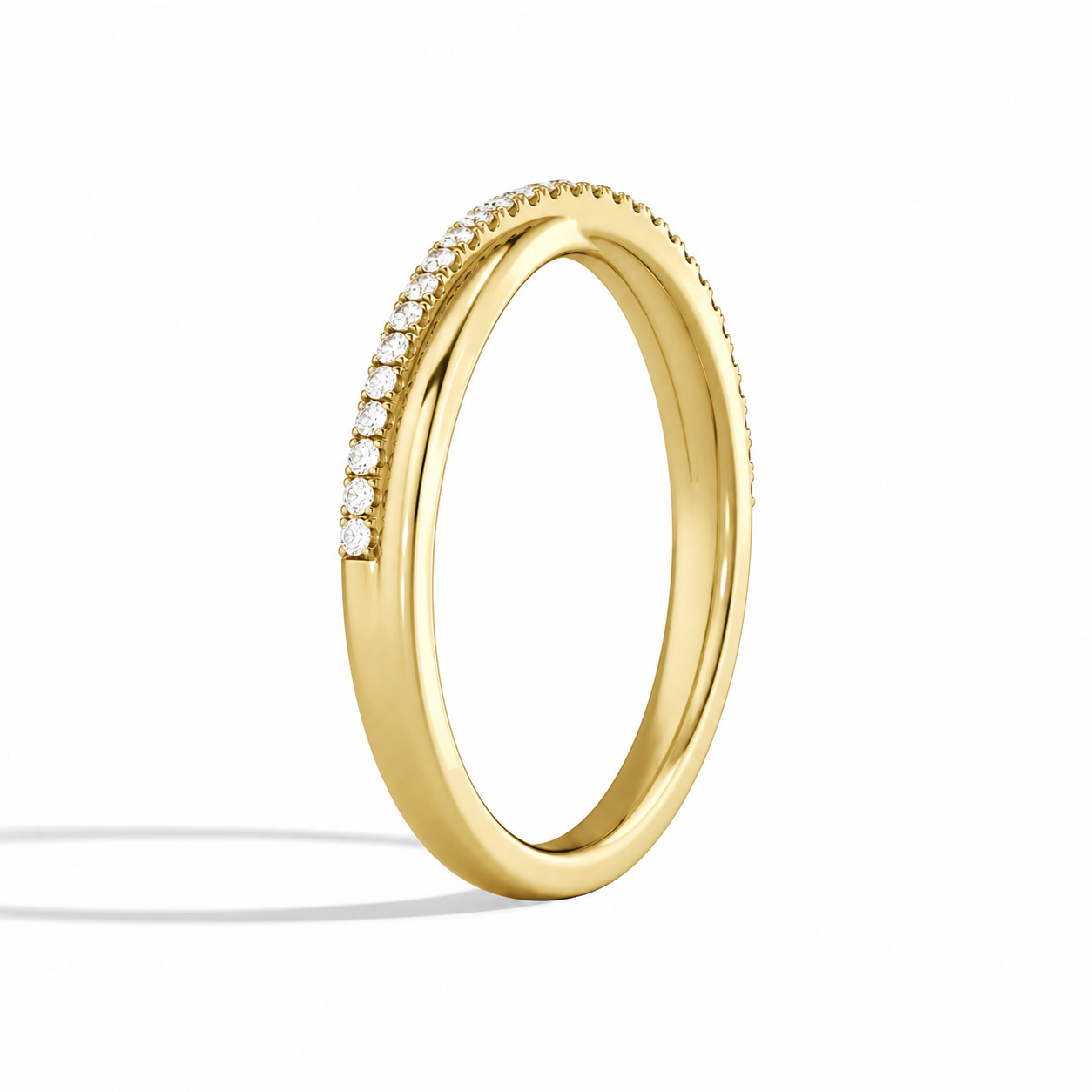

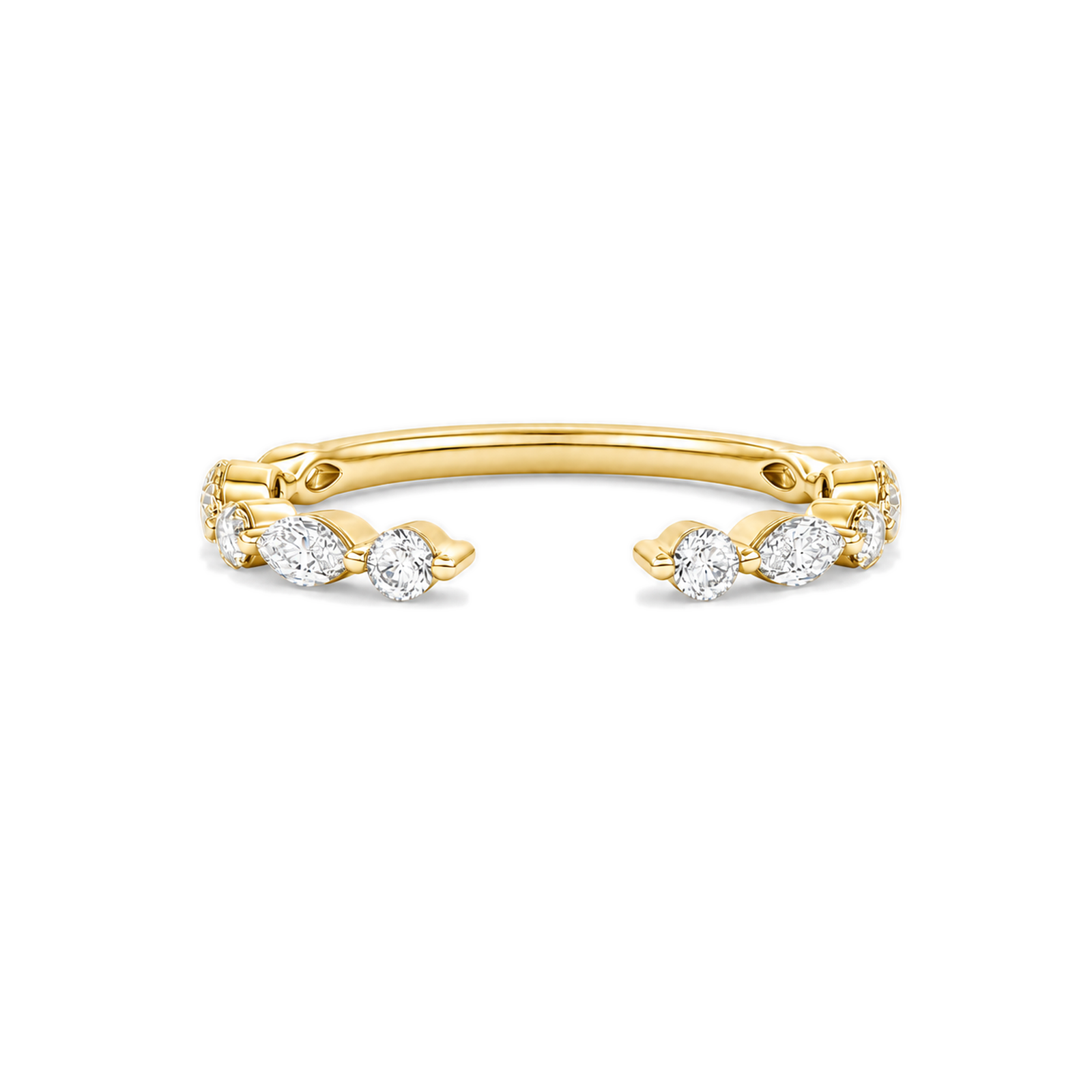


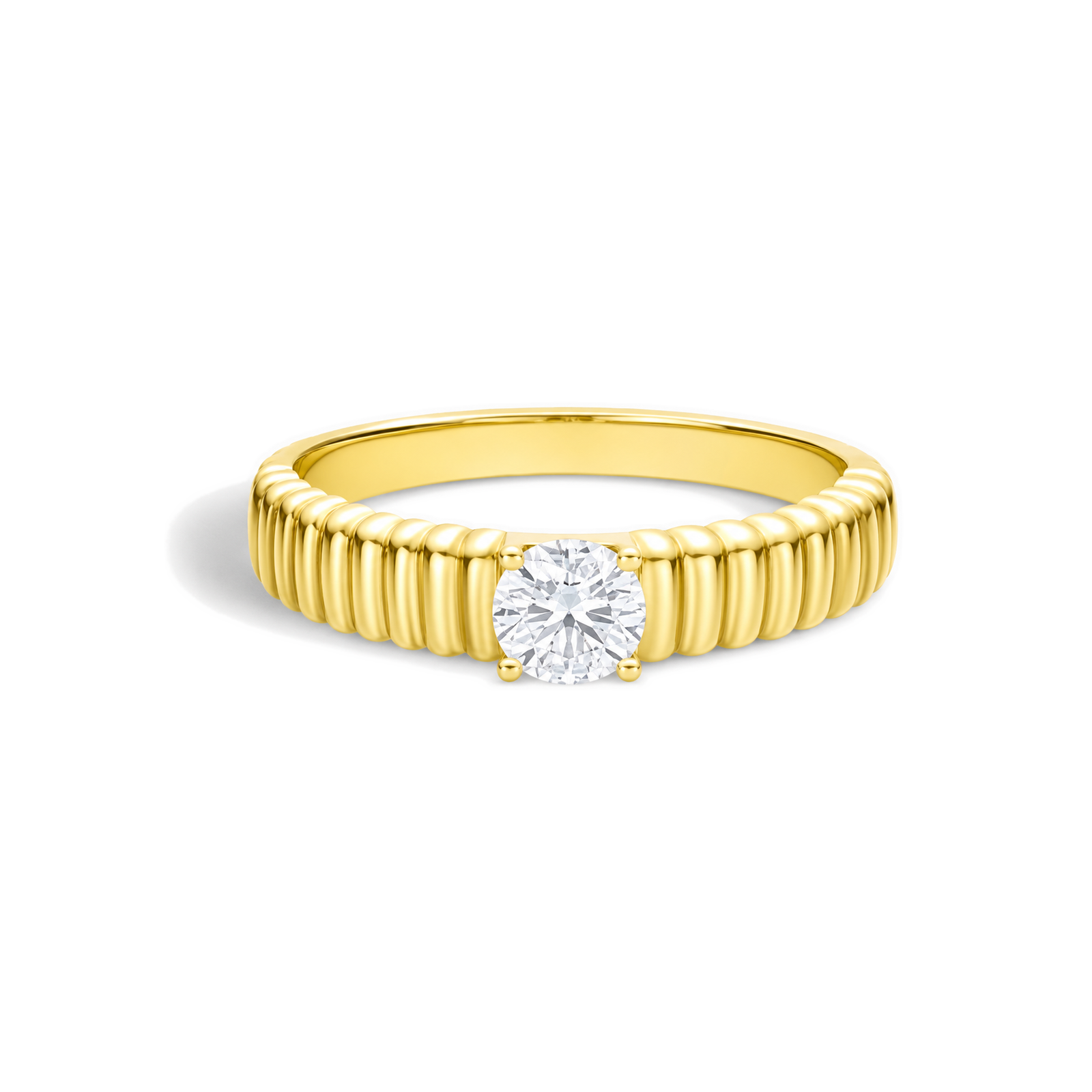
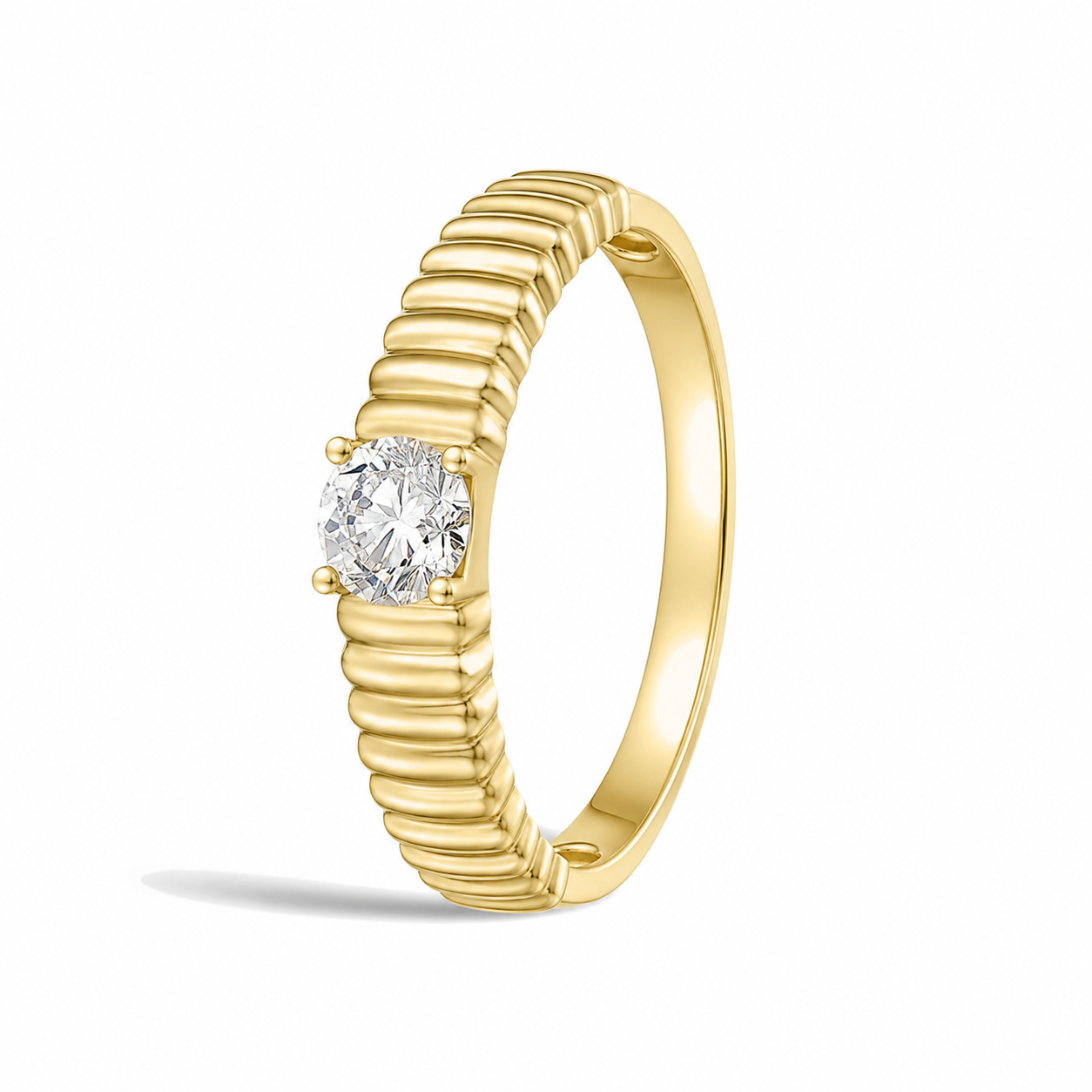

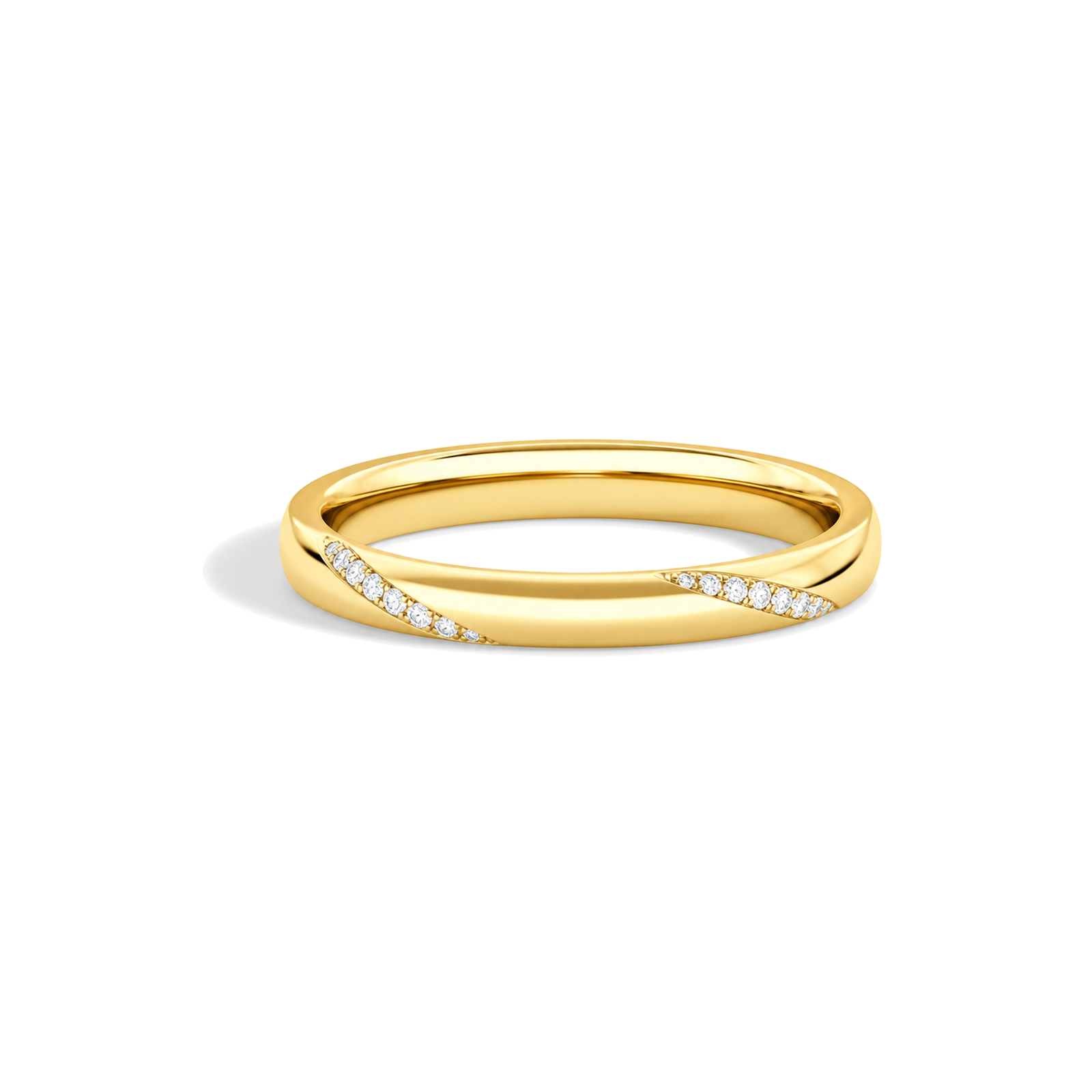
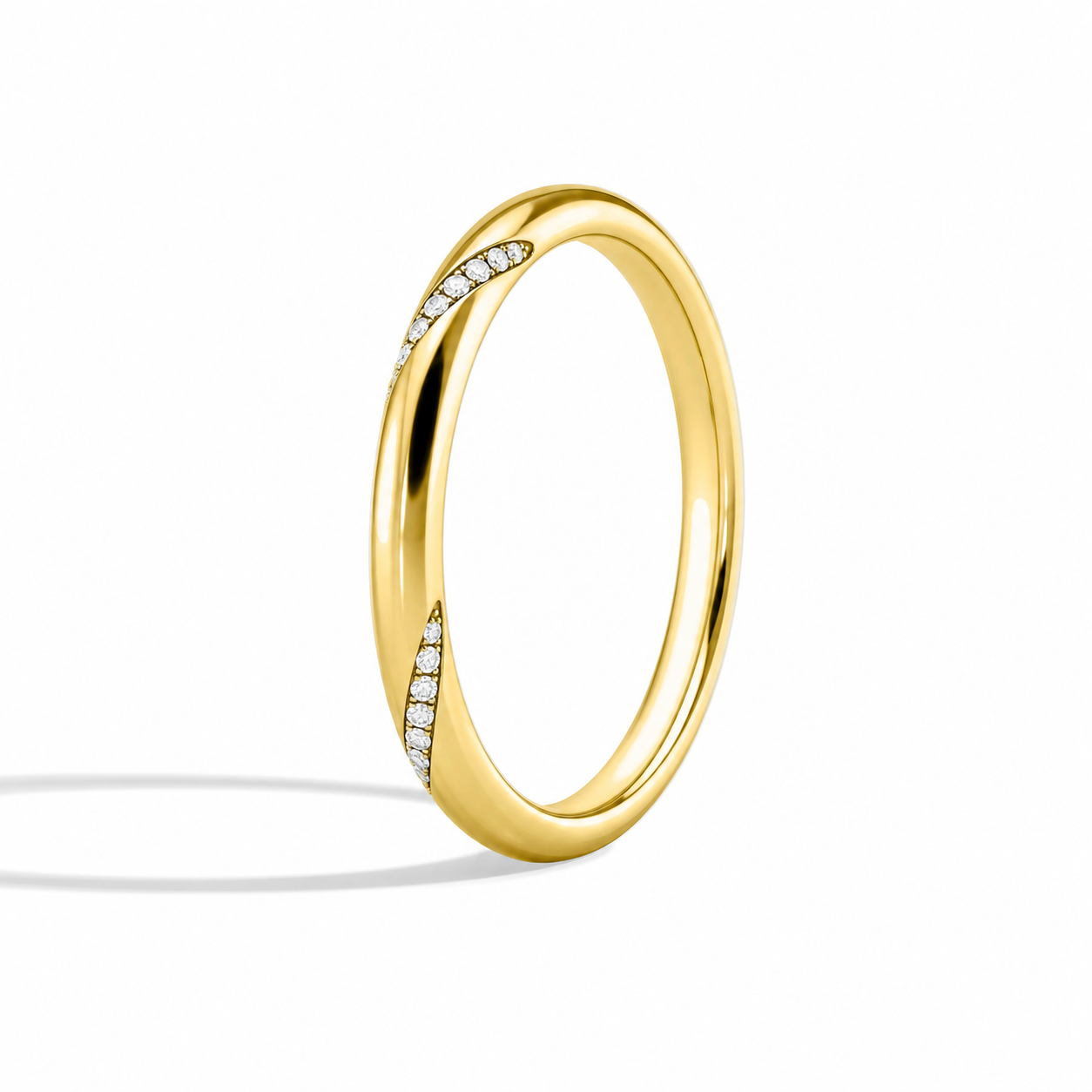

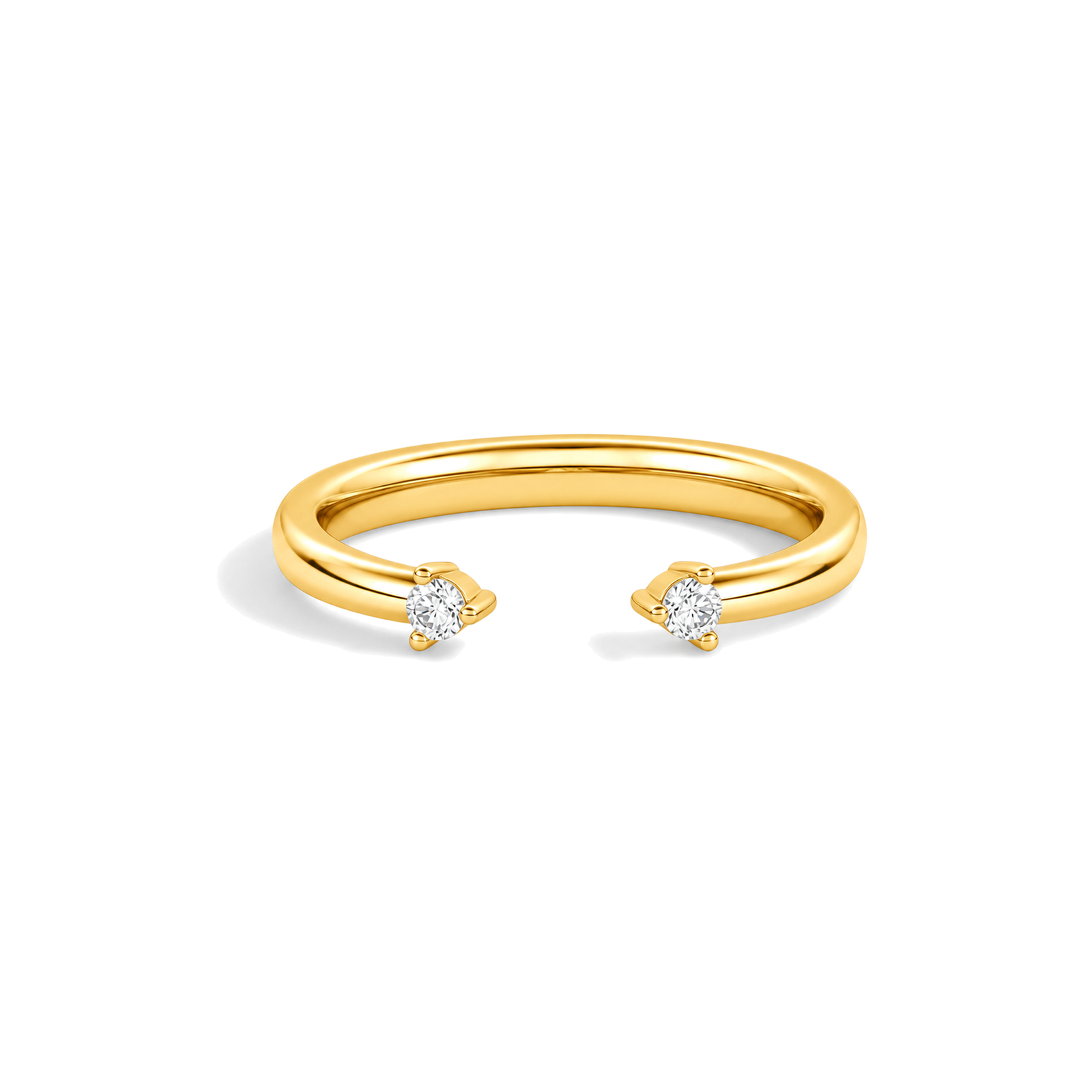
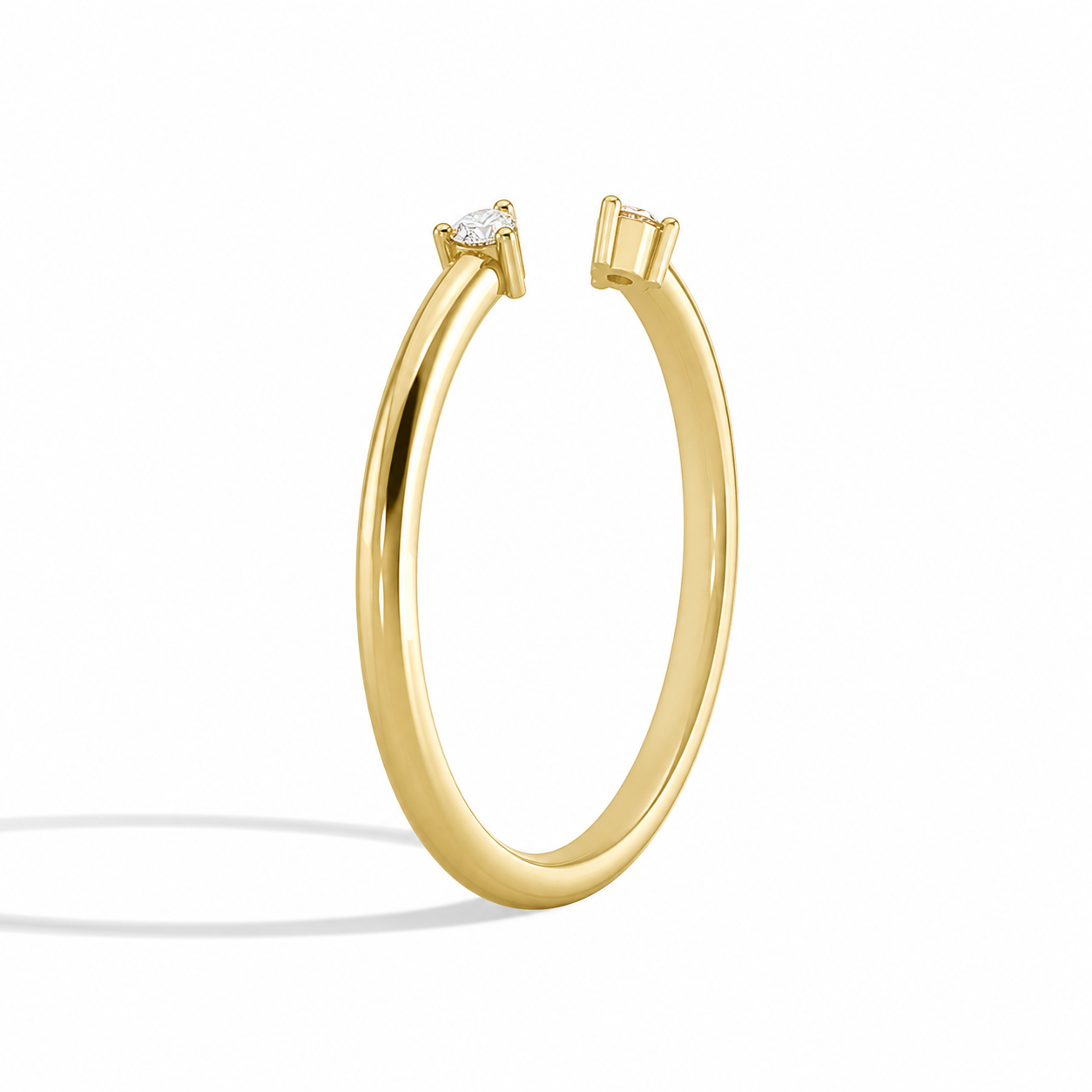

14K Yellow Gold Stacking Rings: Separation as Part of the Design
Yellow Gold makes the metal between diamond fields visible. A narrow edge can separate two settings; a broader plain area can steady a dense sequence; a curved or open form can let skin become part of the interval.
The current forty-five-ring assortment is structurally broad. Only three titles say Stack or Stackable. That leaves the Collection responsible for composition guidance rather than a claim that every product was engineered to nest with every other.
Create Hierarchy through Repetition and Break
A stack can repeat one element—metal color, Round diamonds, edge texture or width—then change another. An angular or elongated diamond can interrupt repeated rounds; a plain interval can make two diamond bands distinct.
There is no required metal ratio, ring count or position. The composition should be judged on the intended hand and with the pieces that already matter.
Accumulate Dimensions Honestly
Individual average widths span 1.4 to 3.0 mm. Combined width adds every ring and gap, while combined height brings channels, prongs, bezels, open ends and galleries into physical contact.
Current shape details name Round on thirty-four products, five other shapes once each, and leave six unstated. Thirty-nine products show TCW choices. Neither shape count nor total weight provides a universal order.
Check the Meeting Edges
Forty-five designs fully overlap same-metal Wedding Bands, Rings, Anniversary Rings and Fashion Rings. Thirteen also belong to Eternity and nine to Curved Rings. Stacking owns the relationship among them, not those narrower structures themselves.
Matching 14K Yellow Gold can unify color, but it cannot eliminate pressure, rotation, abrasion or catching. Confirm size for the actual combined width, inspect contact after wear and store each ring without unnecessary friction.
Frequently Asked Questions
How many current designs appear?
Forty-five.
How many are named Stack or Stackable?
Three.
Is Stacking one construction type?
No; the page combines many structures.
What can Yellow Gold change visually?
It can make metal intervals and setting boundaries more visible.
Must all rings match?
No.
Must one ring be the focal point?
Not necessarily, though an anchor can clarify hierarchy.
Can negative space be intentional?
Yes.
What is the current width range?
1.4–3.0 mm average.
Does three narrow rings equal one wide ring?
Not in profile, movement or contact.
Should size increase with ring count?
No fixed increment applies.
Can open and straight rings combine?
Possibly after exact clearance review.
Can the stack be asymmetrical?
Yes.
Which shape dominates?
Round appears in thirty-four descriptions.
Are six shapes unstated?
Six products do not state shape in the same field.
Does matching karat prevent wear?
No.
How much gold is in 14K?
Approximately 58.3%.
What remains conditional?
Final indexability.