


Lab-Grown Diamond Jewelry
Diamond light, considered at every scale. Explore rings, earrings, necklaces and bracelets shaped for daily presence and expression.





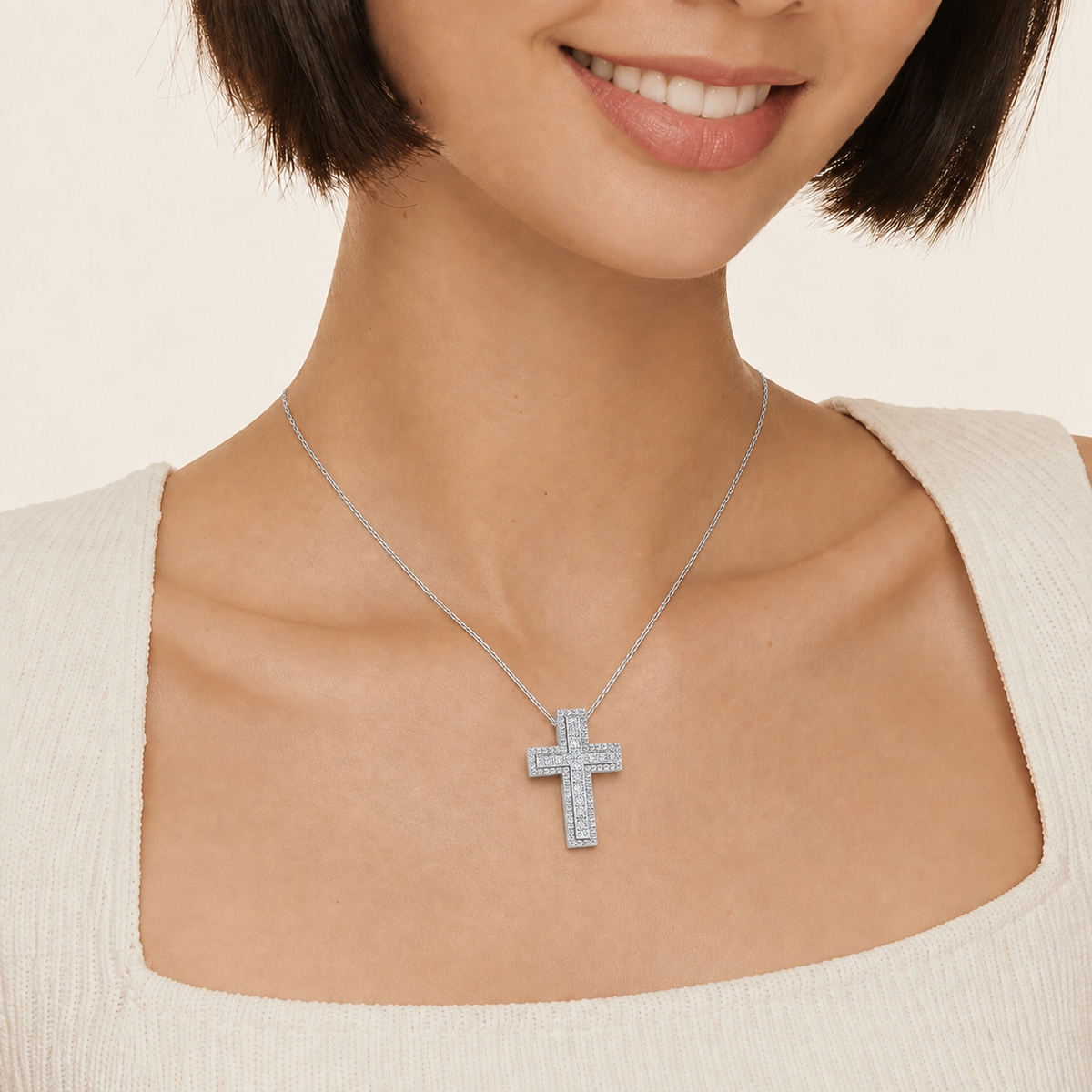
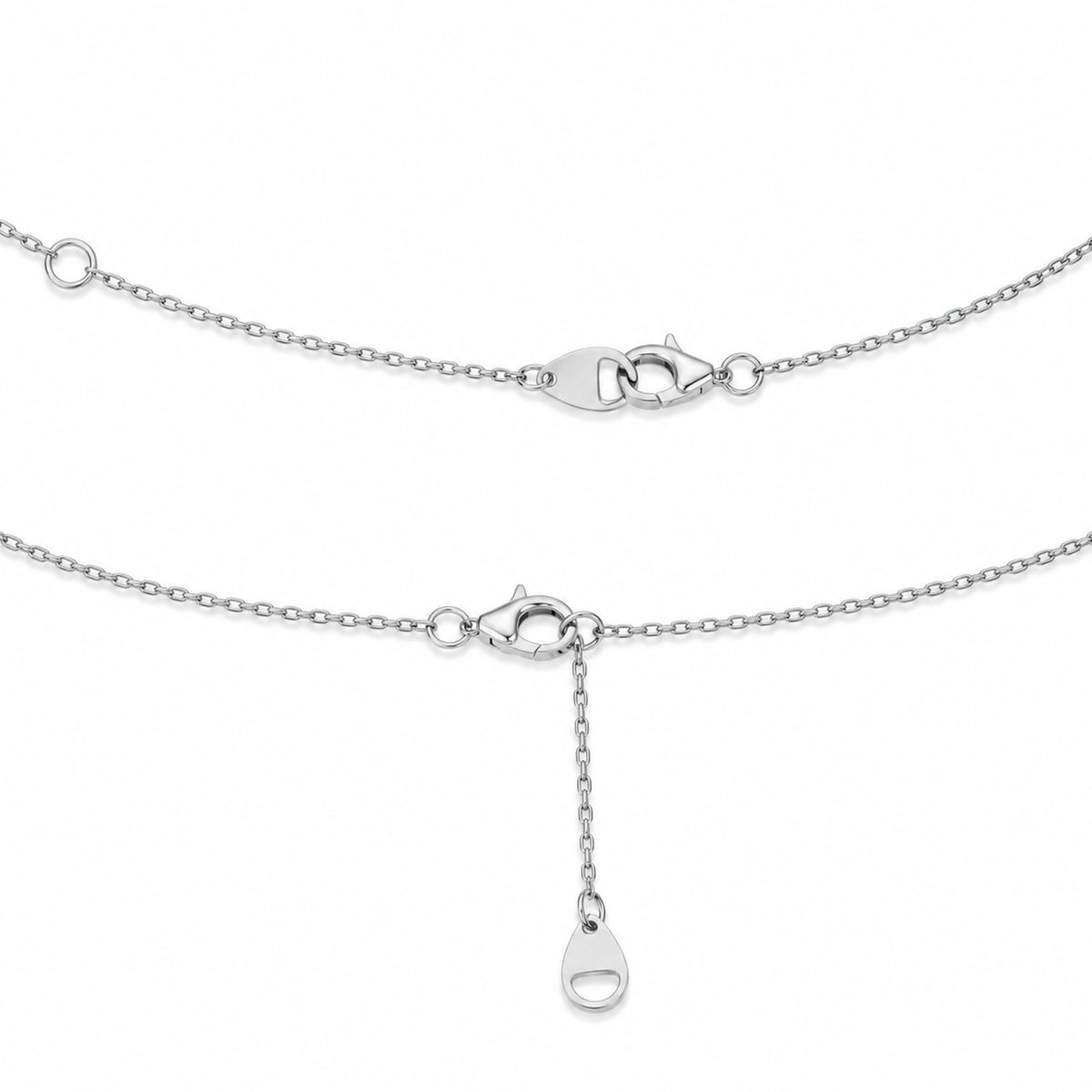
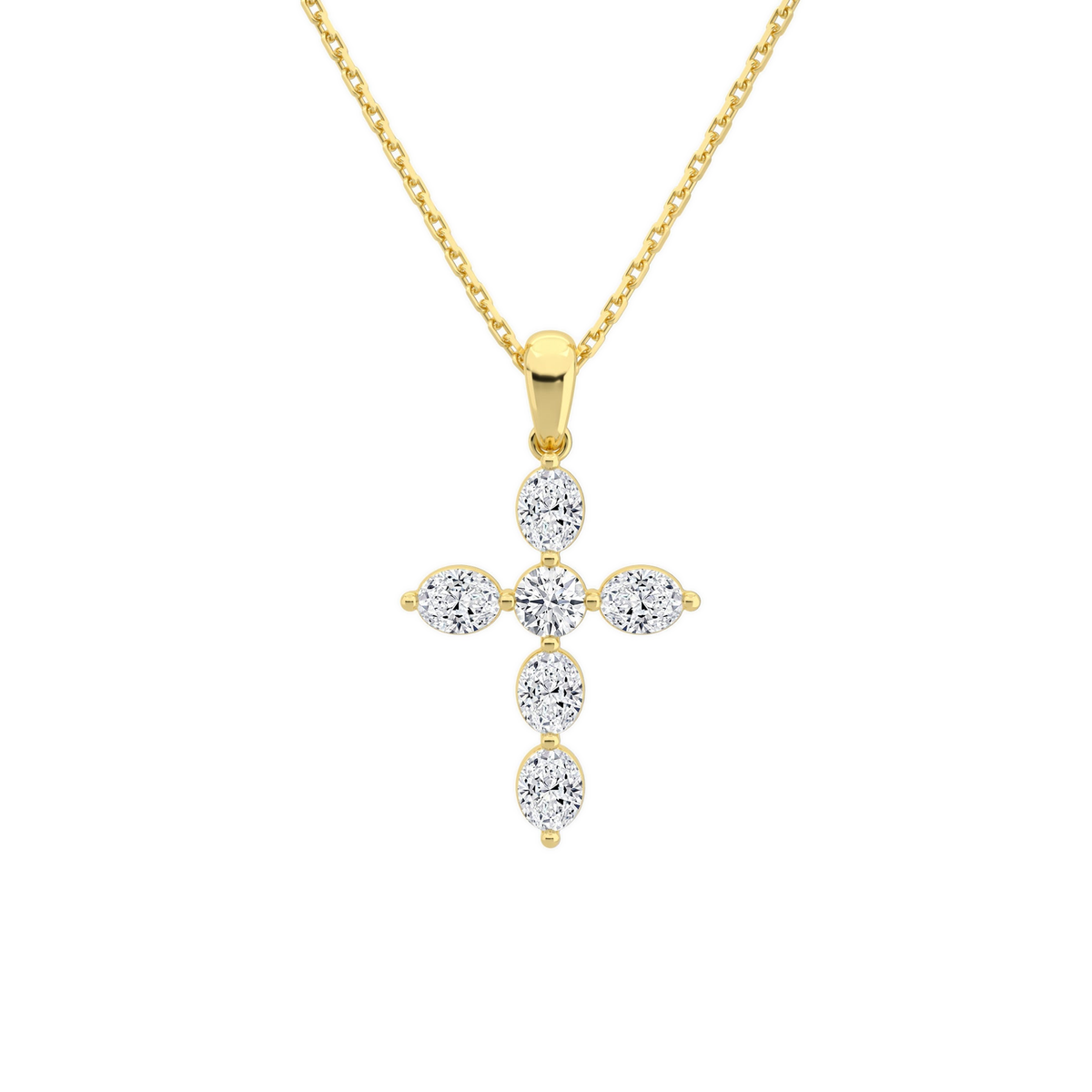

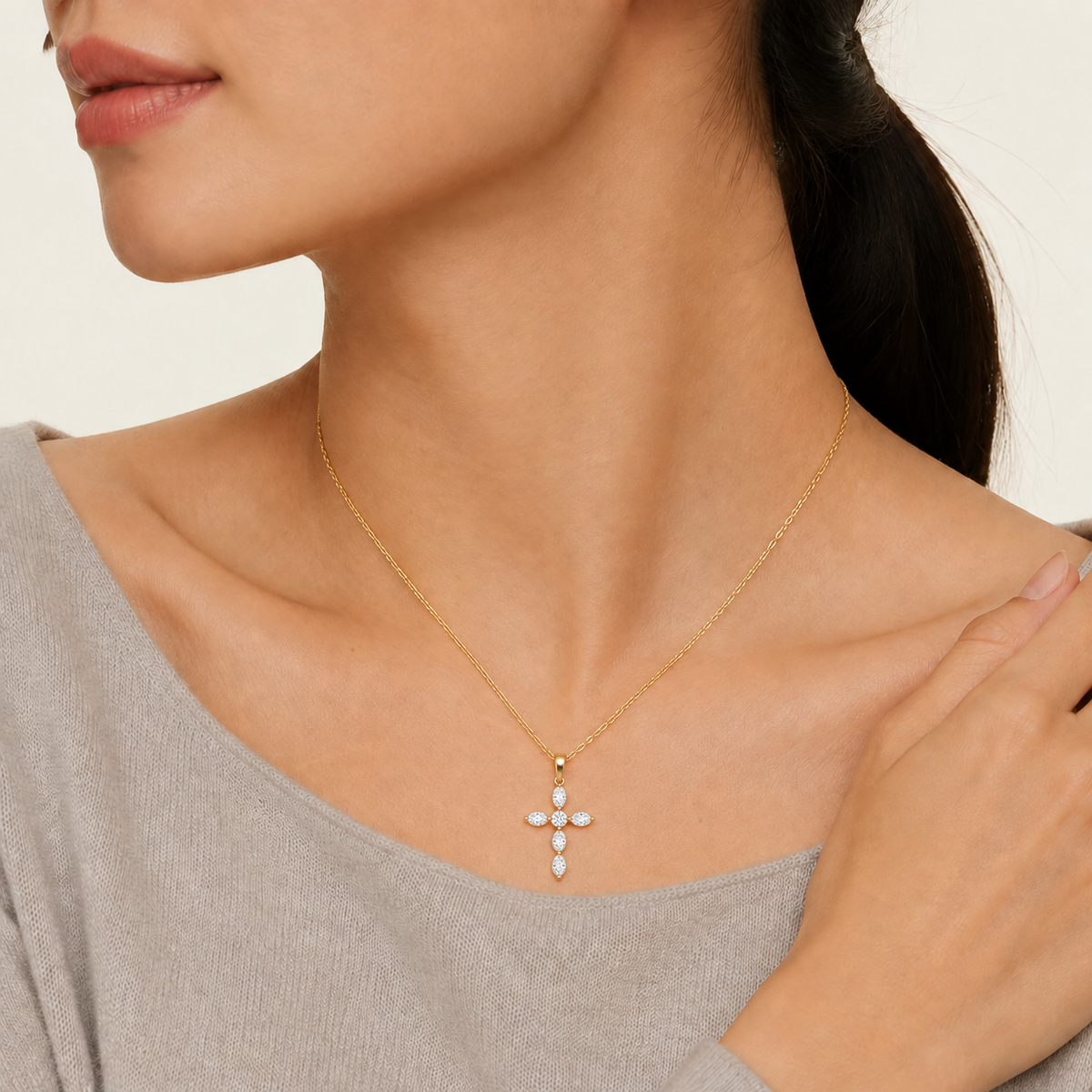


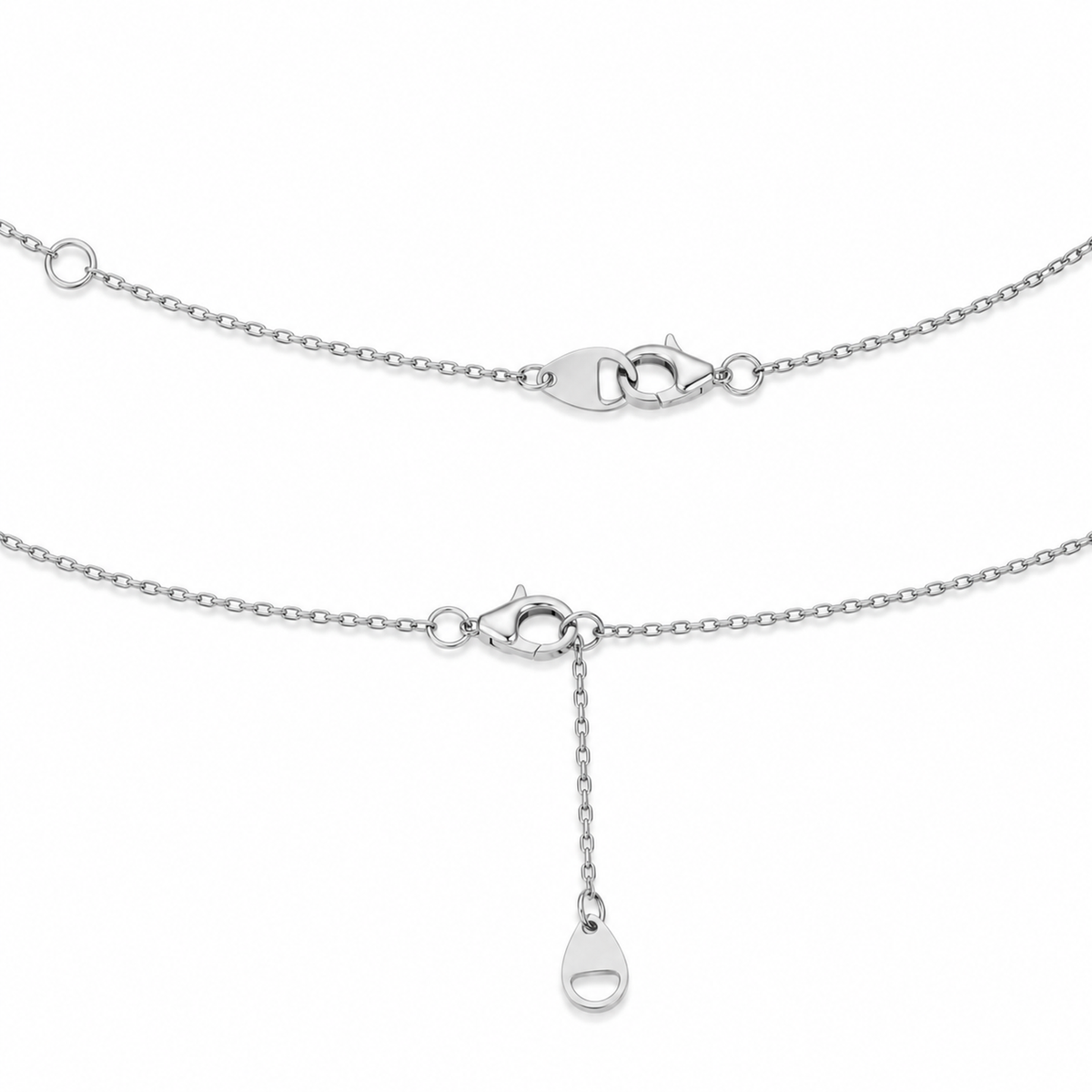

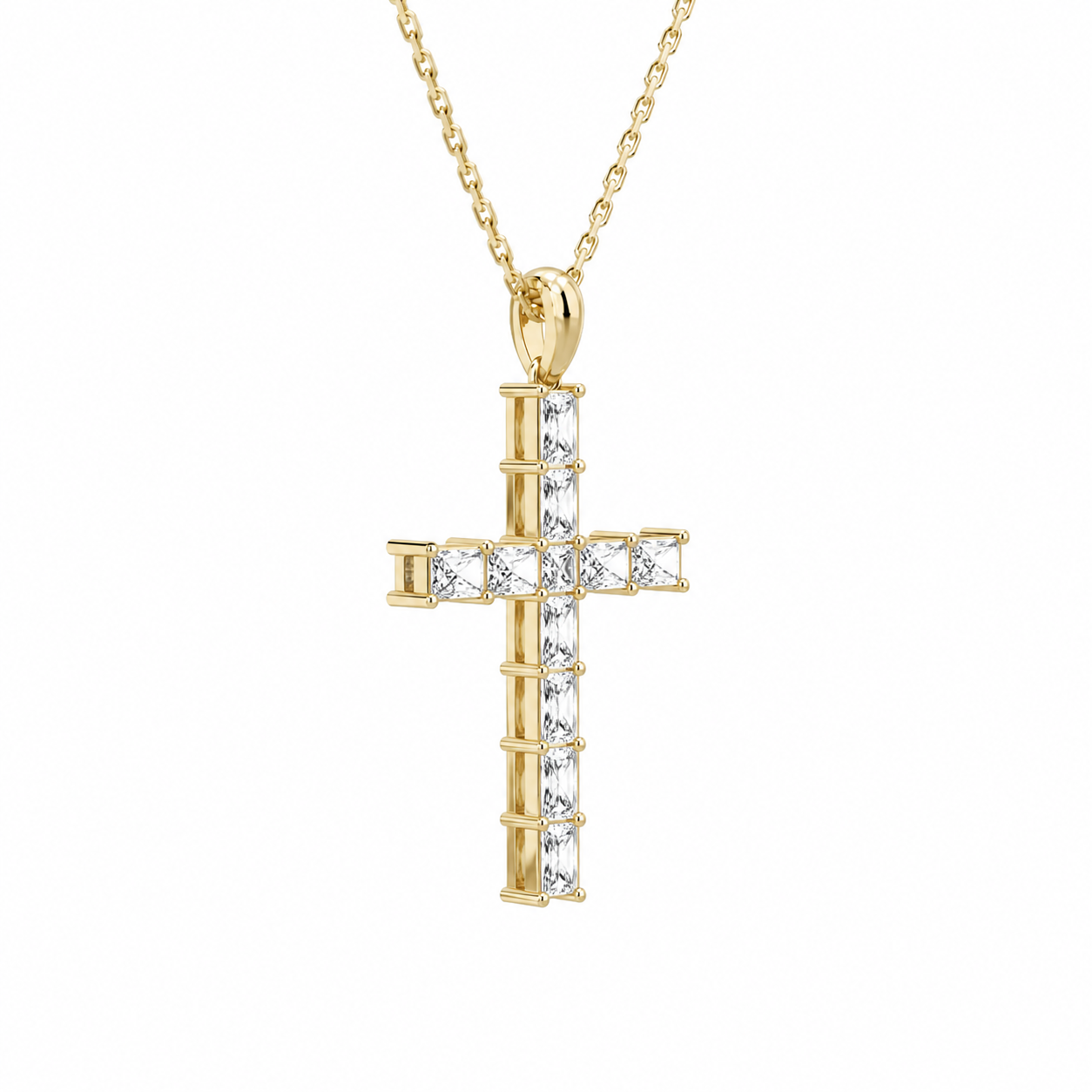

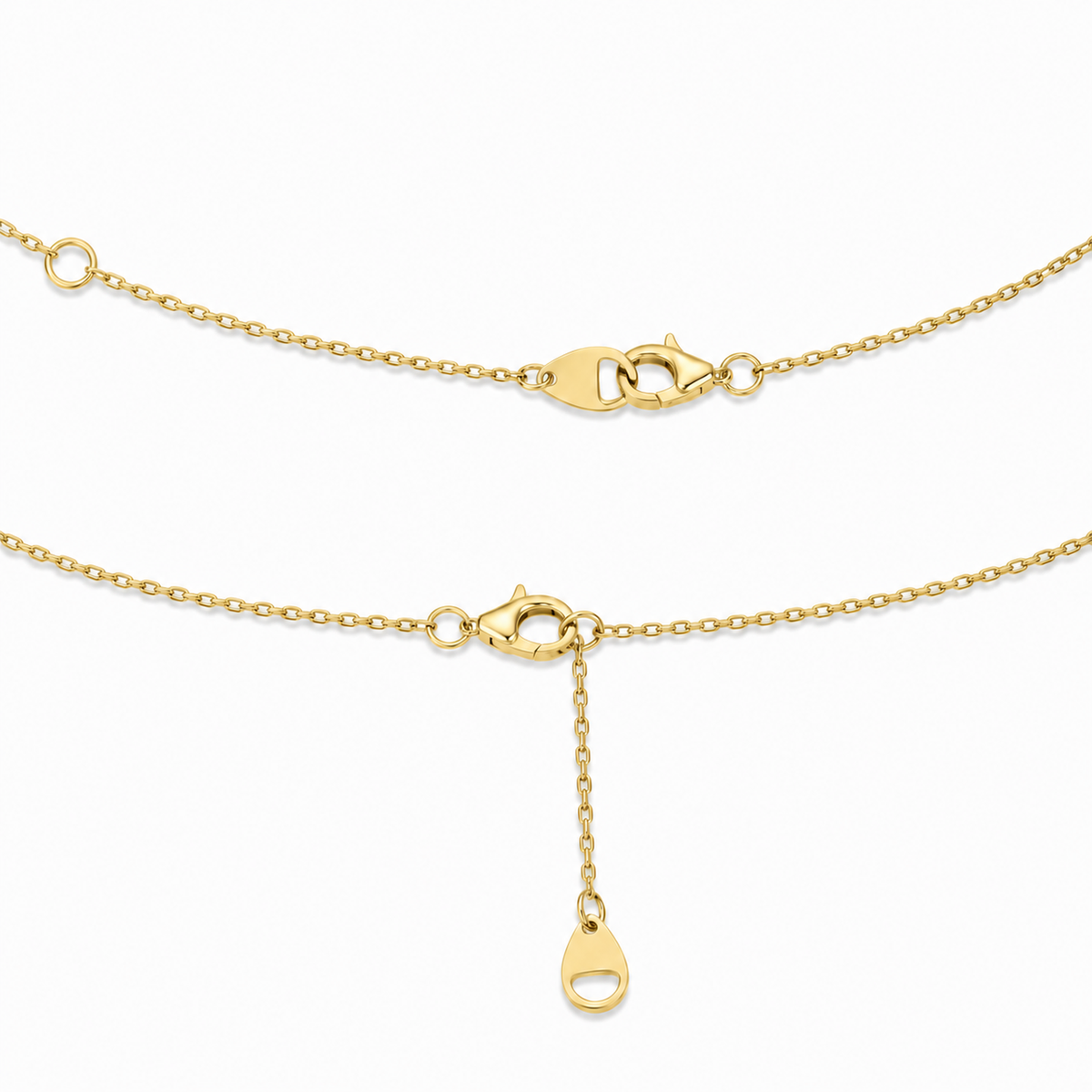
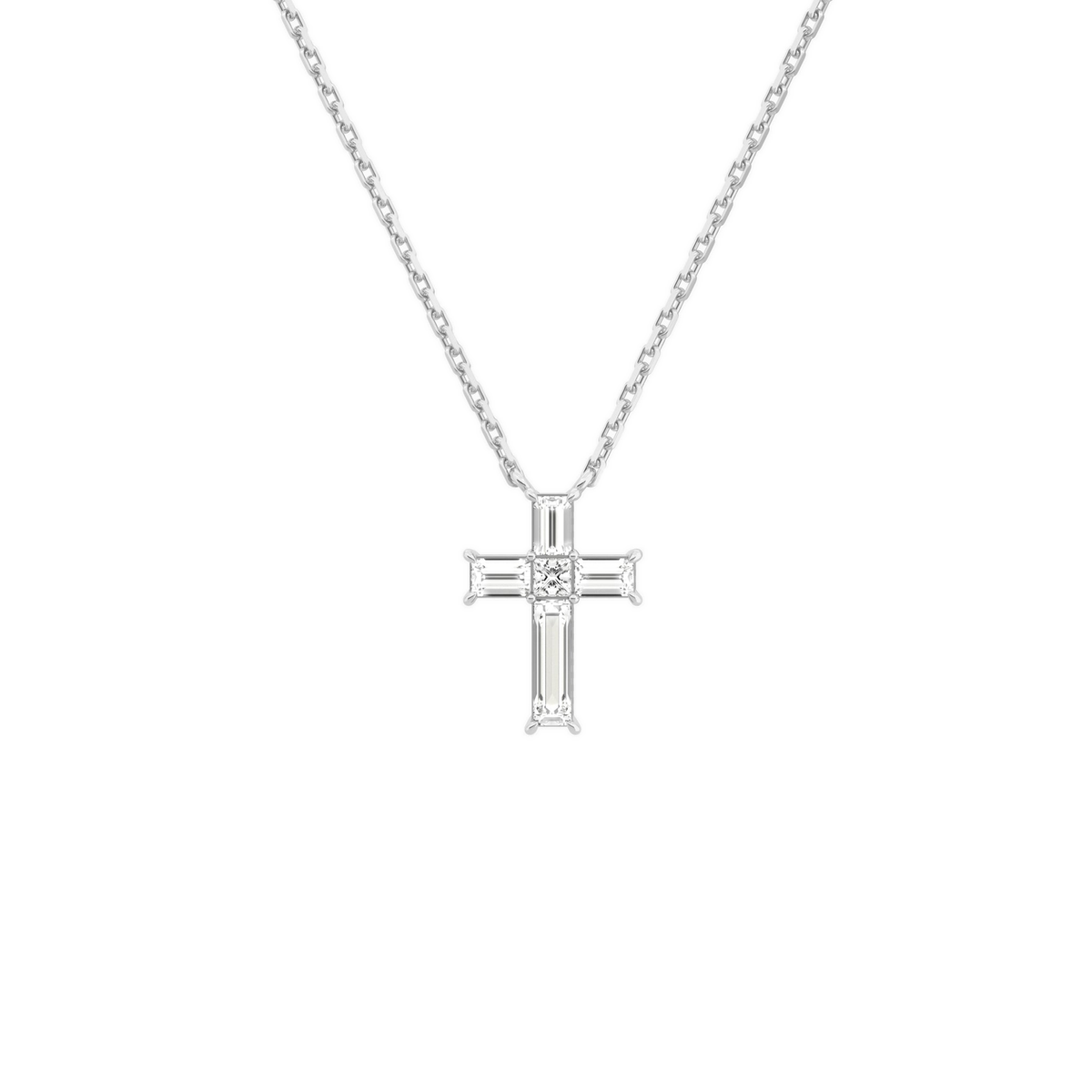

















- Free Express Shipping
- Free Resizing
- 60-Day Free Returns
- Lifetime Warranty
Lab-Grown Diamond Jewelry, Composed for the Way It Is Worn
Diamond jewelry changes with its relationship to the body. A ring turns with the hand; an earring is read as a pair and in profile; a necklace establishes a point or line at the neckline; a bracelet carries light around a moving wrist. Burvonti brings those distinct forms together without reducing them to one idea of sparkle or one prescribed occasion.
The current public collection spans lab-grown diamond rings, earrings, necklaces, and bracelets in 14K White, Yellow, and Rose Gold. Within that breadth are quiet points of light, repeated diamond rhythms, moving drops, open forms, sculpted curves, and more continuous lines. The useful first choice is not simply how much diamond is present, but where and how the finished piece will live.
Begin with Form, Then Refine the Design
Each jewelry category solves a different question. Rings work through width, contour, negative space, and contact with neighboring bands or fingers. Earrings depend on pair balance, orientation, closure, and the distance between the diamond and the ear. Necklaces combine a focal element with chain length and movement. Bracelets add circumference, articulation, clasp, and wrist clearance to the composition.
Starting with form makes the collection easier to read. From there, compare whether the design holds one diamond, repeats several, frames stones with metal, or lets them form a more fluid line. Scale can remain restrained or become more graphic; neither direction is automatically more refined. Proportion and context decide whether the piece feels complete.
Rings and Earrings: Presence at Close Scale
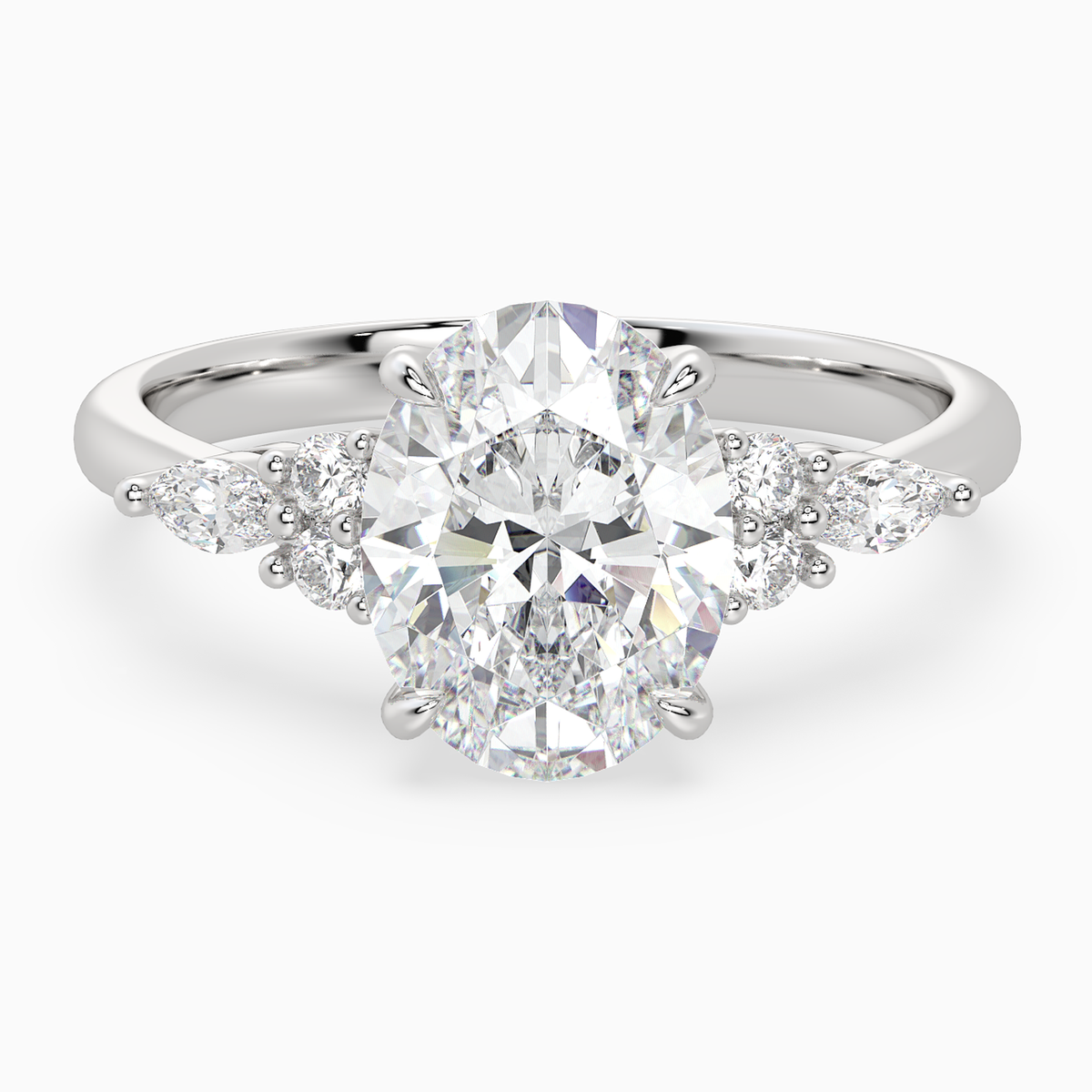
Burvonti diamond rings range across eternity and partial-coverage bands, stackable profiles, bezel and channel structures, curved and open silhouettes, and rings intended to stand on their own. Read the band and diamonds together: repeated stones create cadence, metal edges clarify structure, and open space can be as active as the set surface.
Earrings bring a different kind of precision. Studs keep their center close to the ear; hoops and huggies trace a curve; drops introduce suspension and movement. Compare the design as a pair, including scale, orientation, setting profile, and closure. Product-level total carat weight should also be read as stated—often across both earrings rather than as the weight of each individual piece.
Necklaces and Bracelets: Light in Line and Motion
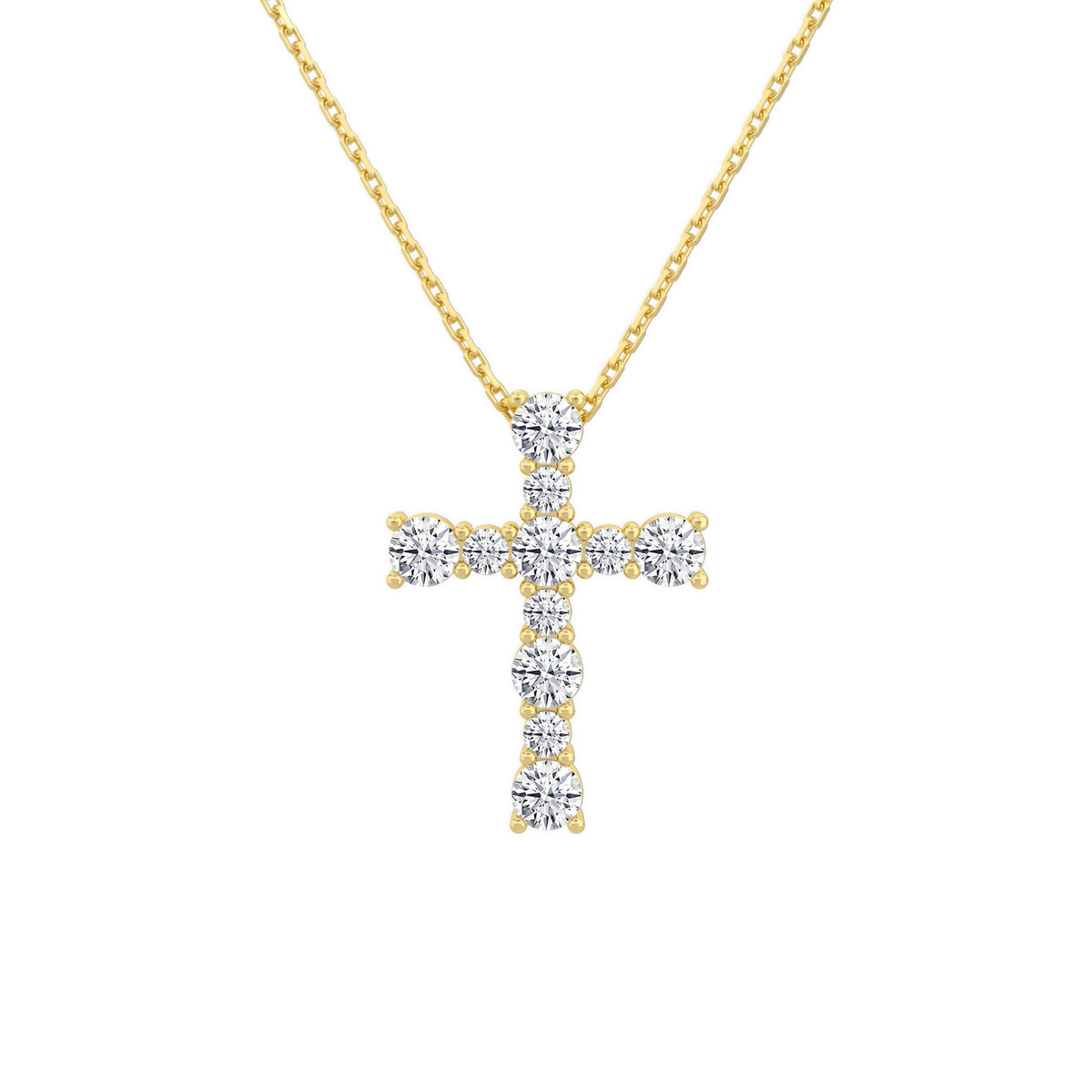
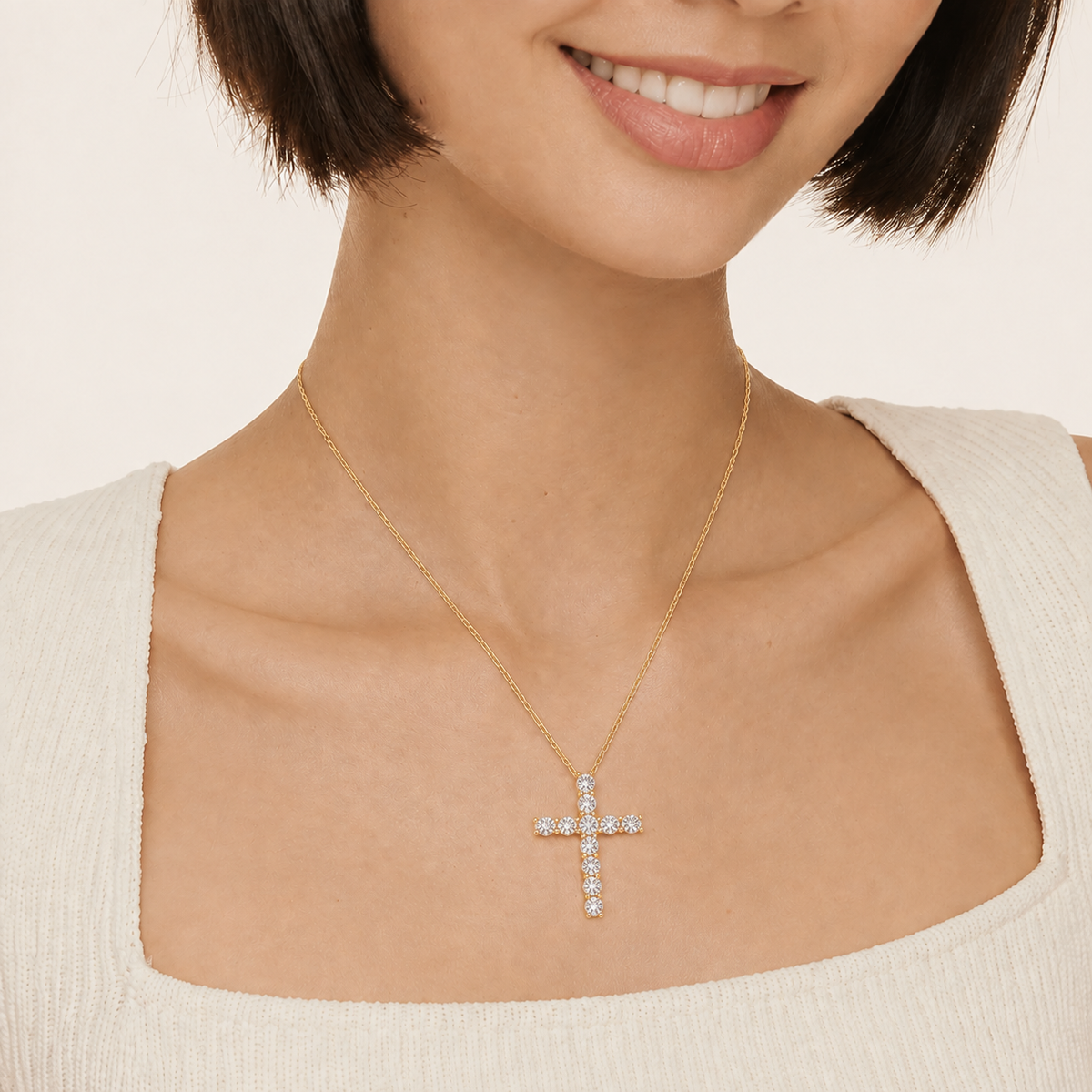
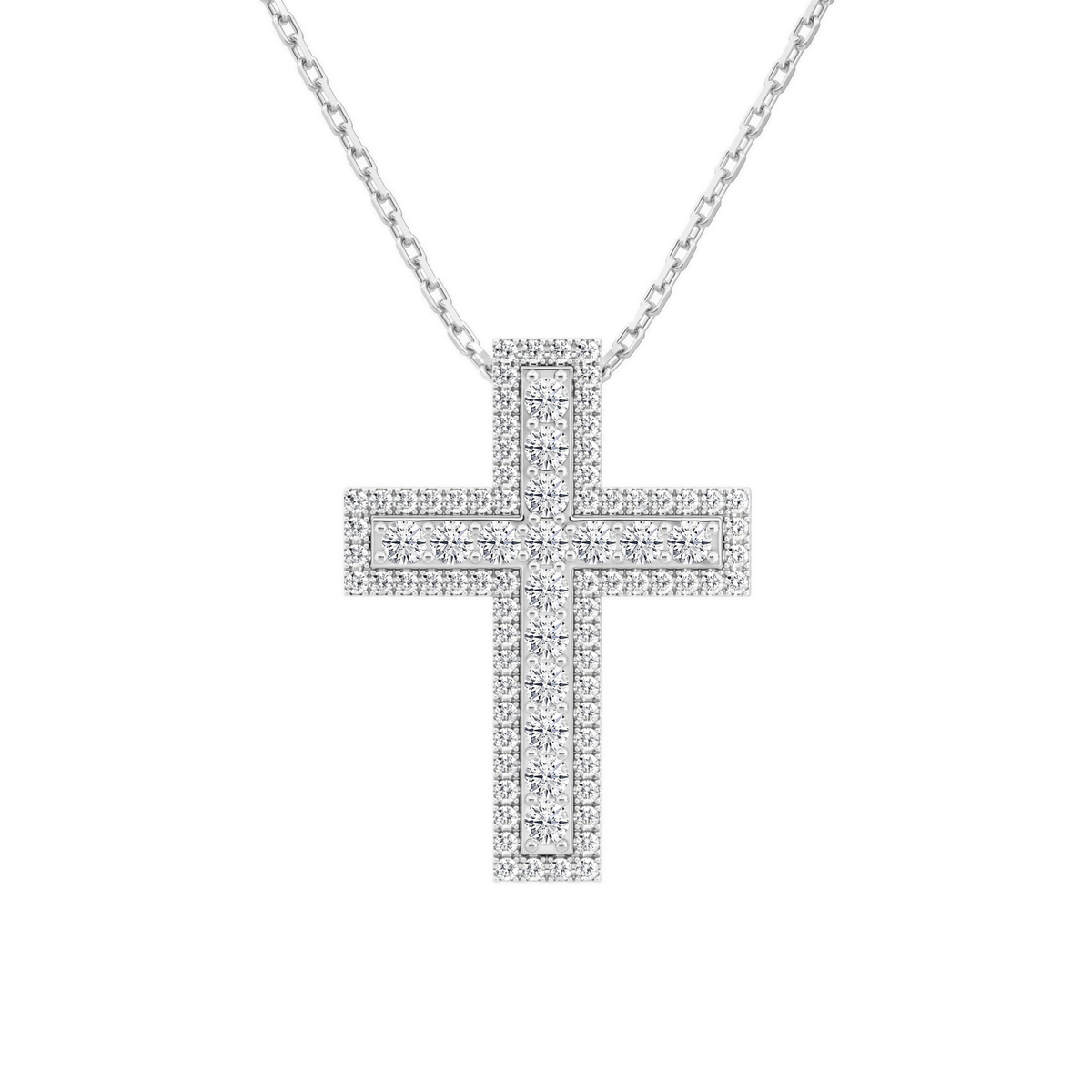
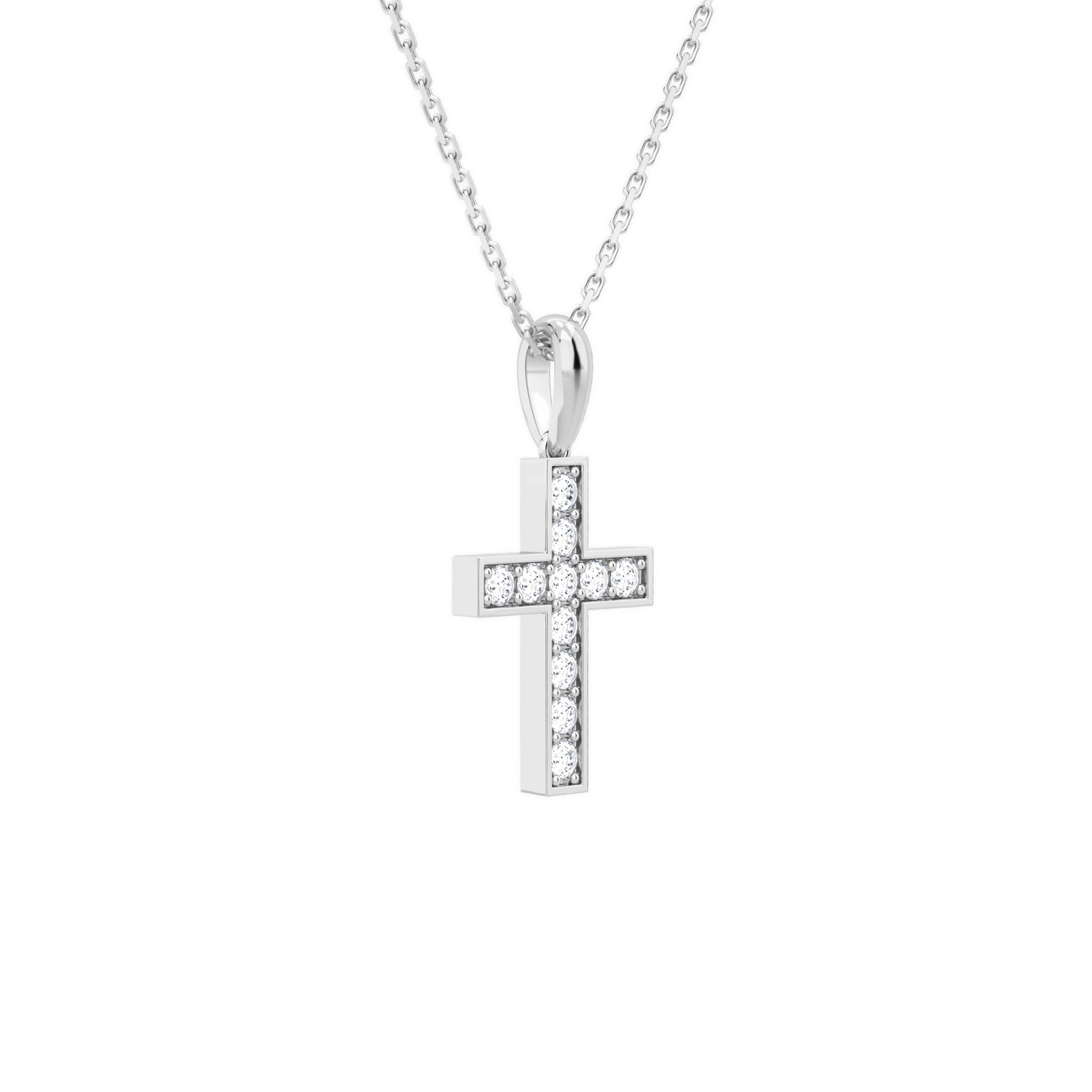
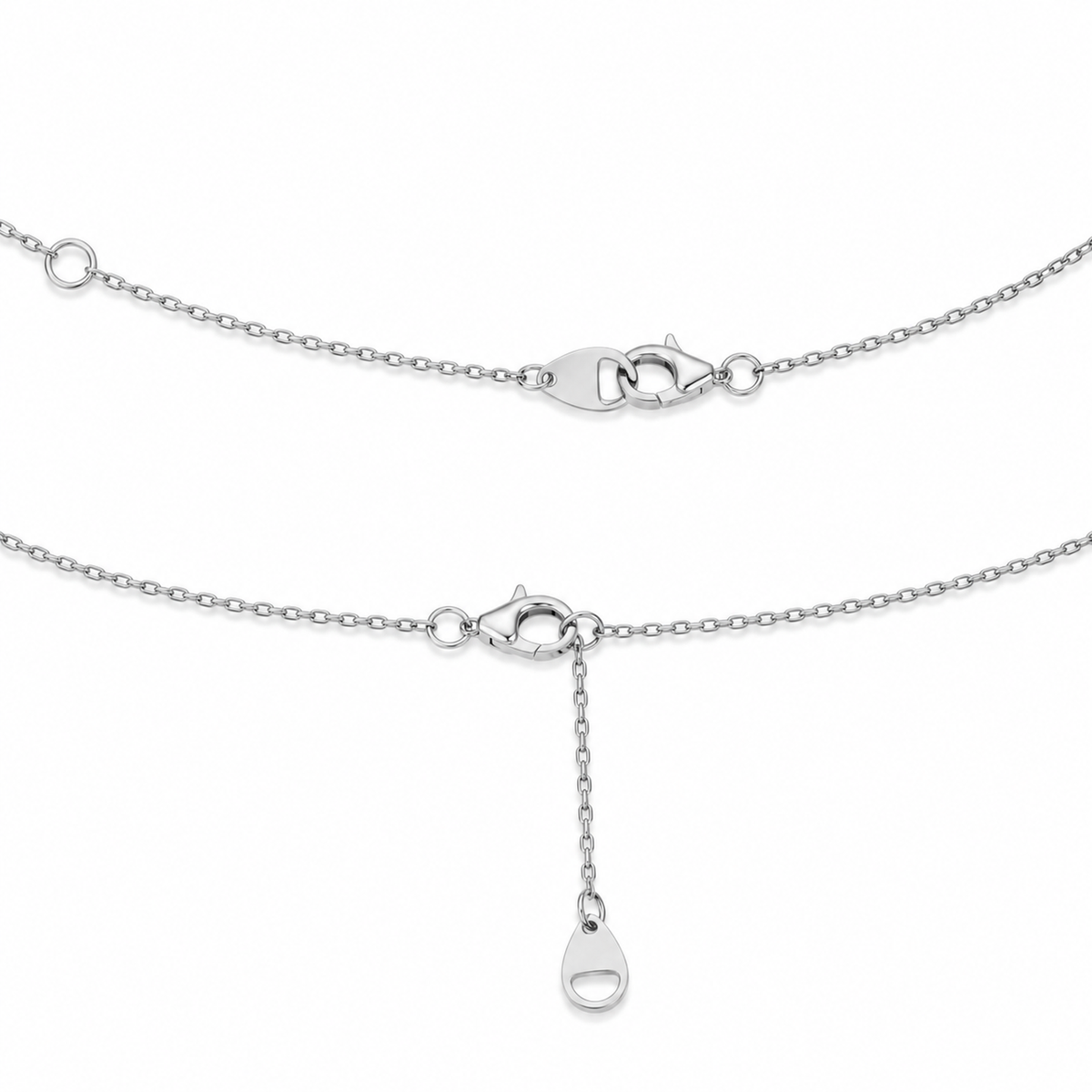
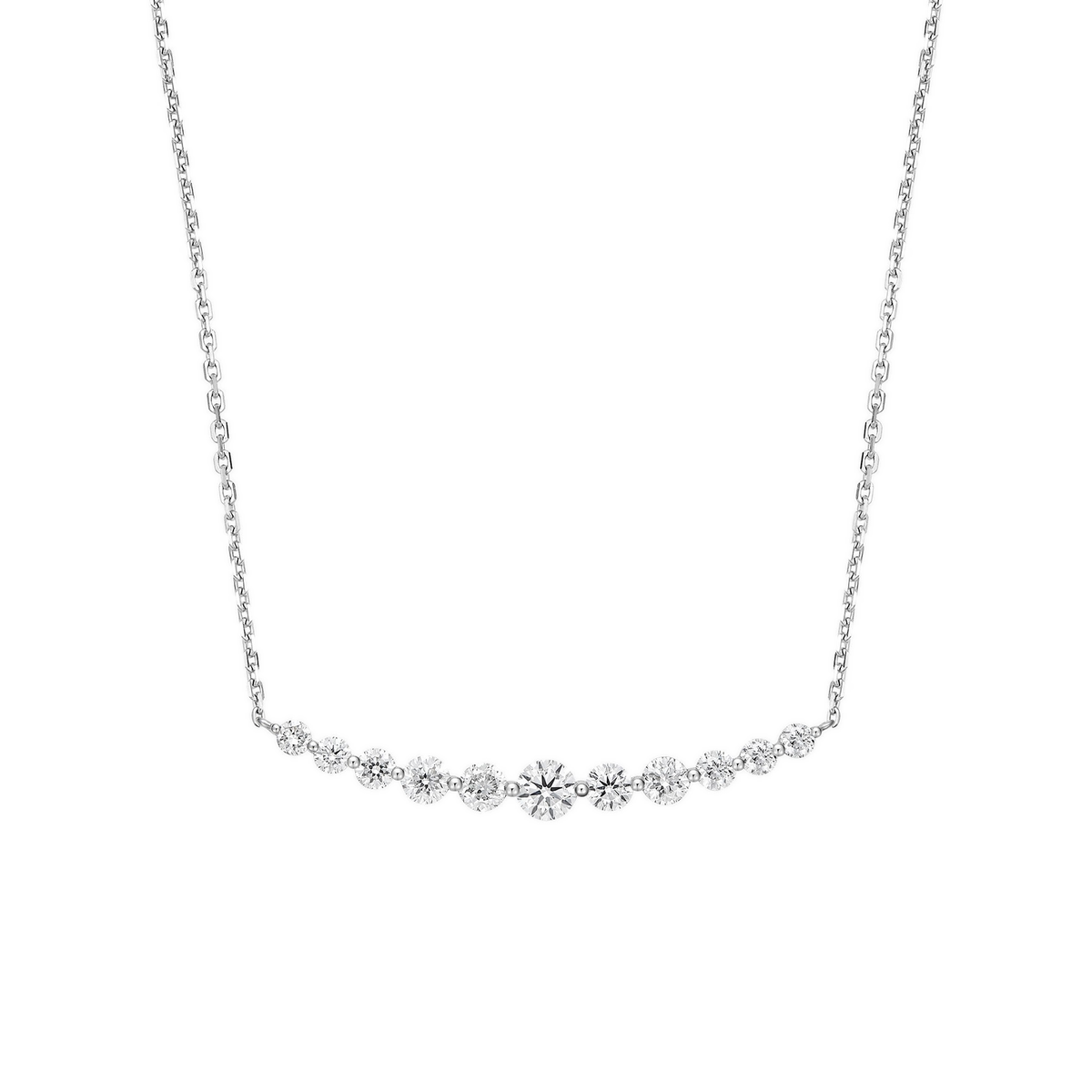
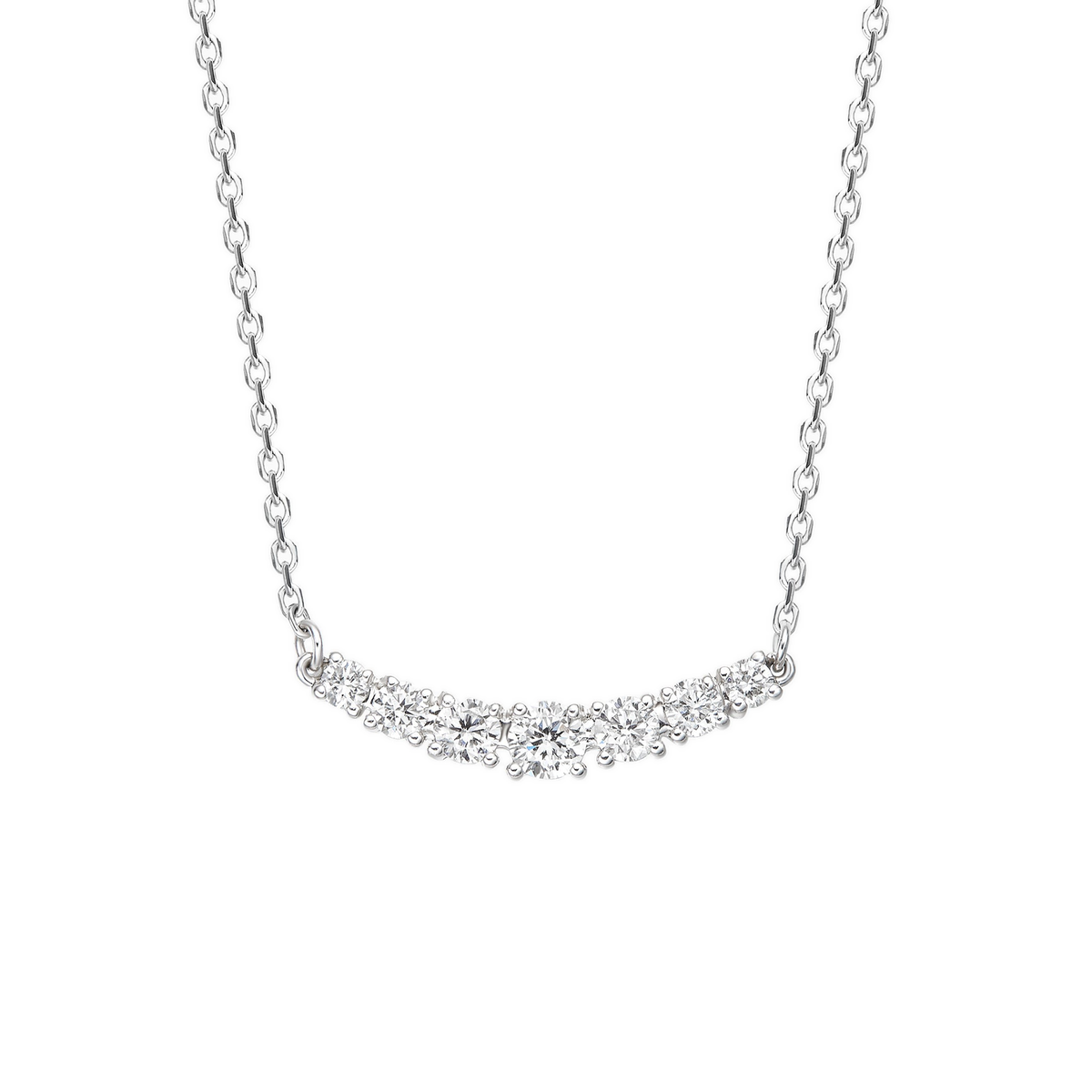
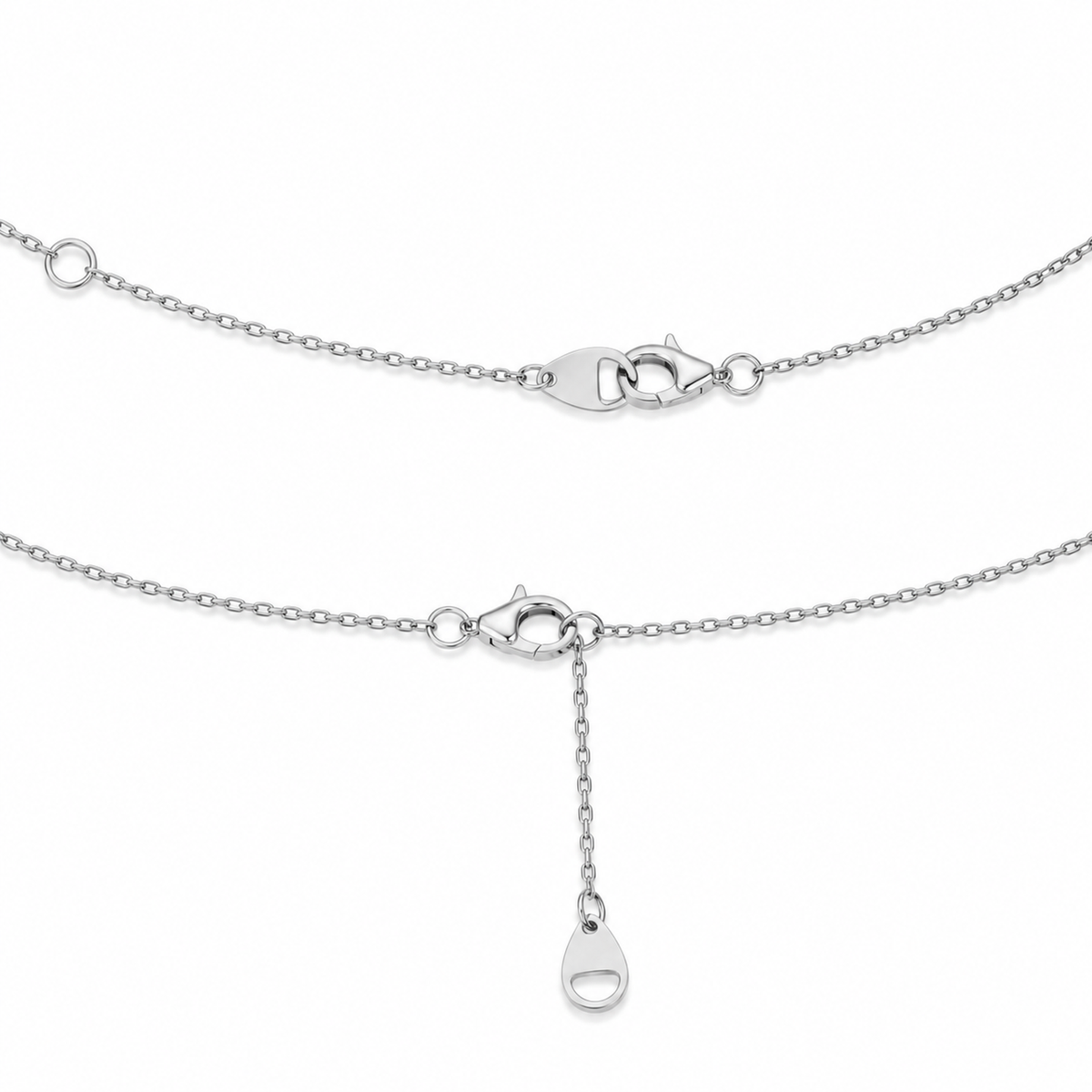
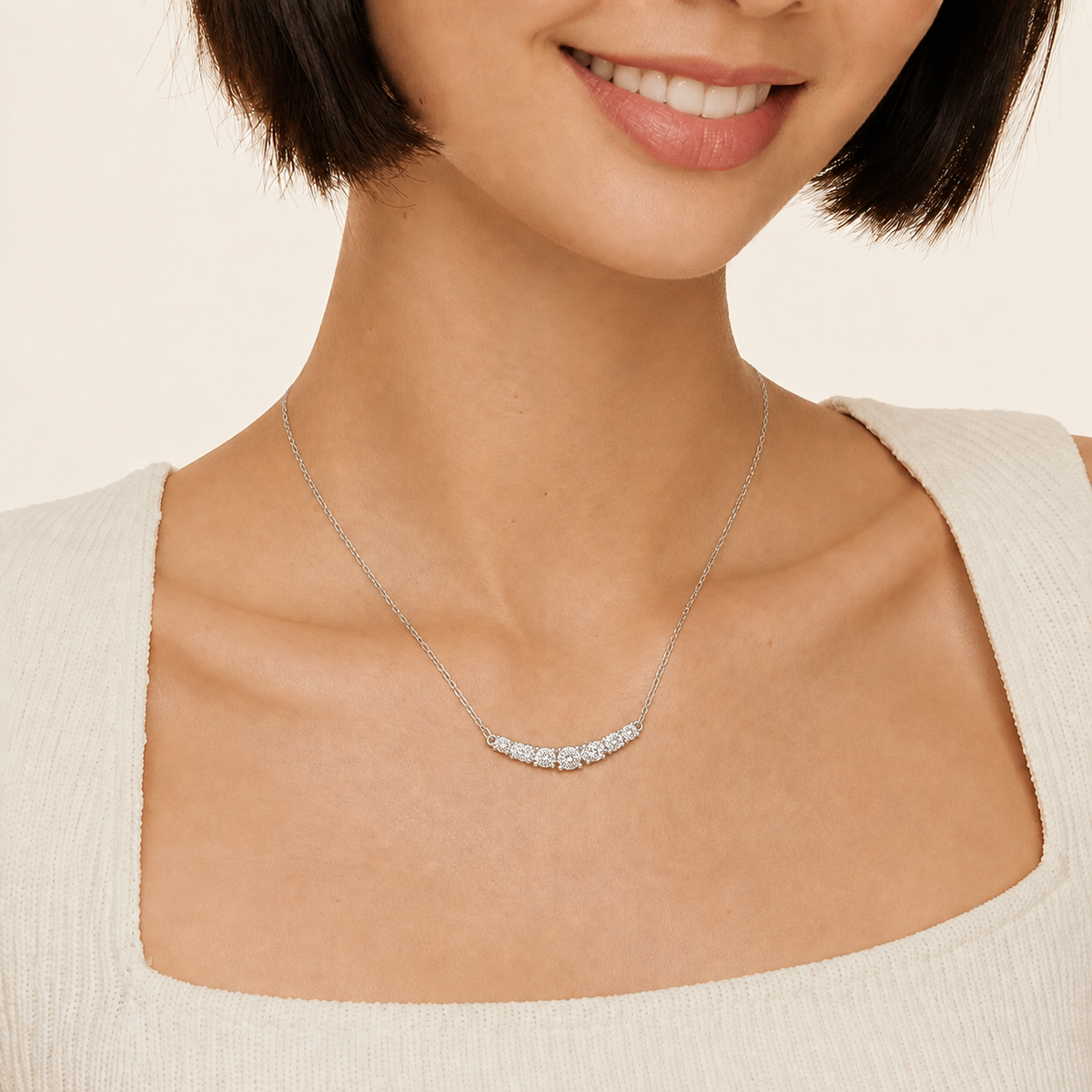
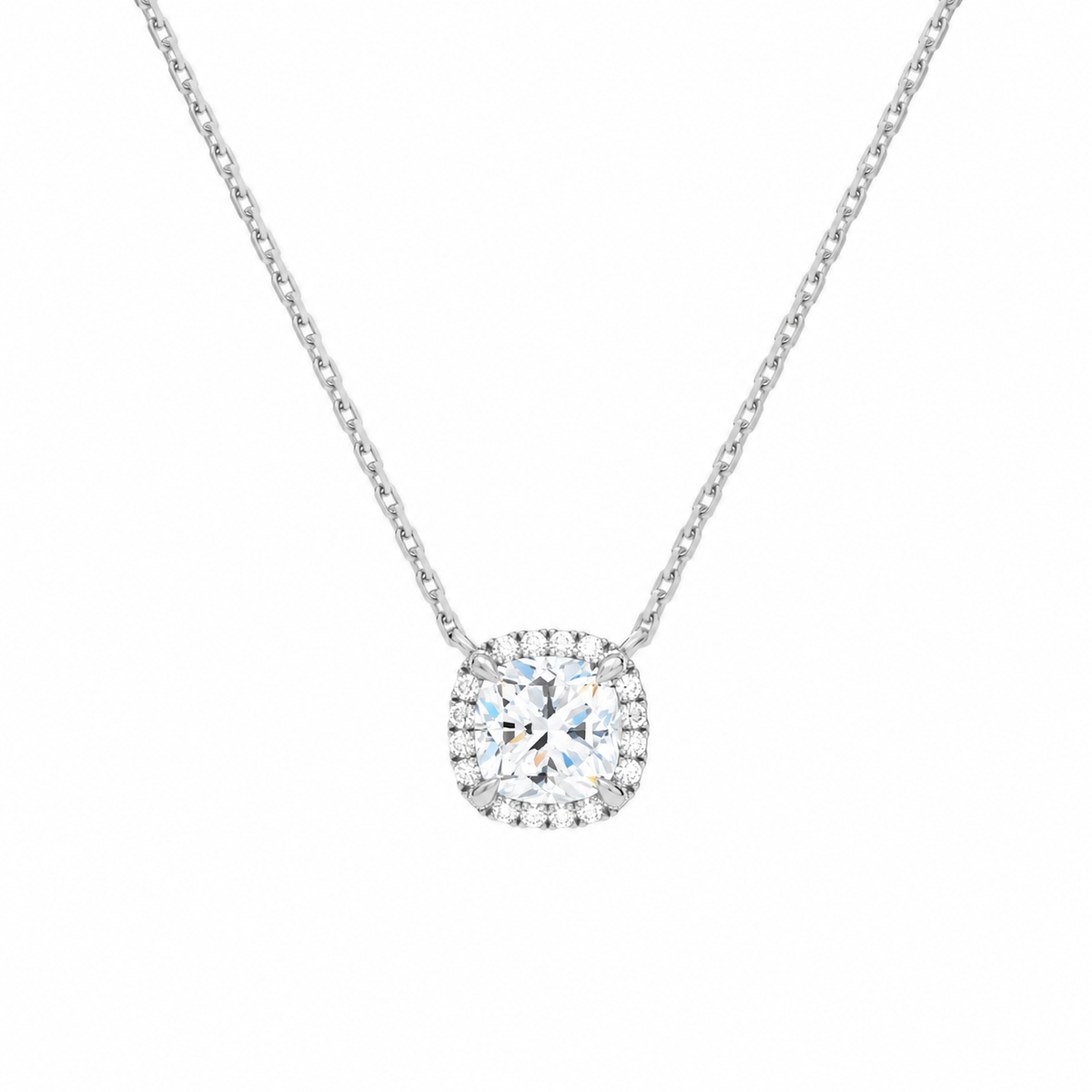
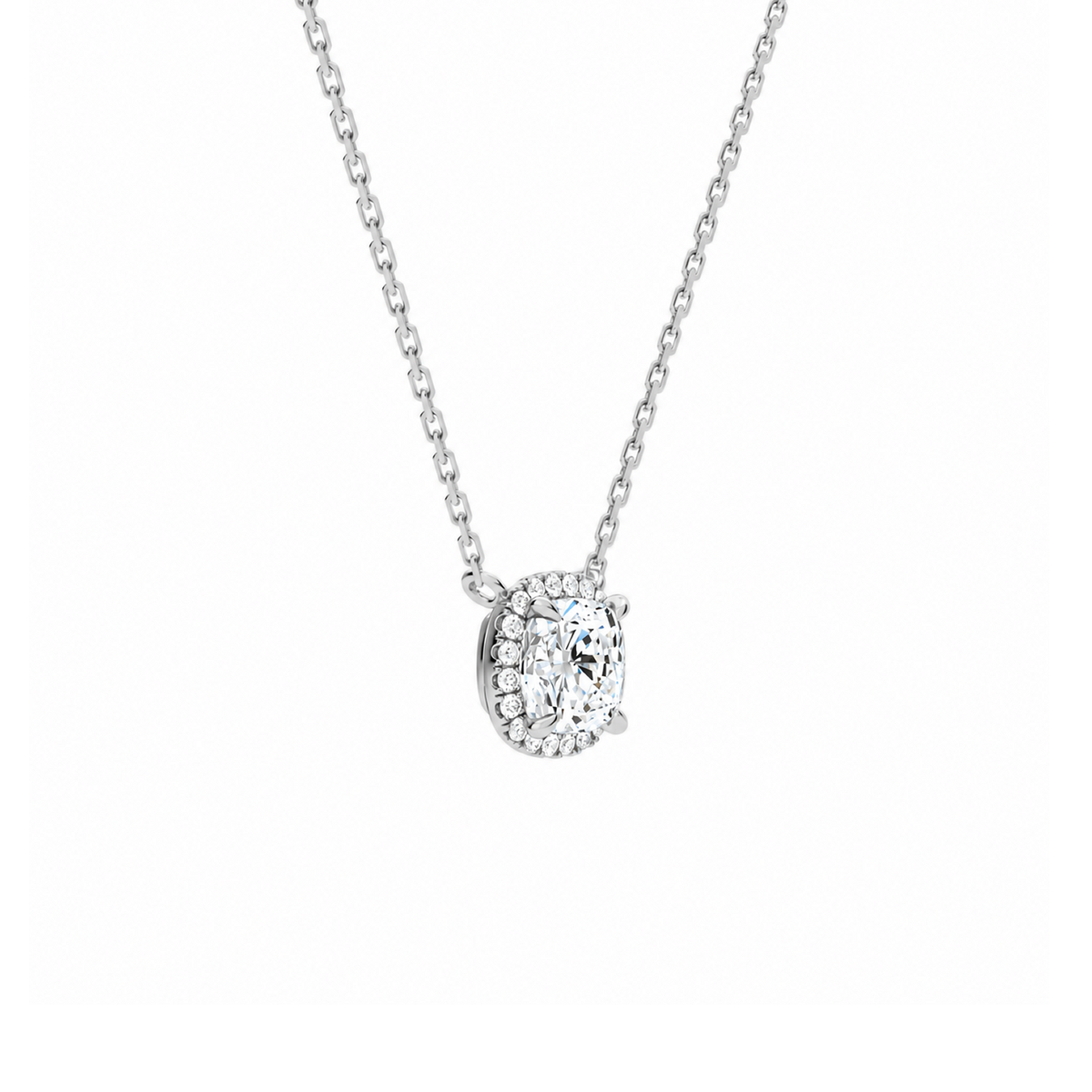
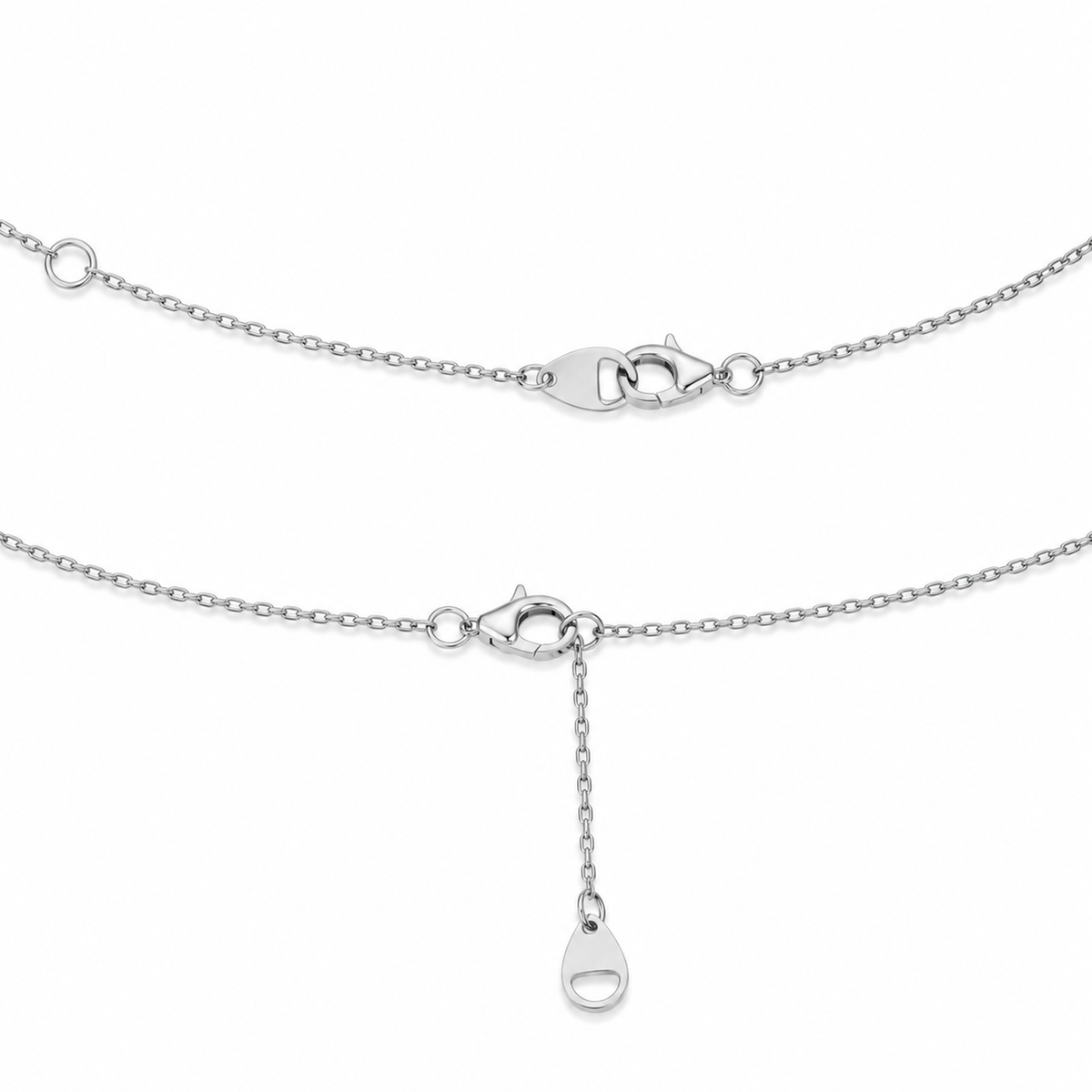
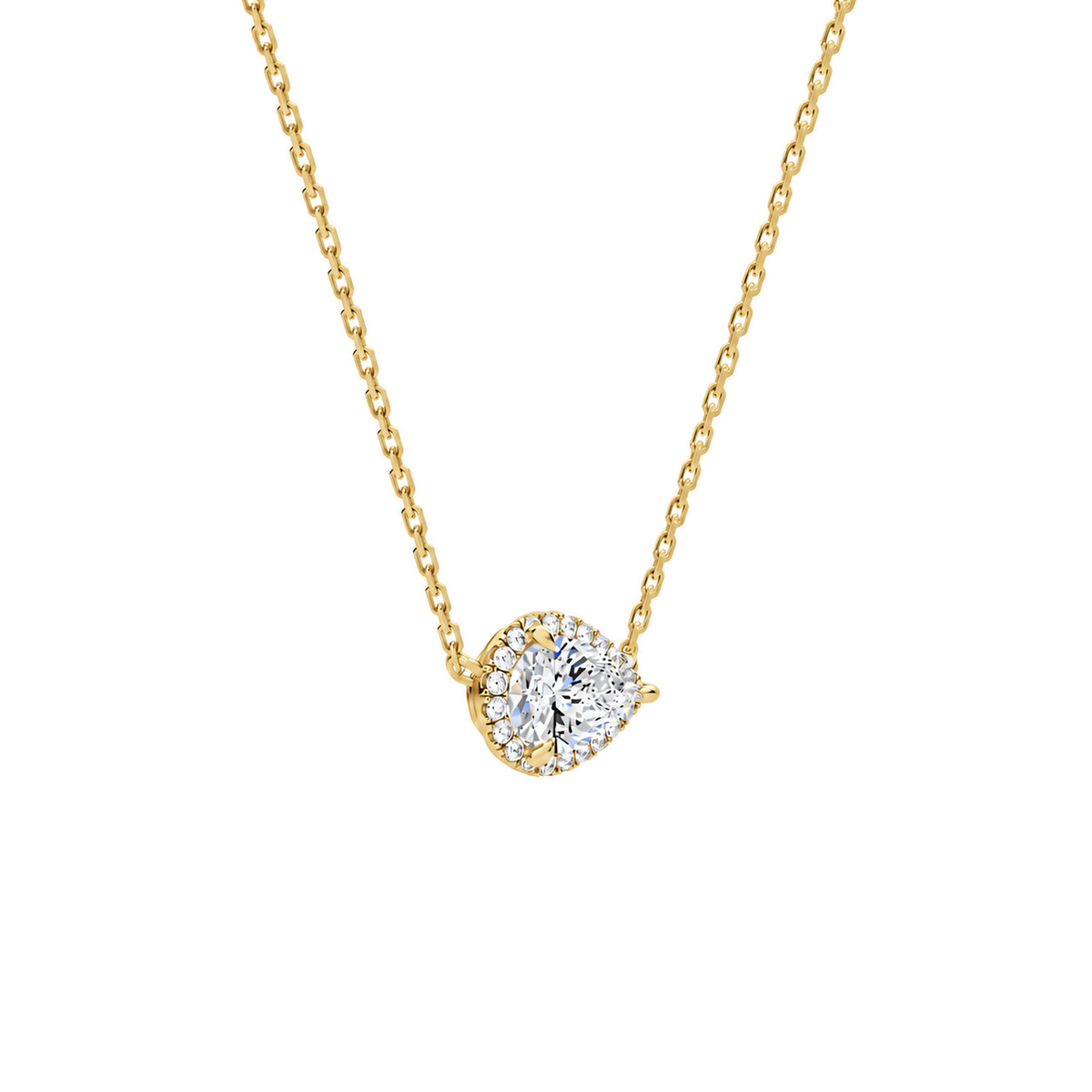
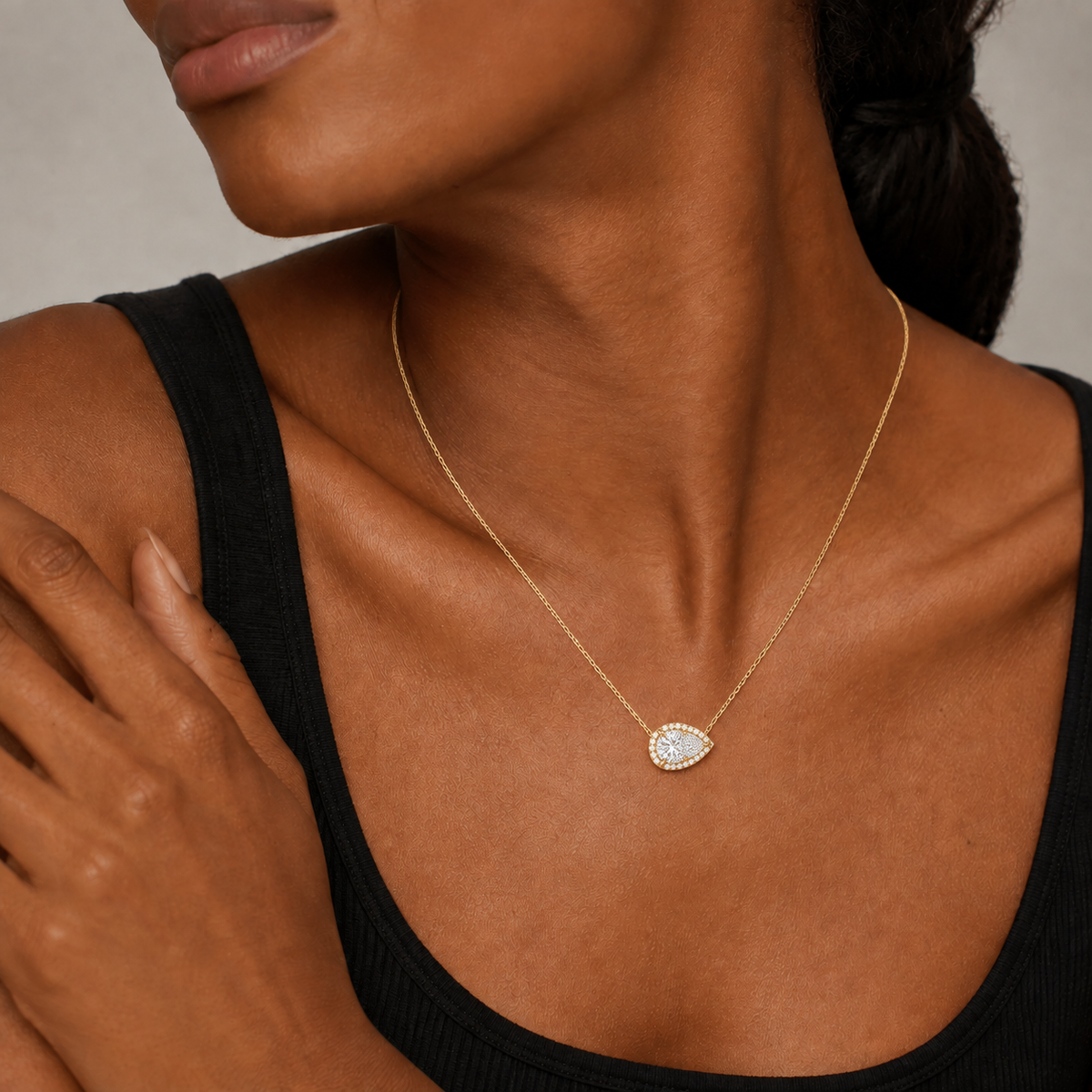
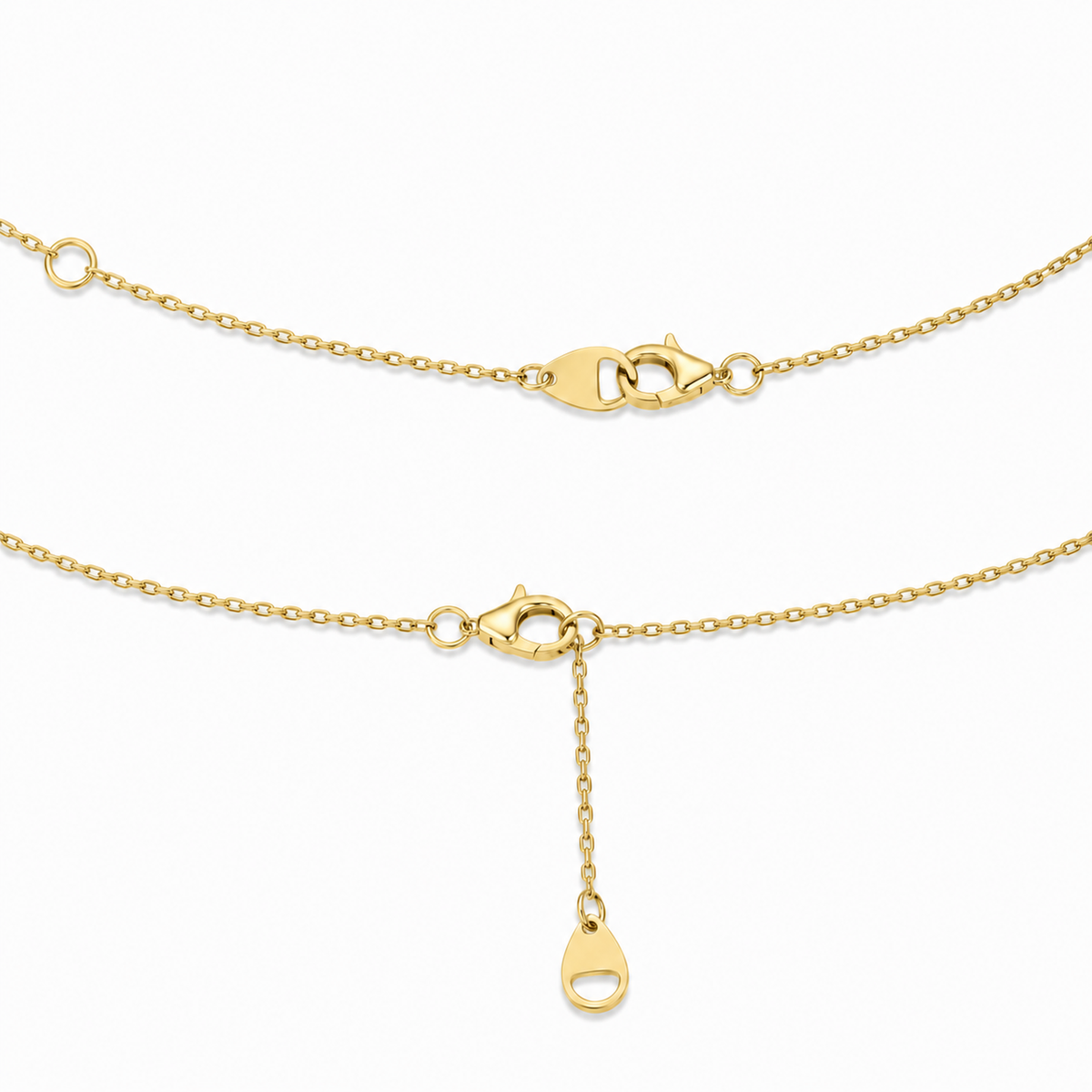
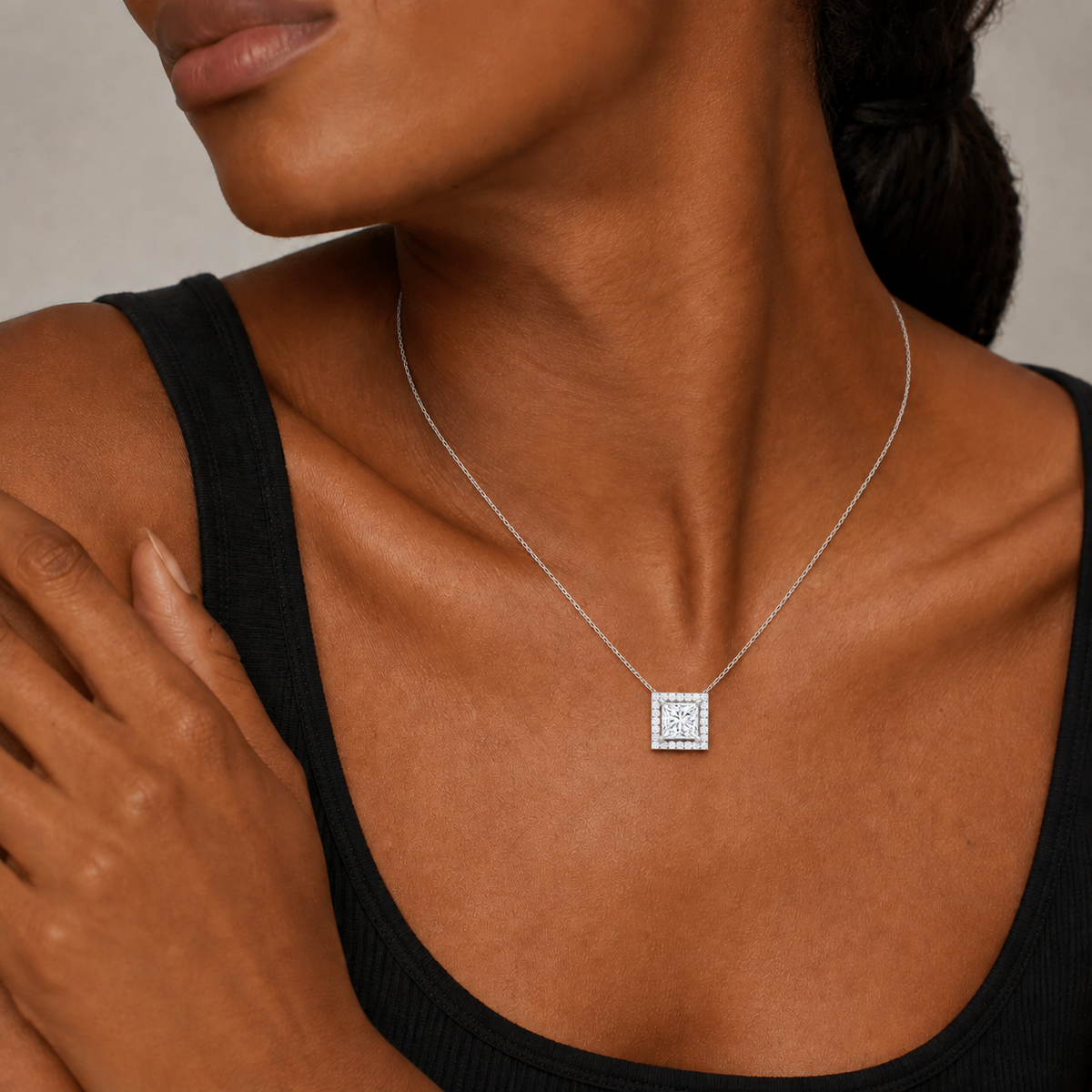
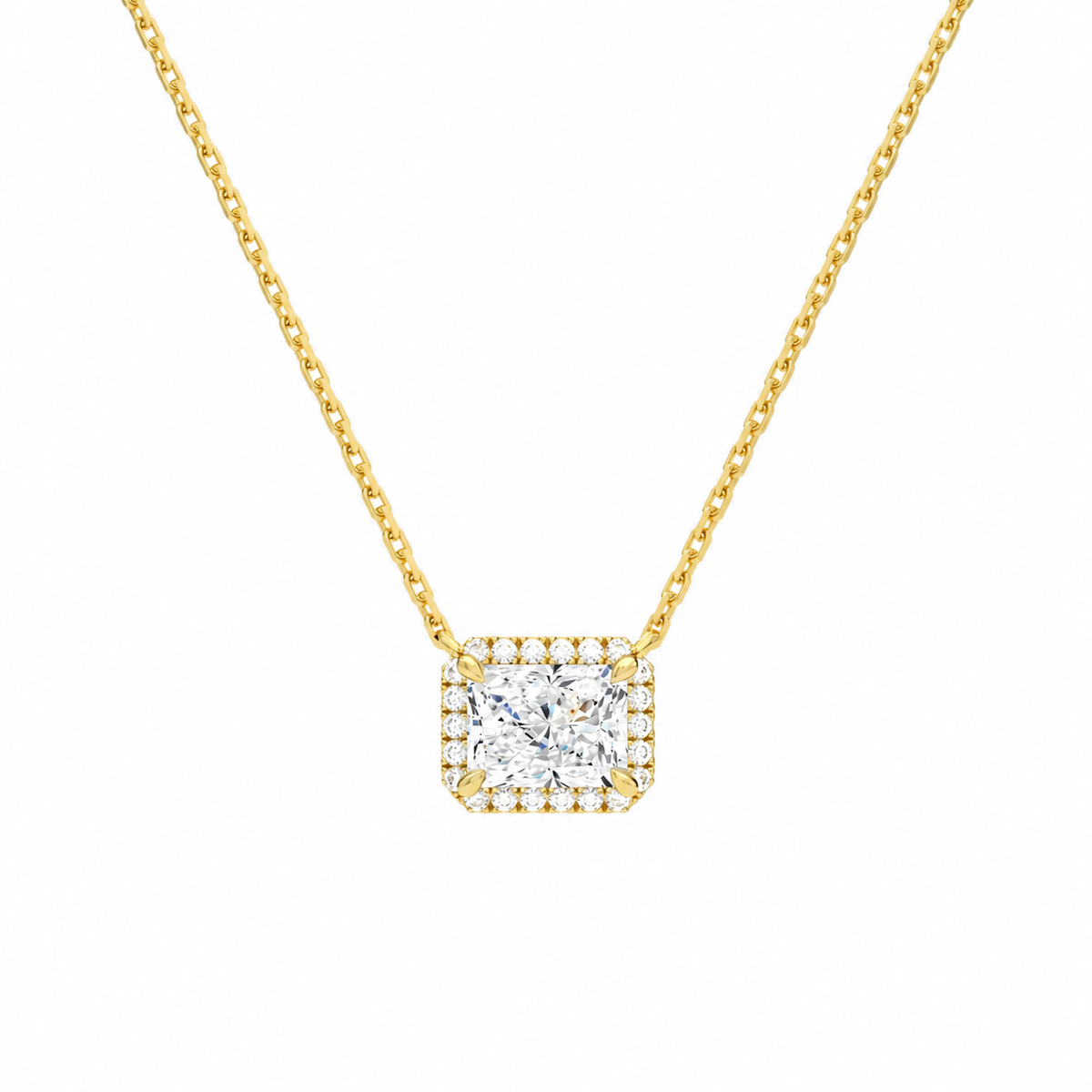
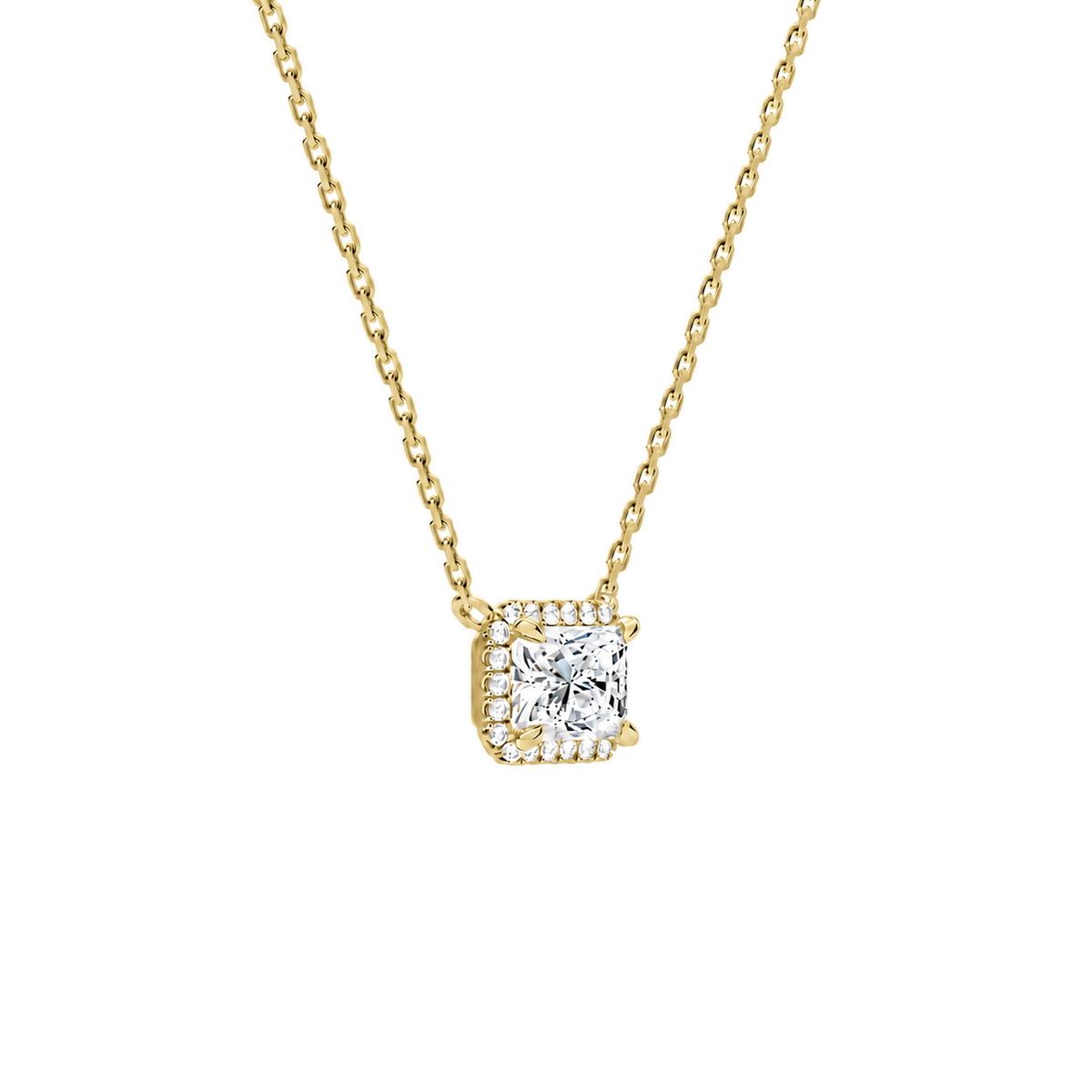
A necklace can concentrate attention in a solitaire or bezel pendant, extend it through a curved bar, or distribute it through multi-stone and station arrangements. Chain length changes where that composition meets the body and other necklines. Pendant dimensions, bail or connection, and chain relationship can matter as much as the nominal diamond weight.
Bracelets translate similar decisions around the wrist. A tennis line relies on articulation and regularity; a bangle holds a more defined arc; stations create intervals; sculptural or open forms use metal and space more visibly. Fit affects both appearance and movement, while clasp construction and setting profile remain product-specific considerations rather than universal promises.
Choose the Degree and Pattern of Diamond Presence
One diamond creates a focal point. Repetition turns light into rhythm. Graduated arrangements direct attention; mixed shapes introduce contrast; bezels separate stones into distinct units; prongs can allow a more open perimeter. Total carat weight describes combined weight, not how large or prominent the complete piece must appear. Distribution, dimensions, setting, and metal determine the visible result.
Laboratory-grown diamonds are diamonds with a laboratory origin, not simulants. They share essentially the same crystal structure and nearly the same chemical, optical, and physical properties as natural diamonds, while trained laboratories can distinguish their growth history. Where an individual diamond carries a grading report, use it for that stone; accent-diamond and complete-piece specifications should be read at product level.
Metal Is Part of the Composition
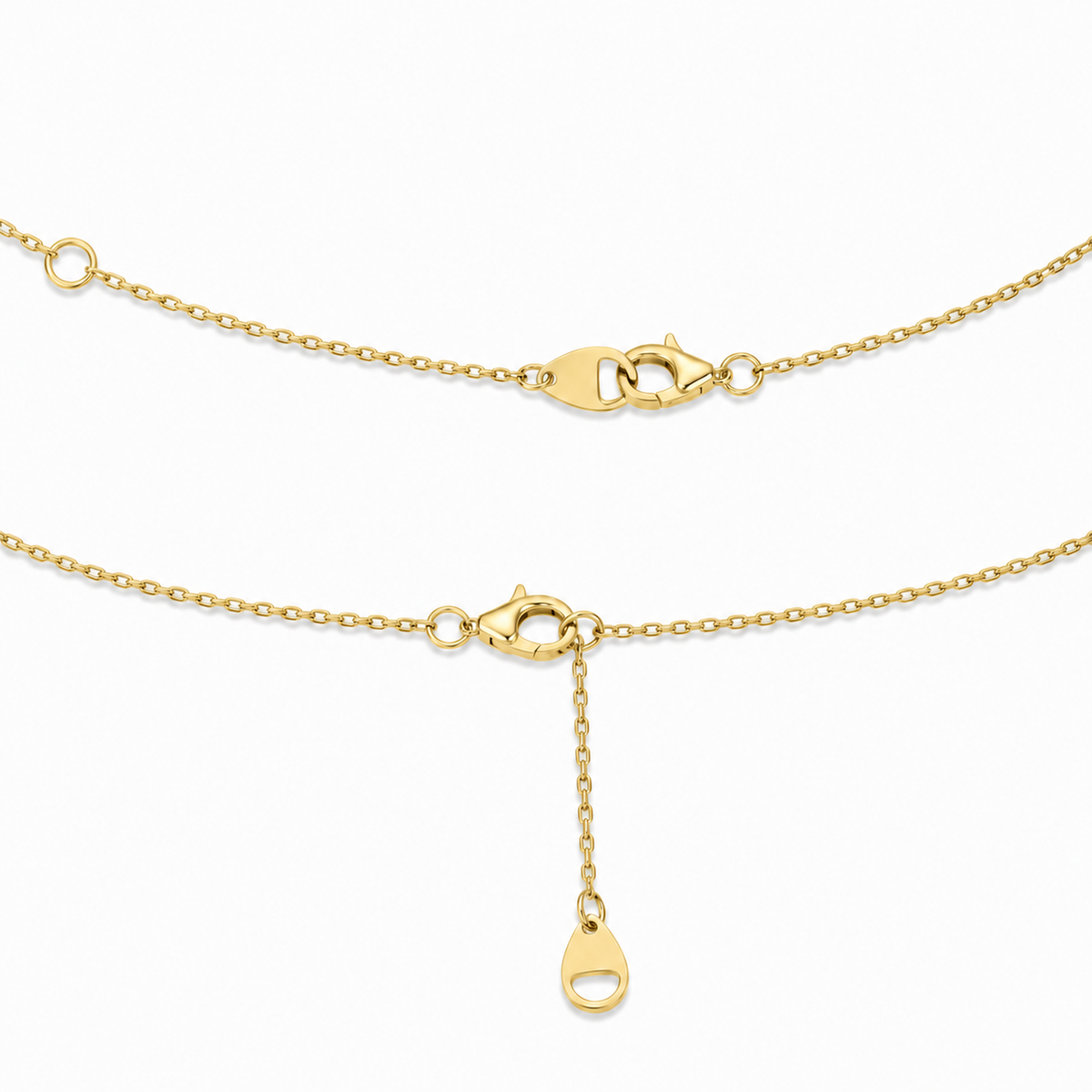
White Gold creates a cooler relationship between diamond and setting; Yellow Gold makes the framework warmer and more legible; Rose Gold adds a measured blush. Metal also determines which edges, links, prongs, bezels, and negative spaces become visually prominent. It should be considered as structure and color, not as a generic background selected after the design.
The current public assortment is represented in 14K White, Yellow, and Rose Gold. Exact alloy composition, finish, dimensions, metal weight, sensitivity considerations, repair options, and alternative metal availability belong to the individual product or custom conversation. Matching one metal across several pieces creates continuity; mixing metals can be equally coherent when scale or setting language provides the connection.
Build a Jewelry Wardrobe Through Relationships
A personal jewelry wardrobe does not need to be a matching suite. A repeated diamond shape, a shared metal edge, or a consistent level of visual weight can connect pieces without making them identical. A close-set stud may answer a solitaire pendant; a fine ring can echo the intervals of a station necklace; a stronger bracelet line can balance otherwise restrained forms.
Daily wear and occasion wear are not fixed product categories. A small piece may carry deep personal meaning, while a more visible design may become an everyday signature. Consider routine, movement, clothing, other jewelry, and desired visibility together. Gifts benefit from the same attention: the recipient’s habits and existing pieces are often more useful than a generic rule tied to an event.
Clarity at Final Scale
Burvonti works with responsibly sourced lab-grown diamonds and brings independent grading, product specifications, setting architecture, and human observation into the same decision. Documentation establishes facts where it applies. Final judgment asks whether diamond scale, metal, movement, and bodily relationship resolve as one piece rather than as a list of attributes.
Custom possibilities may refine a diamond shape, scale, metal, setting, length, closure, or other design detail when structurally feasible. Care should follow the exact materials and construction: use a gentle method, avoid abrasive products and harsh chemicals, store pieces to limit contact, and seek inspection when a stone moves, a clasp changes, or the jewelry receives significant impact.
Frequently Asked Questions
What is lab-grown diamond jewelry?
It is jewelry set with diamonds grown in a controlled laboratory environment. Laboratory-grown diamonds are diamonds rather than simulants; their growth origin differs from natural diamonds and can be identified by qualified gemological laboratories.
Are lab-grown diamonds real diamonds?
Yes. They have the same crystal structure and nearly the same chemical, optical, and physical properties as natural diamonds. Origin, treatments where applicable, and quality specifications should still be disclosed and reviewed for the individual diamond or piece.
What types of lab-grown diamond jewelry does Burvonti currently offer?
The current public collection includes rings, earrings, necklaces, and bracelets. Available forms include close-set and moving earrings, pendants and multi-stone necklaces, varied ring structures, and articulated, station, bangle, or continuous bracelet lines.
How do I choose between a ring, earrings, a necklace, and a bracelet?
Start with where the piece will be worn and how it should move. Then compare scale, setting, metal, visibility, fit, closure or chain relationship, and how it will interact with clothing and other jewelry.
How do I choose lab-grown diamond jewelry for everyday wear?
Consider your routine together with setting height, exposed edges, movement, closure, length, and contact with other objects or jewelry. Everyday suitability is construction- and wearer-specific; no whole category is automatically appropriate for every routine.
How do I choose lab-grown diamond jewelry as a gift?
Use the recipient’s existing metal tones, preferred scale, daily habits, and most-worn jewelry form as starting points. Product dimensions, length, ring size, closure, and exchange or service policies should be confirmed separately where relevant.
What does total carat weight mean in diamond jewelry?
Total carat weight is the combined weight of the diamonds included in the stated piece or pair. It does not describe the weight of each diamond, face-up dimensions, or visual presence unless the product specification says so.
Are all diamonds in a jewelry piece independently graded?
Not necessarily. A principal diamond may have an individual report, while smaller accent diamonds or matched groups may be documented through product-level specifications. Confirm which stone a report covers rather than extending it to the entire piece.
Which metal should I choose for lab-grown diamond jewelry?
Choose by desired color, design structure, wear context, and product availability. White Gold reads cooler; Yellow Gold adds warm definition; Rose Gold introduces a softer blush. Alloy, finish, dimensions, and sensitivity considerations remain product-specific.
Does Burvonti’s current jewelry collection include Platinum or 18K Gold?
The current public Collection audit found representative products in 14K White, Yellow, and Rose Gold. Platinum or 18K possibilities should be confirmed for the exact design and should not be assumed from the category page.
Can I mix white, yellow, and rose gold jewelry?
Yes, when the combination feels intentional. A repeated diamond shape, setting edge, proportion, or visual weight can connect different metal colors without requiring every piece to match.
How can I coordinate diamond jewelry without buying a matching set?
Repeat one or two elements—such as metal tone, diamond shape, setting type, or scale—while allowing movement and silhouette to vary. Coordination can be visible without being literal.
Is lab-grown diamond jewelry responsibly sourced?
Burvonti describes its lab-grown diamonds as responsibly sourced. That statement should not be expanded into an unverified carbon, energy, labor, country-of-origin, or environmental measurement for an individual product.
Can Burvonti lab-grown diamond jewelry be customized?
Custom possibilities may include diamond shape or scale, metal, setting, length, closure, or selected design details when structurally feasible. Exact availability, documentation, timing, and price require an individual design review.
How should I clean lab-grown diamond jewelry?
Use a gentle method appropriate to the diamonds, alloy, setting, finish, and any delicate links or closures. Avoid abrasive products and harsh chemicals, and do not assume an ultrasonic cleaner is suitable for every complete piece.
How should I store different types of diamond jewelry?
Store pieces so diamonds, metal surfaces, chains, links, and closures do not abrade or tangle against one another. Separate compartments or soft pouches can help, with necklaces fastened and articulated pieces laid without sharp bends.