
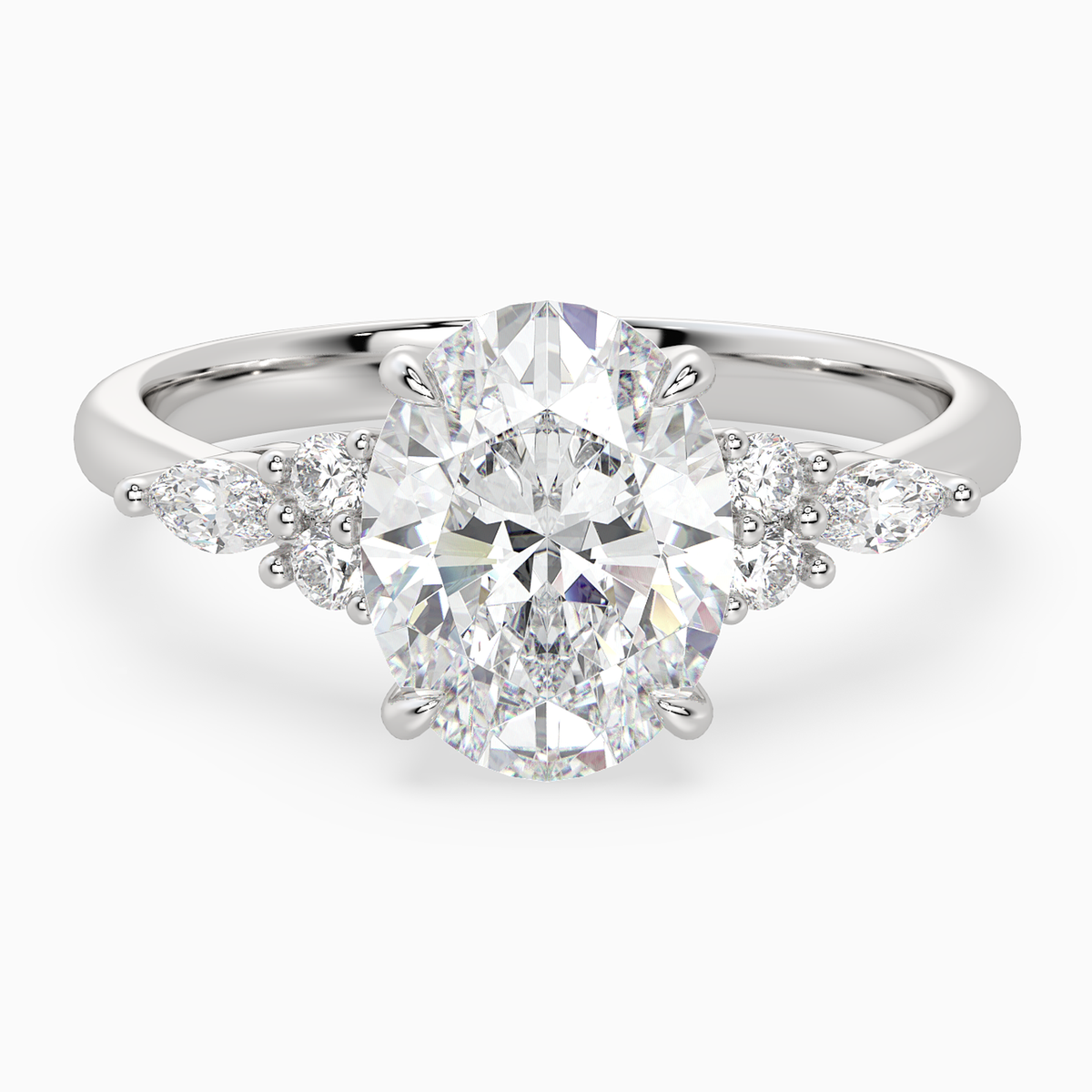


Lab Grown Diamond Earrings
Light held close, traced in an arc or set in motion. Explore diamond earrings through proportion, structure and their relation to the ear.


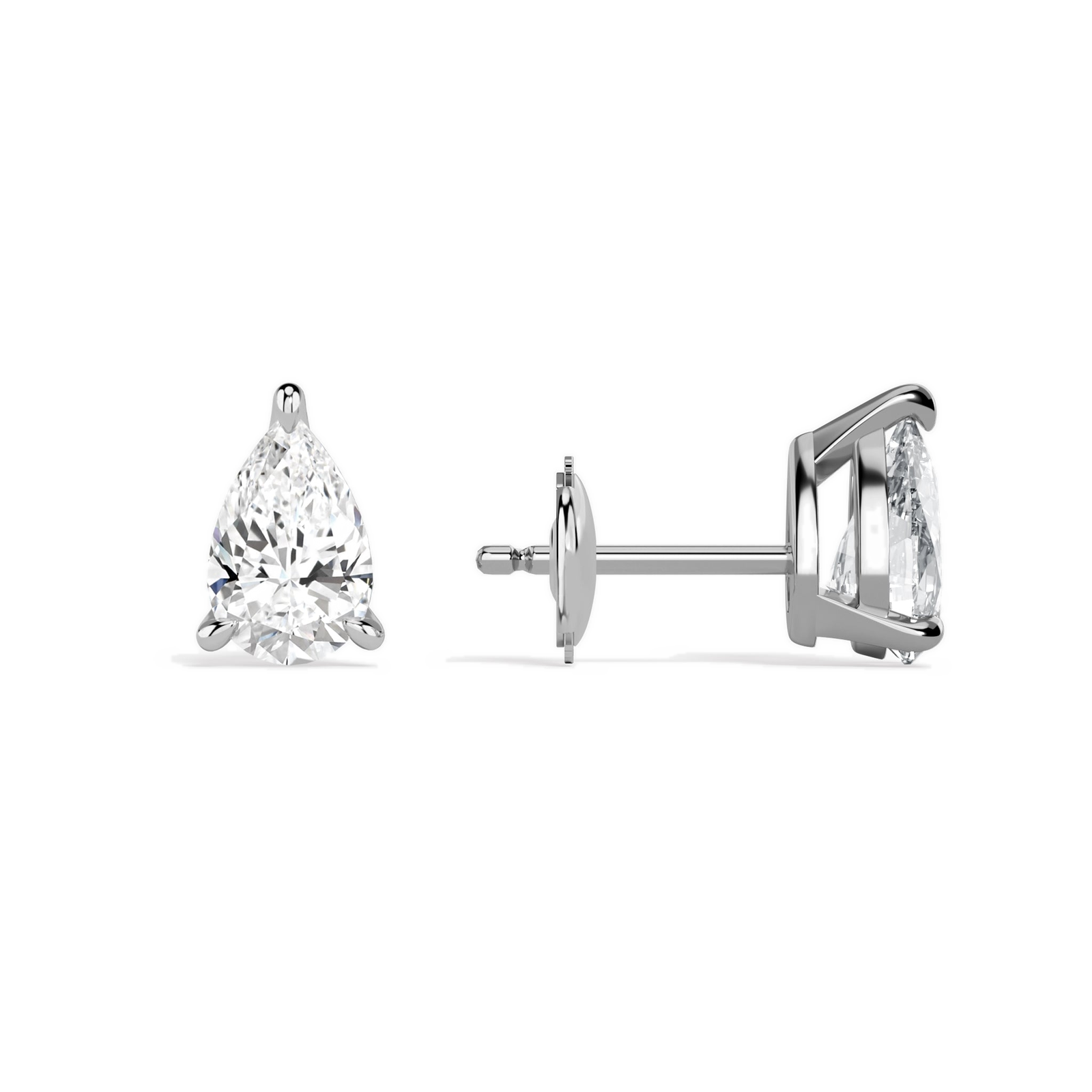


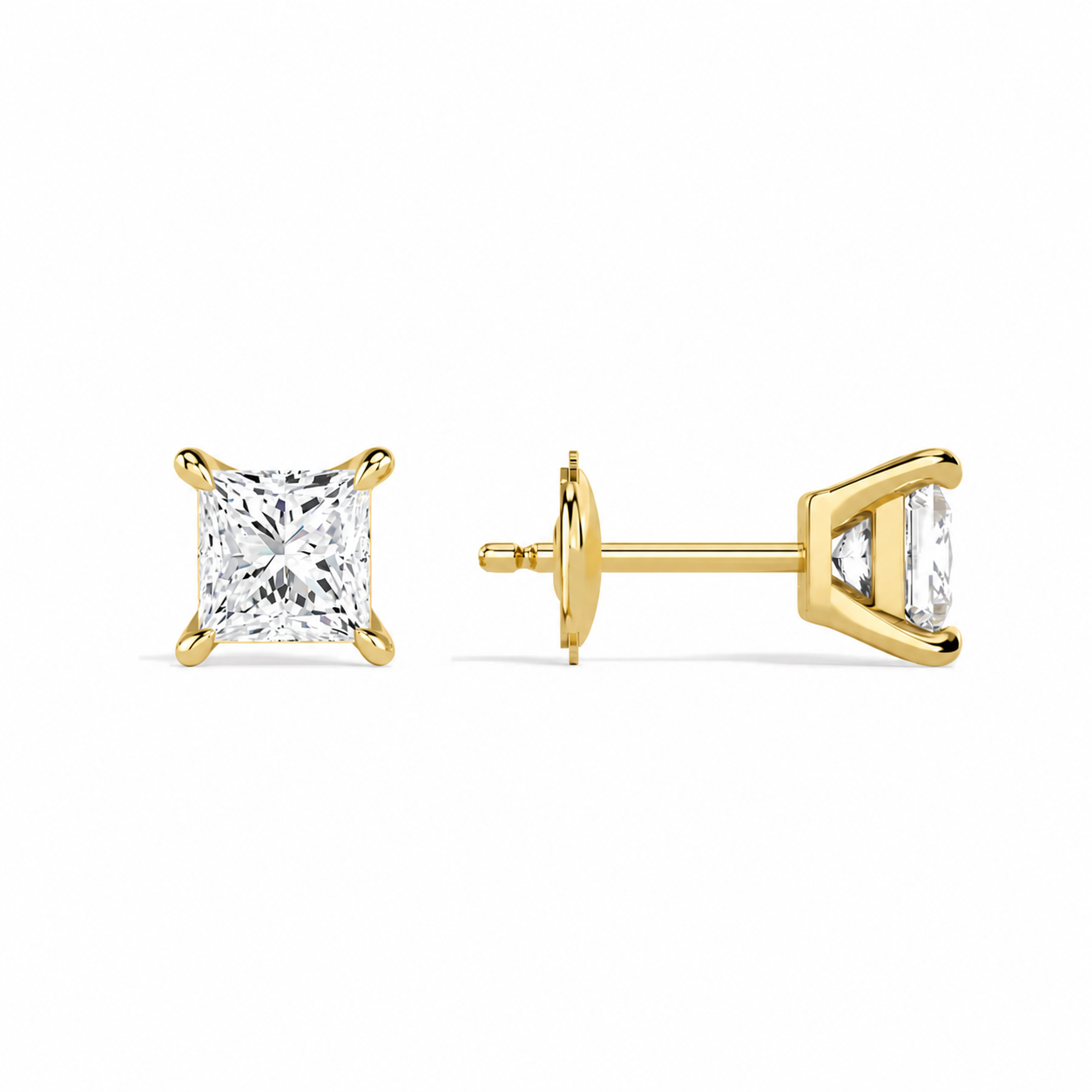


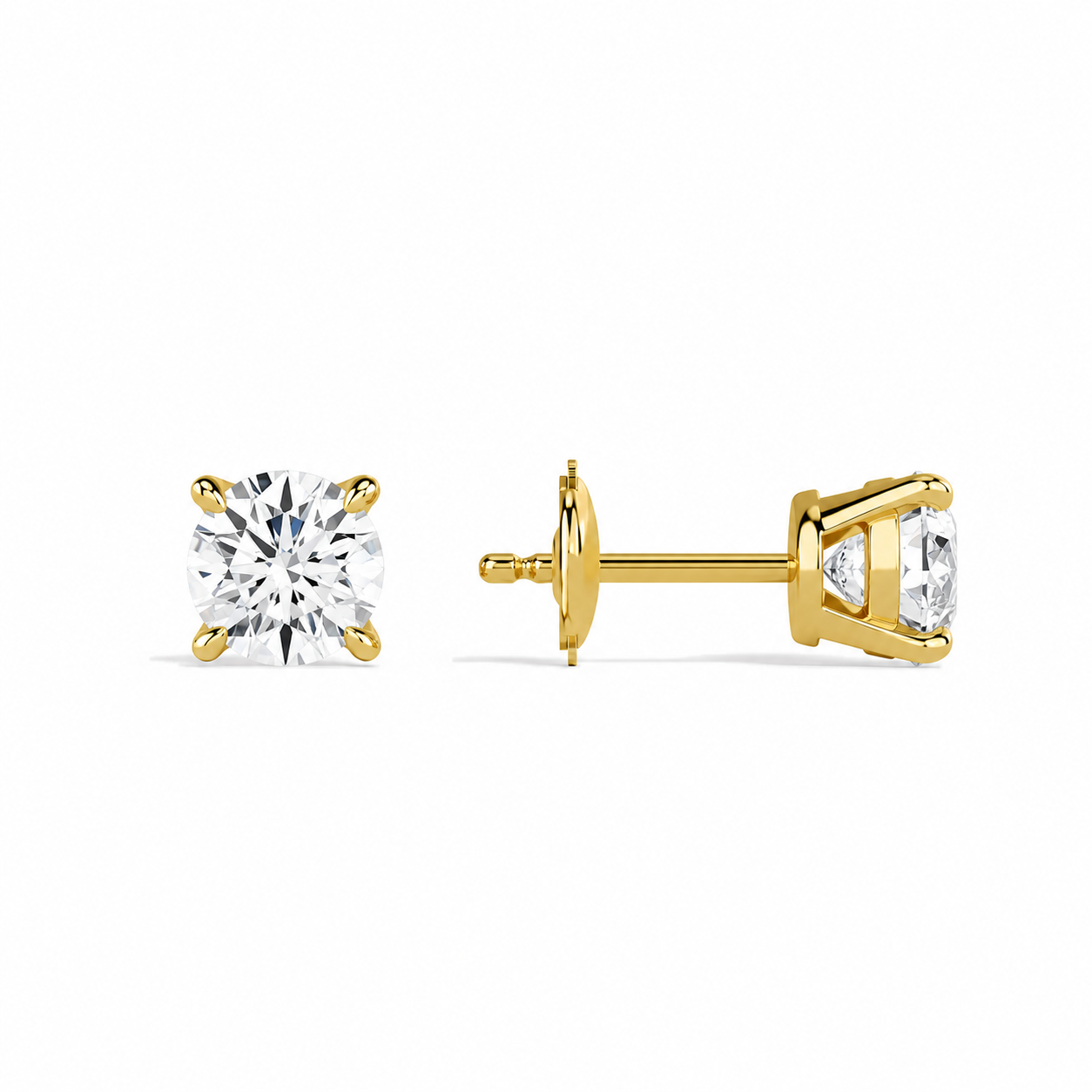

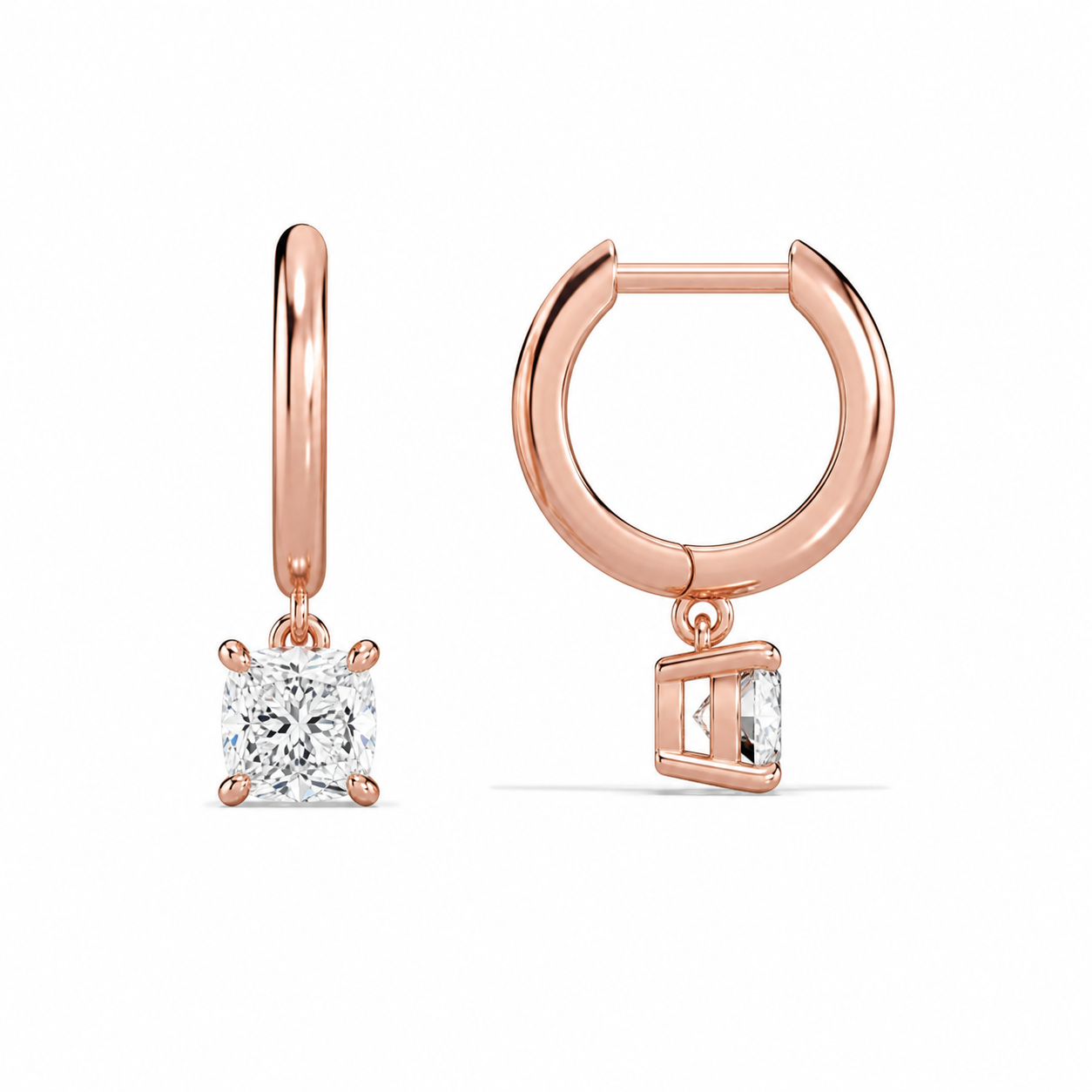

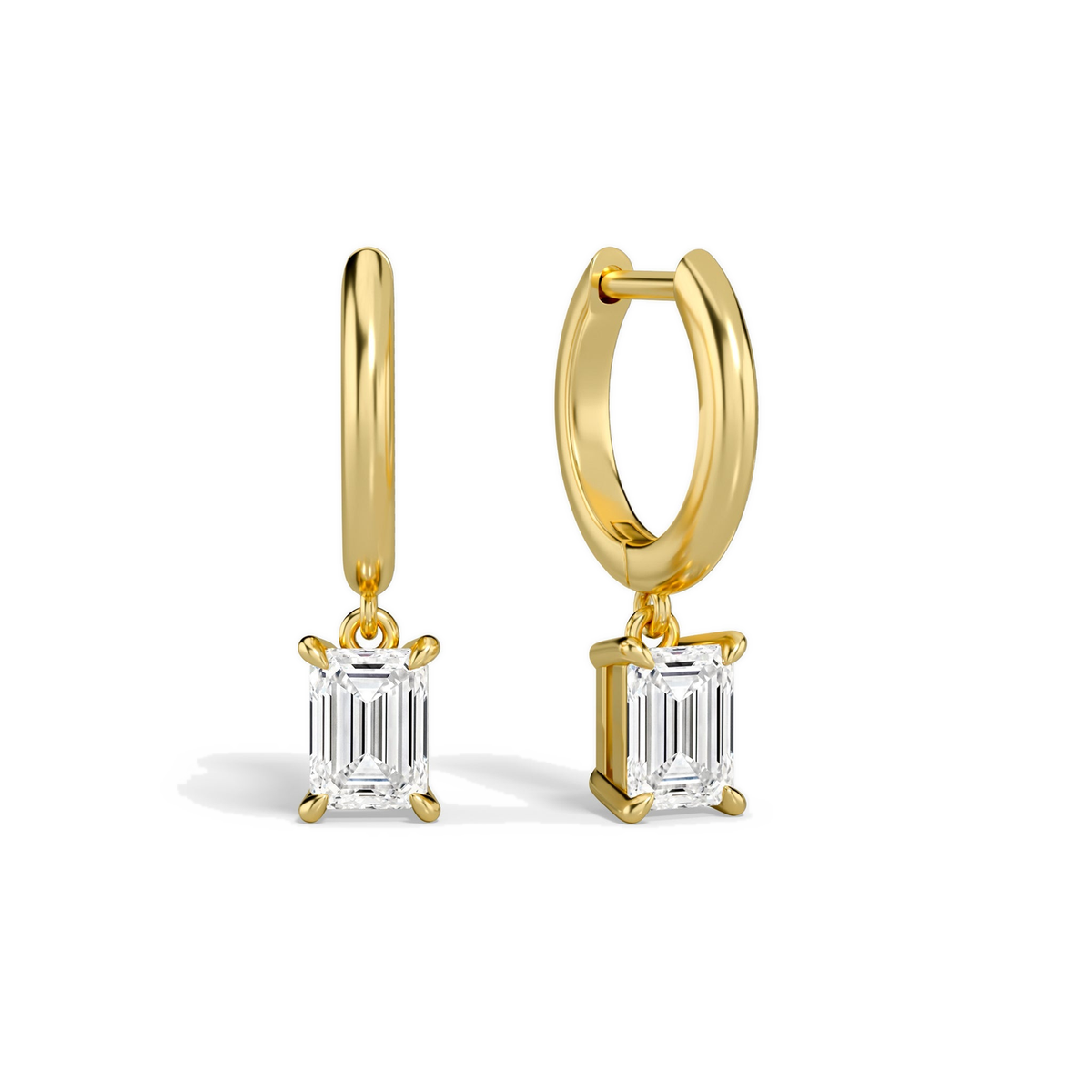
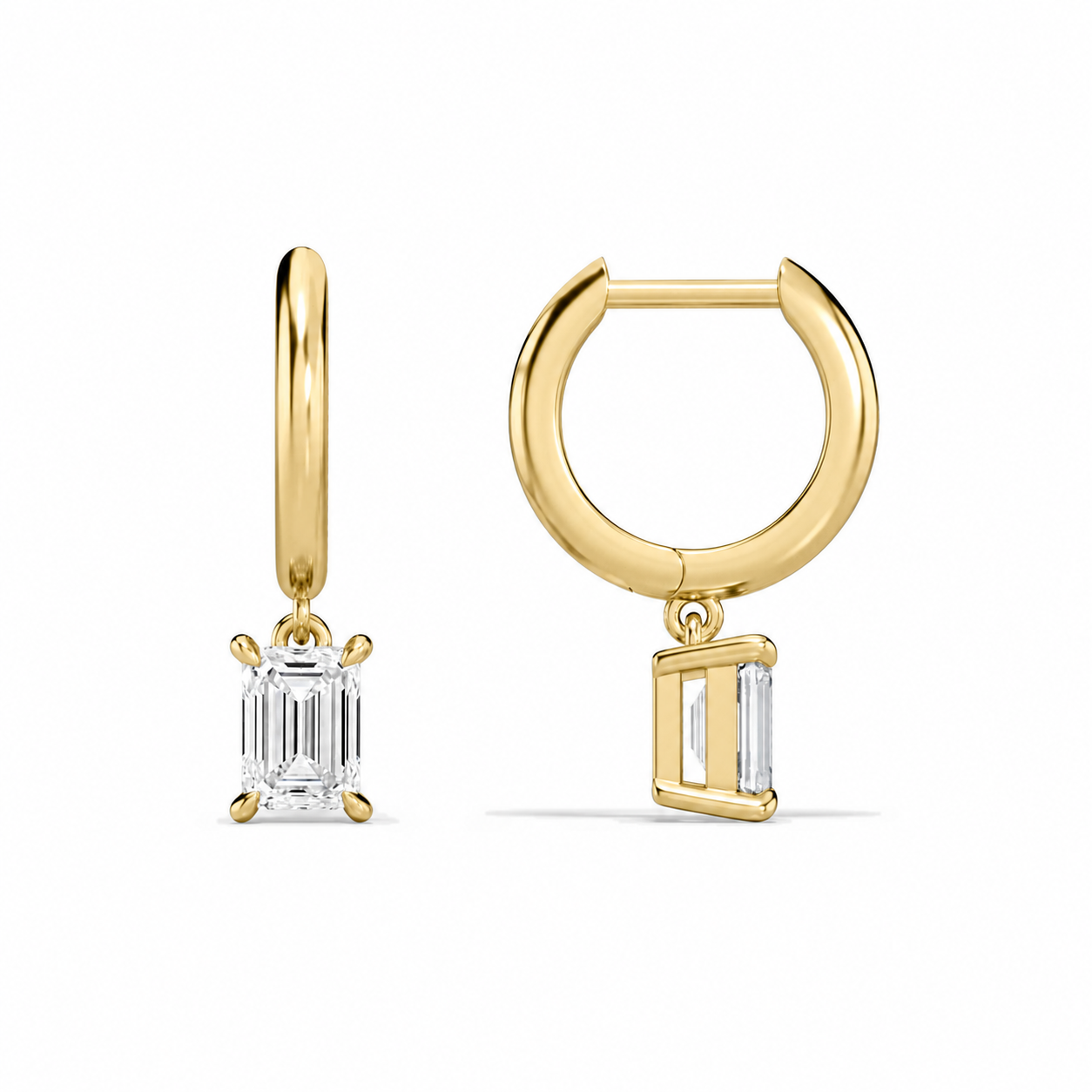
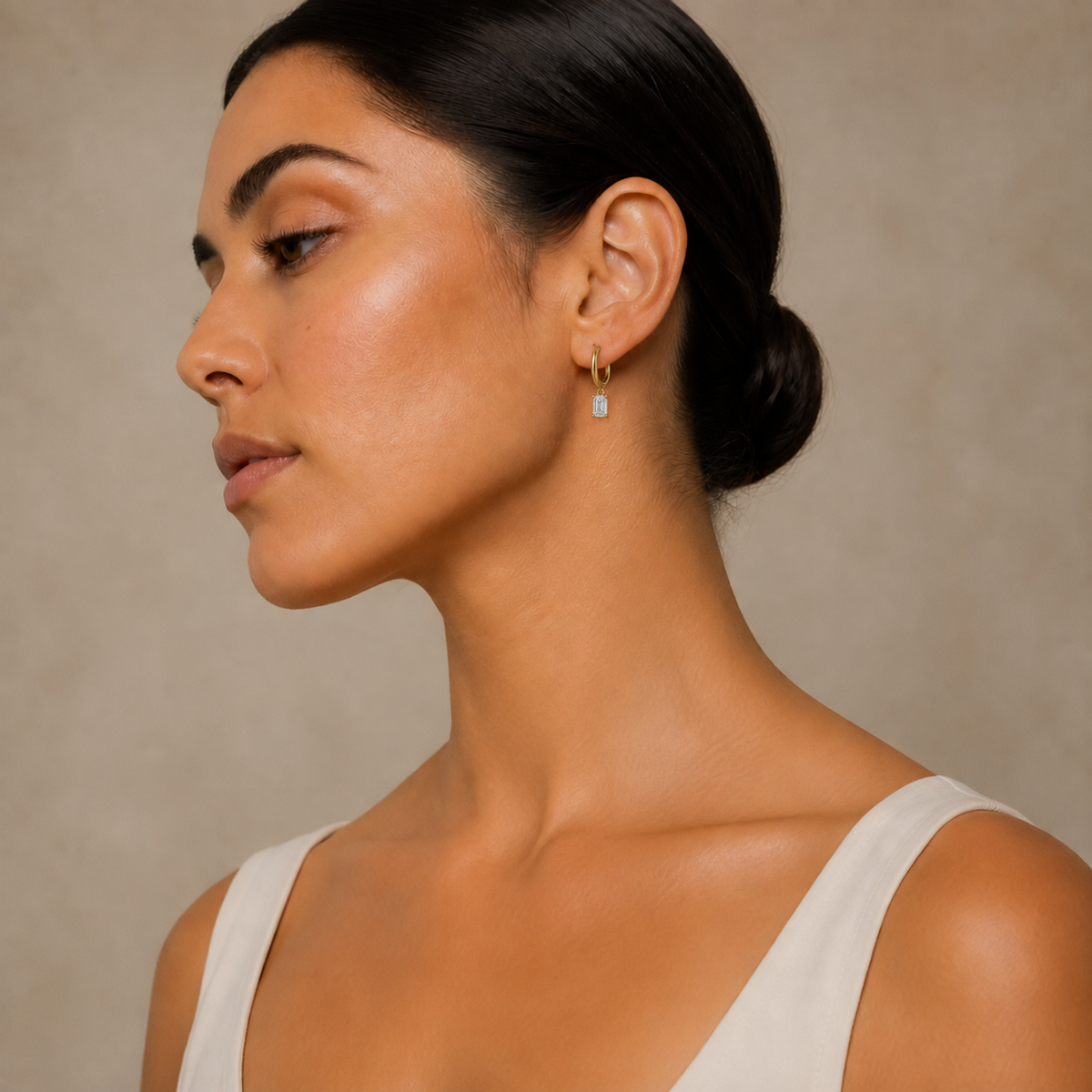
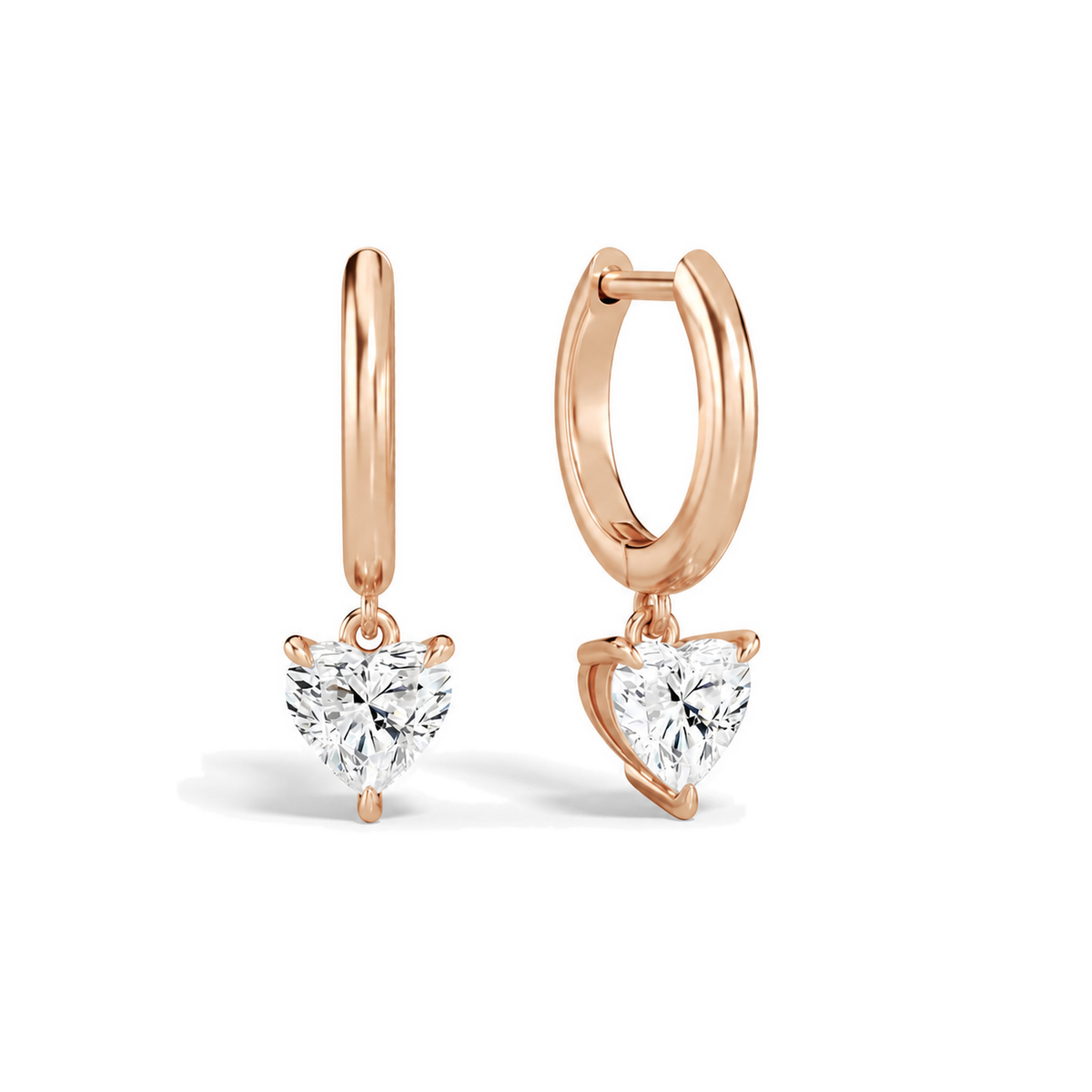
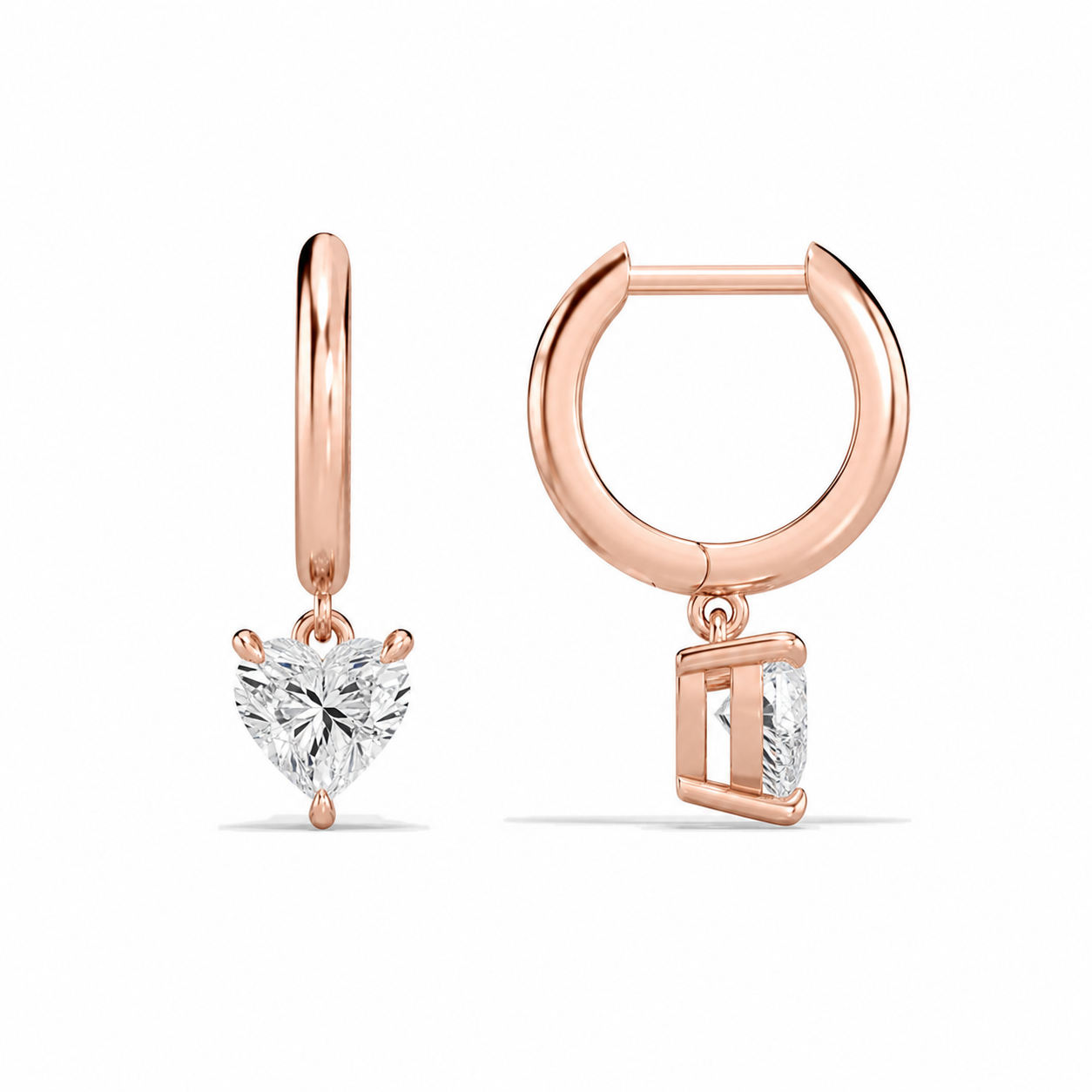

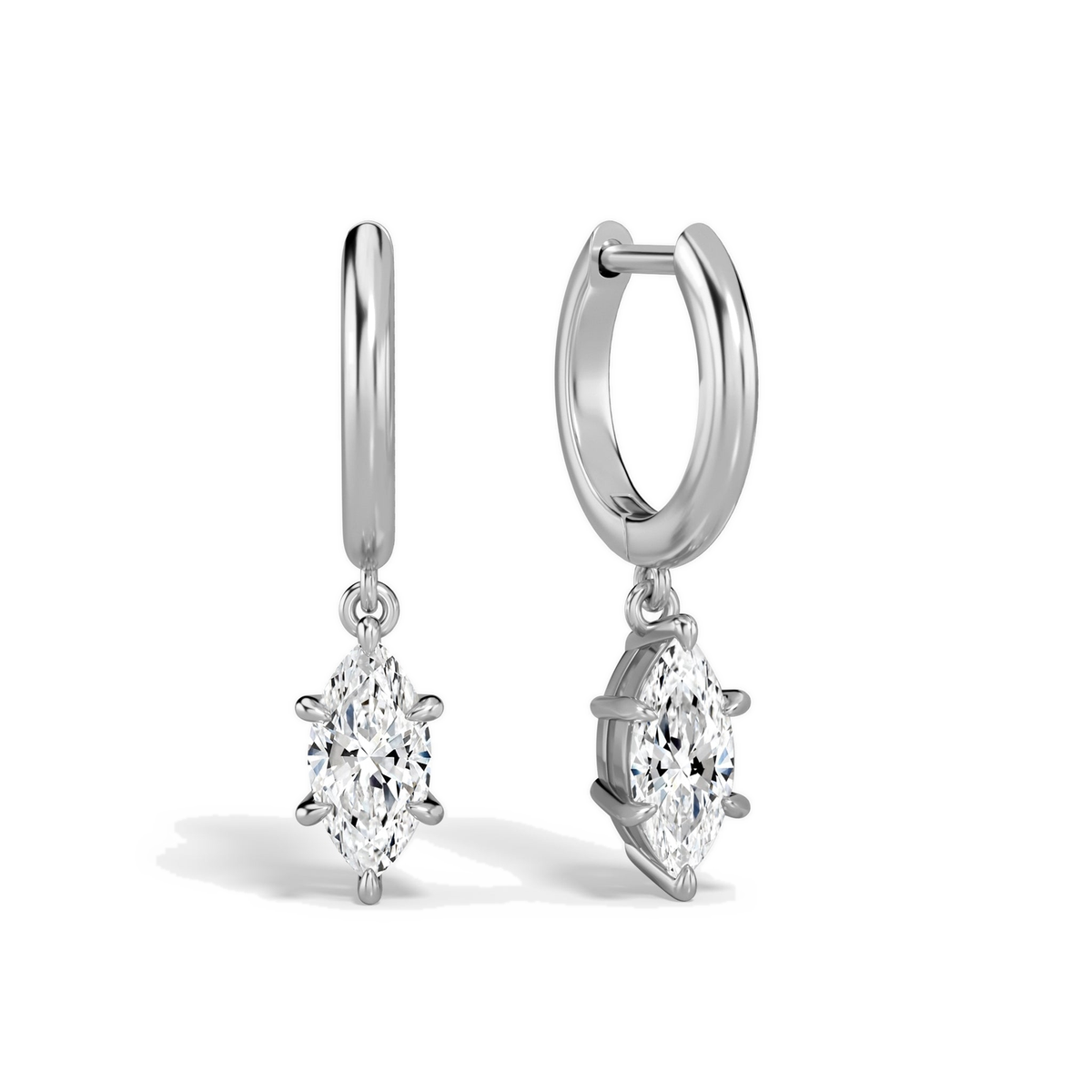


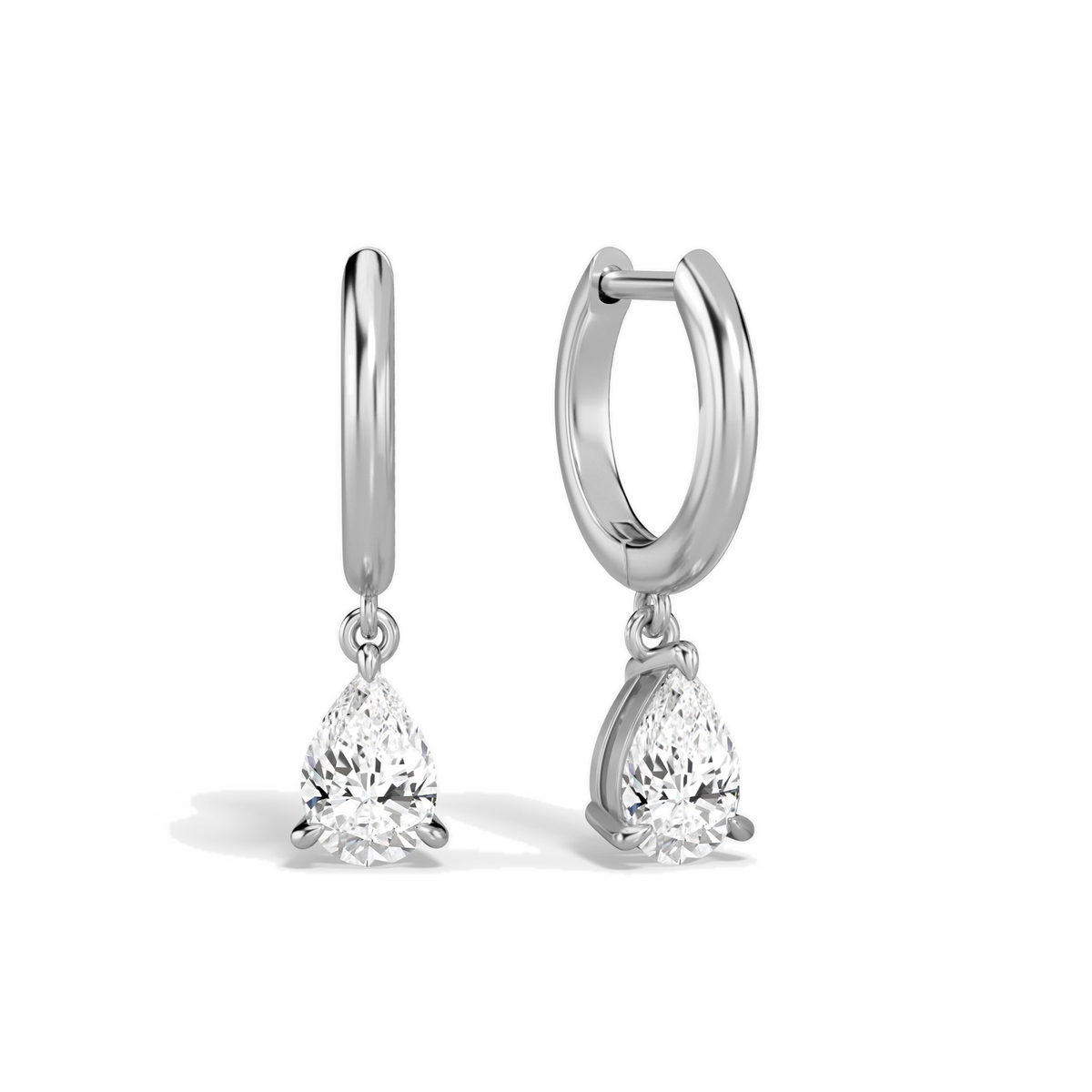
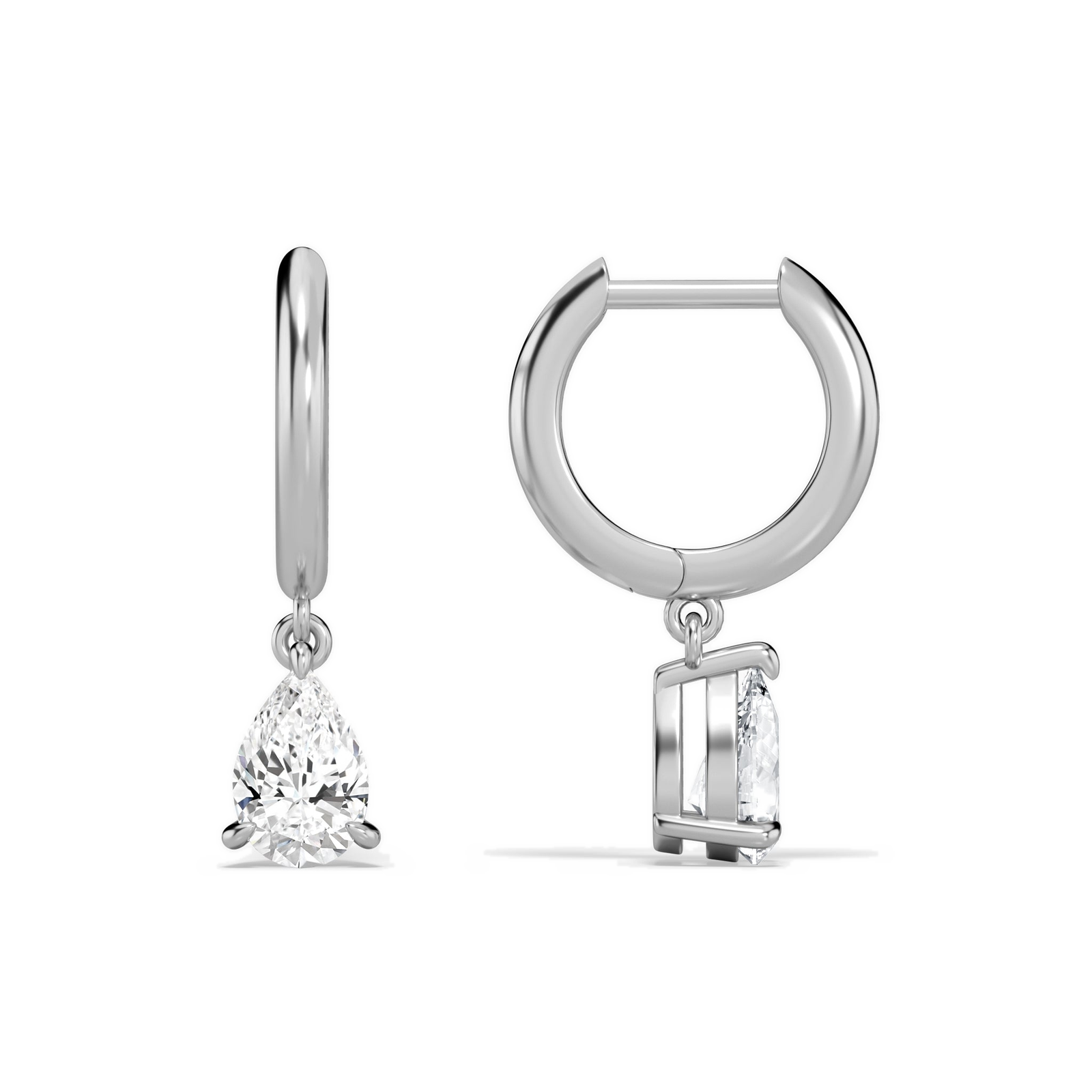


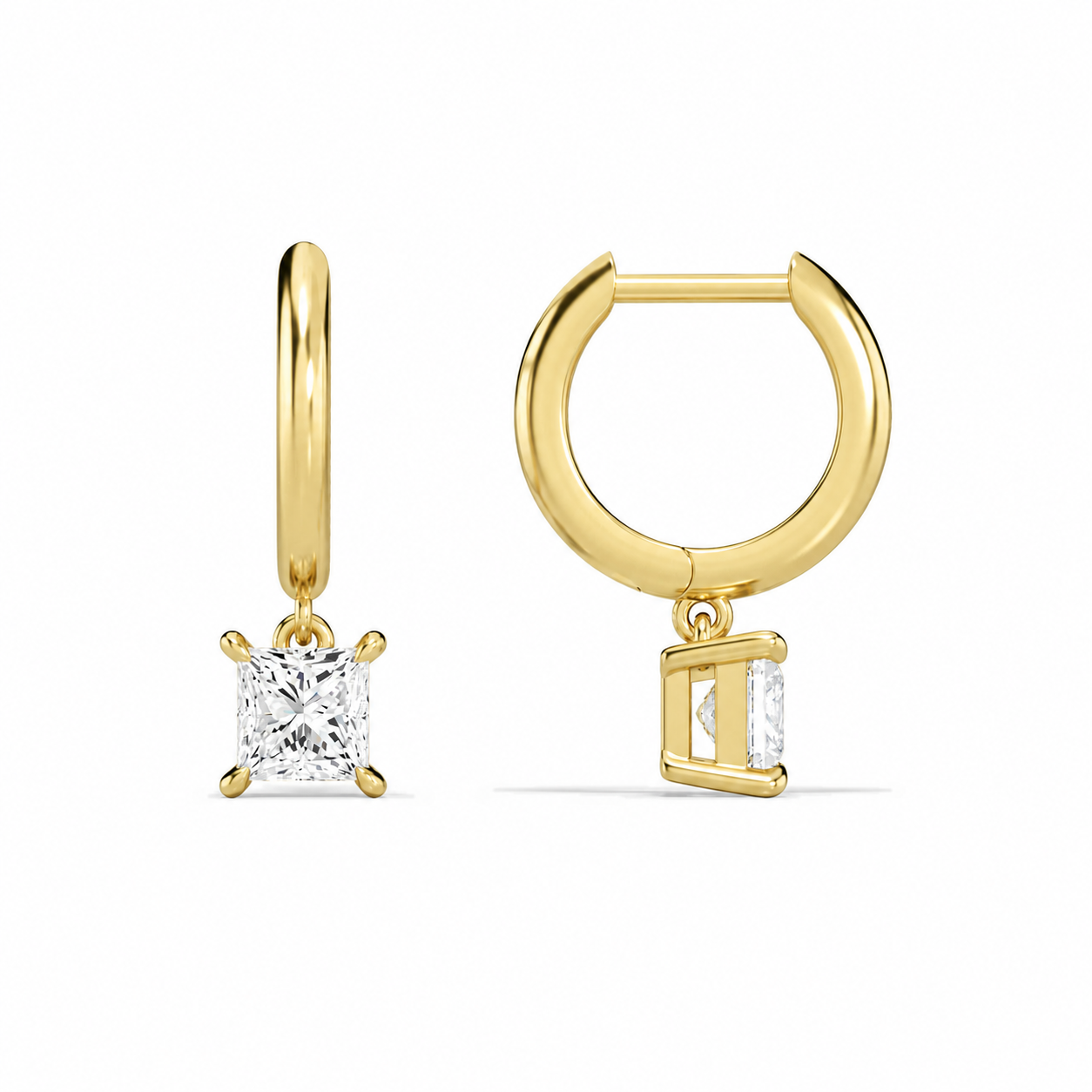


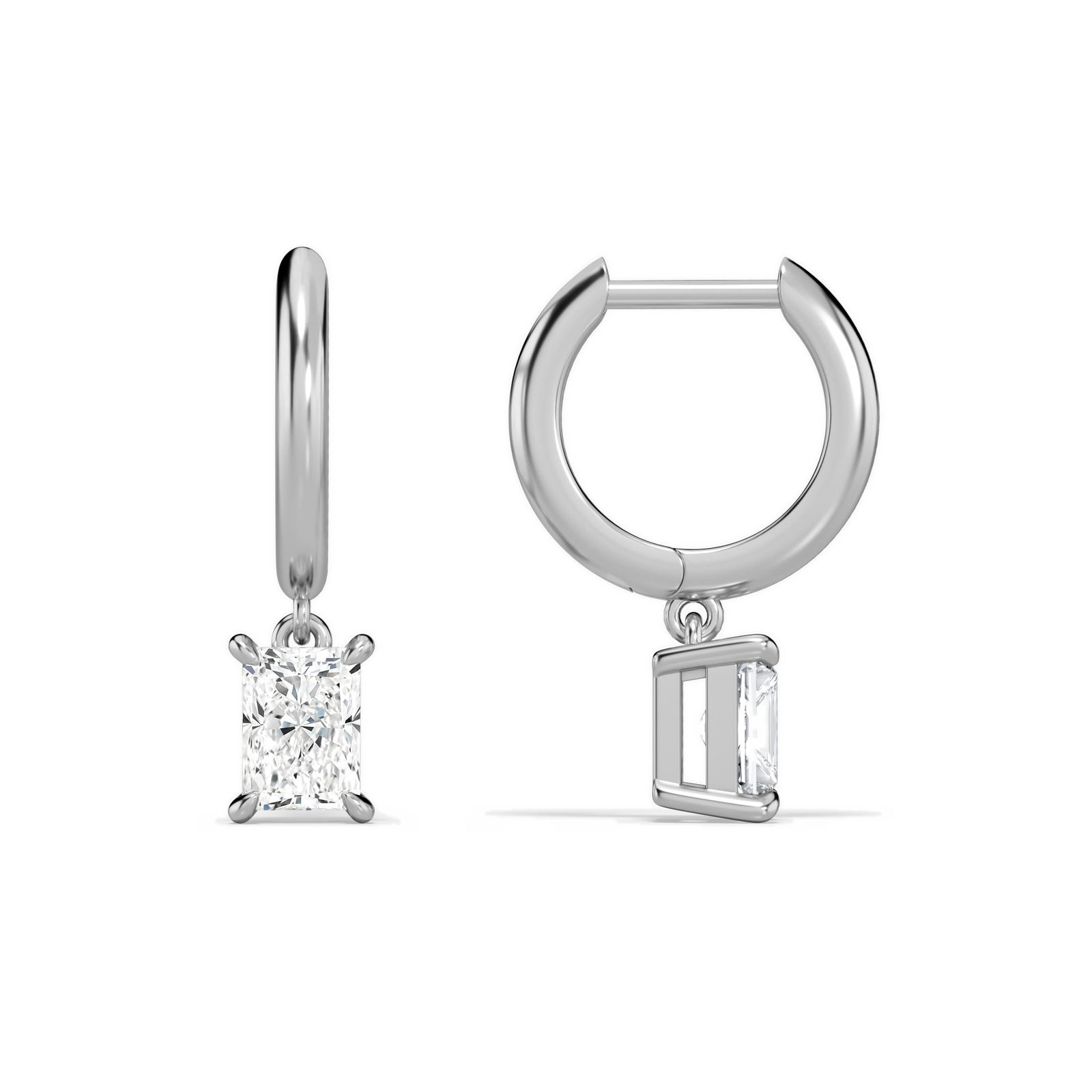


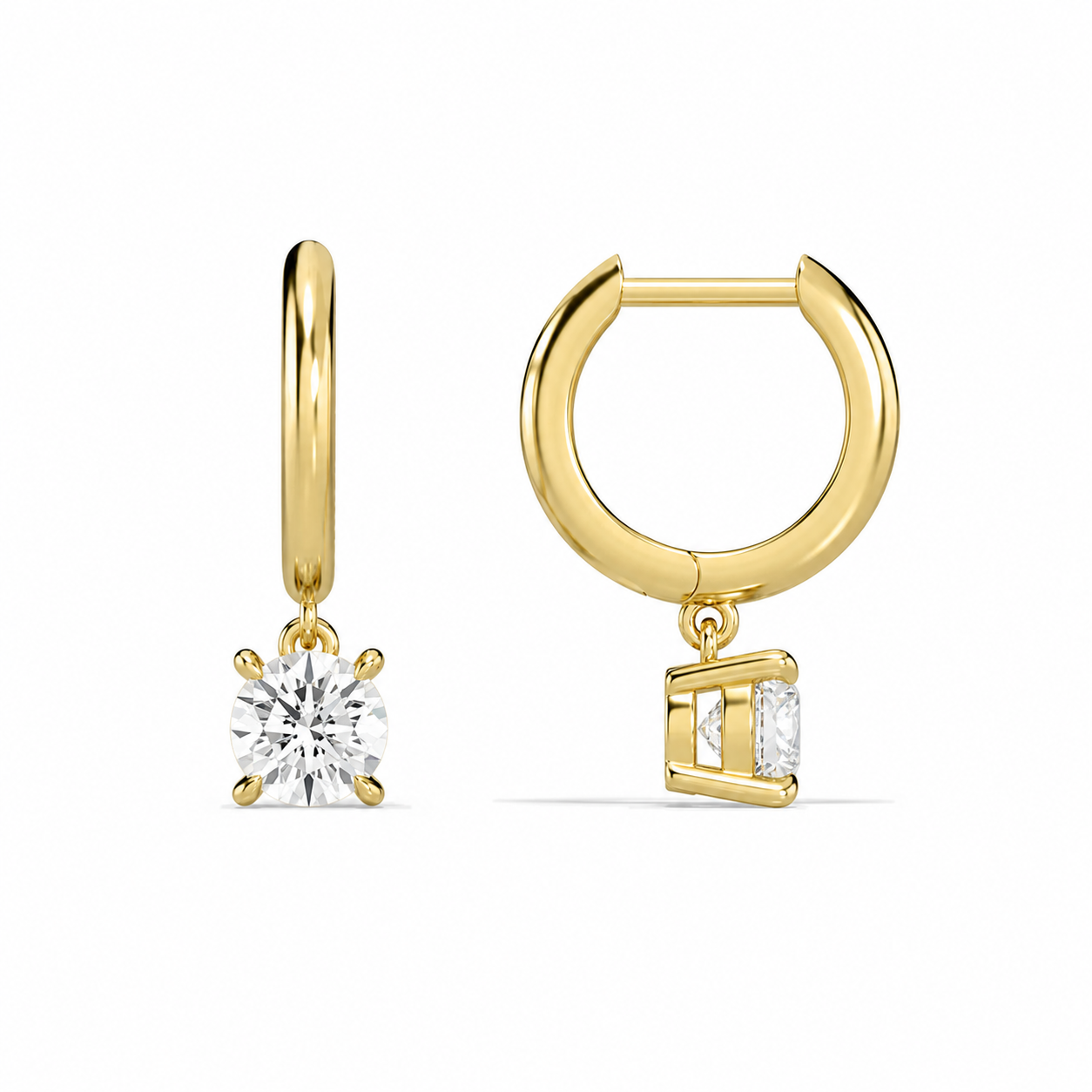

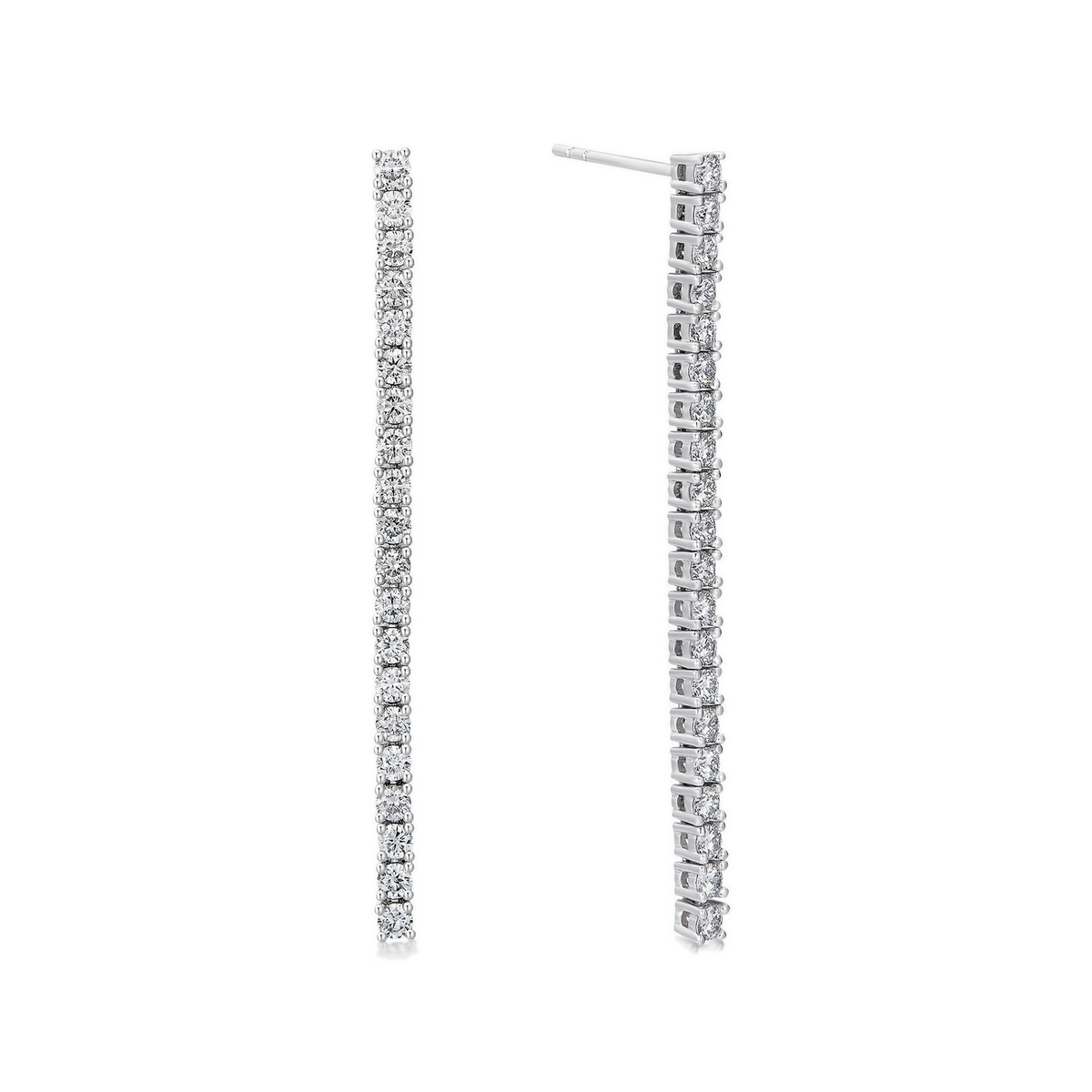

Lab-Grown Diamond Earrings: Light in Relation to the Ear
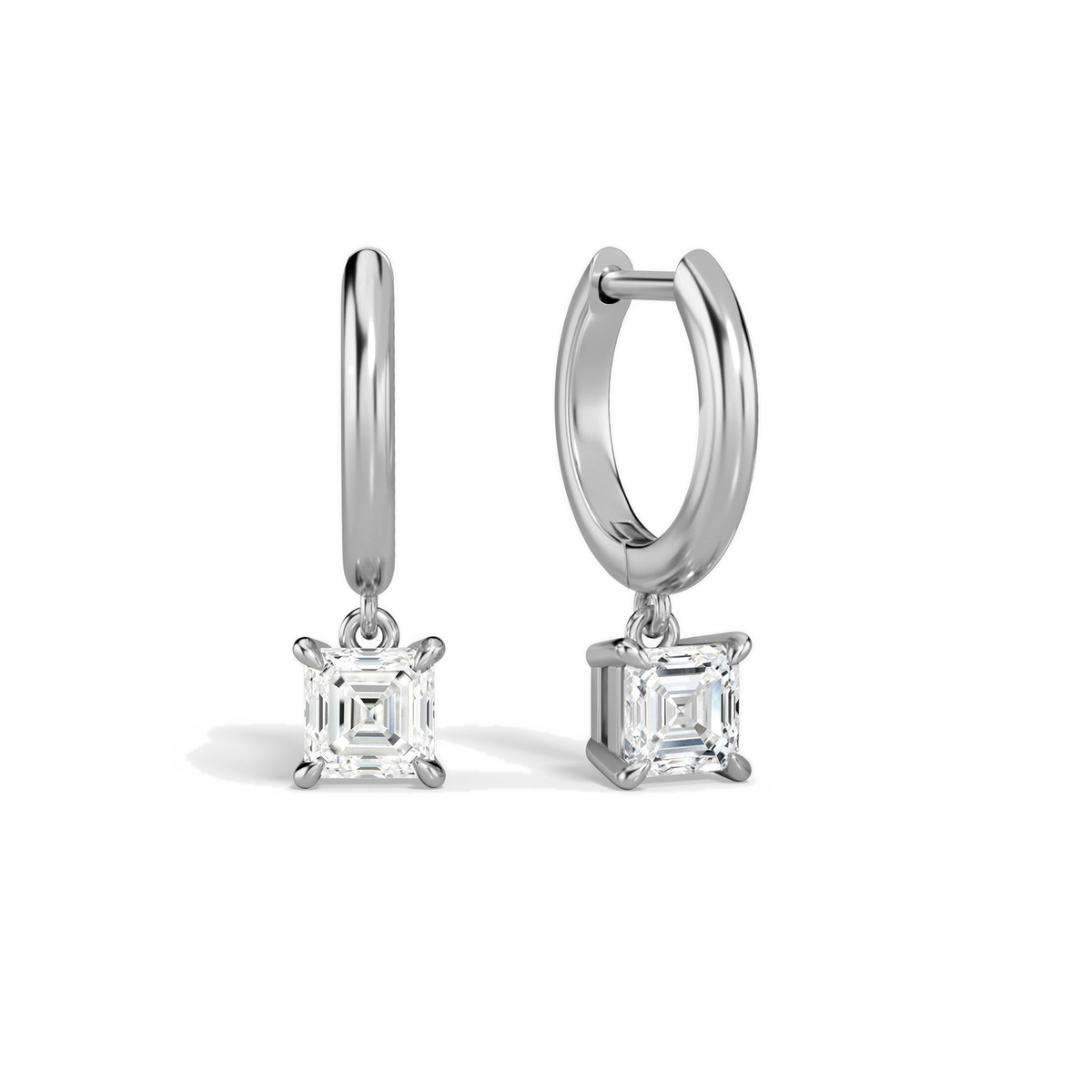
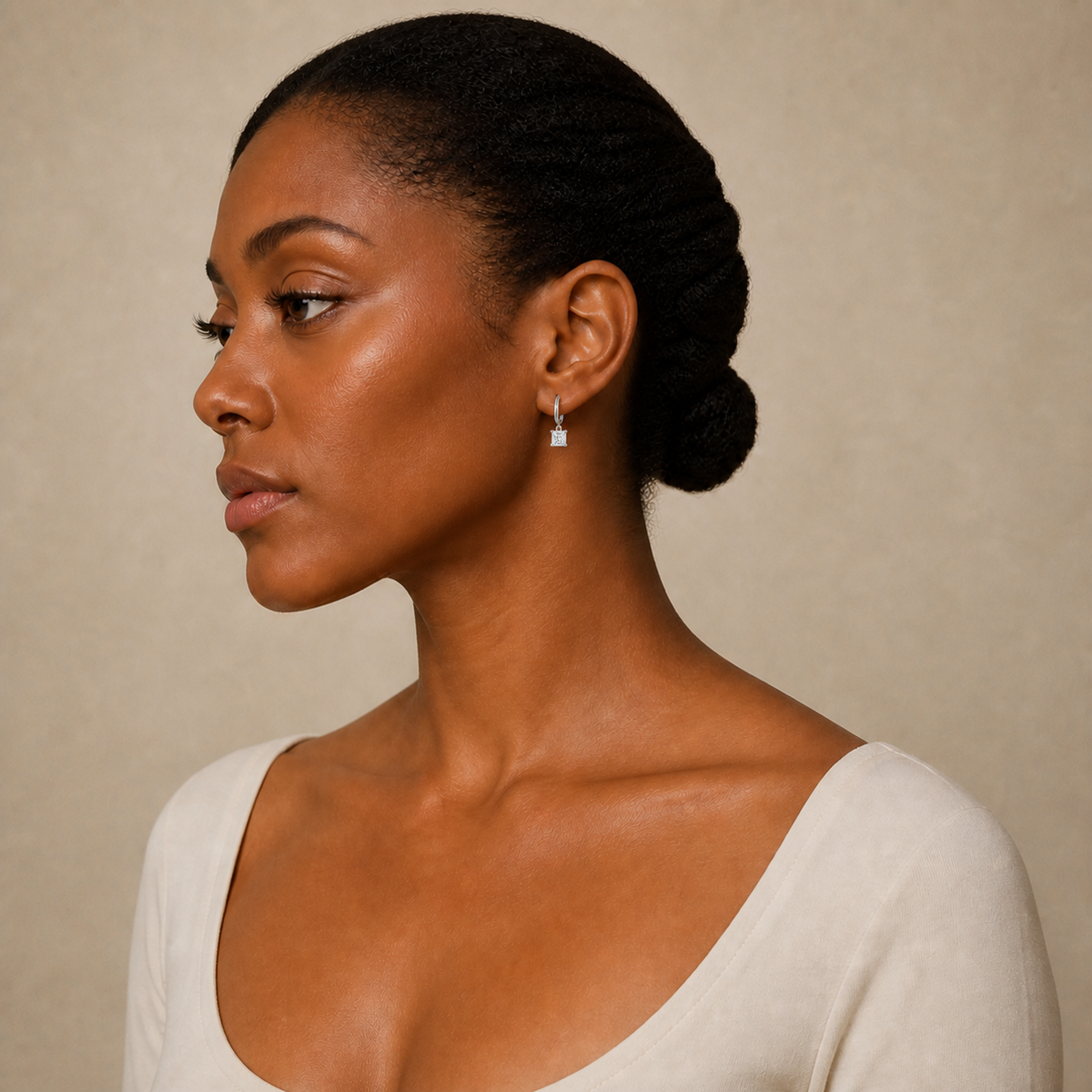
Earrings are read in relation to the face, the ear, and movement. A stud holds its composition close to the lobe. A huggie or hoop draws an arc around it. A suspended diamond introduces an interval, then responds to each turn of the head. Burvonti’s current collection moves across all three ideas in lab-grown diamond designs that range from contained points of light to articulated and extended lines.
The first decision is therefore structural, not simply a choice between subtle and bold. Distance from the ear, face-up dimensions, total length, setting boundary, metal, and motion determine how much presence a pair carries. A compact form can be visually strong; a longer earring can remain restrained when its line and spacing are finely judged.
Stillness, Arc, and Suspension
Studs concentrate attention. Burvonti’s public assortment includes prong, bezel, halo, cluster, climber, and graduated forms within the Stud Collection. Hoops and huggies create a circular or near-circular framework, while the current drop-huggie designs suspend a shaped center below a compact diamond-set arc. Longer dangle and tennis-line forms distribute movement through several points rather than one hinge alone.
These categories can overlap. A drop may begin with a stud or huggie; a climber is secured like a stud but extends along the ear; an inside-out hoop places diamonds where the arc remains visible from more than one angle. Classification helps comparison, but the exact product architecture—where it attaches, bends, turns, and ends—provides the useful answer.
Shape Changes Both Outline and Orientation
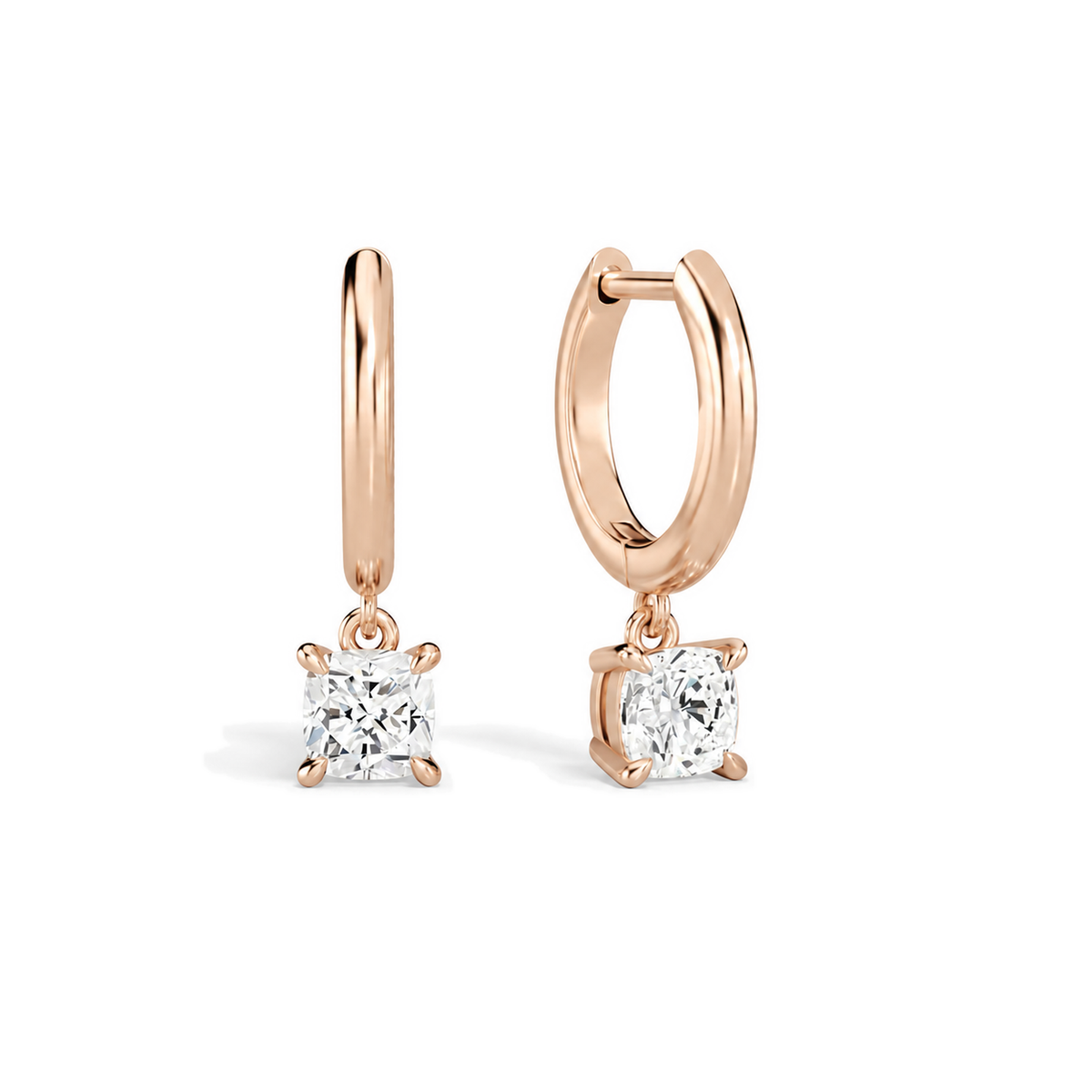
The current public Collection represents Round, Oval, Cushion, Pear, Princess, Emerald, Marquise, Asscher, Radiant, and Heart centers. In a close-set stud, the outline is read within a small fixed frame. In a drop, that same shape also creates direction: an elongated diamond may extend the vertical line, while a square or cushion form can interrupt it with greater visual width.
Nominal shape does not guarantee identical presence. Compare individual dimensions, length-to-width relationship where relevant, setting coverage, and how the pair is oriented. Symmetry between left and right matters, but a matched pair should be judged through visible scale, outline, and response together—not through a promise of numerical identity in every characteristic.
Setting Defines the Visible Edge
Prongs leave more of the diamond perimeter open. A bezel gives it a continuous metal boundary. A halo widens the complete face-up composition with smaller diamonds. Along a hoop or line drop, shared or repeated prongs can turn individual stones into rhythm. None of these names establishes automatic comfort, security, or light performance; exact proportions and execution decide the result.
Burvonti’s current public product details identify prong-set and bezel constructions. They also identify several closure systems: secure lock backs on the present Stud assortment, hinge openings with posts that snap closed on many huggie designs, and lever backs on selected hoops. These are useful construction facts, but retention still depends on fit, condition, correct use, and maintenance.
Read Total Carat Weight as a Pair Specification
Earring diamond weight is commonly presented as total carat weight for the pair. Two carats total, for example, should not be silently read as two carats in each earring. The product label and option name must be checked, especially where a design contains a center plus accents or several diamonds distributed across both sides.
Carat is weight, not diameter, length, or visible coverage. Shape, depth, number of stones, setting edge, halo, spacing, and metal can make two pairs with the same combined weight read differently. For meaningful comparison, bring total weight together with individual diamond or design dimensions and the complete face-up composition.
Balance Includes the Front, Side, and Back
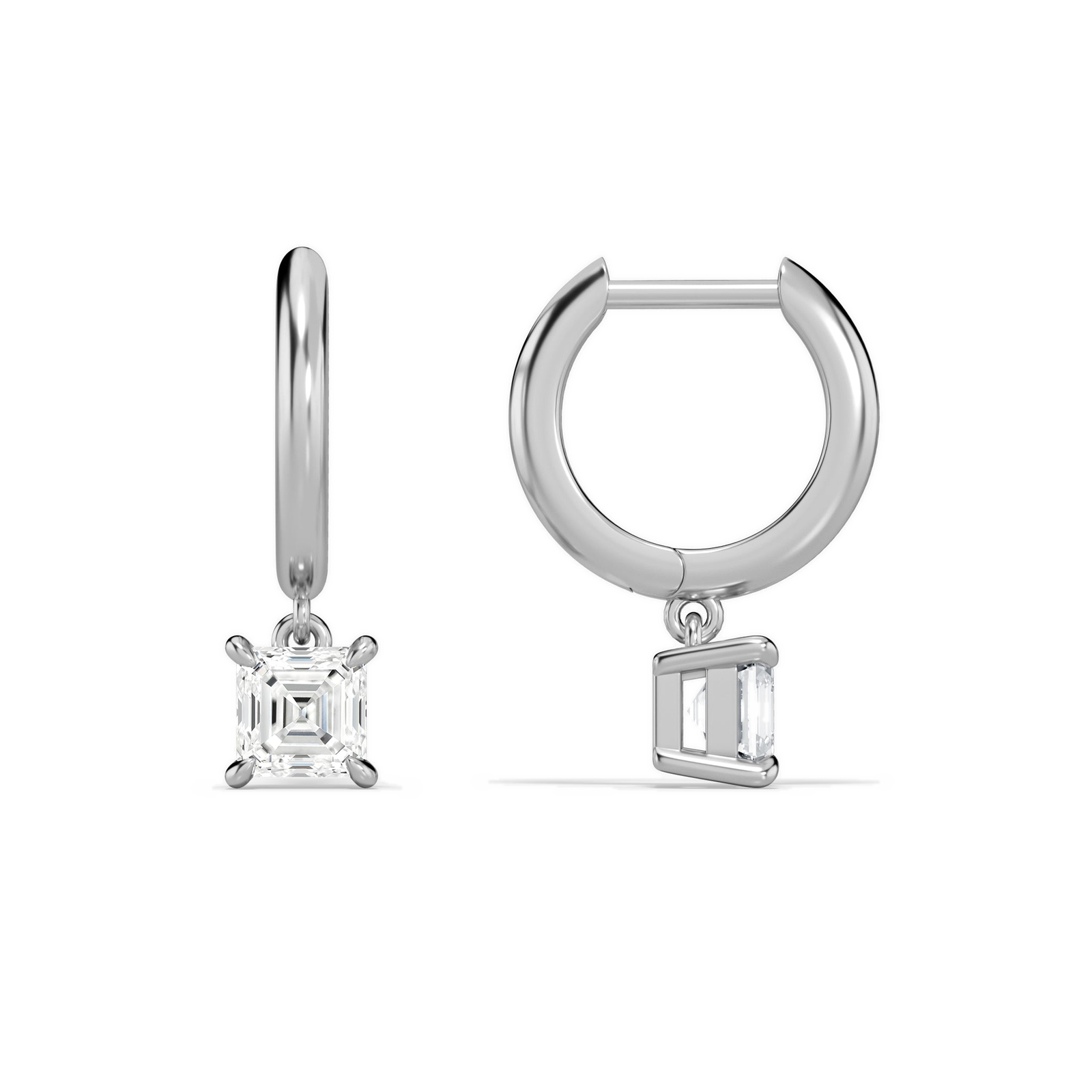
An earring is not only its face-up image. Setting depth influences projection from the lobe. A drop needs enough articulation to move as intended without losing its line. Hoop diameter changes the arc around the ear. Post length and backing affect how the piece meets the wearer, but comfort cannot be guaranteed from a closure name or product category.
Consider the wearer’s piercing placement, lobe anatomy, sensitivity, hairstyle, eyewear, clothing, and routine. A heavier or longer design may feel different over time from a compact stud. Exact product weight is not currently available as a Collection-wide fact, so the copy does not call any pair weightless, perfectly balanced, or suitable for uninterrupted wear.
Compose the Ear with Hierarchy
One pair can complete the composition. Multiple piercings create a wider field: a close stud can anchor a small hoop; a shaped bezel can answer a drop without repeating it; one articulated piece can carry movement while smaller points remain quiet. A clear focal point often makes the whole ear easier to read than several forms of equal visual weight.
Metal can connect or separate those elements. The current Collection is represented in 14K White, Yellow, and Rose Gold. Repeating one metal creates continuity, while mixed metals can work when shape, scale, or setting edge provides another link. Exact alloy, finish, sensitivity considerations, and alternative-metal feasibility remain product-specific.
Precision That Moves with the Wearer
Burvonti pairs responsibly sourced lab-grown diamonds with settings considered at the scale of the ear. Laboratory-grown diamonds are diamonds rather than simulants; documentation should still be read according to its scope. A report for an individual principal stone does not automatically describe every accent or the complete pair.
Custom possibilities may refine shape, scale, metal, setting, drop length, or closure when structurally feasible. Store pairs so diamonds and metal do not abrade one another, close chains or articulated elements without sharp bends, and use a gentle cleaning method suited to the complete construction. Arrange inspection if a stone moves, a hinge or backing changes, or the earrings receive significant impact.
Frequently Asked Questions
What types of lab-grown diamond earrings does Burvonti currently offer?
The current public Collection includes studs, huggies, hoops, articulated drops, a longer line drop, a dangle, a climber, and an inside-out hoop across prong, bezel, halo, cluster, and multi-stone structures.
How are studs, hoops, huggies, and drop earrings different?
Studs remain close to the lobe; hoops trace an arc; huggies use a compact hoop relationship; drops suspend part of the design below its attachment. A single product may combine categories, such as a drop suspended from a huggie.
Which diamond shapes are currently represented in Burvonti earrings?
The current public assortment represents Round, Oval, Cushion, Pear, Princess, Emerald, Marquise, Asscher, Radiant, and Heart. Shape availability, metal, setting, dimensions, and total carat options should be confirmed on the exact product.
What does total carat weight mean for earrings?
It generally states the combined diamond weight across the pair and all included diamonds described by that specification. It should not be read as the weight of each earring or each center unless the product explicitly says so.
Will two earrings contain perfectly identical diamonds?
A pair should be evaluated for coherent visible scale, outline, orientation, color, and overall response. Individual diamonds can have natural-looking growth characteristics and documented differences, so the copy does not promise identity in every measurement or clarity feature.
How do prong, bezel, and halo earrings differ?
Prongs leave more perimeter open, a bezel forms a continuous metal edge, and a halo expands the complete visual frame with smaller diamonds. Profile, coverage, maintenance, and appearance depend on the exact design.
What closures are used on current Burvonti diamond earrings?
Current public product details identify secure lock backs on the Stud assortment, hinge openings with posts that snap closed on many huggies, and lever backs on selected hoops. Confirm the exact product because the Collection contains more than one system.
Does a secure lock, hinge, or lever back guarantee that an earring cannot be lost?
No. Retention depends on correct engagement, fit, condition, wear, impact, and maintenance. Check the closure before wear and arrange inspection if it loosens, bends, or no longer engages as intended.
How do I choose an earring size for everyday wear?
Compare face-up dimensions, projection, total length, hoop diameter, movement, weight where documented, piercing placement, and routine. There is no universal carat or millimeter size that is comfortable or appropriate for every wearer.
Can diamond earrings be worn every day?
Many can be worn frequently, but suitability depends on setting, length, movement, closure, wearer anatomy, activity, and maintenance. Remove or protect them where impact, pulling, chemicals, or other conditions create avoidable risk.
How should a drop earring hang?
Its intended line depends on attachment point, articulation, total length, diamond distribution, and wearer anatomy. Review front and profile imagery and product dimensions rather than assuming every drop will hang identically on every ear.
Can I wear diamond earrings with multiple piercings?
Yes. Establish a focal piece, then compare spacing, scale, projection, and closure clearance across the ear. Piercing placement and anatomy determine whether specific pieces can sit together without unwanted contact.
Can I mix white, yellow, and rose gold earrings?
Yes. A repeated diamond shape, setting edge, or scale can connect different metals. The current public assortment is represented in 14K White, Yellow, and Rose Gold; exact alloy and sensitivity considerations remain product-specific.
Are all diamonds in Burvonti earrings independently graded?
Not necessarily. An individual principal stone may carry a report while accents or matched groups may be described through product-level specifications. Confirm what each document covers rather than extending one report to the full pair.
How should I clean lab-grown diamond earrings?
Use a gentle method suited to the diamonds, alloy, setting, hinges, posts, and backs. Avoid abrasive products and harsh chemicals, and do not assume ultrasonic cleaning is appropriate for every articulated or multi-stone design.
How should diamond earrings be stored?
Store the pair in separate soft compartments or positions so diamonds, posts, backs, hinges, and metal surfaces do not scratch or tangle with one another. Fasten closures where appropriate without forcing articulated parts.
Can Burvonti diamond earrings be customized?
Custom possibilities may include shape, scale, metal, setting, drop relationship, or closure when structurally feasible. Pair matching, documentation, comfort, timing, and price require individual confirmation.