
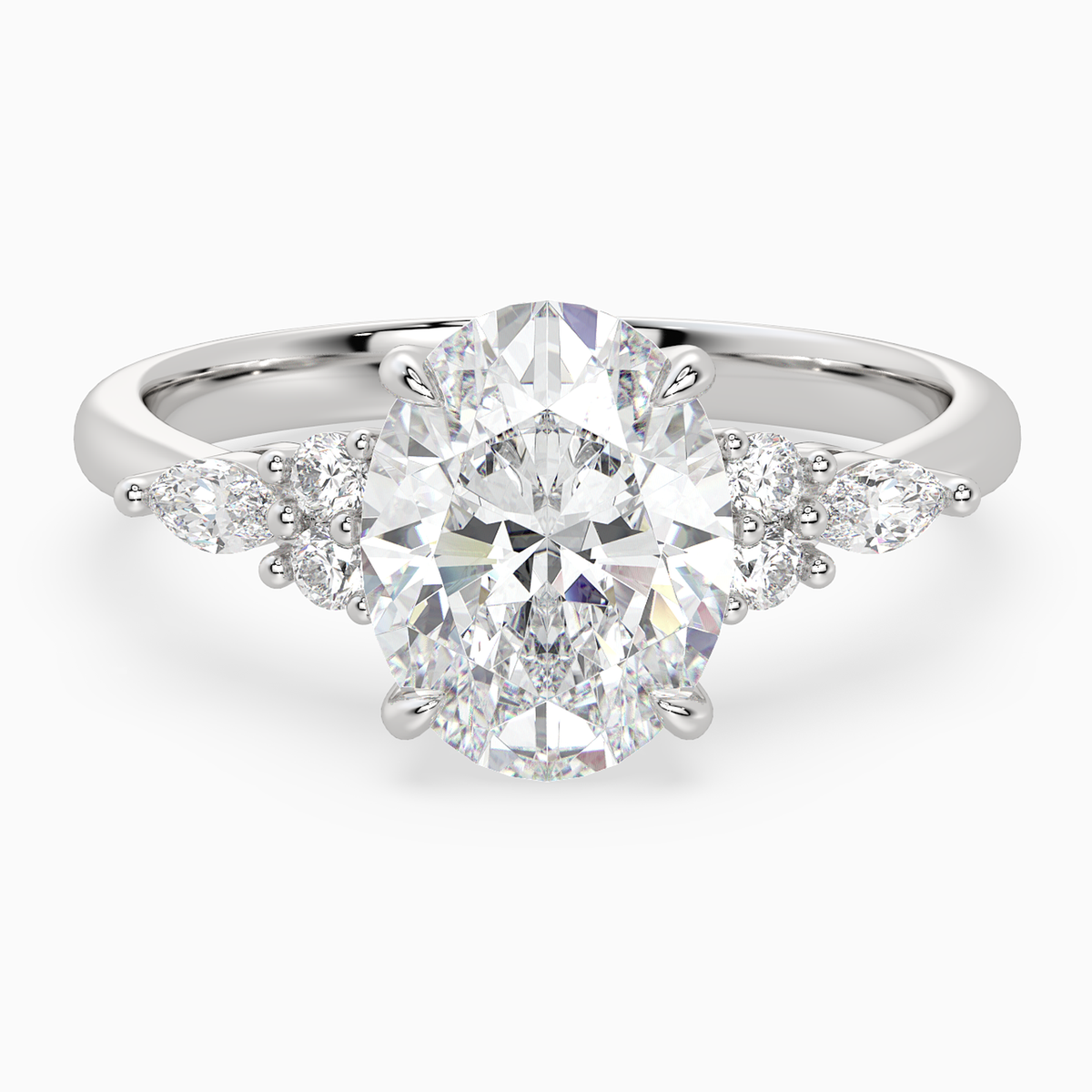


18K White Gold Engagement Rings
A softer white with greater gold content. 18K white gold brings quiet warmth to precise settings and continuity around the diamond.


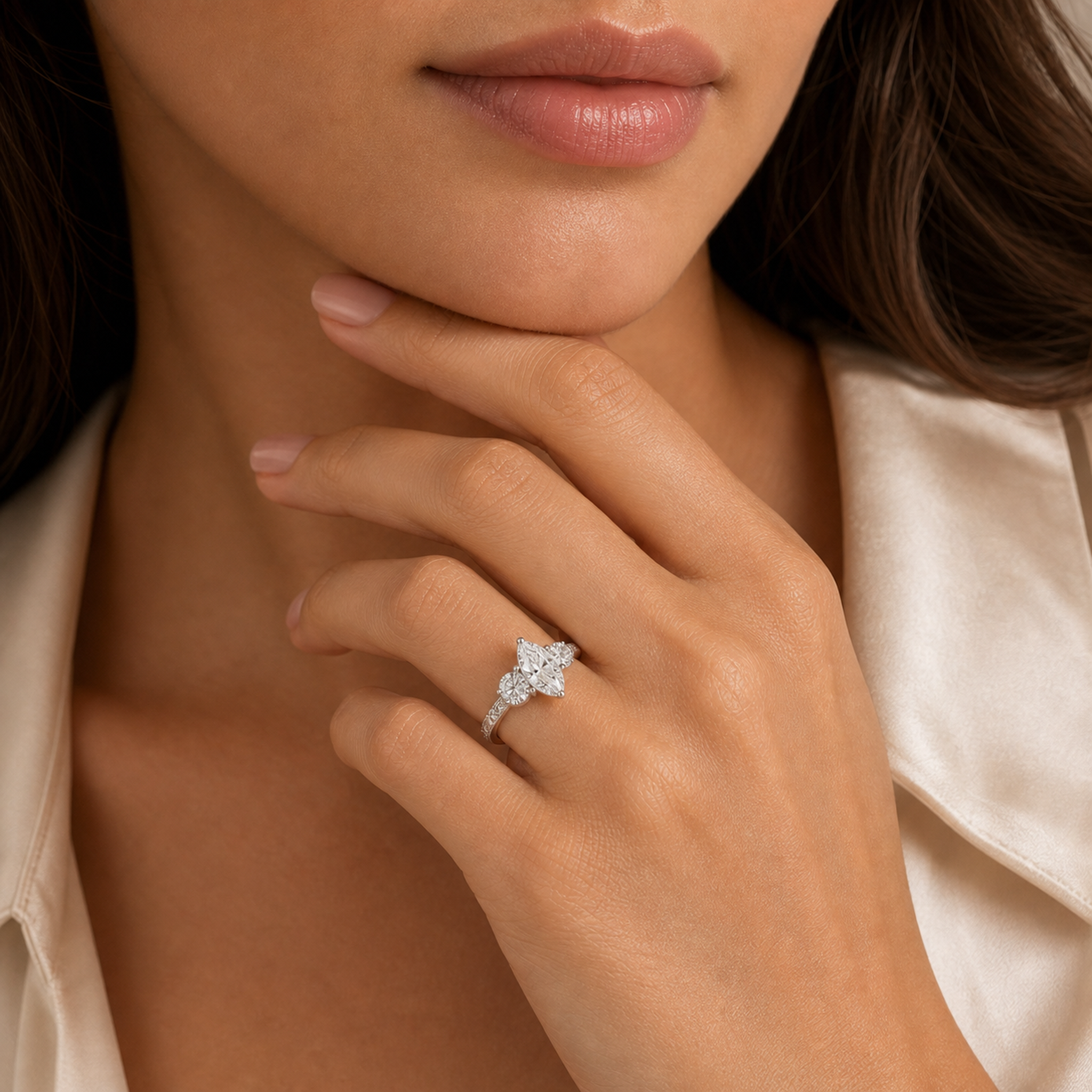


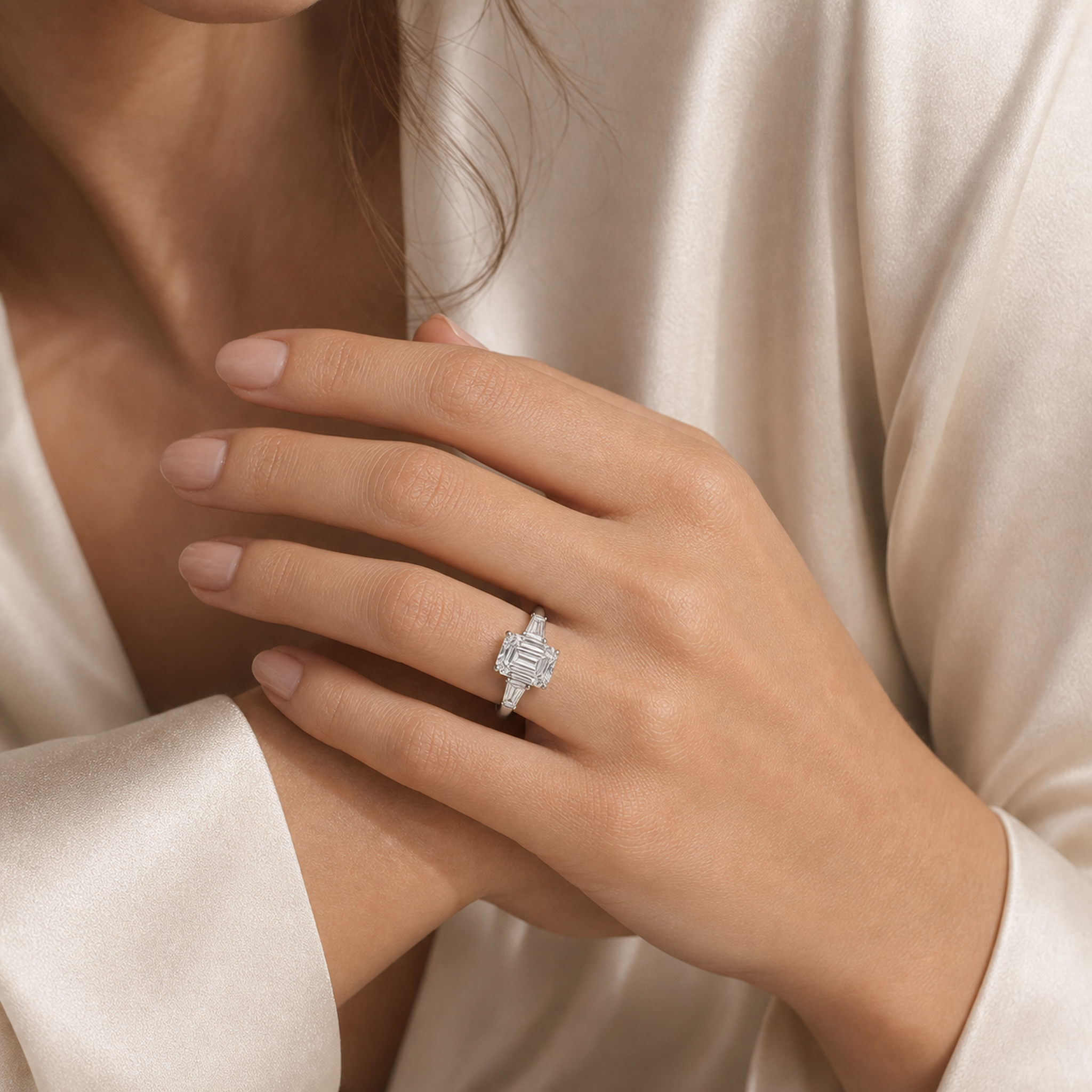
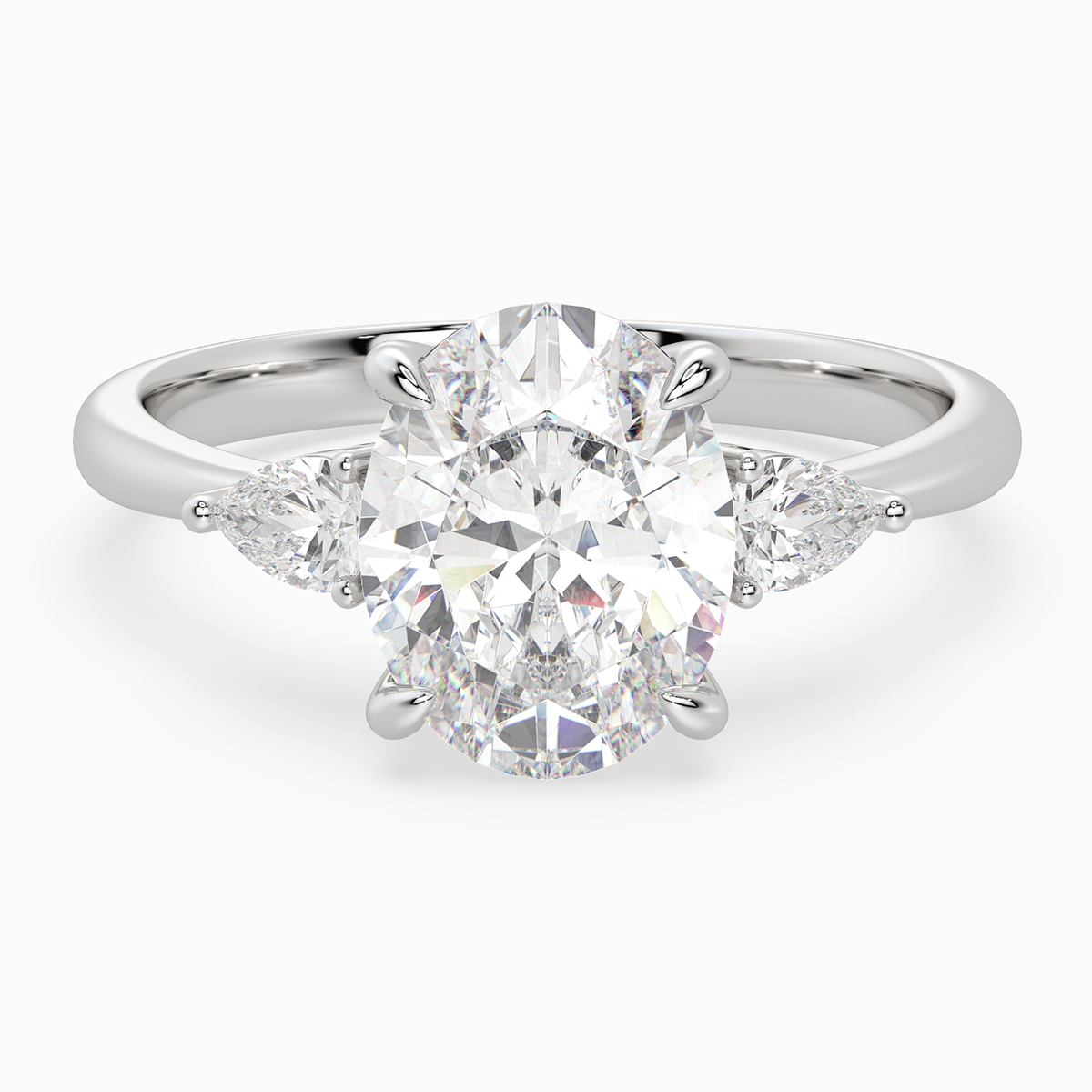


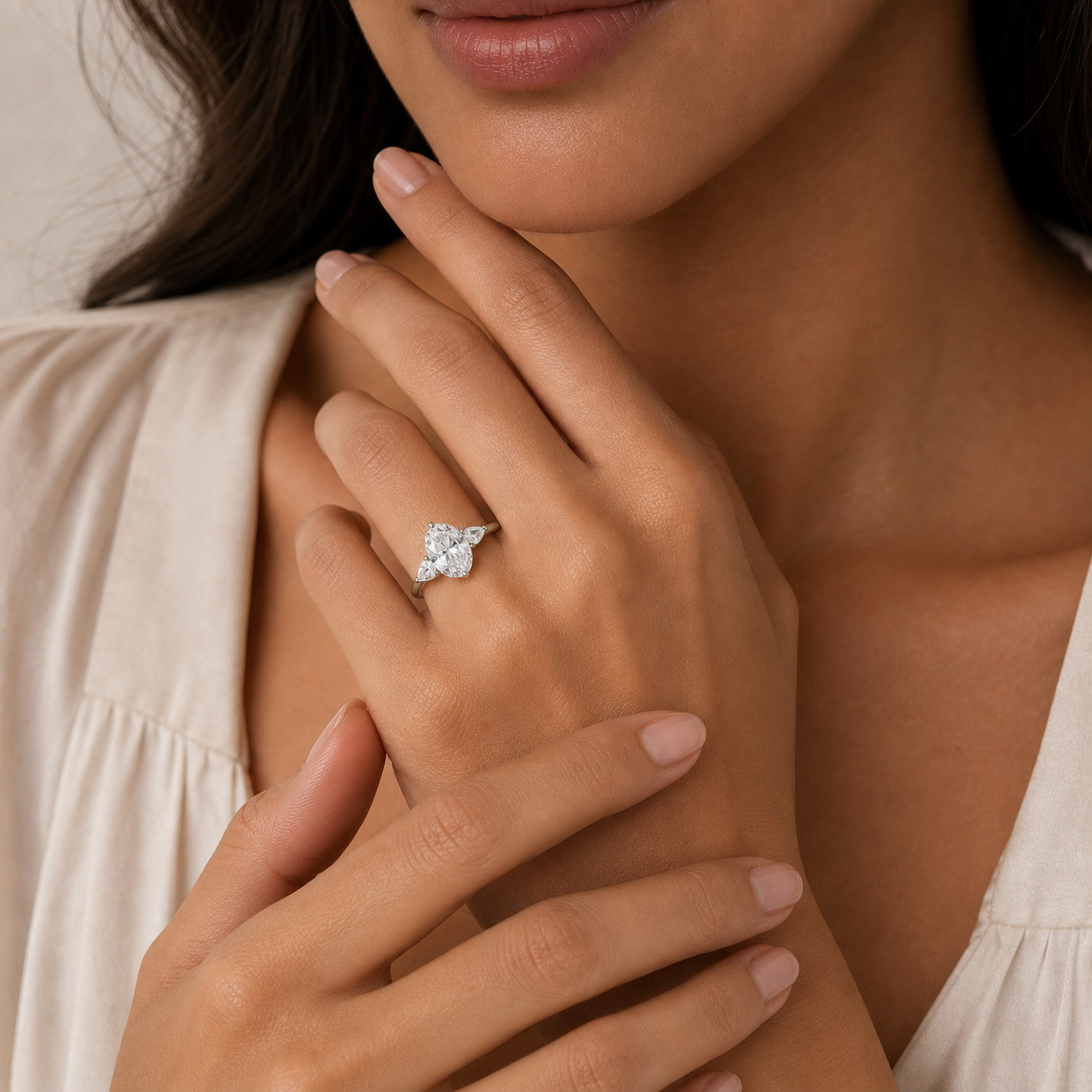


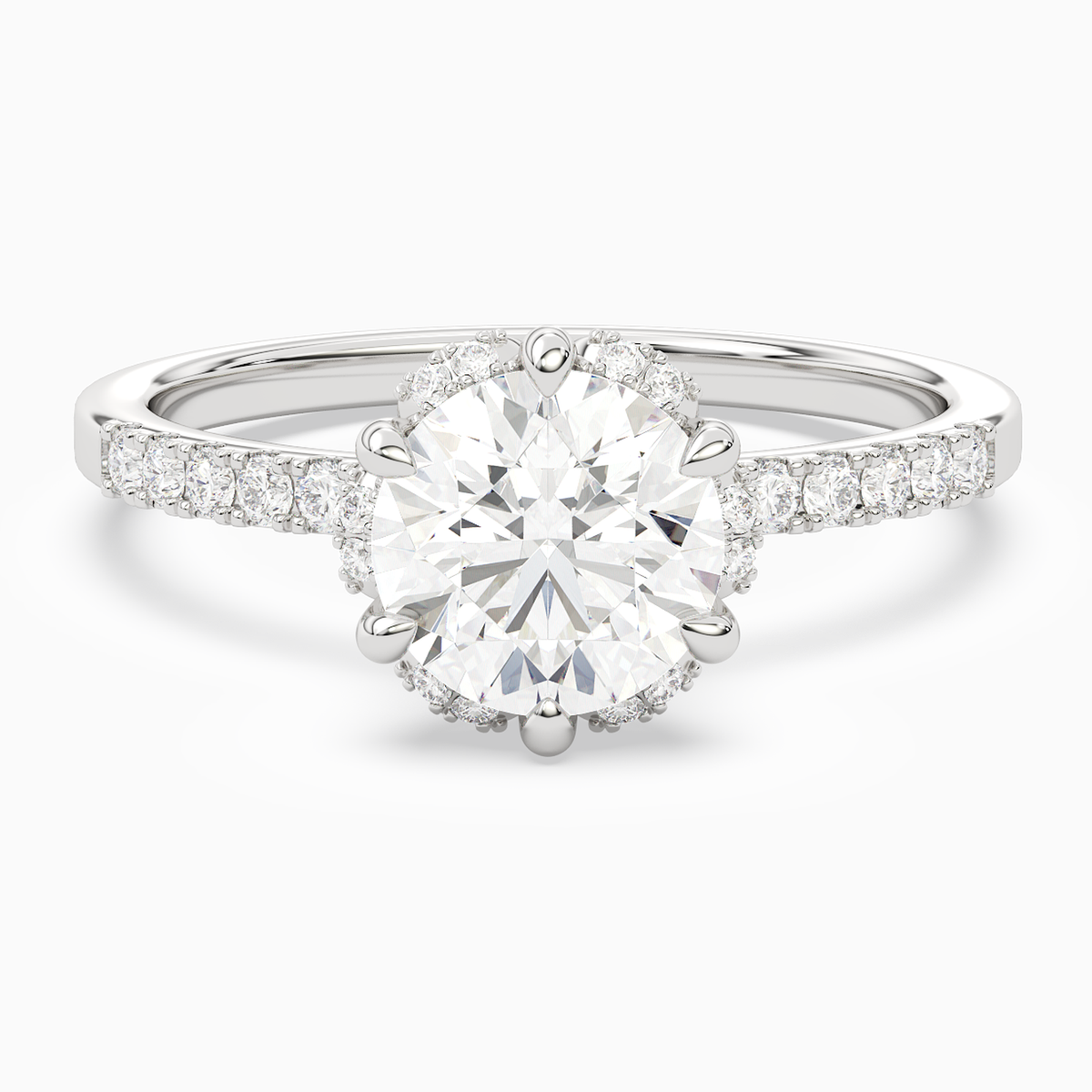
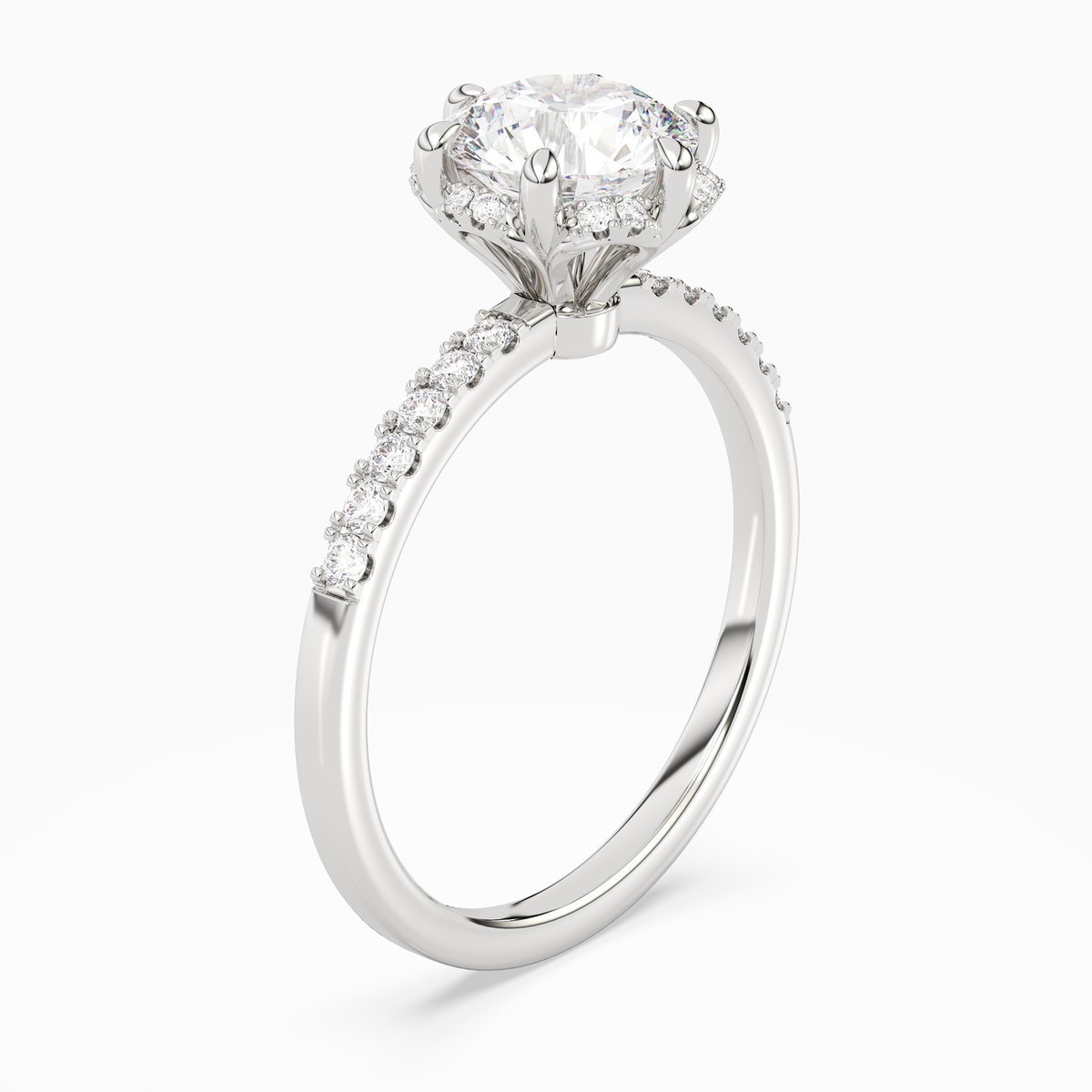
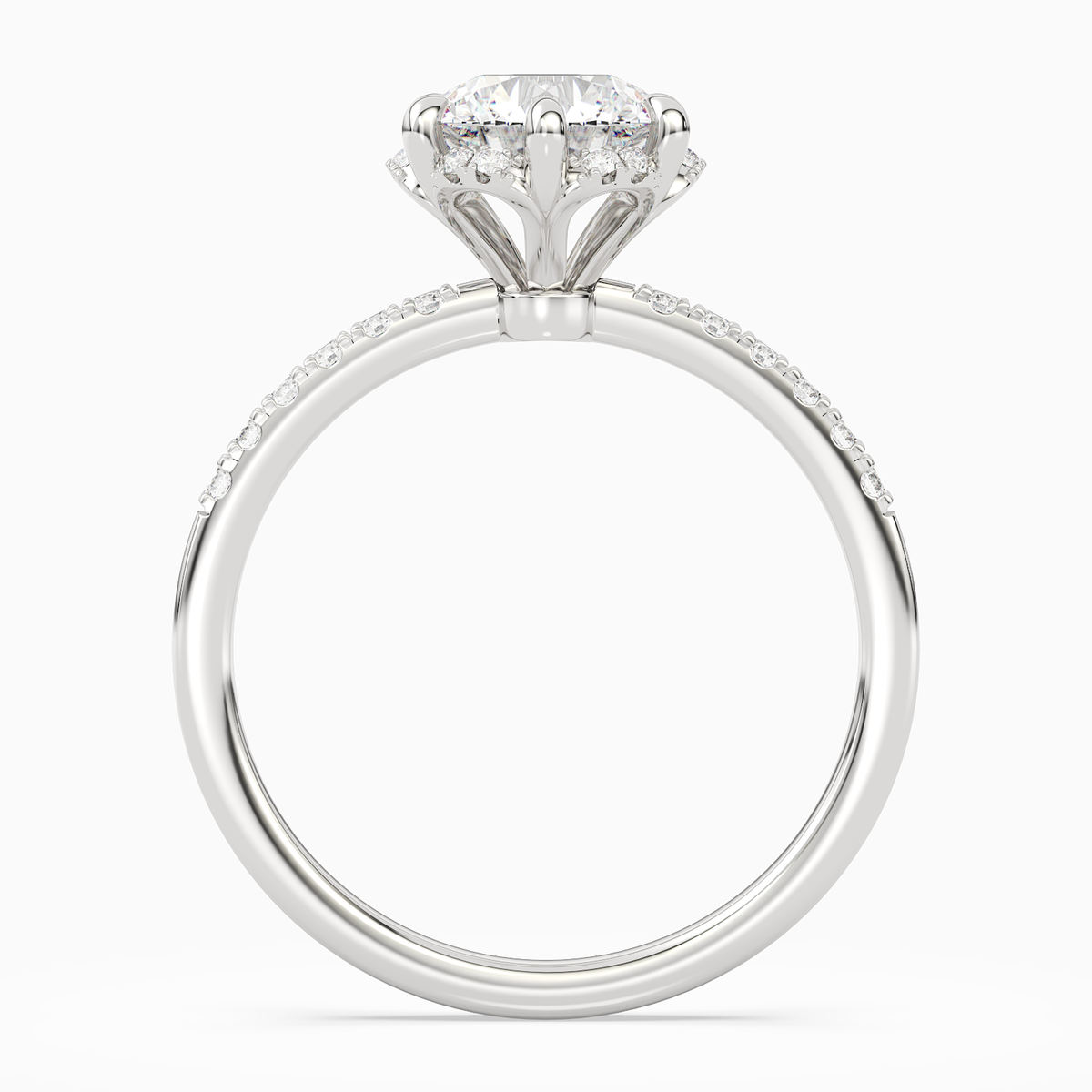

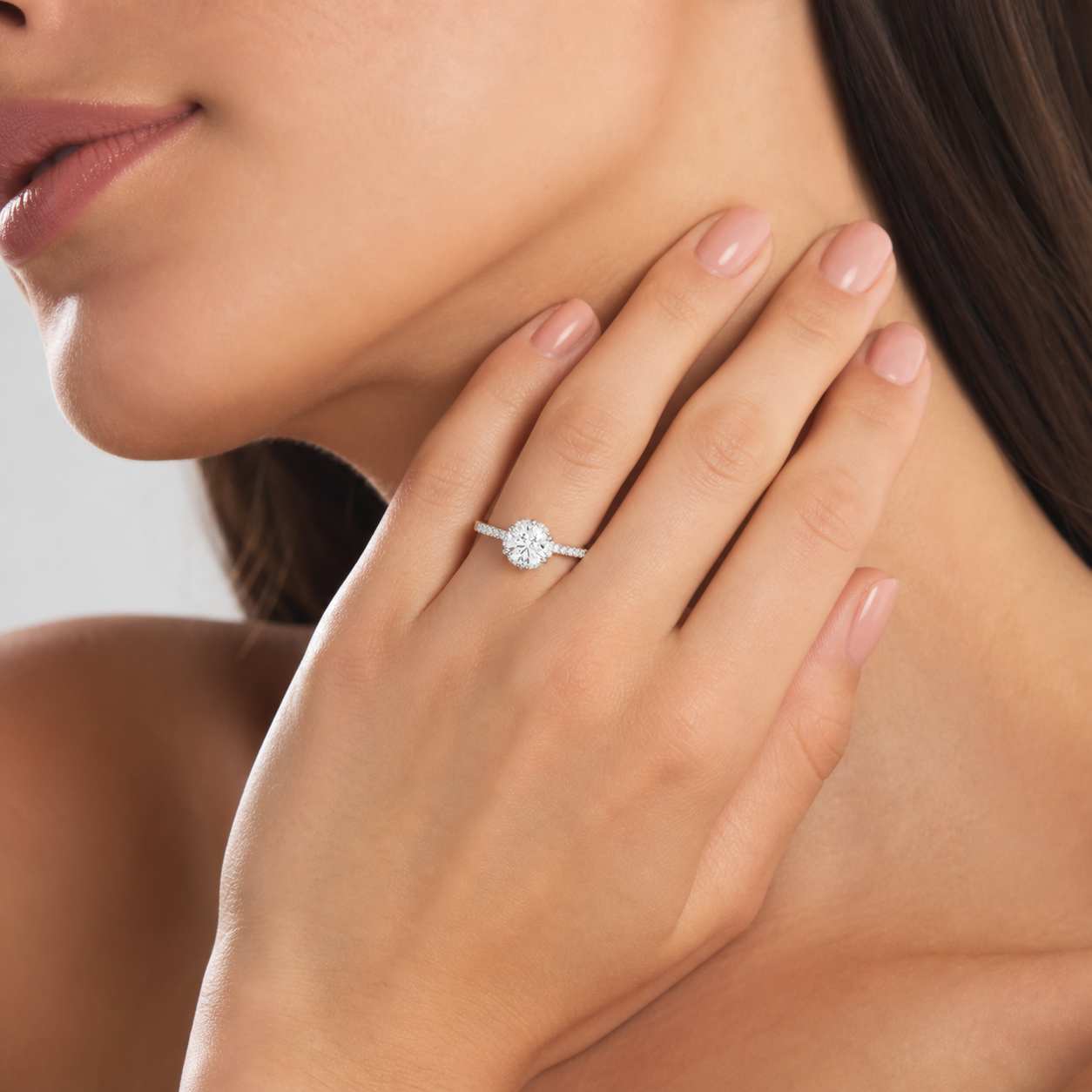
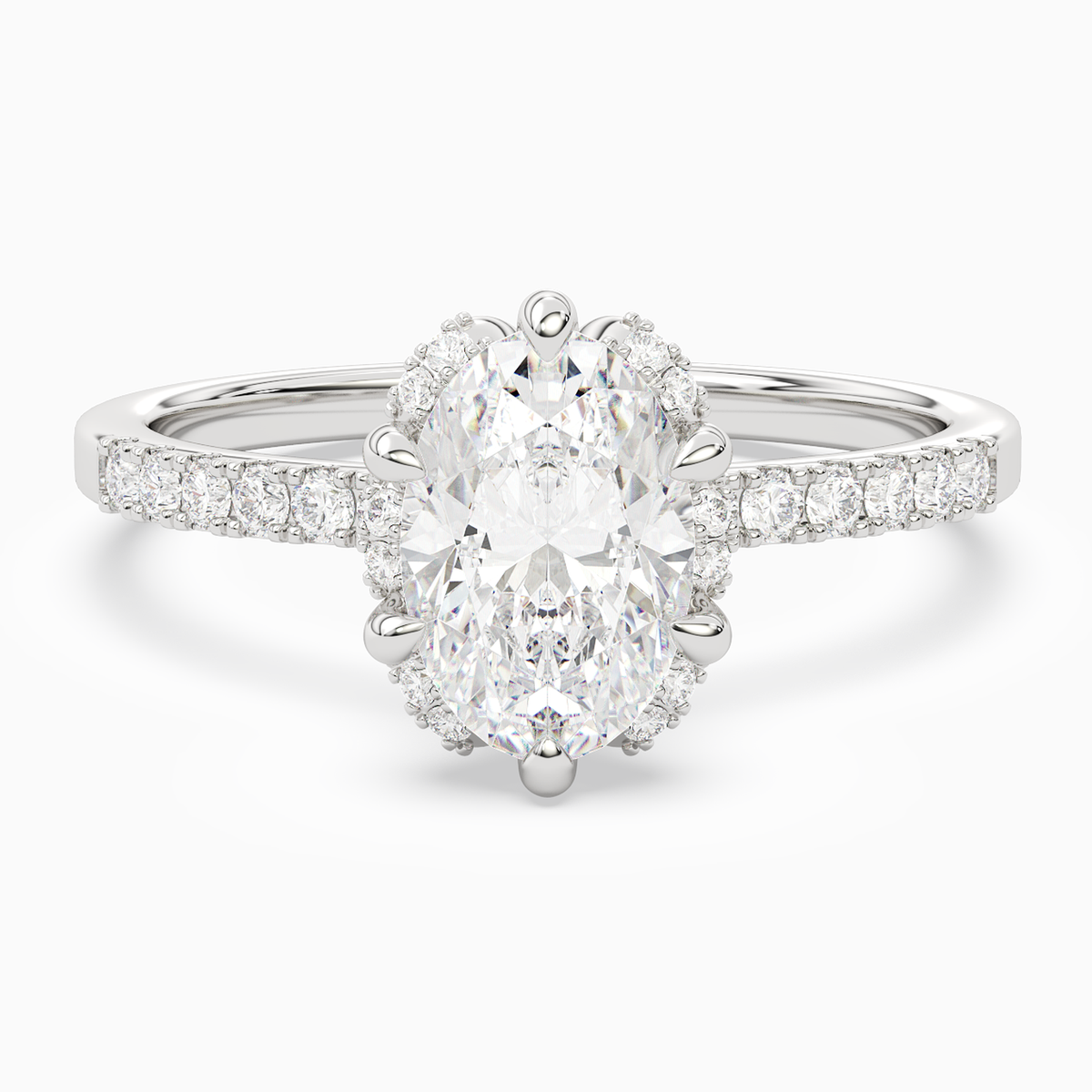
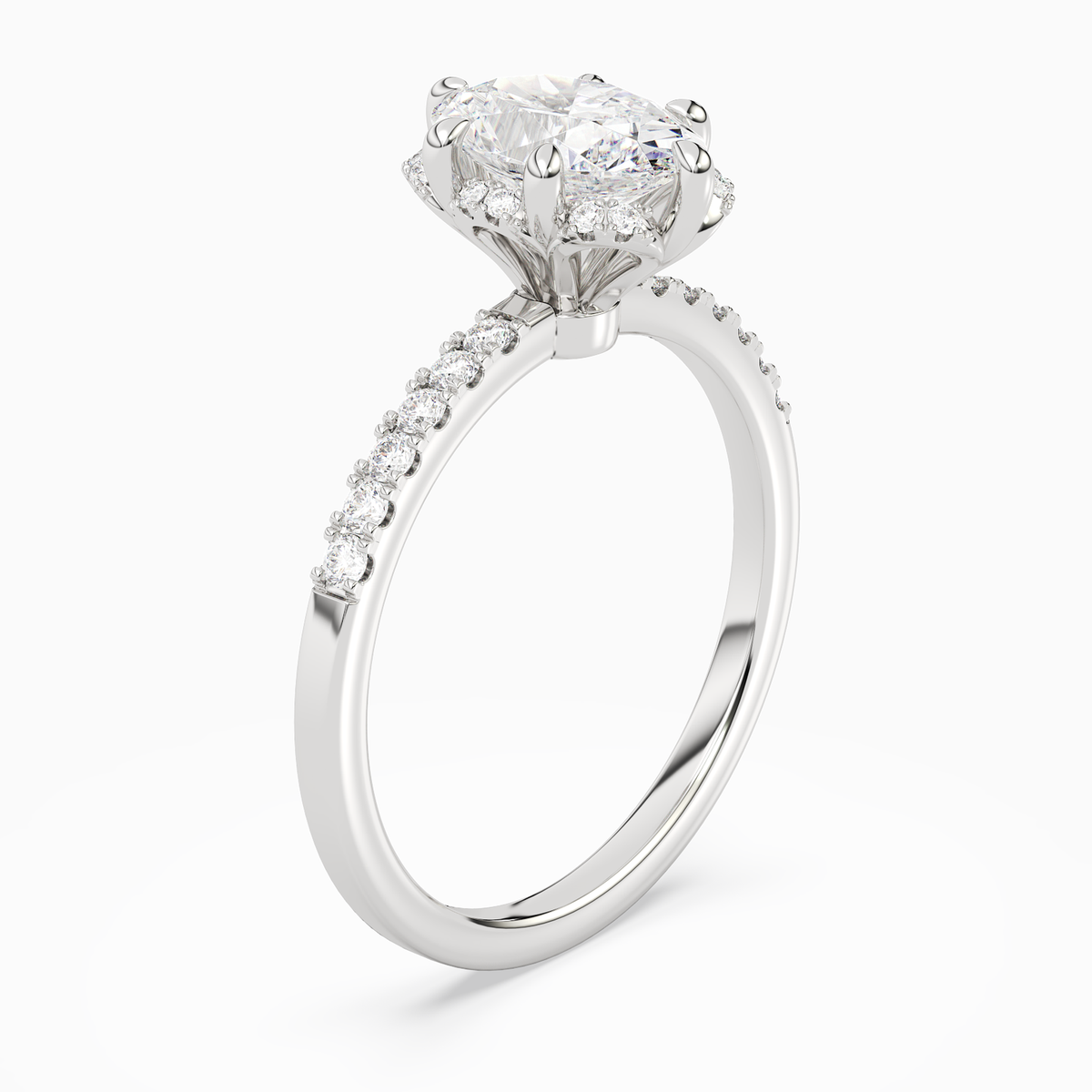


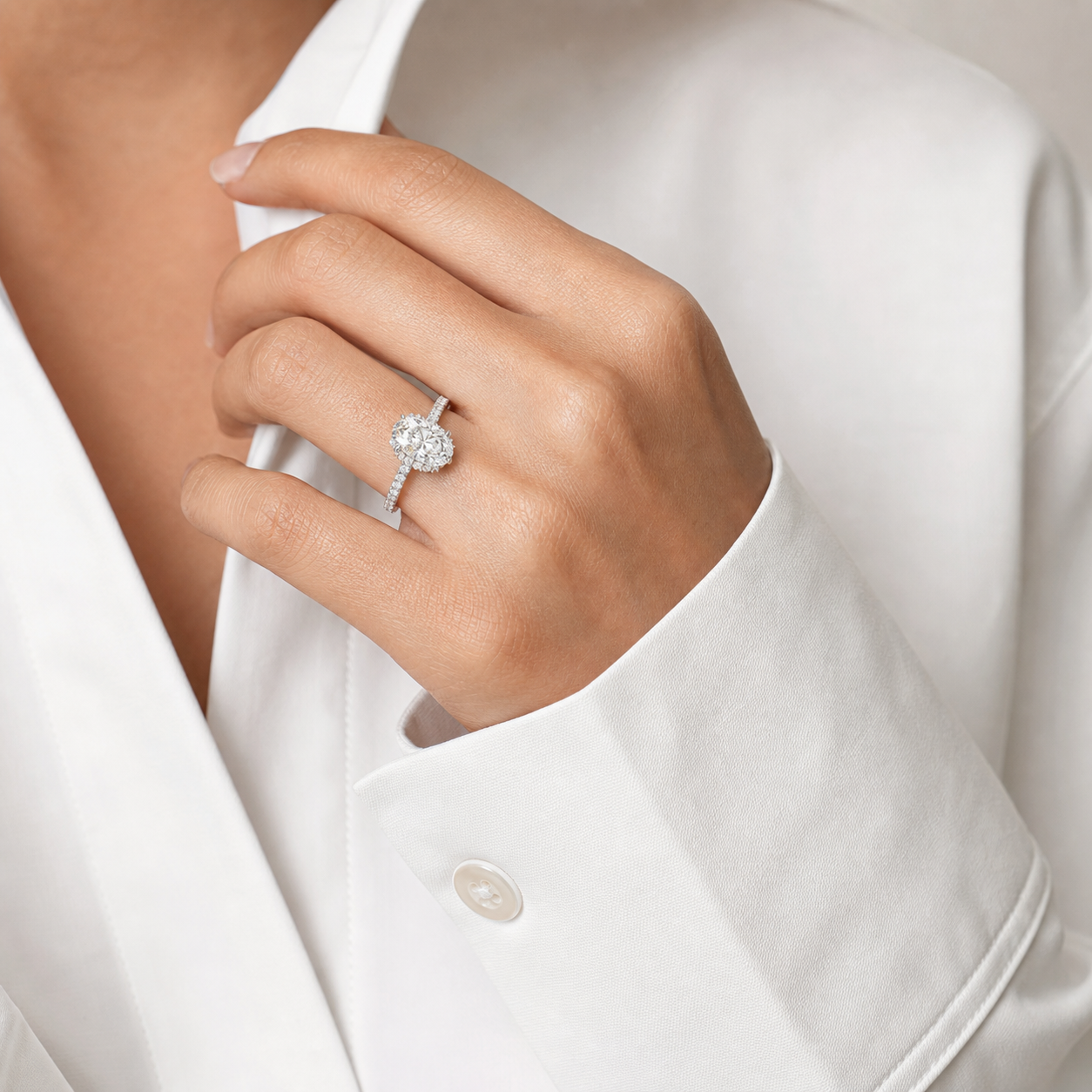

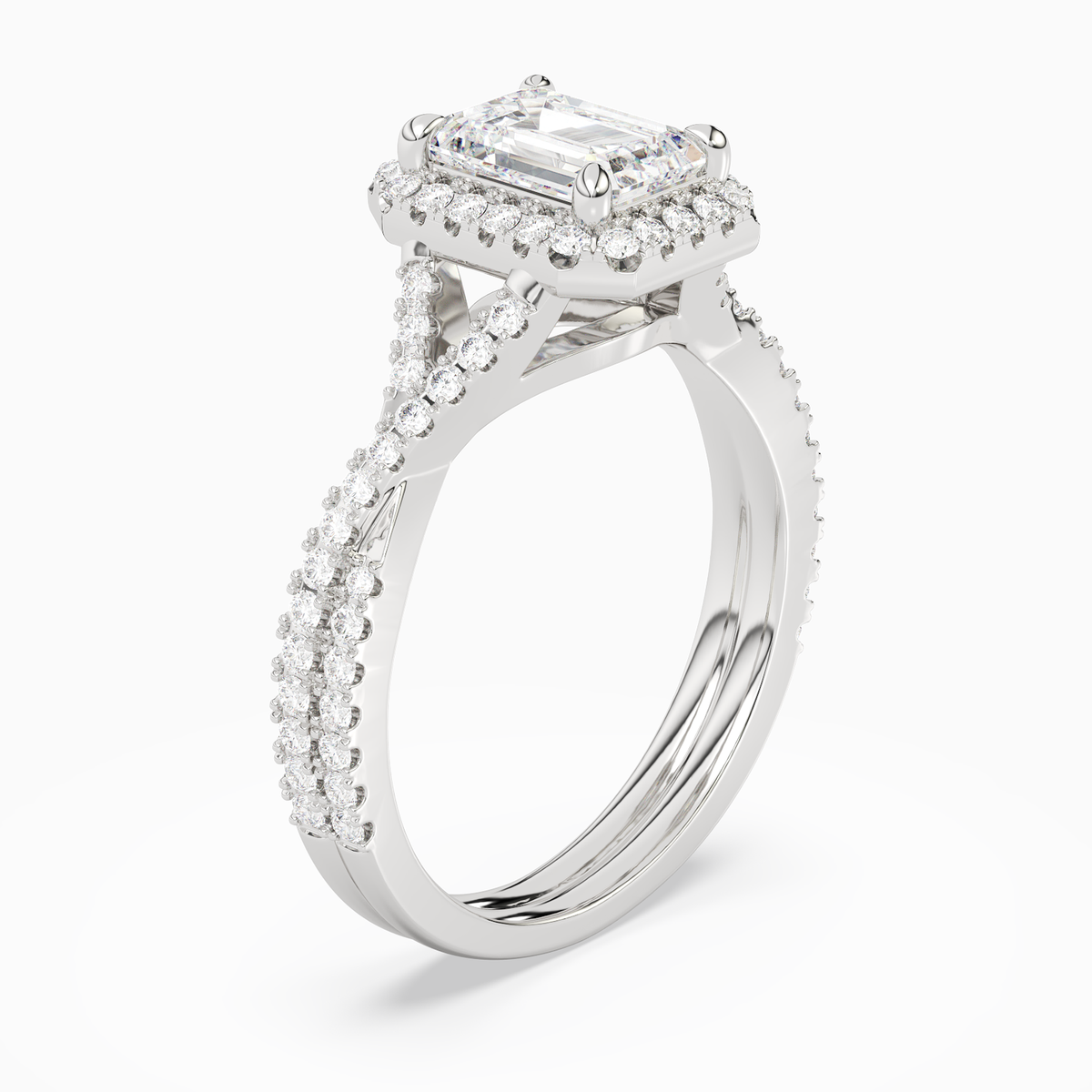
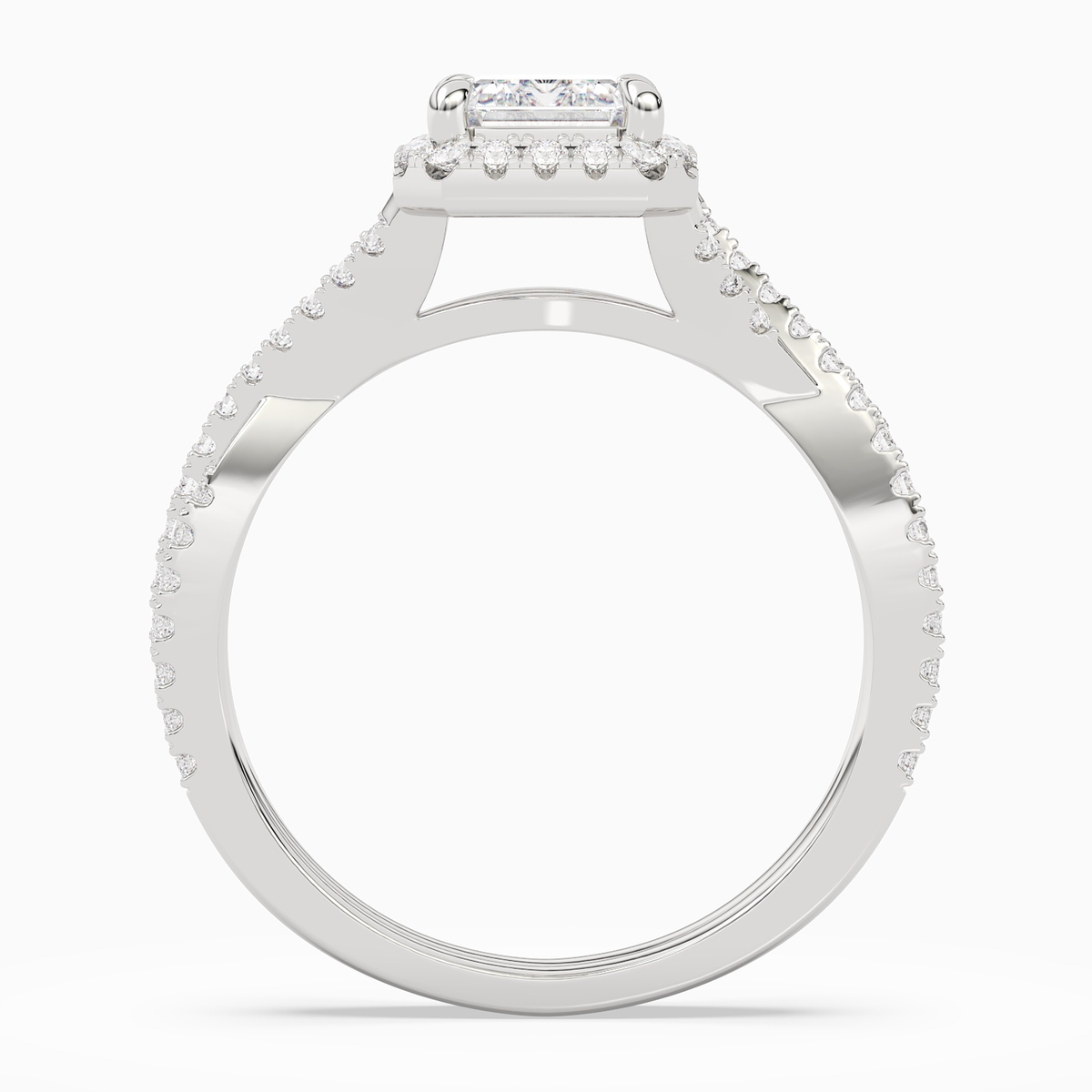
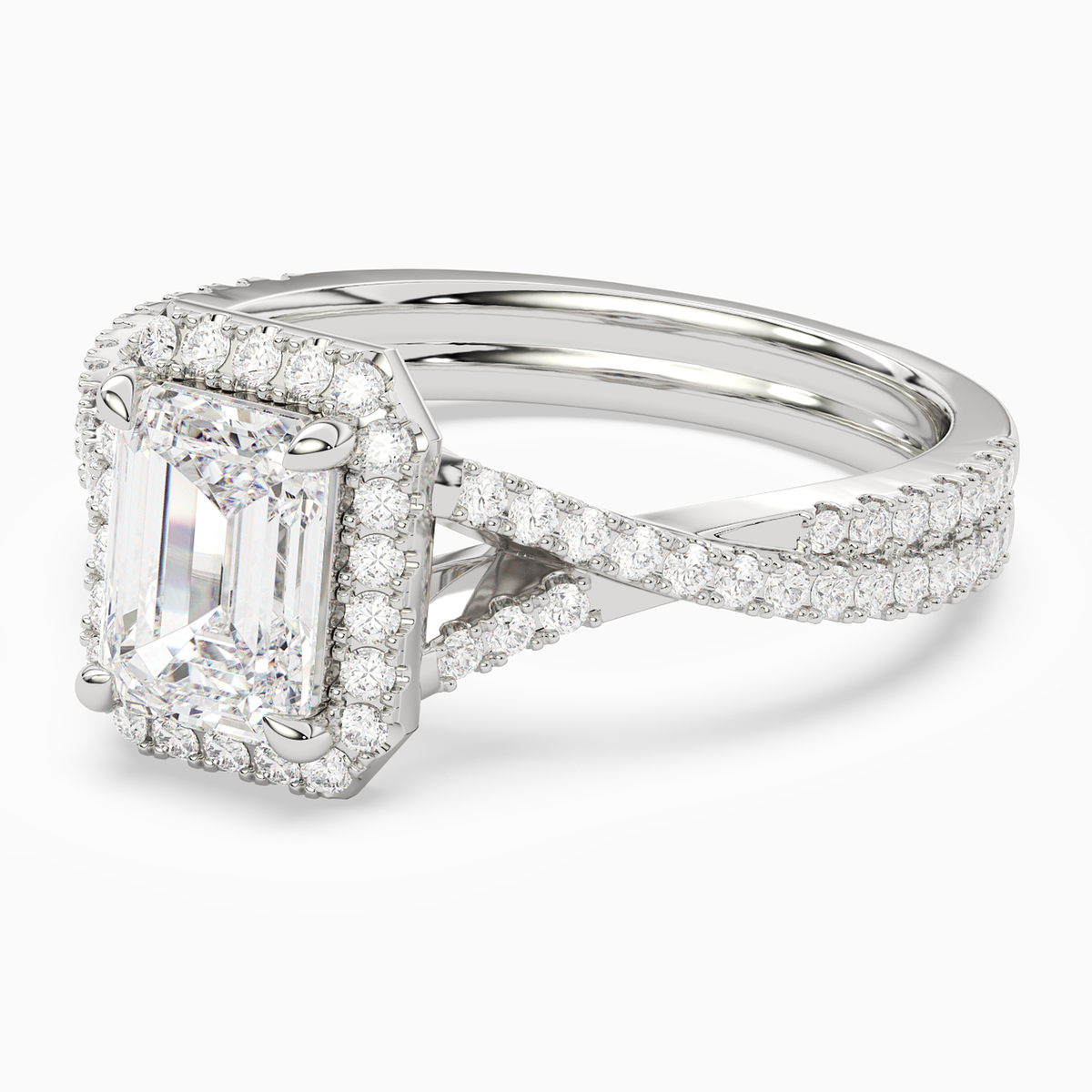
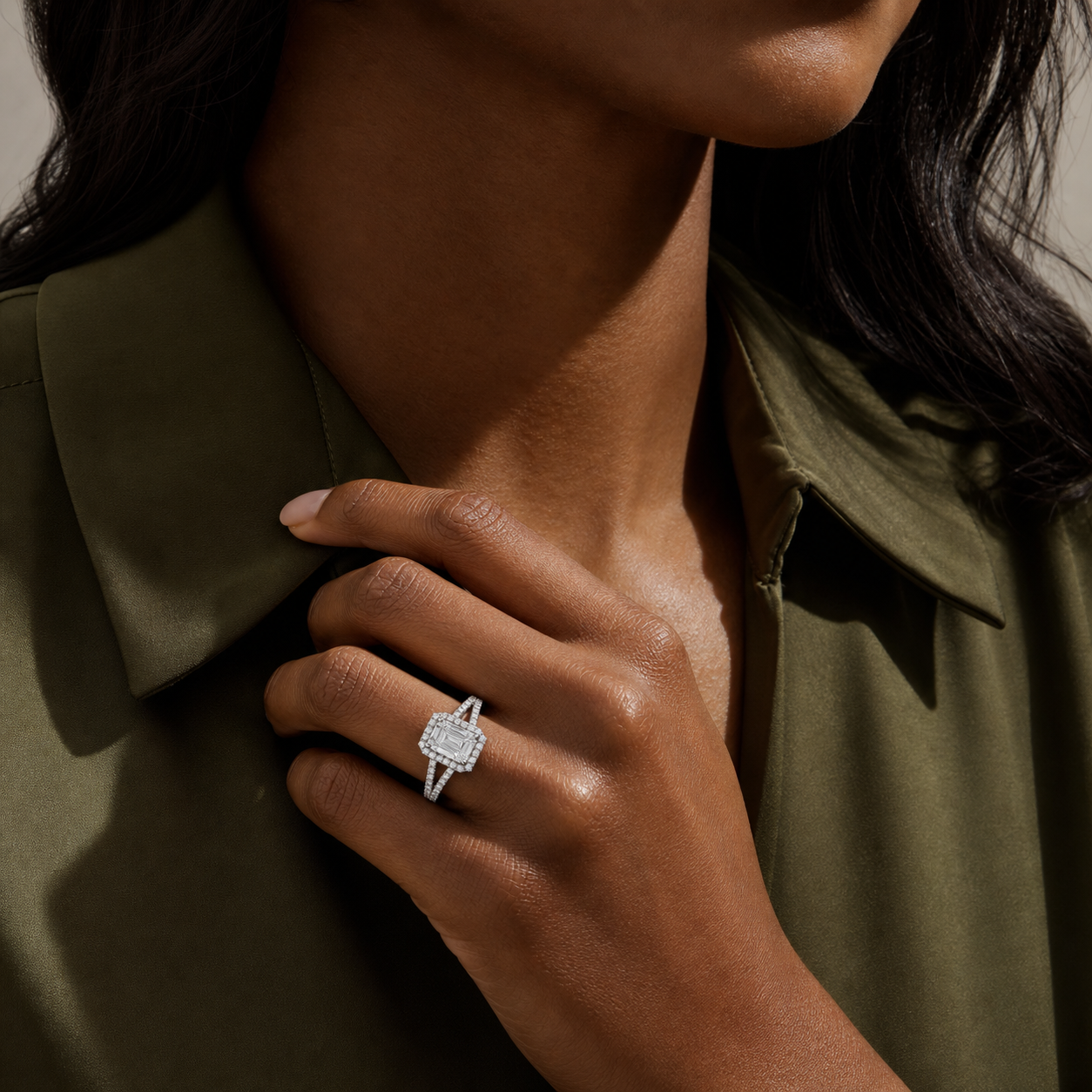

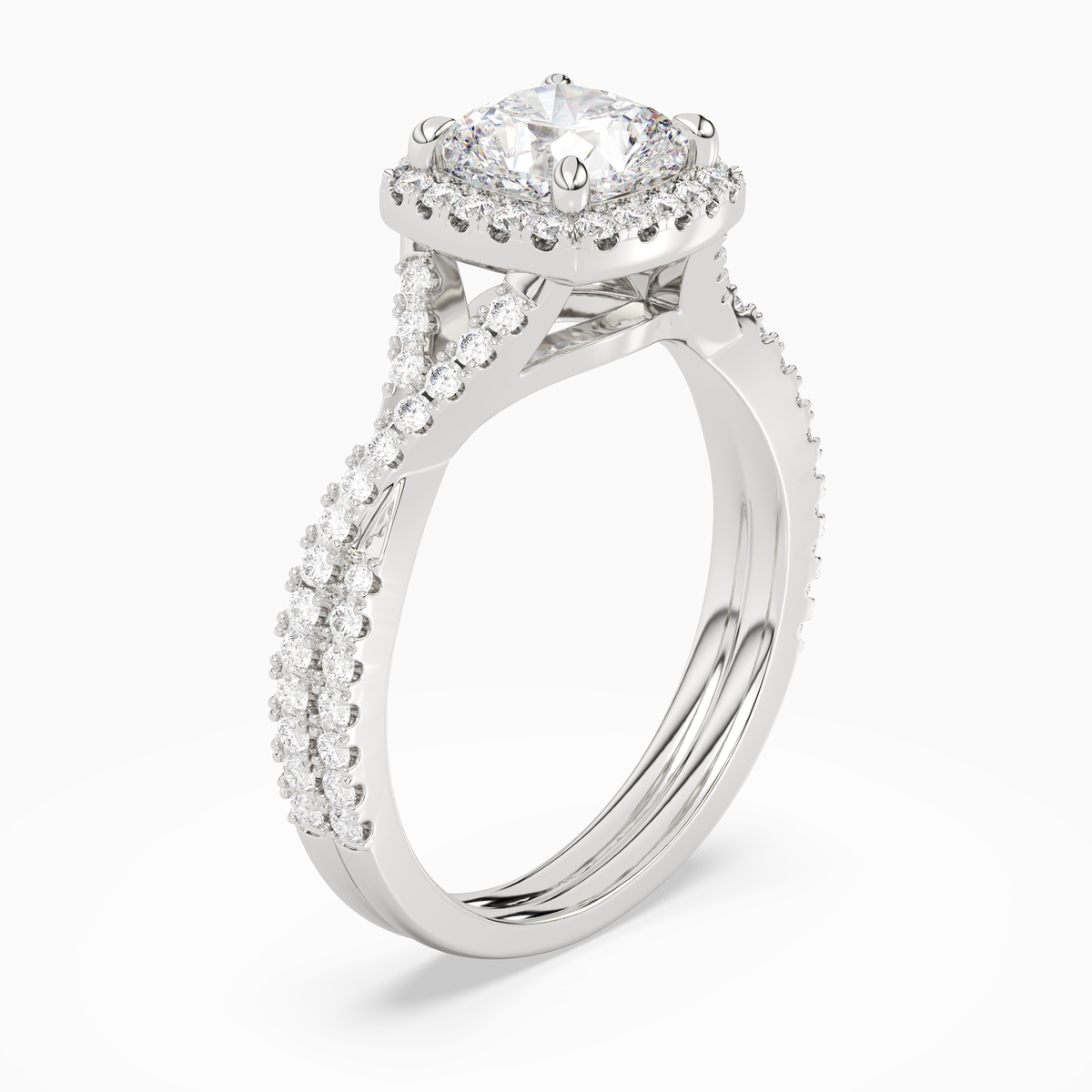
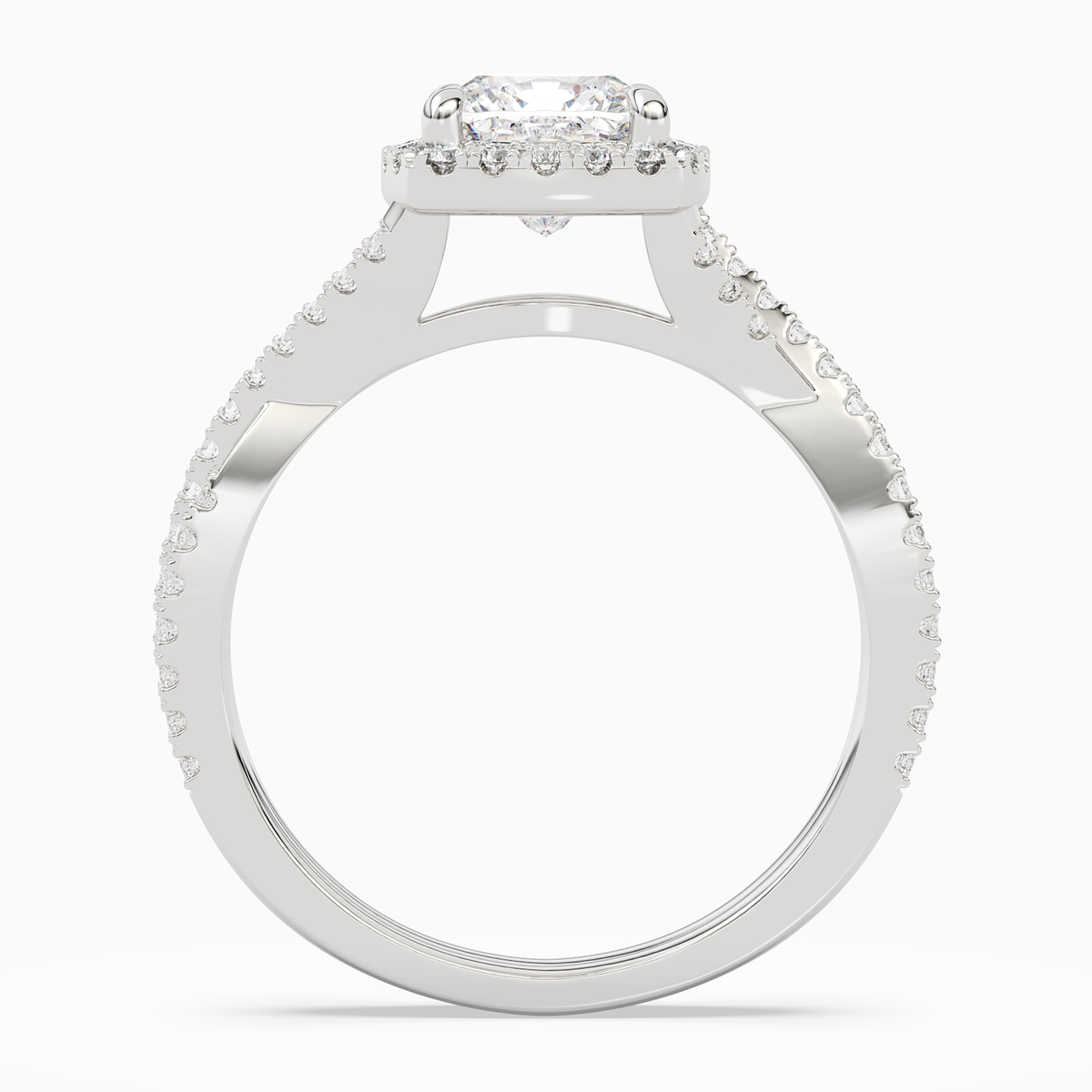
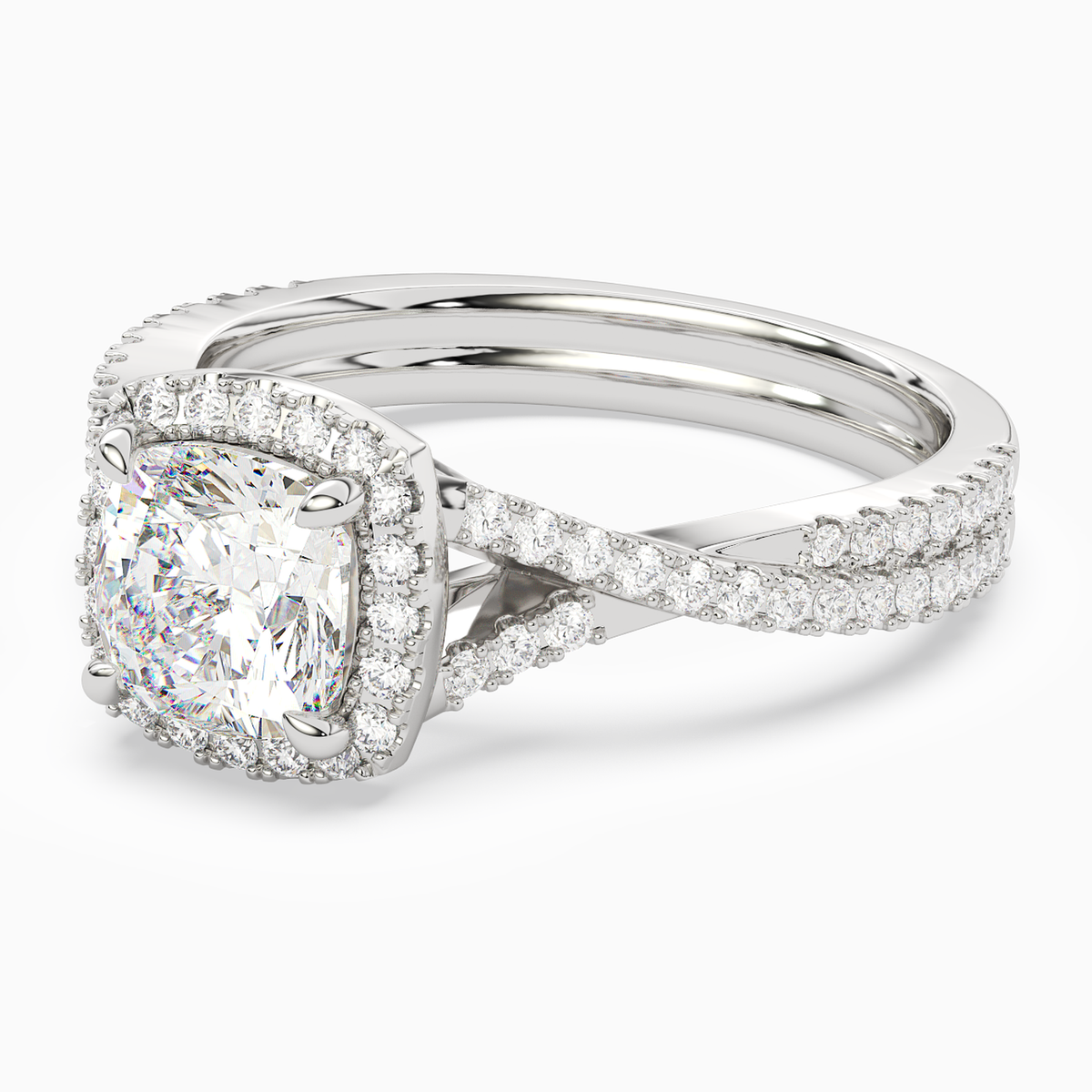
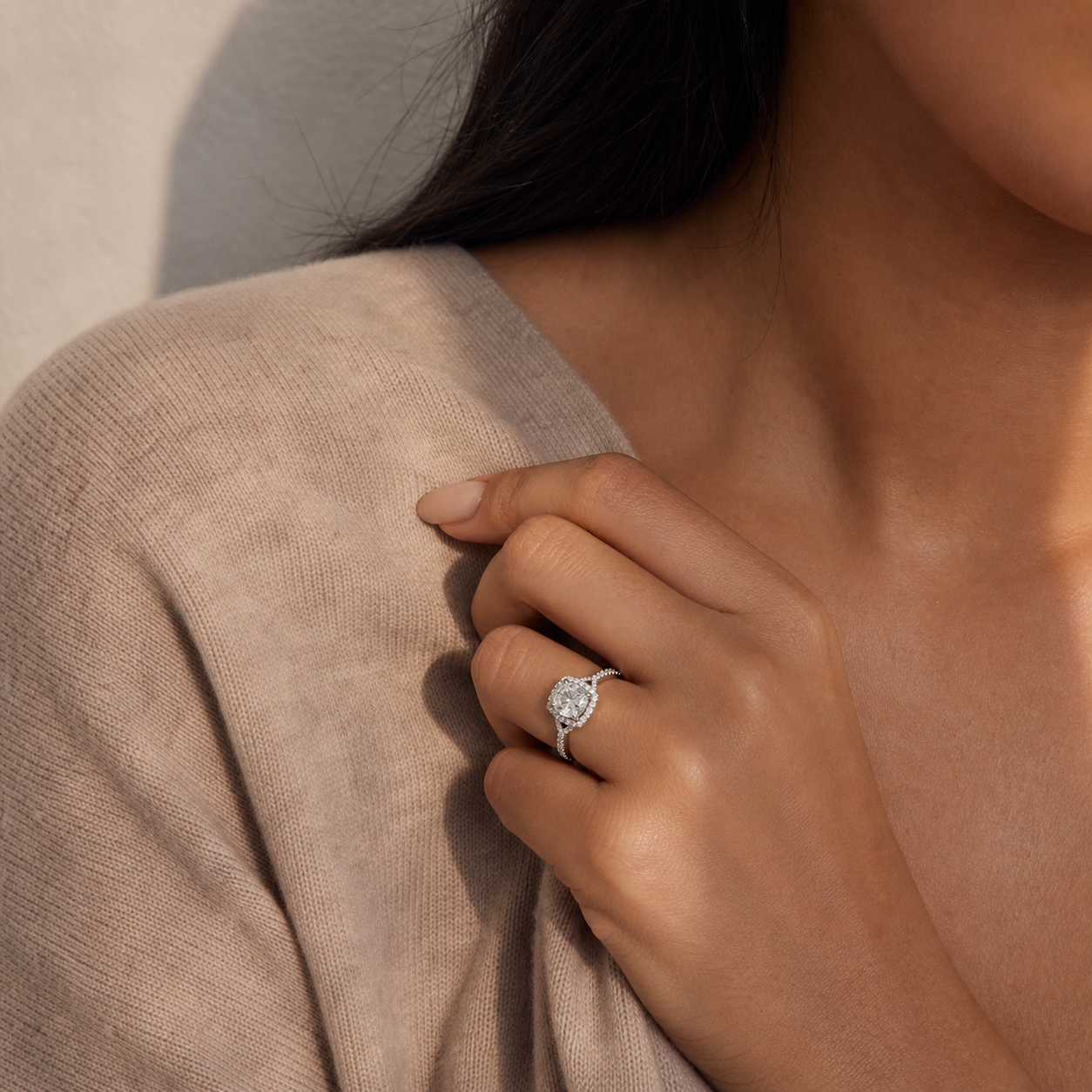
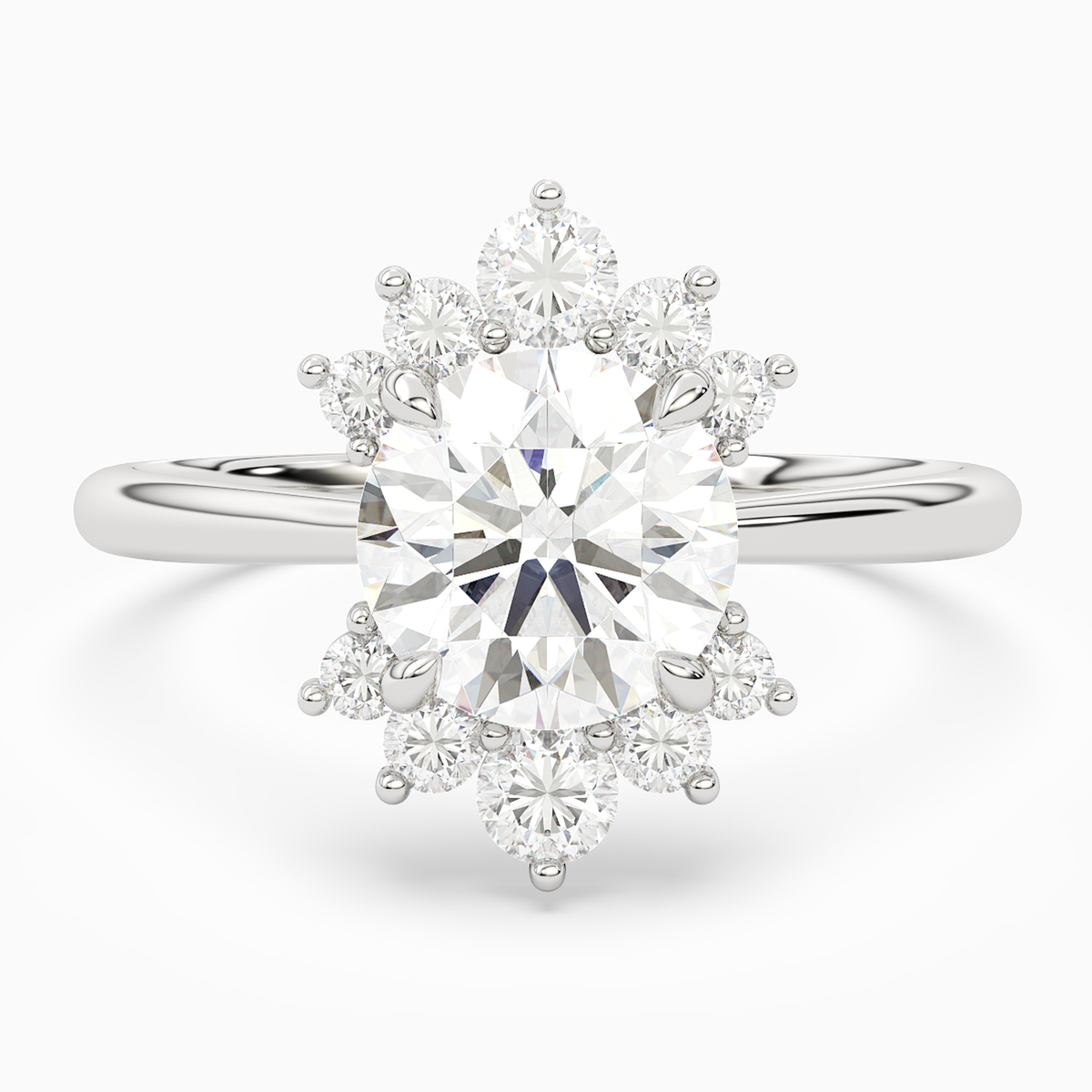
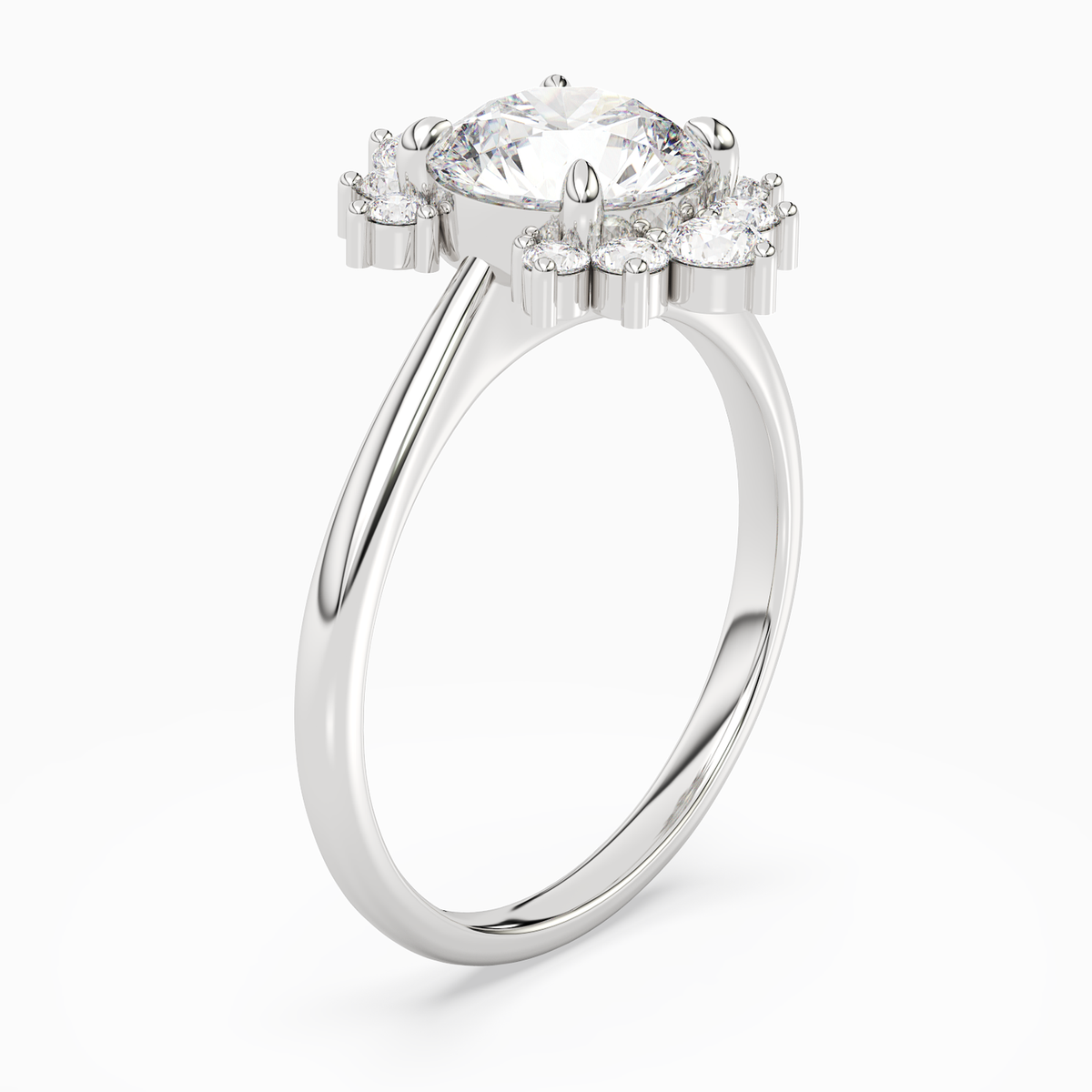


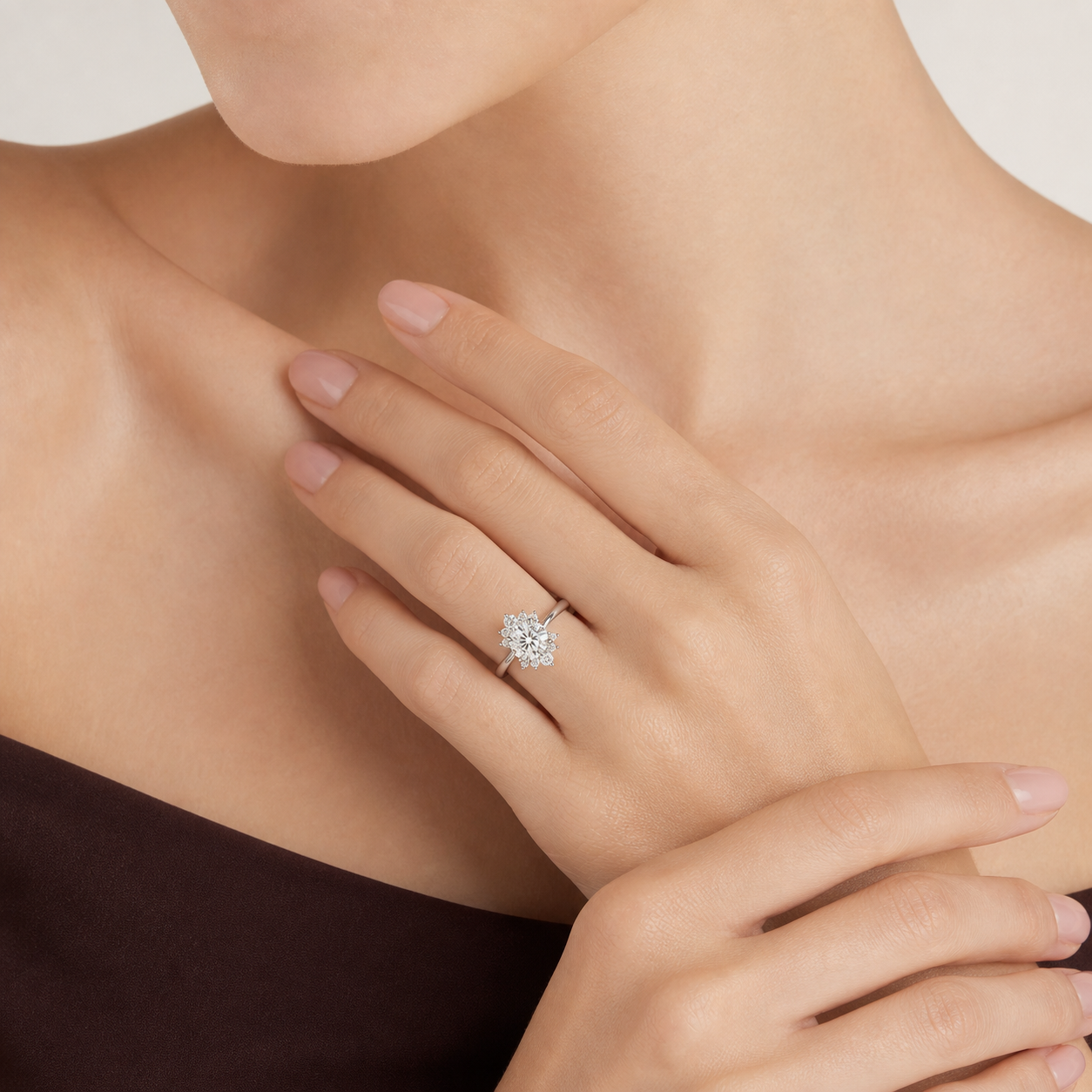


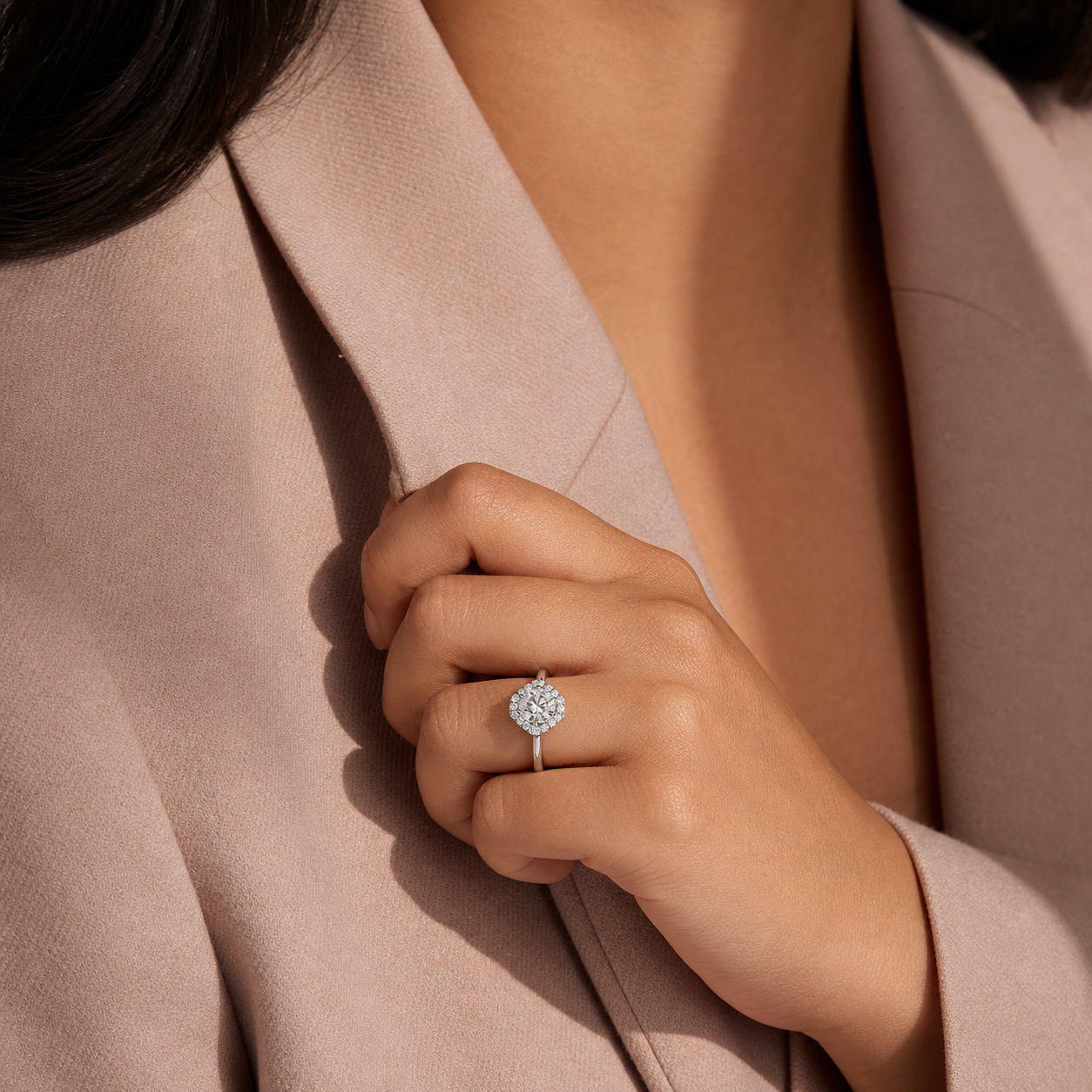

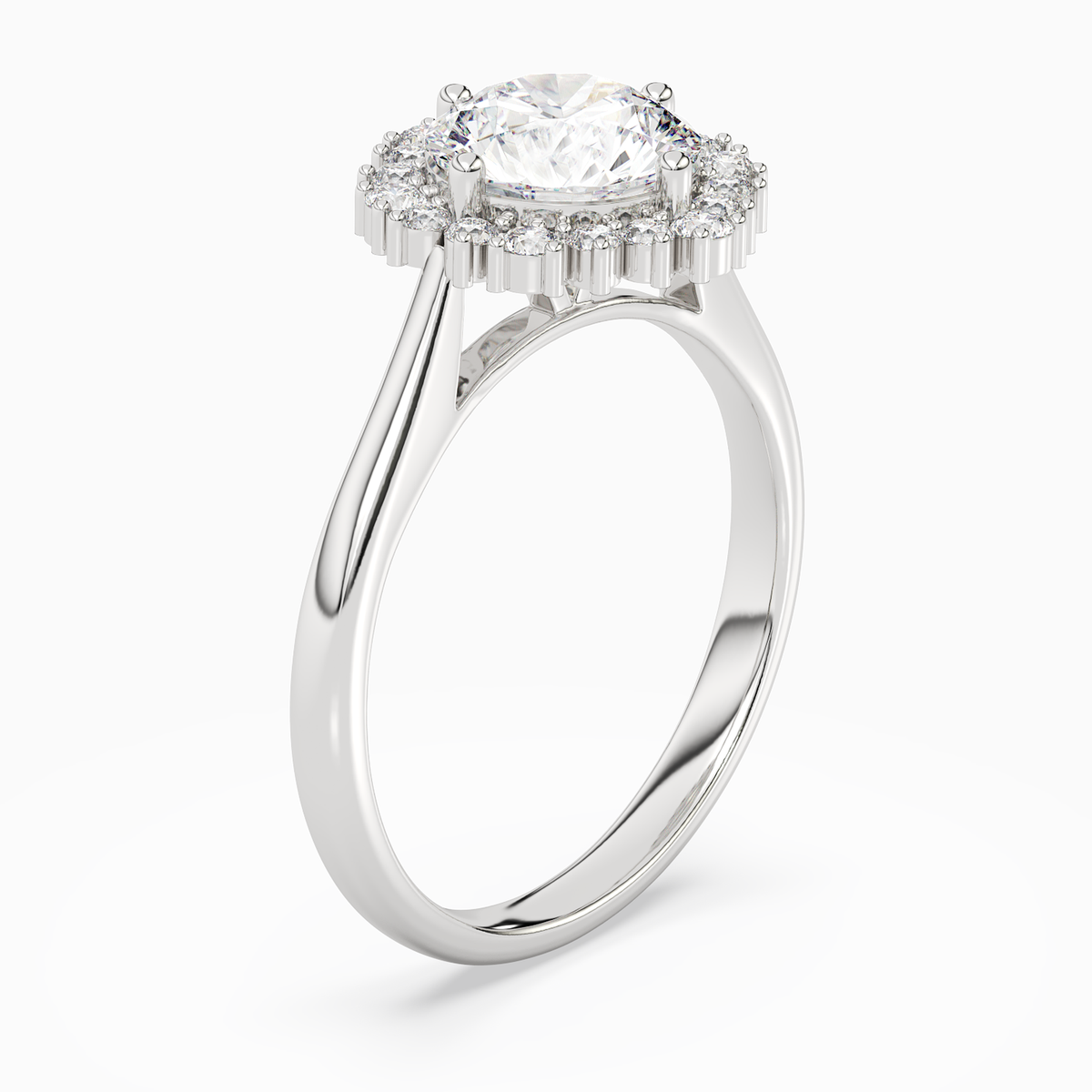

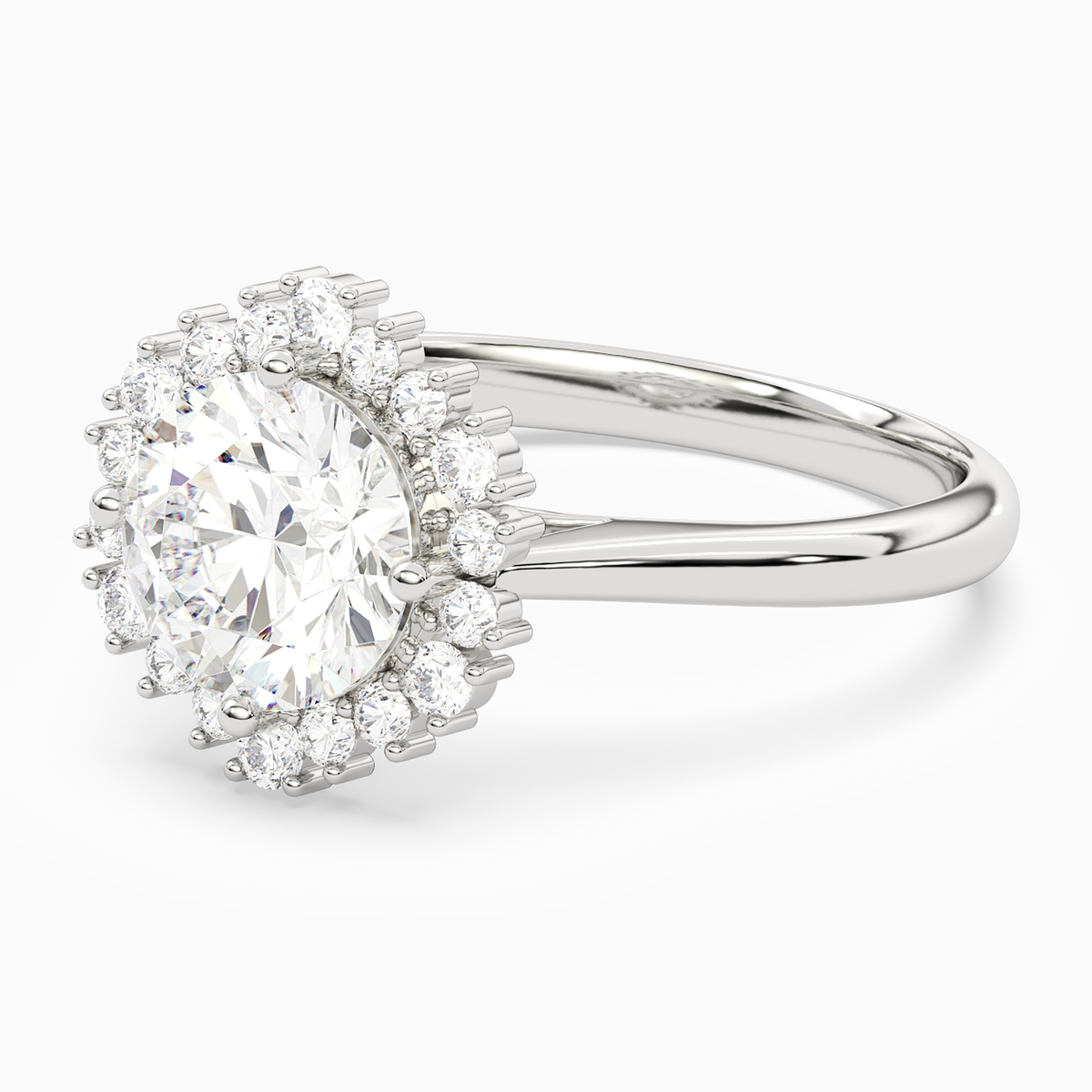

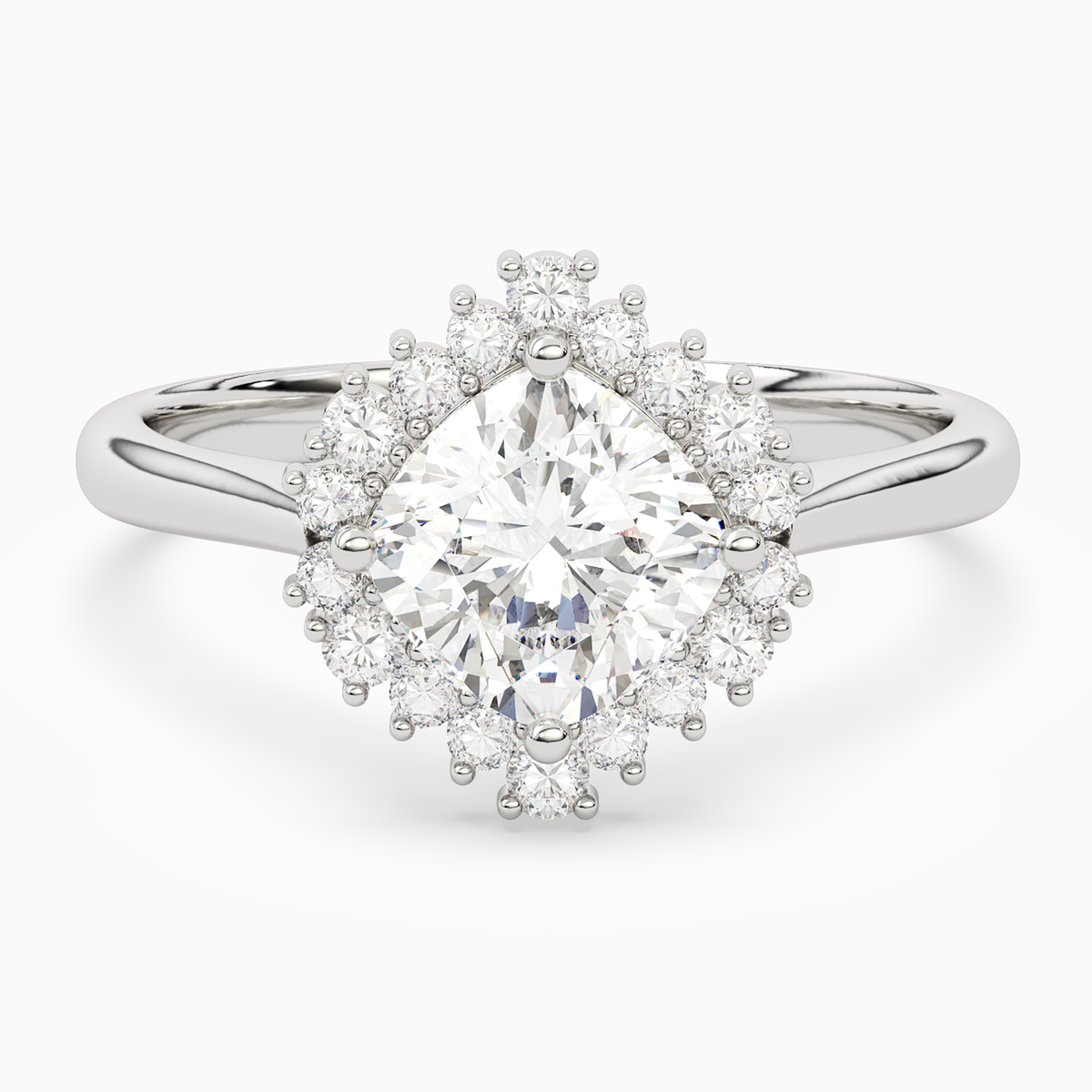
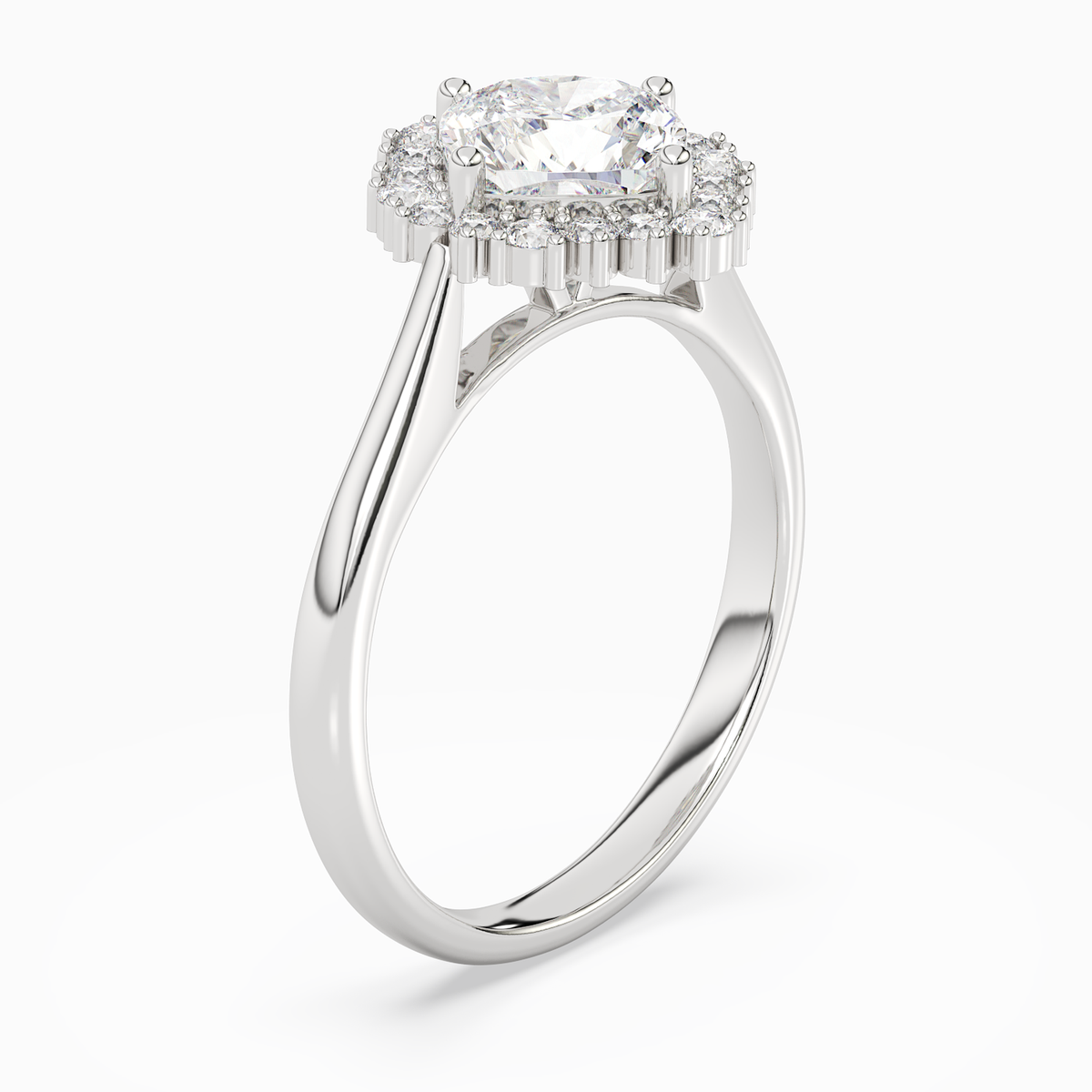
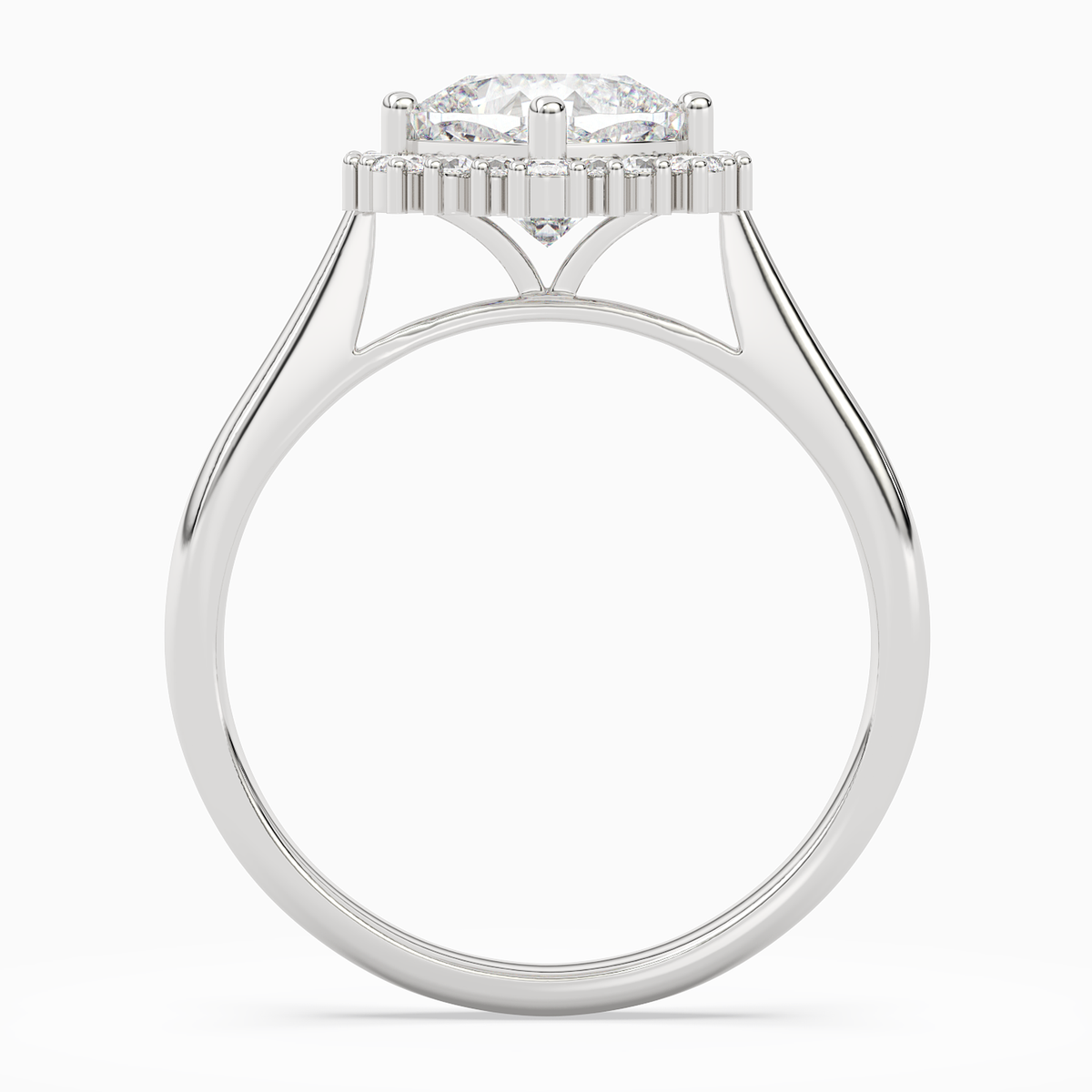

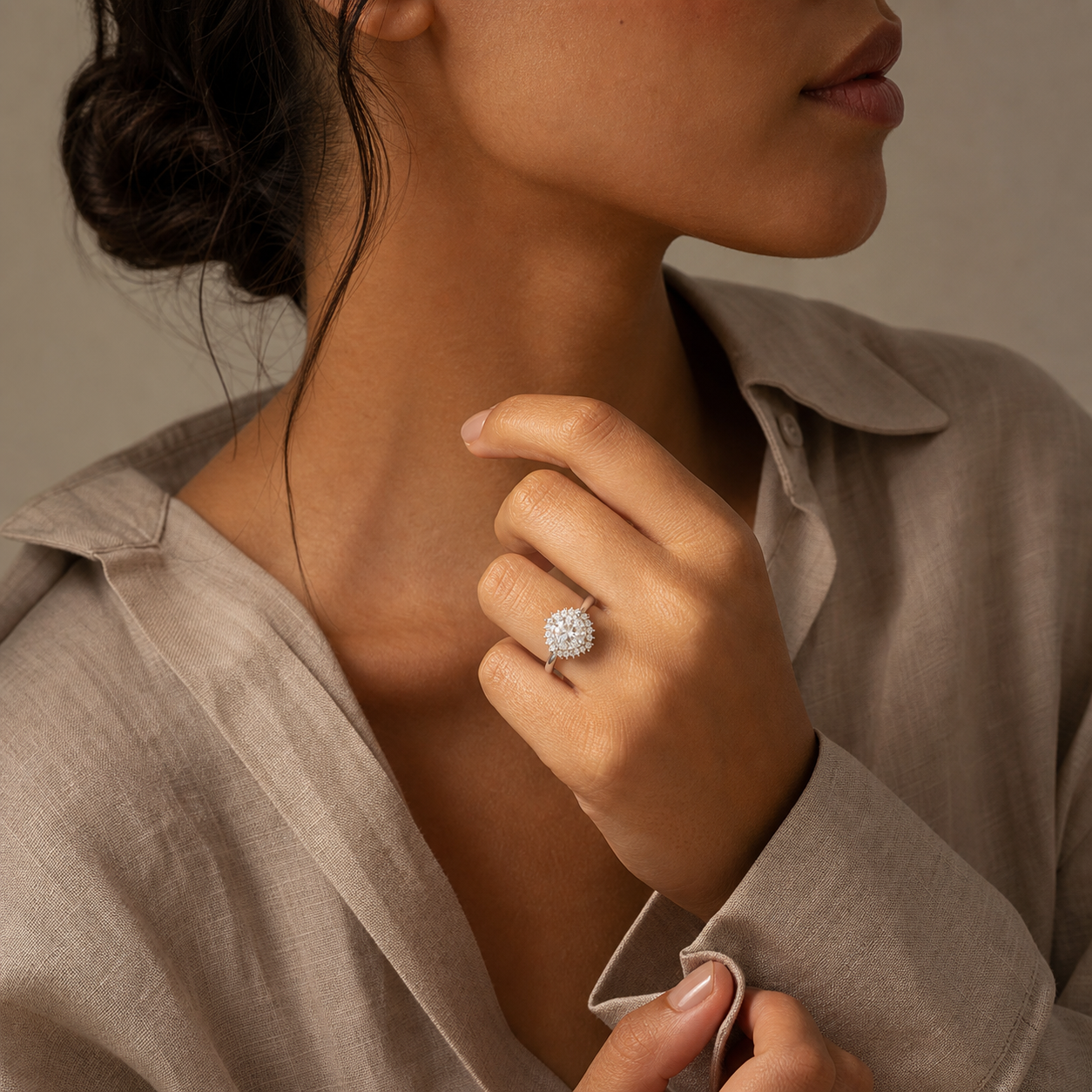
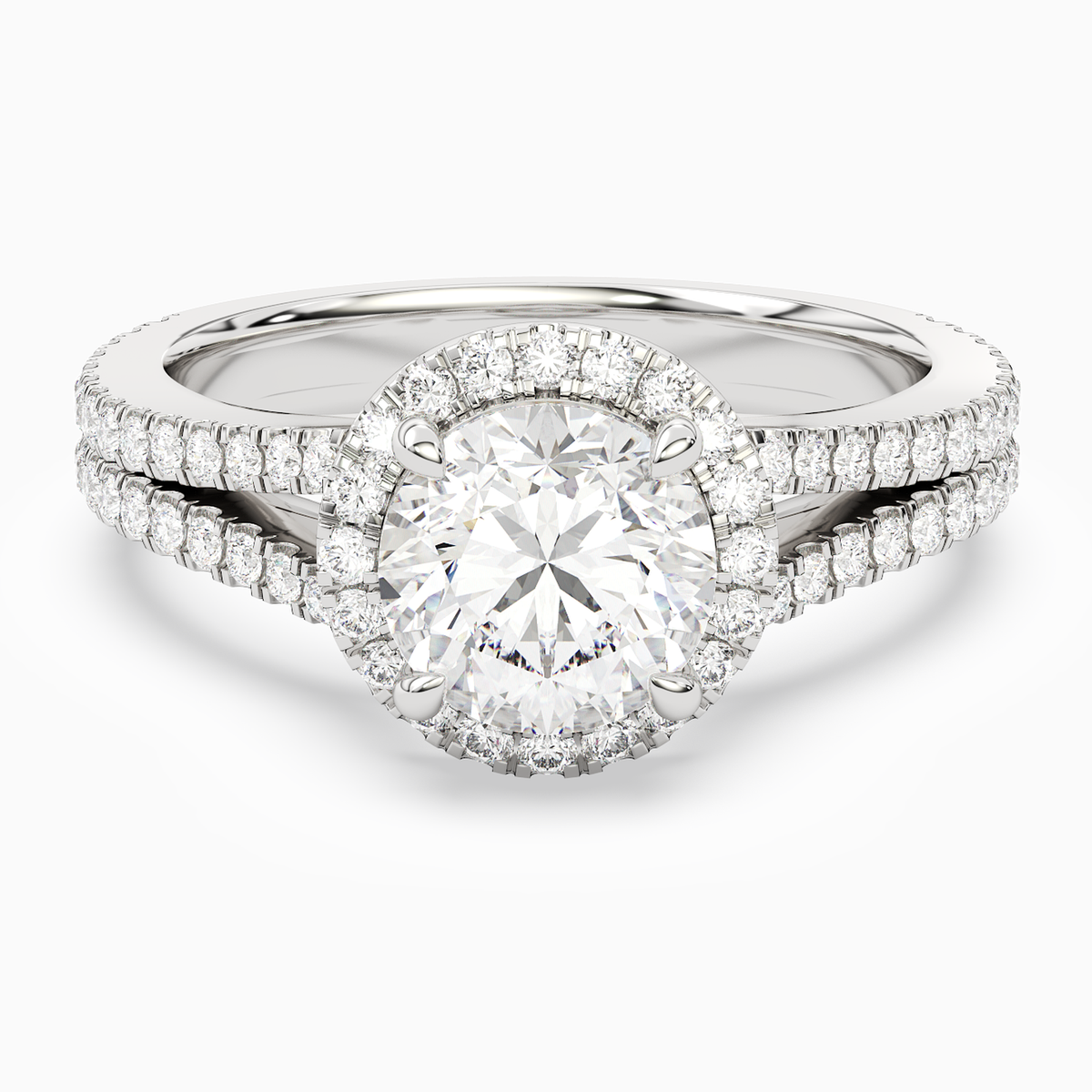
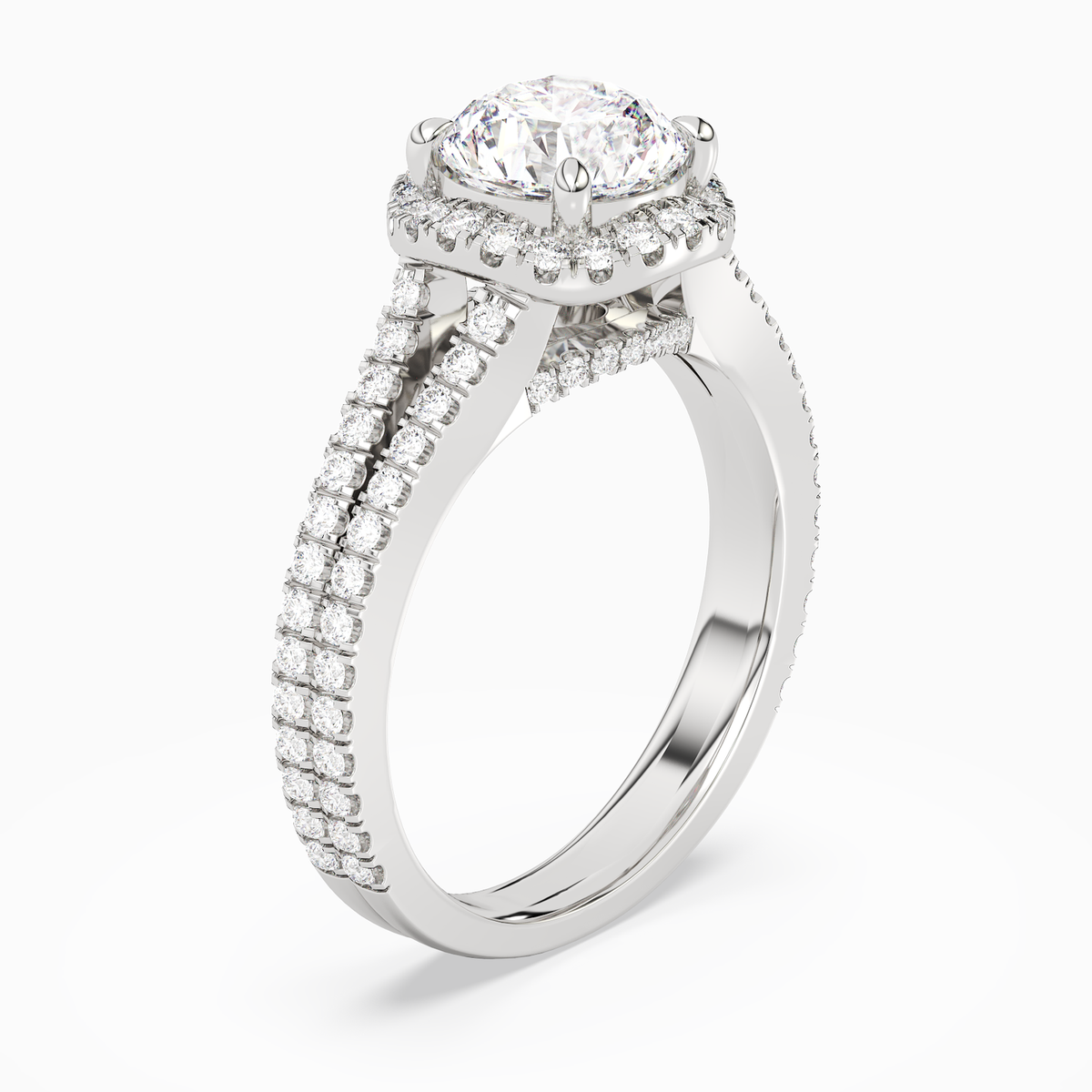
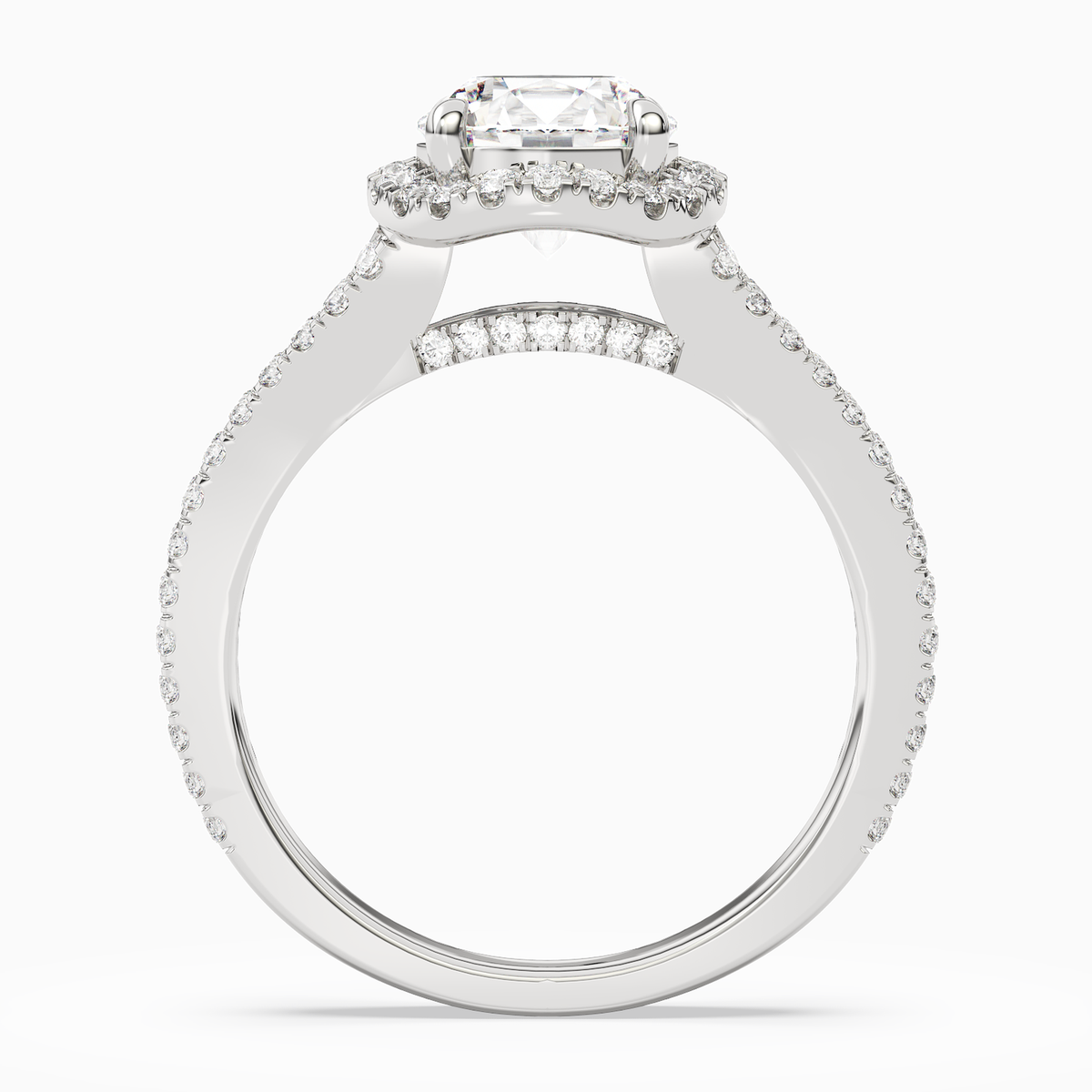

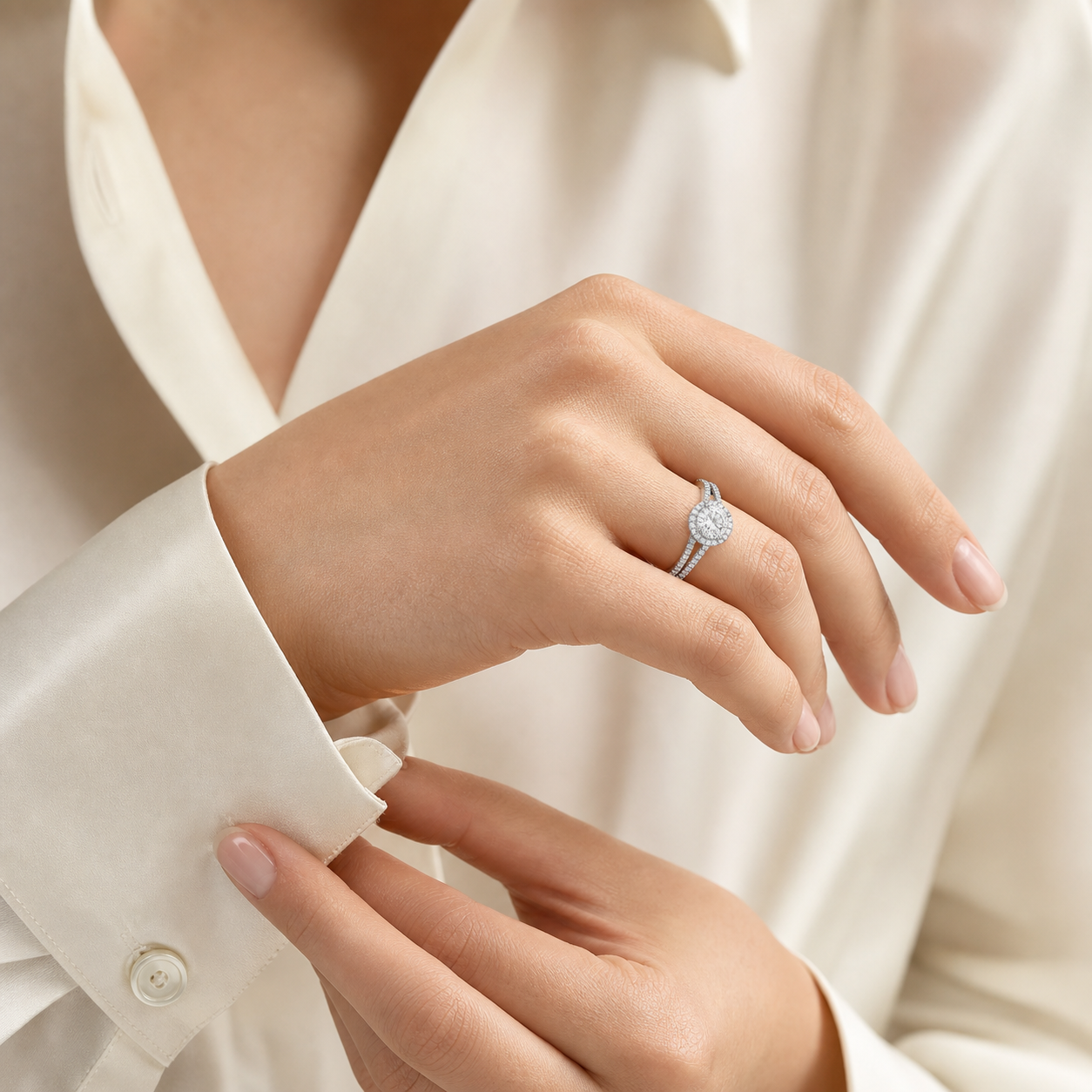
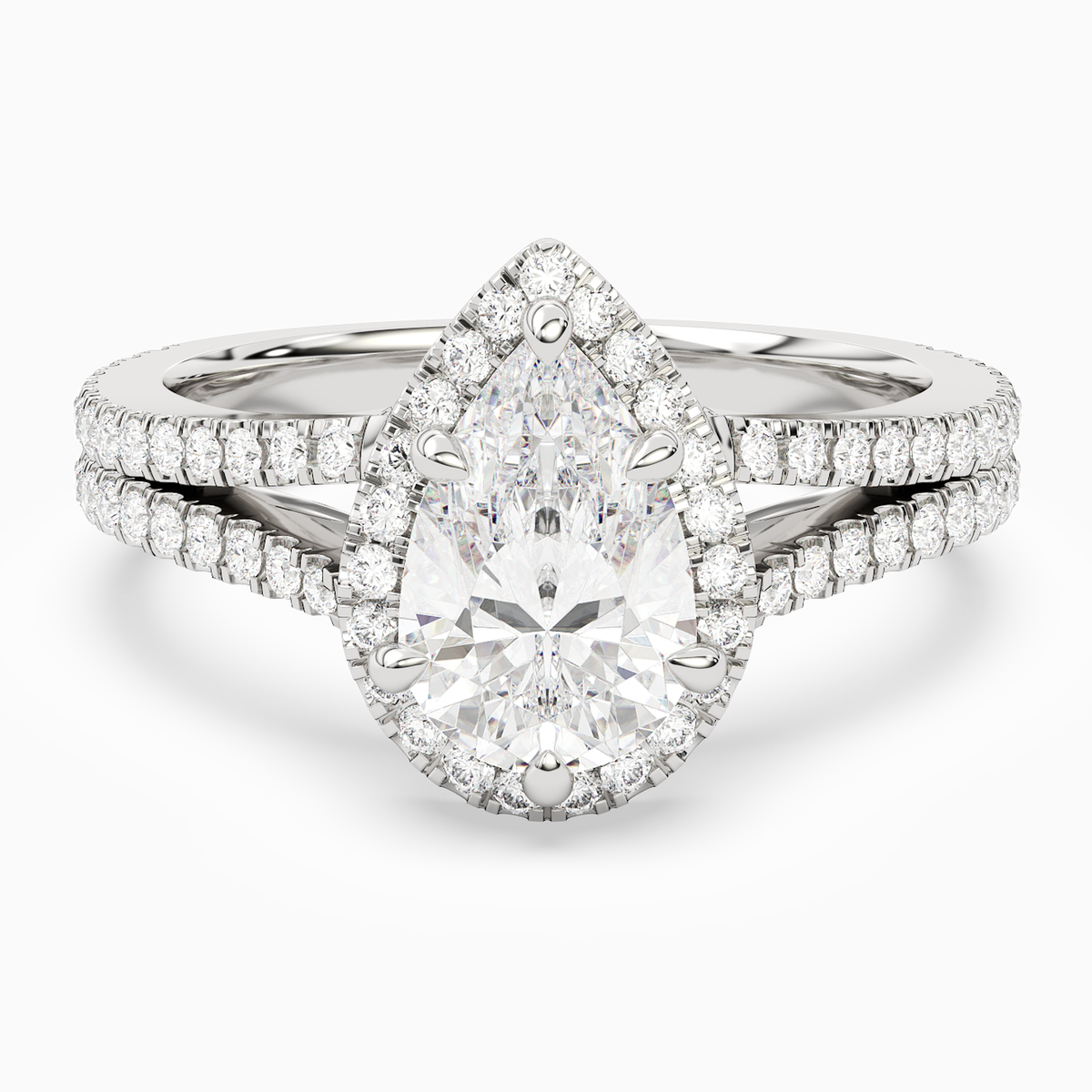
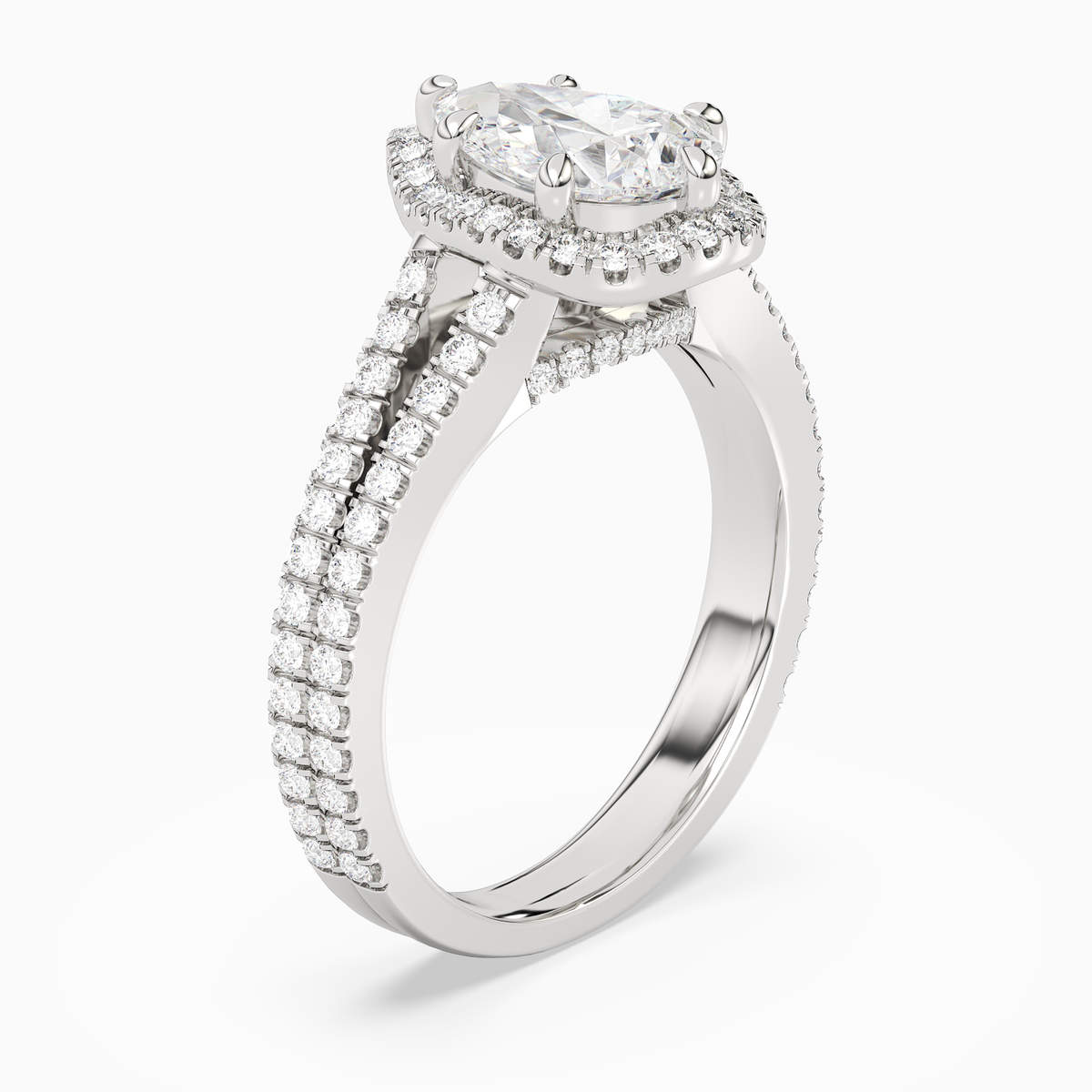

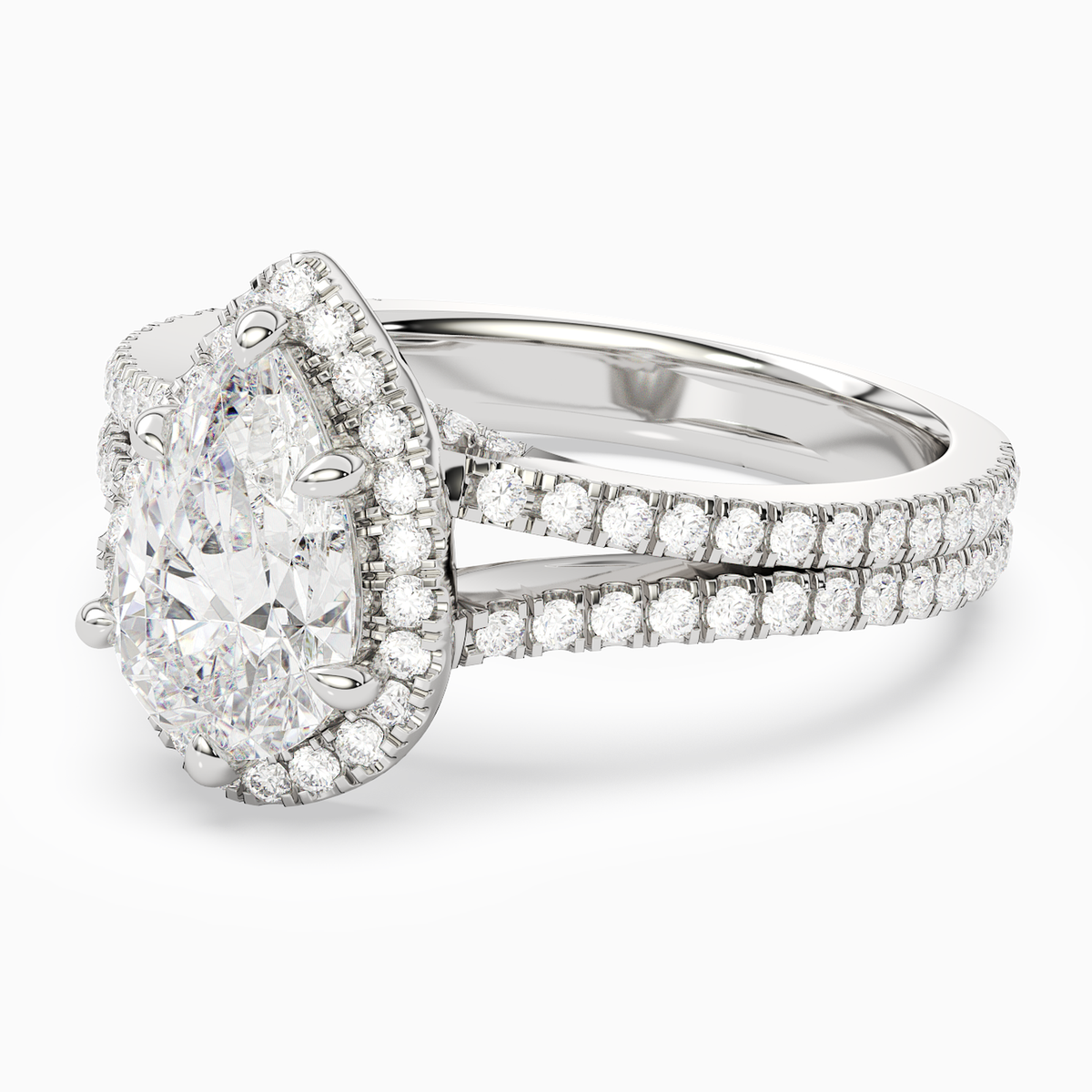
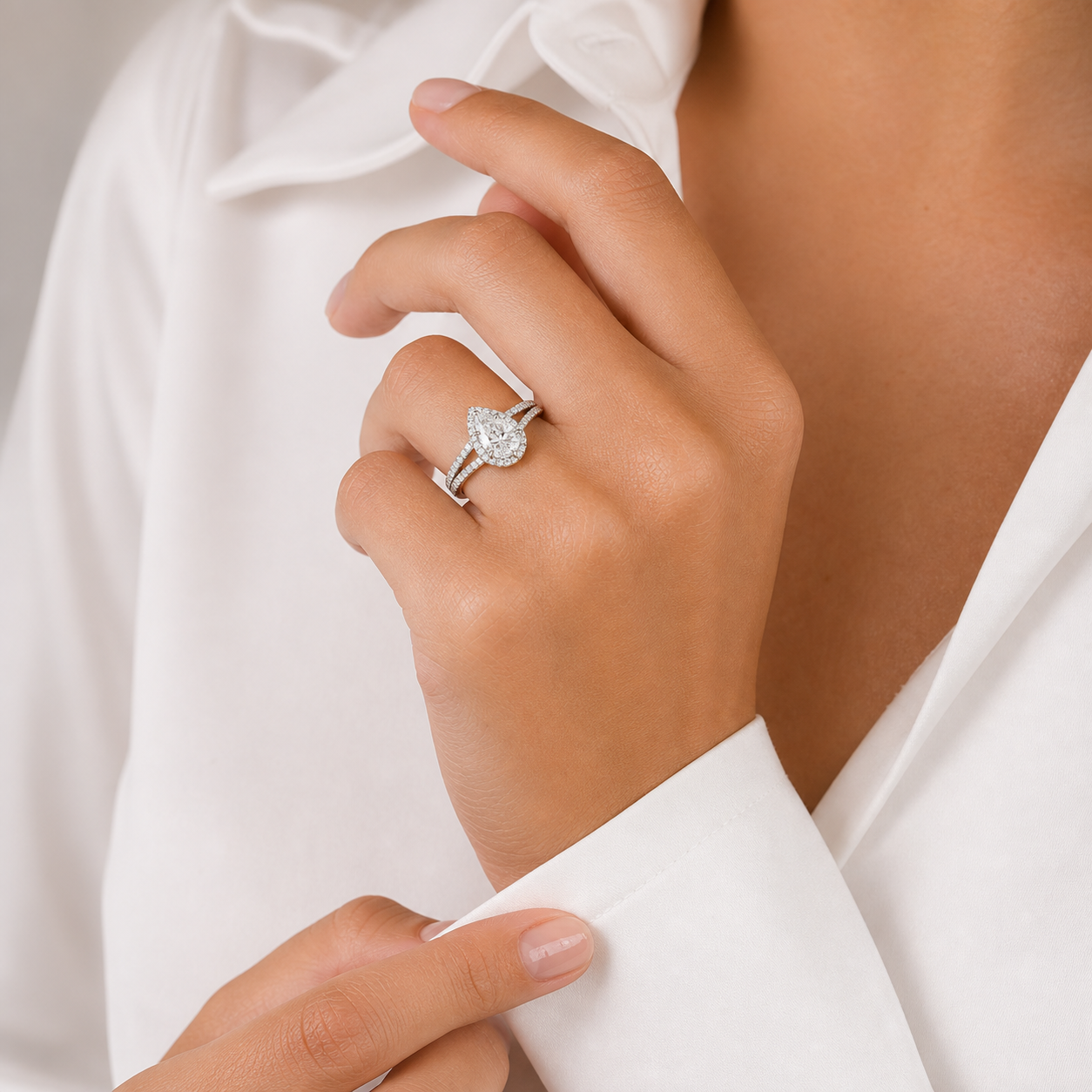
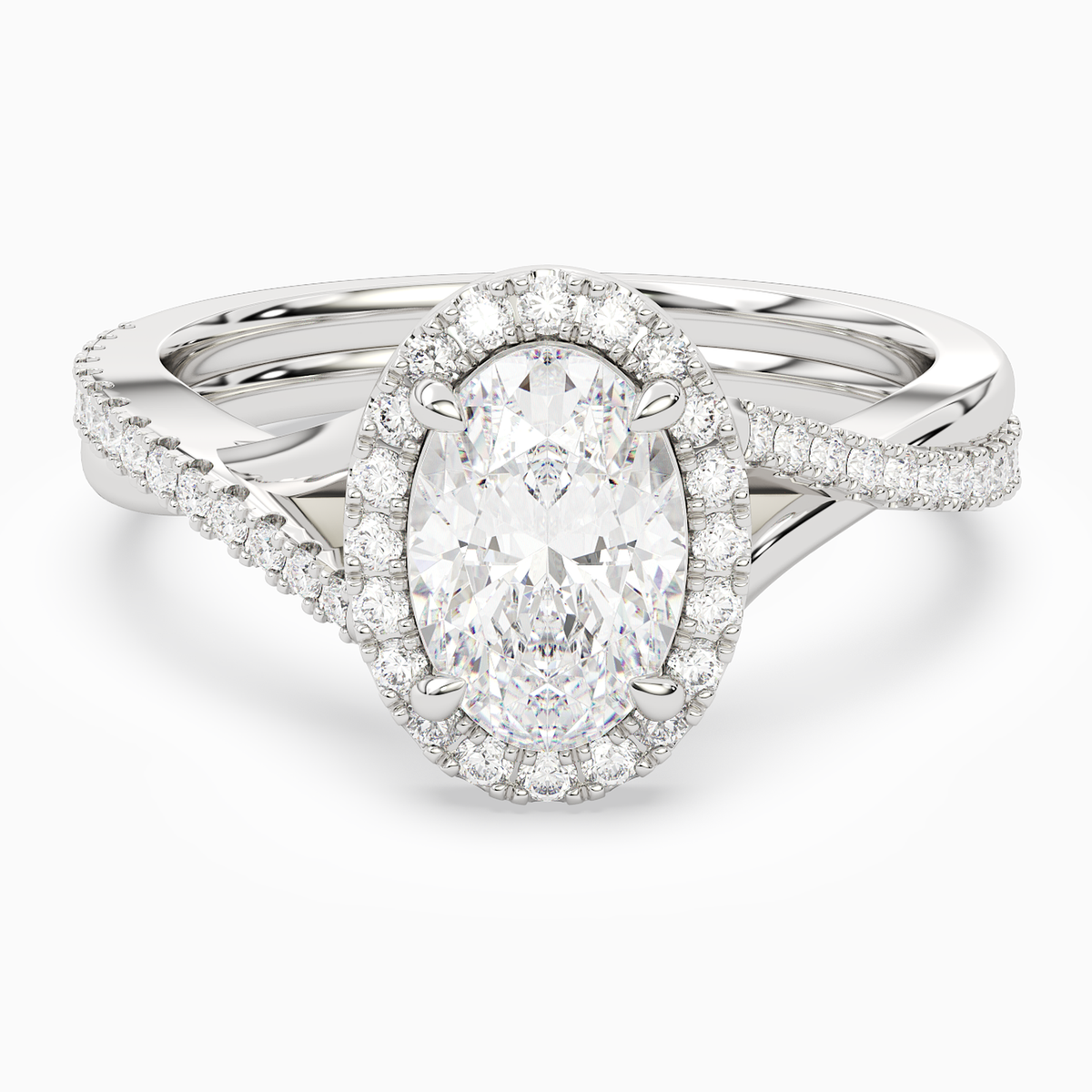


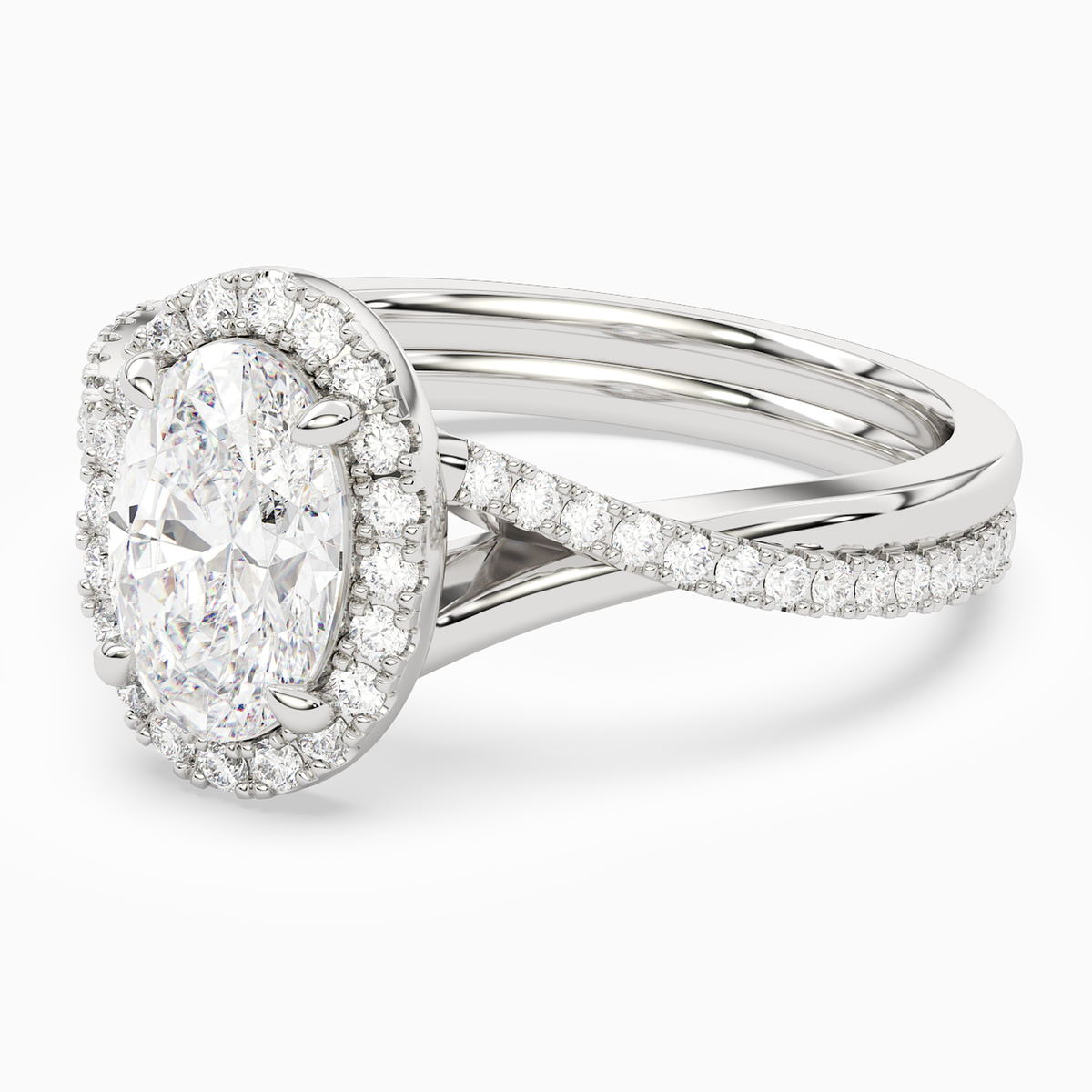
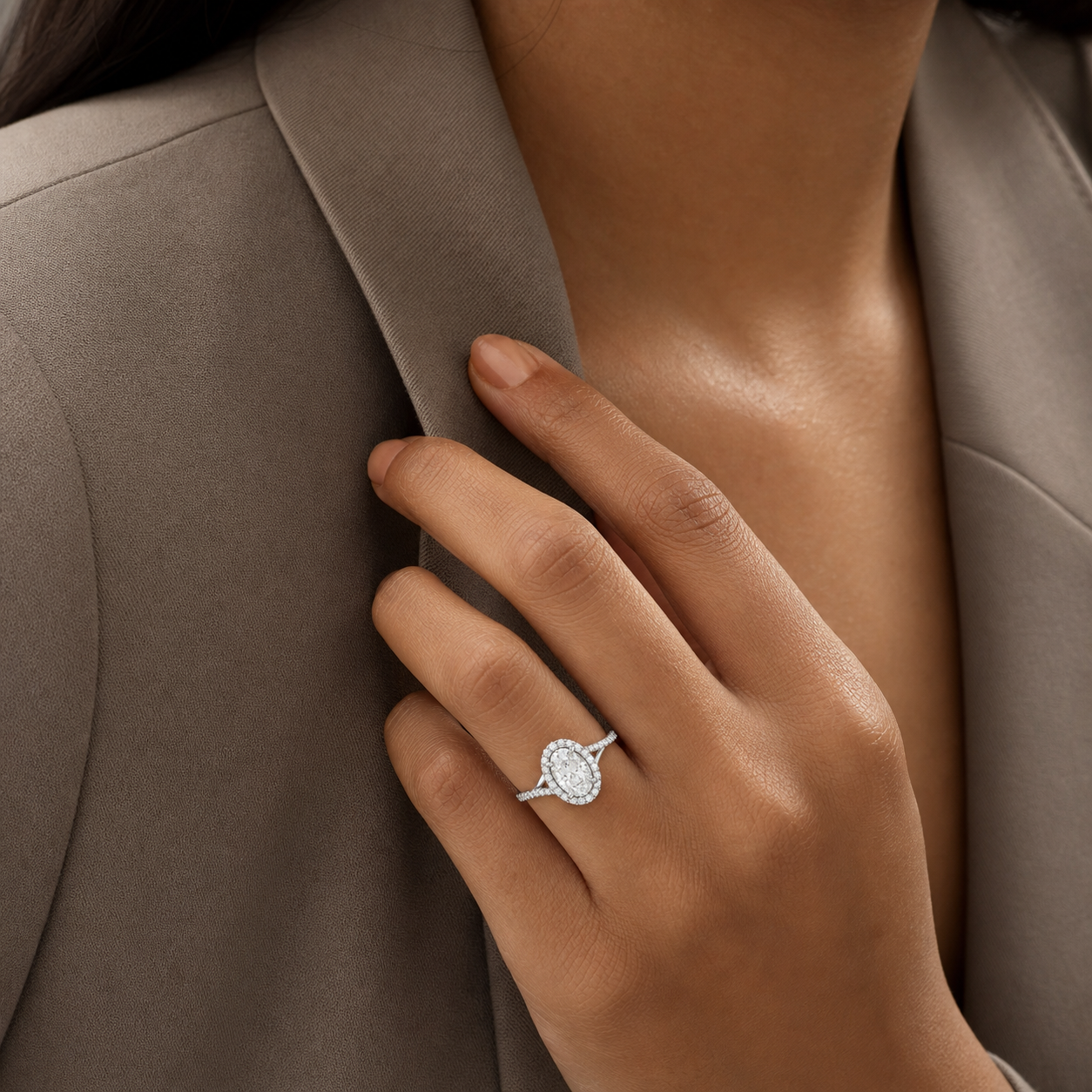
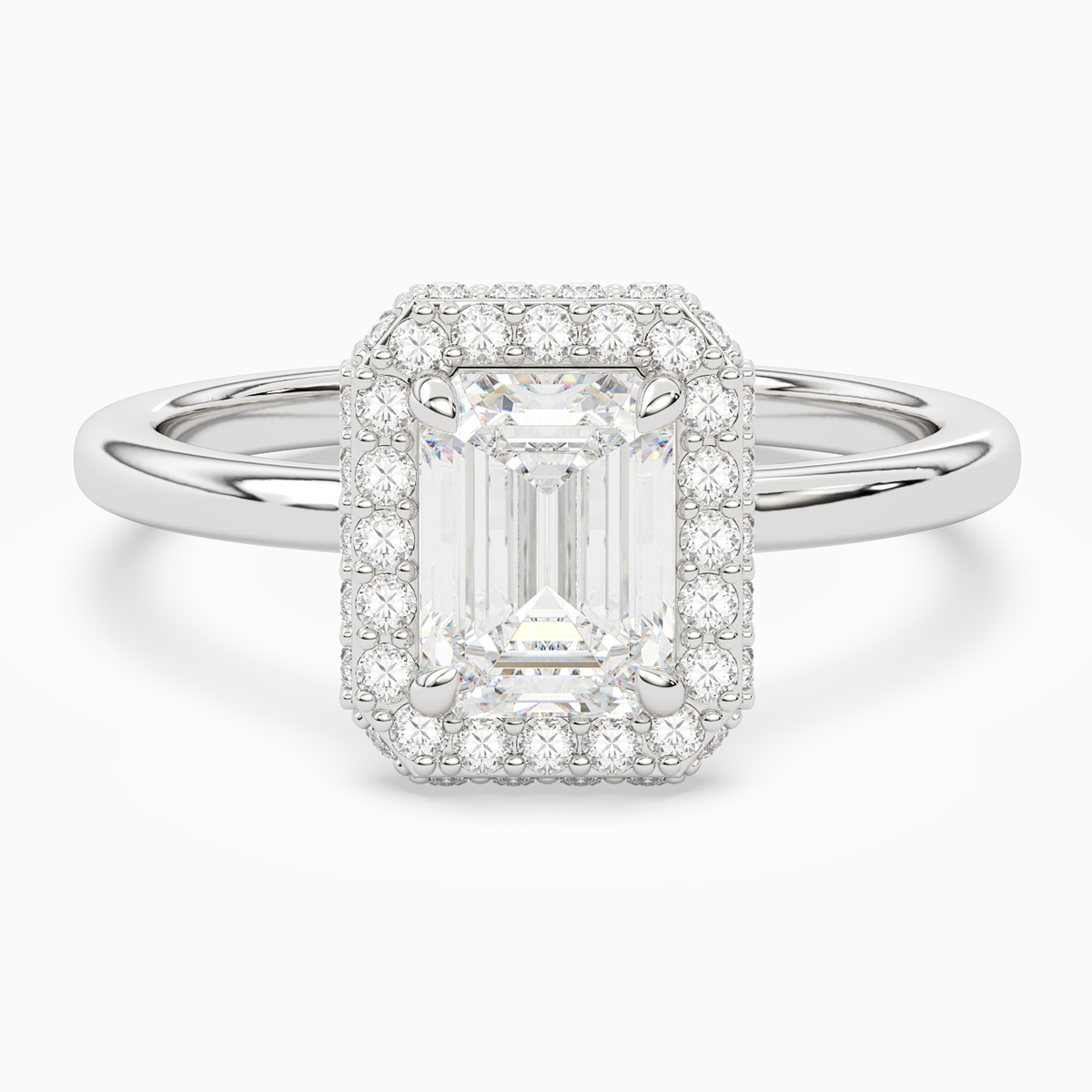


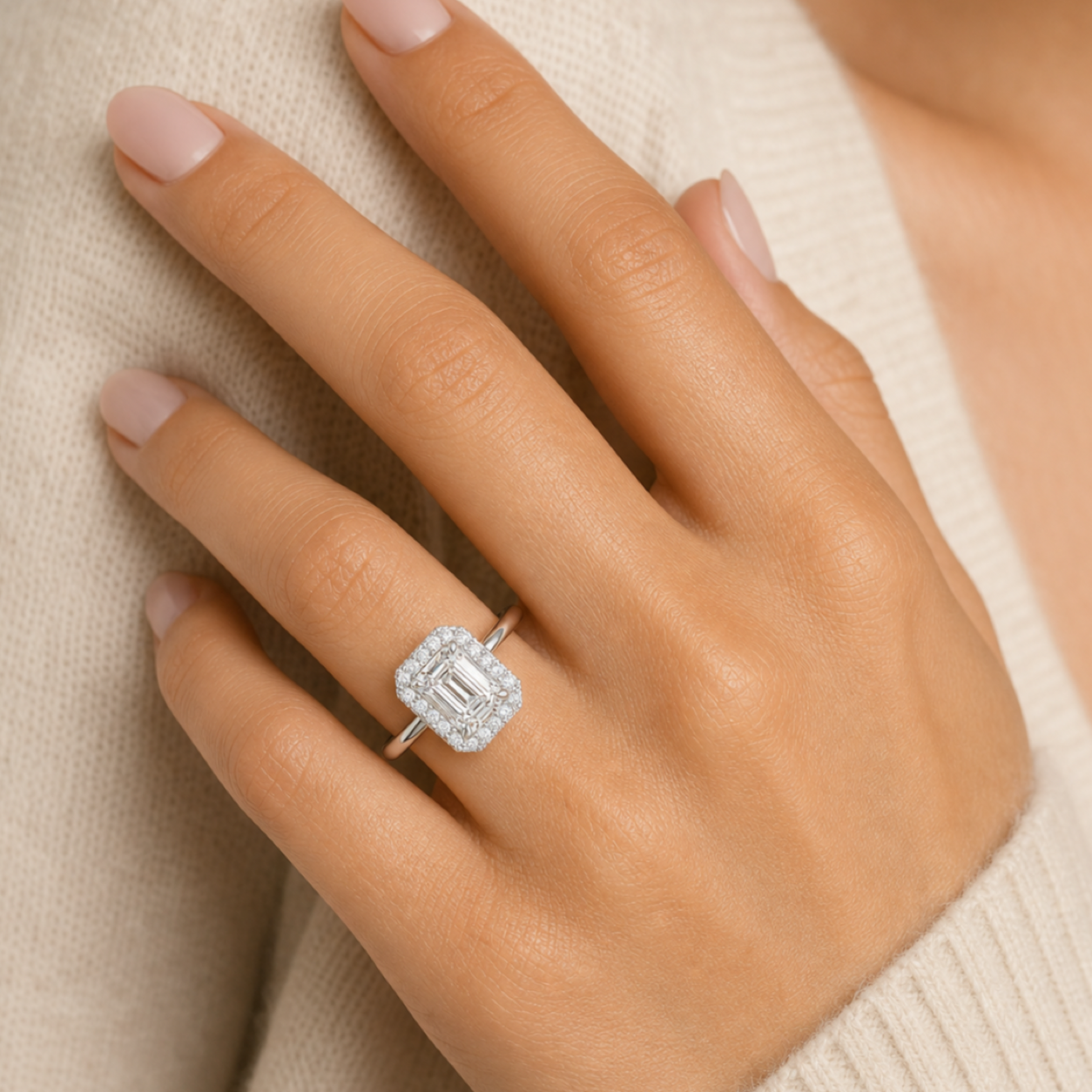
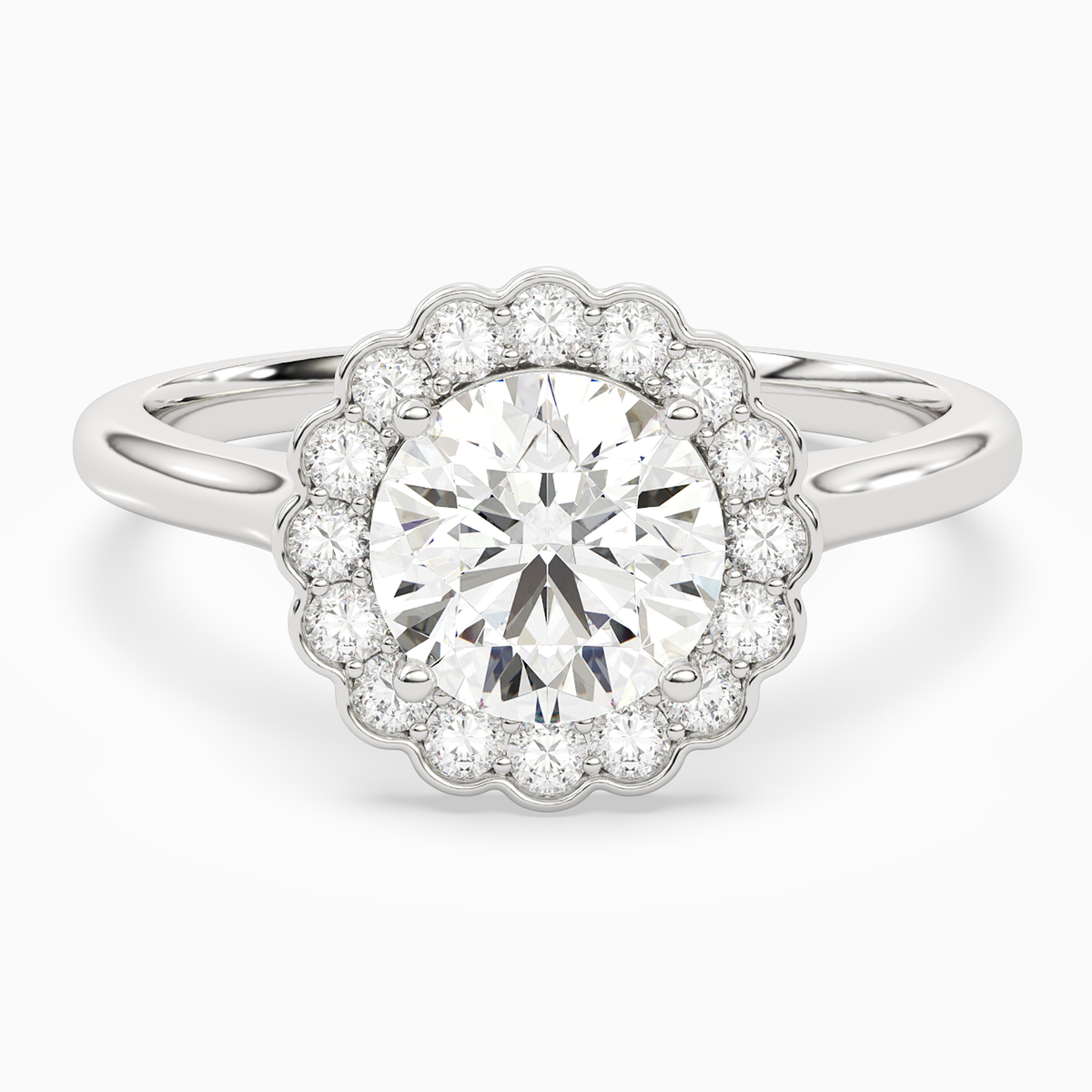
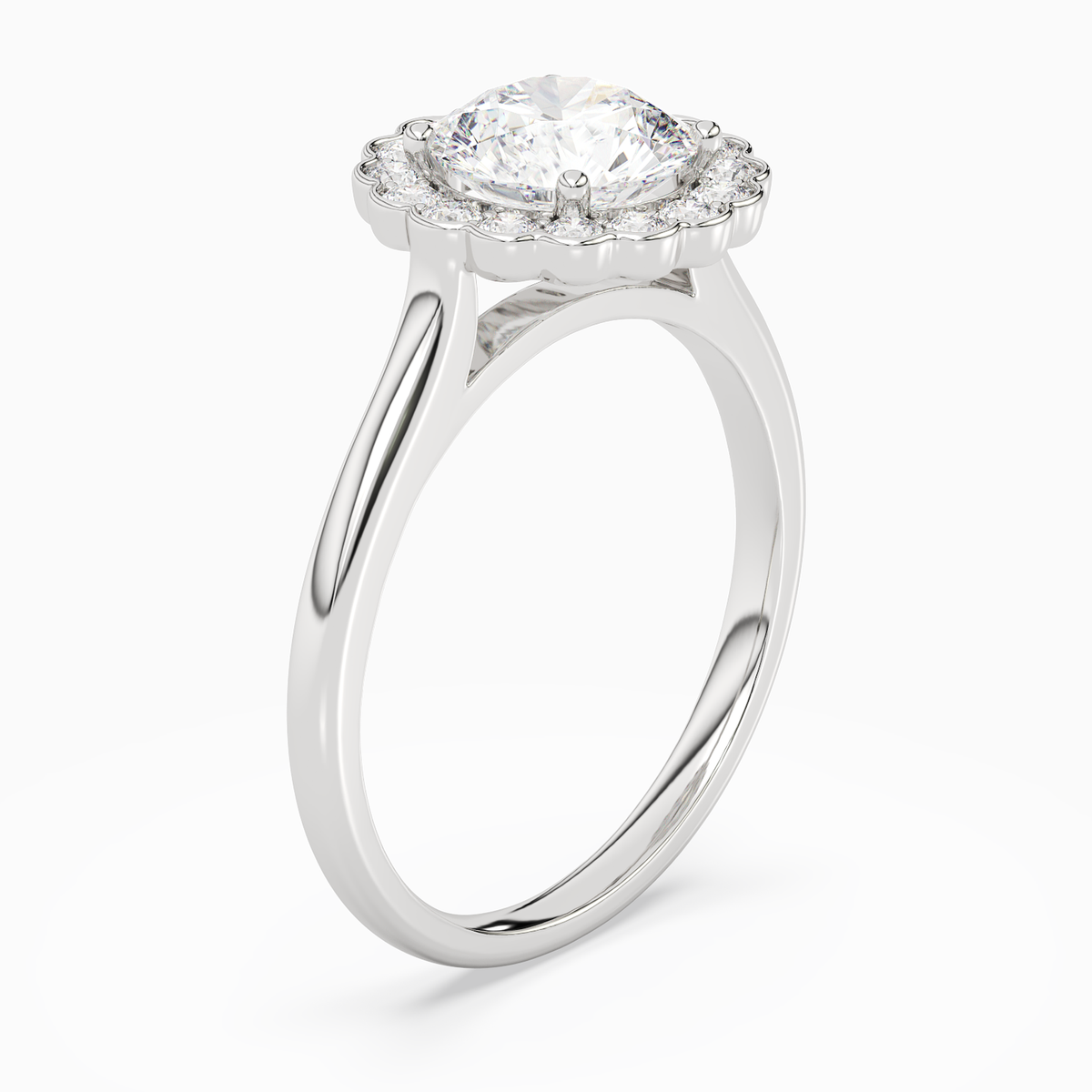

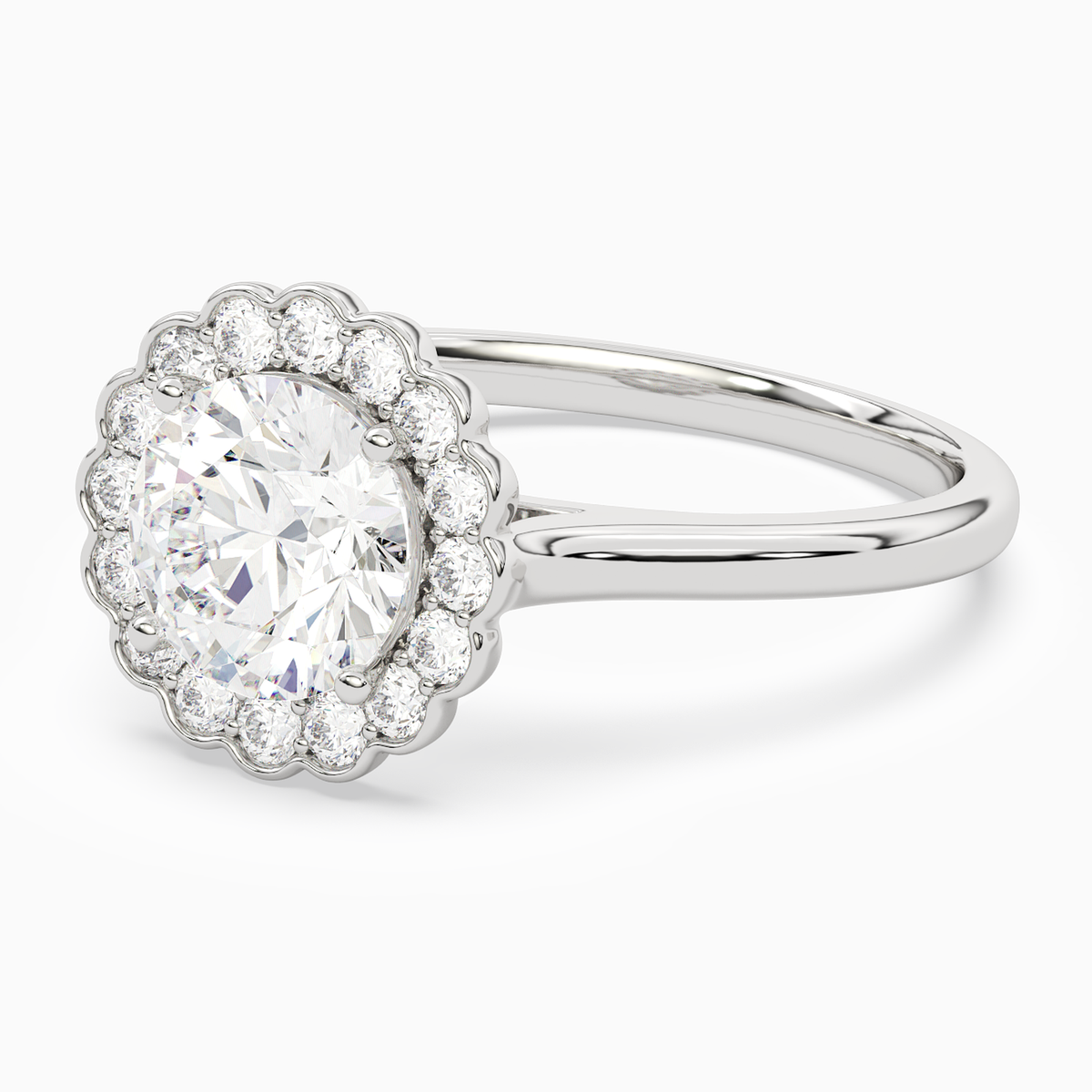
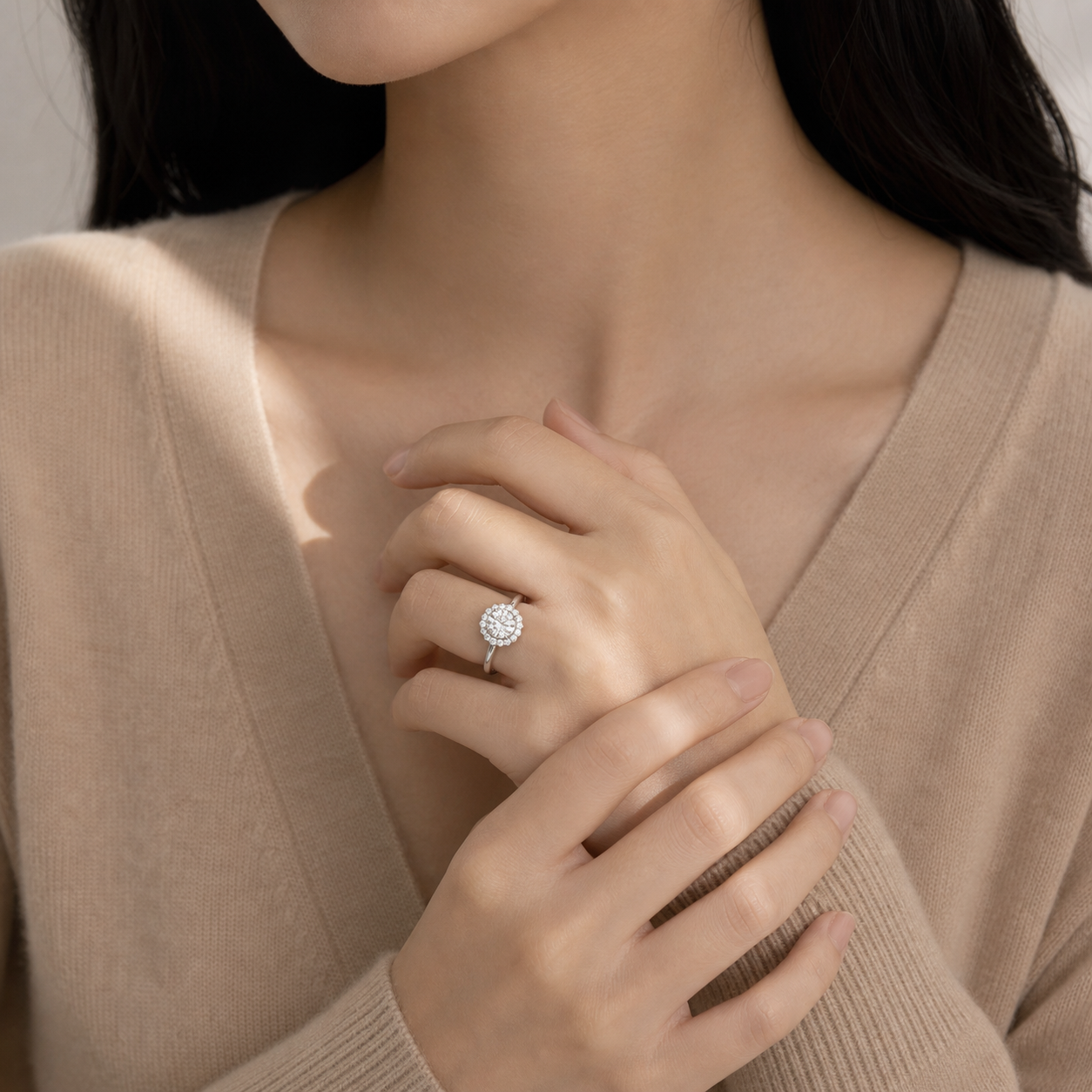
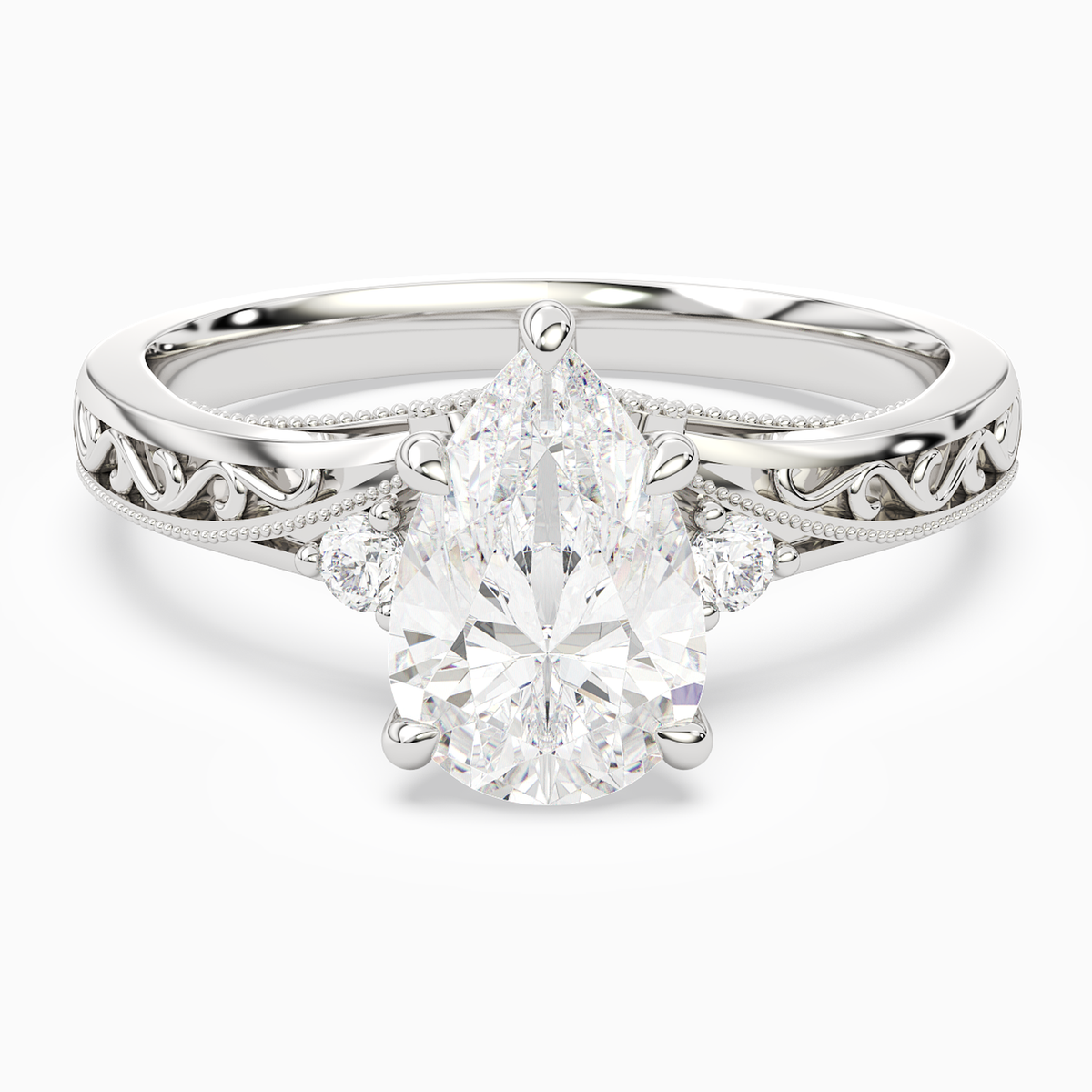
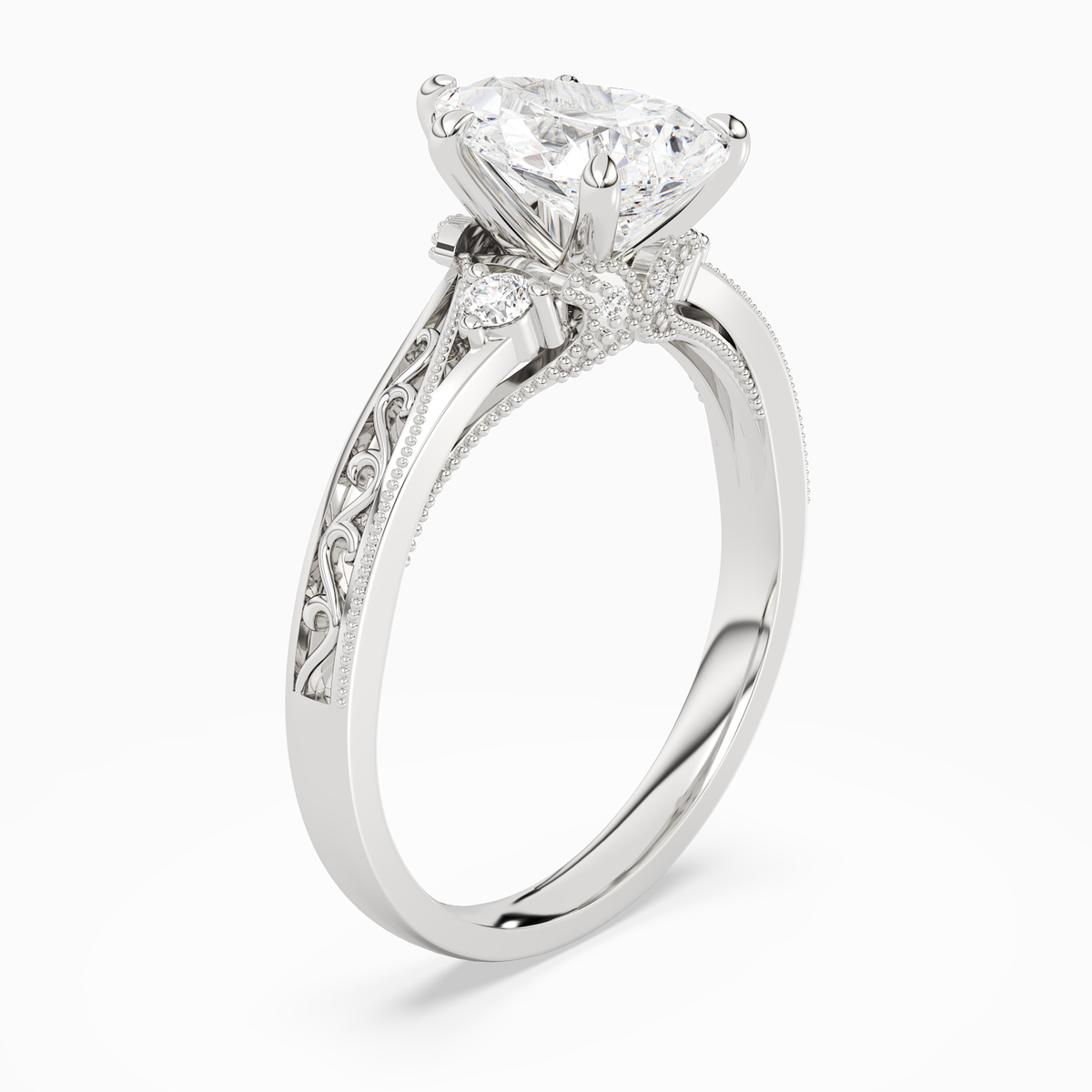


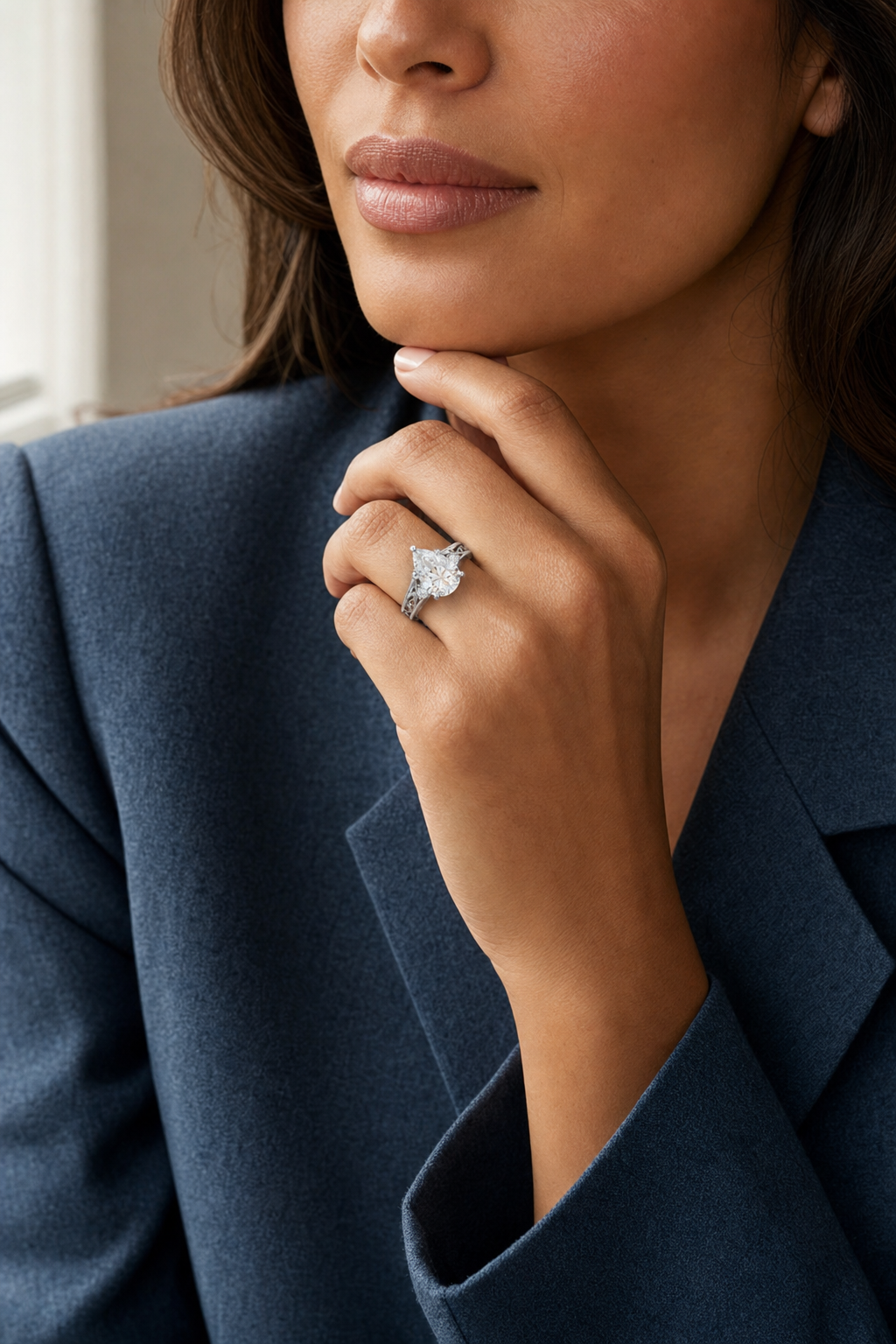
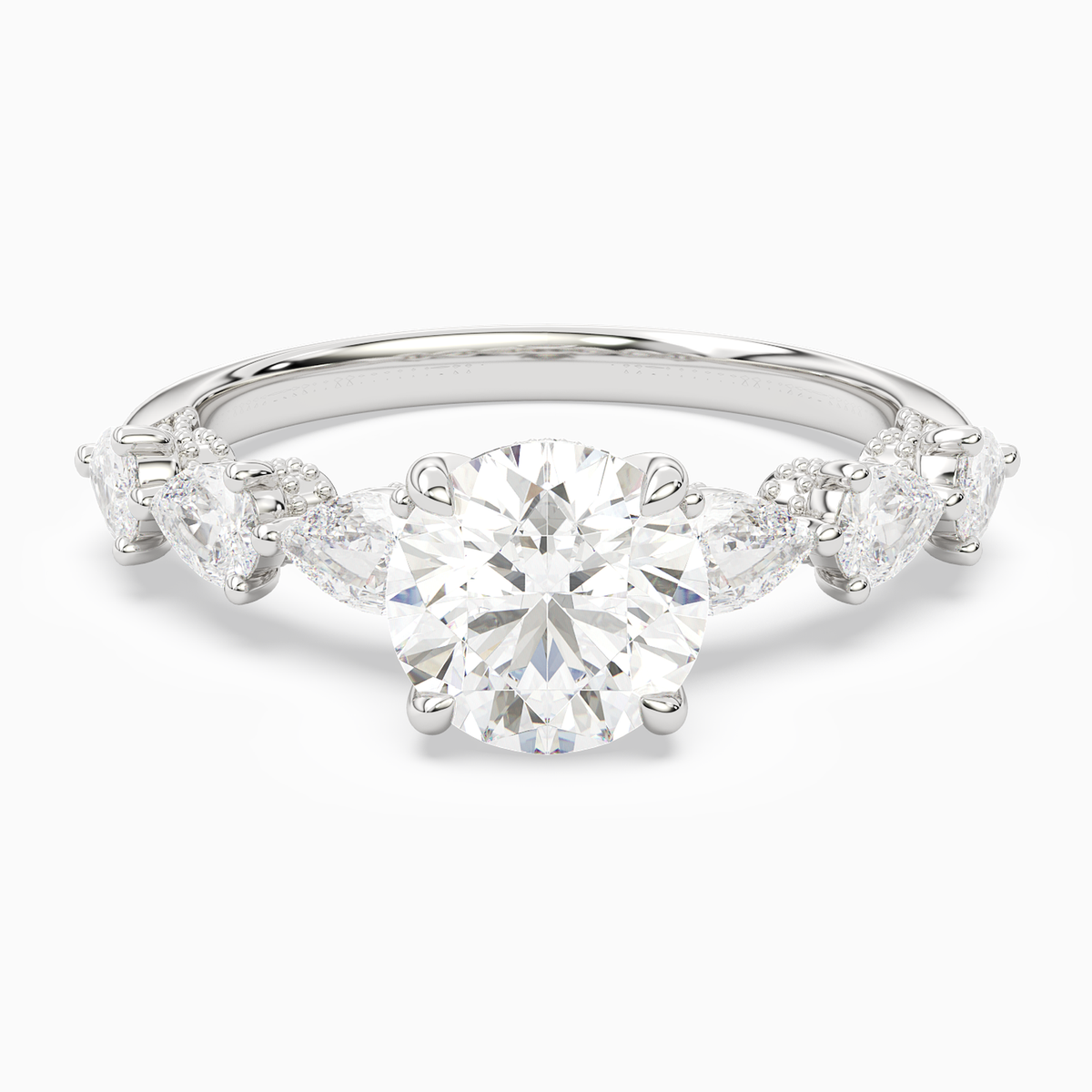

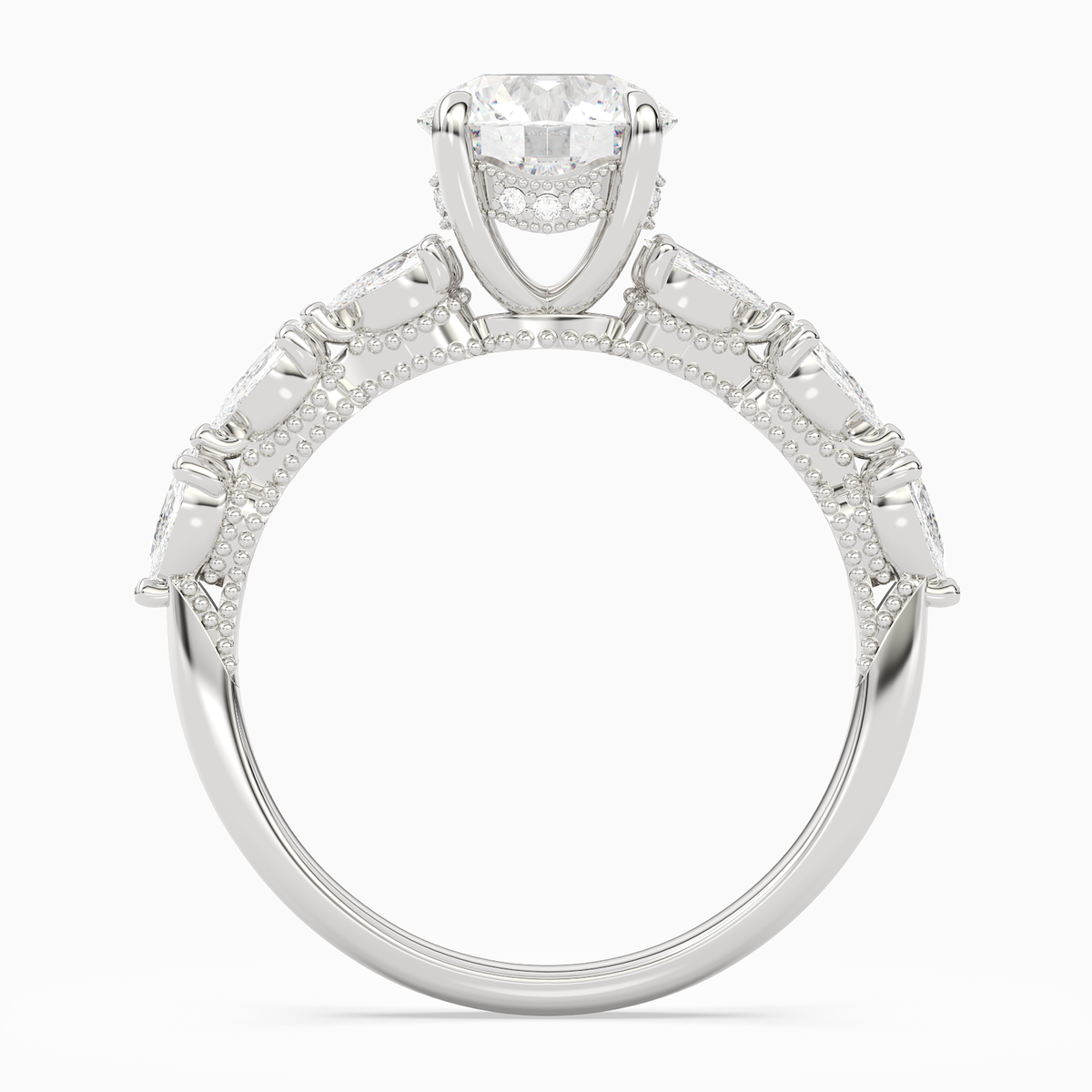

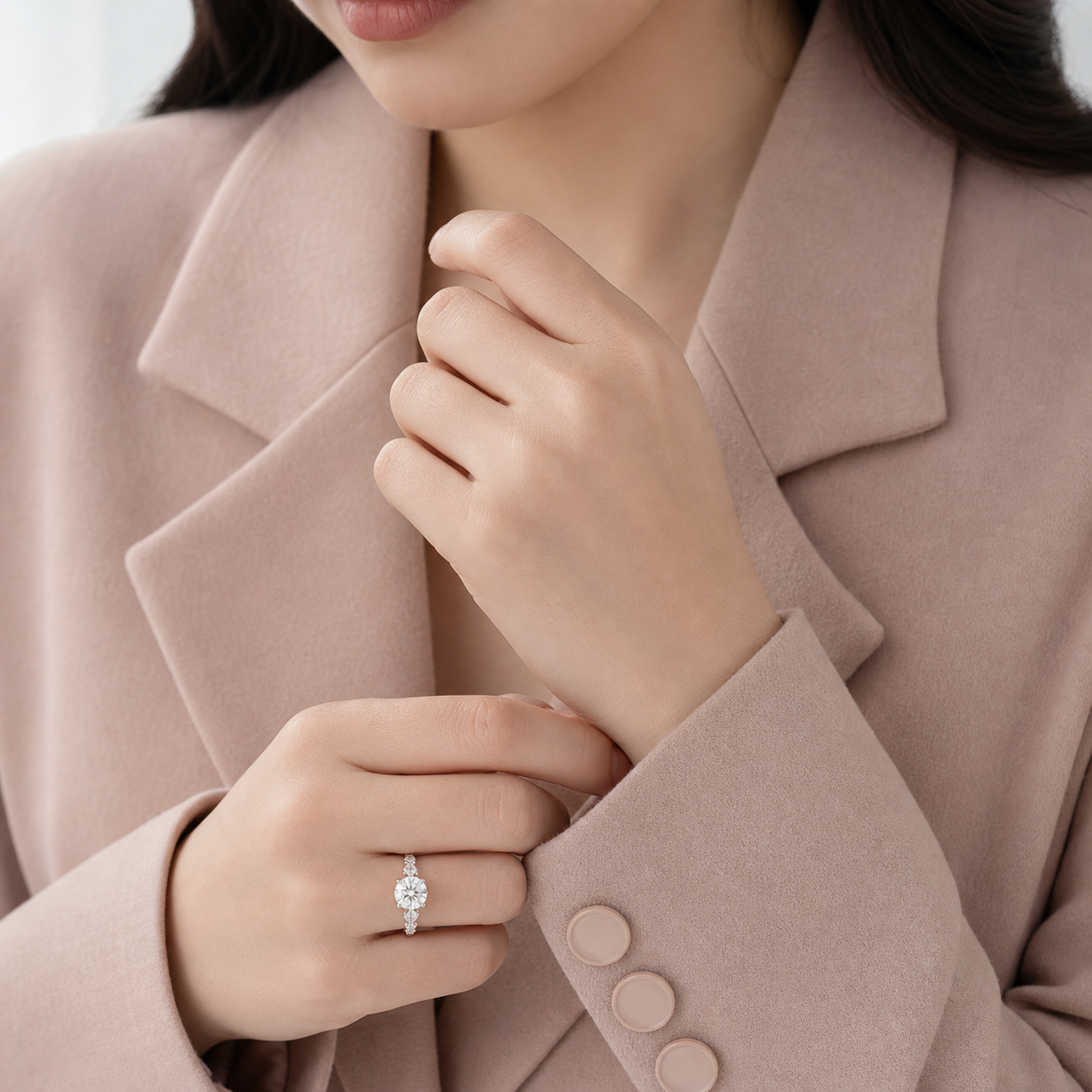

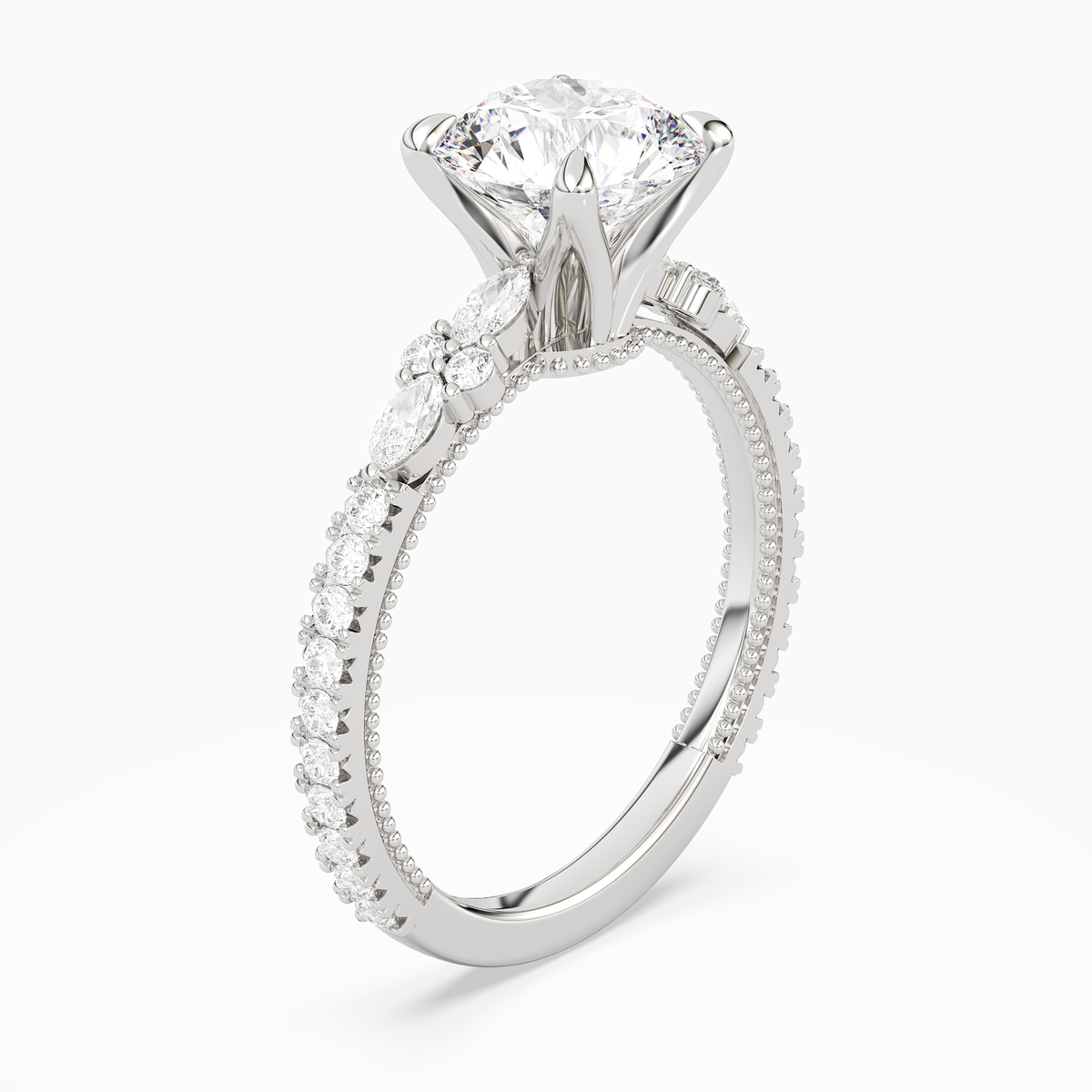


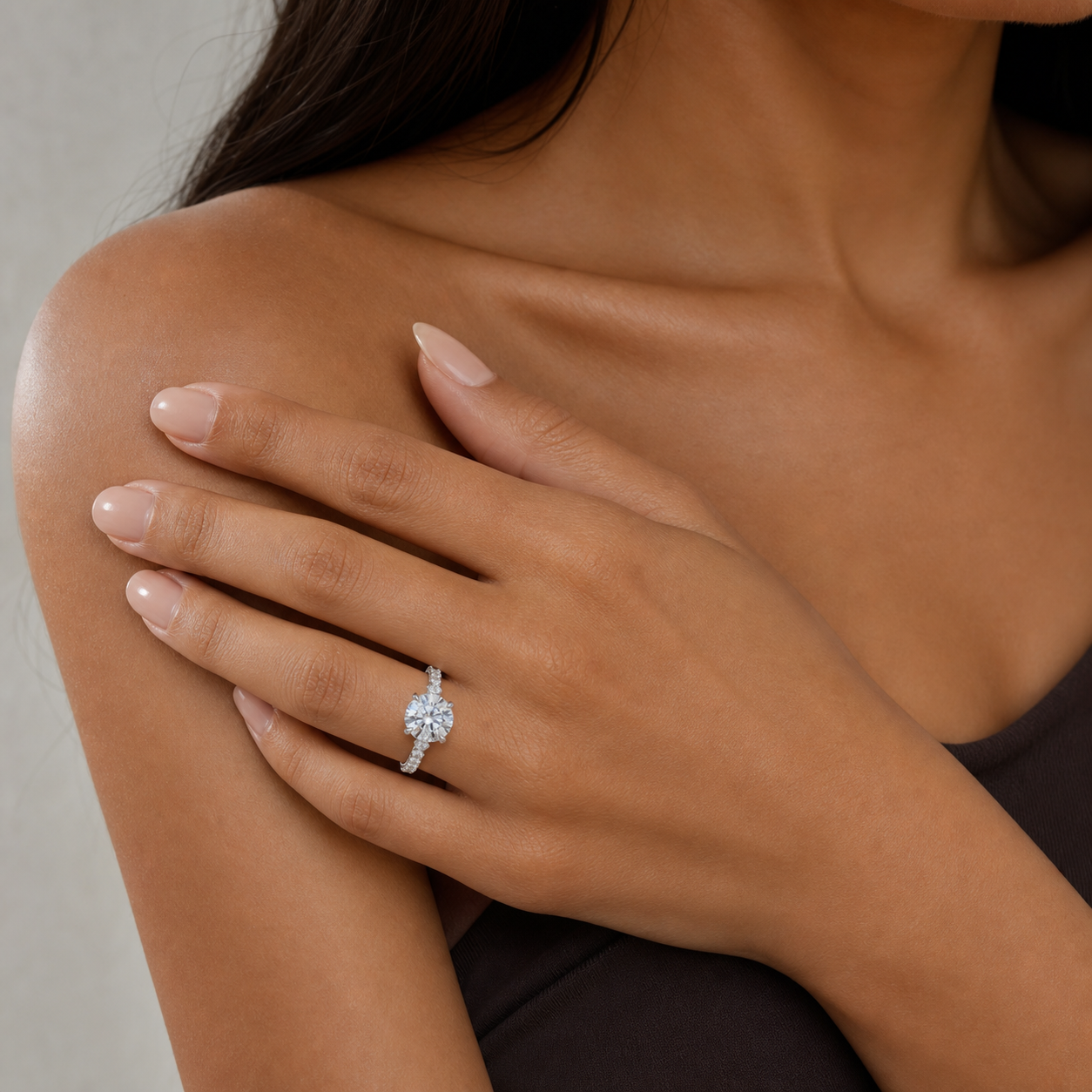


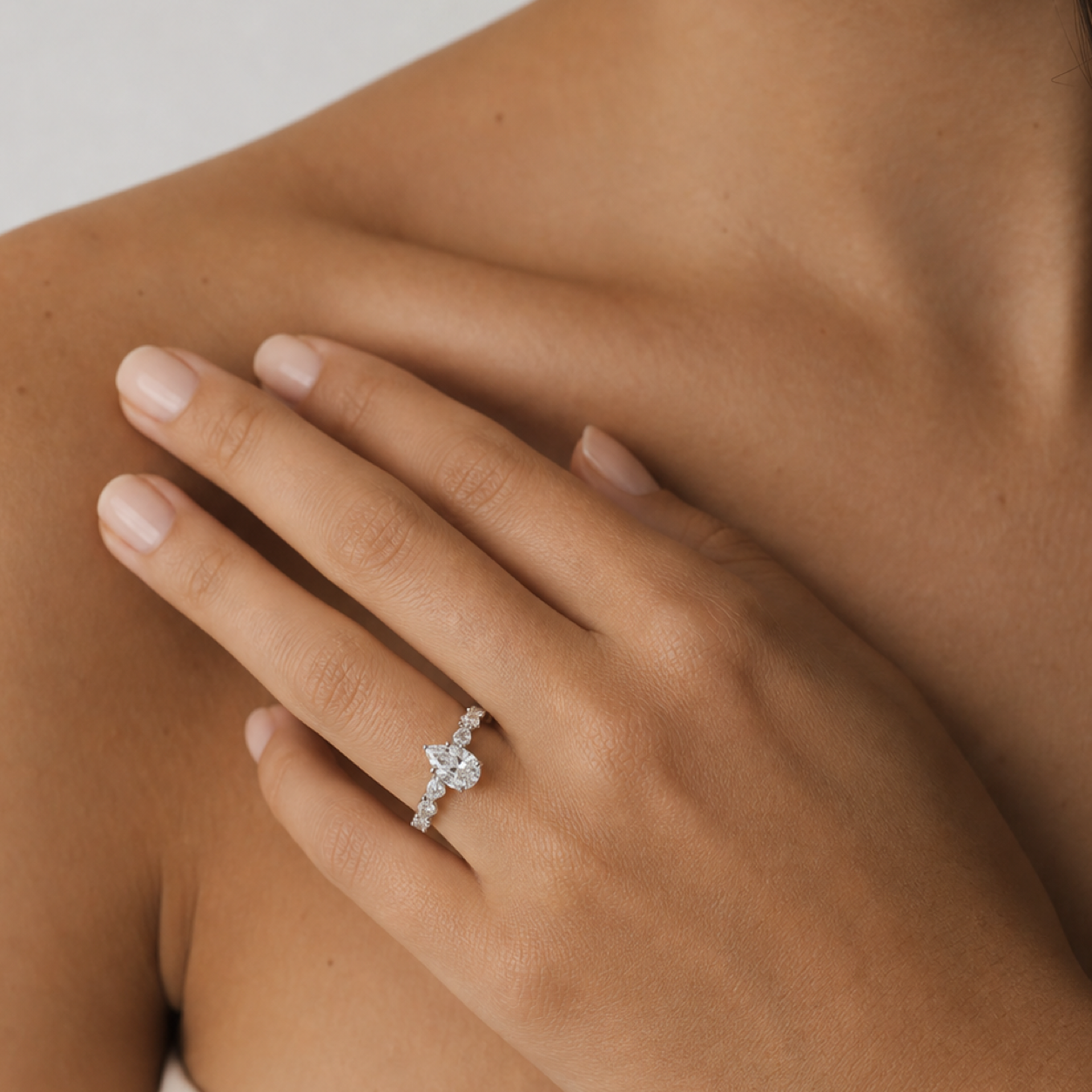
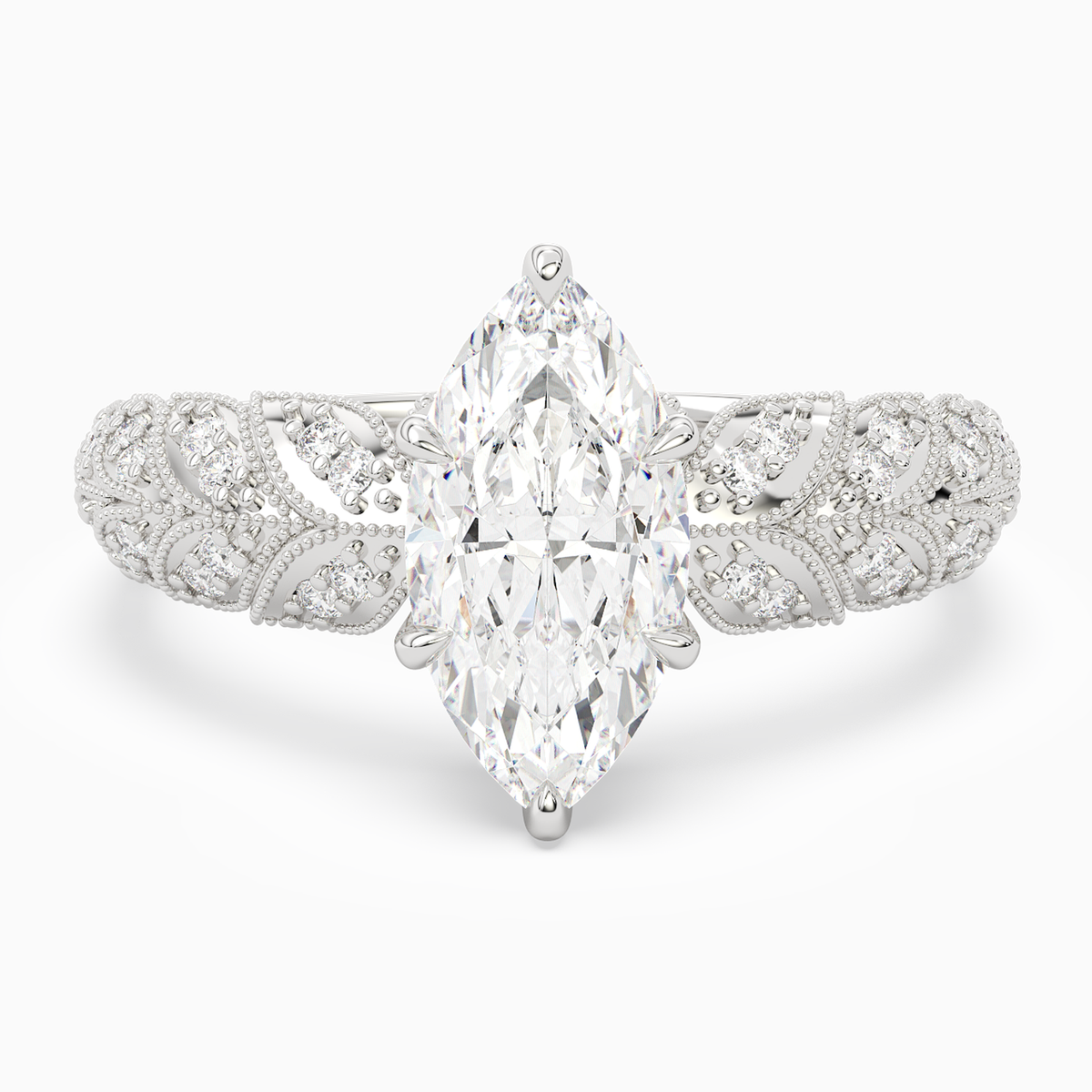
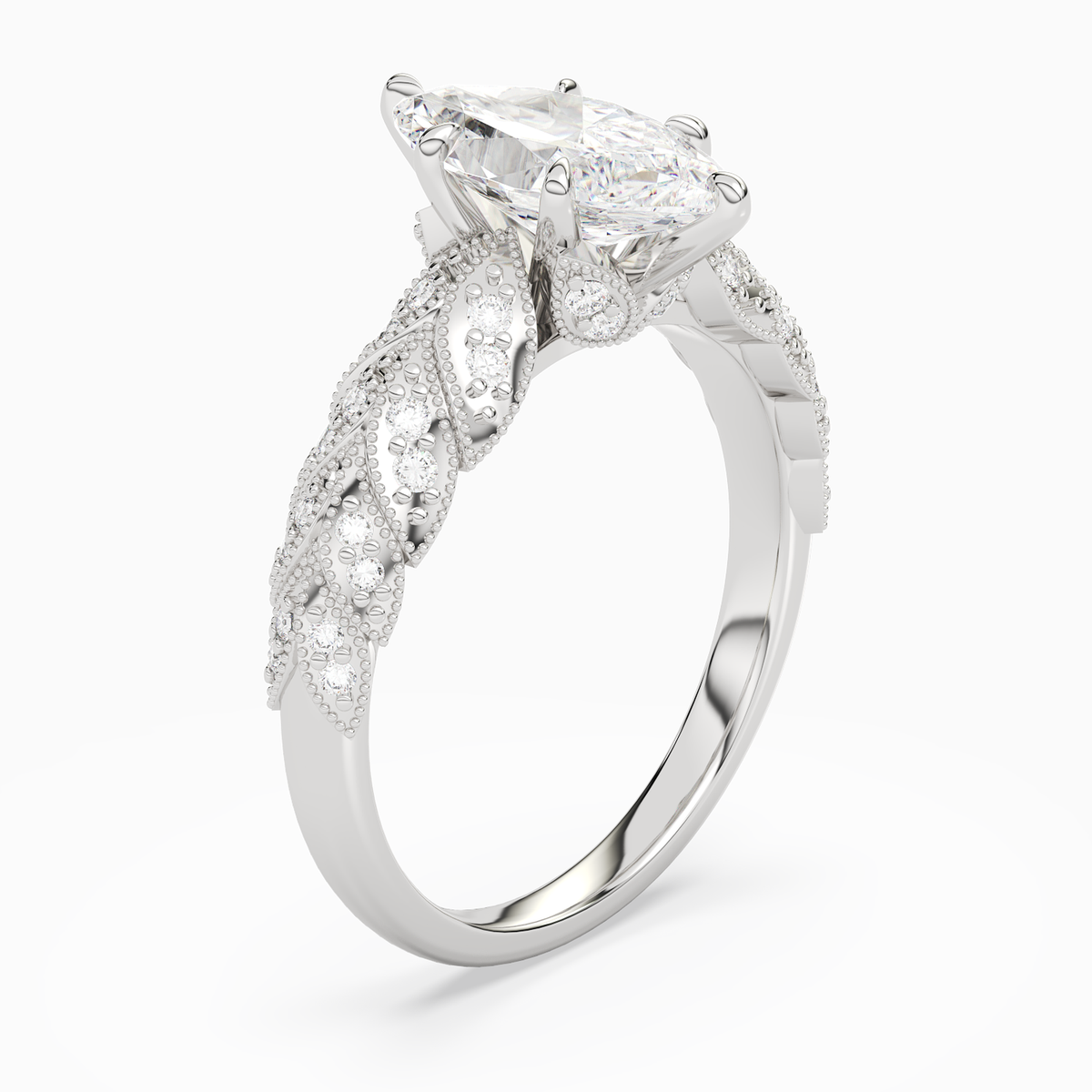
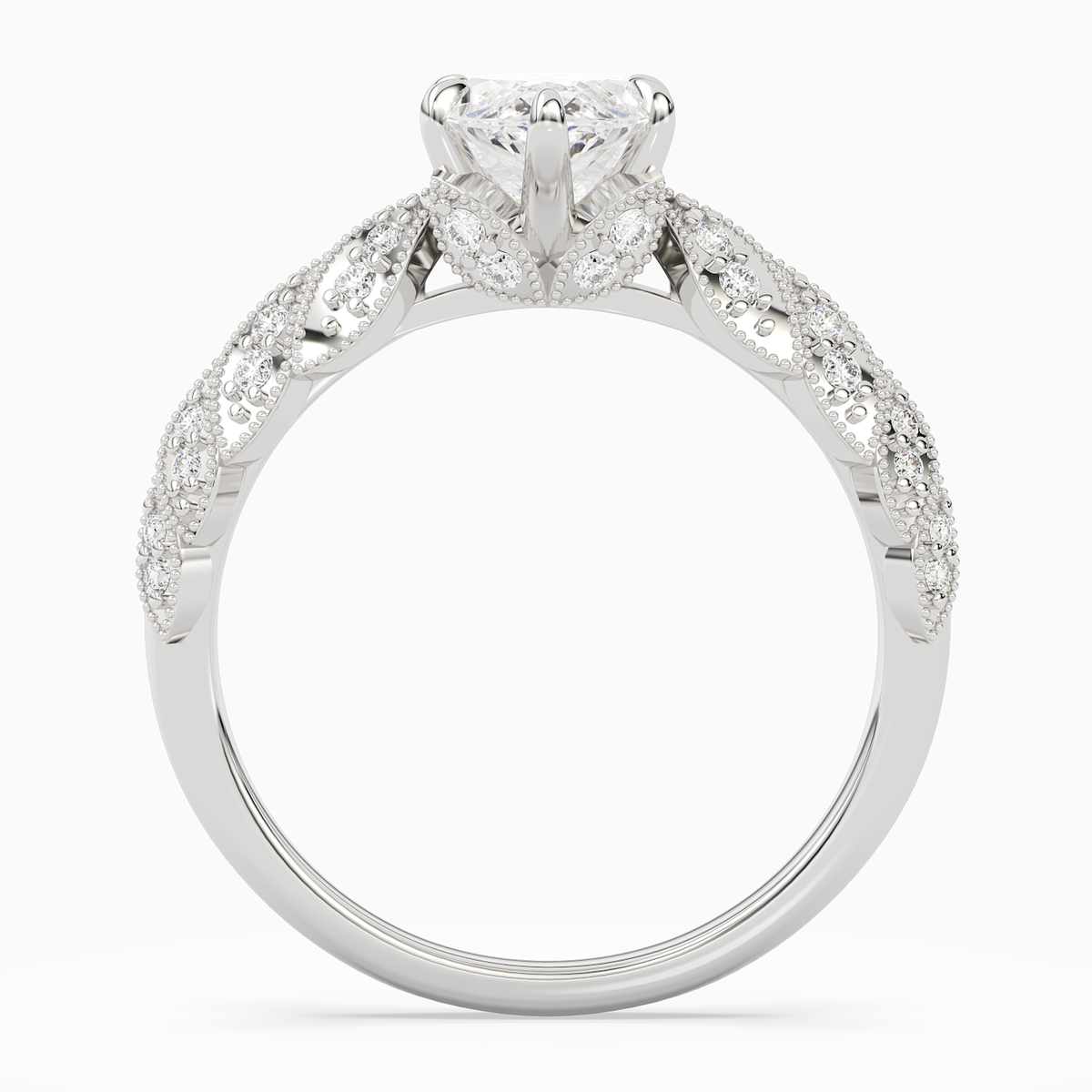

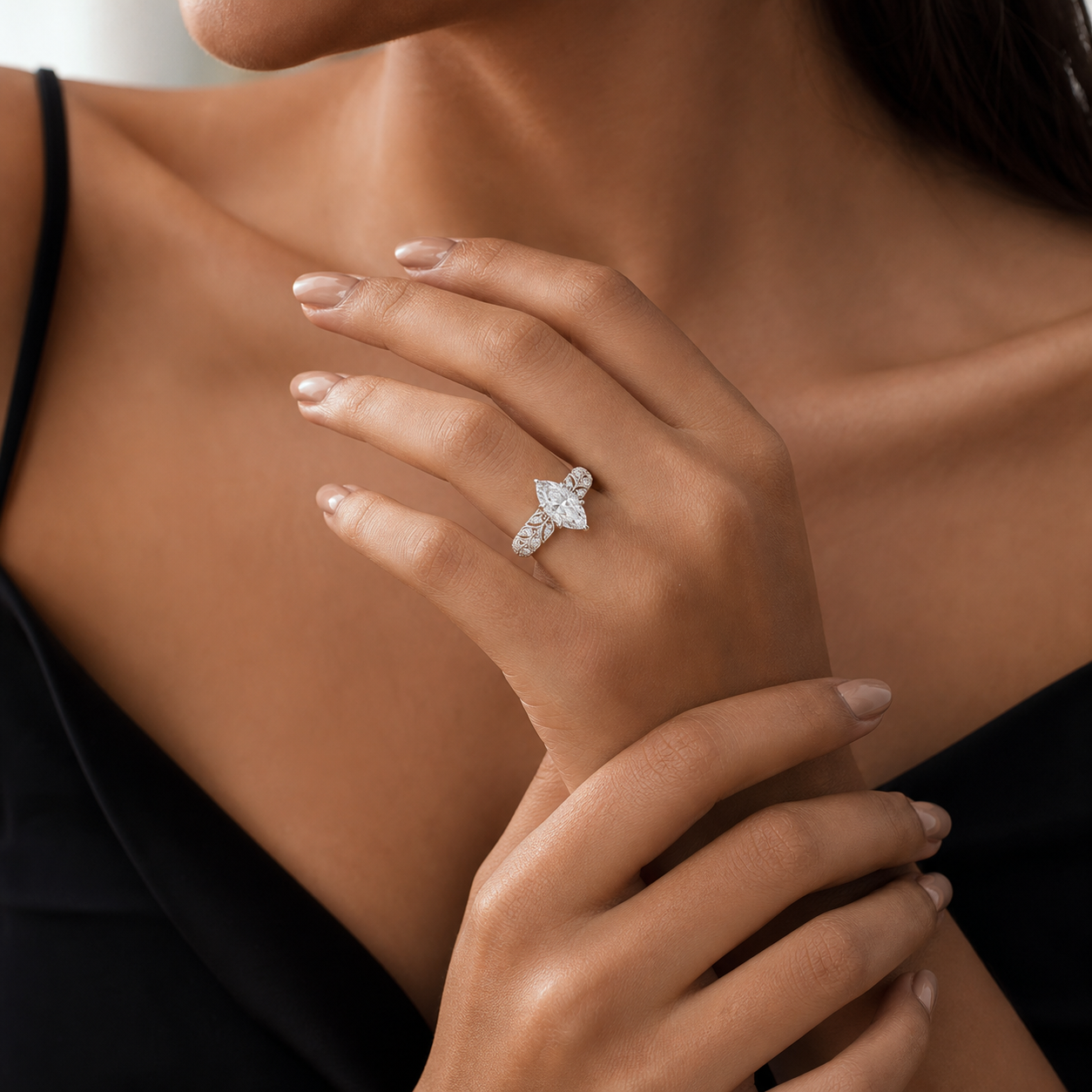
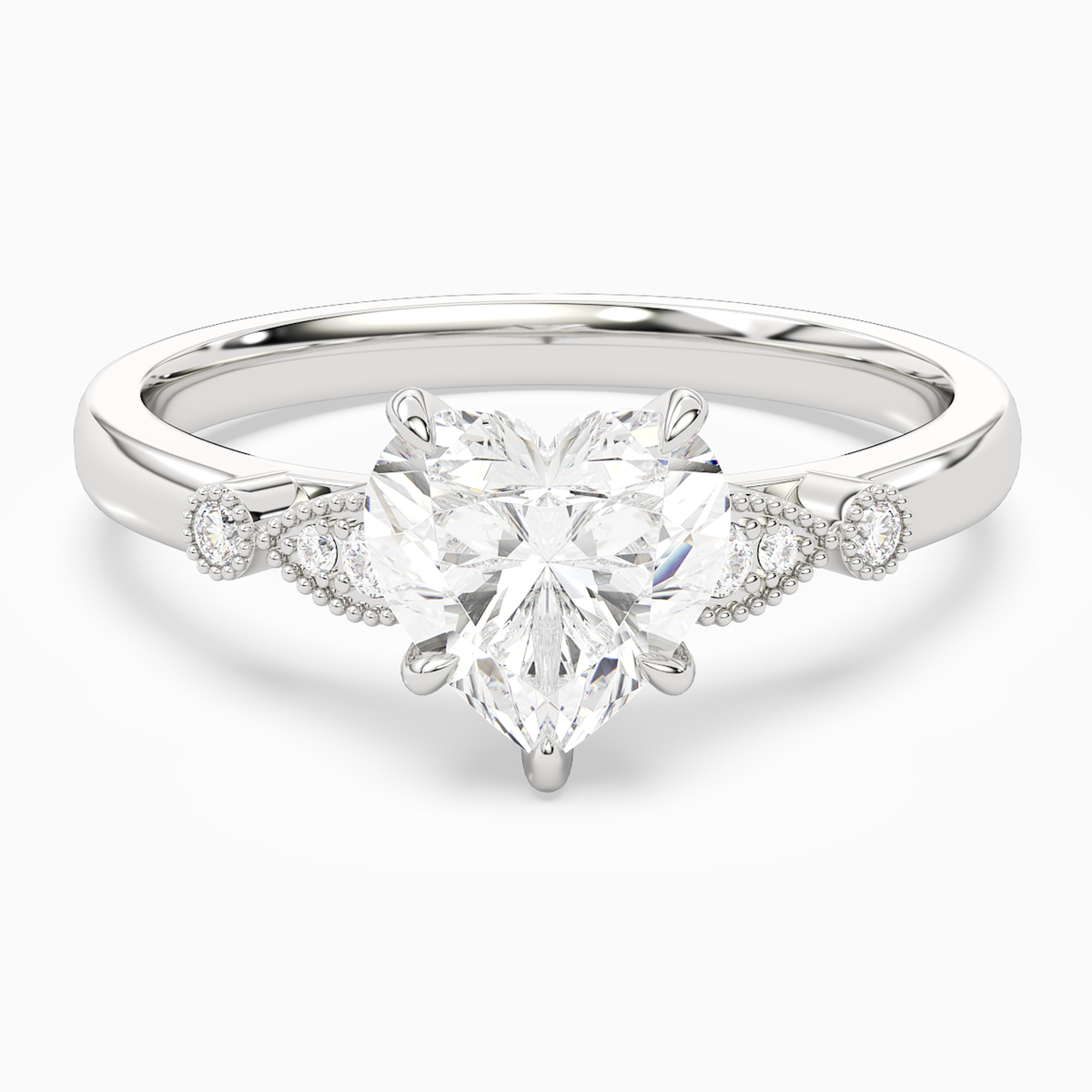
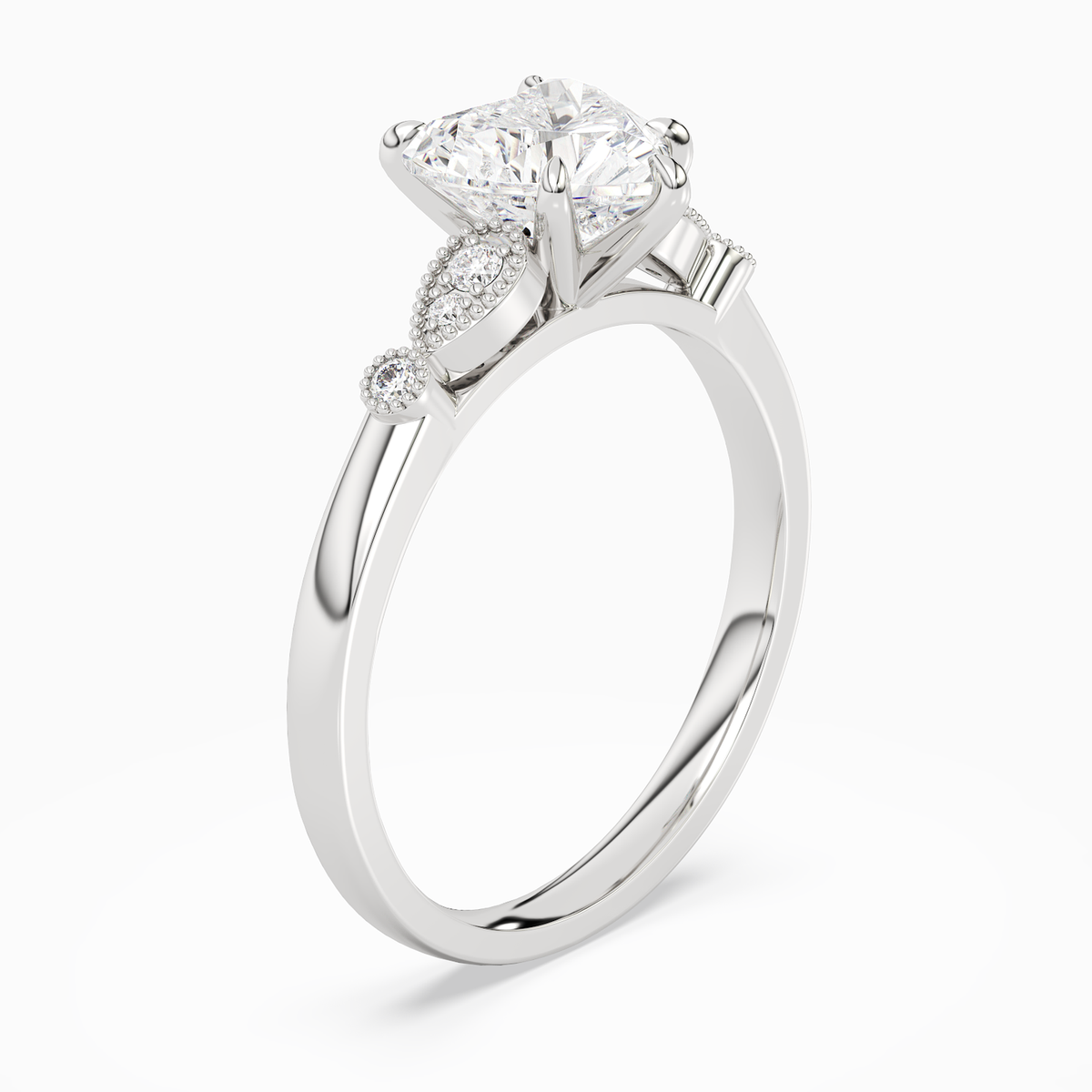

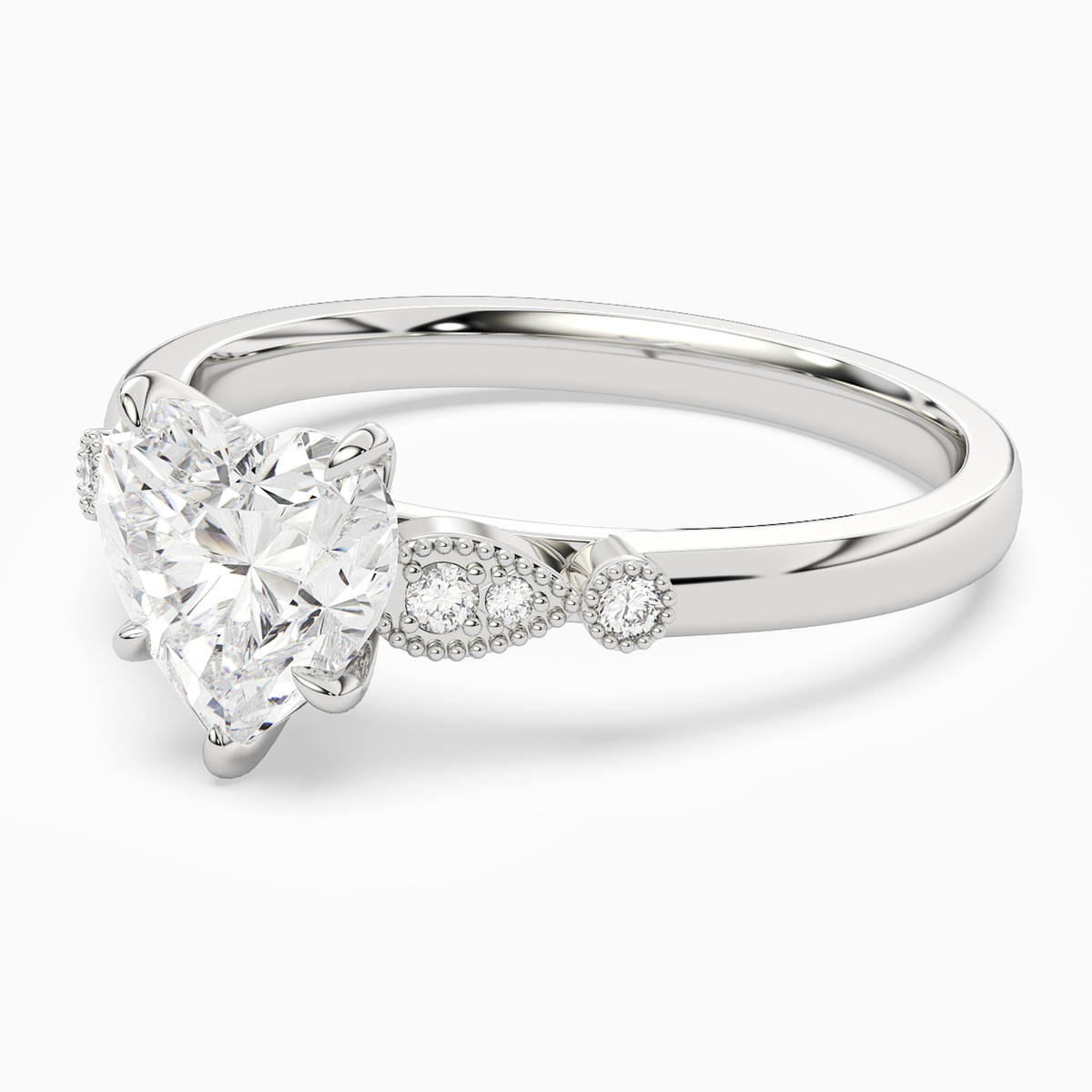
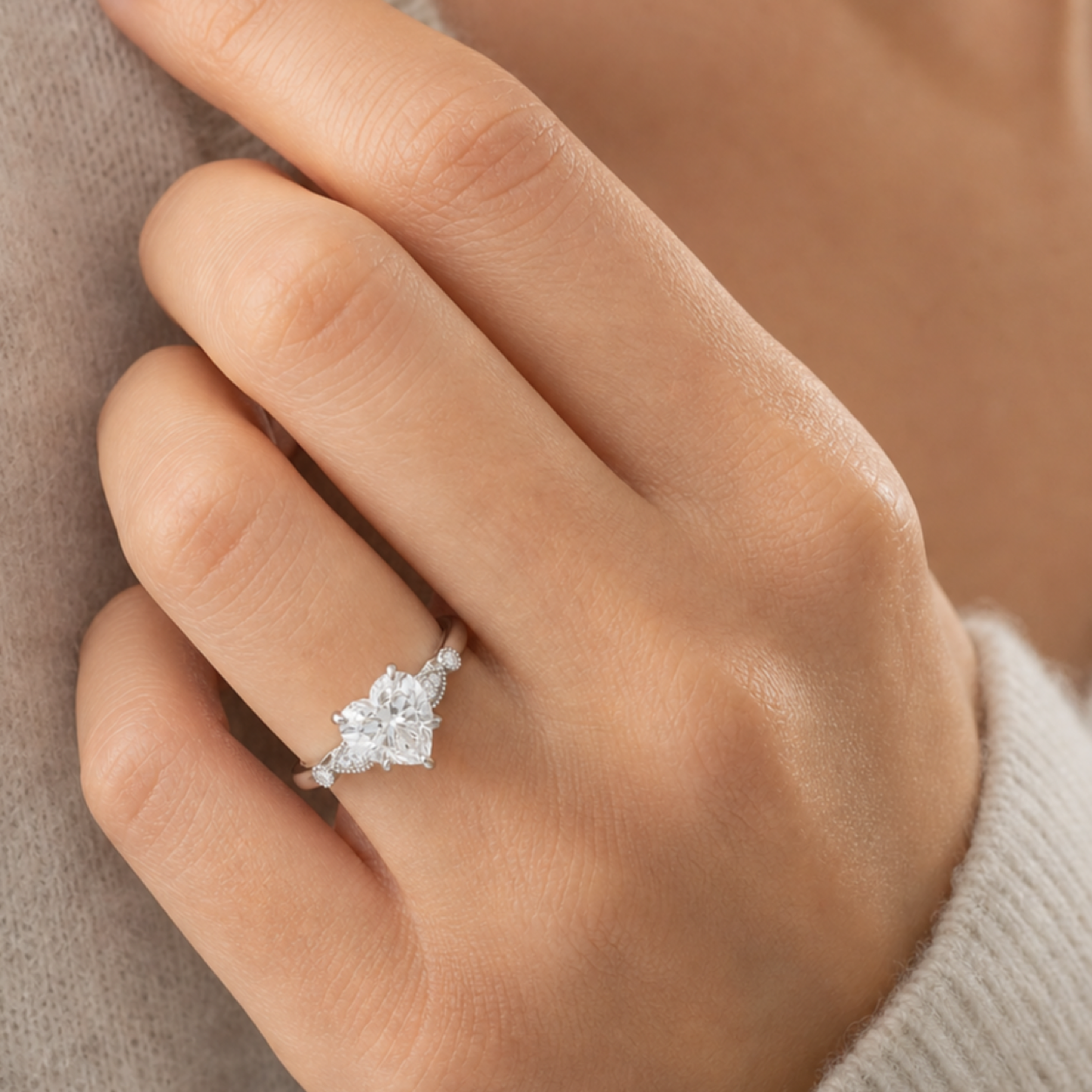
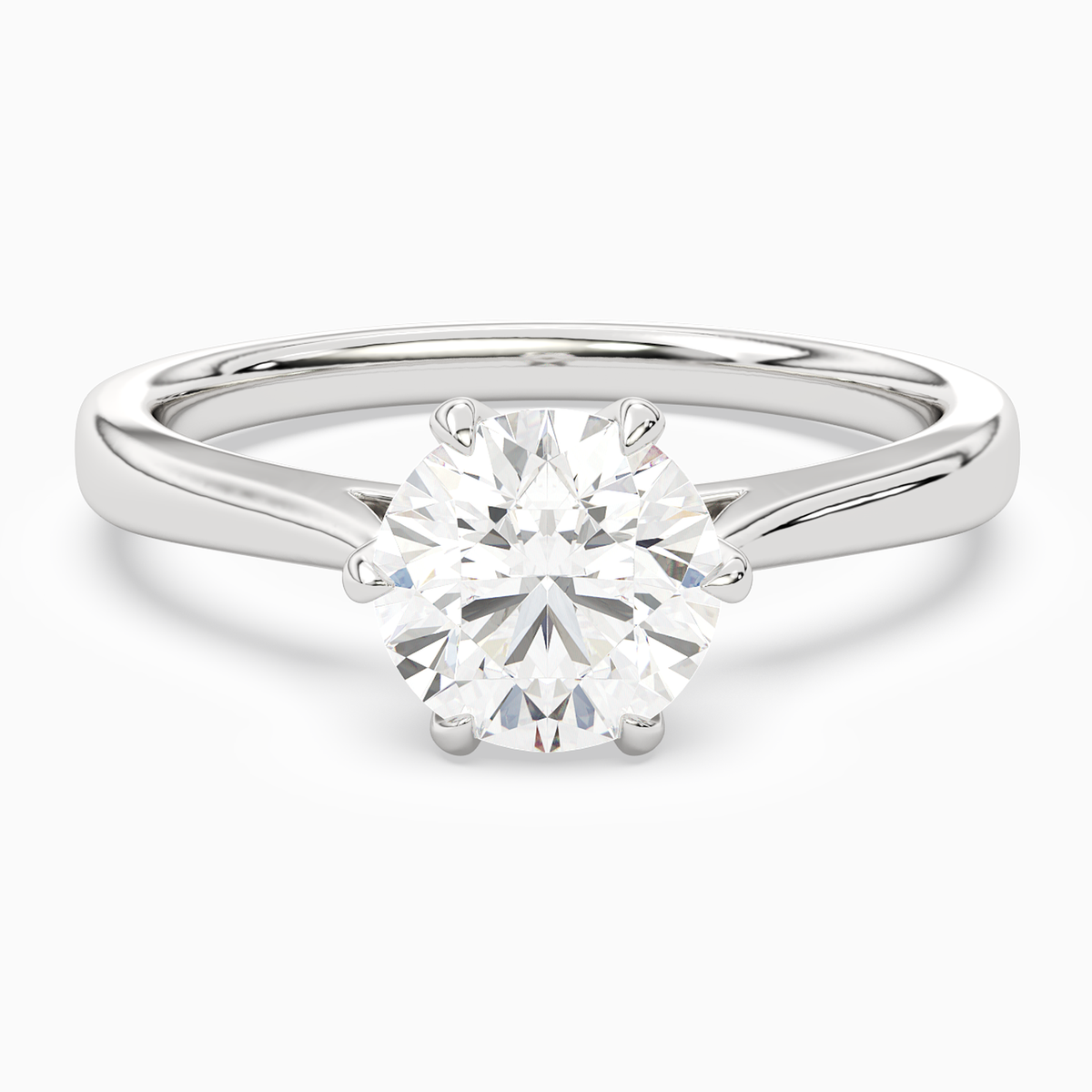

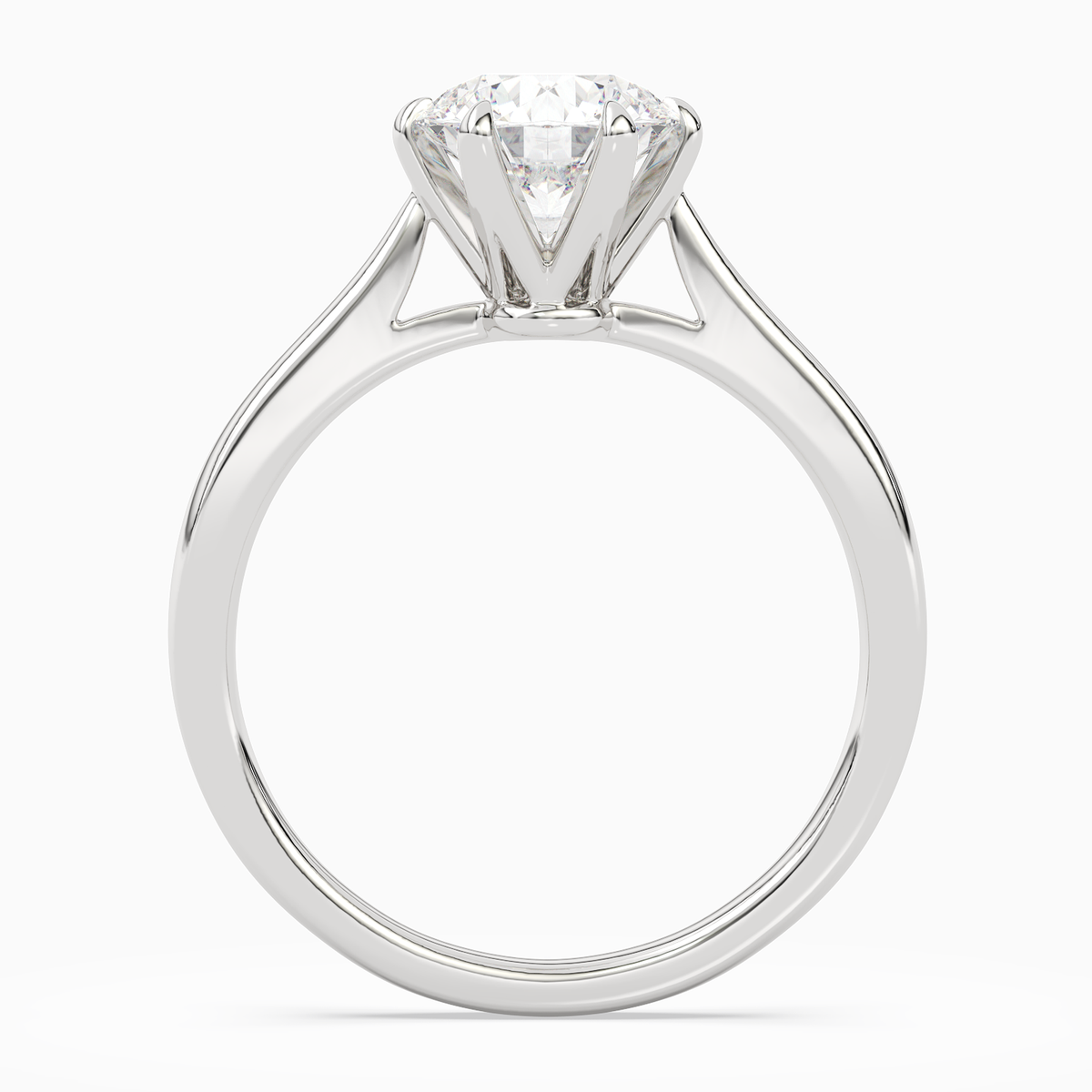

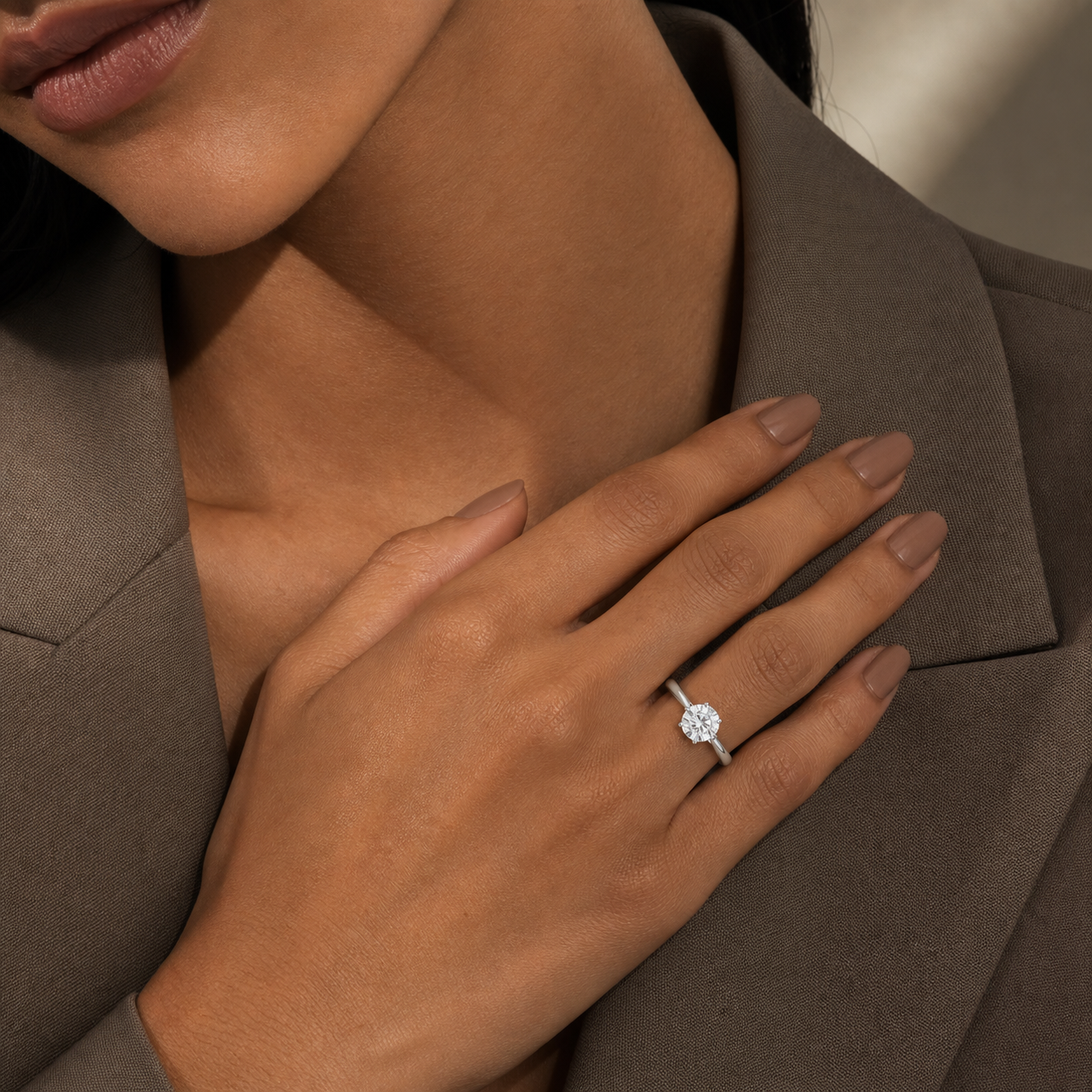
18K White Gold Engagement Rings: A More Nuanced White
White metal can be quiet without being neutral in every sense. In 18K White Gold, the brighter surface expected of a white-metal engagement ring is supported by an alloy containing 75% pure gold. The result is a material choice with two readings: visually continuous beside the diamond, yet more nuanced in composition than its polished surface may first reveal.
Burvonti’s 18K White Gold Engagement Rings collection lets that material decision be considered across a wide range of designs. Solitaires, halos, three-stone rings, pavé bands, bezels, and more sculptural settings each reveal a different relationship between the diamond, the prongs, and the line of the band. The value is not a claim that 18K is automatically better. It is a clearer view of what higher gold content changes—and what it may not.
Gold Content, Alloy, and Surface
The 18K mark means that 18 of 24 parts, or 75%, are gold; the remaining portion consists of alloying metals that influence color and working characteristics. White Gold is not a naturally white metal, and exact alloy recipes can vary. Many white-gold rings receive a rhodium finish to create a brighter, cooler surface. Whether a particular Burvonti ring is plated, and what future care that finish may require, should be confirmed for the individual design.
This distinction matters because the first appearance of 14K and 18K White Gold can be very close when both have a bright surface finish. The more useful comparison is therefore not simply which looks whiter in a product image. Consider gold content, the color that may become visible as a finish changes, sensitivity to the specific alloy, expected maintenance, and how readily you accept the fine marks that accumulate through wear.
How White Gold Holds the Design Together
A white-metal setting can create visual continuity from diamond to prong, particularly around a bright center stone. Fine claws may recede; pavé can read as an uninterrupted line of light; and a halo may feel less like a separate border. This does not increase the diamond’s grade or light performance. It changes the visual frame through which the stone is seen.
The effect is especially clear in designs where structure matters. A bezel draws a precise perimeter around the stone. A cathedral setting makes the rising shoulders part of the composition. A three-stone ring depends on spacing and scale between stones. In each case, 18K White Gold allows the architecture to remain legible without introducing a strong color boundary.
18K White Gold, 14K White Gold, or Platinum?
The choice between 18K and 14K White Gold is not a hierarchy. The 18K alloy contains more pure gold; 14K contains a larger proportion of alloying metals and is generally harder. On a finished ring, their color difference may be subtle, particularly when rhodium is present. The meaningful decision lies in composition, wearing behavior, finish care, and budget—not in expecting two dramatically different shades of white.
Platinum offers another white-metal expression. It is a different metal rather than another karat of gold, with its own density, naturally gray-white tone, and way of developing surface character. White Gold may appeal when you want the identity of gold with a bright finish; Platinum may appeal when you prefer an unplated white metal and its particular sense of weight and patina. Compare the actual ring, not only the metal name.
Choose by Proportion, Then Read the Shape in Context
Begin with the designs that feel right to you, then study how each diamond shape behaves within them. Round and oval diamonds can soften a highly linear setting. Emerald and Asscher cuts can reinforce symmetry and quiet geometry. Pear and marquise shapes introduce direction, making prong placement, band taper, and the transition into the shoulders more visible.
There is no required setting-first or diamond-first purchase sequence on Burvonti. A useful way to browse is to notice the setting architecture you respond to, then compare which available diamond shape gives that design the balance, length, or presence you want. The ring should be understood as one composition rather than two disconnected selections.
A Precise Version of Your Ring
Burvonti pairs considered setting design with responsibly sourced, independently graded lab-grown diamonds. Custom possibilities can help refine metal, diamond shape, proportion, or personal details when the existing collection brings you close but not all the way to the intended result. Any product-specific alloy, finish, sizing, engraving, or structural change should be confirmed before it becomes part of the final specification.
Explore the full Engagement Rings collection for the widest design view, or compare 14K White Gold and Platinum when the white-metal decision is still open. The purpose of this page is narrower and more useful: to see how a higher-gold-content white alloy carries the design from close inspection to daily presence.
Frequently Asked Questions
What is 18K white gold?
18K white gold is an alloy containing 75% pure gold and 25% other metals selected to alter color and working characteristics. The exact alloy can vary, so a general material definition should not be treated as the formula for every individual ring.
Is 18K white gold actually 75% gold?
Yes. Eighteen parts out of twenty-four are gold, which equals 75% or 750 parts per thousand. An 18K or 750 quality mark may be used to indicate that fineness, depending on the applicable marking practice.
How is 18K white gold different from 14K white gold?
18K contains 75% gold, while 14K contains 58.3%. The higher alloy content generally makes 14K harder; 18K offers higher gold content and may show a warmer underlying tone. A bright surface finish can make their initial white appearance quite similar.
Does 18K white gold look warmer than 14K white gold?
It can beneath the surface finish because 18K contains more naturally yellow gold and fewer whitening alloy metals. If both rings are rhodium finished, the visible difference may initially be slight. Compare actual product photography or samples rather than relying on karat alone.
Is every 18K white gold ring rhodium plated?
No universal assumption should be made. Rhodium finishing is common because it creates a brighter white surface, but alloy and finish specifications vary. Confirm the finish of the individual Burvonti design before purchase.
How often does an 18K white gold ring need replating?
There is no reliable fixed interval for every wearer. If the ring is rhodium finished, change depends on friction, wear pattern, care, and the original finish. Professional inspection can determine whether refinishing or replating is appropriate.
Can 18K white gold be worn every day?
18K white gold is widely used for engagement rings, but daily wear still calls for considered care. Remove the ring for activities that may cause impact or chemical exposure, and have prongs and other fine setting elements inspected periodically.
Does 18K white gold scratch more easily than 14K?
18K gold is generally softer because it contains more pure gold and less alloying metal, so it may show surface marks more readily. The real result also depends on design, finish, band dimensions, and how the ring is worn.
What is the difference between 18K white gold and Platinum?
They are different metals. White Gold is a gold alloy and may use a rhodium finish; Platinum has a naturally gray-white color and develops its own surface patina. Density, maintenance, feel, and the specific ring construction should all inform the choice.
Is 18K white gold suitable for sensitive skin?
Higher gold content does not guarantee compatibility. Sensitivity depends on the other metals in the specific alloy, including whether nickel is present. Ask for the product-level alloy information if you have a known metal sensitivity.
Which diamond shapes work with 18K white gold engagement rings?
White Gold can support any diamond shape. Round and oval shapes bring fluidity; emerald and Asscher cuts emphasize order; pear and marquise shapes introduce direction. Setting scale, prong placement, and band proportion are more useful guides than a universal best-shape rule.
Can an 18K white gold engagement ring be paired with another metal?
Yes, if the profiles sit together safely. A matching white-metal band creates continuity, while yellow or rose gold introduces a deliberate boundary. Check contact points, setting height, and whether the bands rub before deciding on a mixed-metal stack.
Can I customize an 18K white gold engagement ring?
Custom possibilities may include diamond shape, proportion, setting details, engraving, or other personal refinements. Availability and structural feasibility depend on the selected design and must be confirmed before the final specification.