
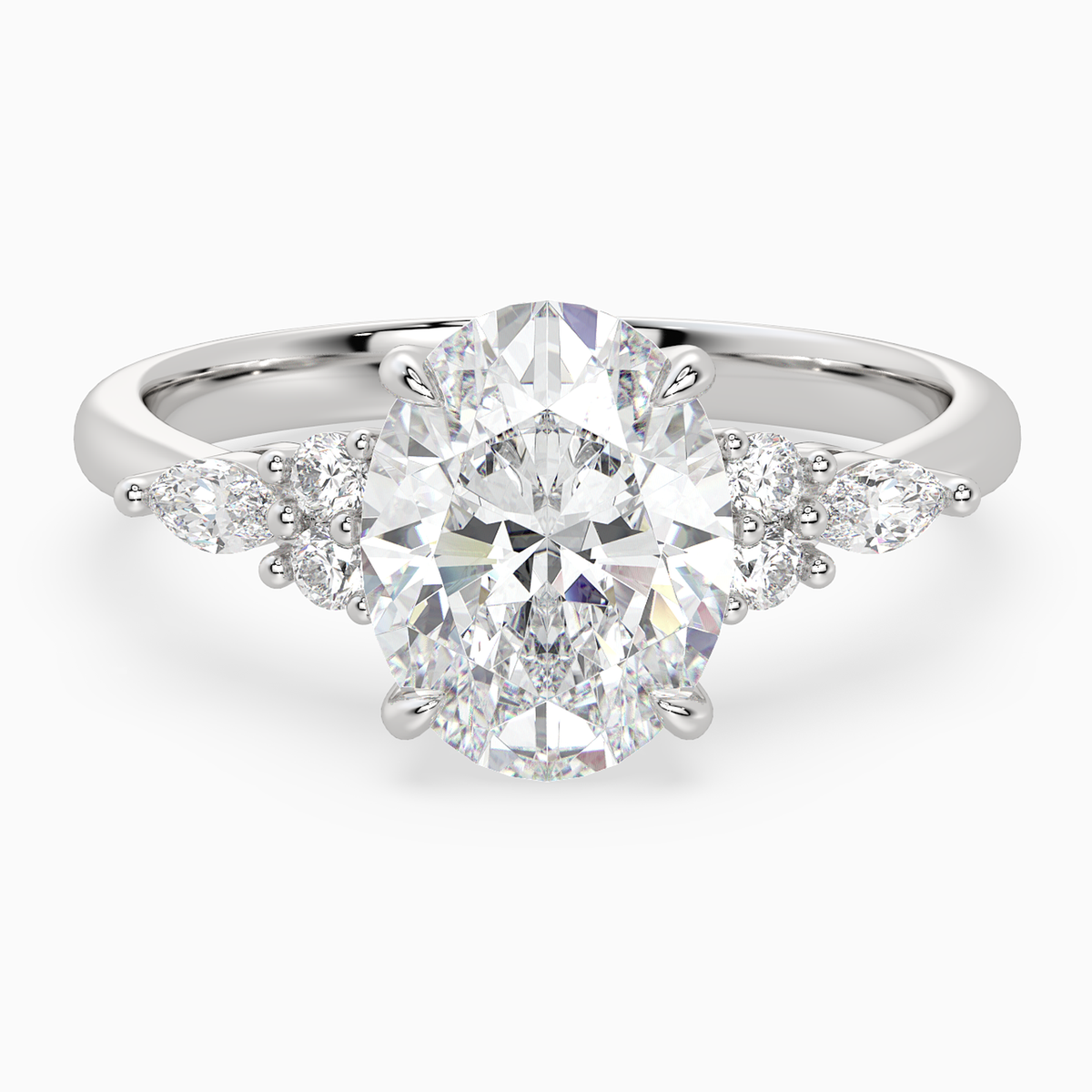


How to Choose a Wedding Band for a Solitaire Engagement Ring

A solitaire engagement ring is one of the easiest ring styles to understand and one of the most important to pair carefully. Because the engagement ring is built around a single center stone, the wedding band has to support that diamond without crowding it, scratching it, or changing the way the ring feels on the hand.
If the solitaire setting is high enough, a straight band may sit flush. If the basket, prongs, or center stone block the band, consider a curved, contoured, notched, or open wedding band. After fit is clear, compare plain metal, pave, shared-prong, mixed-metal, and custom bands by width, comfort, sparkle, and daily wear.
This guide explains how to match a wedding band with a solitaire engagement ring in a way that looks intentional, feels comfortable, and still keeps the center diamond as the main visual anchor.
Why Solitaire Rings Are So Versatile
A solitaire engagement ring usually has one center diamond and a relatively clean band. That simplicity gives you more freedom with the wedding band than a heavily detailed engagement ring would. You can keep the stack minimal, add a row of diamonds, introduce texture, or choose a curved band that follows the center setting.
The same simplicity also makes proportion more visible. If the wedding band is too wide, too tall, or too sparkly, it can compete with the solitaire. If it is too thin, it may feel visually weak beside the engagement ring. The goal is not to make both rings identical. The goal is to make the two rings look like they were chosen with the same level of care.
Start With Fit: Flush, Gap, or Contour?
Before choosing plain, pave, or vintage-inspired details, check how the wedding band physically sits beside the solitaire. This is the detail that affects comfort and long-term wear most directly.

Flush fit
The wedding band sits directly beside the engagement ring with little or no gap. This usually works best when the solitaire setting is raised enough for a straight band to pass underneath the stone area.
Intentional gap
A small gap can be beautiful if it looks deliberate. It often works with clean solitaires, lower settings, or stacks where comfort matters more than a perfectly closed line.
Curved or contoured band
A curved band follows the shape of the engagement ring. It can reduce the visible gap when a straight band would hit the basket or prongs.
Open or notched band
An open or notched design creates space for the center setting. It can look modern, but it should be sized and built carefully so the stack stays stable.
Look at the ring from the side, not only from above. The basket height, prong position, cathedral shoulders, and center stone shape can all change how a wedding band sits.
Best Wedding Band Styles for a Solitaire Engagement Ring
Once the physical fit is clear, the style choice becomes easier. A solitaire can work with many wedding band directions because there is not much side detail to fight against. The strongest choice depends on how much contrast, sparkle, and daily-wear simplicity you want.

| Wedding Band Style | Best For | Look With a Solitaire | Watch For |
|---|---|---|---|
| Plain metal band | Classic, low-maintenance stacks. | Clean, timeless, and centered on the engagement diamond. | Width and profile matter. Too much metal can overpower a delicate solitaire. |
| Pave band | Adding sparkle without changing the engagement ring. | Creates a brighter bridal stack while the solitaire remains the focal point. | Accent diamond size should not compete with the center stone. |
| Curved or contoured band | Low settings, larger center stones, or rings that do not allow a straight band to sit close. | Looks intentionally shaped around the solitaire. | The curve may be less flexible if you later wear the band alone. |
| Open band | Modern stacks and settings that need space around the center stone. | Feels current and design-forward. | Needs careful sizing and structure so it does not rotate awkwardly. |
| Textured or engraved band | Adding detail without adding diamonds. | Gives the stack character while staying quieter than pave. | The texture should relate to the engagement ring metal finish. |
Match the Band to the Center Diamond Shape
The center diamond shape changes the mood of the stack. Round solitaires are the most flexible. Oval and marquise diamonds create length, so a wedding band should not visually shorten the finger. Emerald and asscher cuts feel more architectural, so a clean metal band or a precise diamond band can look especially strong.
- Round solitaire: works with plain, pave, curved, or textured bands. Keep the stack balanced by choosing a band width that matches the engagement ring shank.
- Oval solitaire: often looks best with a slim band that keeps the vertical line elegant. A soft contour can work when the setting sits low.
- Princess solitaire: pairs well with clean straight bands, channel-set bands, or geometric details that echo the square shape.
- Emerald-cut solitaire: benefits from restraint. A polished band, baguette-accent band, or fine pave band can support the step-cut look.
- Marquise or pear solitaire: may need more attention to orientation and setting height. Curved or open bands can help avoid crowding the pointed ends. Continue with How to Match a Wedding Band to Your Engagement Ring for the broader stack framework.
Choose Metal Tone With the Full Stack in Mind
The simplest choice is to match the wedding band metal to the engagement ring metal. White gold with white gold, yellow gold with yellow gold, platinum with platinum. This creates a unified stack and reduces the chance that one ring looks visually separate from the other.
Mixed metals can also work, especially when the solitaire setting is simple. A white-metal engagement ring with a yellow gold wedding band can feel modern and warm. The key is intention. If the wedding band is the only warm metal in the stack, consider repeating that metal somewhere else in your daily jewelry so it feels connected to your style.
Platinum is dense and strong, while gold offers several color directions and a different feel on the hand. If the two rings will be worn together every day, ask how the metals will wear against each other over time. Matching metal families can make maintenance simpler. Continue with Engagement Ring vs. Wedding Band for the next comparison.
Width, Height, and Comfort Are Not Minor Details
A wedding band can look perfect in a top-down photo and still feel wrong after a full day of wear. The inside shape, height, edge softness, and how the rings touch each other all matter. A slightly rounded comfort-fit interior can make the band easier to wear, especially if the stack includes two rings every day.
As a general rule, a delicate solitaire often pairs best with a slim to medium band. A more substantial solitaire can handle a wider band or diamond-accented style. If you want the engagement ring to stay dominant, choose a wedding band that supports the center stone rather than trying to match its impact.
Plain Band or Diamond Band?
A plain band is not a compromise. It can make a solitaire look sharper because the center stone remains the only diamond focus. It is also practical for frequent wear because there are fewer small stones and settings to maintain.
A diamond band adds brightness across the finger and can make the stack feel more finished. For a solitaire, the safest diamond band usually uses small accent stones. The goal is a line of light that supports the engagement ring, not a second focal point fighting for attention.
Choose plain if
You want low maintenance, a quiet stack, strong contrast with the center diamond, or a band that looks natural when worn alone.
Choose pave if
You want more brilliance, a dressier stack, or a wedding band that makes the solitaire feel more complete from a top-down view.
Choose curved if
Your solitaire setting blocks a straight band, or you prefer the rings to look closely nested together.
Choose custom if
The engagement ring has a low basket, unusual shoulders, a larger center stone, or a fit problem that standard bands do not solve cleanly.
Build the Stack Around the Ring You Already Chose
A solitaire engagement ring gives you room to choose a wedding band with precision. Compare straight, curved, plain, and diamond-accented directions, then choose the one that fits the setting and your daily life.
Explore wedding bands Explore engagement rings Ask about custom fitTry-On Checklist Before You Decide
When you compare wedding bands, try to evaluate the stack in a few different conditions. A ring that looks beautiful for five seconds in a display tray should also feel right when your hand is moving.
- Look from the top to judge proportion and style.
- Look from the side to check setting height and band contact.
- Move your fingers naturally to see whether the rings pinch, rub, or separate.
- Check whether the wedding band scratches or presses into the engagement ring basket.
- Compare natural daylight and indoor lighting if the band has accent diamonds.
- Try the wedding band alone if you expect to wear it without the engagement ring sometimes.
- Confirm whether future resizing, soldering, or custom fitting would be practical.
When a Custom Wedding Band Makes Sense
Custom design is worth considering when the solitaire has a lower profile, unusual prong placement, cathedral shoulders, a larger center diamond, or a shape that creates awkward contact with standard bands. A custom band can be curved, notched, or proportioned around the engagement ring instead of forcing the engagement ring to accept a generic match.
It is also useful when the visual goal is specific: a band that echoes the solitaire's metal profile, a diamond band with calibrated accent size, or a stack that feels clean from both the top and side. The best custom work is not about adding complexity. It is about removing the small fit problems that make a bridal stack feel unresolved.
Frequently Asked Questions
What wedding band looks best with a solitaire engagement ring?
A plain metal band, slim pave band, or curved band can all look beautiful with a solitaire. The best choice depends on whether the band fits flush, how much sparkle you want, and whether the solitaire setting leaves space for a straight band.
Should my wedding band sit flush with my solitaire ring?
It can, but it does not have to. A flush fit looks clean, but a small intentional gap can also look elegant. If the gap feels accidental or uncomfortable, a curved, contoured, open, or custom band may be better.
Can I wear a pave wedding band with a solitaire?
Yes. A pave band is one of the most popular ways to add sparkle to a solitaire stack. Keep the accent stones proportionate so they enhance the center diamond instead of competing with it.
Should the wedding band metal match the engagement ring?
Matching metals creates the most seamless look and may simplify long-term wear. Mixed metals can work when the contrast is intentional and fits the rest of your jewelry style.
Do I need a curved wedding band for a solitaire engagement ring?
You need a curved band only if the solitaire setting prevents a straight band from sitting the way you want. High-set solitaires often work with straight bands, while lower baskets or larger center stones may benefit from contouring.
Final Thought
The right wedding band for a solitaire engagement ring is not simply the one that matches in a product photo. It is the band that fits the setting, supports the center diamond, feels comfortable in daily life, and makes the stack look intentionally chosen.
For more design-led ring education, visit the Burvonti Journal, compare wedding band styles, or explore Explore wedding bands for a ring stack built around precise choices.