
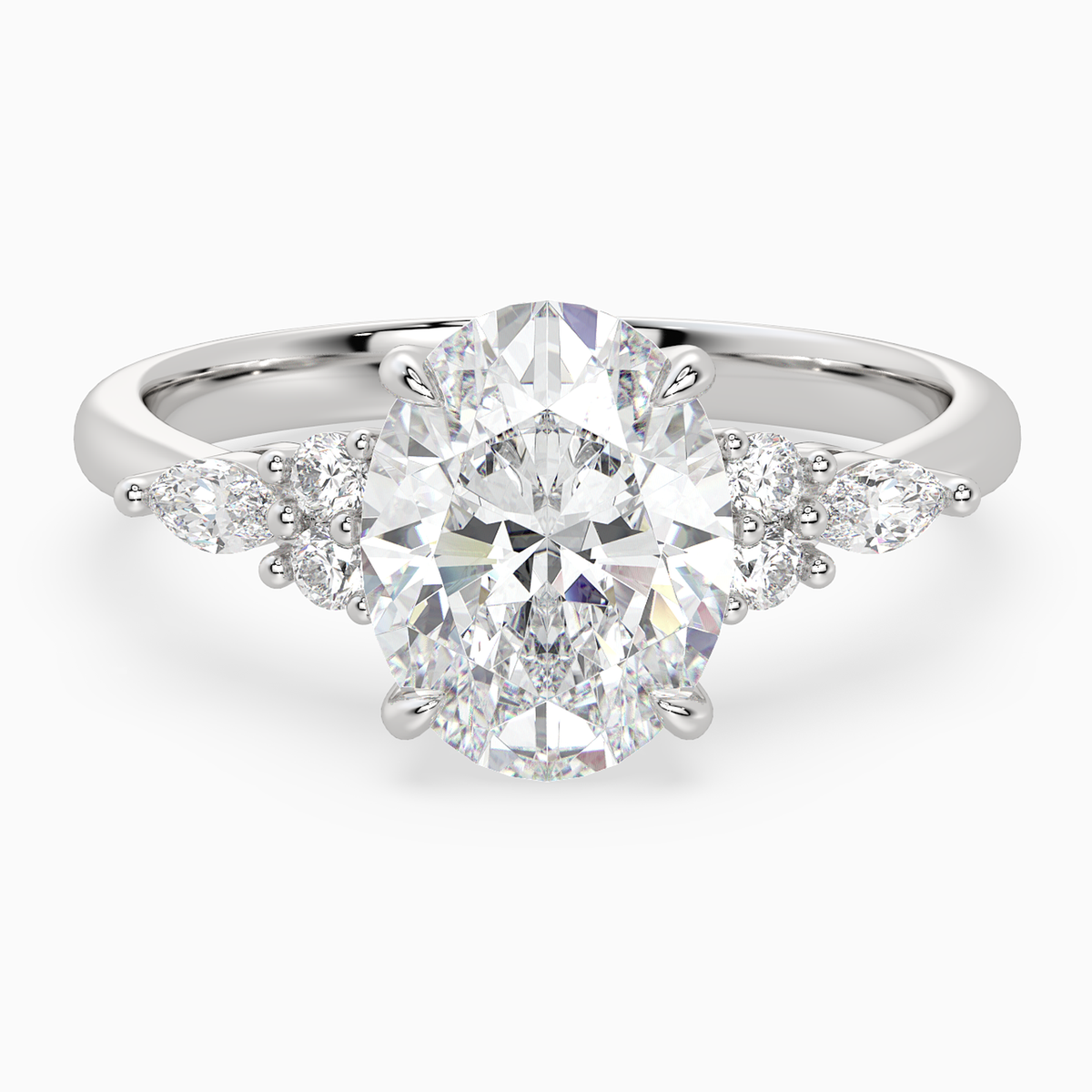


Lab-grown diamond care guide
Brilliant for Years: How to Care for a Lab-Grown Diamond Ring

A lab-grown diamond ring is made to be worn, not hidden away. The diamond itself is durable, but everyday wear can leave oils on the stone, loosen the setting, or expose the metal to products that slowly dull its finish. A simple care routine keeps the ring looking bright and helps protect the precision of the setting around your selected stone.
Short Answer: How Do You Care for a Lab-Grown Diamond Ring?
Clean your lab-grown diamond ring with warm water, mild dish soap, a soft brush, and a lint-free cloth. Remove it before swimming, heavy cleaning, workouts, gardening, and any activity that could bend prongs or expose the metal to chlorine, salt, abrasives, or impact. Store it separately in a padded box or soft pouch, and have the setting checked by a jeweler at least once a year.
Do Lab-Grown Diamonds Need Special Care?
Lab-grown diamonds have the same chemical composition and crystal structure as mined diamonds, so the diamond does not need a separate care category. What matters is the whole ring: the diamond, the prongs, the gallery, the shank, the side stones, and the metal alloy. Most care mistakes do not damage the diamond first. They affect the setting that keeps the diamond secure.
That is why good ring care is less about fear and more about rhythm. Clean away buildup before it clouds the stone. Remove the ring before high-risk activities. Store it so it does not rub against other jewelry. Check the setting before a small issue becomes a repair.
Daily Habits That Keep a Diamond Ring Bright
Daily wear leaves a thin layer of skin oil, lotion, sunscreen, soap, and household residue on diamond jewelry. Diamonds attract grease, which means even a beautifully cut stone can look muted when film collects underneath the center stone or around the prongs.
- Put your ring on last. Apply lotion, perfume, hair products, sunscreen, and makeup before wearing your ring.
- Take your ring off before impact. Remove it for lifting weights, sports, moving furniture, gardening, and hands-on work.
- Keep it away from cleaning chemicals. Bleach, abrasive powders, ammonia-heavy cleaners, and disinfectants can affect metal finishes and leave residue.
- Dry it after water exposure. Fresh water is usually not the problem. Trapped moisture and mineral residue can make jewelry look cloudy. Continue with Do Lab-Grown Diamond Rings Last for the next comparison.
How to Clean a Lab-Grown Diamond Ring at Home
For most rings, the safest at-home cleaning method is simple: mild soap, warm water, a soft brush, and patience. Avoid aggressive shortcuts, especially if your ring has pave diamonds, delicate prongs, a hidden halo, an antique-style setting, or mixed gemstones. Continue with How to Clean Lab-Grown Diamonds at Home Without Dulling the Sparkle for the next comparison.
Step 1: Make a Gentle Cleaning Bath
Fill a small bowl with warm water and add a few drops of mild dish soap. The water should be warm, not hot. Place the ring in the solution for 15 to 25 minutes so oil and residue can soften.
Step 2: Brush Under the Diamond
Use a soft, clean toothbrush to gently brush around the prongs, under the center stone, and along the inside of the ring. The underside of the diamond often holds the most buildup because it sits closest to the skin.
Step 3: Rinse Carefully
Rinse the ring in a bowl of clean water, or cover the sink drain before rinsing under a light stream of water. Avoid strong water pressure. If the ring has multiple small stones, rinsing in a bowl is the safer habit.
Step 4: Dry with a Lint-Free Cloth
Pat the ring dry with a lint-free cloth. Do not use paper towels, which can be abrasive on some metal finishes. Let the ring air-dry fully before storing it.
What Should You Avoid When Cleaning Diamond Jewelry?
The goal is to remove film without stressing the setting. A diamond is hard, but a ring is an assembly of metal, prongs, tiny contact points, and sometimes additional stones. Treat the ring as a precise object rather than a loose diamond.
| Cleaning Choice | Use With Caution | Better Habit |
|---|---|---|
| Ultrasonic cleaners | They can shake loose stones in delicate, older, or already-weakened settings. | Ask a jeweler first, especially for pave, halos, antique-inspired details, or mixed gemstones. |
| Harsh household cleaners | Bleach, abrasives, and strong chemicals can affect metal, plating, and finishes. | Use mild dish soap and warm water for routine cleaning. |
| Toothpaste or baking soda | These can be too abrasive for metal surfaces and polished finishes. | Use a soft brush and let soaking do most of the work. |
| Boiling water | Sudden heat can stress some settings or gemstones paired with diamonds. | Use warm water and a controlled, gentle rinse. |
When Should You Take Off Your Ring?
A good rule: if an activity can hit, twist, scrape, soak, or chemically coat your ring, take it off first. The setting usually faces more risk than the diamond.
- Before swimming: Chlorine and salt water can be hard on metal alloys and may leave residue.
- Before cleaning: Household cleaners can dull finishes or build up around the diamond.
- Before workouts: Weights, machines, and pressure from gripping can bend the shank or prongs.
- Before gardening or hands-on work: Dirt and grit can lodge under stones, and tools can knock the setting.
- Before sleeping if your setting is delicate: Sheets can catch on prongs, especially if a prong is already lifted.
Choosing a Ring That Fits Real Life?
Care starts with the right design. A ring selected with transparent diamond specifications and built around the chosen stone is easier to wear with confidence every day.
Read the diamond buying guide Book a consultationHow to Check the Setting at Home
You do not need to repair your ring yourself. You only need to notice when something deserves a professional look.
Look at the Prongs
Check whether each prong still sits evenly against the diamond. If one looks lifted, flattened, cracked, or thinner than the others, stop wearing the ring until it can be inspected.
Listen for Movement
Hold the ring close to your ear and gently tap the band with your fingertip. A faint rattle can mean the diamond or a side stone is moving. Do not press or twist the stone to test it.
Check the Ring Profile
Set the ring on a flat surface and look at it from the side. If the center stone appears tilted, the shank looks bent, or the head of the ring seems off-center, have it checked.
How to Store and Travel with a Diamond Ring
Diamonds can scratch other jewelry, and other pieces can scratch or dent the metal on your ring. Store your ring separately in a padded ring slot, soft pouch, or individual compartment. For travel, use a structured jewelry case rather than dropping the ring into a loose pouch with earrings, necklaces, or watches.
If you remove your ring often during the day, choose one consistent place for it at home. A small dish near the sink is common, but it should be away from drains and cleaning products. For travel, avoid wrapping the ring in tissue or placing it in a pocket where it can be forgotten or thrown away.

How Often Should a Lab-Grown Diamond Ring Be Professionally Cleaned?
Plan for a professional inspection about once a year, or sooner if you wear the ring daily and have an intricate setting. A jeweler can clean areas that are difficult to reach at home, check prong tension, look for thinning metal, and confirm that side stones are secure.
White gold rings may also need rhodium replating over time. The timing depends on wear, skin chemistry, and how often the ring touches hard surfaces. If the metal starts to look warmer or less bright, ask your jeweler whether replating is appropriate.
A Simple Lab-Grown Diamond Ring Care Schedule
Weekly: Wipe the ring with a lint-free cloth after heavy wear.
Every 2 to 4 weeks: Clean with warm water, mild soap, and a soft brush.
Every few months: Look closely at prongs, side stones, and the ring profile.
Once a year: Schedule a professional cleaning and setting inspection.
Does Insurance Matter for Ring Maintenance?
Insurance does not replace care, but it is part of responsible ownership. Keep appraisals, receipts, grading reports, and repair records in a secure place. If you make a major change to the ring, upgrade the diamond, or reset the stone, update your documentation so coverage reflects the current piece.
Final Thoughts
A lab-grown diamond ring can stay bright for years with a routine that is surprisingly simple: clean gently, remove it before risk, store it separately, and inspect the setting regularly. The diamond brings the brilliance; the setting protects it. Caring for both is how the ring keeps its presence in everyday life.
For more guidance before choosing or caring for a ring, compare the practical details in our lab-grown vs. mined diamond guide, review what to check before buying a lab-grown diamond, or explore the fundamentals in the 4Cs of diamonds guide. Explore engagement rings when you are ready to compare available designs.
Frequently Asked Questions
Can I wear a lab-grown diamond ring every day?
Yes. Lab-grown diamonds are durable enough for daily wear, but the setting still needs care. Remove the ring before activities that involve impact, chemicals, chlorine, salt water, or heavy pressure on the band.
How often should I clean my lab-grown diamond ring?
For regular wear, clean it every two to four weeks with warm water, mild dish soap, a soft brush, and a lint-free cloth. Wipe it more often if it comes into contact with lotion, sunscreen, or makeup.
Are ultrasonic cleaners safe for lab-grown diamonds?
The diamond may tolerate ultrasonic cleaning, but the setting may not. Ultrasonic vibration can loosen stones in delicate or worn settings, so ask a jeweler before using one at home.
Can soap damage a diamond ring?
Mild dish soap used with warm water is generally appropriate for routine cleaning. Avoid abrasive soaps, strong detergents, bleach, and cleaners with harsh chemicals because they can affect metal finishes or leave residue.
Why does my diamond ring look cloudy?
Cloudiness is often caused by oil, lotion, soap film, or buildup under the diamond. A gentle soak and soft brushing usually helps. If the ring still looks cloudy after cleaning, have a jeweler inspect the setting and stone.