
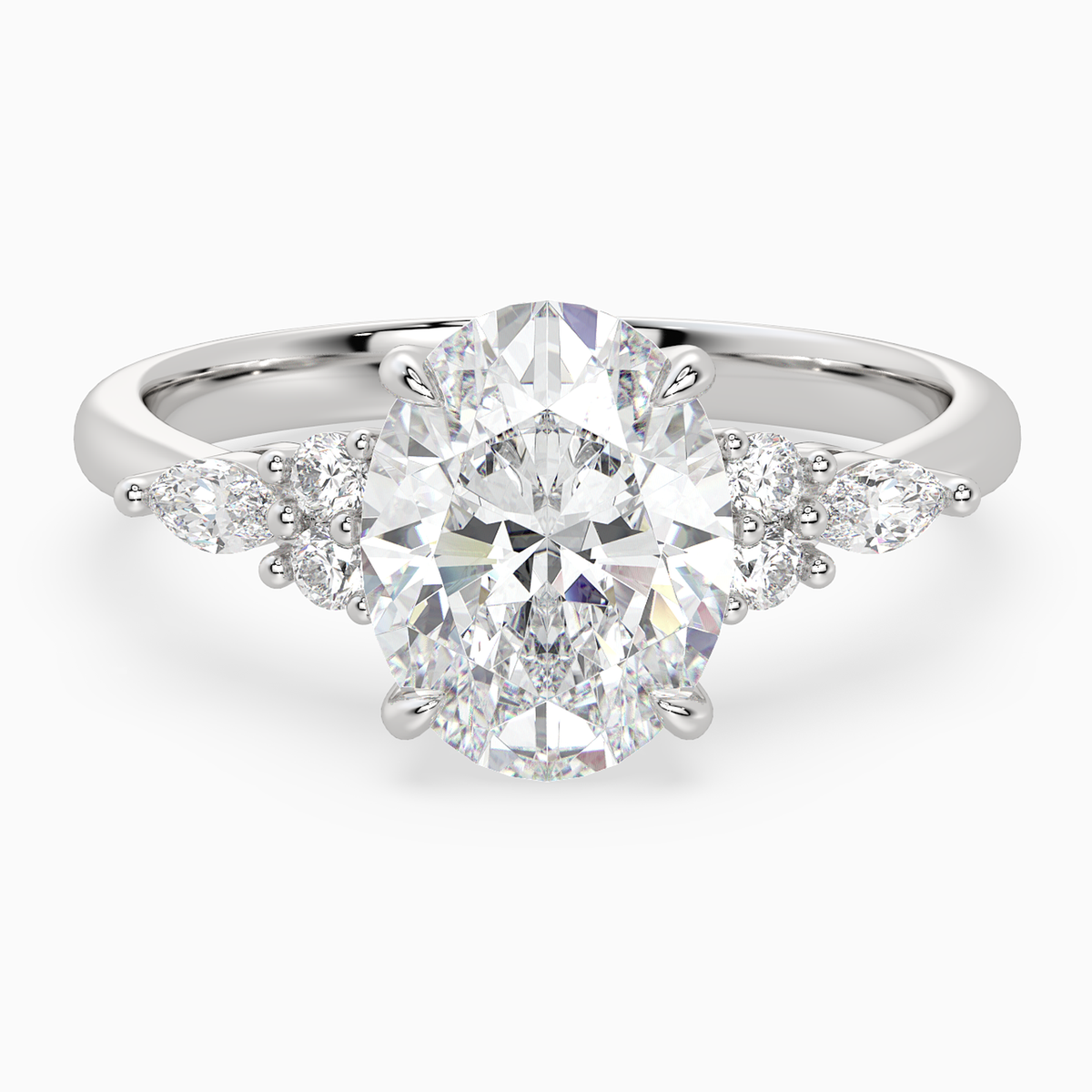


Halo Engagement Ring Guide: How to Choose the Right Frame for Your Diamond

A halo engagement ring can make a diamond feel brighter, larger, and more defined, but the best halo is not simply the one with the most sparkle. The halo is a frame. It changes the outline of the center stone, the way the ring sits on the hand, the amount of detail you see from the side, and how much maintenance the setting may need over time.
Choose a halo when you want more visual presence, a defined outline, and a design that can make the center diamond appear larger. Compare the center stone shape, halo outline, setting height, accent-stone size, metal color, and daily-wear comfort before deciding.
This guide explains how halo engagement rings work, which halo styles are worth comparing, and how to choose a design that supports your diamond rather than overpowering it.
What Is a Halo Engagement Ring?
A halo engagement ring places a border of small accent stones around the center stone. Most halos use diamonds, but the idea can also be interpreted with colored gemstones or mixed metal details. The halo may sit on the same plane as the center stone, slightly below it, or partly hidden from the top view.
The visual effect is immediate: the eye reads the center stone and the surrounding accent stones together, so the ring often feels larger and more luminous than a simple solitaire of the same center diamond size. That is why halo settings remain popular for shoppers who want presence, detail, and a more designed silhouette.

Why Choose a Halo Engagement Ring?
More face-up presence
A halo can make the top view of the ring feel larger because the accent stones extend the visible outline around the center diamond.
A clearer design signature
A solitaire is minimal. A halo is more architectural. It gives the ring a defined frame and a stronger visual identity from the first glance.
More room for personalization
The halo can be round, cushion, oval, geometric, hidden, double, vintage-inspired, or color-accented depending on the diamond and the wearer.
Potential protection around the edge
A halo can add a border around the center stone, but protection depends on the exact setting, prongs, and height. It should not replace normal care.
Is a Halo Setting Right for You?
A halo is a strong choice when you like detail, brightness, and a more decorative outline. It may not be the right choice if you prefer a very clean profile, want the center stone to be the only visual focus, or need the lowest-maintenance design possible.
| Design direction | Best for | Consider before choosing |
|---|---|---|
| Classic halo | Shoppers who want a visible frame, more sparkle, and a larger face-up look. | The halo should match the center stone shape closely enough to feel intentional. |
| Hidden halo | Someone who wants a cleaner top view with sparkle visible from the side. | It is more subtle from above, so do not choose it if you want a dramatic outline. |
| Double halo | Maximum visual presence and a more formal, statement-style ring. | Can feel busy if the center stone is small or the wearer prefers restraint. |
| Solitaire instead | Minimalists, low-maintenance wearers, or anyone who wants the center diamond alone to carry the design. | You lose the halo's framing effect, but gain a cleaner and often simpler setting. |
Halo Styles Worth Comparing
Classic halo
The classic halo surrounds the center stone with a visible frame of smaller diamonds. It is the most recognizable version and works well when the goal is sparkle, definition, and a fuller face-up presence.
Hidden halo
A hidden halo sits below the center stone or around the gallery, so it is more visible from the side than from the top. It is a good option for someone who likes a cleaner top view but wants a refined side detail.
Cushion or square halo
A cushion-shaped halo can soften a round diamond or echo a cushion-cut center stone. A square or geometric halo can give a princess, Asscher, or emerald-cut diamond a more structured outline. The key is proportion: the frame should support the stone's shape, not fight it.
Vintage-inspired halo
Milgrain, engraving, and delicate metal detail can make a halo feel antique or heirloom-inspired. These details add character, but they also increase visual complexity. If the wearer likes clean modern design, a simpler halo may be better.
For a broader vintage-design comparison, continue with Vintage-Style Rings Explained.
Colored gemstone halo
Some designs use sapphires or other colored gemstones in the halo. This can create contrast and individuality, but it also makes the ring more taste-specific. For a long-term engagement ring, color should feel like part of the wearer's actual style, not a temporary trend.

How Center Stone Shape Changes the Halo
The center stone should lead the design. A halo that works beautifully around a round diamond may feel awkward around an elongated oval, emerald cut, or pear shape unless the outline is adjusted.
| Center stone shape | Halo direction | Design note |
|---|---|---|
| Round | Round halo, cushion halo, or hidden halo | A round halo maximizes symmetry; a cushion halo can make the ring feel softer and more dimensional. |
| Oval | Oval halo or very subtle hidden halo | The halo must preserve the oval's length-to-width ratio so the ring does not look swollen or uneven. |
| Cushion | Cushion halo or rounded-square halo | Works well when the halo follows the stone's softened corners instead of forcing a sharp square. |
| Emerald or Asscher | Geometric halo, step-cut friendly outline, or hidden halo | Too much pavé sparkle can compete with the calm geometry of a step cut. |
| Pear or marquise | Custom-fitted halo | The points need careful protection and spacing so the outline looks precise rather than heavy. |
Start with the actual diamond, not a generic halo template. The outline, height, prong placement, and accent-stone scale should be calibrated around the selected stone's measurements and personality.
Metal Choice, Accent Stones, and Setting Height
White gold and platinum keep the halo visually close to the diamond line, which can make the center and halo blend into one bright field. Yellow gold adds warmth and contrast, especially when the halo stones are bright white. Rose gold can be soft and distinctive, but it is more personal and should match the wearer's existing jewelry taste.
Accent-stone size also matters. Very small pavé stones create a fine shimmer. Larger halo stones make the frame more obvious and can push the ring toward a stronger statement. The goal is balance: enough halo to frame the center stone, not so much that the center stone loses authority.
Setting height affects comfort and appearance. A higher halo may show more profile and allow room for a wedding band, but it can also feel more exposed. A lower halo may feel more compact, but it needs careful planning if the wearer wants a flush wedding band later.
Daily Wear and Maintenance
A halo ring has more small stones and more tiny setting points than a plain solitaire. That does not make it impractical, but it does mean maintenance matters. The wearer should expect regular gentle cleaning and occasional professional checks, especially if the ring is worn every day.
- Clean gently: lotion, soap, and daily residue can collect around halo stones.
- Check prongs periodically: tiny accent stones rely on precise setting work.
- Avoid hard impacts: the halo frame may sit near exposed edges of the ring head.
- Plan the wedding band early: some halos need a contoured band or spacer depending on height and gallery shape.
To continue from halo options to a tailored design path, explore custom engagement rings.
Design the Halo Around the Diamond, Not the Other Way Around
Compare lab-grown diamond options, then choose a halo profile that supports the stone's shape, scale, and the way the ring will be worn.
Explore engagement rings Ask a design questionFor a related guide, continue with Engagement Ring Settings Guide: Find the Right Style for Your Diamond.
Frequently Asked Questions
Does a halo make an engagement ring look bigger?
Yes, a halo can make the ring look larger from the top because the accent stones extend the visible outline around the center diamond. The effect depends on halo size, spacing, and how closely the frame follows the center stone.
Are halo engagement rings still in style?
Halo rings remain popular, but the most current versions are often more refined: smaller accent stones, cleaner profiles, hidden halos, or halos calibrated closely to the center stone shape.
What is the difference between a halo and a hidden halo?
A classic halo is visible from the top and frames the center stone. A hidden halo sits lower around the gallery, so it adds side-view sparkle while keeping the top view closer to a solitaire.
Are halo rings harder to maintain?
They can require more maintenance than a simple solitaire because they include more small stones and setting points. Regular cleaning and periodic prong checks help keep the halo secure and bright.
Which diamond shape works best with a halo?
Round, oval, cushion, pear, emerald, and Asscher cuts can all work with a halo when the frame is designed around the specific diamond. The best choice depends on the stone's proportions and the wearer's style.
Should I choose a halo or solitaire engagement ring?
Choose a halo if you want more visual presence, detail, and a defined frame. Choose a solitaire if you prefer minimalism, a cleaner profile, and a setting where the center stone is the only focal point.
Final Thought
A halo engagement ring is at its best when it feels intentional. The halo should clarify the diamond's shape, strengthen the ring's presence, and still respect the wearer's everyday life. Choose the center stone first, then let the halo become the frame that makes that specific diamond feel complete.