
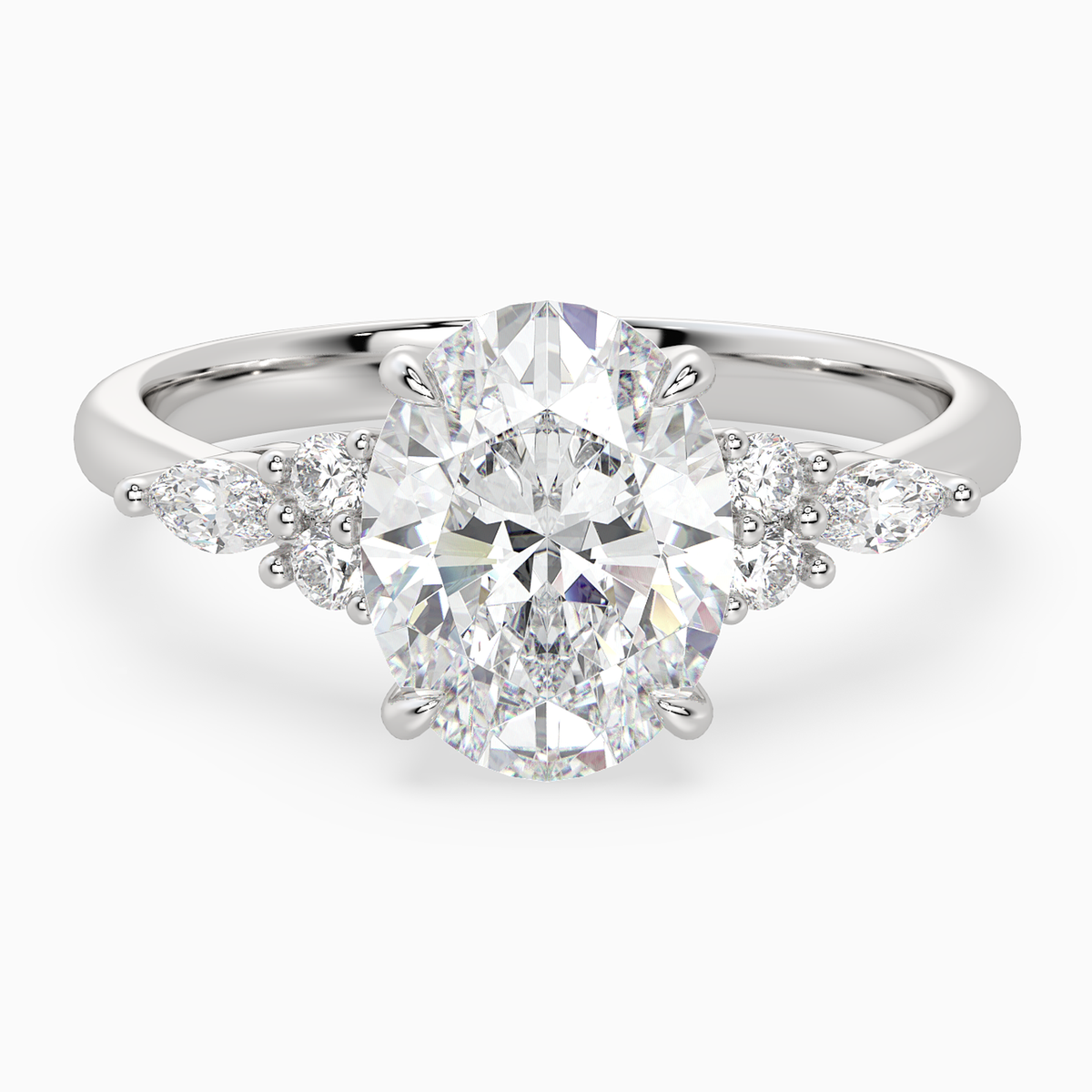


Wedding Bands in 18K White Gold
Higher gold content meets a quiet pairing line. 18K white gold clarifies contour, width, surface, and diamond coverage across 97 bands.


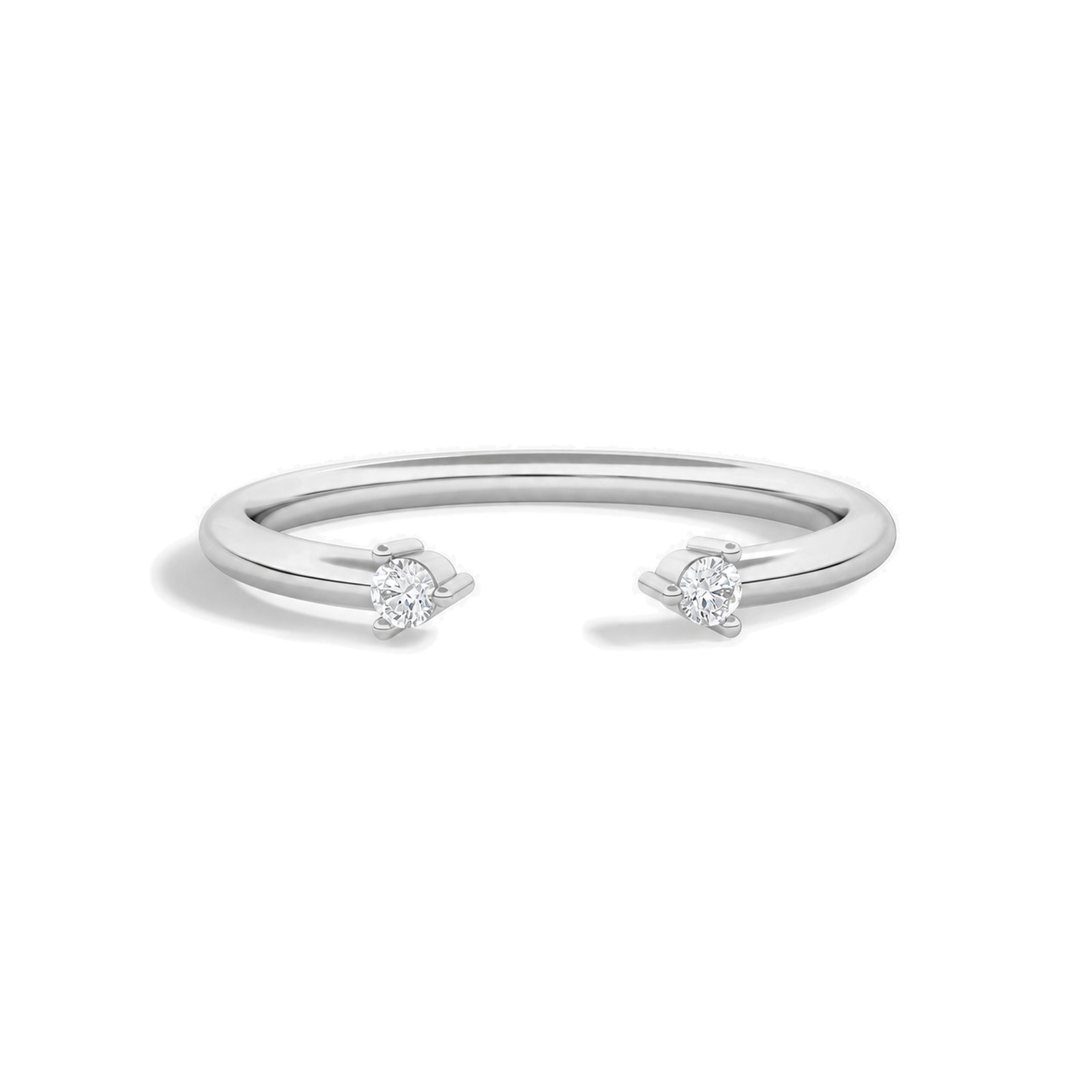
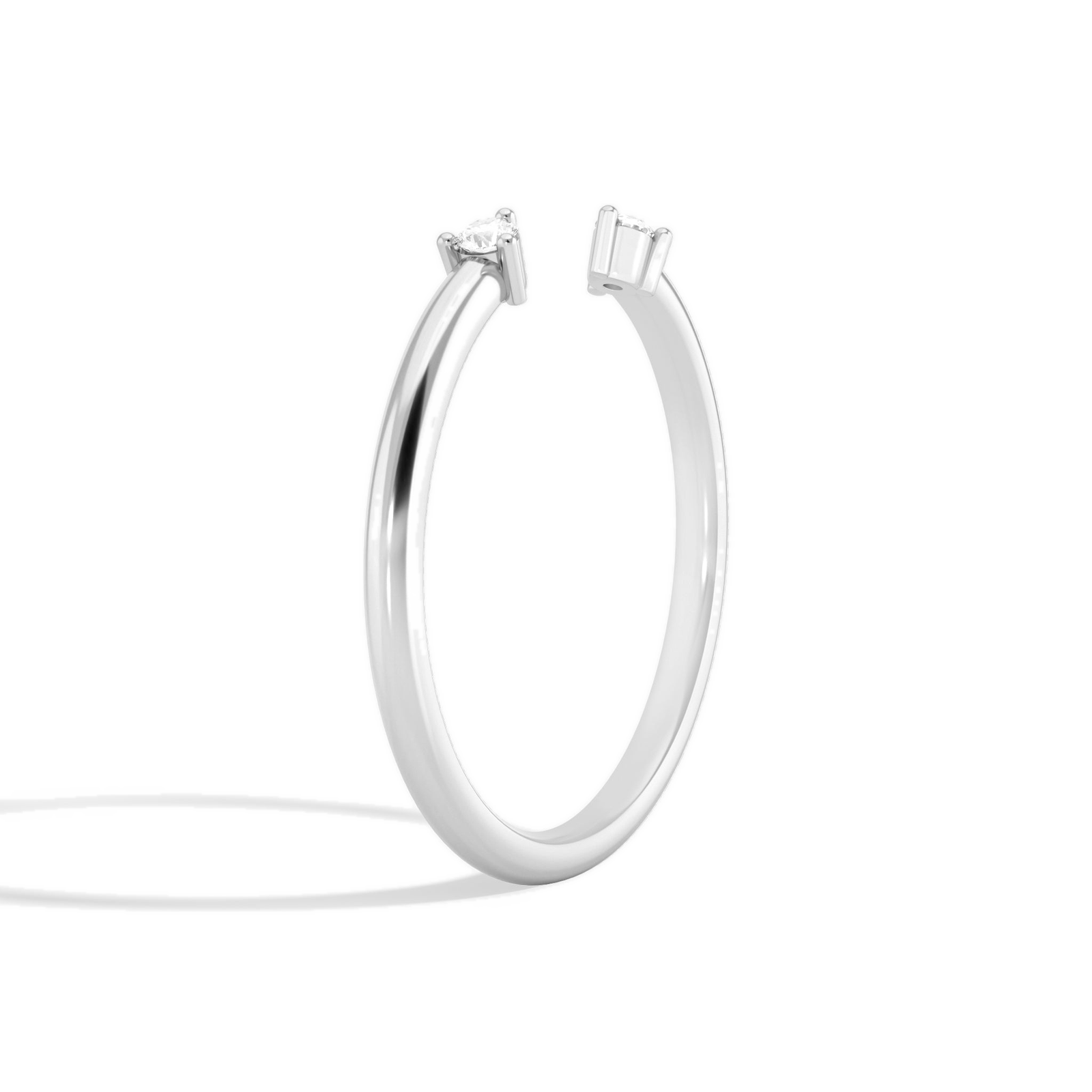

18K White Gold Wedding Bands: Geometry Held in Reserve
A restrained white field can make the meeting of two rings more important than either color alone. Across this ninety-seven-design wedding-band universe, contour, spacing, edge and diamond distribution define whether the band reads as a continuation, an interval or an independent line.
The assortment is exact at normalized design level: sixty-nine same-metal Rings forms plus twenty-eight same-metal Men's Rings forms, with no design shared between those branches. Here they are reunited by commitment intent and the possibility of standalone, paired or evolving wear.
Build the Relationship from Side Profile
Face-up alignment is only one view. A low setting, projecting basket, gallery rail, prongs or shoulder can determine where another band stops. Curved and open forms offer different clearances; straight forms can preserve space. The outcome remains dimensional, not guaranteed by a category name.
A wedding band can repeat the profile of an engagement ring or set a deliberate counterpoint. Similar domes and edges soften the transition. Flat, beveled or faceted surfaces may keep each ring legible. Movement and contact should still be tested in the intended sizes.
Use the Full Width Range without a Gender Shortcut
Published average widths progress through thirty-five values between 1.4 and 8 mm. Fine diamond lines, contours and open forms occupy one end; broad planes, textures, channels and isolated accents occupy the other. Width affects visual presence but does not define thickness, interior or identity.
Twenty-eight wider designs are also available through Men's Rings for concentrated edge and surface comparison. Wedding Bands preserves the complete ninety-seven-design field so a wearer can choose commitment form before choosing an audience route.
Treat Material and Coverage as Verified Details
18K Gold is 75% gold by fineness. Finished color, mass and response depend on the remaining alloy, dimensions and construction. Sixty-three current descriptions mention rhodium and thirty-four do not, so finish language must follow the selected product rather than the Collection.
Diamond feeds divide into sixty-one Total Carat Weight options, sixteen Carat Weight labels and twenty Title-only states. None establishes shared adjustability or full-circle coverage. Confirm setting, underside and alteration constraints before treating resizing, engraving or refinishing as feasible.
Frequently Asked Questions
What does this page contain?
Ninety-seven current wedding-band designs in 18K white gold.
How are the designs related to other Collections?
They exactly unite sixty-nine Rings and twenty-eight Men's Rings normalized designs.
What is the primary decision here?
How one form carries commitment alone, beside another ring or within future layers.
Why is side profile important?
It shows setting projection, shoulder height, edges and potential contact.
Does a contour guarantee alignment?
No. Exact dimensions, sizes and movement determine the relationship.
Can straight bands be paired with engagement rings?
Yes as a design possibility, sometimes with a deliberate interval.
What width range is current?
Published average widths span 1.4–8 mm.
Does width tell me the inner profile?
No. Interior contour needs separate product evidence.
Are wider bands only in the Men's route?
They also belong here as part of the complete commitment universe.
What percentage of 18K is gold?
Seventy-five percent by fineness.
Does higher gold content guarantee more weight?
No. Finished mass also depends on dimensions, alloy and construction.
Is every design rhodium plated?
No Collection-wide statement is supported; sixty-three descriptions mention rhodium.
What option-label states occur?
Total Carat Weight, Carat Weight and Title-only states.
Are all weights configurable?
No shared configuration range is established by the Collection feed.
Does eternity prove full circumference coverage?
No; verify the actual diamond path and underside.
Must partner bands share a profile?
No. Repetition and deliberate contrast are both valid design relationships.
Can the ring be resized later?
Feasibility depends on its metal, symmetry, surface, settings and requested change.