


Wedding Bands in 14K Rose Gold
Warm metal gives commitment a visible line. 14K rose gold carries straight, curved, open, textured, and diamond-set bands from 1.4–8 mm.



14K Rose Gold Wedding Bands: A Warm Line of Connection
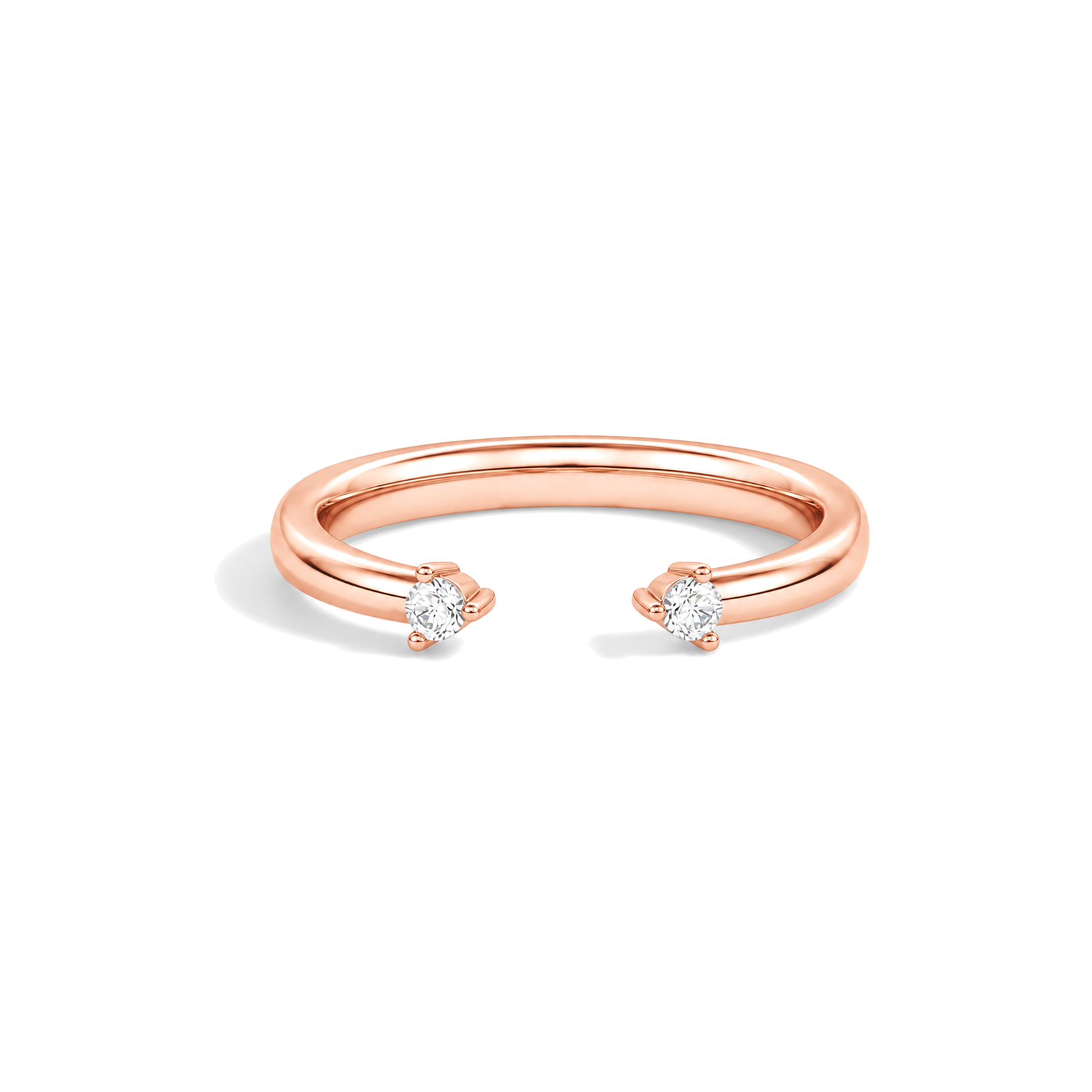
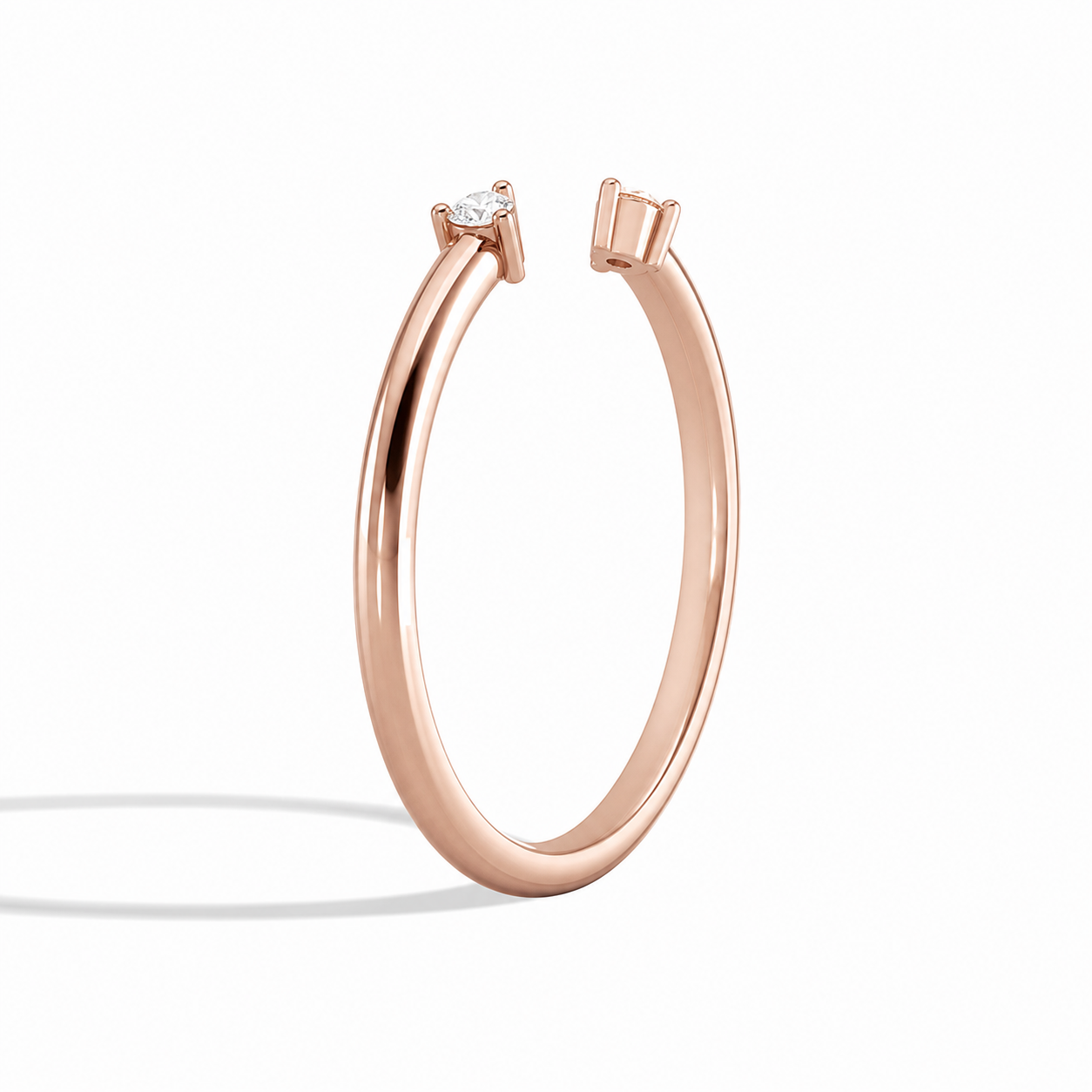
A wedding band can complete a composition without disappearing into it. In 14K Rose Gold, a narrow diamond line, an open interval, a curved contour or a broad surface each carries warmth differently. The metal makes the boundary of the band visible while commitment gives that boundary meaning.
The current page contains ninety-seven normalized designs: all sixty-nine forms from the same-metal Lab-Grown Diamond Rings route and all twenty-eight forms from Men's Rings. This is the complete commitment universe in one metal, spanning standalone bands and forms intended to be evaluated beside another ring.
Decide Whether Space Is Part of the Design
Straight, curved and open bands answer different geometric questions. A straight edge may preserve a deliberate gap. A curve can echo part of an engagement-ring outline. An open center may leave clearance around a setting. None guarantees a flush or pressure-free result; basket, gallery, prongs, height and rotation must be viewed together.
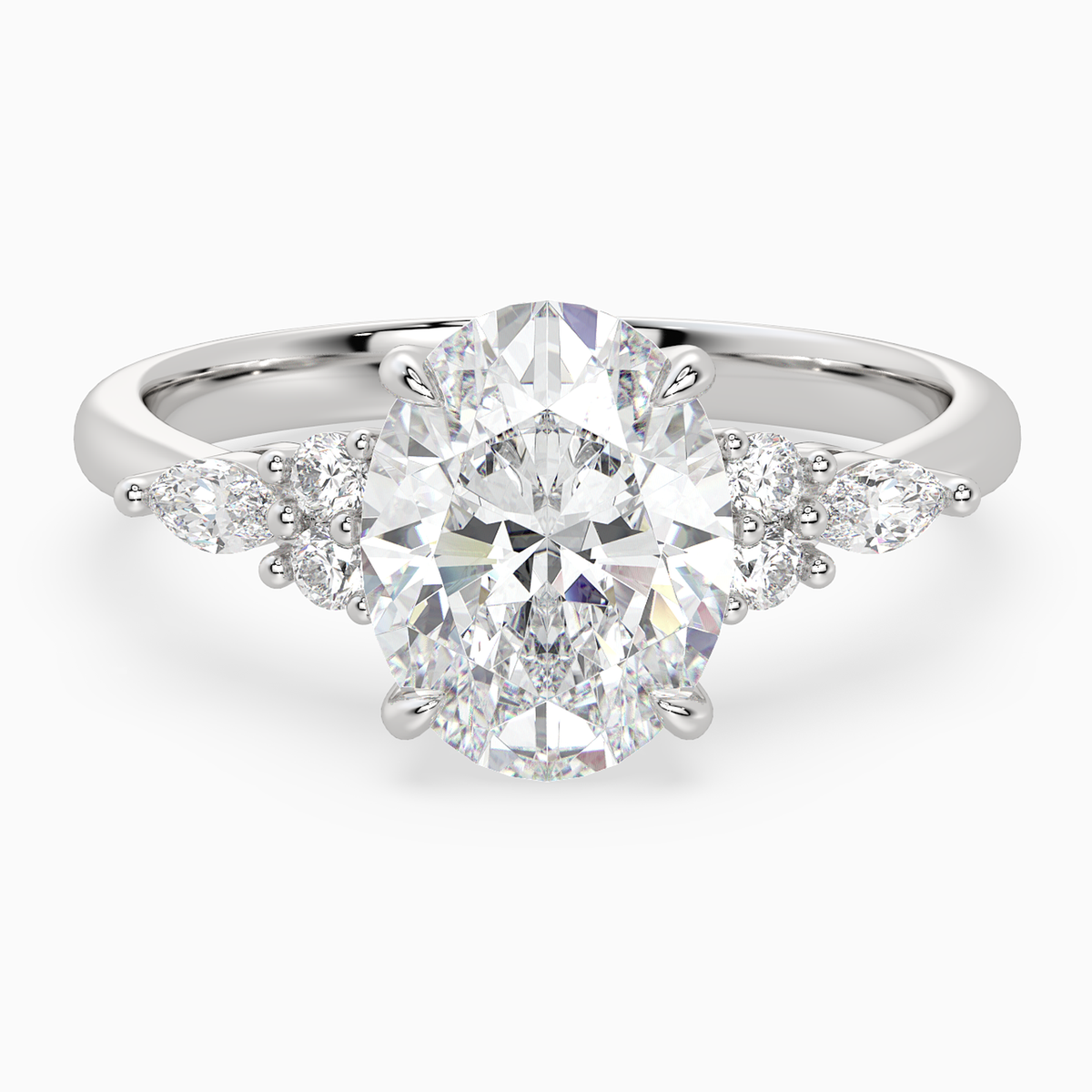
Compare the pair face-up, in profile and through ordinary hand positions. Rose Gold can join two rings through color, or define the wedding band against a white-metal engagement ring. Matching color is visual continuity, not proof of equal alloy, finish, hardness or contact behavior.
Read 1.4–8 mm as a Full Proportion Spectrum
Published average widths extend from 1.4 to 8 mm. Narrow forms preserve negative space or draw a measured diamond rhythm; wider forms give edges, facets, channels and textured fields more room. Width crosses the finger. It does not state thickness, interior contour, setting projection or nominal size.
Twenty-eight of the ninety-seven designs occupy the 4–8 mm Men's Rings route. Here they remain part of a larger commitment field that also includes slender, curved, open and stacking forms. No width belongs to one gender, hand or ceremonial role.
Let Coverage and Future Change Stay Product-Specific
Current feeds separate sixty-one Total Carat Weight options, sixteen Carat Weight labels and twenty Title-only products. These labels are not interchangeable. They do not by themselves establish stone count, per-stone weight, available configuration or circumference coverage; eternity wording also requires product confirmation.
A 14K alloy is approximately 58.3% gold. Complete alloy, finish, dimensions and construction shape the final ring. Resizing, engraving, refinishing and contour changes depend on symmetry, settings, surface and requested work. Choose the relationship first, then verify the exact product that can sustain it.
Frequently Asked Questions
How many designs are on this page?
Ninety-seven current 14K rose gold wedding-band designs.
How is the 97-design universe structured?
It is the disjoint normalized union of sixty-nine Rings designs and twenty-eight Men's Rings designs.
Can a wedding band be worn alone?
Yes as a design role, though suitability and fit still belong to the selected ring and wearer.
What is the difference between straight, curved and open?
They describe the band line: continuous straight, contoured arc, or a center interval.
Will a curved band sit perfectly flush?
Not necessarily; setting height, basket, gallery, prongs, dimensions and rotation affect spacing.
Is a visible gap a problem?
No universal rule applies; it may be intentional if contact and stability are understood.
What widths are represented?
Current published average widths span 1.4–8 mm.
Does width include thickness?
No. Width crosses the finger, while thickness measures exterior-to-interior depth.
Which designs also appear in Men's Rings?
Twenty-eight normalized 4–8 mm wedding-band forms.
Must partners choose matching bands?
No. They may repeat one metal, edge, finish or detail, or choose unrelated designs.
Must the engagement ring and band use the same metal?
No; matching and contrast are both visual choices, with contact reviewed product by product.
What diamond coverage appears?
The edit includes accents, channels, bezel structures, partial coverage and eternity-titled designs.
Does eternity mean full 360-degree diamonds?
Do not assume it; confirm the exact circumference and underside.
Are Carat Weight and Total Carat Weight the same?
No. The current feed uses separate labels and does not establish equivalence.
How much gold is in 14K?
Approximately 58.3%, with remaining alloy contributing to tone and behavior.
Can every band be resized or engraved?
No Collection-wide promise applies; feasibility depends on the complete construction.
How should two rings be assessed together?
Inspect face-up line, side profile, spacing, movement and contact in the intended sizes.