
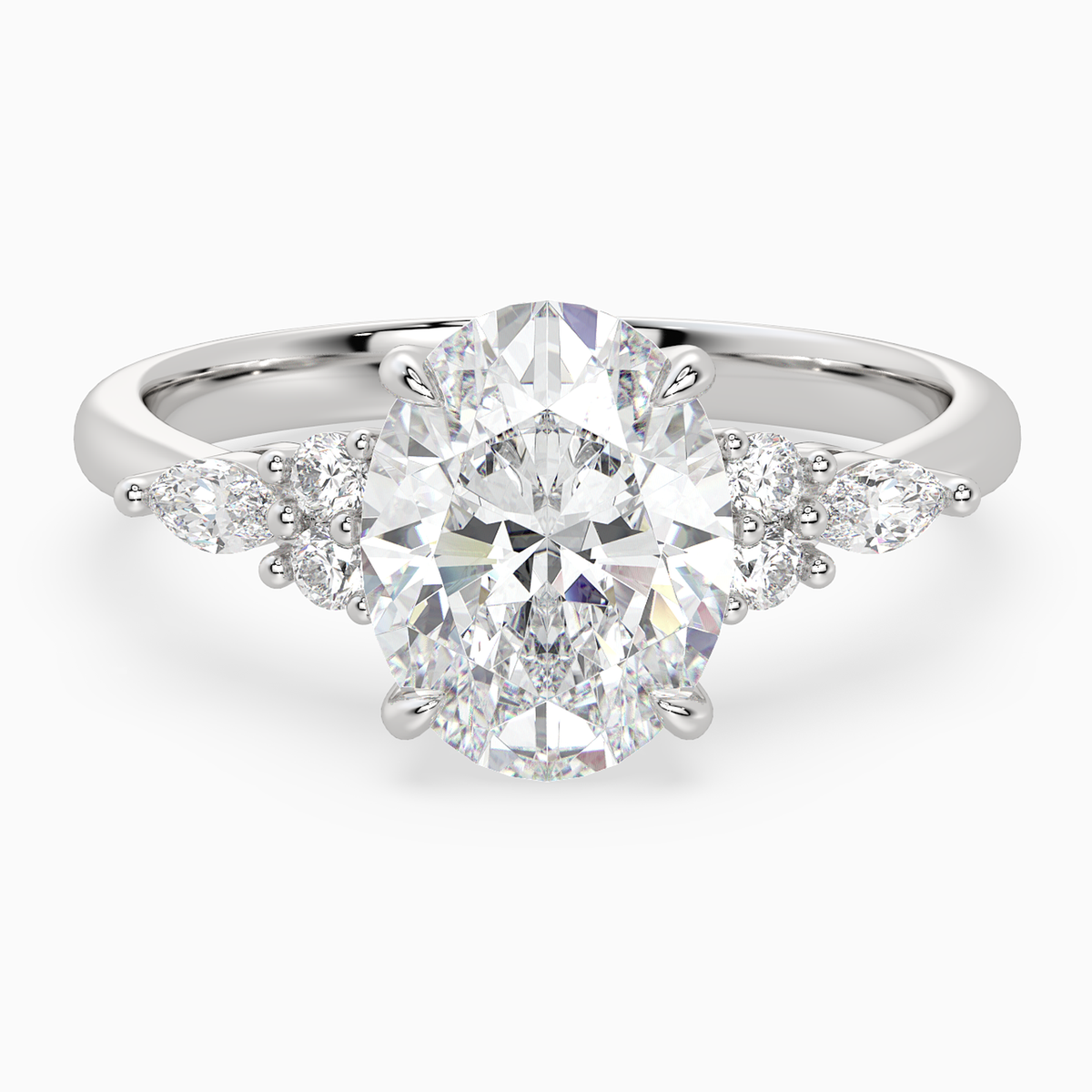


Men's Rings in 18K White Gold
Higher gold content meets a quiet surface. 18K white gold clarifies width, profile, texture, and diamond placement across 28 band forms.


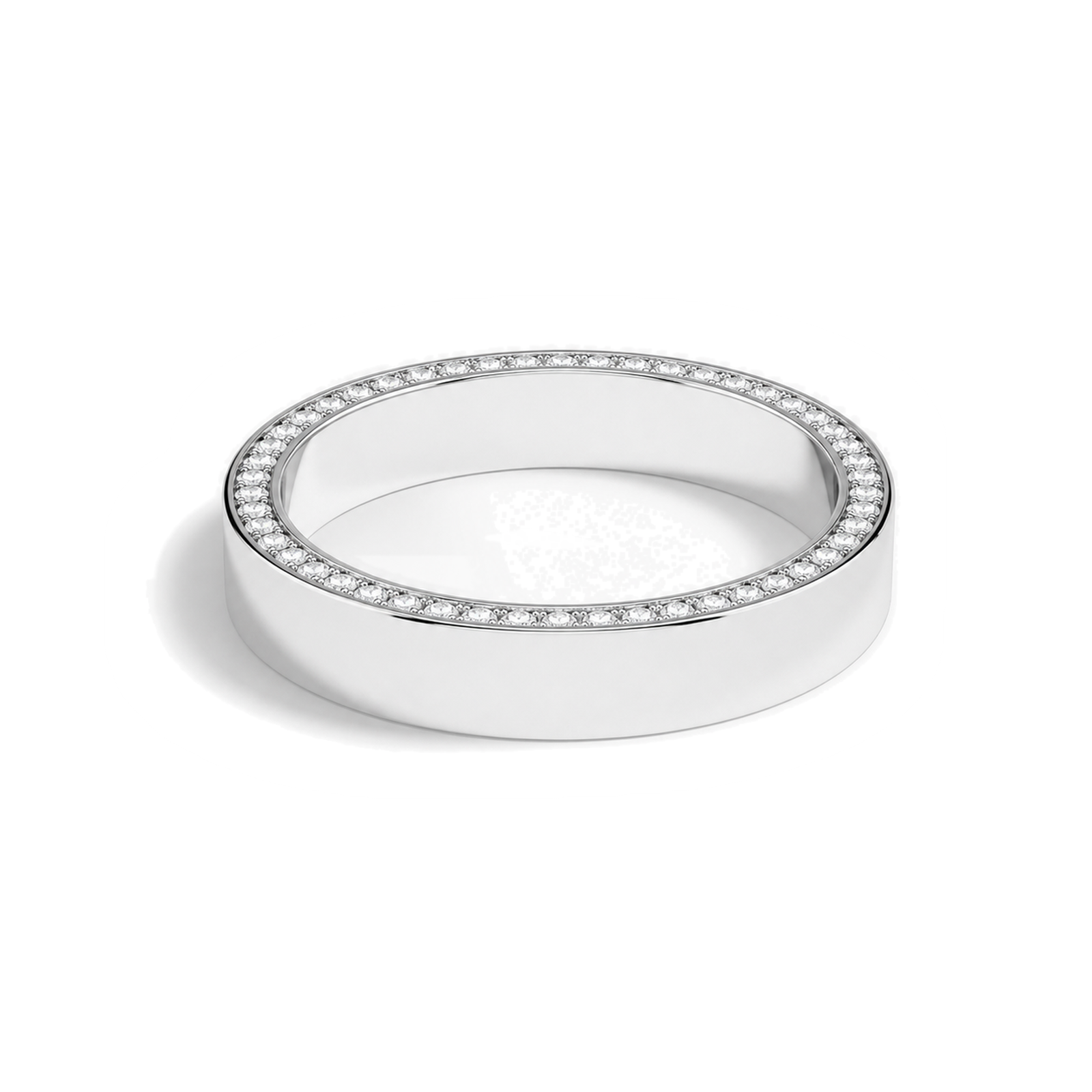
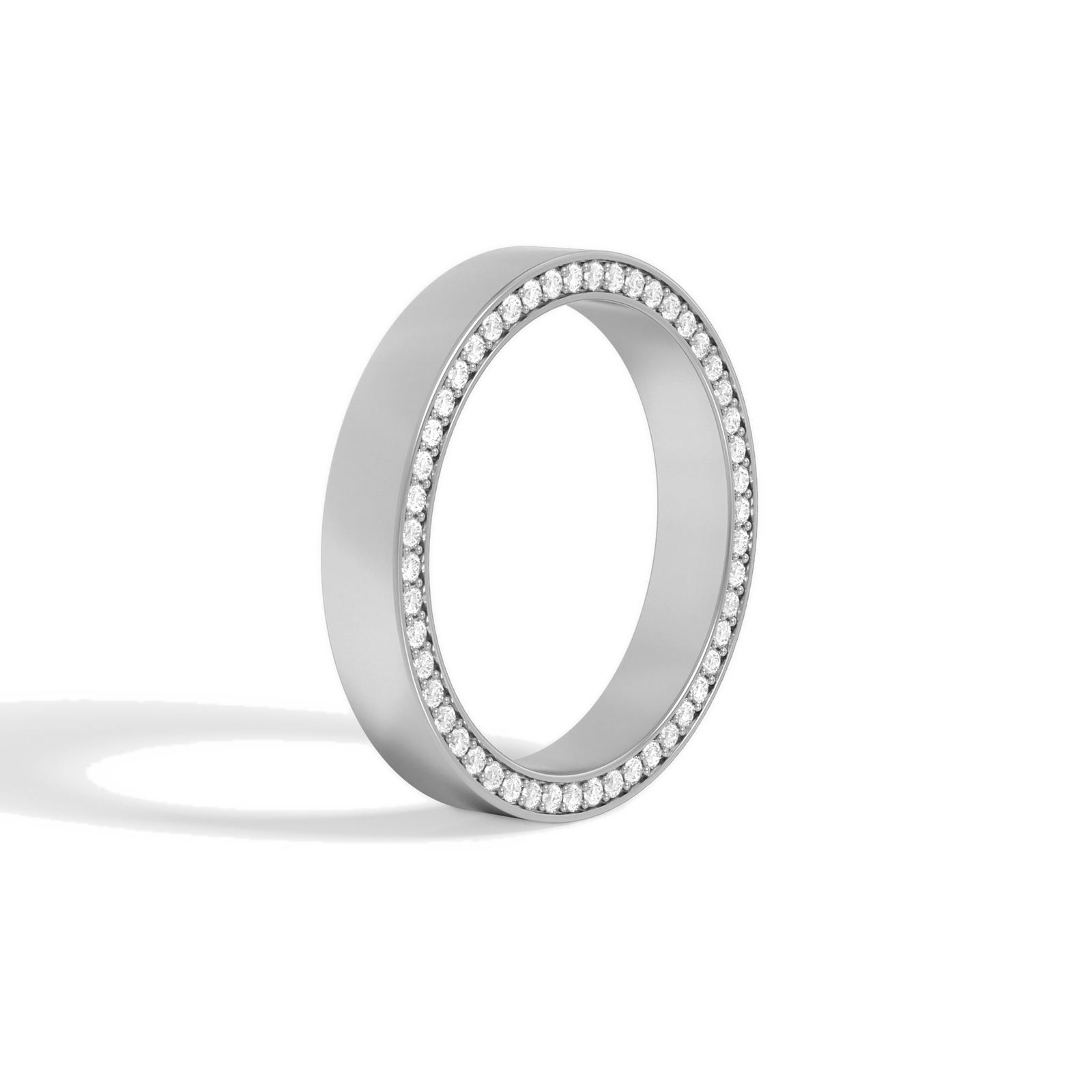

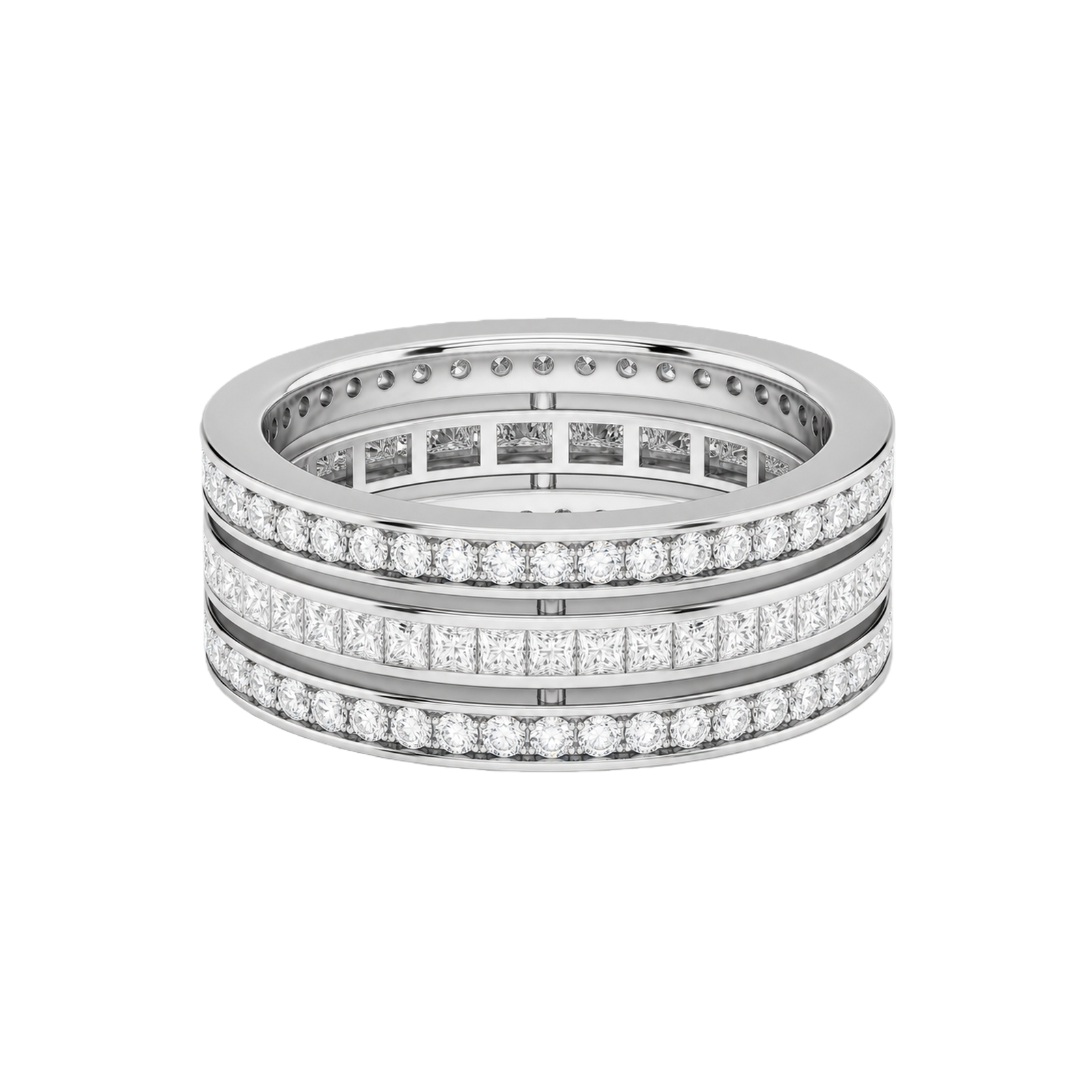
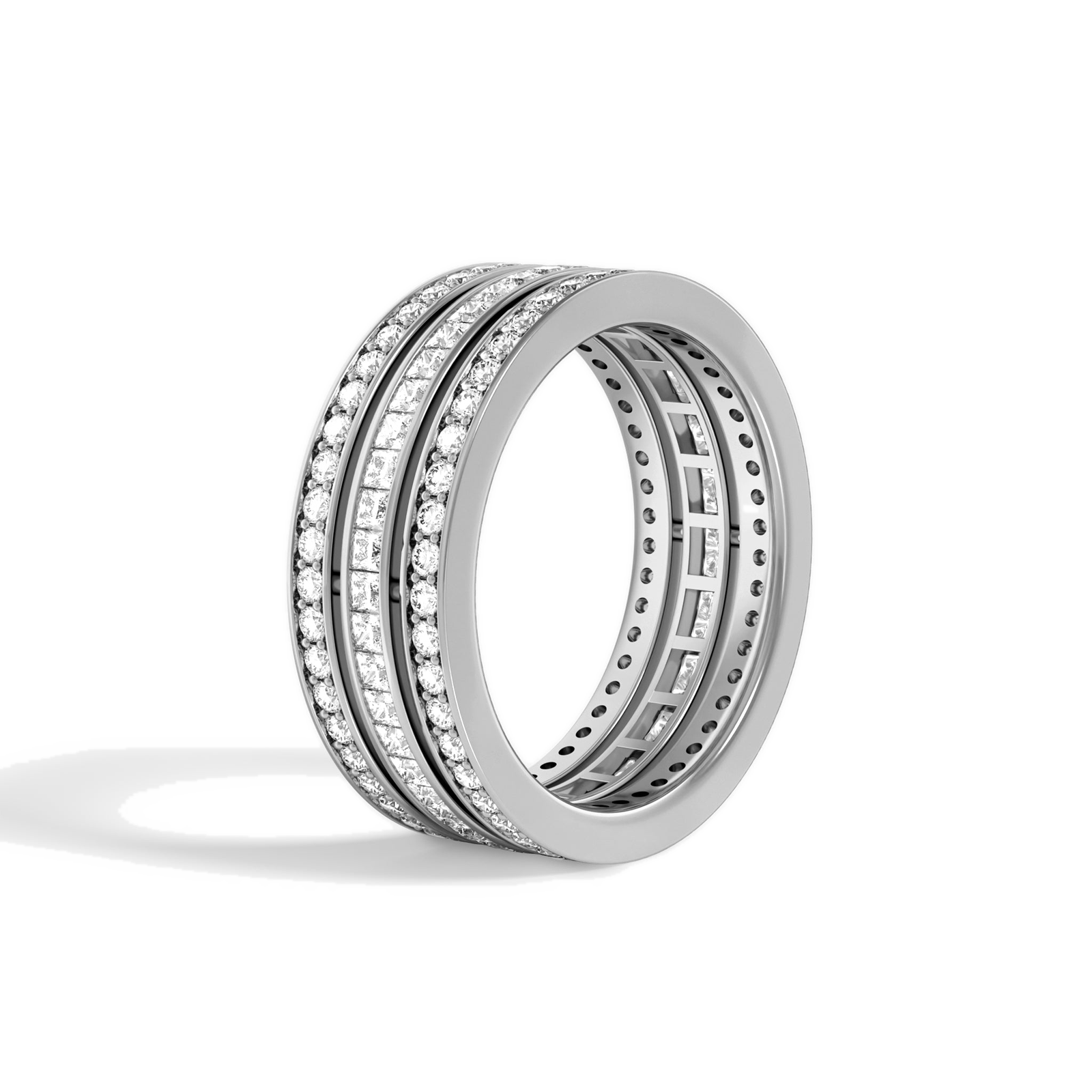

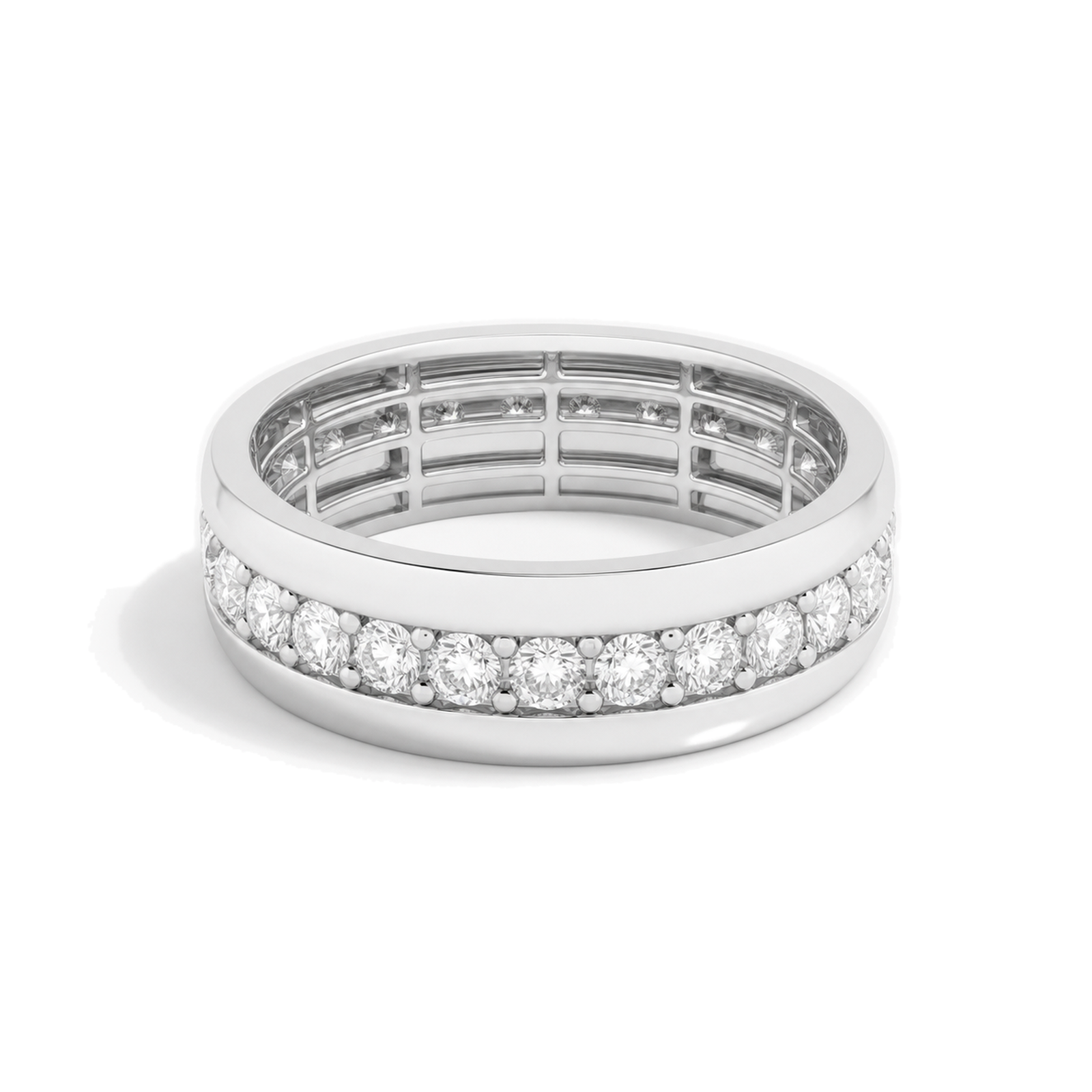


18K White Gold Men's Rings: Restraint across a Wider Surface
A white-metal band can appear quiet while carrying complex transitions at its edge and surface. The twenty-eight current wedding-band forms move from flat and domed profiles to bevels, concavity, facets, channels and textured planes, all in 18K White Gold.
Men's remains a navigation route. At normalized design level, this page is a complete twenty-eight-design subset of the ninety-seven-design matching Wedding Bands page. Its distinct work is comparison at 4–8 mm scale through one named material.
Let Cross-Section Explain the Width
Widths occur at eight published measures from 4 through 8 mm. The measure gives face-up breadth, not thickness, inner radius or finished mass. Two rings at the same width can therefore meet light, skin and neighboring fingers differently.
Read the band from front, side and interior. A beveled edge divides the main plane; a dome rounds outward; a concavity turns inward; facets create directional breaks. None of those terms alone proves fit or comfort.
Keep Finish Claims Narrow
Fourteen product descriptions mention rhodium and fourteen do not. The Collection cannot be described as uniformly plated. Exact finish and future service should be confirmed before assuming color continuity or refinishing behavior.
The feed also separates sixteen products with one Carat Weight value from twelve Default Title items. It does not establish TCW, common selectors, full eternity coverage or resizing feasibility. Product documentation must carry those claims.
Use Material Facts without a Hierarchy
18K Gold contains approximately 75% gold. The balance of the alloy and any finish shape the completed white tone. Karat does not by itself prove a heavier, harder, more comfortable or more durable band; dimensions and construction remain decisive.
Measure the intended width and profile, care for its exact surface, and inspect diamond work after impact. Custom width, engraving, texture or setting changes may be considered when feasible, with no assumption that an existing pattern can be altered safely.
Frequently Asked Questions
How many bands are represented?
Twenty-eight 18K white gold wedding-band forms.
What is the same-metal overlap?
All twenty-eight belong to the ninety-seven-design Wedding Bands universe.
Which widths are published?
4, 4.5, 5, 5.5, 6, 6.5, 7 and 8 mm.
Does width tell me ring thickness?
No; these are separate dimensions.
Can width be chosen by gender?
Burvonti does not assign width by gender.
Which edge structures appear?
Flat, beveled, domed, knife-edge, concave, faceted and octagonal language.
Which texture words appear?
Brushed, hammered and knurled among the current title set.
Are all rings rhodium plated?
No Collection-wide statement is supported; only fourteen descriptions mention rhodium.
Does 18K prove greater finished weight?
No. Complete dimensions and construction determine mass.
What does Carat Weight scope?
The label alone does not establish per-stone, combined or coverage scope.
Are sixteen values a shared range?
No; each currently appears as a fixed product-level value.
Does eternity guarantee diamonds all around?
No. Actual coverage must be confirmed.
Is comfort fit universal?
No. It remains dependent on wearer and full geometry.
Should a broad band be sized up?
No fixed formula applies; measure the selected width.
What is the gold proportion in 18K?
Approximately 75%.
Can the finish be restored?
Possibly, subject to texture, edges, diamonds and exact service review.
When is inspection appropriate?
After impact or any change in surface, setting or fit.