
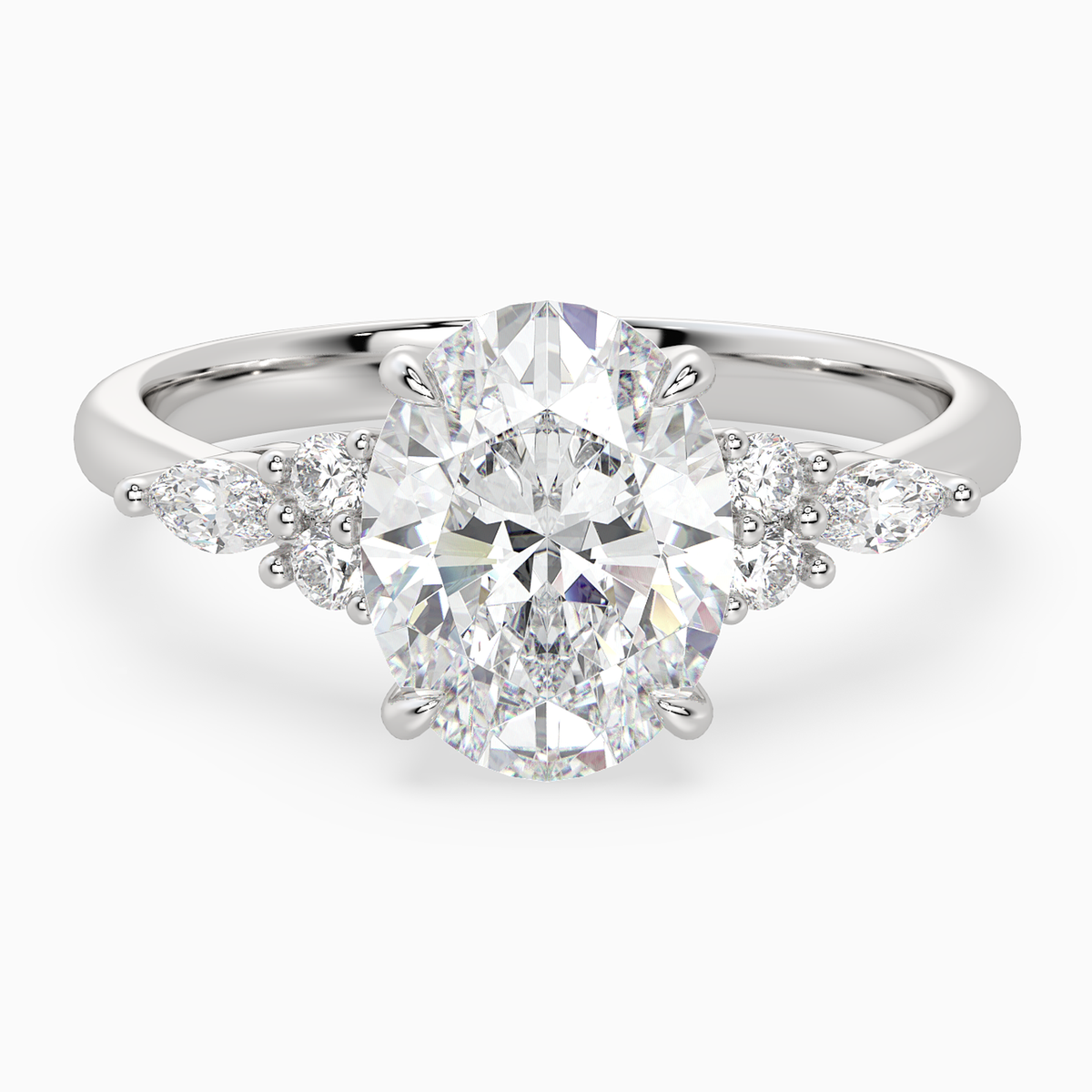


Lab Grown Diamond Stud Earrings in Platinum
Natural white tone gives form a quiet gravity. Platinum connects outline, setting edge, post and backing through exact pair calibration.


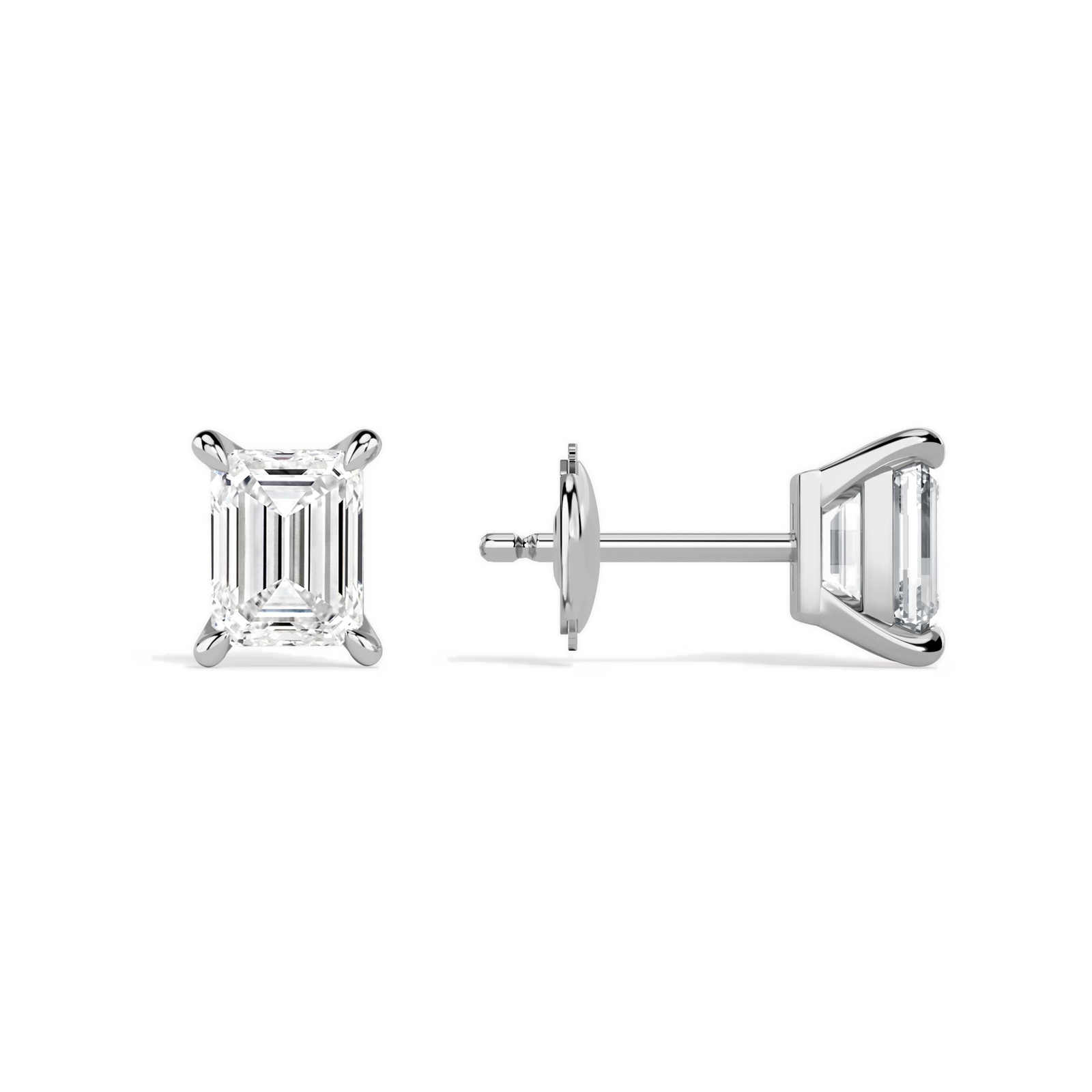


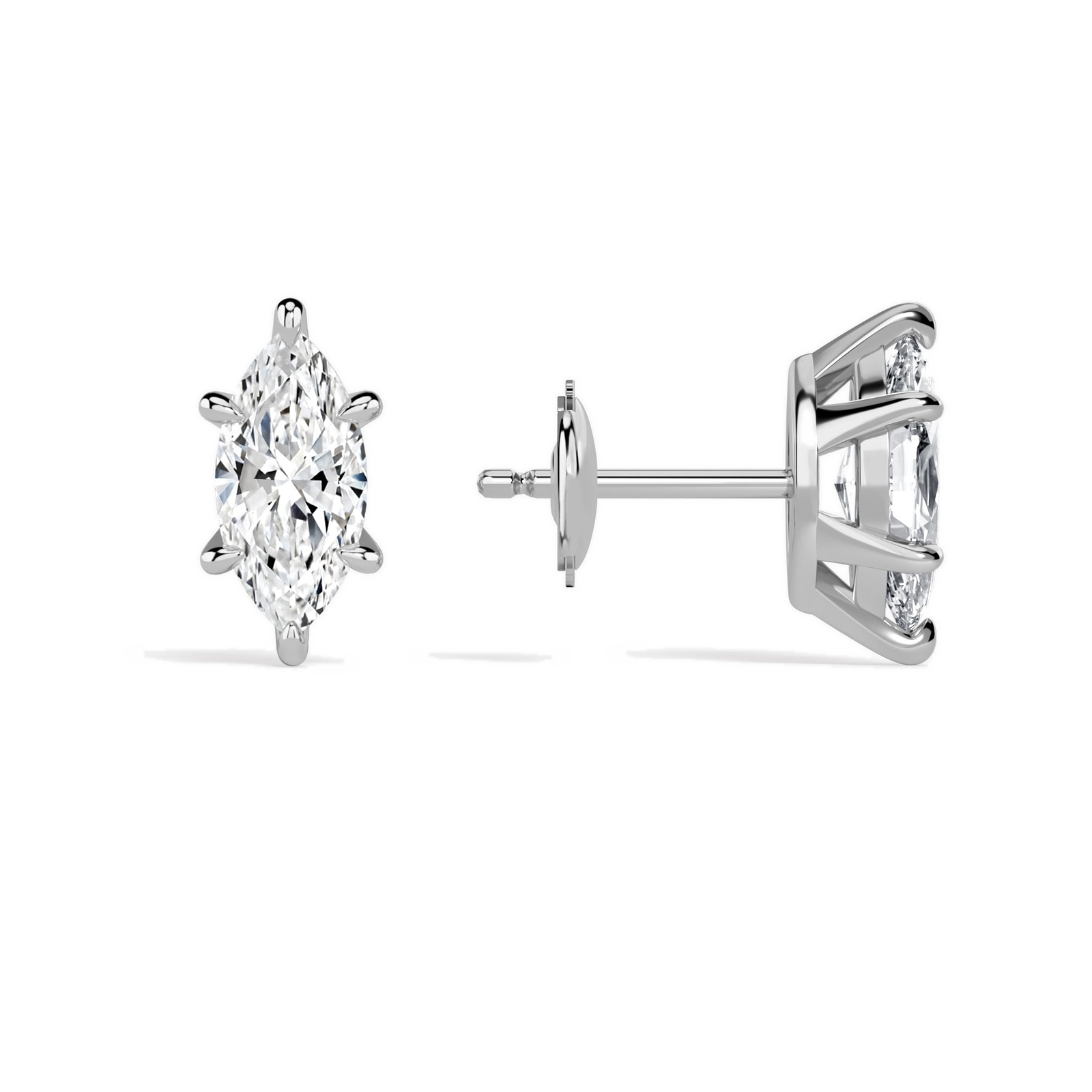


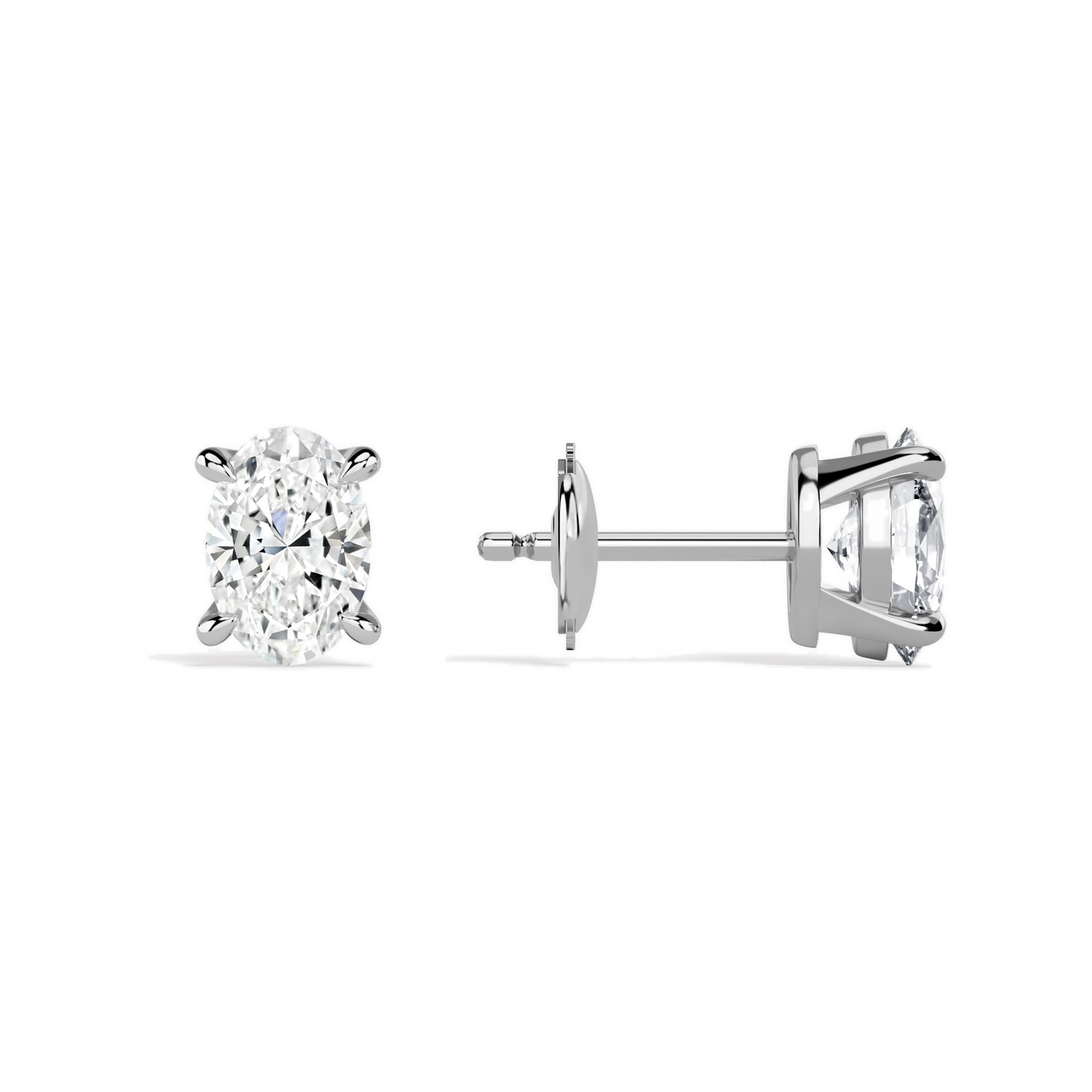


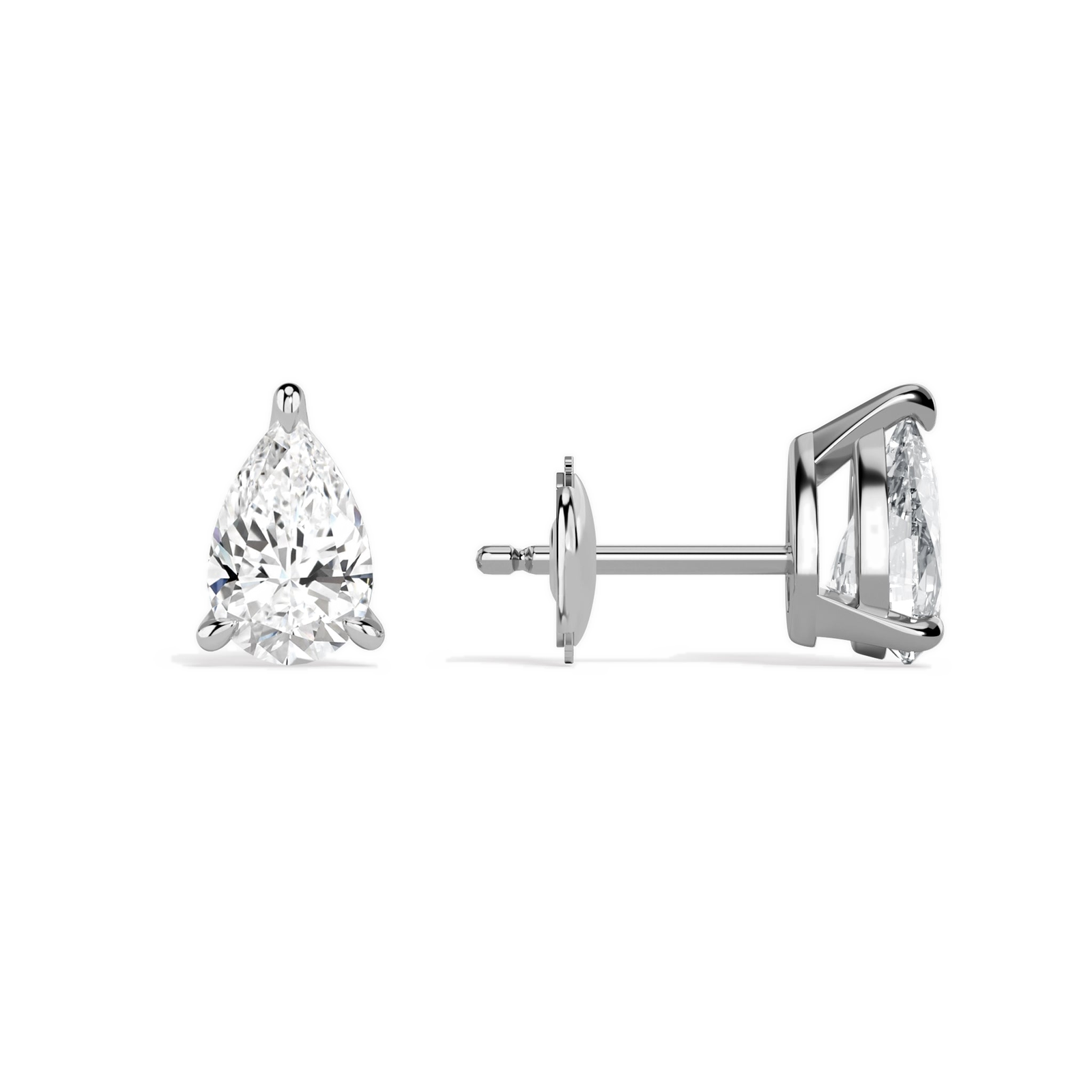


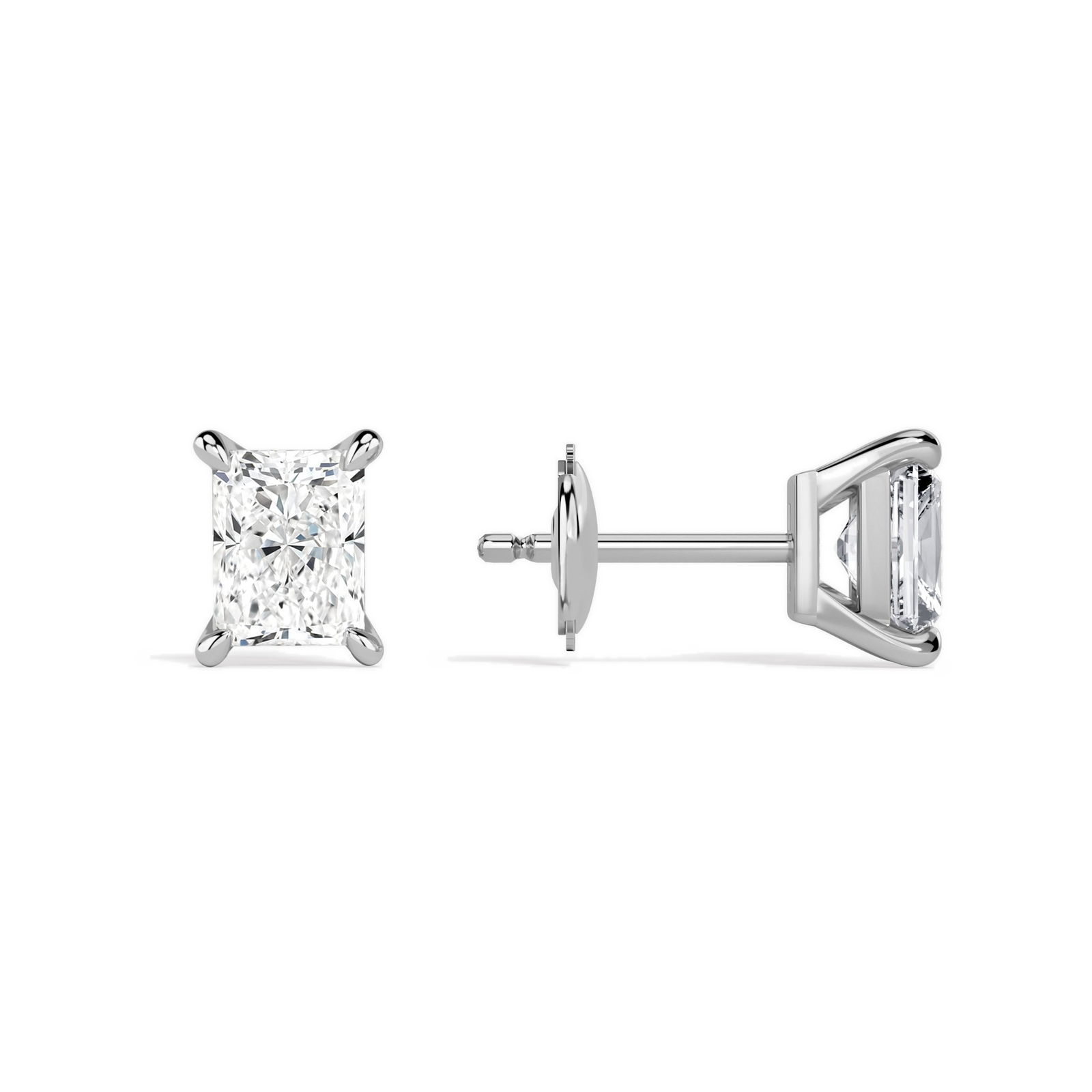


Platinum Stud Earrings: Natural-White Structure at Close Scale
Platinum places a naturally white framework directly beside the ear. It can separate center from setting while retaining material presence through profile, post and back. Ten prong, ten bezel and ten halo designs span ten shapes; one climber and one graduated drop-stud are disclosed exceptions whose direction and movement differ from a conventional centered stud.
Judge Material and Pair as Complete Systems
Fineness, alloy, dimensions, finish, diamonds, setting and closure determine finished weight and surface behavior. Platinum alone cannot predict tipping or comfort. Pair calibration includes outline, dimensions, orientation, setting, post/back relationship and how each piece meets the ear. A halo's field or bezel's edge changes complete scale without enlarging the center.
Keep CTW and Documentation Scoped
Center Stone Total Carat Weight is a pair-level center label; Total Carat Weight on multi-stone forms follows its stated product scope. Neither should be divided or extended without documentation. Independent grading or certification applies only to identified diamonds, not automatically both centers, every accent or the finished setting.
Allow Surface and Fit to Remain Honest
All 32 products list secure lock backs and double-notched posts, but loss prevention, upright wear and sensitivity cannot be guaranteed. Burvonti supports responsibly sourced lab-grown diamonds and feasible custom review of shape, boundary, profile, post or back.
Evaluate complete dimensions and weight distribution rather than using metal name as a shortcut for fit. Setting depth, post length, backing size, lobe anatomy and piercing angle determine how each earring meets the ear. The climber needs directional clearance, while the graduated drop-stud introduces a short moving line that cannot be judged as a conventional centered pair.
Pair calibration should connect shape, dimensions, orientation, apparent color, setting and mechanism. Documentation and quality tiers remain limited to their expressly identified scope. In multiple piercings, compare front spacing and rear hardware before assuming compatibility. Clean gently, store separately, and inspect all settings and mechanisms when surface, alignment or engagement changes; an evolving surface is a material condition, not automatic evidence of failure.
Natural-white color can create continuity without making the setting immaterial. Look for the line of the prongs, the complete bezel edge, the metal intervals within a halo and the transition into the post. Compare these against dimensions and profile rather than density assumptions. Feasible custom review should identify the exact element under discussion and preserve a written specification for fineness, finish, setting and mechanism.
Frequently Asked Questions
What does Platinum add?
Natural-white material presence across outline, profile, post and backing.
What structures appear?
Ten prong, ten bezel, ten halo and two multi-stone exceptions.
Which shapes are included?
Ten principal shapes across the three main families.
Does Platinum disappear?
No; exposure, profile, finish and light affect visibility.
What fineness is used?
Confirm the selected product; the Collection name cannot establish one specification.
Are Platinum studs always heavier?
Finished weight depends on the complete construction.
Does a halo enlarge the center?
No; it broadens the complete field.
Does a bezel protect against all damage?
No universal protection guarantee applies.
What is pair CTW?
The combined principal-center label within the stated scope.
Does one report cover all diamonds?
Only if the document states that coverage.
What backs are listed?
Secure lock backs and double-notched posts.
Are they loss-proof?
No; engagement, condition, fit and inspection matter.
Will density keep studs upright?
No; full weight distribution, anatomy, post and backing determine position.
Does the surface remain unchanged?
Surface appearance can evolve with wear and care.
Is Platinum automatically hypoallergenic?
No universal guarantee is appropriate.
Can these work in multiple piercings?
Yes when front and rear clearance are checked.
What custom and care review applies?
Review setting, profile, post and back; clean gently and inspect all components.