
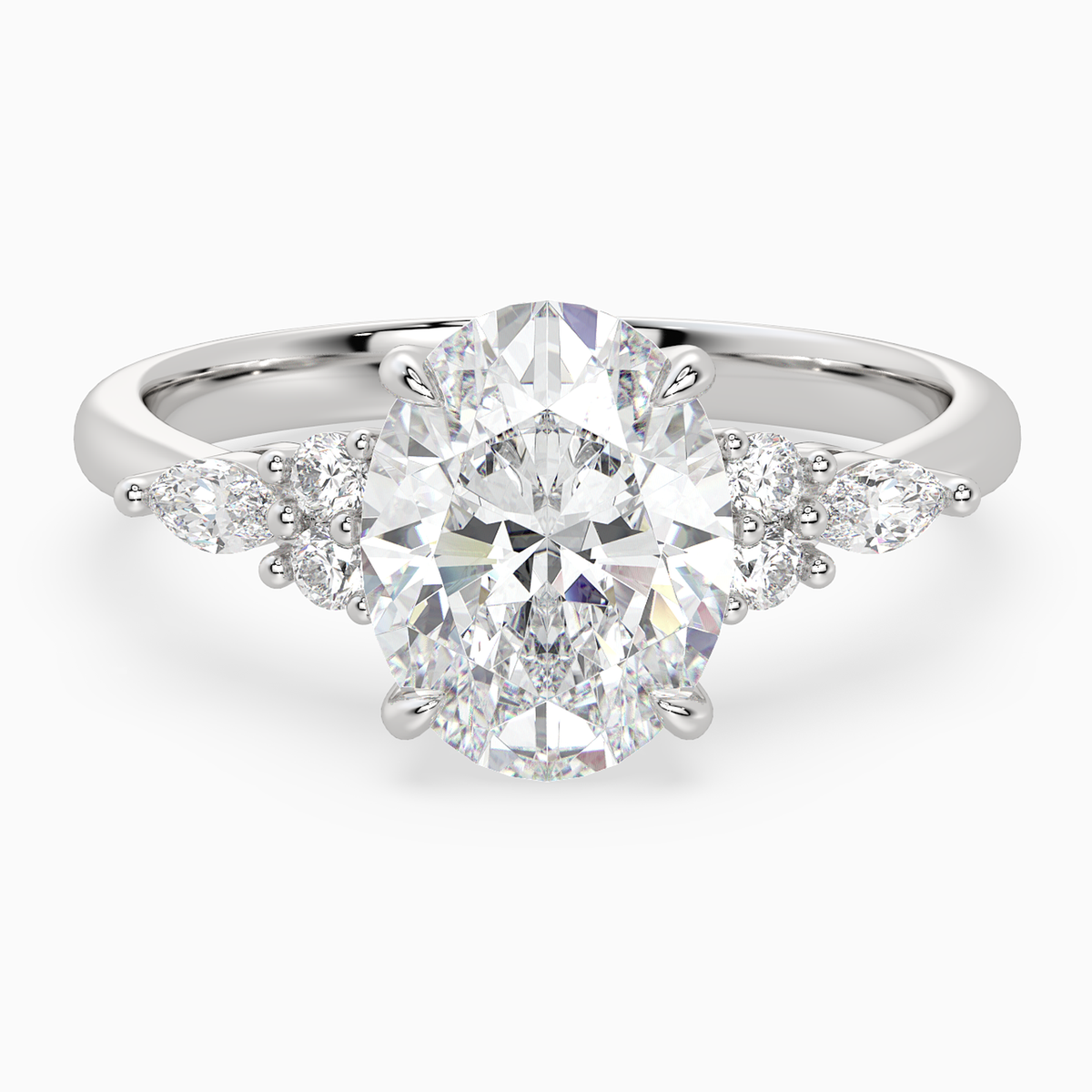


Lab Grown Diamond Stud Earrings in 14K Yellow Gold
Gold makes each close-set boundary visible. 14K yellow gold defines prong, bezel, halo, cluster, post, and backing at human scale.


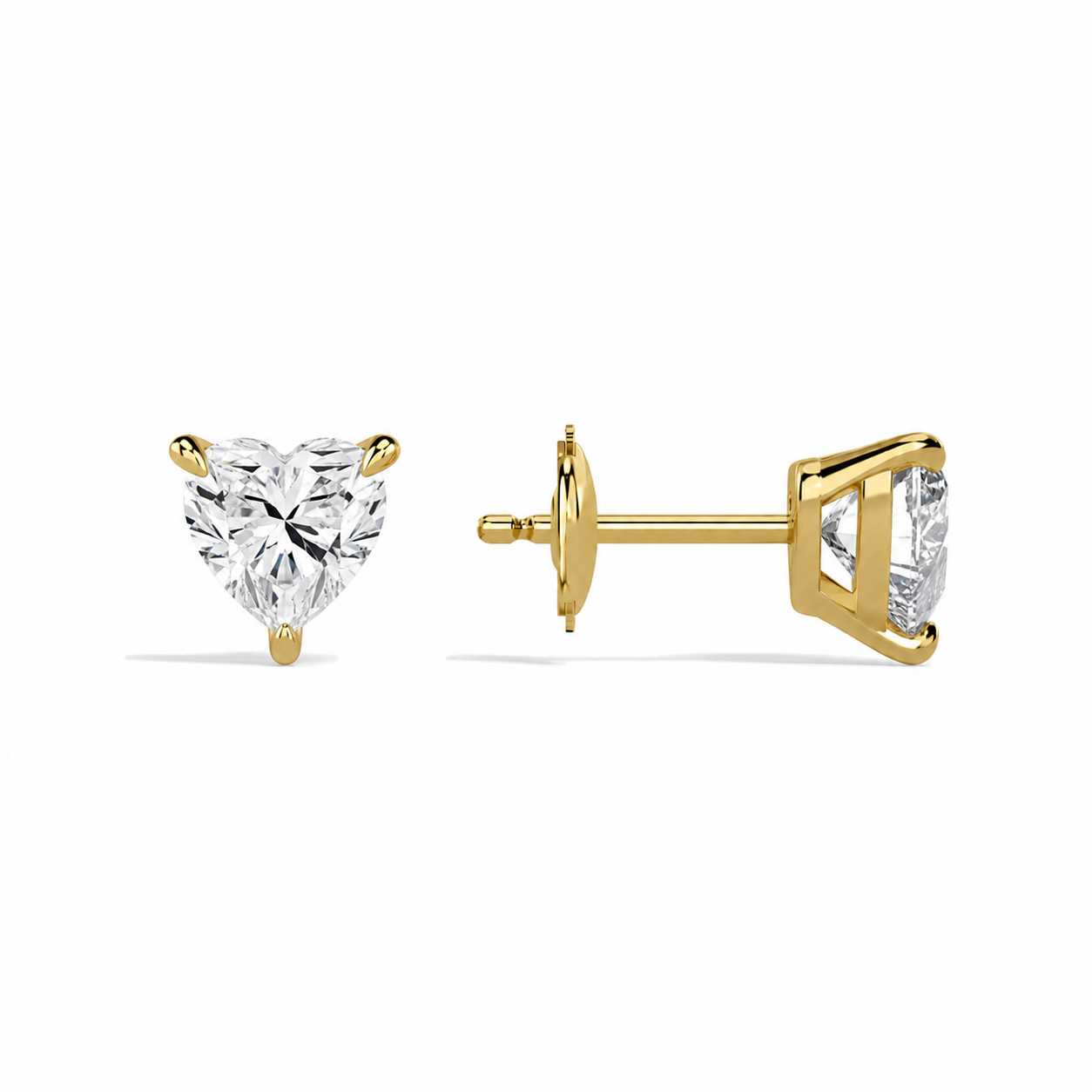


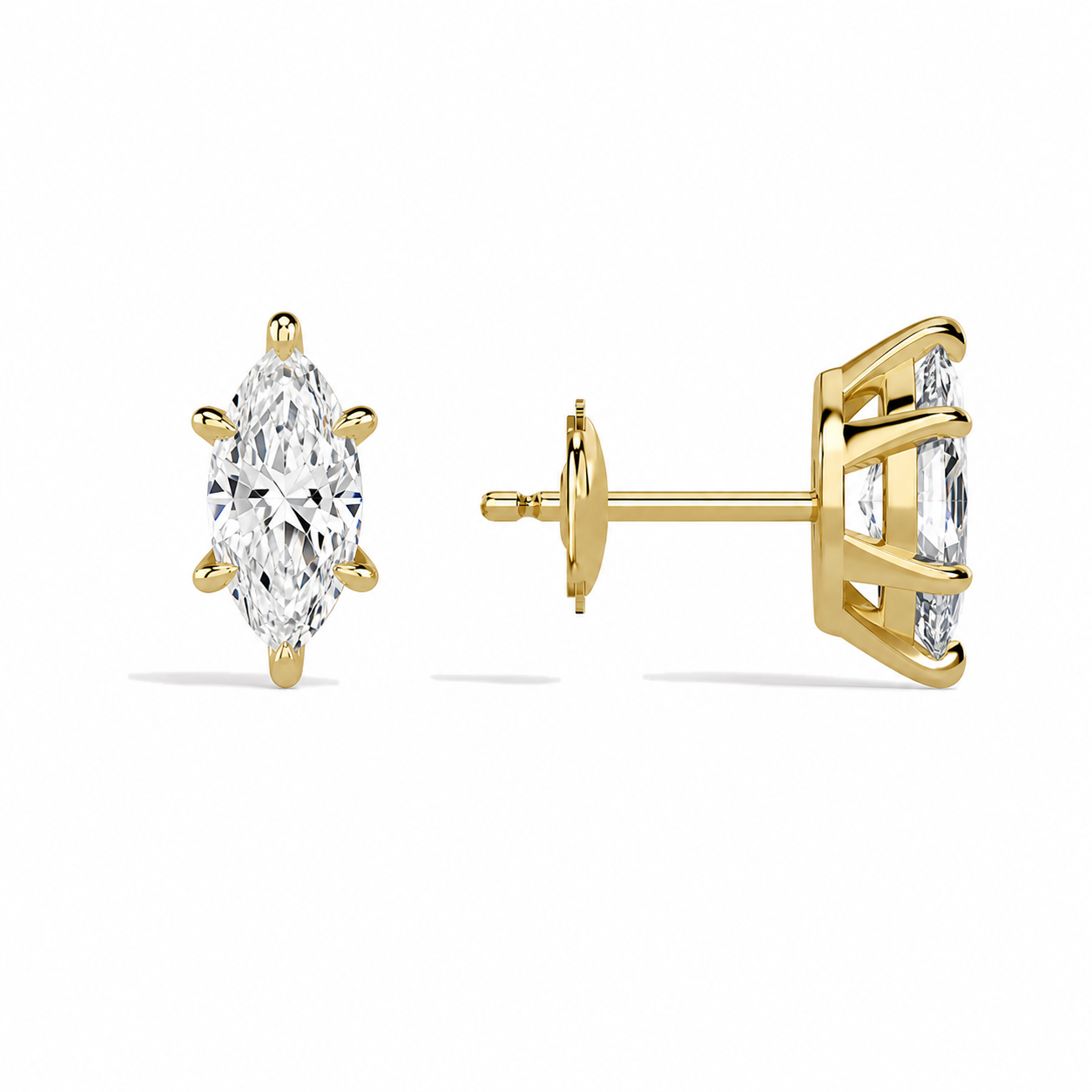


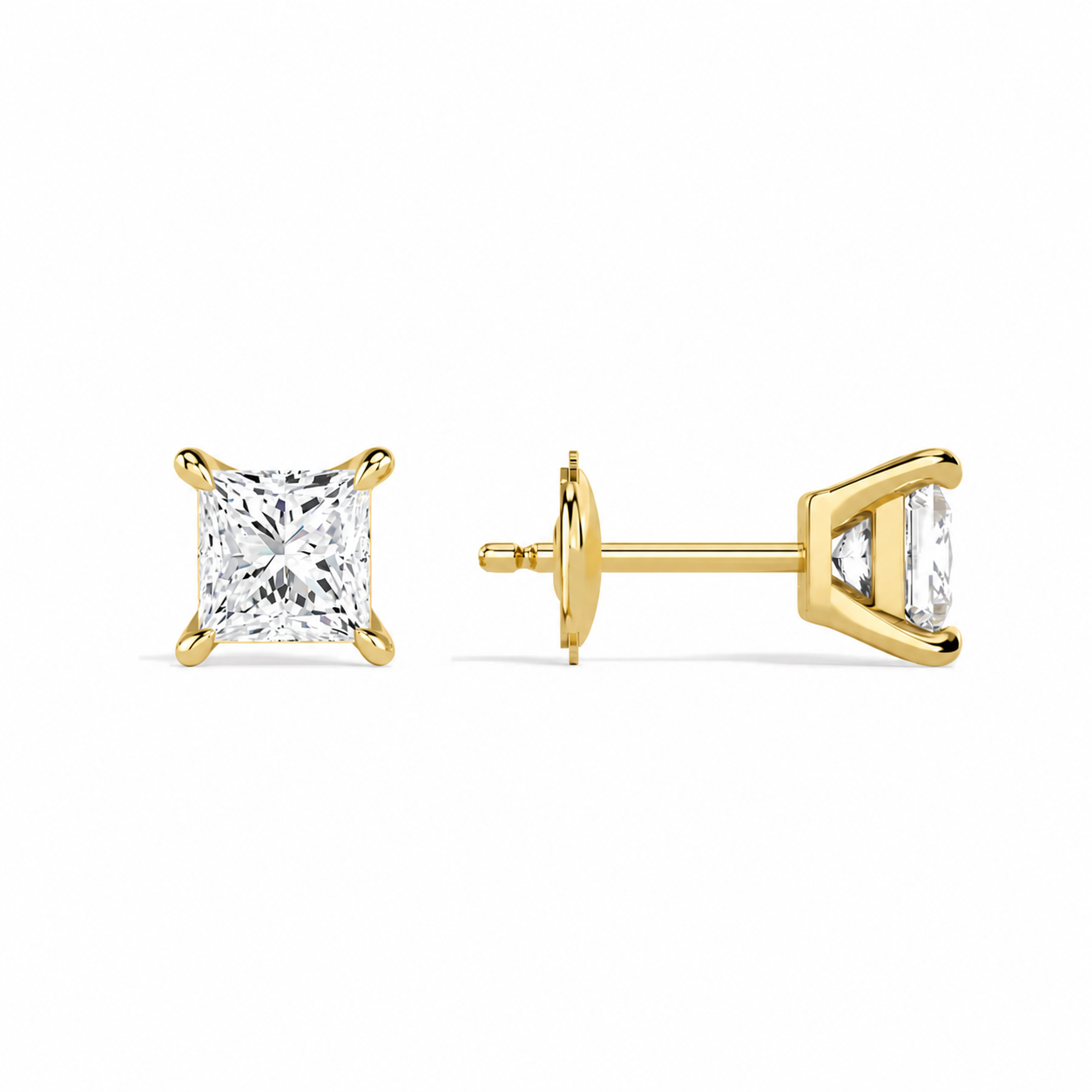


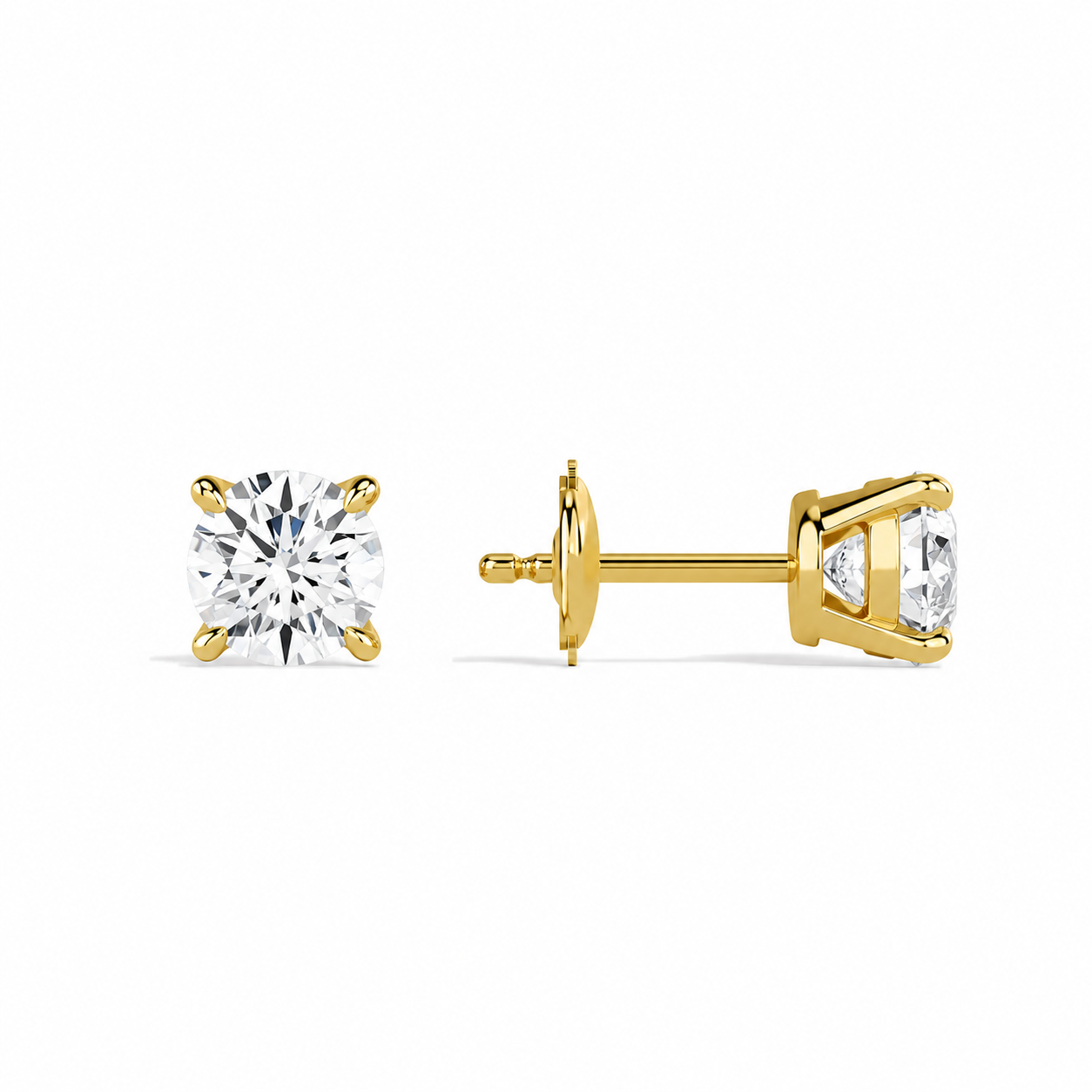

14K Yellow Gold Stud Earrings: A Visible Boundary at Close Scale
At the ear, Yellow Gold can make each construction explicit: selected prong contacts, a continuous bezel perimeter, or the intervals inside a halo. Thirty main-family designs cover ten shapes, while one climber and one graduated drop-stud extend the taxonomy. Their shared value is proximity to the lobe; their setting structures remain distinct search and selection paths.
Let Gold Clarify, not Redefine, Shape
Visible warmth may trace curves, corners, steps and points, but it does not change diamond dimensions, grade or facet relationships. Compare complete face-up measurements and orientation across the pair. A halo broadens the field, a bezel adds metal width, and prongs leave more outline open; none creates a universal size or brilliance result.
Balance Front and Back
Secure lock backs and double-notched posts are listed across all 32 products. They require correct engagement and inspection. Profile, post length, backing size, lobe thickness, piercing angle and setting scale affect placement. The climber needs directional clearance; the graduated design introduces short movement. Neither should be disguised as a conventional one-center stud.
Keep Warmth Product-Specific
A 14K alloy contains approximately 58.3% gold. Other alloying metals, finish, dimensions, light and photography shape observed tone. Burvonti uses responsibly sourced lab-grown diamonds with document-scoped grading or certification and supports feasible custom possibilities.
Pair coherence comes from the relationship between two complete earrings: shape, dimensions, orientation, apparent color, setting and mechanism. Yellow Gold intervals may look more open in a prong design, continuous in a bezel, or rhythmic inside a halo. Documentation and Burvonti quality tiers must remain attached to the diamonds and definitions they explicitly cover.
For multiple piercings, use shape direction and setting width to build hierarchy, then verify projection and rear clearance. The graduated design distributes several stones along a short drop, so its total weight and movement cannot be read like a conventional pair of single centers. Clean gently, store separately, and inspect settings, posts and backs whenever engagement or alignment changes.
When comparing product cards, keep material, setting and diamond information in separate columns of thought. Yellow Gold establishes the visible frame; prong, bezel or halo establishes how that frame meets the diamond; dimensions establish scale. This prevents warmth from becoming a substitute for shape analysis and keeps a custom inquiry specific enough to evaluate without promising that every change is technically available.
Frequently Asked Questions
What is included?
Thirty main prong, bezel and halo designs plus a climber and graduated drop-stud.
Which shapes are represented?
Round, Oval, Cushion, Pear, Princess, Emerald, Marquise, Asscher, Radiant and Heart.
What does Yellow Gold change?
The visible metal boundary, not diamond measurements or grade.
How do settings differ?
Prongs use contact points, bezels use a full perimeter, and halos add accents.
Does a halo equal a larger center?
No; it broadens the total field while the center remains unchanged.
Does bezel width affect scale?
It can affect the complete face-up outline without changing the diamond.
Is the climber a standard stud?
No; it extends directionally along the lobe.
Is the drop-stud static?
It introduces a short graduated composition and possible movement.
What is pair CTW?
A combined pair-level weight label within the stated scope.
Does one certificate cover all stones?
Not unless the document states that scope.
What backs are listed?
Secure lock backs with double-notched posts.
Do they guarantee retention?
No; correct fit, engagement, condition and inspection remain necessary.
Will both studs align identically?
Not always; anatomy, piercing angle, profile and backing contribute.
Can they be stacked?
Yes when spacing, projection and backing clearance are checked.
How much gold is in 14K?
Approximately 58.3%.
Is Yellow Gold prescribed for a complexion?
No. Choose by the complete pair and personal preference.
What customization and care apply?
Feasible review may cover shape, setting, post or back; clean gently and inspect all components.