
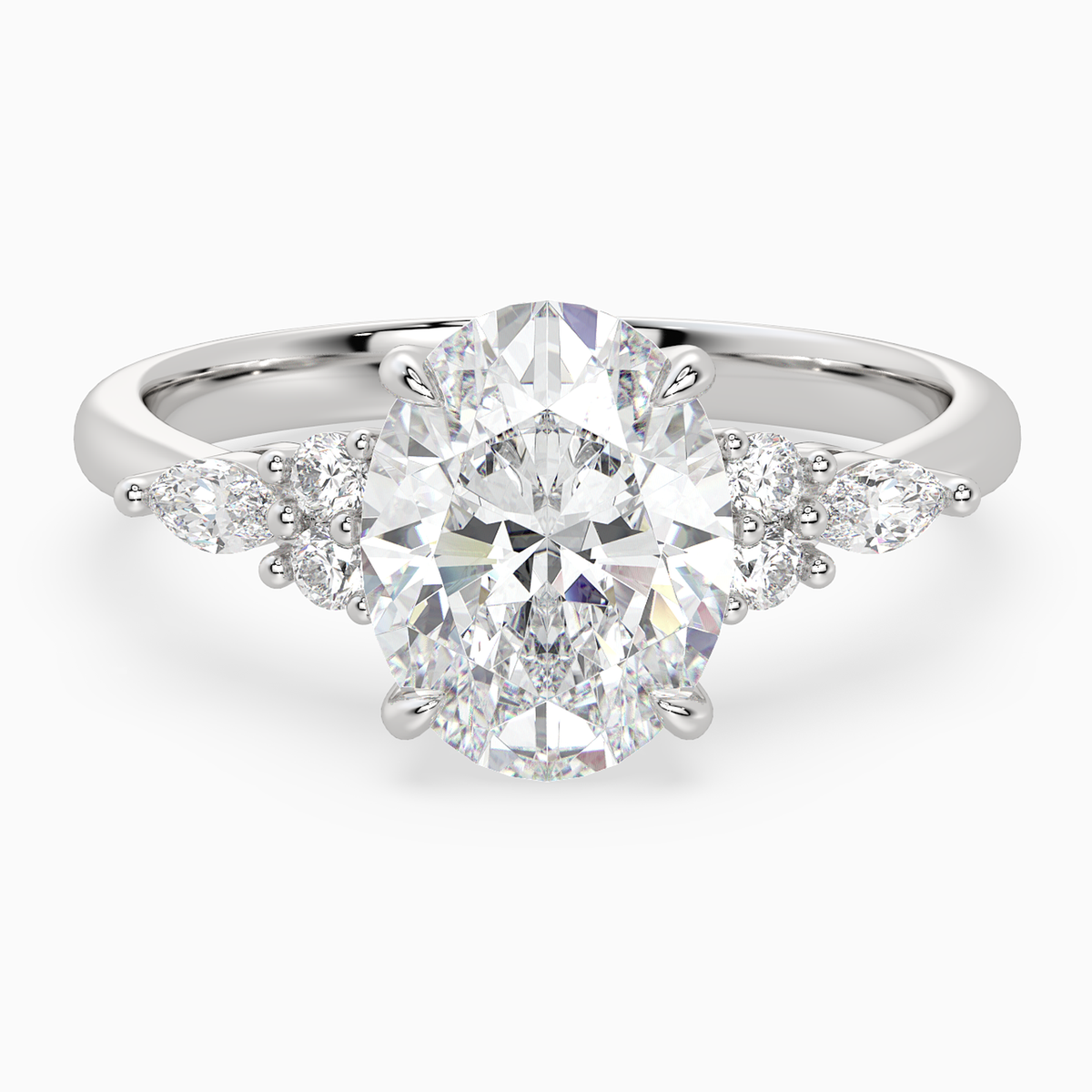


Classic Engagement Rings in 18K Yellow Gold
A fuller gold presence, edited with restraint. 18K yellow gold keeps center, accents, and band in lucid proportion across classic forms.


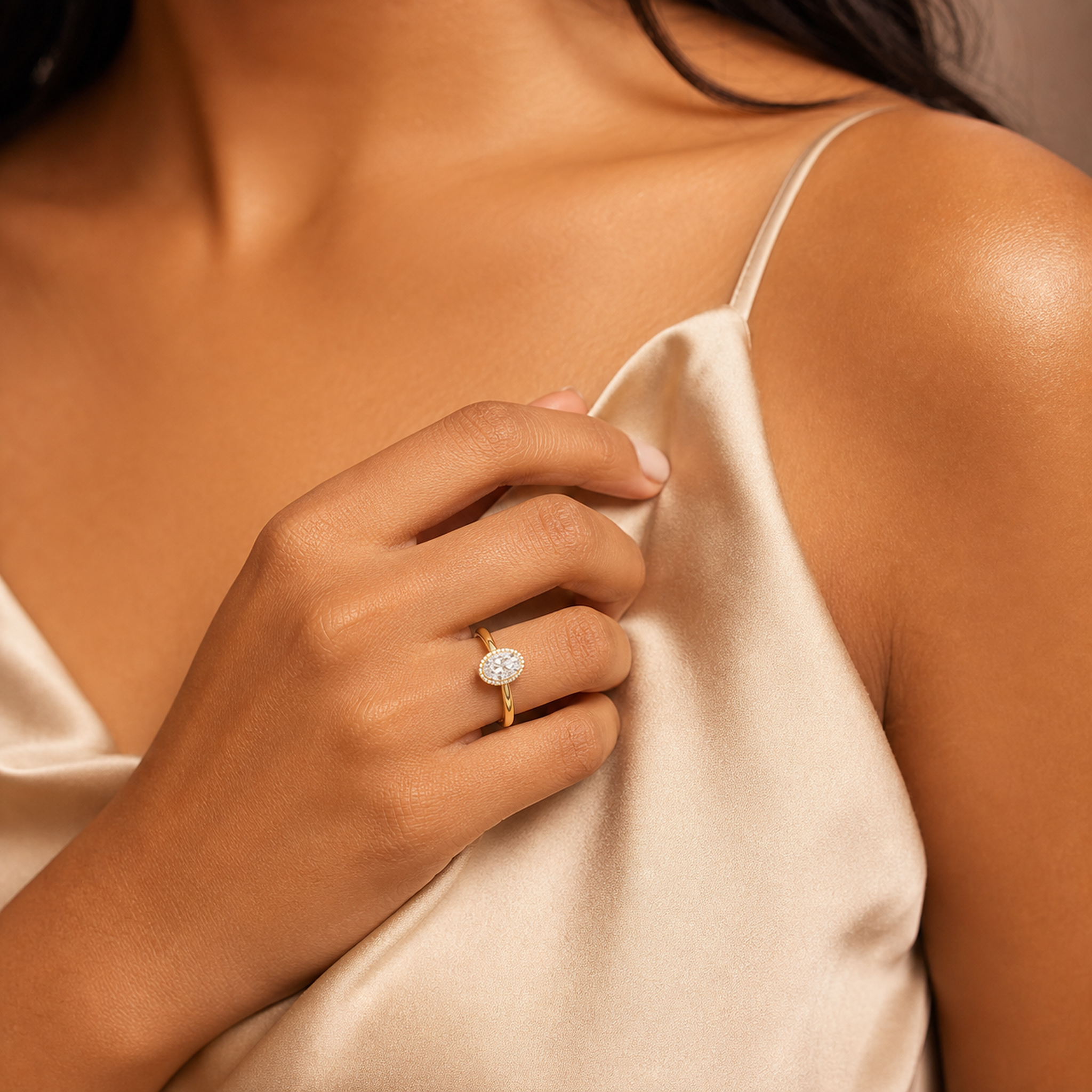
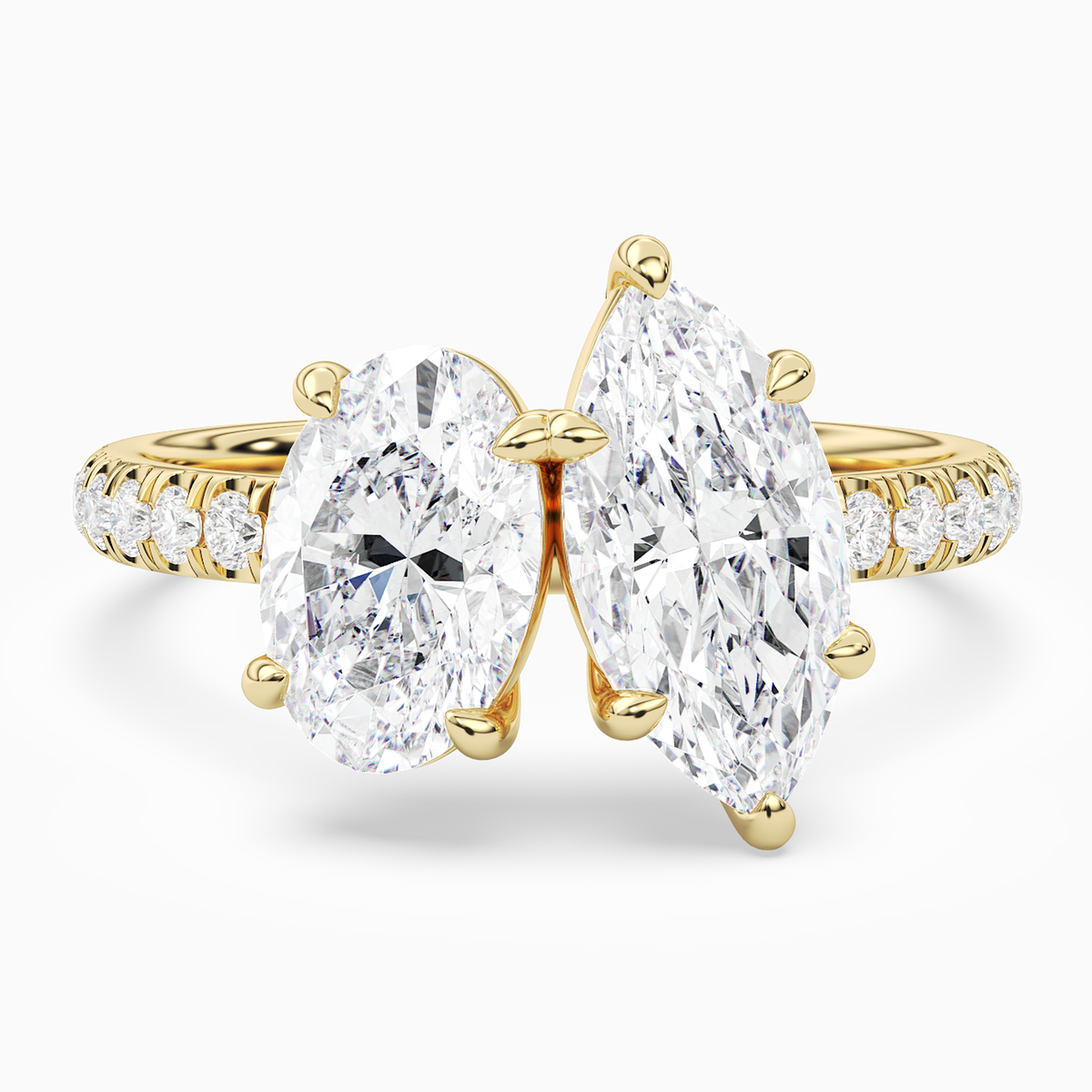

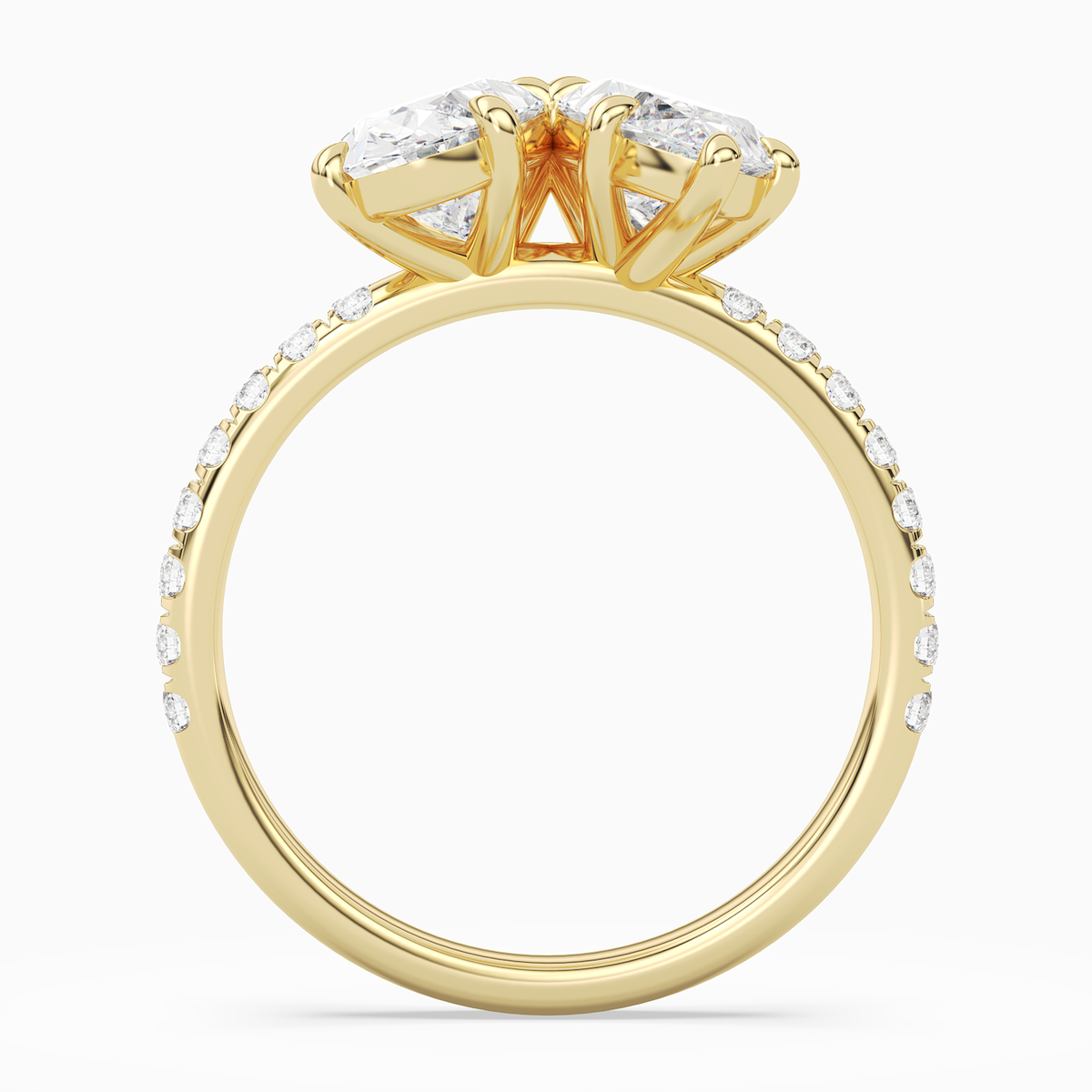

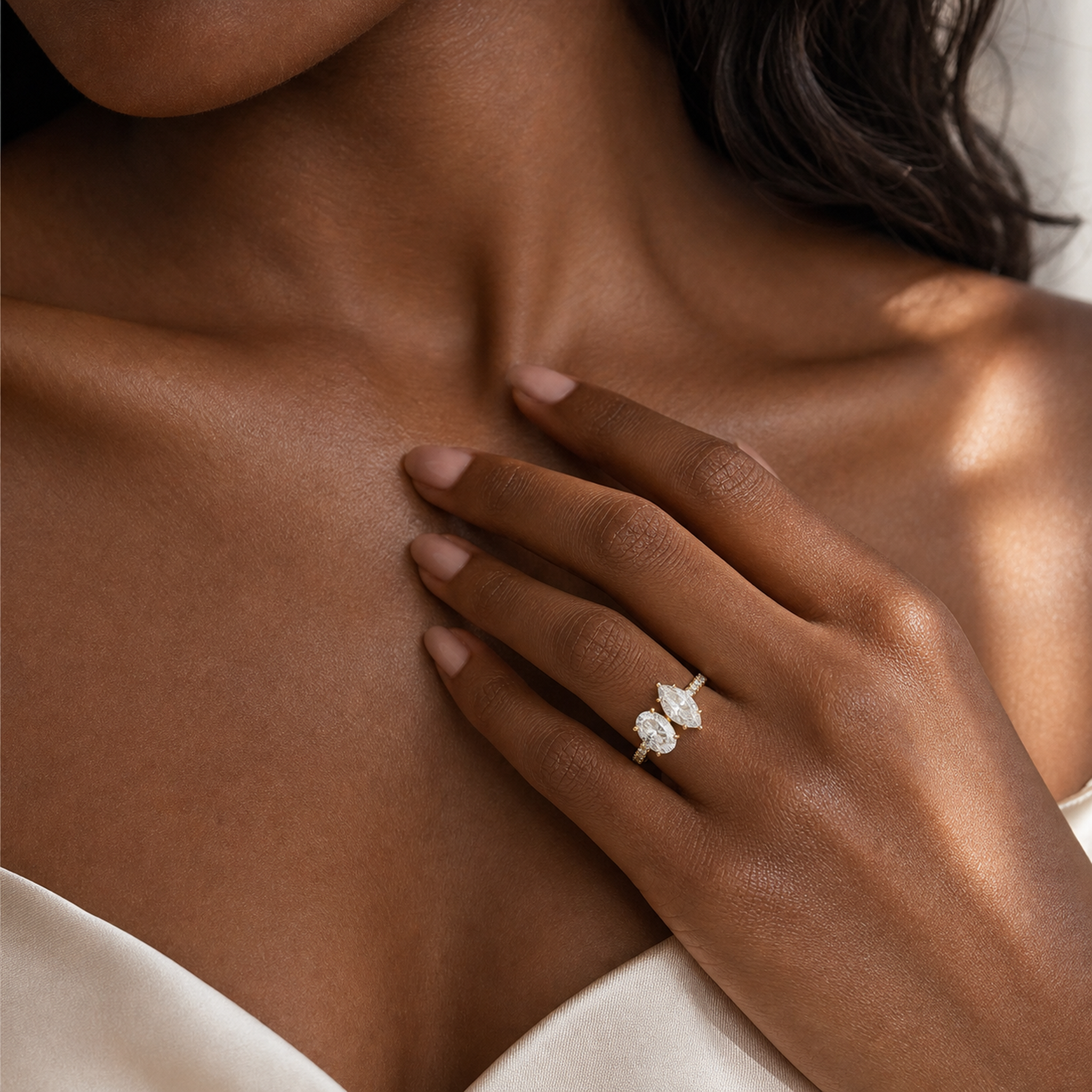


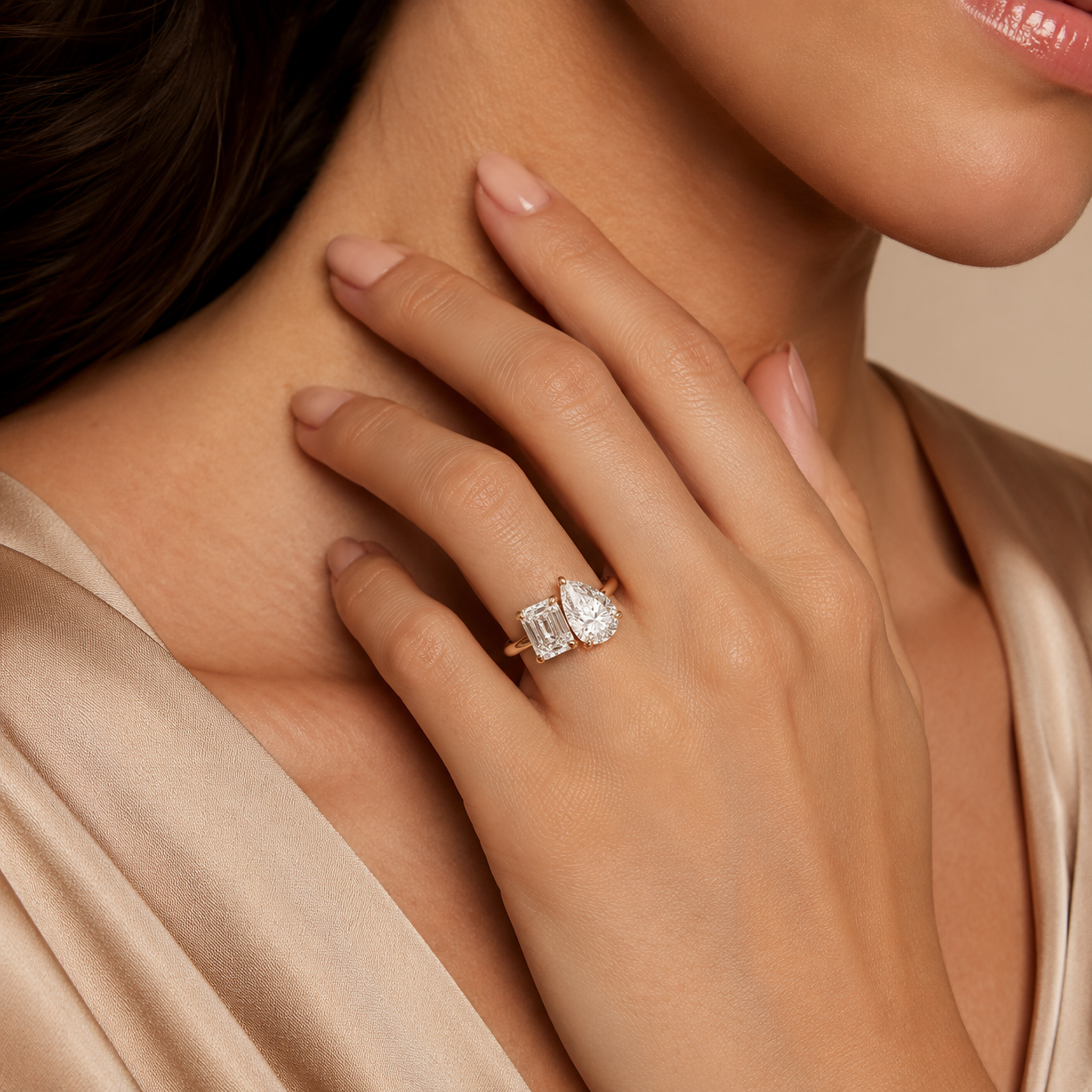


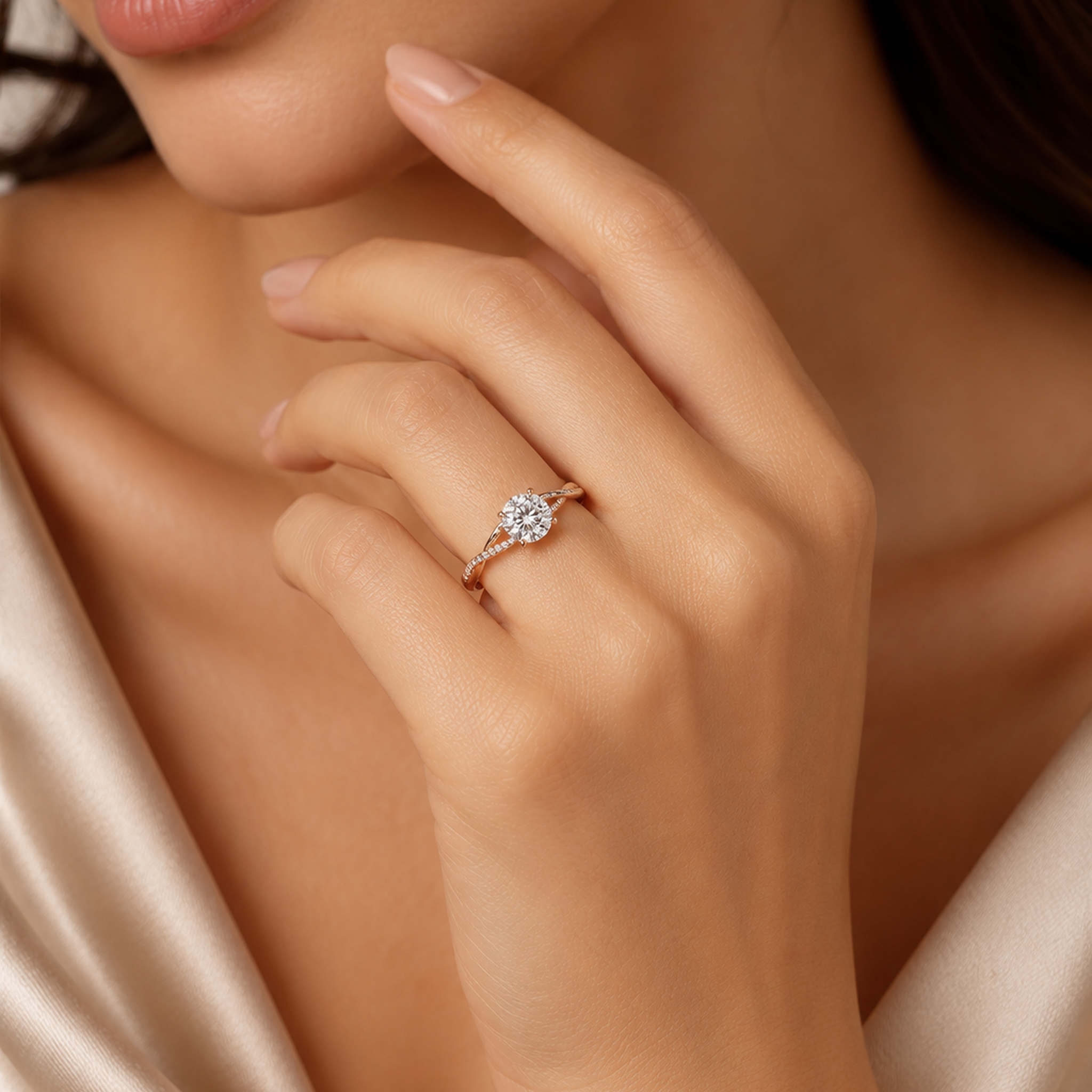


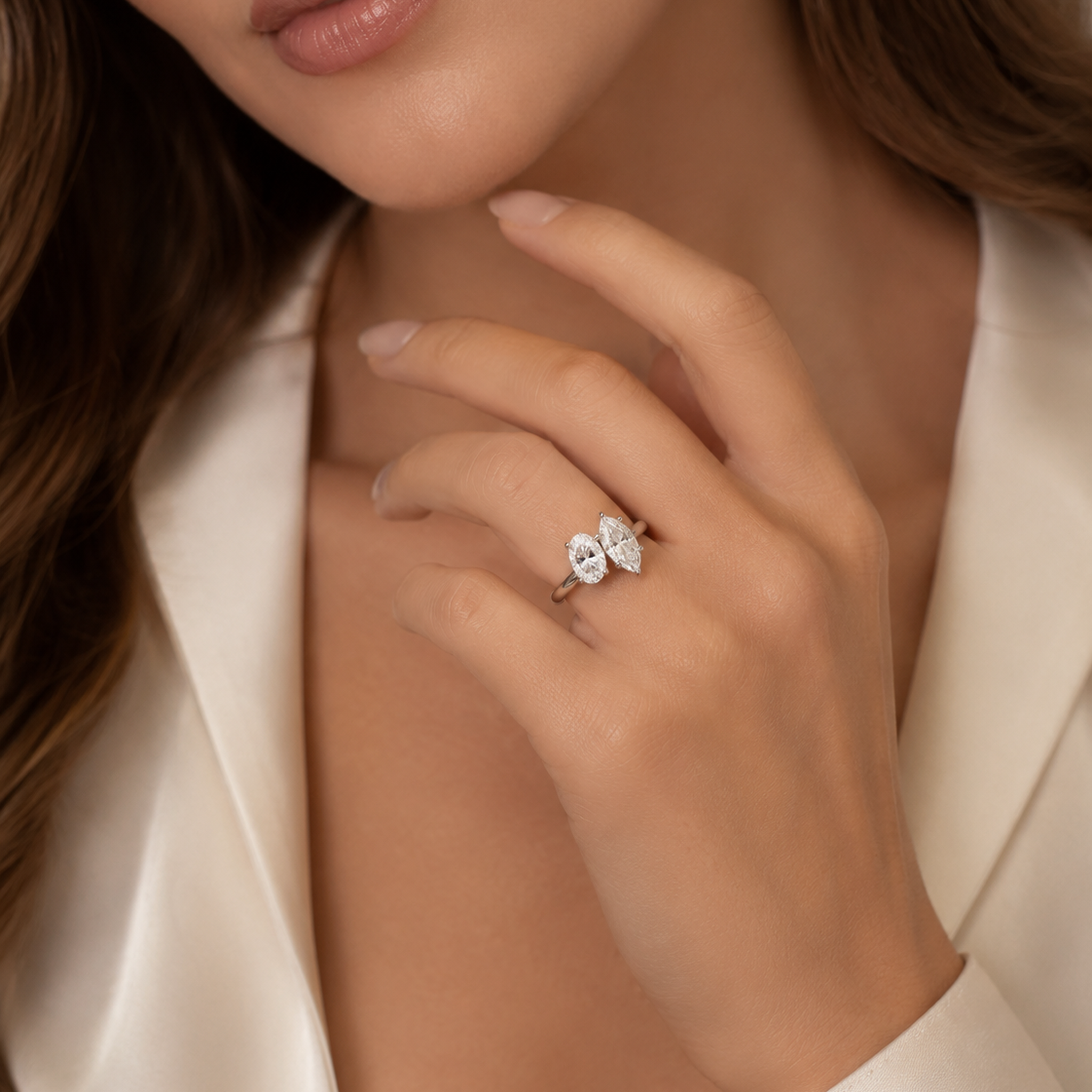


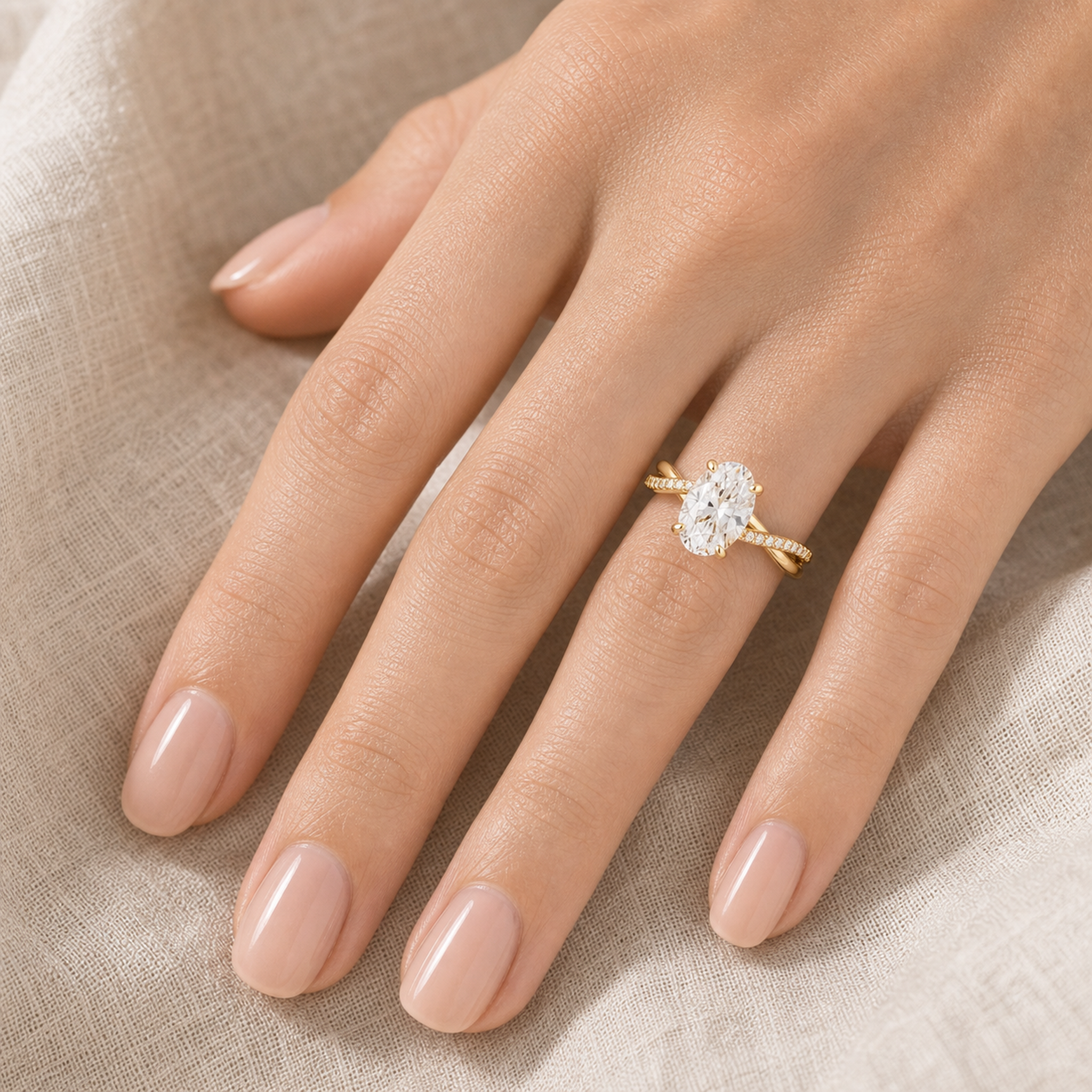


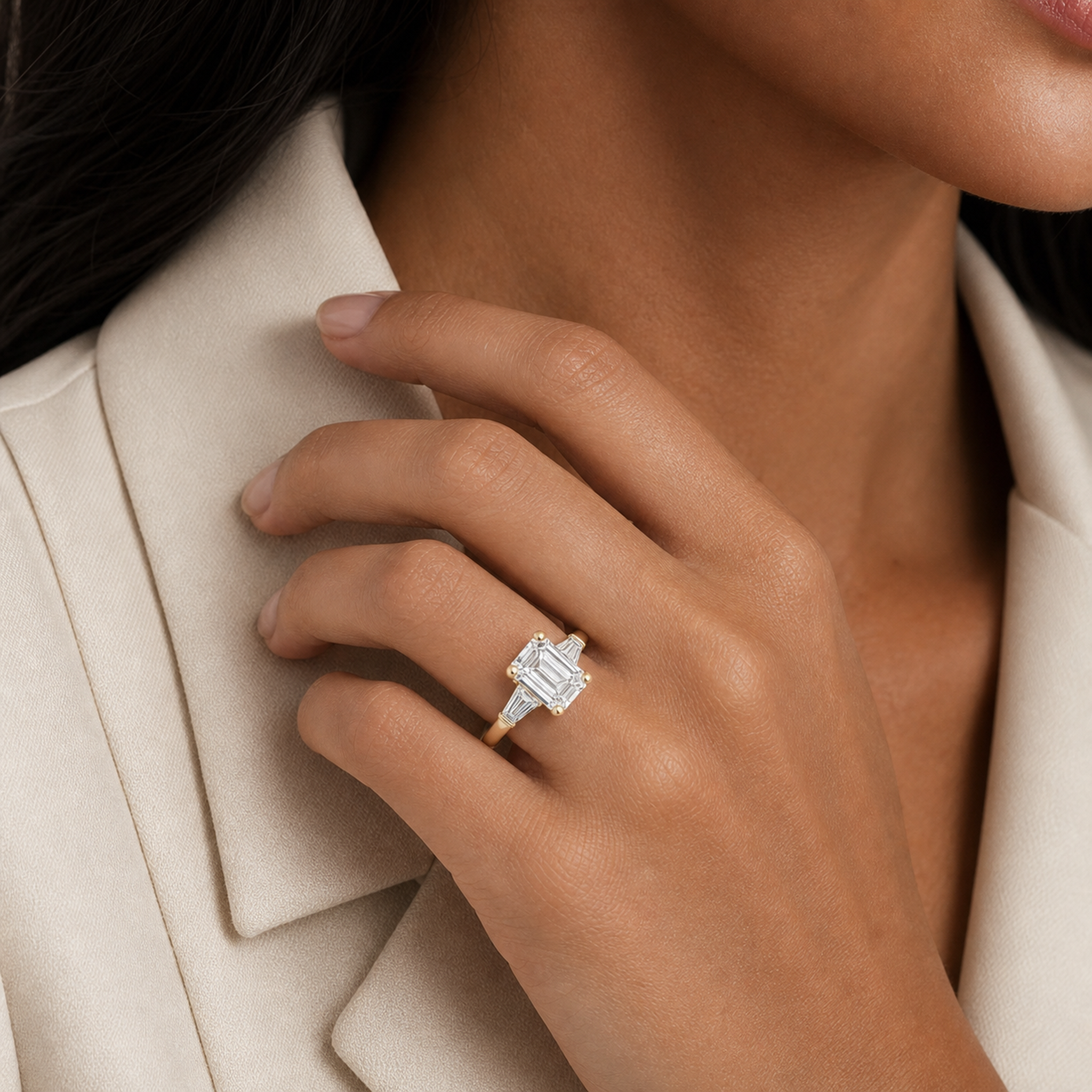


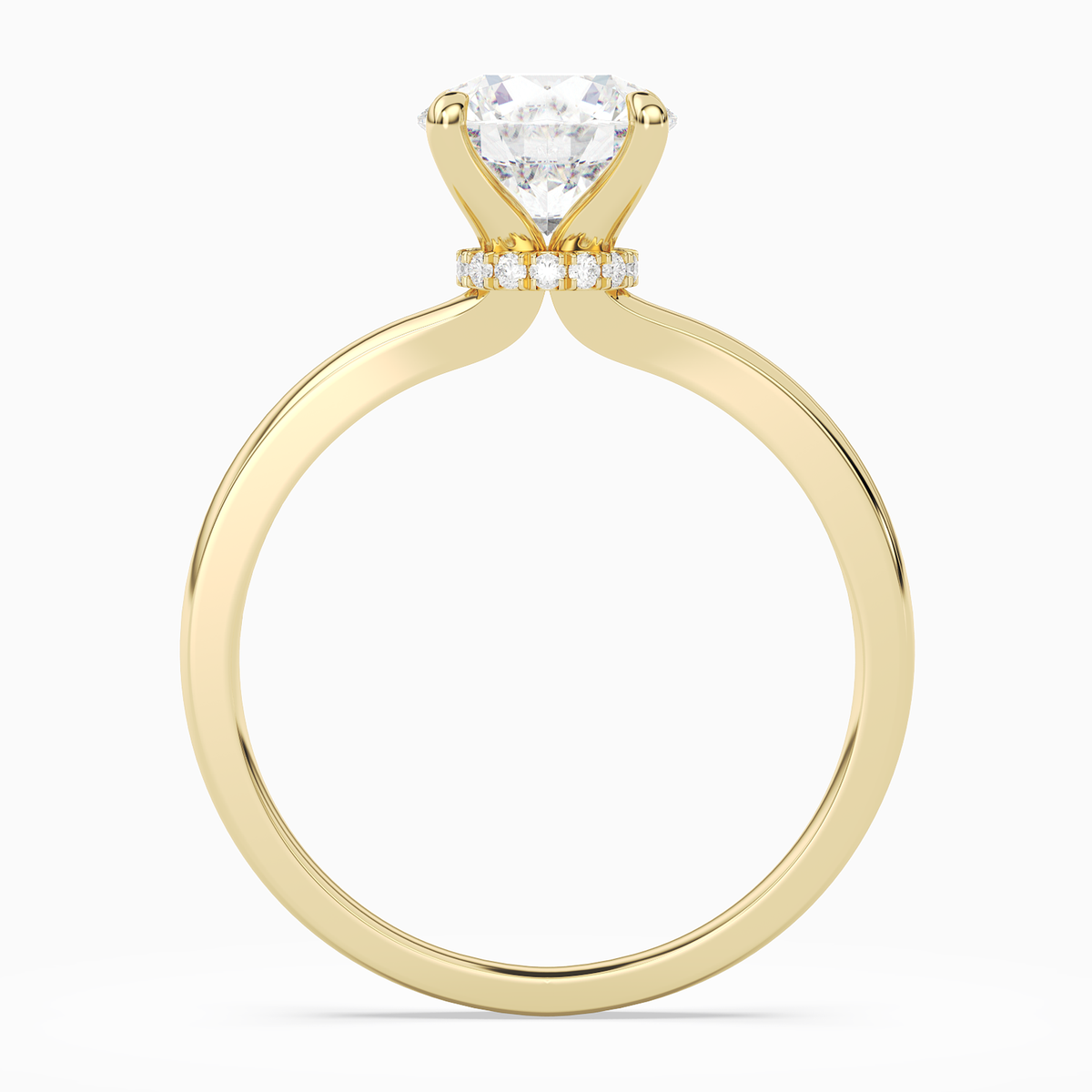

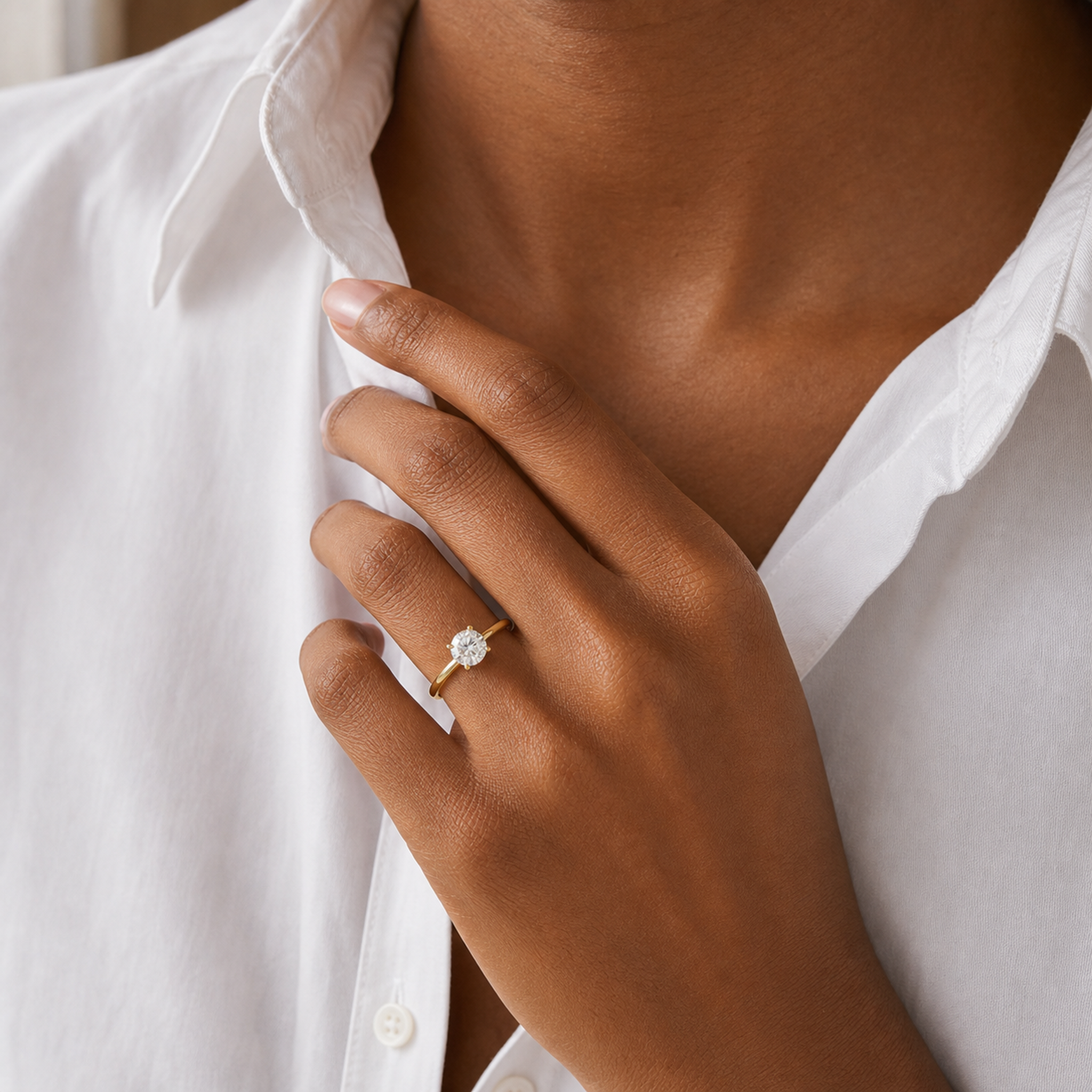


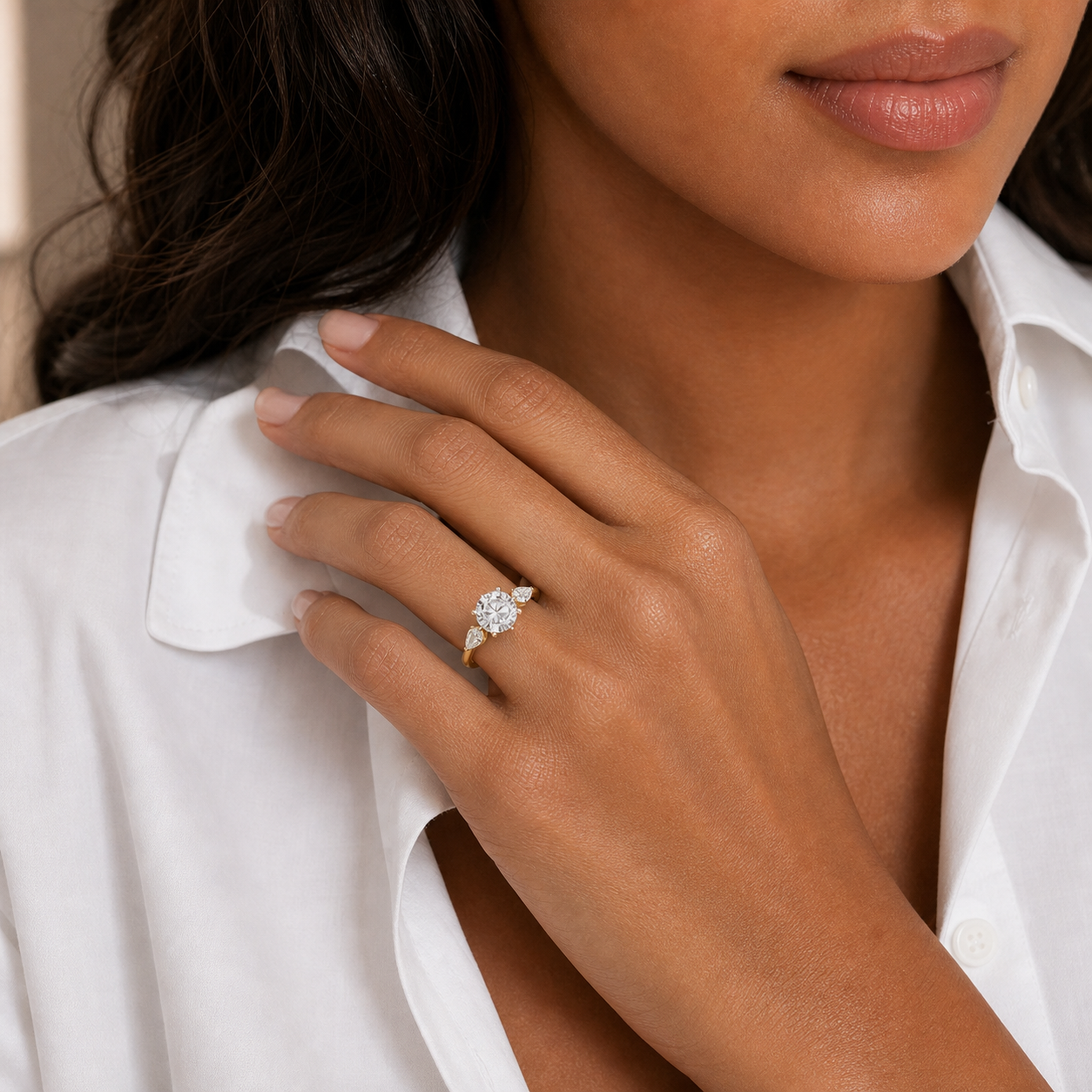
18K Yellow Gold Classic Engagement Rings: Richness Given Order
18K Yellow Gold is visually present before a ring is studied in detail. Classic design gives that presence order. A band becomes the principal gold line; prongs decide how it meets a center; a halo turns it into a frame; side stones and paired centers interrupt it with measured intervals. Warmth is allowed to register fully without blurring the hierarchy.
The current Burvonti assortment contains 34 verified designs across five setting families: 15 solitaire, six halo, two side-stone, six Toi et Moi, and five three-stone forms. They show that a rich material field can support both familiar and less expected architectures when the composition remains legible.
Seventy-Five Percent Gold, Without a Superiority Story
An 18K alloy contains 75% gold. The remaining material affects color and working behavior. This reliable fact does not dictate one exact yellow, hardness level, sensitivity outcome, scratch resistance, security, or maintenance pattern. The complete alloy, dimensions, construction, finish, and use remain relevant.
Compared with 14K Yellow Gold, the higher gold content may create a fuller golden context, depending on alloy and finish. The difference can be subtle in fine prongs and more evident in a bezel, halo frame, or broader shoulder. It should be examined through equivalent rings, not treated as an automatic quality rank.
Classic Structure Controls Material Emphasis
A solitaire concentrates gold around one head and band. A halo expands it around the center outline. Three-stone settings build a progression through shared metal, while side-stone rings move more gradually toward the band. Toi et Moi designs place the hardest demand on negative space: two distinct centers must feel intentionally related without losing their separate identities.
Classic restraint can include pavé, hidden halos, sculpted shoulders, or contrasting shapes. The question is whether these details serve the principal relationship. When gold color is already strong, unnecessary competition becomes easier to notice; proportion and pause keep richness from becoming noise.
Shape Directs the Golden Field
Round and cushion centers create contained focal points. Oval and pear forms lengthen the composition. Emerald cuts make straight lines and corners explicit; heart shapes introduce a cleft and directional point. Paired centers combine outlines such as emerald with pear or oval with marquise, asking the band and spacing to mediate different axes.
Yellow Gold changes the boundary around these shapes but does not change their grade or performance. A broader gold frame may make geometry more pronounced, while fine prongs provide only warm punctuation. Compare the quantity and placement of metal along with the selected diamond outline.
Wear Adds Another Register
A polished gold field changes as fine marks accumulate. That evolution is neither a defect nor a maintenance-free promise. Cleaning, inspection, polishing, and refinishing should follow the actual alloy, setting, condition, and visual preference. Sensitivity questions likewise require product-specific composition rather than a conclusion drawn from karat alone.
Construction changes the care conversation. A solitaire head, shared multi-stone setting, pavé halo, or two-center arrangement exposes different edges and contact points. The word classic describes the visual discipline; it does not make these physical structures interchangeable. The chosen ring's specification and condition must guide every care decision.
Continue or Interrupt the Gold Line
A matching 18K Yellow Gold wedding band can extend the color field. A different karat or metal can create deliberate contrast. Neither approach determines fit. Halo edge, head width, cathedral rise, side-stone span, center arrangement, band thickness, and contact points decide how the rings meet.
Burvonti pairs responsibly sourced, independently graded lab-grown diamonds with settings considered through proportion and human judgment. Custom possibilities may refine shape, orientation, metal, engraving, band dimension, or selected structure when feasible. Here, 18K Yellow Gold becomes classic through calibration: material richness held within a lucid composition.
Frequently Asked Questions
How does this differ from Classic Engagement Rings?
The parent owns classic design across metals. This page focuses on how a 75% gold yellow field interacts with composed setting architecture.
How does it differ from all 18K Yellow Gold Engagement Rings?
The broader metal page covers many aesthetics. This intersection is limited to settings selected for clear hierarchy and restrained detail.
How much gold is in 18K Yellow Gold?
It contains 75% gold. The remaining alloying metals influence color and behavior.
Is 18K Yellow Gold always deeper than 14K?
Not always. Higher gold content may create a fuller yellow context, but alloy, finish, light, and visible metal area affect the result.
Is 18K better than 14K?
Neither is universally better. Compare composition, design, feel, finish, care, wear, and budget.
Can a two-stone ring be classic?
Yes, when two centers, their axes, scale, spacing, and band resolve as one disciplined composition.
Which settings appear here?
The collection includes solitaire, halo, side-stone, Toi et Moi, and three-stone normalized designs.
Which diamond shapes are represented?
Round, oval, cushion, pear, emerald, heart, and several paired-shape combinations are represented.
Does Yellow Gold improve a diamond's appearance?
It creates a warm boundary but does not change the diamond's grade, dimensions, or light performance.
Will 18K Yellow Gold scratch?
Its surface can collect marks with wear. No gold finish is scratch-proof, and care should follow the actual ring.
Must the wedding band match the karat?
No. Matching can create continuity, while another material can create contrast. Profile and wear interaction also matter.
Can Burvonti personalize a classic 18K yellow gold ring?
Custom possibilities may include shape, orientation, metal, engraving, band dimension, or selected setting details, subject to availability and structural feasibility.