
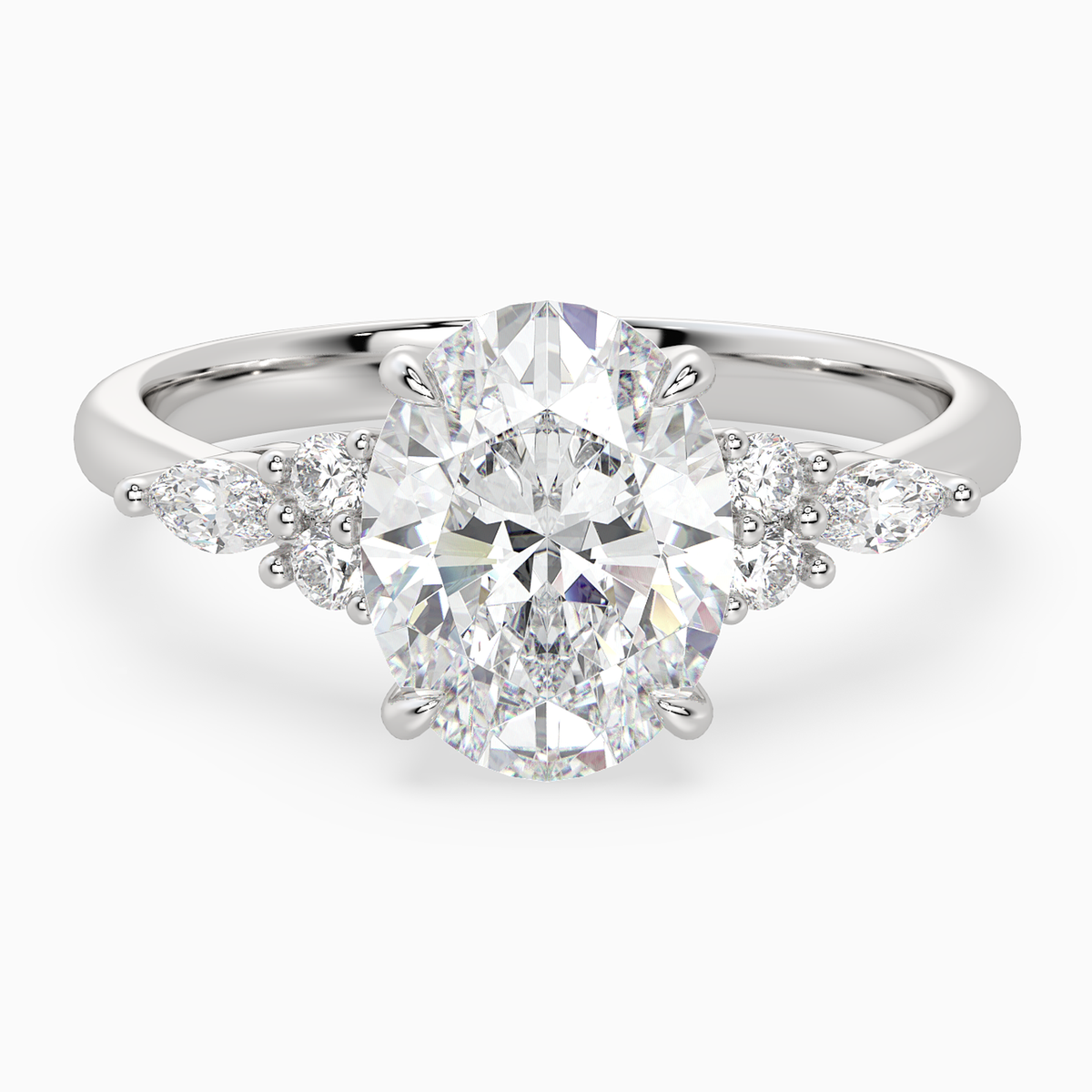


Classic Engagement Rings in 14K Rose Gold
A familiar language, warmed by blush. In 14K rose gold, classic solitaires, halos, and multi-stone forms hold clarity through contrast.


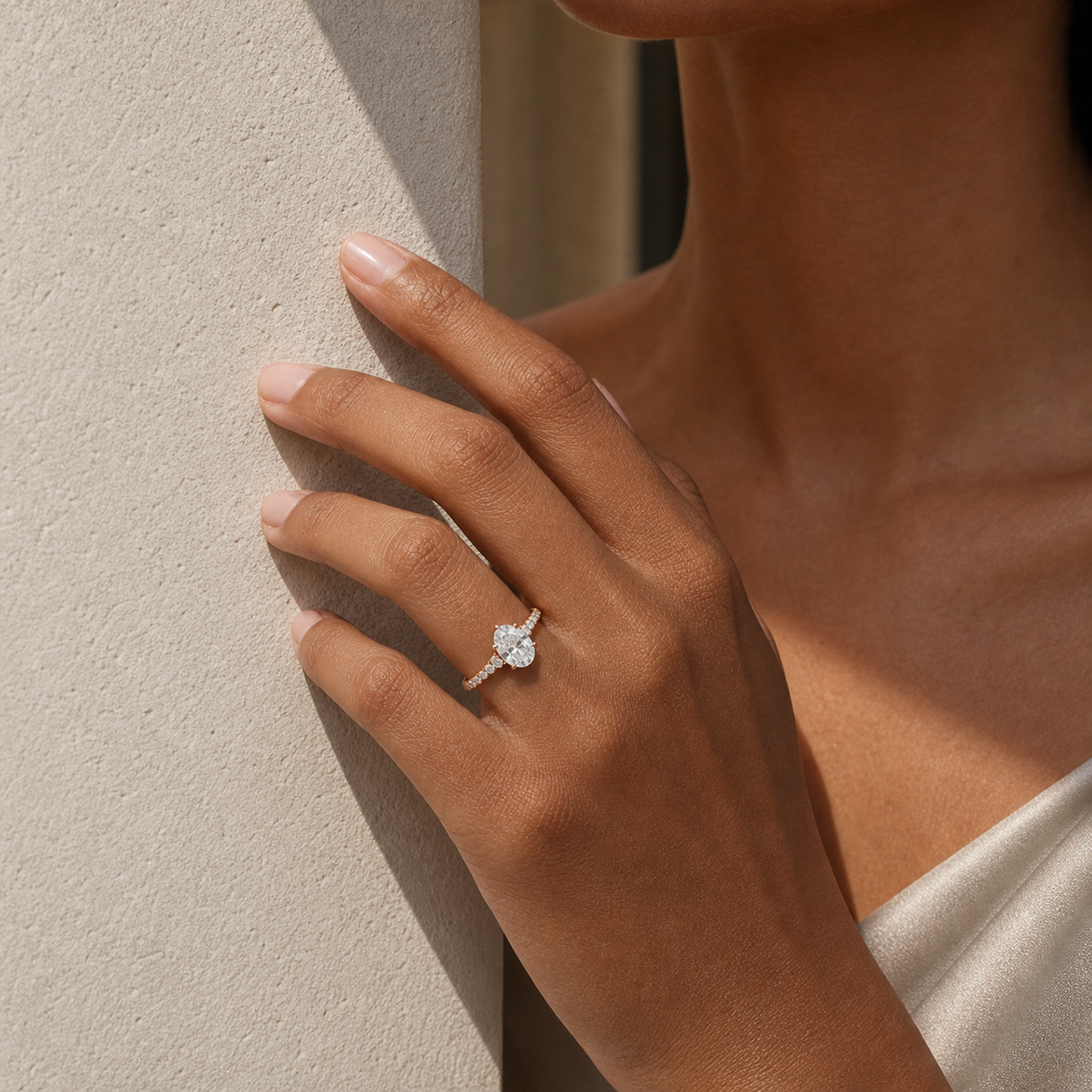


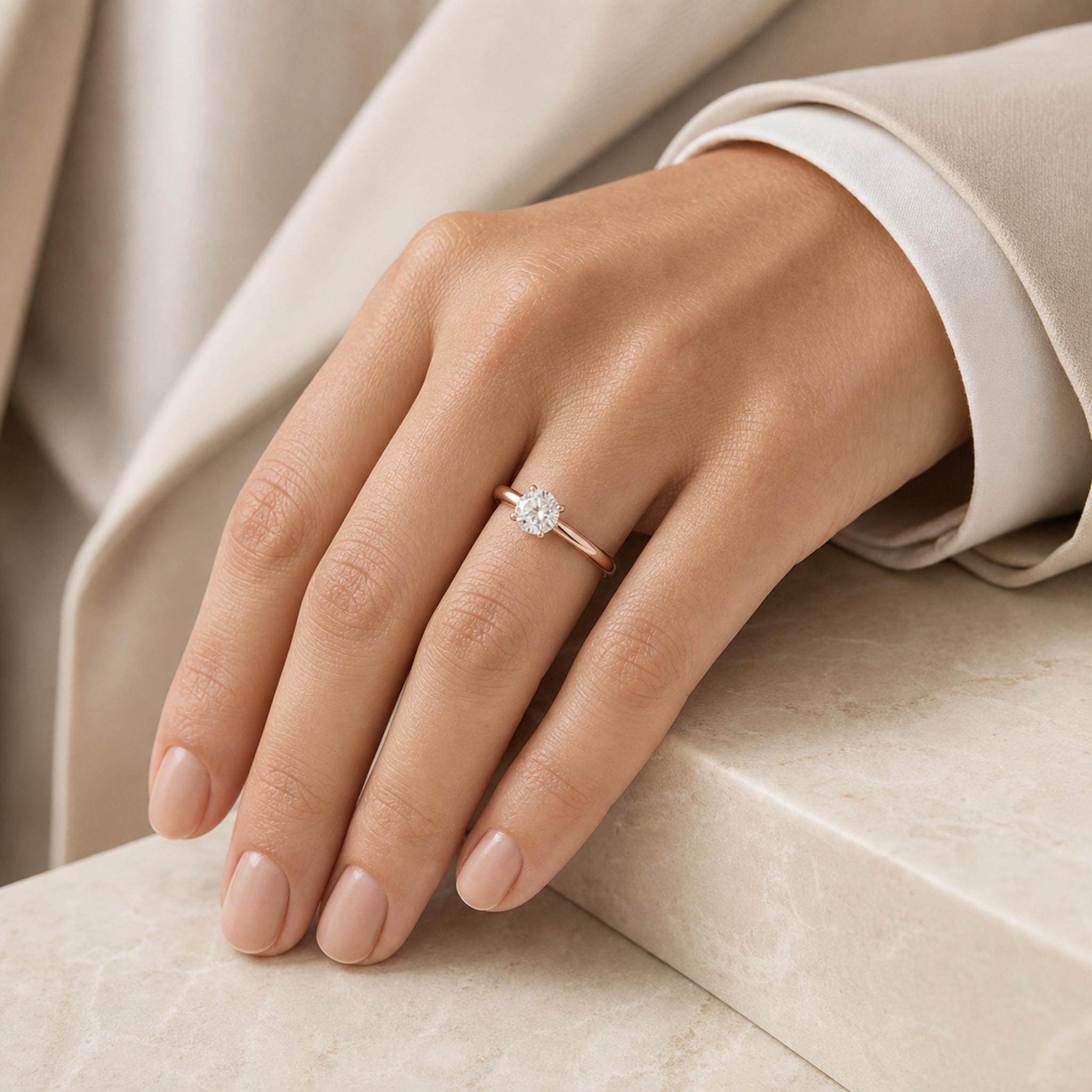


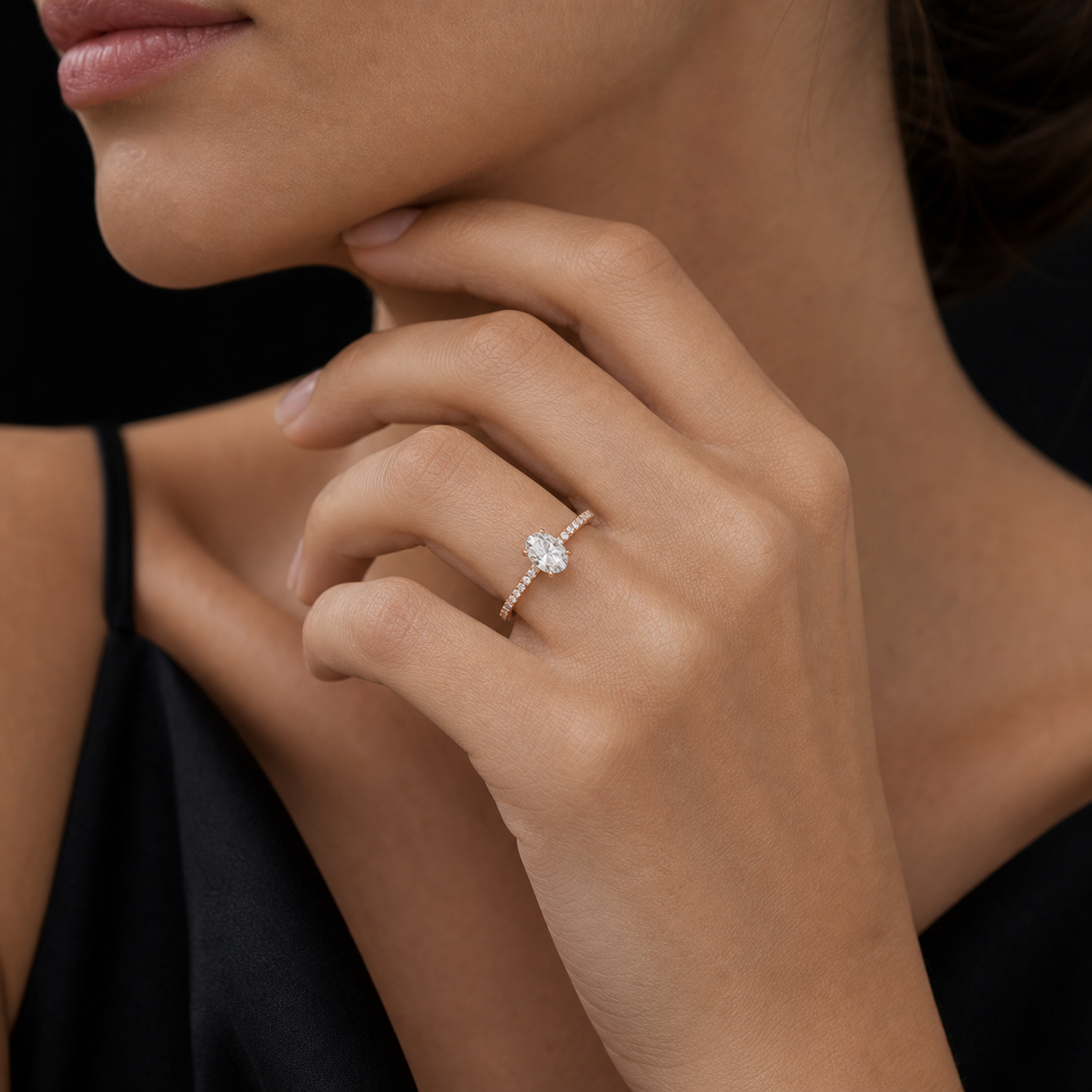


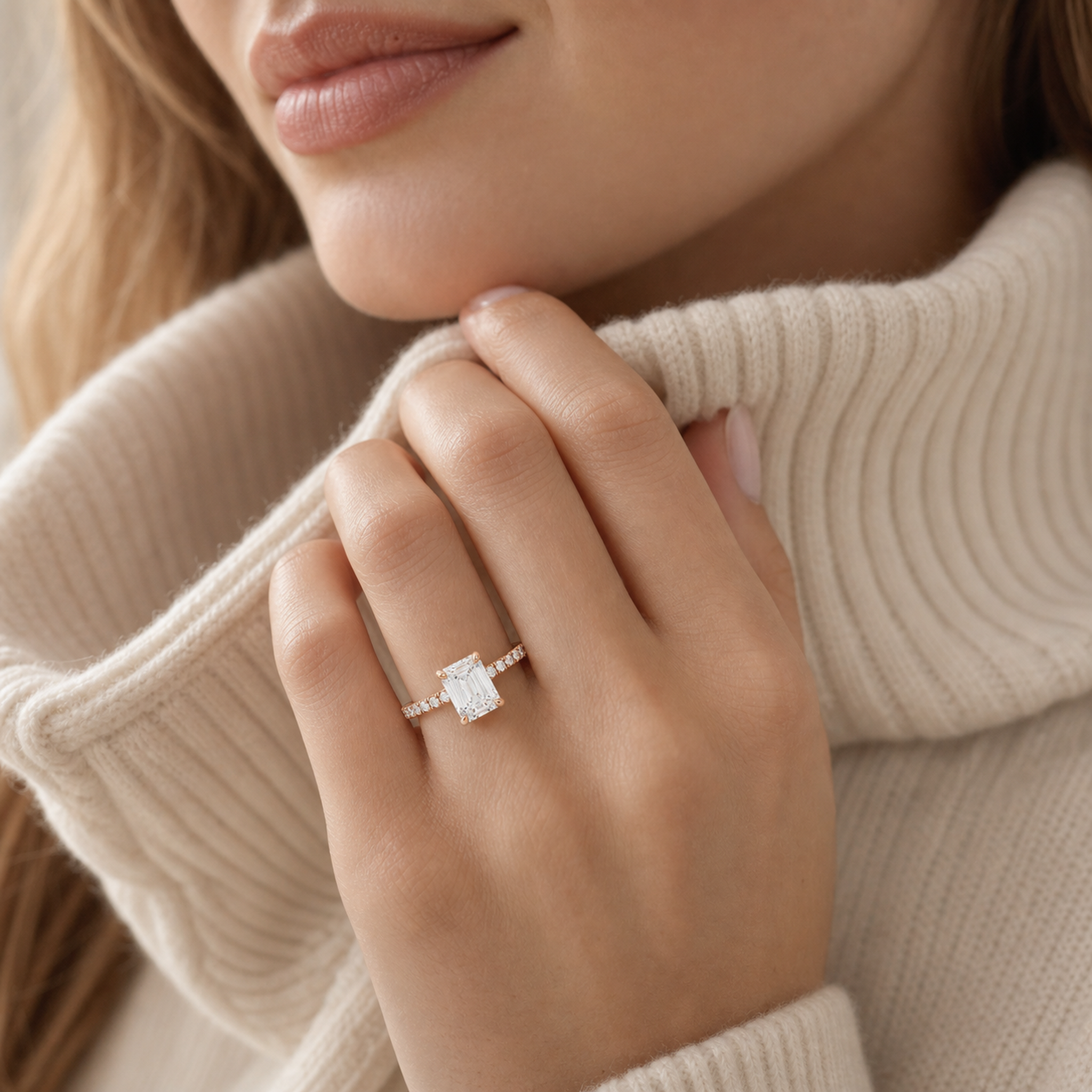


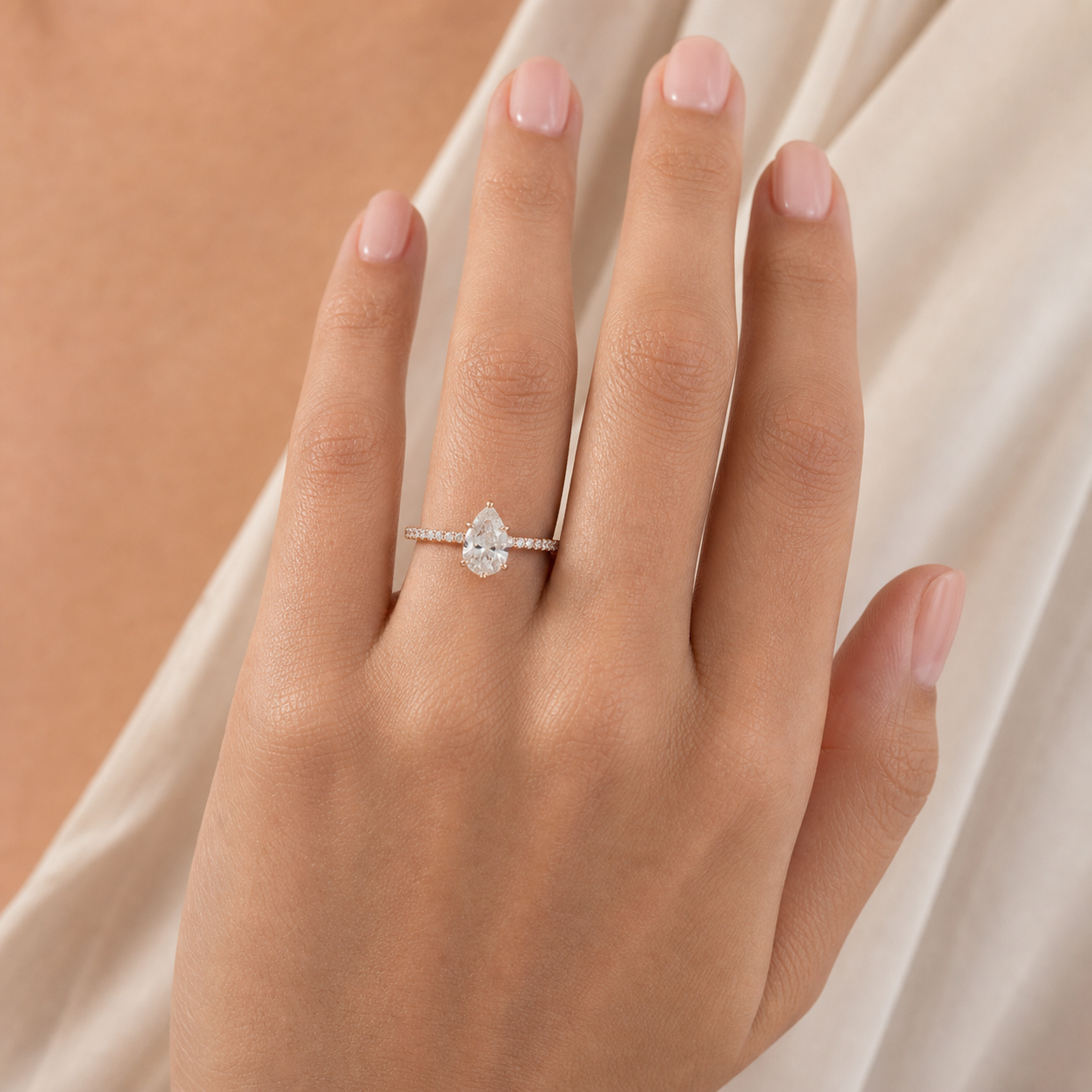


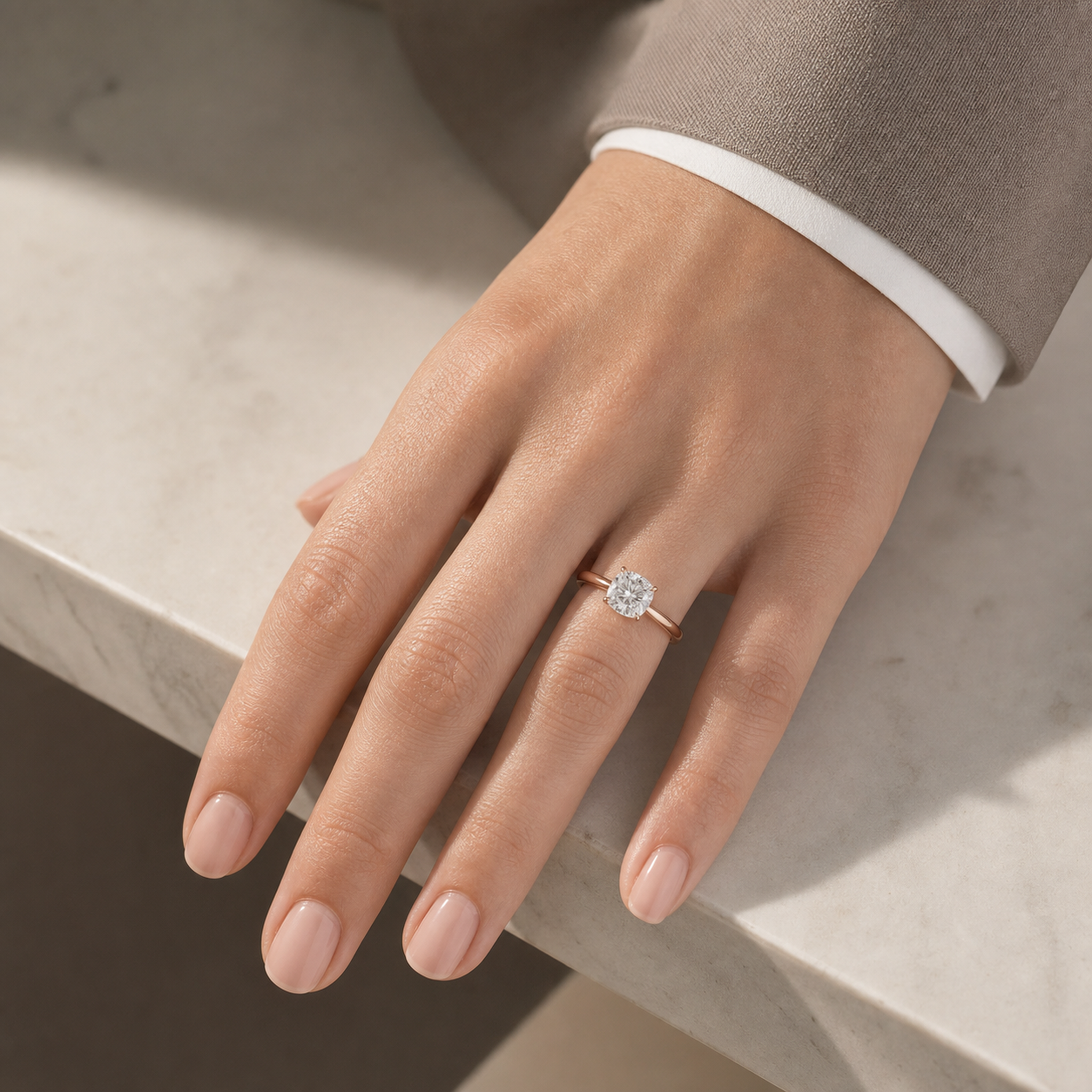


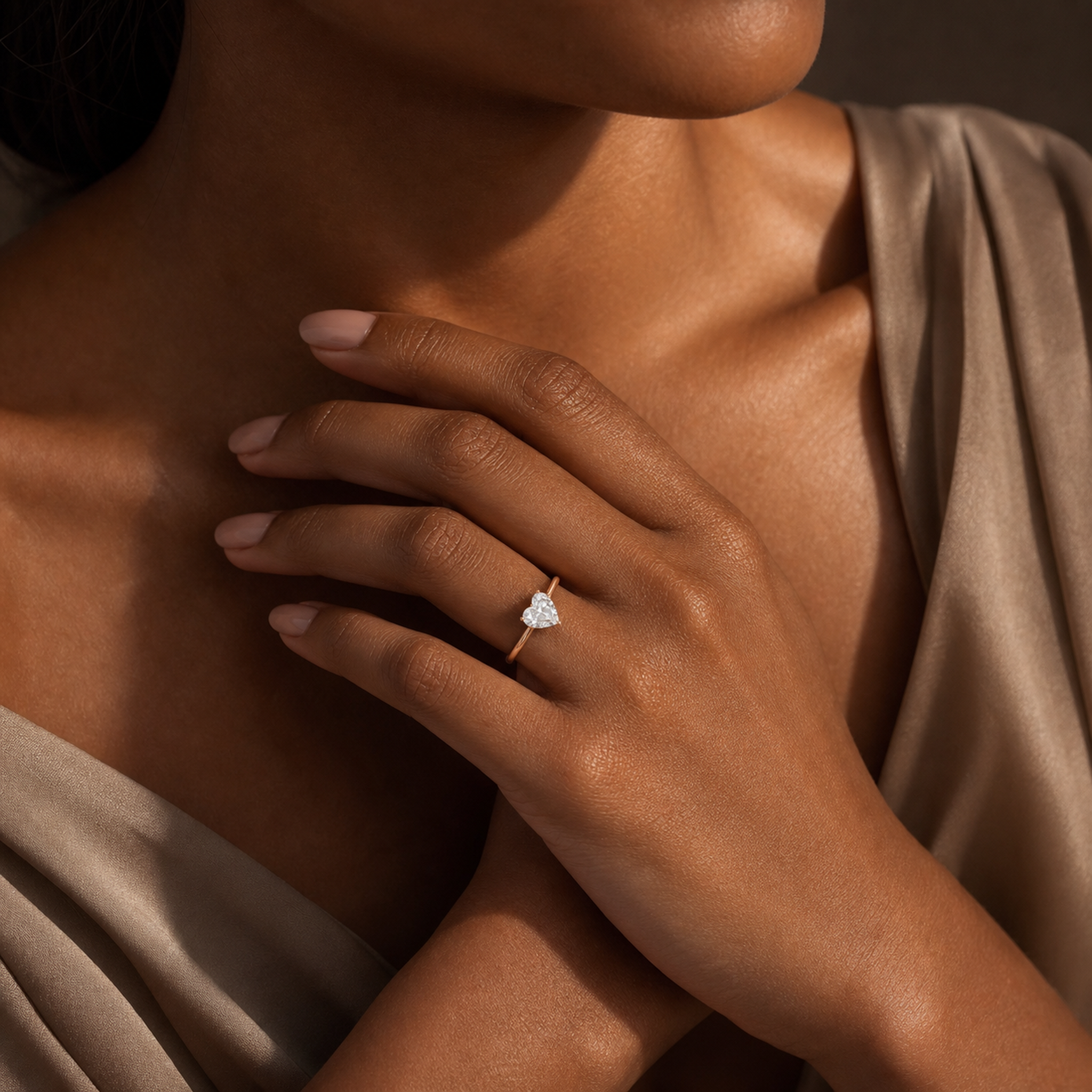


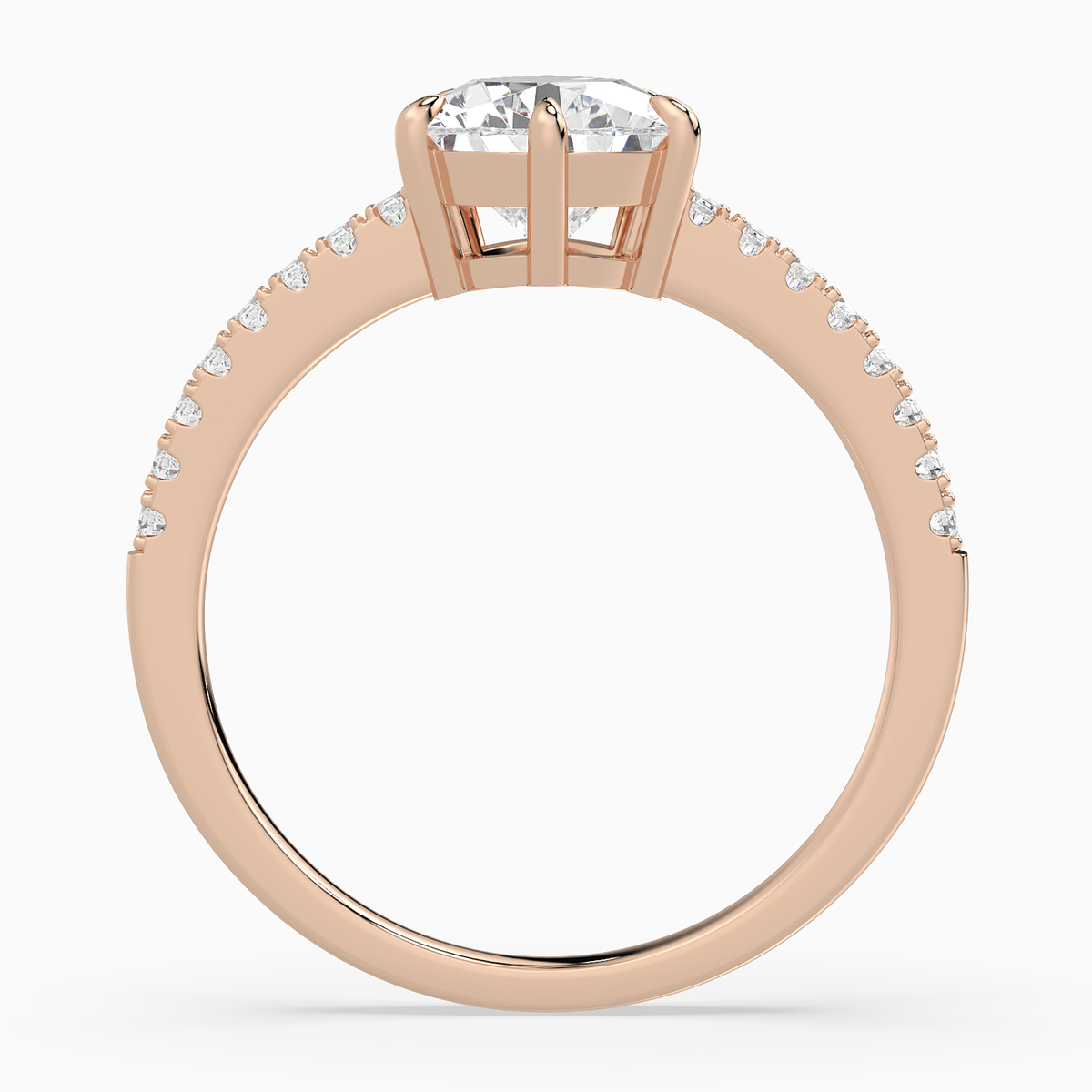
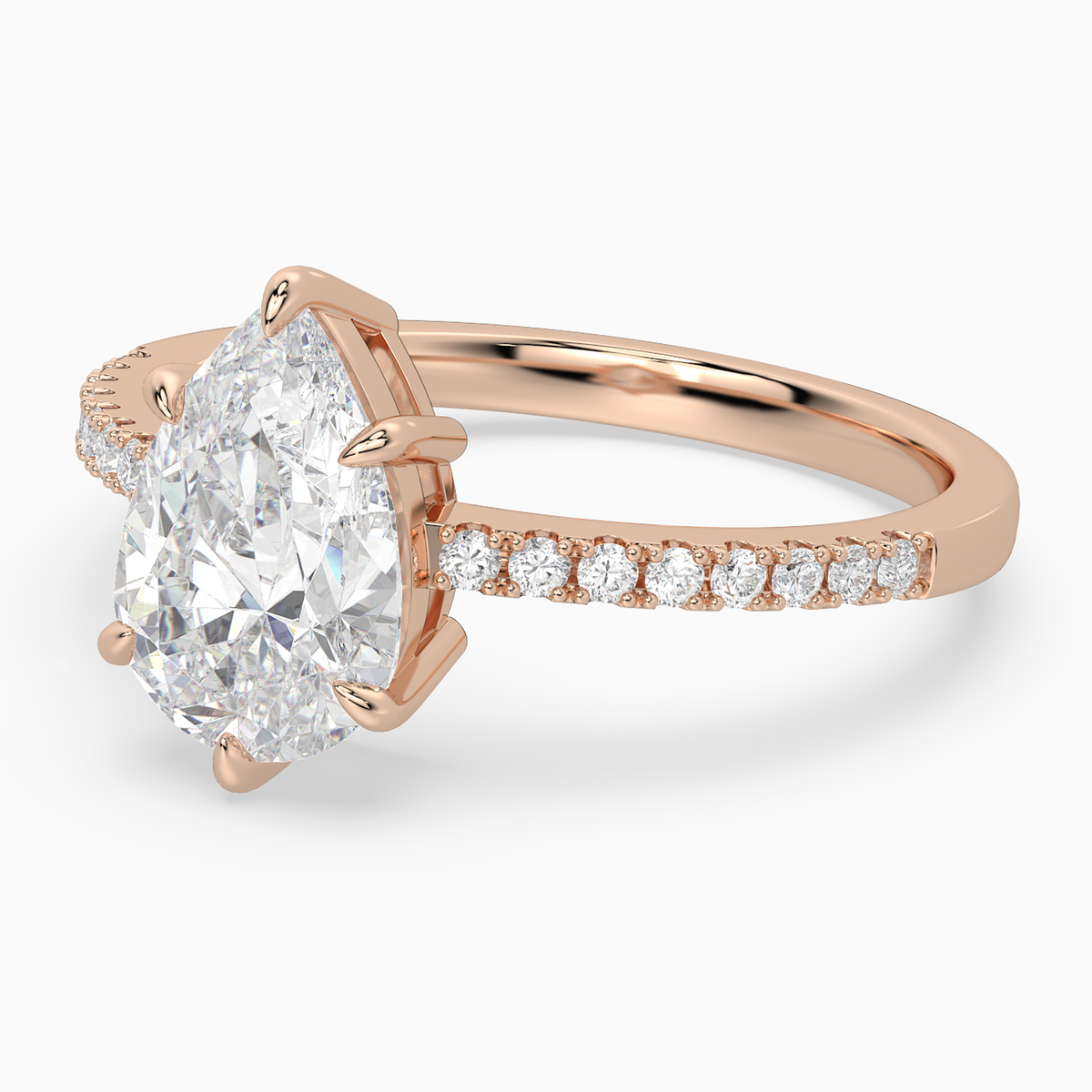
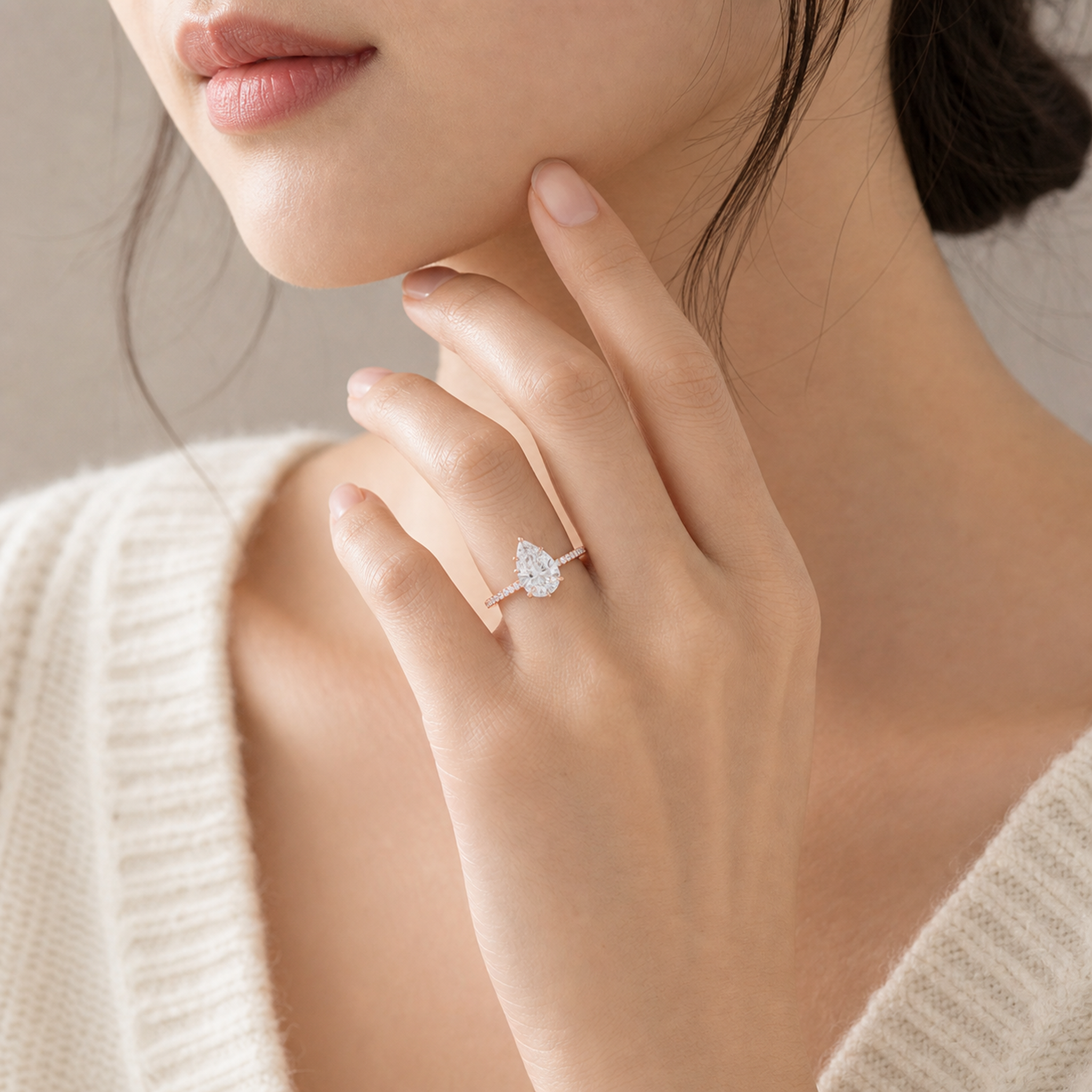

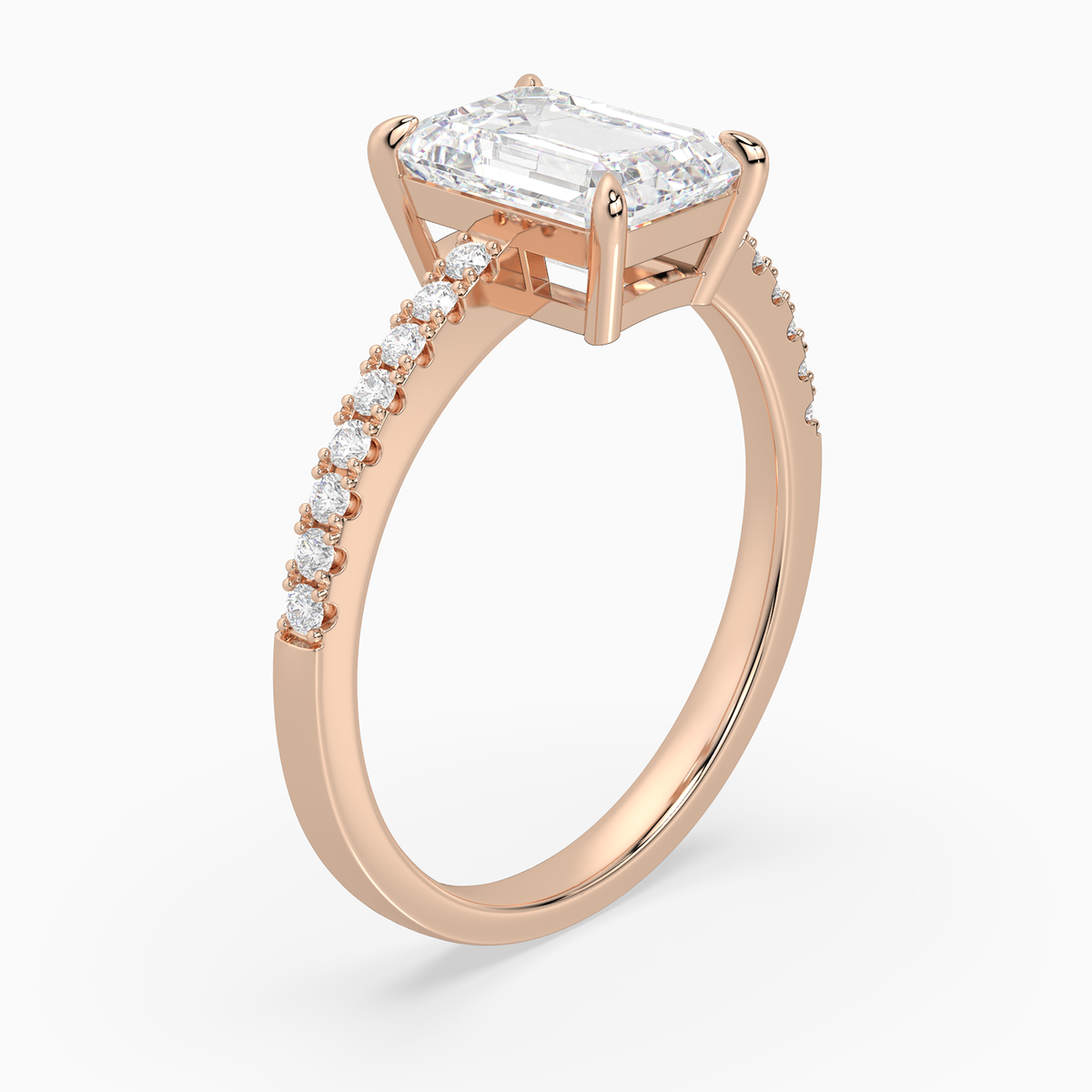


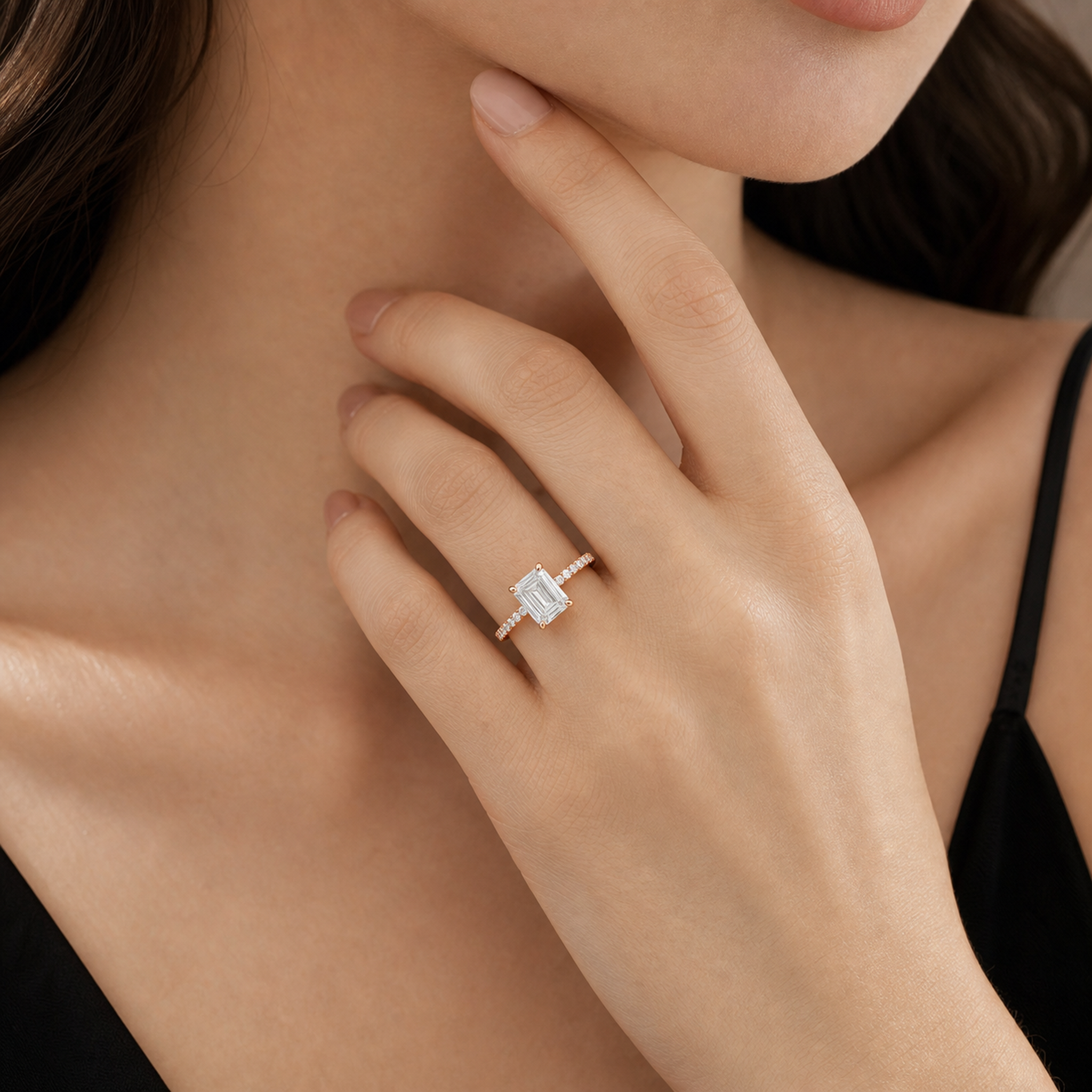


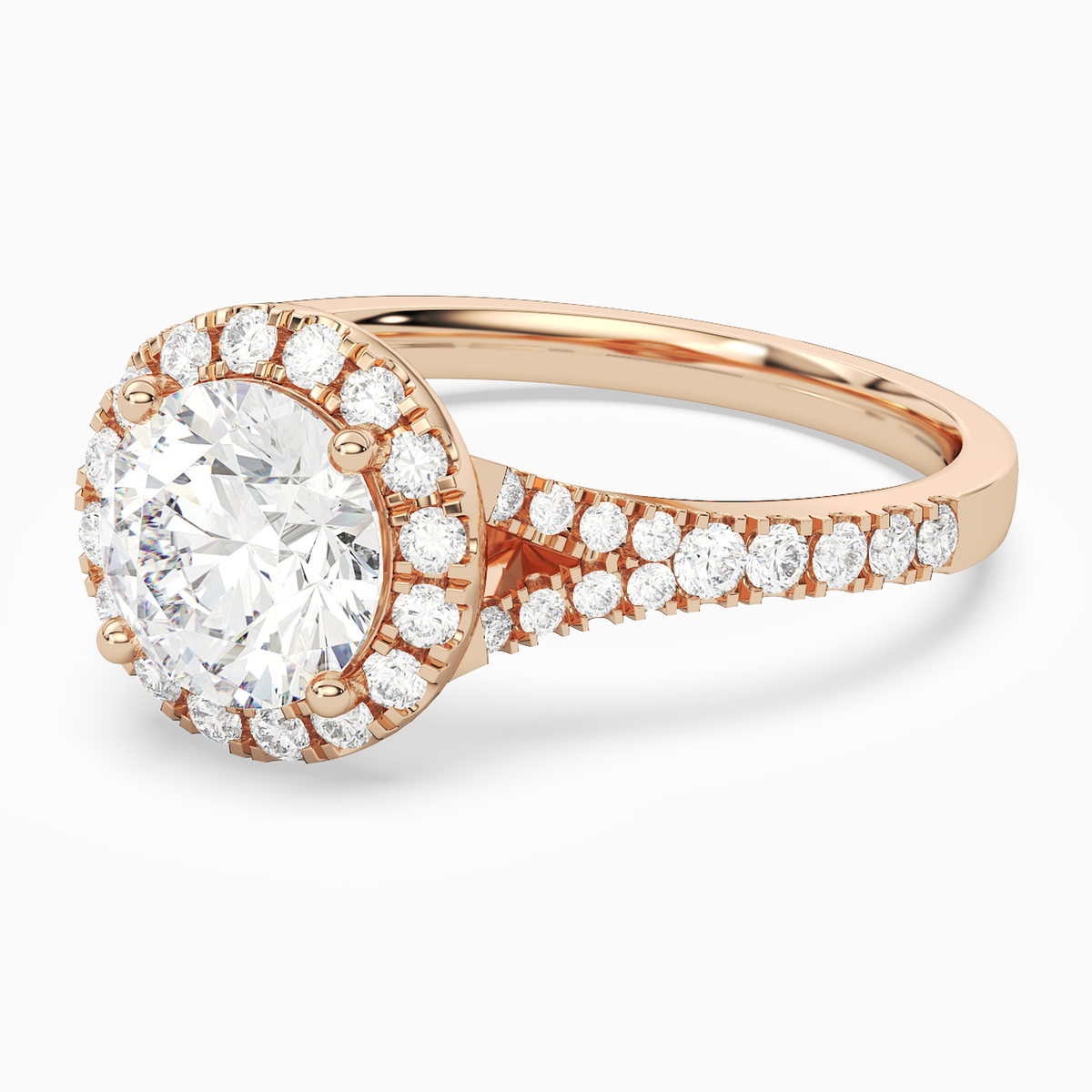
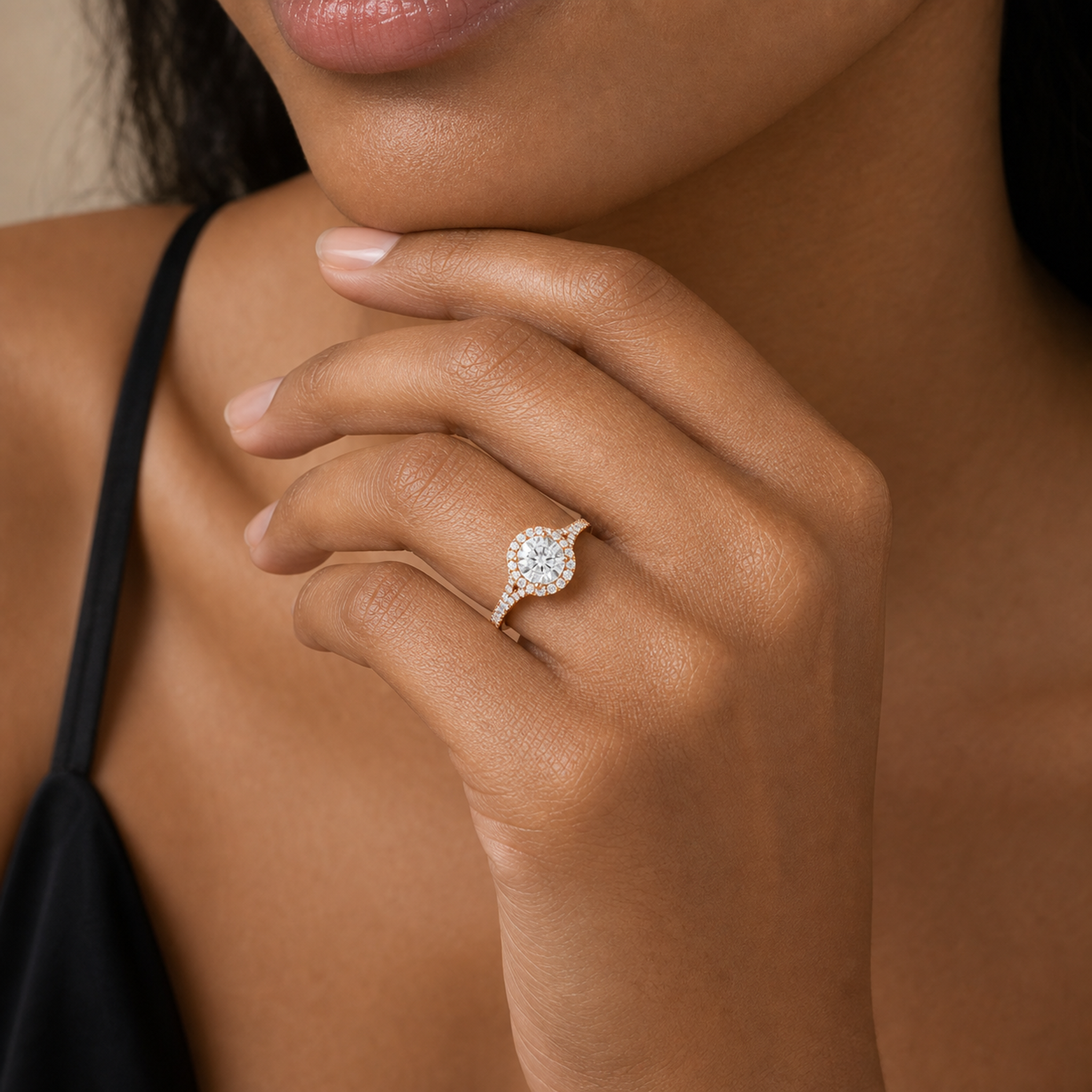


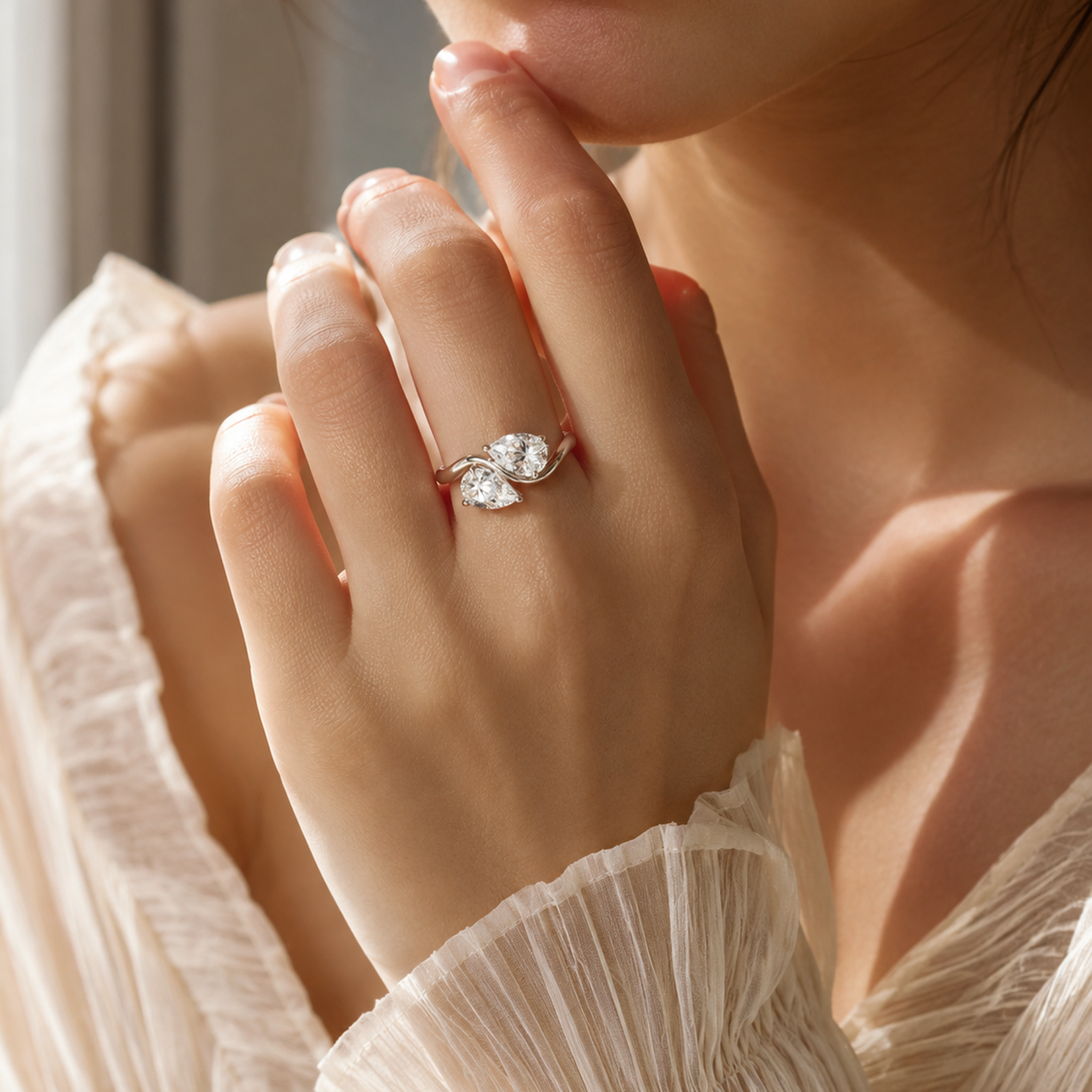


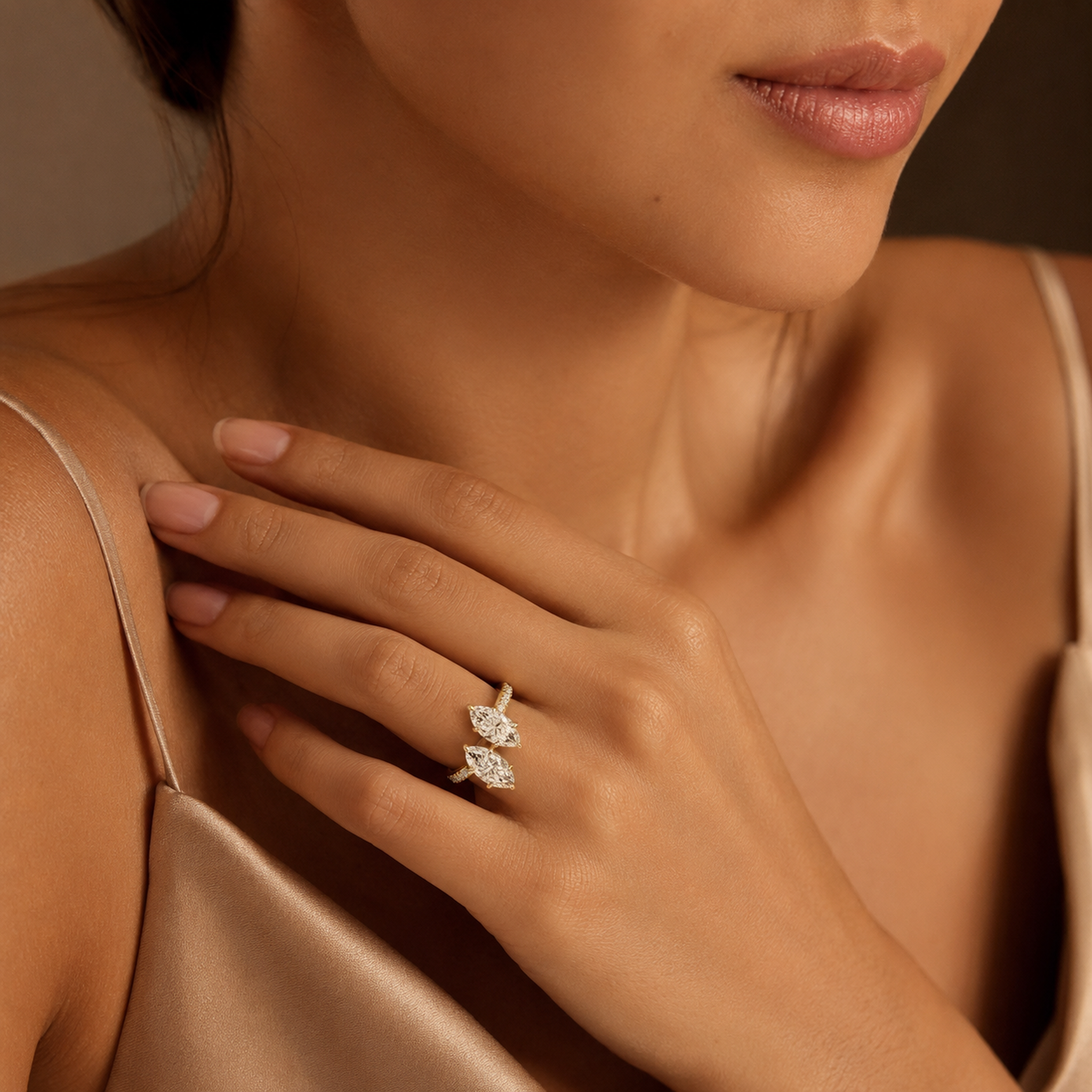


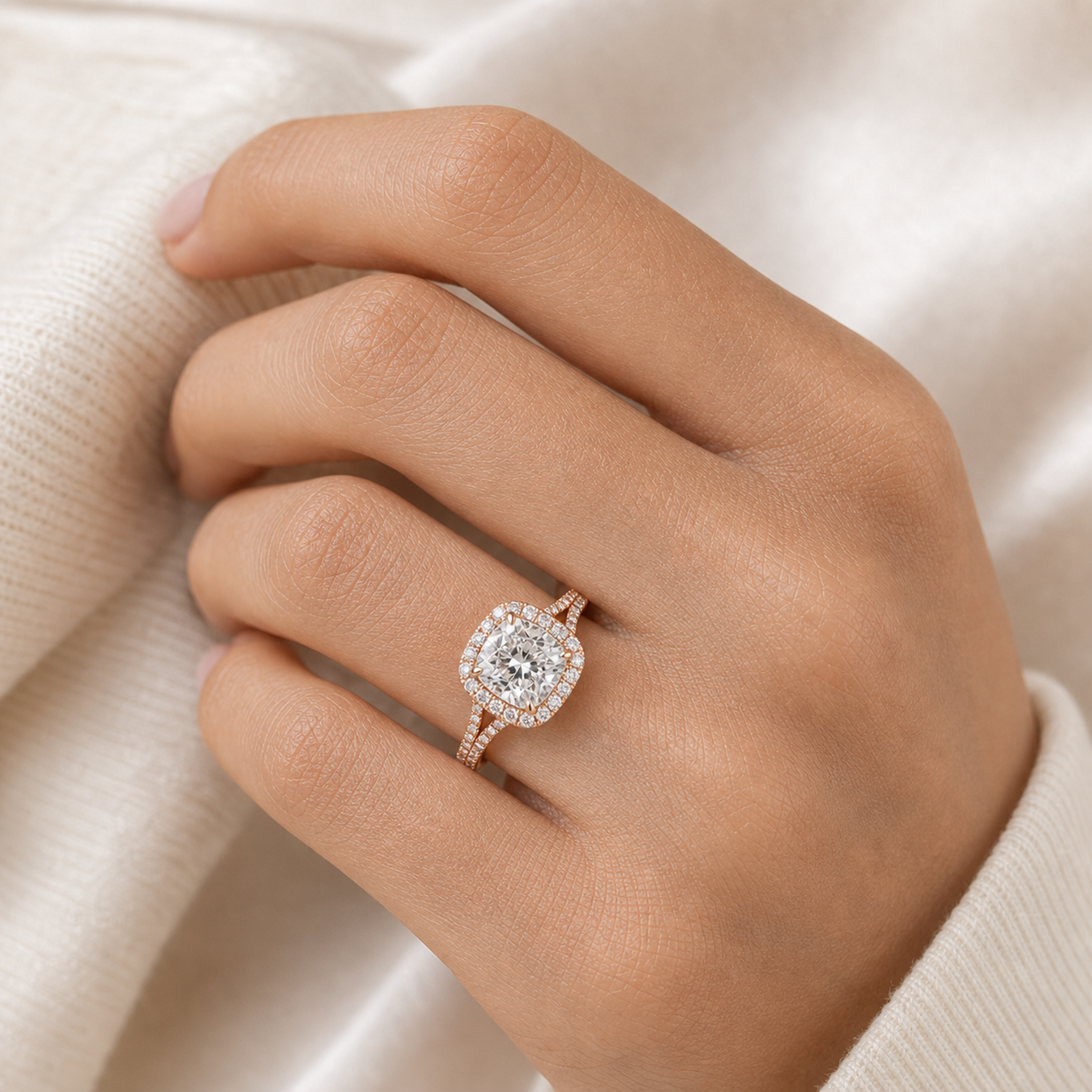

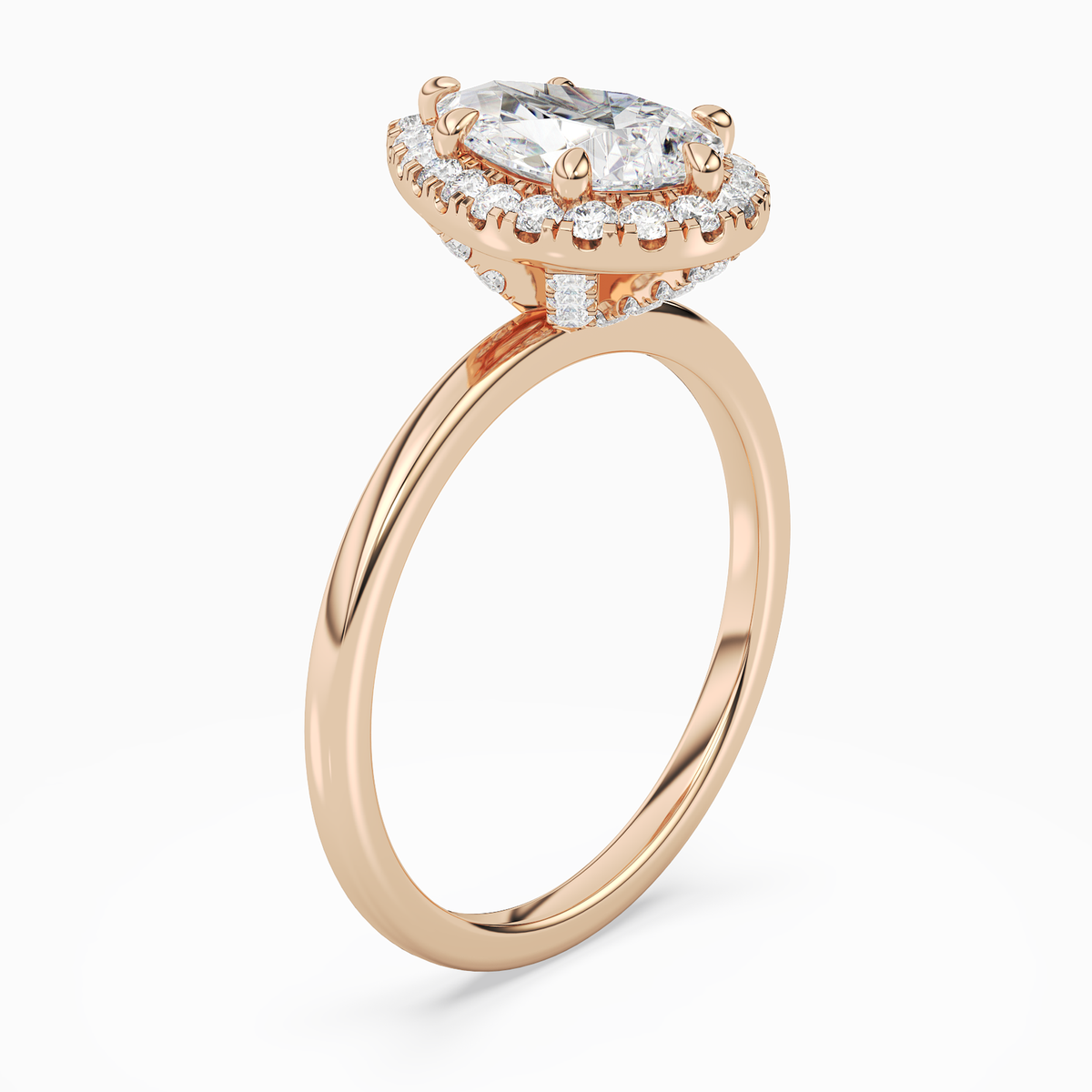
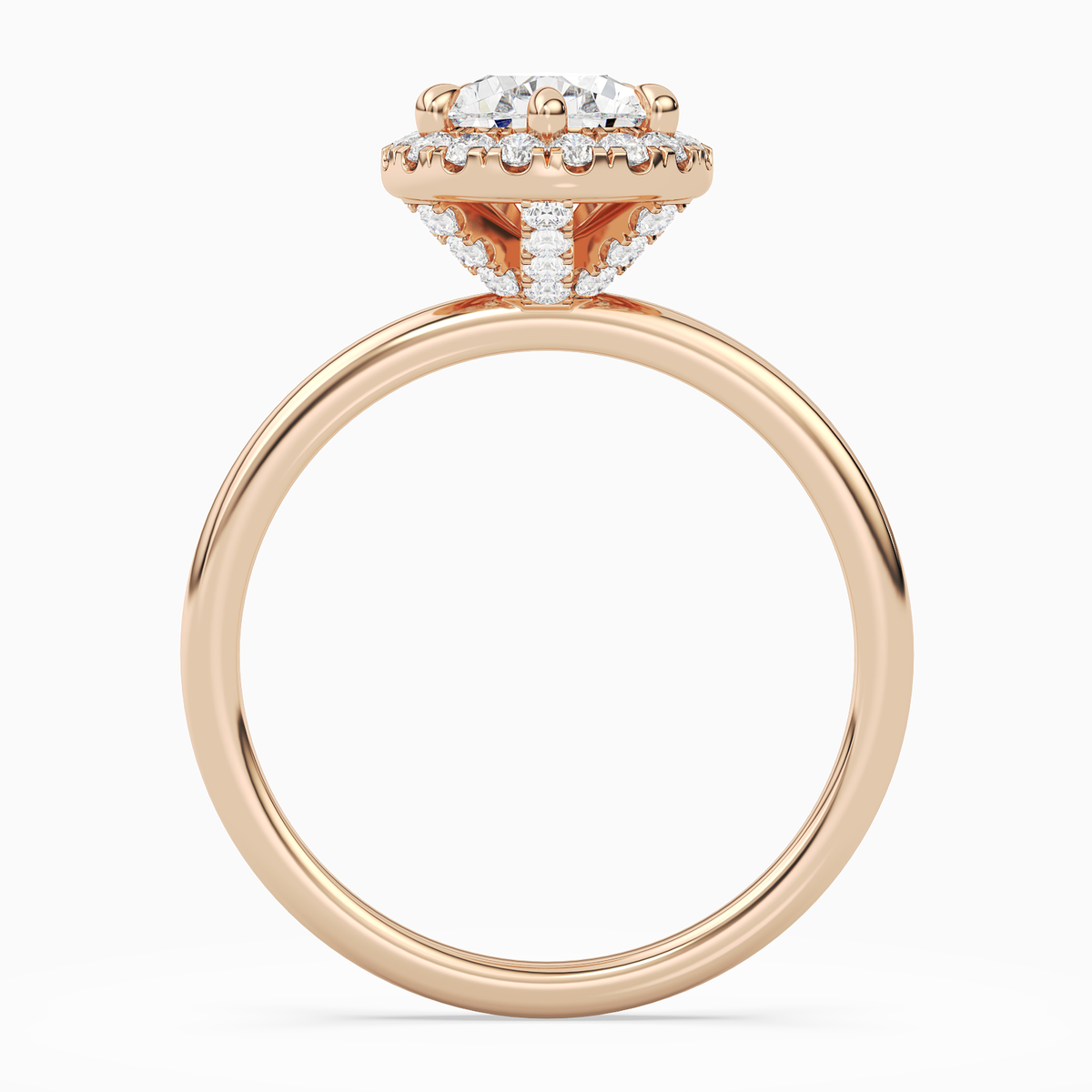

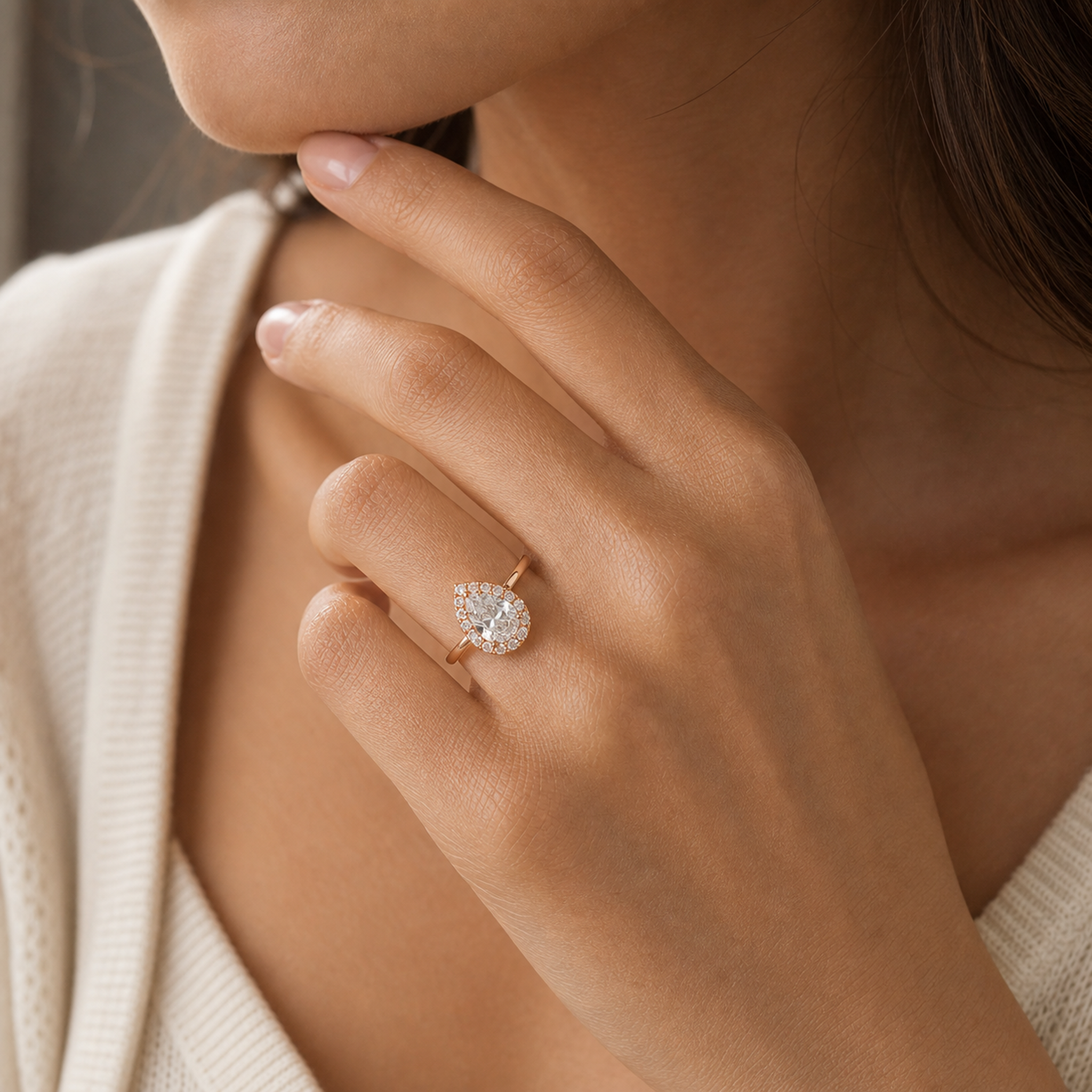


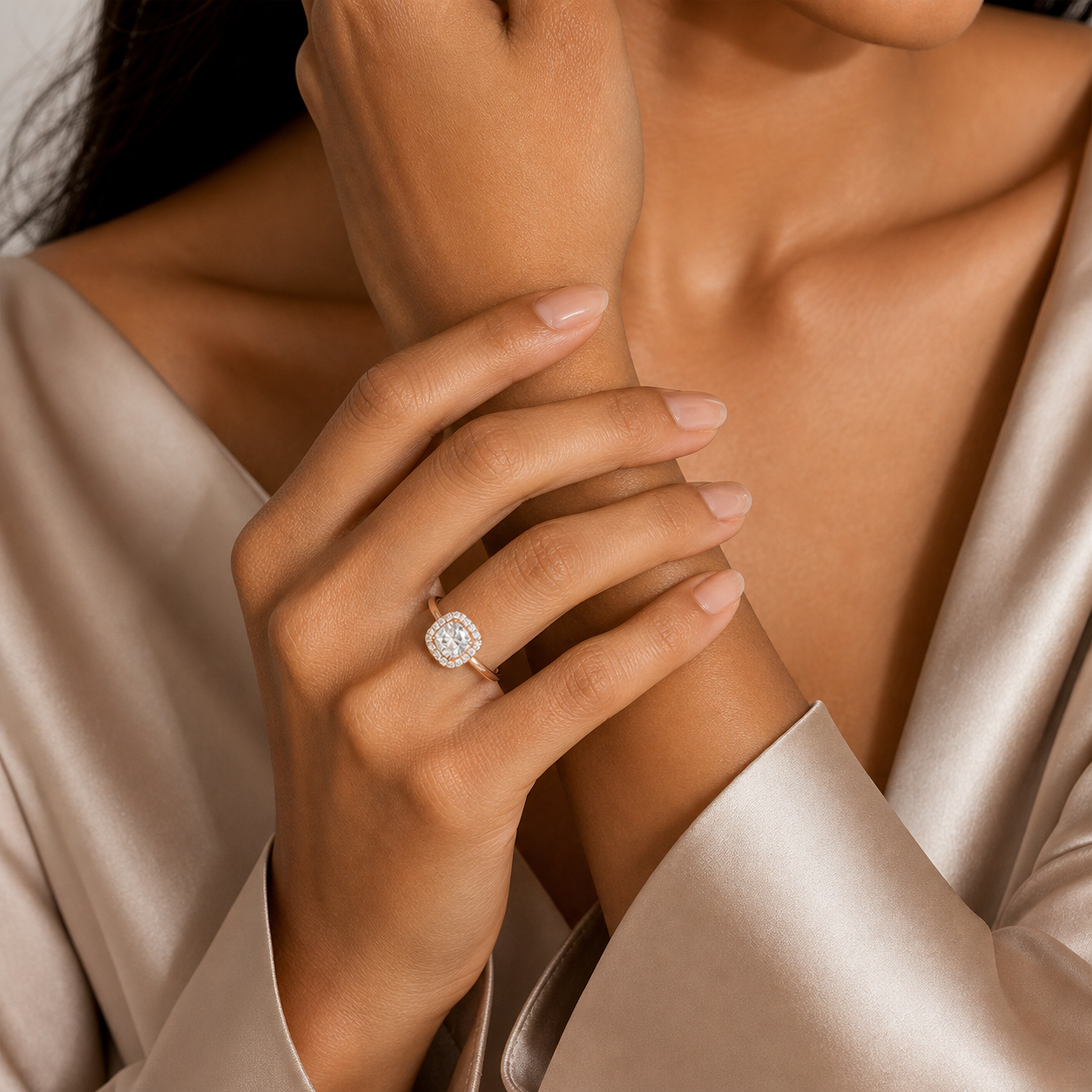


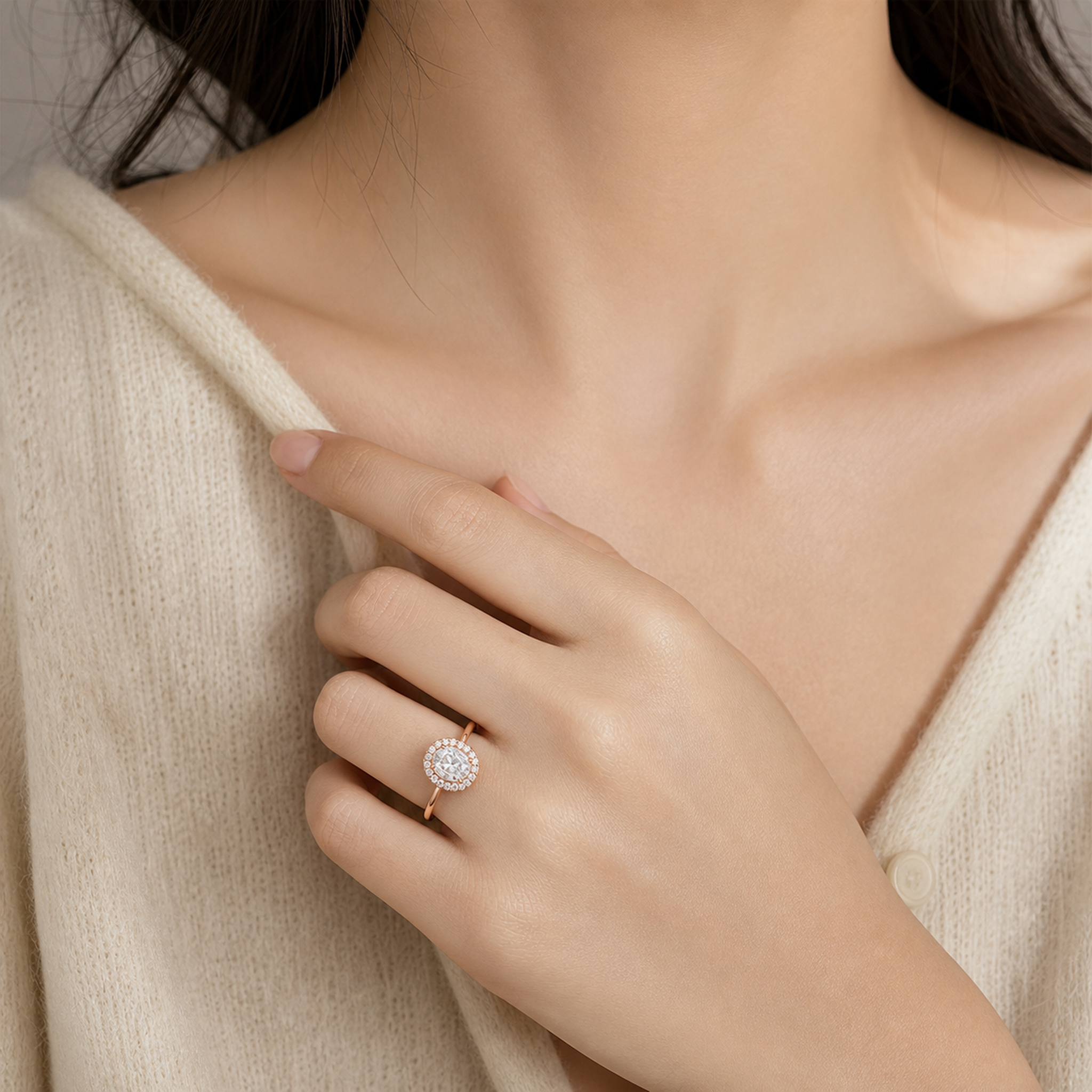

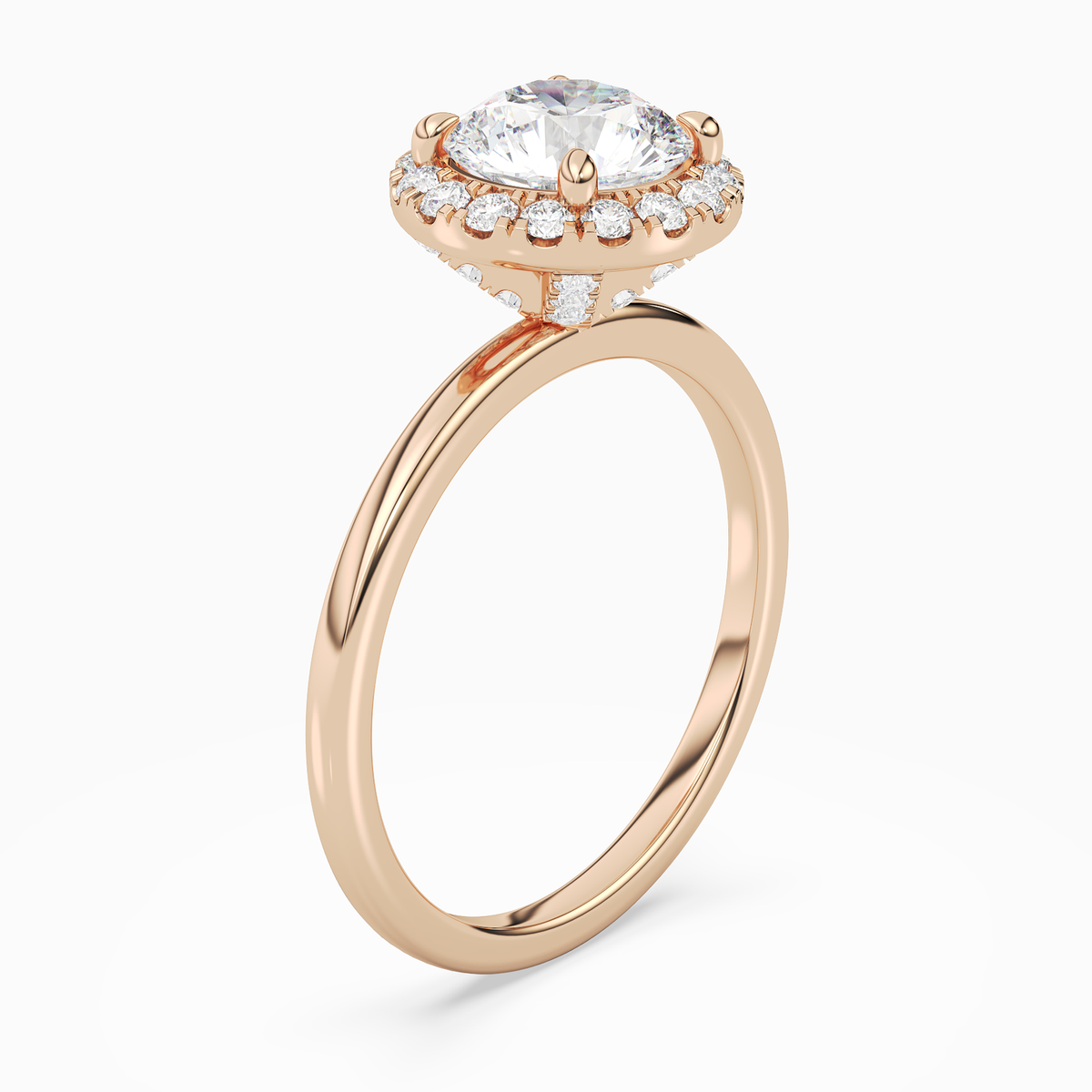


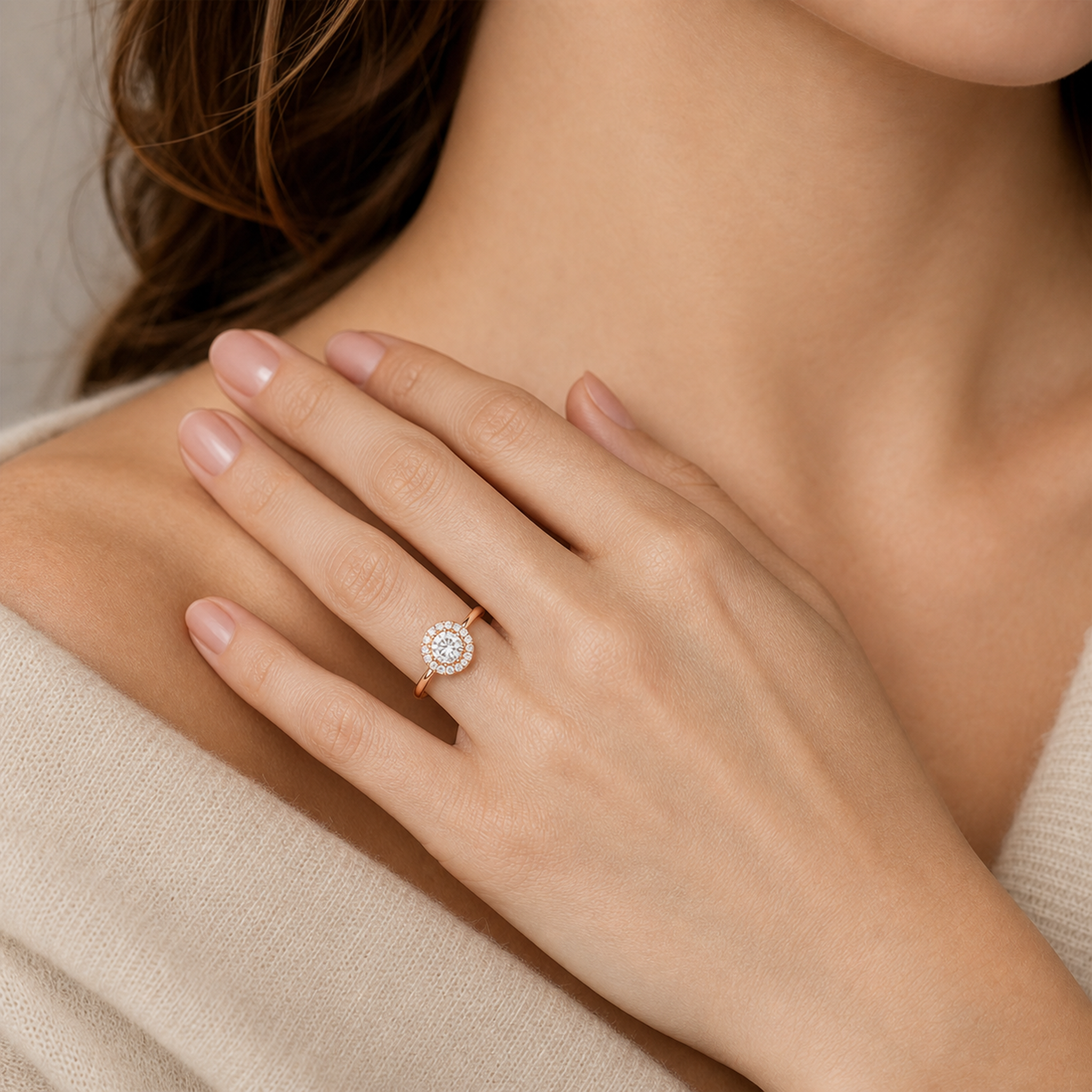


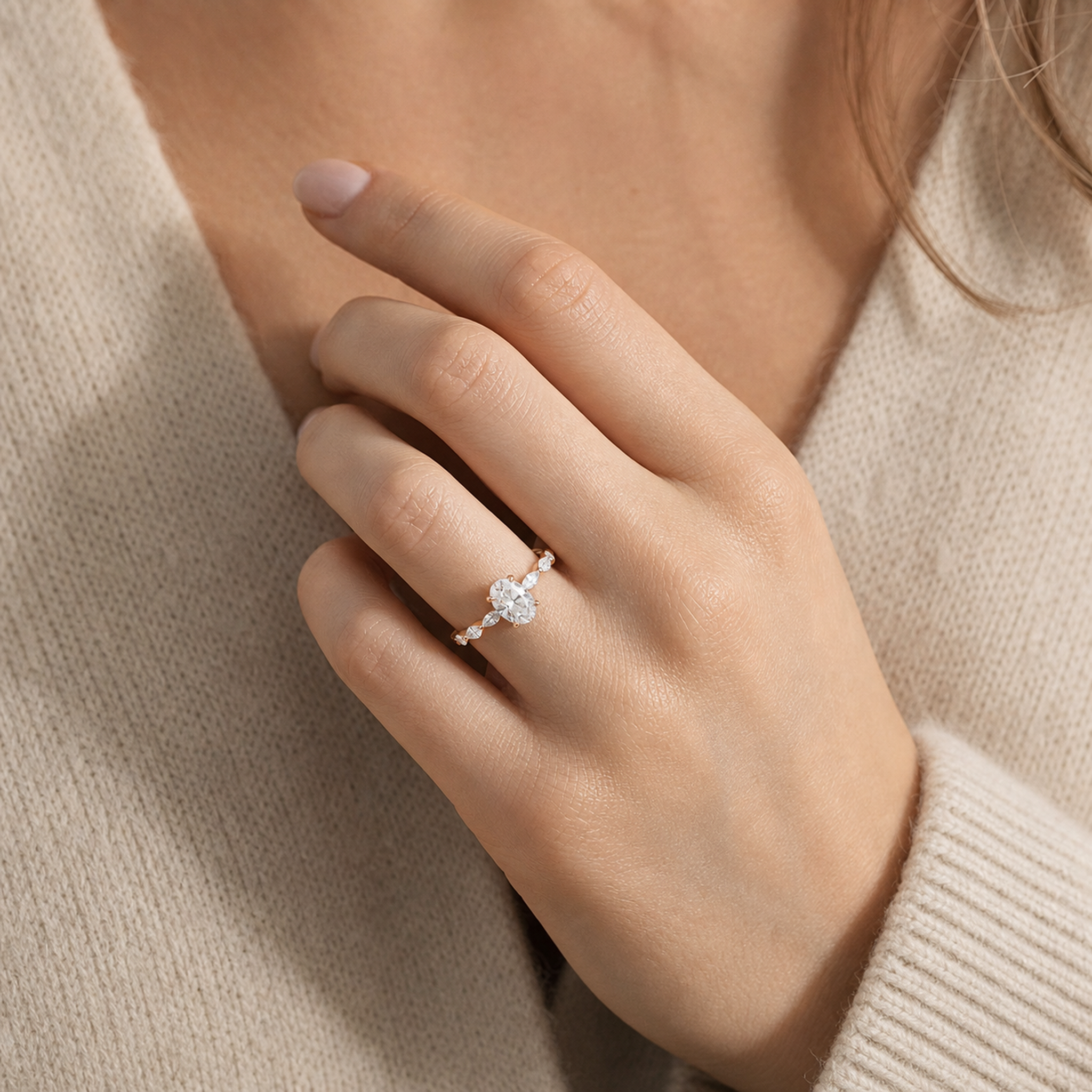


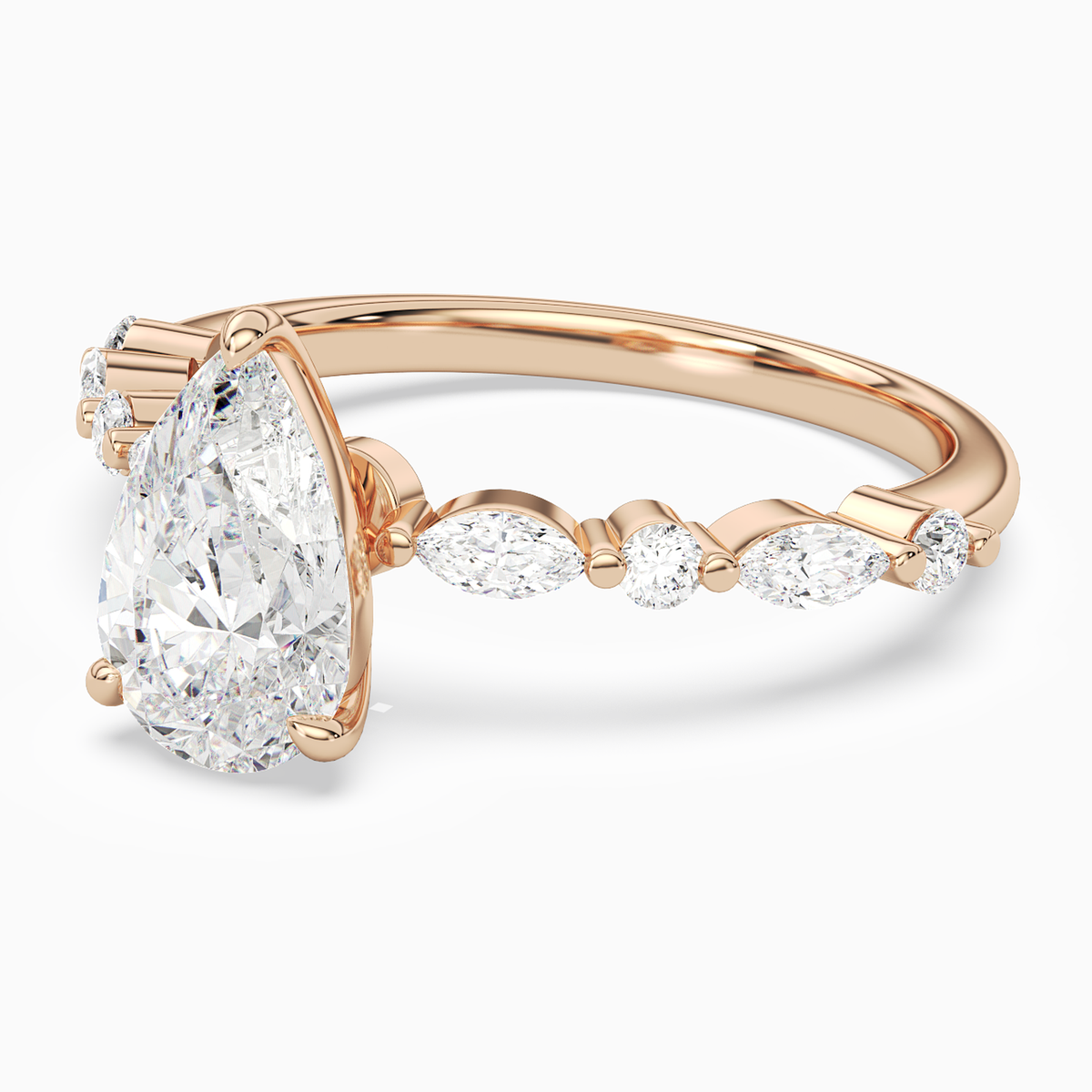
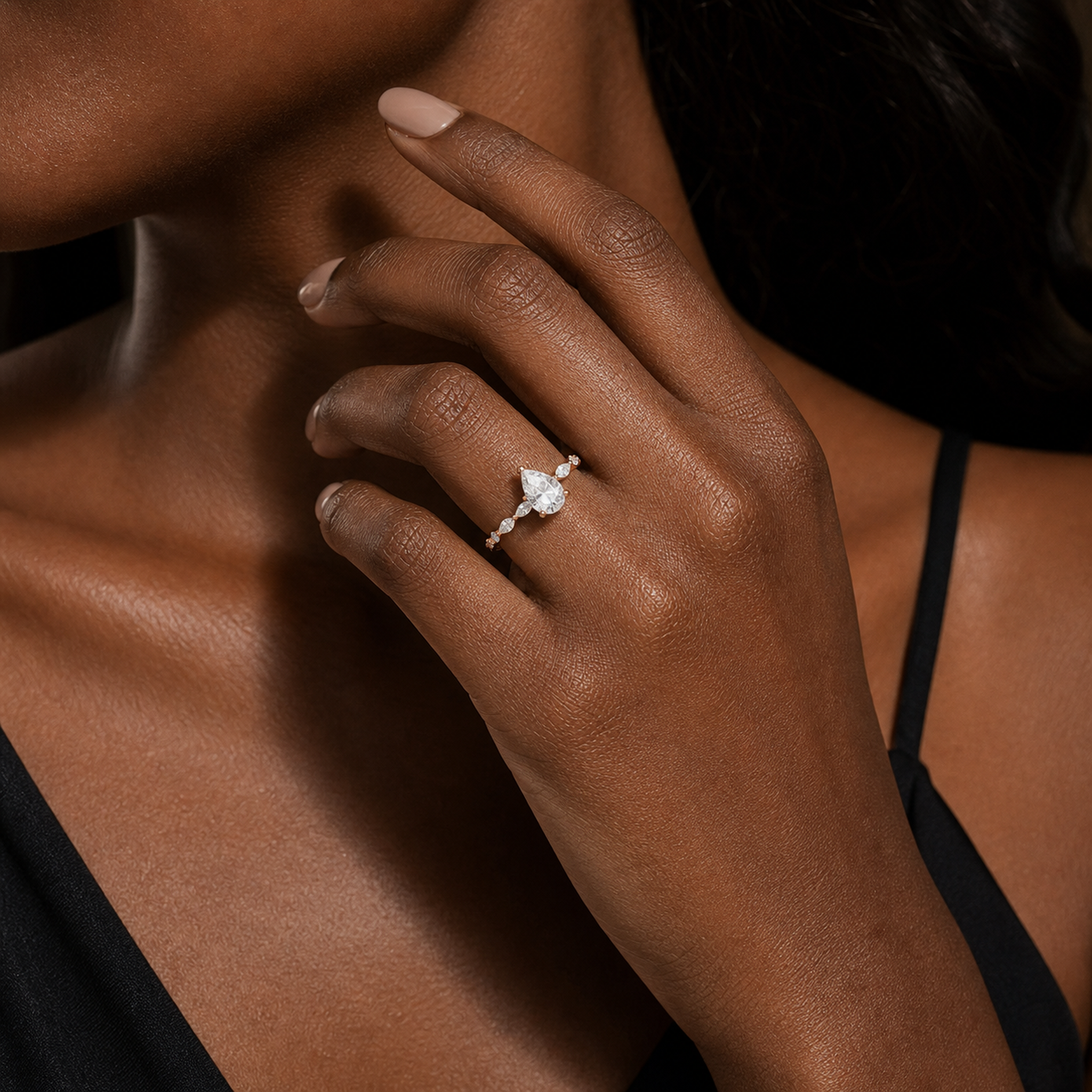


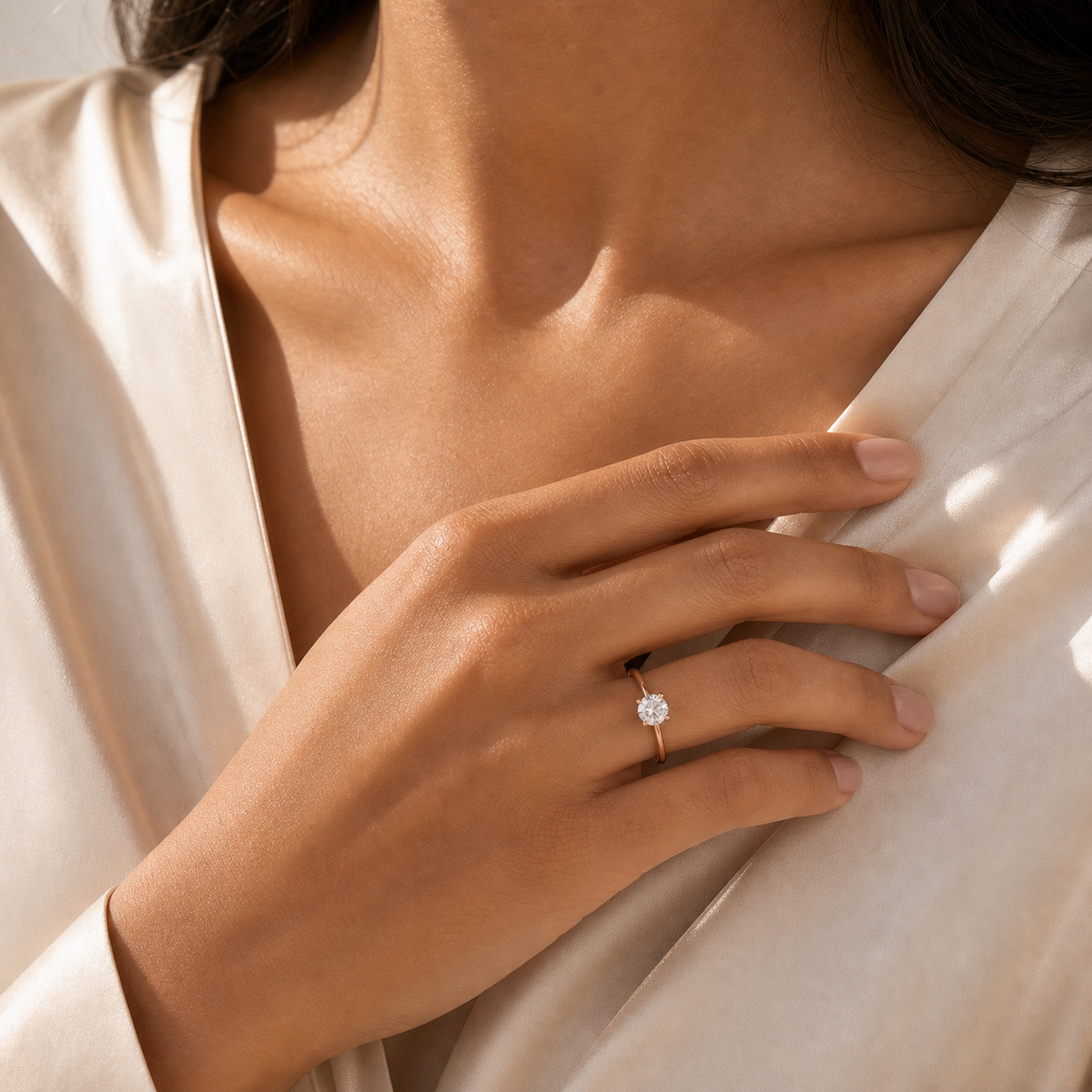


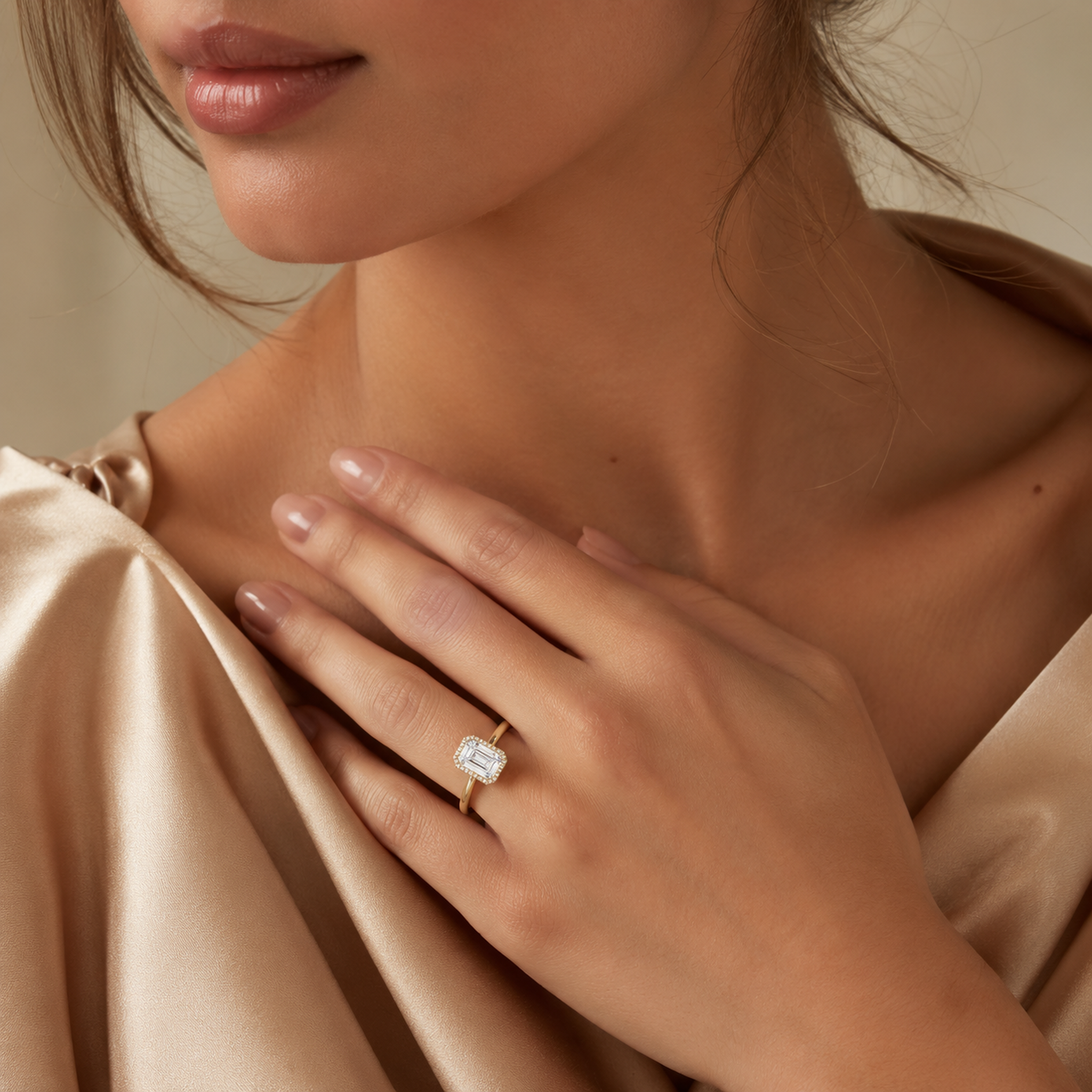


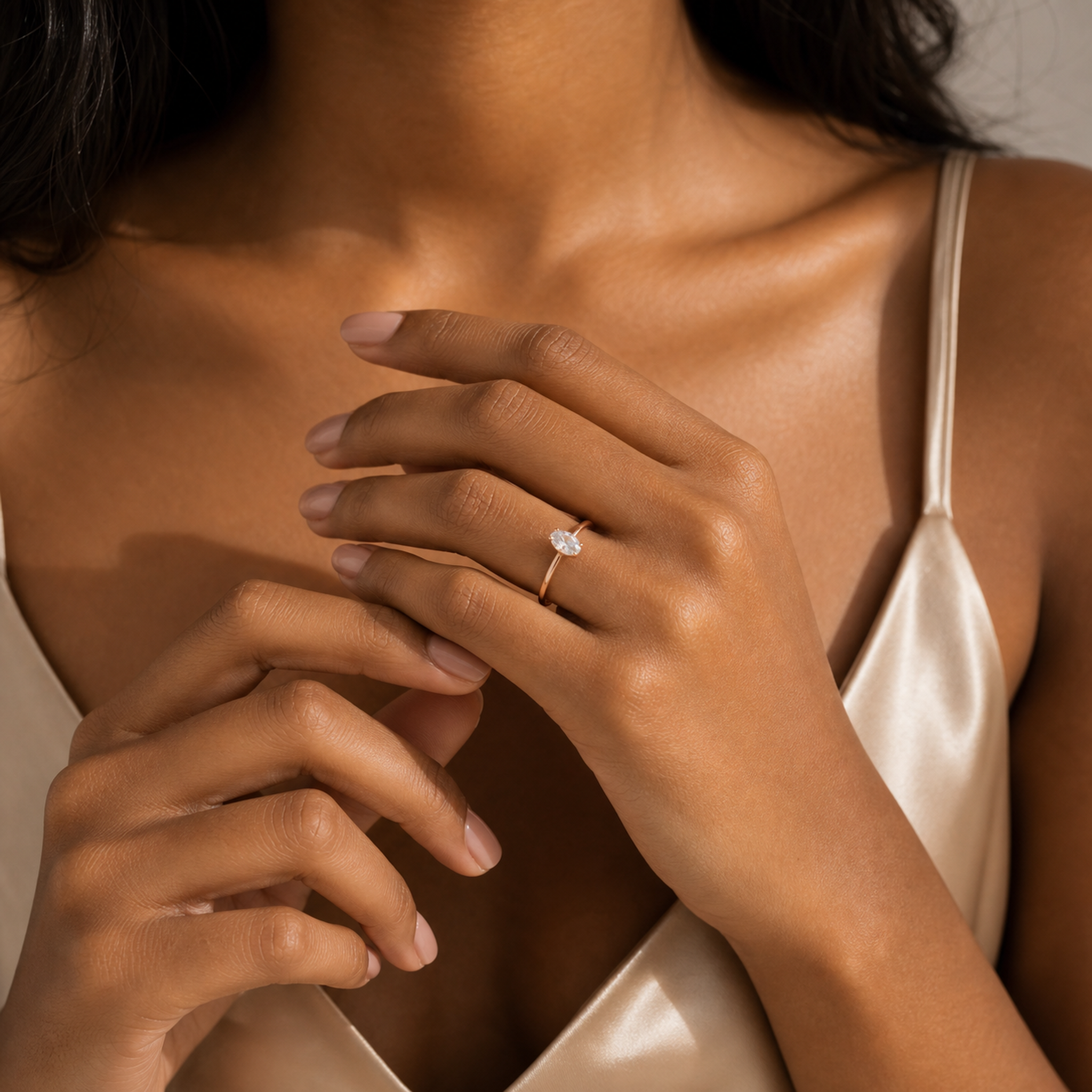


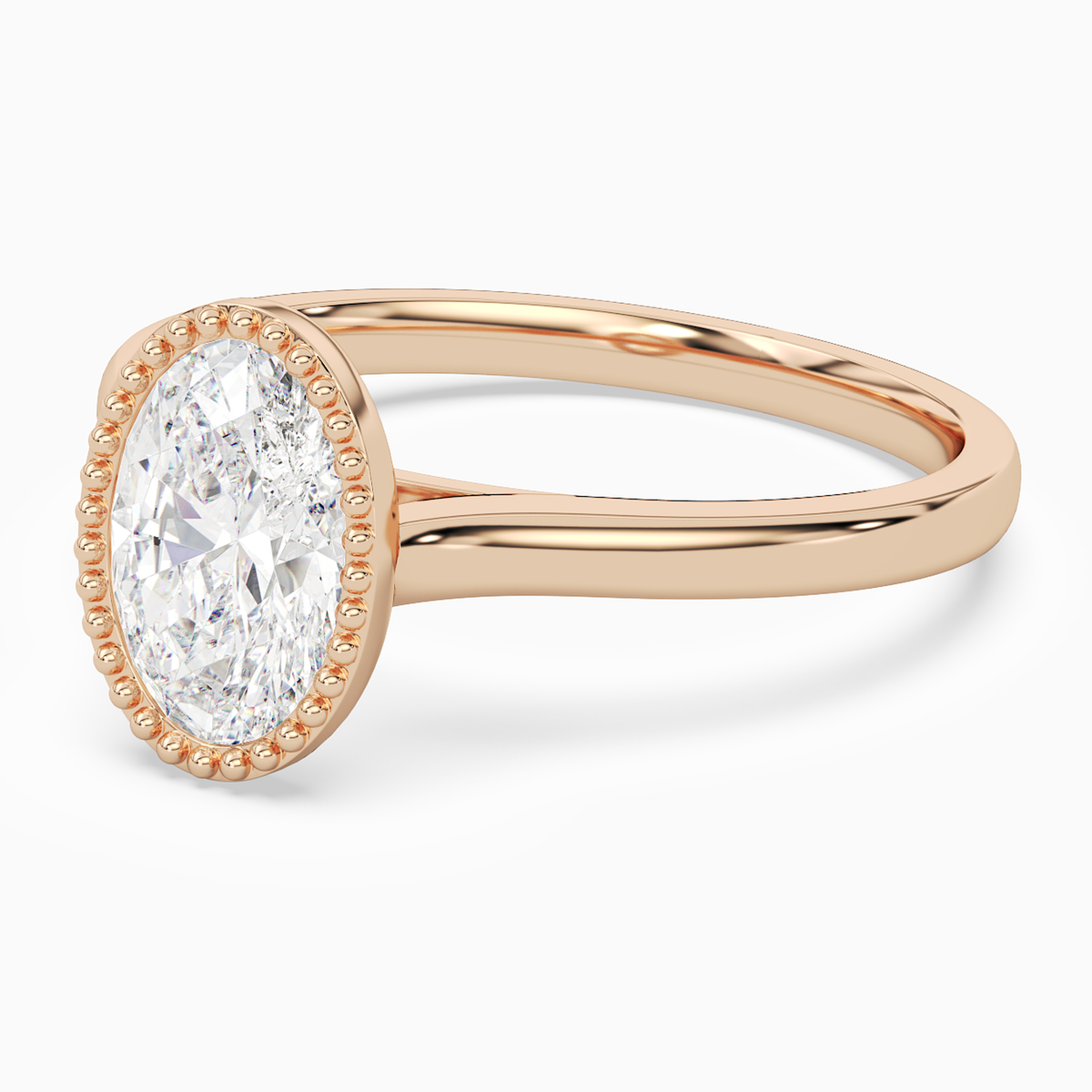
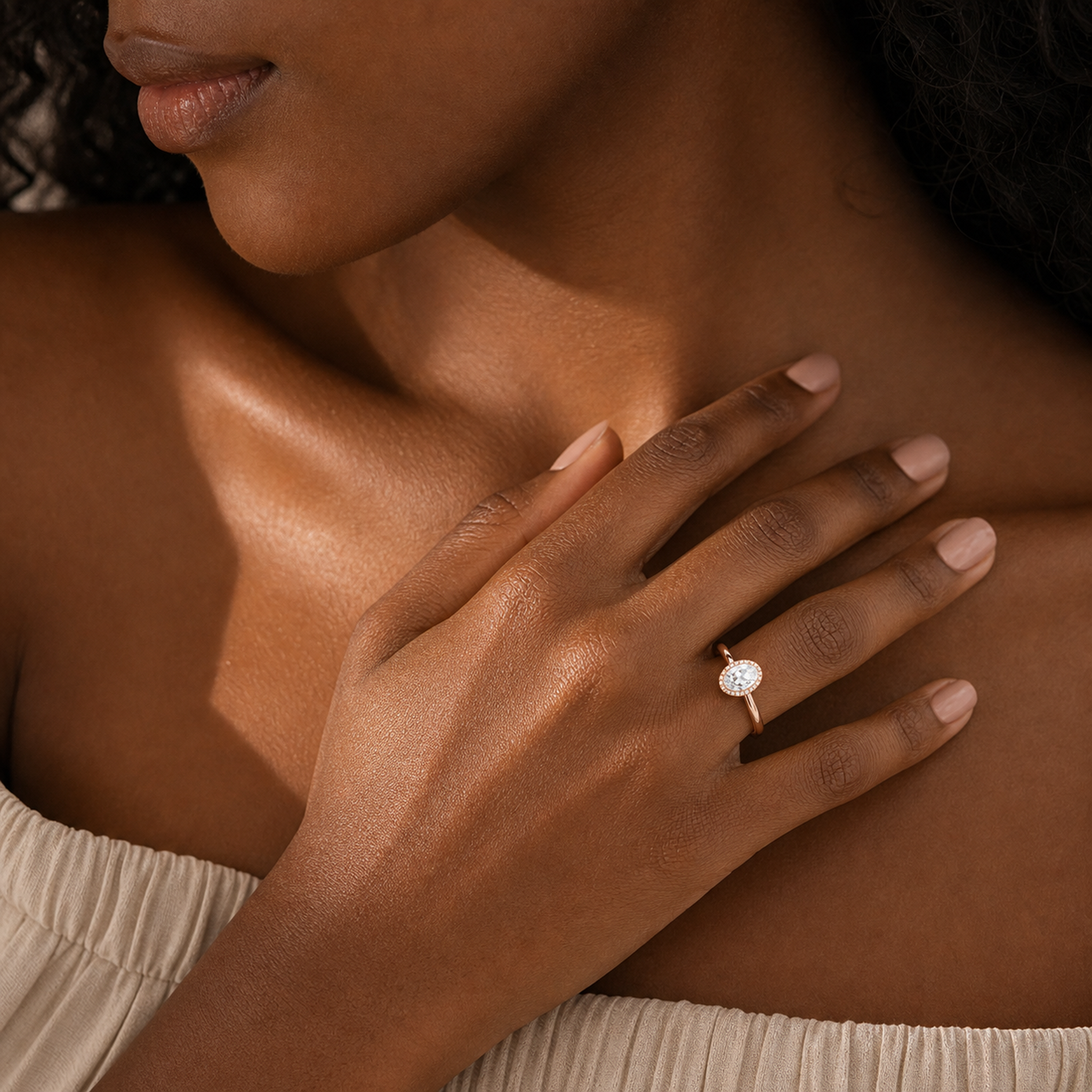
14K Rose Gold Classic Engagement Rings: Warmth Under Control
Classic design depends less on the absence of detail than on the discipline with which detail is arranged. In 14K Rose Gold, that discipline becomes visibly warm. A fine prong can mark the edge of one center; a halo can form a blush perimeter; two or three diamonds can be linked by a band whose color keeps their relationship legible. The metal participates without needing to dominate.
Burvonti's current public collection contains 34 designs in this material: 15 solitaire, six halo, two side-stone, six Toi et Moi, and five three-stone structures. Their shared value is not one silhouette. It is the ability to move through several setting languages while keeping center, supporting stones, band, and profile in a readable order.
Use Blush as an Interval, Not a Theme
A 14K gold alloy contains approximately 58.3% gold. Alloying metals create Rose Gold's blush character, but exact formulas vary. The karat mark does not establish one copper percentage, one shade, one hardness, or one sensitivity outcome. Lighting, finish, photography, and the amount of exposed metal also change how the finished ring appears.
This makes placement more important than a color label. Separate prongs create small warm intervals around a center. A bezel or halo establishes a continuous boundary. Side stones interrupt the band with measured transitions, while Toi et Moi designs use the colored line to negotiate space between two centers. The most useful question is where the blush belongs in the composition.
Classic Can Hold More Than One Center
Solitaire is one classic architecture, not the definition of the category. A halo can remain composed when its frame follows the center with appropriate scale. A three-stone ring can feel settled when the side stones step down with intention. A Toi et Moi ring can enter a classic register when two outlines, orientations, and the space between them resolve as one relationship rather than two competing gestures.
Rose Gold makes these transitions more visible. That is particularly useful in mixed outlines such as emerald with pear or oval with marquise, where the band and shared metal language can hold different geometries together. Warmth does not guarantee harmony; spacing, scale, prong placement, and profile still carry the design work.
Let Shape Change the Tone of the Frame
The assortment includes round, oval, cushion, pear, emerald, heart, and paired-shape compositions. Curved centers soften the points at which blush-toned prongs meet the diamond. Step-cut geometry makes colored corners and alignment more explicit. Paired stones introduce another decision: whether the metal should quietly connect them or become a visible line between distinct silhouettes.
Rose, Yellow, and White Gold create different kinds of separation around a bright center. Rose leans toward blush, Yellow toward a golden field, and White toward tonal continuity. None changes the diamond's grade, size, or light performance. Compare equivalent designs where possible, because a narrow prong setting and a broad halo will never display color in the same way.
Resolve the Ring Beside It
A Rose Gold wedding band can continue the warmth; another metal can introduce an intentional break. Matching color does not decide fit. Basket width, halo edge, cathedral rise, side-stone span, center arrangement, and band thickness determine whether two rings sit close, touch at selected points, or leave a measured interval. The complete pair must be judged in profile as well as from above.
Surface character is part of that calibration. Fine marks develop with use, and any polishing or refinishing decision should respond to the actual alloy, finish, construction, and appearance the wearer prefers rather than a fixed schedule.
Burvonti pairs responsibly sourced, independently graded lab-grown diamonds with settings considered through proportion and human judgment. Custom possibilities may refine shape, orientation, metal, engraving, band dimension, or selected structure where feasible. In this collection, Rose Gold is not a romance shortcut. It is a warm material line, calibrated across familiar forms.
Frequently Asked Questions
How is this page different from the main Classic Engagement Rings Collection?
The parent page explains Classic as a design discipline across metals. This page focuses on how 14K Rose Gold changes visible boundaries, transitions, and warmth within those composed settings.
How is this page different from all 14K Rose Gold Engagement Rings?
The main metal page covers many engagement-ring aesthetics. This intersection is limited to designs selected for clear hierarchy and restrained composition across solitaire, halo, side-stone, Toi et Moi, and three-stone forms.
How much gold is in 14K Rose Gold?
A 14K alloy contains approximately 58.3% gold. The remaining alloying metals influence color and working behavior, but the exact recipe varies by product.
Are all 14K rose gold rings the same blush shade?
No. Alloy formula, finish, lighting, photography, and visible metal area affect the result. Confirm the selected ring rather than relying on one universal rose tone.
Can a halo engagement ring still be classic?
Yes. A halo can feel classic when its scale follows the center and the frame, band, and profile remain clearly organized. Classic is a quality of composition, not a synonym for solitaire.
Can a Toi et Moi ring be classic in Rose Gold?
It can when the two centers, their orientations, spacing, and band resolve as one controlled relationship. Rose Gold can help connect different outlines, but color alone does not create balance.
Does Rose Gold make a diamond look whiter?
Not as a guaranteed result. It creates warmer contrast around the diamond but does not change its graded color or light performance.
Which shapes appear in this collection?
The current assortment includes round, oval, cushion, pear, emerald, heart, and paired-shape compositions such as emerald with pear or oval with marquise.
Is 14K Rose Gold more durable than other gold colors?
Color and karat are not complete durability rules. Exact alloy, dimensions, construction, finish, wear, and maintenance all affect performance. No gold surface is scratch-proof.
Can 14K Rose Gold cause sensitivity?
Sensitivity depends on the complete alloy and the wearer. Request product-specific composition if sensitivity is a concern; karat and color alone cannot establish a hypoallergenic outcome.
Must the wedding band also be 14K Rose Gold?
No. Matching metal creates continuity, while another color can create contrast. Profile, contact points, setting architecture, and product-specific wear should also be considered.
Can Burvonti personalize a classic 14K rose gold ring?
Custom possibilities may include diamond shape, orientation, metal, engraving, band proportion, or selected setting details. Availability and structural feasibility must be confirmed for the chosen design.