
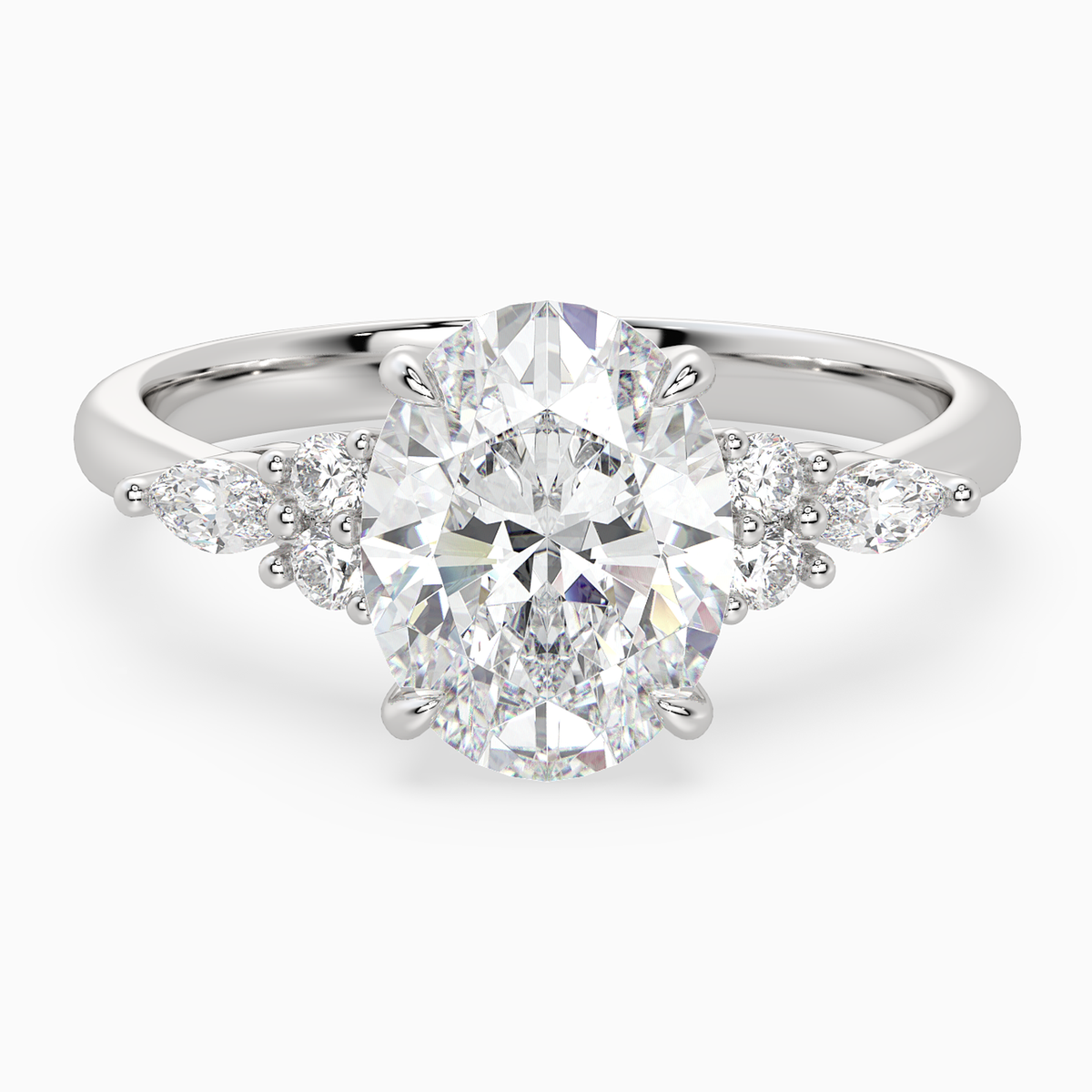


Choosing an engagement ring is not only about the diamond. The metal underneath that diamond decides how the ring wears, how often it needs maintenance, how warm or bright the color feels, and how securely the setting can support a stone over time.
For most engagement rings, the practical decision is between 14K and 18K gold. Both are fine jewelry standards. Both can be beautiful. The right choice depends on how the ring will be worn, which gold color you prefer, how sensitive your skin is, and how much value you place on purity versus daily durability.
Quick answer: 14K gold is usually the best karat gold for an engagement ring if you want strong daily-wear durability, lower maintenance, and better value. 18K gold is best if you prefer higher gold purity, a richer yellow tone, and a softer, more traditional fine-jewelry feel. 24K is too soft for most engagement ring settings, and 10K is usually less premium than most shoppers want for a long-term ring.
Karat vs Carat: Why the Words Mean Different Things
Karat and carat sound almost identical, but they measure different parts of a ring.
Karat, written as K, measures gold purity. It tells you how much pure gold is in the alloy. Carat, written as ct, measures diamond weight. A one-carat diamond and an 18K gold ring are using two separate measurement systems.
This distinction matters because engagement ring shoppers often compare diamond size and metal quality at the same time. The diamond's carat weight affects presence and price. The gold karat affects the metal's strength, color, alloy mix, and wear behavior.
How Gold Karat Works
Pure gold is measured as 24K. In theory, 24K means all or nearly all gold. It has a rich color, but it is also soft and highly malleable. That softness is why pure gold is not usually chosen for engagement rings that must hold prongs, support a diamond, and survive daily contact with hard surfaces.
Jewelry gold is alloyed with other metals to make it stronger. The alloy mix can include metals such as silver, copper, zinc, nickel, palladium, or other whitening and strengthening metals depending on color and manufacturer. Those alloys change the ring's hardness, tone, price, and sometimes skin sensitivity.
| Gold karat | Pure gold content | Engagement ring use |
|---|---|---|
| 24K | Almost pure gold | Too soft for most engagement ring settings and prong structures. |
| 18K | 75% gold | Premium option with richer color and higher purity, but softer than 14K. |
| 14K | 58.3% gold | Most practical daily-wear choice for many engagement rings. |
| 10K | 41.7% gold | Hard and affordable, but lower in gold content and less common for premium engagement rings. |
14K vs 18K Gold for Engagement Rings
The best choice is rarely about purity alone. A ring is worn on the hand, not stored in a display case. That means the setting needs enough strength to protect the diamond, hold its shape, and handle daily routines.

14K vs 18K at a glance
14K gold contains more alloy, which generally makes it harder and more resistant to bending and surface wear. 18K gold contains more pure gold, which gives yellow gold a deeper tone and can feel more precious, but it is also softer.
Explore 14K yellow gold rings| Decision factor | 14K gold | 18K gold |
|---|---|---|
| Daily durability | Stronger for most active lifestyles and repeated wear. | Durable enough for fine jewelry, but softer and more scratch-prone. |
| Gold purity | 58.3% pure gold. | 75% pure gold. |
| Color in yellow gold | Softer, slightly lighter yellow tone. | Richer, warmer, more saturated yellow tone. |
| Price | Usually more budget-efficient because it contains less pure gold. | Usually higher because it contains more pure gold. |
| Sensitive skin | Depends on the alloy mix; ask about nickel or other potential irritants. | Often preferred by sensitive-skin shoppers because it has less alloy by percentage, but alloy mix still matters. |
| Best for | Daily wear, active hands, long-term value, and lower maintenance. | Higher-purity preference, richer yellow color, and a more traditional luxury feel. |
Start with the metal that fits your daily life
If you want a practical everyday engagement ring, begin with 14K gold. If color richness and higher purity matter more, compare 18K options before finalizing your setting.
Explore engagement ringsWhy 14K Gold Is the Practical Choice for Many Rings
14K gold is a strong choice for engagement rings because it balances gold content with everyday structure. It is not the highest-purity gold option, but that is part of why it works so well for daily wear.
A 14K setting is often less likely to bend or show deep wear quickly than higher-karat gold. That can be especially useful for slim bands, delicate prongs, hidden halos, pavé bands, or anyone who wears their ring through a busy routine.
Choose 14K gold if you care most about:
- Daily durability and lower maintenance.
- A more accessible price point.
- Secure setting structure for long-term wear.
- White gold, yellow gold, or rose gold options with practical strength.
Burvonti shoppers can compare 14K white gold engagement rings, 14K yellow gold engagement rings, and 14K rose gold engagement rings when they want the broadest range of daily-wear metal choices.
Why 18K Gold Still Has a Place
18K gold contains more pure gold, so it feels richer in both material and color. In yellow gold, the difference is easiest to see: 18K usually looks warmer and deeper than 14K. For some shoppers, that tone is exactly what makes the ring feel right.
18K gold can also be appealing for people who want less alloy by percentage. That does not automatically make every 18K ring hypoallergenic, because the alloy formula still matters, but it can be a useful direction for sensitive-skin shoppers to discuss with a jeweler.
Choose 18K gold if you care most about:
- Higher gold purity.
- A richer yellow gold color.
- A more traditional fine-jewelry feel.
- A ring that will be worn with reasonable care.
Burvonti offers focused options such as 18K white gold engagement rings and 18K yellow gold engagement rings for shoppers who want a higher-purity metal direction.
Why 24K and 10K Are Usually Not the Best Fit
24K gold is too soft for most engagement ring structures. It can be beautiful as pure gold, but engagement rings need prongs, baskets, shoulders, and bands that can hold shape under real use. A metal can be precious and still be the wrong engineering choice.
10K gold sits at the other end of the scale. It is harder because it contains more alloy, and it can be budget-friendly. But for a premium engagement ring, many shoppers find 10K less appealing because it contains less gold, can look paler in yellow gold, and may involve more alloy exposure.
Burvonti perspective: the best metal is not the one with the highest number. It is the one that supports the diamond, fits the wearer's life, and makes the ring feel intentional every day.
How Karat Changes White, Yellow, and Rose Gold
Karat affects every gold color, but the effect is easiest to understand when you separate color from purity.
Yellow Gold
Yellow gold shows karat differences clearly. 18K yellow gold generally has a deeper, warmer color because it contains more pure gold. 14K yellow gold is slightly lighter and often more practical for daily wear.
White Gold
White gold is made by alloying gold with white metals, and many white gold rings are finished with rhodium plating for a bright, cool white look. Karat still matters for purity and durability, but rhodium maintenance is also part of the long-term care plan. If white gold is your priority, read Burvonti's rhodium plating guide before choosing.
Rose Gold
Rose gold gets its warm pink tone from copper in the alloy mix. 14K rose gold is often popular because it gives a noticeable rose tone with practical durability. 18K rose gold can be softer and subtler depending on the alloy formula, but availability varies by jeweler.
How to Choose Based on Lifestyle and Design
The karat decision becomes clearer when you stop asking which number is "best" and start asking how the ring will be worn.
Choose 14K gold if:
- The ring will be worn every day.
- The wearer has an active or hands-on lifestyle.
- You want a strong setting for a slim band, pavé, or delicate prong design.
- You want the best balance of price, durability, and appearance.
- You prefer rose gold, where 14K often gives a clear warm tone.
Choose 18K gold if:
- You want a richer yellow gold color.
- You value higher gold purity.
- The wearer is comfortable treating the ring with extra care.
- You are comparing metal as part of a more traditional fine-jewelry preference.
- You want to reduce alloy percentage and can confirm the specific alloy mix.

Make the metal decision before final calibration
At Burvonti, the ring is built after the diamond and setting direction are selected. That makes metal choice part of the ring's structure, not an afterthought. Karat, color, prong style, band width, and stone proportions should work together.
Ask about metal optionsBottom Line: What Karat Gold Is Best for an Engagement Ring?
For most engagement rings, 14K gold is the best all-around choice because it offers the strongest balance of durability, price, and fine-jewelry appearance. It is especially strong for daily wear, slim settings, and active lifestyles.
18K gold is the better choice when higher gold purity and richer color matter more than maximum practicality. It is beautiful and premium, but it asks for a little more care. Avoid 24K for most engagement rings, and reserve 10K for situations where cost and hardness matter more than gold content or premium feel.
Compare gold settings with the diamond in mind
Explore Burvonti engagement rings by metal color, or start a consultation to choose the karat, setting, and lab-grown diamond as one precise decision.
Shop engagement ringsEngagement Ring Gold Karat FAQ
Is 14K or 18K gold better for an engagement ring?
14K gold is usually better for daily-wear durability. 18K gold is better if you want higher purity and a richer yellow gold tone. Both can be good choices when the ring is designed and maintained properly.
Is 14K gold good for everyday wear?
Yes. 14K gold is one of the most practical choices for everyday engagement rings because it balances gold content with alloy strength.
Does 18K gold scratch more easily than 14K?
Generally, yes. 18K gold contains more pure gold, which makes it softer than 14K gold. It can still be used for engagement rings, but it may show wear faster.
Which karat gold is best for sensitive skin?
18K gold may be a useful direction because it contains less alloy by percentage, but the specific alloy formula matters. Ask whether the ring contains nickel or other metals that can irritate skin.
Is 24K gold good for engagement rings?
Usually no. 24K gold is too soft for most engagement ring settings. It is not the best choice for prongs, slim bands, or rings worn every day.
Does karat affect white gold maintenance?
Karat affects purity and alloy balance, but many white gold rings also depend on rhodium plating for their bright white finish. Rhodium can wear over time and may need replating.