
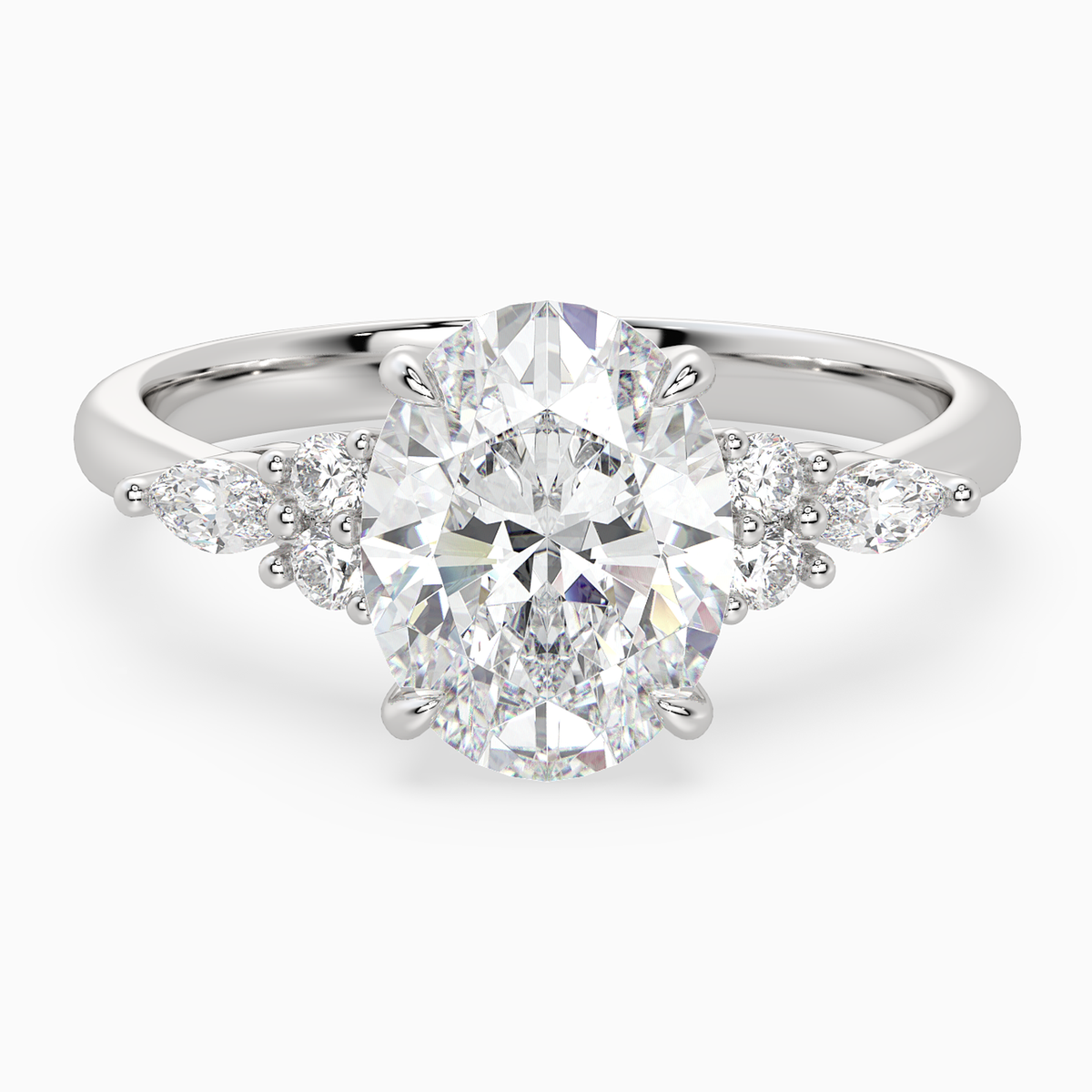


Men's Jewelry
Jewelry becomes personal at the scale of the wearer. Explore rings, earrings, necklaces and bracelets through placement and proportion.

































Presence, Calibrated by Place
Jewelry is first understood through where and how it is worn: a ring resolving around the hand, an earring holding one point near the face, a necklace setting an axis at the neckline, or a bracelet tracing movement at the wrist. These positions create different scales of presence. They are more useful starting points than a fixed idea of what men should wear.
Burvonti’s current public Men’s Jewelry Collection contains 109 products and is the exact design-normalized union of four child Collections: 28 rings, 25 earrings, 51 necklaces, and five bracelets. Some exact product cards differ because Collections represent a design in different metals. This page is an audience-navigation hub, not a separate engineering standard or a claim that its designs belong exclusively to men.
Begin with Where the Piece Belongs
The hand gives a ring its circumference and visible edge. The ear makes face-up dimensions, profile, and backing part of one small composition. The neckline introduces clothing, chain length, pendant height, and a vertical relationship to the body. The wrist adds movement, closure, and possible contact with a watch. Begin with the place the wearer wants to articulate, then choose the structure that serves it.
One position does not require one level of emphasis. A precise stud can be more visually decisive than a broad surface, while a continuous bracelet line can remain restrained when its proportions are closely controlled. Burvonti treats presence as a relationship among object, wearer, and context—not as a ranking from subtle to bold.
Rings Resolve Width, Edge, and Surface
The current ring edit contains 28 wedding-band-titled designs from 4 to 8 mm. Flat, beveled, domed, knife-edge, concave, faceted, octagonal, and comfort-fit language appears alongside polished, brushed, hammered, knurled, channel, and diamond-accented treatments. Width establishes one measure; edge and surface decide how that measure catches light and meets the hand.
A wider band is not inherently more masculine, and comfort-fit language is not a universal comfort guarantee. Intended finger, inner profile, thickness, knuckle, temperature, swelling, and activity affect fit. Customers seeking a ring can enter the Men’s Rings child page for a more precise comparison of these variables.
Earrings Hold Presence Close to the Face
The current earring edit contains 25 studs: nine prong solitaires, nine bezels, and seven halos. Nine diamond shapes are represented. Prongs leave more of the perimeter open, a bezel draws a continuous metal boundary, and a halo creates a wider center-and-surround field. These are structural choices, not codes for identity.
Compare complete face-up dimensions, projection, pair scale, piercing position, post, backing, and spacing from eyewear or other piercings. Current products identify secure lock backs with double-notched posts, but no closure prevents every loss. Center Stone Total Carat Weight must be read according to the pair and selected product rather than assumed to describe each diamond.
Necklaces Set an Axis at the Neckline
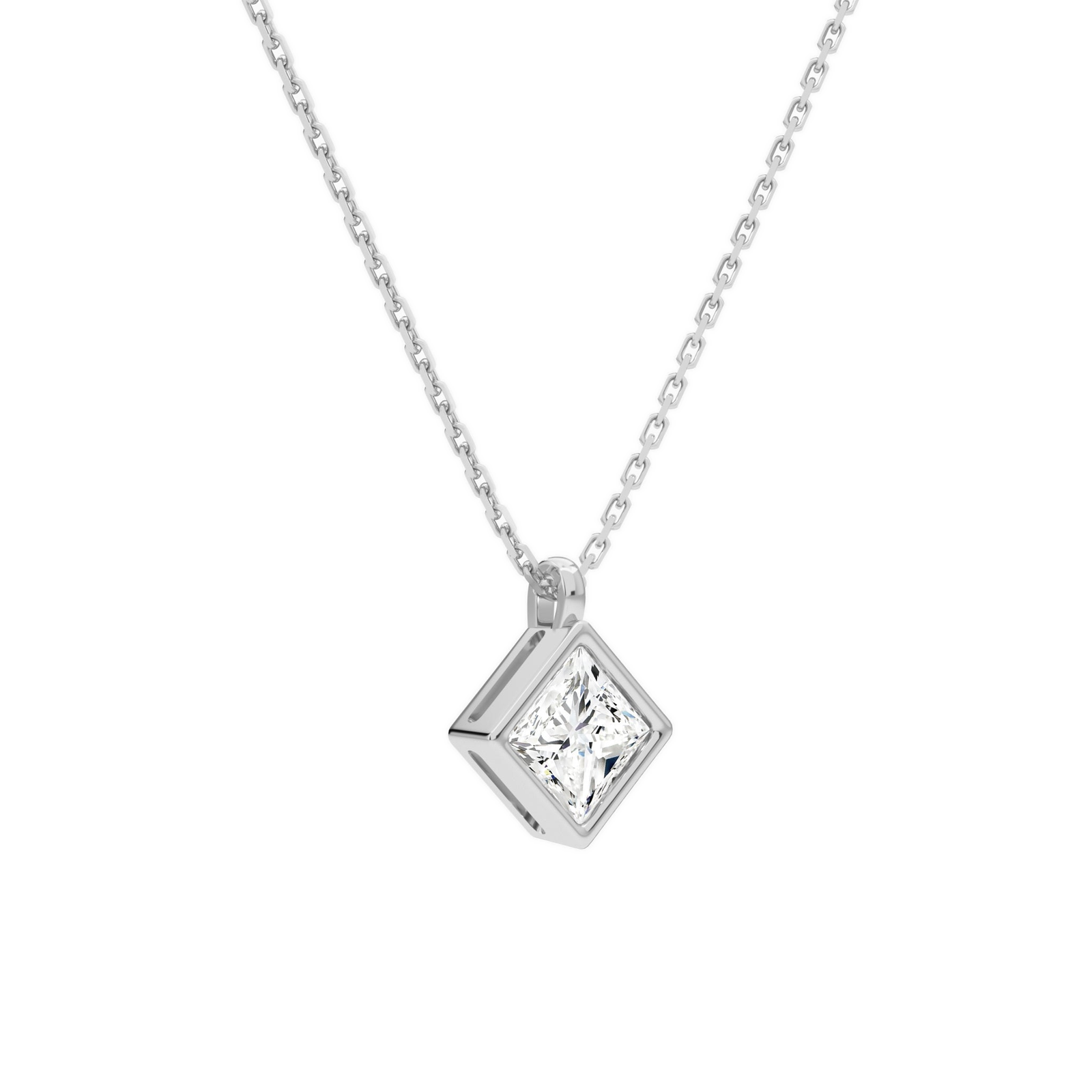
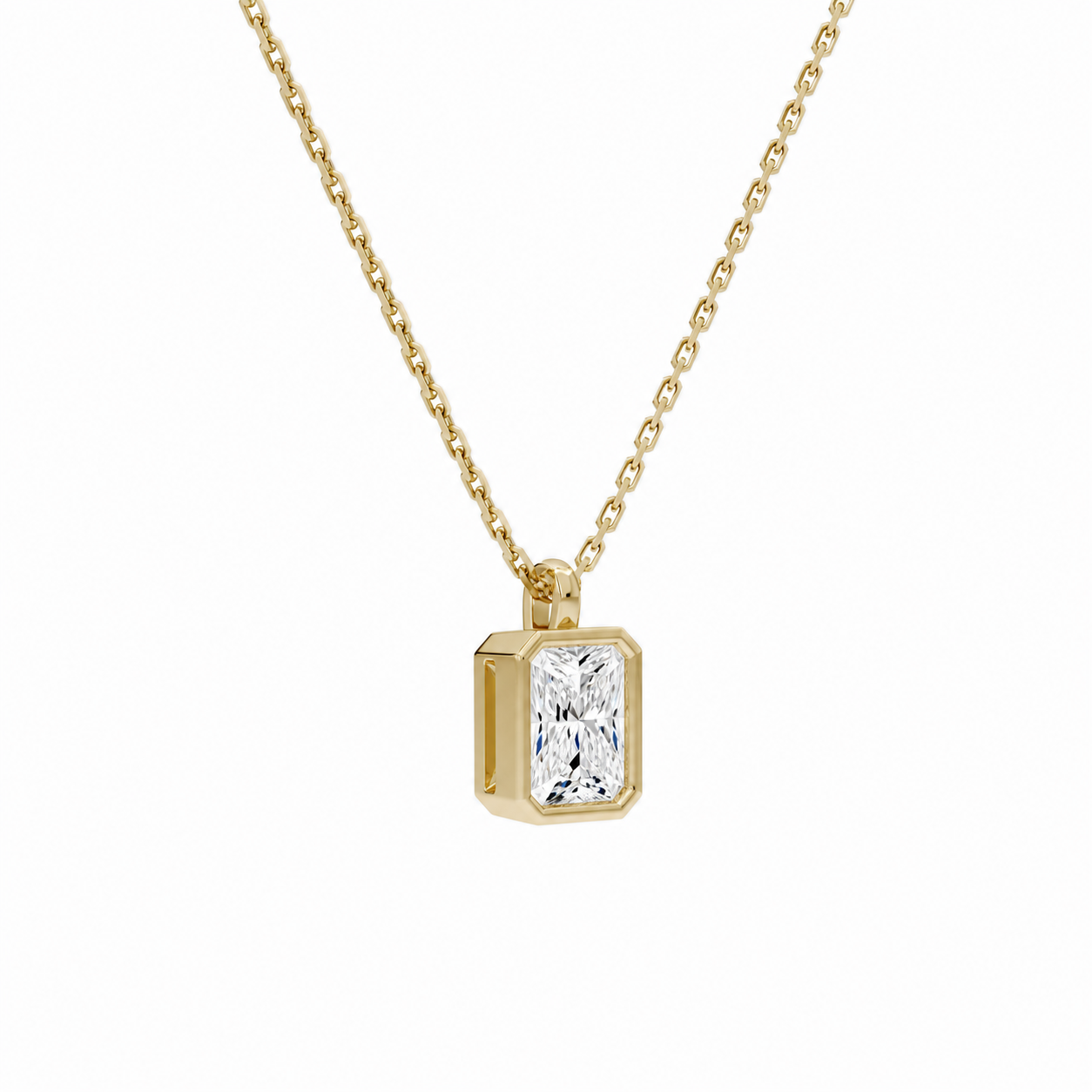
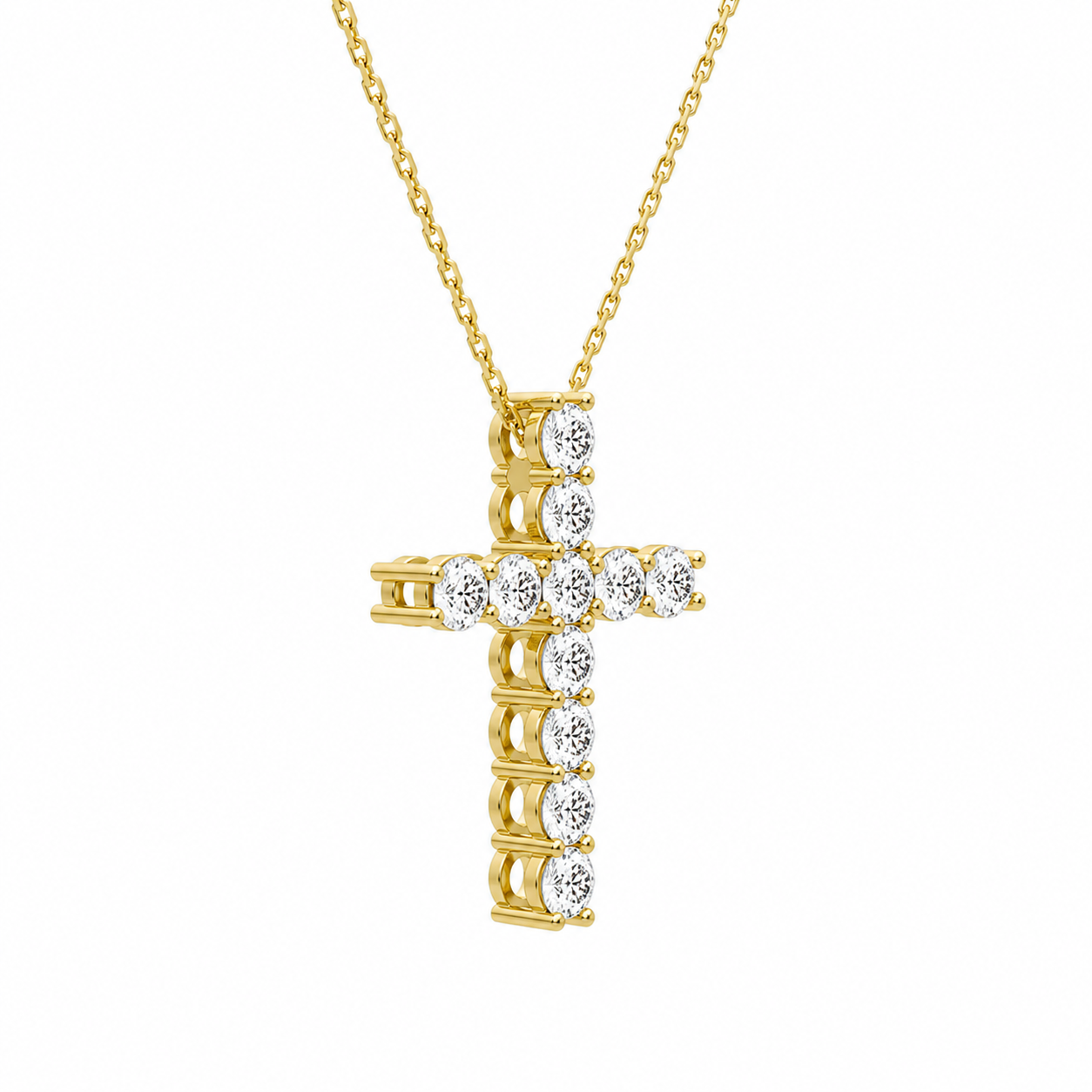
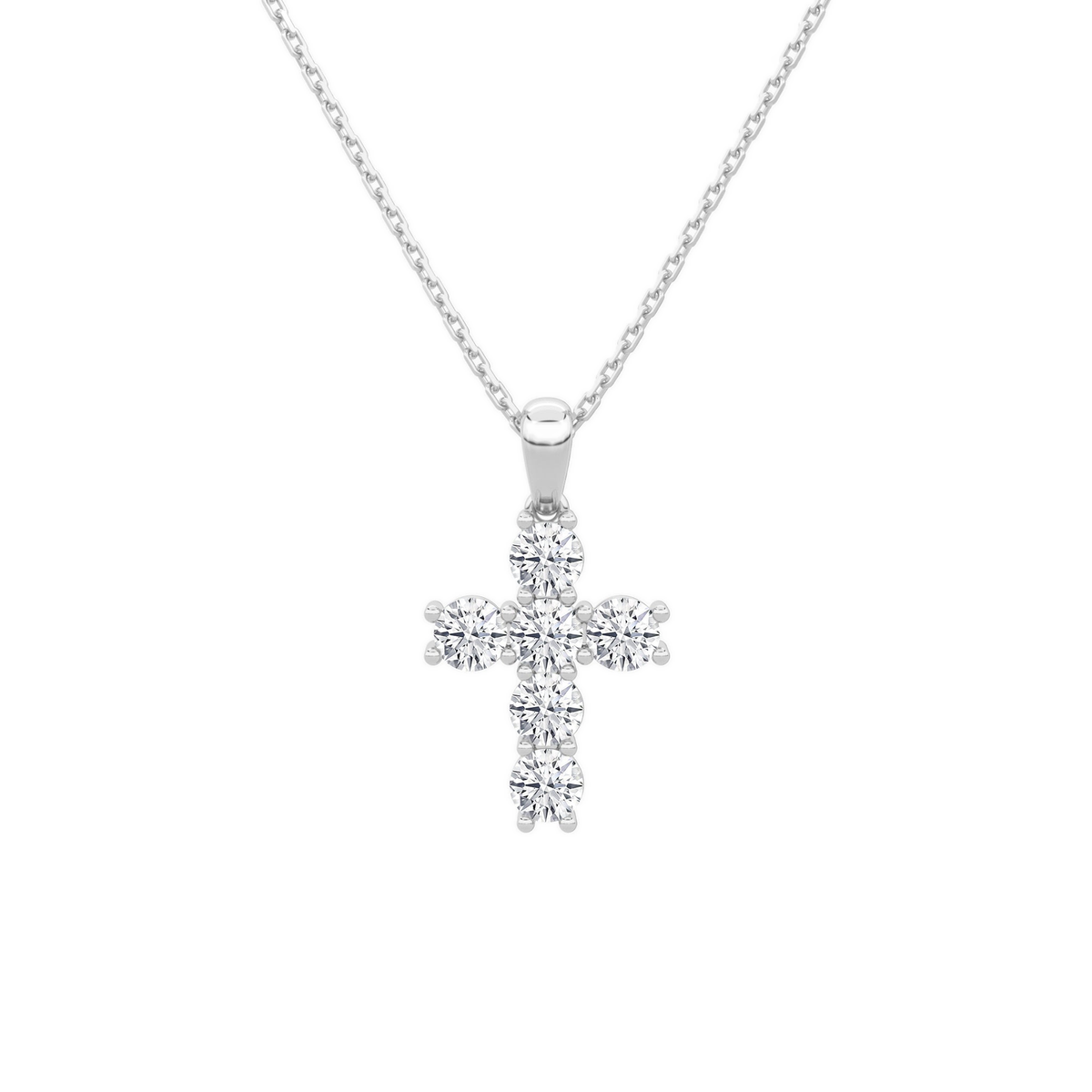
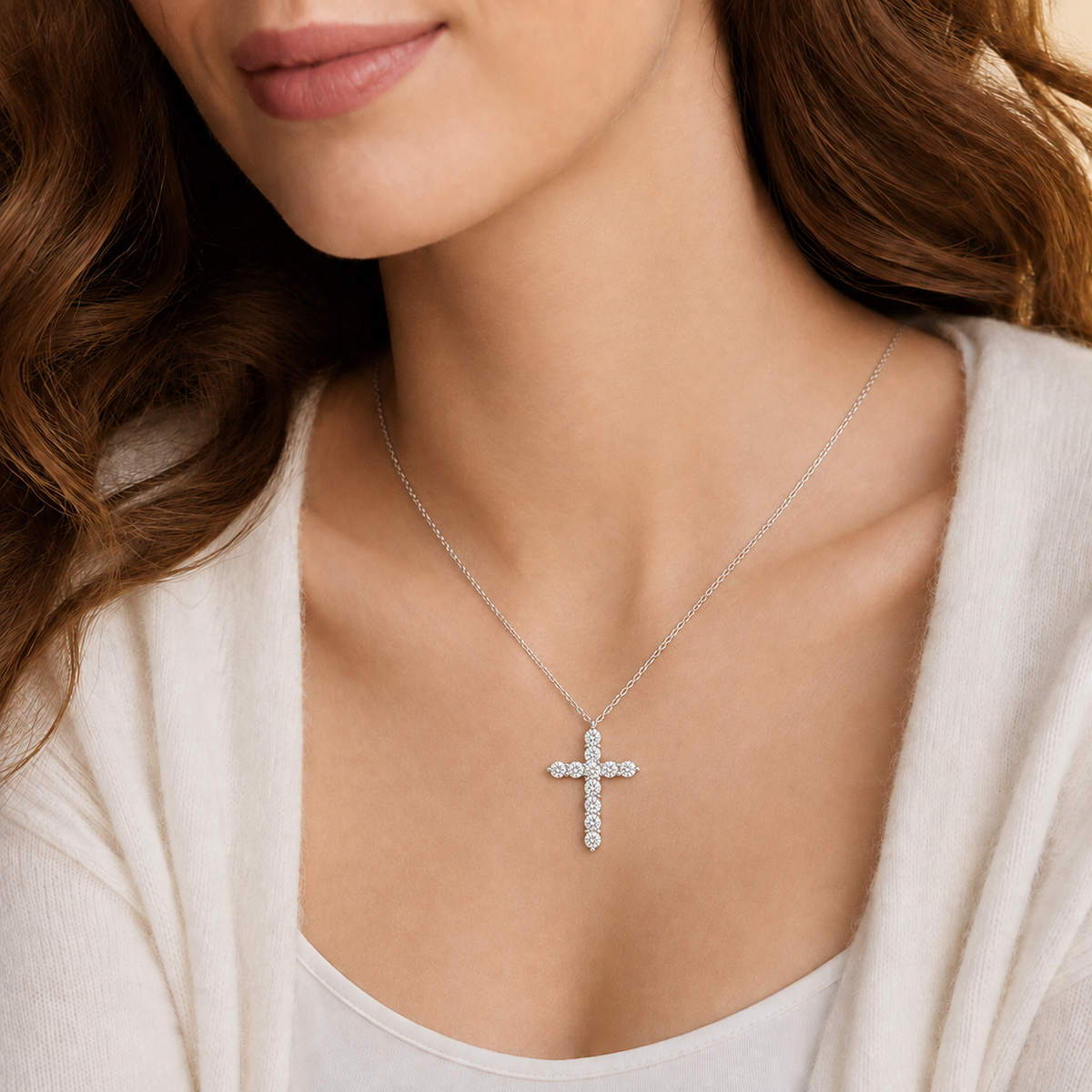
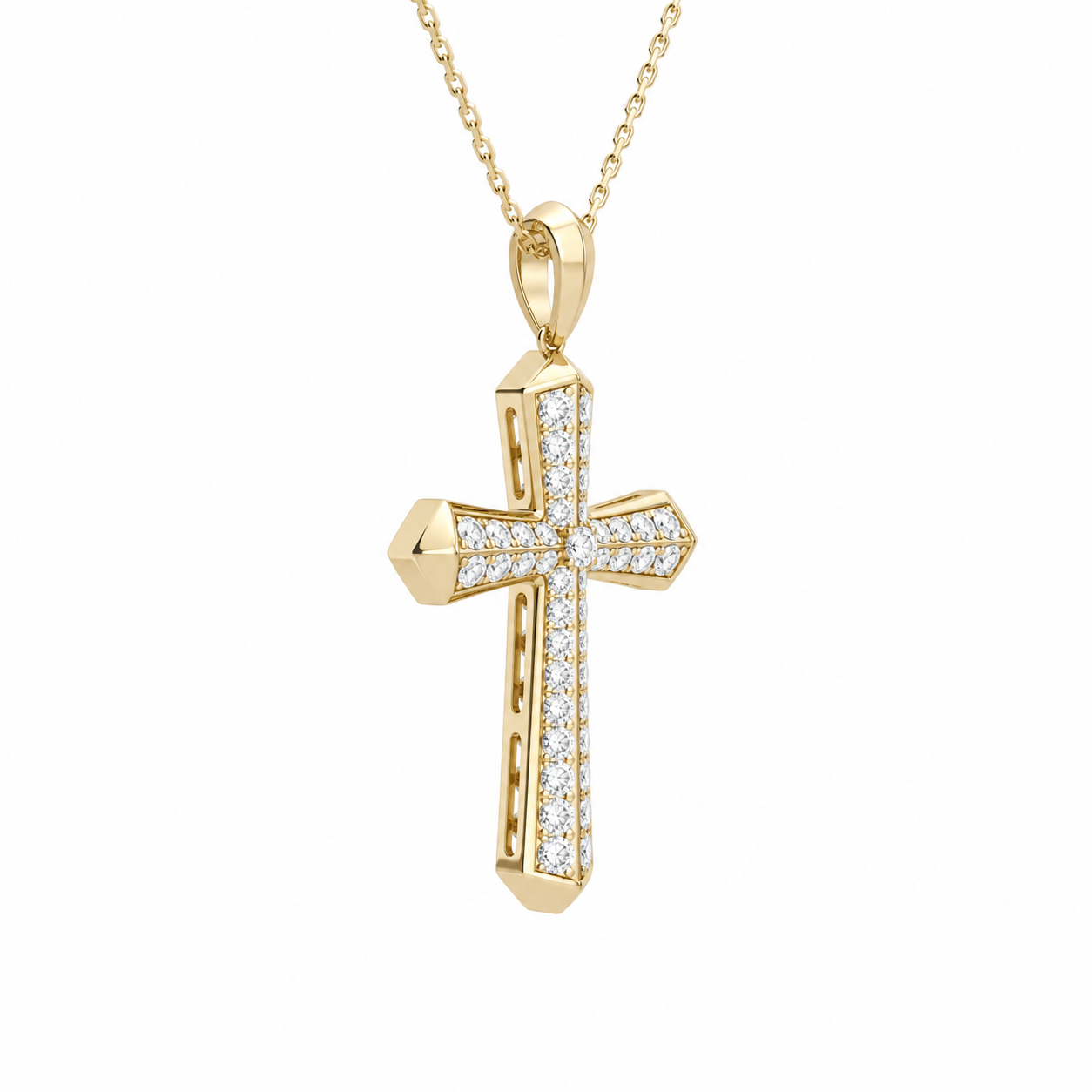
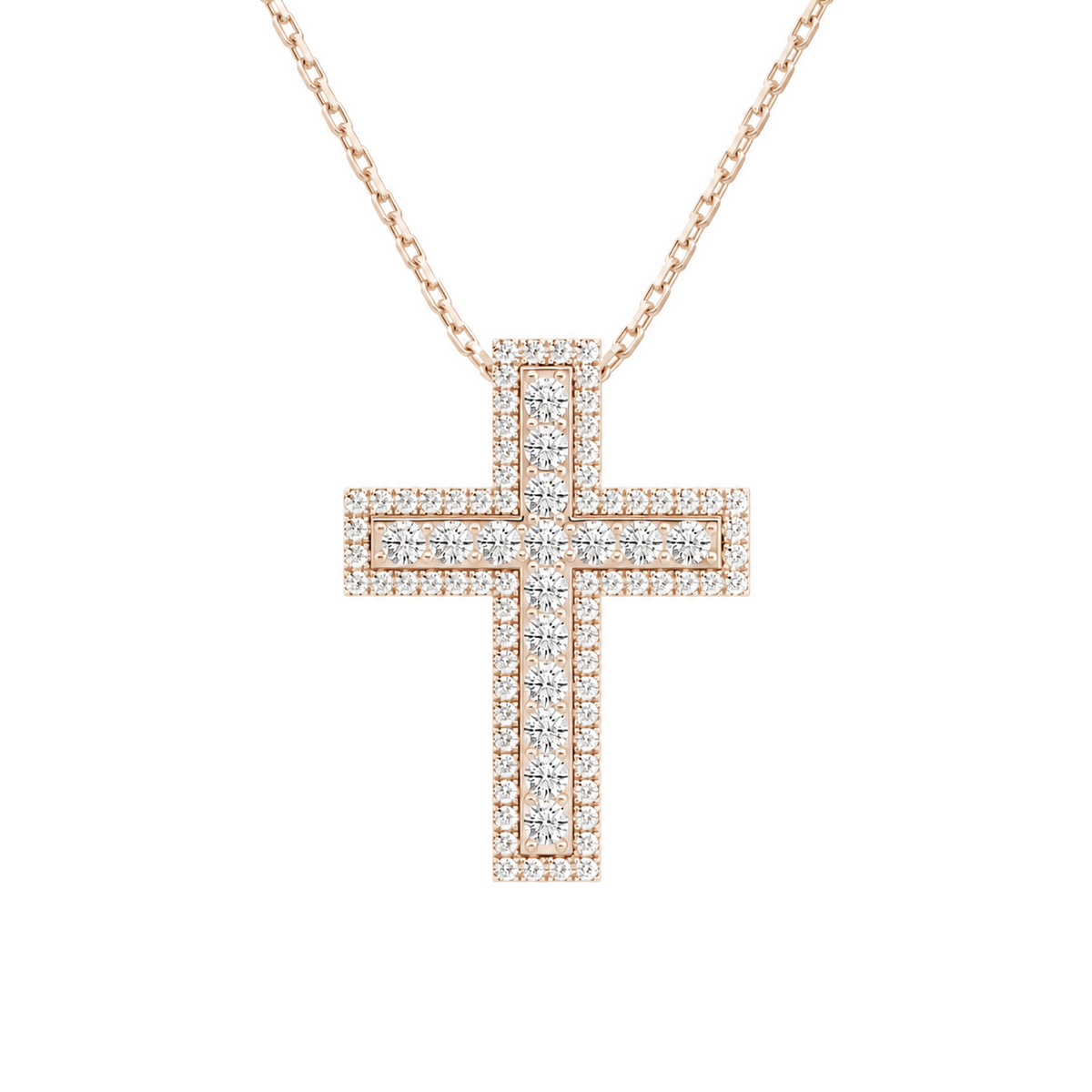
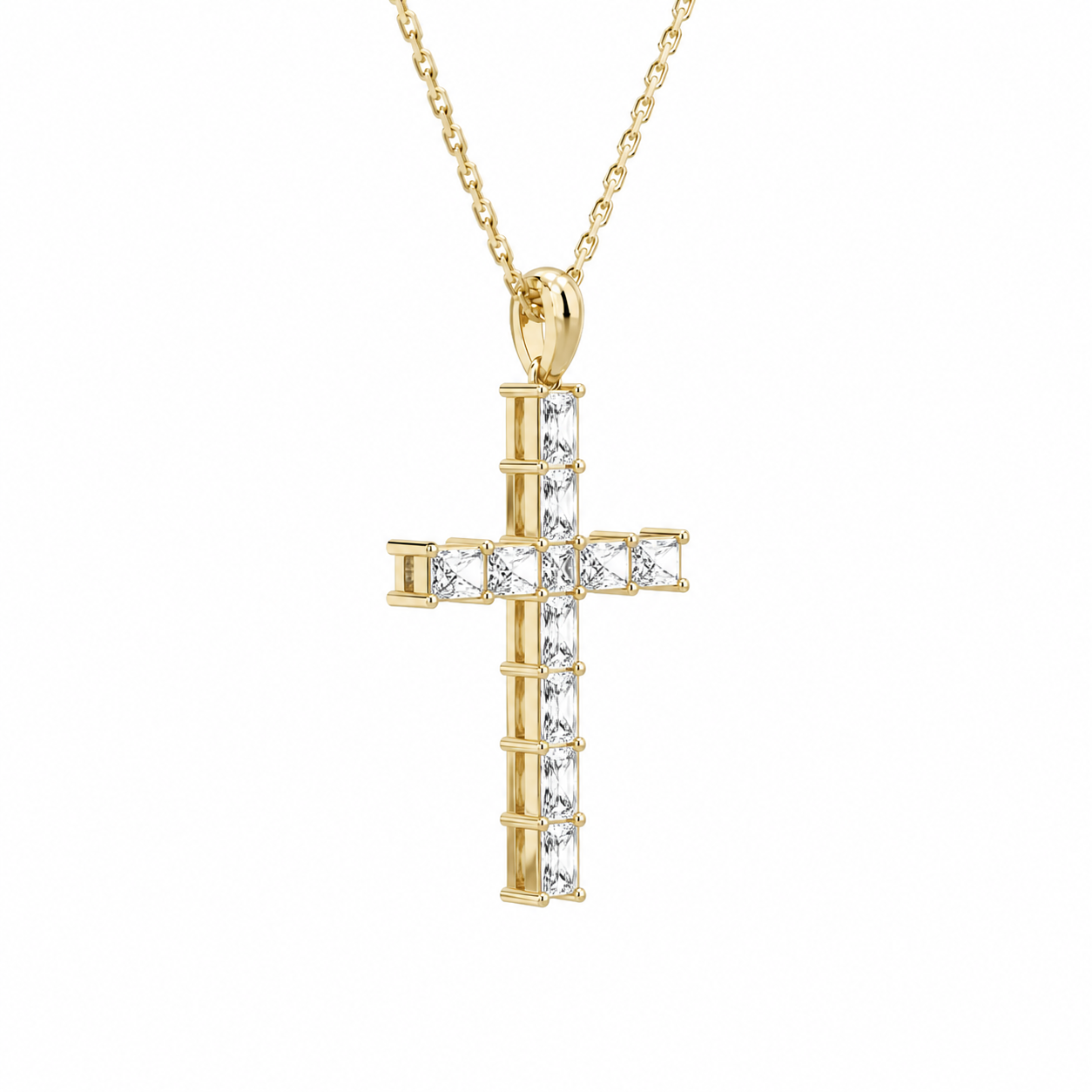
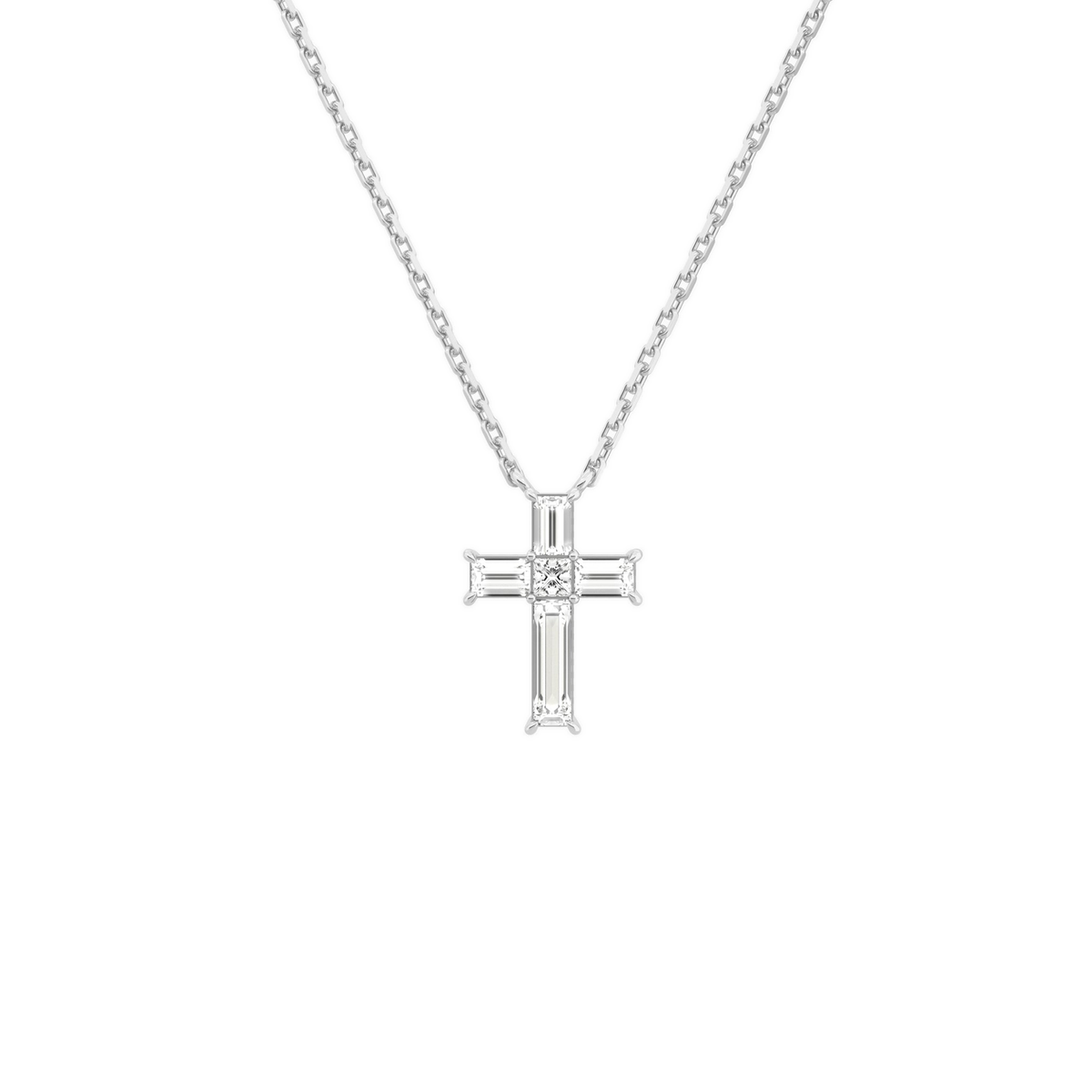
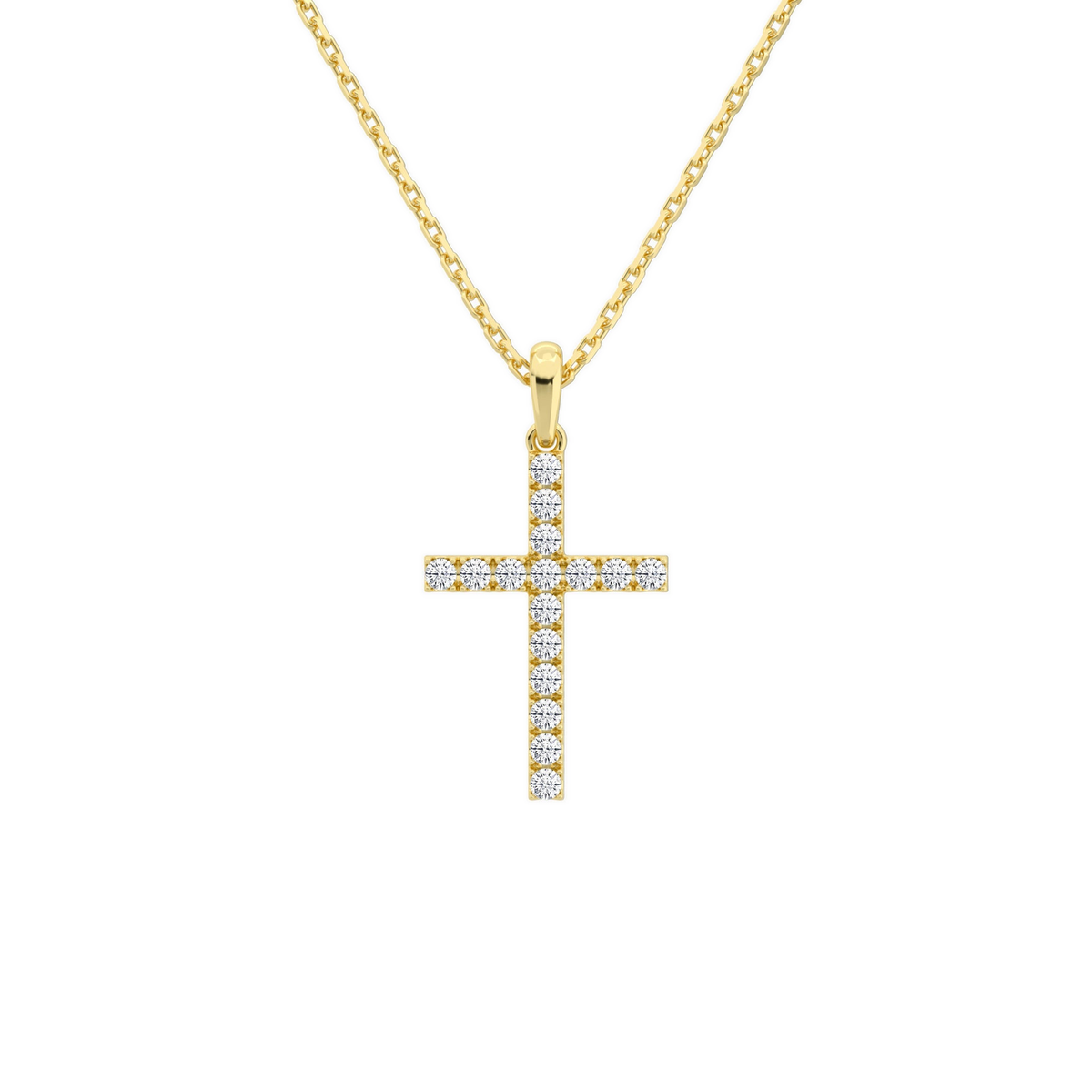
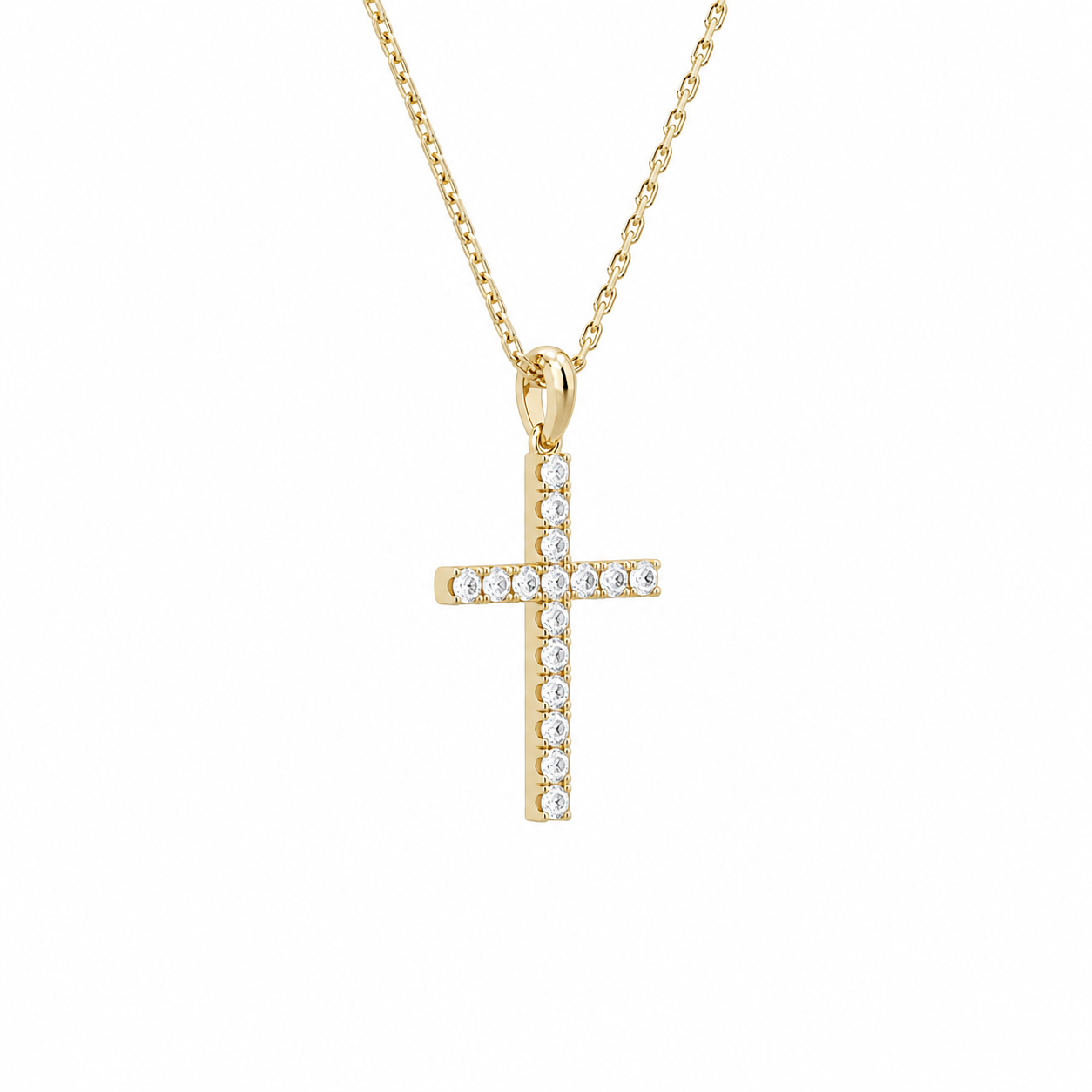
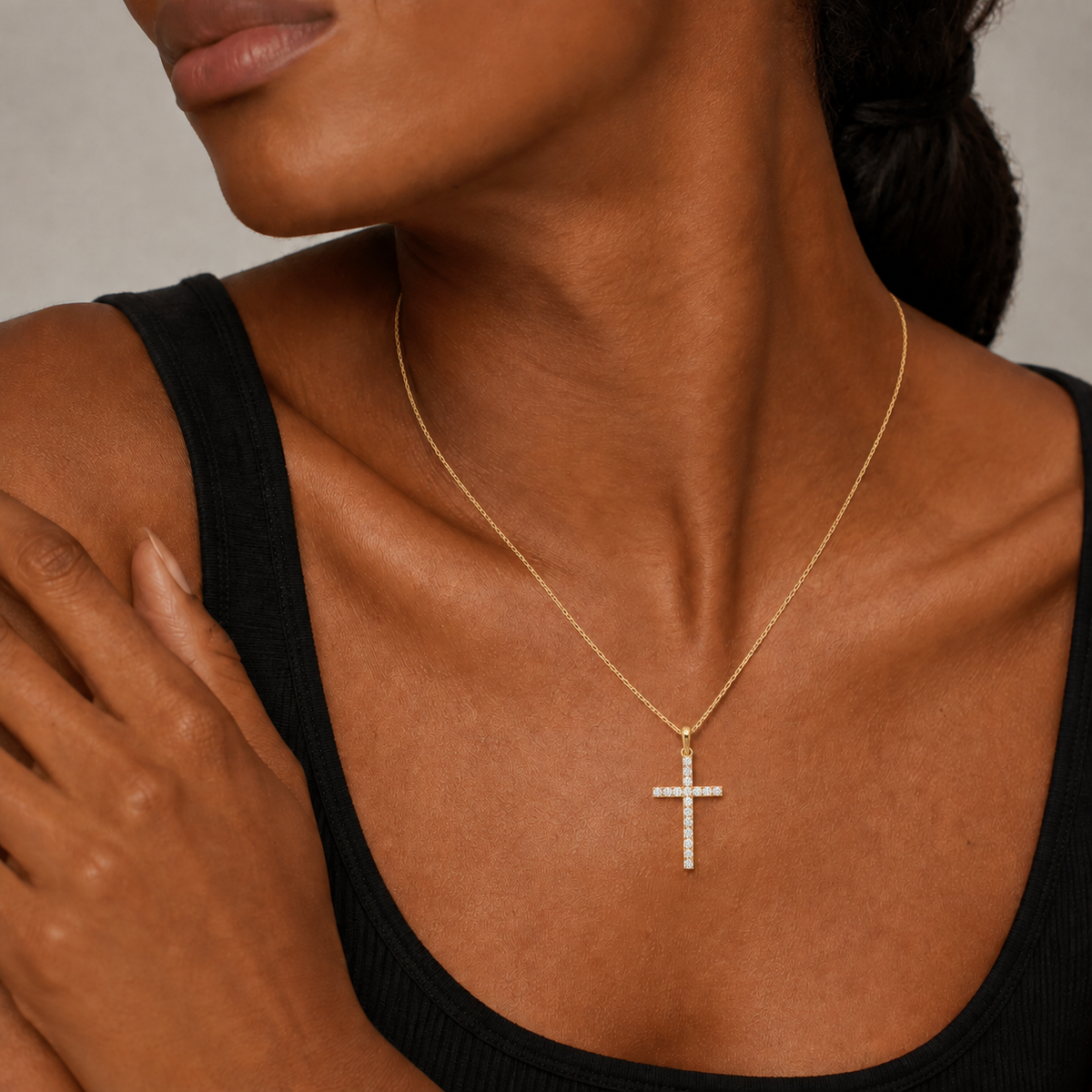
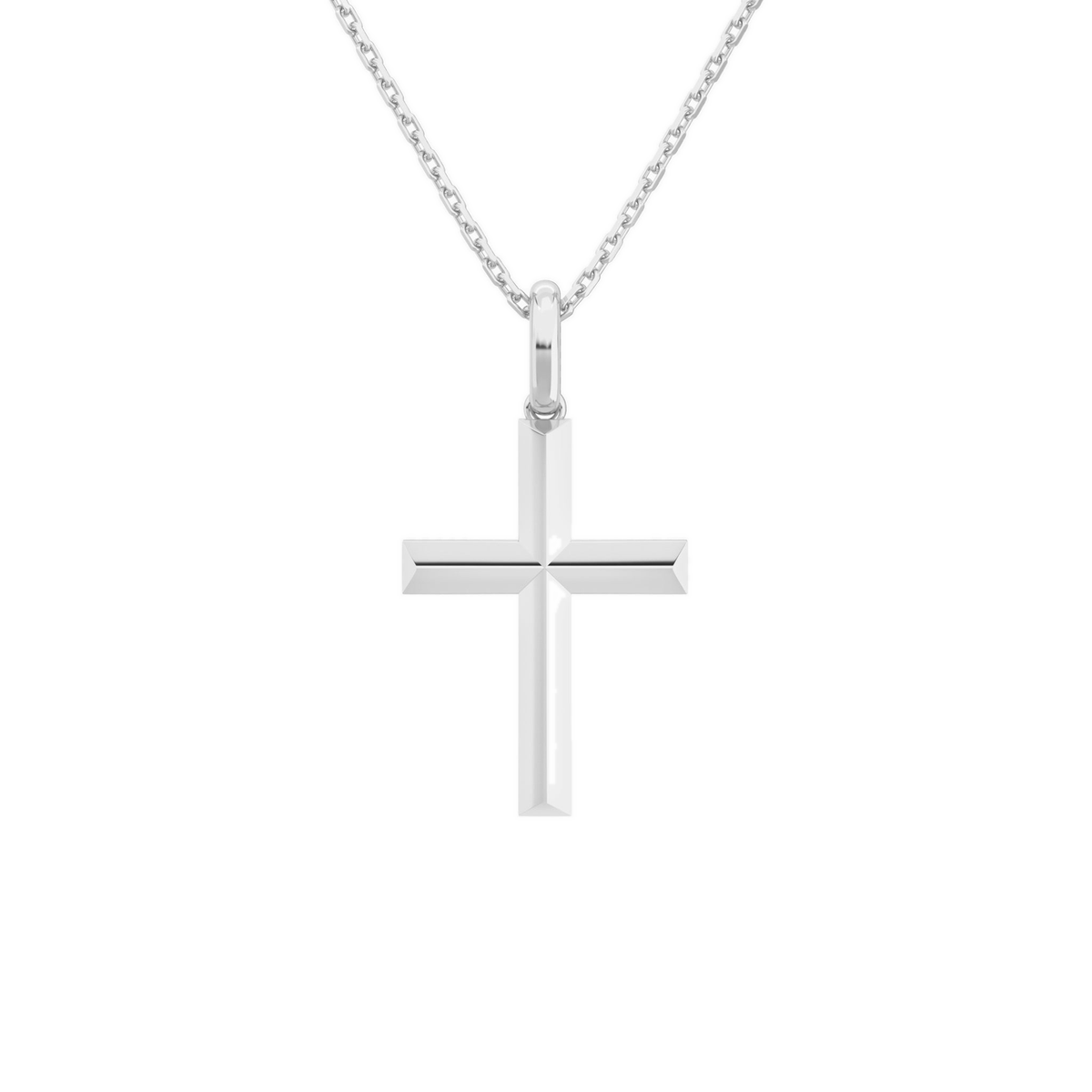
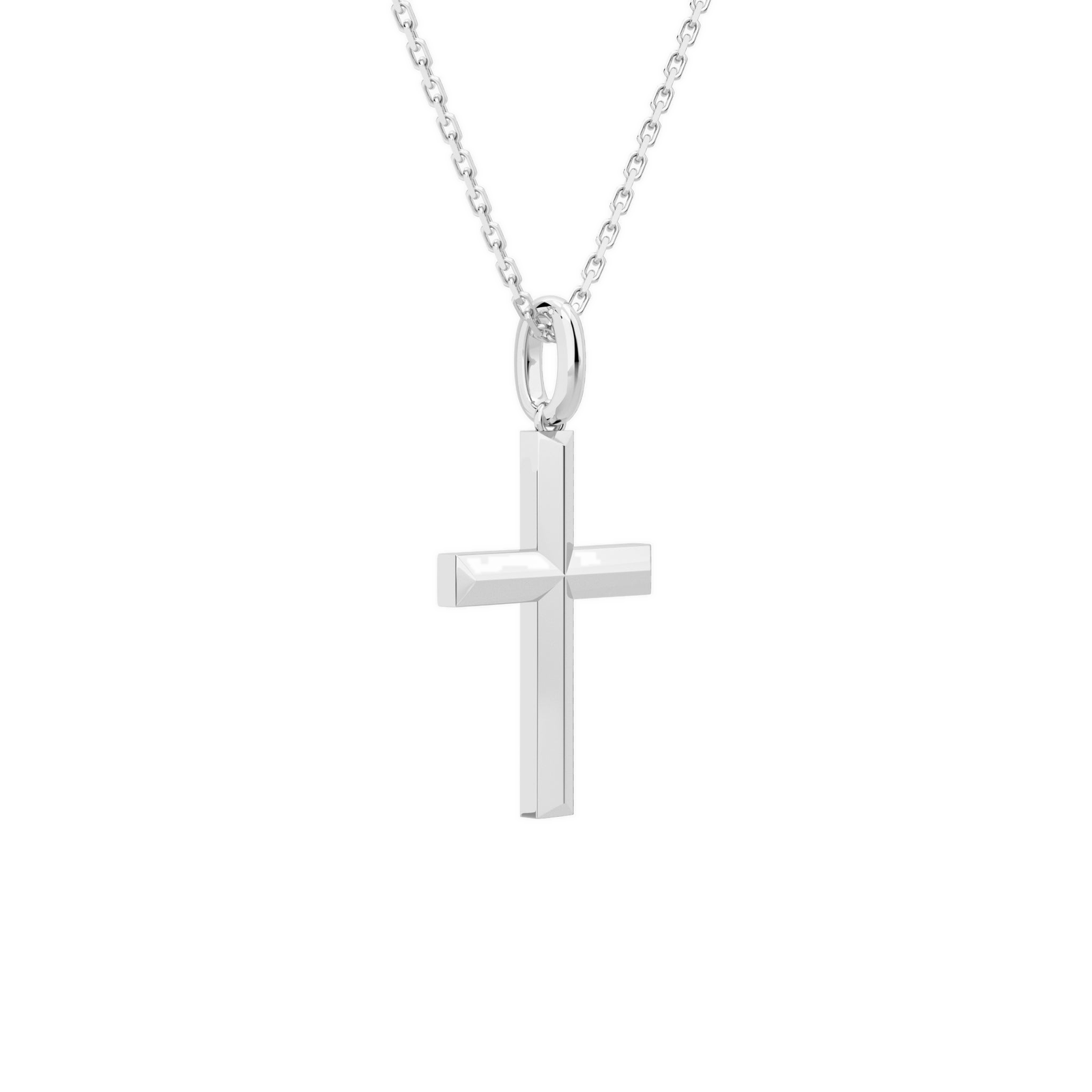
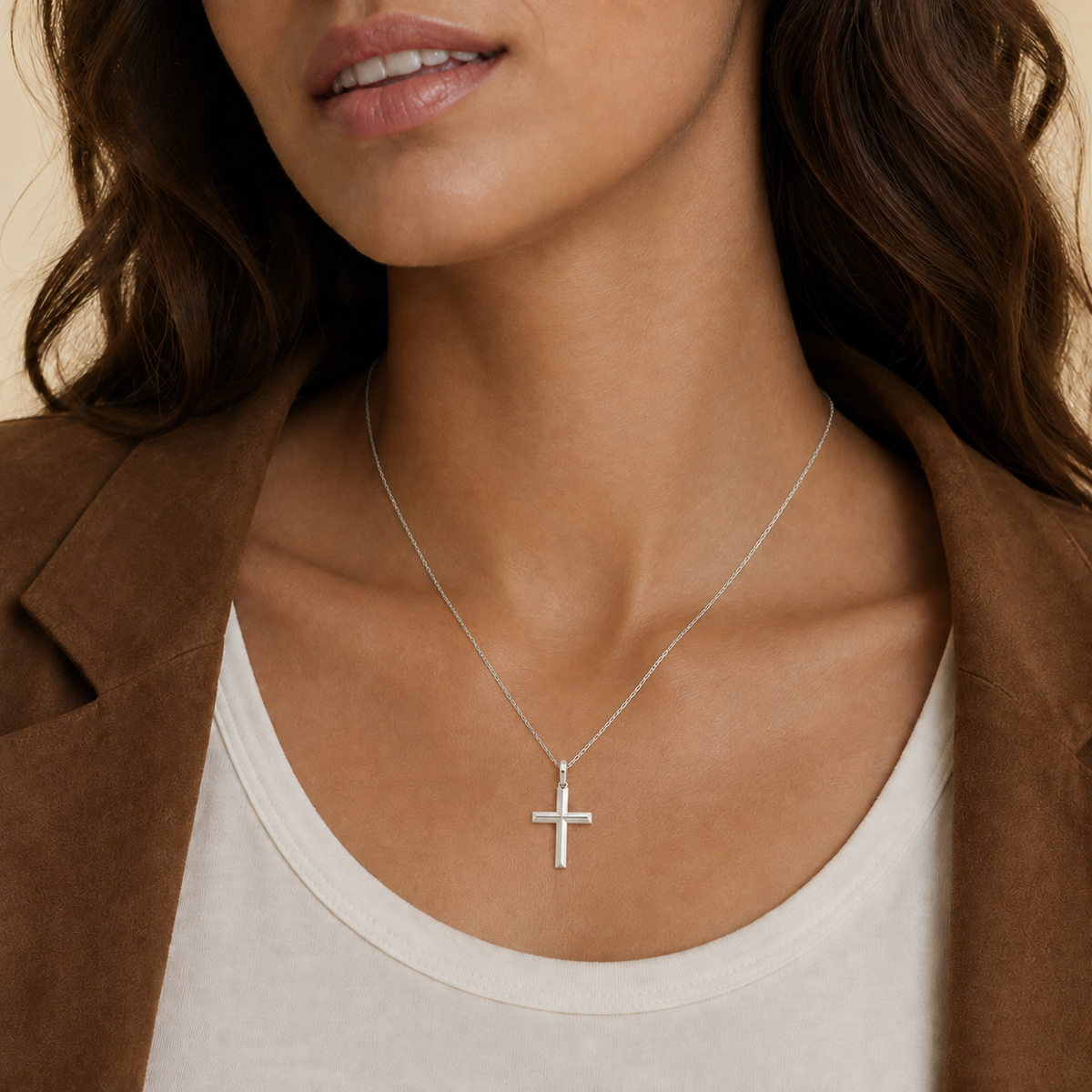
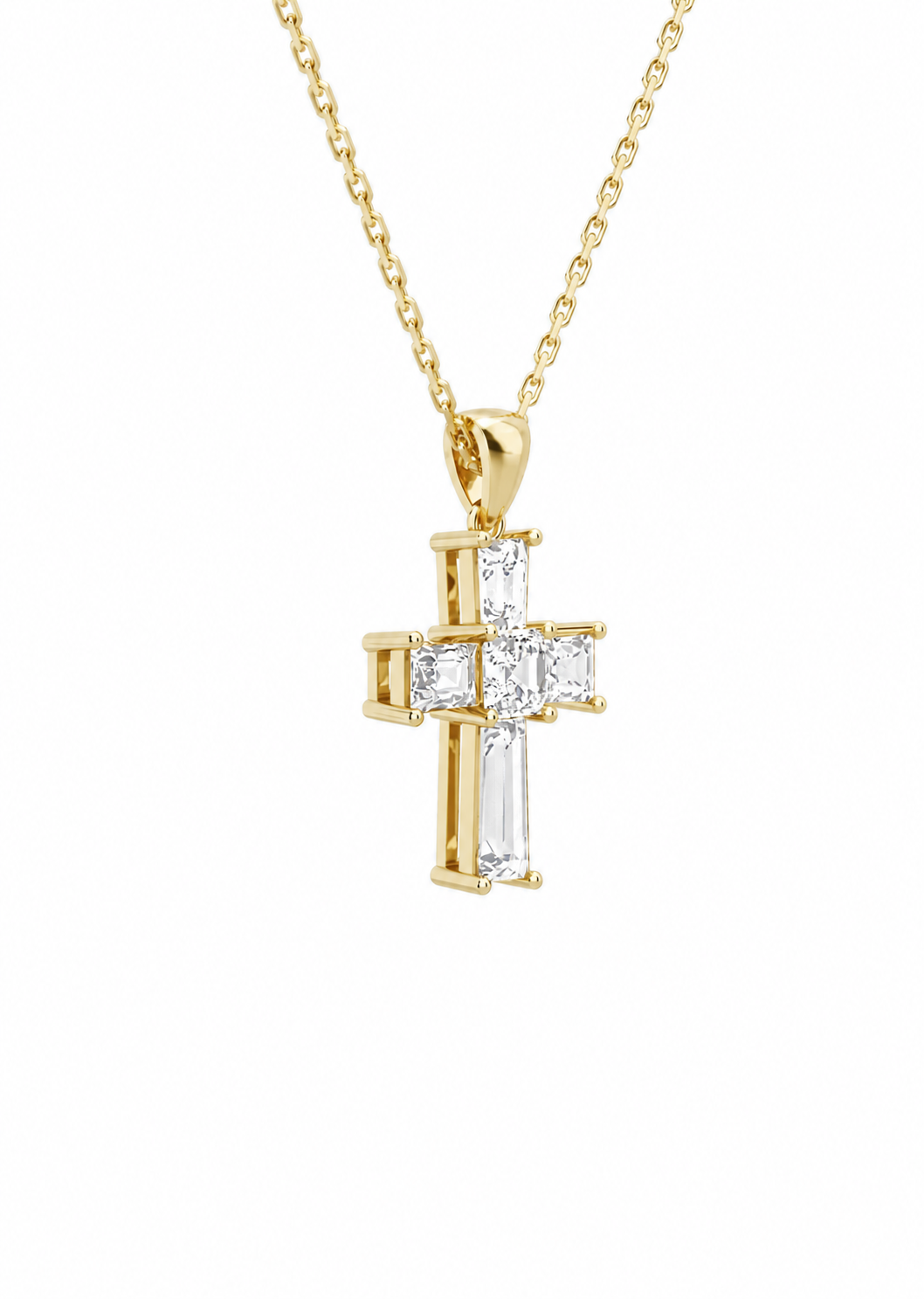
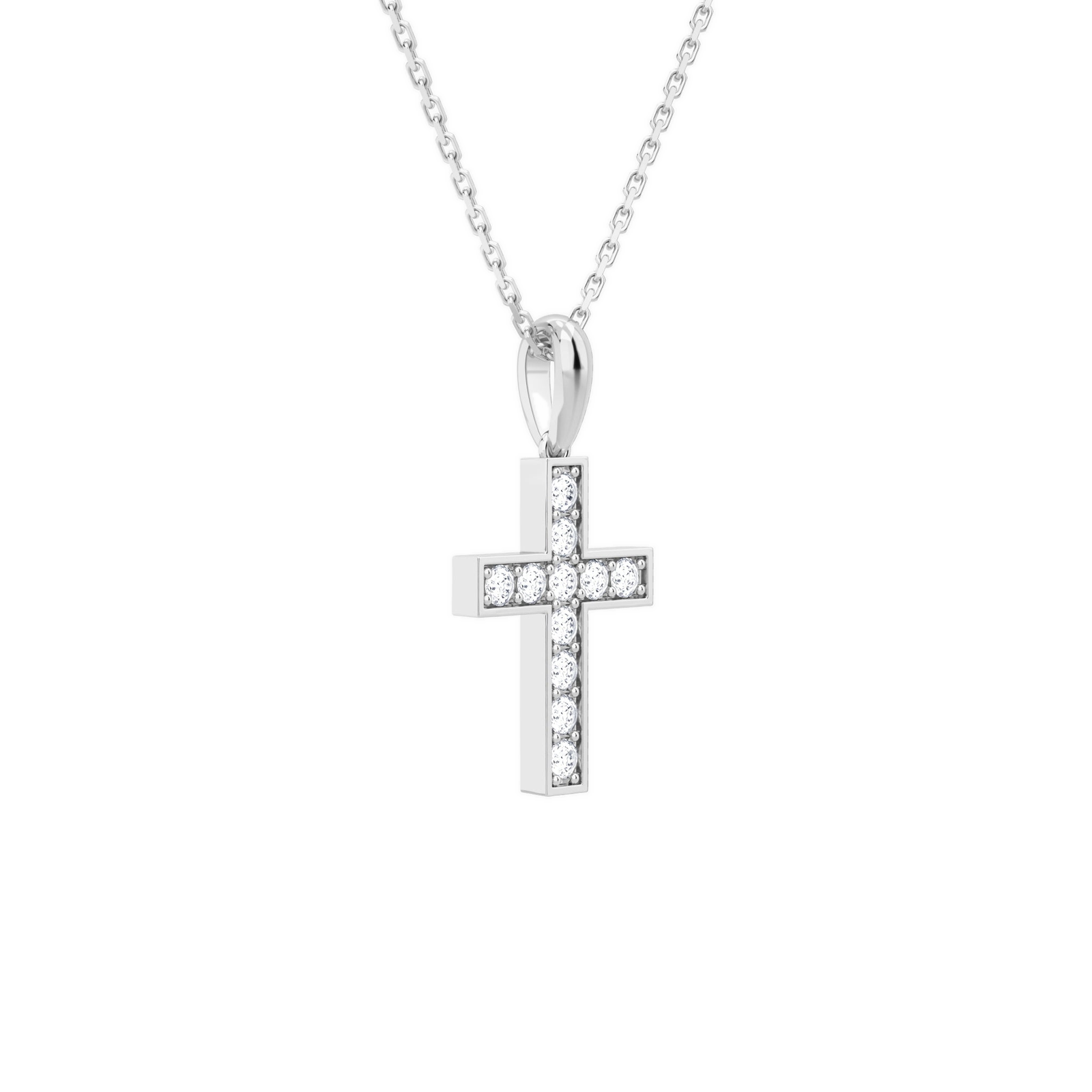
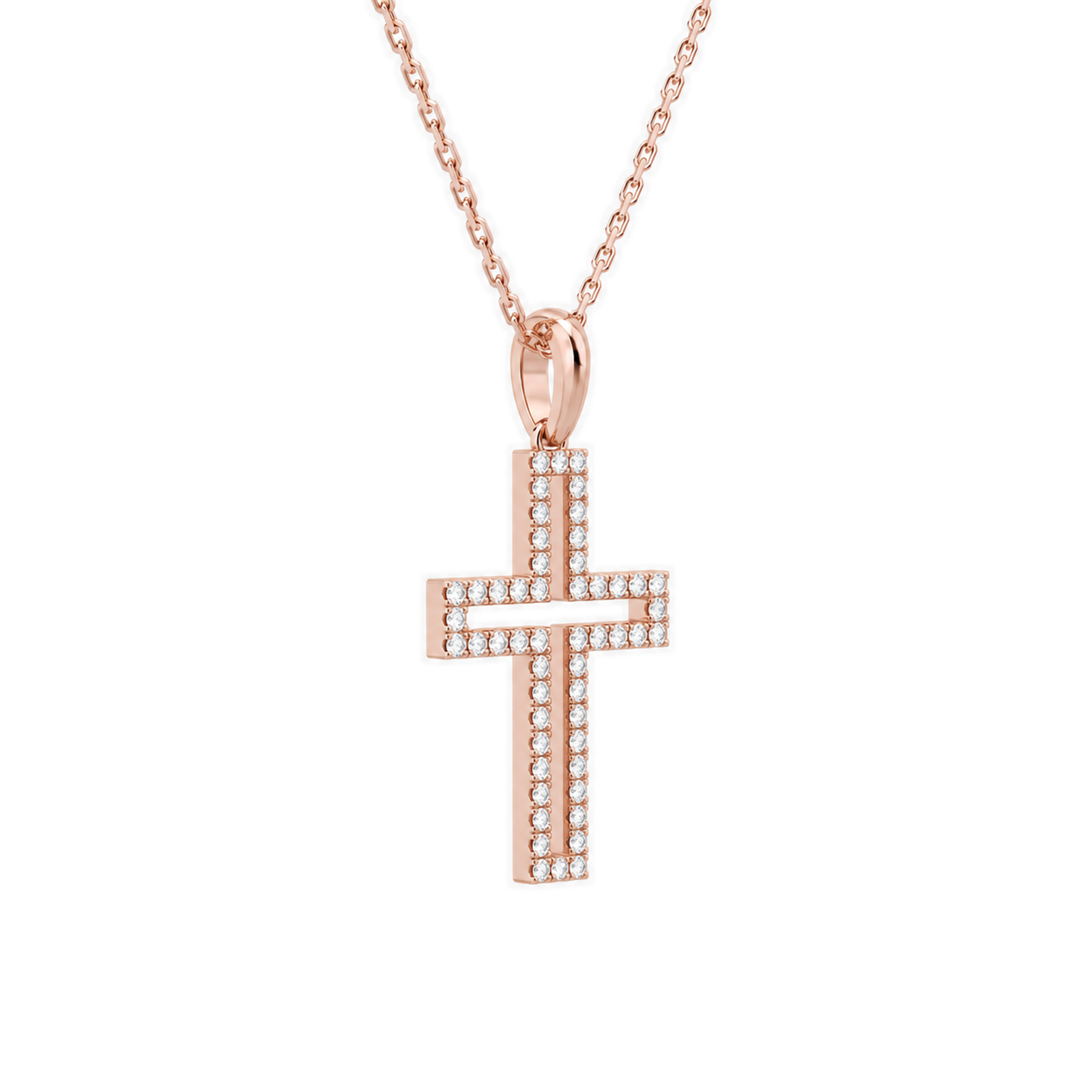
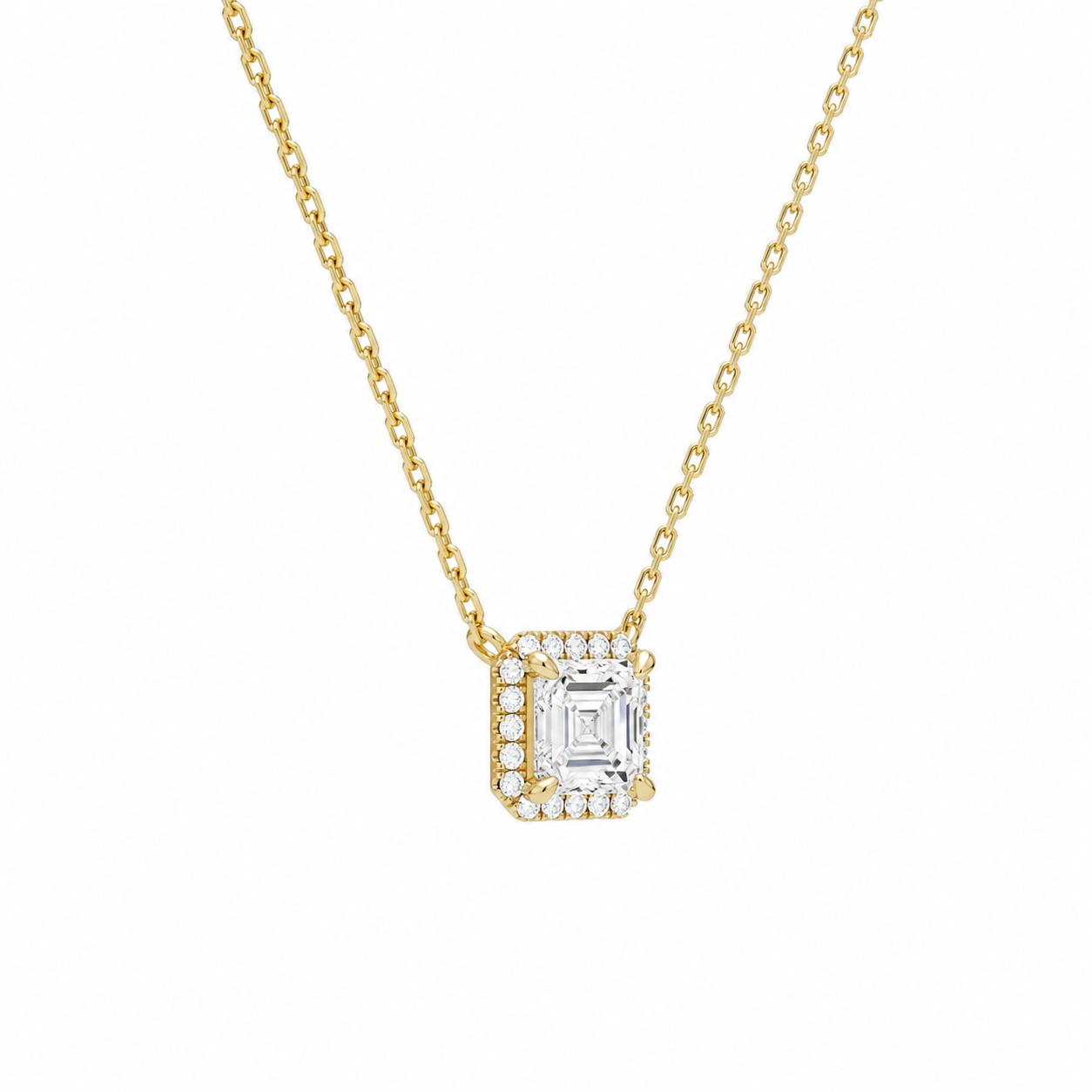
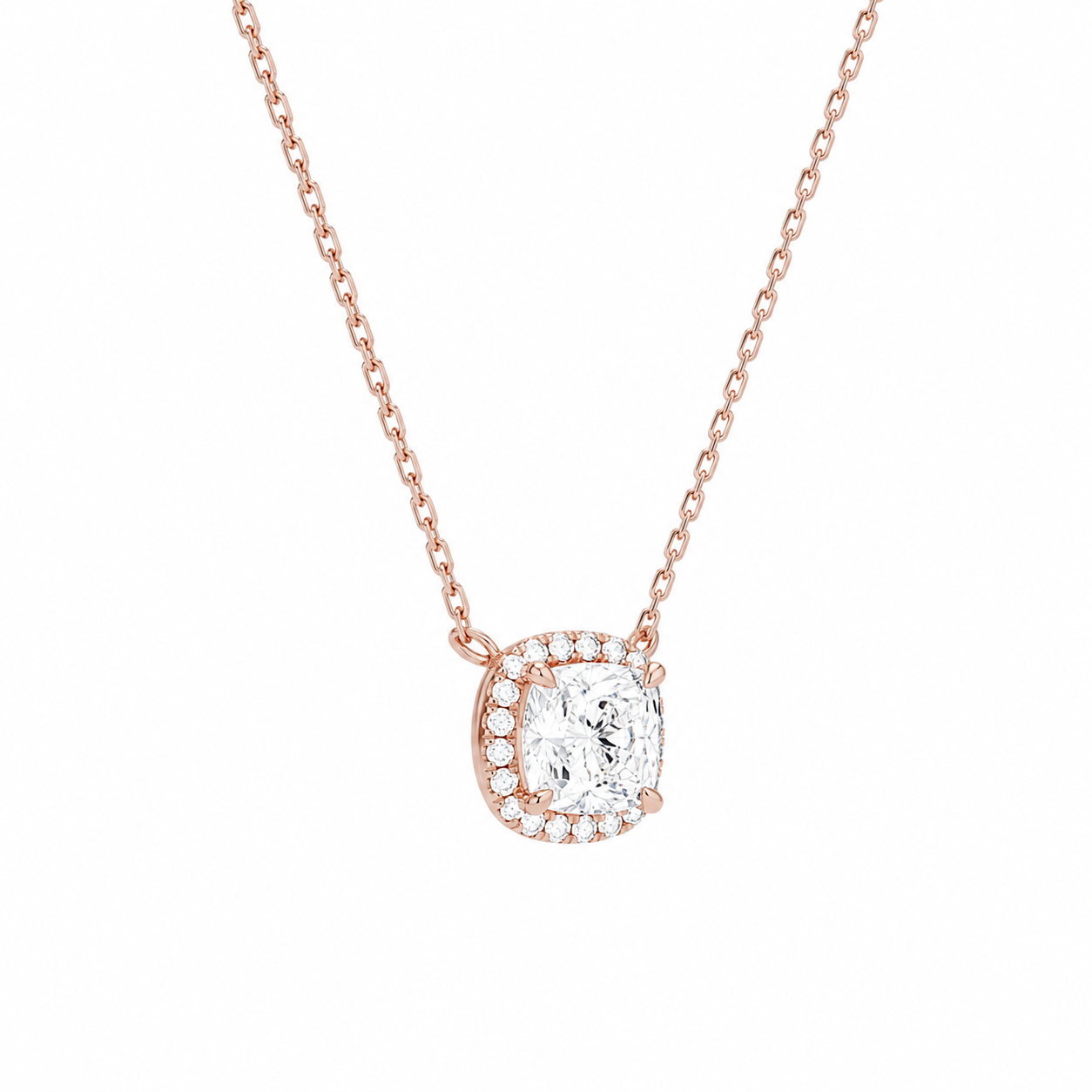
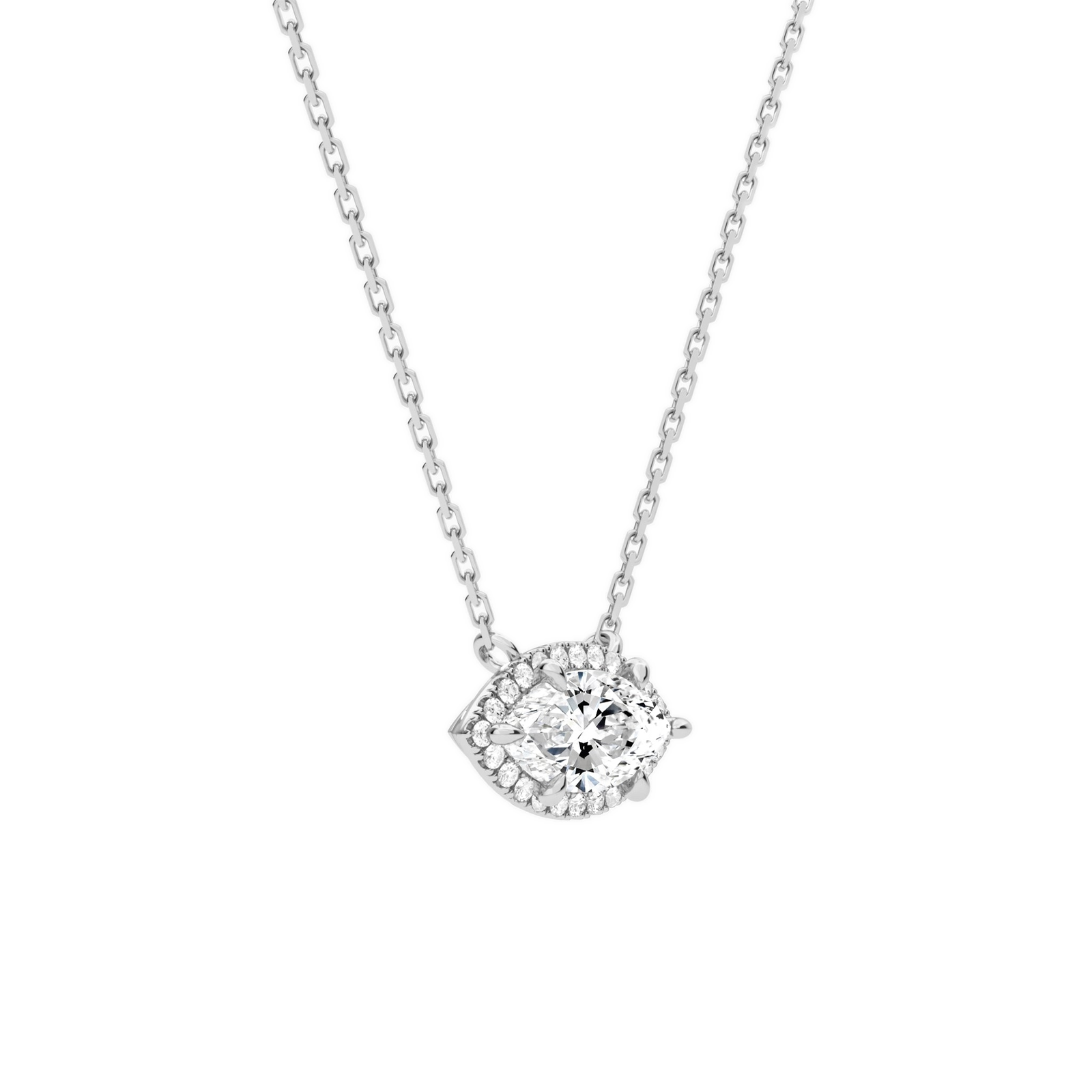
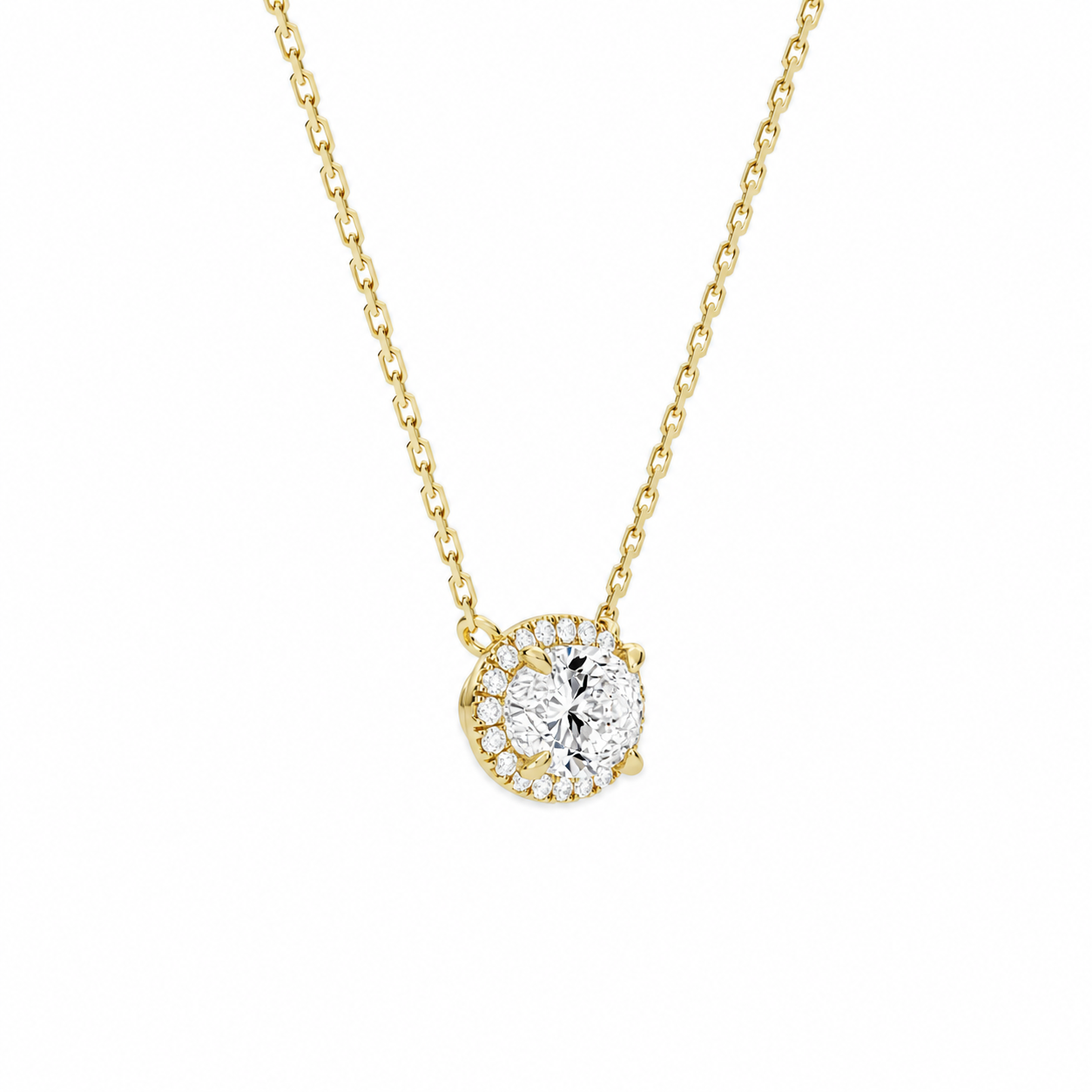
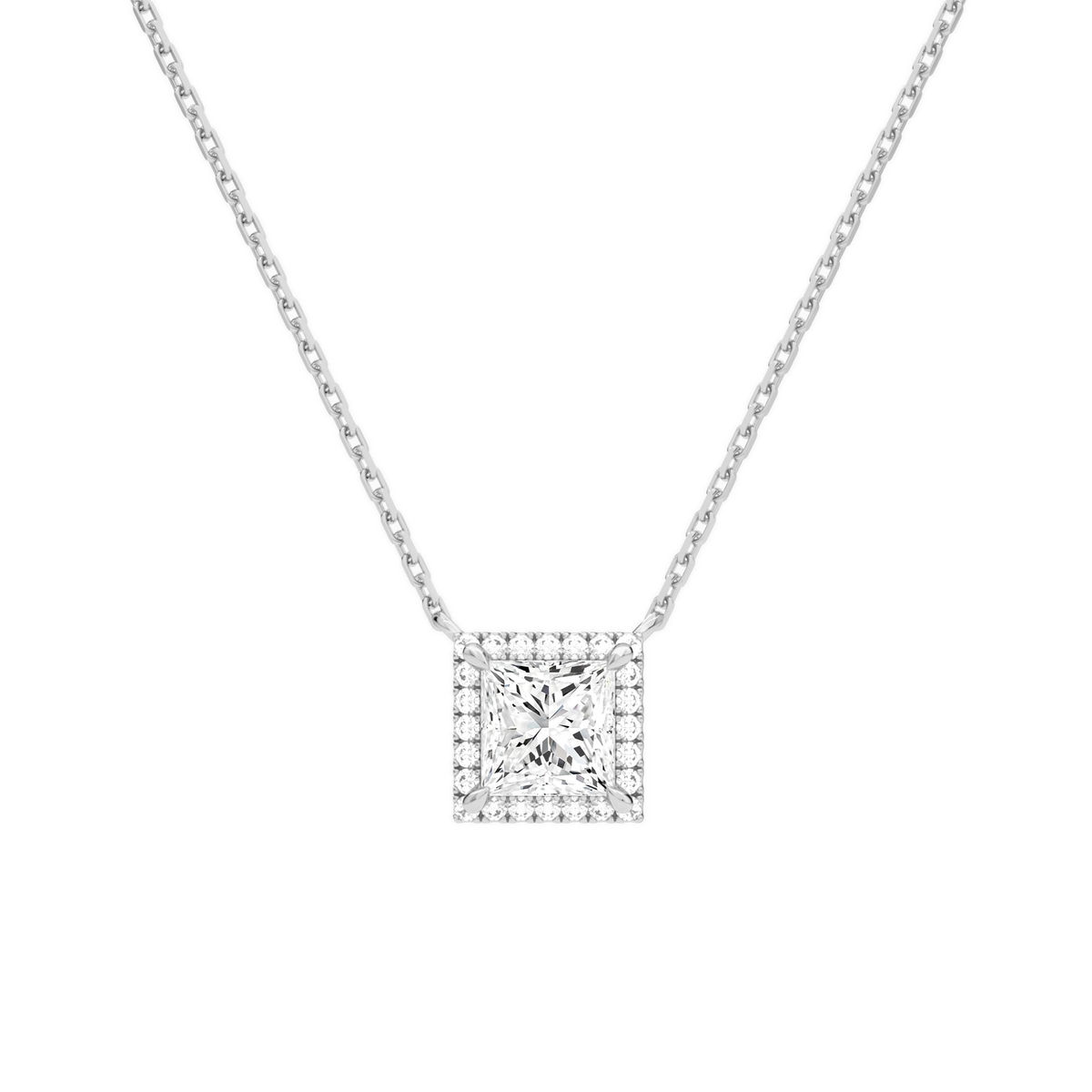
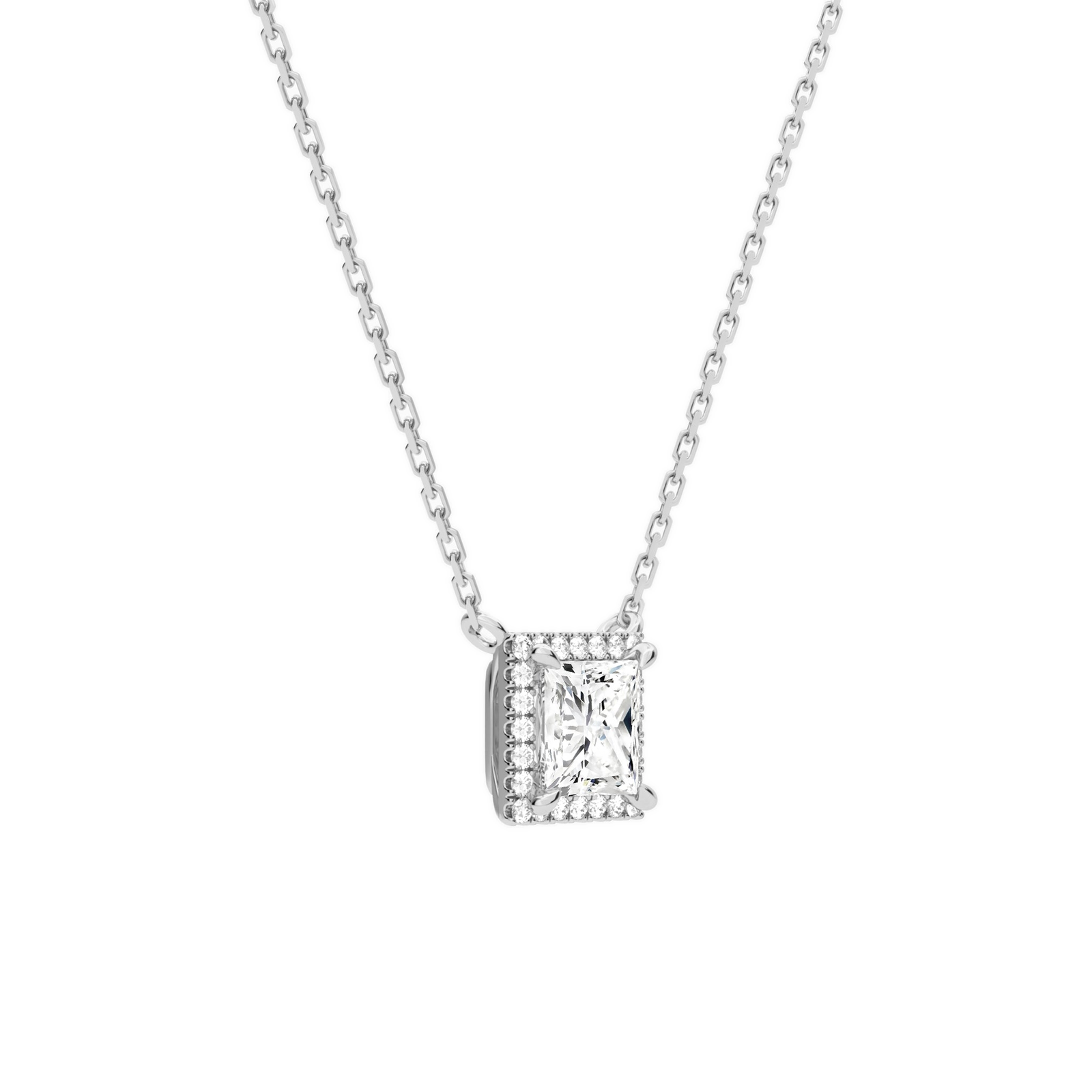
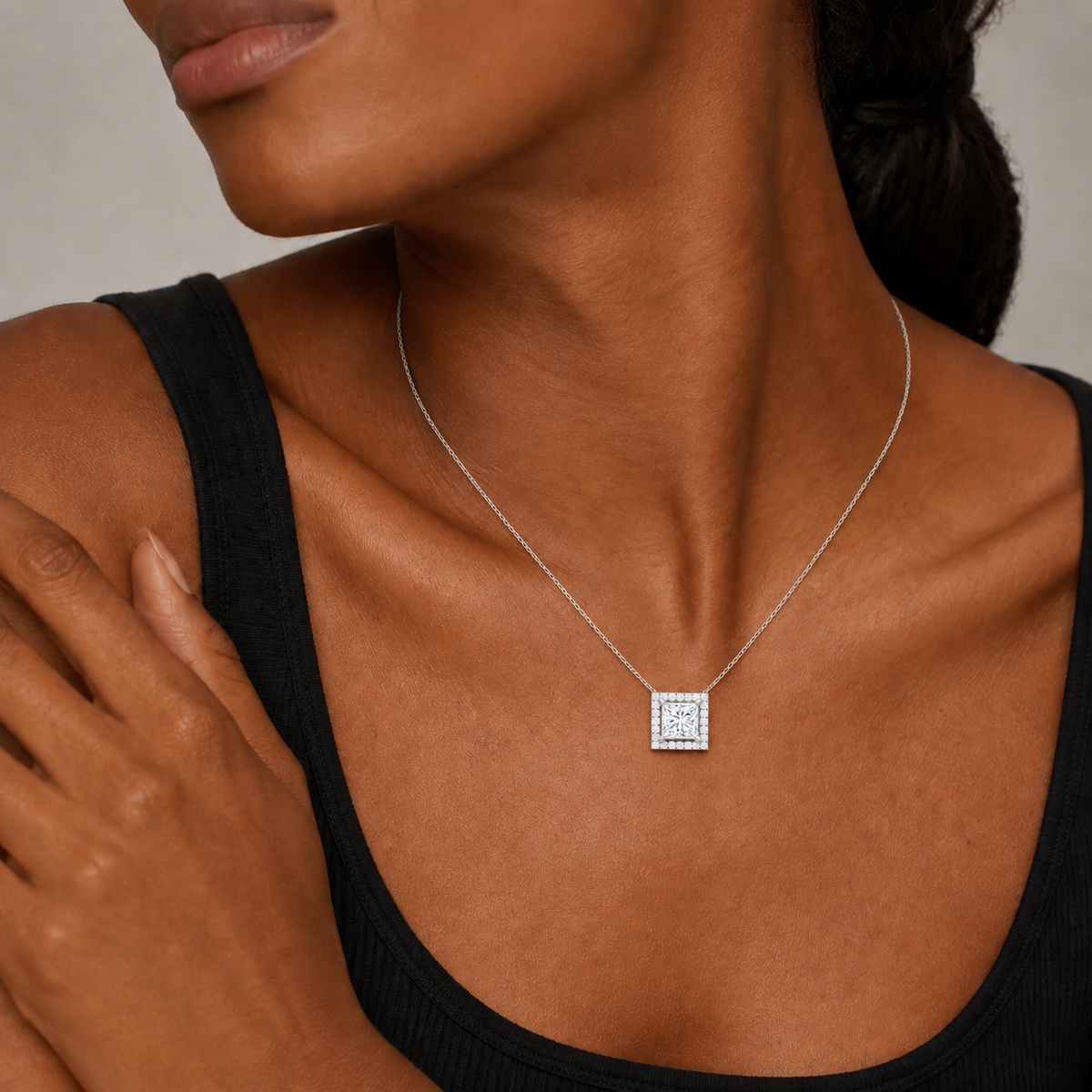
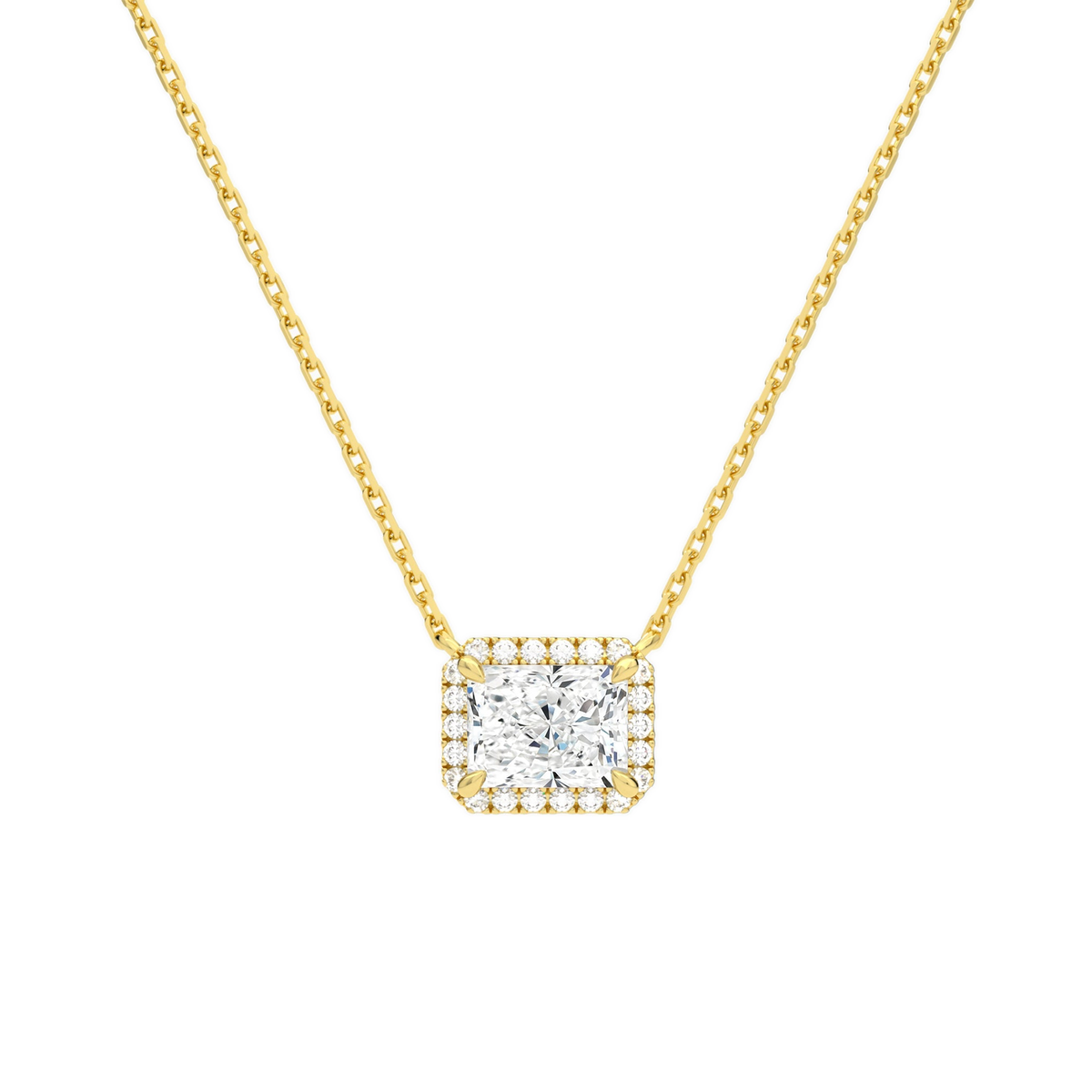
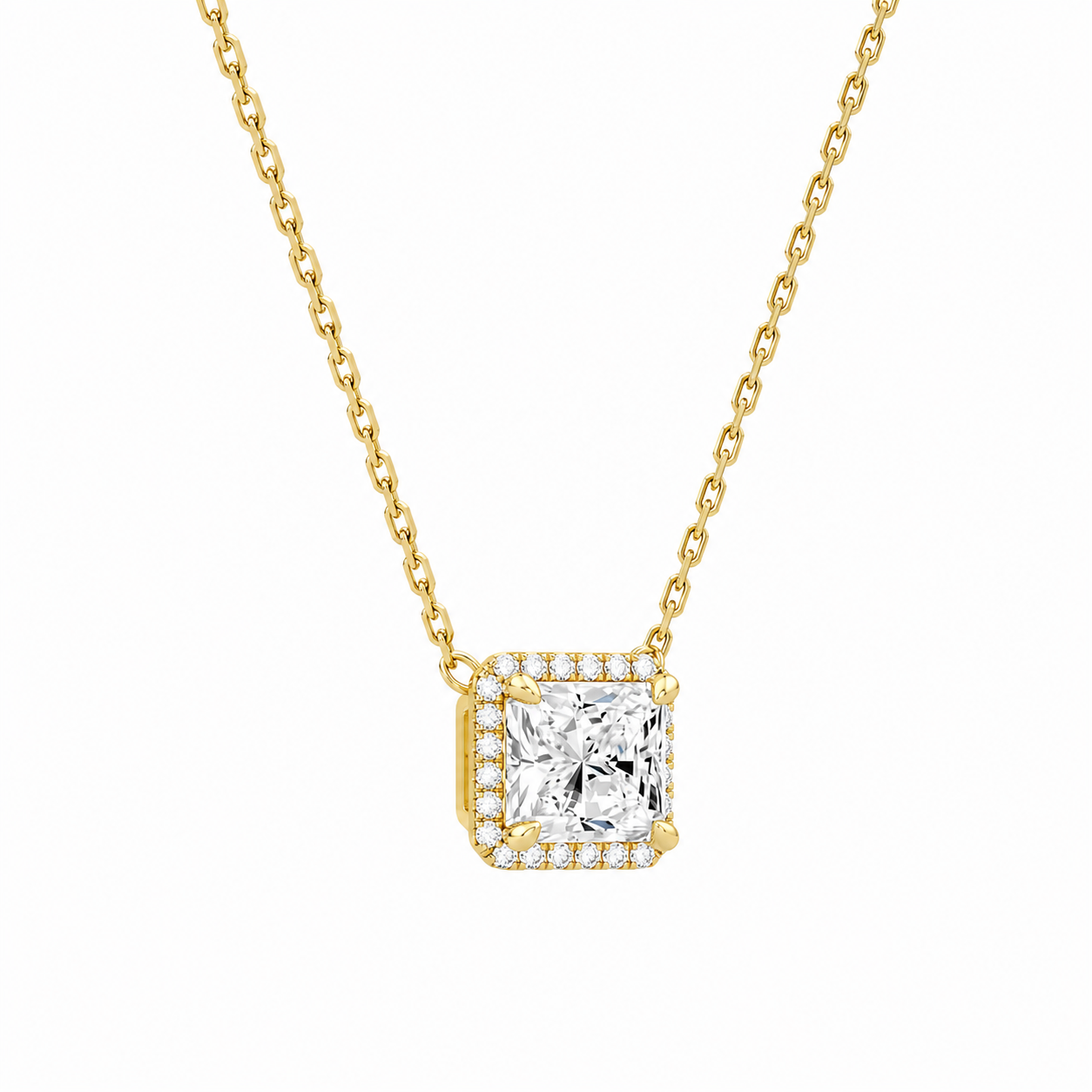
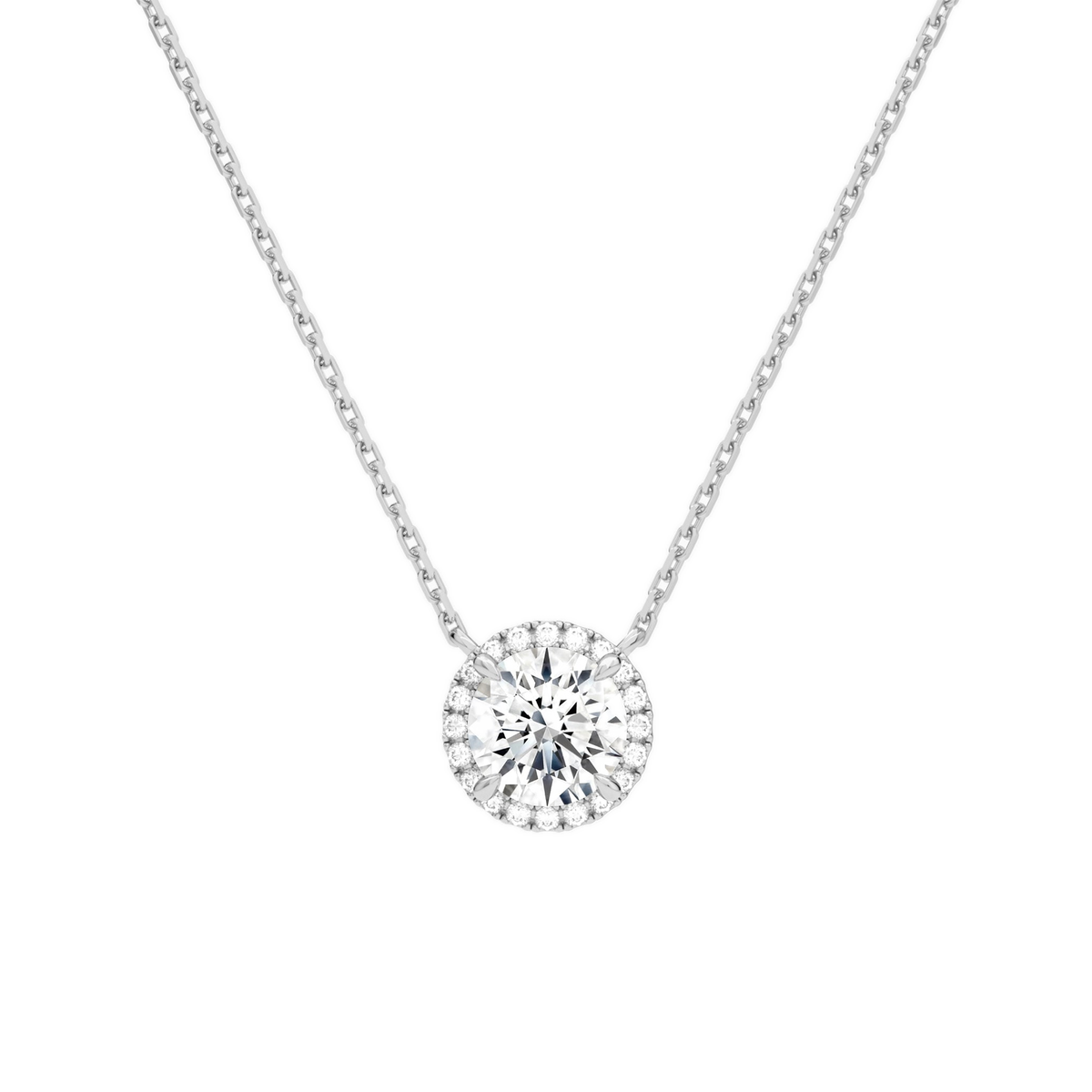
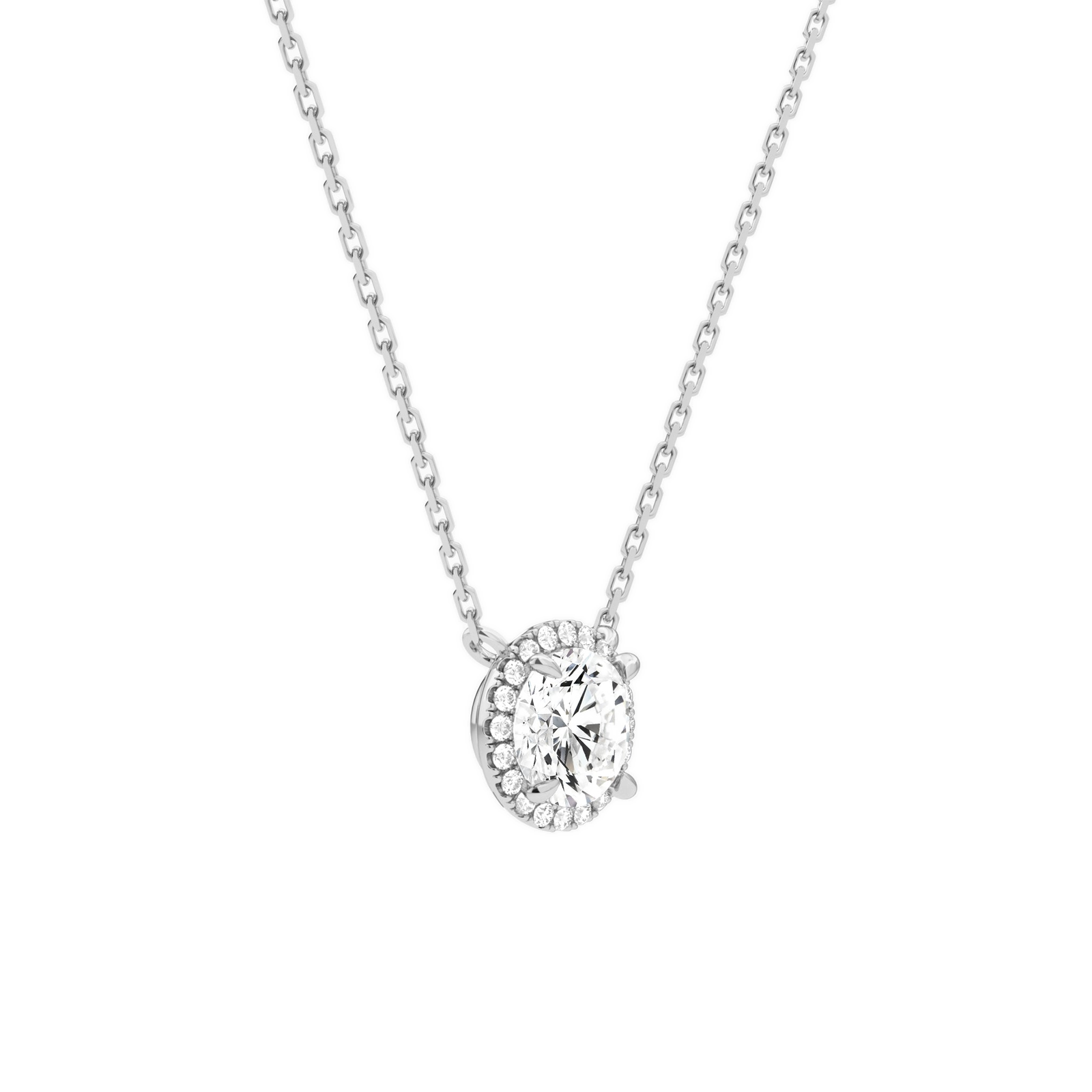
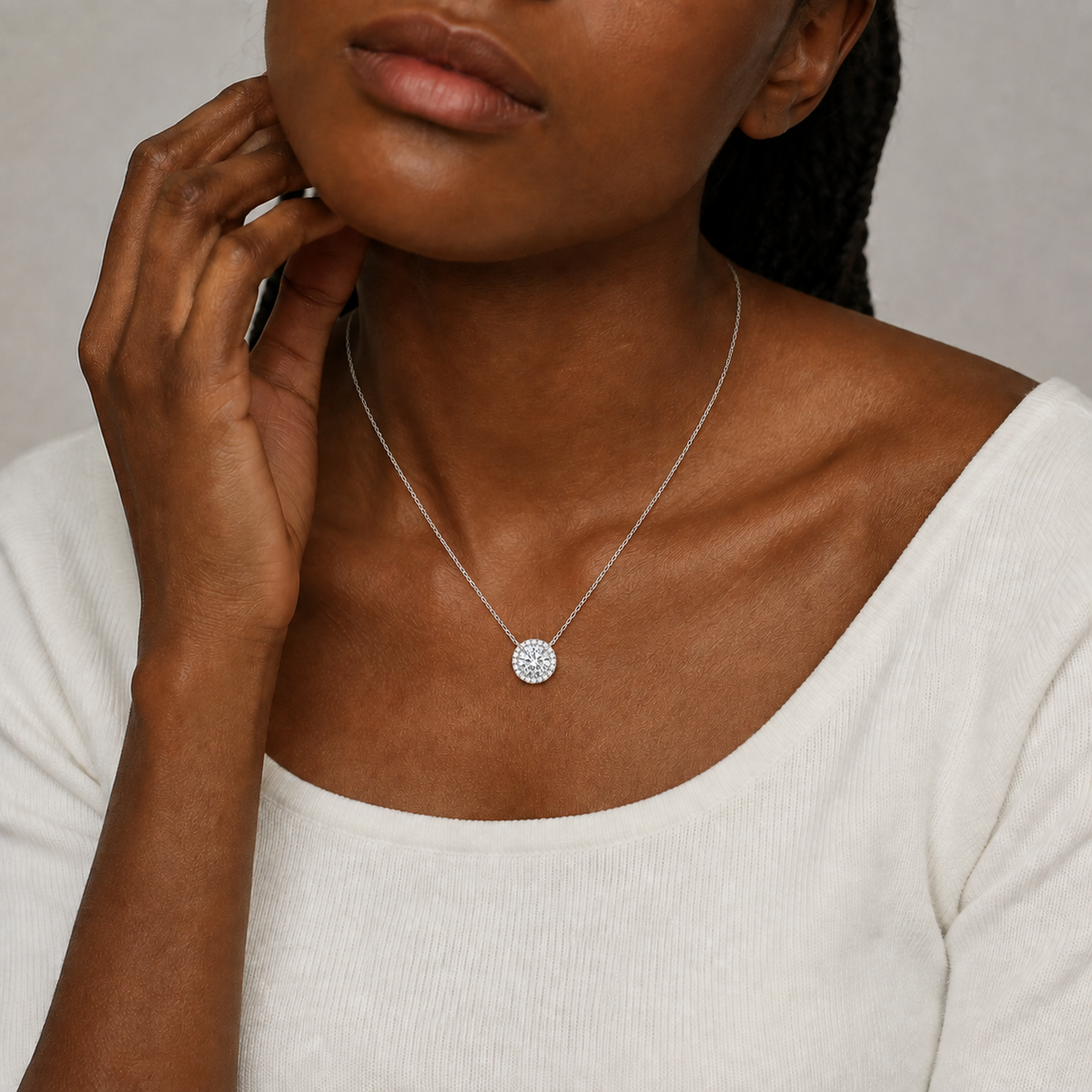
The 51 current necklaces include 17 bezel solitaires, 14 prong solitaires, 13 crosses, and seven halos. A solitaire concentrates attention; a bezel clarifies an edge; a halo expands the complete field; a cross introduces a graphic and potentially symbolic form. Symbolism remains personal and should never be assigned to every wearer.
All 51 current descriptions list an adjustable 16–18-inch length, a 0.95 mm chain, and a lobster clasp. Placement still changes with neck, clothing, attachment, and focal dimensions. Compare the complete pendant, not carat alone, and confirm whether a selected option refers to one center, a multi-diamond total, or pendant size.
Bracelets Translate Line into Movement
The current bracelet edit is intentionally narrow: one bangle and four tennis-line designs. The articulated pieces list widths from 2.7 to 4.3 mm and include bezel, interlocking, box-link, and four-prong rhythms. The bangle carries more of its own arc. Structure determines movement and interval before any gendered style label is applied.
Wrist circumference, internal dimensions, closure, width, and preferred movement shape fit. A watch adds another profile, finish, closure, and center of weight. Matching metal can create continuity and contrast can create separation, but neither choice proves mechanical compatibility or prevents contact.
Let Metal Connect—or Separate—the Composition
Current cards represent 44 designs in 14K White Gold, 44 in 14K Yellow Gold, and 21 in 14K Rose Gold. White metal can reduce the visible boundary around near-colorless-looking diamonds in some settings; yellow or rose metal can make edges, intervals, and attachments more explicit. Actual effect depends on finish, rhodium treatment where applicable, light, skin, and setting coverage.
A jewelry wardrobe does not need one metal or one motif. Repeating a proportion, shape, edge, or diamond rhythm may be enough to connect pieces; a deliberate difference can give each position its own register. Matching metal names do not guarantee identical alloy, finish, color, age, or maintenance.
Choose a Gift Through Known Preferences
For a gift, begin with what can be observed or verified: the jewelry the recipient already wears, preferred metal, pierced ears, ring or wrist measurements, necklace length, symbolic comfort, and whether they favor one focal point or a repeating line. Category labels and assumed gender preferences are poor substitutes for this evidence.
When exact fit or symbolism is uncertain, a collaborative choice can be more personal than a surprise. Custom possibilities may refine shape, scale, metal, setting, length, fit, or a personal detail when technically feasible. Custom does not mean every product, material, size, price, or timeline can be changed.
Clarity Continues After Selection
Burvonti uses responsibly sourced lab-grown diamonds and supports independent grading and certification where applicable. Confirm which diamond or diamonds selected documentation identifies; one report does not automatically cover accent stones, a pair, or the finished piece. Laboratory-grown diamonds are diamonds, but documentation scope and product construction remain individual.
Care should follow the complete object. Inspect settings, posts, backs, chains, attachments, links, clasps, ring edges, and any points of repeated contact. Store pieces without abrasion or tangling and remove them when an activity or chemical would place unnecessary stress on the selected construction.
Frequently Asked Questions
What is included in Burvonti’s Men’s Jewelry Collection?
The current public Collection contains 109 products: 28 rings, 25 earrings, 51 necklaces, and five bracelets.
Is men’s jewelry made differently from other jewelry?
No gender-specific construction standard is assumed. This is an audience-navigation path; proportion, structure, fit, metal, setting, and personal preference remain the useful decisions.
Can anyone wear jewelry from this Collection?
Yes. The Collection does not restrict the wearer. Customers may use whichever navigation and styling language best supports their search.
How should I choose among a ring, earring, necklace, or bracelet?
Begin with where the wearer wants presence: hand, face, neckline, or wrist. Then compare the product-specific scale, structure, fit, and role.
What Men’s Rings are currently represented?
The current 28 rings are wedding-band-titled designs from 4 to 8 mm, with varied profiles, surfaces, and diamond placements.
What Men’s Earrings are currently represented?
The current 25 studs include nine prong solitaires, nine bezels, and seven halos across nine diamond shapes.
What Men’s Necklaces are currently represented?
The current 51 necklaces include 17 bezel solitaires, 14 prong solitaires, 13 crosses, and seven halos.
What Men’s Bracelets are currently represented?
The current five bracelets include one bangle and four tennis-line designs using bezel, interlocking, box-link, or four-prong structures.
How do I choose the right visual scale?
Compare complete dimensions, profile, setting edge, diamond distribution, visible metal, the wearer’s proportions, and realistic worn-scale imagery rather than category labels alone.
Does a larger or wider piece look more masculine?
No. Scale is a design and fit decision, not a gender rule. Presence depends on proportion, construction, placement, and the wearer’s preference.
Which metals are currently represented?
Current cards represent 14K White, Yellow, and Rose Gold. Exact alloy, finish, rhodium treatment, sensitivity, maintenance, and alternatives remain product-specific.
Should all pieces use the same metal?
Only if desired. Repeating one metal can create continuity; controlled contrast can give each position its own role. Matching names do not guarantee identical color or finish.
Are lab-grown diamonds real diamonds?
Yes. Laboratory-grown diamonds are diamonds rather than simulants, though their origin, grading details, setting, and documentation should still be reviewed per product.
Are all diamonds independently graded?
Independent grading and certification apply where stated. Confirm which center or stones the selected report covers; it does not automatically cover accents, a pair, or the finished piece.
How should I choose men’s jewelry as a gift?
Use verified preferences: current jewelry, metal, piercing, measurements, necklace length, symbolism, and desired presence. Avoid relying on gender or average-size assumptions.
Can men’s jewelry be personalized or customized?
Shape, scale, metal, setting, length, fit, or personal details may be possible after technical review. Availability, price, and timing require individual confirmation.
Can jewelry from different categories be worn together?
Yes. Coordinate through one repeated detail or use deliberate contrast, while checking fit, movement, and contact at each wearing position.
Is this jewelry suitable for everyday wear?
No Collection-wide guarantee applies. Suitability depends on the exact construction, fit, activity, impact, chemicals, maintenance, and wearer context.
How should men’s jewelry be stored?
Store pieces without abrasive contact or tangling, protect posts and chains, close clasps where appropriate, and separate hard edges or diamonds from softer surfaces.
How should men’s jewelry be cared for?
Use a gentle method suited to the full piece and inspect diamonds, settings, posts, backs, chains, links, clasps, edges, and contact points if anything changes.