
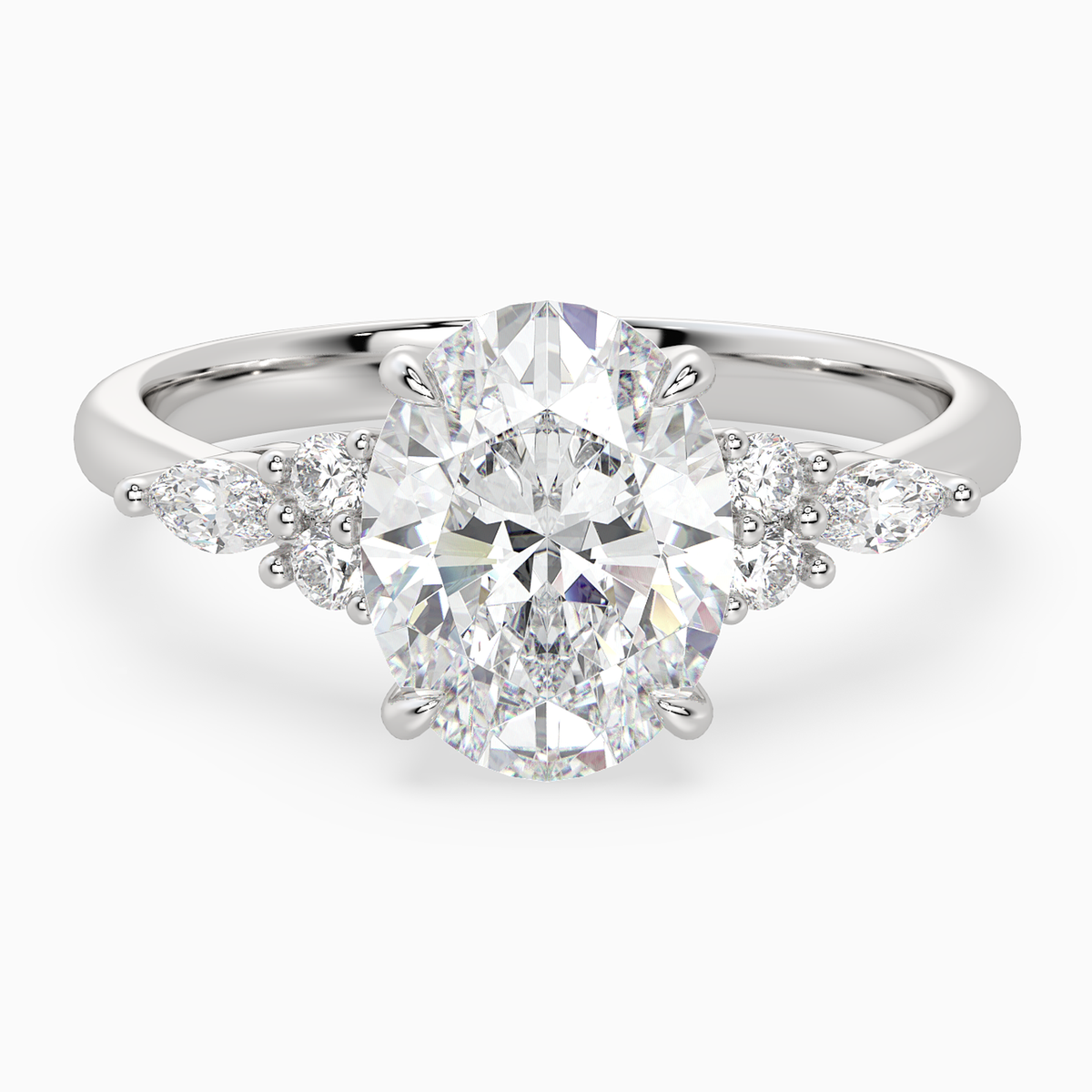


Lab Grown Diamond Stacking Rings in 14K Rose Gold
Rose gold makes each interval clear. Forty-five rings build a stack through hierarchy, widths, contours, settings, movement and contact.


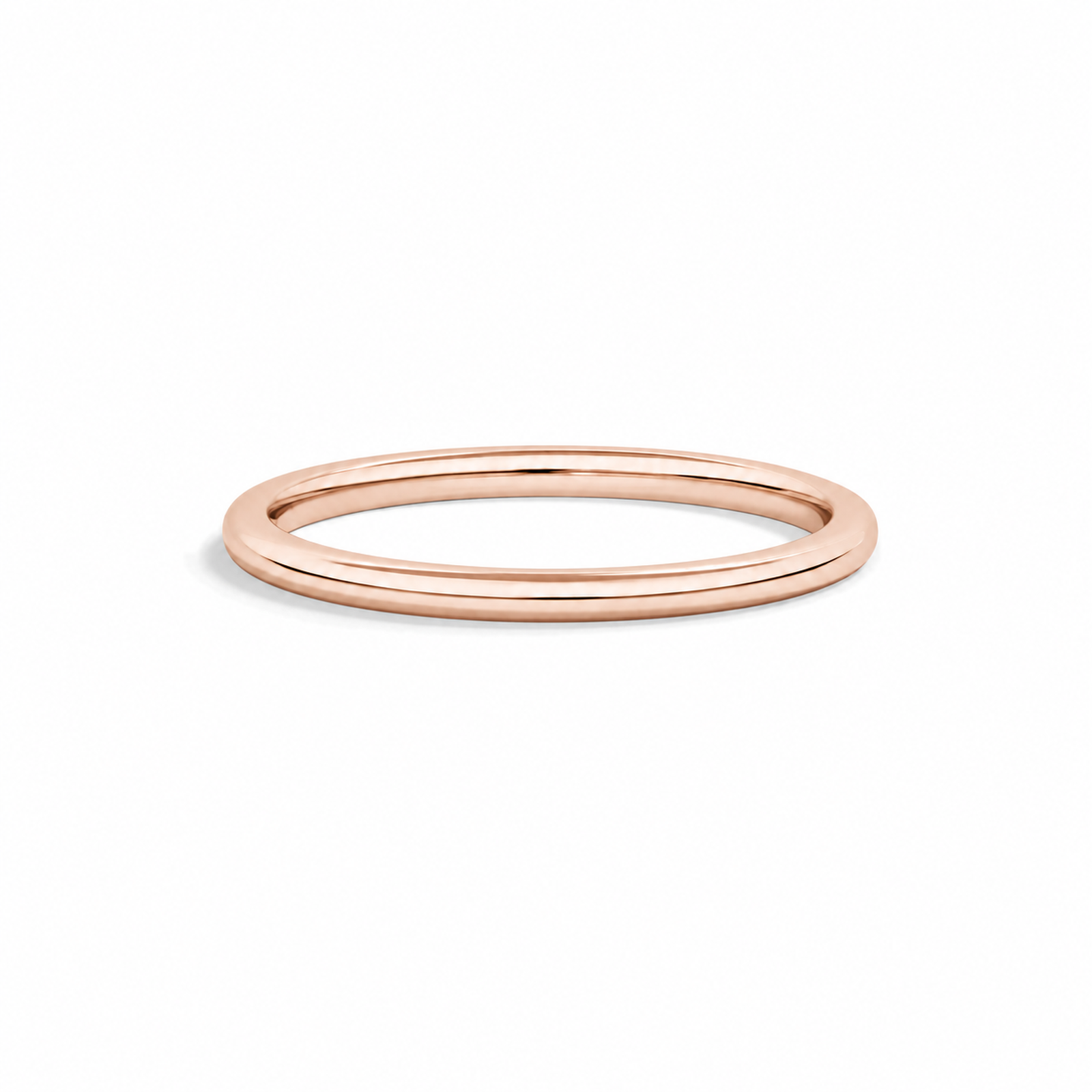
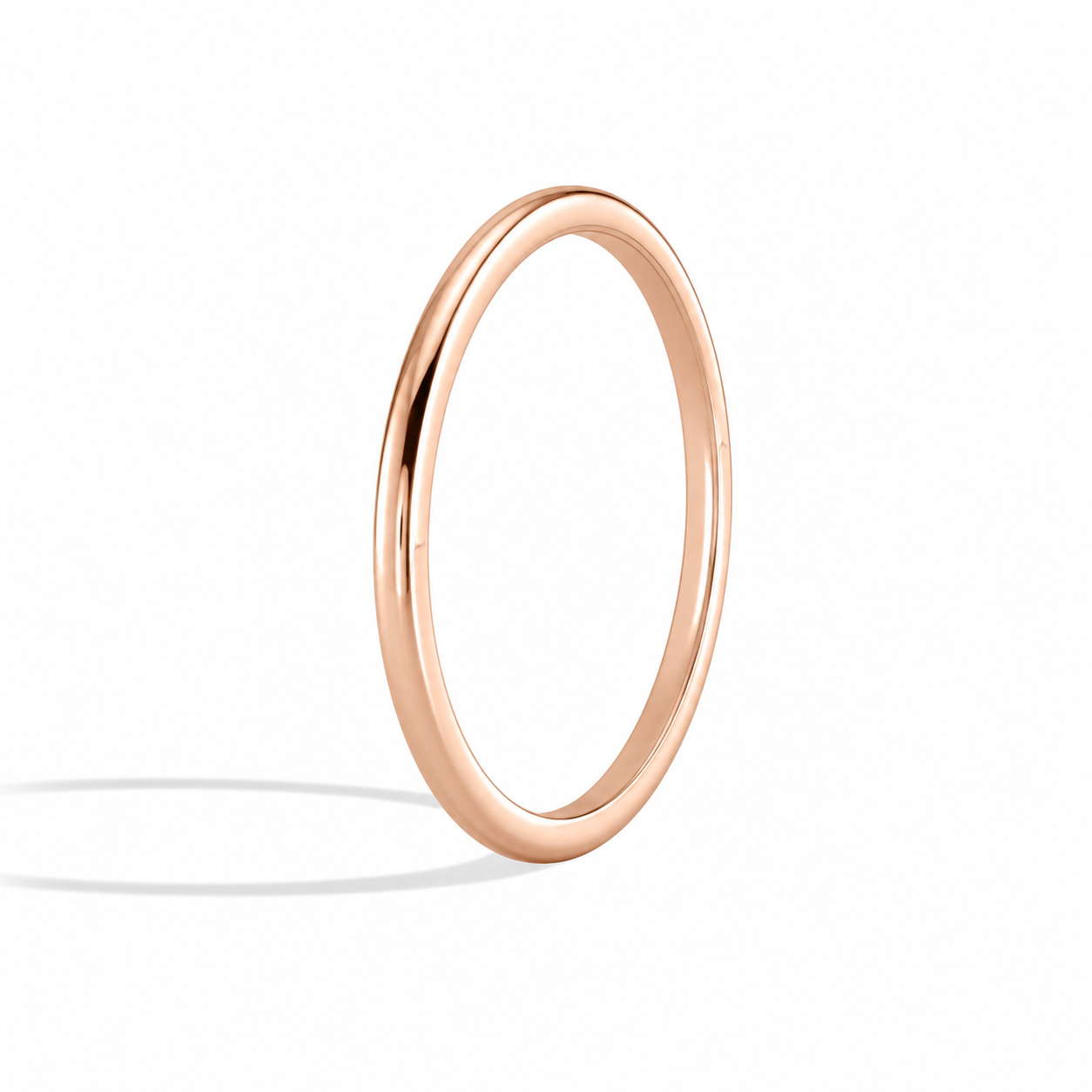

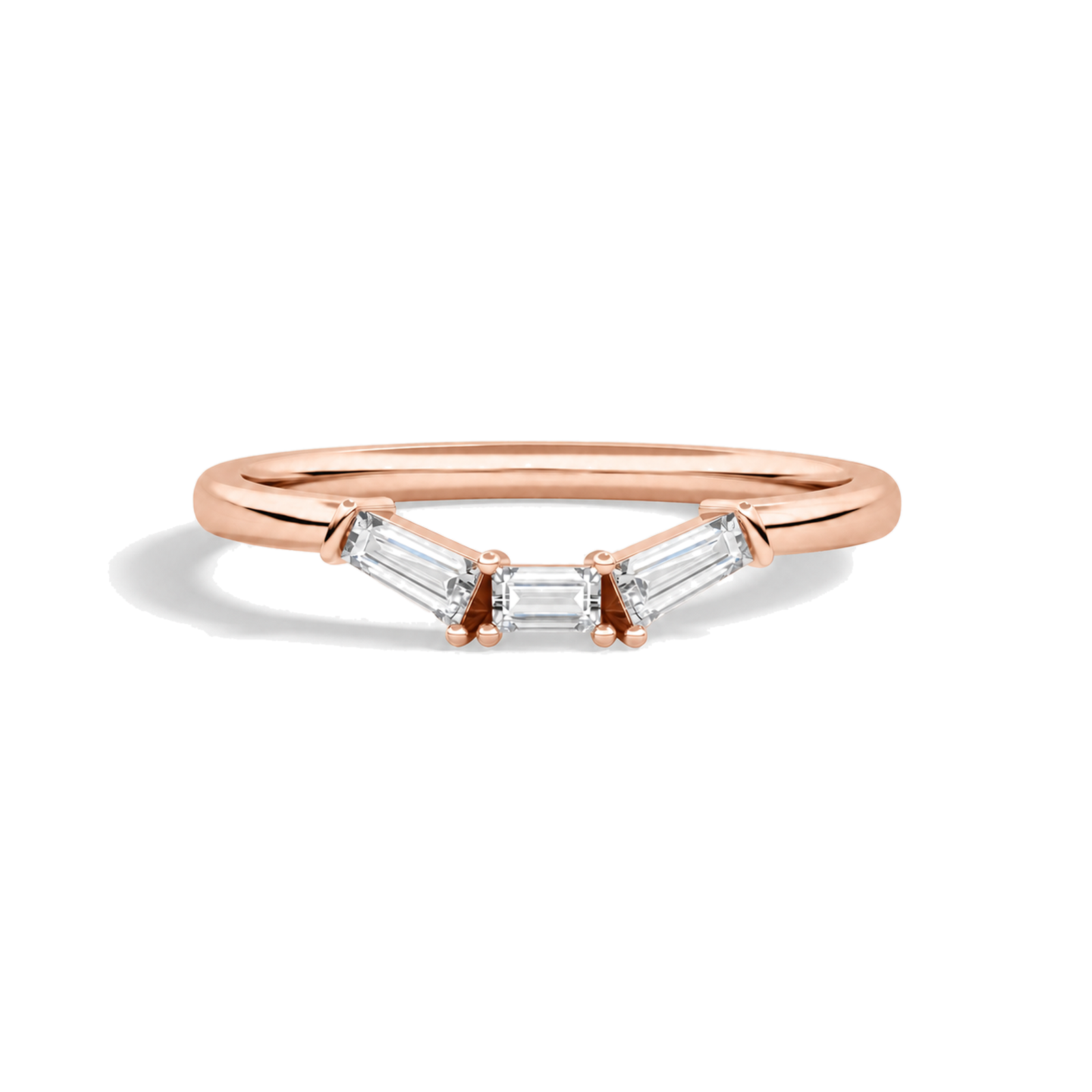
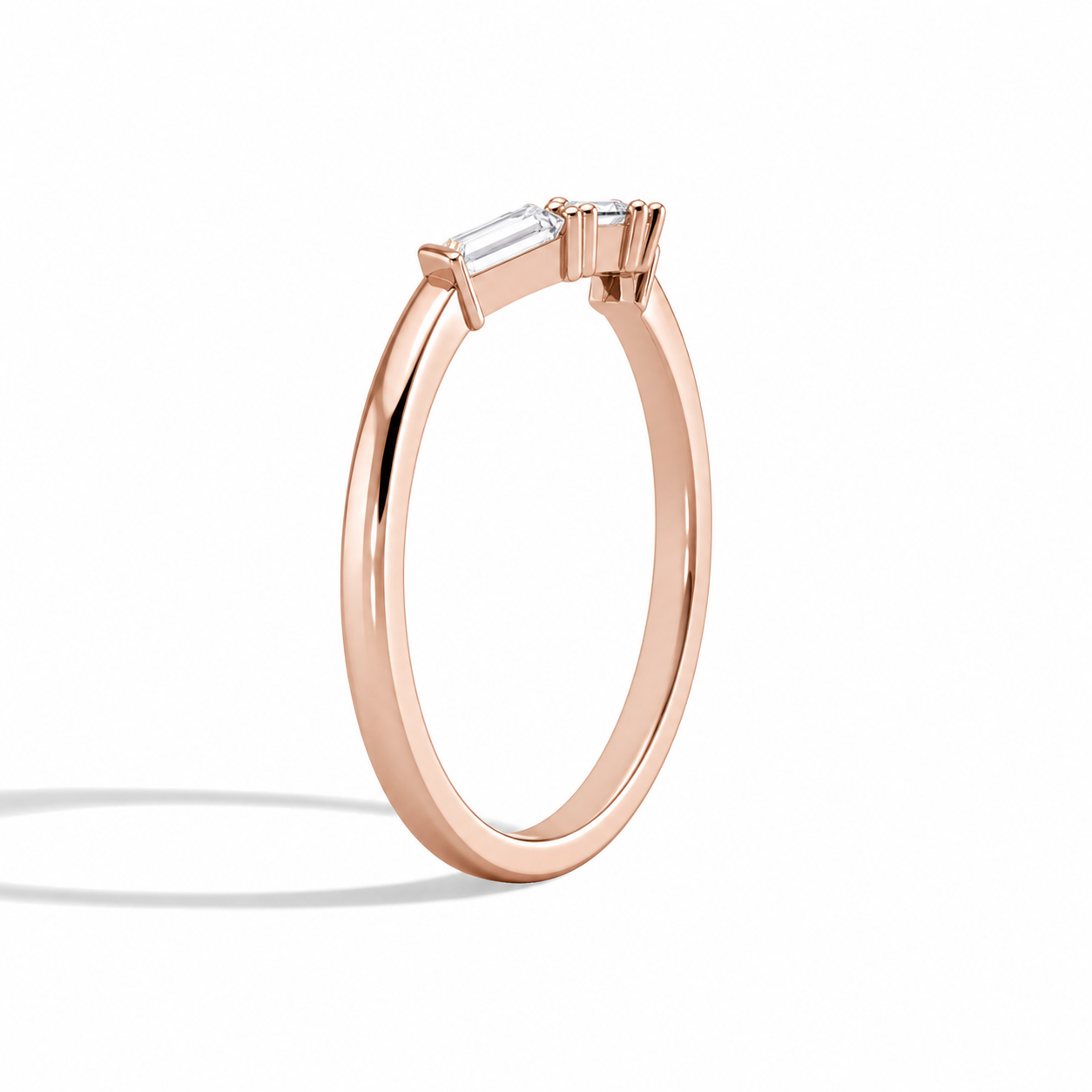

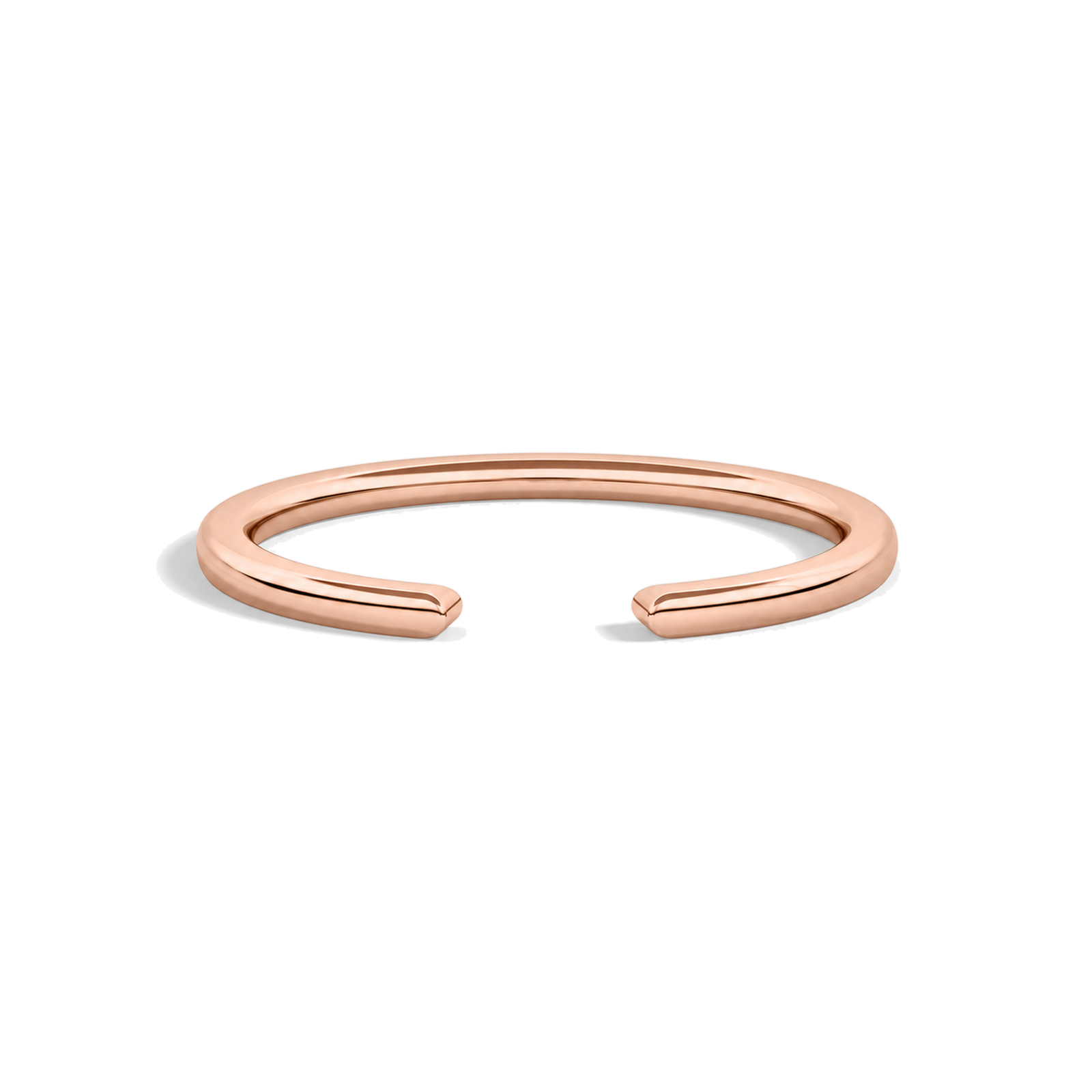
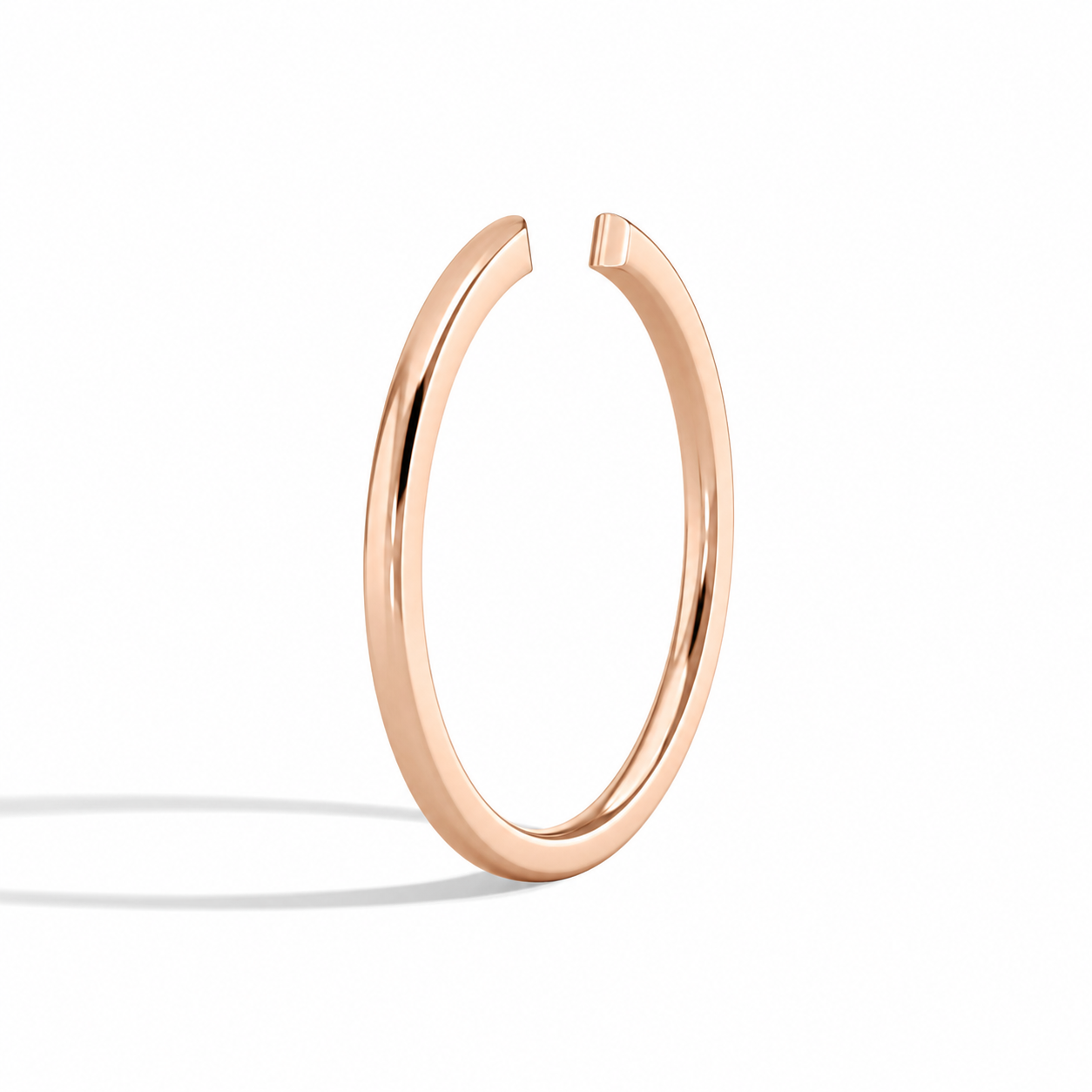


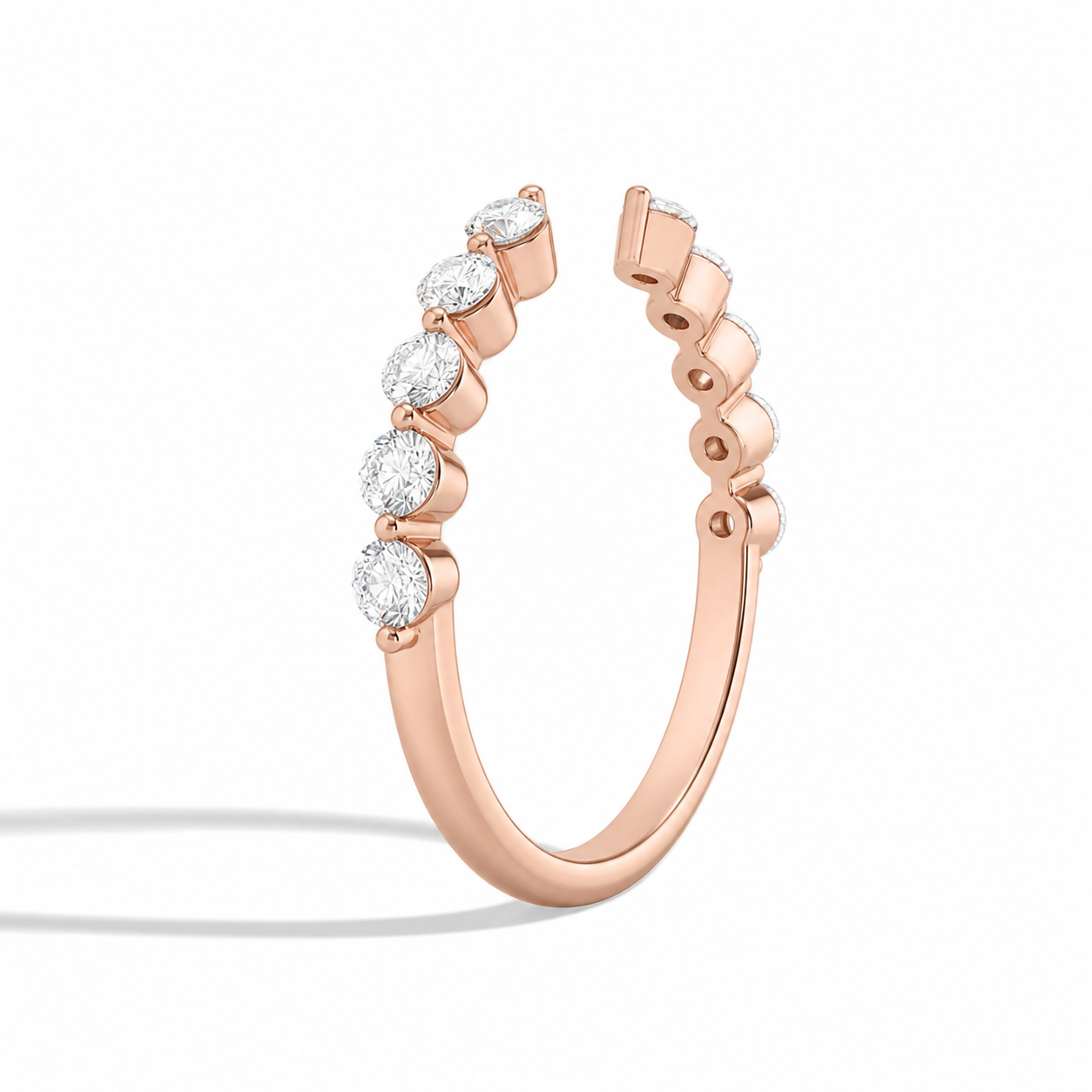

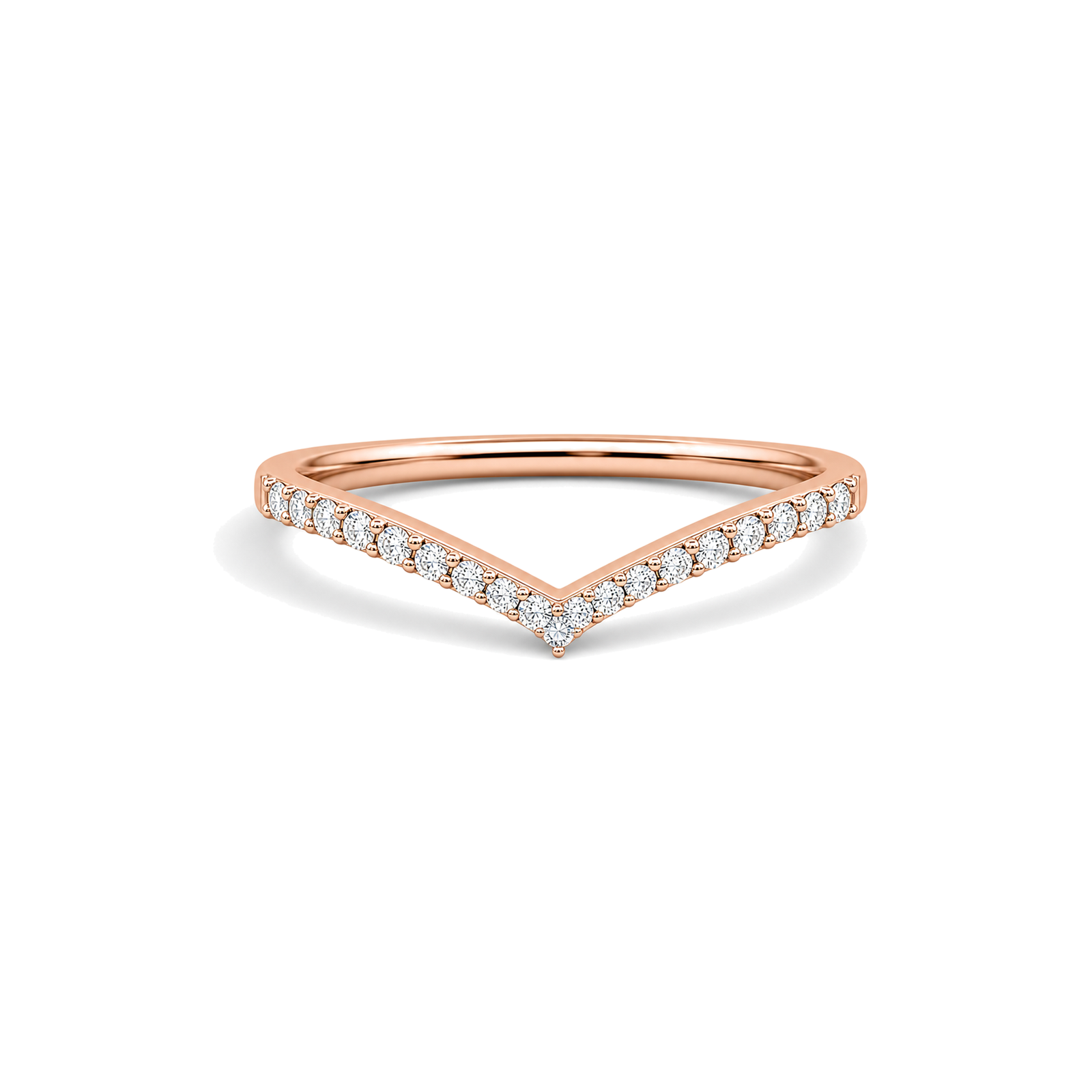
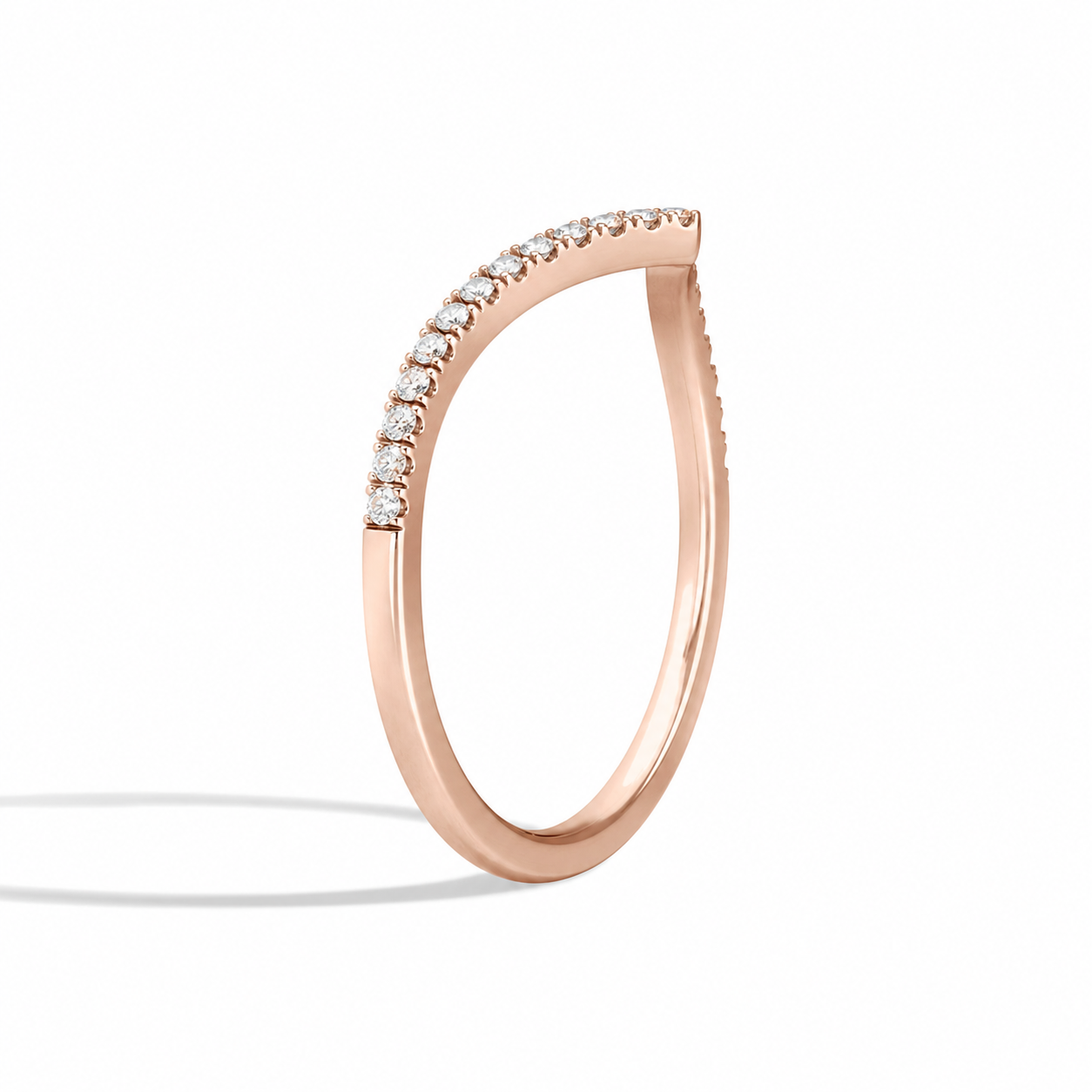

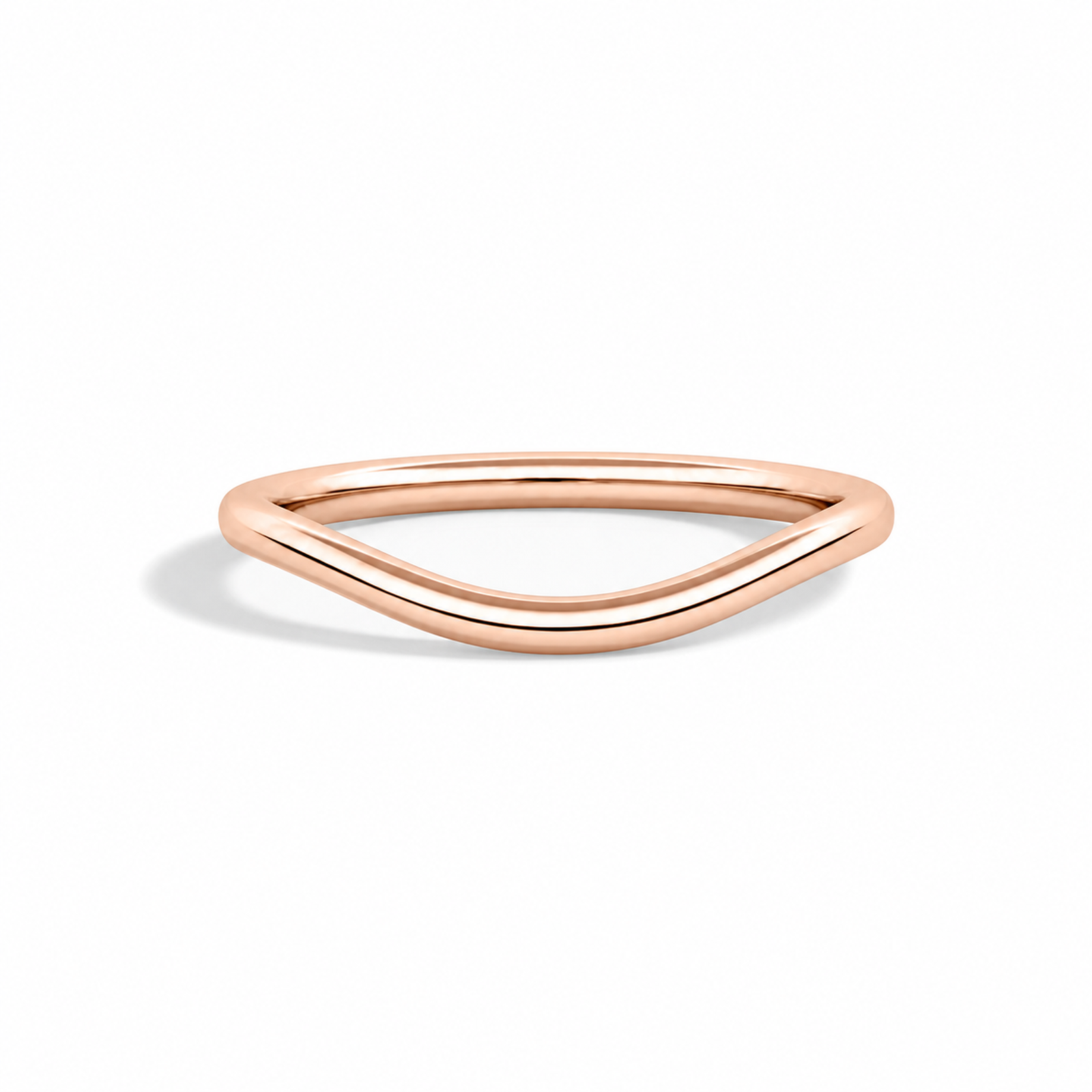
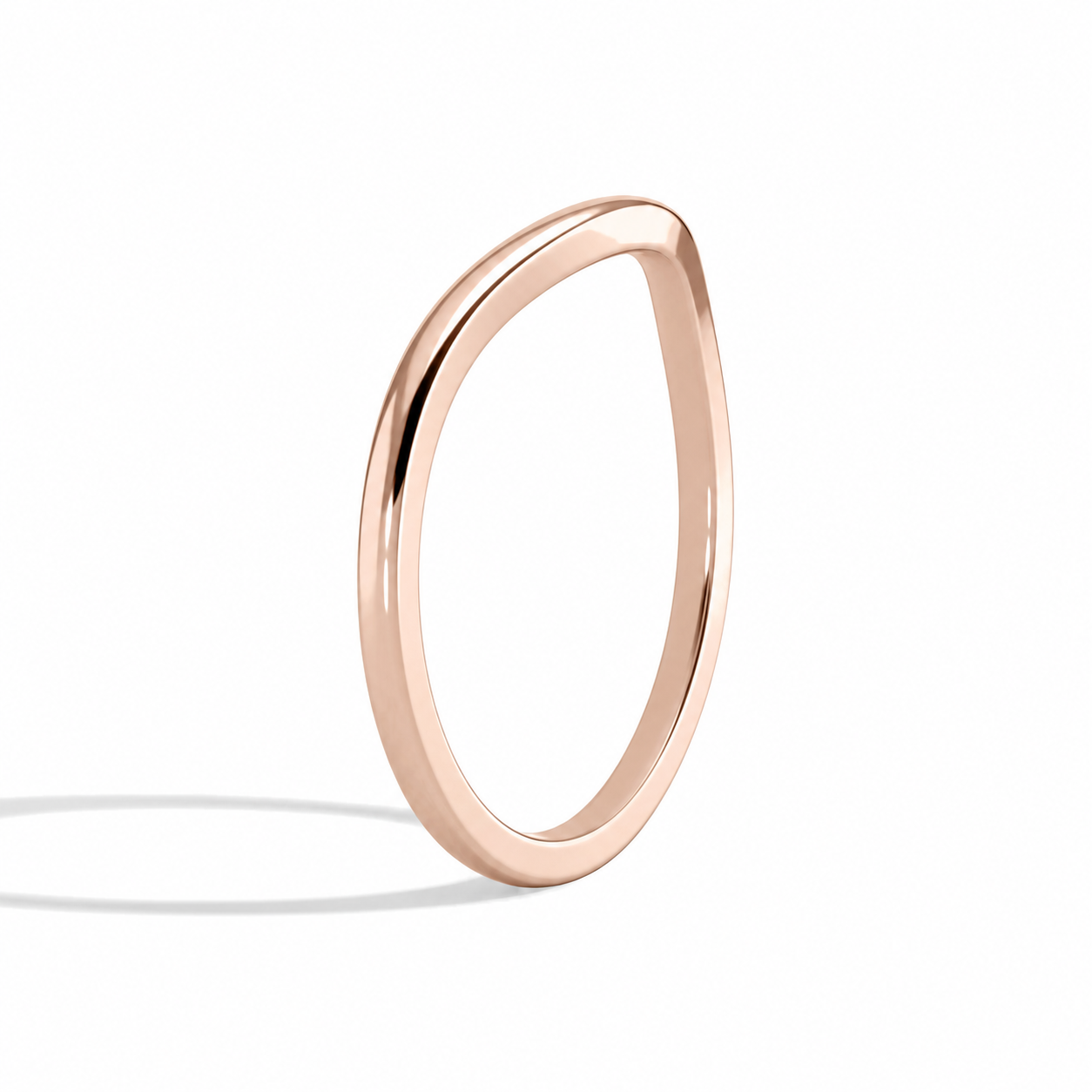

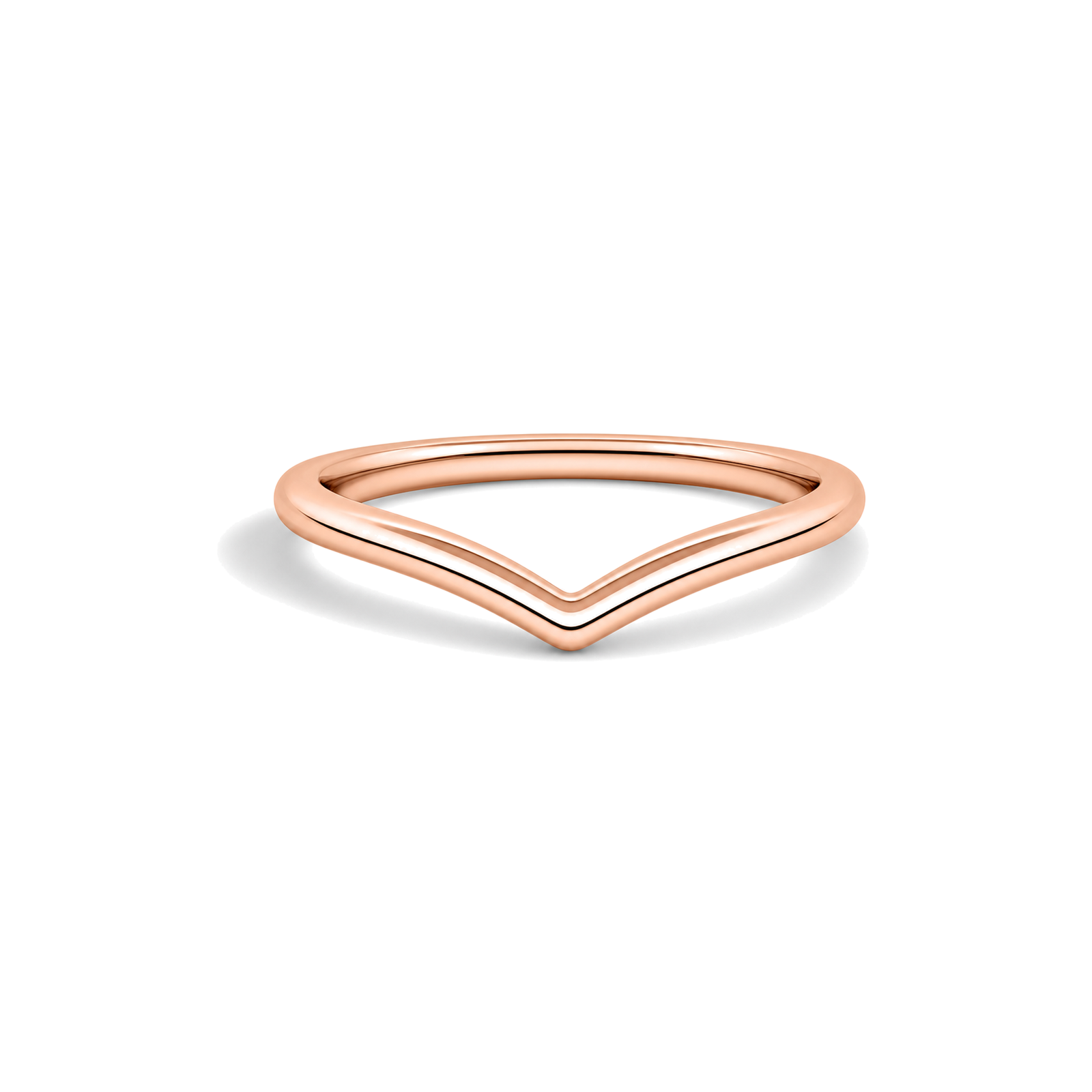
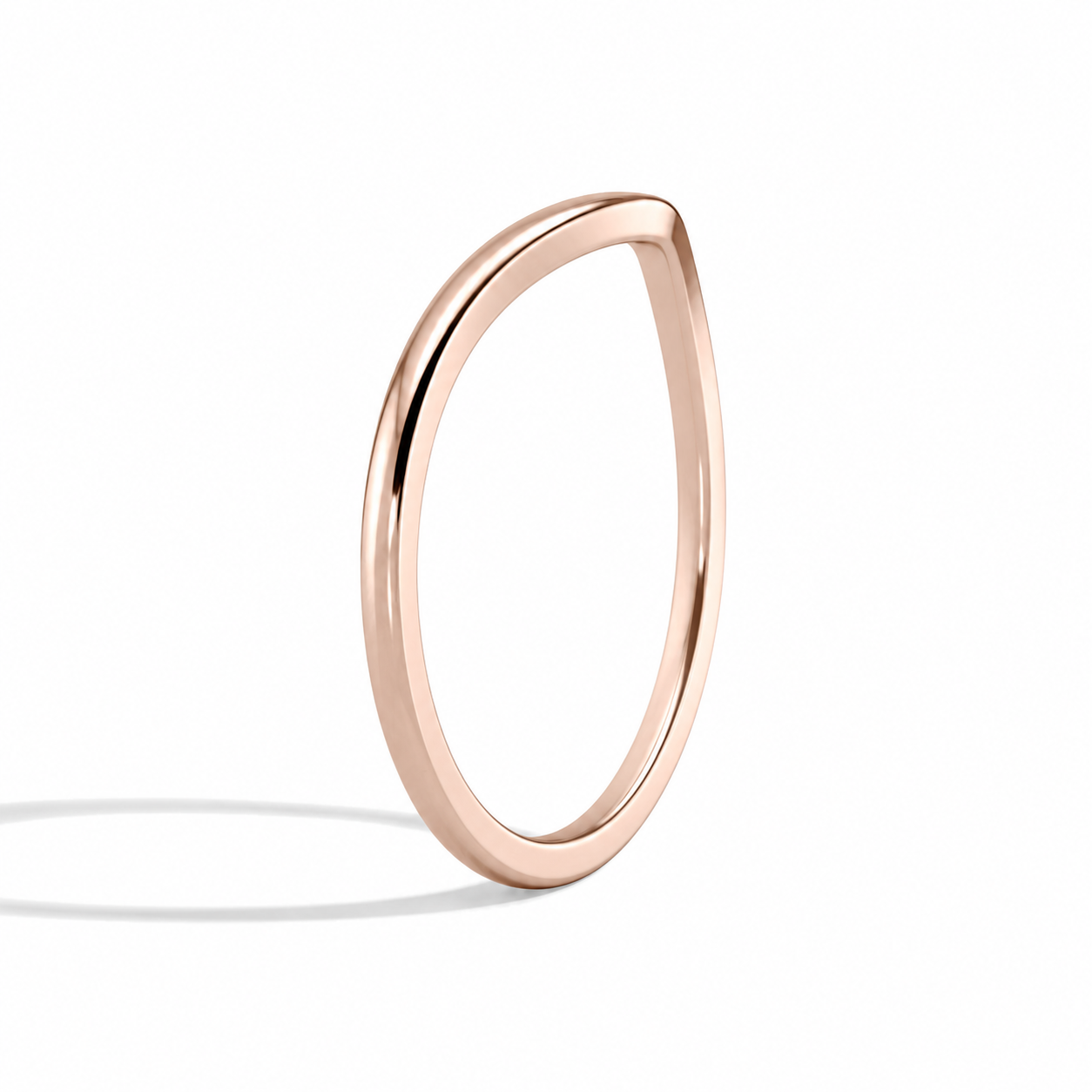

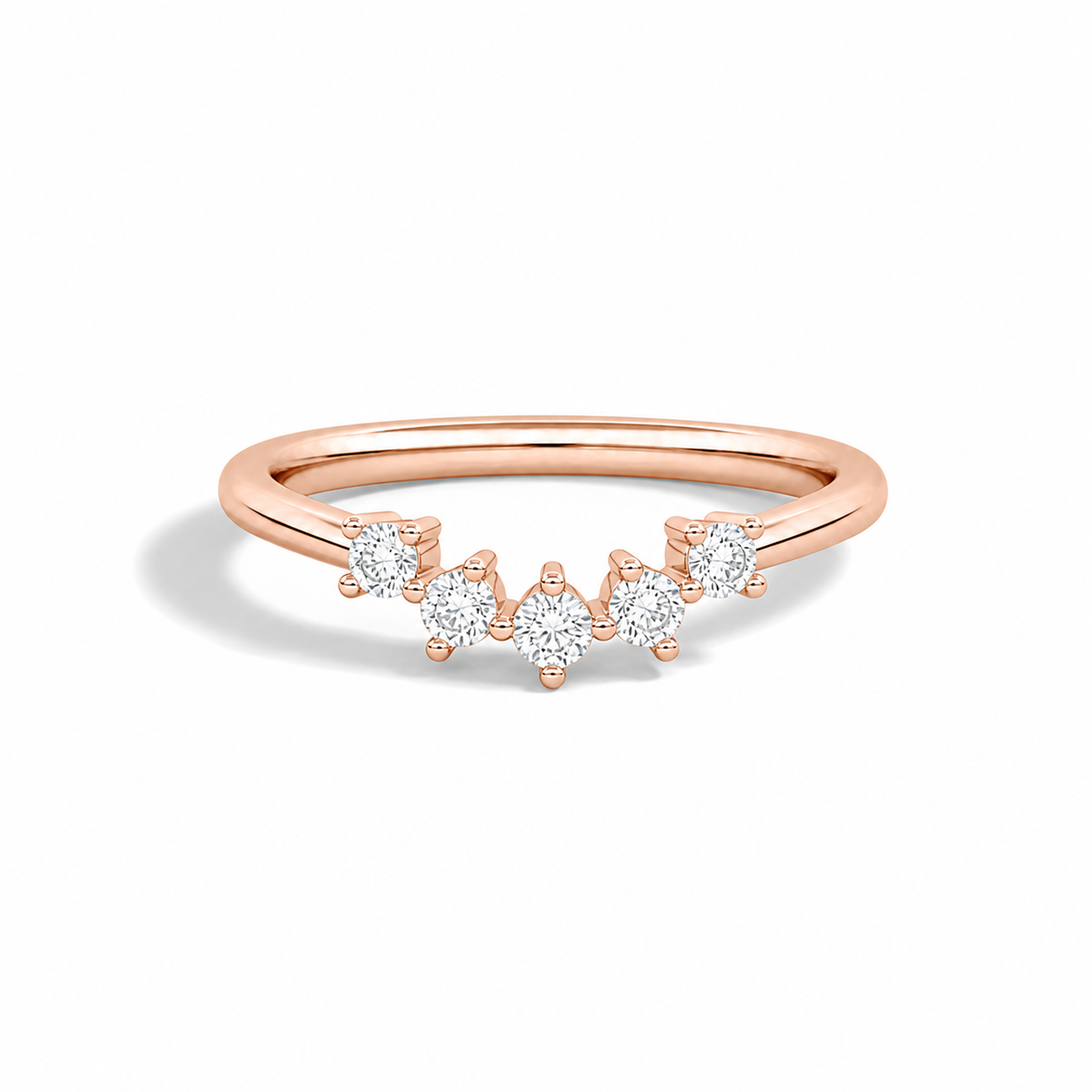
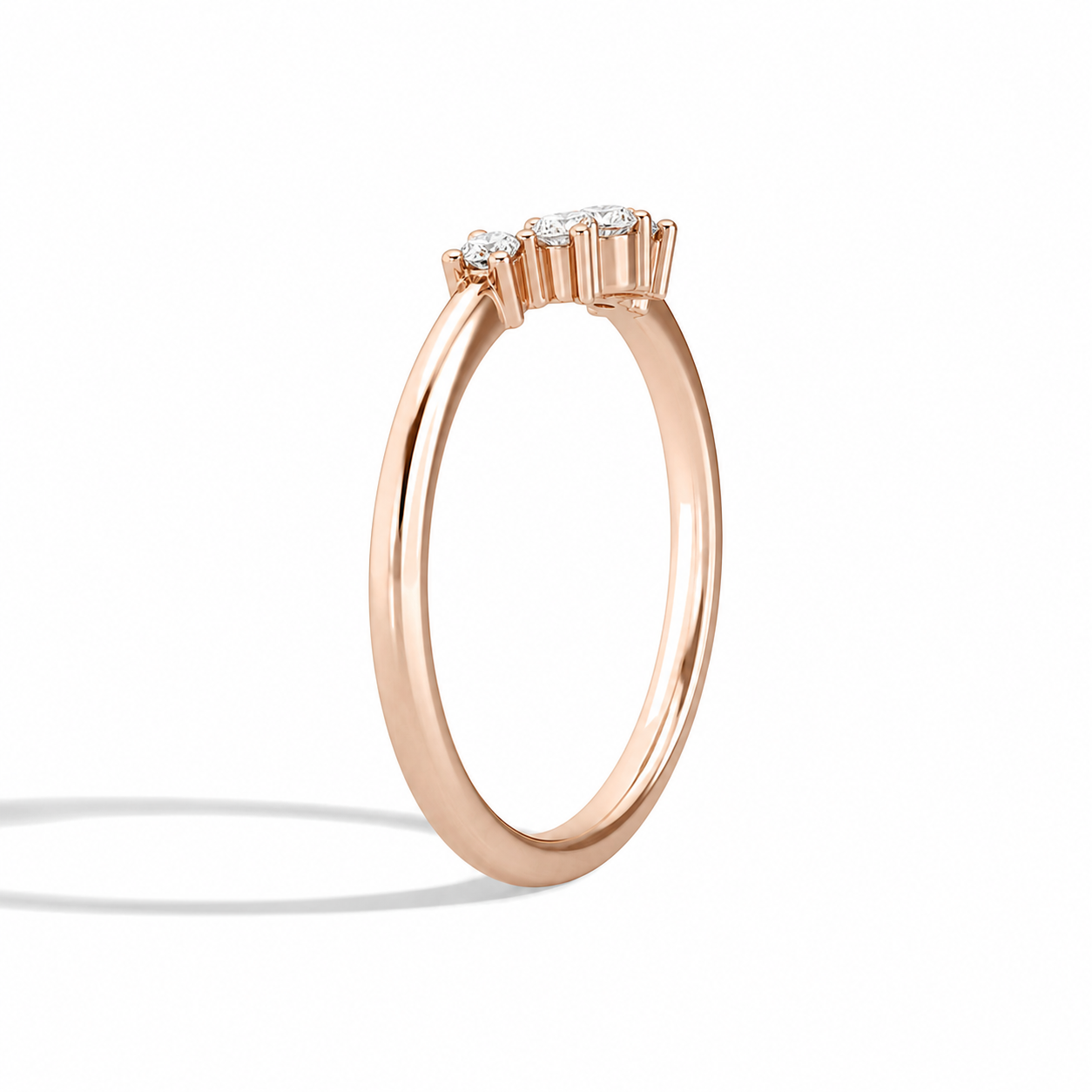

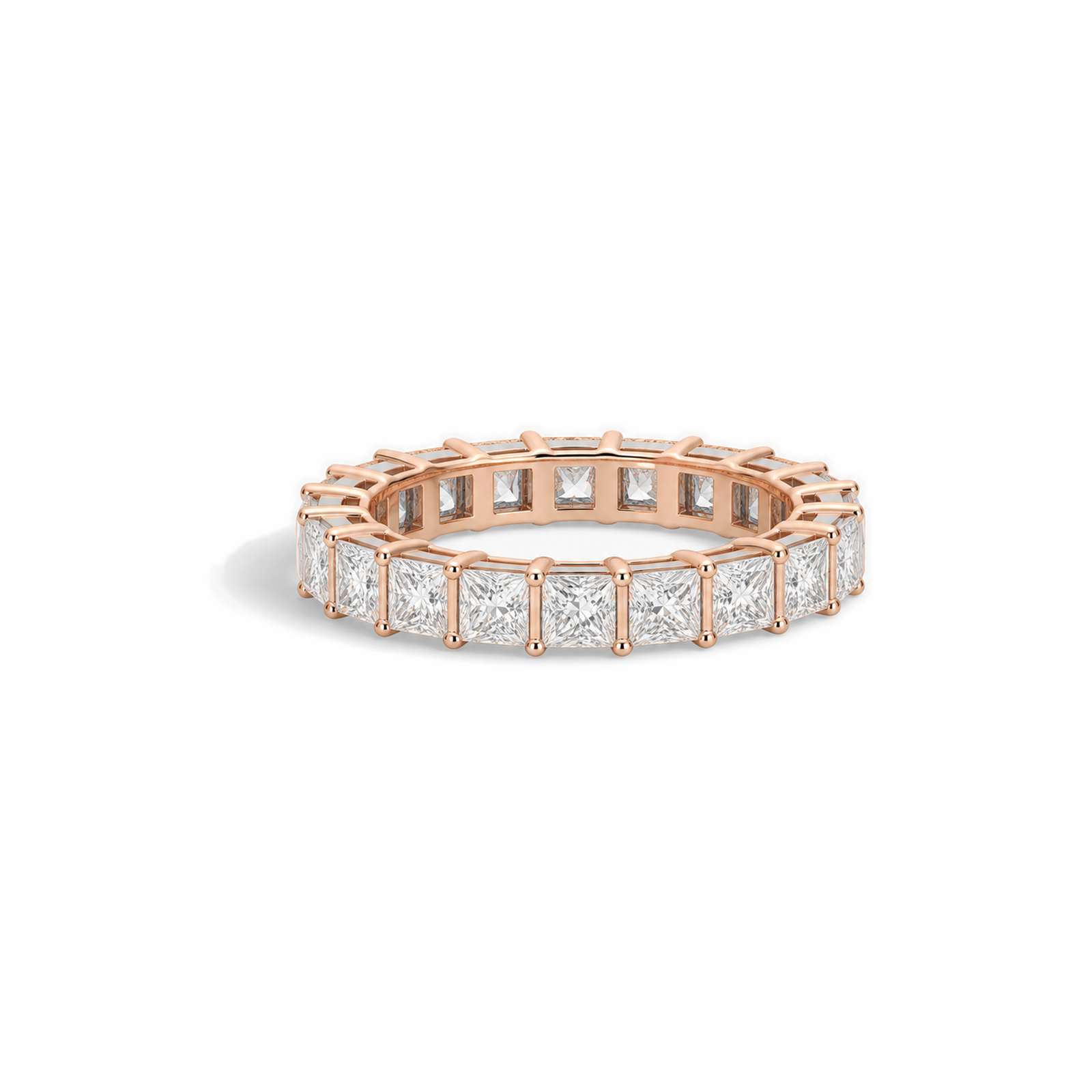
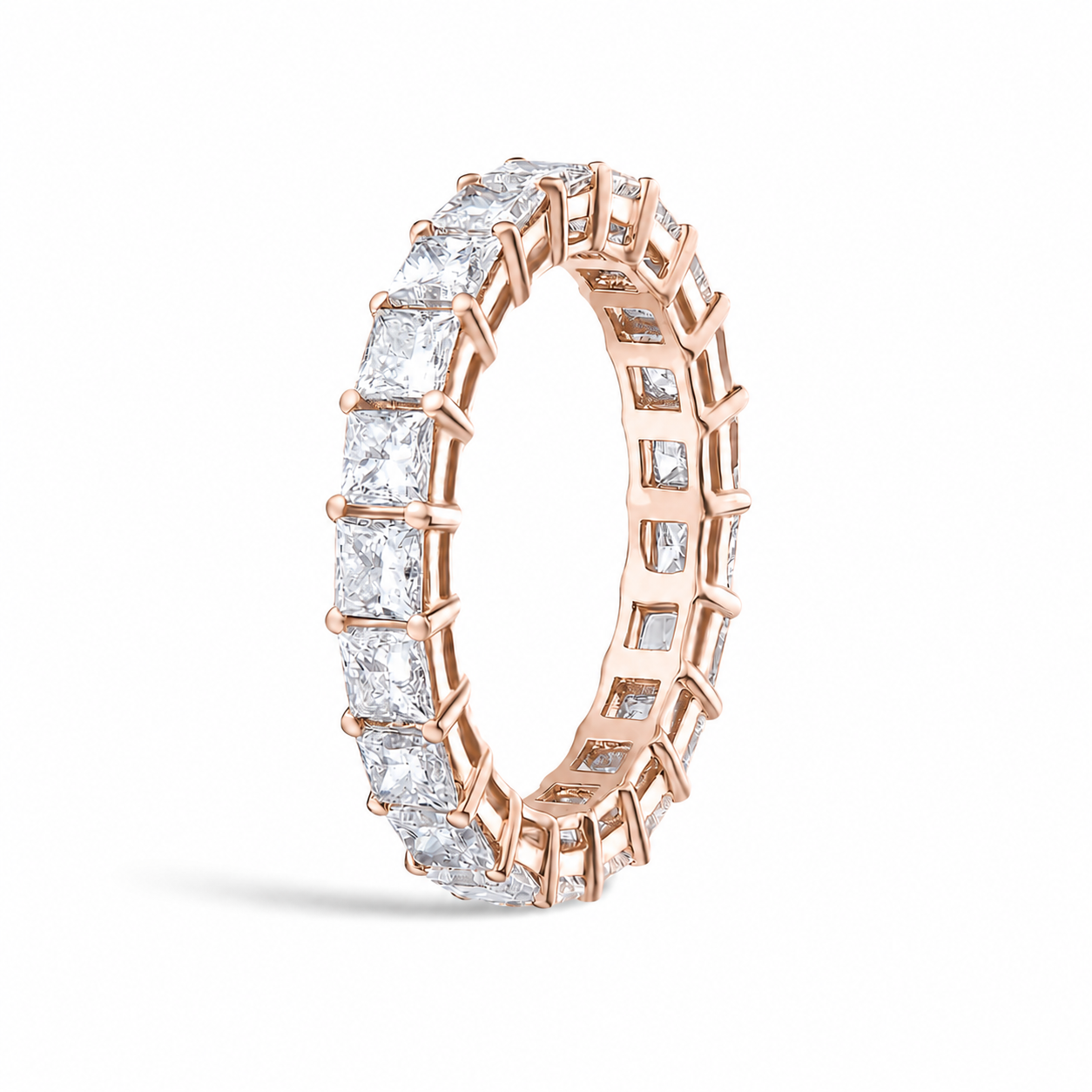

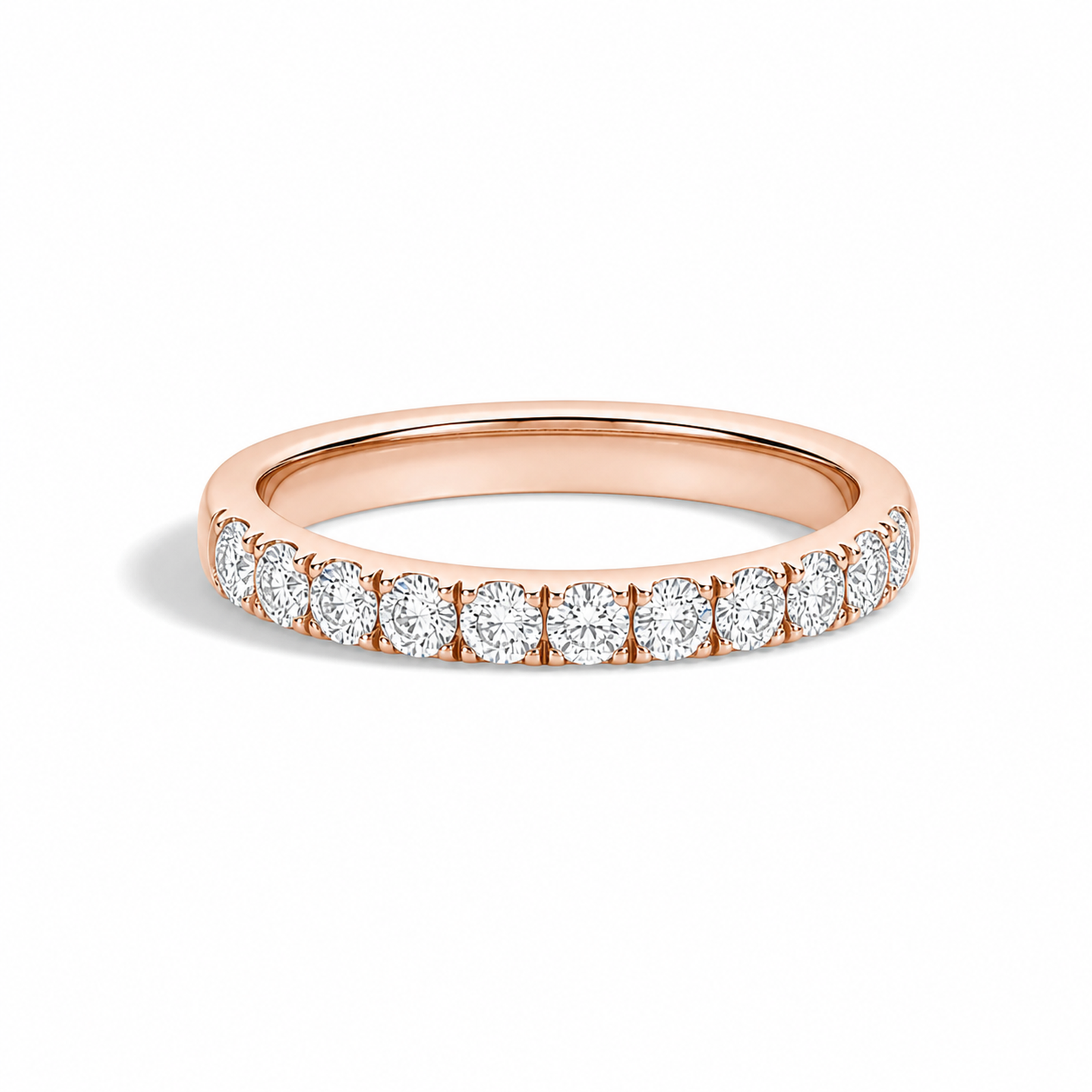
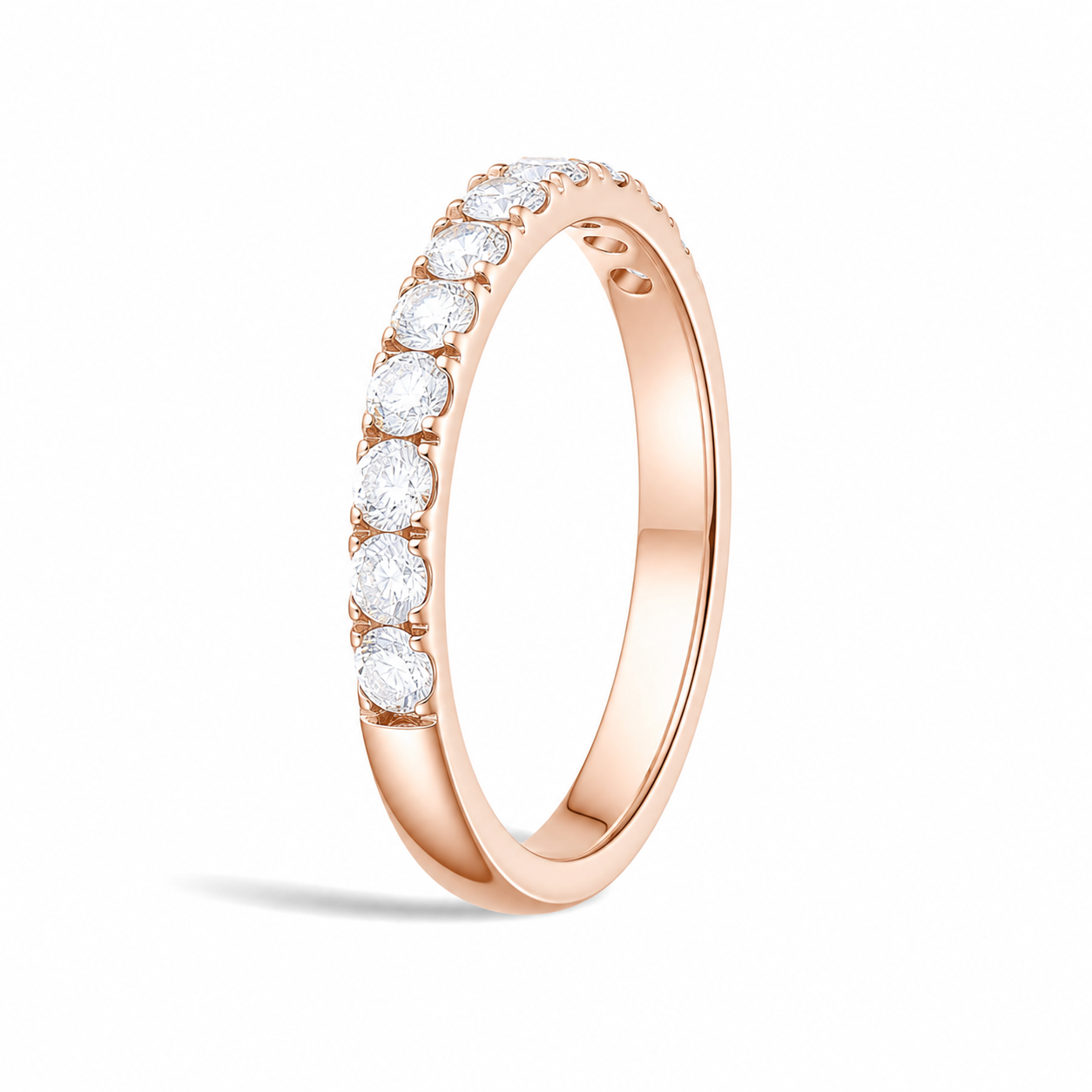

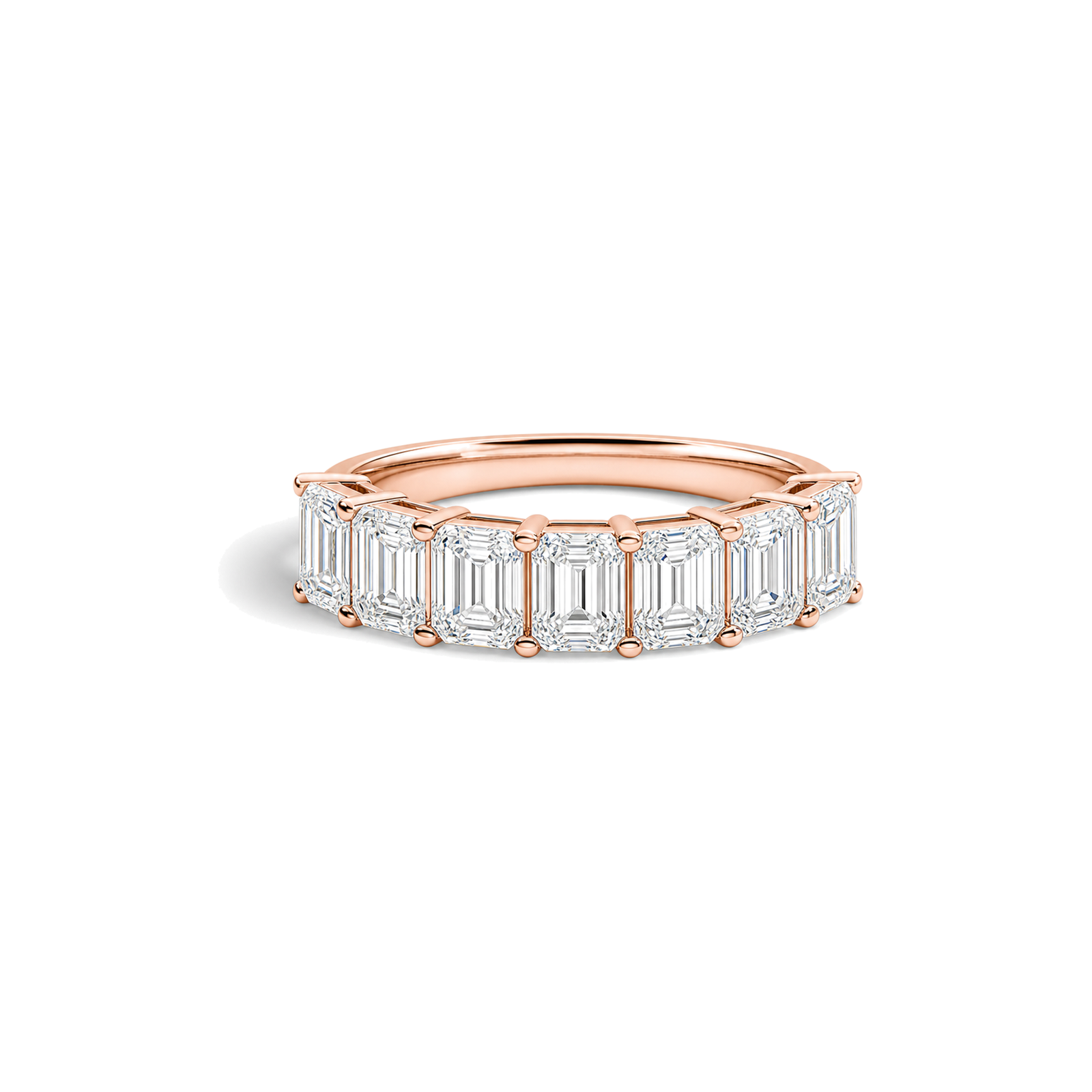
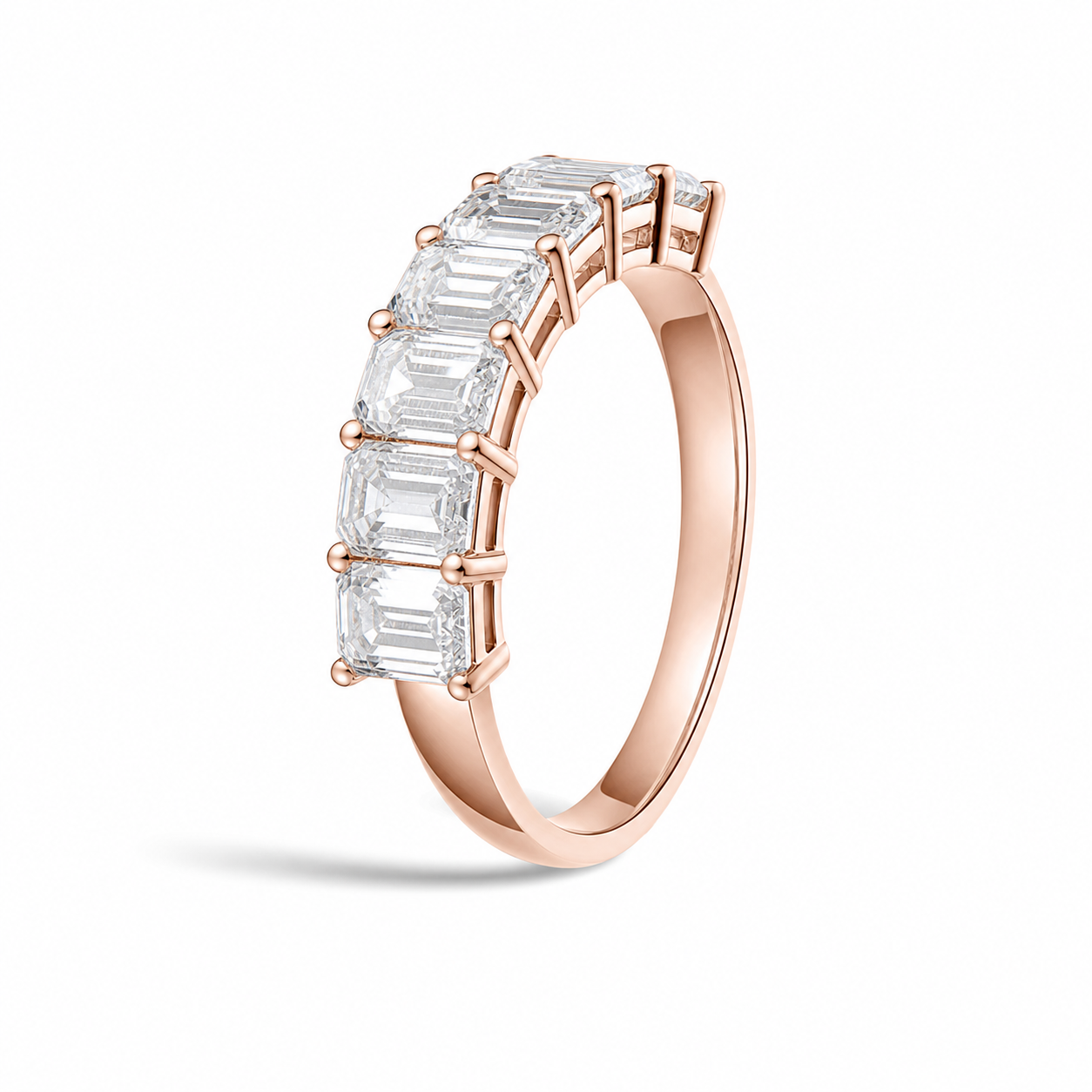

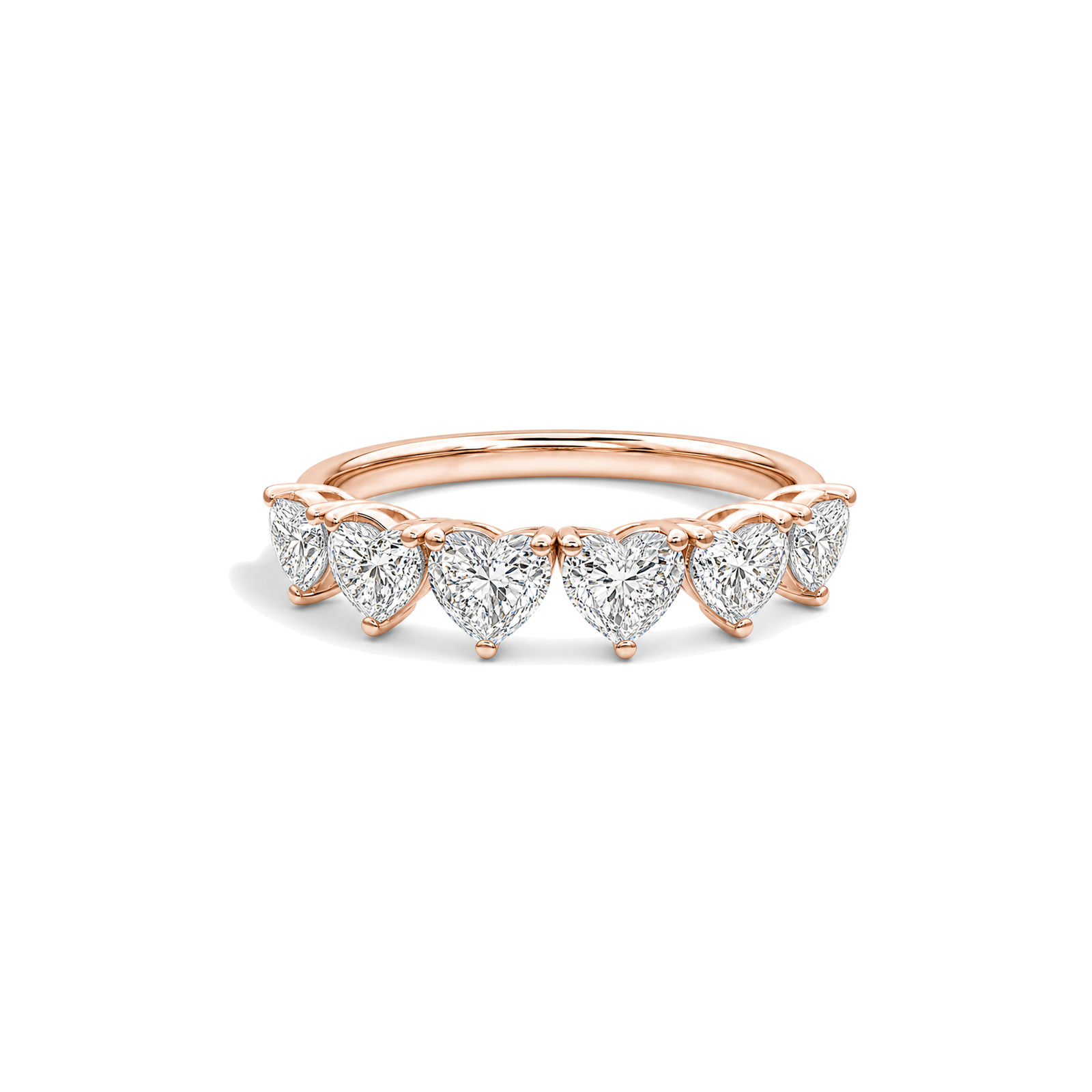
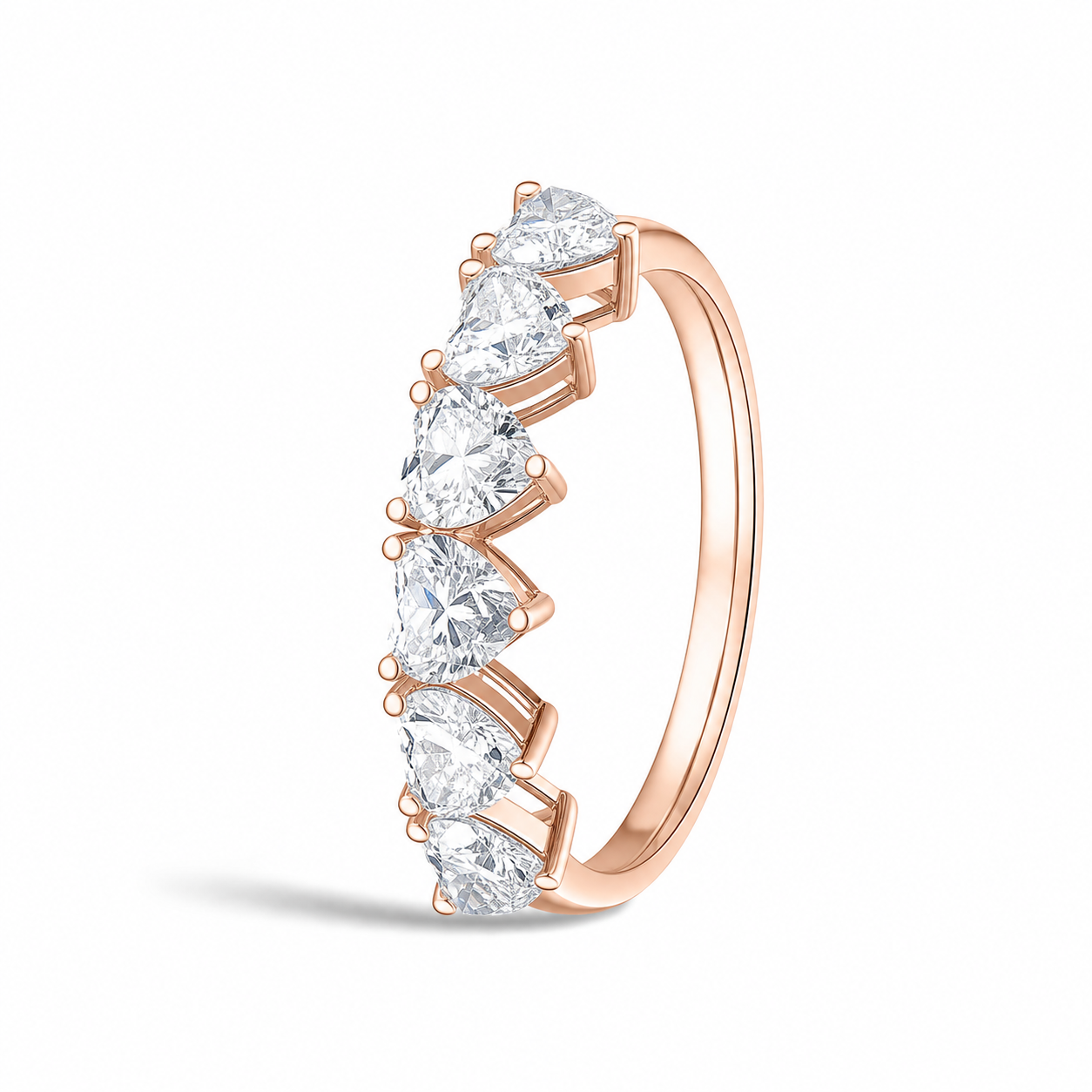

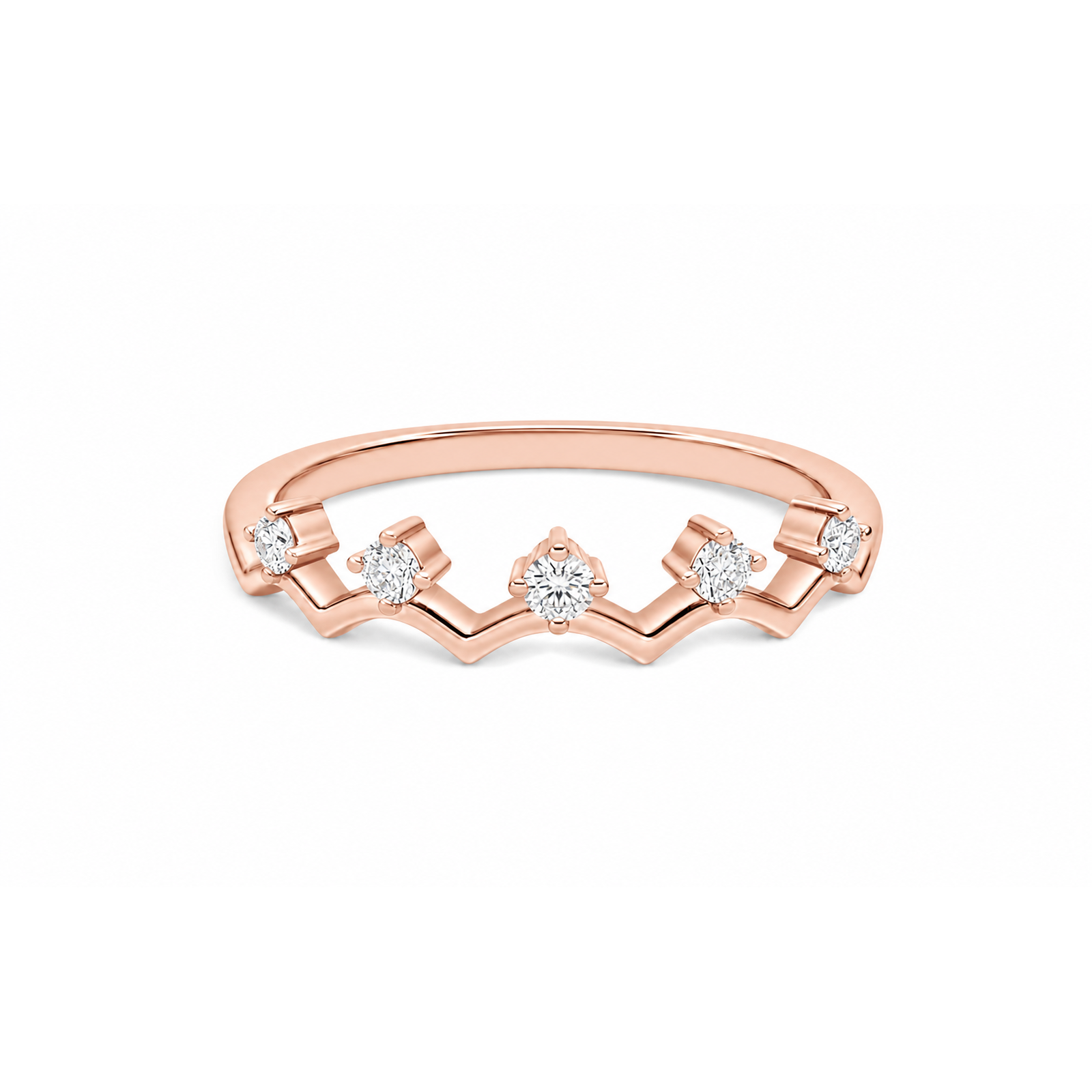
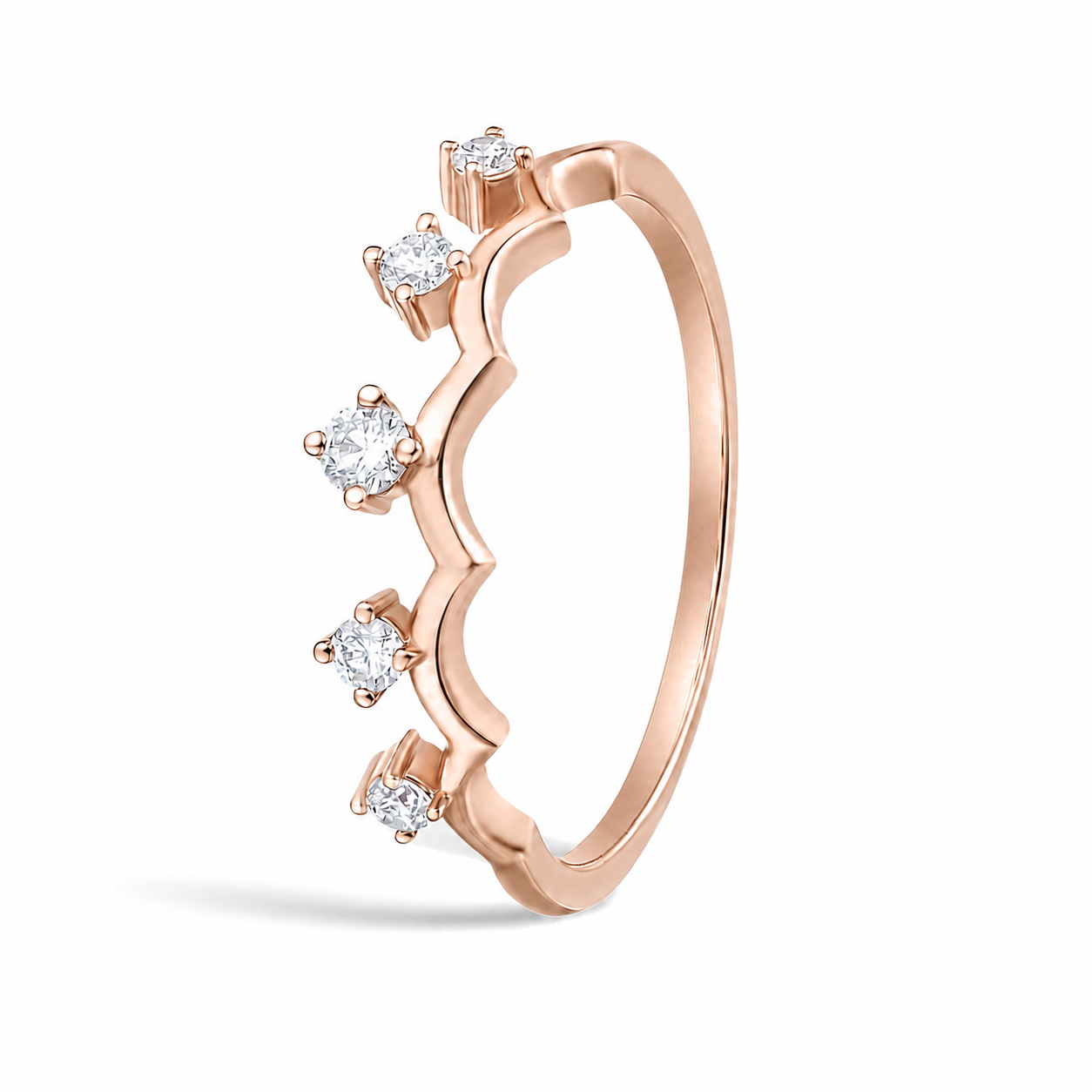

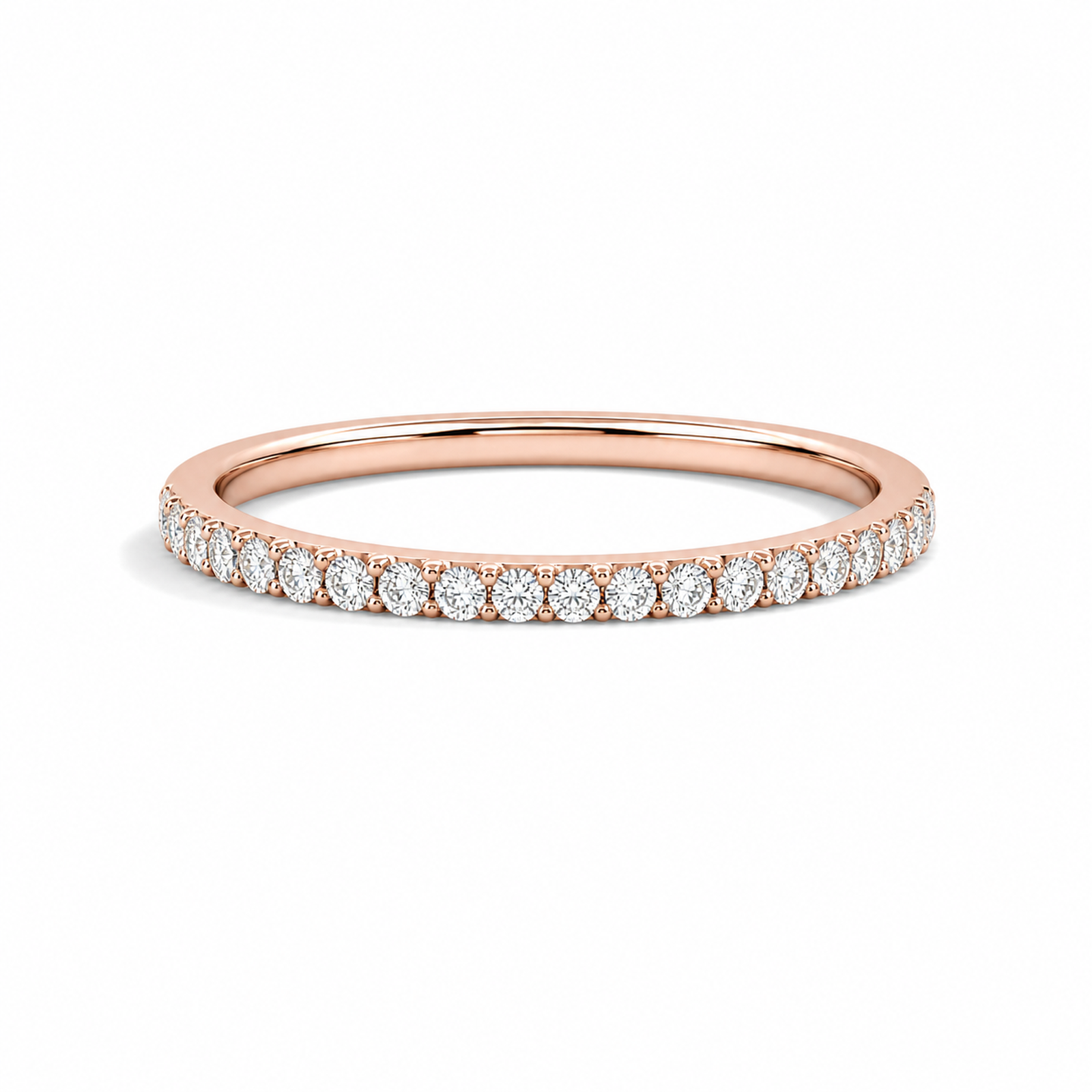
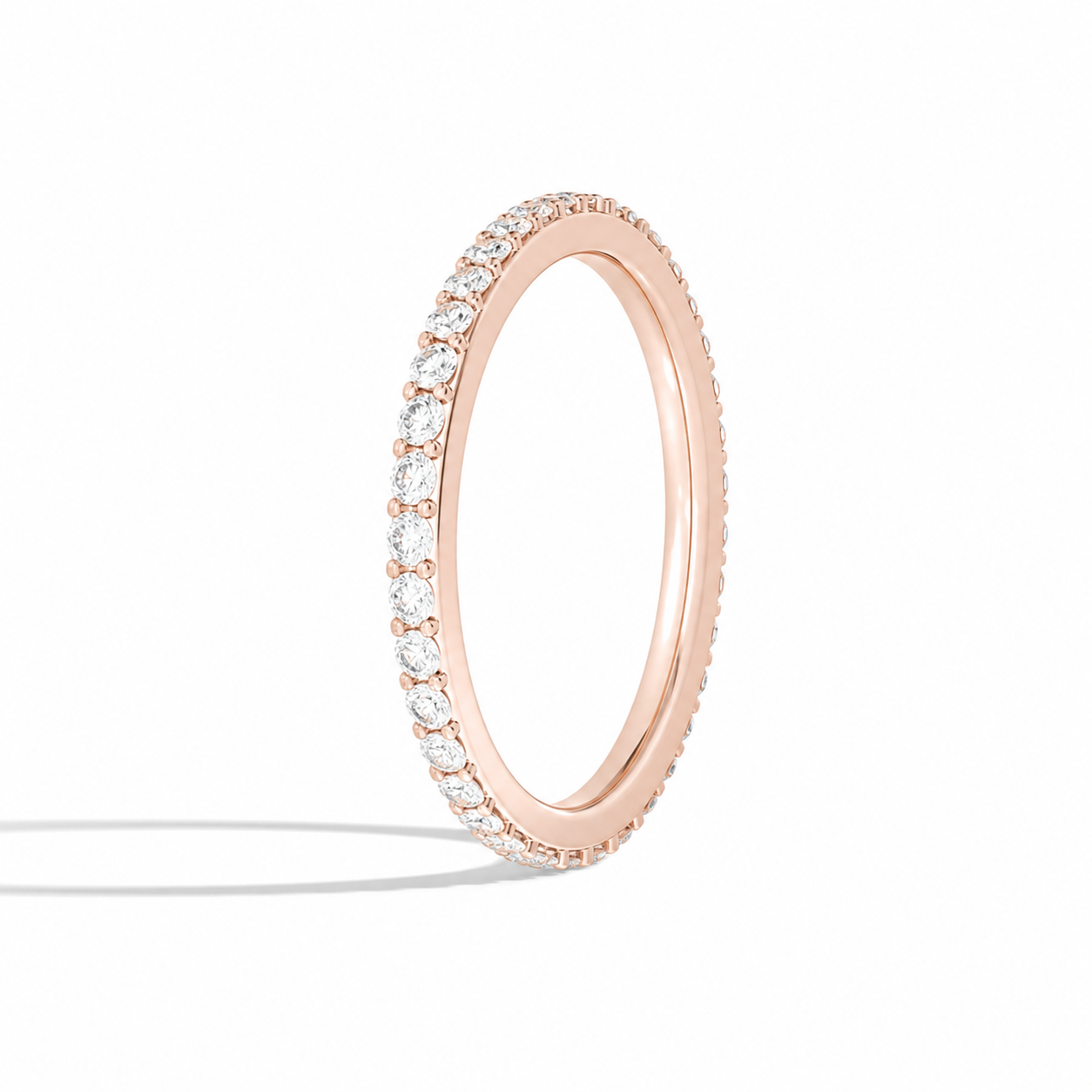

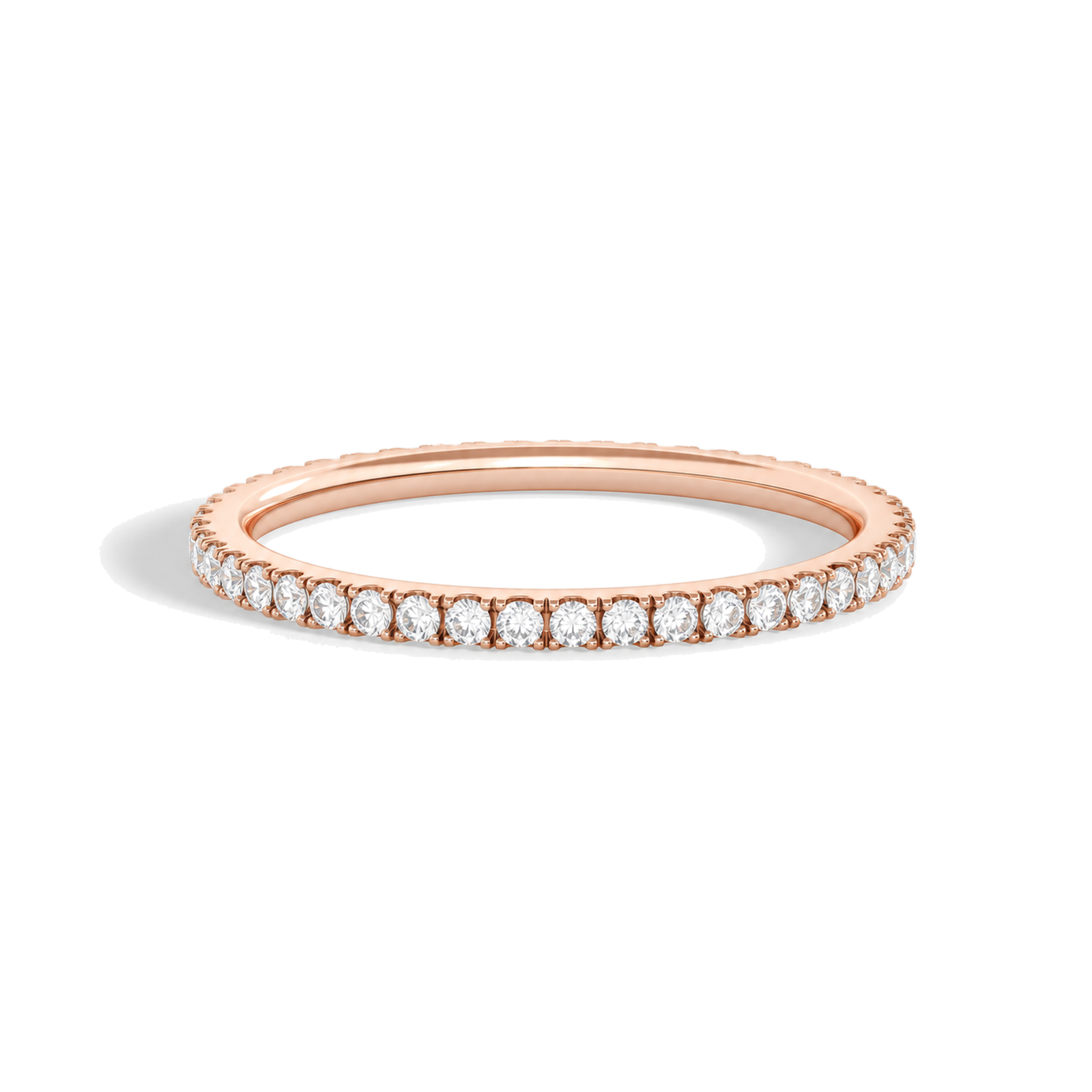
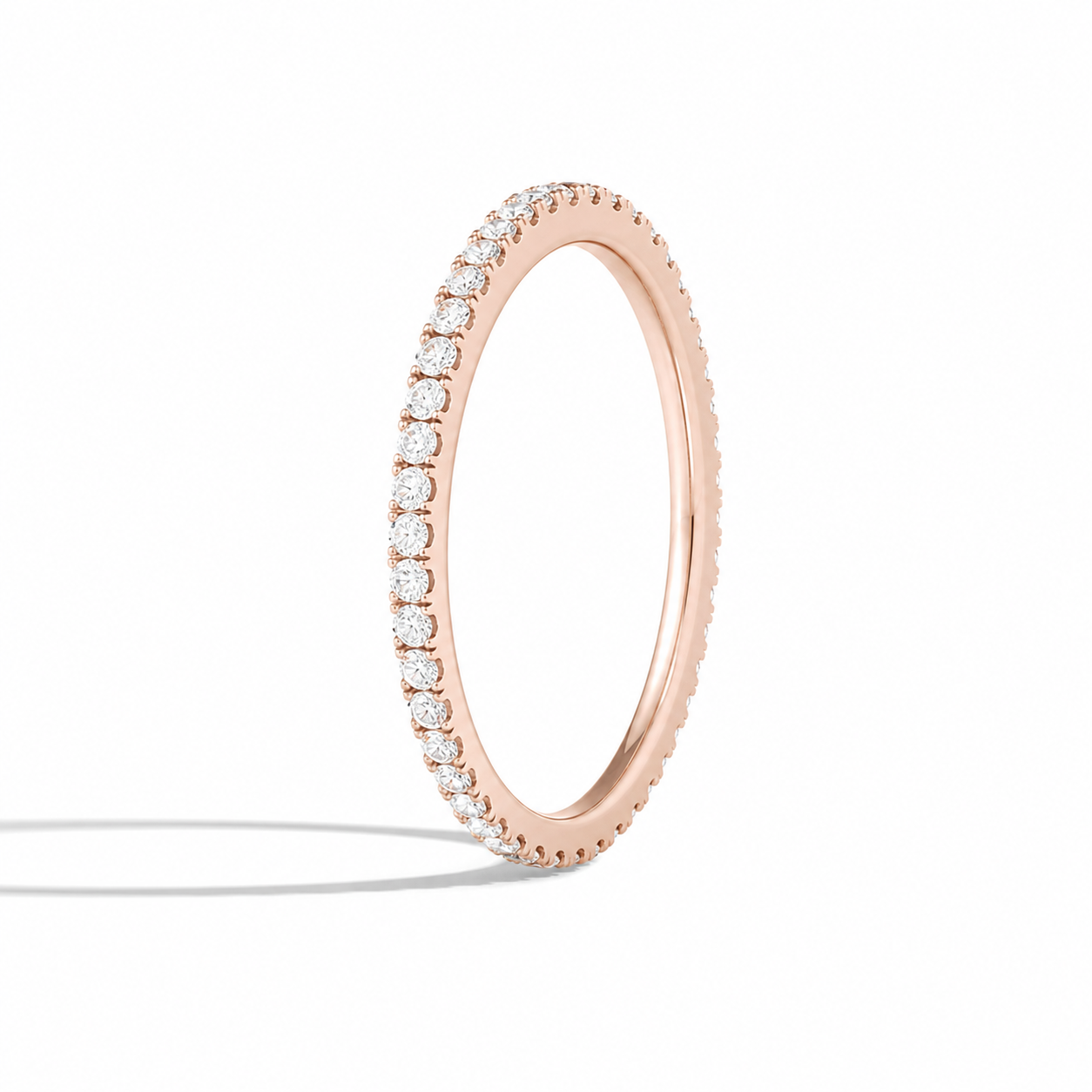

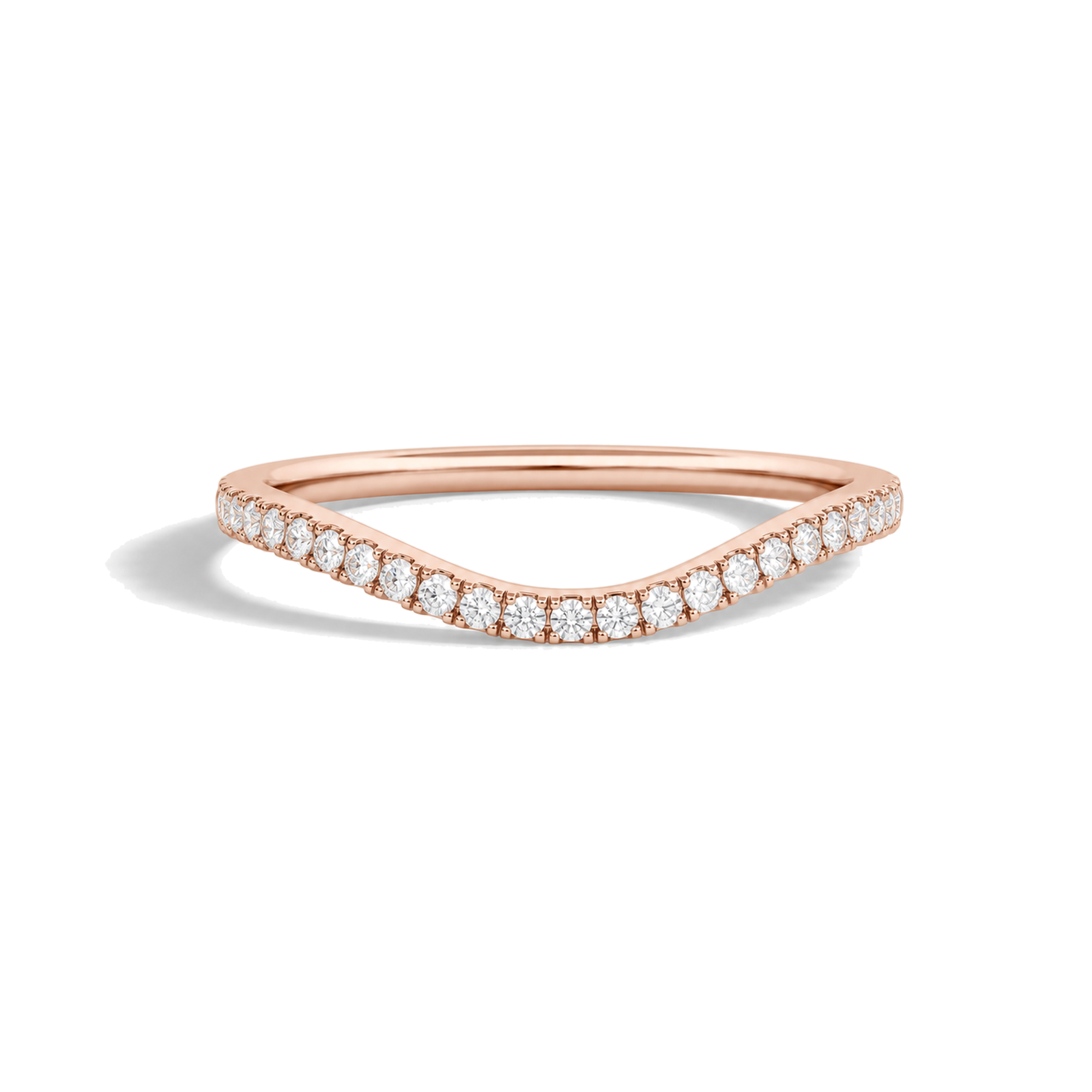
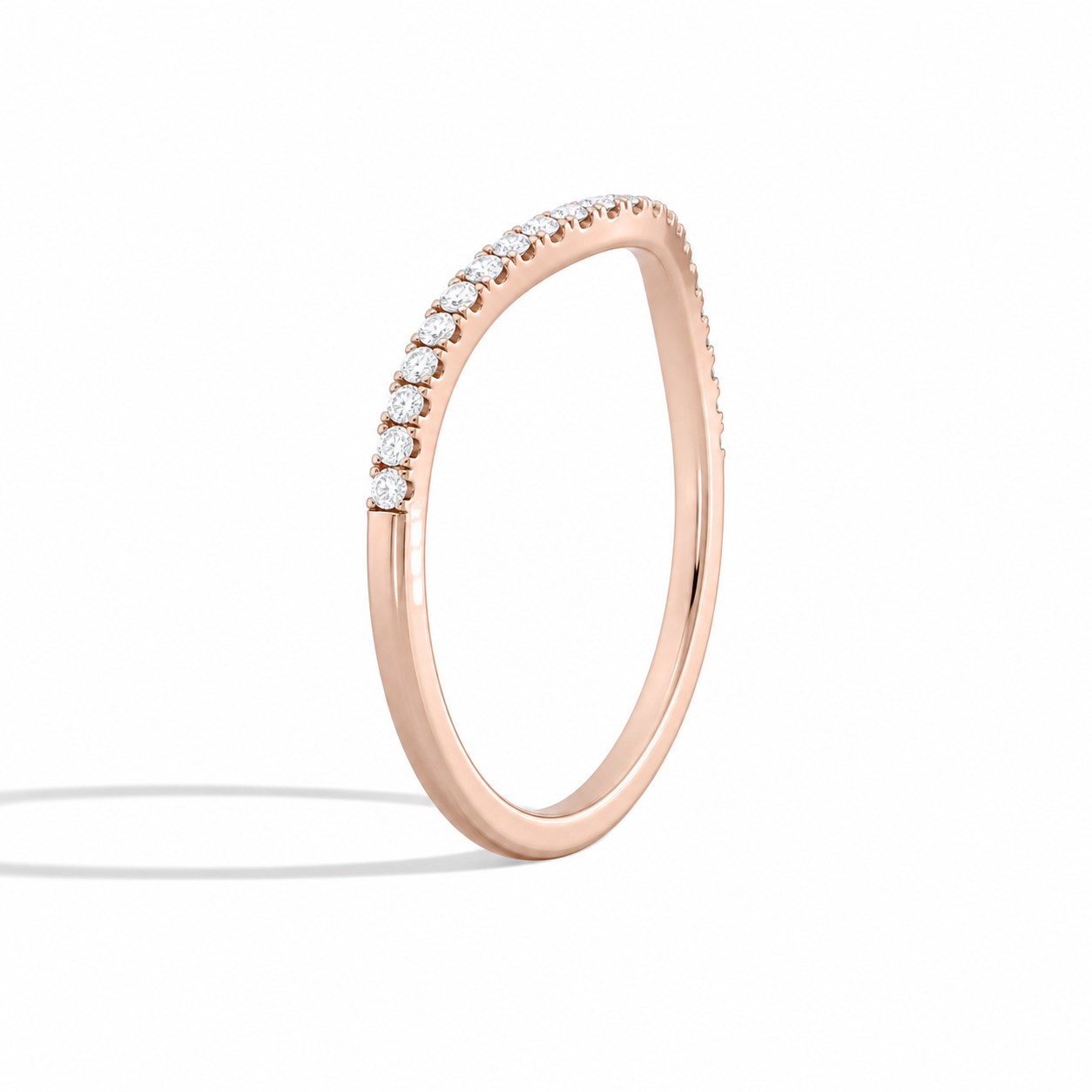
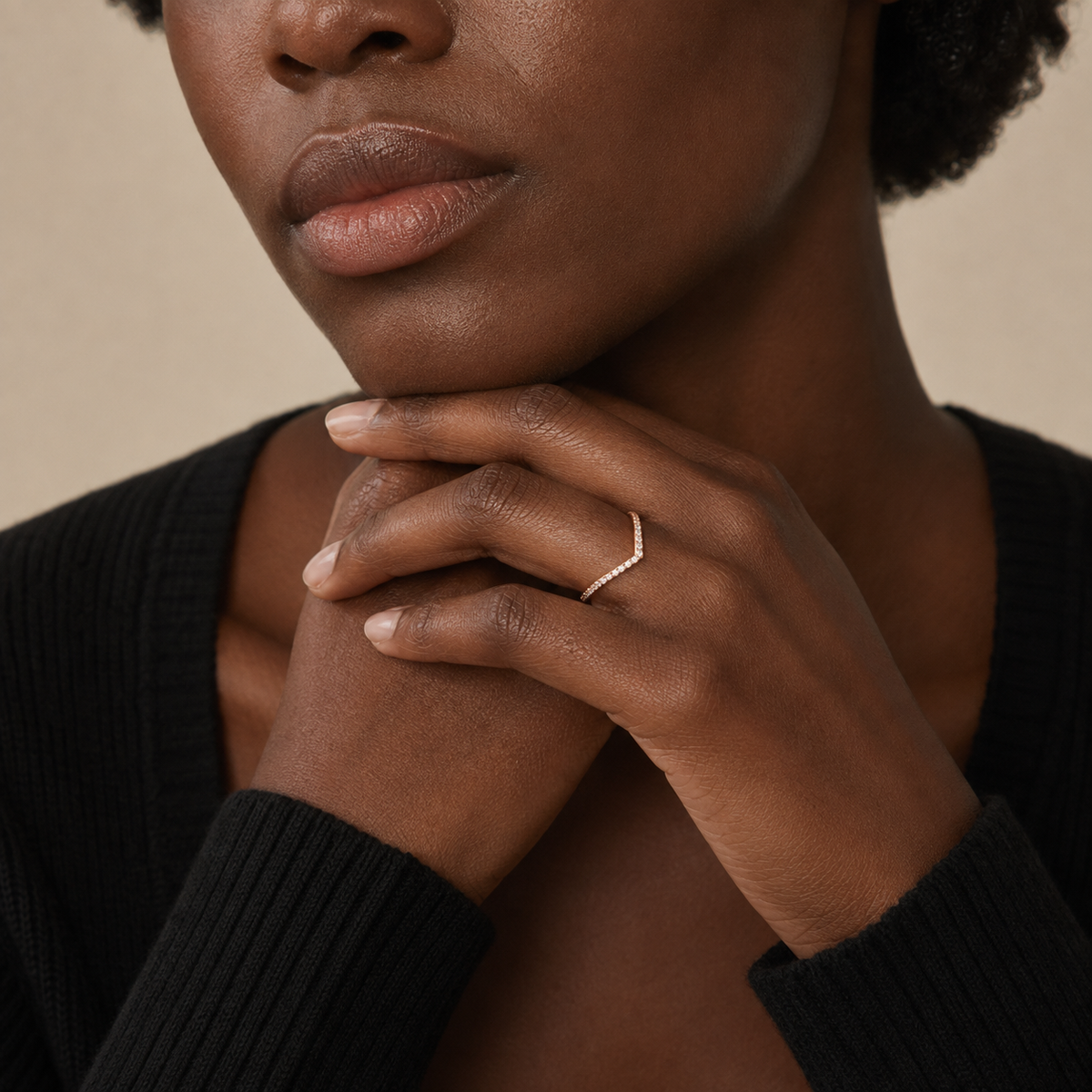
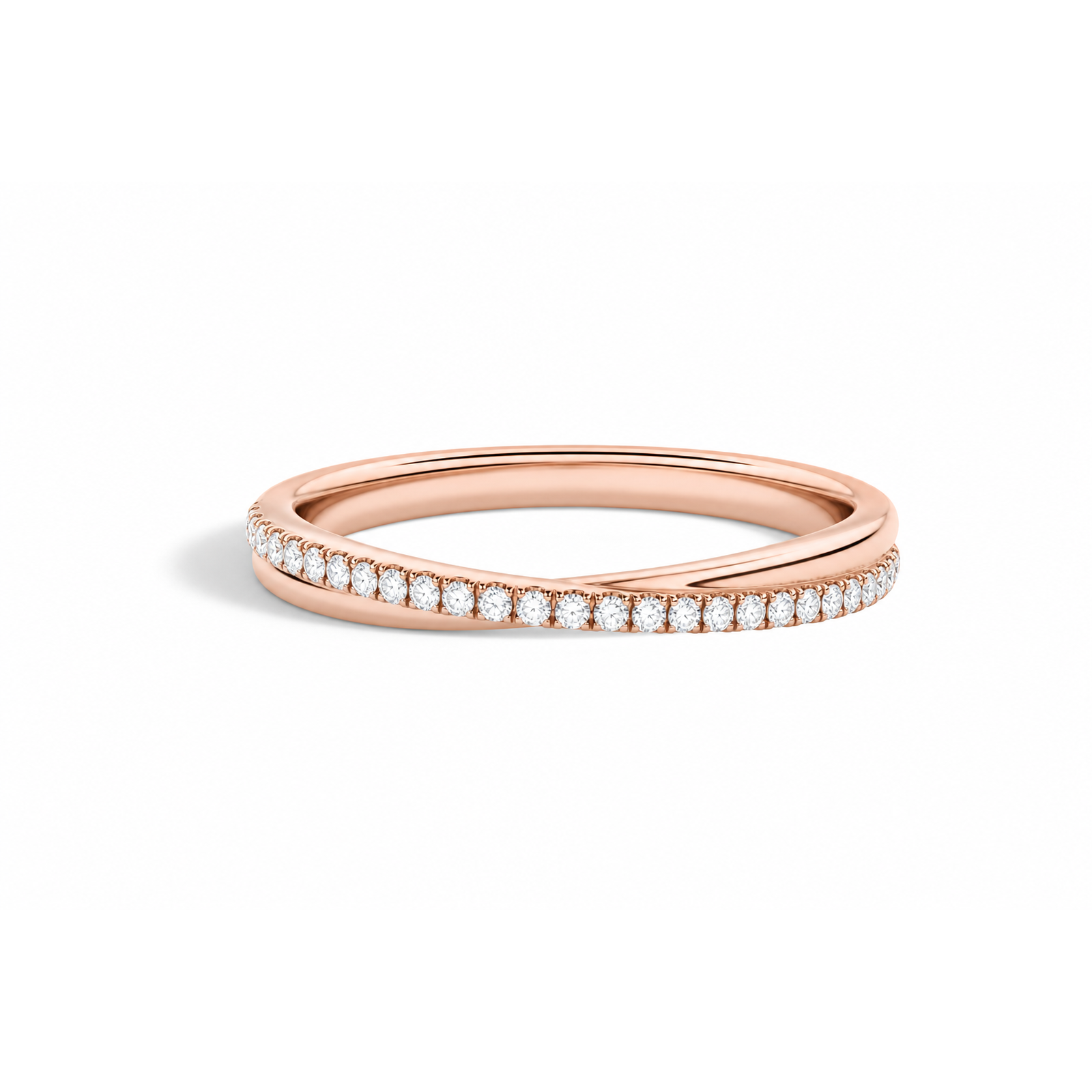
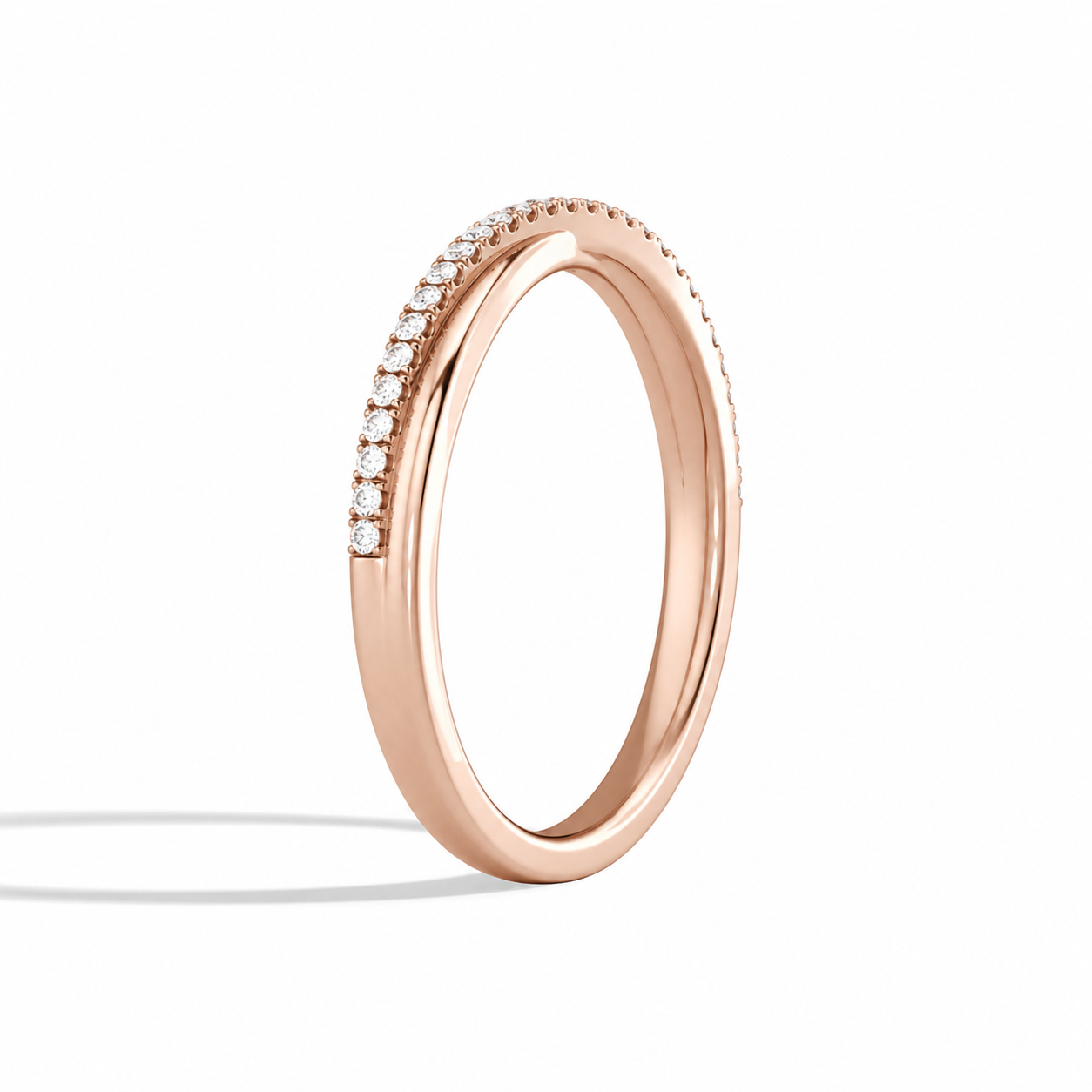


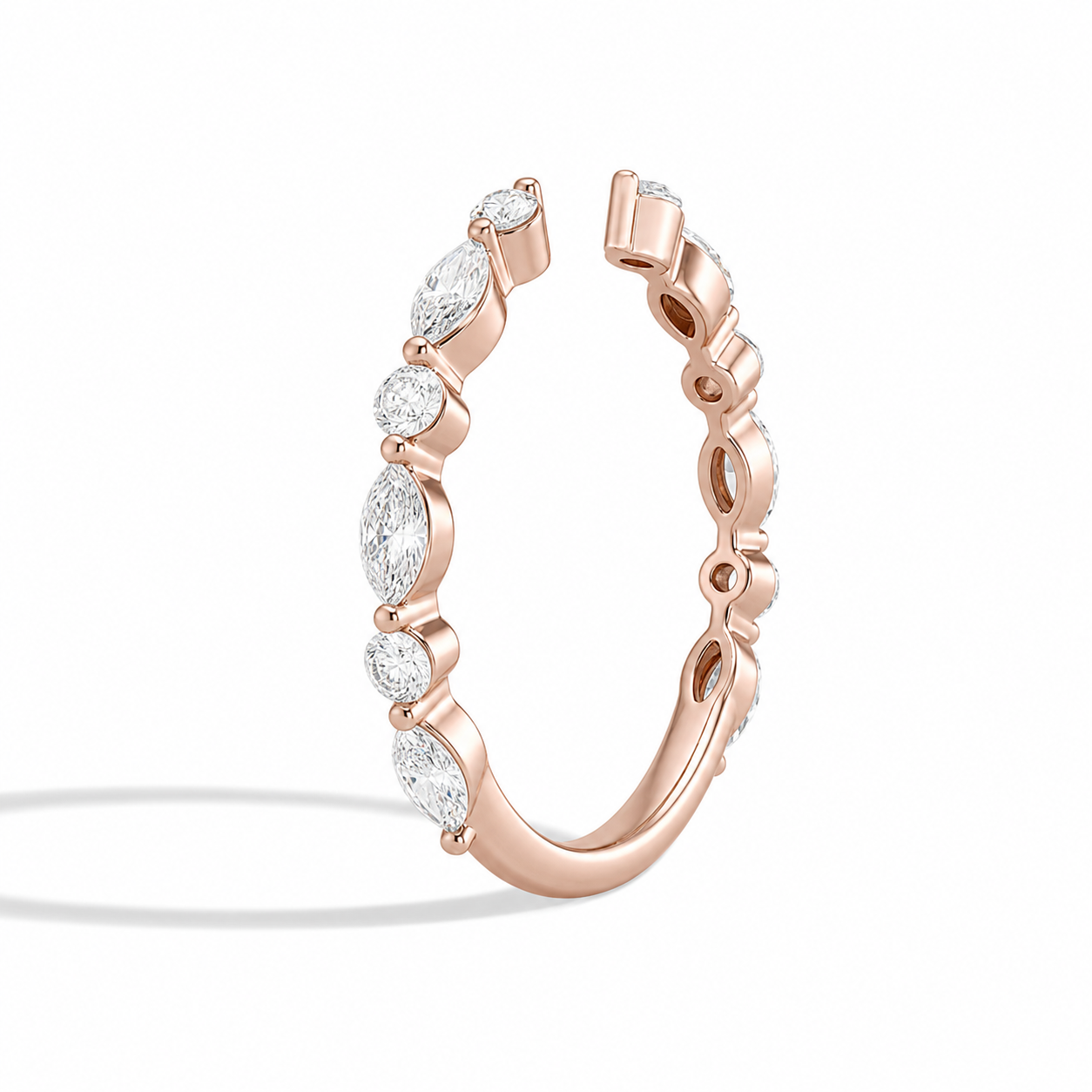

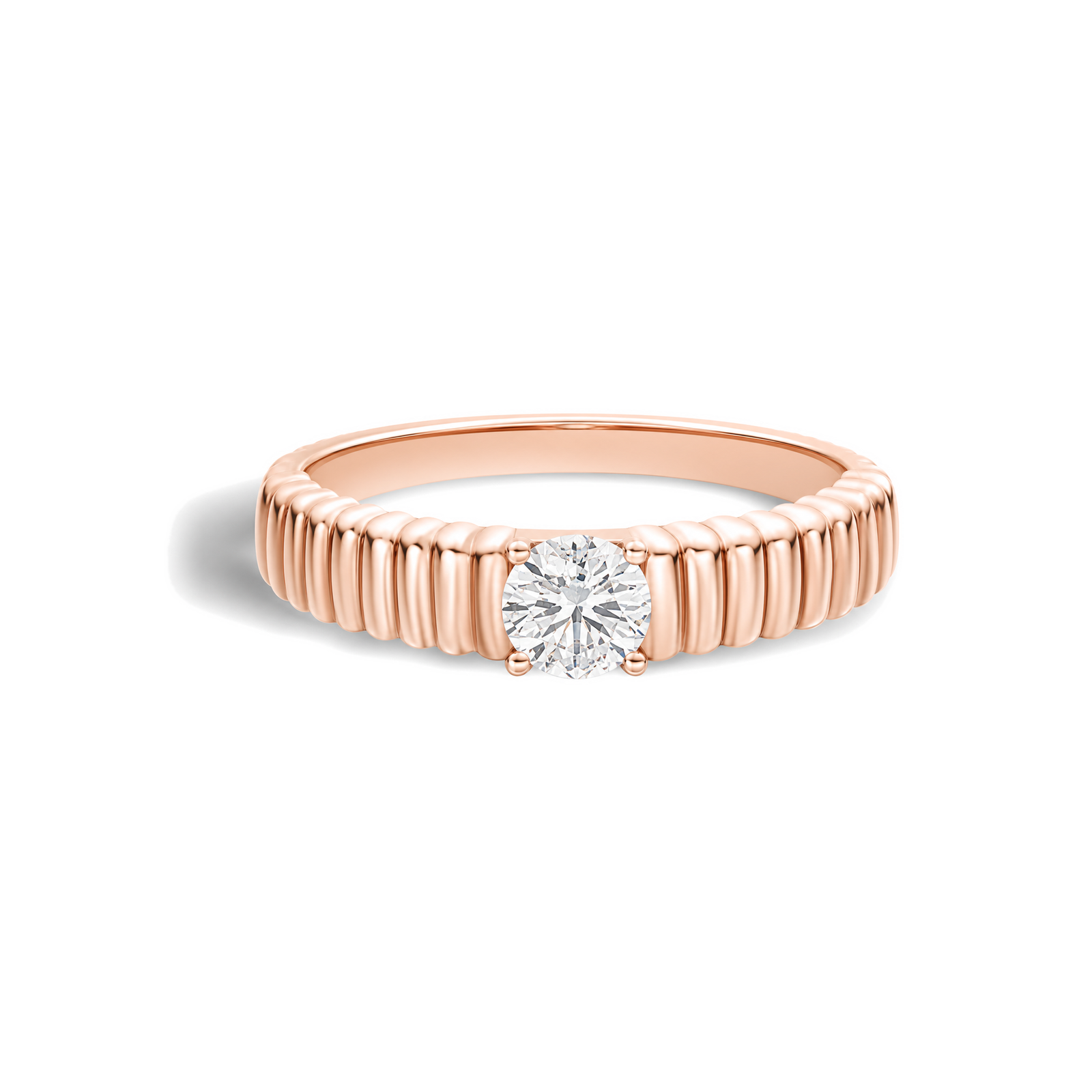
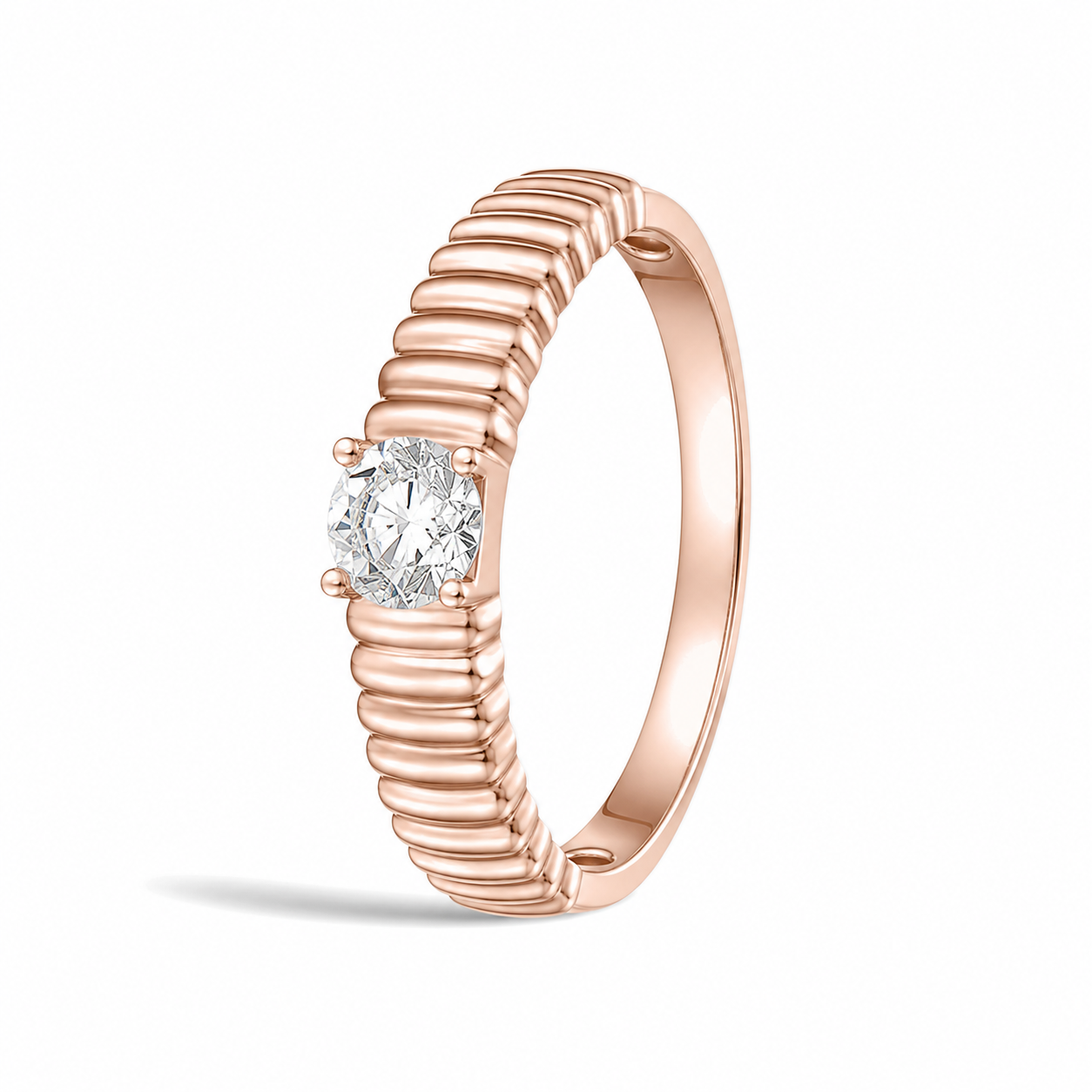

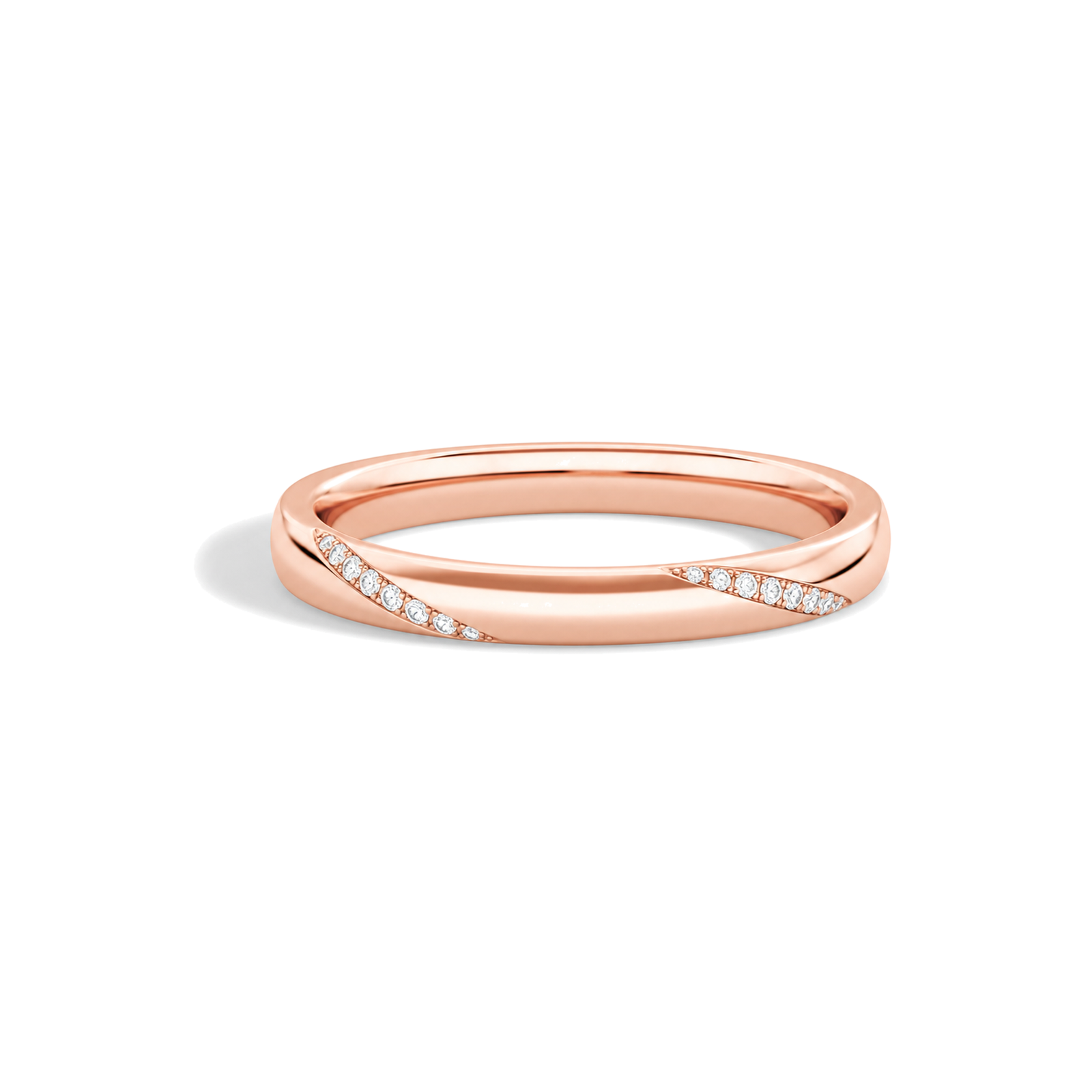
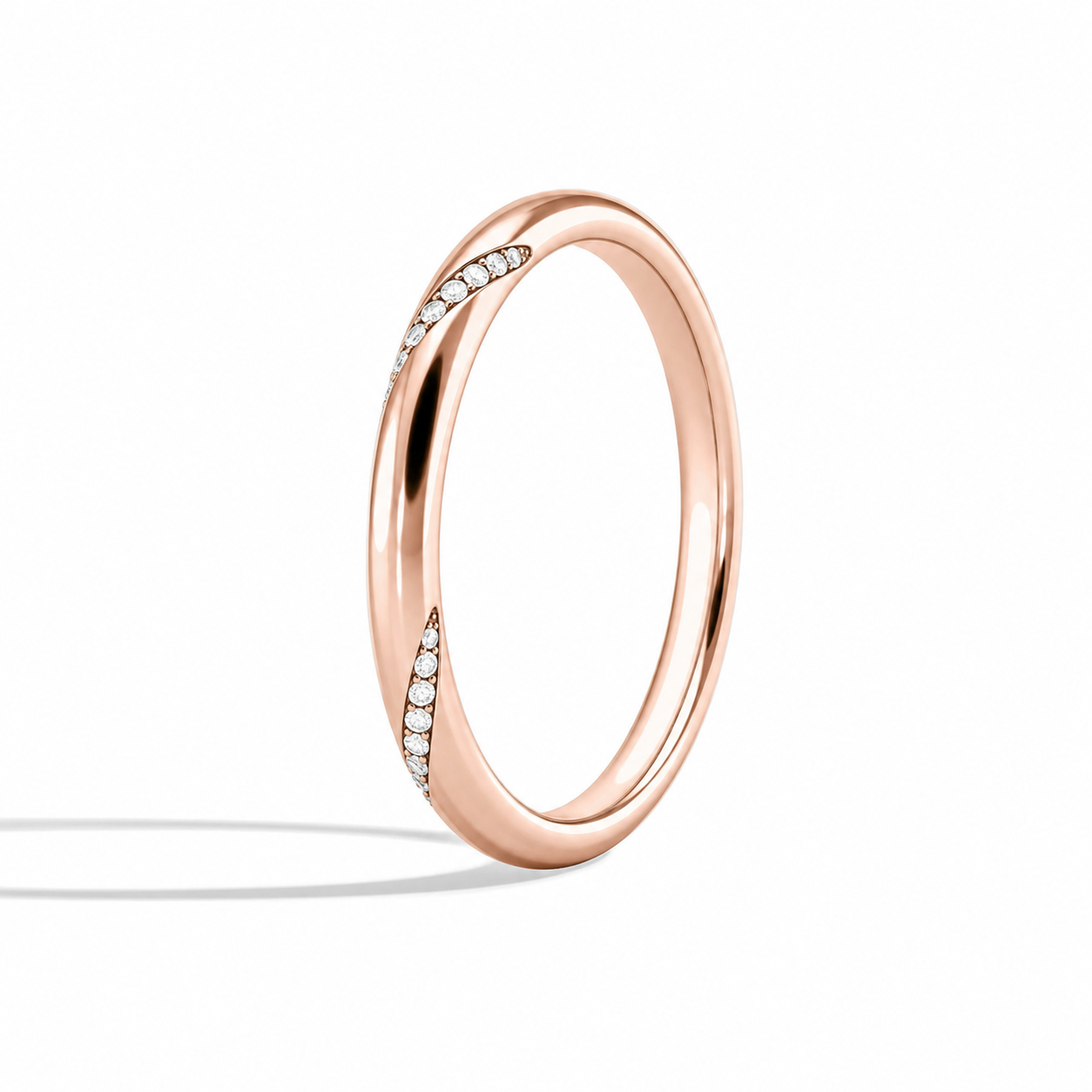

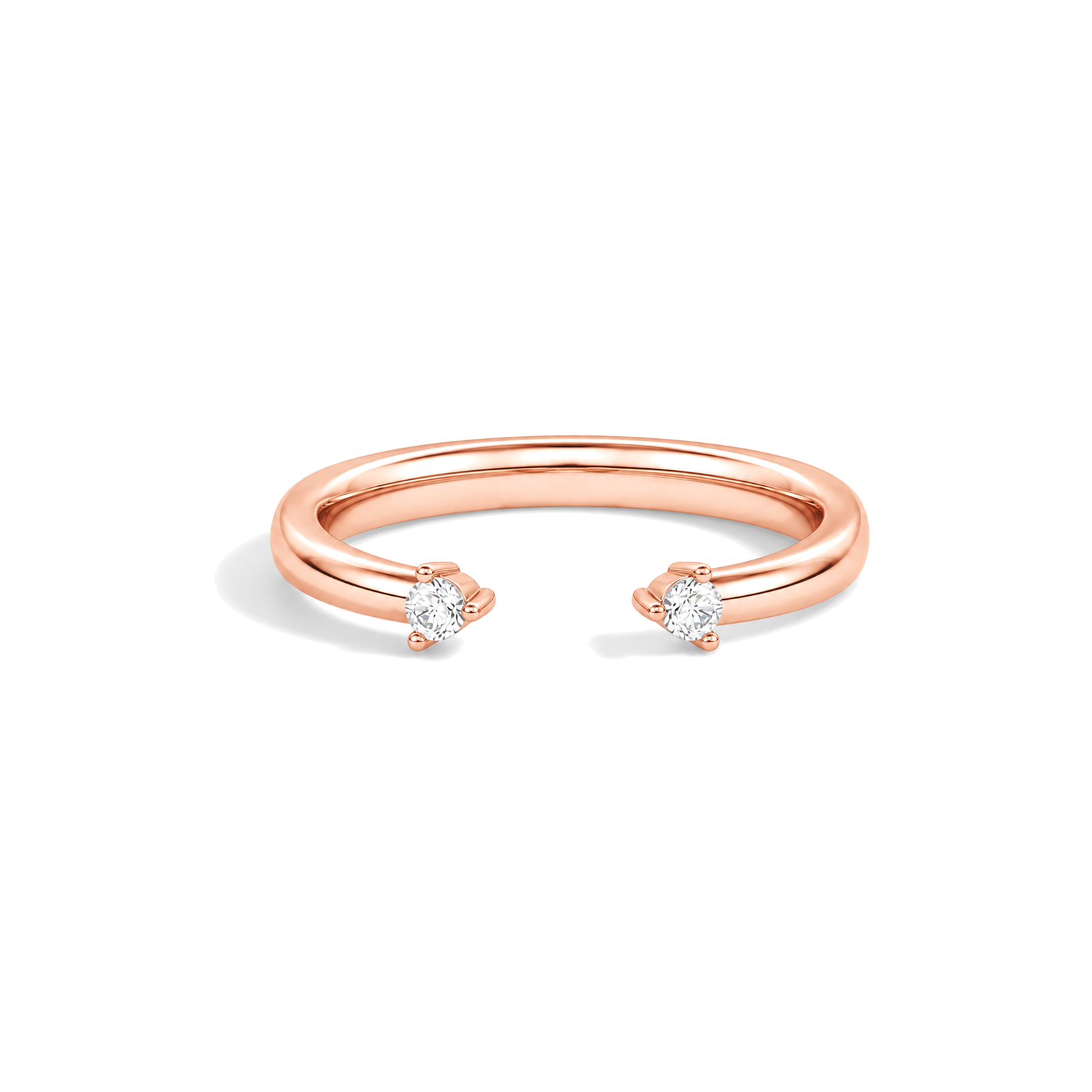
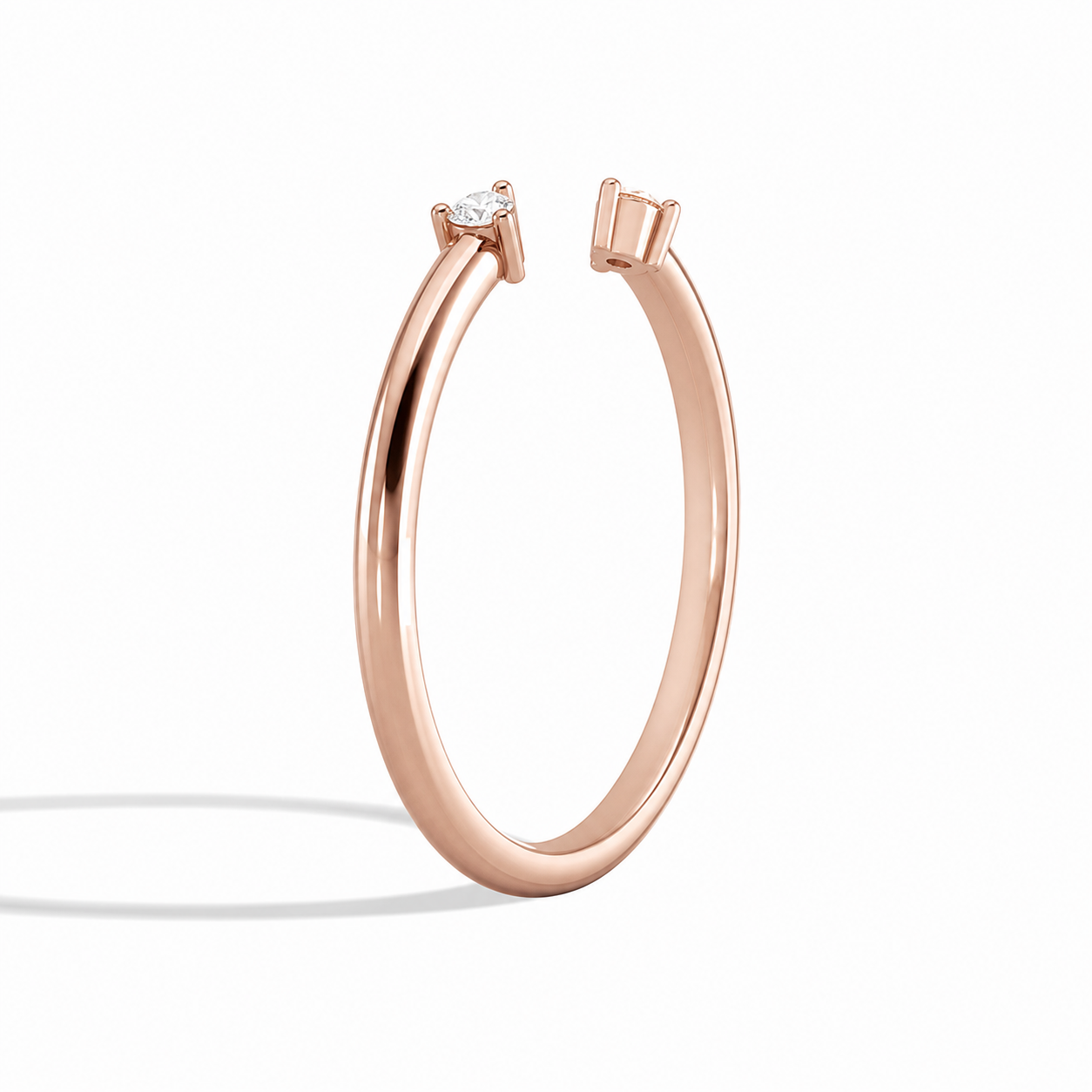

14K Rose Gold Stacking Rings: Warm Lines in Deliberate Order
A ring stack becomes coherent when every line has a role. Rose Gold can hold varied silhouettes inside one warm field, while contrast in width, diamond rhythm or contour decides where the eye begins and how it moves.
The current page contains forty-five rings, yet only Nadia, Rhea and Celine titles explicitly use Stacking or Stackable. The rest span bezel, channel, open, curved, comfort-fit, eternity, solitaire, crossover and diamond-band forms. Membership describes composition potential, not one shared engineering standard.
Give the Composition an Anchor
An anchor may be the ring already worn most, the widest line, a directional shape or a piece with personal meaning. It does not need to sit in the center. Its job is to establish what another ring should repeat, frame, interrupt or leave alone.
Rose Gold can connect pieces through color, but matching metal does not guarantee matching alloy, finish, height or contact behavior. Hierarchy still depends on the complete silhouettes.
Add Width and Profile Together
Published average widths run from 1.4 to 3.0 mm. A stack’s effective width is the sum of every band plus its intervals, and side height accumulates through prongs, channels, bezels, galleries and open ends.
No fixed ring count or size-up increment follows. Measure the intended combination, review knuckle passage and finger base, and confirm each ring’s selected size rather than applying a formula.
Let Contact Remain Evidential
All forty-five designs also occur in same-metal Wedding Bands, Rings, Anniversary Rings and Fashion Rings; thirteen overlap Eternity and nine overlap Curved Rings. This page owns composition, not coverage, ceremonial pairing or contour education in isolation.
Inspect every neighboring edge and setting. No order, spacer, shared karat or matched color prevents all rotation, abrasion, impact or catching. Clean separately when practical and store without abrasive contact. 14K contains approximately 58.3% gold; exact alloy and finish remain product-specific.
Frequently Asked Questions
How many designs are current?
Forty-five 14K rose gold rings.
Are all explicitly stackable?
No; only three current titles use Stack or Stackable.
What does membership mean?
Composition potential, not universal compatibility.
What can anchor a stack?
The ring that establishes hierarchy through meaning, scale, shape or direction.
Must the anchor sit in the center?
No.
What widths are published?
Average widths from 1.4 to 3.0 mm.
How many rings should be combined?
No fixed number applies.
Should every ring be the same size?
Not automatically; assess the exact finger, position and combined width.
Should I size up?
No Collection-wide increment is established.
Can straight and curved rings mix?
Possibly after comparing contour, height and contact.
Can I mix settings?
Yes aesthetically, while every edge and projection still requires review.
Does matching rose gold prevent rubbing?
No.
Which shapes appear?
Round dominates, with five other named shapes and six unstated.
Do all products offer TCW?
Thirty-nine do; six do not show that option.
Is this assortment exclusive?
No; all forty-five overlap broader same-metal routes.
How much gold is in 14K?
Approximately 58.3%.