
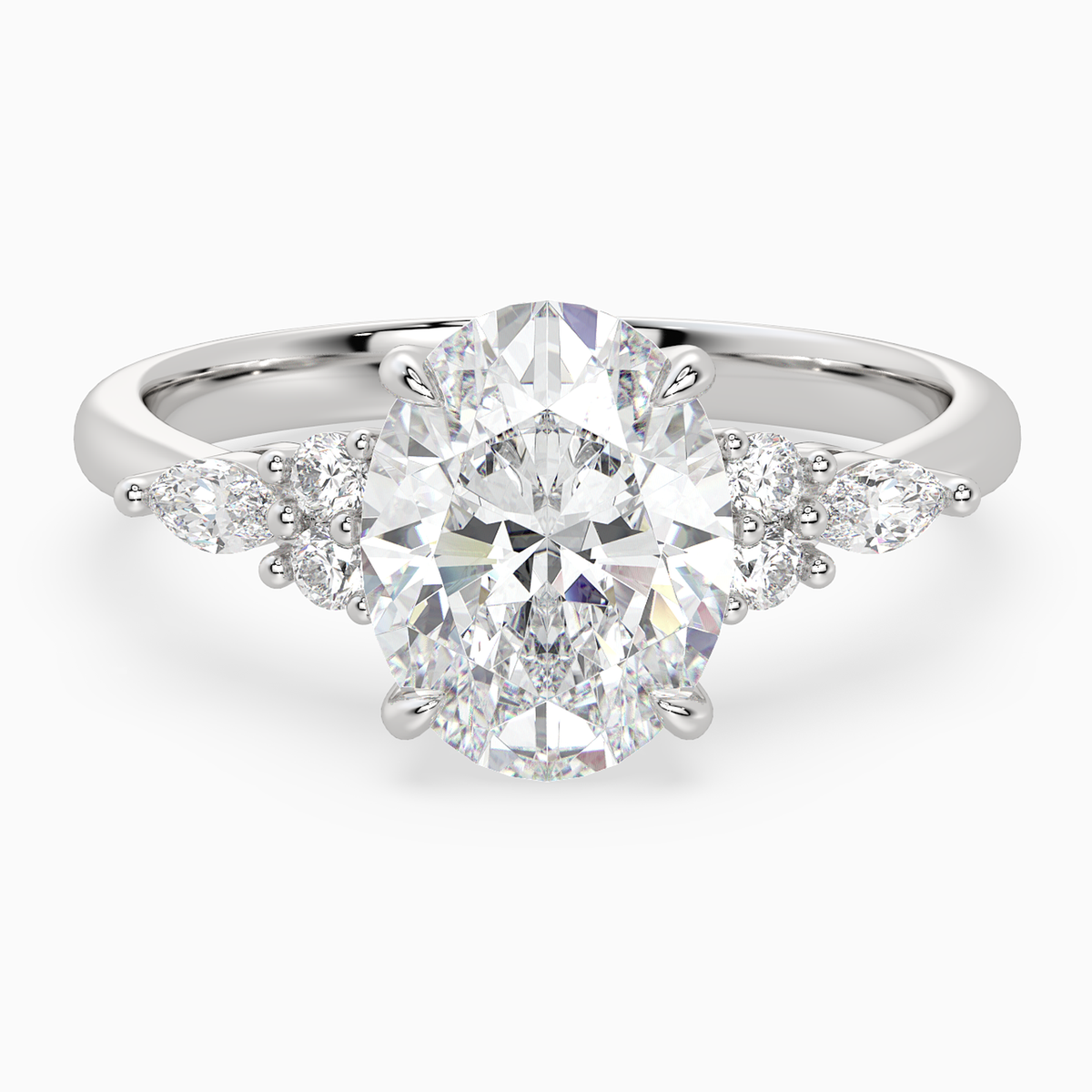


14K Yellow Gold Engagement Rings
Warmth with definition. 14K yellow gold places the diamond within a distinct golden frame, bringing contrast to classic and modern settings.


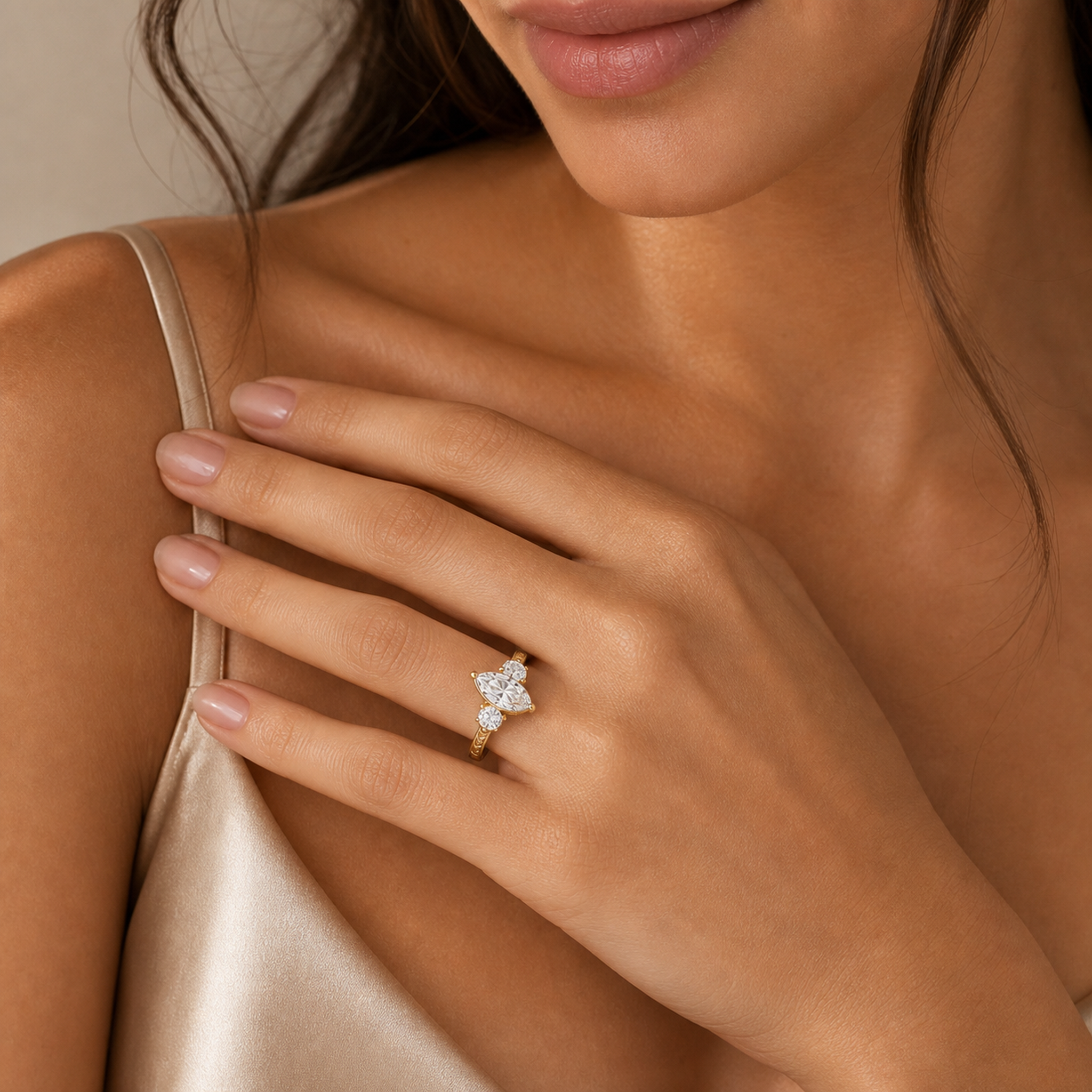


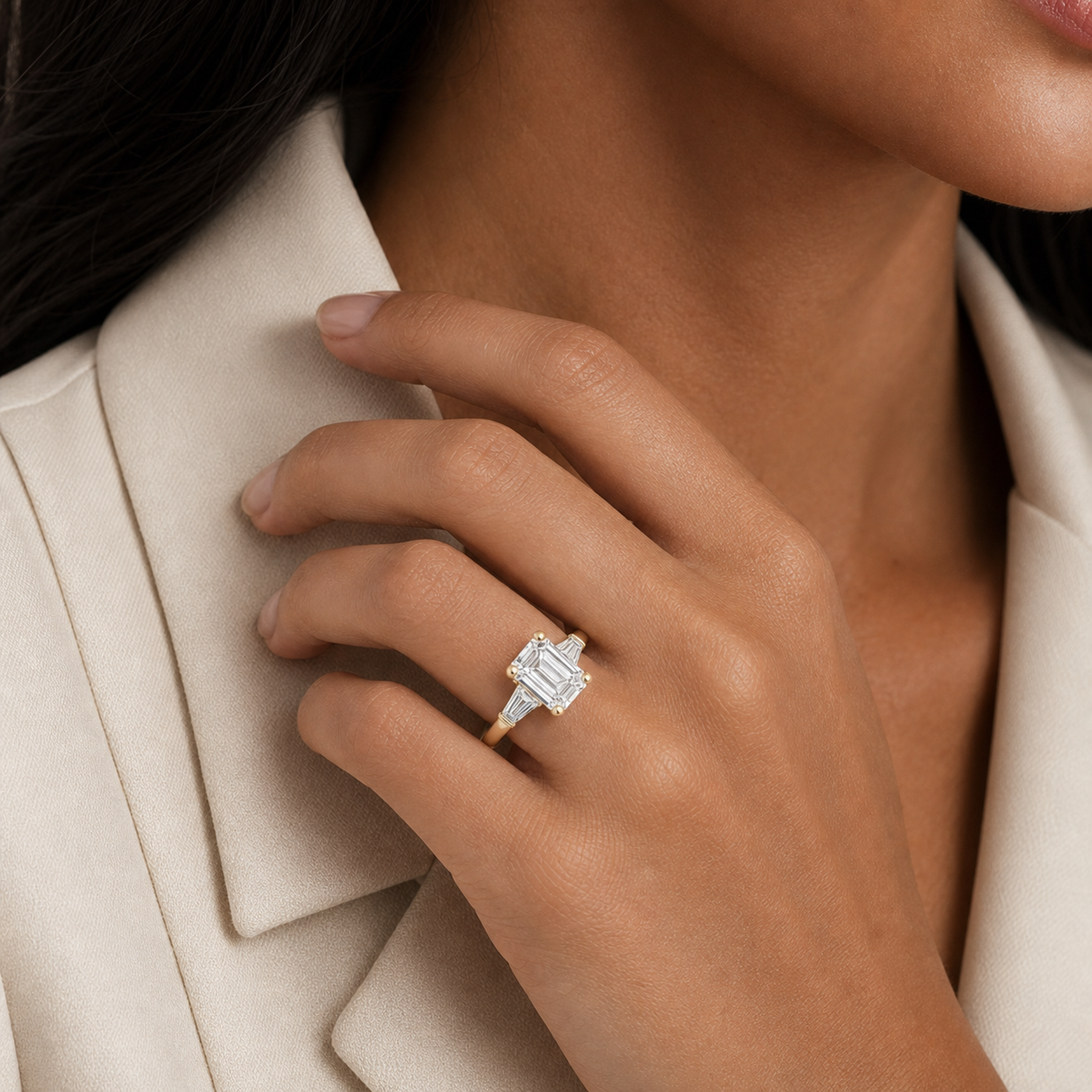


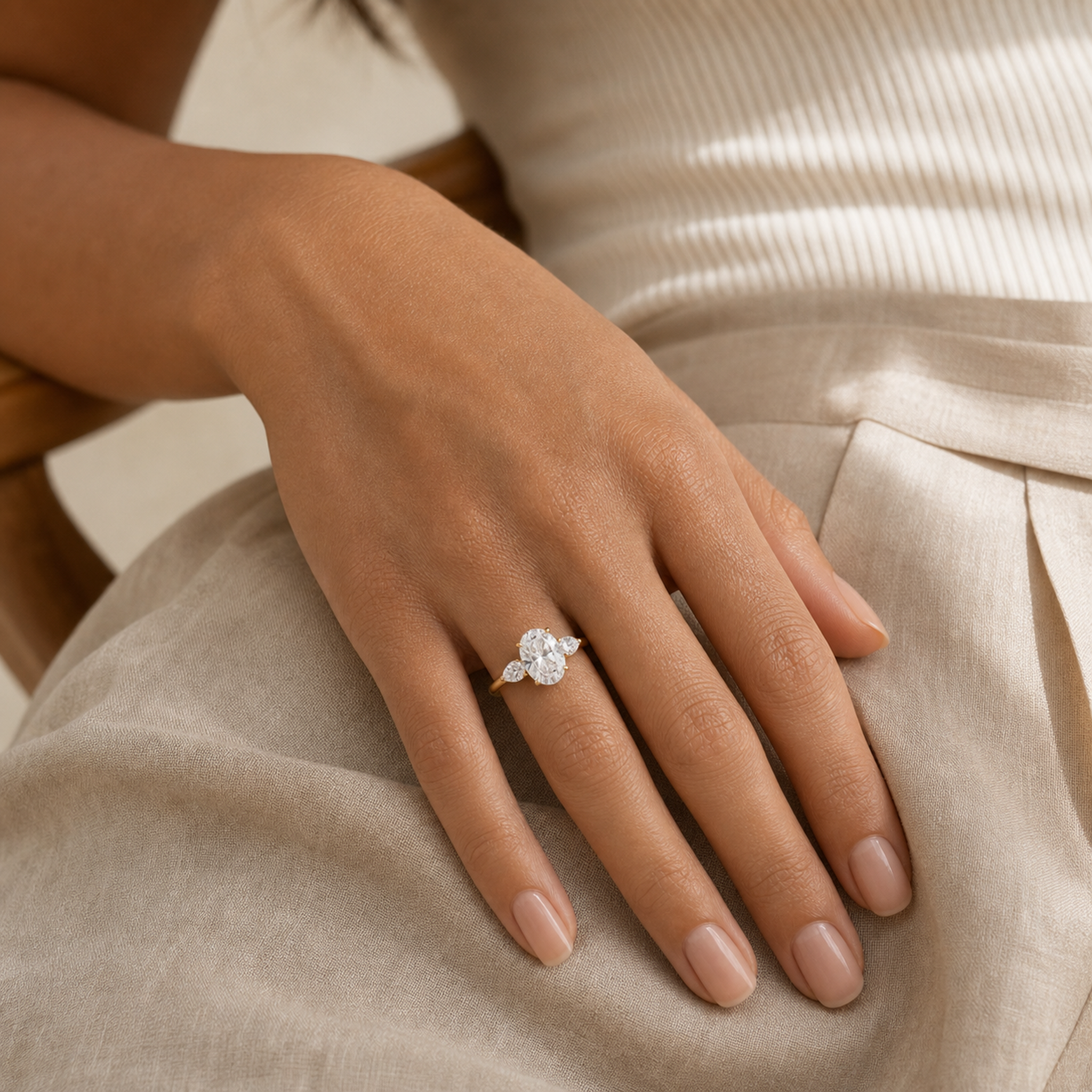


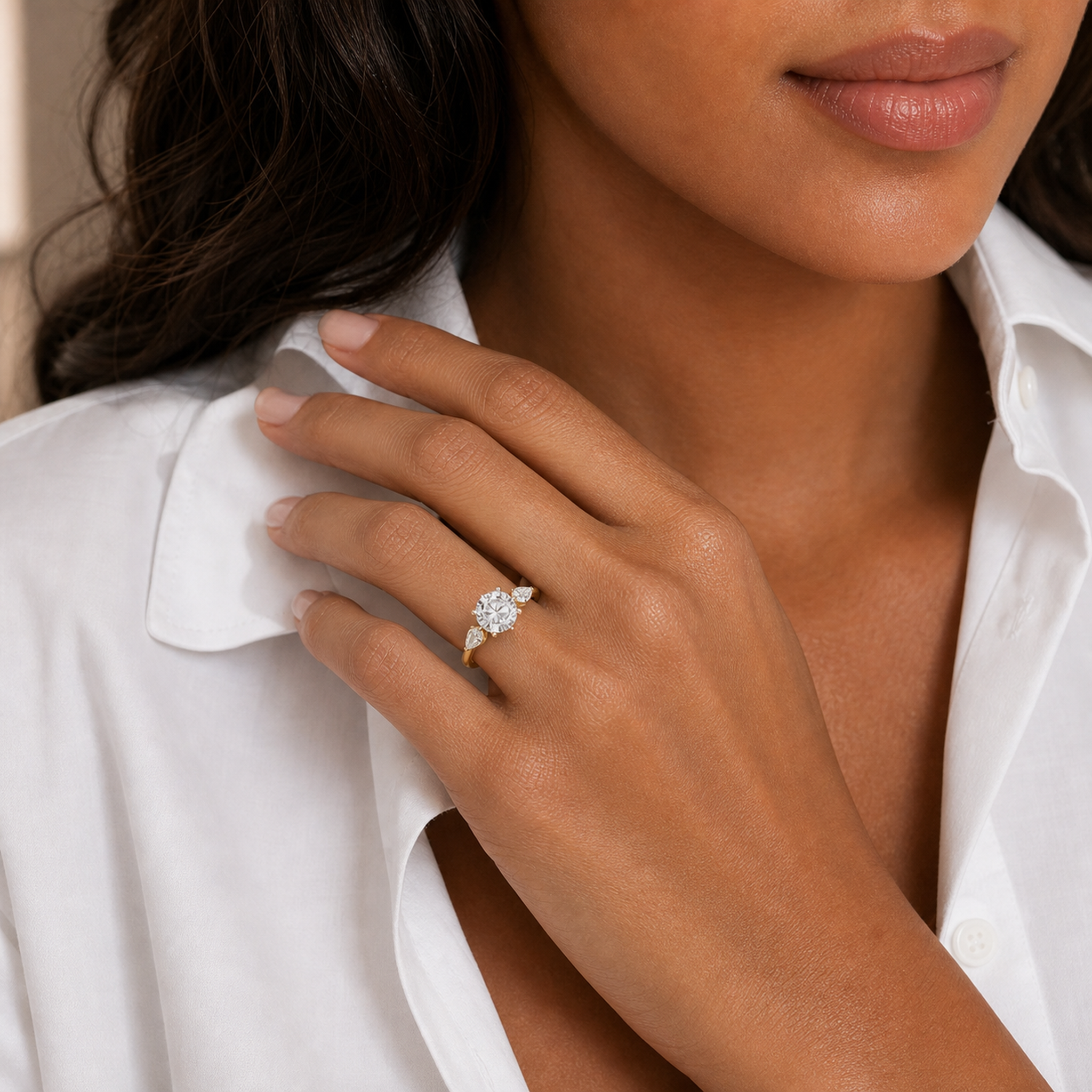
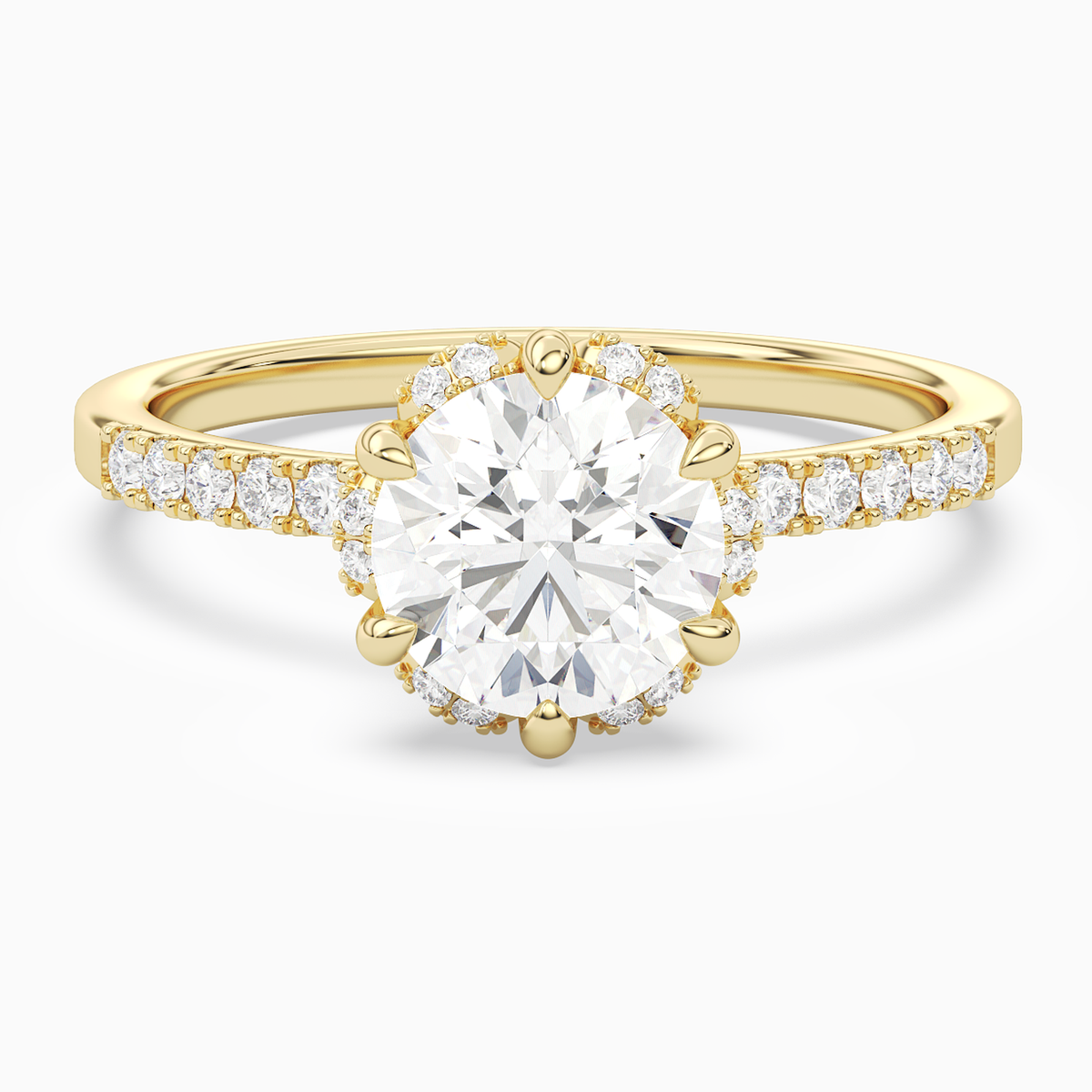
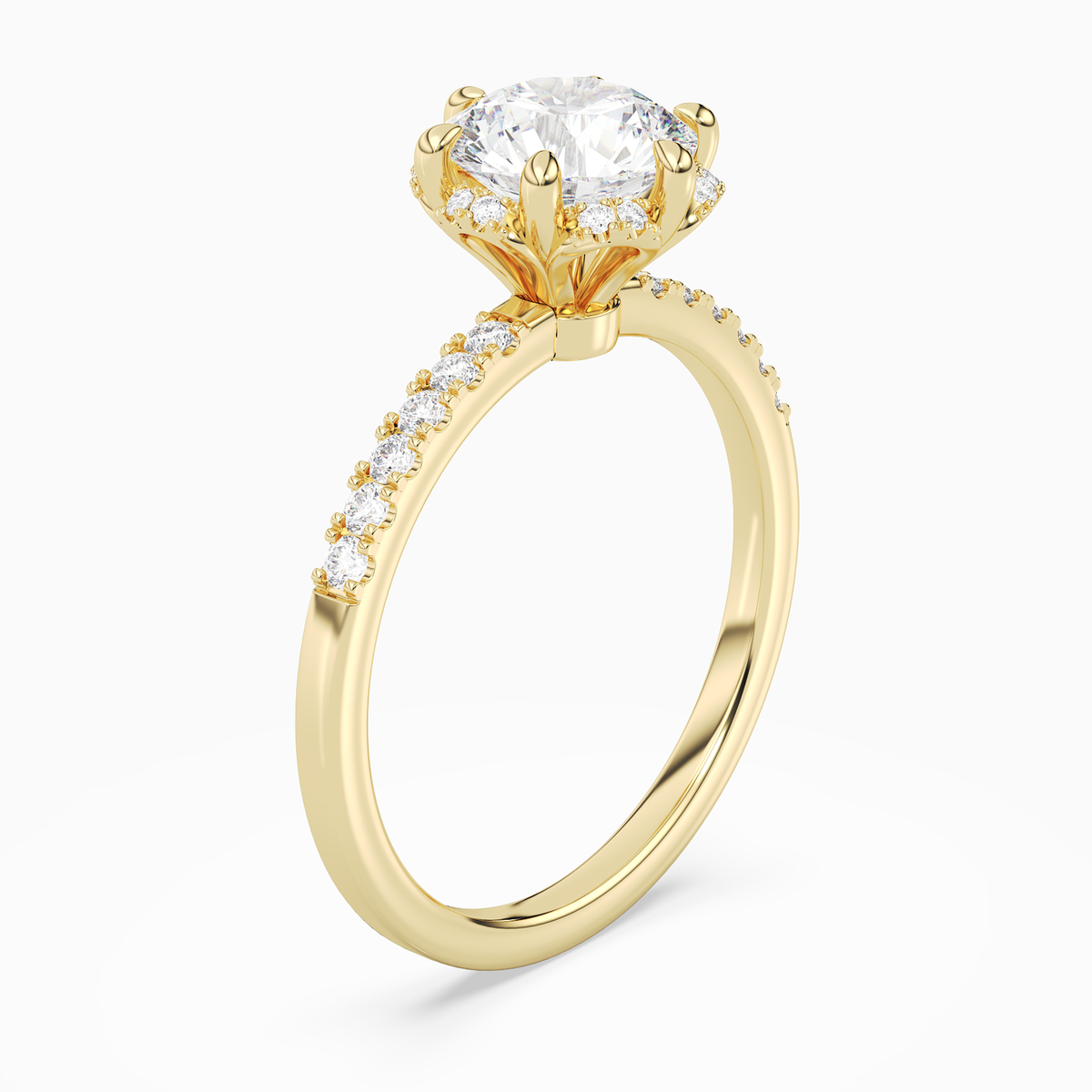
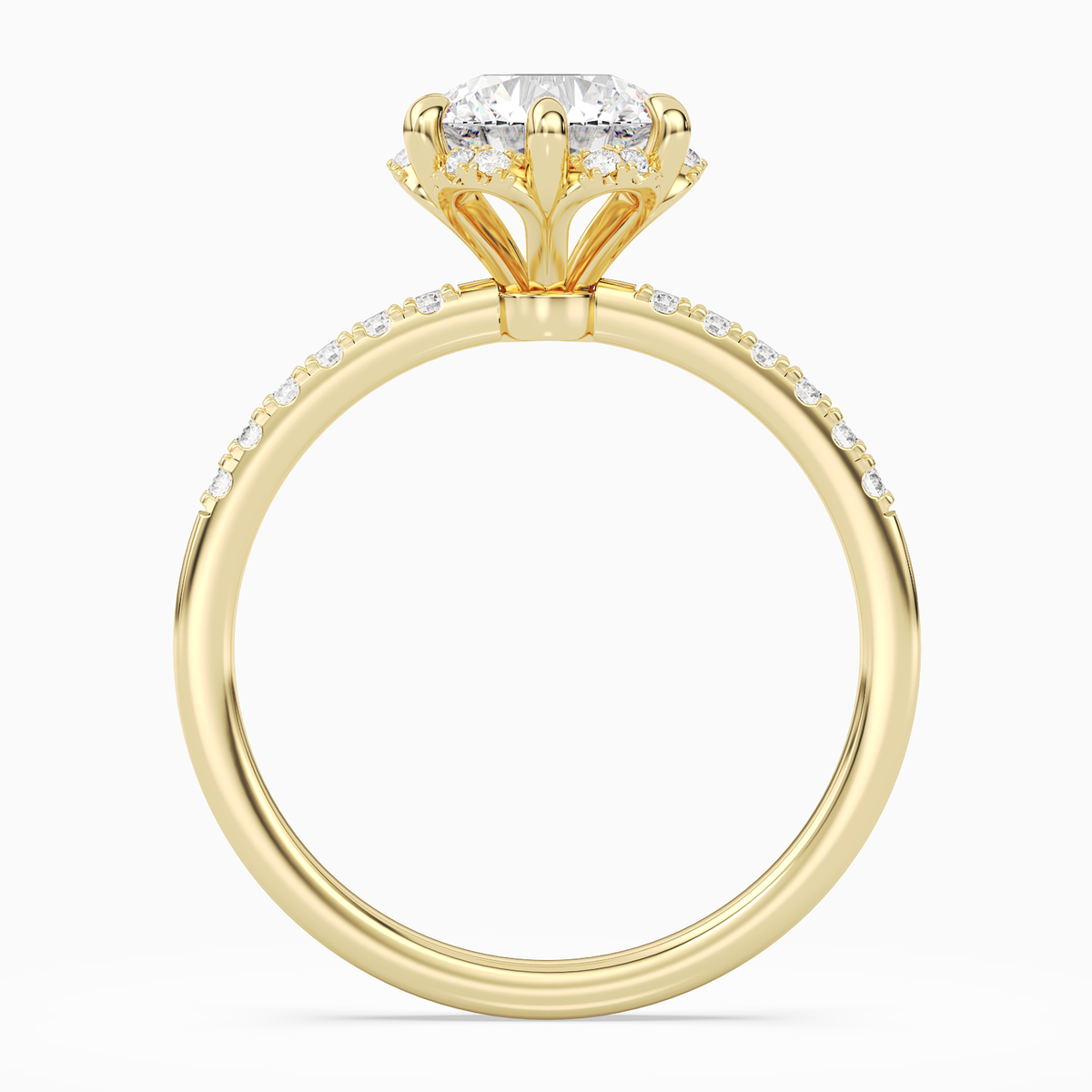
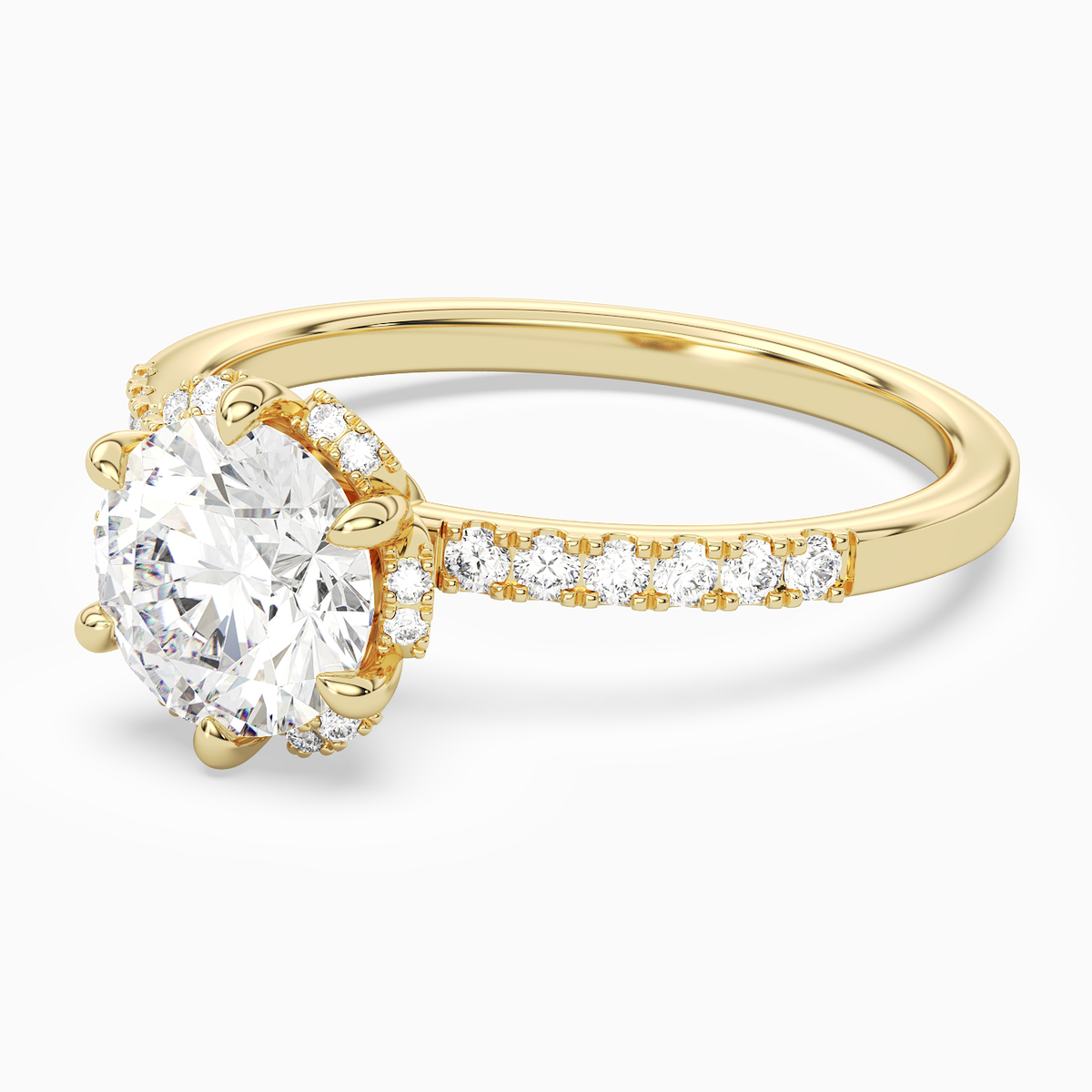
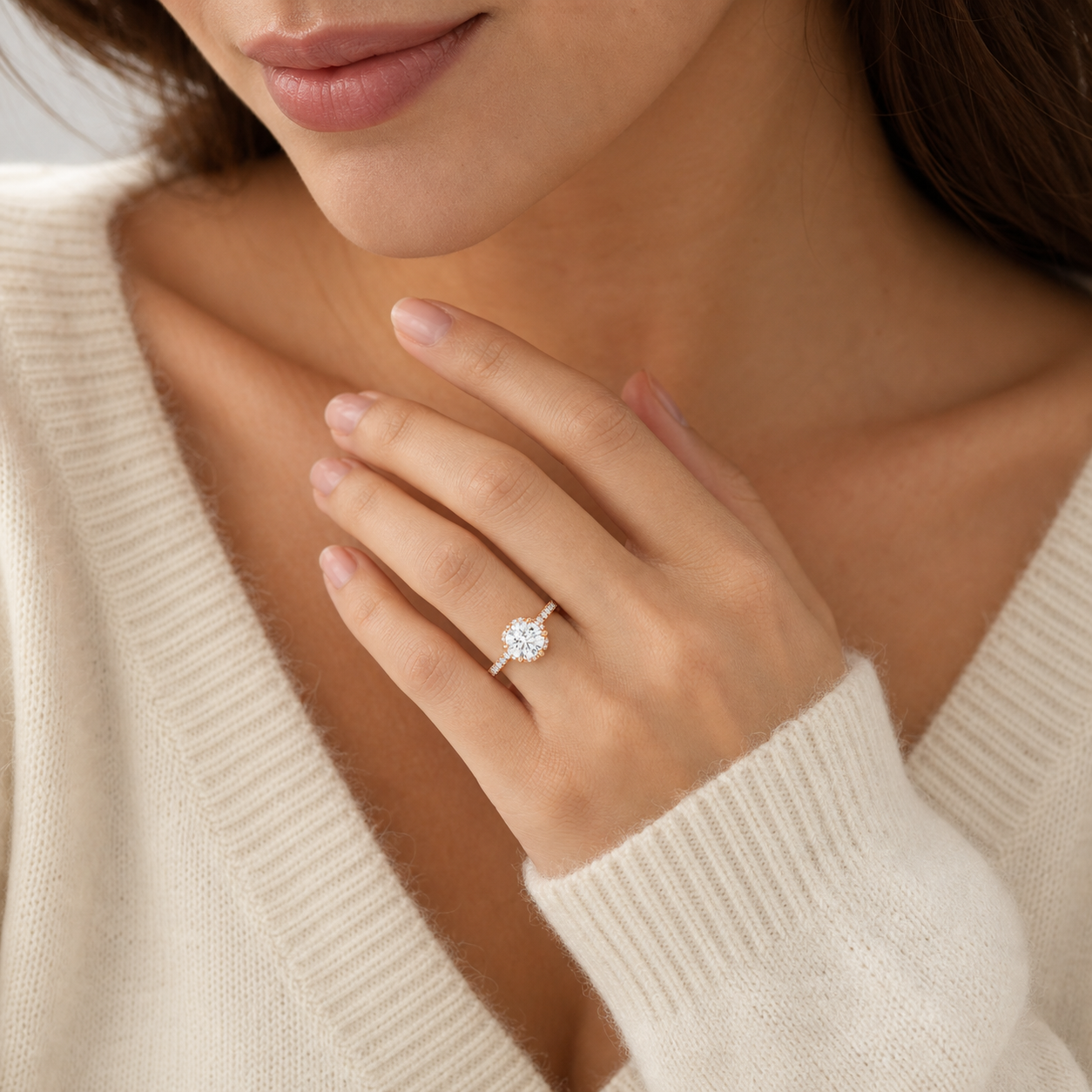


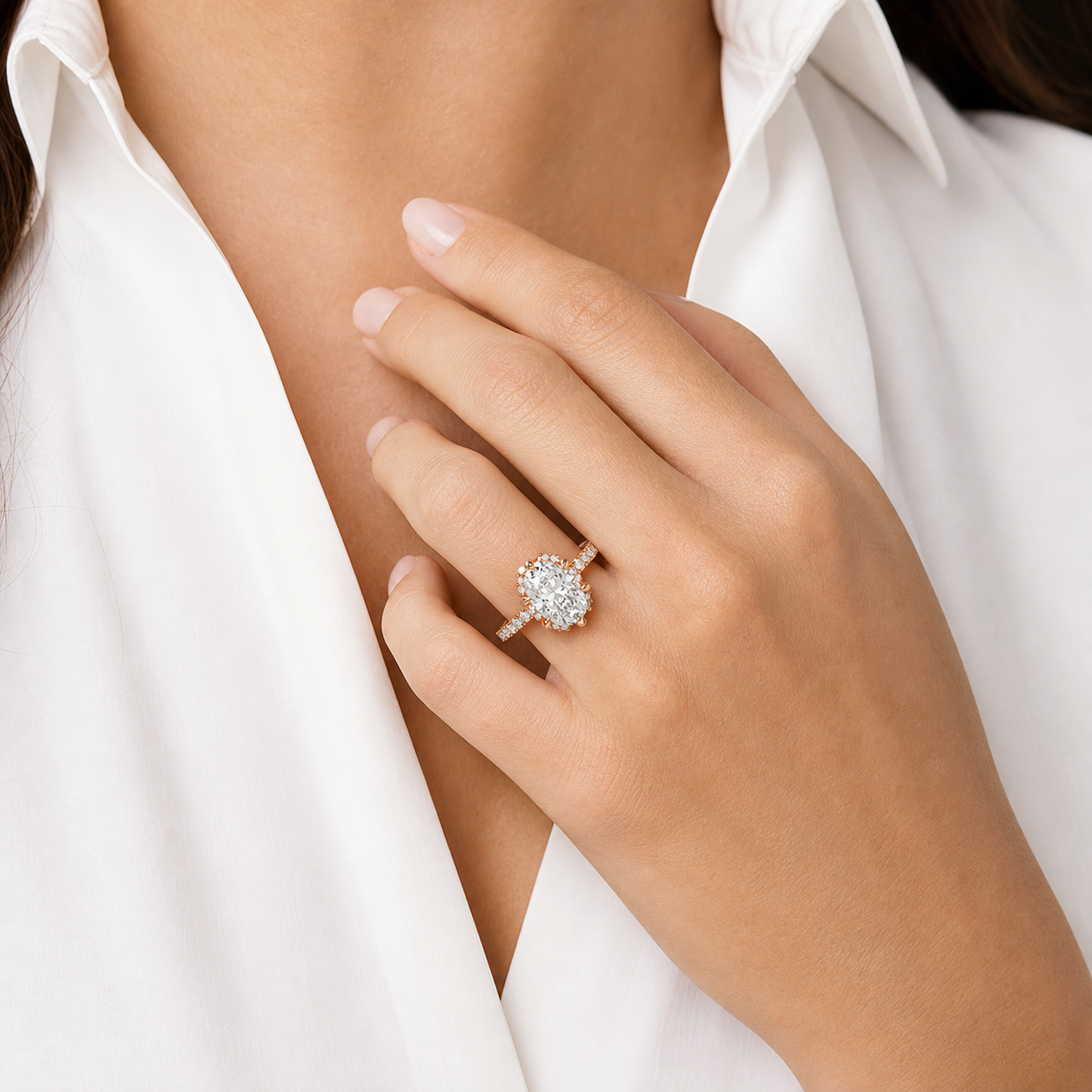
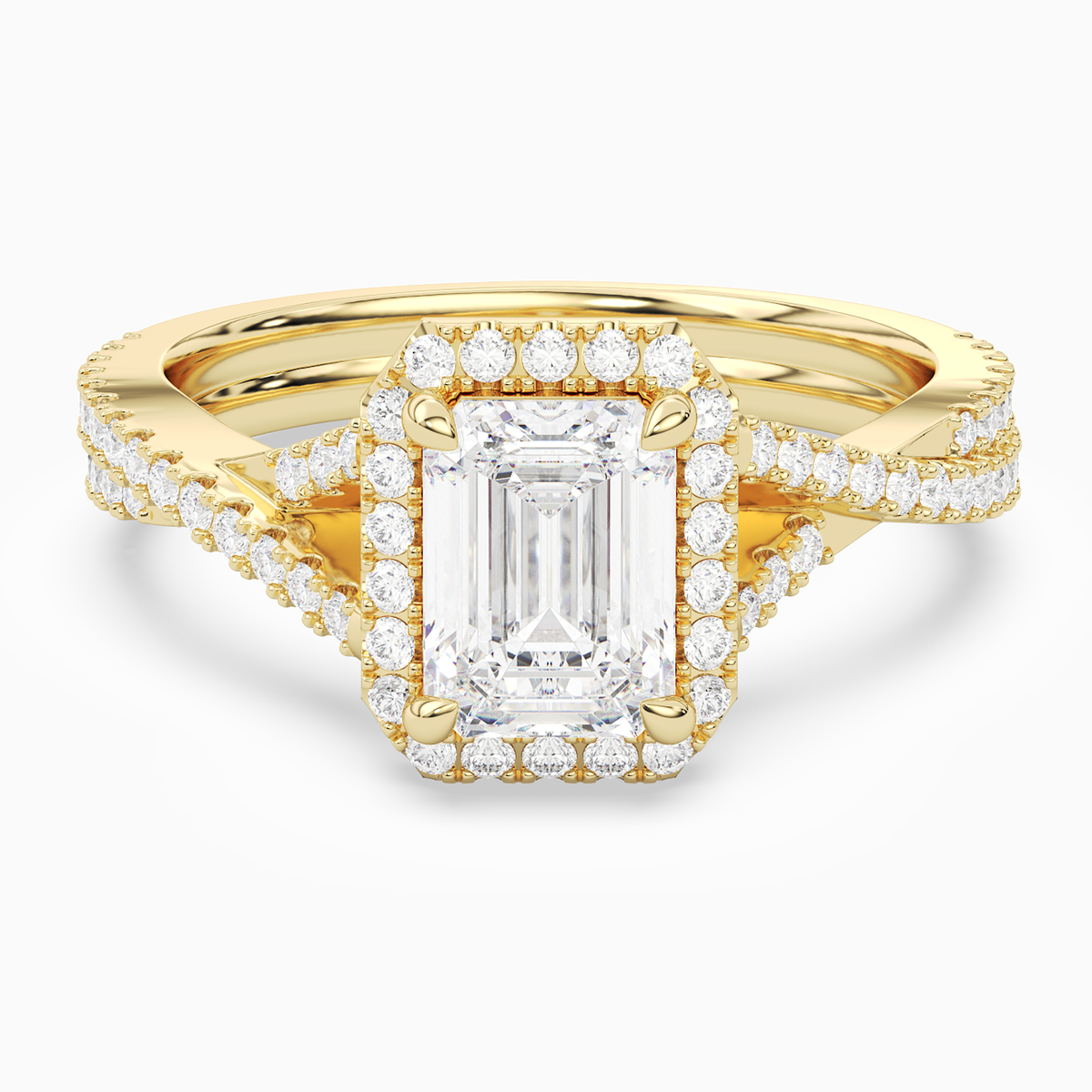

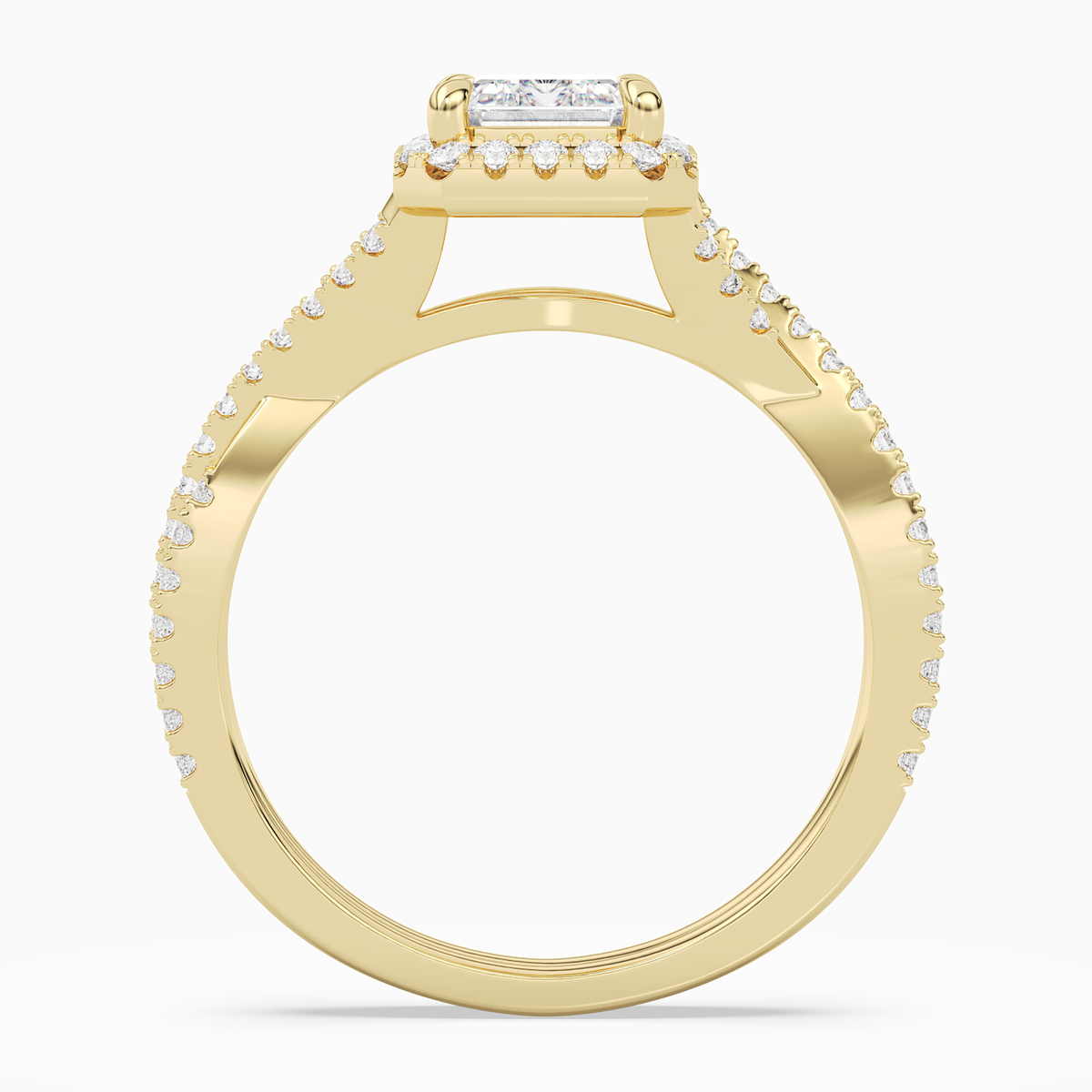
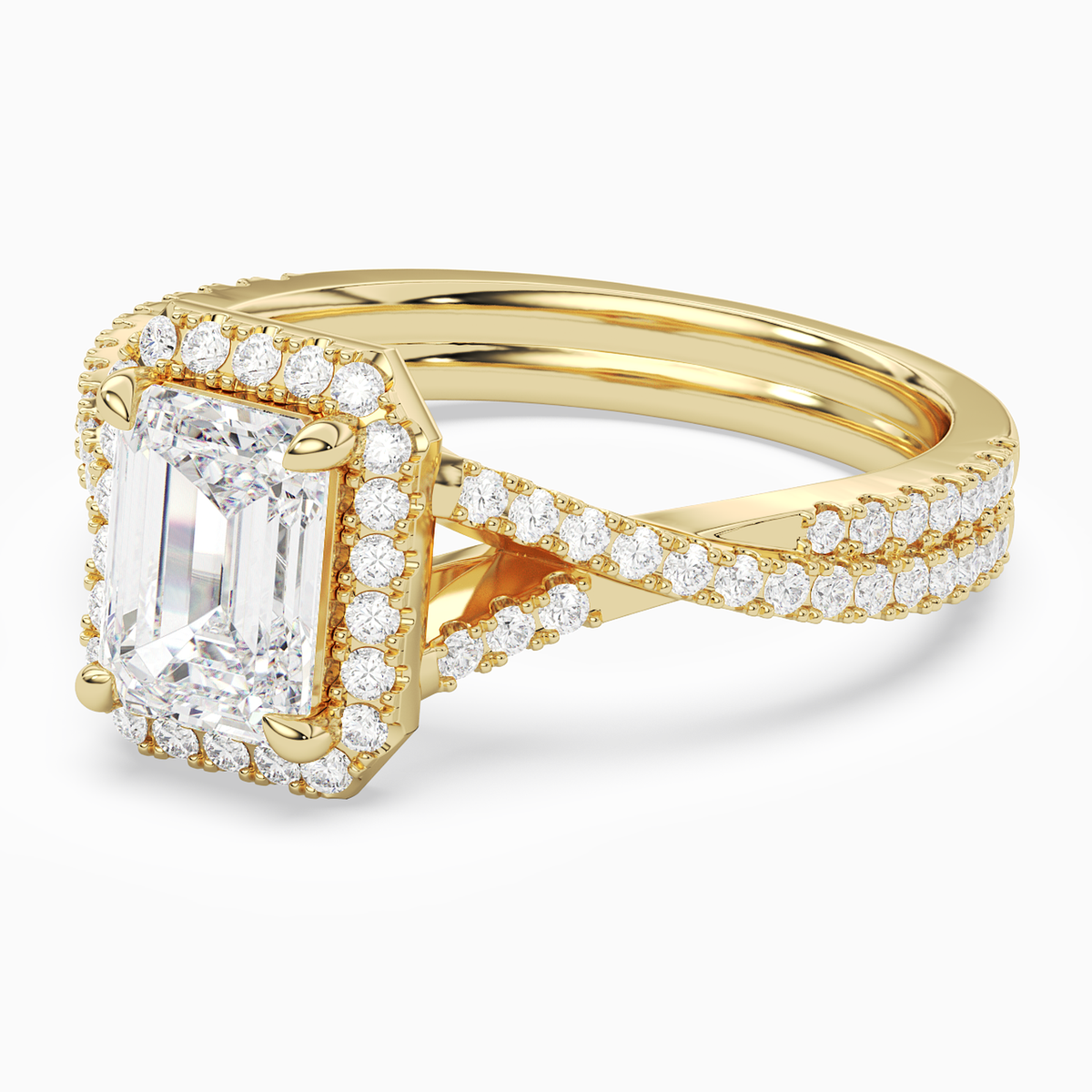
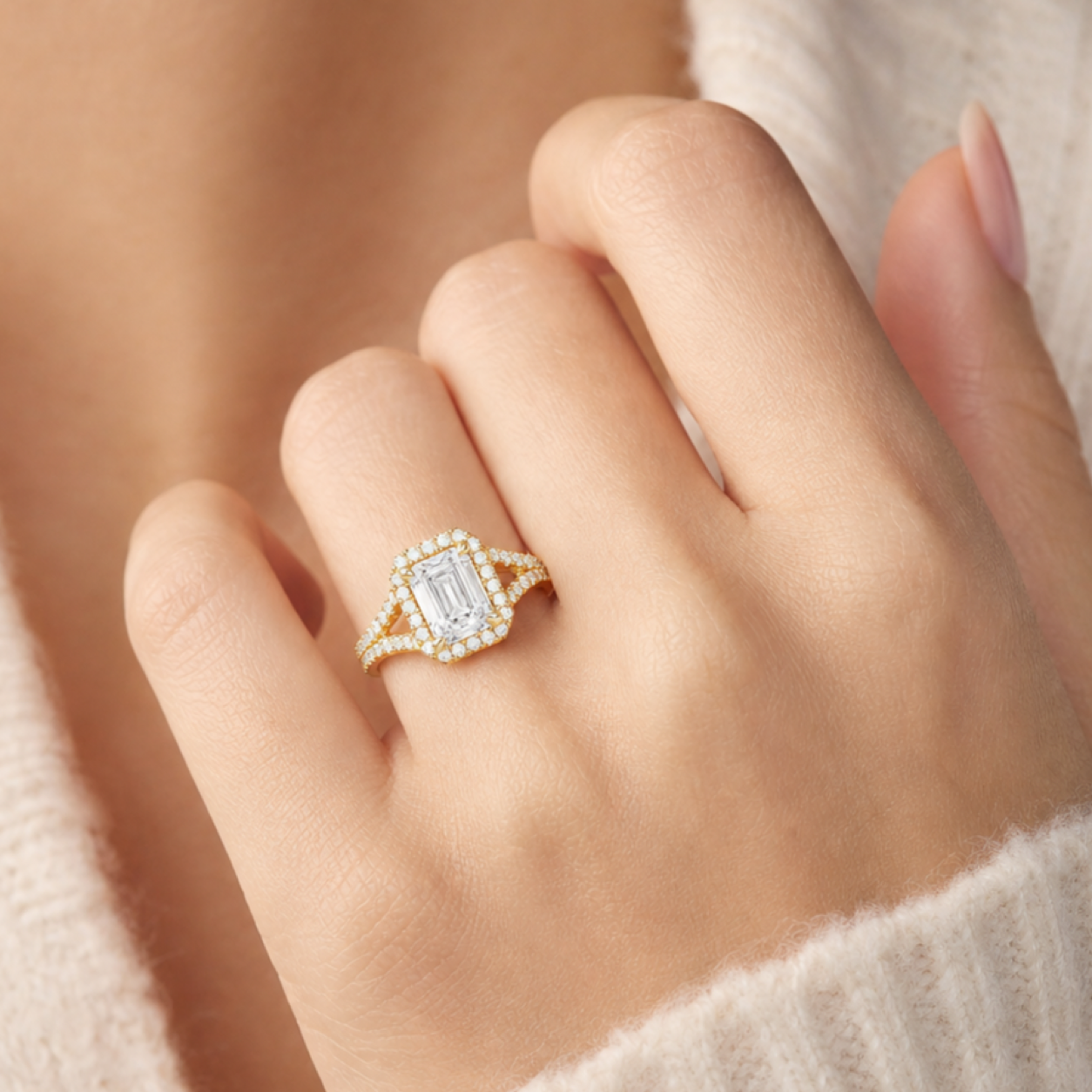


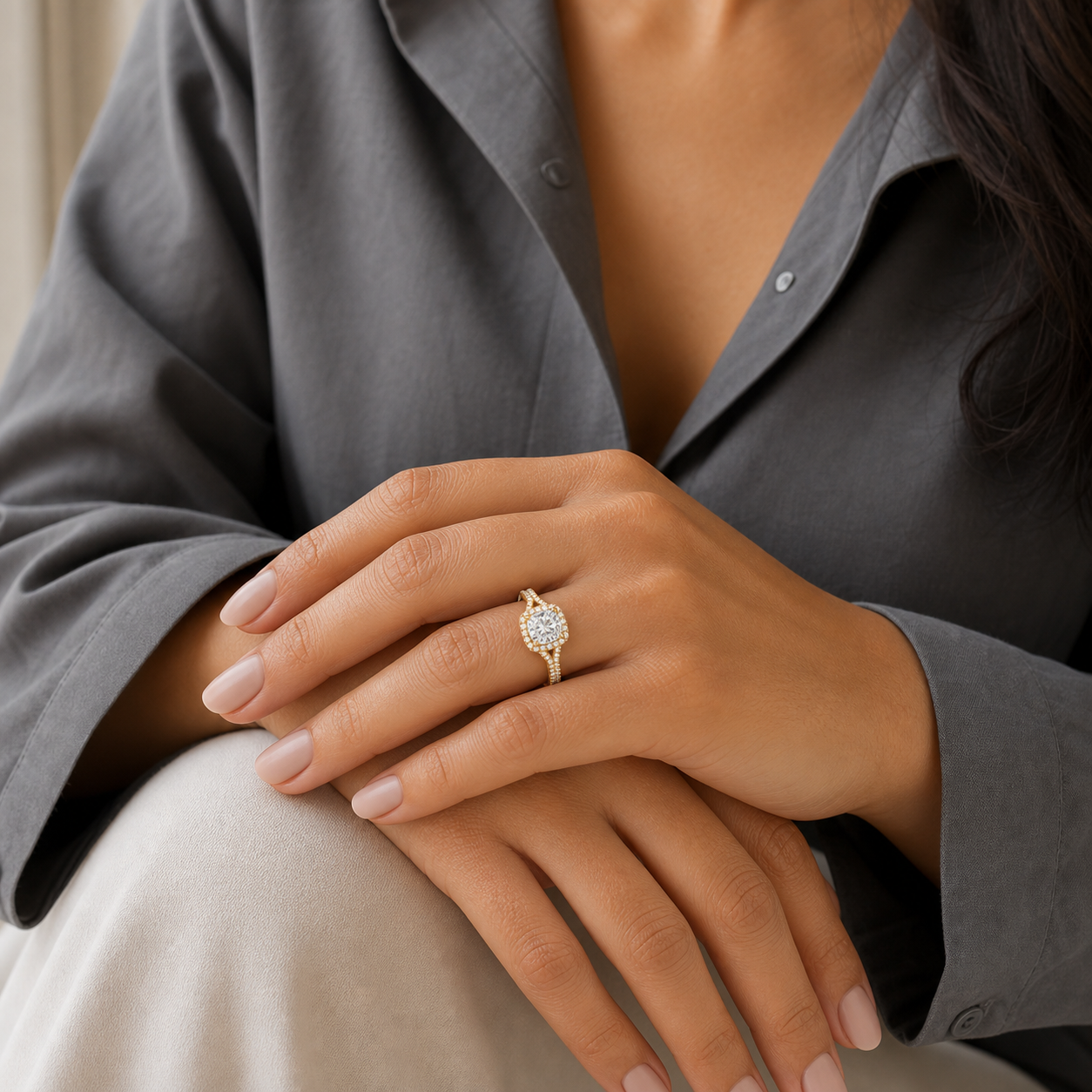


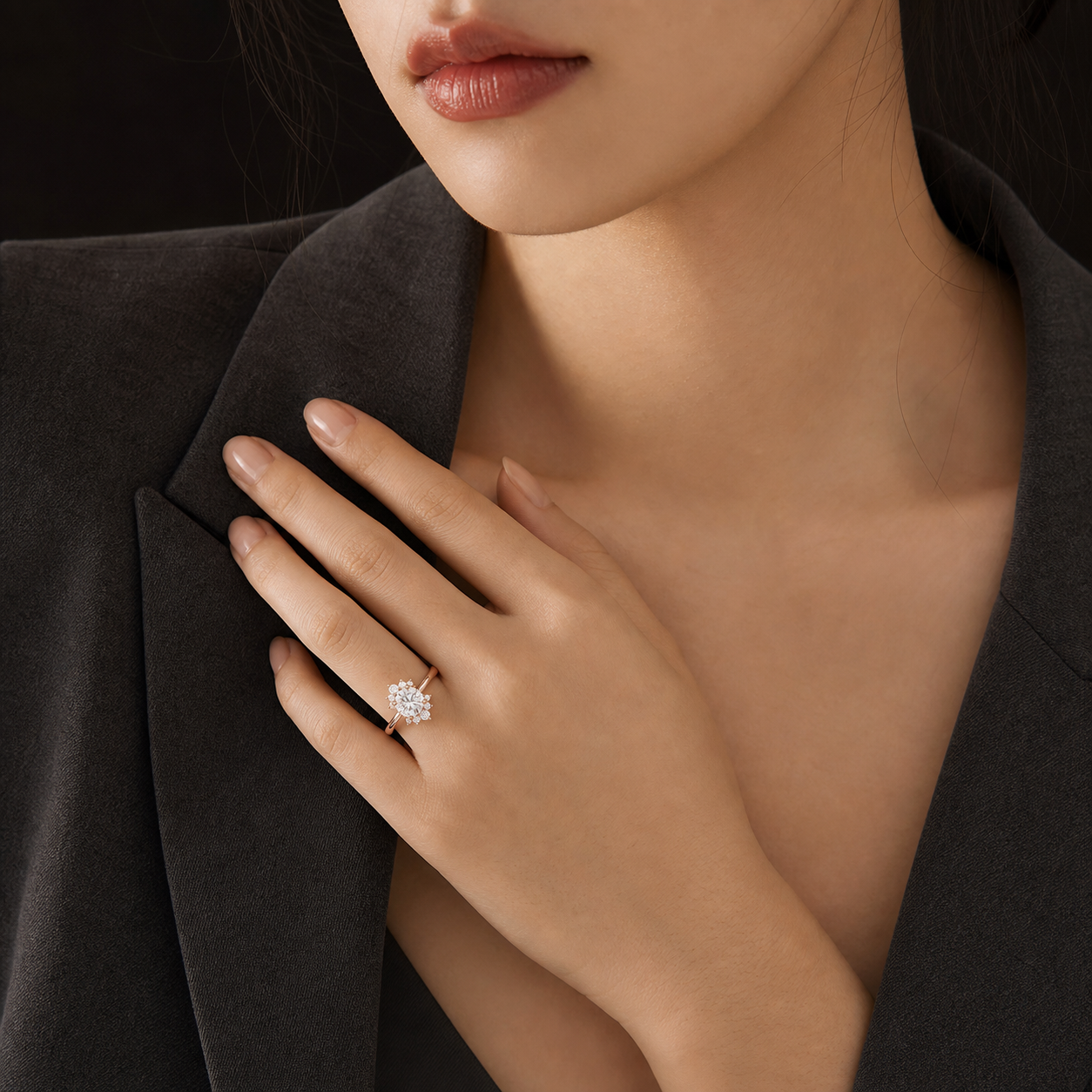

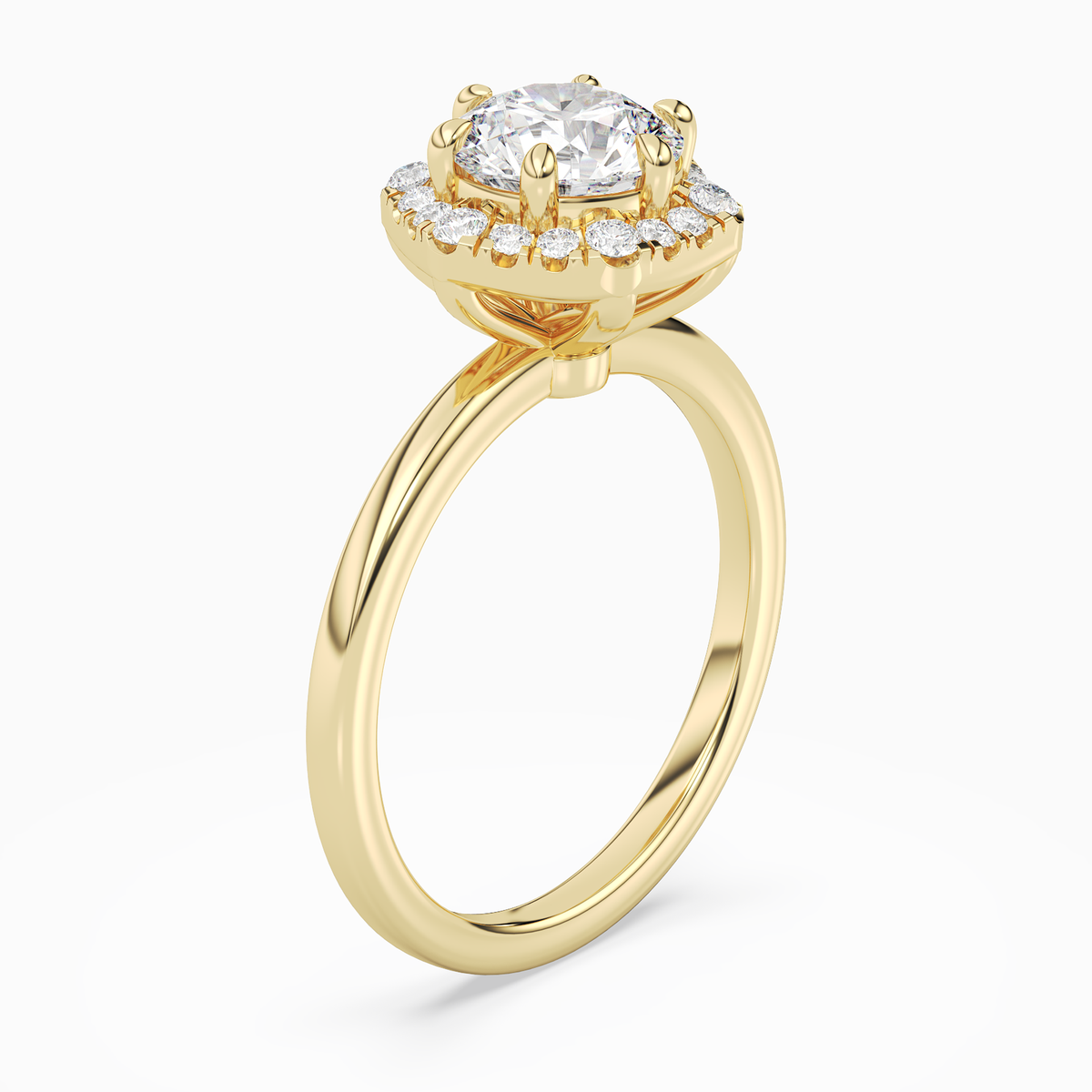


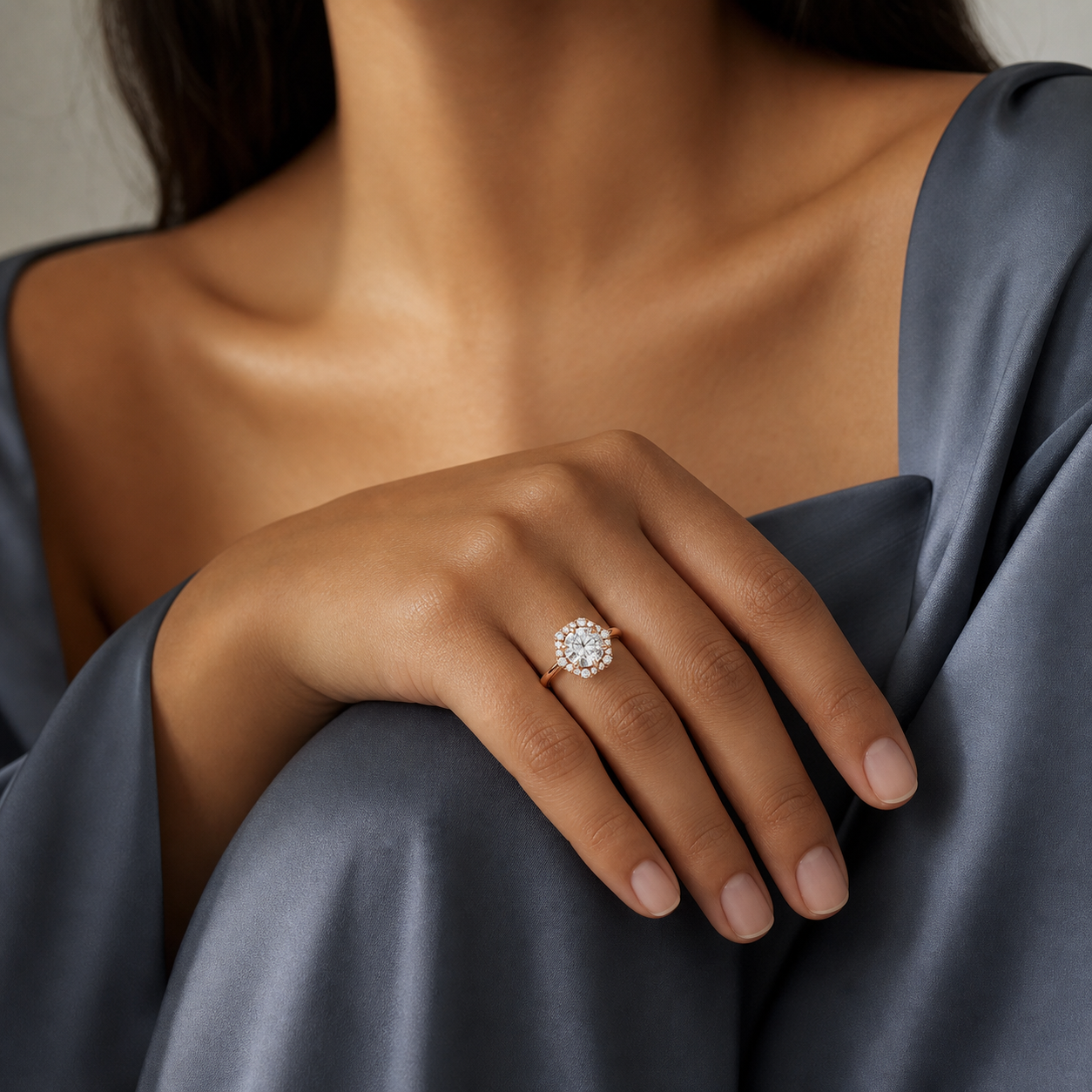


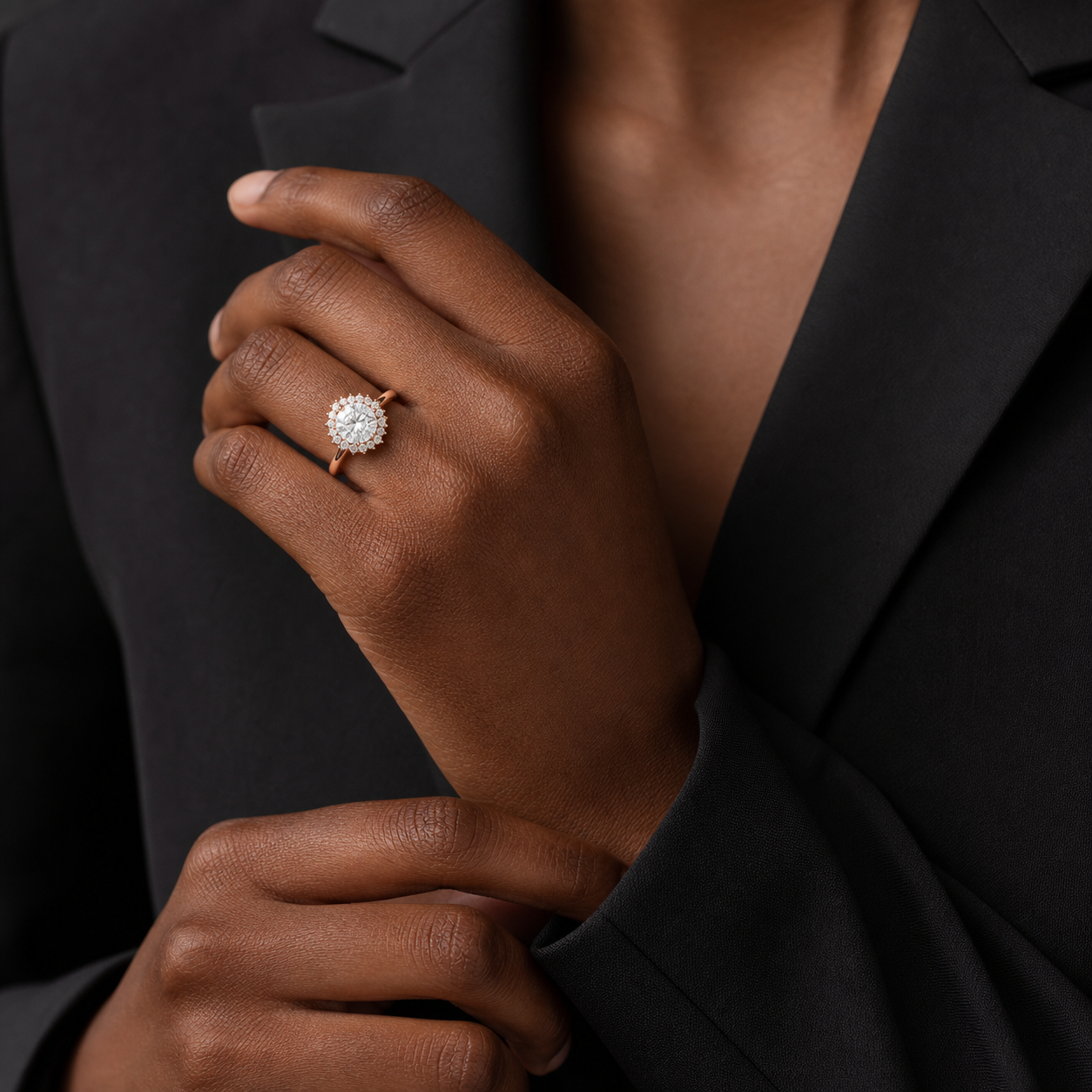
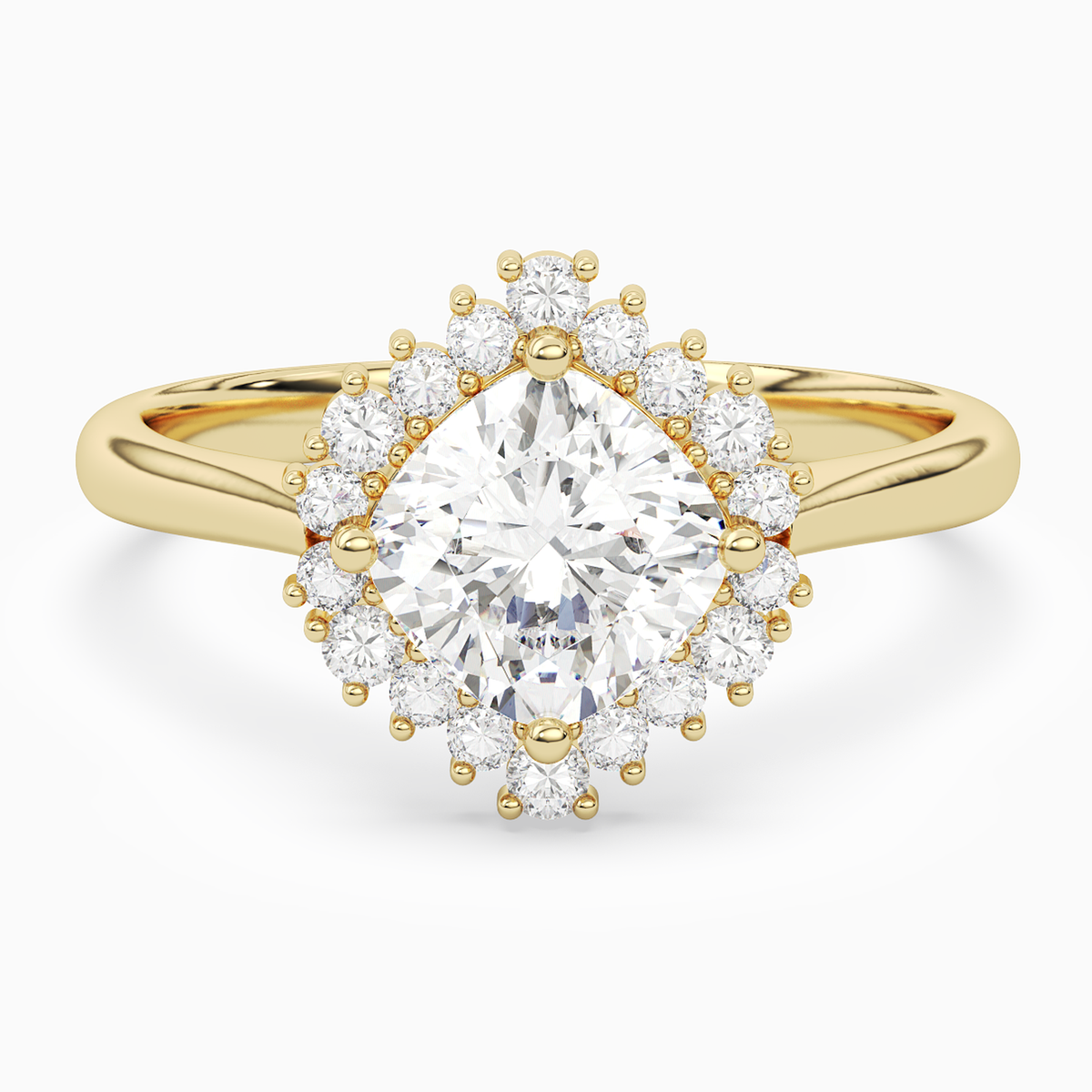
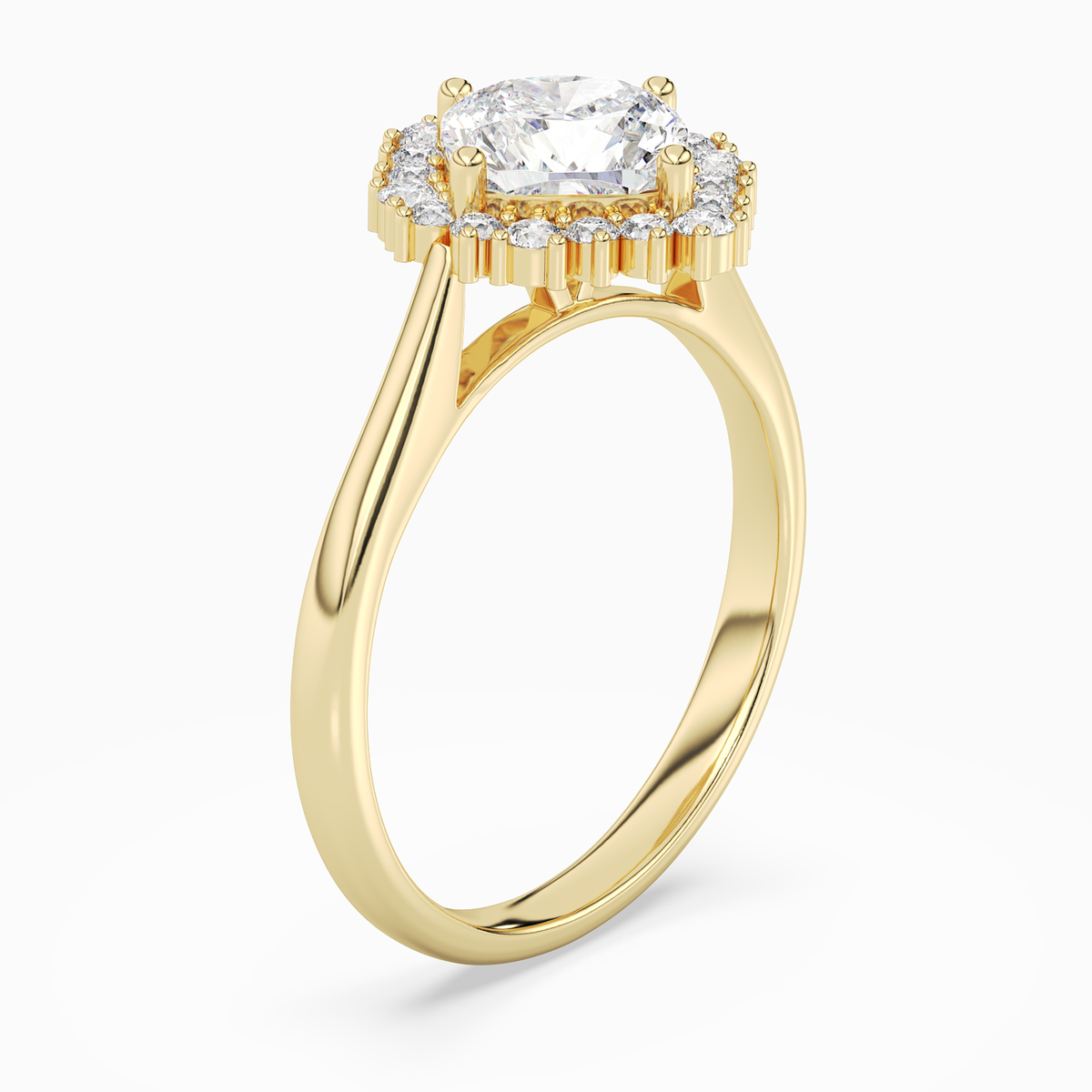
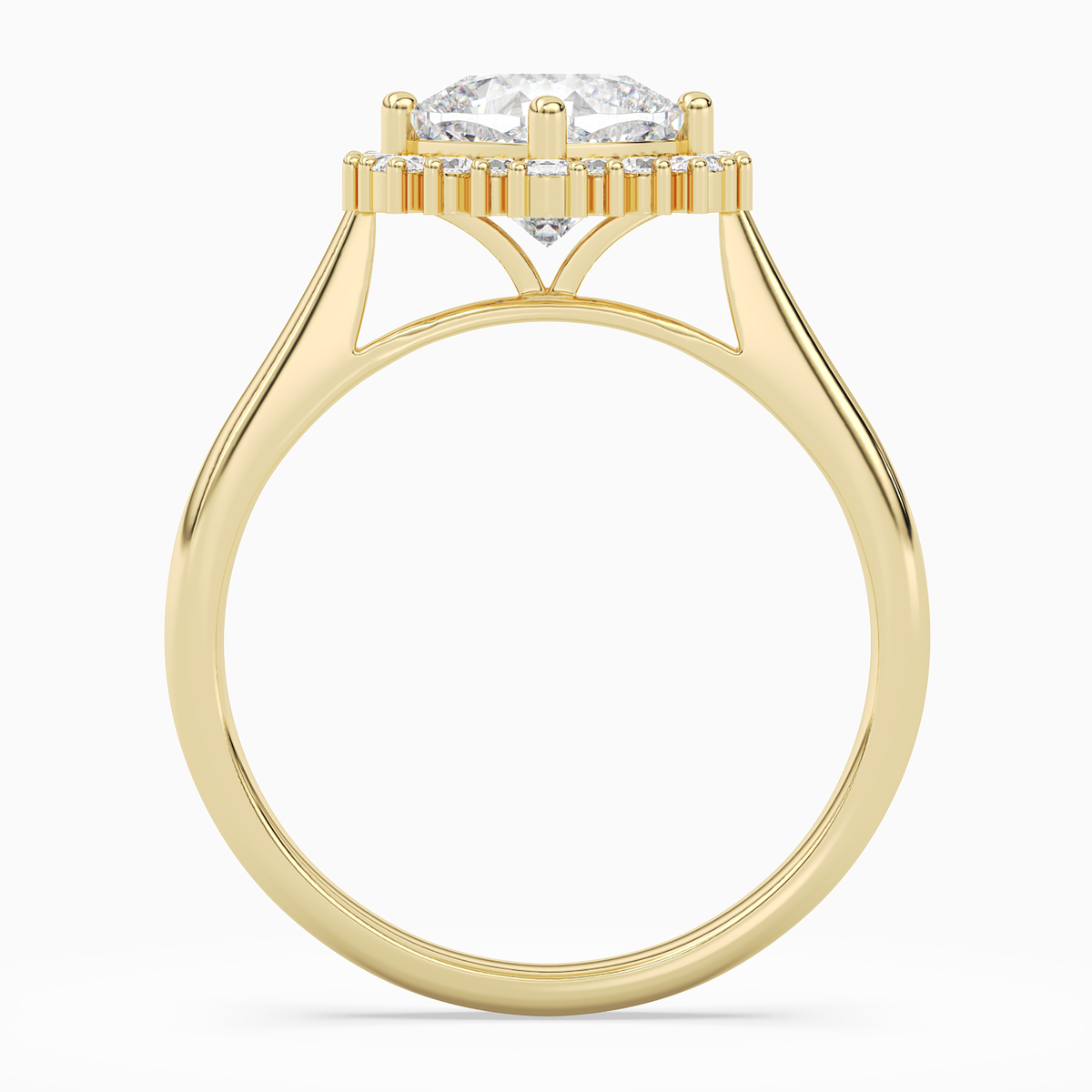
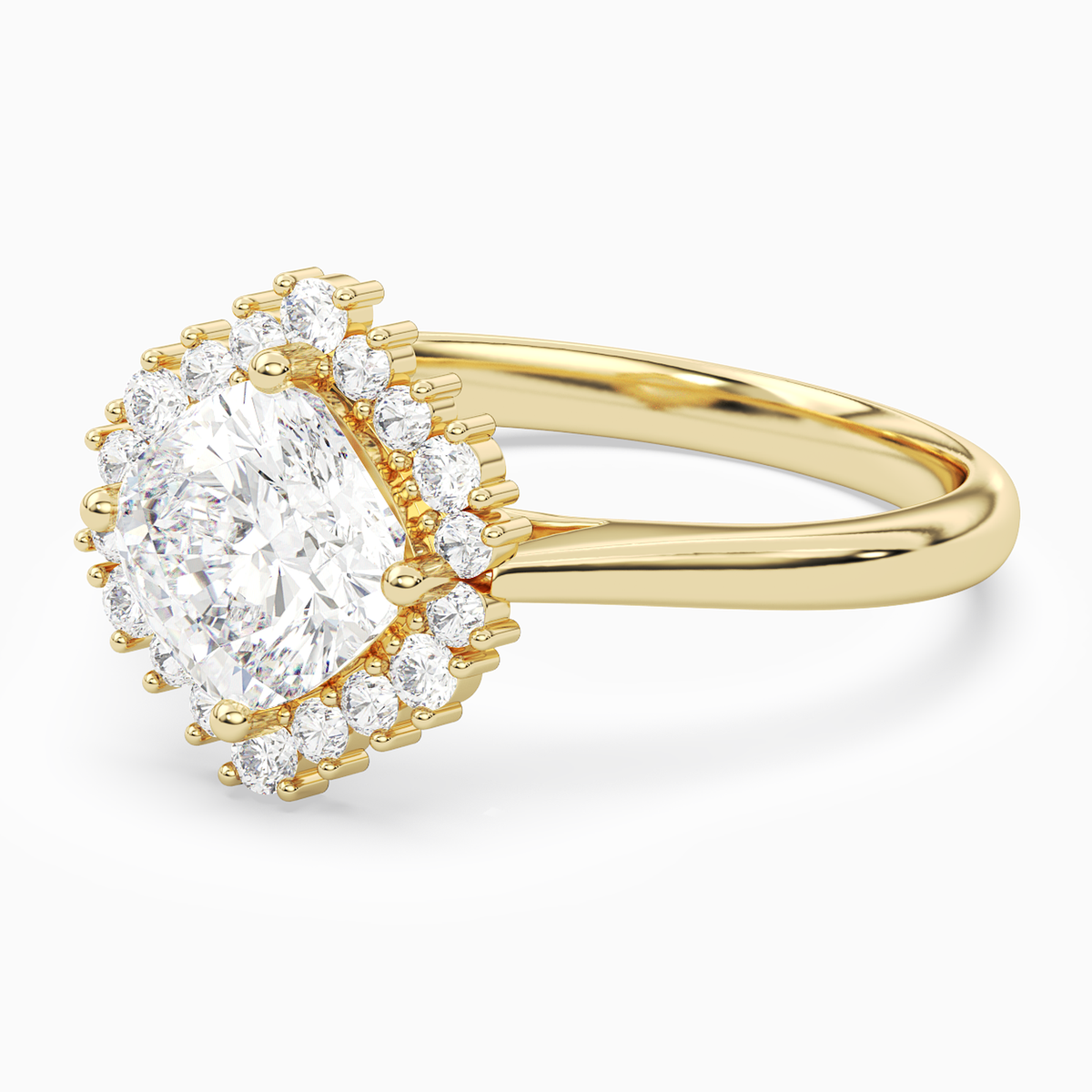
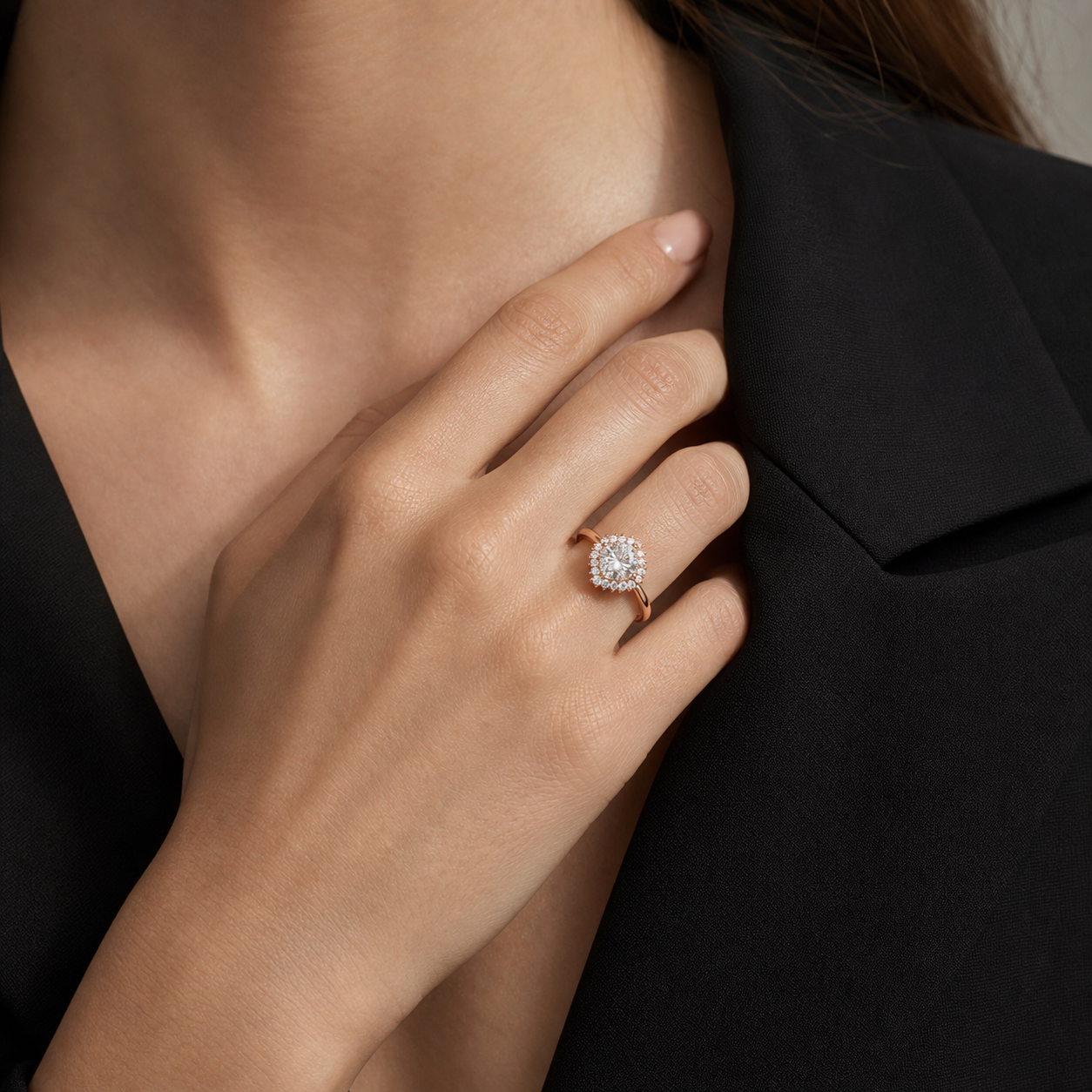
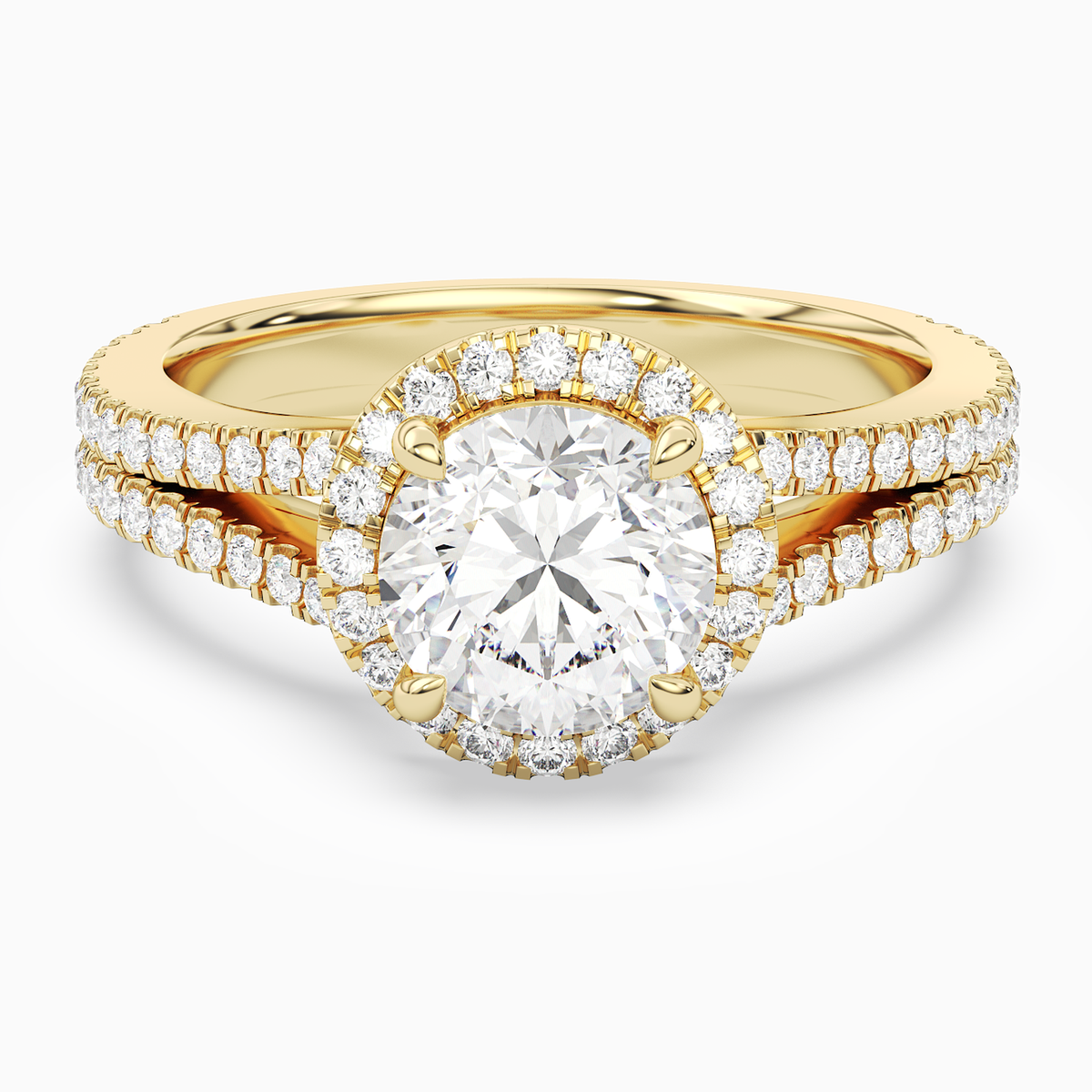

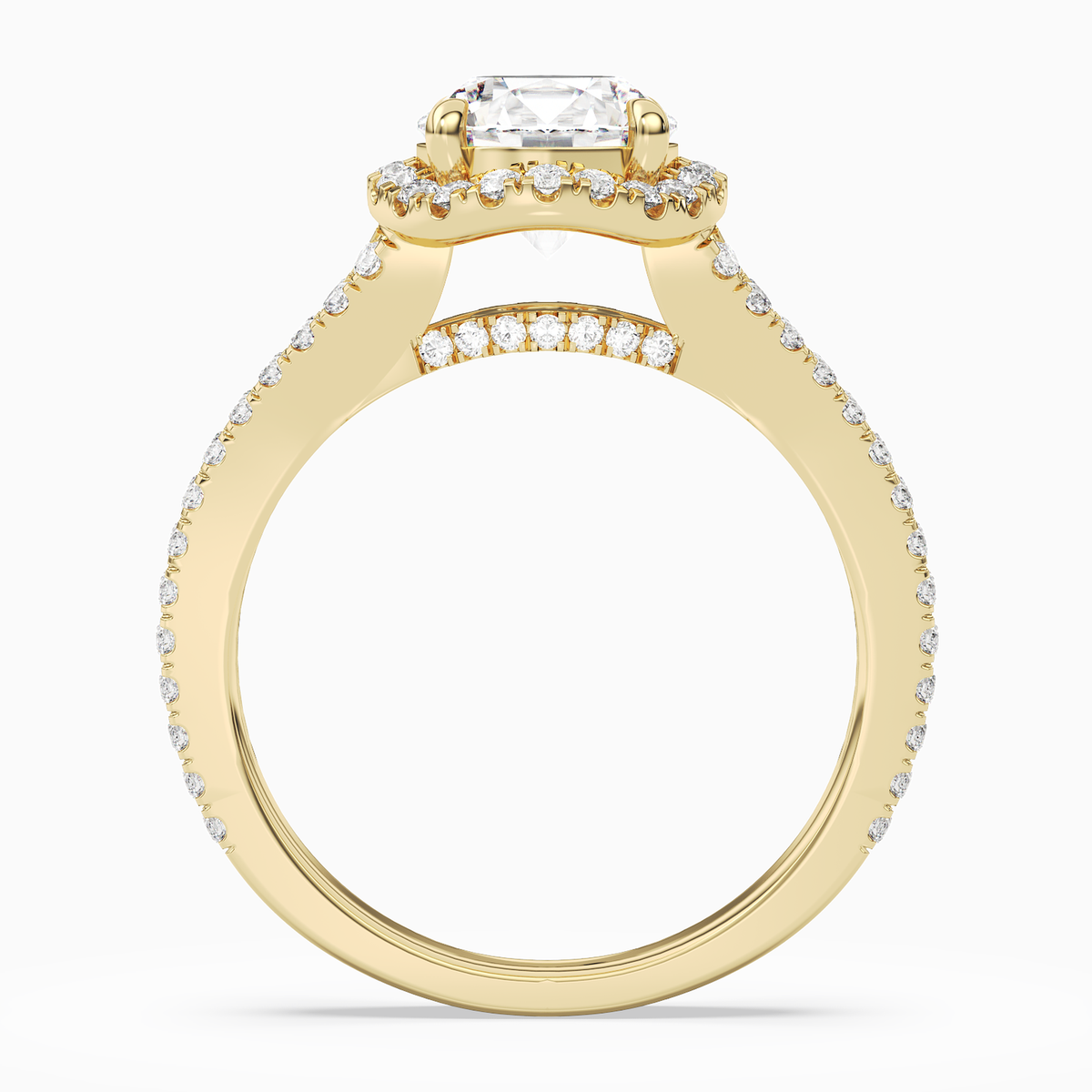
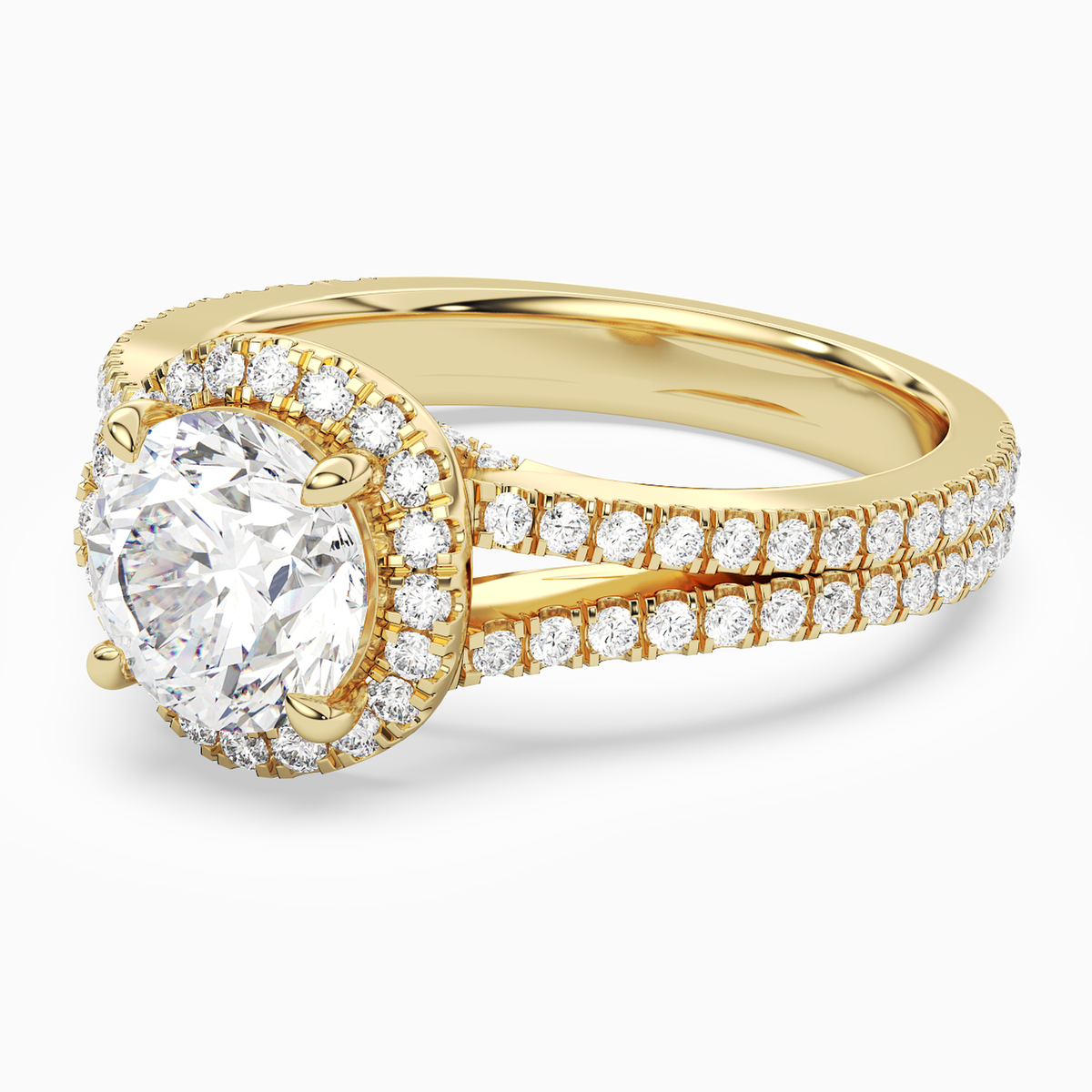
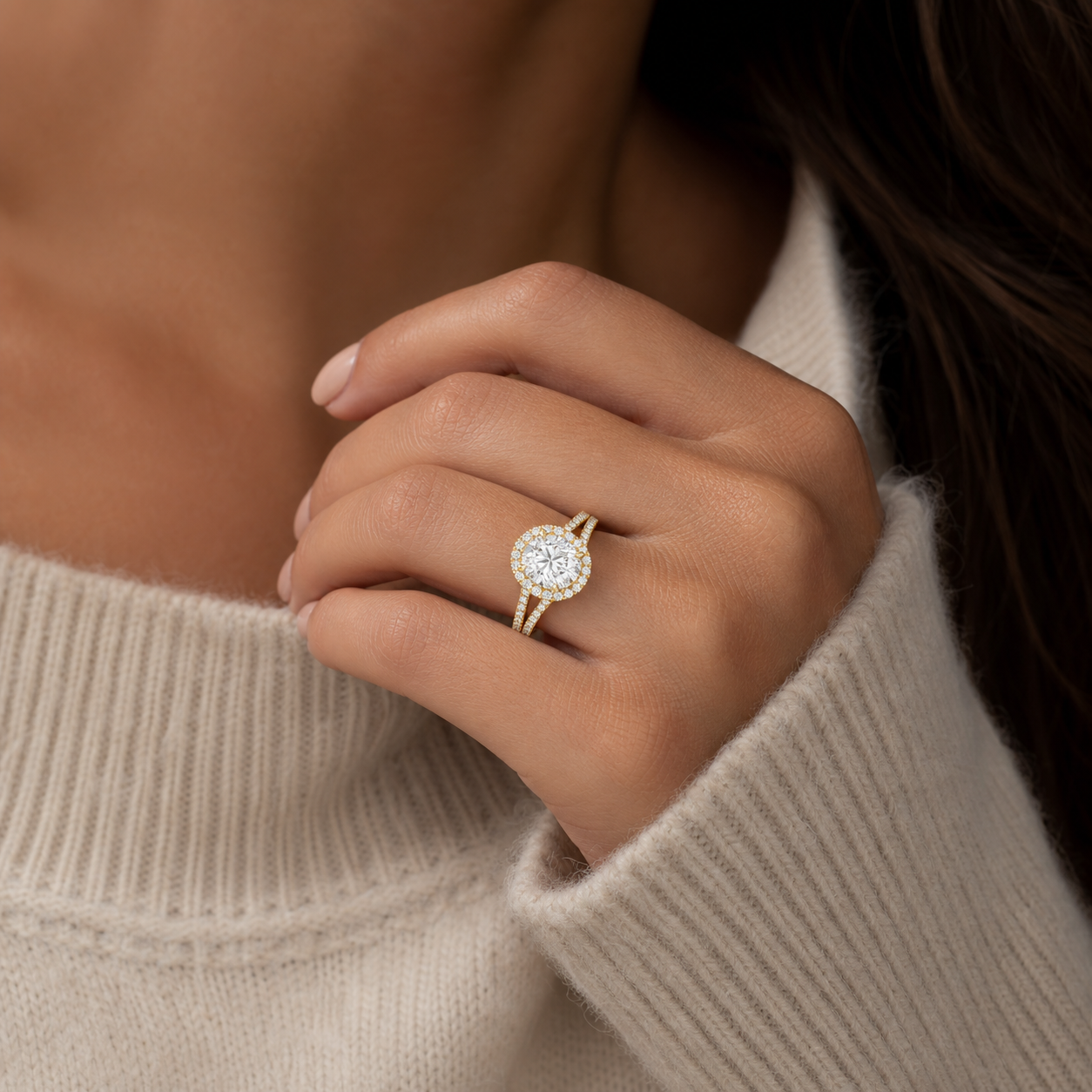


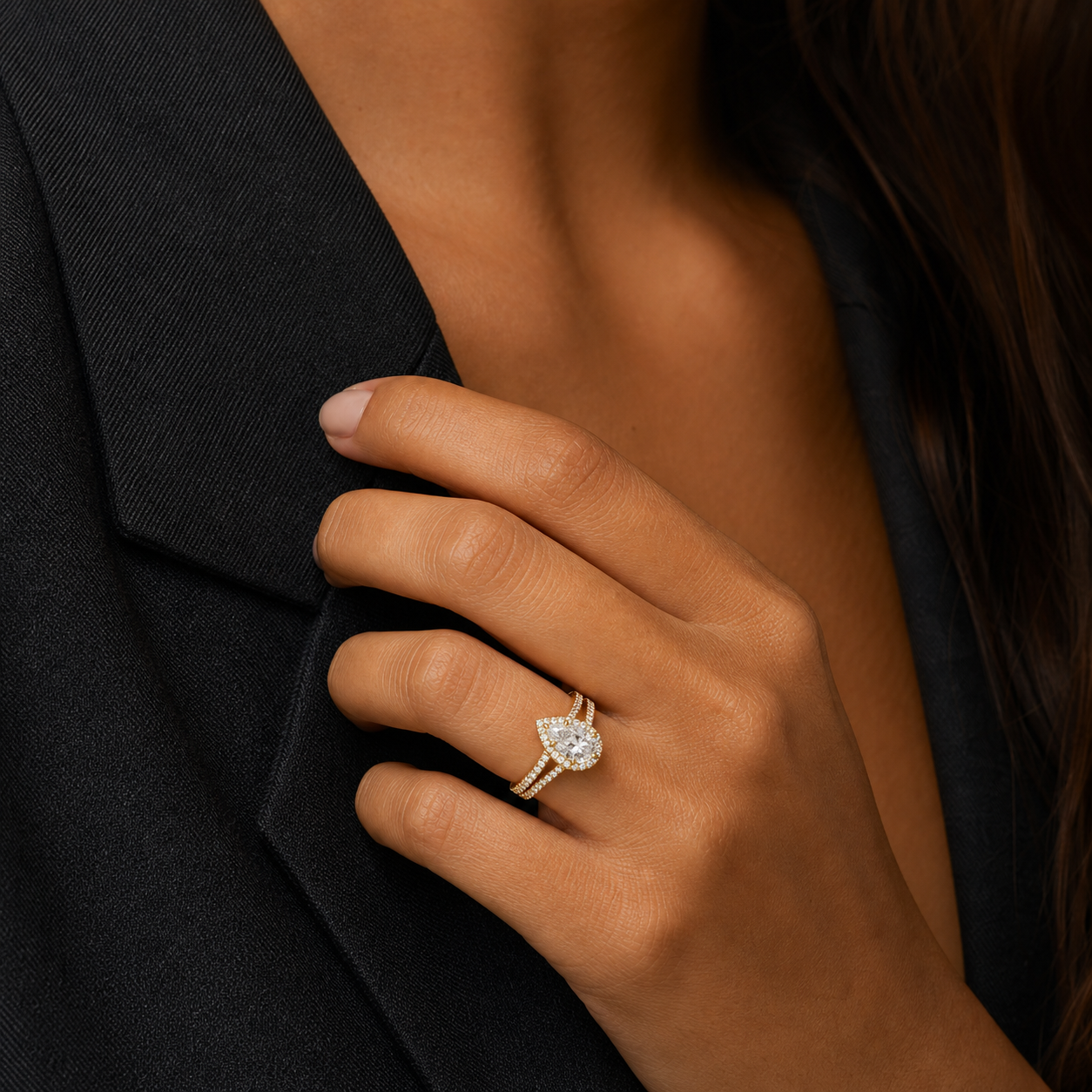


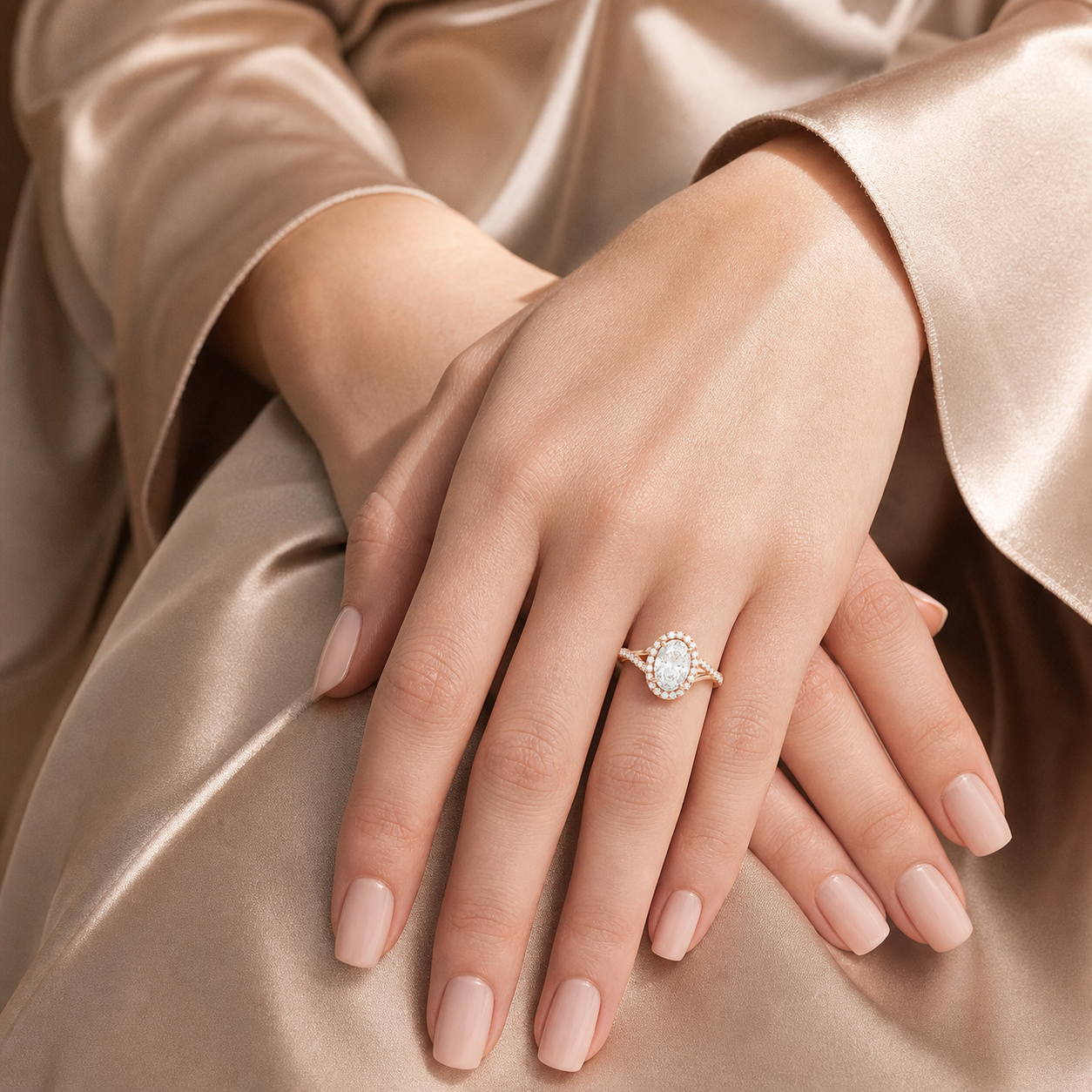


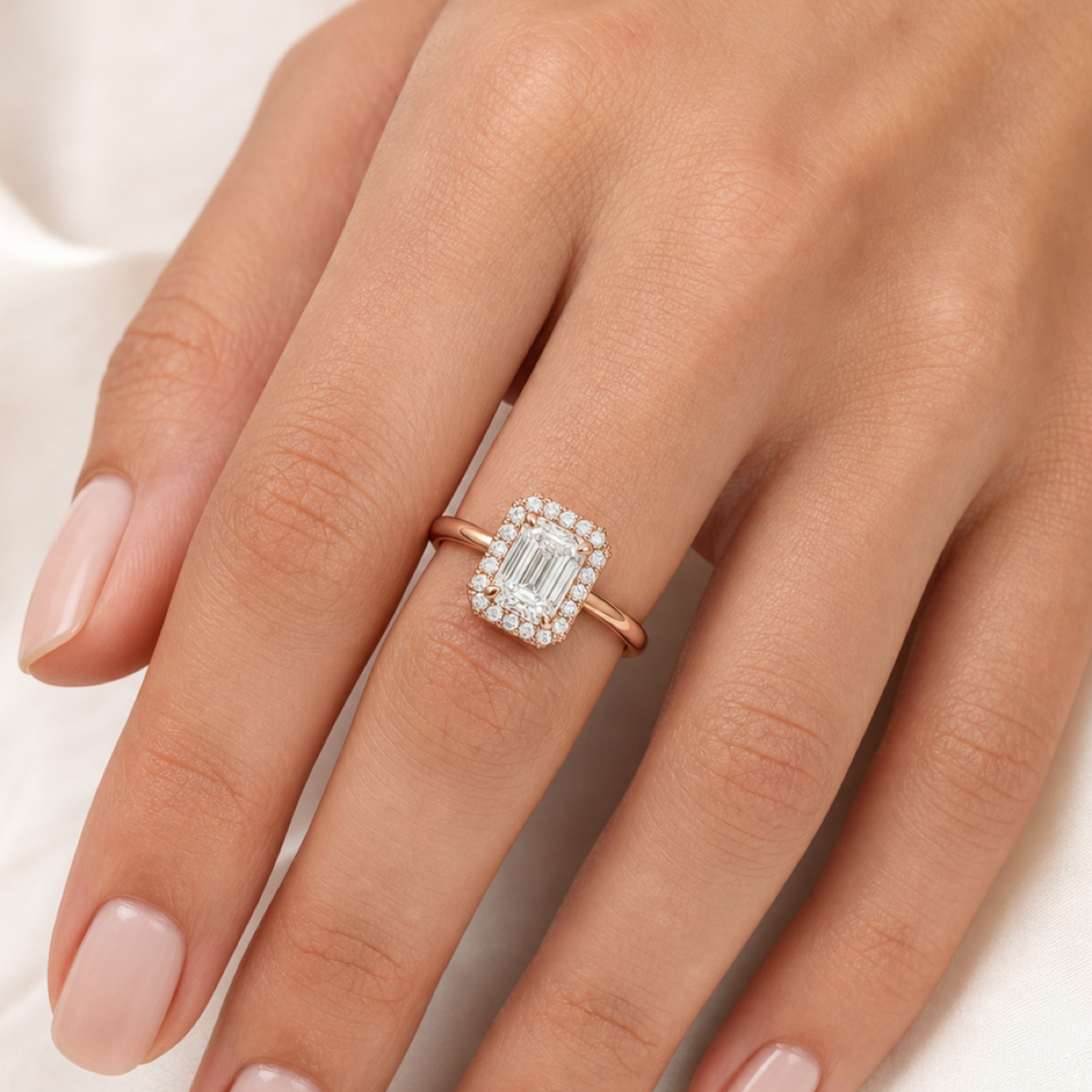


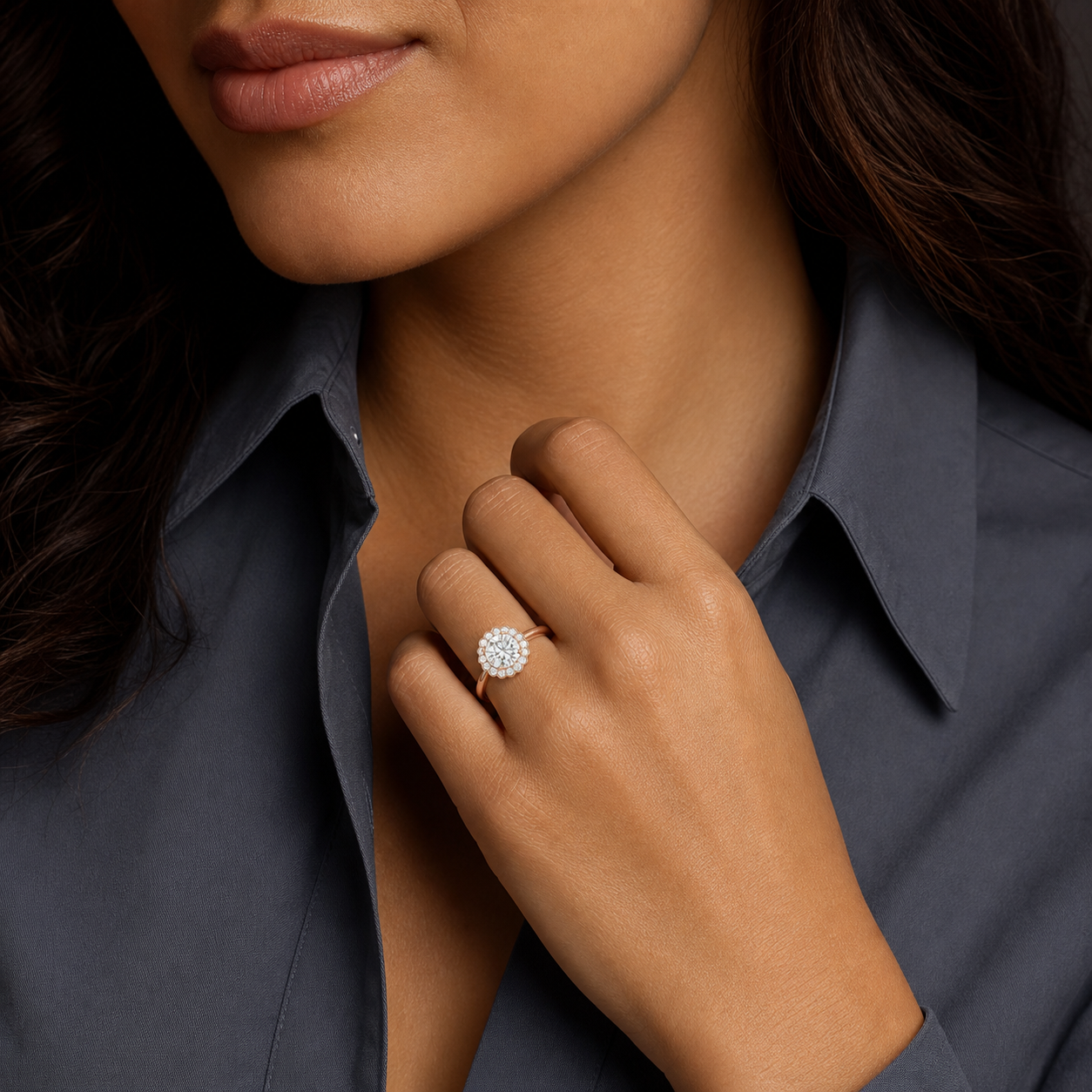


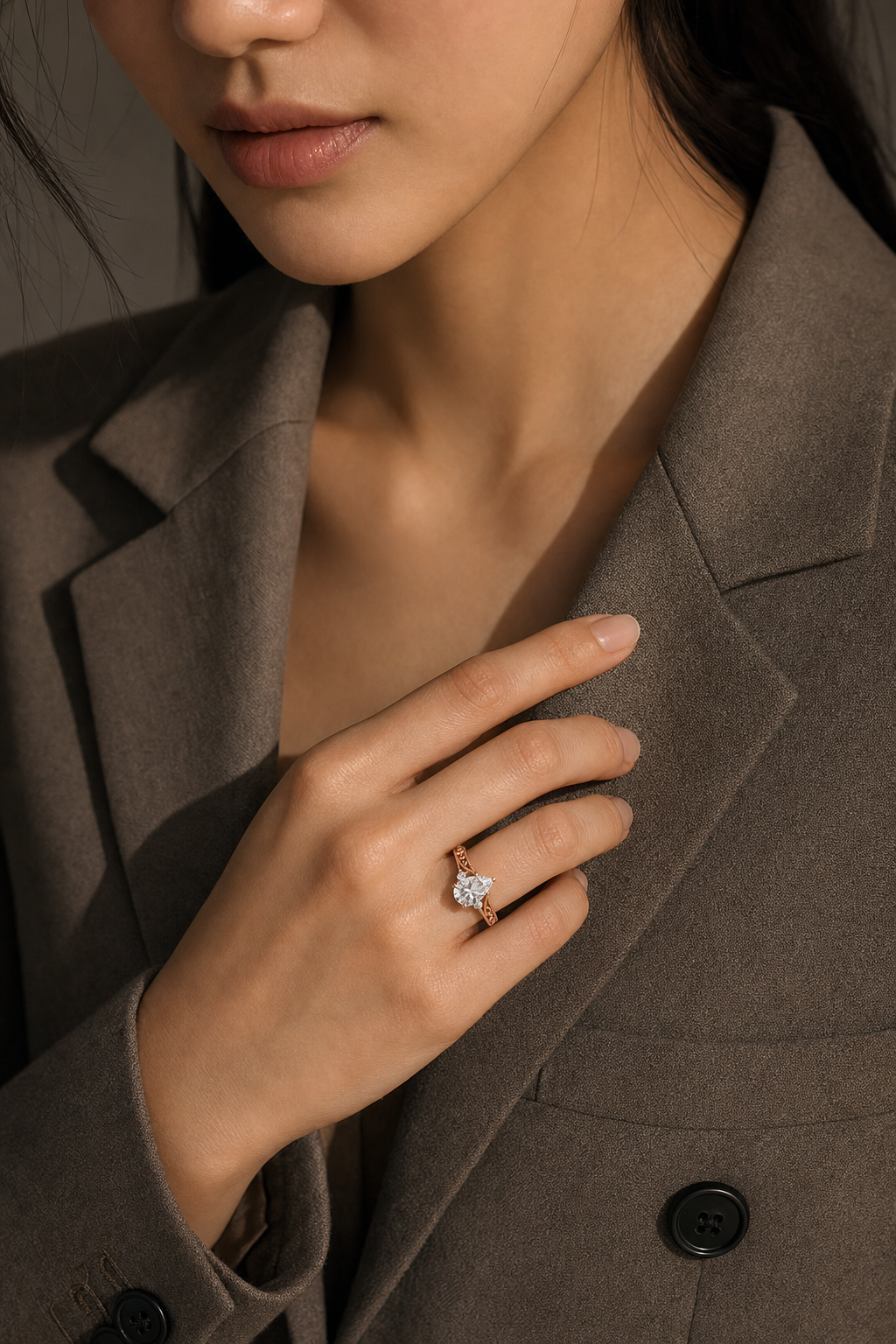
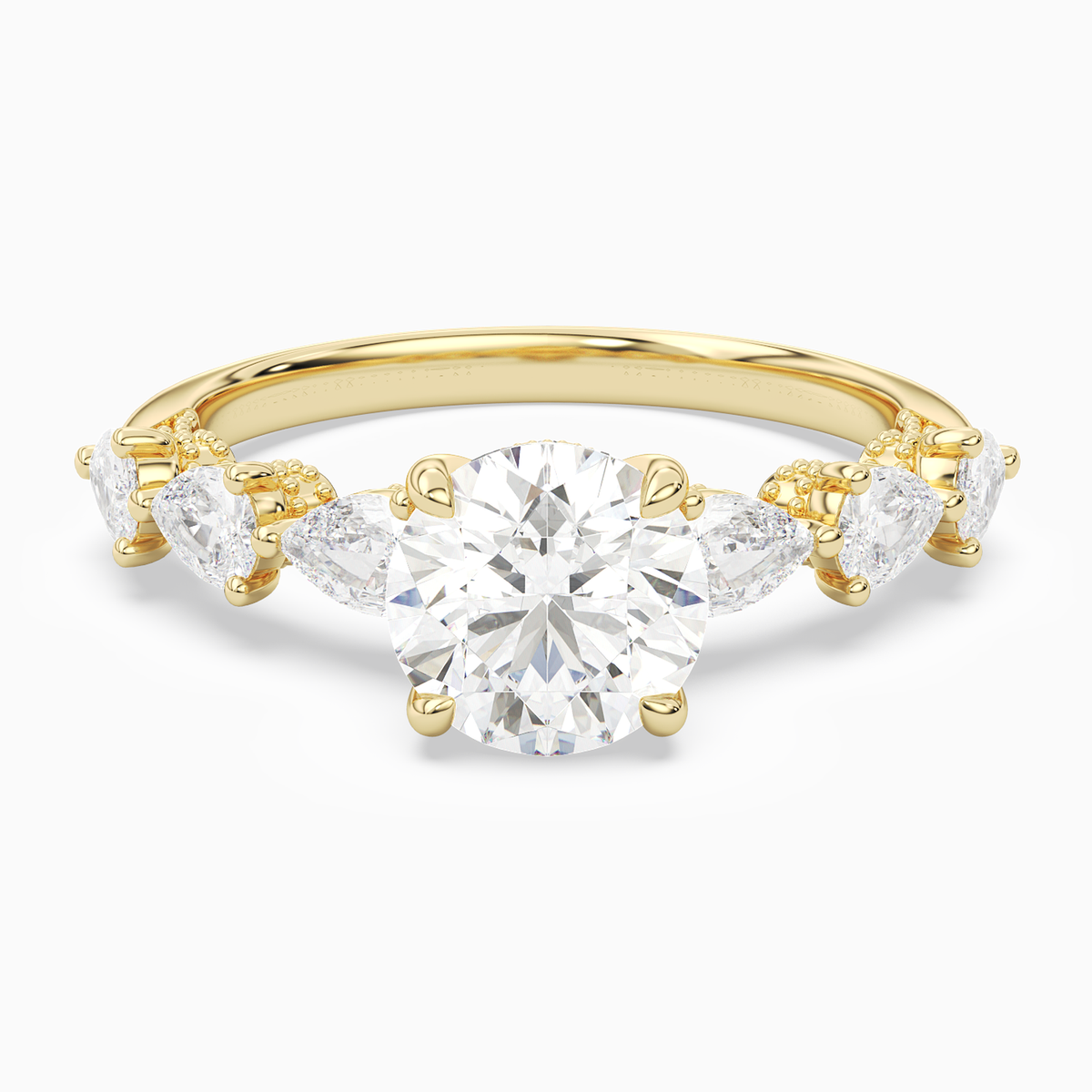

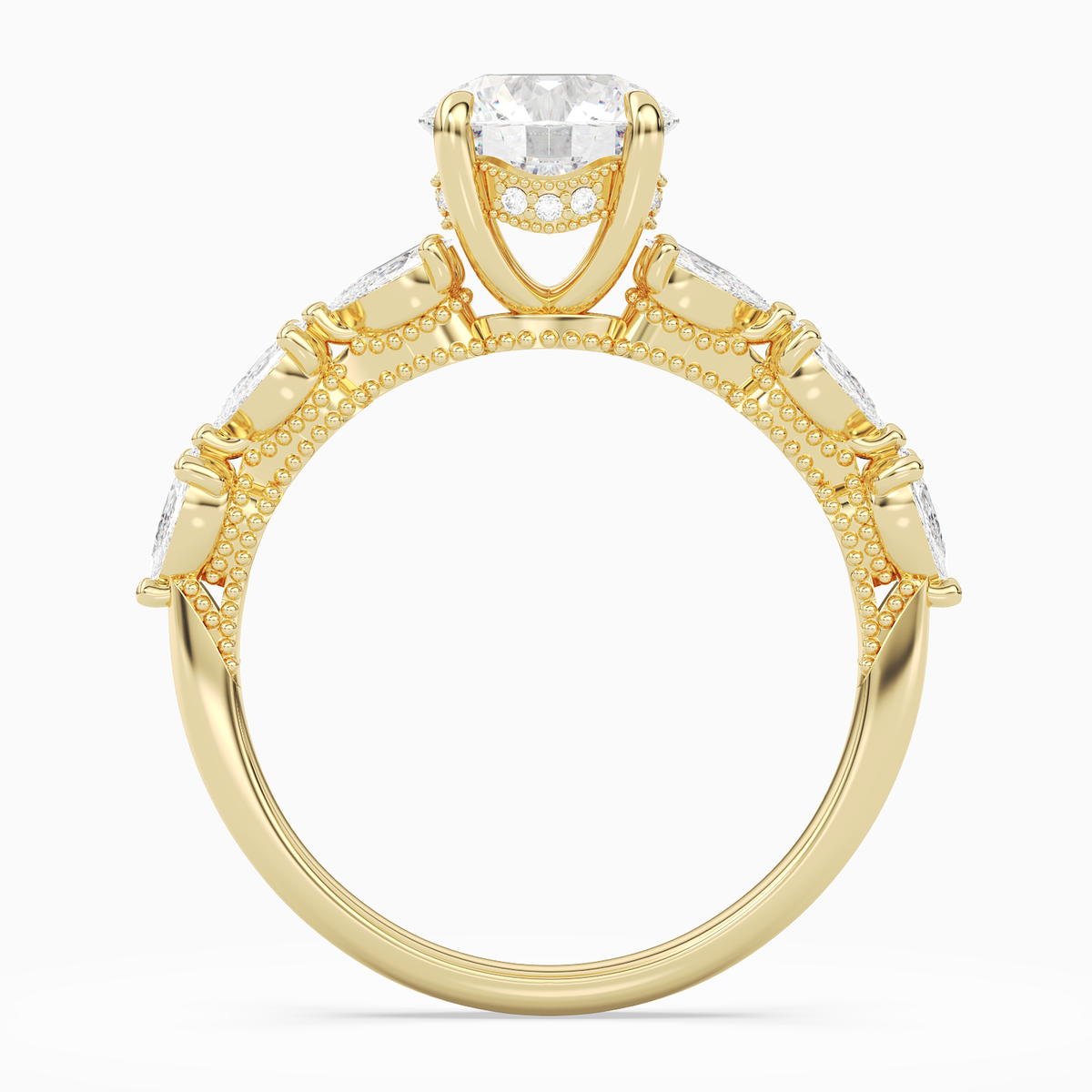
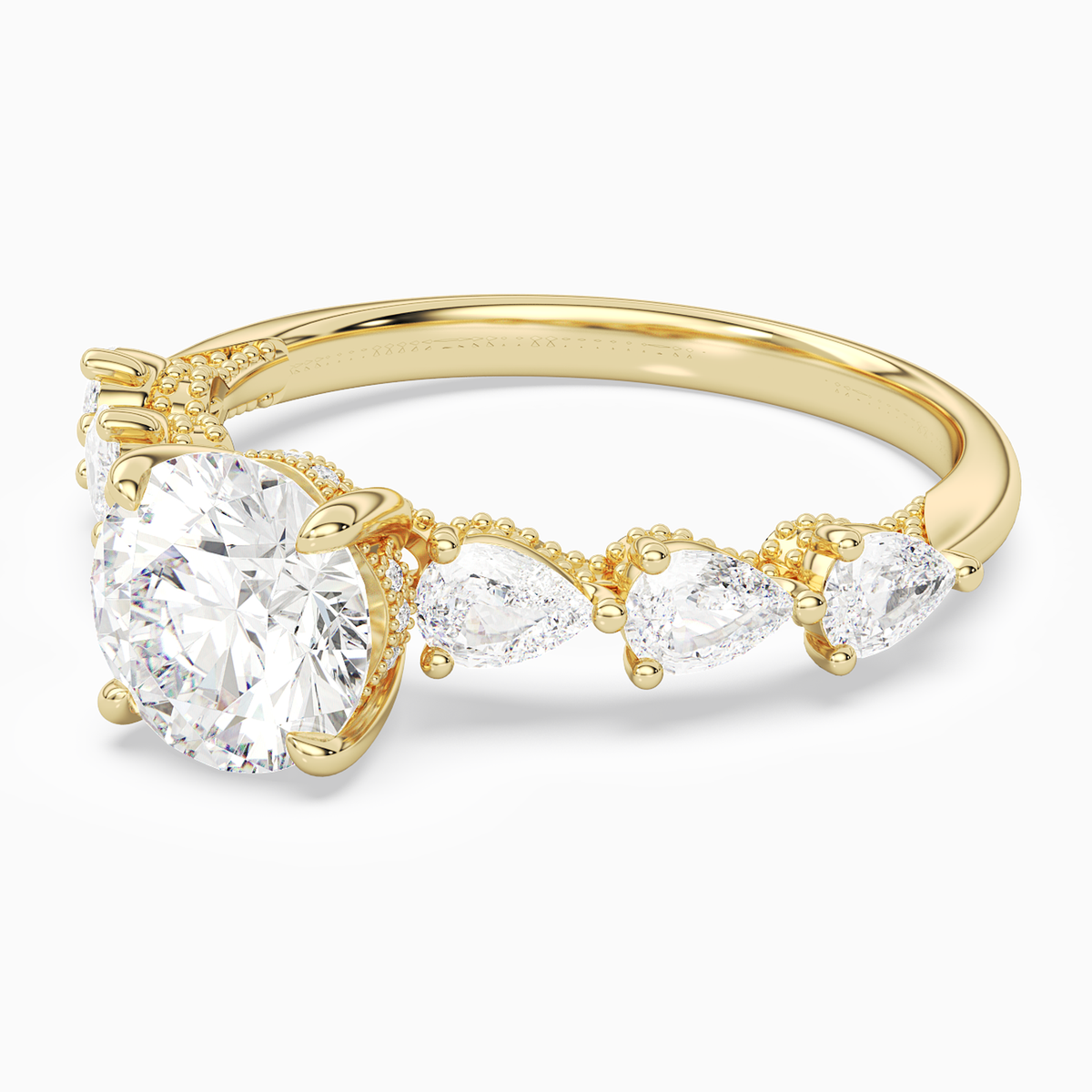
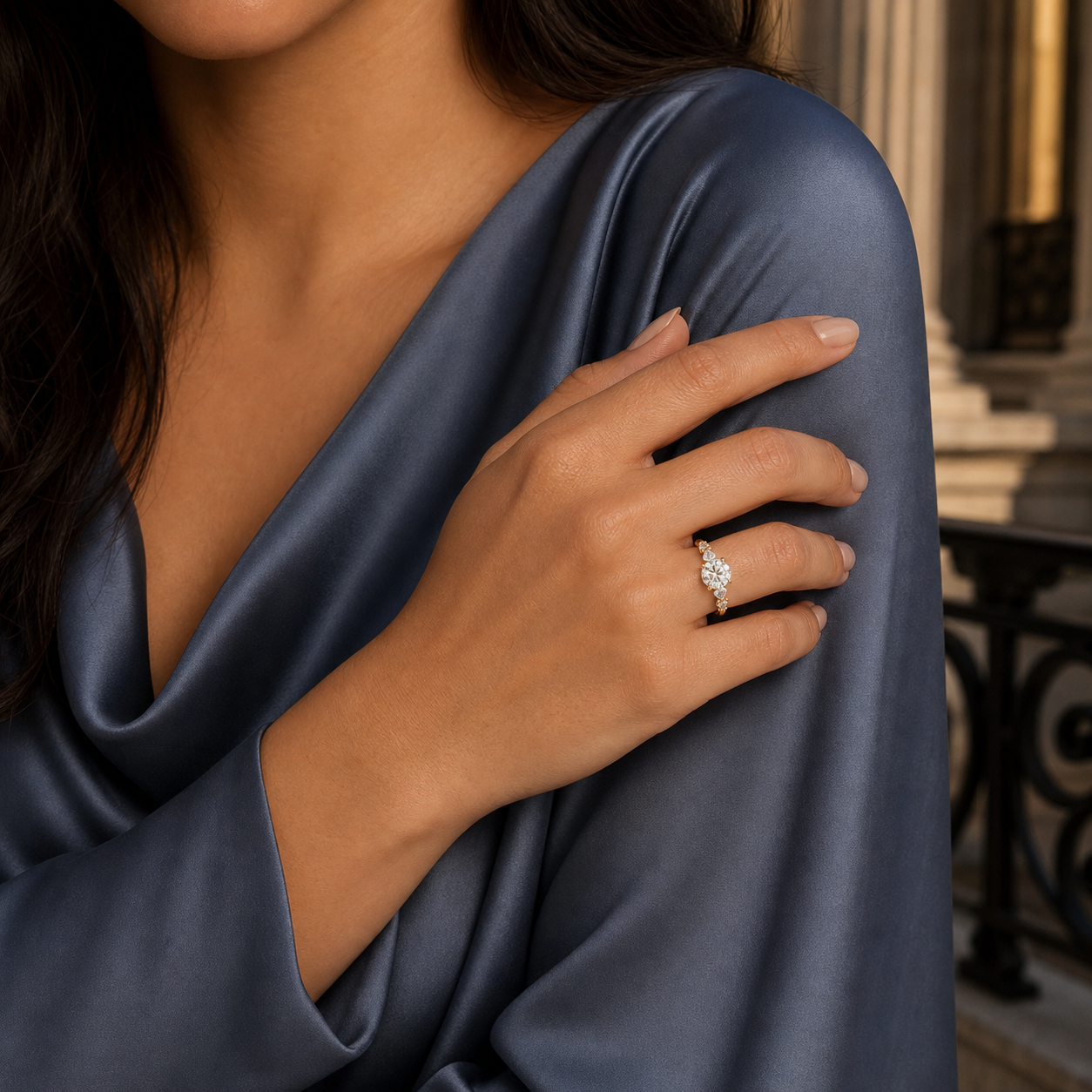


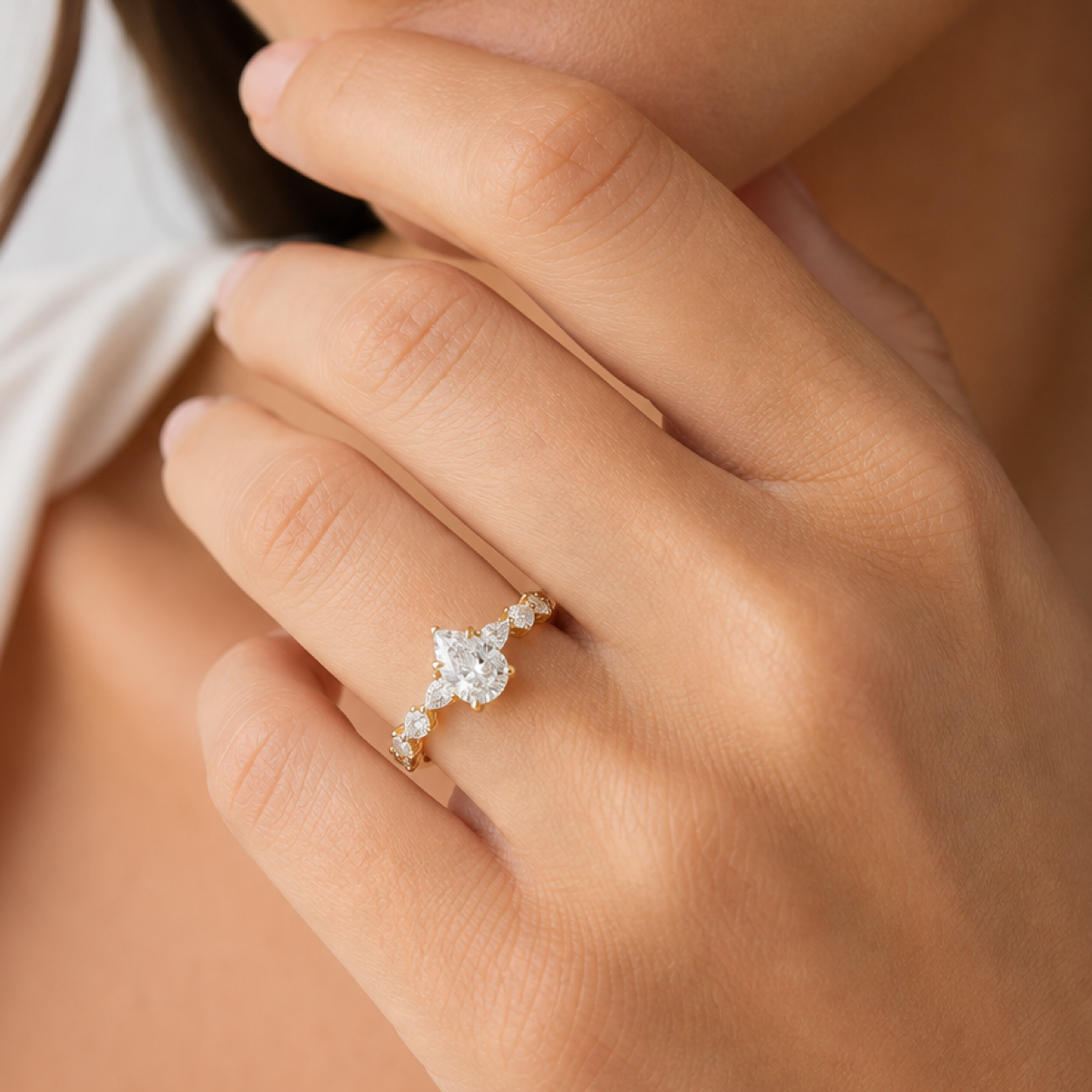
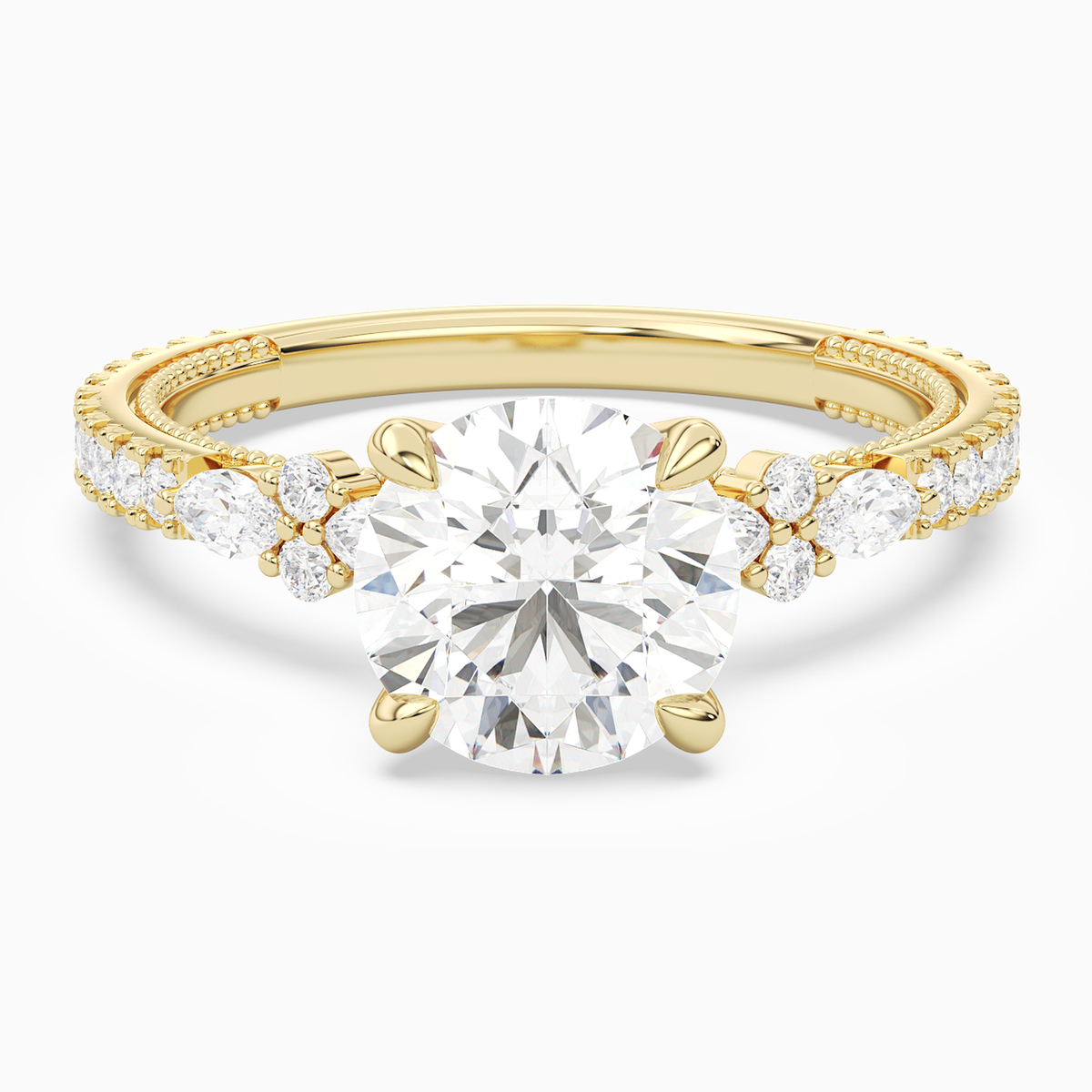
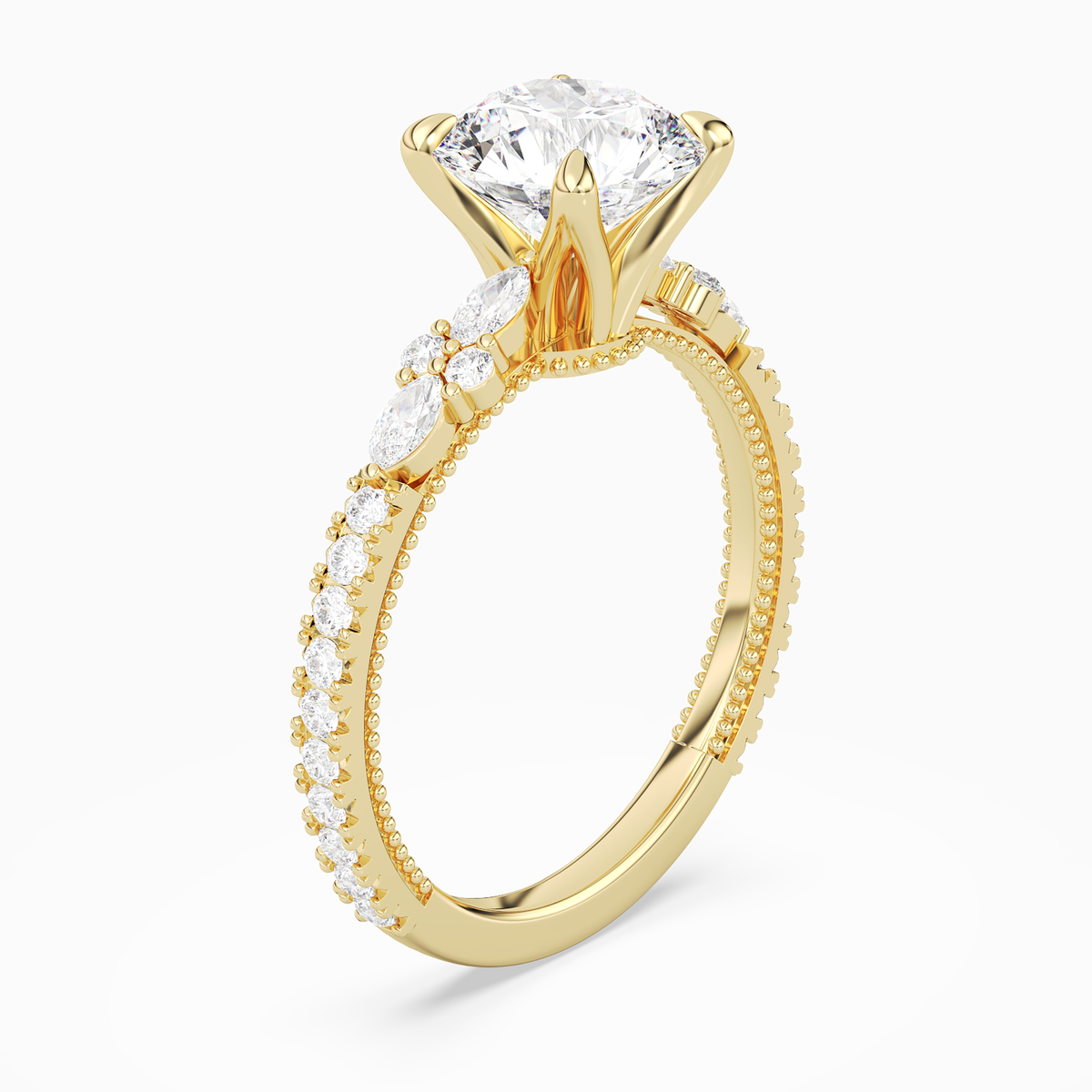
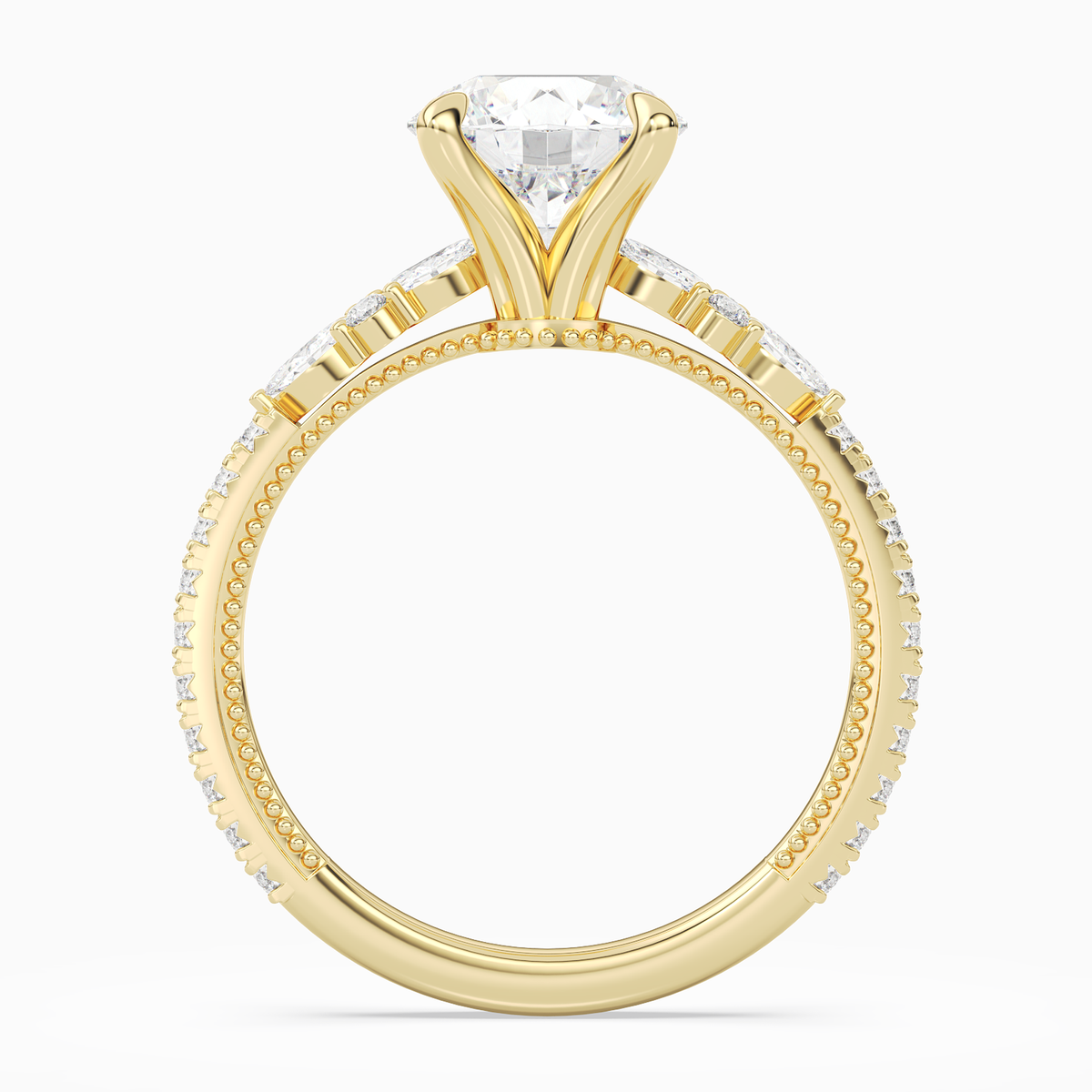
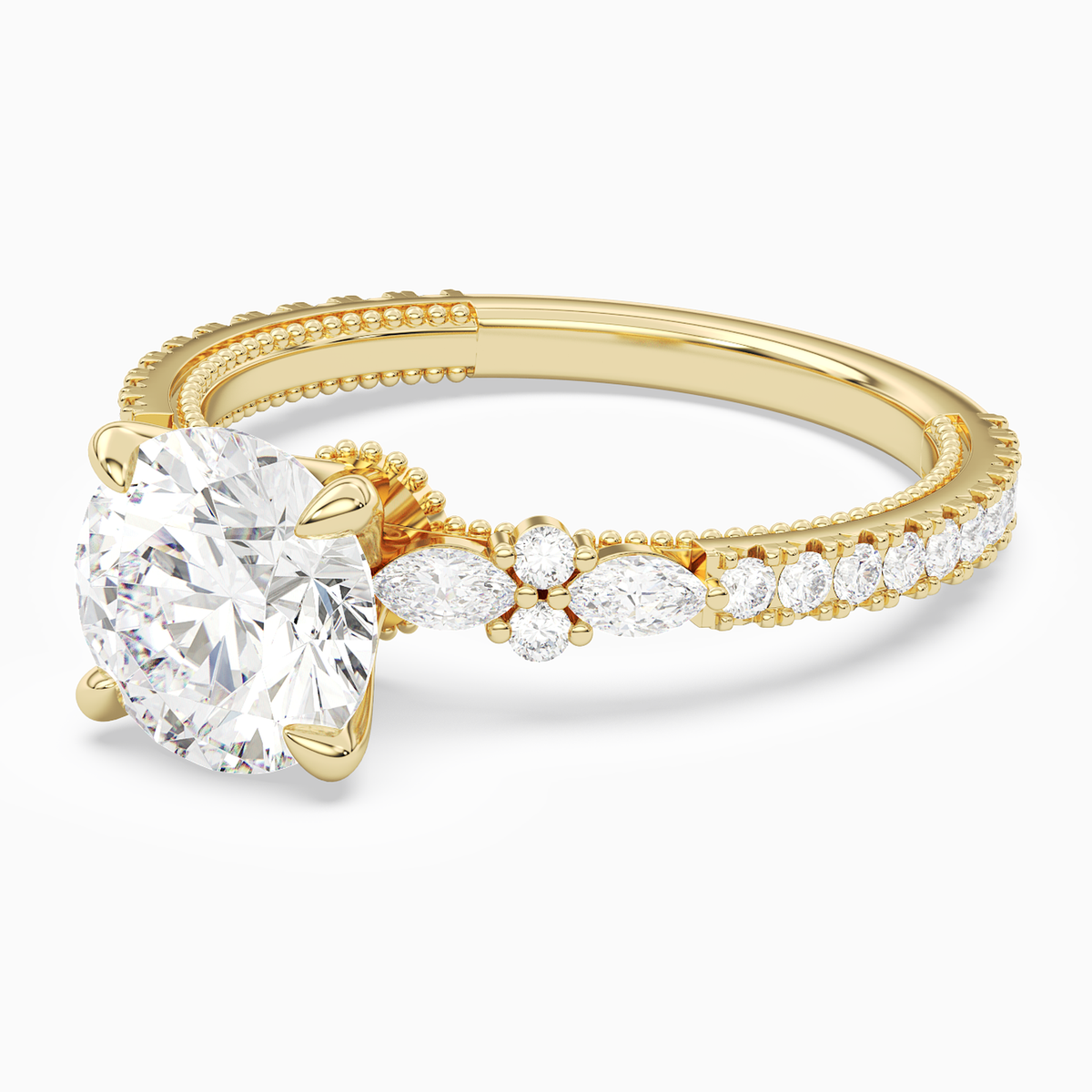
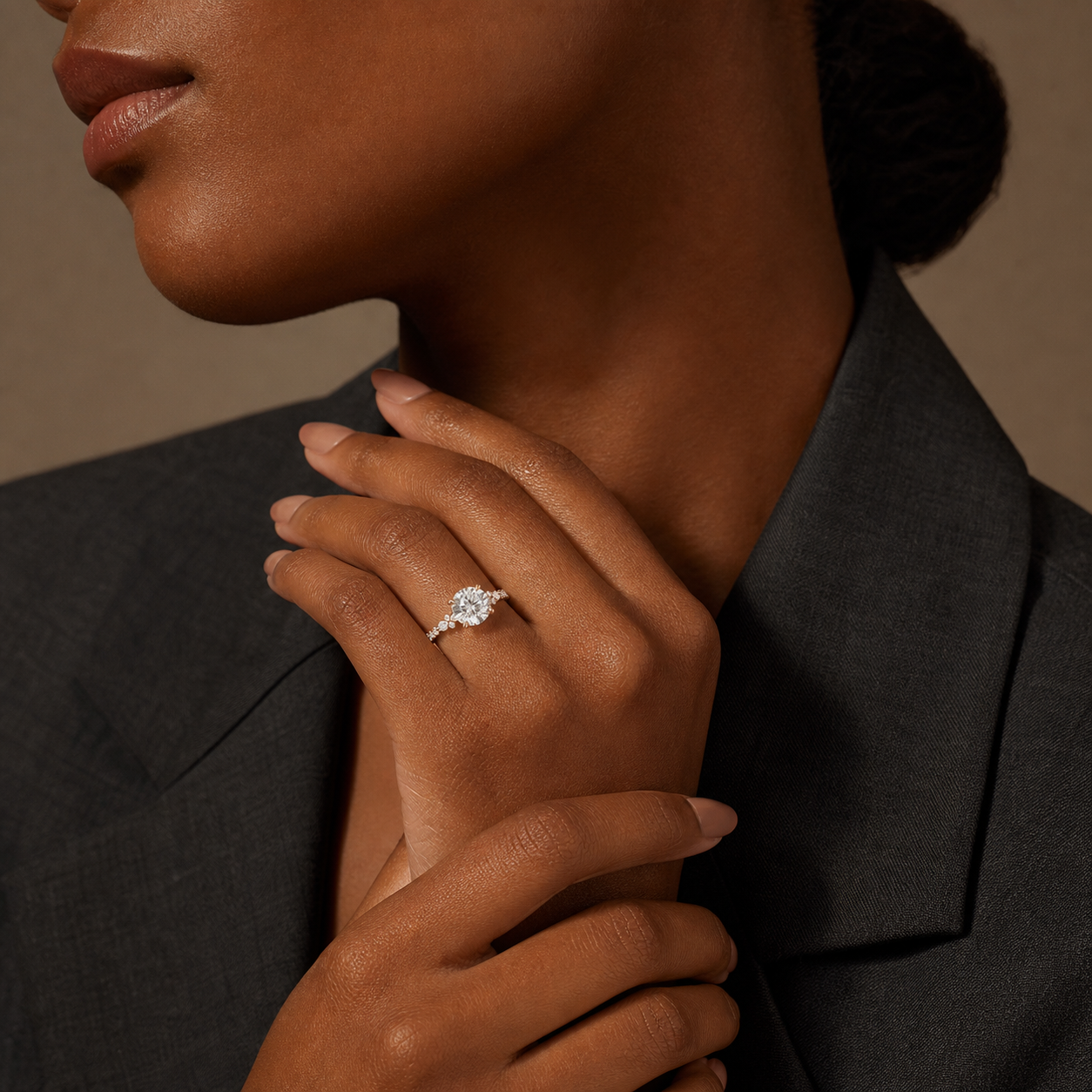
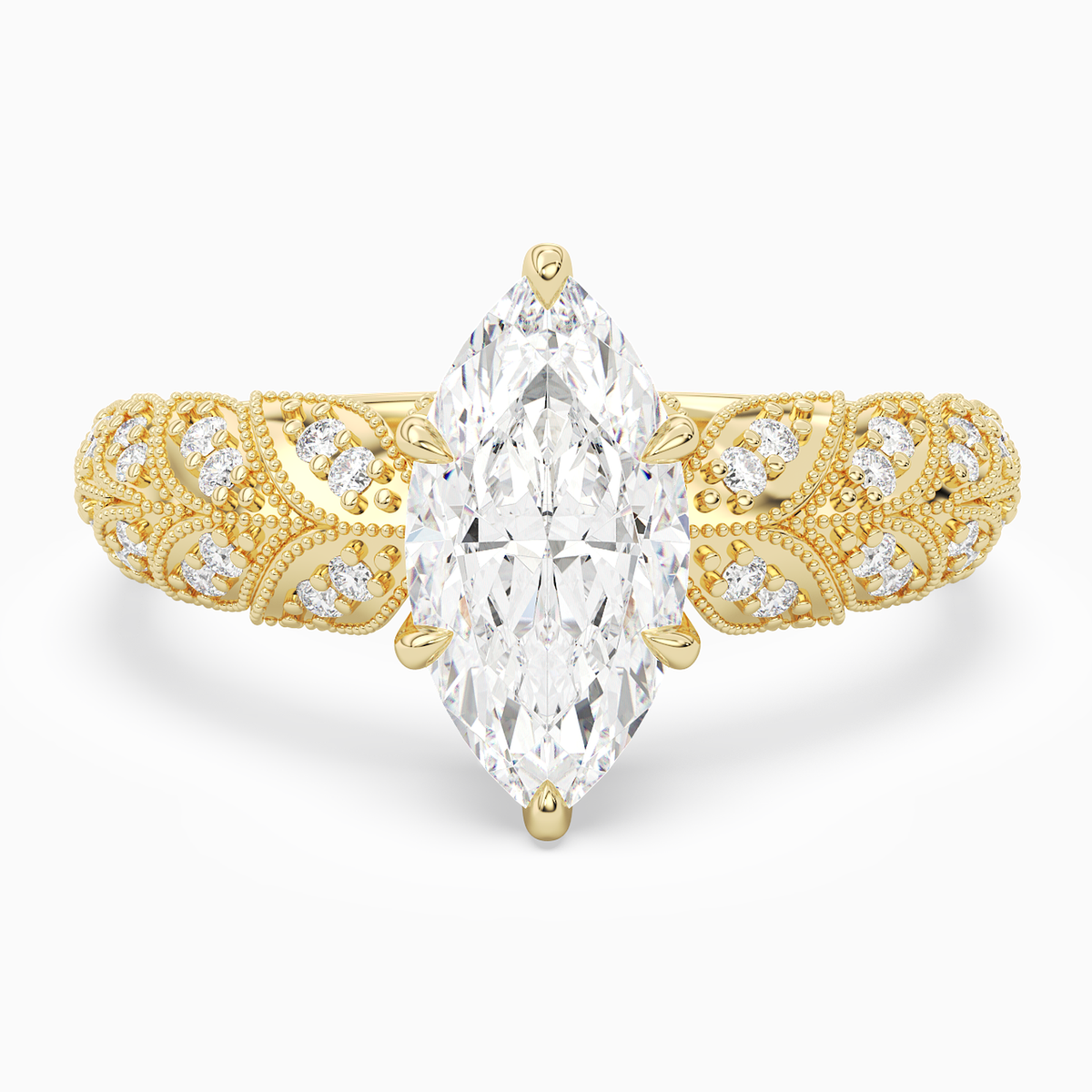
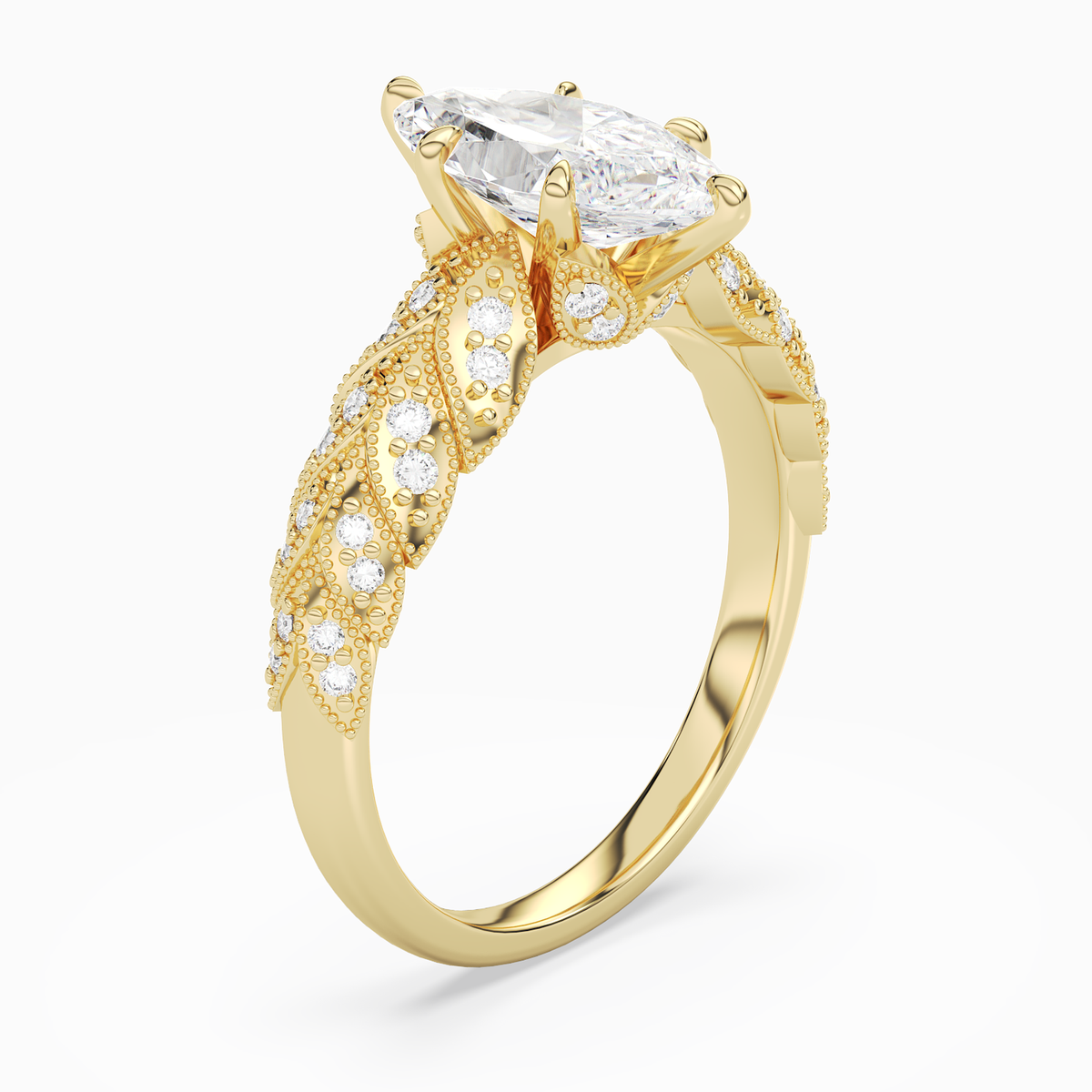
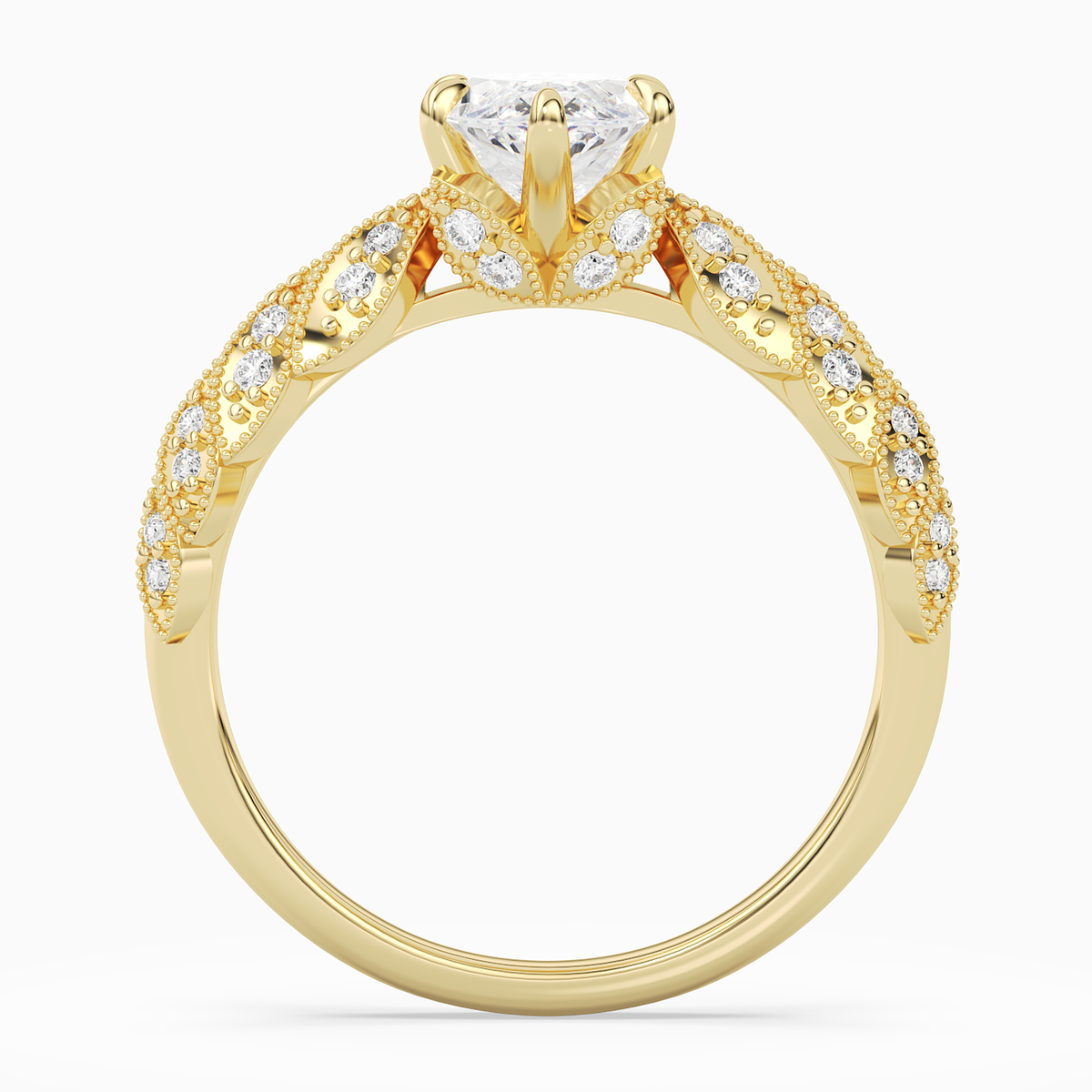
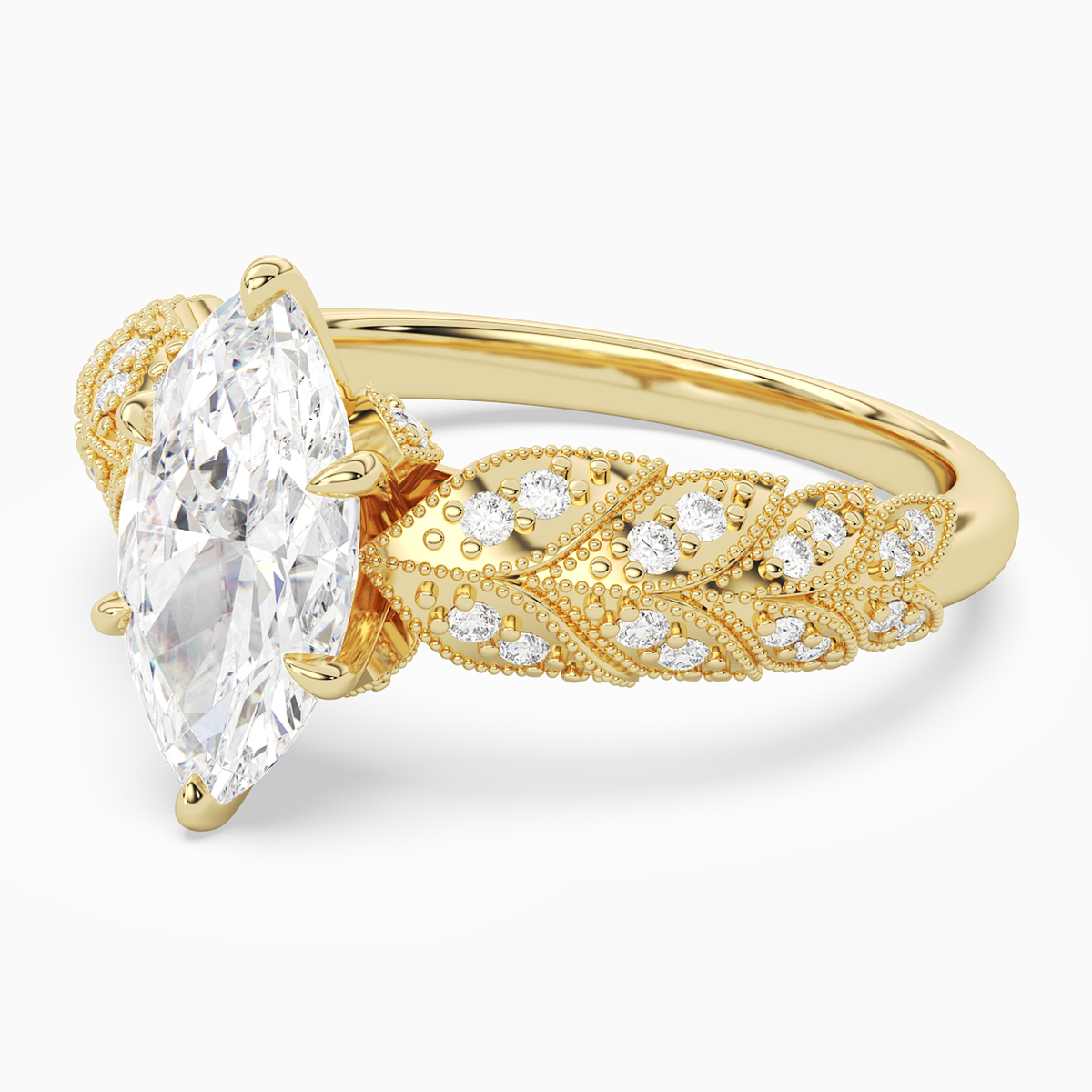
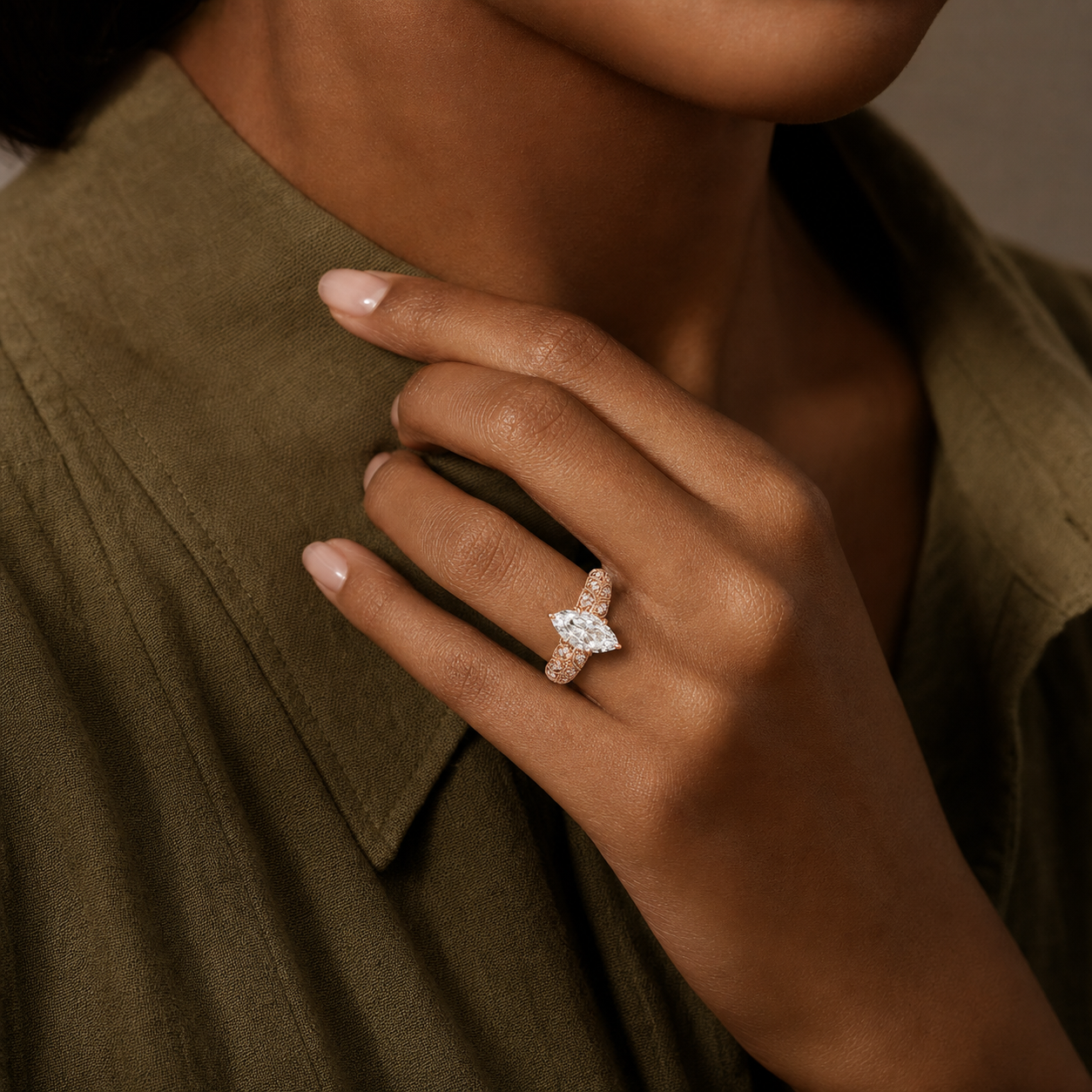


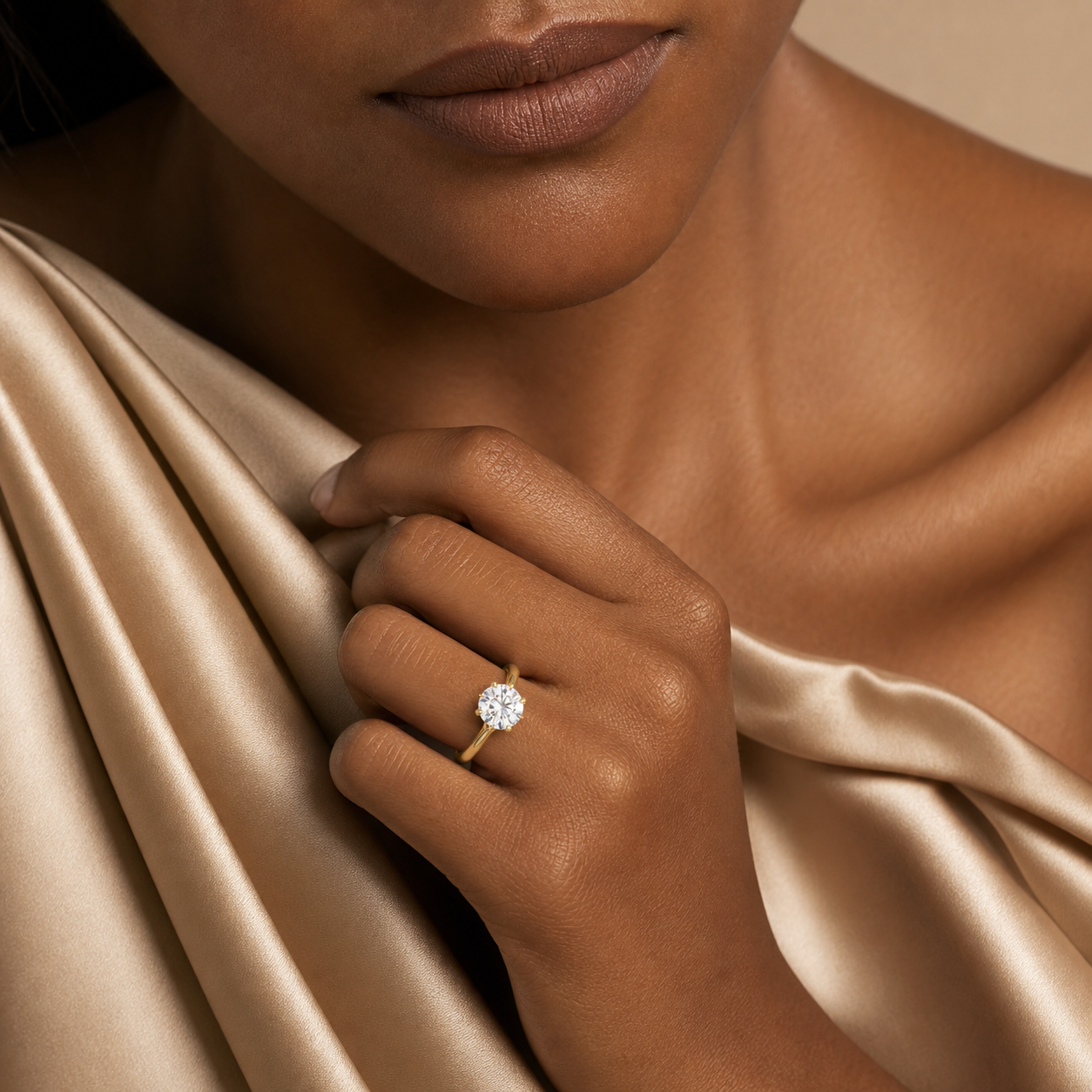


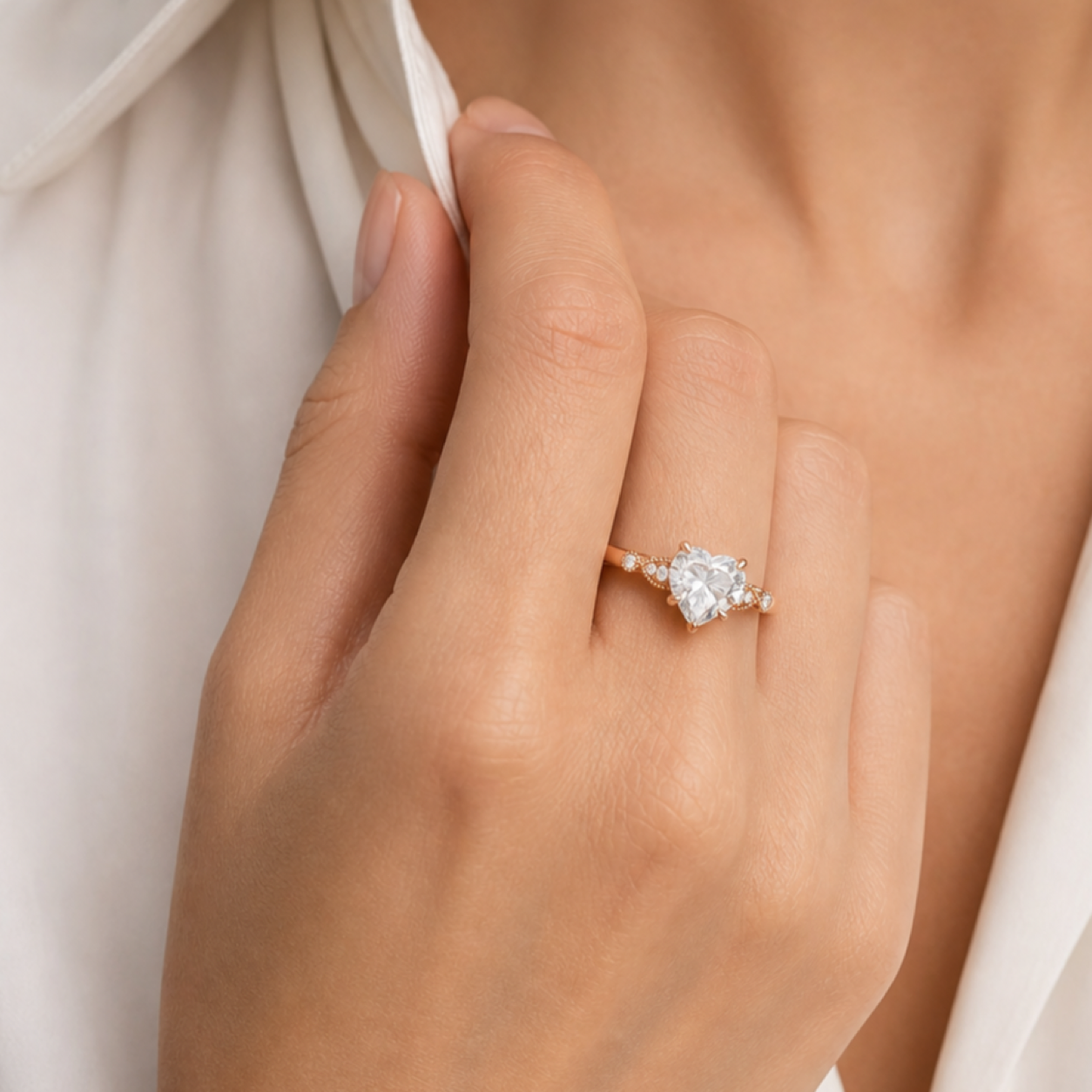
14K Yellow Gold Engagement Rings: Warmth With Definition
Yellow gold makes the metal visible—and that visibility is part of its value. Its warm color draws a clear boundary around the diamond, gives the band its own presence, and lets prongs, shoulders, and gallery details participate in the design rather than disappear into a neutral field.
Burvonti’s 14K Yellow Gold Engagement Rings collection brings our engagement designs into that warmer register. The same center shape can feel more graphic, more grounded, or more historically resonant when the metal carries color. The goal is not to make every ring feel traditional; it is to understand how warmth changes the balance between diamond and setting.
Why 14K Yellow Gold Reads With Clarity
14K gold contains 14 parts gold and 10 parts alloying metals. That composition produces a recognizable gold tone while supporting the profiles and setting details expected of an engagement ring. Exact hue varies by alloy and finish, so 14K Yellow Gold should be read as a material family rather than one universal shade.
Against a bright diamond, the warm band creates contrast. That does not alter the diamond’s documented color grade, and it does not guarantee that every stone will appear whiter. It simply makes the separation between metal and diamond more perceptible—a relationship shaped by prong color, setting openness, lighting, and the diamond itself.
A Metal That Changes the Setting’s Voice
In a Solitaire, Yellow Gold gives even a restrained band a distinct line across the hand. A tapered shoulder can create a precise transition into the center; a broader band makes the warmth more continuous and gives the ring a stronger material presence.
Halo and Side-Stone designs create a different balance. Warm metal can outline the perimeter of a Halo, separate secondary diamonds from the band, or add rhythm between stones in a Three-Stone composition. Hidden Halo and gallery details reveal that color only as the ring moves, offering warmth from the side without redrawing the center from above.
Diamond Shape, Outline, and Warm Contrast
Round and Cushion diamonds soften into the warmth of Yellow Gold while maintaining a bright center. Oval, Pear, and Marquise shapes use the colored band to emphasize length and direction. Emerald and Asscher cuts can feel especially architectural because the warm frame makes their straight edges, clipped corners, and measured facet pattern more legible.
The right relationship is specific to the diamond and setting. Yellow Gold prongs create more visible warmth near the stone; a contrasting white-metal prong treatment, where available and appropriate to the design, changes that transition. Any mixed-metal choice should be confirmed at product or custom-design level rather than implied across the full collection.
14K and 18K Yellow Gold Are Different Expressions
14K and 18K describe gold content, not aesthetic rank. 14K contains 58.3% gold; 18K contains 75%. A higher gold proportion can create a richer material expression, while the complete alloy still determines exact hue and physical behavior. Band scale, setting structure, finish, and wear matter alongside karat.
For a shopper choosing between them, the useful question is not which number sounds more luxurious. It is whether the actual ring has the tone, weight, detail, and daily presence you want. Compare equivalent designs where possible, then judge how the metal supports the diamond rather than treating karat as an isolated specification.
Pairing Yellow Gold Beyond a Perfect Match
A Yellow Gold wedding band can continue the warmth of the engagement ring and make the pair read as one material composition. A White Gold or Platinum band creates contrast; Rose Gold keeps the pairing warm while shifting the hue. The success of the stack depends on more than color: edge profile, curvature, diamond coverage, and points of contact determine whether the rings feel balanced together.
Routine care should remain gentle. Warm water, mild soap, and a soft brush or cloth can remove ordinary buildup; harsh chemicals and abrasives should be avoided. Professional inspection is useful for prongs, pavé, and areas where paired rings touch, especially when the setting contains fine detail.
Burvonti Calibration in a Warmer Register
Responsible sourcing and independent grading or certification, where applicable, make the origin and measurable qualities of a Burvonti lab-grown diamond clearer. Documentation makes the diamond legible; it does not decide how warm metal, center outline, prongs, and band proportion should meet.
Custom possibilities can refine the diamond shape, setting profile, band width, prong language, wedding-band relationship, engraving, and selected details. You can begin with a Yellow Gold design whose warmth already feels right or with a diamond shape you want to frame. Human calibration resolves those preferences into a ring that feels composed rather than configured.
Frequently Asked Questions
What is 14K Yellow Gold?
14K Yellow Gold contains 58.3% gold, with the remaining portion made from alloying metals that influence hue and working properties. Exact formulas vary, so one maker’s 14K Yellow Gold may not look identical to another’s.
Is 14K Yellow Gold suitable for an engagement ring worn regularly?
14K Yellow Gold is widely used for rings intended for regular wear. Like every precious metal, it can scratch and show surface change. Band profile, setting design, activity, care, and contact with other rings all influence how it wears over time.
How is 14K Yellow Gold different from 18K Yellow Gold?
14K contains 58.3% gold, while 18K contains 75%. Higher gold content can influence color, weight, and physical behavior, but the complete alloy and design also matter. Neither is automatically the right choice for every engagement ring.
Will Yellow Gold make a diamond look yellow?
Yellow Gold does not change a diamond’s actual color grade. Warm metal near the diamond can influence perceived contrast depending on prong color, setting openness, lighting, and the stone itself. Some designs emphasize separation; others create a more harmonious warm transition.
Does a diamond look whiter against Yellow Gold?
A bright diamond may appear more distinct against a warm band because the color contrast is stronger, but this is not guaranteed. The diamond’s color, cut, lighting, prongs, and nearby accent stones all affect perception.
Which settings work well in 14K Yellow Gold?
Solitaire, Halo, Hidden Halo, Side-Stone, Three-Stone, Bezel, vintage-inspired, and modern settings can all use Yellow Gold effectively. The metal can either define the ring’s outline or appear as a quieter accent, depending on band width, diamond coverage, and profile.
Which diamond shapes suit Yellow Gold?
All major shapes can be set in Yellow Gold. Elongated shapes use the warm band to reinforce direction, brilliant shapes create lively contrast, and step cuts often gain a clear architectural frame. Prongs and setting scale should follow the individual diamond.
Does 14K Yellow Gold need plating?
Yellow Gold normally derives its color from the alloy itself rather than relying on a white surface plating. Finishes can still vary, and the ring may need cleaning or polishing according to wear and the desired surface appearance.
How should I clean a 14K Yellow Gold engagement ring?
Use warm water, mild soap, and a soft cloth or soft-bristled brush. Rinse carefully and dry with a lint-free cloth. Avoid chlorine, harsh chemicals, and abrasive products, and have intricate settings inspected periodically.
Can a 14K Yellow Gold engagement ring be resized?
Many can be resized, but design determines the safe range. Pavé extending around the band, eternity coverage, intricate galleries, engraving, and stone placement can limit what is advisable. Review the individual ring before making the decision.
Can Yellow Gold be paired with a White or Rose Gold wedding band?
Yes. Mixed-metal pairings can make the stack more graphic or nuanced. Consider not only color but also edge profile, hardness and wear differences, where the rings touch, and whether the engagement setting allows the intended spacing.
Can a Burvonti 14K Yellow Gold engagement ring be customized?
Yes. Custom possibilities may include diamond shape, setting profile, band width, prong language, mixed-metal details, wedding-band relationship, engraving, and selected design features, subject to proportion and structural review.